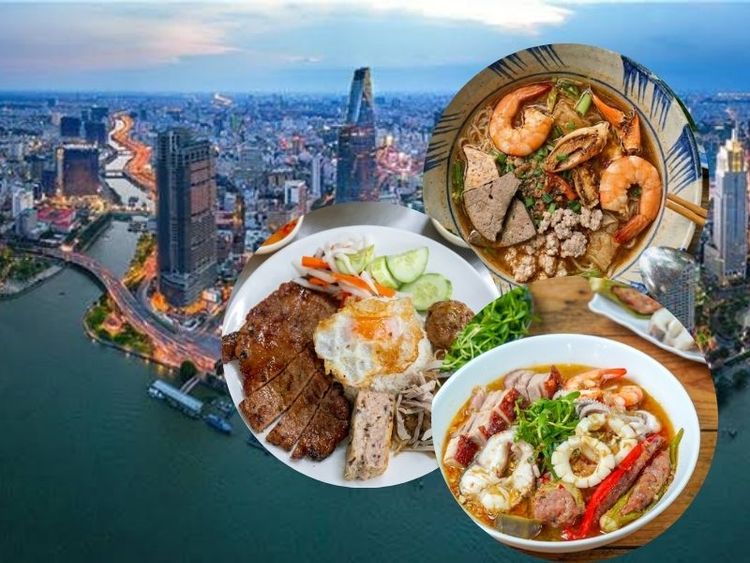
17 Vietnamese Soups to Know, From Phở to Everyday Canh
Published: Sep 14, 2026 by CHIN-SU
Updated: Sep 17, 2026 by CHIN-SU
Vietnamese soups are far more varied than the clear, aromatic bowl of phở most diners first associate with Vietnam. Some broths are light and beefy, gently scented with charred ginger and warm spices. Others are fiery with chili and lemongrass, deeply savory from fermented fish or shrimp paste, or bright with the sweet-sour notes of tamarind, tomato, and pineapple. These different flavors reflect the ingredients, cooking traditions, and regional tastes found across Vietnam.
Soup also takes different places at the Vietnamese table. Phở, bún bò Huế, hủ tiếu, and bún riêu are often complete meals filled with noodles, meat or seafood, fresh herbs, and condiments that diners adjust to taste. At home, however, a light bowl of canh is commonly served alongside rice, braised dishes, vegetables, and other shared foods, with everyone returning to it throughout the meal.
In this guide, CHIN-SU introduces 17 Vietnamese soups, from familiar noodle bowls to regional specialties and everyday home-style canh. Along the way, you will discover what gives each broth its distinctive flavor, the ingredients and condiments that shape the bowl, the cultural stories behind these dishes, and how people across Vietnam commonly enjoy them.
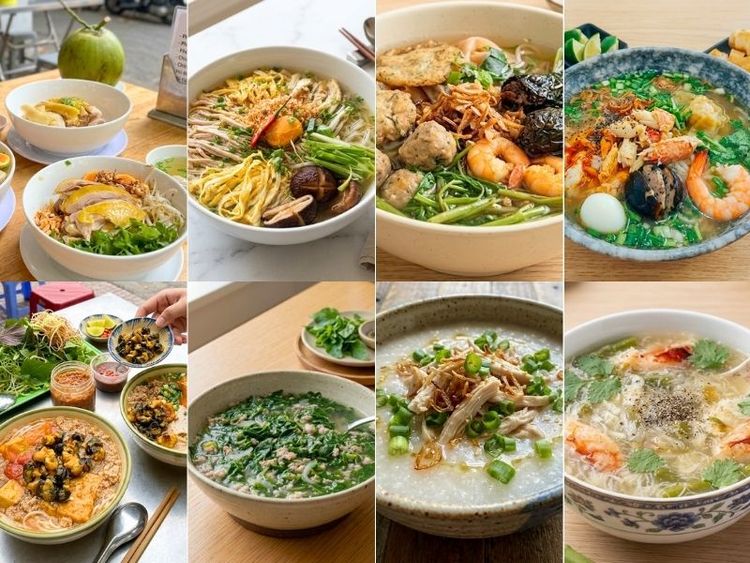
Table Of Contents
- Phở Bò
- Phở Gà
- Bún Bò Huế
- Bún Riêu Cua
- Hủ Tiếu Nam Vang
- Bánh Canh
- Bún Mắm
- Bún Mọc
- Bún Thang
- Bánh Đa Cua
- Miến Gà
- Bún Măng Vịt
- Canh Chua
- Canh Rau
- Canh Khổ Qua Nhồi Thịt
- Cháo
- Súp Măng Cua
- How Vietnamese Soup Flavors Change From North To South
- How Vietnamese Soup Broths Are Built
- How Fish Sauce And Fermented Seasonings Work In Vietnamese Soup
- What Vietnamese Soup Names Tell You
Phở Bò
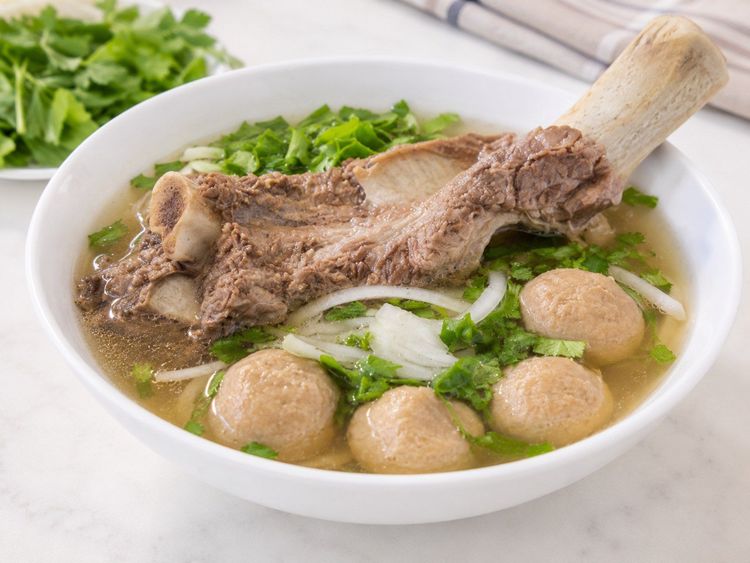
Phở bò is Vietnam’s best-known beef noodle soup, and what stays with you after a good bowl is usually the broth. It should taste clear yet deeply beefy, with a gentle sweetness from the bones and the warm fragrance of charred ginger, onion, star anise, and cinnamon. The spices sit behind the beef rather than overpower it, leaving a clean, savory finish that makes the next spoonful easy to reach for.
The experience starts before you taste it. Steam carries the scent of ginger and spices, while soft, flat rice noodles sit beneath slices of rare beef, brisket, flank, tendon, tripe, or meatballs. If it is your first bowl, taste the broth before adding anything. Lime, chili, fish sauce, and herbs change it quickly. A simple CHIN-SU tip is to keep chili sauce on the side and dip the beef when you want more heat without covering the flavor of the broth.
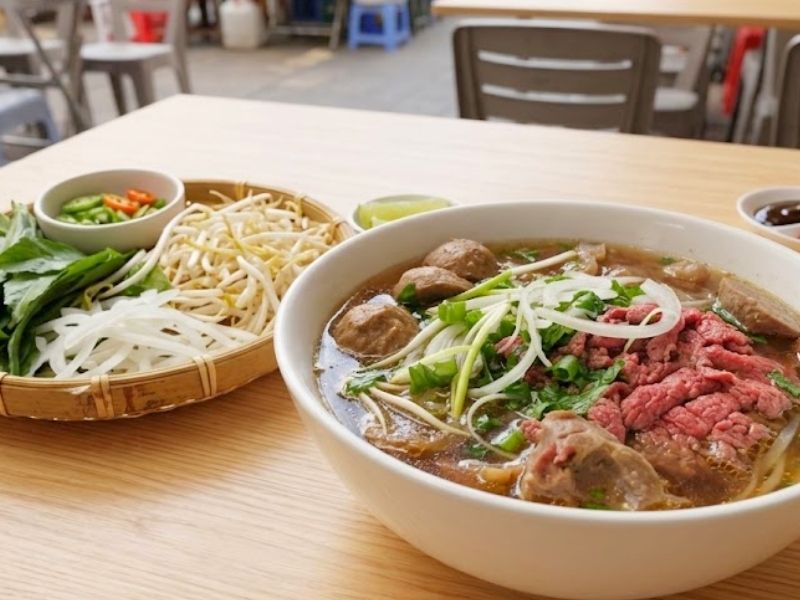
Phở also changes as you travel south. Hanoi-style phở is usually more restrained, with a clear broth and fewer garnishes, while southern versions often taste slightly sweeter and come with more bean sprouts, herbs, lime, and sauces. That difference grew as phở moved south and adapted to local tastes. For many Vietnamese diners, phở is still part of everyday life: an early-morning bowl on a low stool, a quick lunch, or a warm meal late at night. A good bowl feels simple, but that simplicity depends on a broth carefully built to taste rich without becoming heavy.
For those who want to recreate this experience at home, our beef pho recipe covers the key steps behind the aromatic broth, spices, and traditional ingredients.
Phở Gà
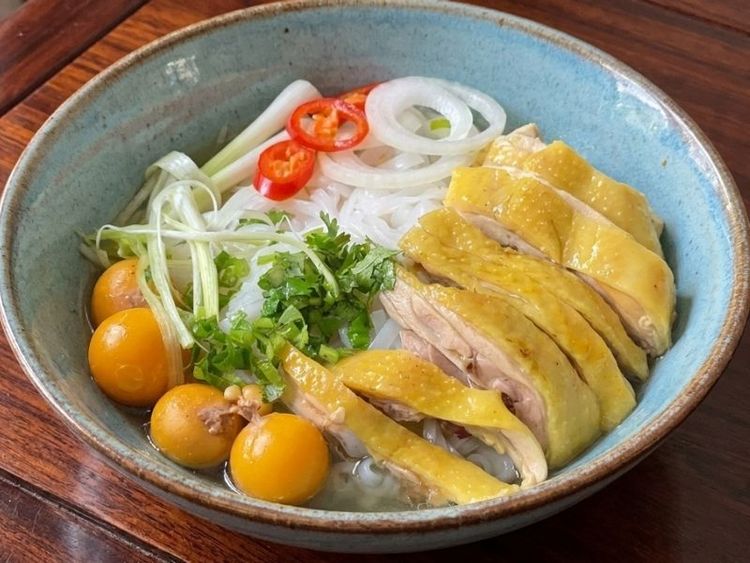
Phở gà is the chicken side of the phở family, pairing flat rice noodles and poached chicken with a broth that feels lighter and more delicate than phở bò. Ginger and onion come through more clearly, while the warm spices are used with a softer hand. The result is savory and gently sweet, with a clean finish that lets the chicken remain at the center of the bowl.
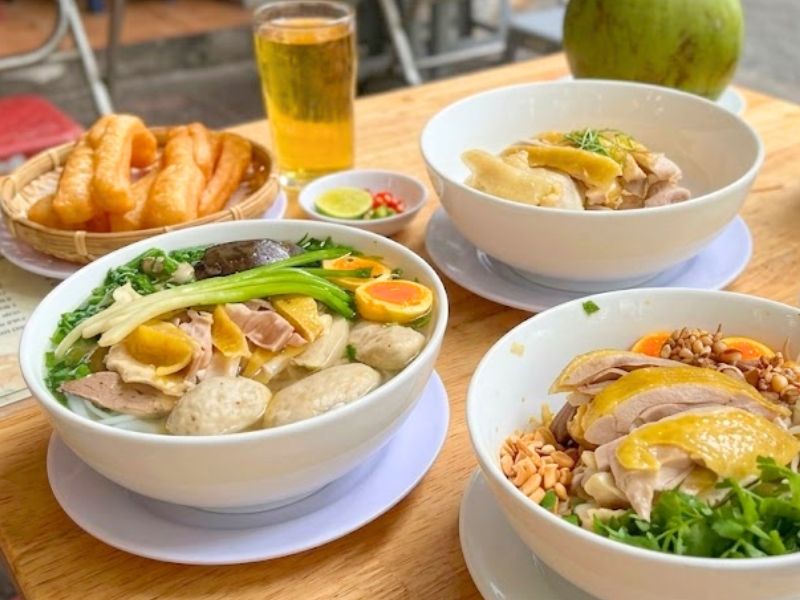
The chicken is served shredded or sliced, sometimes with the skin left on for a little extra richness. Scallions, coriander, lime leaves, black pepper, and fresh herbs add fragrance and brightness, while a squeeze of lime or a little fresh chili is often enough to wake up the broth without covering its subtle character.
Phở gà has the kind of simplicity that makes it easy to return to. It works as breakfast, a light lunch, or a comforting bowl when you want something warm but not heavy. Where phở bò builds depth from beef and spice, phở gà relies more on the sweetness of the chicken and the freshness of its aromatics. Our chicken pho recipe follows this lighter approach with chicken, ginger, and aromatic broth.
Bún Bò Huế
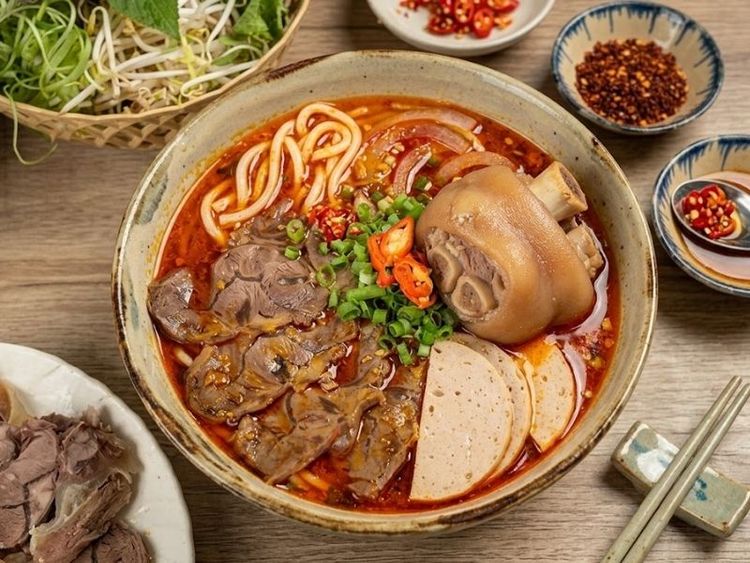
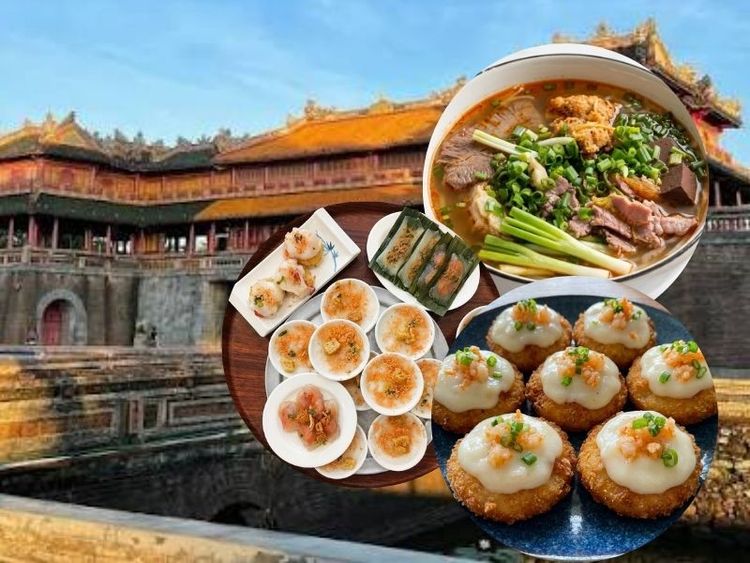
Bún bò Huế is Huế’s signature beef noodle soup, and this is where Vietnamese soup turns noticeably bolder. The broth is rich and beefy, but lemongrass is often the first aroma you notice, followed by the savory depth of mắm ruốc and a slow build of chili heat. Compared with phở, it feels fuller, spicier, and more aromatic, with thick round noodles that stand up well to the stronger broth.
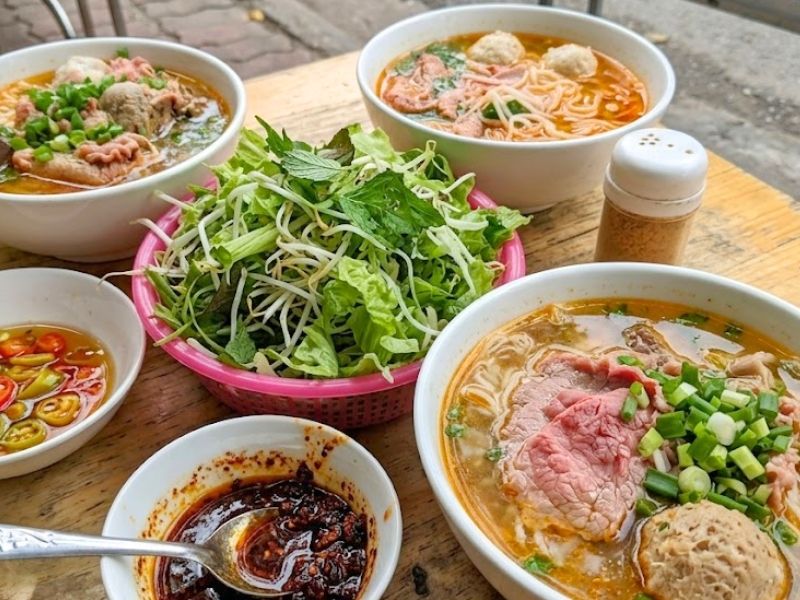
A traditional bowl brings together beef shank, pork knuckle, chả, and cubes of congealed blood, then lightens all that richness with banana blossom, herbs, lime, and fresh greens. Try the broth on its own first, then again after adding the vegetables. The change is part of the pleasure: the first spoonful feels deep and warming, while the herbs and lime make the next one brighter and fresher.
The soup comes from Huế, Vietnam’s former imperial capital, and its strong flavors reflect the bold, carefully balanced style found throughout Hue food. A small spoonful of CHIN-SU hot sauce adds extra heat if you prefer a spicier bowl. Add it gradually because bún bò Huế already carries plenty of spice and fermented savoriness on its own.
Bún Riêu Cua
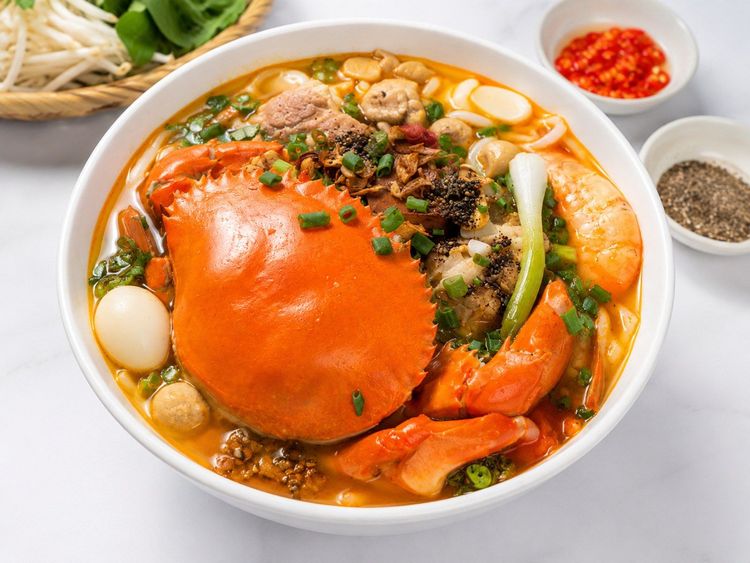
Bún riêu is a Vietnamese crab noodle soup known for its tangy tomato broth and soft curds of freshwater crab. The broth tastes brighter than the beef-based soups above, with tomato bringing gentle acidity, crab adding natural sweetness, and mắm tôm in many versions lending a savory fermented note underneath.
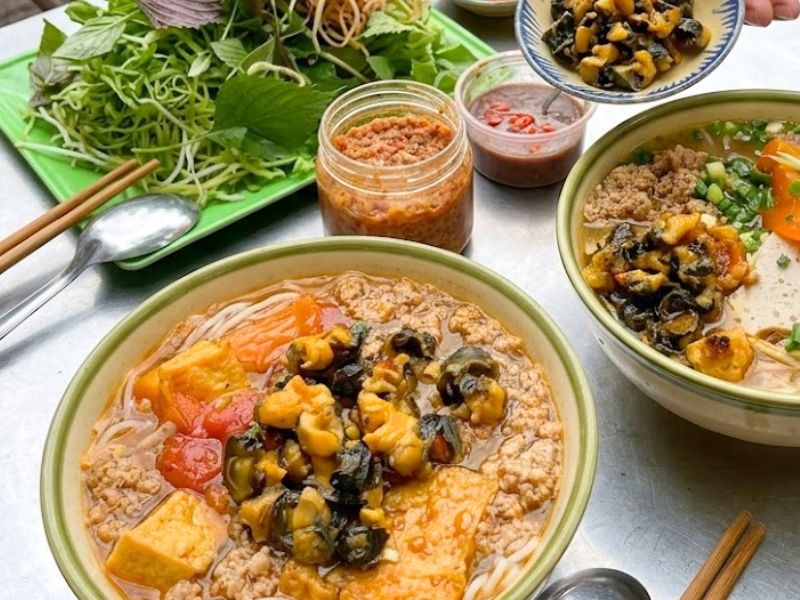
The part worth looking for is the riêu itself. Freshwater crab is pounded, strained, and cooked until it rises into soft, fluffy curds that break apart easily with a spoon. Rice vermicelli, fried tofu, tomato, and sometimes snails, pork, or congealed blood fill out the bowl, while water spinach, banana blossom, herbs, lime, and chili add freshness and crunch.
A good bowl moves between sour, savory, slightly sweet, and gently funky rather than leaning hard in one direction. Try a spoonful of broth with a little riêu first, then add herbs and lime gradually. The contrast between the soft crab curds, hot broth, fresh vegetables, and slippery noodles is a big part of why bún riêu feels so lively despite being such an everyday Vietnamese soup.
Hủ Tiếu Nam Vang
Hủ tiếu Nam Vang is a southern Vietnamese noodle soup with Cambodian roots, known for its clear pork broth, chewy noodles, and generous mix of pork and seafood. The broth is lighter than phở but carries its own depth from pork bones, dried shrimp, garlic, and shallots, giving it a gently sweet, savory taste with a fragrant finish rather than a heavy richness.
A typical bowl brings together sliced pork, minced pork, liver, shrimp, quail eggs, Chinese chives, and fried garlic. What makes hủ tiếu especially fun to eat is the mix of textures: springy noodles, tender meat, crisp herbs, and little bursts of sweetness from shrimp. A squeeze of lime or some fresh chili brightens the broth, while fried garlic is often the aroma that lingers after each spoonful.
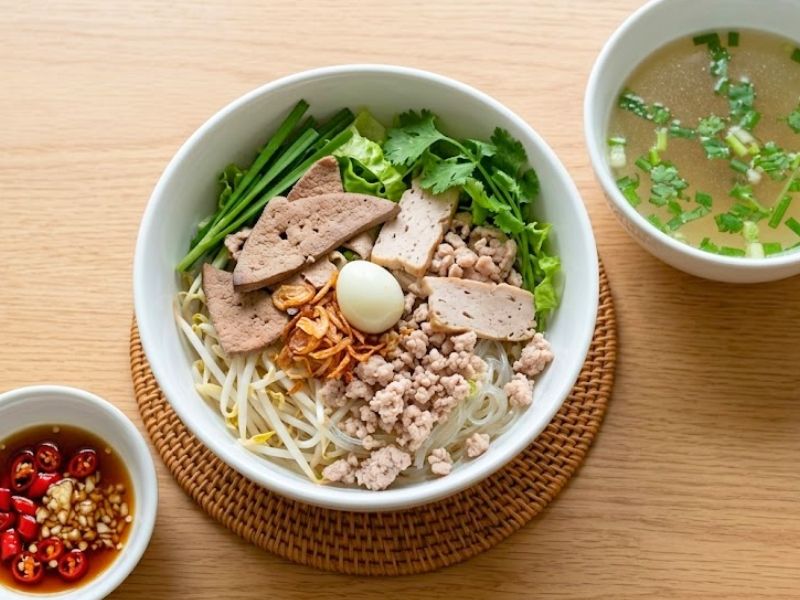
Its name points back to Phnom Penh, called Nam Vang in Vietnamese, and the dish reflects the long culinary exchange between Cambodia, southern Vietnam, and Chinese communities in the region. It is also served nước, with the noodles in broth, or khô, with the noodles seasoned separately and a small bowl of soup on the side. Trying both makes it easy to see how the same ingredients create two very different eating experiences. This contrast is part of the wider diversity found in Vietnamese noodle dishes.
Bánh Canh
Bánh canh is a family of Vietnamese thick noodle soups, and the noodle tells you almost as much about the bowl as the broth does. Rice-flour strands are usually soft, opaque, and good at soaking up flavor, while tapioca-heavy noodles turn more translucent, slippery, and pleasantly chewy. Some places still cut the dough by hand, giving the noodles a thicker, more irregular shape that makes the bowl feel distinctly homemade.
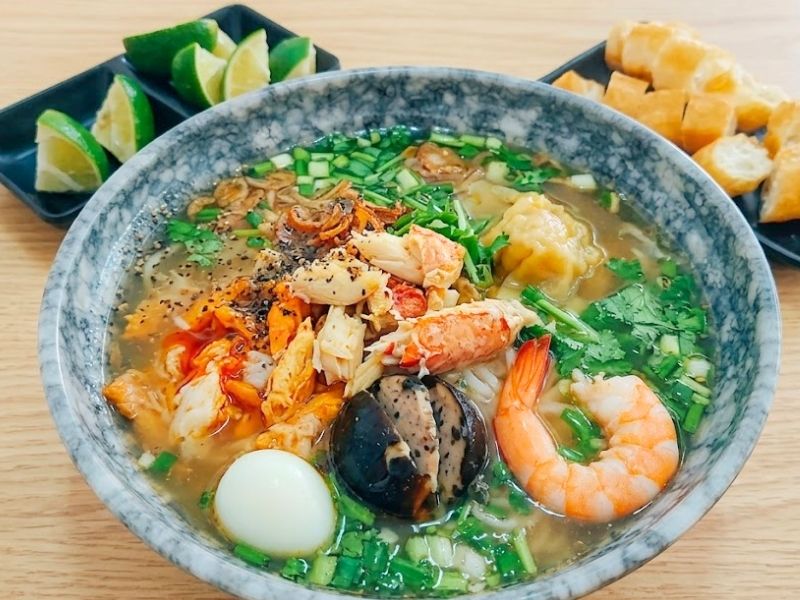
From there, bánh canh changes dramatically with the region. Bánh canh cá lóc in Central Vietnam pairs soft rice noodles with sweet freshwater fish and a light, peppery broth; bánh canh hẹ in Phú Yên arrives almost hidden beneath chopped chives, with fish cake and a clean broth often made from fish bones. Bánh canh cua or ghẹ moves in the opposite direction, with crab or swimming crab giving the soup a richer sweetness and, in some versions, a slightly thickened body. For this richer variation, our banh canh cua recipe explores the crab-based version in more detail.
Some local versions barely resemble one another. Bánh canh Trảng Bàng in Tây Ninh is known for soft white rice noodles, clear pork-bone broth, boiled pork, and fresh herbs, supported by a long local tradition of noodle making. In Huế, bánh canh Nam Phổ is much thicker and more spoonable, with short soft noodles beneath a reddish, silky soup of shrimp, crab, and pork.
Bún Mắm
Bún mắm is a Mekong Delta noodle soup built around fermented fish, giving it one of the deepest and most distinctive broths in Vietnamese cooking. Mắm cá linh or cá sặc is cooked down and strained into the stock, creating a brown broth that smells assertive but should taste balanced rather than harsh. The first spoonful is deeply savory and slightly sweet, with the fermented flavor lingering underneath rather than overwhelming everything else. A well-made broth still tastes of fish, lemongrass, and the natural sweetness of the ingredients around it.
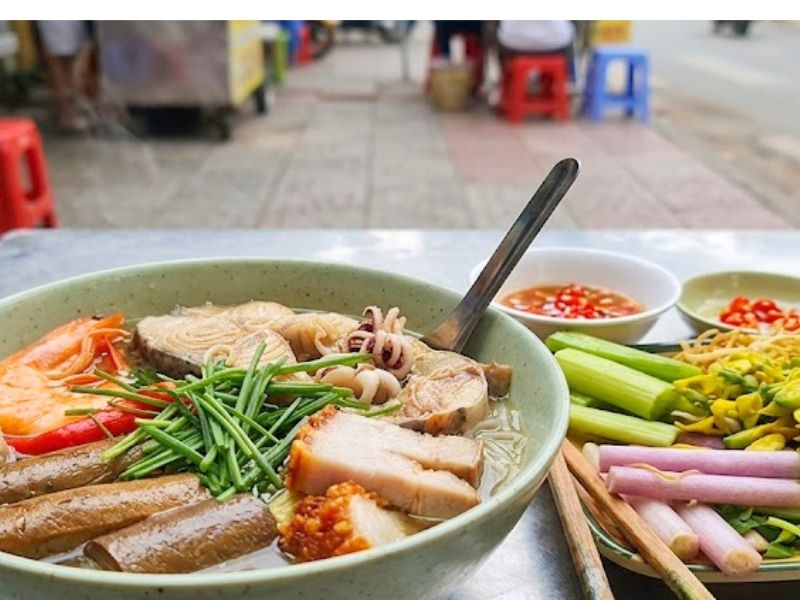
The bowl is usually just as generous as the broth. Thick rice vermicelli often comes with snakehead fish, shrimp, squid, roasted pork, eggplant, or stuffed chili, while the plate of greens is almost a meal of its own. Water lily stems, bitter herbs, kèo nèo, shredded water spinach, banana blossom, and bean sprouts bring crispness and freshness to a soup that would otherwise feel much heavier. That contrast is part of the experience: a bite of seafood and noodles tastes rich and fermented, then the vegetables reset the palate before the next spoonful.
Bún mắm also tells a wider story about the Mekong Delta. The dish is commonly linked to Khmer fermented-fish traditions; as it became part of southern Vietnamese cooking, locally abundant cá linh and cá sặc replaced Khmer prahok, while seafood, pork, and Delta vegetables gradually made the bowl more elaborate. It is sometimes confused with bún nước lèo, which uses similar fermented fish in some versions while remaining lighter and often scented with ngải bún.
Bún Mọc
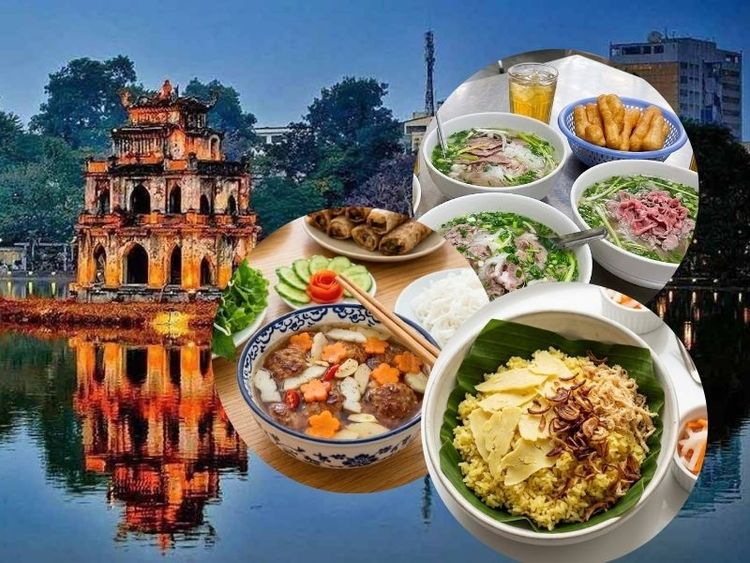
Bún mọc is a Hanoi pork noodle soup built around a clear, gently sweet broth and springy pork meatballs called mọc. Compared with the fermented depth of bún mắm or the heat of bún bò Huế, this bowl is much more restrained. Pork bones give the broth a clean savory base, while shiitake mushrooms, scallions, coriander, and black pepper add a soft fragrance. The mọc brings its own contrast, tender and juicy with a slight bounce, often flecked with wood ear mushrooms for a delicate crunch.
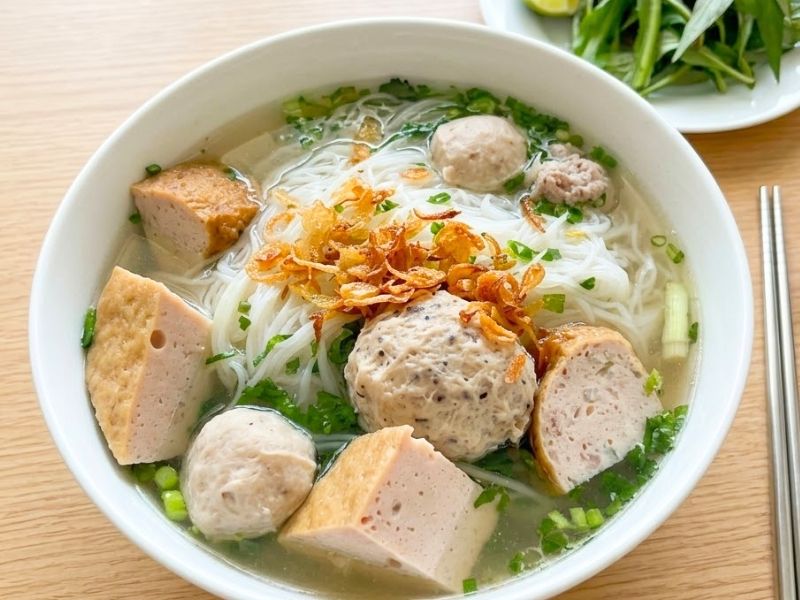
The bowl ranges from simple to generous depending on the shop. Fine rice vermicelli and mọc are joined in some versions by tender ribs, slices of giò lụa, pork leg, bamboo shoots, or crisp dọc mùng. These additions bring different textures without taking attention away from the broth, so the flavors of pork and mushrooms still come through clearly. A little black pepper, fresh herbs, or chili vinegar is usually enough to brighten the final mouthful.
Its name carries a small piece of Hanoi food history. Bún mọc is commonly linked to the old Mọc villages around present-day Nhân Chính, although another explanation connects the name more directly to the mọc meatballs and Hanoi’s long tradition of making giò. Today, it is familiar breakfast and lunch food across the city, served from neighborhood shops and market stalls where each cook has their own combination of mọc, ribs, giò, and herbs.
Bún Thang
Bún thang is one of Hanoi’s most delicately assembled noodle soups, with a clear broth that tastes gentle at first but becomes more savory the longer you sip it. Chicken bones form the base, while dried shrimp and, in more elaborate versions, dried squid or sá sùng add a quiet seafood sweetness underneath. The broth should stay clear and fragrant rather than rich, leaving enough room for each topping to keep its own flavor.
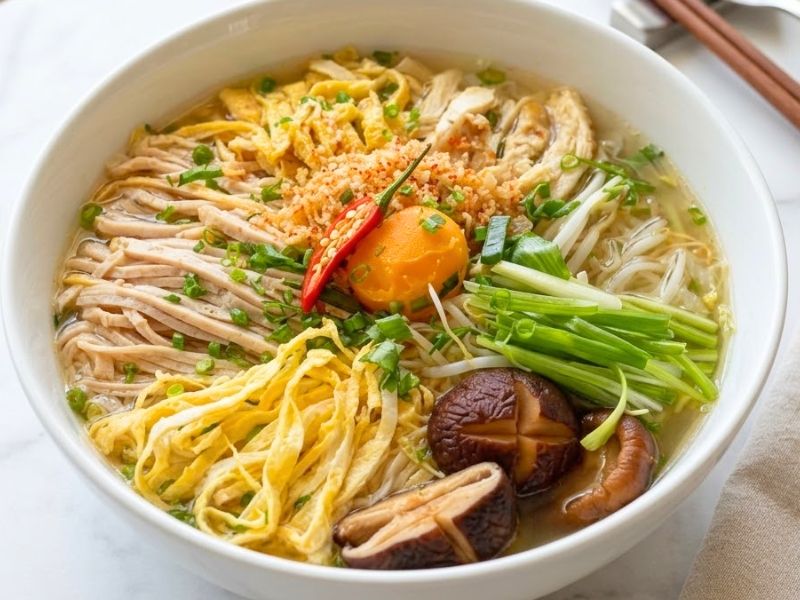
The bowl is almost as much about precision as taste. Fine rice vermicelli is covered with thin strands of shredded chicken, omelet, giò lụa, shrimp floss, rau răm, and sometimes pickled dried radish or salted egg. Everything is cut finely and arranged in separate patches before the hot broth is poured in, so the first few bites move between silky egg, tender chicken, springy giò, and the deeper savoriness of the stock.
That careful presentation has roots in Hanoi’s post-Tết food culture. Bún thang is commonly said to have developed as a way of turning small amounts of leftover holiday ingredients into a fresh meal. Older Hanoi versions were also associated with cà cuống, an intensely aromatic essence added only a drop or two at the table, a detail that has become much less common today.
Bánh Đa Cua
Bánh đa cua is Hải Phòng’s signature crab noodle soup, instantly recognizable by its reddish-brown noodles and sweet, earthy broth made from freshwater crab. The broth is less tomato-forward than bún riêu, letting the natural sweetness of the crab come through more clearly, often with a little fish sauce, fermented shrimp seasoning, or tamarind underneath. On top, soft crab curds and rich orange roe meet fried shallots and crisp pork fat, giving each spoonful a mix of sweetness, savoriness, and roasted aroma.
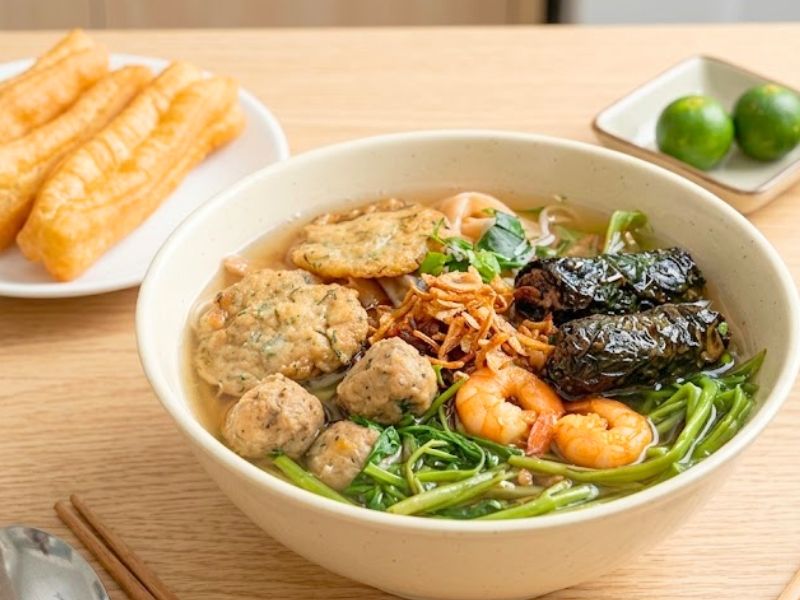
The red bánh đa noodles are what make the bowl unmistakably Hải Phòng. Traditionally associated with noodle-making areas such as Dư Hàng Kênh, they are broad, slightly chewy, and sturdy enough to soak up broth without quickly turning soft. A full bowl often brings chả lá lốt, fish cake, shrimp or mantis shrimp, rau muống, and seasonal rau rút, so the textures move from slippery noodles and tender crab to crisp greens and fragrant grilled leaves.
In Hải Phòng, bánh đa cua is everyday street food as much as a city specialty, eaten from early-morning shops and pavement stalls as well as on the food tours now associated with the city. Locals often finish the bowl with chí chương, Hải Phòng’s style of chili sauce, adding a sharp heat that works especially well with the sweetness of crab. It is a bowl built from humble ingredients from fields, rivers, and the nearby coast, yet one that has become closely tied to the identity of the port city itself.
Miến Gà
Miến gà is a Vietnamese chicken soup where a clear, gently savory broth meets thin glass noodles that are slippery, springy, and almost weightless on the chopsticks. The broth often begins with the liquid from poaching chicken, then picks up fragrance from ginger, onion, scallions, black pepper, and sometimes fried shallots or lime leaf. Compared with phở gà, there is usually less emphasis on warm spices, so the sweetness of the chicken and the peppery, herbal notes come through more directly.
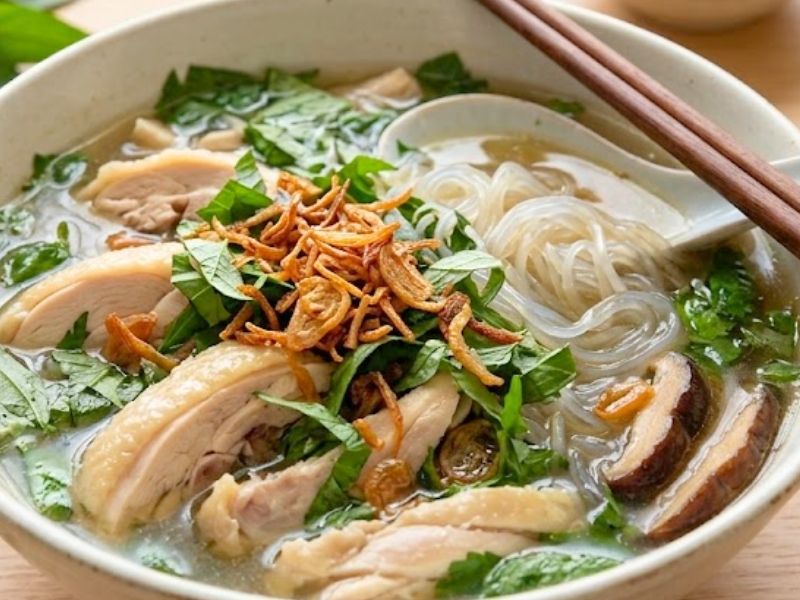
The noodle changes the experience as much as the broth. Traditional miến dong stays slightly chewy and glossy after cooking, rather than turning soft like bánh phở, and its slippery strands make each mouthful feel different even when the same poached chicken is used. Common additions include chicken skin, giblets, shiitake mushrooms, wood ear mushrooms, or bamboo shoots, followed by coriander, scallions, pepper, lime, and fresh chili.
Miến gà also has a familiar place in Tết meals and family ceremonial spreads. Boiled chicken is already central to many of these occasions, and its flavorful cooking broth becomes the base for the soup, often with miến, mushrooms, or dried bamboo shoots. That practical connection between dishes is part of why miến gà feels so naturally at home on the Vietnamese holiday table.
Bún Măng Vịt
Bún măng vịt is a Vietnamese duck noodle soup whose character comes from the way rich duck broth meets the earthy flavor of bamboo shoots. Duck gives the broth a rounded savory depth, while ginger and shallots keep the aroma fresh and fragrant. Fresh măng brings a lighter, crisper bite, while dried bamboo shoots have a deeper, more earthy flavor that makes the bowl feel distinctly rustic.
The experience comes together in the textures. Soft rice vermicelli sits beneath tender duck and strips of bamboo shoots, with scallions, Vietnamese coriander, fried shallots, and fresh greens adding fragrance and crunch. Some shops serve part of the duck separately over cabbage and herbs, letting you alternate between the hot soup and pieces of meat dipped on the side.
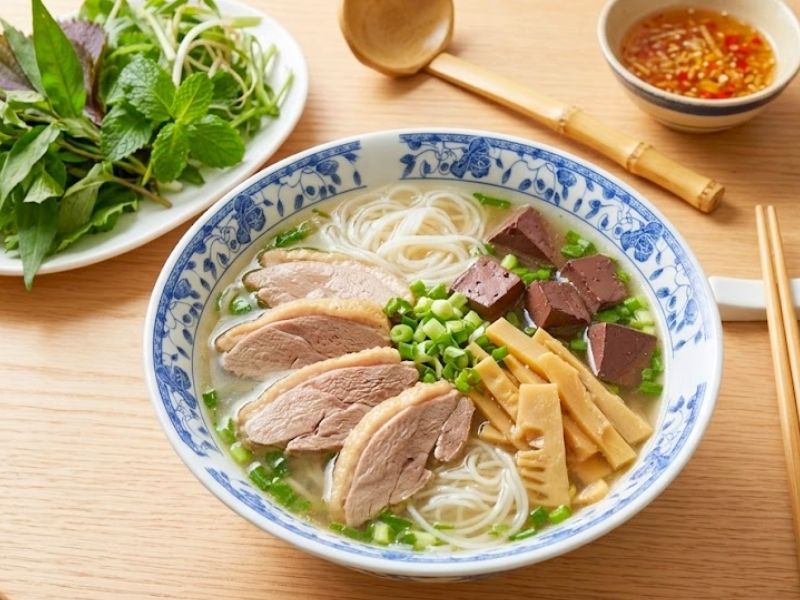
That is where nước mắm gừng comes in. The ginger fish sauce brings salty, slightly sweet, and sharply aromatic notes that work especially well with the richness of duck. Rather than pouring it into the broth, dip a piece of duck into the sauce first, then return to the noodles and soup. The broth keeps its gentle duck-and-bamboo character, while each bite of meat gets a brighter, more vivid finish.
After the full-meal noodle soups above, Vietnamese soup takes on a different role at the family table. Canh is usually served alongside rice and other shared dishes, with a lighter broth meant to be eaten throughout the meal rather than as a course on its own.
Canh Chua
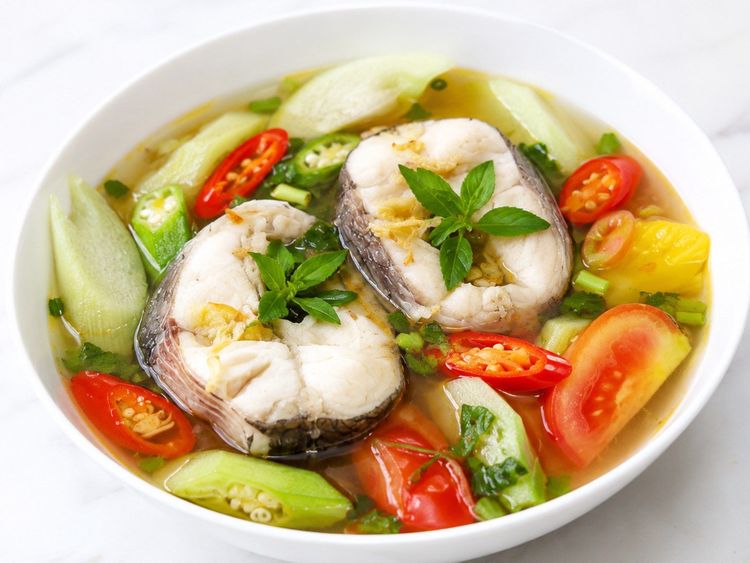
Canh chua is a southern Vietnamese sour soup, especially associated with the Mekong Delta, where tamarind gives the broth its bright, unmistakable tang. Fish is the classic protein, often snakehead, catfish, or another firm freshwater fish, while shrimp is also common. As the protein cooks, it adds its own sweetness and savoriness to the broth, which is balanced with pineapple, tomato, fish sauce, and a little sugar. The result is lively rather than sharply acidic, with sour, sweet, and savory notes arriving together.
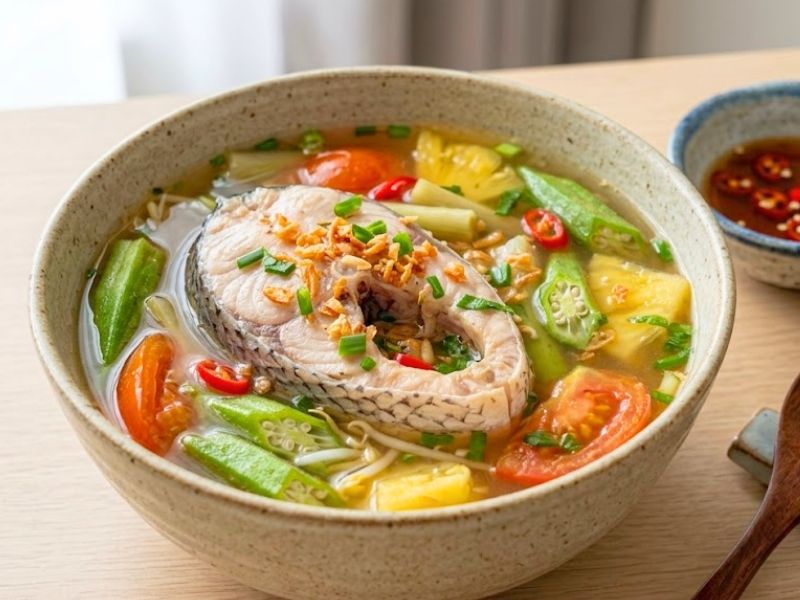
The vegetables are just as important. Pineapple, tomato, okra, bean sprouts, and bạc hà or dọc mùng often fill the bowl, while ngò om and ngò gai add a fresh, citrusy aroma at the end. Bạc hà is especially memorable if you have never tried it before: its pale, spongy stalk soaks up the broth, while okra turns tender and bean sprouts keep some crunch.
Canh chua is usually eaten as part of a shared rice meal rather than on its own. In southern homes, it often appears beside steamed rice and strongly seasoned dishes such as cá kho tộ, where the tart broth refreshes the palate between bites of salty-sweet braised fish. Our canh chua recipe follows this traditional balance of sour, sweet, and savory flavors.
Canh Rau
Canh rau is the everyday side of Vietnamese soup, less a single recipe than a simple way of turning seasonal vegetables into something warm to share with rice. The broth is usually clear and gently savory, taking most of its character from the vegetables themselves and a small amount of shrimp, minced pork, fish, or field crab. Rau ngót gives a soft natural sweetness, mustard greens bring a slightly peppery edge, while mồng tơi becomes tender and almost silky as it cooks.
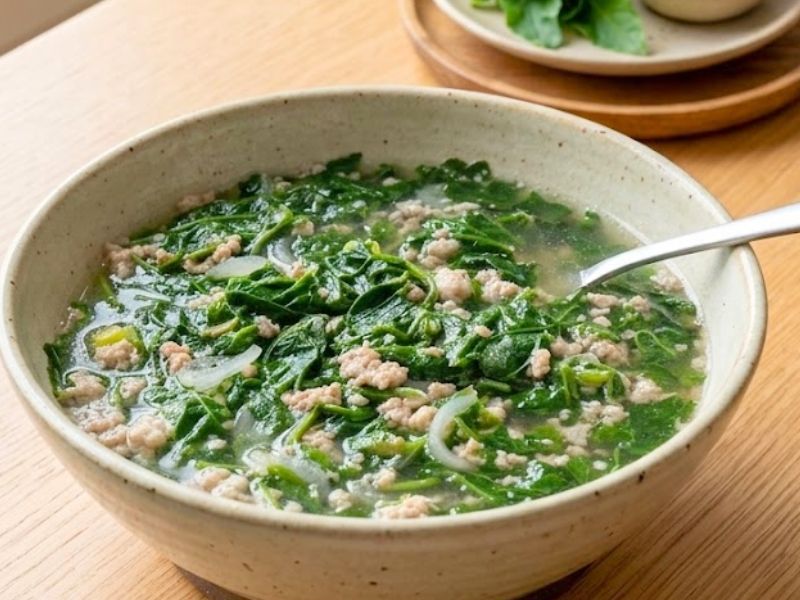
What goes into the pot changes easily with the season and what is already in the kitchen. A northern family might make canh rau ngót with minced pork, canh cua with mồng tơi and mướp, or canh rau dền with shrimp; elsewhere, gourds, watercress, mustard greens, or mixed garden vegetables take their turn. The protein is usually there to deepen the broth rather than dominate it, which is why even a handful of dried shrimp or a little ground pork shapes the whole bowl.
That flexibility is exactly why canh rau appears so often in Vietnamese home cooking. There is rarely much ceremony around it: the bowl arrives with rice, a braised or stir-fried dish, and whatever else the family is eating that day, and everyone helps themselves throughout the meal. This everyday balance of vegetables, broth, and shared dishes is also a key part of healthy Vietnamese food.
Canh Khổ Qua Nhồi Thịt
Canh khổ qua nhồi thịt is a southern Vietnamese soup of bitter melon filled with seasoned pork and simmered in a clear, gently savory broth. The bitterness is unmistakable at first, but it softens as you eat, especially against the sweetness of the pork filling and broth. Wood ear mushrooms and glass noodles are often mixed into the meat, adding a little crunch and springiness inside the tender melon.
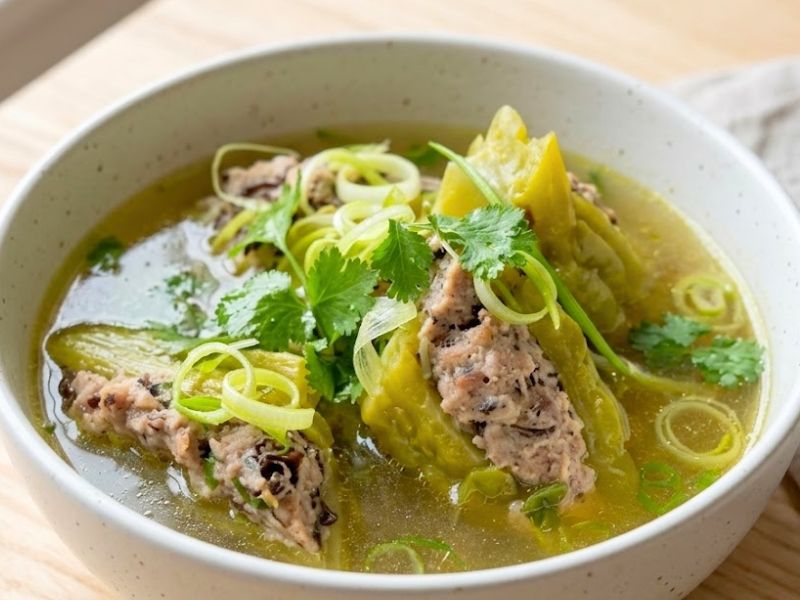
This is one of those Vietnamese dishes where the flavor makes more sense as part of the whole meal. A piece of stuffed bitter melon eaten with rice feels much gentler than the first sip of broth on its own, and dishes such as thịt kho trứng often sit nearby on the southern table. The clean broth and lingering bitterness give the meal a different rhythm between richer bites.
Canh khổ qua is especially tied to Tết in Southern Vietnam. Its name carries a piece of New Year wordplay: khổ refers to hardship and qua means to pass, so eating it expresses the hope that the difficulties of the old year will pass with it. The soup is served during the first days of Tết and also appears in meals offered to ancestors, giving an everyday vegetable a place in one of the year's most meaningful family meals.
After the lighter canh served alongside rice, Vietnamese soup shifts again with cháo, where the rice itself cooks down into the liquid and becomes the body of the bowl.
Cháo
Cháo is Vietnamese rice porridge, where the rice cooks long enough that the grains soften and begin to melt into the liquid around them. Instead of noodles sitting in a separate broth, the rice gives the bowl its own body, ranging from loose and brothy to thick and creamy depending on the style. The flavor ranges from something as simple as warm rice and ginger to much richer versions with chicken, duck, fish, pork, or offal, usually finished with scallions, black pepper, fried shallots, and fresh herbs.
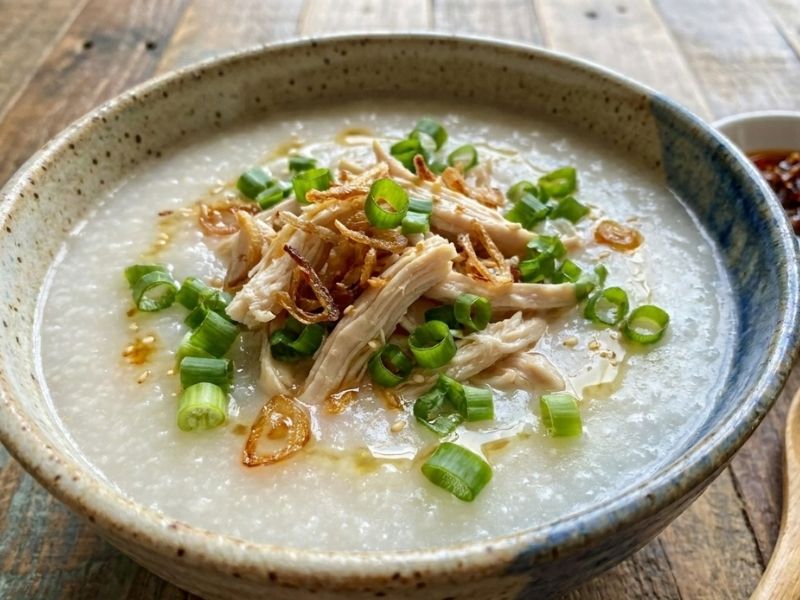
The name often changes with what goes into the pot. Cháo gà carries the sweetness of chicken and ginger, cháo vịt is fuller and commonly served with Vietnamese coriander and ginger fish sauce, while cháo lòng brings pork offal into a more deeply savory bowl. Cháo lòng is also a street-food experience of its own: in northern Vietnam the porridge tends to be thicker, while southern versions are often looser and served with bean sprouts and ginger fish sauce.
Cháo also has a familiar place in Vietnamese homes when someone is tired or unwell. A hot bowl with chicken, ginger, scallions, or tía tô is easy to eat when a full meal feels like too much, which is why cháo has long carried the feeling of being looked after as much as simply being fed. Outside that setting, it is just as comfortable at a morning street stall or a late-night cháo shop, showing how cháo remains a familiar part of Vietnamese breakfast foods across the country.
Súp Măng Cua
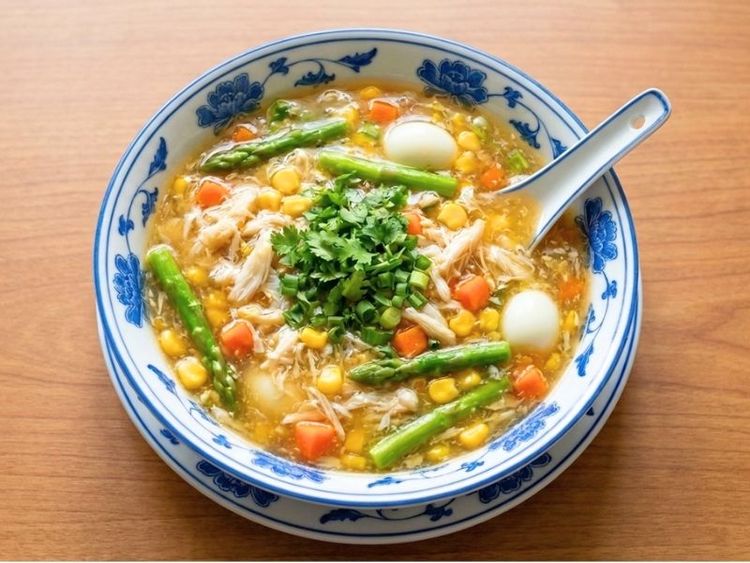
Súp măng cua is a Vietnamese crab and asparagus soup with a silky, lightly thickened broth and a much more banquet-like feel than the everyday canh above. Crab brings a delicate sweetness, while asparagus, chicken or pork stock, and ribbons of egg give the soup a soft, savory richness. Quail eggs often appear as well, and a little tapioca or cornstarch keeps the broth glossy enough to hold the crab and egg in each spoonful without making it heavy. Our súp măng cua recipe shares the steps to make this silky crab soup at home.
Despite the name, the măng here refers to măng tây, or asparagus, not bamboo shoots. White asparagus is especially traditional in older versions, and the ingredient is widely linked to French influence in Vietnam, where asparagus was once expensive and uncommon in everyday cooking. That helps explain why súp măng cua became associated with weddings and large celebrations rather than the family rice table.
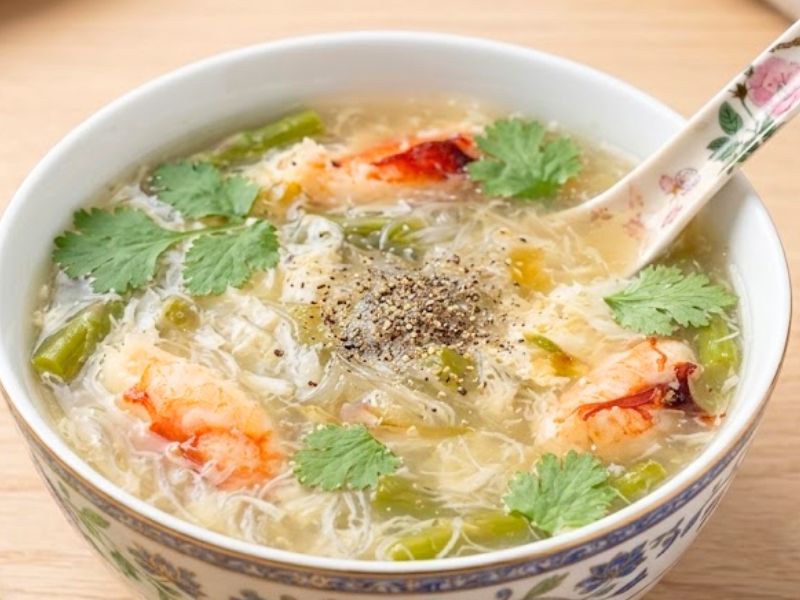
At a Vietnamese wedding banquet, this is often served as one of the Vietnamese appetizers that arrive before the heavier courses begin, usually presented in a small bowl as a warm and gentle introduction to the meal. The flavor is intentionally gentle: sweet crab, tender asparagus, soft egg ribbons, and a little black pepper or coriander at the end.
How Vietnamese Soup Flavors Change From North To South
Travel from northern Vietnam toward the Mekong Delta and the character of the soup changes with you. These are tendencies rather than strict rules, but northern bowls often keep the broth clear and the seasoning restrained, while Central Vietnam leans more readily into chili and fermented seasonings, and southern soups make greater use of herbs, tropical produce, seafood, and sweeter flavor balances.
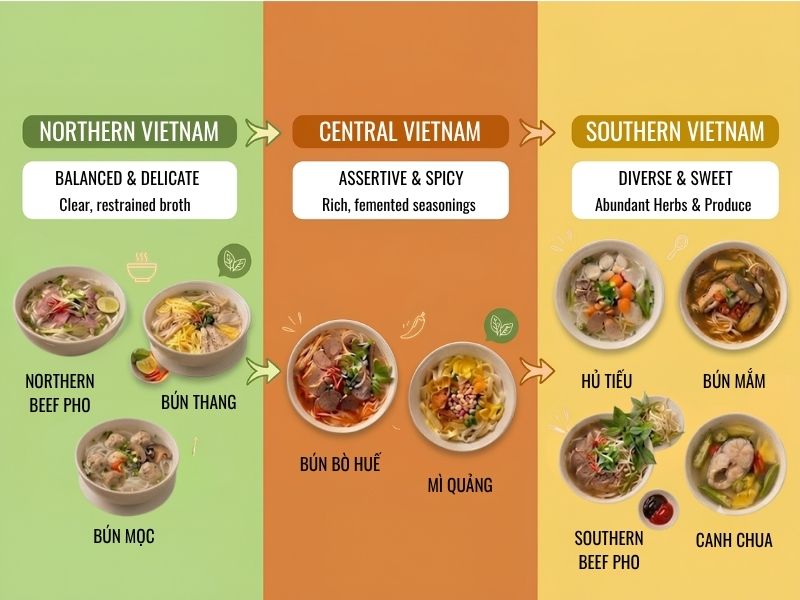
In Hanoi, that restraint comes through in phở, bún thang, and bún mọc, reflecting the balanced flavors and careful preparation often associated with Hanoi food. Their broths carry plenty of depth, yet the flavors tend to unfold quietly rather than arrive all at once. Hanoi phở makes the contrast especially easy to taste, with clear broth and relatively few garnishes keeping the beef and aromatics at the center of the bowl.
Move into Central Vietnam and the flavors become more assertive. Bún bò Huế brings lemongrass, chili, mắm ruốc, beef, and pork into the same broth, while the region's long coastline also makes seafood and fermented fish or shrimp seasonings a familiar part of its cooking.
Further south, the waterways and produce of the Mekong Delta show up directly in the bowl, reflecting the fresh ingredients and diverse influences found in Saigon food. Bún mắm draws its depth from fermented fish, canh chua brings together tamarind, pineapple, fish, and vegetables, while hủ tiếu reflects the Cambodian, Chinese, and Vietnamese influences that meet in southern cooking. Fresh herbs and table condiments also become more abundant. That change appears even within phở: southern versions are commonly sweeter and arrive with bean sprouts, basil, culantro, lime, and sauces that let diners shape the bowl to their own taste.
How Vietnamese Soup Broths Are Built
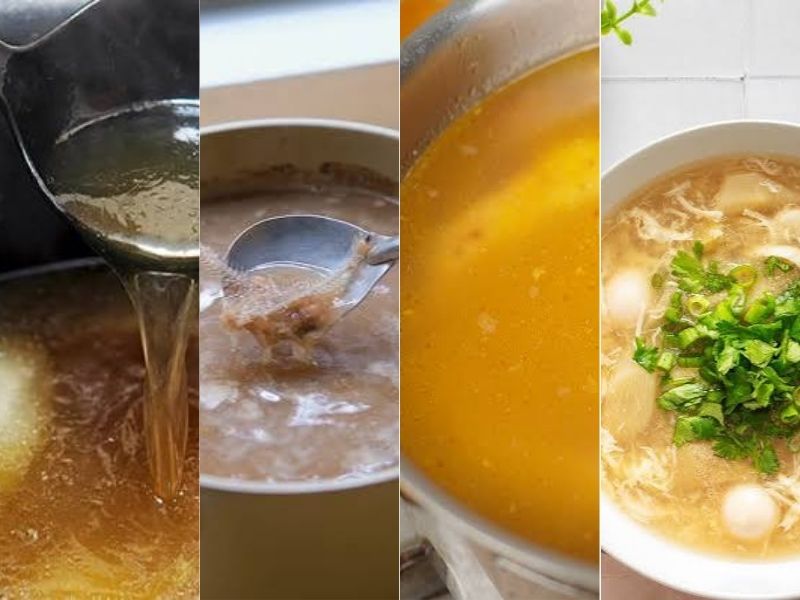
Vietnamese soup broth is not built around one formula. Some pots begin with beef, pork, or chicken bones simmered for sweetness and depth. Others lean on freshwater crab, fermented fish, tamarind, or even the starch released from rice and noodles. Aromatics such as ginger, onion, lemongrass, and shallots shape the fragrance, while fish sauce, mắm ruốc, or mắm tôm add another layer of savory, fermented flavor.
| Broth Approach | What Shapes The Flavor | Examples |
| Long-simmered stock | Beef, pork, or chicken bones with ginger, onion, and spices | Phở, hủ tiếu, bún mọc |
| Lemongrass and fermented seasoning | Beef and pork stock, lemongrass, mắm ruốc, chili | Bún bò Huế |
| Fermented fish base | Mắm cá linh or cá sặc, lemongrass, aromatics | Bún mắm |
| Crab and tomato | Freshwater crab, tomato, and often mắm tôm | Bún riêu |
| Tamarind sour broth | Tamarind, pineapple, tomato, fish or shrimp | Canh chua |
| Quick household broth | Vegetables with a little pork, shrimp, crab, or fish sauce | Canh rau |
| Starch-thickened broth | Tapioca, cornstarch, or starch released from thick noodles | Súp măng cua, some bánh canh |
| Rice-thickened broth | Rice cooked until it softens and releases starch | Cháo |
These approaches often overlap. Bún riêu combines pork stock with crab, tomato, and fermented shrimp seasoning in many versions, while bánh canh ranges from a clear fish broth to something thick and crab-rich. The useful thing to notice is what gives the broth its sweetness, aroma, sourness, body, and fermented depth. Once those pieces become familiar, it gets much easier to understand why two Vietnamese soups that look similar taste completely different.
How Fish Sauce And Fermented Seasonings Work In Vietnamese Soup
Fish sauce often works in Vietnamese soup without announcing itself. Added in small amounts, it brings saltiness and savory depth to broths such as phở, miến gà, and everyday canh while letting the flavor of meat, vegetables, and aromatics stay in front. It also appears outside the bowl, as with the ginger fish sauce served for dipping duck alongside bún măng vịt.
Other fermented seasonings are easier to notice. Mắm ruốc gives bún bò Huế its distinctive savory edge beneath the lemongrass and chili, while mắm tôm adds a stronger fermented note to many versions of bún riêu. In bún mắm, fermented cá linh or cá sặc goes further and becomes part of the broth itself, giving the soup its deep aroma and unmistakable character.
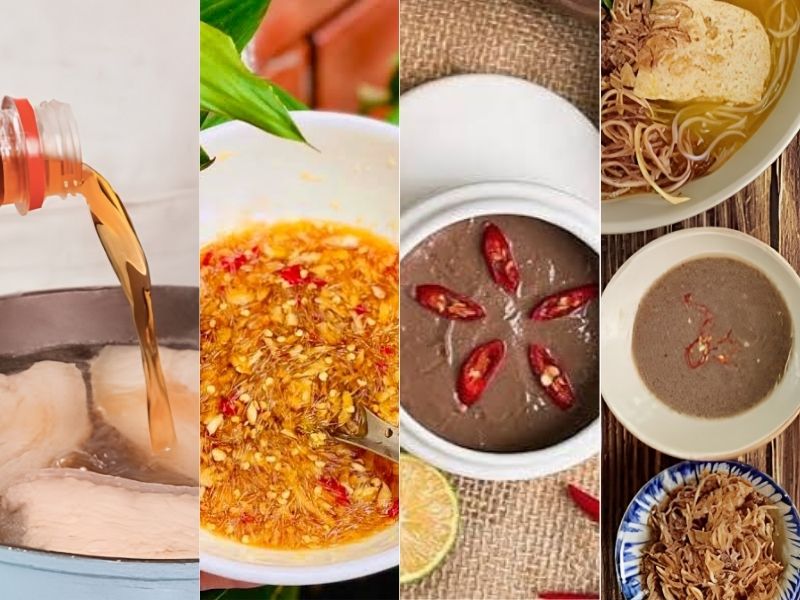
That difference matters because these seasonings are not interchangeable. Nước mắm deepens a broth without dominating it, while shrimp paste or fermented fish shapes the entire flavor of the soup. If you want to understand where fish sauce fits beyond these bowls, CHIN-SU’s guide to how to use fish sauce explains how it works in soups, marinades, stir-fries, and dipping sauces.
What Vietnamese Soup Names Tell You
Once you recognize a few Vietnamese food words, the name of a soup already tells you a lot about what will arrive at the table. Phở points to flat rice noodles, bún usually means round rice vermicelli, miến brings glass noodles, while bánh canh signals much thicker strands made from rice flour, tapioca starch, or both.
The words that follow often tell you even more. Bò means beef, gà chicken, vịt duck, cua crab, and cá fish. That is why phở bò, miến gà, bún măng vịt, and bánh đa cua become much easier to picture once you know the pattern. Some names point to place instead, as in bún bò Huế or hủ tiếu Nam Vang, where geography is part of the dish’s identity.
A few terms describe a different kind of soup altogether. Canh usually refers to the lighter soups served with rice at home, cháo is rice cooked down into porridge, súp often describes a thicker soup such as súp măng cua, and lẩu means hot pot served bubbling at the table. Learning these small cues makes a Vietnamese menu much less mysterious, even when the dish itself is new to you.
CHIN-SU hopes this list helps you discover a few bowls beyond the ones you already know, whether you are planning a trip to Vietnam, looking for something new to cook at home, or simply curious about the food we grew up with. If one of these soups becomes the reason you want to explore Vietnamese cuisine a little further, then this guide has done its job.
Frequently Asked Questions
Phở is the Vietnamese soup best known internationally. Beef phở and chicken phở are now found far beyond Vietnam, although inside the country they sit alongside a much wider range of noodle soups and everyday canh. MICHELIN describes phở as one of Vietnam’s most cherished noodle dishes, with noticeably different Hanoi and southern styles.
Not exactly. Bò kho is closer to a beef stew, even though it may be served with noodles or bánh mì. Mì Quảng uses only a small amount of concentrated broth to coat the noodles rather than filling the bowl like phở. Chè is sometimes translated as “sweet soup,” but in Vietnamese cuisine it belongs to the dessert and snack category rather than savory soups.
Start with phở, bún bò Huế, and canh chua if you want three very different introductions to Vietnamese soup. Phở brings a clear, aromatic broth; bún bò Huế is richer with lemongrass, chili, and fermented shrimp seasoning; and canh chua moves toward the bright sweet-sour flavors of tamarind, pineapple, and fish.
Many Vietnamese soups are mild, and heat is often added at the table rather than built heavily into the broth. Bún bò Huế is a notable exception, with chili forming part of its characteristic flavor alongside lemongrass and mắm ruốc.
Yes. Look for the word chay**, as in phở chay, when ordering a vegetarian version.** It is still worth checking the seasoning, because a soup made without meat may contain fish sauce or another animal-based condiment unless it is prepared specifically as a vegetarian dish. Vietnam Tourism recommends asking for không nước mắm when necessary.
Yes, especially noodle soups and cháo. Phở is a familiar Vietnamese breakfast, while dishes such as hủ tiếu and bánh canh also appear at morning stalls in different parts of the country. MICHELIN notes phở’s strong breakfast culture in Hanoi, while Vietnam Tourism describes bánh canh as a breakfast dish in the Mekong Delta.
Everyday canh is more representative of the family rice table than the elaborate noodle soups visitors often meet in restaurants. It may be as simple as vegetables with a little pork, shrimp, or fish and is served together with rice and other dishes rather than as a separate first course. Andrea Nguyen describes canh as an essential part of a typical Vietnamese meal that can be eaten throughout dinner.
The additions depend on the dish and region rather than following one universal rule. Lime, fresh chili, pickled garlic, herbs, bean sprouts, chili sauce, fish sauce, ginger fish sauce, and fermented shrimp condiments all appear across different Vietnamese soups.
Taste the broth first, then adjust only with the condiments traditionally served with that dish.

CHIN-SU KITCHEN TEAM
CHIN-SU Kitchen Team are the creative experts behind the delicious recipes featuring CHIN-SU sauces. With years of experience and a passion for flavor, our team carefully selects recipes from a variety of trusted chefs and bloggers, bringing together the best culinary insights to present you with the most suitable and exciting dishes. Every recipe is chosen to inspire you to create meals that are not only tasty but also easy to prepare, enhancing your dining experience. Join us as we explore a wide range of sauces and flavors, and elevate every meal with the perfect recipe for your table!
User Reviews
Featured Articles
SUBSCRIBE TO GET
MORE INFO
Want the latest and greatest recipes, updates, and more from us,
straight to your inbox? Subscribe and get our NEWS!