Sup Mang Cua Recipe - Vietnamese Crab and Asparagus Soup
Published: Aug 20, 2026 by CHIN-SU
Updated: Sep 8, 2026 by CHIN-SU
Tested by CHIN-SU Kitchen Team
Sup mang cua (súp măng cua) is a Vietnamese crab soup made with shredded chicken, crab meat, quail eggs, white asparagus, corn, vegetables, and a silky starch-thickened broth finished with egg ribbons. The soup is known for its gentle sweetness, smooth texture, and combination of soft ingredients with delicate savory toppings.
In Vietnam, sup mang cua is strongly associated with banquet meals, especially weddings, anniversaries, and family celebrations. It is commonly served as an opening course before richer dishes arrive, although many families also prepare simplified versions at home for gatherings and special meals.
In this article, CHIN-SU shares the sup mang cua recipe to make at home, techniques for controlling starch thickness, creating smooth egg ribbons, and balancing crab sweetness with chicken broth. The recipe takes about 45 minutes, including 30 minutes of active preparation, and serves 8 people as a first course.
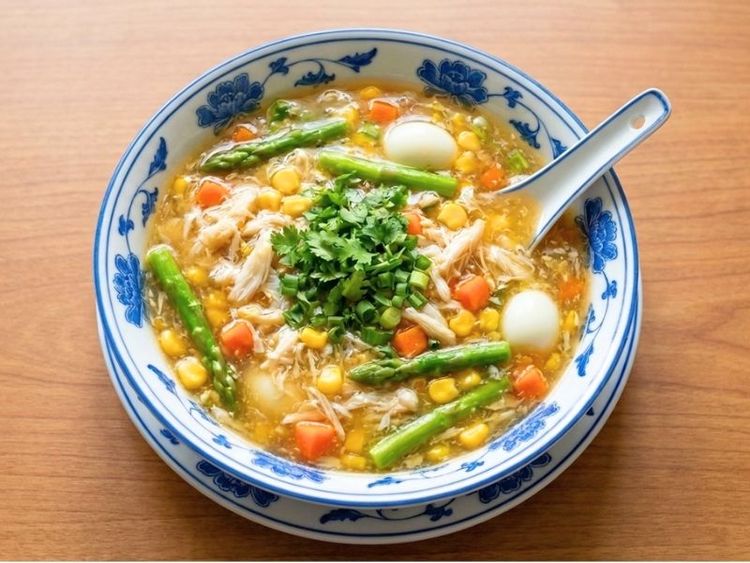
Table Of Contents
- What Is Sup Mang Cua?
- Why You'll Love Sup Mang Cua?
- Sup Mang Cua Ingredients
How to Make Sup Mang Cua Step by Step?
- Step 1: Poach The Chicken
- Step 2: Strain The Chicken Broth
- Step 3: Shred The Chicken
- Step 4: Prepare The Canned Ingredients
- Step 5: Prepare The Vegetables
- Step 6: Season The Broth
- Step 7: Simmer The Soup
- Step 8: Mix The Starch Slurry
- Step 9: Thicken The Soup
- Step 10: Create The Egg Ribbons
- Step 11: Add The Crab Last
- How to Serve Sup Mang Cua?
- Tips for the Best Sup Mang Cua
- What Can You Substitute or Change in Vietnamese Crab and Asparagus Soup?
- How to Store Sup Mang Cua?
What Is Sup Mang Cua?
Sup mang cua (súp măng cua) is a Vietnamese crab and asparagus soup with a silky, starch-thickened broth and delicate egg ribbons. The soup combines crab meat, shredded chicken, quail eggs, corn, and asparagus in a light chicken-based broth, creating a mild savory flavor with a smooth texture.
The name can confuse people unfamiliar with Vietnamese cuisine because of the word măng. In Vietnamese, măng means bamboo shoot, while asparagus is called măng tây, which literally translates to “western bamboo shoot.” In súp măng cua, the shortened term măng refers to asparagus rather than bamboo shoots, making the dish commonly known in English as Vietnamese crab and asparagus soup.
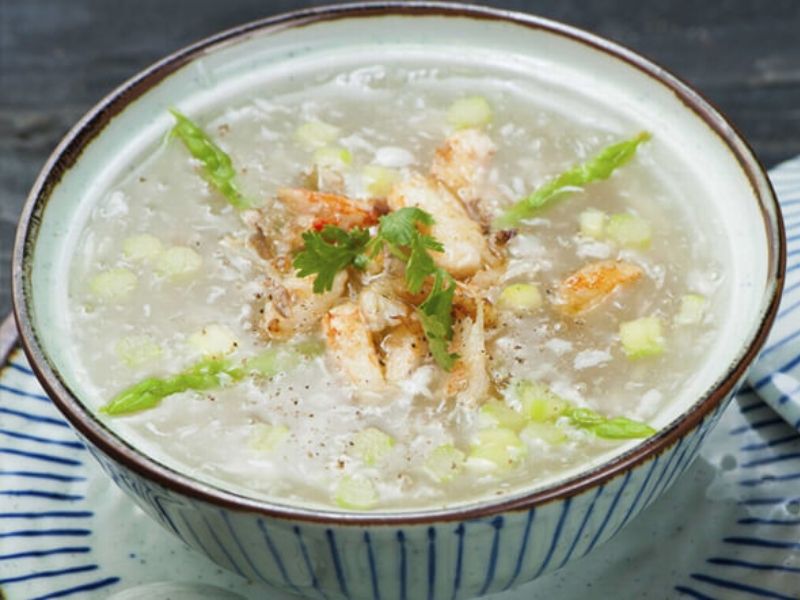
Asparagus became part of Vietnamese cuisine during the French colonial period, when French agricultural influence introduced vegetables such as asparagus, artichokes, and leeks. Vietnamese cooks later incorporated asparagus into local dishes, including this soup, which became associated with special occasions and formal meals.
Sup mang cua is commonly served as an opening course at Vietnamese weddings, banquets, and family celebrations. The soup is designed to be light and elegant before heavier seafood or meat dishes arrive. Its flavor comes from the natural sweetness of crab, chicken, and corn, while white pepper and cilantro add aroma at the table.
The combination of tender seafood, silky broth, asparagus pieces, and egg ribbons gives sup mang cua its signature balance of texture and flavor.
Why You'll Love Sup Mang Cua?
You’ll love this sup mang cua because its smooth texture, gentle sweetness, and combination of crab, chicken, and egg create a comforting Vietnamese soup that works well for both celebrations and home meals.
- A silky texture you can control. The starch slurry is added gradually, allowing you to adjust the thickness until the soup reaches the texture you prefer.
- A banquet-style soup made approachable at home. Although commonly associated with Vietnamese celebrations, the recipe uses accessible ingredients and can be prepared for family meals or gatherings.
- A balanced combination of ingredients. Crab, chicken, quail eggs, corn, asparagus, and egg ribbons create different textures while keeping the broth light and delicate.
Sup Mang Cua Ingredients
This sup mang cua recipe comes together from five component groups: the chicken and broth base, crab and egg ingredients, vegetables and canned ingredients, the thickener, and the toppings added before serving.
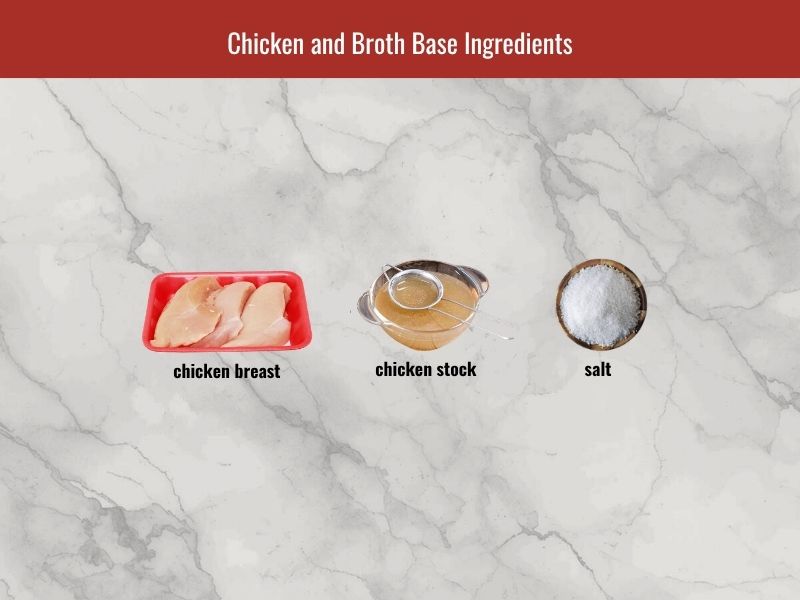
Chicken and Broth Base
- 1.75 lb (800 g) chicken breast. Chicken breast creates clean strands when shredded and provides the poaching liquid that becomes part of the soup base.
- 2 cans (14 oz / 396 g each) chicken stock. The canned stock combines with the chicken poaching liquid to create the broth. Homemade chicken stock can be used when available for a deeper flavor.
- ½ onion and 1 tsp (6 g) salt, for poaching the chicken. Onion adds mild sweetness to the cooking liquid, while salt seasons the chicken from the beginning.
Chicken breast is commonly used because it produces fine, neat strands that stay suspended in the thickened soup. Bone-in chicken can add additional richness because connective tissue and bones contribute more body to the broth.
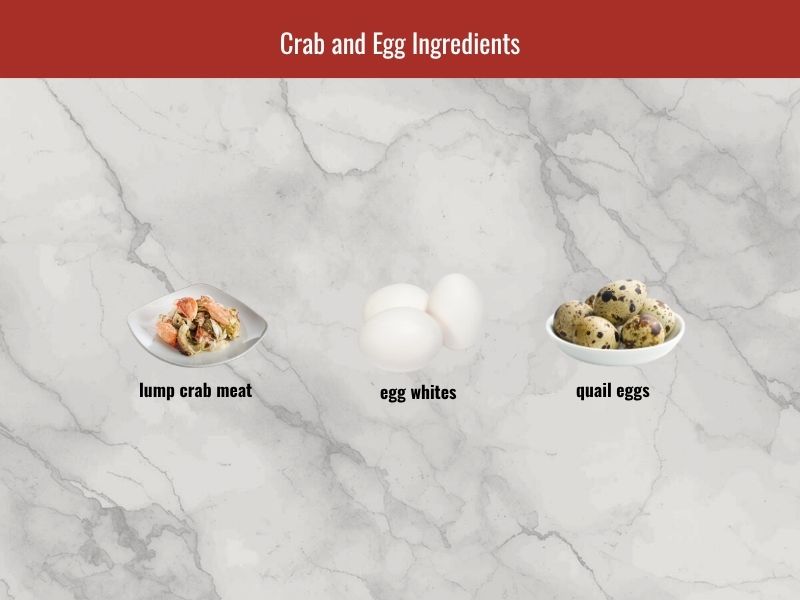
Crab and Egg
- ½ lb (225 g) lump crab meat. Lump crab meat provides visible pieces of seafood throughout the soup. Fresh crab, canned crab, or other crab products can be used, but each option creates a different texture and sweetness.
- 4 egg whites. Egg whites create the characteristic white egg ribbons that remain visible in the clear soup base. Adding only egg whites keeps the color light and delicate.
- 1 can (about 15 oz / 425 g) quail eggs (trứng cút). Quail eggs are a common addition in banquet-style versions and provide a soft, rich texture that contrasts with the shredded ingredients.
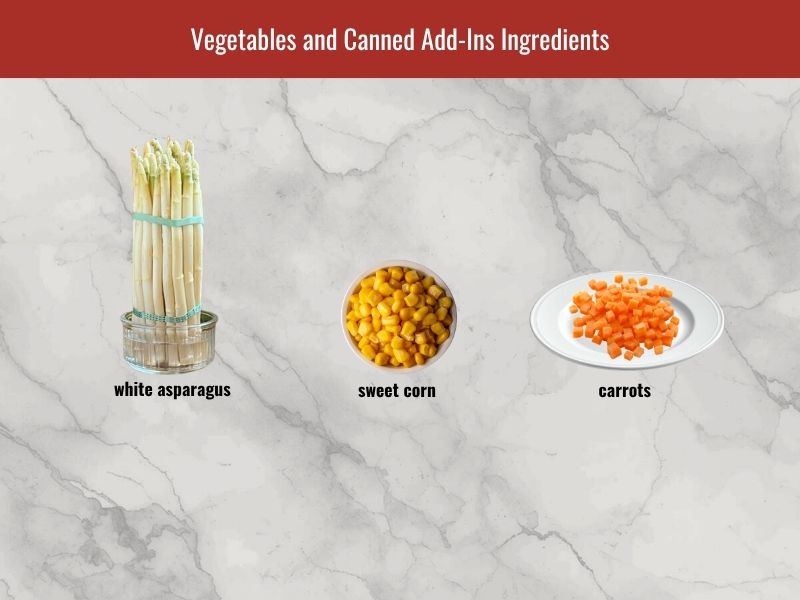
Vegetables and Canned Add-Ins
- 1 can (about 8 oz / 227 g) white asparagus (măng tây), drained and cut into short pieces. White asparagus is commonly used in restaurant-style sup mang cua because its mild flavor and tender texture complement crab, chicken, and the silky broth.
- 1 can (about 15 oz / 425 g) sweet corn. Sweet corn adds natural sweetness and small bursts of texture throughout the soup.
- 1 cup carrots, diced small. Carrots provide color and a slightly firm texture that balances the softer ingredients.
Rinse canned ingredients with cold water before adding them to the soup. This removes excess canning liquid and helps keep the final broth clean in flavor.
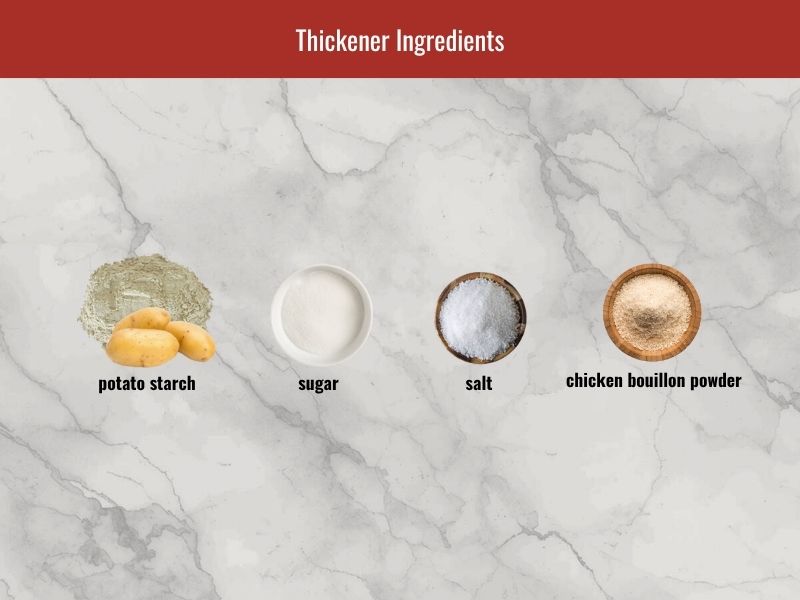
Thickener
- 1½ cups (200 g) potato starch mixed with 1 cup water. Potato starch creates the smooth, glossy texture associated with sup mang cua. Different starches create different results, so add the slurry gradually and adjust based on the consistency you prefer.
- Seasoning: 1 tsp (6 g) salt, ½ tbsp (11 g) sugar, and 1 tbsp (17 g) chicken bouillon powder. These three season the stock first.
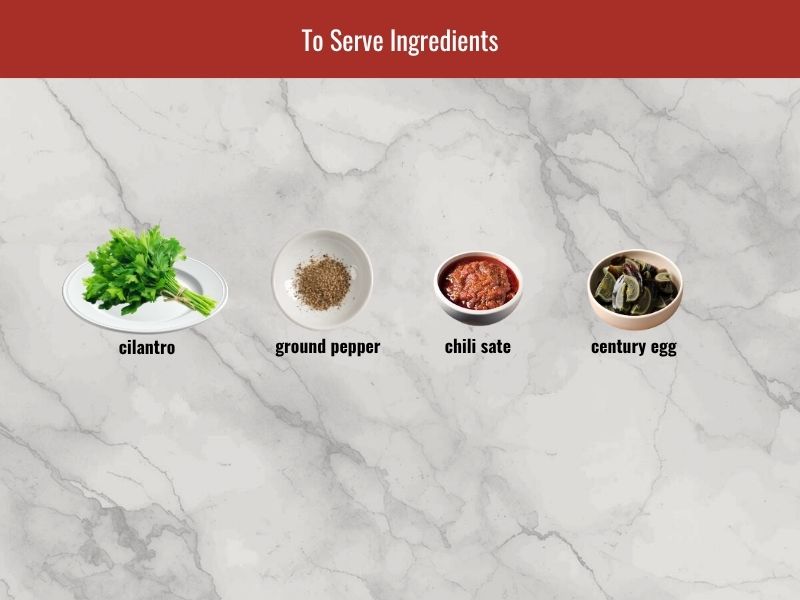
To Serve
- Cilantro (ngò), ground pepper, and chili sate (ớt sa tế). These go on after the soup is in the bowl, and cilantro is the one nobody skips.
- Century egg (hột vịt bắc thảo), sliced, optional. Century egg adds a richer flavor and is an optional topping in some versions.
How to Make Sup Mang Cua Step by Step?
Making sup mang cua takes about 45 minutes from start to finish, with 30 minutes of active preparation. The process follows four stages: poaching and preparing the chicken, combining the broth and ingredients, thickening the soup, and finishing with egg ribbons and crab.
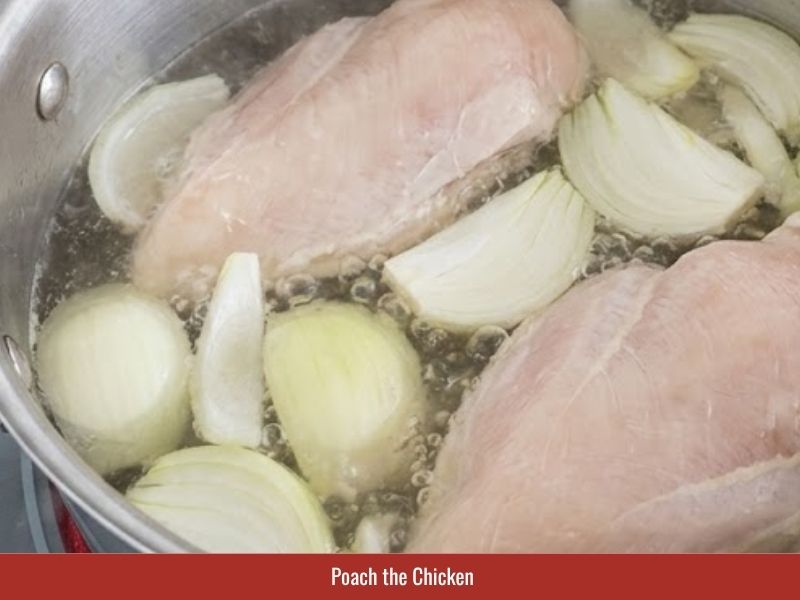
Step 1: Poach The Chicken
Place the 1.75 lb (800 g) chicken breast into a pot with water, ½ onion, and 1 tsp (6 g) salt.
Cook over medium heat until the chicken is fully cooked and tender. Check the thickest part of the chicken with an instant-read thermometer to confirm it reaches 165°F (74°C).
Transfer the cooked chicken to cold water briefly, then allow it to cool before shredding. Cold water helps the chicken firm up and makes it easier to create clean, even strands.
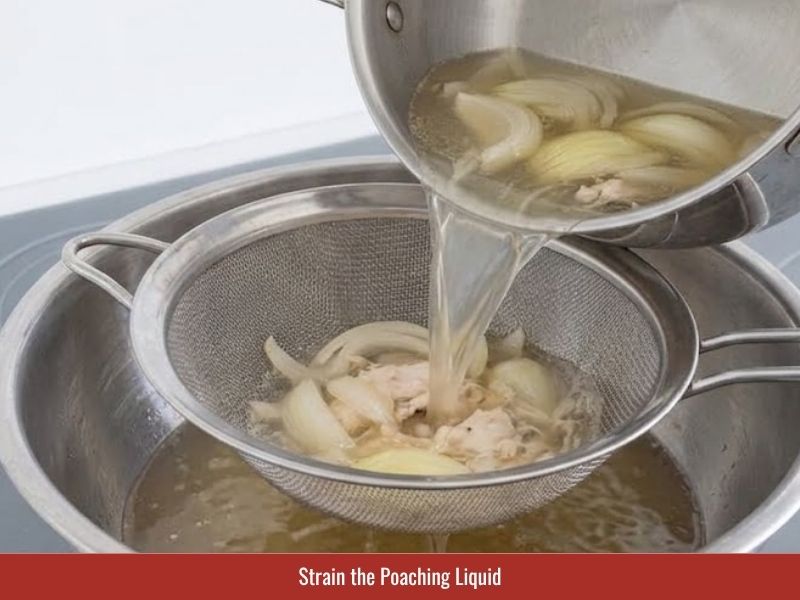
Step 2: Strain The Chicken Broth
Do not discard the chicken poaching liquid because it becomes the foundation of the soup.
Remove the onion and strain the liquid until clear. Combine the strained poaching liquid with 2 cans (14 oz / 396 g each) chicken stock in a large pot.
Keeping the broth clear is important because sup mang cua depends on a smooth, delicate appearance rather than a heavy or cloudy soup base.
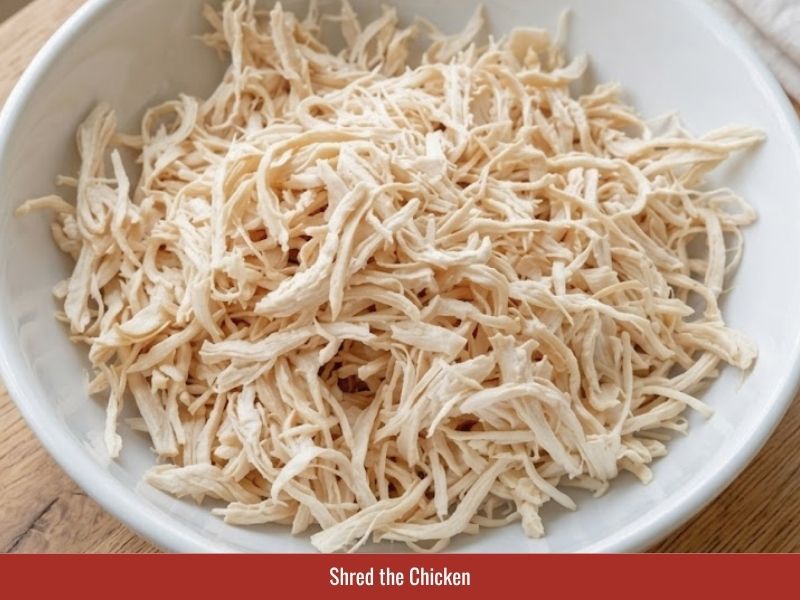
Step 3: Shred The Chicken
Once the chicken is cool enough to handle, shred it into thin strands.
Pull the meat along the grain to create longer pieces that remain visible in the soup. Fine strands distribute more evenly and match the delicate texture of the crab, egg ribbons, and vegetables.
Set the shredded chicken aside while preparing the remaining ingredients.
Step 4: Prepare The Canned Ingredients
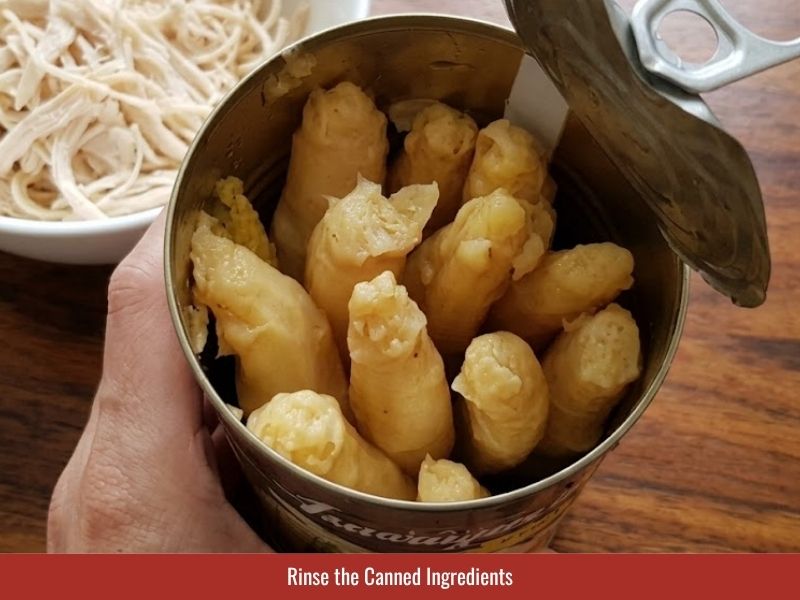
Drain and rinse the canned ingredients before adding them to the soup.
Cut the white asparagus (măng tây) into short pieces, drain the sweet corn, and rinse the quail eggs with cold water.
Rinsing removes excess canning liquid and helps maintain the clean flavor of the broth.
Step 5: Prepare The Vegetables
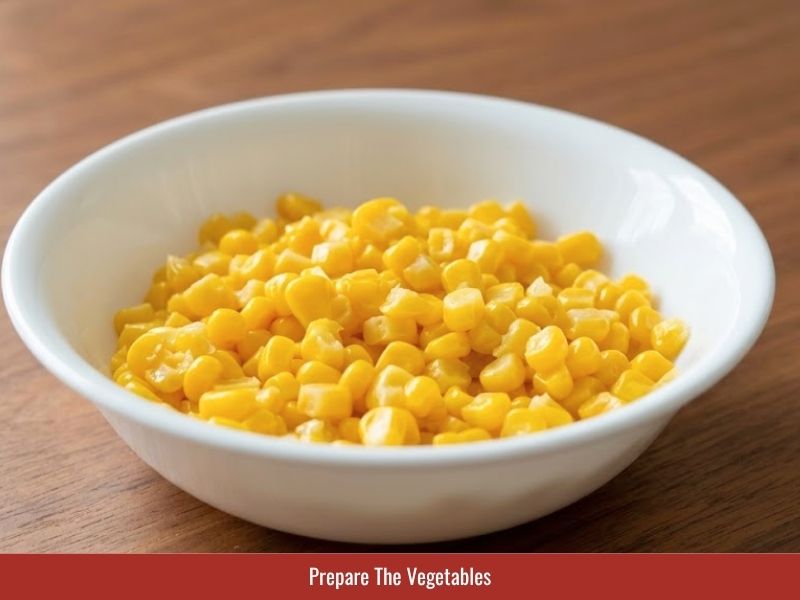
Dice 1 cup carrots into small, even pieces.
Add the carrots, white asparagus, corn, quail eggs, and shredded chicken to the broth.
The ingredients are already cooked or partially prepared, so the goal is to warm them through while allowing their flavors to combine without overcooking.
Step 6: Season The Broth
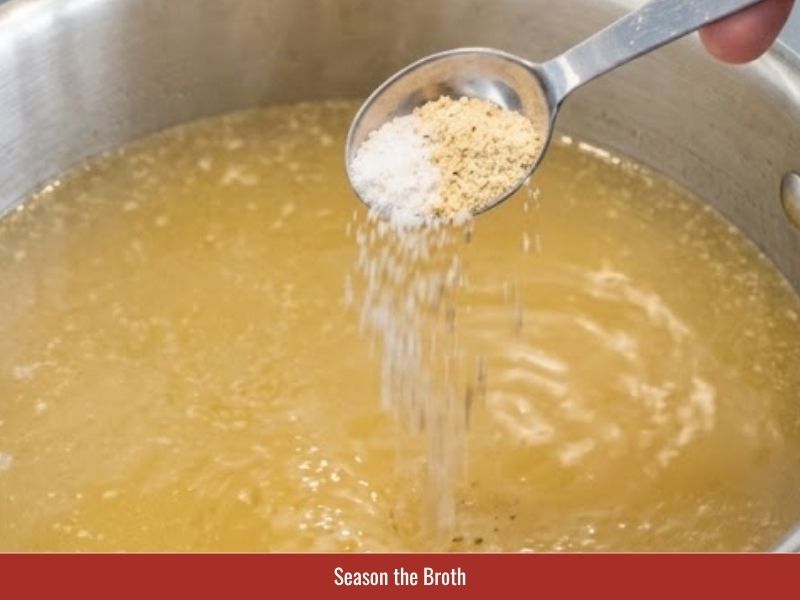
Season the soup with 1 tsp (6 g) salt, ½ tbsp (11 g) sugar, and 1 tbsp (17 g) chicken bouillon powder.
Taste the broth before thickening because the starch will change the mouthfeel and make seasoning adjustments harder afterward.
The finished broth should taste gently savory with natural sweetness from chicken, crab, corn, and asparagus.
Step 7: Simmer The Soup
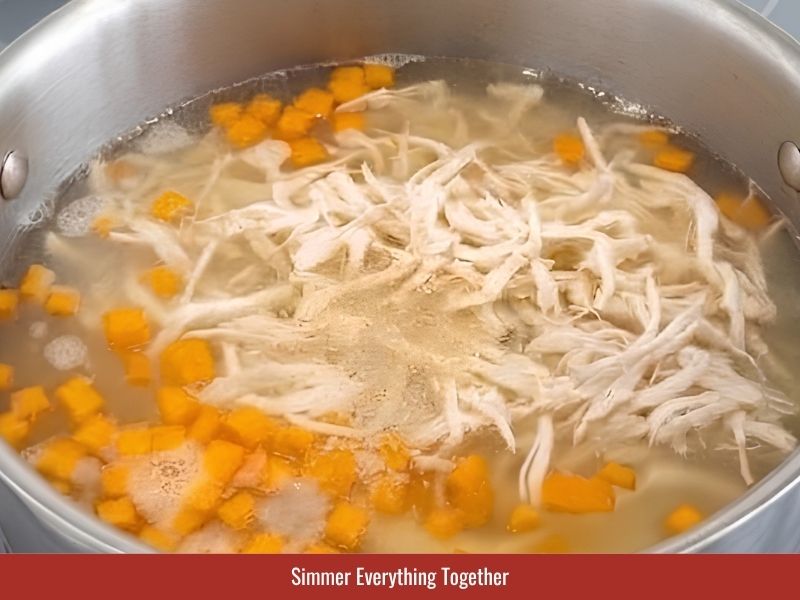
Bring the soup to a gentle boil and simmer until all ingredients are heated through.
Keep the soup hot before adding the starch slurry because starch needs sufficient heat to expand and create the smooth texture associated with sup mang cua.
Avoid excessive boiling after the soup reaches the desired consistency because strong agitation can affect the final texture.
Step 8: Mix The Starch Slurry
Mix 1½ cups (200 g) potato starch with 1 cup water until completely smooth.
Stir the slurry again immediately before adding it because starch settles quickly at the bottom.
Adding starch gradually gives better control over the final texture than pouring the entire mixture in at once.

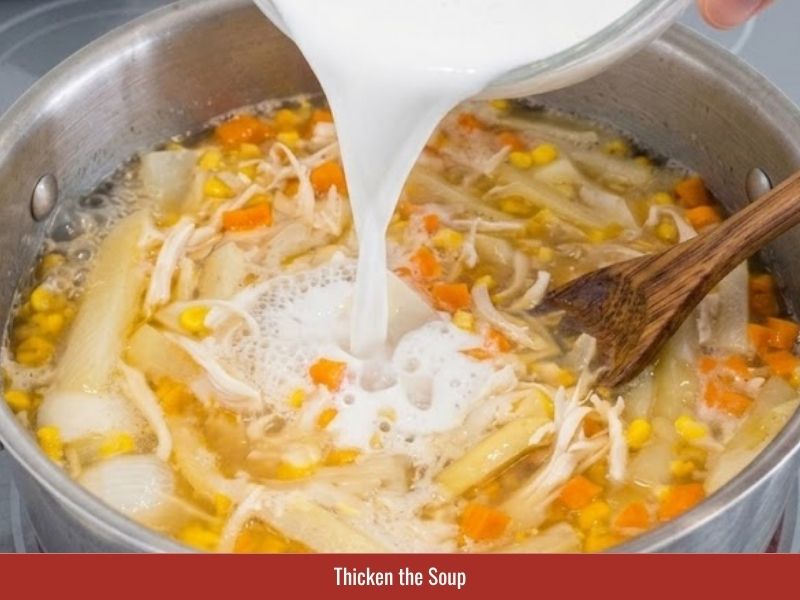
Step 9: Thicken The Soup
Pour the starch slurry slowly into the hot soup while stirring continuously.
Add only enough slurry until the soup reaches the desired consistency. Sup mang cua should be thick enough to coat a spoon while remaining easy to pour.
Different starch amounts create different textures, so the remaining slurry can be saved rather than forcing all of it into the pot.
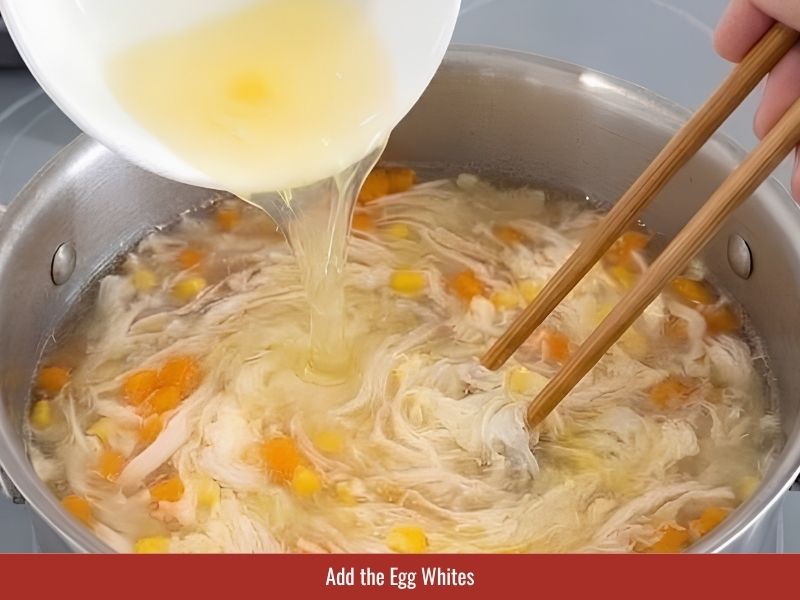
Step 10: Create The Egg Ribbons
Beat the 4 egg whites lightly before adding them.
Reduce the heat slightly and pour the egg whites in a thin stream while stirring gently in one direction.
The soup should already be thickened before adding the egg. A thicker broth allows the egg whites to form visible ribbons instead of dispersing into small pieces.
Avoid stirring too aggressively because strong movement breaks the ribbons apart.
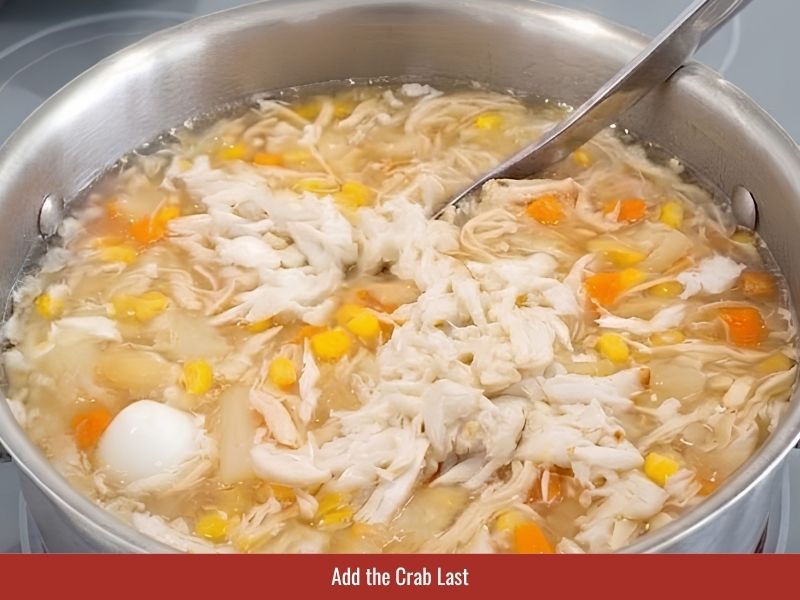
Step 11: Add The Crab Last
Add ½ lb (225 g) lump crab meat at the end.
Reduce the heat and keep the soup at a gentle simmer for a few minutes until the crab is warmed through.
Crab meat is already cooked, so adding it last helps preserve the visible pieces and delicate seafood flavor.
Taste the soup one final time and adjust the seasoning before serving.
How to Serve Sup Mang Cua?
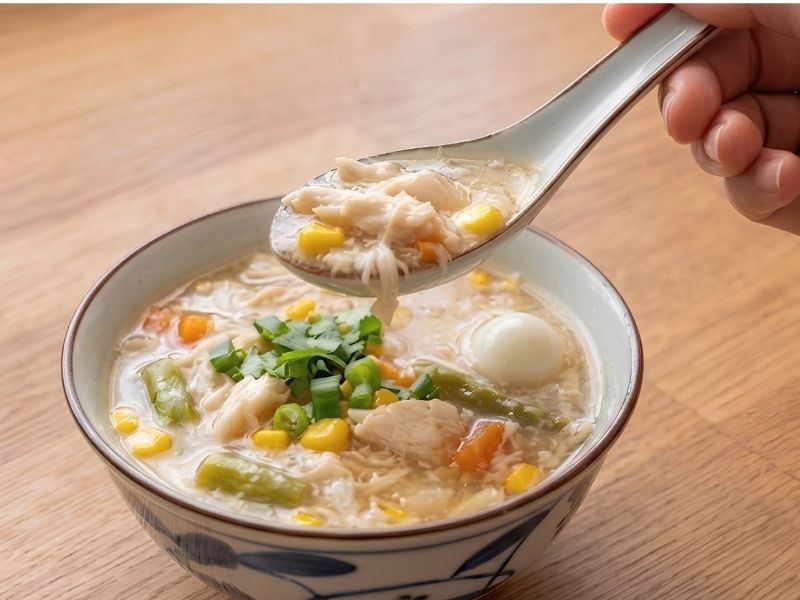
Sup mang cua is served hot in small individual bowls, with fresh garnishes added at the table to adjust aroma and spice according to personal preference. The soup is usually served as an opening course at Vietnamese weddings, banquets, and family celebrations, allowing diners to enjoy the delicate crab flavor and silky broth before heavier dishes arrive.
Common additions include:
- Cilantro (ngò), added on top for a fresh herbal aroma that balances the sweet seafood flavor.
- Ground pepper, sprinkled over the surface to add warmth and fragrance.
- Chili sate (ớt sa tế), mixed in gradually for extra heat and a richer chili-garlic aroma.
- Century egg (hột vịt bắc thảo), optional, for diners who enjoy its stronger, richer flavor alongside the mild soup.
The soup is typically enjoyed with a spoon because the thickened broth, crab meat, chicken strands, asparagus pieces, quail eggs, and egg ribbons are meant to be eaten together in each bite. The combination of soft ingredients and silky broth creates the signature texture of sup mang cua.
Tips for the Best Sup Mang Cua
These techniques help create sup mang cua with a silky texture, balanced thickness, and distinct layers of crab, chicken, asparagus, and egg.
- Add starch gradually for better texture control. Potato starch, cornstarch, or tapioca starch can thicken the broth, but the amount should be adjusted slowly. Add the starch slurry in stages until the soup coats a spoon while remaining smooth and pourable.
- Keep the broth hot before adding the starch slurry. Starch activates properly when added to a hot broth with steady movement. Adding it to a cooler liquid can create uneven thickening or lumps.
- Thicken the broth before adding the egg. A properly thickened base helps beaten eggs form visible ribbons instead of breaking into small pieces throughout the soup.
- Add lump crab meat near the end of cooking. Crab is already cooked before being added to the soup, so adding it later helps preserve its texture and keeps visible pieces in each bowl.
- Adjust the consistency after reheating. Starch-thickened soups become thicker as they cool. When reheating leftovers, add warm chicken broth or water gradually until the soup returns to its original silky consistency.
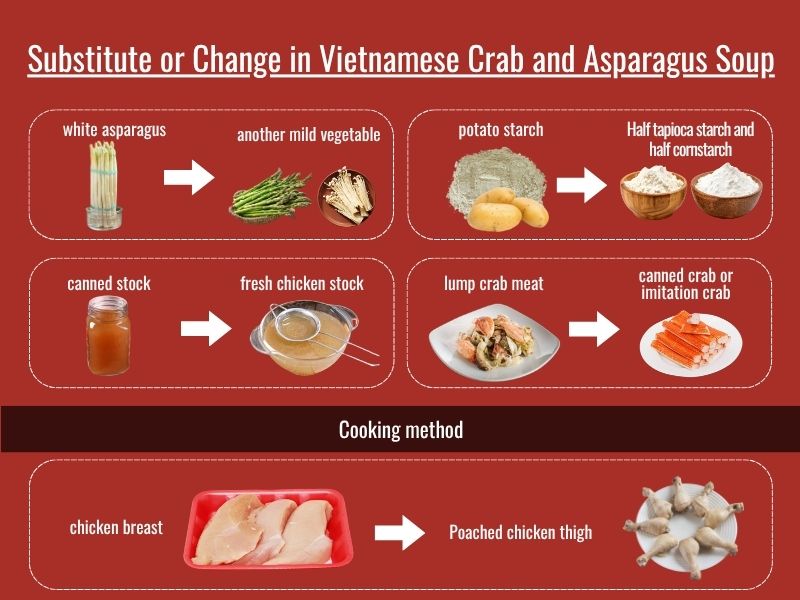
What Can You Substitute or Change in Vietnamese Crab and Asparagus Soup?
These substitutions help adapt sup mang cua based on ingredient availability while keeping the main characteristics of the dish: a silky broth, seafood sweetness, chicken flavor, and soft toppings.
- White asparagus (măng tây) can be replaced with another mild vegetable. Some cooks use other tender vegetables depending on availability, but white asparagus provides the mild flavor and texture found in many restaurant-style versions.
- Lump crab meat can be replaced with canned crab or imitation crab. These options make the soup more accessible, although real crab provides a sweeter seafood flavor and firmer texture.
- Chicken breast can be replaced with chicken thigh. Chicken thigh creates a richer flavor and softer texture, while chicken breast produces the cleaner strands commonly seen in banquet-style soup.
- Potato starch can be replaced with a combination of tapioca starch and cornstarch. Tapioca adds more elasticity, while cornstarch creates a softer body. The final texture will differ slightly from potato starch.
- Fresh chicken stock can replace canned stock. Homemade stock can create a deeper broth, while canned stock works well for a faster home version.
Make these substitutions when needed, but keeping white asparagus, crab, chicken, and potato starch creates the closest texture and flavor to this version of sup mang cua.
How to Store Sup Mang Cua?
Store sup mang cua in the refrigerator and reheat it gently to preserve the silky texture of its starch-thickened broth. The soup is best served fresh, but properly stored leftovers can maintain good quality for several days.
Allow the soup to cool before transferring it into an airtight container. Store it in the refrigerator for 3–4 days. The broth may become thicker after chilling because the starch continues to set as it cools.
When reheating, warm the soup over low to medium heat and stir occasionally. Add a small amount of warm water or chicken stock if the broth becomes too thick, then adjust until it returns to a smooth, pourable consistency.
Avoid repeated reheating because multiple temperature changes can affect the texture of the starch-thickened broth and make the ingredients softer.
Freezing is not recommended if you want to preserve the original texture. Starch-thickened soups can separate after thawing, which may make the broth less smooth. If freezing is necessary, thaw and reheat slowly, then adjust the consistency with additional warm broth.
Let us know whether you grew up eating sup mang cua at weddings or you are making your first pot this week. Drop your questions, tweaks, or results in the comments, and if the recipe worked for you, a quick star rating helps other home cooks find it. Share a photo of your bowl on social media with #CHINSU, because we read every one.
Frequently Asked Questions
Sup mang cua includes an additional “măng” ingredient, usually white asparagus (măng tây) in many restaurant versions, while sup cua focuses mainly on the crab soup base. Both use a similar starch-thickened broth with crab and egg ribbons, but sup mang cua has extra texture from the added vegetable ingredients.
Sup mang cua becomes watery when the starch ratio is too low, the starch slurry is not mixed properly, or the soup is diluted after cooking. Add the slurry gradually while the broth is hot and adjust the consistency slowly instead of adding too much liquid at once.
Sup mang cua naturally becomes thicker after cooling because the starch continues to set. When reheating, add warm chicken stock or water gradually while stirring until the soup returns to a smooth, pourable texture.
Yes, imitation crab can be used as a more affordable substitute for real crab. It provides a similar appearance and seafood flavor, but the texture is softer and the flavor is milder compared with fresh or lump crab meat.
Egg ribbons become less visible when the broth is too thin, the egg is added too quickly, or the soup is stirred too strongly. Thicken the broth first, slowly drizzle in beaten egg, and stir gently to create defined ribbons.
Yes, sup mang cua can be prepared ahead, but the texture may change during storage because the starch continues to thicken. Reheat the soup gently and add warm broth or water gradually to restore the original consistency before serving.
Yes, sup mang cua is commonly served at Vietnamese weddings, banquets, and family celebrations as an opening course. Its light savory flavor and silky texture make it suitable before richer seafood and meat dishes.
Sup Mang Cua (Vietnamese Crab and Asparagus Soup) Recipe
1. Ingredient
Chicken and Broth Base
- 1.75 lb (800 g) chicken breast.
- 2 cans (14 oz / 396 g each) chicken stock.
- ½ onion.
- 1 teaspoon (6 g) salt, for poaching chicken.
Crab and Egg
- ½ lb (225 g) lump crab meat.
- 4 egg whites.
- 1 can (about 15 oz / 425 g) quail eggs.
Vegetables and Canned Ingredients
- 1 can (about 8 oz / 227 g) white asparagus (măng tây), drained and cut into short pieces.
- 1 can (about 15 oz / 425 g) sweet corn.
- 1 cup carrots, diced small.
Thickener and Seasoning
- 1½ cups (200 g) potato starch.
- 1 cup water, for starch slurry.
- 1 teaspoon (6 g) salt.
- ½ tablespoon (11 g) sugar.
- 1 tablespoon (17 g) chicken bouillon powder.
Toppings
- Cilantro (ngò).
- Ground black pepper.
- Chili sate (ớt sa tế).
- Century egg (hột vịt bắc thảo), optional.
2. Instructions
- Step 1: Poach the Chicken. Cook chicken breast with water, ½ onion, and salt over medium heat until fully cooked. Confirm the thickest part reaches 165°F (74°C), then transfer the chicken briefly to cold water before shredding.
- Step 2: Strain the Chicken Broth. Remove the onion and strain the chicken poaching liquid until clear. Combine the strained broth with chicken stock to create the soup base.
- Step 3: Shred the Chicken. Pull the cooled chicken into thin strands along the grain. Set aside while preparing the remaining ingredients.
- Step 4: Prepare the Canned Ingredients. Drain and rinse white asparagus, sweet corn, and quail eggs. Cut asparagus into short pieces and remove excess canning liquid to maintain a clean broth flavor.
- Step 5: Prepare the Vegetables. Dice carrots into small pieces, then add carrots, asparagus, corn, quail eggs, and shredded chicken into the broth. Warm gently without overcooking the ingredients.
- Step 6: Season the Broth. Add salt, sugar, and chicken bouillon powder. Taste and adjust seasoning before thickening because the starch will change the texture of the soup.
- Step 7: Simmer the Soup. Bring the soup to a gentle boil and keep it hot before adding the starch slurry.
- Step 8: Mix the Starch Slurry. Combine potato starch with water until smooth. Stir again immediately before adding because starch settles quickly.
- Step 9: Thicken the Soup. Slowly pour the starch slurry into the hot soup while stirring continuously. Add only enough slurry until the soup reaches a silky consistency that coats a spoon while remaining pourable.
- Step 10: Create the Egg Ribbons. Beat egg whites lightly, then pour them slowly into the thickened soup while stirring gently in one direction. Avoid excessive stirring to maintain visible egg ribbons.
- Step 11: Add the Crab Last. Add lump crab meat at the end and keep the soup at a gentle simmer until the crab is warmed through. Adjust seasoning before serving.
3. Storage: Store sup mang cua in an airtight container in the refrigerator for 3–4 days. Reheat gently over low to medium heat and add warm water or chicken broth if the soup becomes too thick after chilling. Freezing is not recommended because starch-thickened soups may separate after thawing.
4. Yield: Multiple servings
5. Serving Style: Vietnamese crab and asparagus soup with silky broth, shredded chicken, crab meat, quail eggs, egg ribbons, cilantro, and pepper

CHIN-SU KITCHEN TEAM
CHIN-SU Kitchen Team are the creative experts behind the delicious recipes featuring CHIN-SU sauces. With years of experience and a passion for flavor, our team carefully selects recipes from a variety of trusted chefs and bloggers, bringing together the best culinary insights to present you with the most suitable and exciting dishes. Every recipe is chosen to inspire you to create meals that are not only tasty but also easy to prepare, enhancing your dining experience. Join us as we explore a wide range of sauces and flavors, and elevate every meal with the perfect recipe for your table!
User Reviews
Featured Articles
SUBSCRIBE TO GET
MORE INFO
Want the latest and greatest recipes, updates, and more from us,
straight to your inbox? Subscribe and get our NEWS!