Chicken Pho Recipe - Vietnamese Chicken Noodle Soup (Phở Gà)
Published: Aug 20, 2026 by CHIN-SU
Updated: Sep 8, 2026 by CHIN-SU
Tested by CHIN-SU Kitchen Team
Chicken pho (phở gà) is a Vietnamese noodle soup made with flat rice noodles, poached chicken, and a clear broth scented with charred onion, ginger, and warm spices. Compared with beef pho, the broth uses a lighter spice profile that keeps the chicken flavor at the center.
Vietnamese families eat phở gà throughout the day, including breakfast, lunch, and dinner. In many households, a whole chicken provides both the meat and the broth base, making it a practical home-cooked pho style that can be prepared in one afternoon.
In this article, CHIN-SU shares the chicken pho recipe to make at home, techniques for keeping the broth clear, and how Vietnamese families serve the bowl with herbs, lime, and condiments. The recipe takes about 3 hours, including 40 minutes of hands-on preparation and 2 hours 20 minutes of simmering and finishing, and makes 6 to 8 bowls.
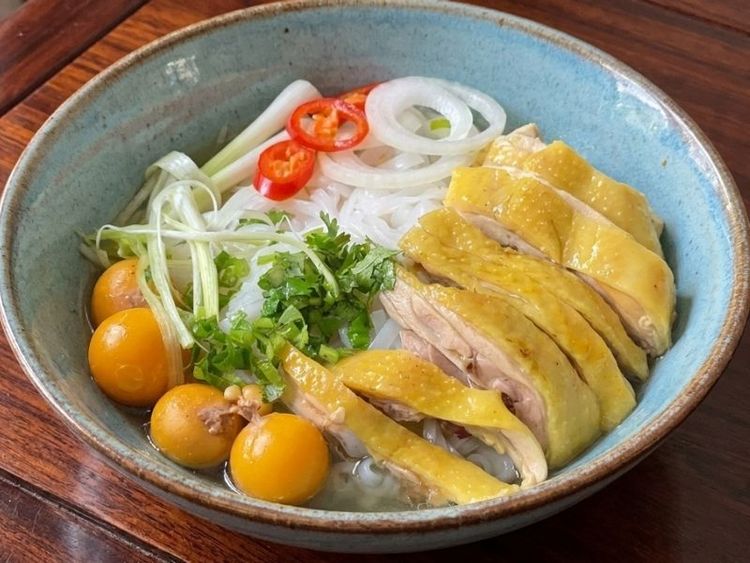
Table Of Contents
- What Is Chicken Pho?
- Why You'll Love Chicken Pho?
- Chicken Pho Ingredients
How to Make Chicken Pho Step by Step?
- Step 1: Clean and Prep the Chicken
- Step 2: Blanch the Bones
- Step 3: Start the Pot
- Step 4: Poach the Chicken
- Step 5: Check the Chicken for Doneness
- Step 6: Shock the Chicken in Ice Water
- Step 7: Poach the Egg Yolks (optional)
- Step 8: Give the Skin Its Golden Color (optional)
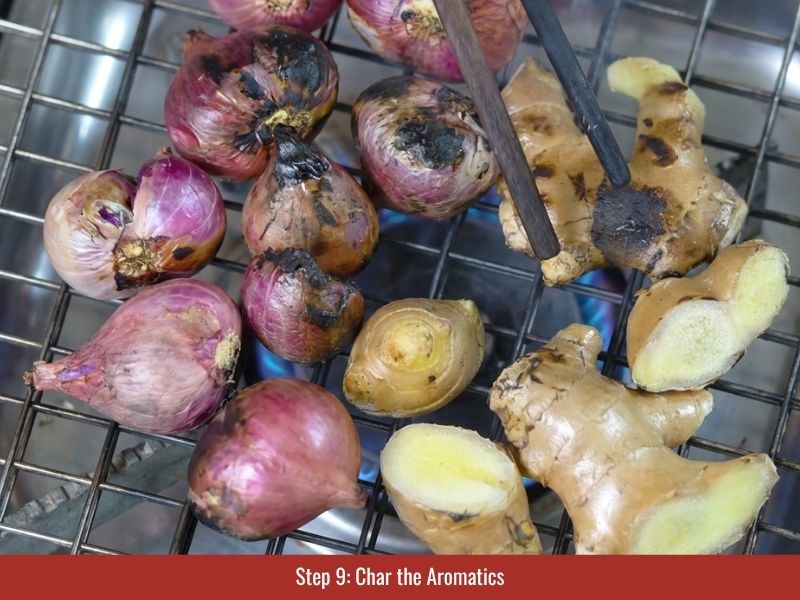
- Step 9: Char the Aromatics
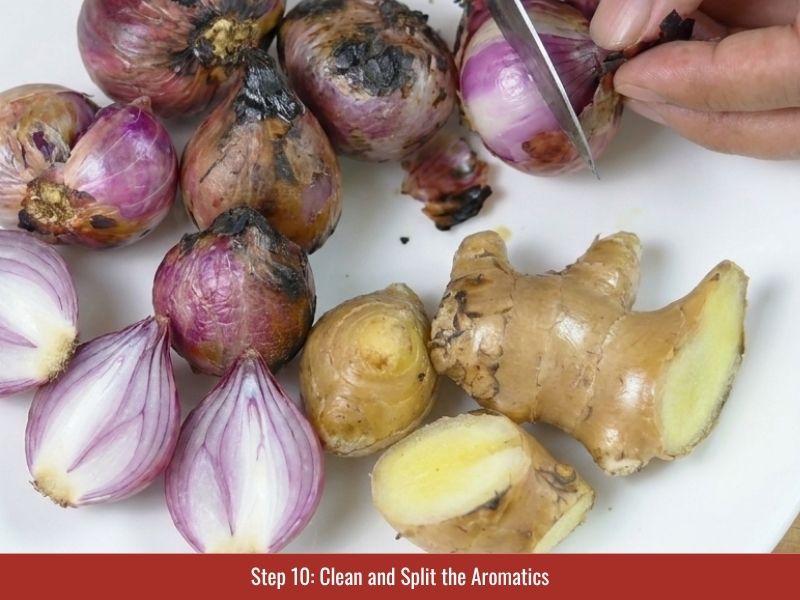
- Step 10: Clean and Split the Aromatics
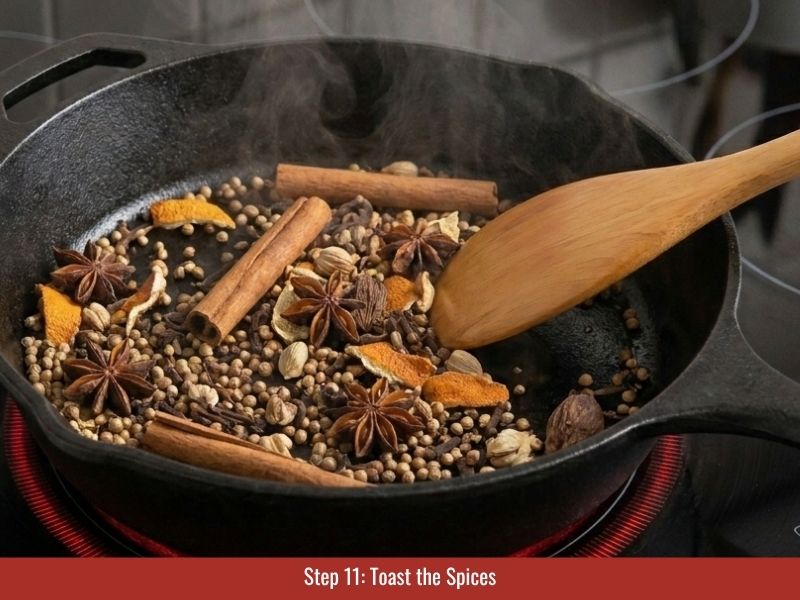
- Step 11: Toast the Spices
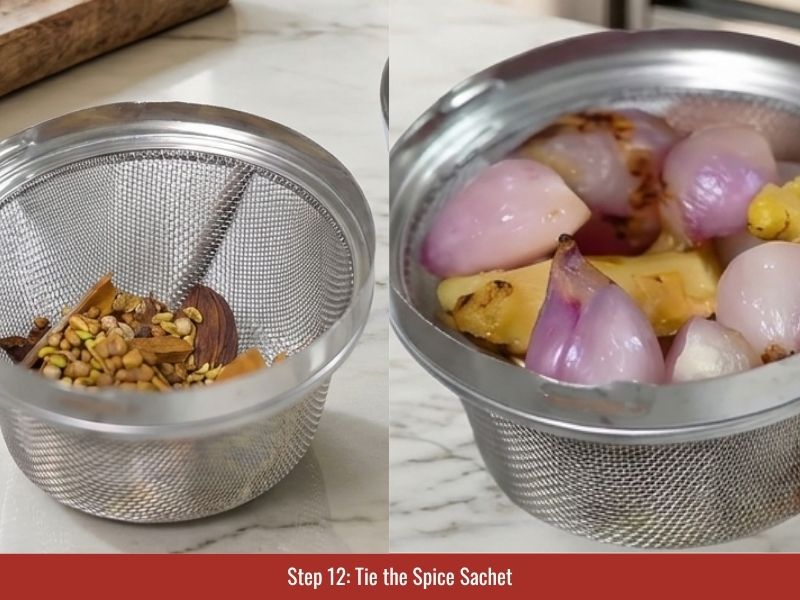
- Step 12: Tie the Spice Sachet
- Step 13: Steep the Sachet
- Step 14: Season the Broth
- Step 15: Cut the Chicken
- Step 16: Prep the Herb Plate
- Step 17: Assemble the Bowl
- How to Serve Chicken Pho?
- Tips for the Best Chicken Pho
- What Can You Substitute or Change in Chicken Pho?
- How to Store Chicken Pho?
What Is Chicken Pho?
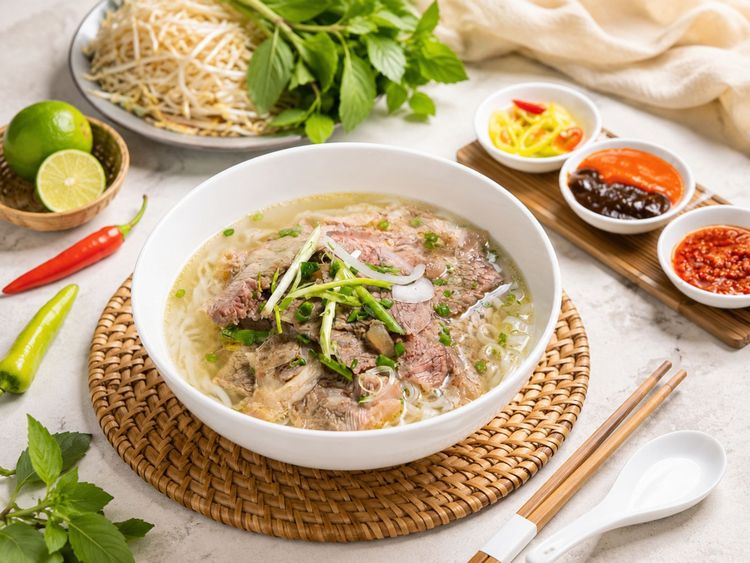
Chicken pho (phở gà) is a Vietnamese noodle soup made from flat rice noodles (bánh phở) and poached chicken in a clear chicken broth, simmered with charred onion and ginger and a small sachet of warm spices. The bowl is served with fresh herbs and lime on the side, allowing each person to adjust the final flavors at the table.
The Vietnamese name phở gà combines two parts: phở refers to the rice noodle soup, while gà means chicken. English speakers usually pronounce phở gà close to “fuh gah.”
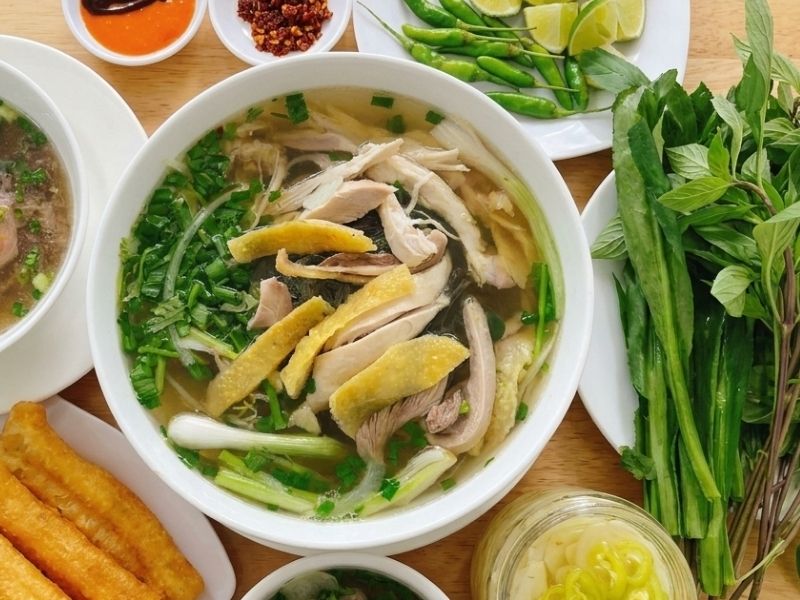
What sets chicken pho apart is its restrained seasoning style. Chicken pho usually uses a lighter spice profile than beef pho, allowing the chicken broth to remain the dominant flavor. Cinnamon, star anise, and other warm spices support the broth rather than overpowering the chicken.
Chicken pho is often associated with Northern Vietnamese cooking, where the broth is traditionally more restrained and the herb plate is simpler. Southern servings may include a larger selection of herbs, bean sprouts, and additional condiments.
In the United States, chicken pho appears on Vietnamese restaurant menus alongside beef pho. The bowl is known for its clear broth, tender chicken, soft rice noodles, and fresh toppings that create a lighter alternative within the broader pho family.
Why You'll Love Chicken Pho?
You’ll love this chicken pho recipe because one chicken and one afternoon create a clear, fragrant bowl with a lighter broth style and a complete Vietnamese serving experience.
- The broth highlights the chicken flavor. Chicken pho uses a restrained spice profile, allowing the poached chicken, clear broth, charred aromatics, and warm spices to work together without overpowering the bowl.
- One chicken creates multiple components. A whole chicken provides the broth base and the shredded meat for each bowl, while optional additions such as immature egg yolks (trứng gà non) add a traditional home-style touch.
- Most of the cooking time is hands-off. The chicken and broth simmer gradually in one pot, giving the aromatics and spices time to develop while requiring only occasional preparation.
Chicken Pho Ingredients
To make this chicken pho, you’ll prepare four groups of ingredients: the chicken and bones, the broth spices and aromatics, the broth seasoning, and the noodle-and-herb spread for serving.
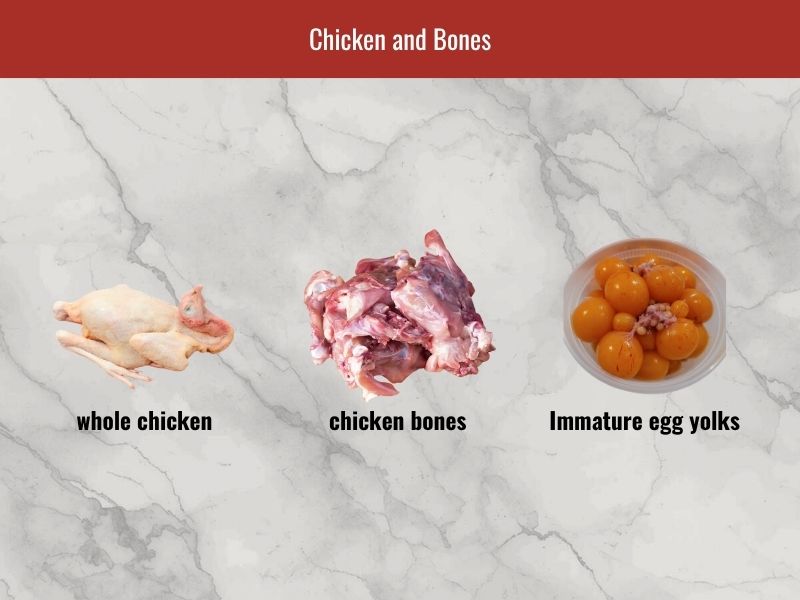
Chicken and Bones
- 1 whole chicken, about 3.5 lb (1.6 kg). A whole chicken provides both the meat for the bowls and the bones needed for a flavorful broth. Vietnamese cooks often prefer gà ta (free-range chicken) because the meat is firmer and more flavorful than many commercial broiler chickens.
- 3.3 lb (1.5 kg) chicken bones. Chicken bones provide the structure of the broth. Extra chicken wings, backs, or feet are closer substitutes when additional bones are needed because they maintain the chicken-forward flavor of the soup.
- Immature egg yolks (trứng gà non), optional. Trứng gà non refers to undeveloped chicken eggs or yolks that are available at some Vietnamese markets. Availability varies by location, and the bowl remains complete without them.
Broth Spices and Aromatics
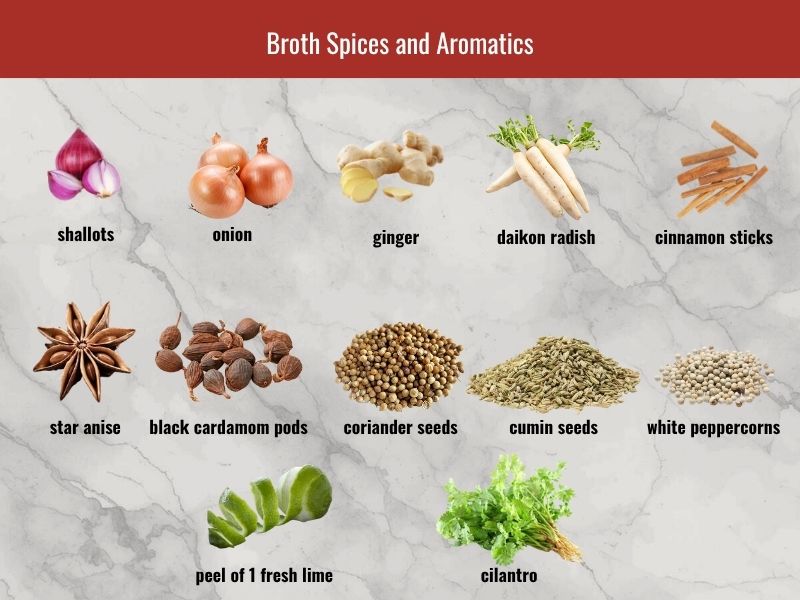
These aromatics create the fragrance of the broth. The quantities below are designed for a 5 L pot and use a lighter spice profile than many beef pho broths.
- 2.8 oz (80 g) shallots (hành tím).
- 3.5 oz (100 g) onion (hành tây).
- 1.8 oz (50 g) ginger (gừng).
- 3.5 oz (100 g) daikon radish (củ cải trắng).
- 2 cinnamon sticks, about 1 oz (30 g) (quế).
- 2 whole star anise (hoa hồi).
- 2 black cardamom pods (thảo quả).
- 0.1 oz (3 g) coriander seeds (hạt ngò).
- 0.1 oz (3 g) cumin seeds (tiểu hồi).
- 0.1 oz (3 g) white peppercorns (tiêu sọ).
- The peel of 1 fresh lime (vỏ chanh).
- A few sprigs of cilantro (ngò rí).
The lime peel adds a distinctive citrus aroma that separates this version from many other pho broths. Use only one lime’s worth of peel because excess peel can create bitterness. Kaffir lime leaves (lá chanh) can be used when fresh lime peel is unavailable.
Broth Seasoning
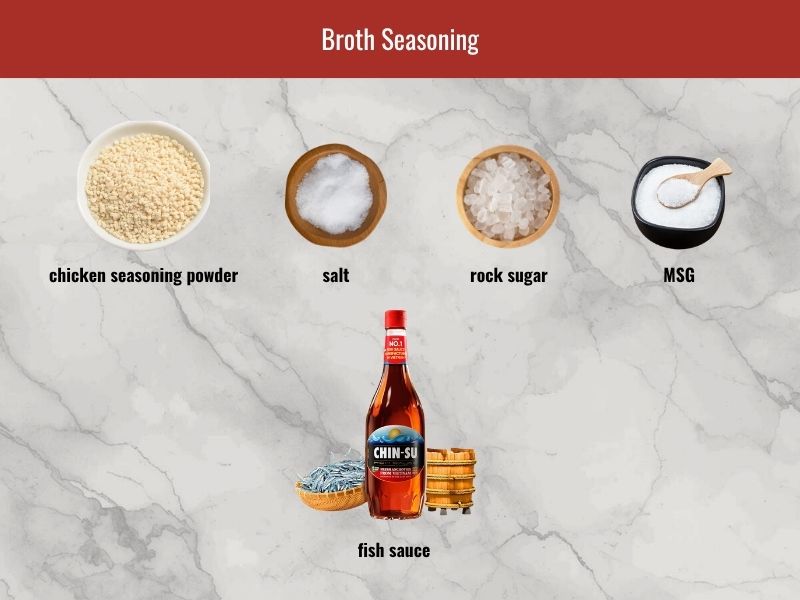
Quantities below are for approximately 5 L of broth.
- 3 tbsp chicken seasoning powder (hạt nêm gà). Chicken seasoning powder adds additional savory depth to the broth.
- 1.5 tbsp salt for the broth, plus 1.5 tbsp salt and 1 tbsp rock sugar added earlier during poaching. Salt builds the seasoning foundation throughout the cooking process.
- 3 tbsp rock sugar (đường phèn). Rock sugar provides a clean sweetness and helps balance the savory broth.
- 1 tbsp MSG (bột ngọt), optional. MSG enhances savory depth and can be omitted based on preference.
- 2 tbsp fish sauce (nước mắm). Fish sauce adds the final savory layer after the broth has developed. CHIN-SU fish sauce can be used as the fish sauce base for this seasoning step.
Noodles, Herbs, and Toppings
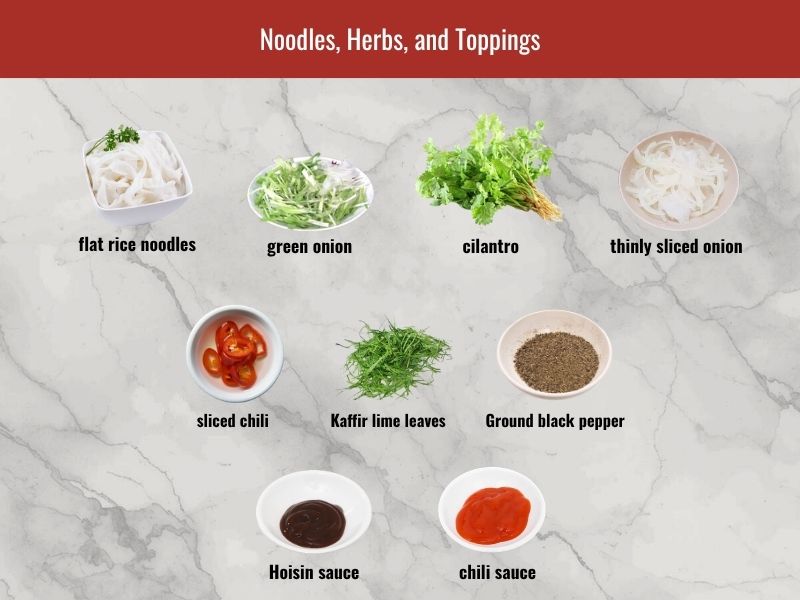
- 1.5 lb (700 g) flat rice noodles (bánh phở). Fresh flat rice noodles provide the best texture, while dried noodles can be used after soaking and blanching according to package instructions.
- Green onion (hành lá), with white parts split lengthwise and green parts sliced. Green onion adds freshness and aroma to the finished bowl.
- Thinly sliced onion soaked in ice water. Ice water removes some of the sharp raw onion flavor while creating a crisp texture.
- Kaffir lime leaves (lá chanh), shredded finely. Shredded lime leaf adds a fresh citrus aroma to the finished bowl.
- Ground black pepper. Black pepper adds a sharp finish that balances the mild chicken broth.
- Hoisin sauce (tương đen) and chili sauce (tương ớt), served on the side. These condiments allow each diner to adjust sweetness and heat according to preference.
How to Make Chicken Pho Step by Step?
The whole pot comes together in about 3 hours, with roughly 40 minutes of hands-on work. The process follows four stages: preparing the chicken and bones, building the clear broth, developing the aromatics and spices, and assembling each bowl at the end.
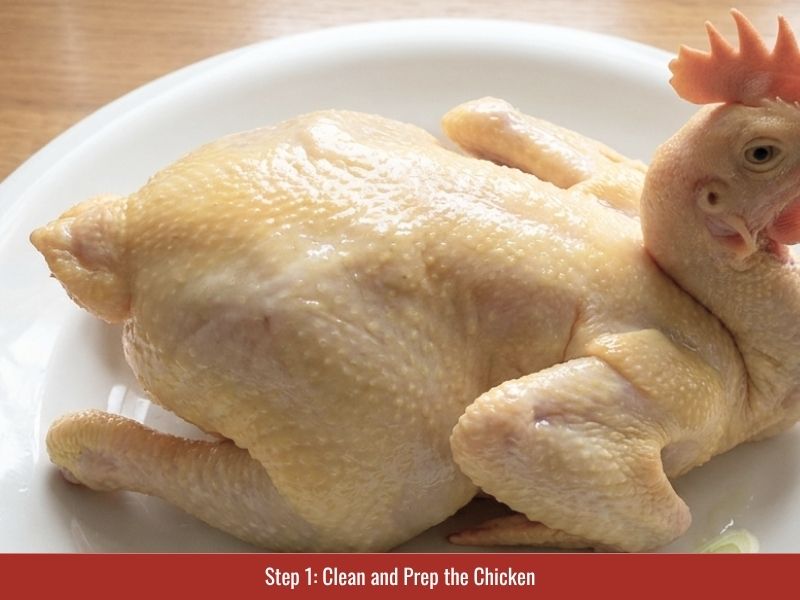
Step 1: Clean and Prep the Chicken
Clean the whole chicken and pat it dry. Remove any excess fat from the cavity and reserve it if you want to render chicken fat for additional cooking.
Rinse the immature egg yolks (trứng gà non), if using, separately with lightly salted water. Handle them gently because broken yolks can release extra protein into the broth.
Step 2: Blanch the Bones
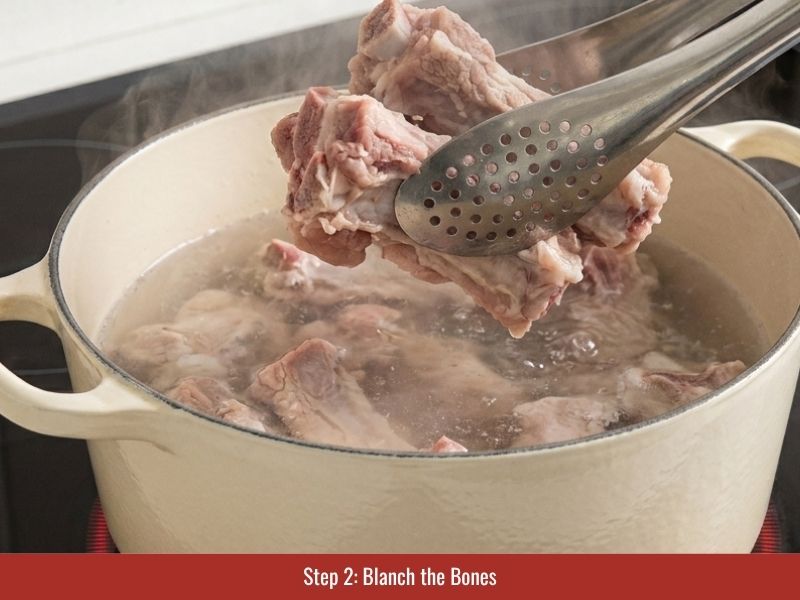
Soak the chicken bones briefly in water, then rinse them before blanching.
Blanch the bones in boiling water for 3 minutes, then rinse them again until clean. This step removes excess impurities and helps create a clearer broth.
Step 3: Start the Pot
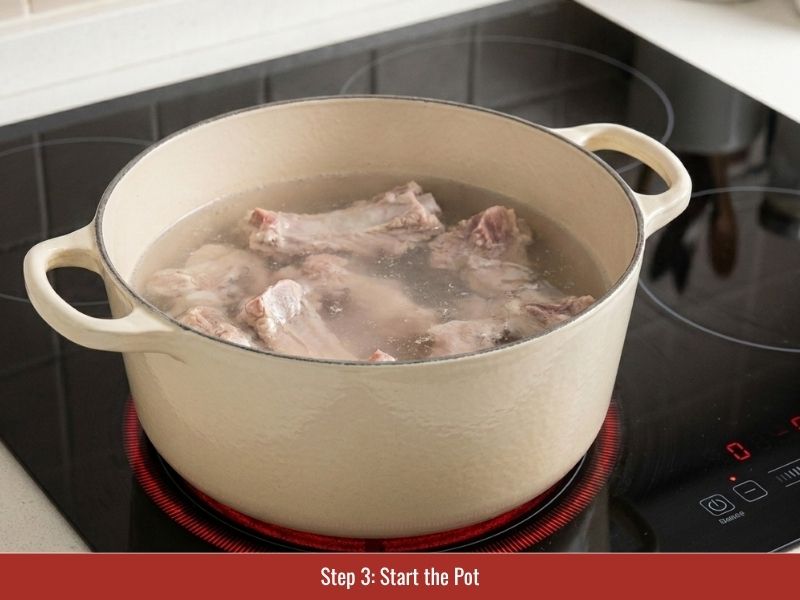
Add 5 L water to a large pot and place in the blanched chicken bones.
This same pot will poach the chicken and later become the finished broth, allowing the bones and chicken to build flavor together.
Step 4: Poach the Chicken
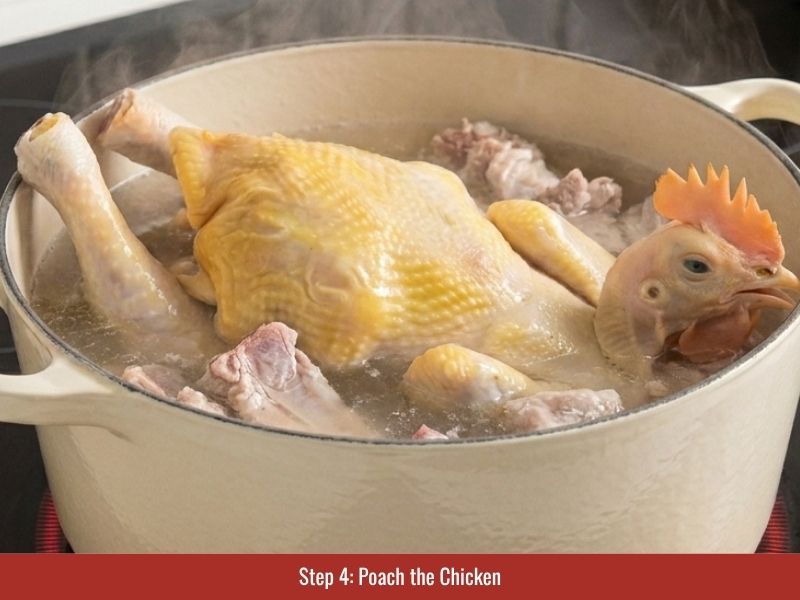
Starting the chicken in cold water is one method Vietnamese cooks use to gradually extract flavor into the broth while keeping the meat tender.
Add 1.5 tbsp salt and 1 tbsp rock sugar, then slowly bring the pot to a boil over high heat. Once boiling, reduce the heat to a gentle simmer and skim the foam from the surface.
A gentle simmer keeps the broth clearer and helps the chicken maintain a tender texture.
Step 5: Check the Chicken for Doneness
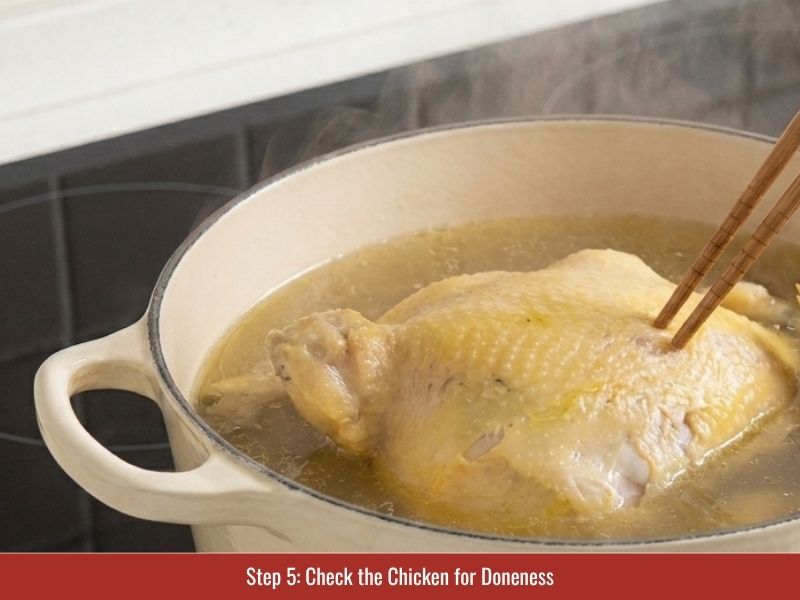
Poach the chicken for about 20 minutes, then check the thickest part of the thigh.
Use an instant-read thermometer to confirm the chicken reaches 165°F (74°C). The meat should be tender and the juices should run clear.
Step 6: Shock the Chicken in Ice Water
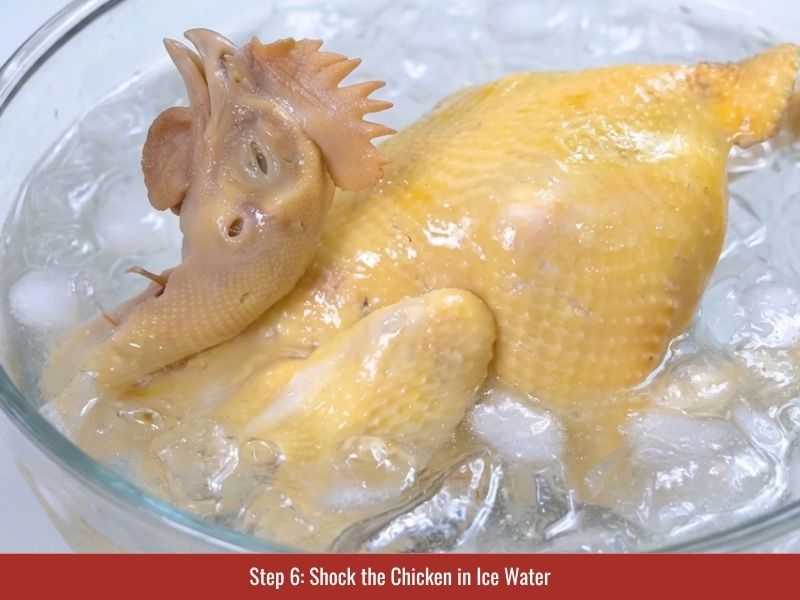
Transfer the cooked chicken directly into a bowl of ice water.
The cold bath firms the meat and tightens the skin, creating a better texture when the chicken is later sliced or shredded. Leave the chicken in the ice water until it cools, then drain well.
Step 7: Poach the Egg Yolks (optional)
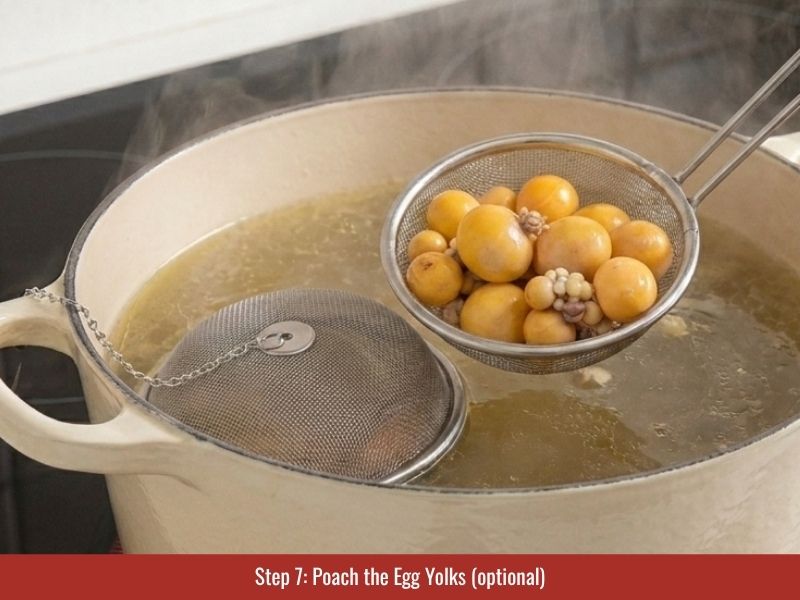
If using immature egg yolks, place them into a small sieve and lower them into the simmering broth.
Poach for about 5 minutes, then remove and set aside with the chicken. Skip this step if the ingredient is unavailable.
Step 8: Give the Skin Its Golden Color (optional)
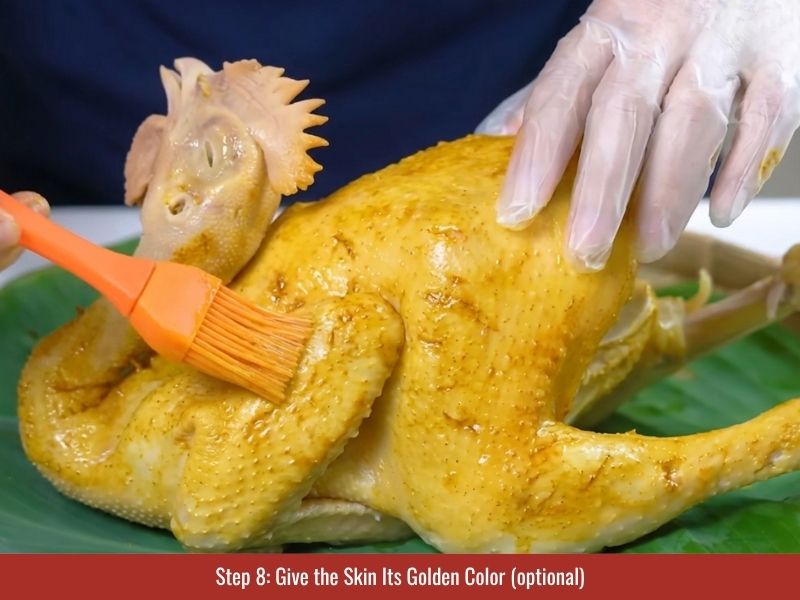
Some home cooks add turmeric for a warmer golden appearance, but this step is optional and is not required for traditional chicken pho.
Mix ½ tsp turmeric powder (bột nghệ) with a small amount of water and brush it lightly over the cooled chicken skin. Allow the color to set for about 15 minutes, then rinse gently with cooled boiled water before serving.
Step 9: Char the Aromatics
Char the shallots, onion, ginger, and daikon radish directly over a flame or under a broiler until the outer surfaces darken.
This Vietnamese technique, often called thui hành gừng, develops deeper sweetness and aroma by lightly charring the aromatics before adding them to the broth.
Step 10: Clean and Split the Aromatics
Remove the blackened outer layer from the charred aromatics and rinse them well.
Add the onion and daikon directly to the broth. Reserve the shallots and ginger for the spice sachet.
Step 11: Toast the Spices
Warm a dry pan over low heat and toast the larger spices first: the cinnamon sticks, star anise, and black cardamom. Add the smaller ones next, the coriander seed, cumin, and white peppercorn, and toast everything until it smells fragrant.
Step 12: Tie the Spice Sachet
Place the toasted spices into a cloth bag or mesh strainer.
Add the charred shallots, ginger, the peel of 1 fresh lime, and a few sprigs of cilantro. Vietnamese cooks often use a spice sachet (túi gia vị phở) so the broth can be strained easily before serving.
Use only one lime’s worth of peel because too much citrus peel can create bitterness.
Step 13: Steep the Sachet
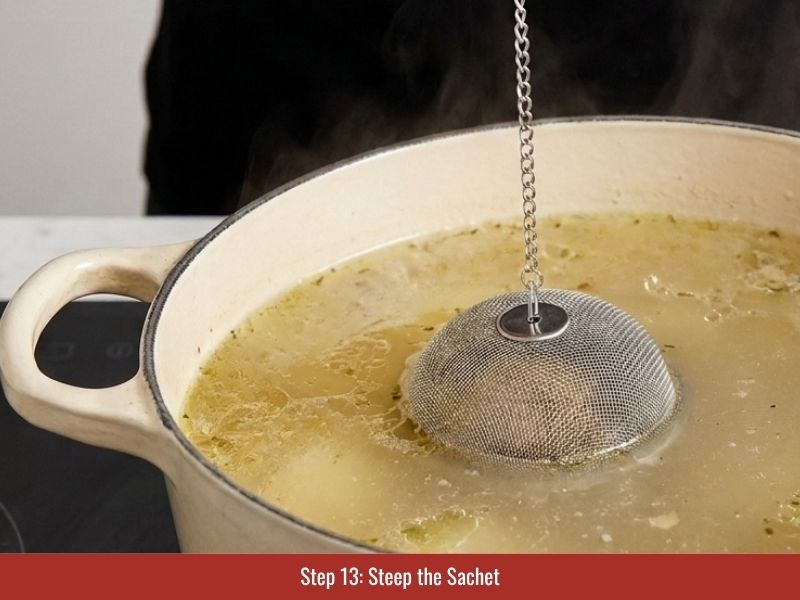
Lower the sachet into the pot and steep it for 40 minutes, which brings the total simmer to roughly 3 hours.
The timing helps preserve the aroma of the spices. Adding the sachet too early can make the spice notes heavier, while adding it too late may not allow enough flavor extraction.
Top the pot up with boiling water when needed to replace evaporation and maintain the broth volume.
Step 14: Season the Broth
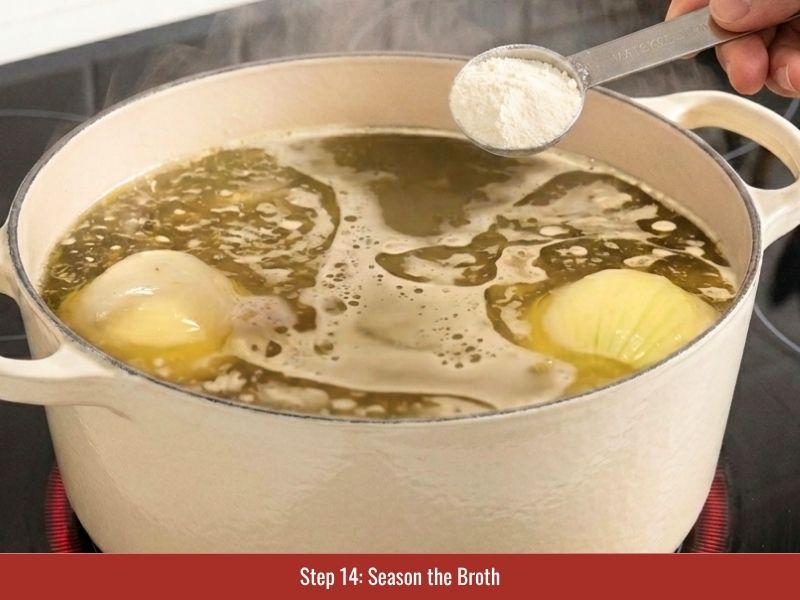
Remove the chicken bones, aromatics, and spice sachet from the broth. Season the broth with 3 tbsp chicken seasoning powder, 1.5 tbsp salt, 3 tbsp rock sugar, 1 tbsp MSG, and 2 tbsp fish sauce. CHIN-SU fish sauce can be used as the fish sauce base for this final seasoning step.
Taste and adjust until the broth has a savory chicken flavor, gentle sweetness, and a clean finish.
Step 15: Cut the Chicken
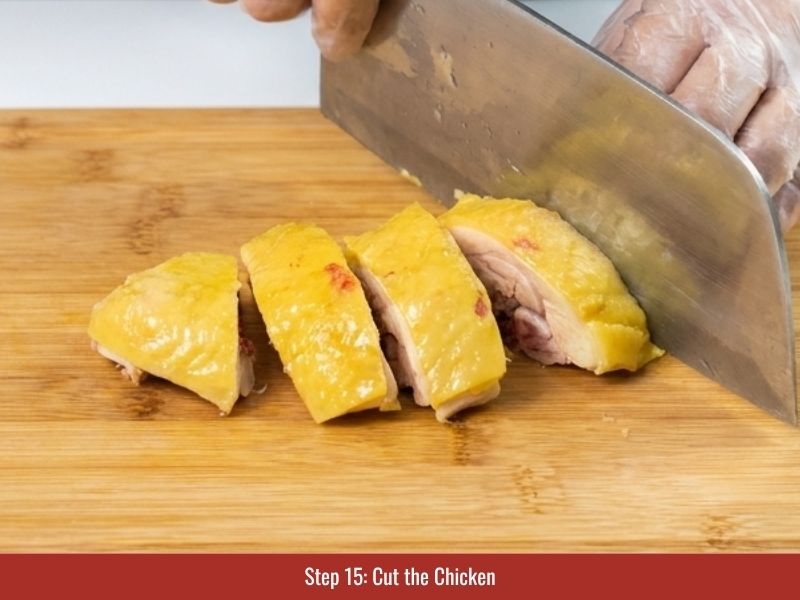
Cut the cooled chicken into bite-sized pieces or shred it by hand.
Arrange the chicken on a serving plate with the optional immature egg yolks so the toppings are ready when assembling the bowls.
Step 16: Prep the Herb Plate
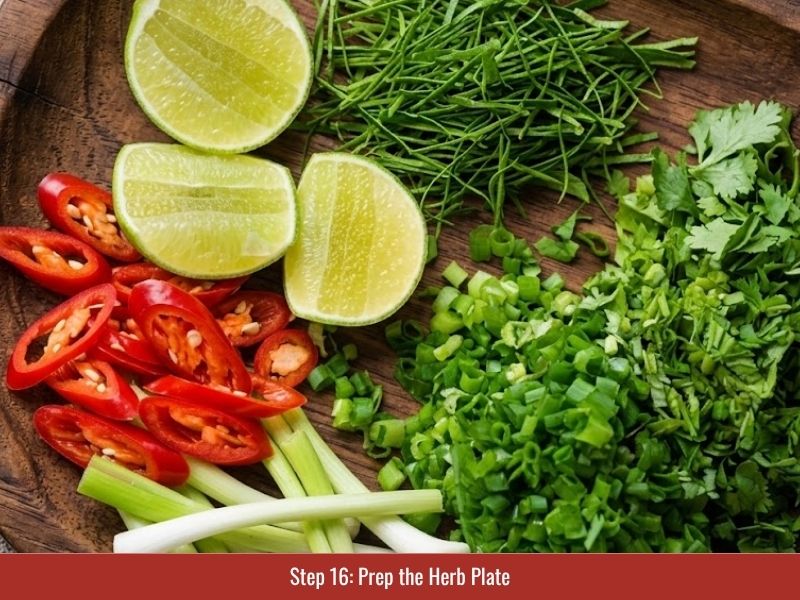
Split the white parts of the green onion lengthwise and slice the green parts thinly.
Slice the onion and soak it in ice water to create a crisp texture while reducing its sharp raw flavor. Shred the kaffir lime leaves finely and prepare the herbs and condiments for serving.
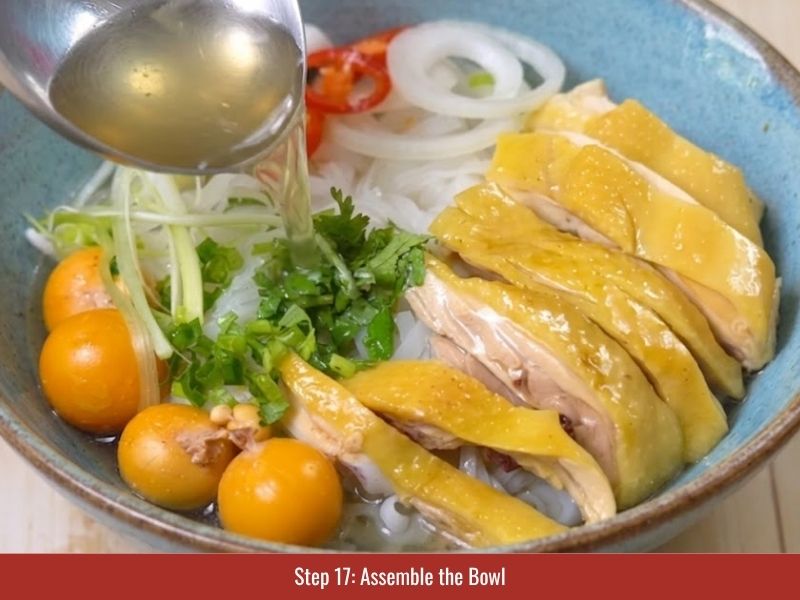
Step 17: Assemble the Bowl
Warm each bowl with boiling water, then blanch the flat rice noodles briefly before adding them.
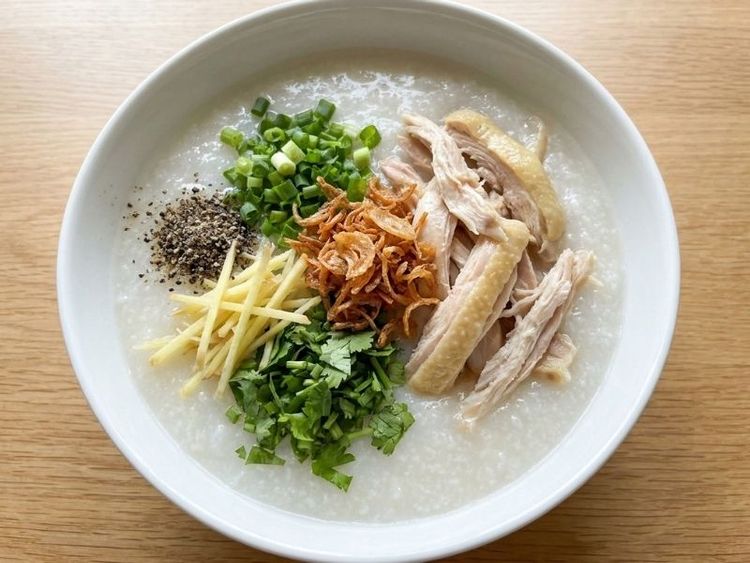
Place the noodles in the bowl, arrange the chicken on top, add sliced onion and herbs, then ladle the hot broth over everything.
Finish with shredded kaffir lime leaves and ground black pepper. A standard bowl uses about 7 oz (200 g) noodles and several ladles of broth, depending on serving preference.
How to Serve Chicken Pho?
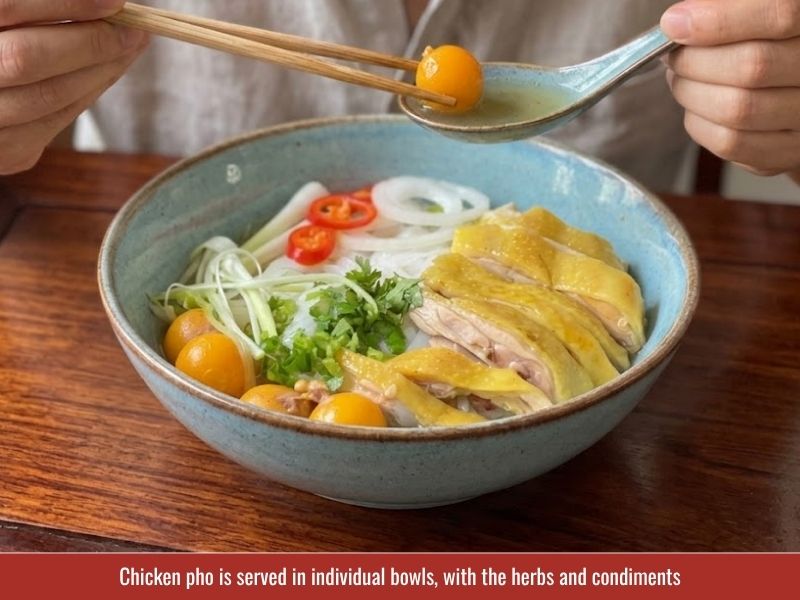
Chicken pho is served in individual bowls, with herbs, lime, and condiments arranged on the table so each person can adjust the flavors to their preference. The broth, noodles, and chicken are prepared in the kitchen, while the final balance comes from the toppings added at the table.
A traditional serving setup includes:
- Fresh herbs and aromatics, such as cilantro, green onion, shredded kaffir lime leaves, and sliced chili.
- Bean sprouts and Thai basil, especially in southern-style servings where a larger herb plate is common.
- Lime wedges, squeezed over the bowl to add brightness.
- Hoisin sauce and chili sauce, served separately for diners who prefer additional sweetness or heat.
- Ground black pepper, added as a final aromatic seasoning.
Use chopsticks to lift the noodles and chicken while using a spoon for the broth. In Vietnam, phở gà is enjoyed throughout the day, including breakfast, lunch, and dinner. Northern Vietnamese servings often feature a simpler herb plate, while southern versions may include more herbs, bean sprouts, and additional condiments.
Many diners also enjoy phở with quẩy (fried dough sticks), tearing pieces into the broth so they absorb the savory liquid while remaining slightly crisp.
Tips for the Best Chicken Pho
These four techniques make the biggest difference between a clear, aromatic chicken pho broth and a flat or cloudy bowl.
- Keep the broth at a gentle simmer and skim regularly. A rolling boil pushes fat and proteins into the liquid, making the broth cloudy. Gentle heat and early skimming help maintain a clear, clean broth.
- Char the aromatics before adding them to the pot. The Vietnamese technique of thui hành gừng develops deeper sweetness and aroma by lightly charring onion and ginger before they infuse the broth.
- Add the spice sachet at the right time. Vietnamese cooks often use a túi gia vị phở to control spice extraction. Adding the sachet during the final stage of simmering helps preserve the lighter aroma of cinnamon, star anise, and other spices.
- Blanch the noodles immediately before serving. Rice noodles continue absorbing liquid after cooking. Adding freshly blanched noodles directly to the bowl helps maintain their soft but structured texture.
What Can You Substitute or Change in Chicken Pho?
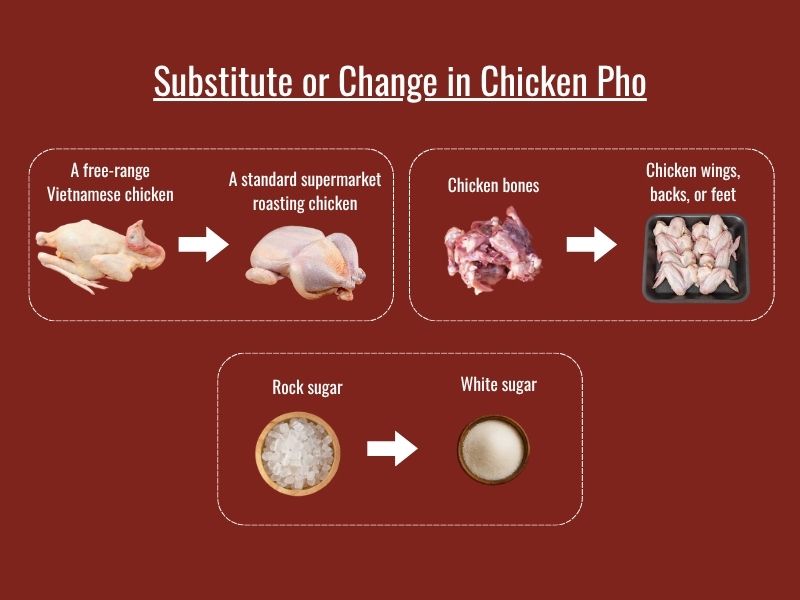
These substitutions help you adapt chicken pho ingredients based on availability while keeping the core characteristics of the dish: chicken-forward broth, aromatic spices, rice noodles, and fresh toppings.
Ingredient swaps
- A free-range Vietnamese chicken (gà ta) can be replaced with a standard roasting chicken. The broth remains flavorful, although the meat may be softer and less firm than a traditional free-range chicken.
- Chicken wings, backs, or feet can replace chicken bones. These cuts maintain the chicken-focused flavor better than pork bones. Pork bones add body and richness but shift the broth toward a different flavor profile.
- White sugar can replace rock sugar (đường phèn). Use slightly less at first and adjust gradually because regular sugar creates a sharper sweetness compared with the cleaner finish of rock sugar.
- Immature egg yolks (trứng gà non) can be omitted. There is no direct replacement, and the bowl remains complete without this optional traditional addition.
Cooking method
- A pressure cooker can replace the stovetop simmer. Char the aromatics first, then cook the broth under pressure for a faster version. The result is convenient and flavorful, but the broth may have less control over clarity because foam cannot be skimmed during pressure cooking.
How to Store Chicken Pho?
Store the broth, chicken, noodles, and toppings separately to preserve the texture and clarity of the finished bowl. Components left sitting together soften over time, especially rice noodles absorbing hot broth.
The broth can be stored in an airtight container for up to 5 days in the refrigerator or about 3 months in the freezer. Freeze the broth separately from the noodles and toppings for the best texture.
Cooked chicken can be refrigerated for 3–4 days. Reheat the broth until steaming hot before serving, then add fresh noodles and toppings. Avoid repeatedly boiling the broth because excessive heat can affect clarity and texture.
Prepare herbs, lime, chili, and condiments close to serving time so they retain their fresh aroma.
Have you made chicken pho at home yet, or is this the weekend you finally simmer the pot? Drop your questions, tweaks, or results in the comments below, and if this recipe worked for you, a quick star rating helps other home cooks find it. Share your finished bowl on social media with #CHINSU, since we read every one. Curious whether CHIN-SU fish sauce belongs in your pot, the one that keeps the broth clear and the spicing light? Grab a bottle at chinsu.com and give it a try.
Frequently Asked Questions
Yes, you can make chicken pho with rotisserie chicken for a faster version. The cooked chicken saves time, but the broth will have less depth because it does not extract flavor from a whole raw chicken and bones. Adding extra chicken wings or backs can help build a richer broth.
Yes, chicken pho can be made in a pressure cooker, although the broth texture differs from the stovetop method. Char the aromatics first, then pressure cook the broth for about 20 minutes at high pressure. Blanching the bones beforehand becomes more important because the sealed pot prevents skimming during cooking.
Chicken pho is lighter than beef pho in both body and spice intensity. The broth focuses on chicken flavor, with a clearer texture and a more restrained spice profile, while beef pho usually develops a deeper body from beef bones and longer simmering.
Chicken pho uses flat rice noodles called bánh phở. Fresh noodles provide the best texture, while dried noodles can also work after soaking and blanching according to package instructions.
Chicken pho broth becomes cloudy when the pot boils too aggressively, foam is not removed early, or proteins and fat become emulsified into the liquid. Keep the simmer gentle, blanch bones before cooking, and skim the surface during the early stages.
Chicken pho tastes bland when the broth lacks enough seasoning depth or the final balance is not adjusted after simmering. Season after the broth develops its chicken flavor, then adjust salt, rock sugar, fish sauce, and aromatics gradually.
Yes, chicken pho broth freezes well when stored separately from noodles and toppings. Freeze in airtight containers for up to about 3 months and prepare fresh noodles when serving for better texture.
Chicken pho is a broth-based meal with poached chicken, rice noodles, and fresh herbs, making it a lighter option compared with many fried or heavy noodle dishes. The final nutrition depends on portion size, chicken fat retained in the broth, noodle quantity, and added sauces. Skimming excess fat and increasing herbs can create a lighter bowl.
Chicken Pho (Phở Gà) Recipe
1. Ingredient
Chicken and Bones
- 1 whole chicken, about 3.5 lb (1.6 kg).
- 3.3 lb (1.5 kg) chicken bones.
- Immature egg yolks (trứng gà non), optional.
Broth Spices and Aromatics
- 2.8 oz (80 g) shallots.
- 3.5 oz (100 g) onion.
- 1.8 oz (50 g) ginger.
- 3.5 oz (100 g) daikon radish.
- 2 cinnamon sticks, about 1 oz (30 g).
- 2 whole star anise.
- 2 black cardamom pods.
- 0.1 oz (3 g) coriander seeds.
- 0.1 oz (3 g) cumin seeds.
- 0.1 oz (3 g) white peppercorns.
- Peel of 1 fresh lime.
- A few sprigs of cilantro.
Broth Seasoning
- 3 tablespoons chicken seasoning powder.
- 1.5 tablespoons salt for broth.
- 1.5 tablespoons salt and 1 tablespoon rock sugar for poaching.
- 3 tablespoons rock sugar.
- 1 tablespoon MSG (optional).
- 2 tablespoons fish sauce.
Noodles, Herbs, and Toppings
- 1.5 lb (700 g) flat rice noodles (bánh phở).
- Green onion, with white parts split lengthwise and green parts sliced.
- Thinly sliced onion soaked in ice water.
- Kaffir lime leaves, shredded finely.
- Ground black pepper.
- Hoisin sauce and chili sauce.
2. Instructions
- Step 1: Clean and Prep the Chicken. Clean the whole chicken, pat dry, remove excess cavity fat, and reserve the fat if you want to render chicken fat for cooking.
- Step 2: Blanch the Bones. Soak and rinse chicken bones, then blanch them in boiling water for 3 minutes. Rinse again until clean to remove impurities and create a clearer broth.
- Step 3: Start the Pot. Add 5 L water and the blanched chicken bones to a large pot.
- Step 4: Poach the Chicken. Add salt and rock sugar, slowly bring the pot to a boil, then reduce to a gentle simmer. Skim foam regularly to keep the broth clear.
- Step 5: Check the Chicken for Doneness. Cook the chicken for about 20 minutes, then check the thickest thigh area. Confirm the internal temperature reaches 165°F (74°C).
- Step 6: Shock the Chicken in Ice Water. Transfer cooked chicken into ice water to tighten the skin and improve texture. Drain well after cooling.
- Step 7: Poach the Egg Yolks (Optional). Place immature egg yolks into a sieve and poach in simmering broth for about 5 minutes if using.
- Step 8: Give the Skin Its Golden Color (Optional). Mix turmeric with water and brush lightly over cooled chicken skin. Allow color to set for 15 minutes, then rinse gently.
- Step 9: Char the Aromatics. Char shallots, onion, ginger, and daikon until the outer surfaces darken and develop aroma.
- Step 10: Clean and Split the Aromatics. Remove charred outer layers, rinse the aromatics, then add onion and daikon to the broth while reserving shallots and ginger for the spice sachet.
- Step 11: Toast the Spices. Toast cinnamon, star anise, black cardamom, coriander seeds, cumin seeds, and white peppercorns until fragrant.
- Step 12: Tie the Spice Sachet. Place toasted spices, charred shallots, ginger, lime peel, and cilantro into a spice bag.
- Step 13: Steep the Sachet. Add the spice sachet to the broth and steep for 40 minutes while maintaining the simmer.
- Step 14: Season the Broth. Remove bones, aromatics, and spice sachet. Add chicken seasoning powder, salt, rock sugar, MSG, and fish sauce. Adjust seasoning until balanced.
- Step 15: Cut the Chicken. Slice or shred cooled chicken into bite-sized pieces. Arrange with optional immature egg yolks.
- Step 16: Prep the Herb Plate. Slice green onions, prepare soaked onions, shred kaffir lime leaves, and arrange herbs and condiments.
- Step 17: Assemble the Bowl. Blanch rice noodles, place them in bowls, add chicken, onions, and herbs, then pour hot broth over everything. Finish with black pepper and serve with hoisin and chili sauce.
3. Storage: Store broth, chicken, noodles, and toppings separately. Refrigerate broth for up to 5 days or freeze for about 3 months. Store cooked chicken for 3–4 days. Reheat broth until hot and prepare fresh noodles and herbs when serving.
4. Yield: 6–8 servings
5. Serving Style: Northern Vietnamese-style chicken pho with clear chicken broth, flat rice noodles, shredded chicken, fresh herbs, lime, and table condiments

CHIN-SU KITCHEN TEAM
CHIN-SU Kitchen Team are the creative experts behind the delicious recipes featuring CHIN-SU sauces. With years of experience and a passion for flavor, our team carefully selects recipes from a variety of trusted chefs and bloggers, bringing together the best culinary insights to present you with the most suitable and exciting dishes. Every recipe is chosen to inspire you to create meals that are not only tasty but also easy to prepare, enhancing your dining experience. Join us as we explore a wide range of sauces and flavors, and elevate every meal with the perfect recipe for your table!
User Reviews
Featured Articles
SUBSCRIBE TO GET
MORE INFO
Want the latest and greatest recipes, updates, and more from us,
straight to your inbox? Subscribe and get our NEWS!