Vietnamese Ginger Chicken Recipe - Easy Caramel-Braised Gà Kho Gừng
By CHIN-SU Kitchen Team
Updated Sep 24, 2026
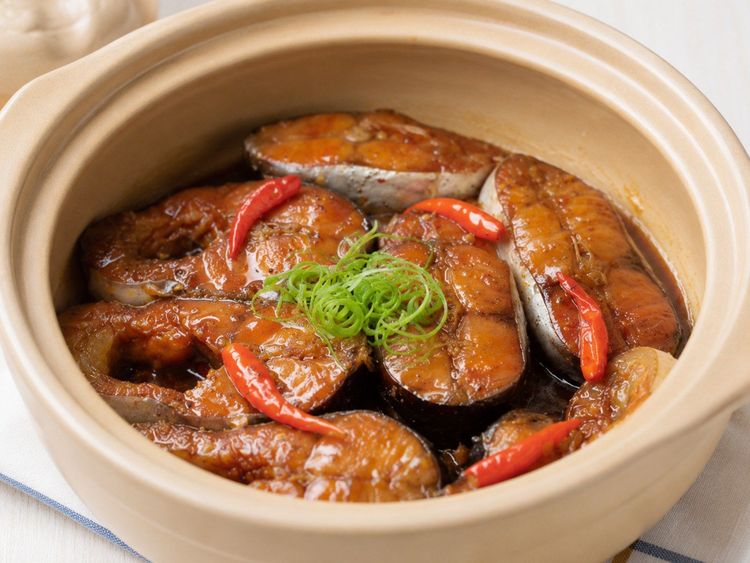
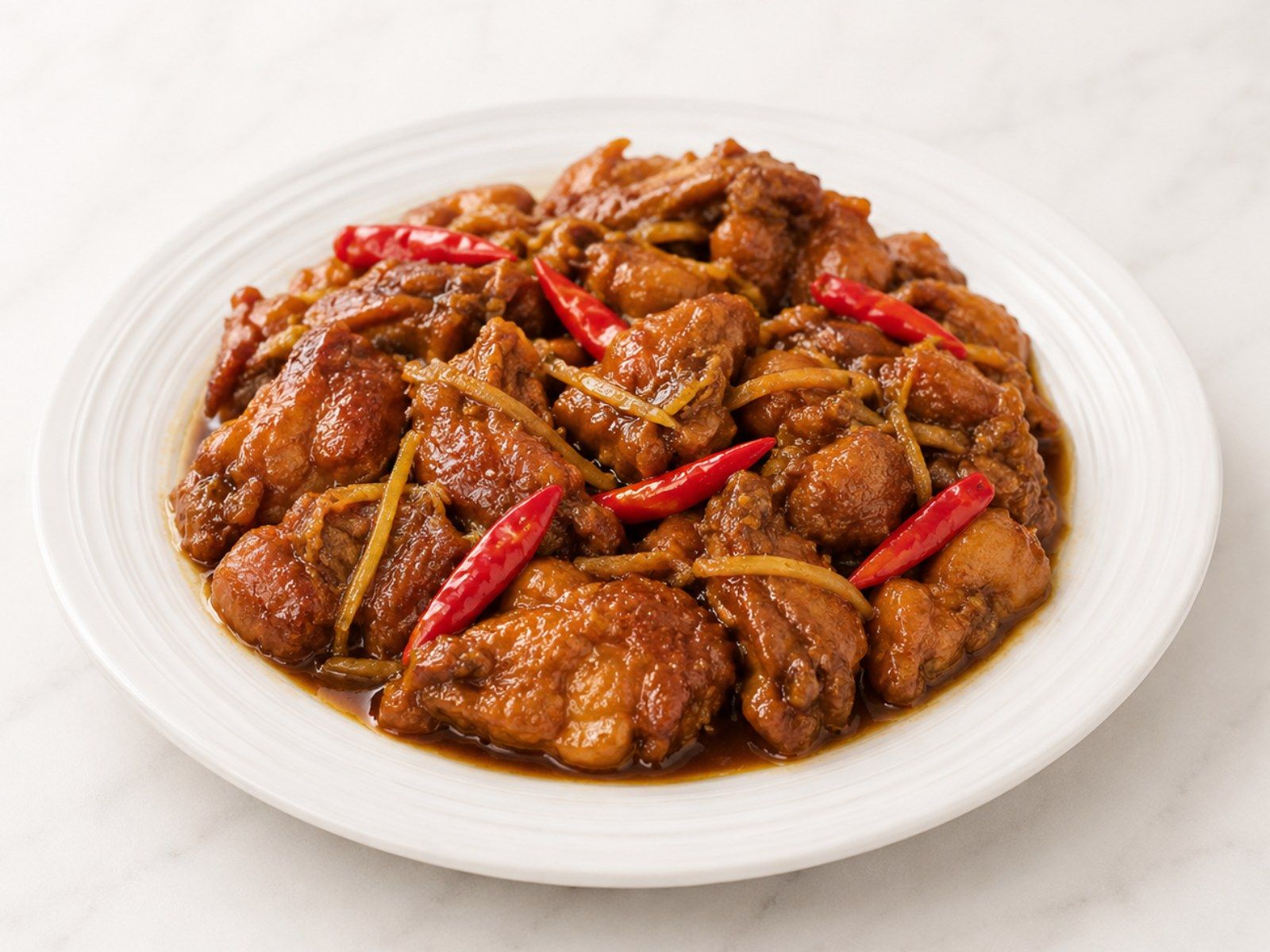
Tested in the CHIN-SU kitchenVietnamese ginger chicken, or gà kho gừng, is a comforting braised chicken dish made with fish sauce, Vietnamese caramel sauce, and plenty of fresh ginger. It is a familiar món mặn, or savory dish served with rice, in Vietnamese family meals and is especially satisfying during cool or rainy weather. In some Vietnamese families, ginger-rich chicken dishes are also prepared for women after childbirth as part of traditional postpartum meals.
The chicken simmers in a savory-sweet sauce, while the ginger adds a warm, peppery aroma without making the dish intensely spicy. In this article, CHIN-SU shares a home-style gà kho gừng recipe with step-by-step instructions, tips for preparing the caramel sauce, and serving suggestions. The recipe takes about 1 hour and 10 minutes in total and serves 4 people.
15 min
Prep time
55 min
Cook time
1 hr 10 min
Total time
What Is Vietnamese Ginger Chicken?
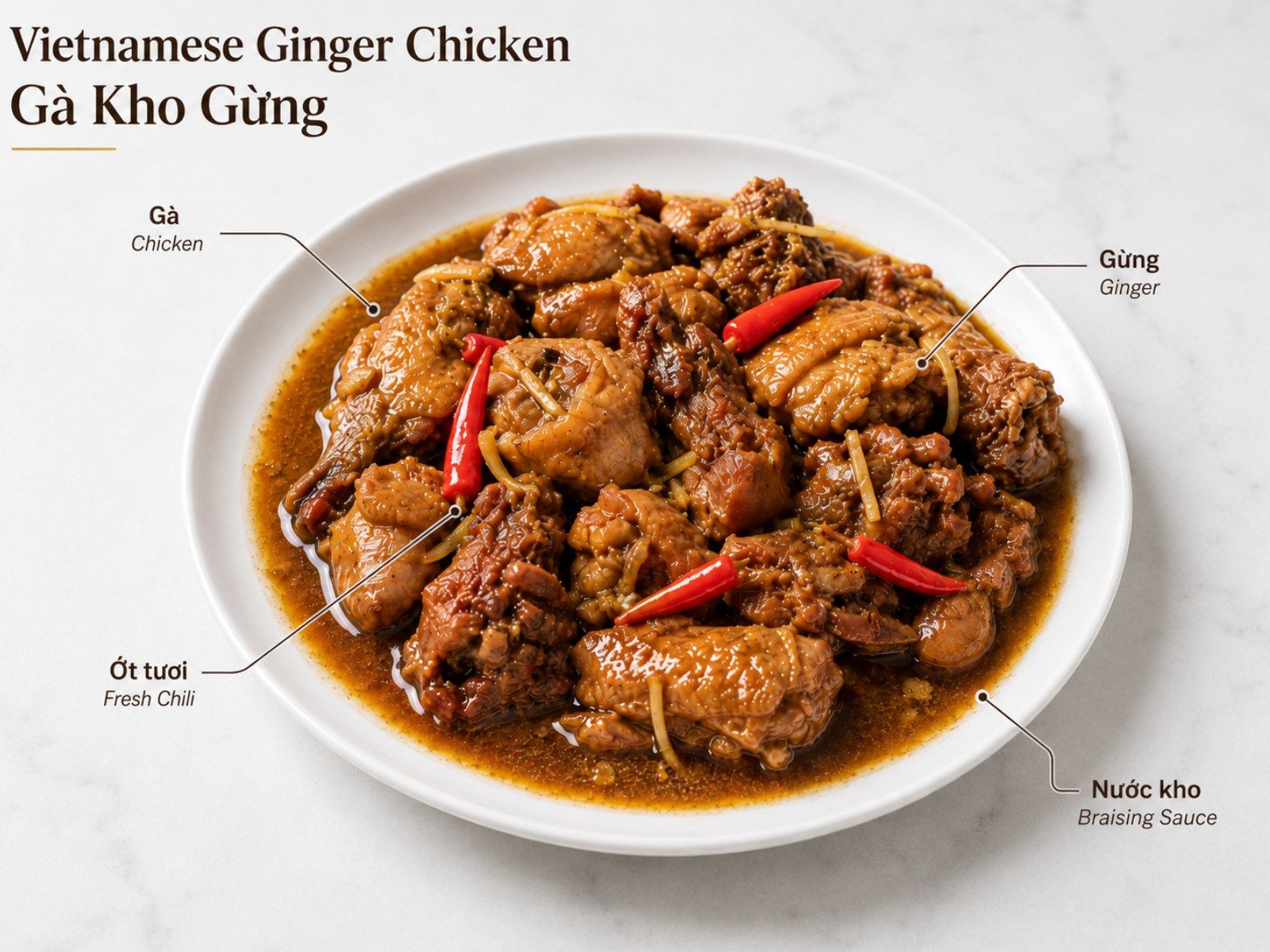
Vietnamese ginger chicken, or gà kho gừng, is made with pieces of chicken braised in a savory-sweet sauce of fish sauce, Vietnamese caramel sauce, and fresh ginger. It belongs to the Vietnamese family of kho dishes and is usually served as a món mặn with steamed rice. English speakers can pronounce the name approximately as “gah kaw goong.” In Vietnamese, gà means “chicken,” kho refers to braising, and gừng means “ginger.”
The word “kho” describes both the cooking method and the finished consistency. The chicken first cooks gently in seasoned liquid, then enters the “kho cạn” stage as the uncovered sauce reduces and clings to the meat rather than remaining thin like soup.
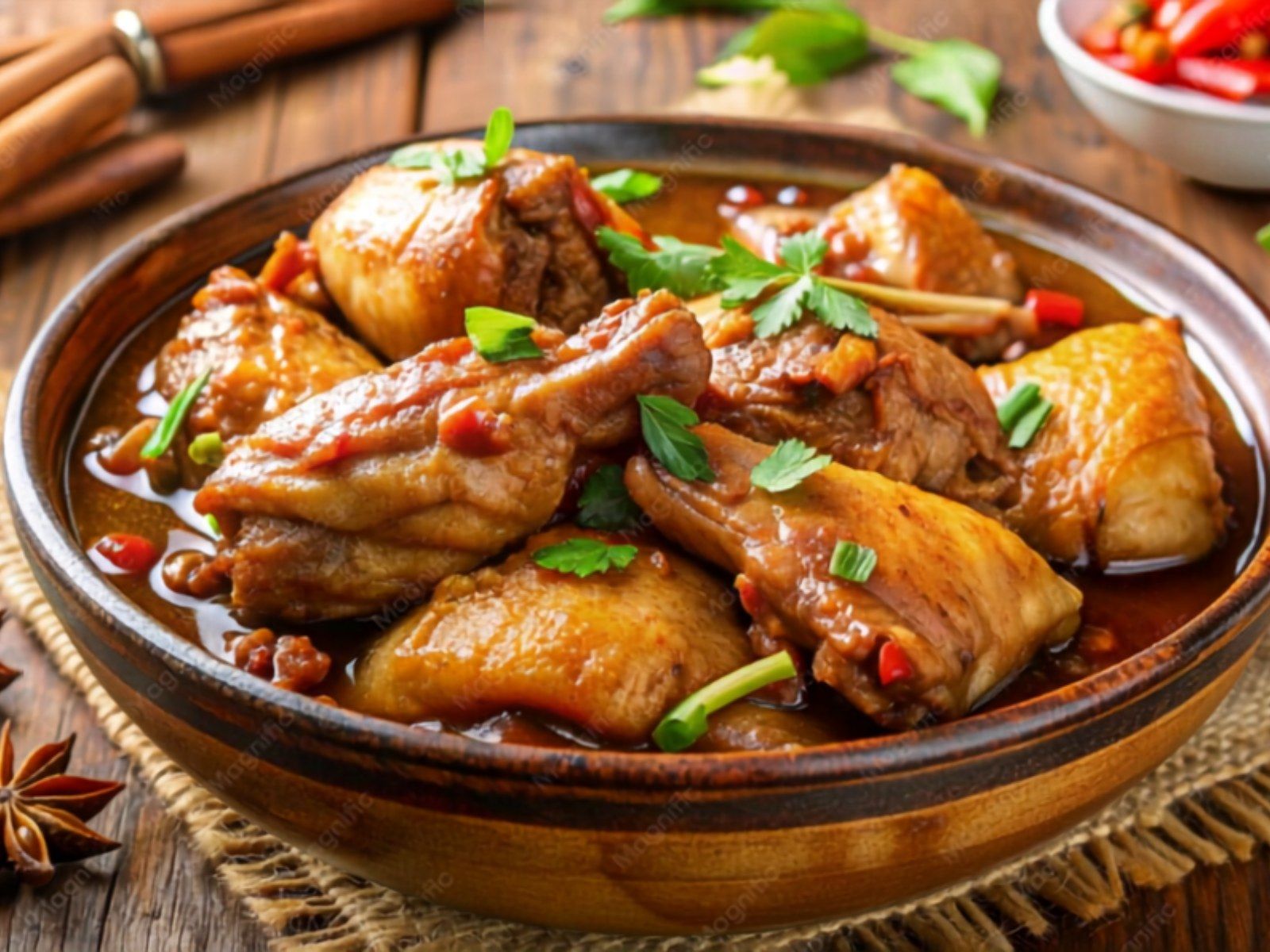
This method also appears in dishes such as thịt kho (braised pork), cá kho tộ (braised fish), and tôm rim (caramelized shrimp). It tastes both salty and sweet from the caramel and fish sauce, brings a gentle warmth and a bit of kick from the ginger, and has a nice hint of smokiness from the darkened sugar. That caramel base, combined with the strong fish sauce flavor, is exactly what makes it stand out from Chinese or Thai ginger chicken.
Gà kho gừng should not be confused with gà xào gừng. Xào uses higher heat and little liquid for a quick stir-fry, while kho uses gentler cooking followed by sauce reduction.
Why You'll Love Vietnamese Ginger Chicken
You'll love this Vietnamese ginger chicken because everyday pantry ingredients and just 1 pan deliver a dinner that tastes like it simmered all day long.
- Warm rather than chili-hot. Fresh ginger adds peppery warmth and mild pungency, while fish sauce and caramelized sugar coat the chicken in a savory-sweet glaze. Use less ginger for a milder flavor.
- Goes with anything. Serve it over steamed rice with a few cucumber slices for a simple weeknight meal, or pair it with a light soup and some sautéed greens for a full family meal.
- 1 pan, no fuss. Once the chicken marinates, it needs just 1 pan and about 25 minutes of active cooking, with no special equipment, no deep-frying, and no oven needed at all.
Vietnamese Ginger Chicken Ingredients
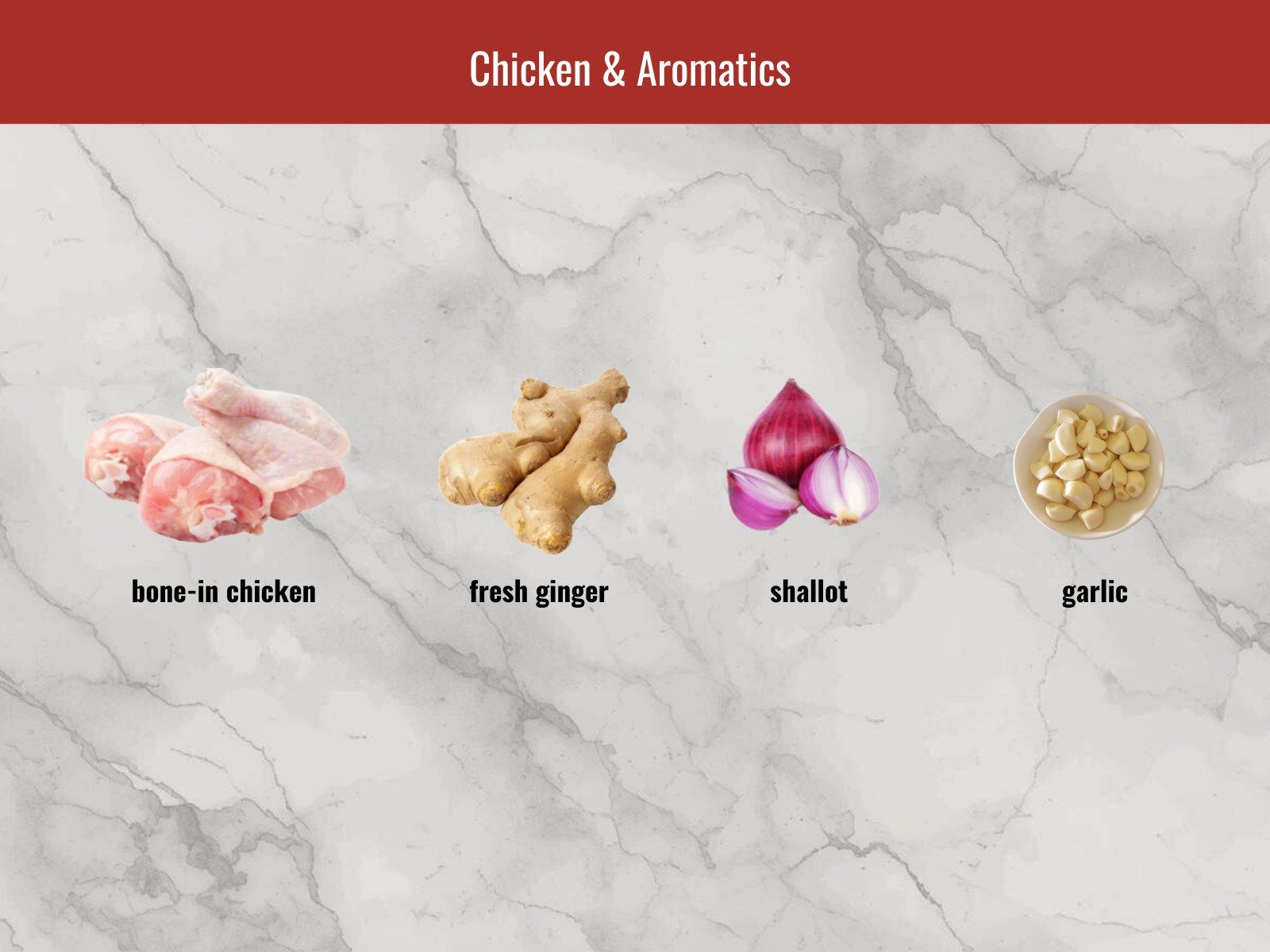
This Vietnamese ginger chicken comes together from a short list of ingredients: the chicken, the aromatics, and the braising seasonings.
Chicken
2.2 pounds (1 kg) bone-in chicken, cut into bite-sized pieces. We pick young chickens over older hens because their meat stays tender and absorbs the marinade faster. A whole chicken split in half gives the best mix of white and dark meat, but bone-in thighs and drumsticks are the next best thing if you want less knife work. Look for rosy-pink skin with no bruising or dark spots, and press the thigh: spongy flesh that holds a dent may have been water-injected.
Aromatics
- 2.5 ounces (70 g) fresh ginger. This dish needs more ginger than you would expect, and skimping is the top reason it tastes flat. We choose old ginger with visible vein lines, since those veins mean more essential oils and a sharper aroma. Slice 2/3 into thin matchsticks for the pan and mince the rest for the marinade.
- 0.5 ounce (15 g) shallot, minced.
- 0.35 ounce (10 g) garlic, minced.
- 2 lemongrass stalks, tender lower section only, finely minced (optional). Lemongrass adds a citrus-herbal layer but is not required for gà kho gừng.
Braising Seasonings
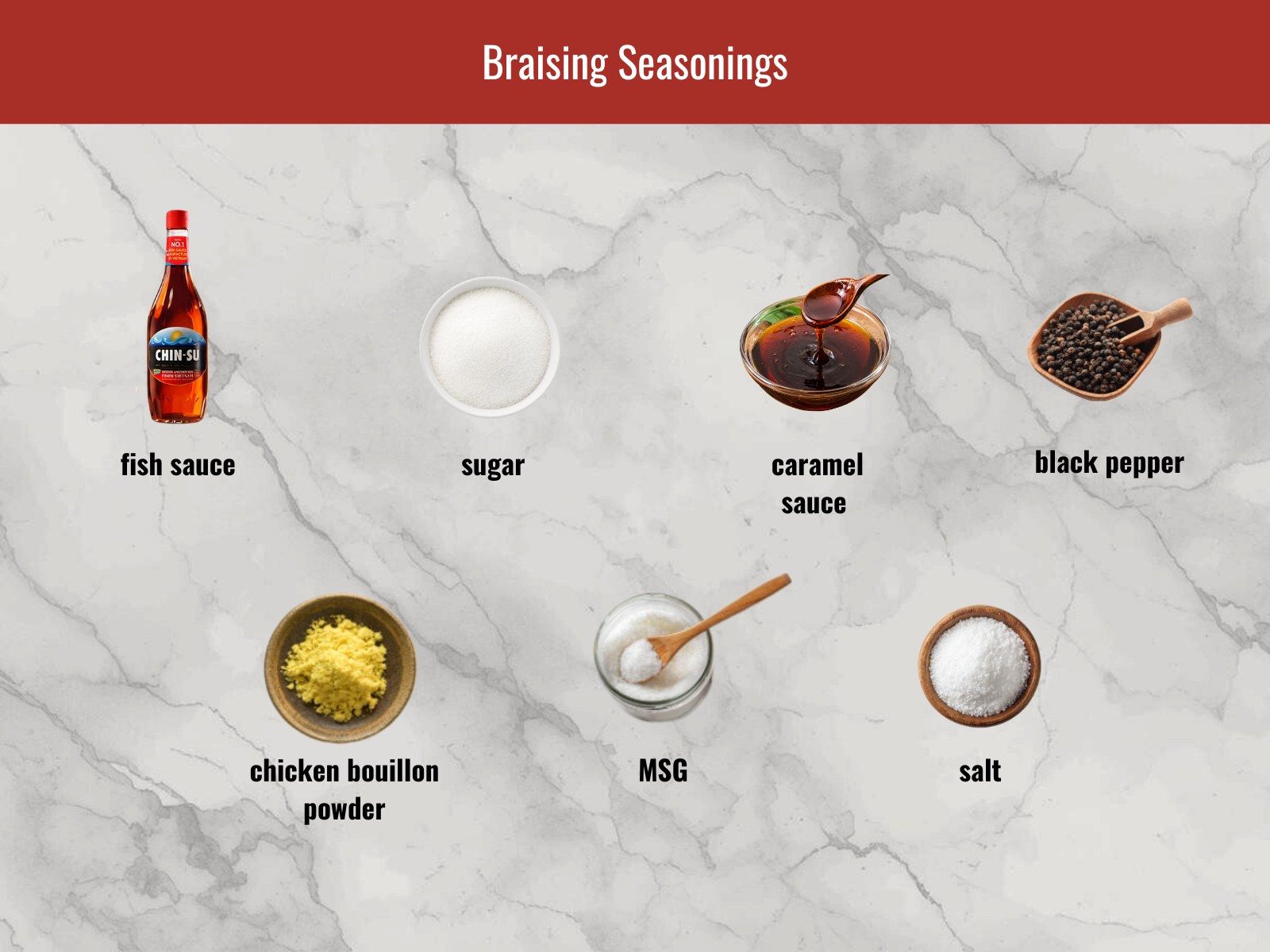
- 2½ tablespoons fish sauce (nước mắm), split 1½ tablespoons in the marinade and 1 tablespoon during braising. Choose a Vietnamese fish sauce with balanced saltiness because the sauce becomes more concentrated as it reduces.
- 1½ tablespoons sugar. Sugar balances the salt of the fish sauce.
- 1 tablespoon caramel sauce (nước màu). Caramel sauce gives the chicken its amber color, or you can swap in ½ teaspoon turmeric powder if you cannot find it.
- 2 teaspoons chicken bouillon powder: split 1 teaspoon into the marinade and 1 teaspoon into the braising liquid. Bouillon powder adds savory depth.
- ½ teaspoon MSG (optional). Skip the MSG if you prefer.
- ½ teaspoon salt.
- ½ teaspoon black pepper. Black pepper adds a little warmth at the end.
Cooking Liquid and Extras
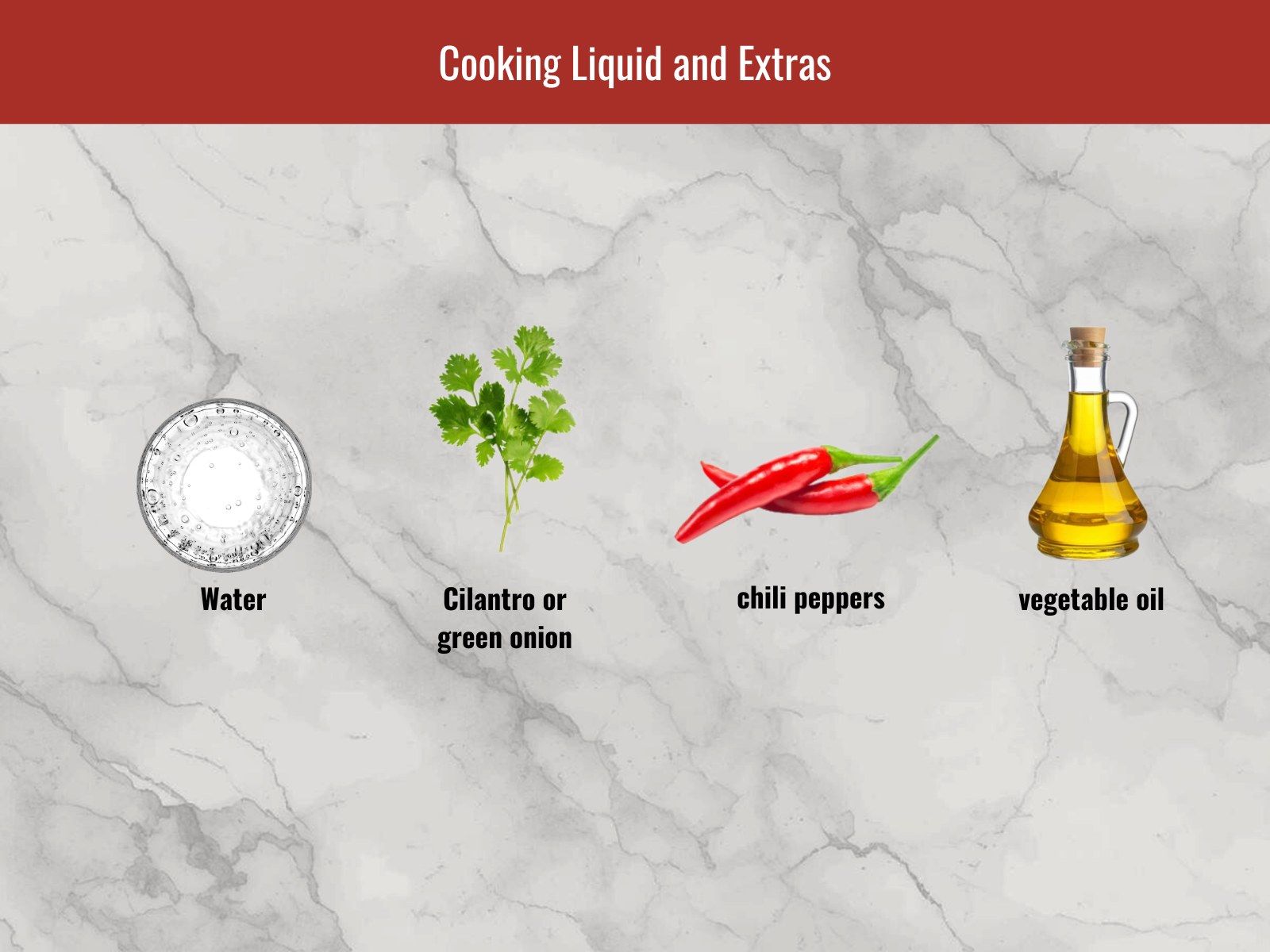
- 2 cups (475 ml) water. Water just needs to cover the chicken in the pan.
- 2 tablespoons vegetable oil. Vegetable oil sautés the aromatics at the start.
- 2 to 3 fresh chili peppers (optional). Fresh chilies add mild heat and a bit of color.
- Cilantro or green onion, for garnish.
How to Make Vietnamese Ginger Chicken Step by Step
Making Vietnamese ginger chicken takes 9 steps and about 1 hour 10 minutes, including 15 minutes of preparation, 30 minutes of marinating, and 25 minutes of cooking.
Step 1: Prep the Chicken
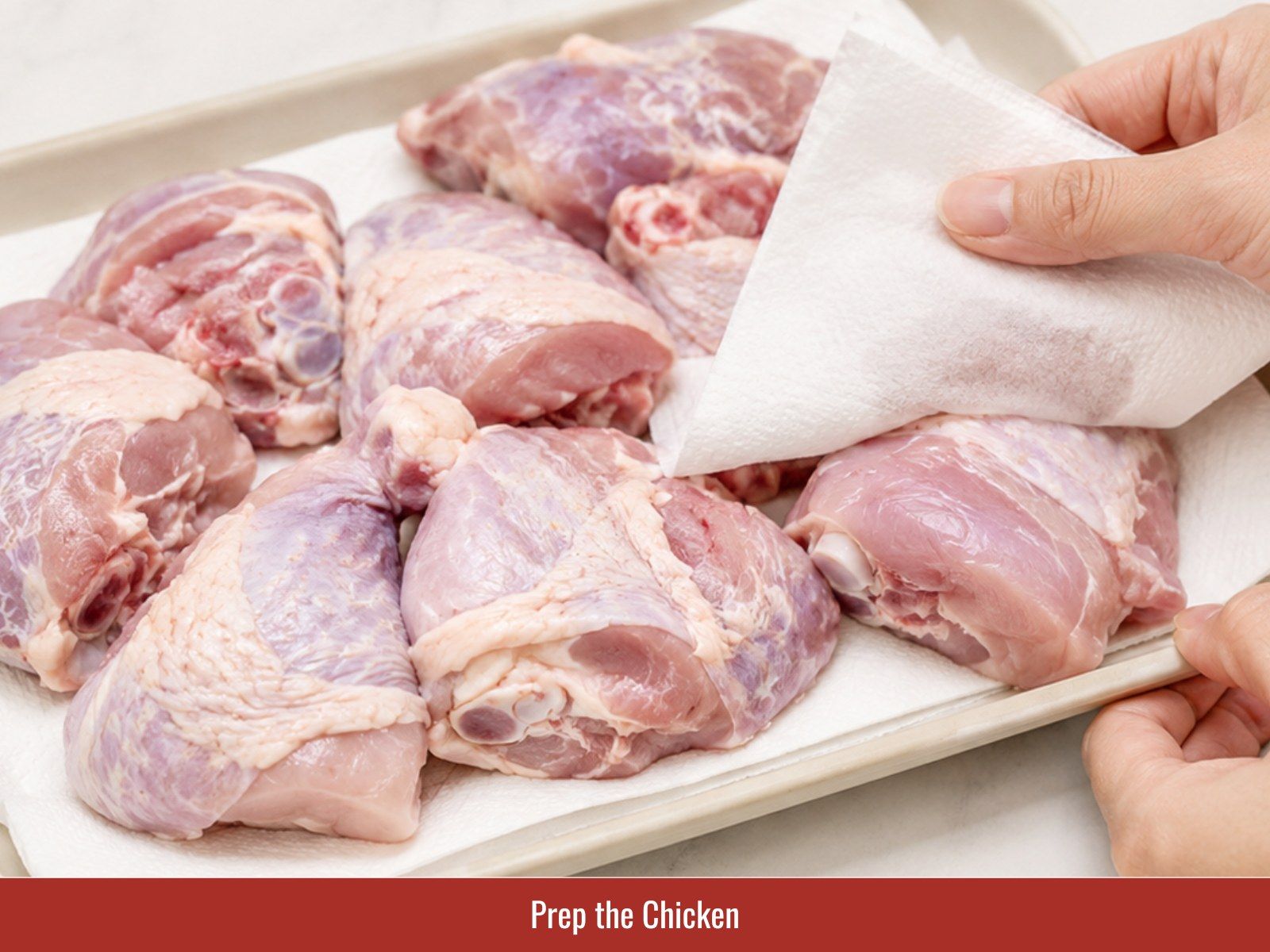
Pat the chicken pieces thoroughly dry with paper towels. Do not rinse raw chicken, as splashing water can spread bacteria to nearby surfaces. Use butcher-cut pieces or separate the thighs and drumsticks through the joints to reduce the risk of bone splinters.
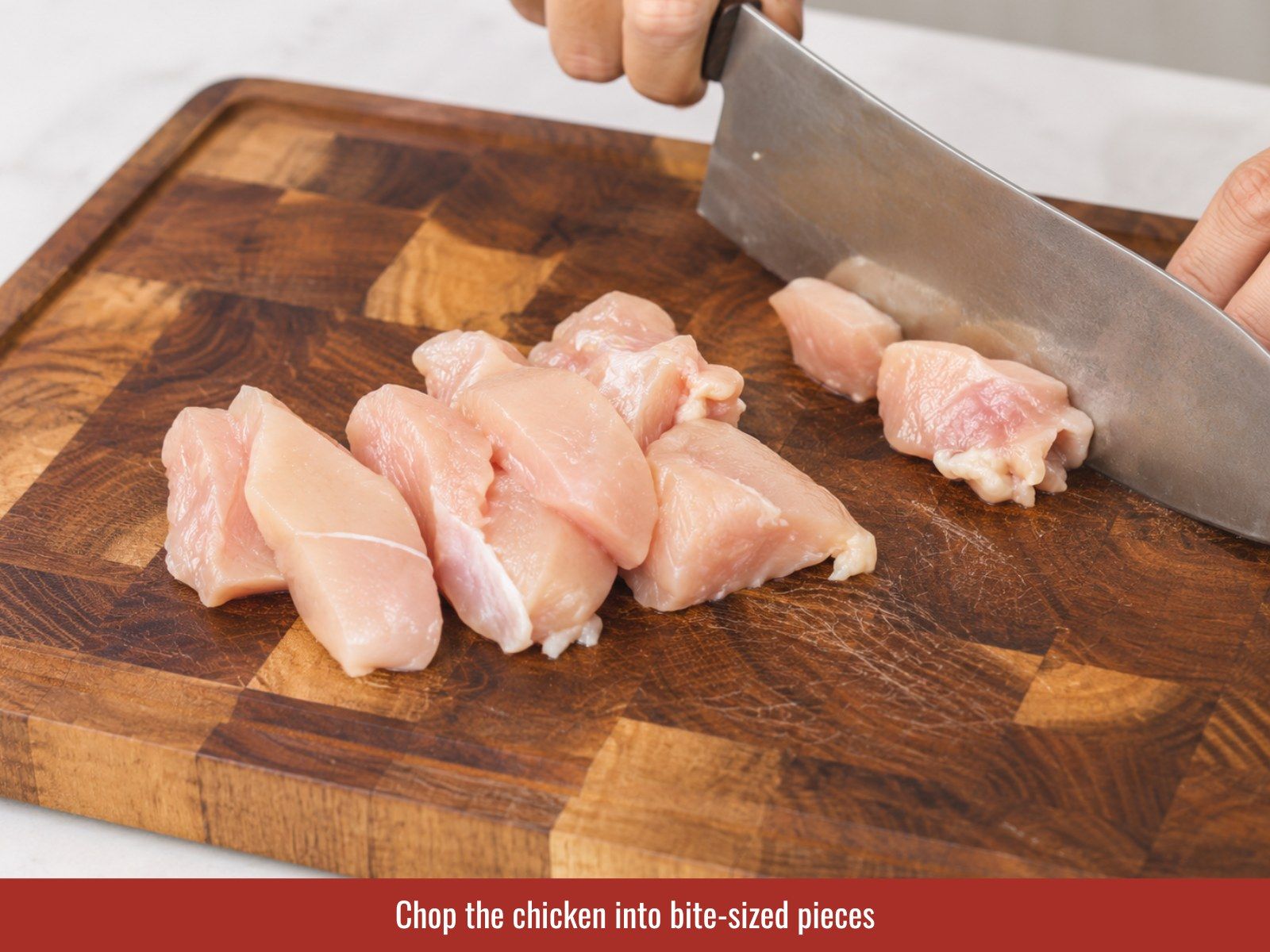
Step 2: Chop the chicken into bite-sized pieces
Cut the chicken into bite-sized chunks, about 1.5 inches (4 cm) each, using a sharp cleaver. Make clean, single cuts so the bones do not splinter. If the chicken is half-frozen, the blade will go through a lot cleaner.
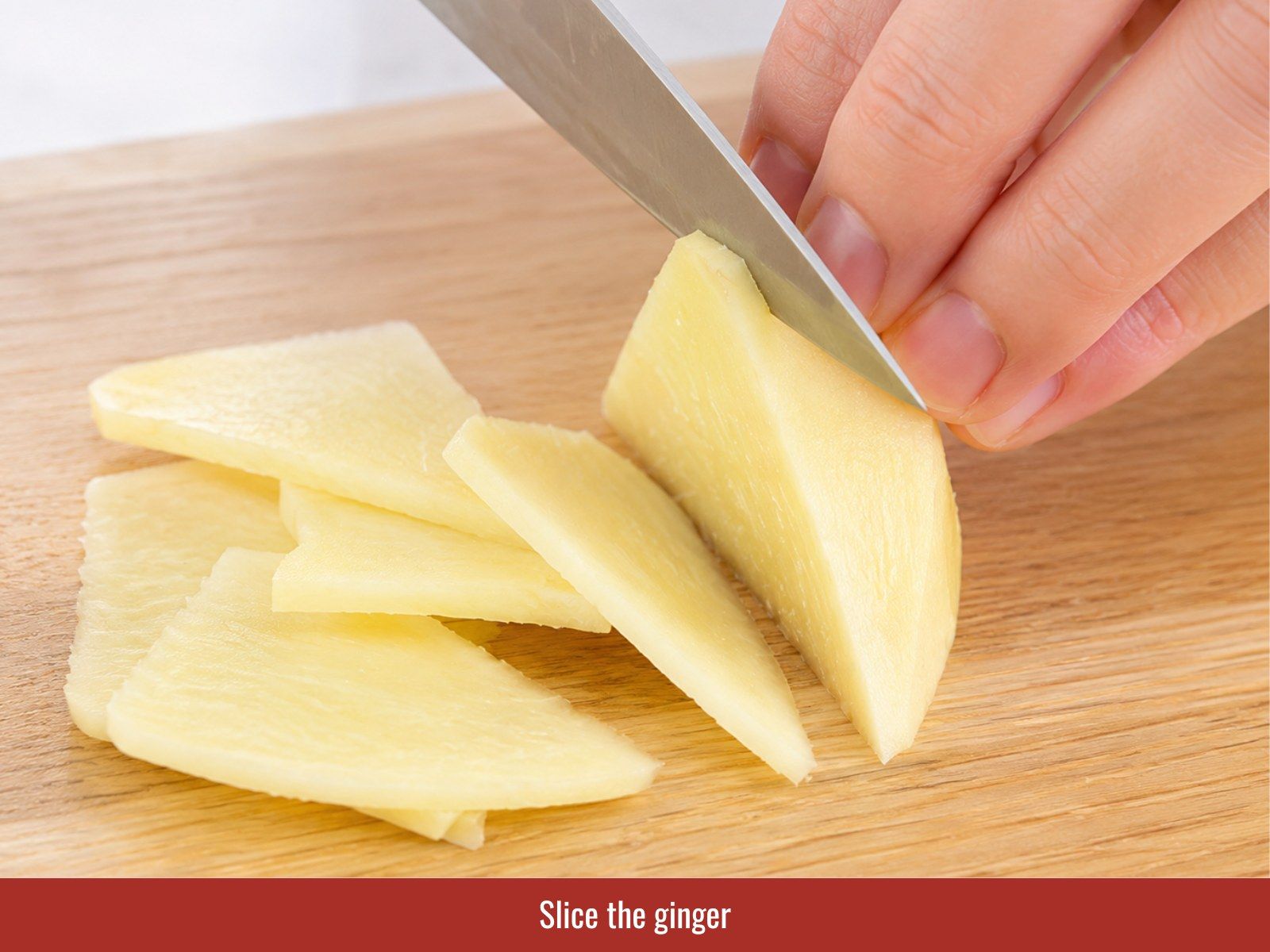
Step 3: Slice the ginger
Peel the ginger, then slice 2/3 into thin matchsticks for the pan and mince the rest for the marinade. This double-ginger trick really layers the flavor, since the minced ginger seasons the meat from the inside while the strips perfume the sauce.
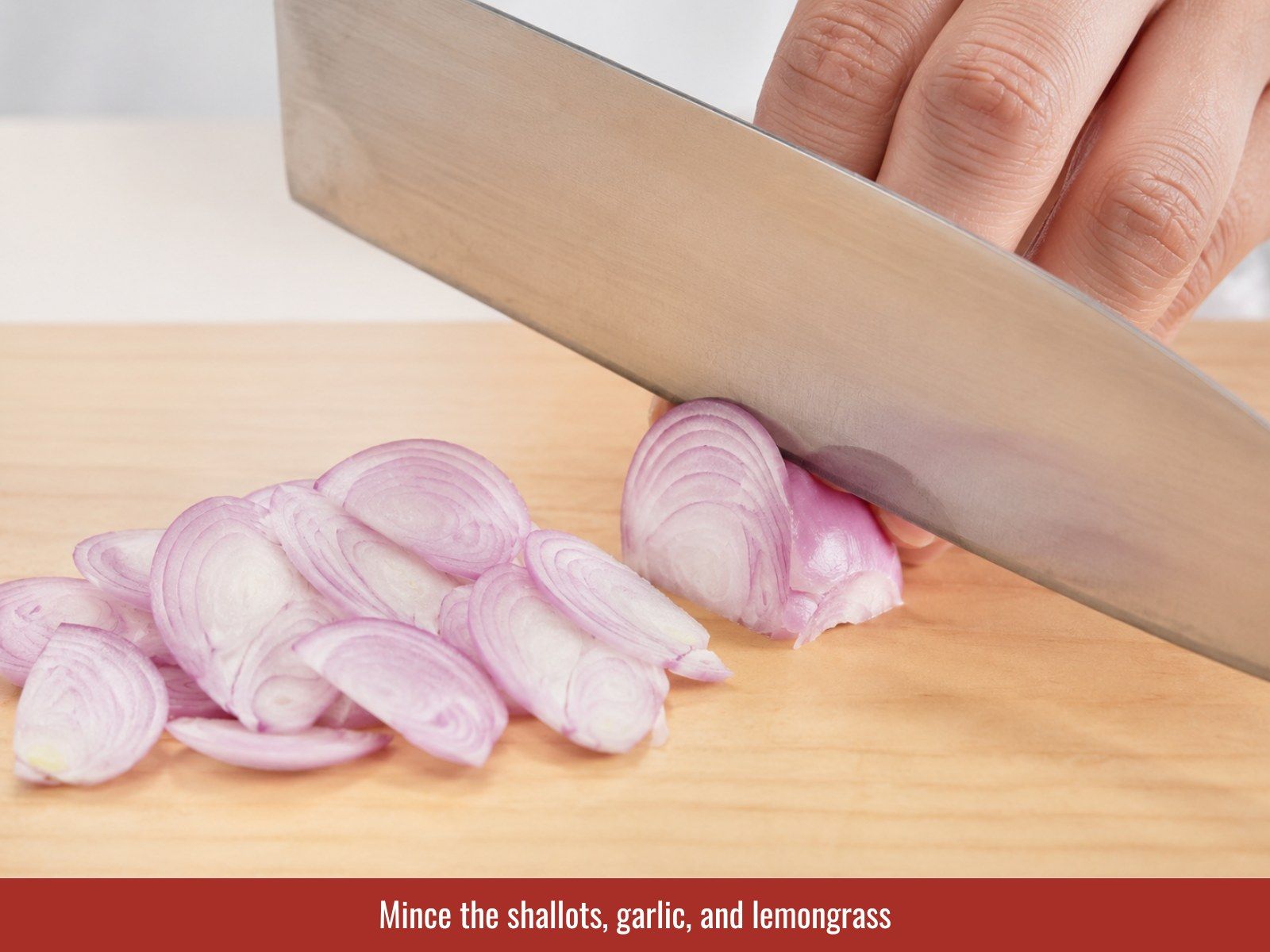
Step 4: Mince the shallots, garlic, and lemongrass
Finely mince the shallots and garlic. Peel away the tough outer layers of the lemongrass, use the tender lower 3 inches (8 cm), and mince it finely.
Cook the ginger, shallot, garlic, and optional lemongrass in oil just until fragrant. Vietnamese cooks call this “phi thơm”. The goal is to release their aroma without browning the garlic so deeply that it turns bitter.
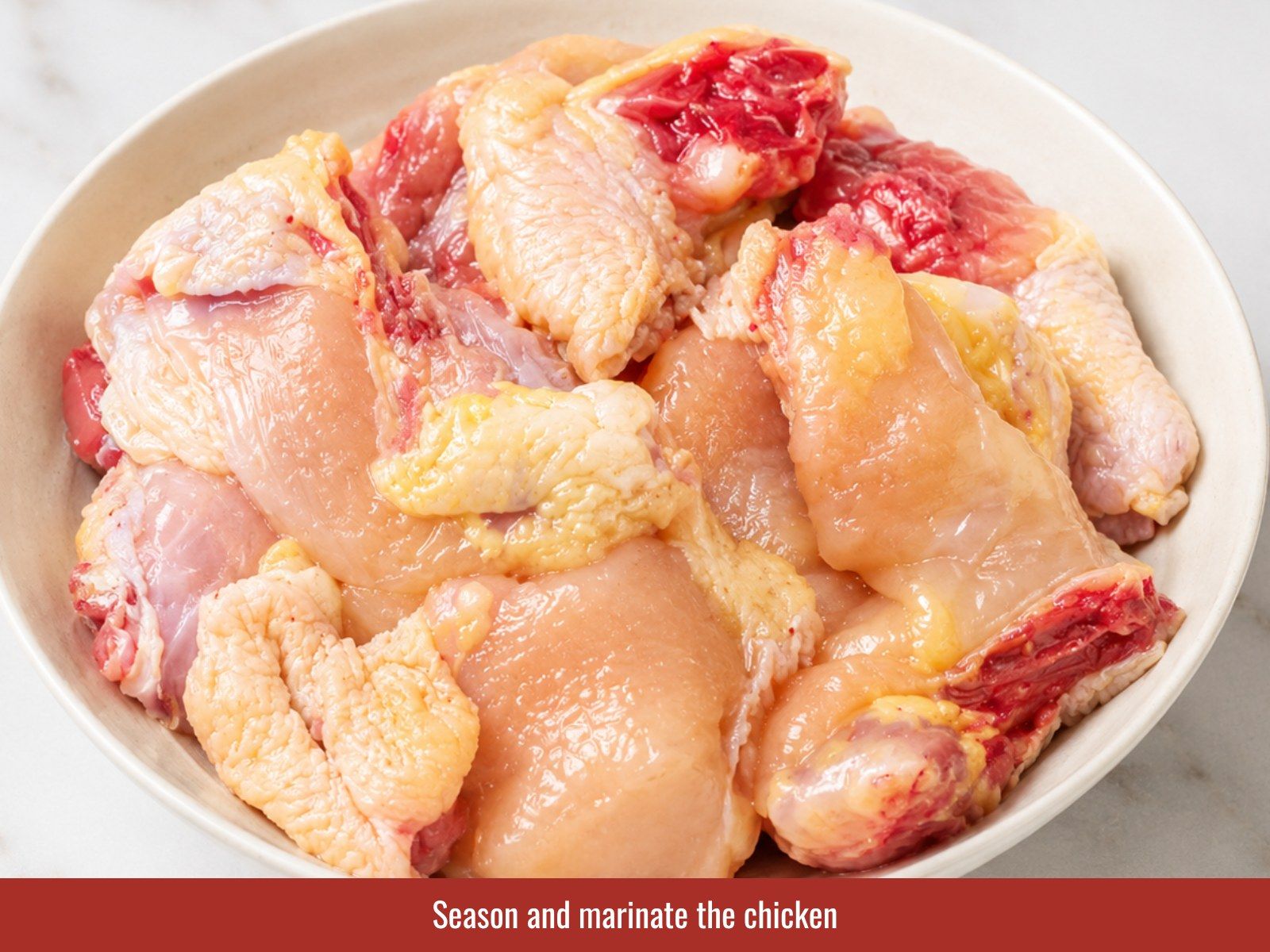
Step 5: Season and marinate the chicken
In a large bowl, mix the chicken together with ½ tsp salt, 1 tsp chicken bouillon, 1½ Tbsp fish sauce, ½ tsp MSG, 1½ Tbsp sugar, 1 Tbsp caramel sauce, and ½ tsp black pepper, along with the minced shallot, garlic, and ginger. Mix well until every piece is evenly coated.
Fish sauce provides the savory base of the marinade. CHIN-SU premium anchovy fish sauce can be used here as a convenient option.
Cover and marinate the chicken in the refrigerator for at least 30 minutes or up to 24 hours.
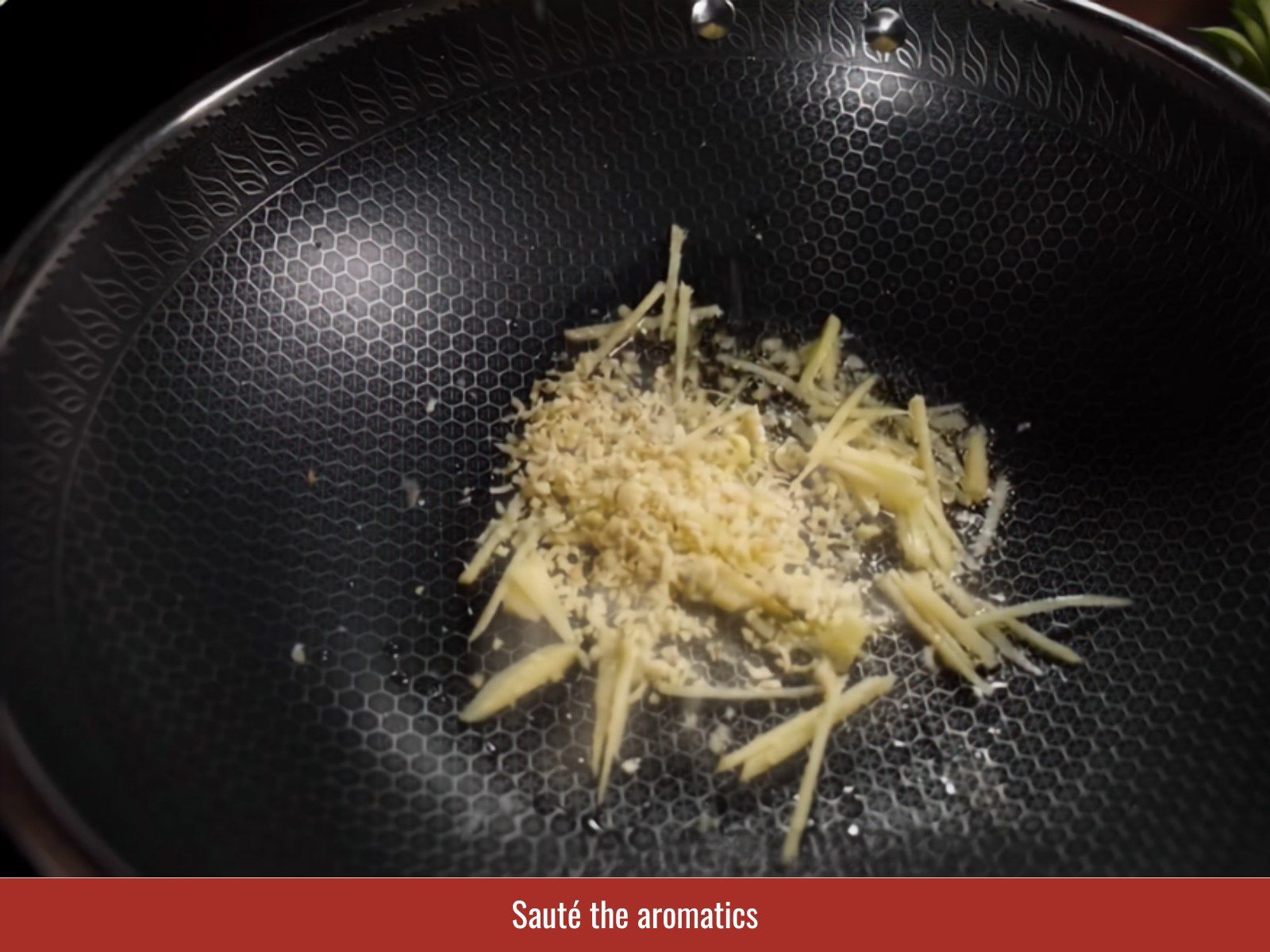
Step 6: Sauté the aromatics
Heat 2 tablespoons of oil in a wide pan or a clay pot over medium heat. Toss in the ginger strips, minced lemongrass, and the rest of the shallot and garlic. Stir it all around until everything smells amazing and turns lightly golden, which takes about 1 to 2 minutes.
Step 7: Sear the marinated chicken
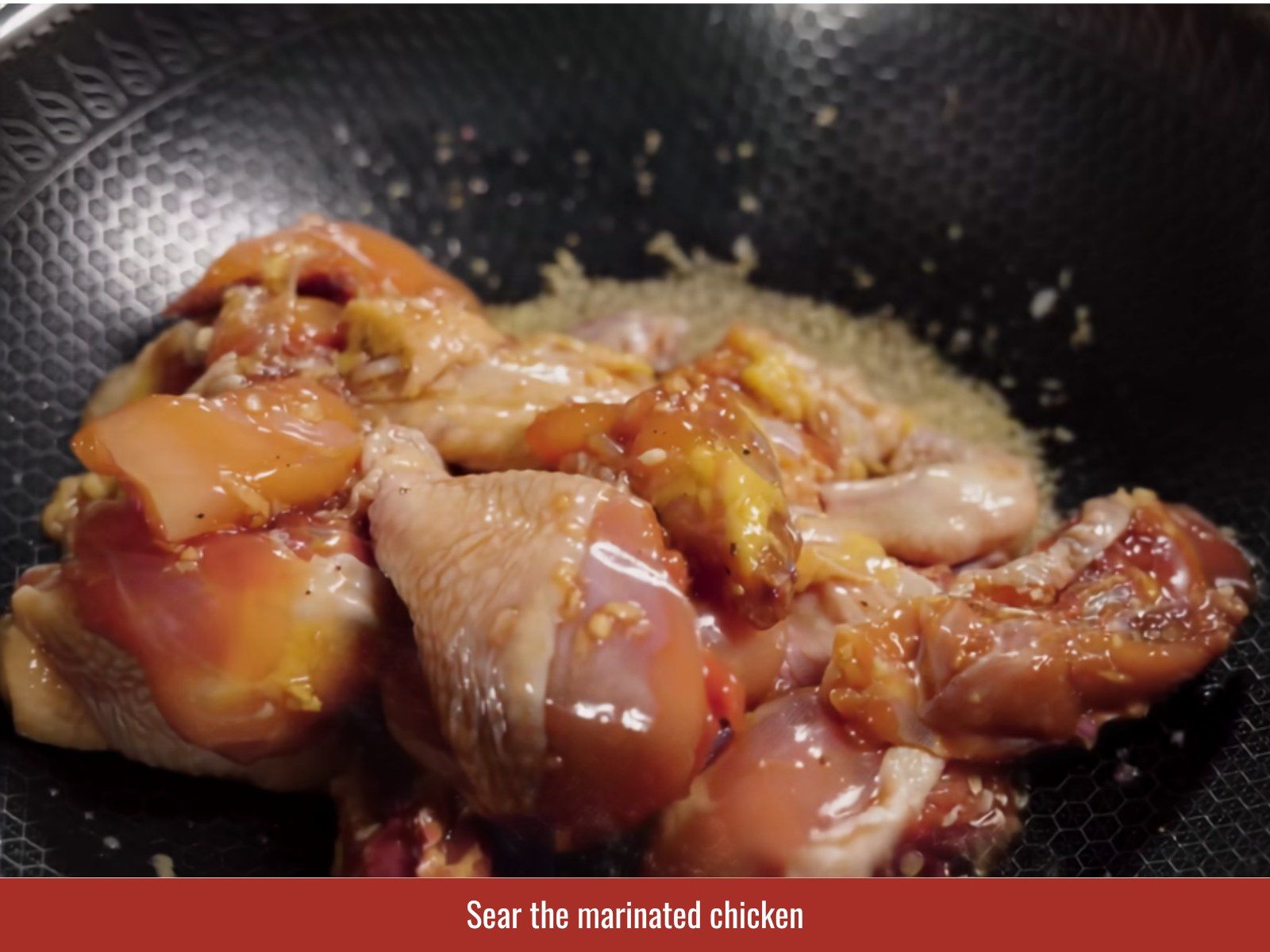
Add the marinated chicken to the pan and cook over medium heat for about 5 minutes, turning regularly, until the exterior firms and the nước màu evenly coats each piece. Vietnamese cooks call this stage “xào săn gà”. It develops aroma and helps the chicken retain its shape during braising.
Step 8: Add water and braise
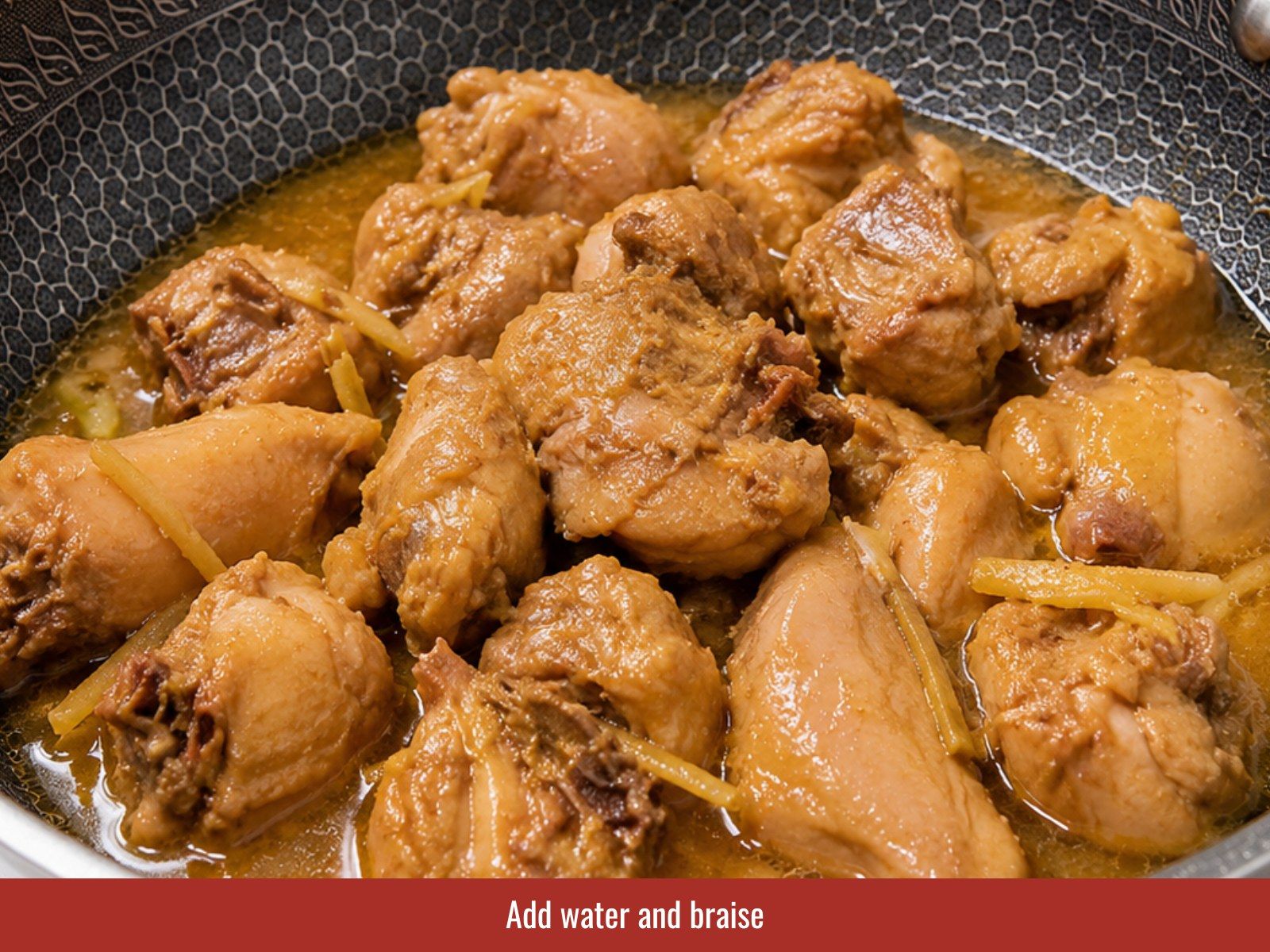
Pour in 2 cups (475 ml) water, just enough to cover the chicken, then stir in 1 Tbsp fish sauce and 1 tsp chicken bouillon. Put the lid on, turn the heat down to medium-low, and braise for 10 minutes, stirring every 5 minutes to ensure everything cooks evenly.
Step 9: Reduce the sauce and finish
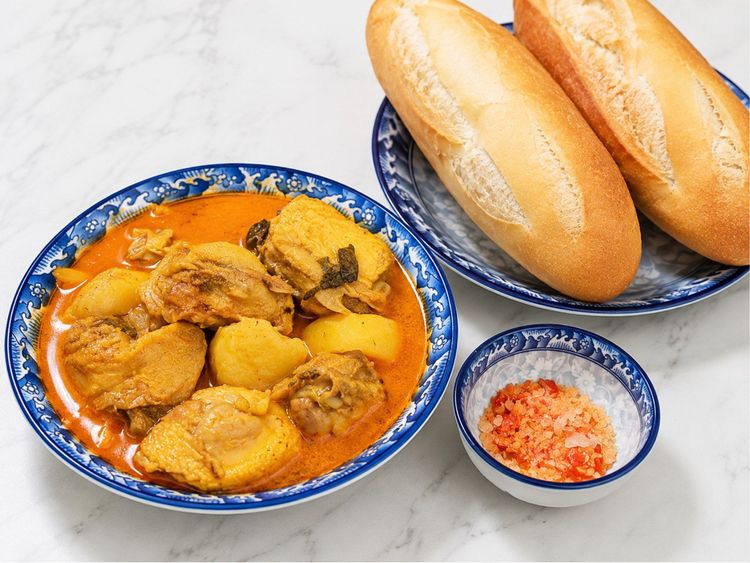
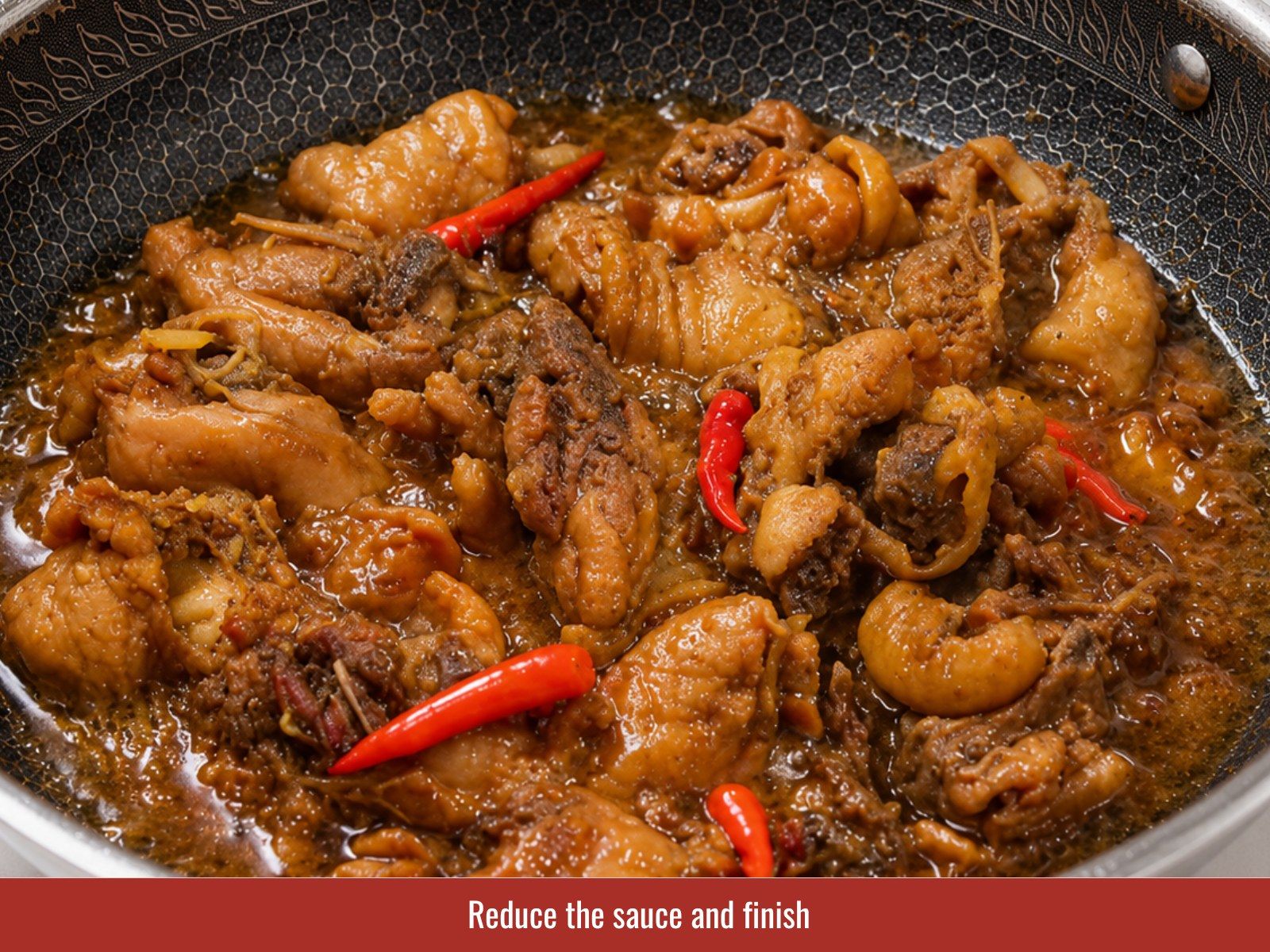
Remove the lid and add the chili peppers for extra heat. Simmer uncovered until the sauce reduces to a glossy coating, stirring more frequently near the end so the sugar does not scorch. Add the fresh ginger strips, give everything one final stir, then turn off the heat. The finished chicken should be tender and evenly coated in a deep amber-brown sauce with a pronounced ginger aroma.
How to Serve Vietnamese Ginger Chicken
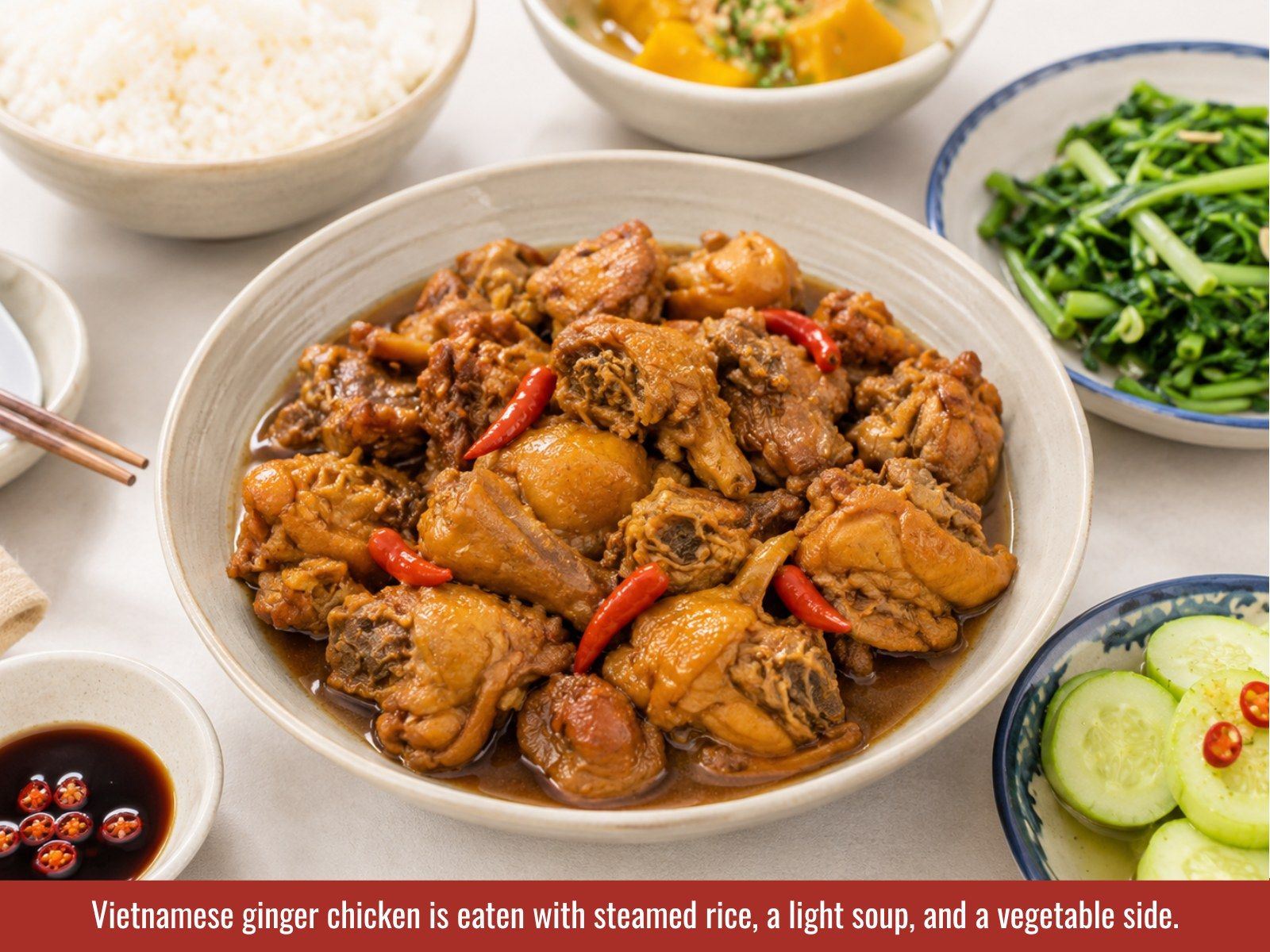
Serve gà kho gừng as the “món mặn” in a Vietnamese rice meal, with steamed jasmine rice, a light canh, and a vegetable dish such as sliced cucumber or sautéed water spinach.
Place the chicken in a shared serving dish and give each diner an individual bowl of rice. Spoon a small amount of the concentrated kho sauce over the rice, then alternate bites of chicken with vegetables and canh so the salty-sweet braise does not dominate the meal.
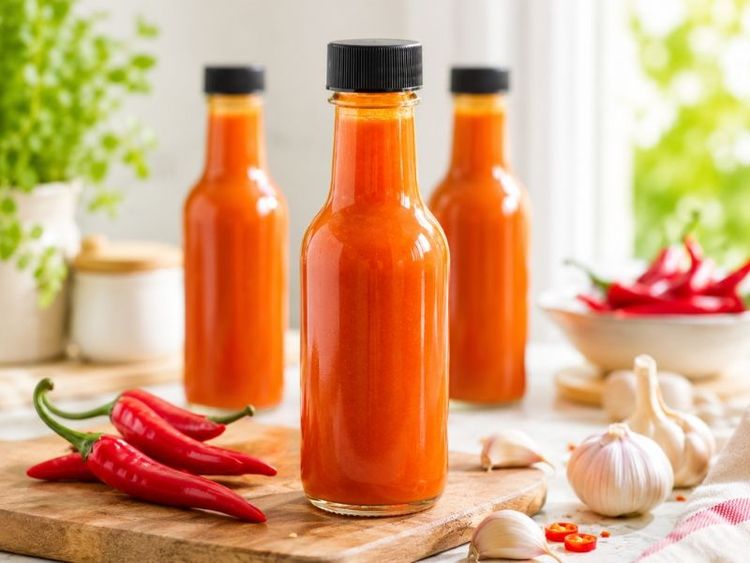
Gà kho gừng is especially comforting during cool or rainy weather. In some Vietnamese families, ginger-rich chicken dishes are also prepared during the postpartum recovery period known as ở cữ. Serve CHIN-SU Vietnamese Original Hot Sauce at the table for anyone who wants additional chili and garlic heat.
Tips for the Best Vietnamese Ginger Chicken
These 4 small choices separate a good Vietnamese ginger chicken from a great one.
- Use bone-in chicken with the skin on. Dark cuts like thighs and drumsticks stay juicier during the braise and add a lot more flavor to the sauce than boneless cuts.
- Cut with decisive strikes. 1 firm chop with a sharp cleaver keeps the bone clean and the pot completely free of splinters.
- Stop the caramel at dark amber if you make it from scratch. Past amber, the sugar turns bitter, so just use ½ teaspoon turmeric powder as a color shortcut if that step feels a bit risky.
What Can You Substitute or Change in Vietnamese Ginger Chicken?
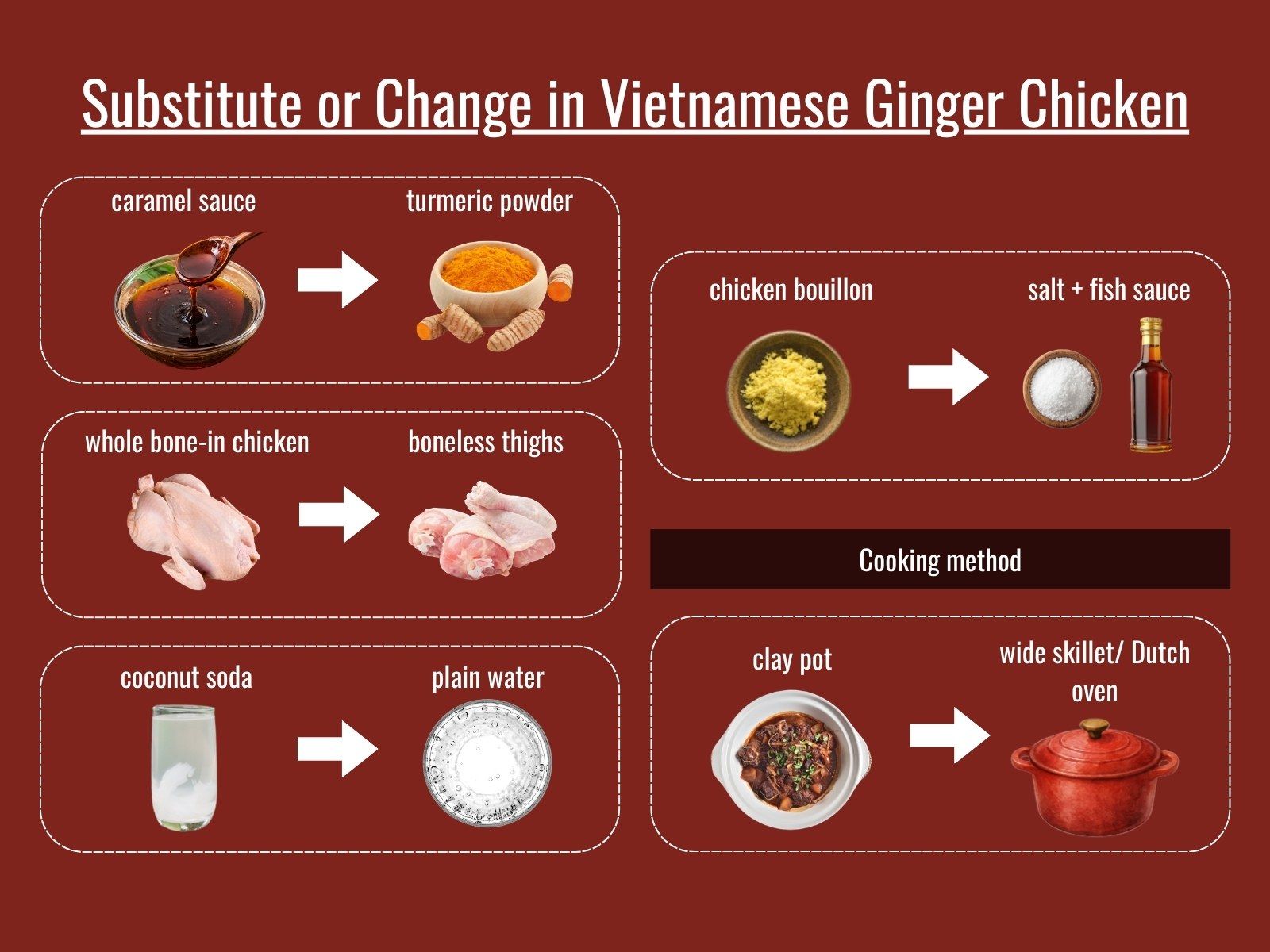
These 5 substitutions help you make Vietnamese ginger chicken with US grocery store ingredients without losing the dish's core flavor.
Ingredient swaps
- Turmeric powder can replace the caramel sauce. A half teaspoon of turmeric gives the chicken the same golden color, though you lose the caramel's gentle sweetness and depth. Most Asian grocery stores sell caramel sauce in a bottle, or you can make your own by melting sugar with a little water.
- Boneless thighs can stand in for the whole bone-in chicken. Boneless thighs cook faster and are easier to eat, but the sauce tends to be thinner because the bones add body. If the pan runs dry, just add a few tablespoons of water.
- Plain water can replace the coconut soda. Some cooks braise with coconut soda (Coco Rico), sold at most Asian grocery stores, to add a faint sweetness to the liquid, but plain water works just as well.
- You can skip the lemongrass entirely. The dish still tastes complete without it, and you only miss a light citrus-herbal layer. Fresh lemongrass is easy to find at Asian grocery stores if you want to add it.
- Extra salt and fish sauce can replace the chicken bouillon. A small pinch of each covers the savory note, since bouillon mainly adds umami and contains MSG. If you would rather keep the bouillon, the Totole brand is widely available in the US.
Cooking method
- A wide skillet or Dutch oven can replace the clay pot. A skillet with a lid works just as well. Use a large pan, at least 10 inches (25 cm) in diameter, so the sauce reduces evenly.
You can make these swaps whenever you need to, but the closer you stay to the original ingredients, the closer you get to the authentic flavor.
How to Store Vietnamese Ginger Chicken
Vietnamese ginger chicken is best fresh off the stove, but like many Vietnamese braises, it tastes even better the next day, so leftovers are definitely worth saving.
Transfer the chicken and sauce to shallow airtight containers and refrigerate them within 2 hours of cooking. Store the leftovers for 3 to 4 days, keeping the chicken in its sauce to prevent it from drying out.
Reheat only the portion needed until the thickest chicken pieces reach 165°F (74°C). Warm it gently in a covered skillet or microwave it in short intervals, stirring or turning the pieces as needed. If the refrigerated sauce has become too thick, add 1 to 2 tablespoons of water. Avoid high heat, as the sugar in the sauce can scorch.
Have you tried making Vietnamese ginger chicken at home yet, or are you still deciding which cut of chicken to start with? Drop your questions, tweaks, or results in the comments below. If this recipe worked for you, a quick star rating helps other home cooks find it. Share your finished ginger chicken on social media with #CHINSU, since we read every one. And if you are curious whether CHIN-SU fish sauce suits your ginger chicken, grab a bottle at chinsu.com and give it a try.
Frequently Asked Questions
Vietnamese ginger chicken tastes salty-sweet, with a warm ginger bite. The caramelized sugar adds a subtle smokiness, the fish sauce brings umami depth, and the ginger gives steady warmth without sharp heat. It is savory and comforting, not spicy.
Yes, boneless chicken thighs work well. They may cook a little faster than bone-in pieces, so check them early and cook until they reach 165°F (74°C). Bone-in chicken can add some flavor and body to the sauce, but the difference may be modest during a short braise. Add water only if the sauce reduces too quickly.
Use a wide pan that holds the chicken in a single layer and keep the sauce at a steady uncovered simmer. Crowding traps steam, while a narrow pan, low heat, or a larger batch slows evaporation.
If the chicken reaches 165°F (74°C) before the sauce thickens, transfer it to a plate and reduce the liquid separately. Return the chicken to the pan and turn the pieces until evenly coated with the glaze.Nước màu is Vietnamese caramel sauce, made by cooking sugar and water until it turns dark amber. It colors the chicken and adds a faint bittersweet depth. You can skip it and use ½ teaspoon of turmeric powder for color instead, though you lose the caramel note.
In some Vietnamese families, ginger-rich dishes are included in postpartum confinement meals because traditional hot-and-cold food beliefs classify ginger as a warming ingredient. This is a cultural practice, not medical evidence that gà kho gừng speeds recovery or provides specific postpartum health benefits.
Yes. Stop reducing when the sauce is glossy but still spoonable if you want extra liquid for rice. For a more concentrated kho consistency, continue simmering until the sauce lightly coats the chicken.
Larger batches take longer to reduce and may need to be divided between two pans. When halving the recipe, use a smaller pan and reduce the braising liquid proportionally.
Did you make this recipe?
We love seeing it. Tag
@chinsu.usa
on Instagram, or leave a rating below — it helps other cooks find the recipe.
Pin this for later
Save this recipe to your board and keep it ready for your next cooking inspiration.
Save to Pinterest
CHIN-SU KITCHEN TEAM
CHIN-SU Kitchen Team are the creative experts behind the delicious recipes featuring CHIN-SU sauces. With years of experience and a passion for flavor, our team carefully selects recipes from a variety of trusted chefs and bloggers, bringing together the best culinary insights to present you with the most suitable and exciting dishes. Every recipe is chosen to inspire you to create meals that are not only tasty but also easy to prepare, enhancing your dining experience. Join us as we explore a wide range of sauces and flavors, and elevate every meal with the perfect recipe for your table!
User Reviews
Featured Articles
SUBSCRIBE TO GET
MORE INFO
Want the latest and greatest recipes, updates, and more from us,
straight to your inbox? Subscribe and get our NEWS!