Vietnamese Chicken Curry Recipe - Southern Cà Ri Gà
By CHIN-SU Kitchen Team
Updated Sep 24, 2026
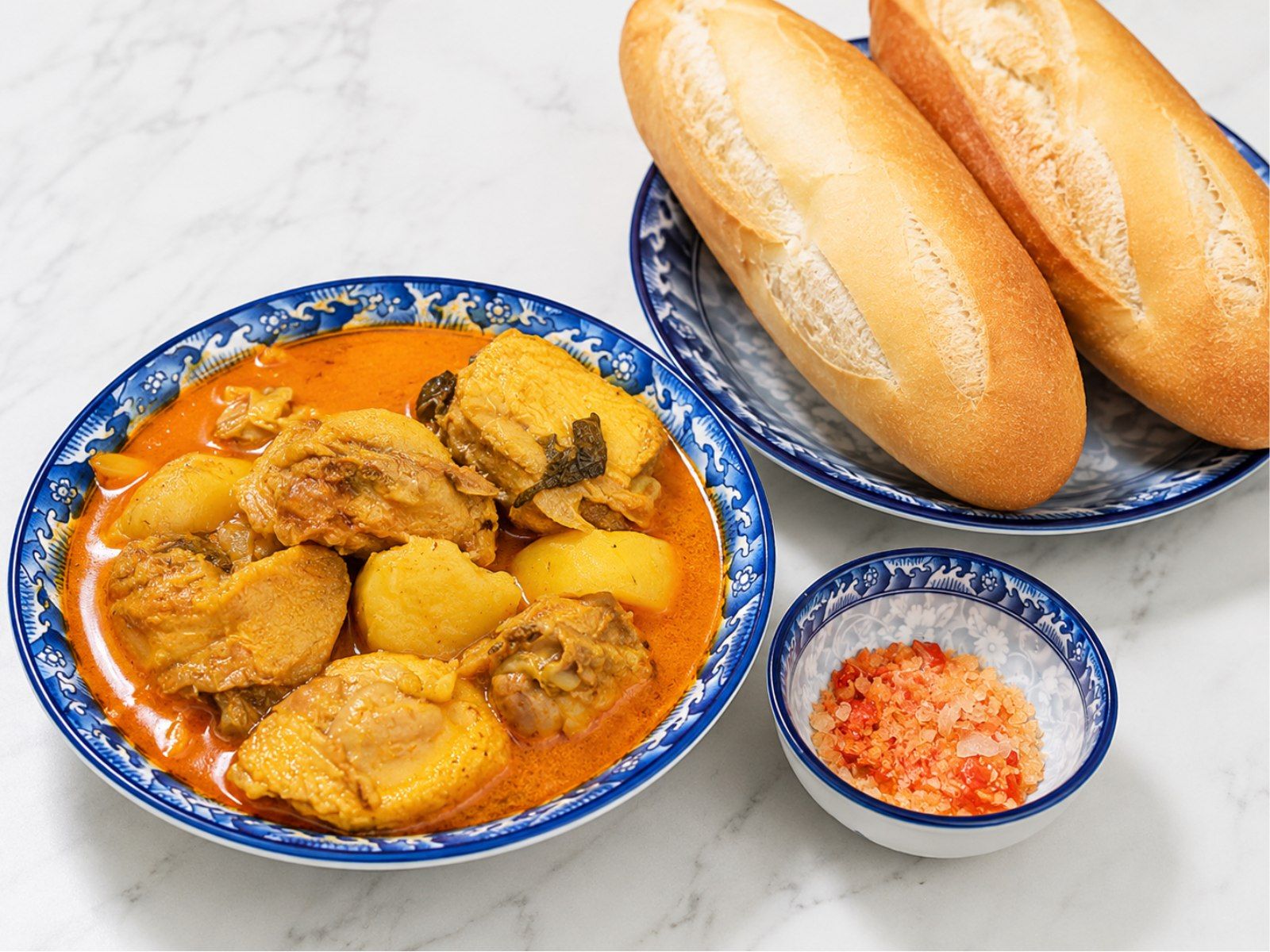
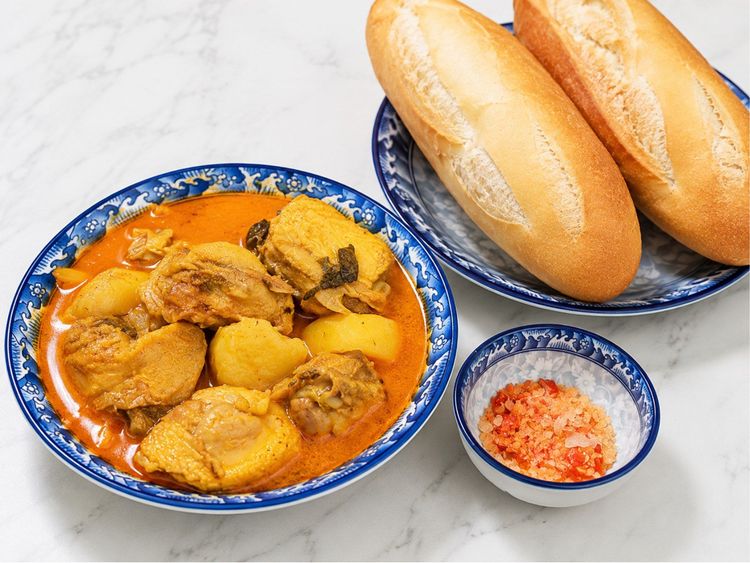
Tested in the CHIN-SU kitchenVietnamese chicken curry (cà ri gà) is a southern Vietnamese curry made with bone-in chicken, sweet potatoes, lemongrass, curry powder, and coconut in a golden, lightly spiced broth. In the Mekong Delta, large pots of curry commonly appear at celebration meals and ancestor memorial gatherings, where they are served with rice vermicelli, steamed rice, or baguette. This version combines tender chicken and sweet potato with a broth that is thinner than a curry gravy but rich enough for dipping bread.
Whether you grew up eating cà ri gà at Vietnamese family gatherings or want to recreate the dish at home, the recipe explains how to bloom the curry powder, brown the marinated chicken, and keep the sweet potatoes intact during simmering. In this article, CHIN-SU shares the Vietnamese chicken curry recipe to make at home, tips for a balanced coconut broth, and the ways Southern Vietnamese diners serve it. The recipe takes about 1 hour 30 minutes, including marinating time and around 30 minutes of active preparation and cooking, and makes 4 to 6 servings.
30 min
Prep time
1 hr
Cook time
1 hr 30 min
Total time
What Is Vietnamese Chicken Curry?
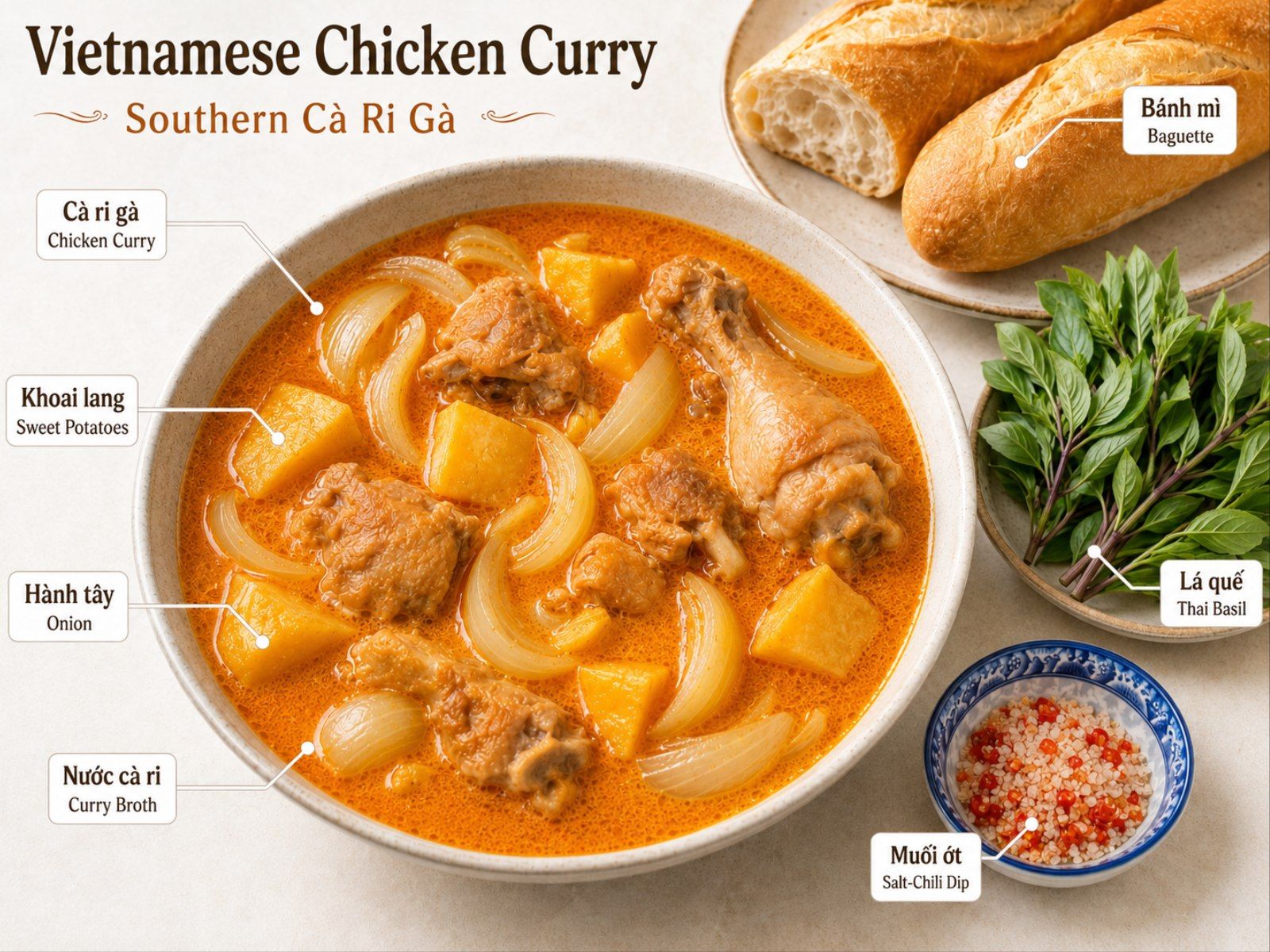
Vietnamese chicken curry (cà ri gà) is a coconut-based stew made with bone-in chicken, sweet potato or taro, carrots, lemongrass, curry powder, and fish sauce. It is commonly served with steamed rice, rice vermicelli, or a crusty baguette for dipping. English speakers can pronounce cà ri gà approximately as “kah-ree gah.”
Cà ri gà is especially associated with southern Vietnamese cooking, but its history reflects several overlapping influences rather than a single point of origin. Curry entered Vietnamese food culture through colonial trade networks, French-era commerce, and South Indian communities, particularly Tamil migrants who settled in Saigon, Chợ Lớn, and parts of the Mekong Delta.
By the early 20th century, Indian-run spice shops and local producers were selling curry powder in Saigon. Vietnamese cooks adapted these spice blends with local ingredients such as lemongrass, coconut milk, sweet potatoes, taro, and fish sauce.
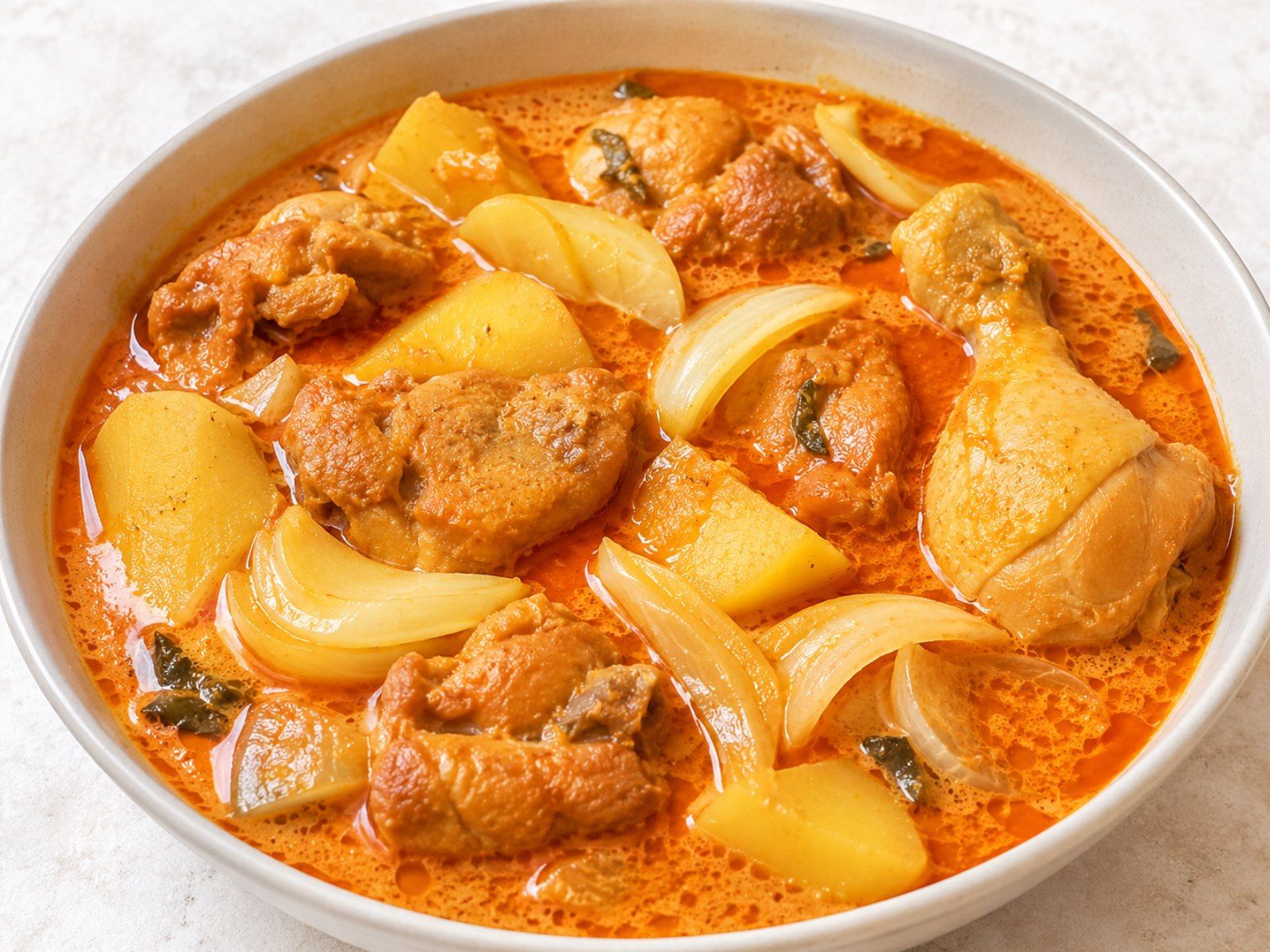
Southern Vietnamese cooks developed cà ri into a more fluid dish that can be ladled over noodles or soaked up with bread. Compared with a thick curry gravy, this style usually has a lighter coconut broth, moderate heat, and a slightly sweet flavor. The thinner consistency is intentional, allowing the broth to season bún, rice, or torn pieces of baguette.
Cà ri gà is prepared at home for weekends, gatherings, and special occasions, but it also appears as an everyday restaurant meal. A February 2025 profile documented a District 5 bún cà ri gà shop that had operated for 19 years, serving bowls with bean sprouts, shredded banana blossom, Thai basil, lime, and a salt dip for about 50,000 VND. This reflects one shop’s serving style and price rather than a citywide standard.
On Vietnamese restaurant menus in the United States, the dish may appear as “Vietnamese chicken curry,” “curry chicken,” or “cà ri gà.”
Why You'll Love This Vietnamese Chicken Curry
You are going to love this Vietnamese chicken curry because the coconut broth tastes rich without feeling heavy, gets balanced out by fish sauce, and makes a 1-pot meal that fills your entire kitchen with the amazing scent of curry leaves and lemongrass.
- Super fragrant, not burning hot. Lemongrass, curry leaves, and coconut cream bring out amazing flavors over low heat. Just throw in some chili oil (sa tế) or chili sauce to kick things up a notch.
- 3 different meals from just 1 pot. Rip off a piece of baguette to dip into it, spoon it right over some steamed rice, or pour it over rice noodles to make a cozy noodle soup.
- It is mostly hands-off. The marinade and curry powder do all the hard work for you, so your actual active cooking time only takes about 30 minutes.
Vietnamese Chicken Curry Ingredients
To make this Vietnamese chicken curry, you will need to prepare 3 main groups of ingredients: the marinated chicken, the curry broth with its aromatics, and the coconut cream finish, plus a few extra things for serving.
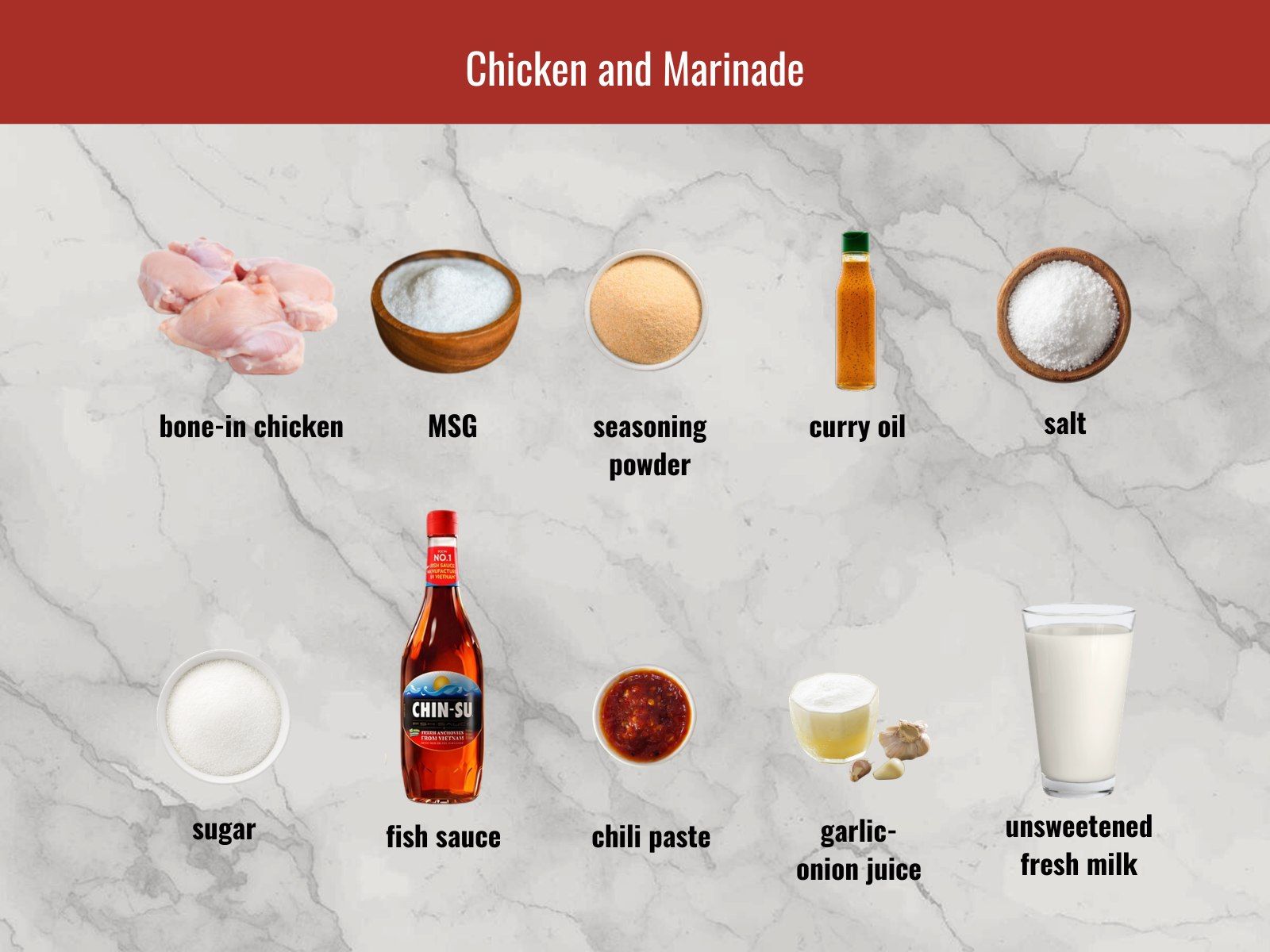
Chicken and Marinade
- 2.2 lb (1 kg) bone-in chicken, chopped up into bite-sized pieces. We went with regular store-bought chicken, but free-range chicken (gà ta) actually works a lot better: the meat is firmer and sweeter, so it holds up during a long simmer without going mushy. If you are shopping at a regular grocery store, pick an older bird with tougher joints and yellower skin, since young broilers tend to fall apart. For a big crowd, use chicken wings instead, because more skin and fat per piece make for a richer broth, and the uniform pieces mean everyone gets an equal share.
- 1/2 tsp MSG to bring out that deep savory flavor.
- 1 tsp salt to season the meat.
- 2 tsp sugar to balance out the spice.
- 2 tsp seasoning powder (hạt nêm) to create a well-rounded savory base.
- 3 tsp curry oil (cà ri dầu) for a pop of color and that classic curry aroma. You can find this cheaply at any Vietnamese or Asian grocery store. If you can't find it in the US, just stir 1 extra tablespoon of curry powder into 1 tablespoon of neutral oil instead.
- 1 tbsp chili paste (sa tế) for a gentle kick.
- 1 tbsp garlic-onion juice, which is just minced garlic and shallots squeezed to get the liquid out.
- 4 tbsp unsweetened fresh milk, add it last and mix until the spices evenly coat the chicken. The milk softens the spice profile and adds mild richness
- 1–2 tsp CHIN-SU fish sauce, adjusted according to the sodium and intensity of the product used.
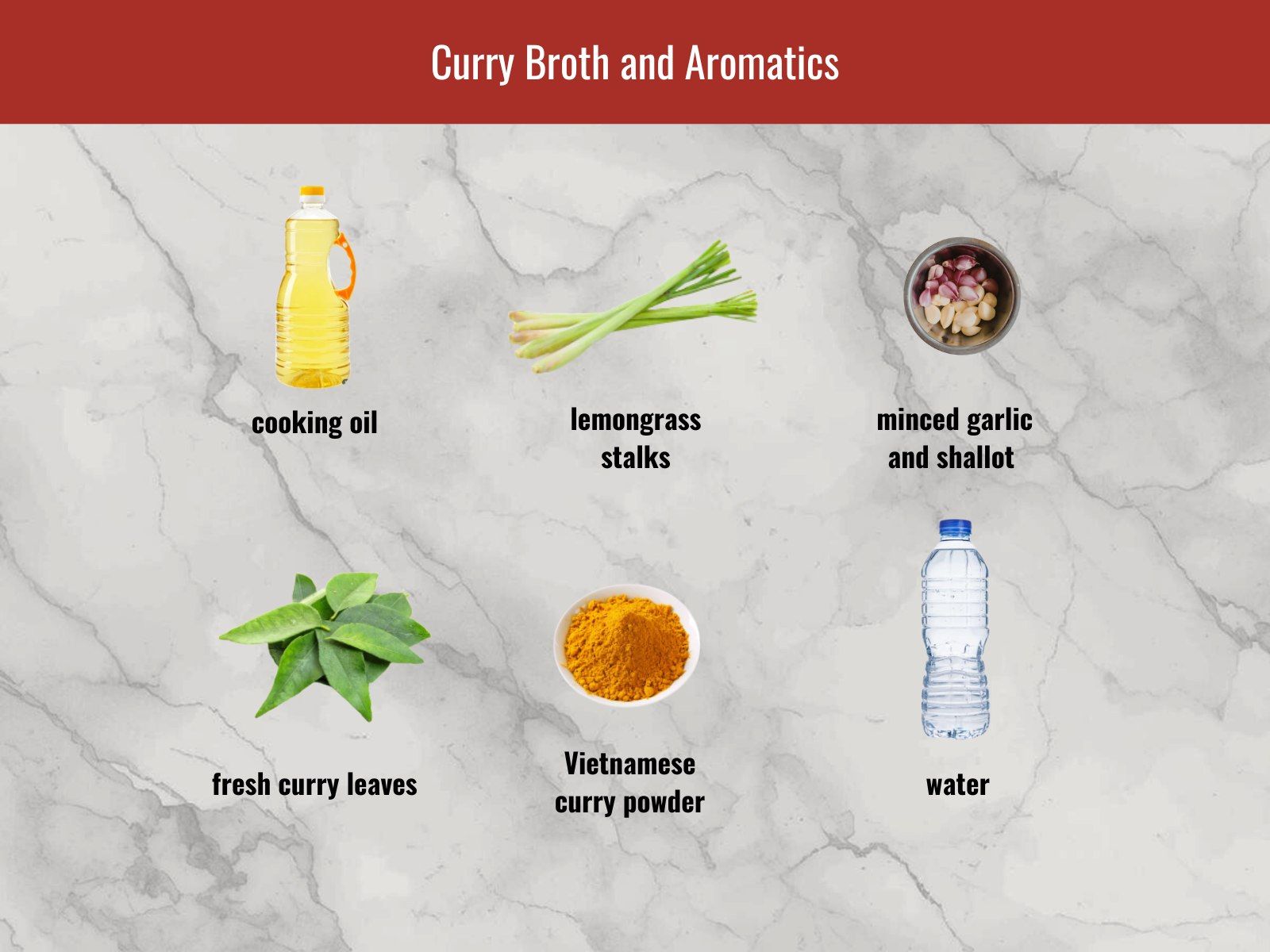
Curry Broth and Aromatics
- 4 tbsp cooking oil to fry up the aromatics.
- 2 lemongrass stalks, kept whole and lightly bruised.
- 1/2 tbsp minced garlic and shallot to build your aromatic base.
- 6 branches of fresh curry leaves, or about 10 dried leaves. Fresh leaves smell much brighter than dried ones, so we keep a small plant at home; in the US, you can find them fresh at Indian grocery stores like Patel Brothers. If you only have dried ones, use half a packet and add the oil a little earlier so they can soften up.
- 1 packet Vietnamese curry powder (bột cà ri), which is roughly 2 tbsp.
- 4 cups (1 liter) of water for the broth. For a tastier broth, go with half water and half fresh coconut water; plain water works fine, but the coconut version tastes way better.
Root Vegetables
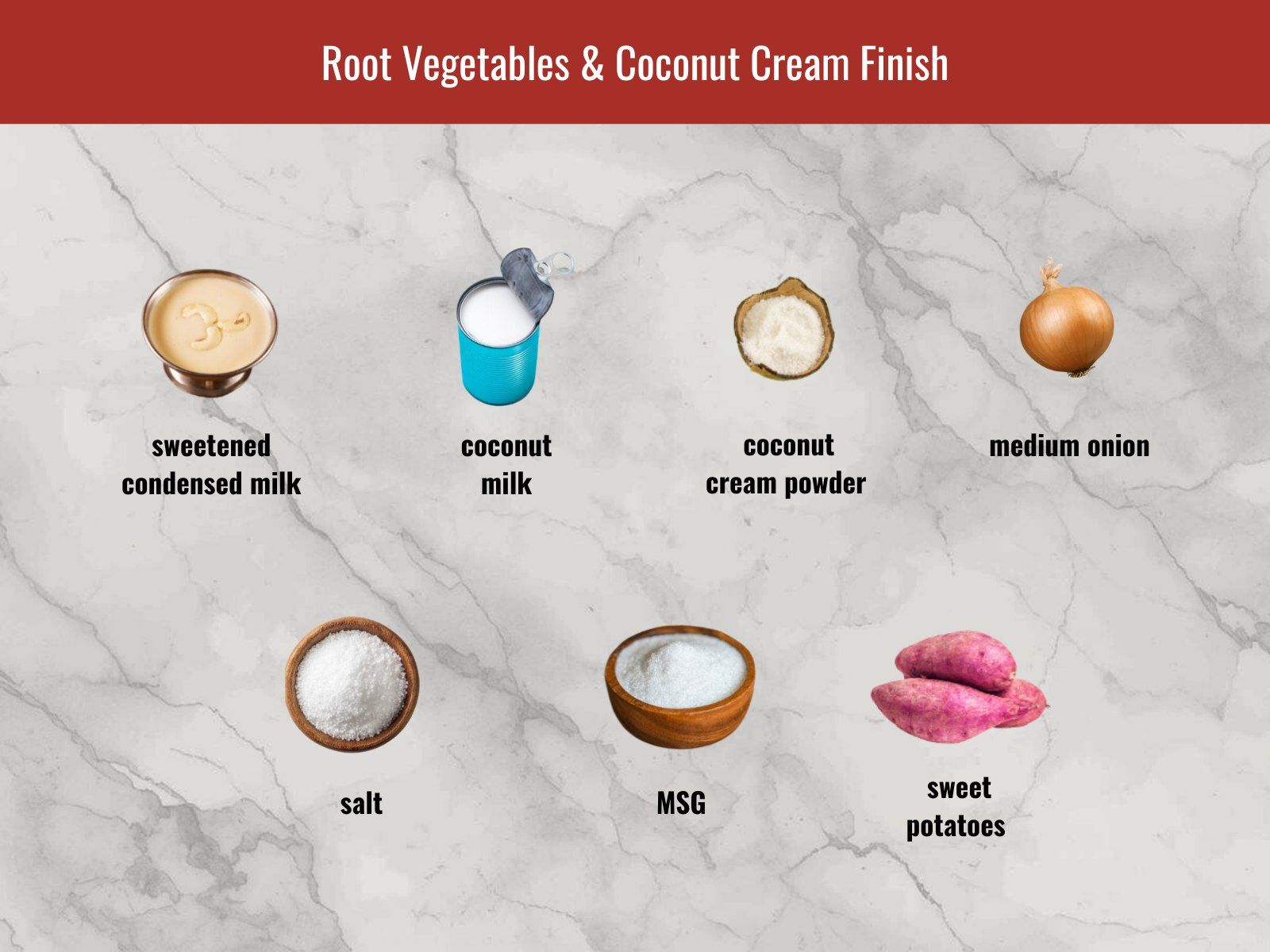
1.3 lb (600 g) sweet potatoes, peeled and cut into chunks.
Coconut Cream Finish
- 2 tbsp sweetened condensed milk to add sweetness and body.
- 1/2 cup coconut milk (nước cốt dừa) to give it that rich texture.
- 1 tbsp coconut cream powder (bột cốt dừa) to help thicken the sauce. This gives it a thicker, richer texture than extra coconut milk would, thickening things up without watering down the curry flavor.
- 1/2 medium onion, cut into wedges.
- 1/6 tsp salt plus 1/2 tsp MSG for the final seasoning adjustment.
This version uses a small amount of condensed milk and coconut cream powder for sweetness and body. These are additions specific to this recipe rather than required ingredients in every Vietnamese chicken curry.
For Serving
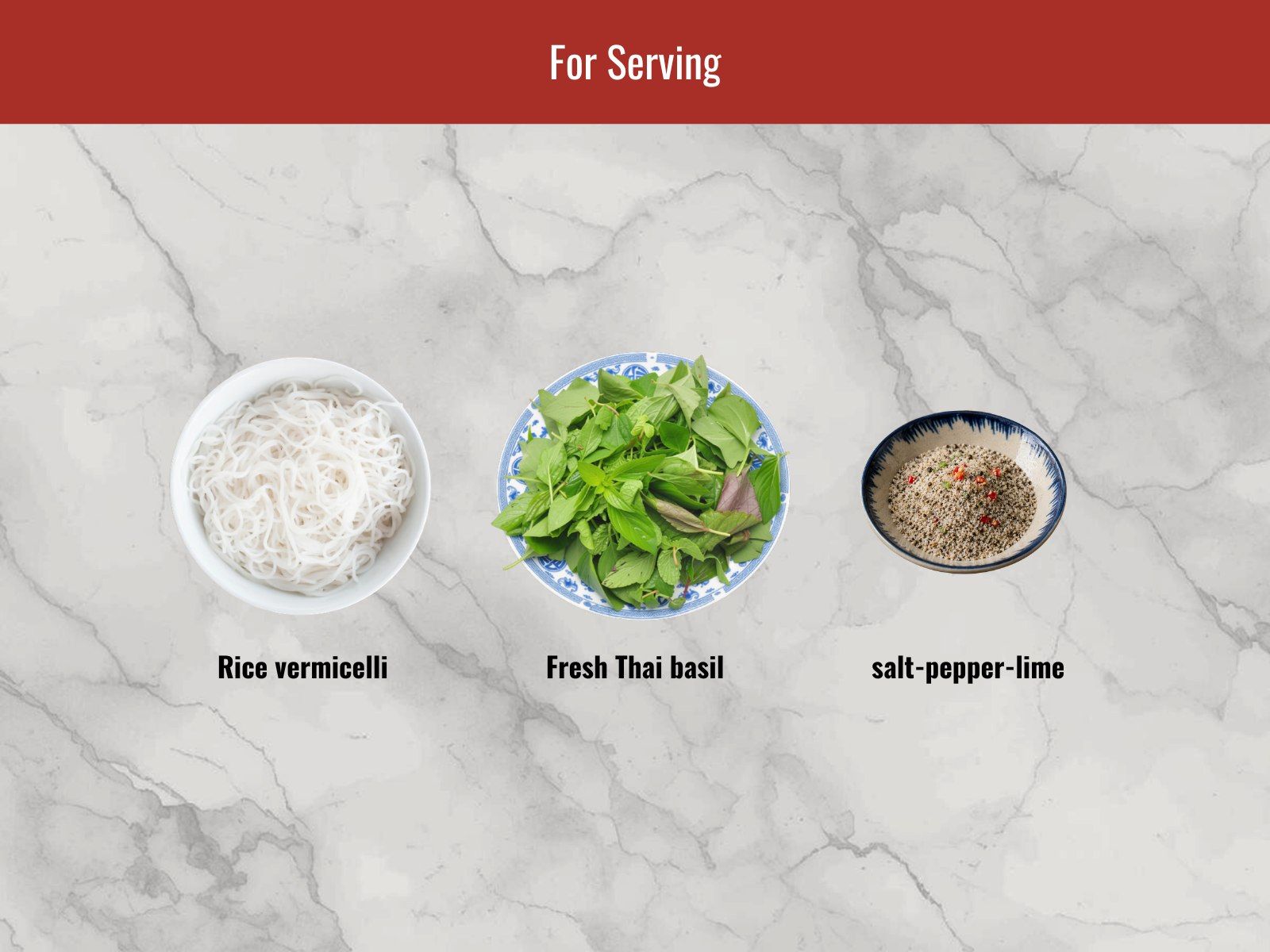
- Rice vermicelli (bún) or a baguette (bánh mì) to soak up every drop of that broth.
- Fresh Thai basil (lá quế) to add a peppery, anise note.
- A salt-pepper-lime or salt-chili dip (muối tiêu / muối ớt) on the side for the chicken pieces.
How to Make Vietnamese Chicken Curry Step by Step
The whole Vietnamese chicken curry comes together in about 1.5 hours, with most of that time hands-off for marinating and simmering. Think of it in 3 stages: prep and marinate the chicken, make the curry broth, then finish with coconut cream.
Step 1: Prep the Chicken
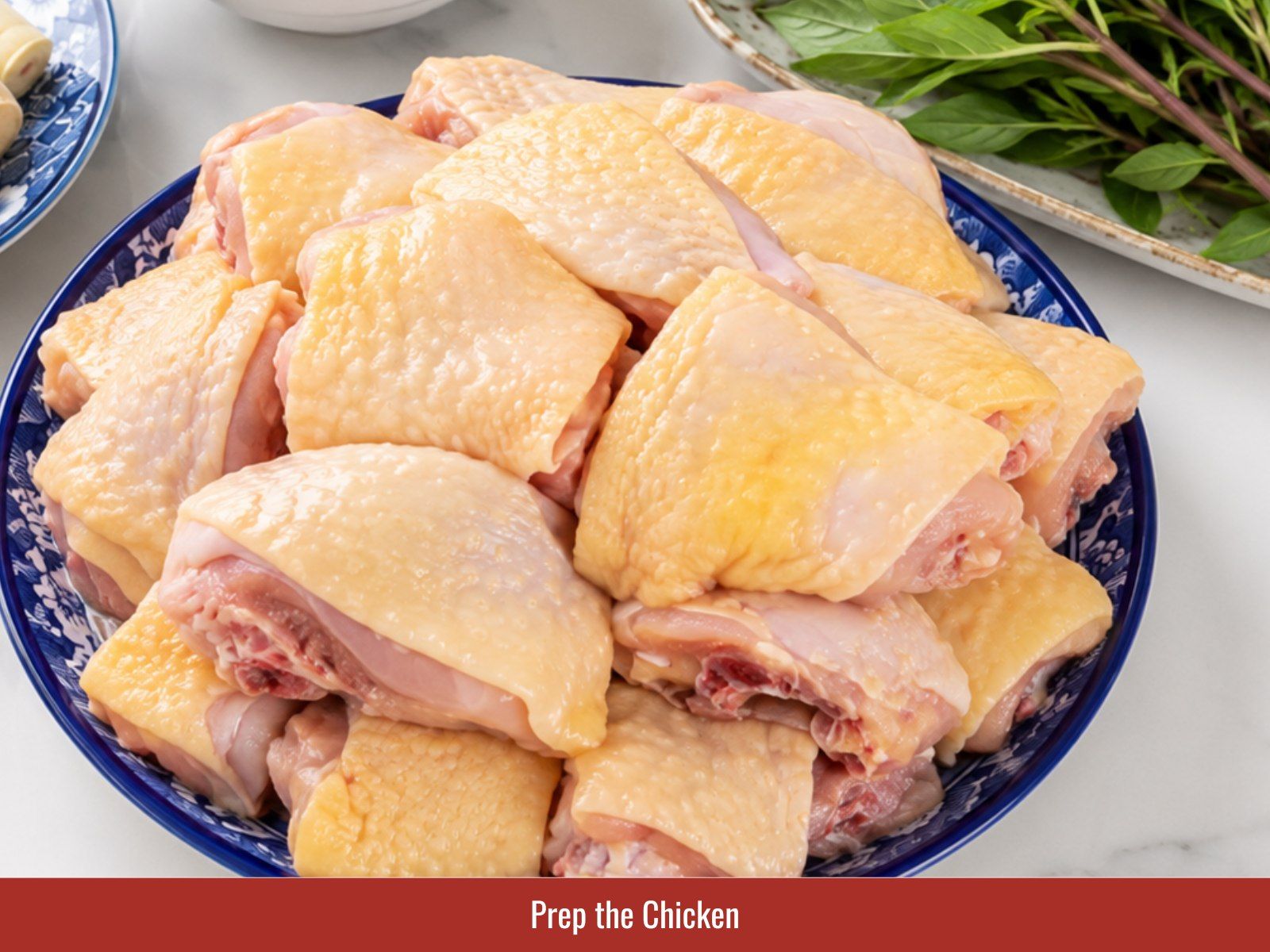
Remove 2.2 lb (1 kg) bone-in chicken from its packaging and pat it thoroughly dry with paper towels. Do not rinse raw chicken, as splashing water can spread bacteria to nearby surfaces.
Use butcher-cut pieces or separate the chicken through the joints into pieces about 2 inches (5 cm) wide to reduce the risk of bone fragments. Wash your hands and clean any utensils or surfaces that touch the raw chicken.
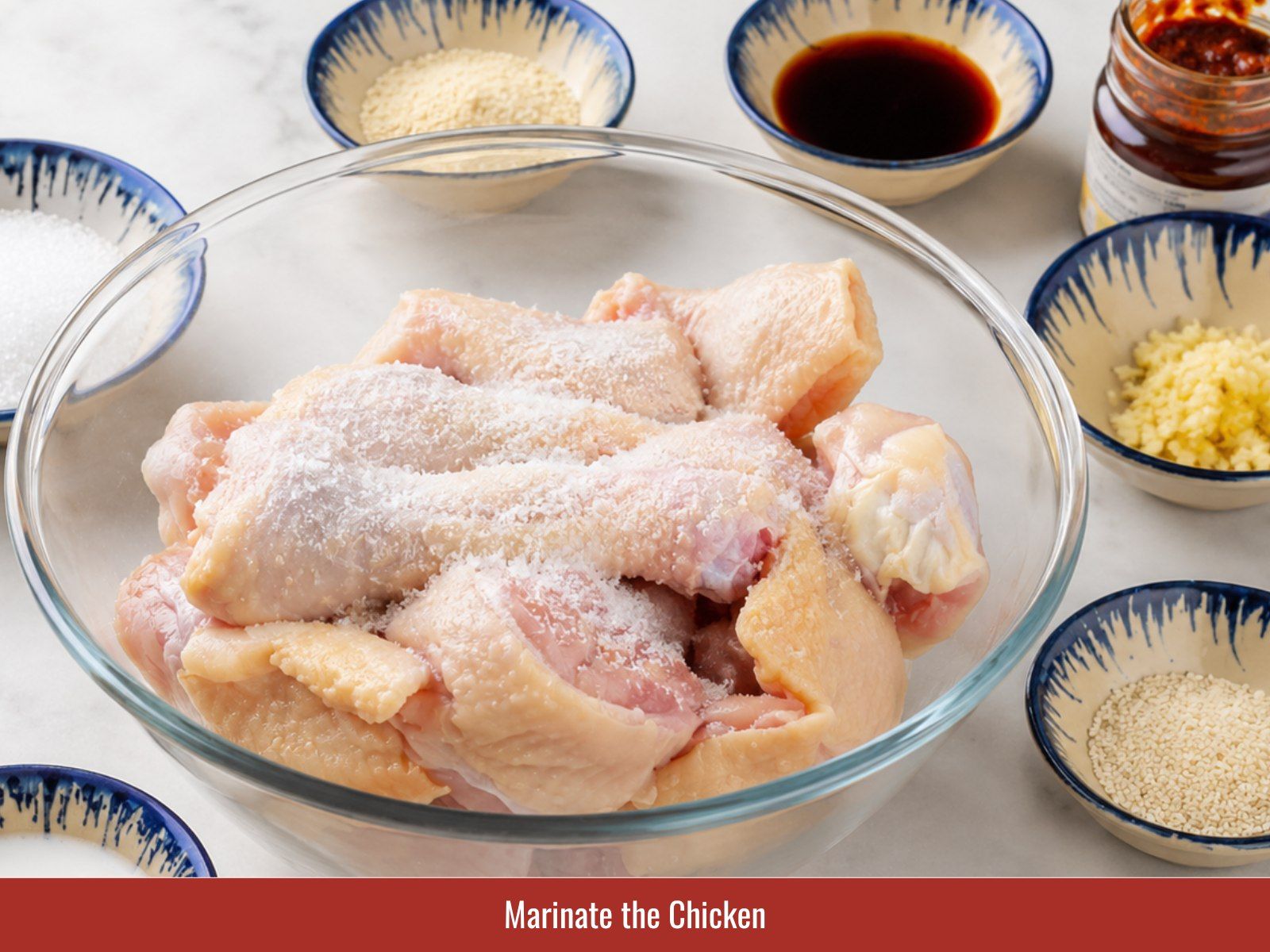
Step 2: Marinate the Chicken
In a large bowl, combine the chicken with the MSG, salt, sugar, seasoning powder, curry oil, chili paste, and garlic-onion juice, then toss until every piece is coated. If you're using fish sauce, add it now with the other wet seasonings. CHIN-SU anchovy fish sauce can be used here to add fermented anchovy savoriness to the chicken before simmering.
Add the 4 tbsp of unsweetened fresh milk last, after the dry seasonings have coated the meat, since the milk tenderizes the chicken and smooths the spice. Marinate for at least 30 minutes, tossing once halfway through so the milk soaks in evenly.
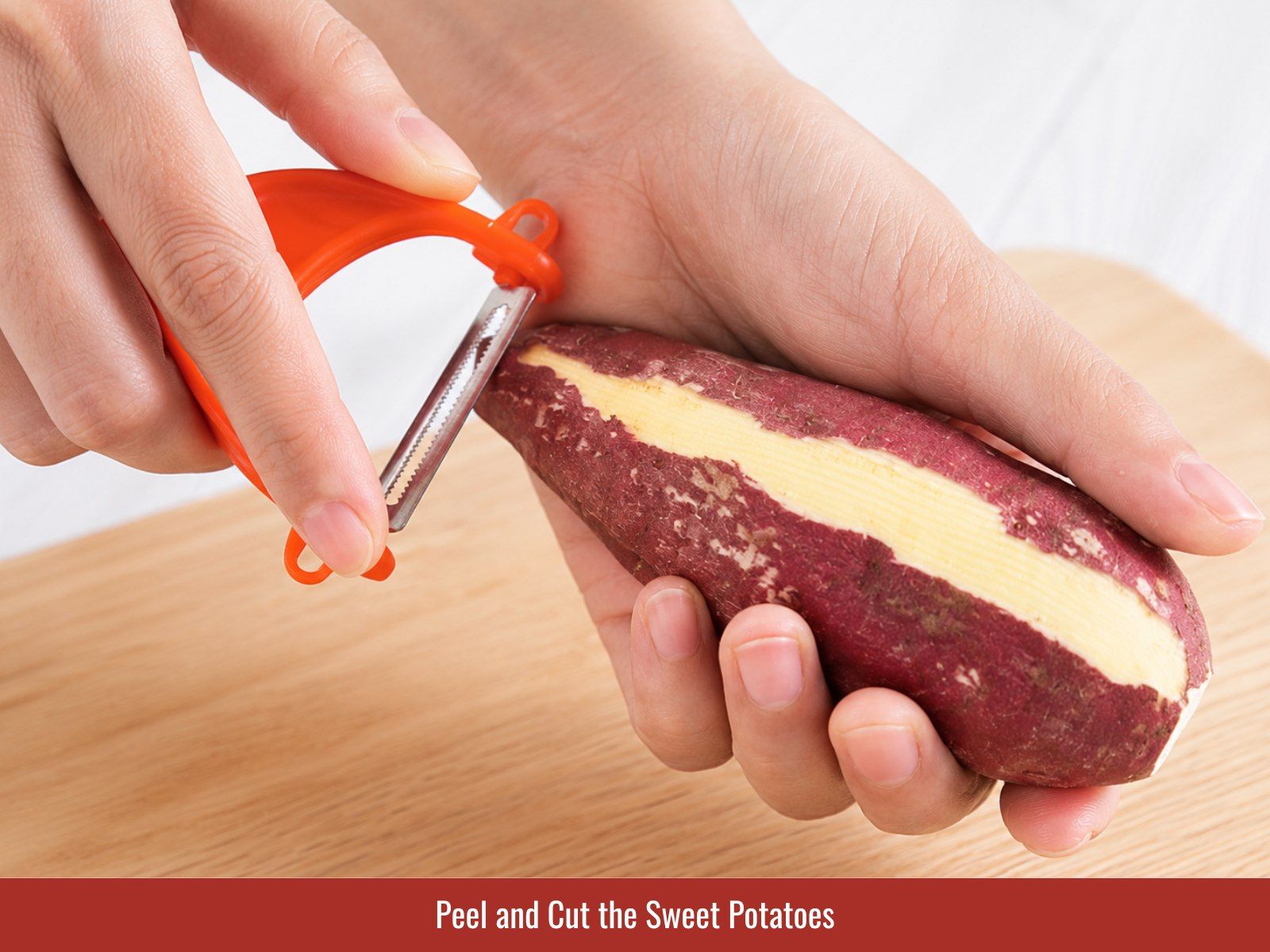
Step 3: Peel and Cut the Sweet Potatoes
Peel 1.3 lb (600 g) of sweet potatoes and cut them into chunks about the same size as the chicken pieces. As you work, drop the cut pieces straight into a bowl of lightly salted water, which keeps them from browning before they hit the pan.
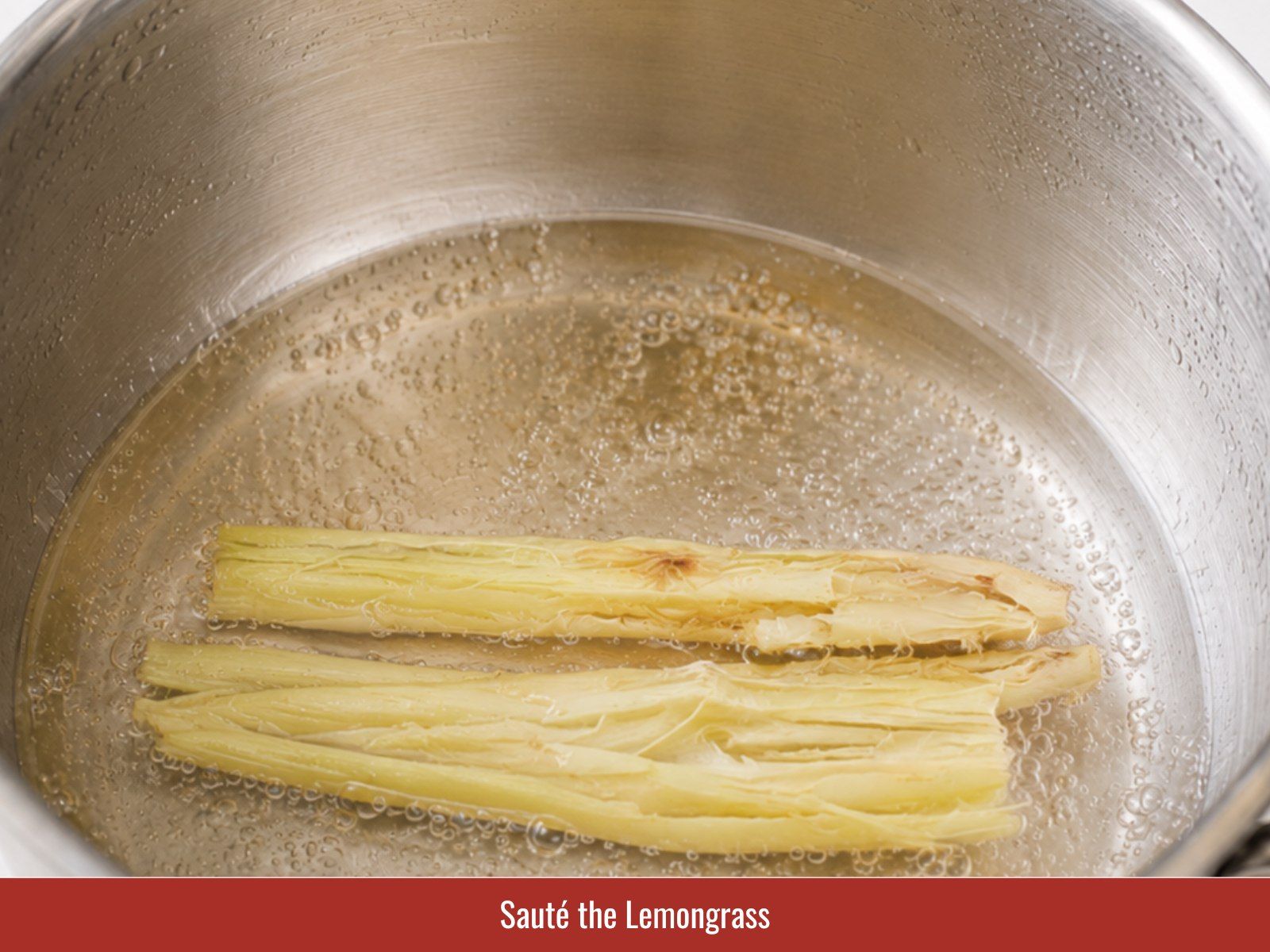
Step 4: Sauté the Lemongrass
Heat 4 tbsp of oil in a heavy pot over medium heat, then add 2 whole lemongrass stalks and fry until fragrant, about 2 minutes. Before they go in, pound the stalks lightly with the back of a knife to split the fibers and release more aroma.
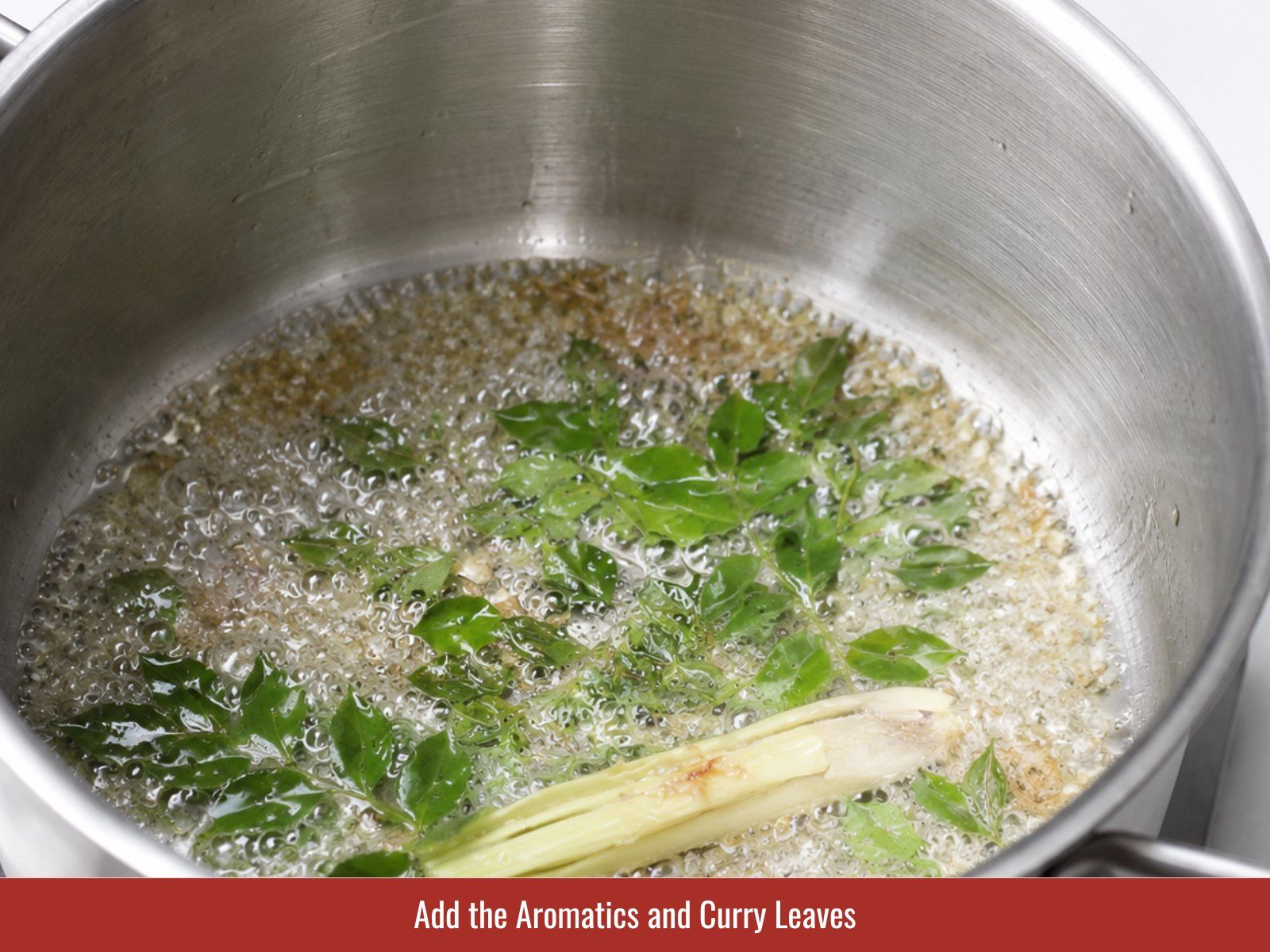
Step 5: Add the Aromatics and Curry Leaves
Add 1/2 tbsp of minced garlic and shallot to the pot and sauté until fragrant. Follow with 6 branches of fresh curry leaves, or about half a packet of dried. Fresh leaves have a stronger aroma than dried leaves, so if you only have dried leaves, add them a little earlier so they soften in the oil.
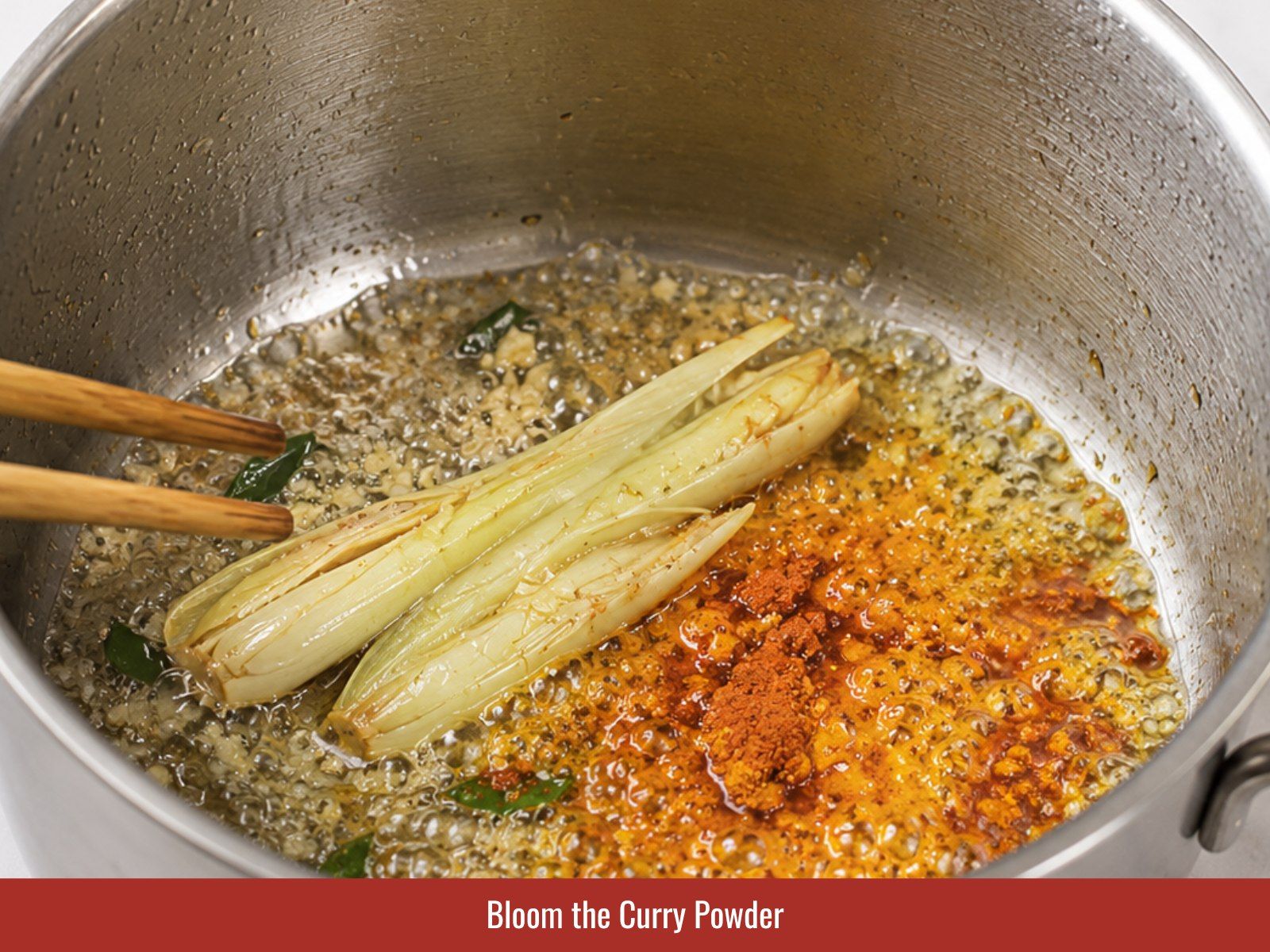
Step 6: Bloom the Curry Powder
Throw the packet of curry powder, about 2 tbsp, right into the oil with your aromatics. Keep stirring over medium heat for 30 to 60 seconds until the color deepens into a rich gold and it smells super fragrant instead of raw. Cooking the powder in oil before adding any liquid is a great trick for keeping your curry from tasting gritty and bringing out that beautiful golden color.
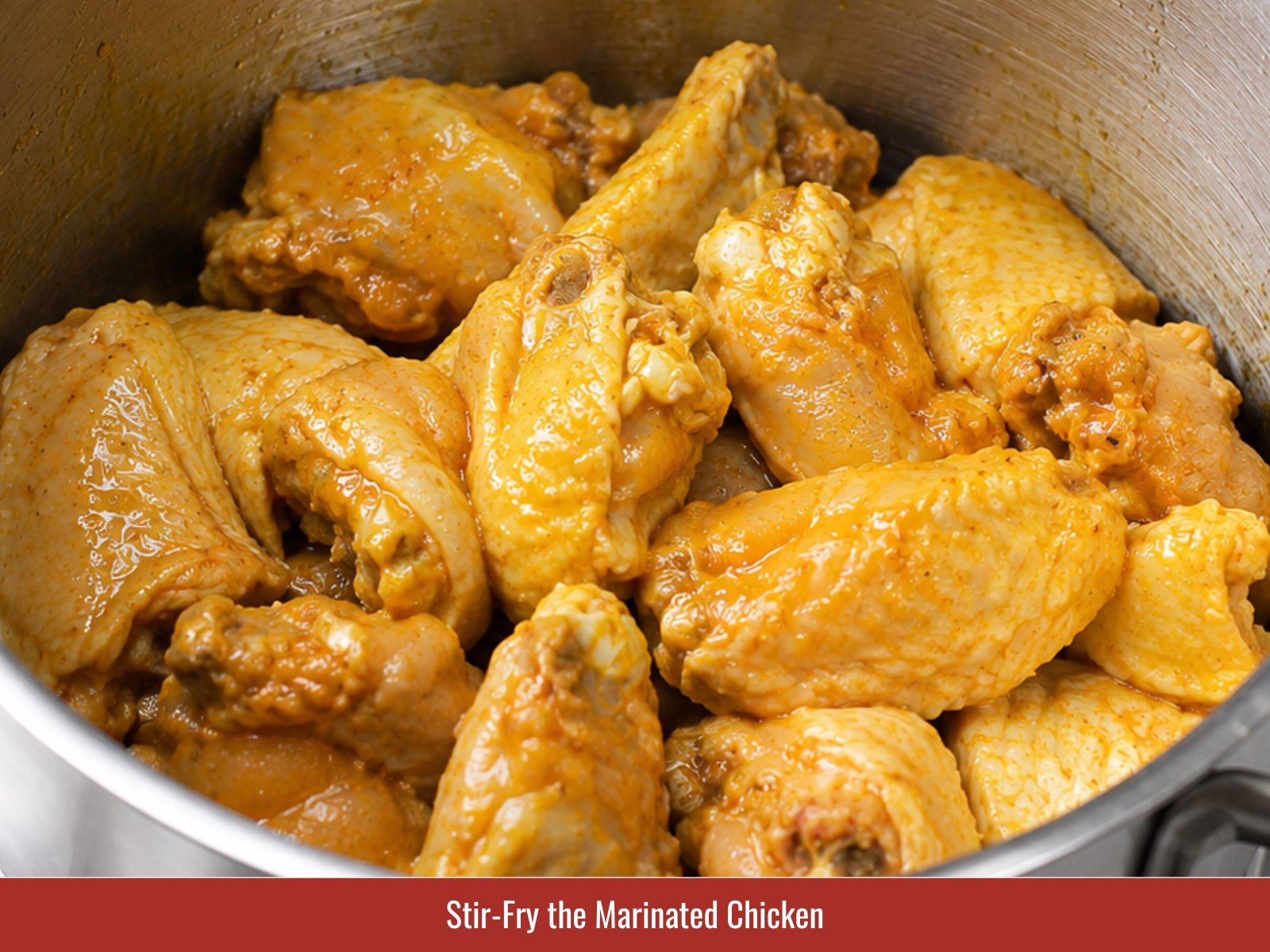
Step 7: Stir-Fry the Marinated Chicken
Add the marinated chicken and cook over medium heat for about 5 minutes, turning regularly, until the exterior firms, changes color, and becomes evenly coated with the curry oil. Vietnamese cooks call this xào săn gà. It develops aroma and helps the pieces hold their shape during simmering. The chicken does not need to be fully cooked at this stage.
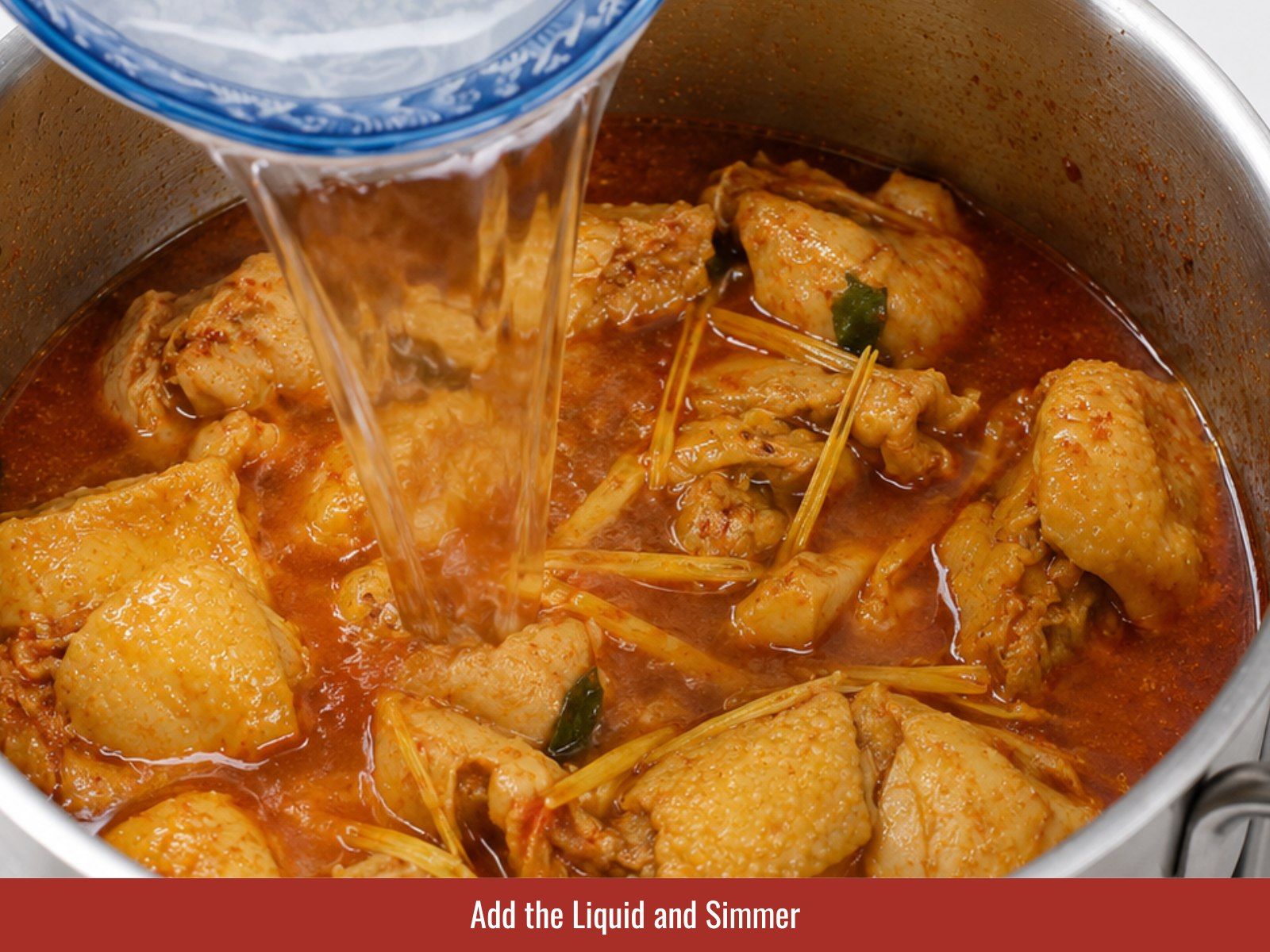
Step 8: Add the Liquid and Simmer
Pour the remaining marinade and 4 cups (1 liter) of water into the pot. For a slightly sweeter, richer broth, replace up to half of the water with unsweetened coconut water.
Bring the liquid to a boil, then reduce the heat to medium-low, cover, and simmer for about 15 to 20 minutes. Continue cooking until the chicken is tender and the thickest pieces reach 165°F (74°C), checking near the bone without touching it.
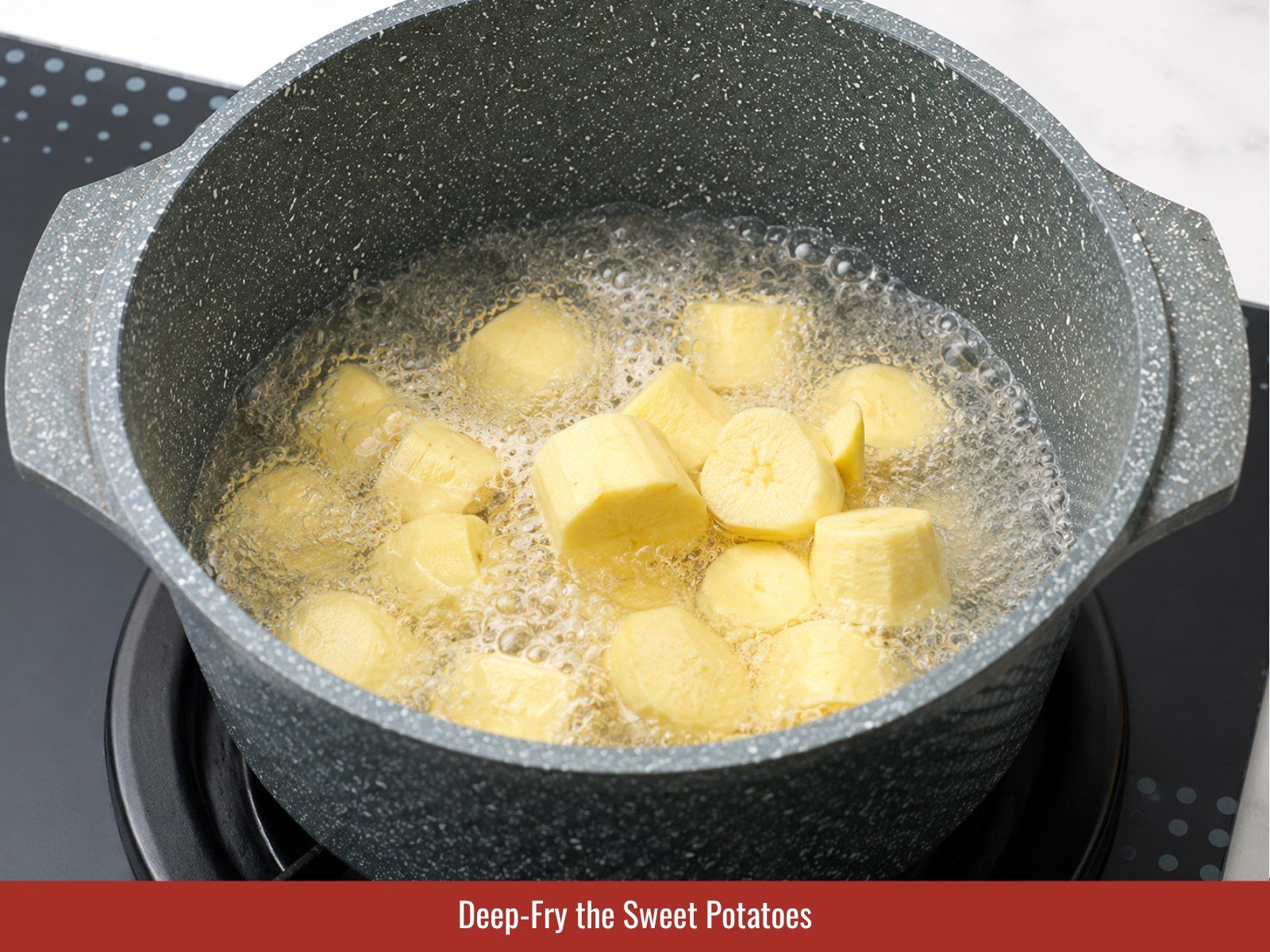
Step 9: Deep-Fry the Sweet Potatoes
While the curry simmers, heat oil in a separate pan. Fry the sweet potato pieces for 3 to 4 minutes, until the outer surface begins to color while the centers remain firm. Drain them on paper towels and set aside.
This technique, called chiên sơ khoai, firms the exterior and reduces breakage during simmering without creating a completely sealed surface. It is the preferred method when distinct sweet potato pieces are desired.
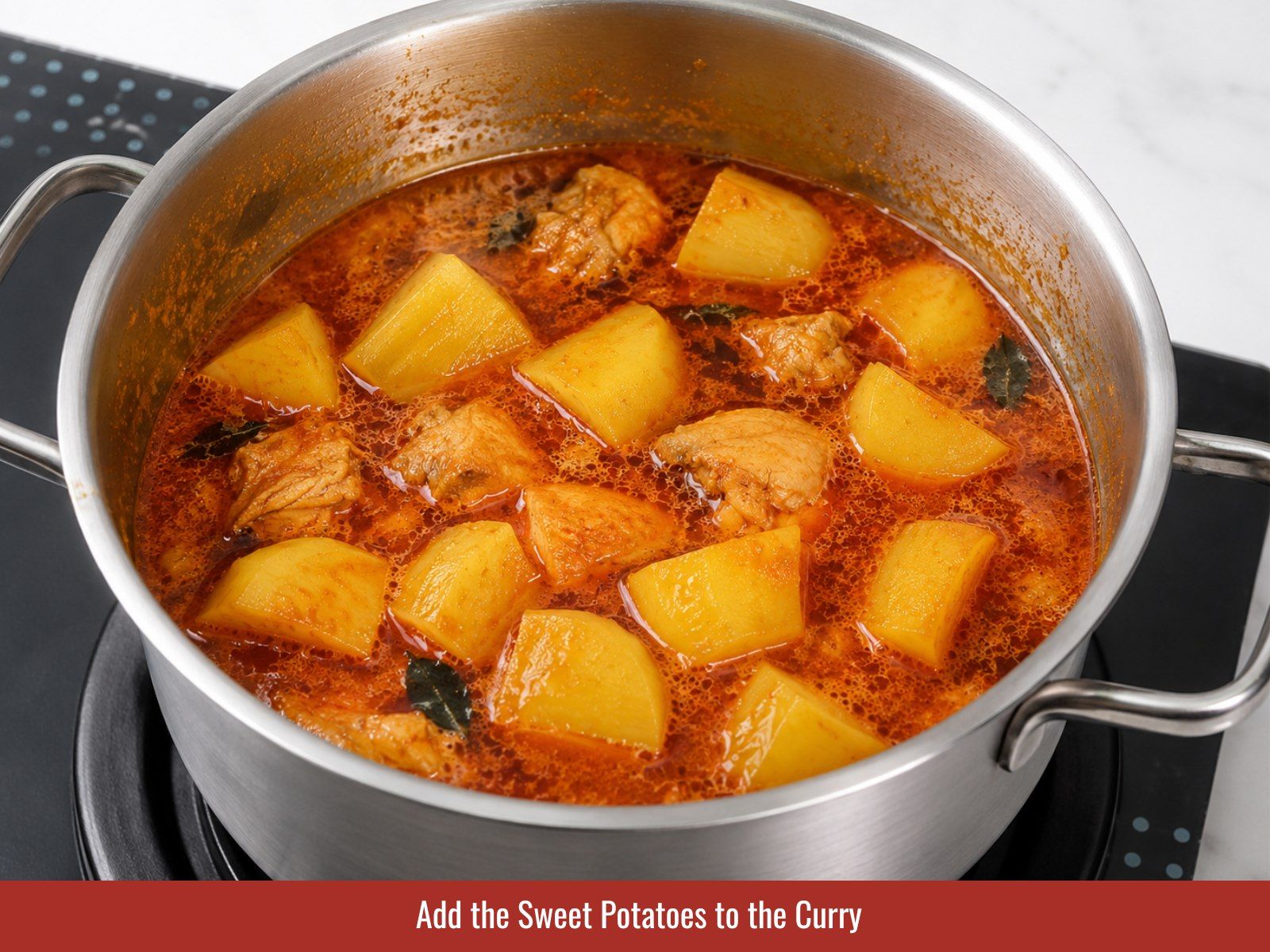
Step 10: Add the Sweet Potatoes to the Curry
Once the chicken feels tender, fish out the lemongrass stalks and discard them. Toss in your fried sweet potatoes and keep simmering over medium-low heat for about 10 minutes until they are completely soft. They should be easy to poke but still hold their shape perfectly.
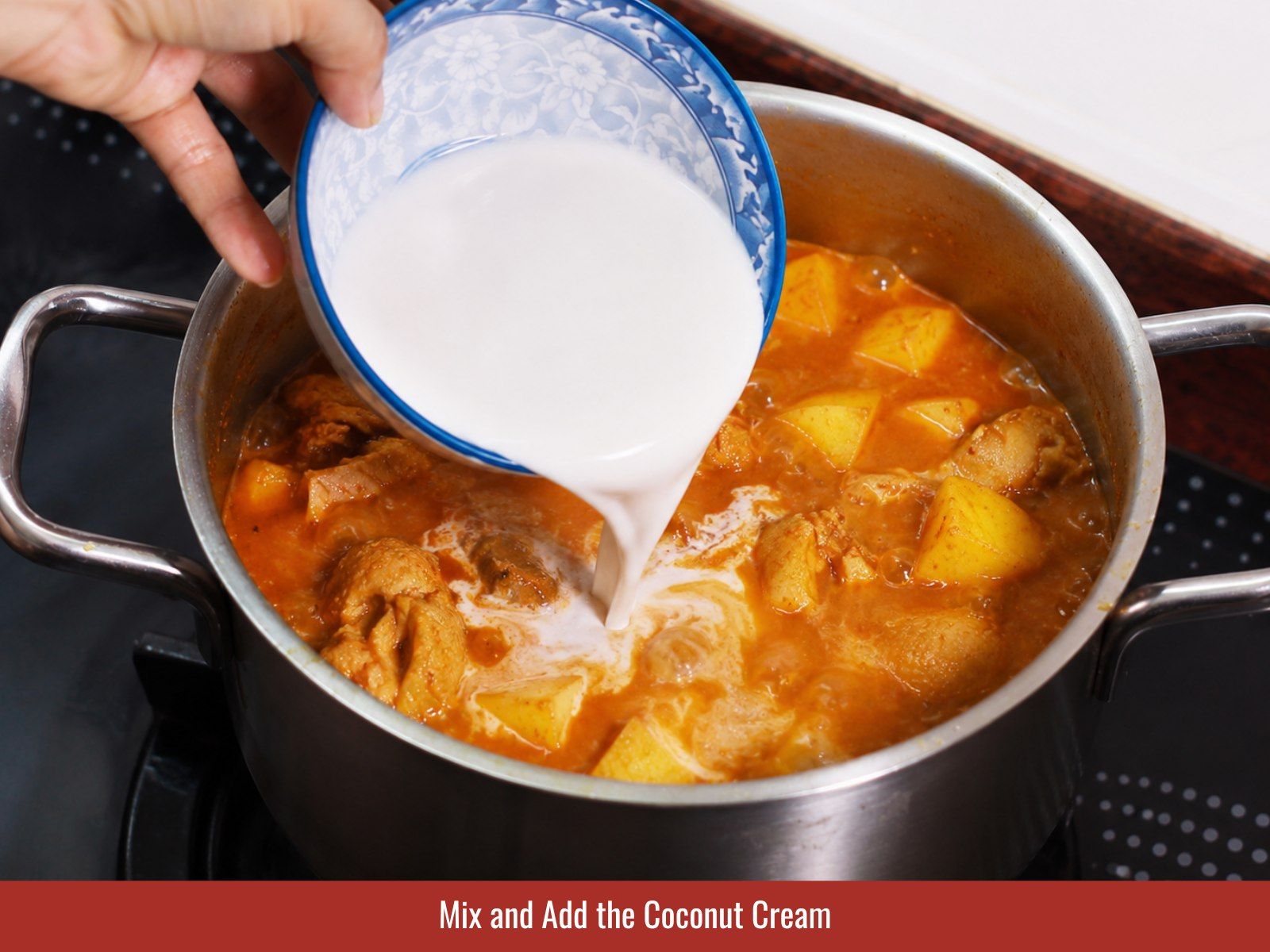
Step 11: Mix and Add the Coconut Cream
In a small bowl, mix together 2 tbsp of sweetened condensed milk, ½ cup of coconut milk, and 1 tbsp of coconut cream powder until smooth. The condensed milk adds sweetness and mild dairy richness to this version, but it is not a required ingredient in every Vietnamese chicken curry. Turn down the heat before stirring in the coconut mixture, and mix gently so the sweet potatoes do not break apart.
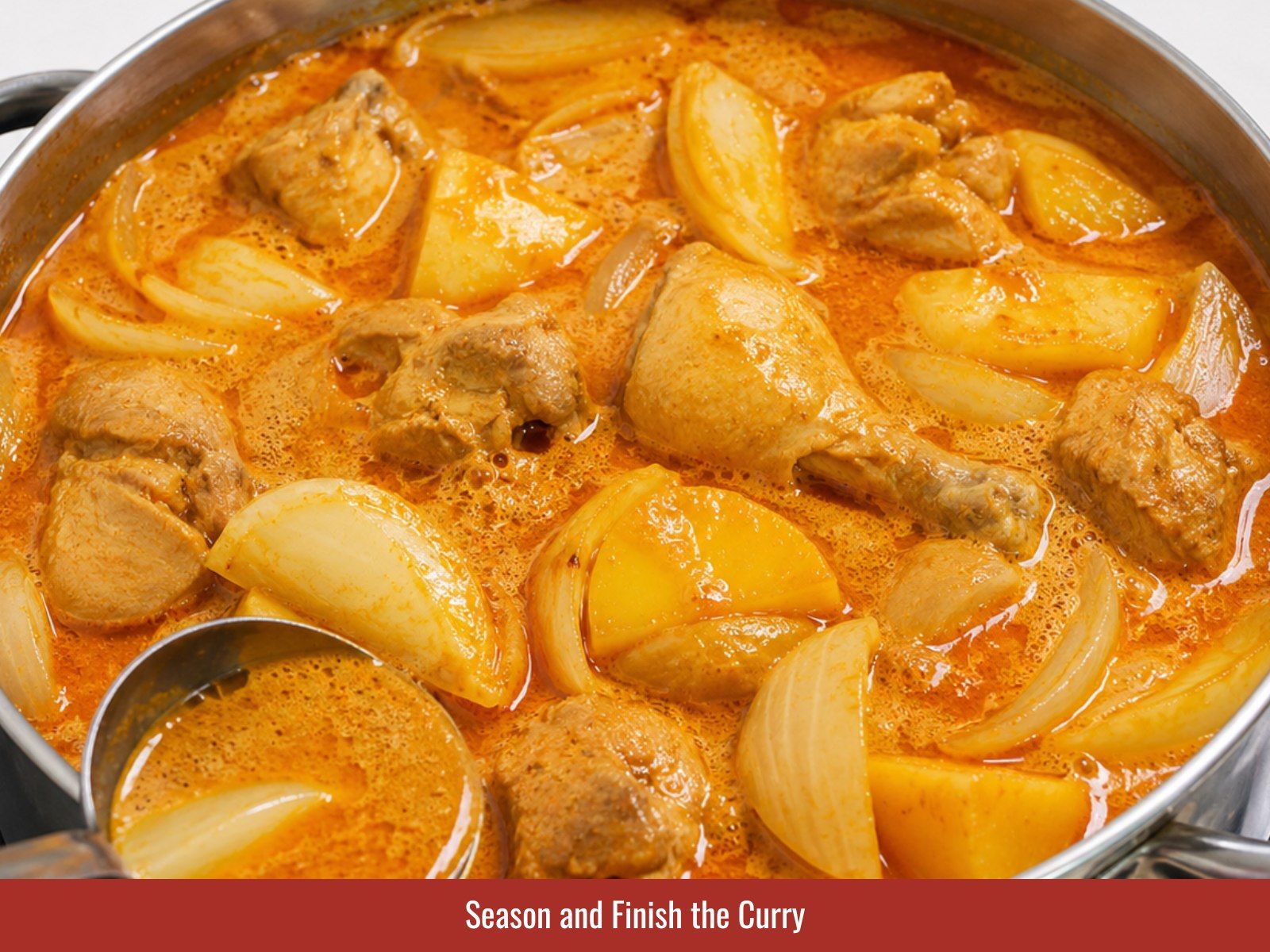
Step 12: Season and Finish the Curry
Throw in your onion wedges, then season everything with 1/6 tsp of salt and 1/2 tsp of MSG. Give it a good stir until everything dissolves, then take a sip to taste and adjust the flavors.
Right before you serve it, rip a few fresh curry leaves over the pot for a final burst of amazing aroma. Your finished curry should look slightly thick and golden-yellow, tasting creamy without feeling heavy, and the sweet potatoes should still hold their shape. It will naturally thicken a bit more as it cools.
How to Serve Vietnamese Chicken Curry
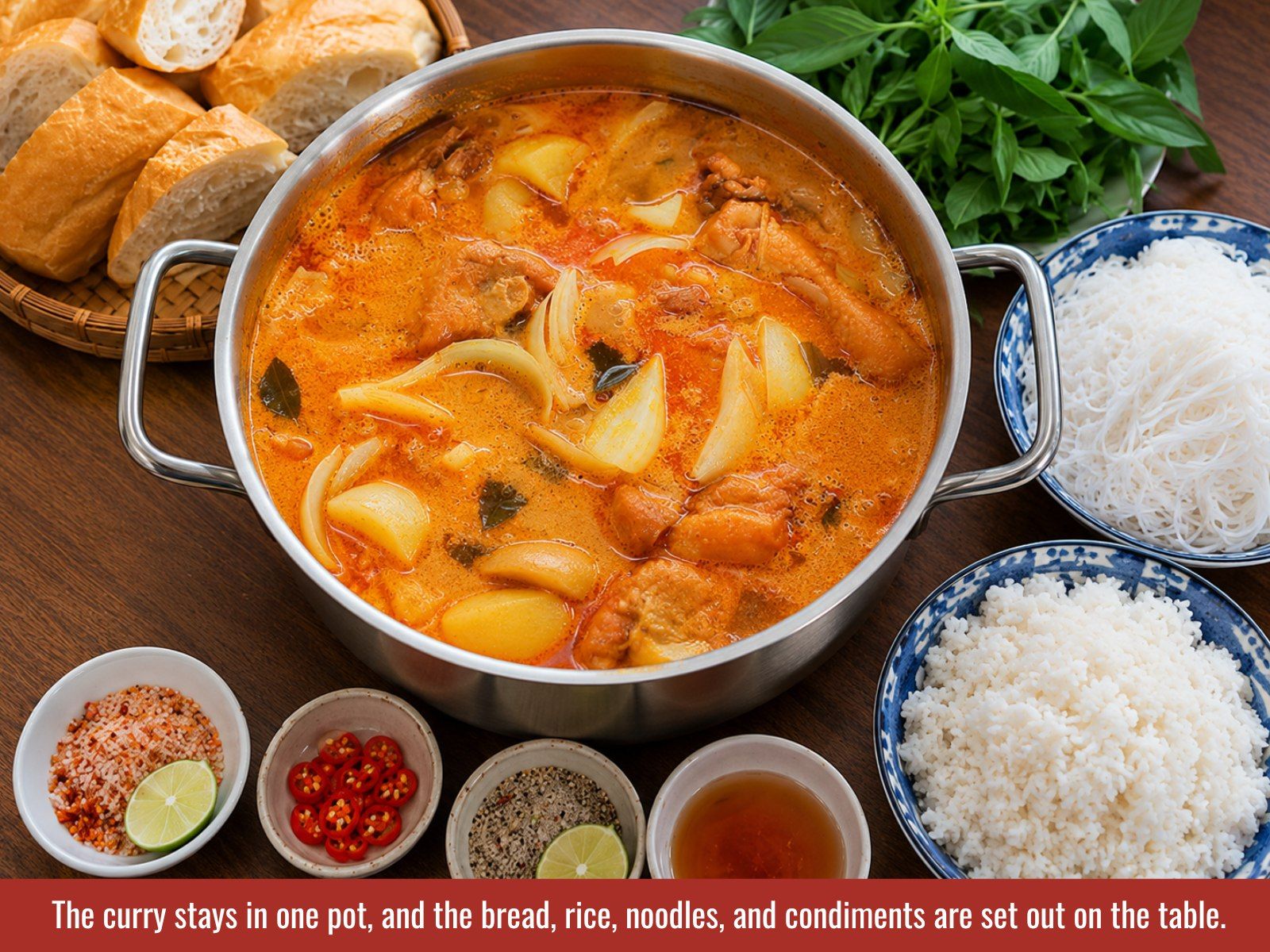
Serve Vietnamese chicken curry hot with a crusty baguette, rice vermicelli, or steamed rice. Choose one starch for a regular meal, or offer several options when serving a larger group.
- For bánh mì cà ri, tear the baguette into pieces and dip them directly into the coconut broth rather than assembling a sandwich.
- For bún cà ri, place blanched rice vermicelli in a bowl, ladle the chicken and broth over it, then add bean sprouts, Thai basil, cucumber, or shredded banana blossom as desired.
- The curry can also be spooned over steamed rice.
Bone-in chicken pieces can be lifted from the broth and dipped separately in muối ớt chanh or muối tiêu chanh. Add lime to the dipping salt instead of squeezing it into the shared pot.
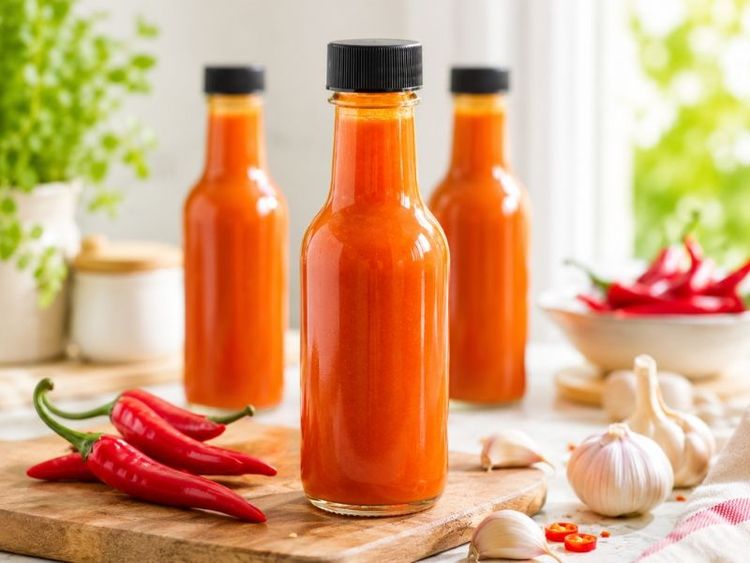
Serve CHIN-SU Hot Sauce at the table for anyone who wants extra chili and garlic heat without making the entire pot spicier.
Tips for the Best Vietnamese Chicken Curry
These are 4 small choices that separate a good Vietnamese chicken curry from a great one.
- Use bone-in, skin-on chicken. The extra fat and skin make a richer broth, and wings are the best party cut.
- Always fry the sweet potatoes first. A quick 3- to 4-minute fry seals the surface, so they hold their shape instead of turning the curry starchy.
- Bloom the curry powder in oil. Toasting it for 30 to 60 seconds before any liquid kills the raw taste and deepens the yellow.
- Taste it again the next day. The flavors meld overnight, and many Vietnamese cooks say it tastes even better on day 2.
What Can You Substitute or Change in Vietnamese Chicken Curry?
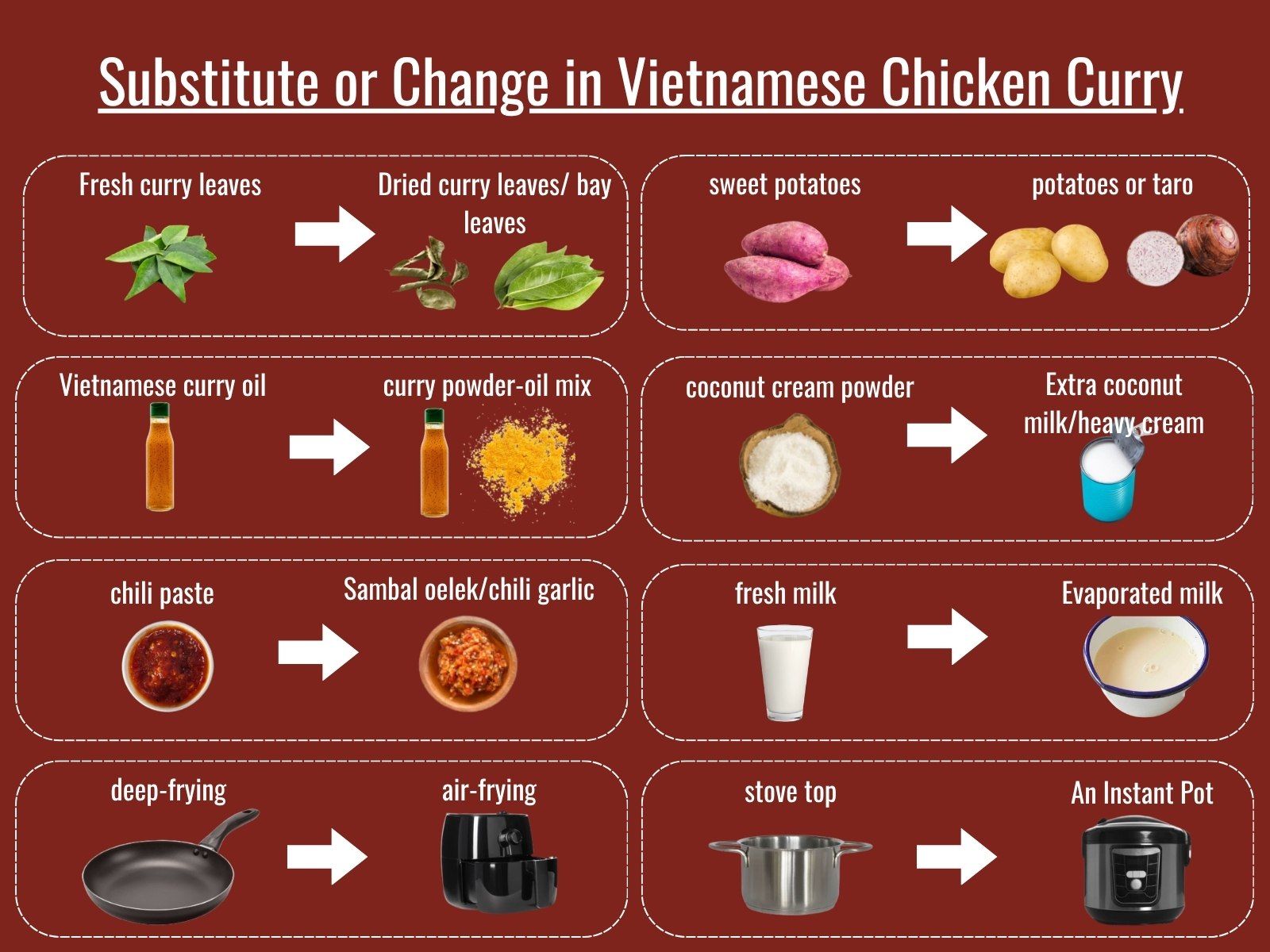
These 6 ingredient swaps and 2 method changes let you make Vietnamese chicken curry with US grocery store ingredients without losing the dish's core flavor.
Ingredient swaps
- Dried curry leaves or bay leaves can be used in place of fresh curry leaves. Dried leaves lose about half the aroma, and bay leaves add a different herbal note, but both still work.
- A curry powder-oil mix replaces Vietnamese curry oil. Stir 1 tablespoon of curry powder into 1 tablespoon of neutral oil for the color and flavor.
- Sambal oelek or chili garlic sauce subs for the chili paste. Use 1 tablespoon; sambal runs sharper, while the chili paste is rounder.
- Regular potatoes or taro (khoai môn) replace sweet potatoes. Yukon Gold or russet is starchier and less sweet, while taro adds a nutty creaminess.
- Extra coconut milk or heavy cream covers for coconut cream powder. Use 1/4 cup of coconut milk or 2 tablespoons of heavy cream for a slightly thinner broth.
- Evaporated milk or additional unsweetened milk can be used when fresh milk is unavailable.
Cooking method
- Air-frying replaces deep-frying the sweet potatoes. Coat them lightly with oil and air-fry at 400°F (200°C) for 12 to 15 minutes for decent skin and less mess.
- An Instant Pot replaces the stovetop. Sauté the aromatics and chicken, pressure cook on high for 12 minutes with natural release, then stir in the coconut cream.
You can swap freely, but the closer you stay to the original ingredients, the closer you get to that authentic Southern Vietnamese flavor.
How to Store Vietnamese Chicken Curry
This curry tastes even better the next day, so leftovers are definitely a bonus. To store it, keep the curry in 1 pot, with the broth, chicken, and sweet potato together, in an airtight container for 3 to 4 days in the fridge or up to 1 month frozen. Just keep in mind that the sweet potatoes might soften up a little bit after freezing.
When you are ready to eat, reheat it on the stovetop until it's bubbling, and loosen it with a splash of water or coconut milk if needed. Whatever you do, don't pre-mix it with noodles or bread; just add those fresh whenever you reheat a bowl.
Vietnamese chicken curry is a 1-pot Southern Vietnamese comfort food that works 3 different ways: with a baguette, over rice, or over noodles, and that sweet potato and coconut broth tastes even better on day 2. Have you tried making it at home yet? Drop your questions or results in the comments section below. If this recipe worked out for you, leaving a quick star rating helps other home cooks find it. Share your finished curry on social media with #CHINSU; we love to see everyone's dishes. Curious whether CHIN-SU chili sauce pairs well with your curry? Grab a bottle at chinsu.com and give it a try.
Frequently Asked Questions
Use a Vietnamese curry powder or a mild Madras-style blend with turmeric, coriander, cumin, and warm spices. Commercial formulas vary, so use the brand and gram weight tested for this recipe rather than assuming every packet contains the same amount or salt level.
No. Curry leaves are part of this version, but they do not appear in every Vietnamese family recipe. When unavailable, omit them or use a tested amount of dried curry leaves. Do not treat Mediterranean bay leaves as an exact replacement.
Simmer the curry uncovered for 5 to 10 minutes. You can also mash one softened sweet potato piece into the broth or add 1 to 2 tablespoons of coconut cream. Avoid adding dry curry powder or flour at the end.
Omit the fish sauce at first. After the curry has simmered, add it in 1/2-teaspoon increments until the broth tastes balanced. Also reduce seasoning powder or salt when the curry paste already contains sodium.
Yes, Yukon Gold or russet potatoes both work great. Regular potatoes will give you a starchier, more neutral result without that natural sweetness. Sweet potato is the traditional Southern Vietnamese choice since it adds both sweetness and helps thicken the broth, so if you decide to switch, just stir in an extra teaspoon of sugar to make up for it.
Yes, but the curry will taste more dairy-forward and lose its coconut aroma. Replace 1/2 cup (120 ml) coconut milk with 6 tablespoons whole milk and 2 tablespoons heavy cream. Add the mixture over low heat near the end of cooking.
You can, but bone-in cuts like thighs, drumsticks, and wings give you a much richer broth and way more tender meat. Chicken breast tends to dry out faster and does not add as much flavor to the liquid. If you do go with breast meat, cut it into large chunks and shorten the simmering time by 5 to 10 minutes.
They eat it with both, and with rice noodles too. In Southern Vietnam, all 3 options are standard. A baguette is definitely the most popular choice, since the crust soaks up the coconut broth, while rice stretches the meal and rice vermicelli turns it into a cozy noodle soup. At gatherings, all 3 options sit right on the table so everyone can pick their favorite.
Yes, but the result becomes less rich and less characteristic of this Southern-style version. Use broth, fresh coconut water, or milk only according to a tested variation; these liquids are not interchangeable by volume without changing sweetness and body.
Did you make this recipe?
We love seeing it. Tag
@chinsu.usa
on Instagram, or leave a rating below — it helps other cooks find the recipe.
Pin this for later
Save this recipe to your board and keep it ready for your next cooking inspiration.
Save to Pinterest
CHIN-SU KITCHEN TEAM
CHIN-SU Kitchen Team are the creative experts behind the delicious recipes featuring CHIN-SU sauces. With years of experience and a passion for flavor, our team carefully selects recipes from a variety of trusted chefs and bloggers, bringing together the best culinary insights to present you with the most suitable and exciting dishes. Every recipe is chosen to inspire you to create meals that are not only tasty but also easy to prepare, enhancing your dining experience. Join us as we explore a wide range of sauces and flavors, and elevate every meal with the perfect recipe for your table!
User Reviews
Featured Articles
SUBSCRIBE TO GET
MORE INFO
Want the latest and greatest recipes, updates, and more from us,
straight to your inbox? Subscribe and get our NEWS!