Bun Ga Nuong Recipe - Vietnamese Grilled Lemongrass Chicken Noodle Bowl
By CHIN-SU Kitchen Team
Updated Oct 9, 2026
Tested in the CHIN-SU kitchenBun ga nuong (bún gà nướng) is a Vietnamese grilled chicken noodle bowl made with lemongrass-marinated chicken, rice vermicelli, fresh herbs, pickled vegetables, roasted peanuts, and a sweet-tangy fish sauce dressing called nước chấm. It follows the southern Vietnamese grilled-meat bún format and belongs to the broader bún thịt nướng family, a familiar lunchtime dish in Ho Chi Minh City. The smoky, caramelized chicken pairs with cool noodles, crisp vegetables, fragrant herbs, and crunchy toppings, while the savory-sweet dressing brings every component together in one refreshing and satisfying bowl.
This recipe guides you through each step, from preparing the lemongrass marinade and grilling the chicken to making the fish sauce dressing and assembling the final bowls. In this article, CHIN-SU shares a bun ga nuong recipe you can make at home, along with tips for flavorful grilled lemongrass chicken and a well-balanced nước chấm. The total time is about 1 hour and 30 minutes, including marinating time, with around 30 minutes of active preparation and cooking. This recipe makes 4 servings.
30 min
Prep time
30 min
Cook time
1 hr 30 min
Total time
4 servings
Servings
31
Ingredients
8
Steps
What Is Bun Ga Nuong?
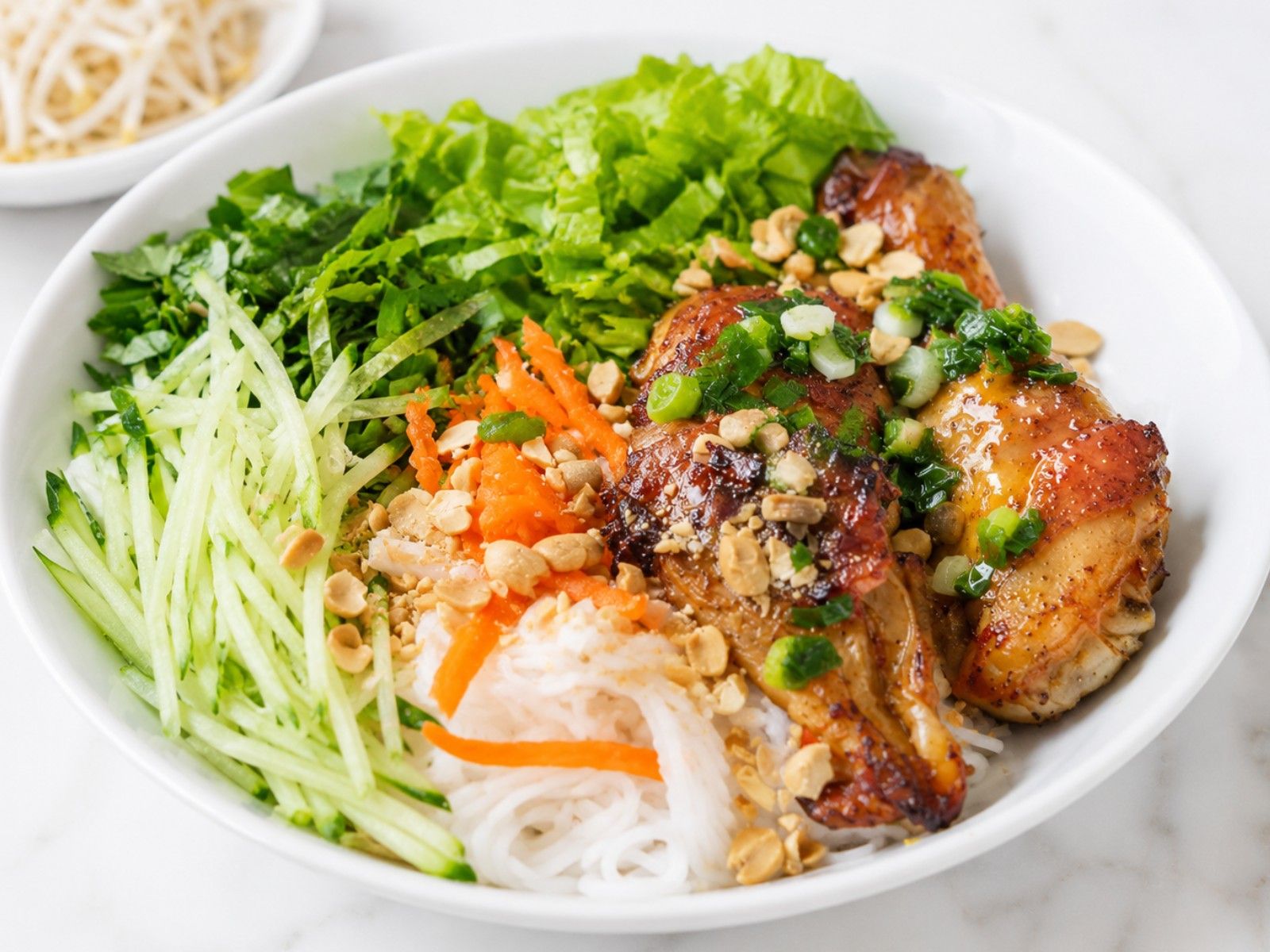
Bun ga nuong (bún gà nướng) is a Vietnamese rice vermicelli bowl topped with lemongrass-marinated grilled chicken, fresh vegetables and herbs, and a sweet-tangy fish sauce dressing called nước chấm. The bowl typically includes cool rice noodles, sliced grilled chicken, lettuce, cucumber, mint, pickled daikon and carrot known as đồ chua, crushed roasted peanuts, and a spoonful of scallion oil, or mỡ hành. Everything is assembled in one bowl, dressed with nước chấm, and mixed together just before eating.
English speakers can pronounce bún gà nướng approximately as “boon gah noo-ung.” The words gà nướng simply mean “grilled chicken.”
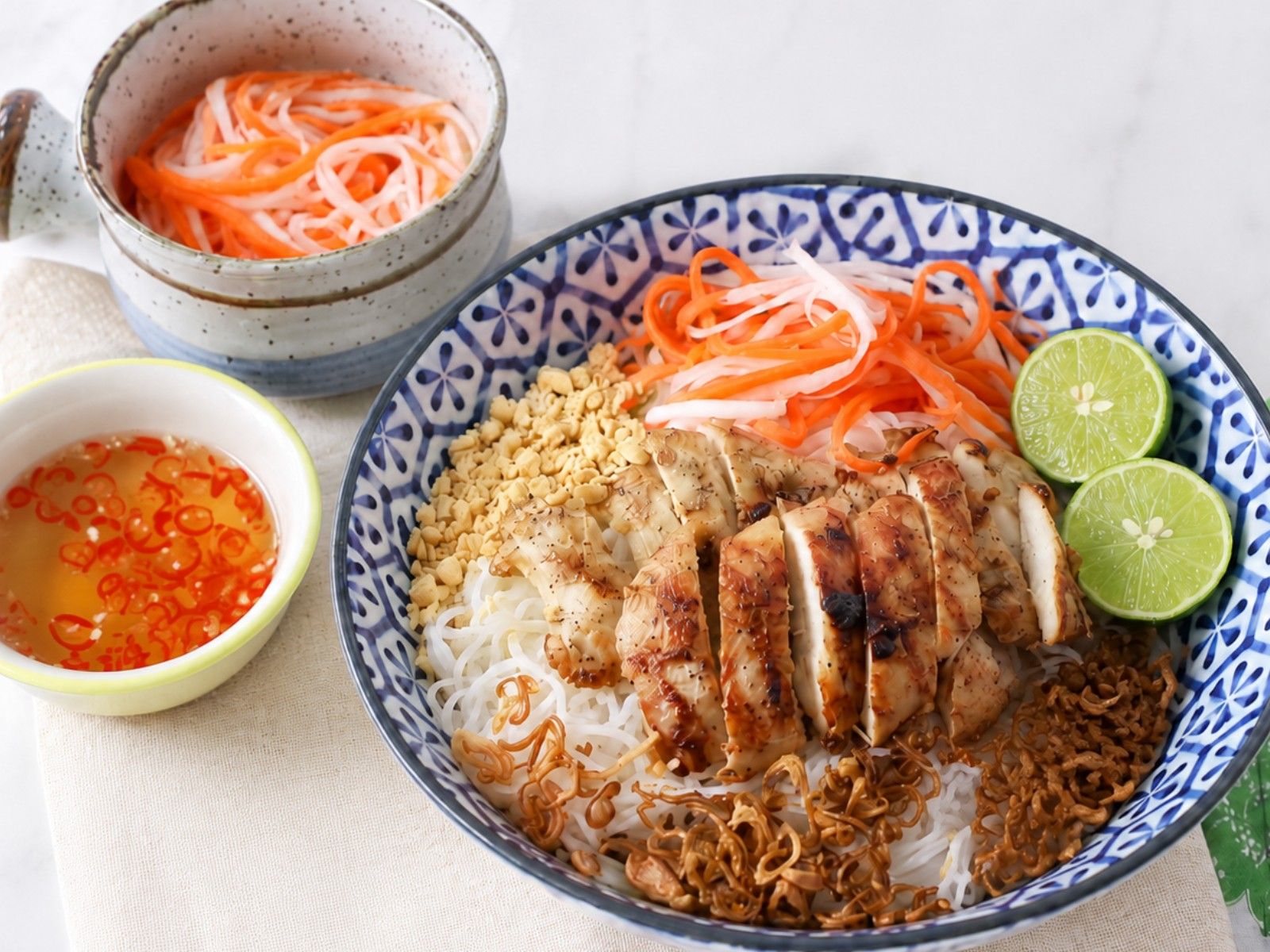
In this version, chicken takes the place of the pork more commonly associated with bún thịt nướng, while the southern Vietnamese bowl structure remains the same: rice vermicelli, greens, đồ chua, mỡ hành, peanuts, and a light fish sauce dressing assembled together. This differs from Hanoi-style bún chả, in which the noodles, herbs, grilled meat, and dipping sauce are usually served as separate components.
You will spot it on American menus under the "vermicelli bowl" or "bun" section. This is where a lemongrass-citrus marinade meets a savory-sweet fish sauce dressing, crunchy pickled vegetables, and the herbal lift of fresh mint and lettuce.
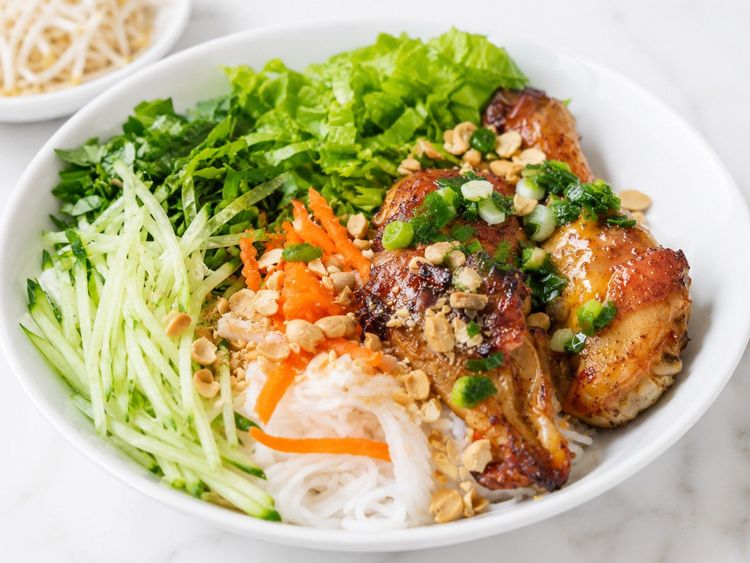
Grilled lemongrass chicken, vermicelli, herbs, and fish sauce create a balanced Vietnamese noodle bowl.
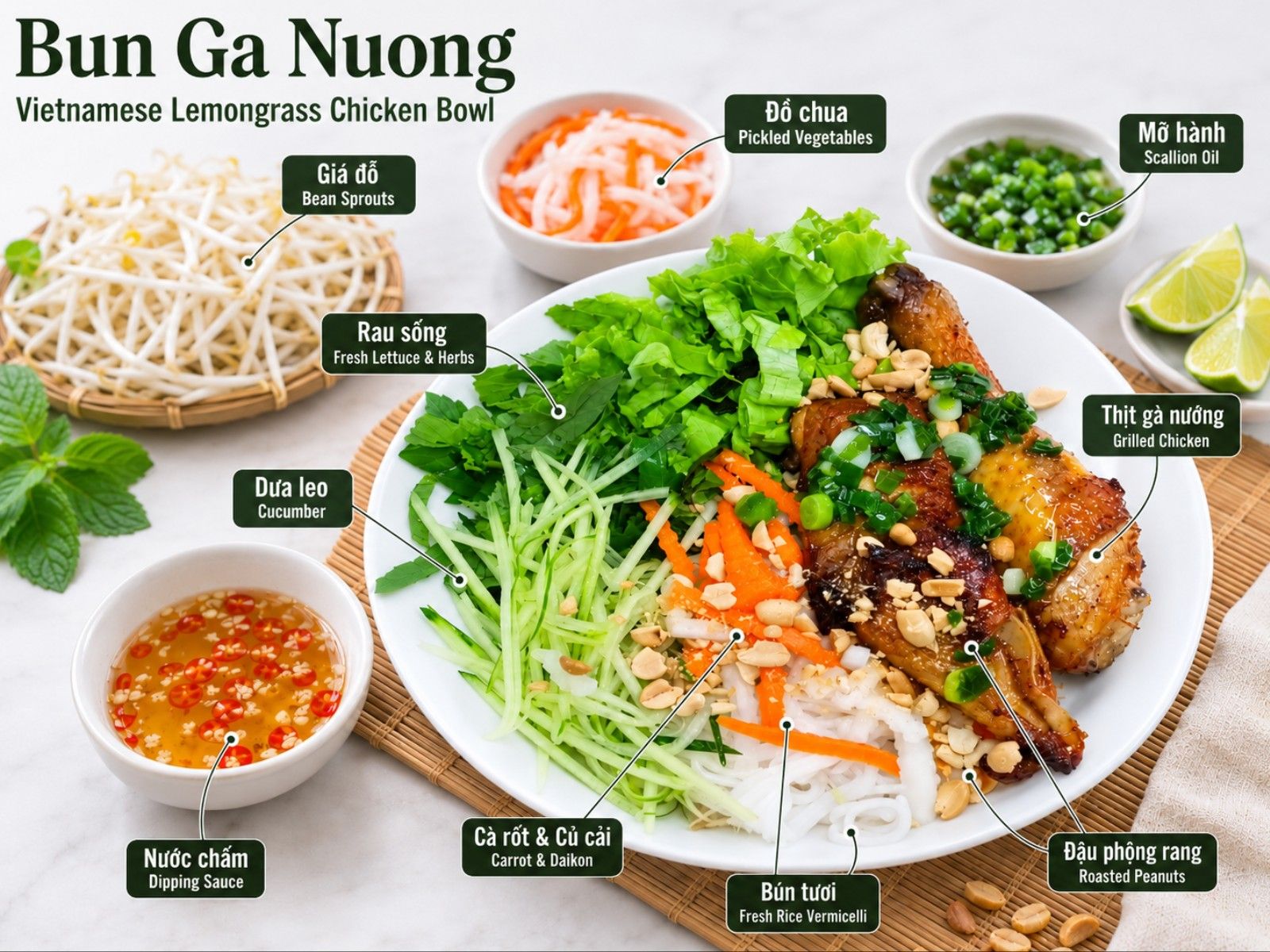
Why You'll Love Bun Ga Nuong?
You'll love this bun ga nuong because the lemongrass marinade does all the heavy lifting, and every bite gives you a mix of smoky chicken, tangy pickles, crunchy peanuts, and fresh herbs.
- You can easily change up the flavor. The lemongrass marinade brings out a great mix of citrus, garlic, and sweet, caramelized flavors in the chicken, while the fish sauce dressing brings all the fresh, crunchy, and smoky elements together. Feel free to add as much chili as you like.
- It works perfectly for 1 person or a whole crowd. You can whip it up for a quick weeknight dinner, or just set out the noodles, chicken, herbs, and toppings so everyone can build their own bowl.
- It takes only 30 minutes of active cooking. The marinade takes care of the flavor while you get everything else ready, so the whole bowl comes together without any special tools.
Bun Ga Nuong Ingredients
This bun ga nuong comes together from 5 main parts: the chicken and marinade, the pickled veggies, the dipping sauce, the scallion oil, and the noodles with herbs. This recipe uses 18 ingredients in total and serves 4 people.
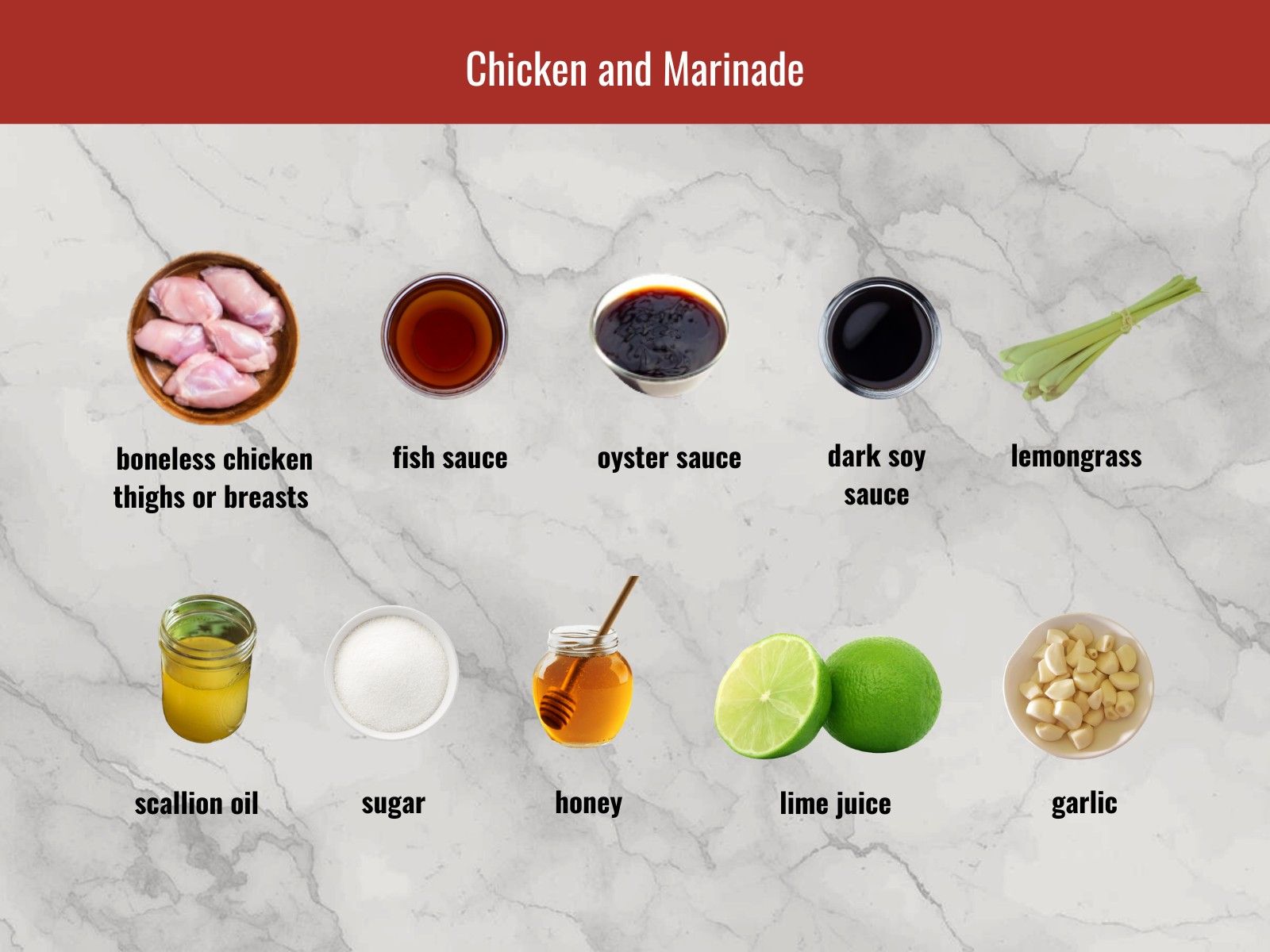
Chicken and Marinade
- 1.75 to 2 lb (800 to 900 g) boneless chicken thighs or breasts, with the skin and bones removed. We prefer thighs over breasts here because thighs stay super juicy during high-heat cooking and handle the marinade well without drying out. Breasts work fine too, but keep a close eye on the cooking time so they do not get dry and chalky.
- 1 tbsp fish sauce (nước mắm), preferably 30 to 40°N. The °N rating reflects the sauce’s total nitrogen content, which contributes to its depth and savory flavor rather than directly indicating saltiness. Since both flavor intensity and salt levels vary by brand, adjust to taste if needed.
- 1 tbsp oyster sauce.
- 1 tbsp Vietnamese caramel sauce (nước màu). If unavailable, dark soy sauce can provide color, but it will add soy flavor and extra salt.
- 1 tbsp scallion oil.
- 1 tbsp sugar.
- 1 tbsp honey.
- ½ tbsp lime juice.
- 2 stalks of lemongrass, bruised and sliced. Smash the stalks with the back of your knife before slicing them, because crushing them breaks the fibers and releases the aromatic oils inside. This helps the marinade soak up a much stronger lemongrass flavor in less time.
- 2 to 3 cloves of garlic, minced.
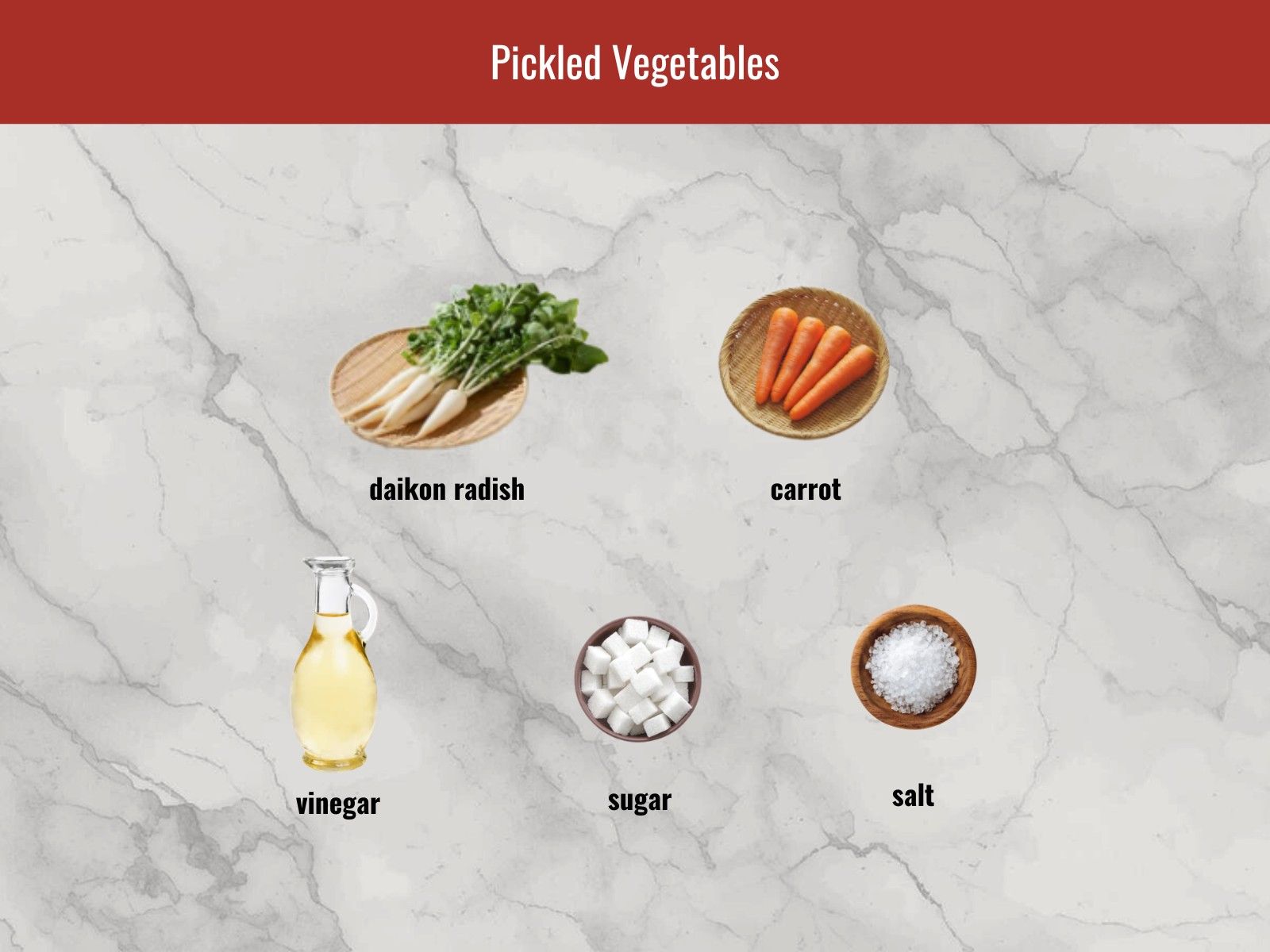
Pickled Vegetables (Đồ Chua)
1 medium daikon radish, 1 small carrot, 1 tsp salt, ⅓ cup warm water, ⅓ cup rice vinegar, and 3 tbsp sugar.
Dipping Sauce (Nước Chấm)
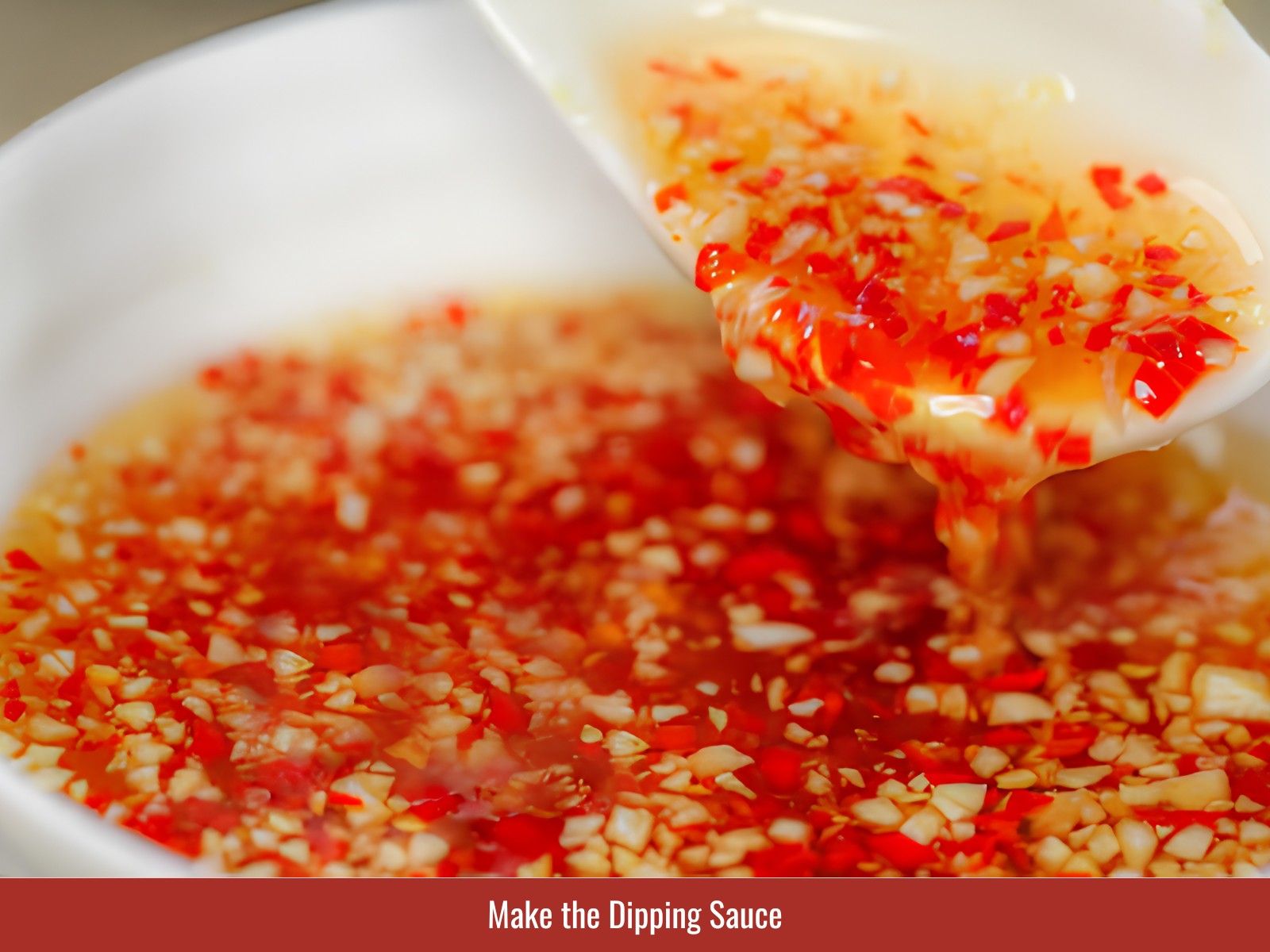
Fish sauce, sugar, lime juice, and water, mixed at a 1:1:1:5 ratio, plus some minced garlic and sliced chili.
Scallion Oil (Mỡ Hành)
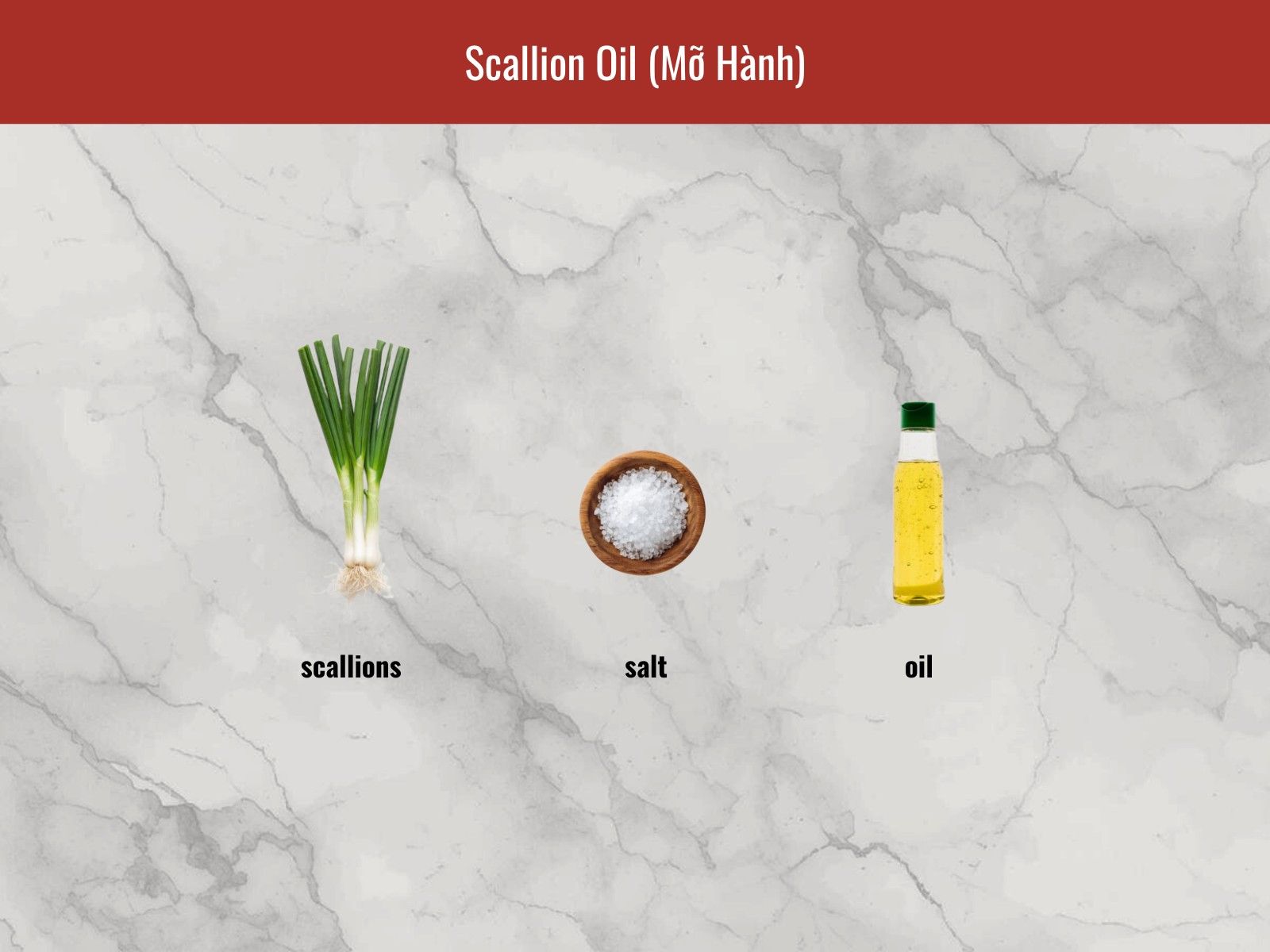
3 to 4 scallions, washed and sliced, plus 1 to 2 tbsp of cooking oil and a pinch of salt.
Noodles and Herbs
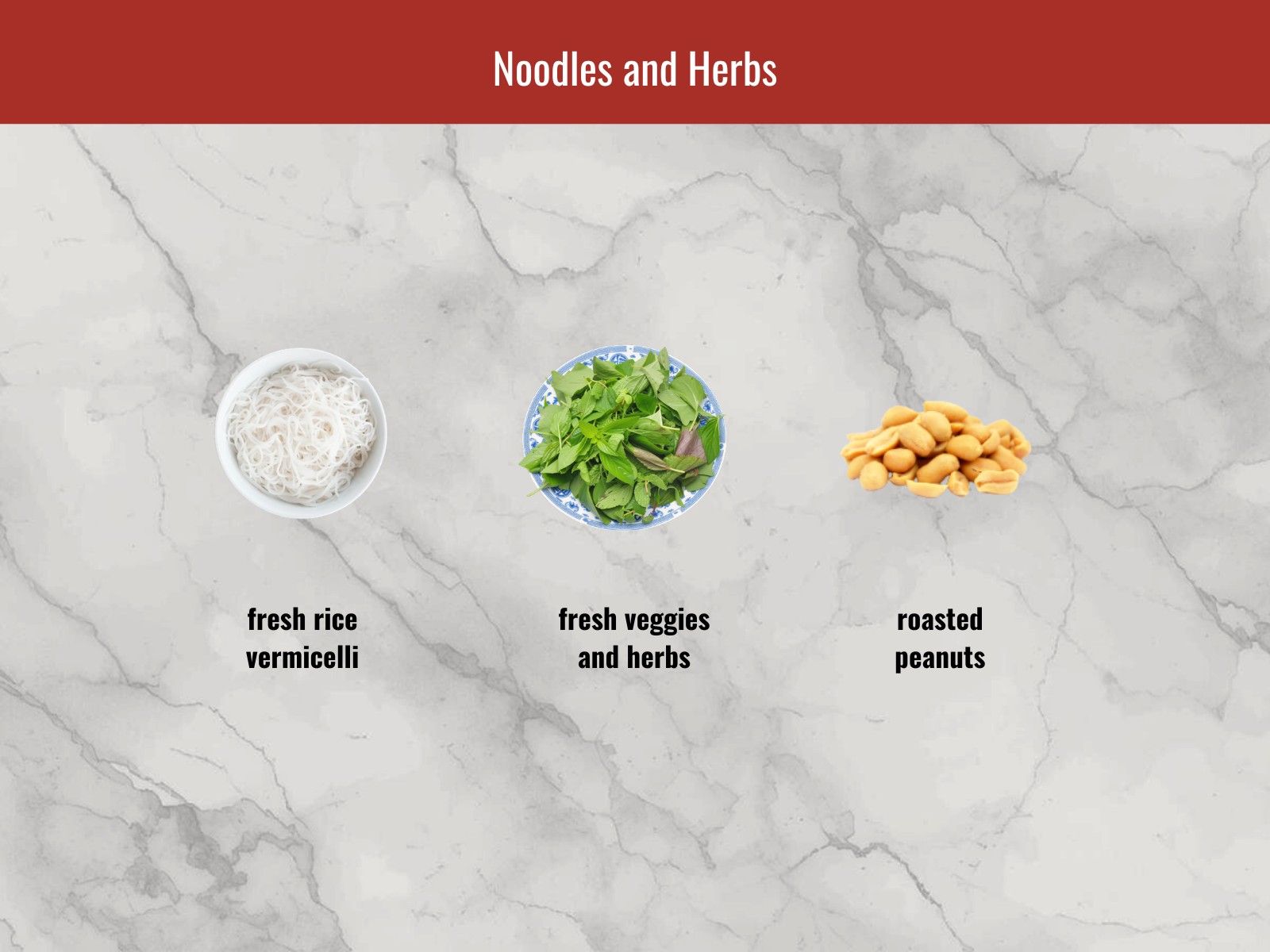
- 2.2 lb (1 kg) fresh rice vermicelli (bún tươi). We love using fresh rice vermicelli because it is softer, silkier, and just like what you get at a real Vietnamese restaurant. You can usually find fresh vermicelli in the fridge section at most Asian grocery stores in the US. If you cannot find it, dried rice vermicelli (bún khô) cooked according to the package instructions works as a backup, even though it turns out a little firmer.
- Fresh veggies and herbs: some lettuce, cucumber, bean sprouts, and fresh herbs, adjusted to your own taste.
- Roasted peanuts, crushed up for a nice crunch.
Based on typical US grocery prices, the amount of ingredients used costs about $30 to $35 in total, or roughly $7.50 to $8.75 per serving. The upfront grocery bill may be higher if you need to buy full bottles and packages of pantry staples such as fish sauce, oyster sauce, vinegar, sugar, and cooking oil.
How to Make Bun Ga Nuong Step by Step
Making bun ga nuong takes about 1 hour and 30 minutes from start to finish, including marinating time. The recipe has 8 simple steps, with around 30 minutes of preparation and cooking time.
Step 1: Prep the Chicken
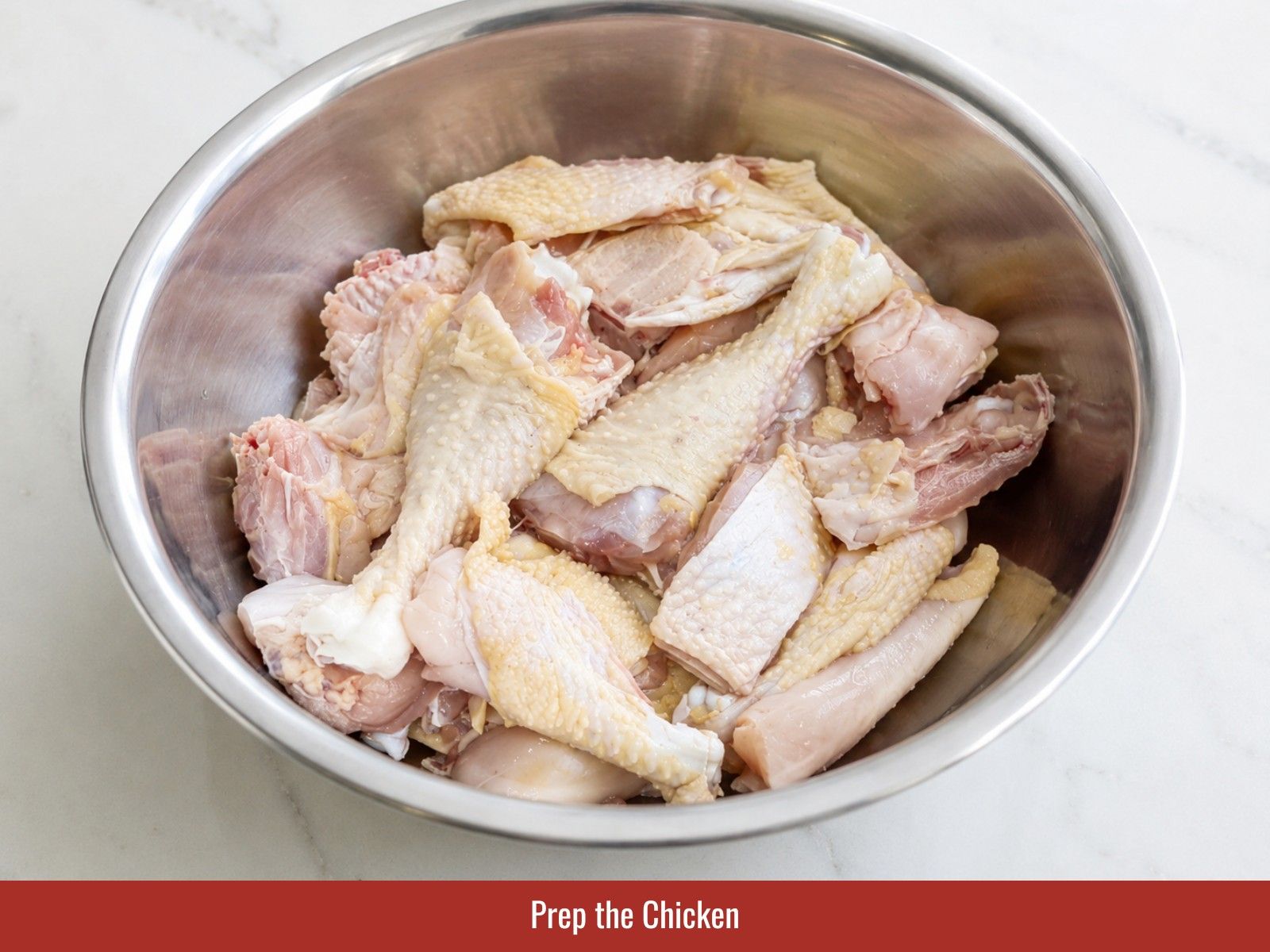
Remove the chicken from its packaging and pat it dry with paper towels. Trim off any excess fat if needed, then place it in a clean bowl for marinating.
Do not rinse raw chicken, as splashing water can spread bacteria to nearby surfaces. Wash your hands and clean any utensils or surfaces that touched the chicken.
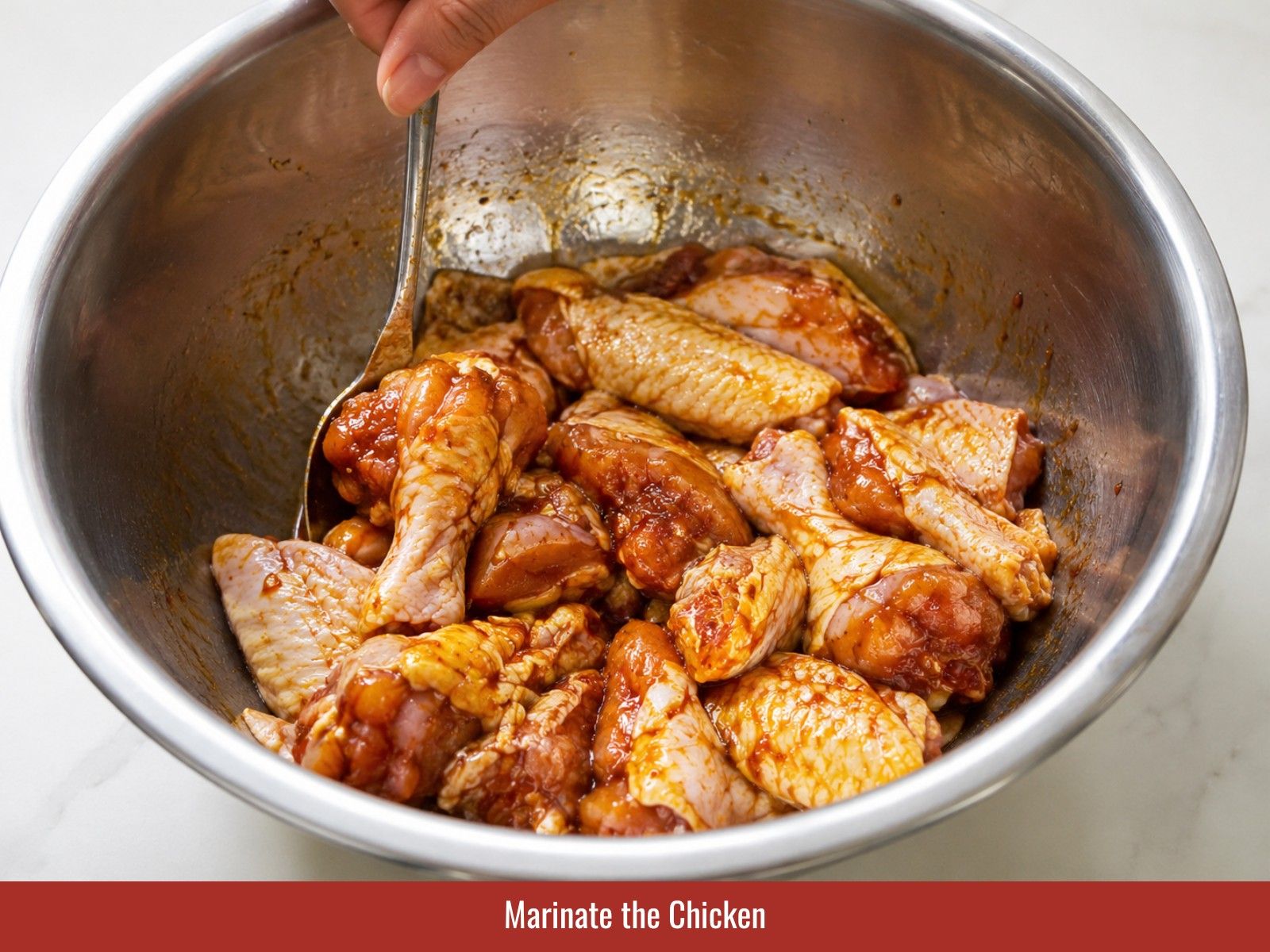
Step 2: Marinate the Chicken
In a large bowl, mix the chicken with all the marinade ingredients: fish sauce, oyster sauce, caramel sauce, scallion oil, sugar, honey, lime juice, smashed lemongrass, and garlic. Cover it and refrigerate for at least 1 hour, or overnight for a deeper flavor. Keep it under 24 hours max, because anything longer will ruin the texture of the meat.
Build your lemongrass chicken marinade with CHIN-SU Phu Quoc Fish Sauce for savory anchovy depth. Combine it with lemongrass, garlic, honey, and the other marinade ingredients before refrigerating the chicken.
Shop CHIN-SU Phu Quoc Fish Sauce for Bun Ga Nuong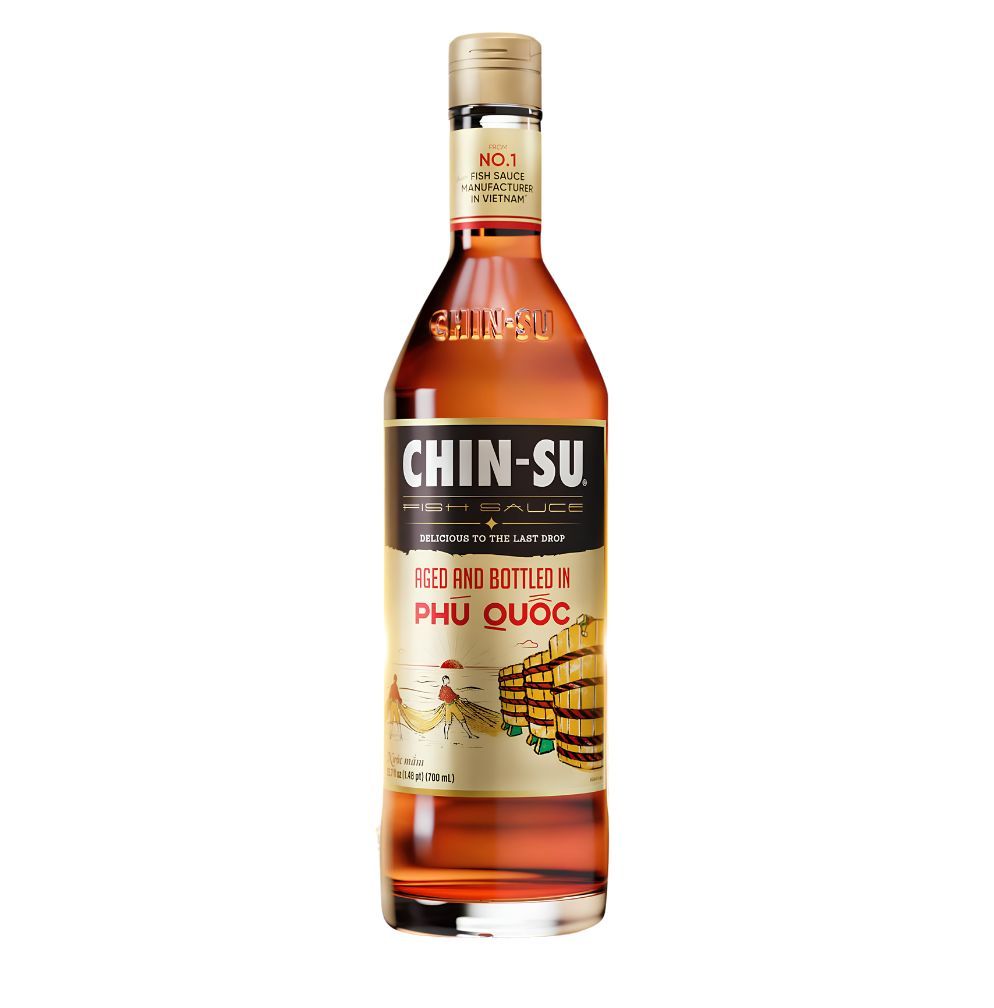
CHIN-SU Phu Quoc Fish Sauce
Step 3: Make the Pickled Vegetables
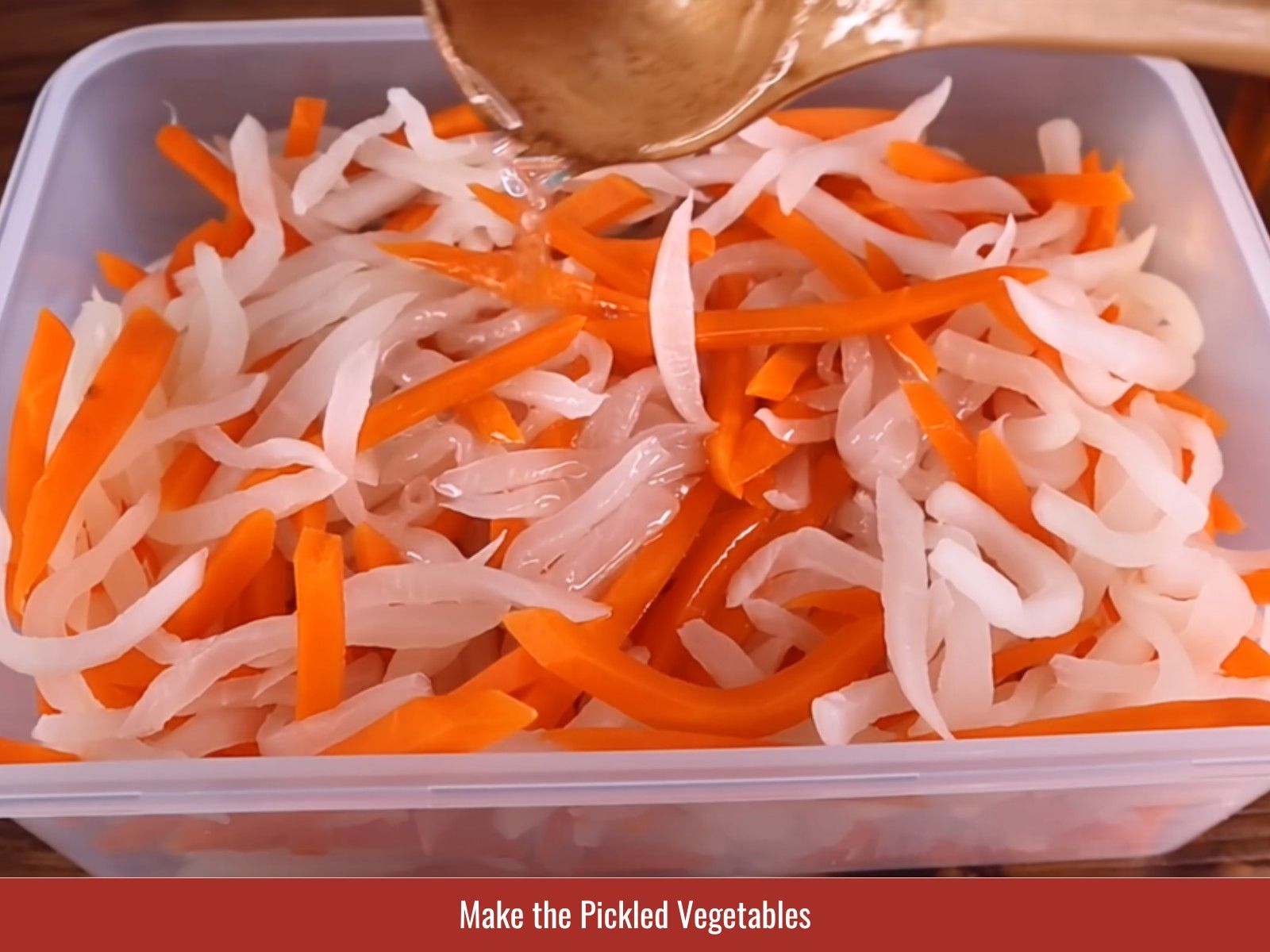
Cut 1 medium daikon and 1 small carrot into thin strips. Toss them with 1 tsp salt and let them sit for 10 minutes, then rinse well and squeeze out the excess water.
In a bowl, stir together ⅓ cup warm water, ⅓ cup rice vinegar, and 3 tbsp sugar until the sugar dissolves. Add the daikon and carrot, then refrigerate for at least 15 minutes while the chicken marinates. Drain before serving.
Step 4: Make the Dipping Sauce
Mix 3 tbsp fish sauce (30 to 40°N), 3 tbsp lime juice, 3 tbsp sugar, and 15 tbsp water in a bowl using a simple 1:1:1:5 ratio. Stir it well until all the sugar dissolves, then toss in the minced garlic and sliced chili so they float right on top.
For an easy-to-balance nước chấm, use a fish sauce with a rounded aroma and enough savory intensity to remain noticeable after dilution. A 30 to 40°N fish sauce works well here; the °N value refers to total nitrogen, not saltiness. CHIN-SU fish sauce can be used for this recipe, then adjusted with water, lime juice, or sugar to taste.
For more ratios, ingredient adjustments, and troubleshooting tips, see our complete Vietnamese nước chấm recipe.
Step 5: Make the Scallion Oil
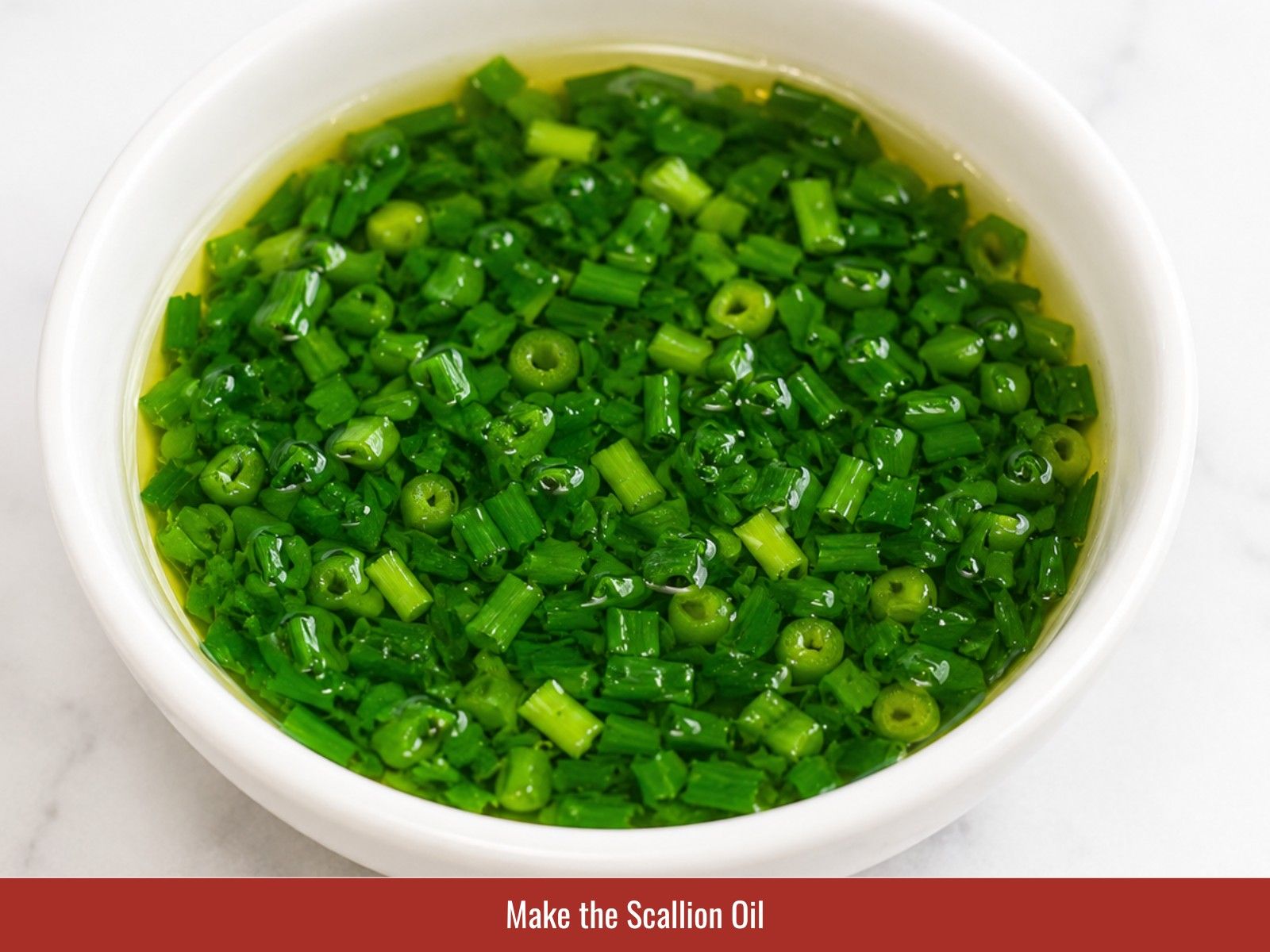
Wash and finely chop 3 to 4 scallions, then add a pinch of salt. Pour 1 to 2 tbsp of hot neutral oil over the scallions and stir briefly. The oil should soften them and release their aroma without browning. Mỡ means “fat,” but modern mỡ hành is often made with vegetable oil. You can also mix the scallions, salt, and oil in a microwave-safe bowl and heat for about 20 seconds.
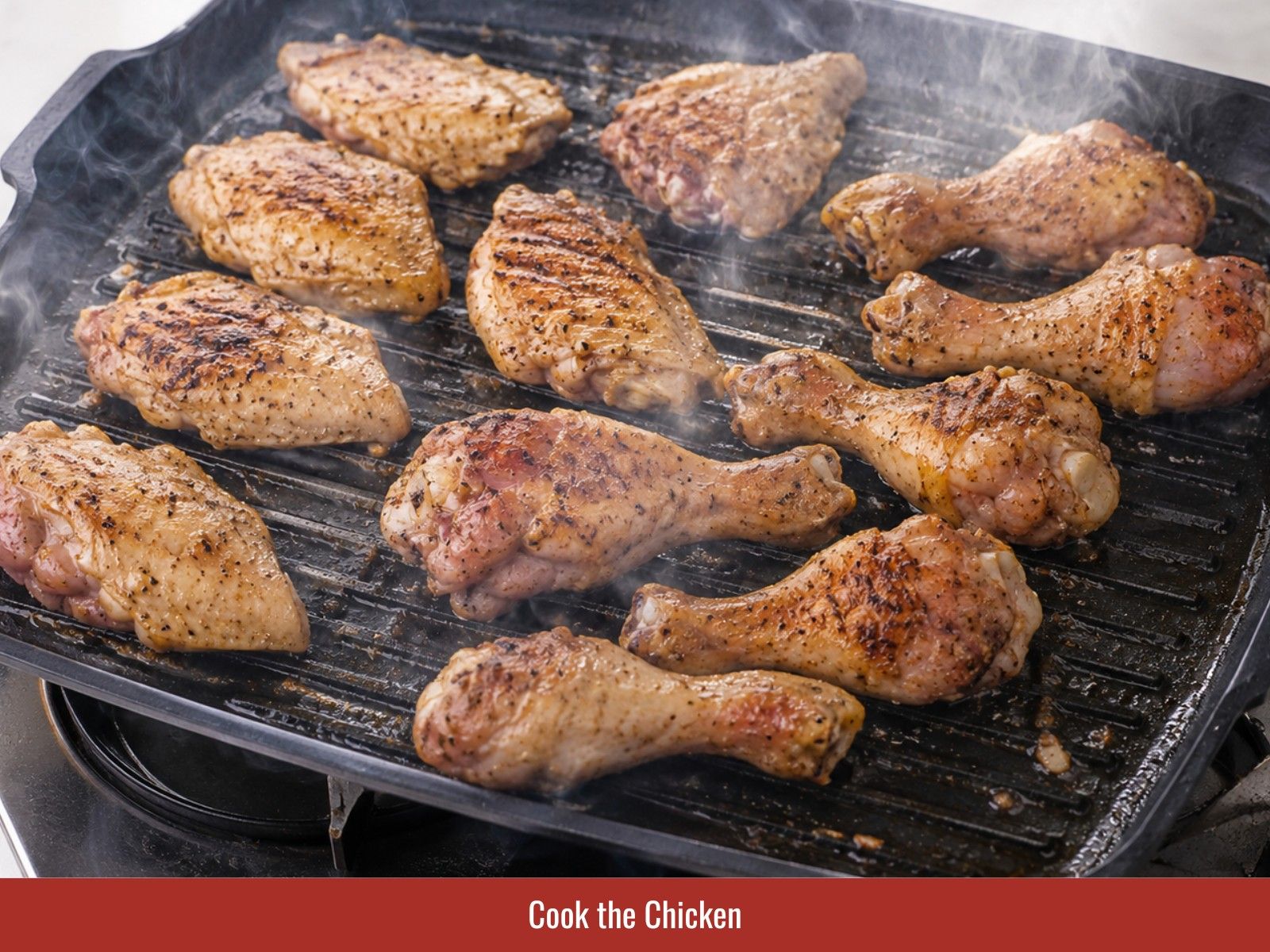
Step 6: Cook the Chicken
Preheat a skillet over medium to medium-high heat and add a thin layer of oil. Remove the chicken from the marinade and brush off any loose pieces of lemongrass and garlic, as they can burn quickly and turn bitter.
Pan-sear the chicken, turning as needed, until both sides are golden brown and the thickest part reaches 165°F (74°C). Because the marinade contains sugar, honey, and Vietnamese caramel sauce, reduce the heat if the surface darkens before the chicken is cooked through. The nước màu helps give the chicken its amber glaze and subtle bittersweet depth. Transfer the chicken to a clean plate, let it rest briefly, then slice.
The chicken can also be cooked using one of these methods:
- Oven: Bake at 375°F (190°C) for about 20 minutes. Broil for 1 to 2 minutes at the end if more color is needed.
- Air fryer: Cook at 380°F (193°C), flipping halfway through and checking for doneness after about 8 minutes.
- Charcoal grill: Grill over medium-high heat, turning as needed and checking for doneness after about 6 to 8 minutes.
Cooking time will vary depending on the thickness of the chicken, its starting temperature, and the appliance. Use these times as starting points and always confirm that the thickest part reaches 165°F (74°C).
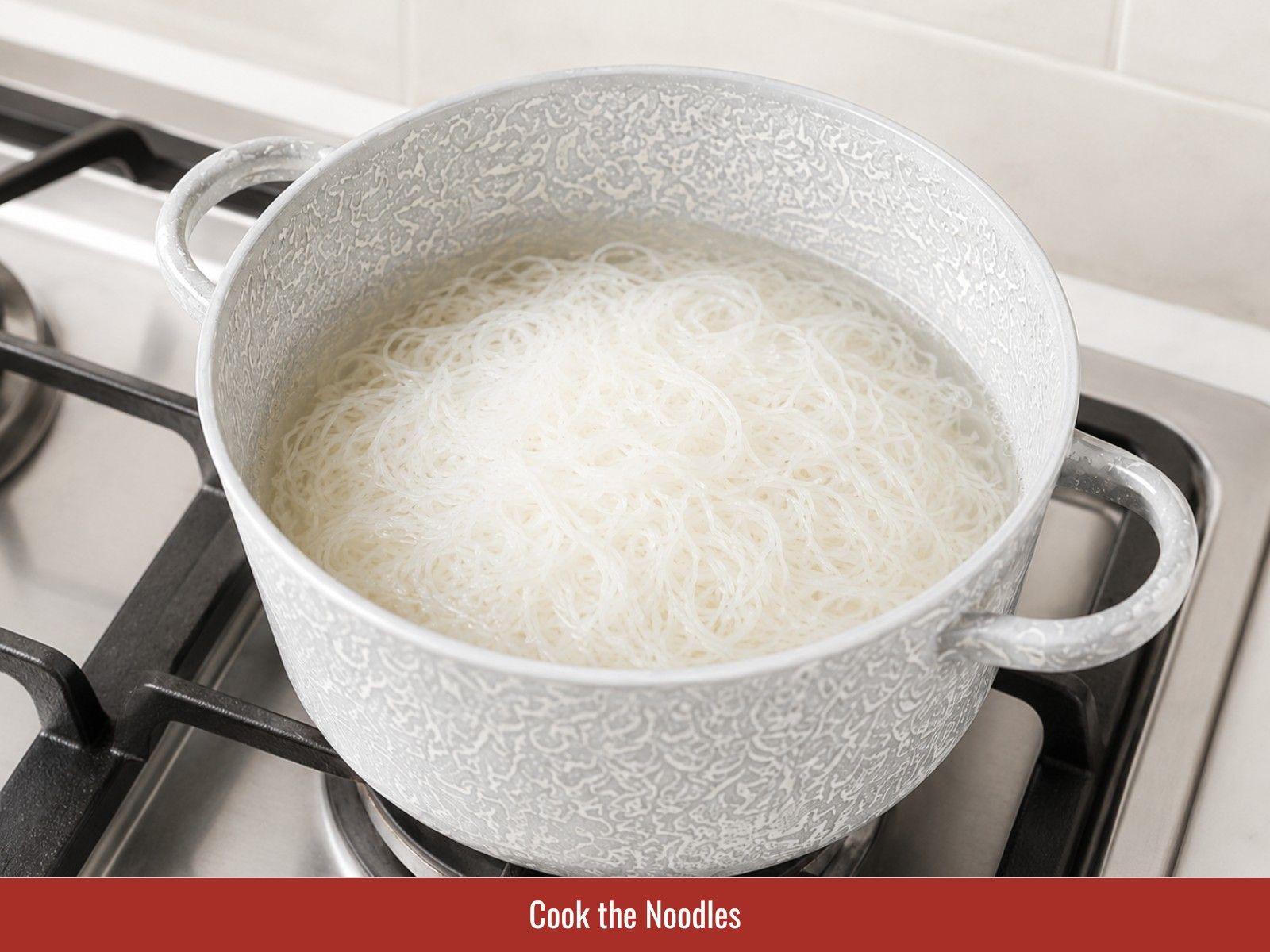
Step 7: Prepare the Noodles
If the fresh bún is ready to eat, gently separate the strands and divide them among the bowls. Briefly blanch it only when required by the package instructions. For dried rice vermicelli, cook according to the package directions, rinse briefly under cool running water, and drain thoroughly.
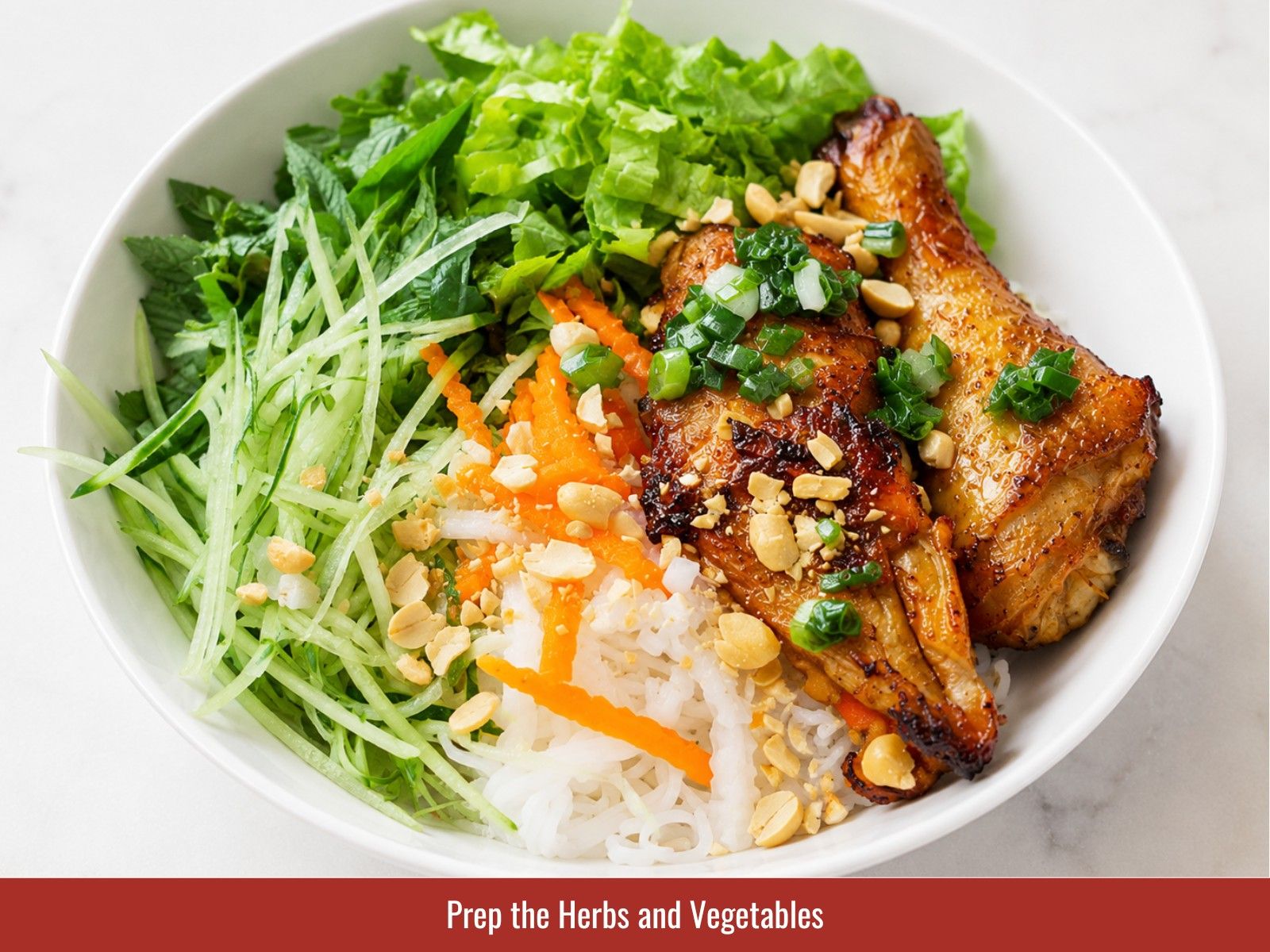
Step 8: Prep the Herbs and Vegetables
Rinse the lettuce, cucumber, bean sprouts, and herbs thoroughly under cool running water, then drain and dry them well. Slice the cucumber into thin strips. Leave the bean sprouts raw for more crunch, or blanch them briefly for a softer texture. Crush the roasted peanuts and set them aside for topping.
How to Serve Bun Ga Nuong?
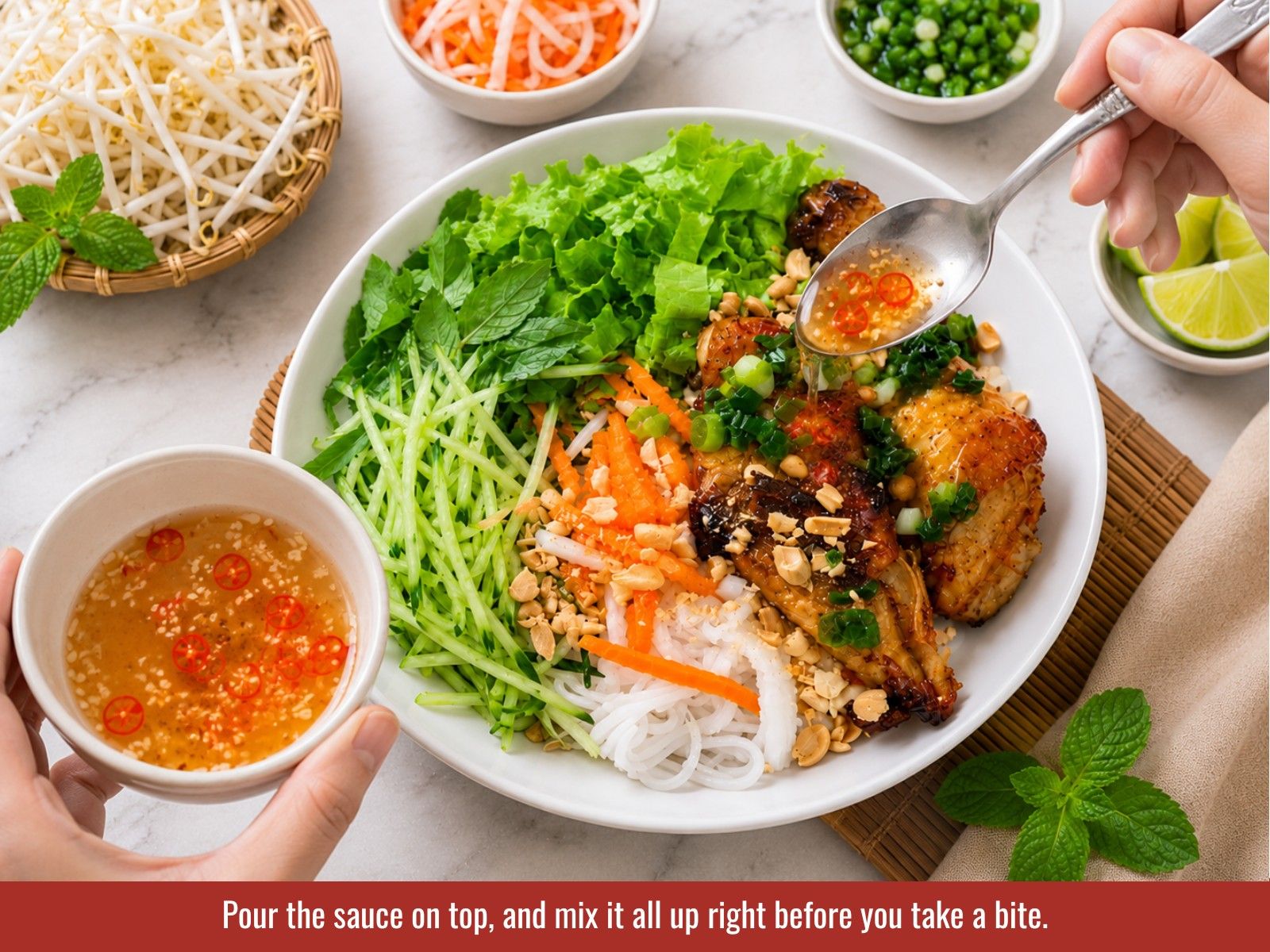
Bun ga nuong is a simple one-bowl meal where you just pile everything together, pour the sauce on top, and mix it all up right before you take a bite. To build your bowl, just layer everything from the bottom up. The classic setup goes like this:
- Rice vermicelli, either fresh or dried, works as your base.
- Sliced grilled lemongrass chicken, added while it is still warm, right out of the pan.
- Lettuce, cucumber, and fresh herbs to give it a cool, crisp layer.
- Pickled daikon and carrot bring in a nice tangy flavor.
- Crushed roasted peanuts and a spoonful of scallion oil dropped right on top.
- Nước chấm served alongside or poured over the bowl just before eating.
For family-style serving, give each person an individual bowl and place the herbs, toppings, and nước chấm in shared dishes at the center of the table. For a larger meal or backyard cookout, set out all the components separately so everyone can build their own bowl.
Serve the noodles, vegetables, and herbs cool or at room temperature, with the chicken added while it is still warm. Add the nước chấm gradually, mix from the bottom so it reaches the noodles and vegetables, then taste before adding more.
For a more convenient option, use CHIN-SU Sweet and Sour Dipping Fish Sauce as a ready-made nước chấm.
Dress your bun ga nuong with CHIN-SU Vietnamese Sweet and Sour Dipping Fish Sauce straight from the bottle. Its sweet, sour, and savory balance brings the grilled chicken, cool vermicelli, fresh herbs, and pickled vegetables together without mixing a separate dressing.
Shop CHIN-SU Sweet and Sour Dipping Fish Sauce for Bun Ga Nuong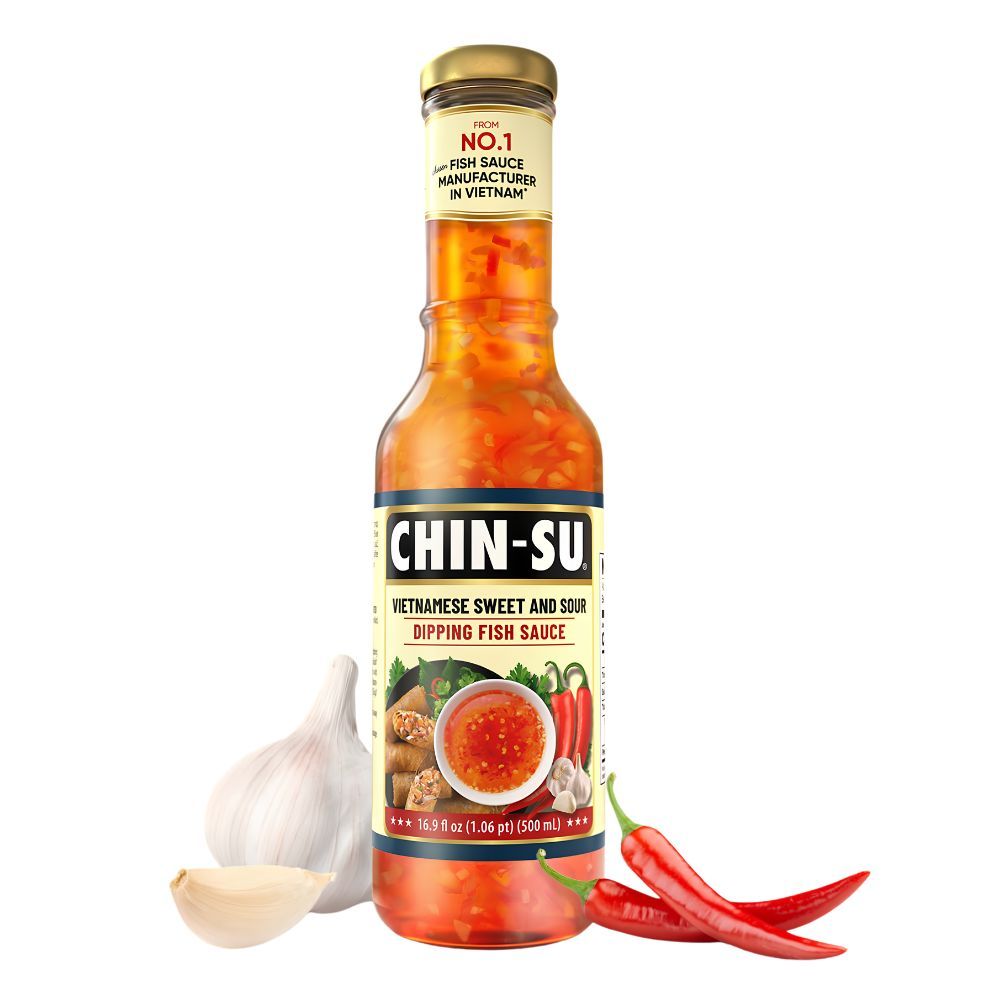
CHIN-SU Vietnamese Sweet and Sour Dipping Fish Sauce
Tips for the Best Bun Ga Nuong
These 5 small choices make all the difference between good bun ga nuong and great bun ga nuong.
- Marinate overnight if you can. 1 hour works fine, but an overnight rest lets the fish sauce and lemongrass season the chicken all the way through. Keep it under 24 hours max, since the acid starts breaking down the texture after that.
- Brush off the lemongrass before cooking. The small bits burn super fast in a hot pan and turn bitter, so leave only what naturally sticks to the meat.
- Get the pan screaming hot before the chicken goes in. High heat gives you that perfect caramelized sear and a grilled look even without a grill. If the pan smokes too much, turn down the heat slightly and add a splash of water.
- Prep the pickled vegetables and dipping sauce first. Both taste much better after spending a little time in the fridge, and making them while the chicken marinates keeps your actual hands-on cooking under 30 minutes.
- Use fresh vermicelli if you can find it. Fresh rice vermicelli has a softer, chewier texture than dried vermicelli, and you can easily find it in the refrigerated section at Asian grocery stores. Dried rice vermicelli works well as a backup for US kitchens.
What Can You Substitute or Change in Bun Ga Nuong?
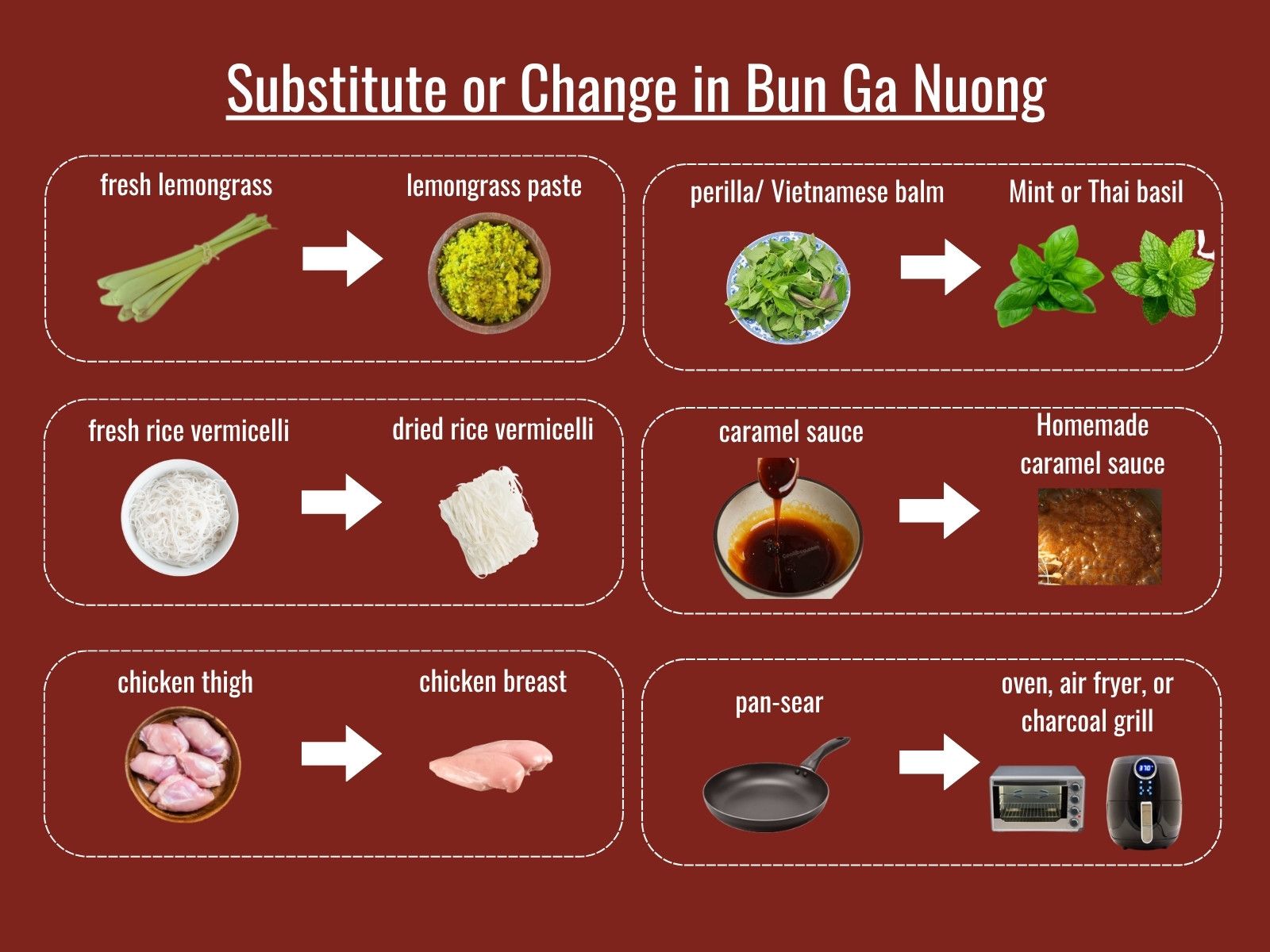
These substitutions help you make bun ga nuong with regular US grocery store ingredients without losing the dish's core flavor.
Ingredient swaps
- Lemongrass paste or frozen minced lemongrass replaces fresh lemongrass. You can use about 1 tablespoon of paste instead. The aroma turns out a bit milder, but the citrus note still carries through, and you can easily find both options at Asian grocery stores.
- Dried rice vermicelli replaces fresh. Dried noodles lose the soft chew of fresh ones, though they are widely available at any Asian market or regular supermarket. Just cook them according to the package instructions.
- Chicken breast replaces chicken thigh. Chicken breasts dry out much faster, so you need to watch the cooking time closely.
- Mint or Thai basil replaces perilla (tía tô) or Vietnamese balm (kinh giới). You might lose the peppery bite of perilla, but the herb plate still works great, so just treat these as optional if the originals are hard to find.
- Homemade Vietnamese caramel sauce is the closest substitute for bottled nước màu. Dark soy sauce can provide color in a pinch, but it adds soy flavor and extra salt, so it should not be treated as an equal replacement.
Cooking method swaps
- An oven, air fryer, or charcoal grill replaces the pan-sear. You can bake the chicken at 375°F (190°C) for 20 minutes, air-fry it at 380°F (193°C) for 8 minutes, flipping it halfway through, or grill it over charcoal for 6 to 8 minutes total. The pan-sear gives you a nice caramelized crust, the grill brings out a smoky char, and the oven is the easiest hands-off option.
You can change things up as often as you need to. Still, the closer you stay to the original ingredients, the closer you get to that authentic Vietnamese flavor.
How to Store Bun Ga Nuong?
Bun ga nuong is best eaten fresh, but leftovers can be stored by keeping each component in a separate airtight container. Assembling the bowls ahead of time can make the noodles soggy and cause the herbs to wilt.
Keep the cooked chicken in the fridge for up to 3 to 4 days and reheat it gently before serving. Store the noodles for up to 3 days, then microwave them under a damp paper towel until softened and let them cool before assembling the bowl.
Fresh herbs are more delicate and are best used within 2 to 3 days. Lettuce, cucumber, and bean sprouts should also be stored separately and used while they are still crisp. The pickled vegetables and nước chấm keep longer than the fresh produce when sealed and refrigerated.
Assemble each bowl only when you are ready to eat.
Have you tried making bun ga nuong at home yet, or are you still out gathering ingredients? Drop your questions, tweaks, or how it turned out in the comments below. If this recipe worked well for you, a quick star rating really helps other home cooks find it. Make sure to share your finished bun ga nuong on social media with #CHINSU, since we check out every single post. Curious whether CHIN-SU fish sauce or chili sauce goes well with your bun ga nuong? Grab a bottle at chinsu.com and give it a try.
Discover more Vietnamese recipes and bring authentic flavors to your table.
Bun Ga Nuong Recipe (Grilled Lemongrass Chicken Noodle Bowl)
Bún gà nướng is a Southern Vietnamese noodle bowl of lemongrass-marinated chicken over rice vermicelli with fresh herbs, pickled daikon and carrot, and roasted peanuts. A sweet-tangy nước chấm dressing and scallion oil tie the bowl together.
Prep time
30 min
Cook time
30 min
Total time
1 hr 30 min
Recipe type
Food
Cuisine
Vietnamese
Method
Pan-Frying and Grilling
Servings
4 servings
Calories
697 kcal/serving (1 bowl)
Ingredients
Instructions
- 1Step 1: Prep the Chicken. Pat the chicken dry and trim excess fat. Do not rinse raw chicken; wash your hands and any surfaces it touched.
- 2Step 2: Marinate the Chicken. Mix the chicken with the fish sauce, oyster sauce, caramel sauce, scallion oil, sugar, honey, lime juice, lemongrass, and garlic. Cover and refrigerate for at least 1 hour, or overnight, but under 24 hours.
- 3Step 3: Make the Pickled Vegetables. Cut the daikon and carrot into thin strips, toss with 1 teaspoon salt for 10 minutes, then rinse and squeeze dry. Add to ⅓ cup each warm water and rice vinegar with 3 tablespoons sugar and chill at least 15 minutes.
- 4Step 4: Make the Dipping Sauce. Stir 3 tablespoons each fish sauce, lime juice, and sugar into 15 tablespoons water (1:1:1:5) until the sugar dissolves. Float the minced garlic and sliced chili on top.
- 5Step 5: Make the Scallion Oil. Finely chop 3 to 4 scallions, add a pinch of salt, and pour 1 to 2 tablespoons hot oil over them so they soften without browning, or microwave the mix for about 20 seconds.
- 6Step 6: Cook the Chicken. Heat a thinly oiled skillet over medium to medium-high heat, brush off loose lemongrass, and sear the chicken until golden and 165°F (74°C) inside, lowering the heat if it darkens. Rest briefly, then slice; or bake, air-fry, or grill instead.
- 7Step 7: Prepare the Noodles. Separate ready-to-eat fresh bún and divide among bowls, blanching only if the package says so. Cook dried vermicelli per the package, rinse under cool water, and drain well.
- 8Step 8: Prep the Herbs and Vegetables. Rinse and dry the lettuce, cucumber, bean sprouts, and herbs, then slice the cucumber into thin strips. Leave the sprouts raw or blanch briefly, and crush the roasted peanuts.
Notes
Storage: Keep each component in a separate airtight container. Refrigerate cooked chicken for 3 to 4 days and noodles for up to 3 days; use herbs within 2 to 3 days.
Reheating: Reheat the chicken gently. Microwave the noodles under a damp paper towel until soft, then let them cool before assembling.
Serving Style: Layer noodles, warm sliced chicken, greens and herbs, pickles, peanuts, and scallion oil, then add nước chấm gradually and mix from the bottom.
Nutrition · Per 1 bowl (about 550 g) Serving
Calories
697 kcal
Carbohydrates
84.7 g
Sugar
18.1 g
Protein
45.2 g
Fat
19.0 g
Sodium
1194 mg
Potassium
807 mg
Vitamin C
24 mg
Nutrition is calculated per bowl with chicken, noodles, pickles, scallion oil, and half of the nước chấm, excluding peanuts, greens, and herbs.
Frequently Asked Questions
Bun ga nuong uses grilled lemongrass chicken, while bun thit nuong (bún thịt nướng) uses grilled pork. Both are classic Southern-style vermicelli bowls that include the same herbs, pickled veggies, peanuts, and sauce.
Yes, you can absolutely make bun ga nuong without a grill. You can pan-sear the meat over high heat to get a nice caramelized crust, bake it at 375°F (190°C) for 20 minutes, or just air-fry it at 380°F (193°C) for 8 minutes. A charcoal grill definitely gives you the smokiest flavor, but every method works well.
The standard herb plate for bun ga nuong includes lettuce, mint, and cucumber. You can also throw in some authentic Vietnamese herbs if you can find them, like perilla, Vietnamese balm, and Thai basil. Bean sprouts and cilantro work well too, so just use whatever mix you can get your hands on.
Based on the quantities in this recipe, one serving of bun ga nuong contains about 820 to 900 calories. A bowl made with chicken breast will be closer to the lower end, while chicken thighs will bring it closer to the upper end. The final calorie count may vary depending on the noodle brand and how much roasted peanuts, scallion oil, cooking oil, and nước chấm you add.
The pale lower section is softer, juicier, and easier to mince into a marinade. The green upper stalk is tougher and more fibrous, so it is better saved for flavoring soups, broths, or tea.
Yes. Cover the chicken and keep it refrigerated overnight for a deeper flavor. Since the marinade contains lime juice, try not to leave it for much longer than 24 hours, as the acid can begin to affect the texture.
The chicken may be too wet, the pan may not be hot enough, or the pieces may be crowded together. Remove loose pieces of garlic and lemongrass before cooking, and sear the chicken in batches if needed. The nước màu in the marinade also helps create an amber glaze.
Yes. Leave them out or replace them with toasted sesame seeds, crispy shallots, or another suitable crunchy topping.
Did you make this recipe?
We love seeing it. Tag
@chinsu.usa
on Instagram, or leave a rating below — it helps other cooks find the recipe.
Pin this for later
Save this recipe to your board and keep it ready for your next cooking inspiration.
Save to Pinterest
CHIN-SU KITCHEN TEAM
CHIN-SU Kitchen Team are the creative experts behind the delicious recipes featuring CHIN-SU sauces. With years of experience and a passion for flavor, our team carefully selects recipes from a variety of trusted chefs and bloggers, bringing together the best culinary insights to present you with the most suitable and exciting dishes. Every recipe is chosen to inspire you to create meals that are not only tasty but also easy to prepare, enhancing your dining experience. Join us as we explore a wide range of sauces and flavors, and elevate every meal with the perfect recipe for your table!
User Reviews
Featured Articles
Banh Uot Recipe - Vietnamese Steamed Rice Sheets Made in a Skillet
Banh Canh Cua Recipe - Vietnamese Crab Thick Noodle Soup
Com Tam Recipe: A Delicious Vietnamese Broken Rice Dish
Nước Chấm Recipe - Vietnamese Dipping Fish Sauce
SUBSCRIBE TO GET
MORE INFO
Want the latest and greatest recipes, updates, and more from us,
straight to your inbox? Subscribe and get our NEWS!