Nem Nuong Recipe: Vietnamese Grilled Pork Sausage
By CHIN-SU Kitchen Team
Updated Oct 12, 2026
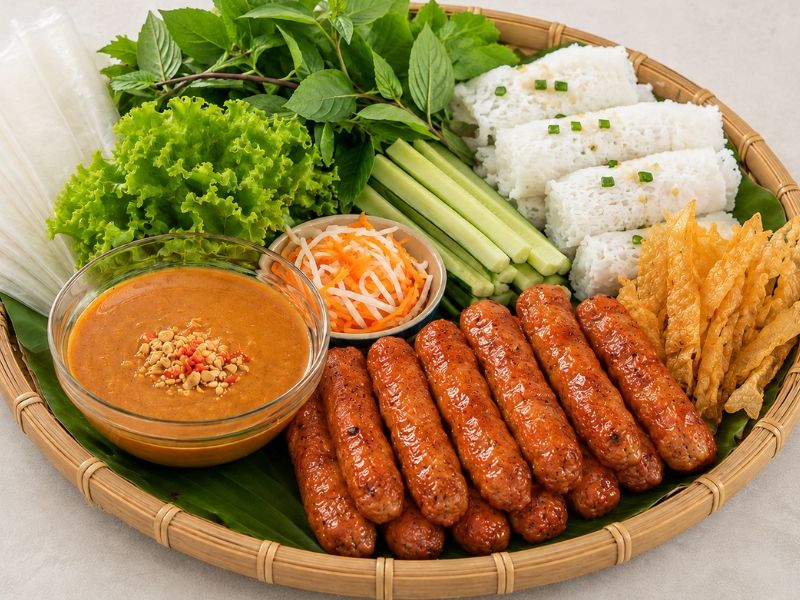
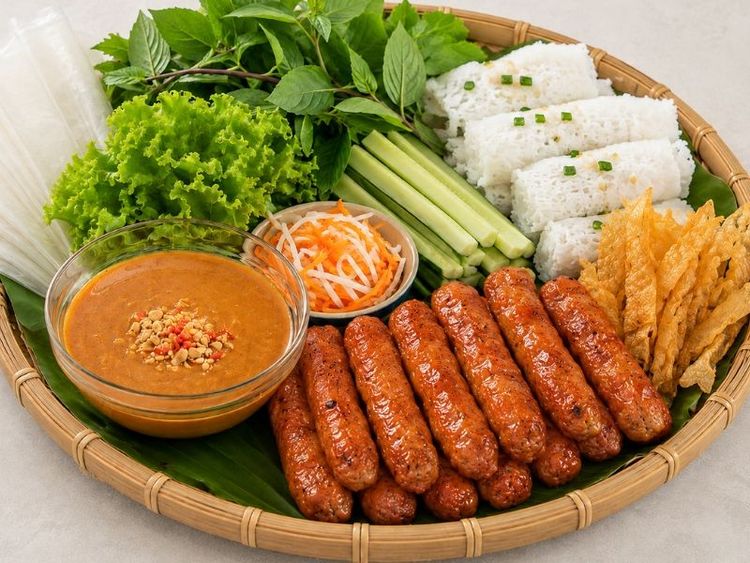
Tested in the CHIN-SU kitchenNem nuong (nem nướng) is a Vietnamese grilled pork sausage made by mixing seasoned pork into a cohesive paste, shaping it around skewers, and grilling it until smoky, browned, and springy. One of its best-known regional forms is nem nướng Ninh Hòa from Khánh Hòa Province, served as a shared rice-paper wrap meal with grilled pork, crisp fried rice paper, herbs, cucumber, sour fruit, pickles, and a thick savory dipping sauce. This recipe combines ground pork, giò sống, sweetened pork fat, fish sauce, garlic, shallots, and a late honey glaze for a juicy center and caramelized exterior.
Whether you grew up eating nem nuong or want to recreate a Vietnamese wrap platter at home, the most important techniques are keeping the pork cold, mixing it until tacky, shaping equal portions, and cooking each skewer to the correct temperature. In this article, CHIN-SU shares the nem nuong recipe to make at home, tips for developing its springy texture, a pork-shrimp dipping sauce, and how Vietnamese diners assemble the rolls. The recipe takes about 5 hours 30 minutes, including 1 hour 15 minutes of preparation, 45 minutes of cooking, and 3 hours 30 minutes of chilling and resting. One batch makes approximately 20 large skewers.
1 hr 15 min
Prep time
45 min
Cook time
5 hr 30 min
Total time
10
Servings
39
Ingredients
17
Steps
What Is Nem Nuong?
Nem nuong (nem nướng) is a Vietnamese grilled pork preparation made from seasoned ground or pounded pork shaped around skewers and cooked over charcoal or another direct heat source. The cooked pork has a firm, springy texture with a lightly browned exterior. English speakers can pronounce nem nướng approximately as “nem nuhng.”
In Vietnamese, nướng means “grilled” or “roasted,” while nem refers to a broader family of seasoned or processed meat dishes. For that reason, nem nướng is better described in English as “Vietnamese grilled pork sausage” or “grilled pork paste” rather than translated literally as “grilled spring rolls.”
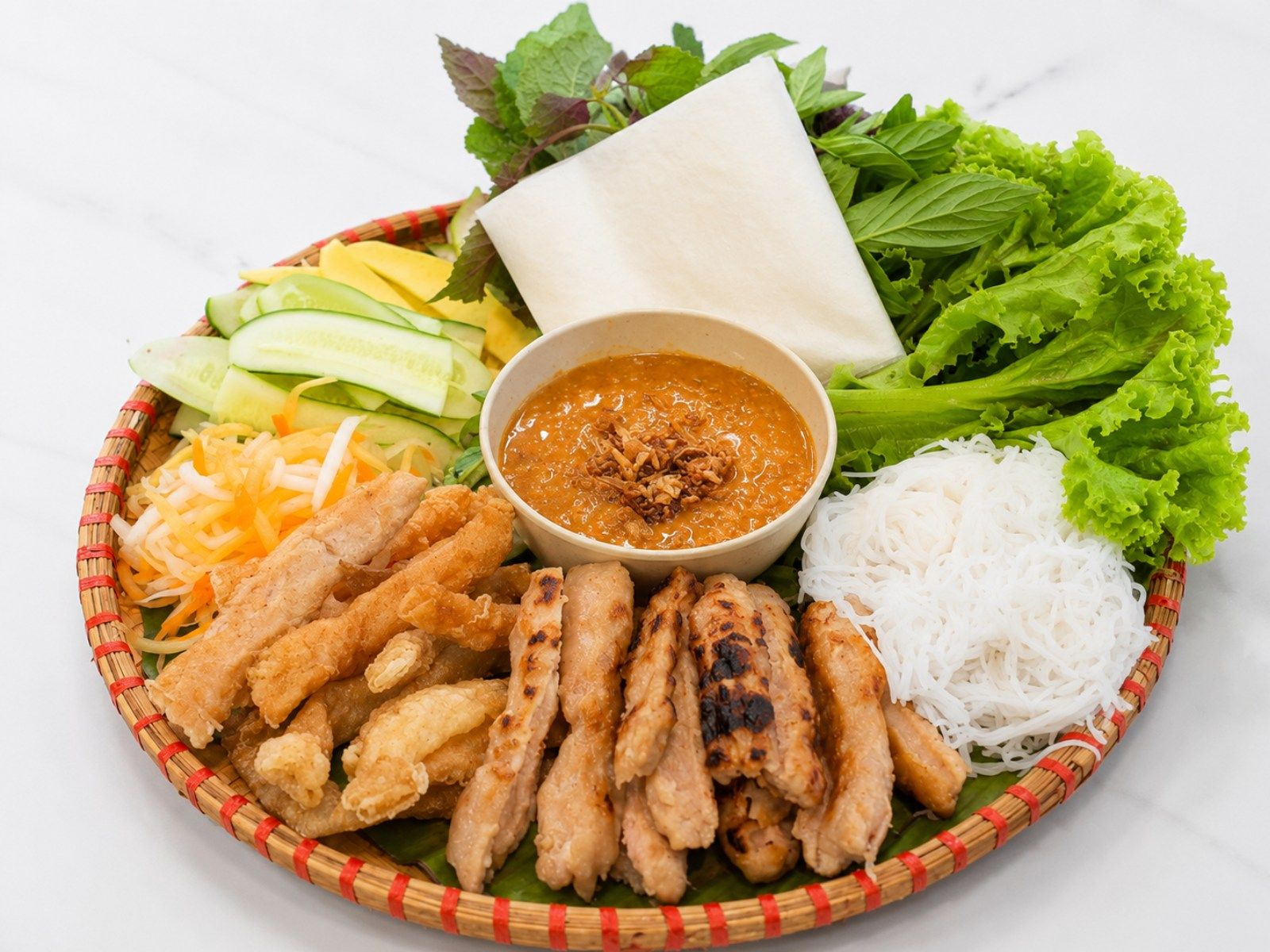
Nem nướng Ninh Hòa originated in Ninh Hòa, Khánh Hòa Province. The specialty later became widely associated with nearby Nha Trang, about 34 kilometers away, where restaurants introduced it to more visitors.
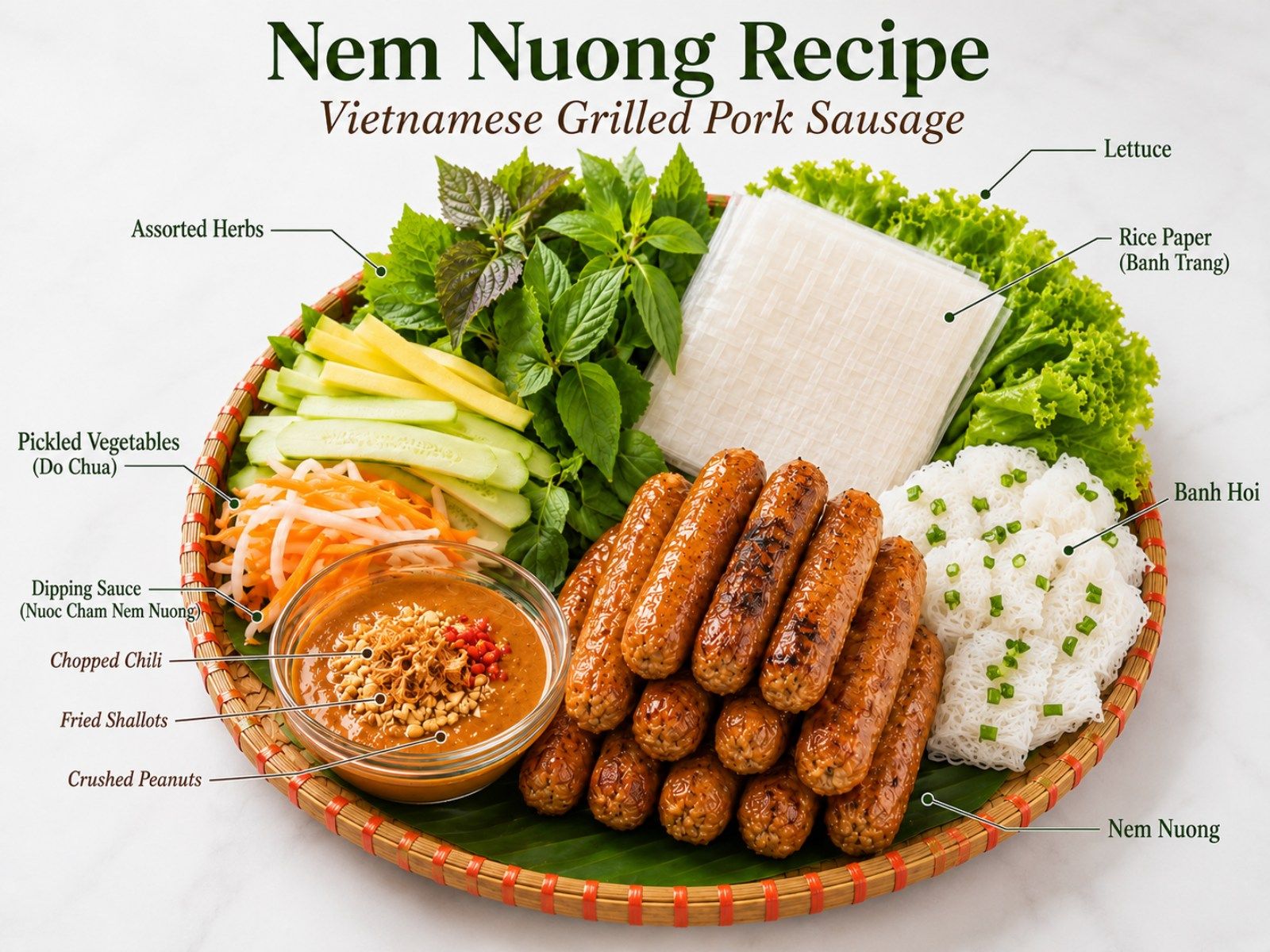
A Ninh Hòa-style serving places the grilled pork on a shared platter with fresh rice paper, crisp fried rice-paper strips, cucumber, herbs, pickles, green mango or starfruit, and green banana. Diners wrap the ingredients together, adding the fried rice paper for crunch, then dip each roll into a thick house sauce.
The dipping sauce is an essential part of the dish, but it does not follow one universal formula. Recipes vary by restaurant and may include pork, shrimp, fermented soybeans, peanuts, glutinous rice, tomatoes, or annatto.
Nem nướng Ninh Hòa was recognized among 10 Vietnamese specialties awarded an Asia Book of Records distinction in early 2024. The dish also continues to develop overseas: a San Jose restaurant specializing in charcoal-grilled nem nướng rolls reported selling around 1,400 rolls per weekend day in 2025.
Why You'll Love Nem Nuong
You'll love this nem nuong because it delivers that charcoal-crusted bite and signature springy bounce right from your home kitchen. It packs all the sweet-savory magic of a Nha Trang street stall into an approachable recipe. Here's what makes it worth the skewers.
- Springy and juicy texture. Chilled pork, giò sống, tapioca starch, salt, controlled mixing, and small pieces of pork fat create a cohesive mixture that stays firm yet juicy after cooking.
- Smoky, savory flavor. Charcoal grilling adds the strongest smoky aroma and browned exterior, while fish sauce, garlic, shallots, sugar, and seasonings give the pork its savory-sweet flavor.
- A complete shared meal. Serve the grilled pork with rice paper, crisp fried wrappers, cucumber, herbs, pickles, and sour fruit. It also works with bánh hỏi, rice vermicelli, or bánh mì.
- Several cooking options. Charcoal provides the most smoke, but the oven, air fryer, and stovetop make practical alternatives for preparing nem nướng at home.
- Simpler than it looks. The stand mixer does the exhausting physical kneading for you, developing that famous bouncy texture. Most of your time is completely hands-off while the pork chills, and the final grill step takes only 30 minutes.
Nem Nuong Ingredients
The recipe has four components: the pork mixture, the basting glaze, the dipping sauce, and the serving platter. You can easily pick up most of these items at any local Asian grocery store.
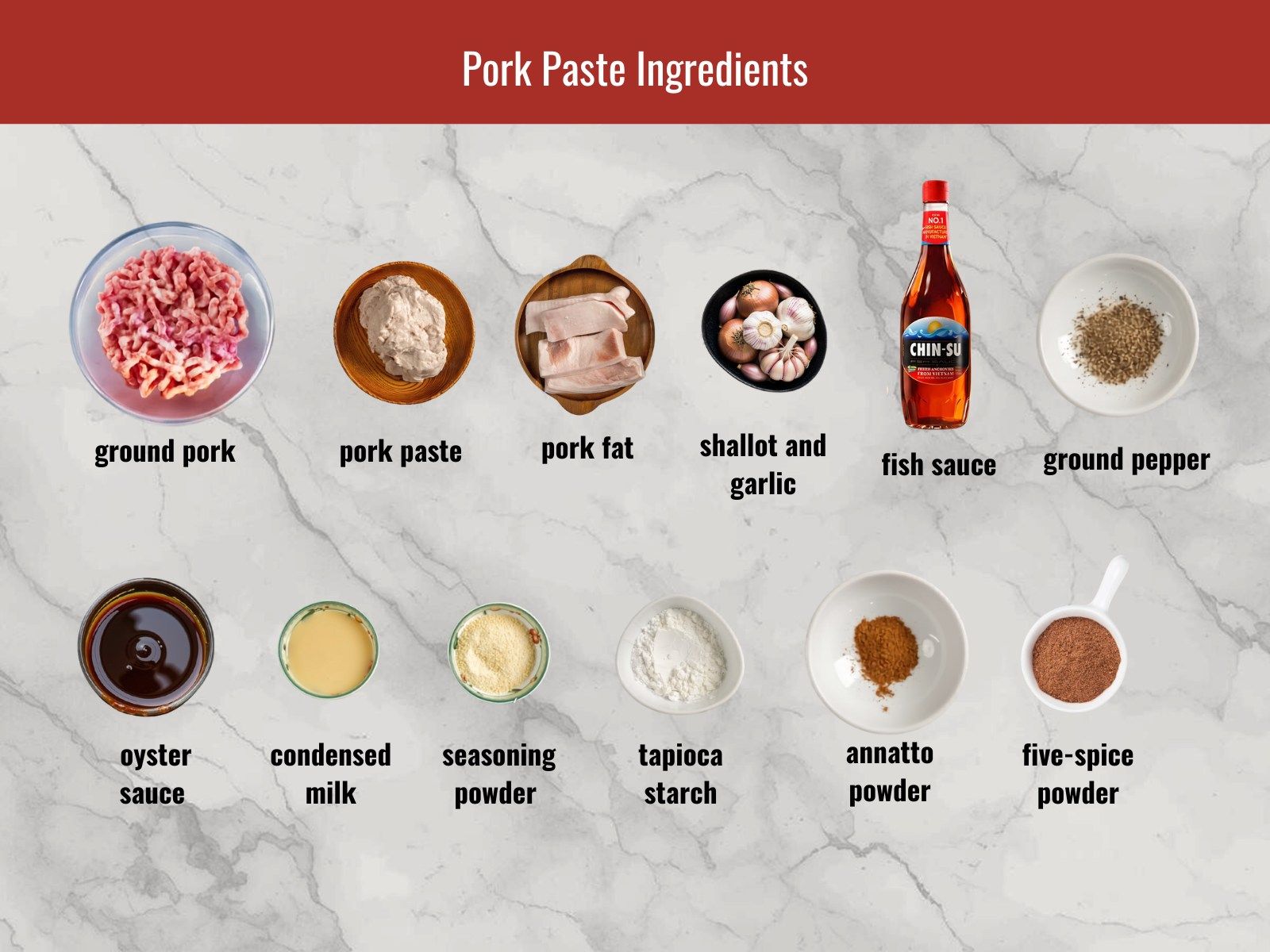
Pork Paste
- 3.3 lbs (1.5 kg) ground pork. This makes up the bulk of your skewers, so don't get lean meat. Go for pork with at least 20% fat, because that fat keeps the meat juicy over the coals instead of drying it out like hockey pucks.
- 1.1 lbs (500 g) pork paste (giò sống). Here is the secret to that bouncy, springy texture nem nuong is famous for. Without it, your mix might fall apart and crumble, especially if you don't mix the pork long enough.
- 8.8 oz (250 g) pork back fat. Chop it into small cubes, blanch it, then toss it with sugar so the pieces firm up before mixing. When grilled, these little bits melt and crackle, giving you juicy, chewy pockets in every bite.
- 2.5 oz (70 g) shallots, finely minced. They blend right into the pork paste, creating a great savory-sweet base.
- 1.8 oz (50 g) garlic. Mince it up with the shallots so both aromatics mix evenly through the meat.
- 2 tbsp fish sauce. This is the core seasoning, and it does 2 jobs at once: it brings out the umami and helps the meat bind together so the paste sets firmly.
- 2 tbsp oyster sauce, to add a deep, rich, caramelized flavor underneath.
- 2 tbsp condensed milk. It sounds a bit unusual, but it's a classic Vietnamese trick to give the pork a subtle sweetness and help the skewers brown beautifully on the grill.
- 1 - 2 tbsp seasoning powder, to round out the savory base without letting any single flavor take over.
- 3 tbsp tapioca starch. This helps bind the paste and locks in moisture, ensuring the skewers stay tender instead of tightening up over the heat.
- 1 tsp annatto powder, which gives the nem nuong its signature warm orange color.
- 1 tsp ground white or black pepper, for a little kick of background heat.
- 1 tsp five-spice powder. This gives the pork its warm, aromatic base, using a blend of star anise, cinnamon, clove, fennel, and Sichuan peppercorn.
- Neutral oil, for shaping.
- 20 bamboo skewers.
Giò sống brands vary in sodium, sugar, starch, and added seasoning. Cook a small test patty before shaping the entire batch, then adjust the remaining seasoning if needed.
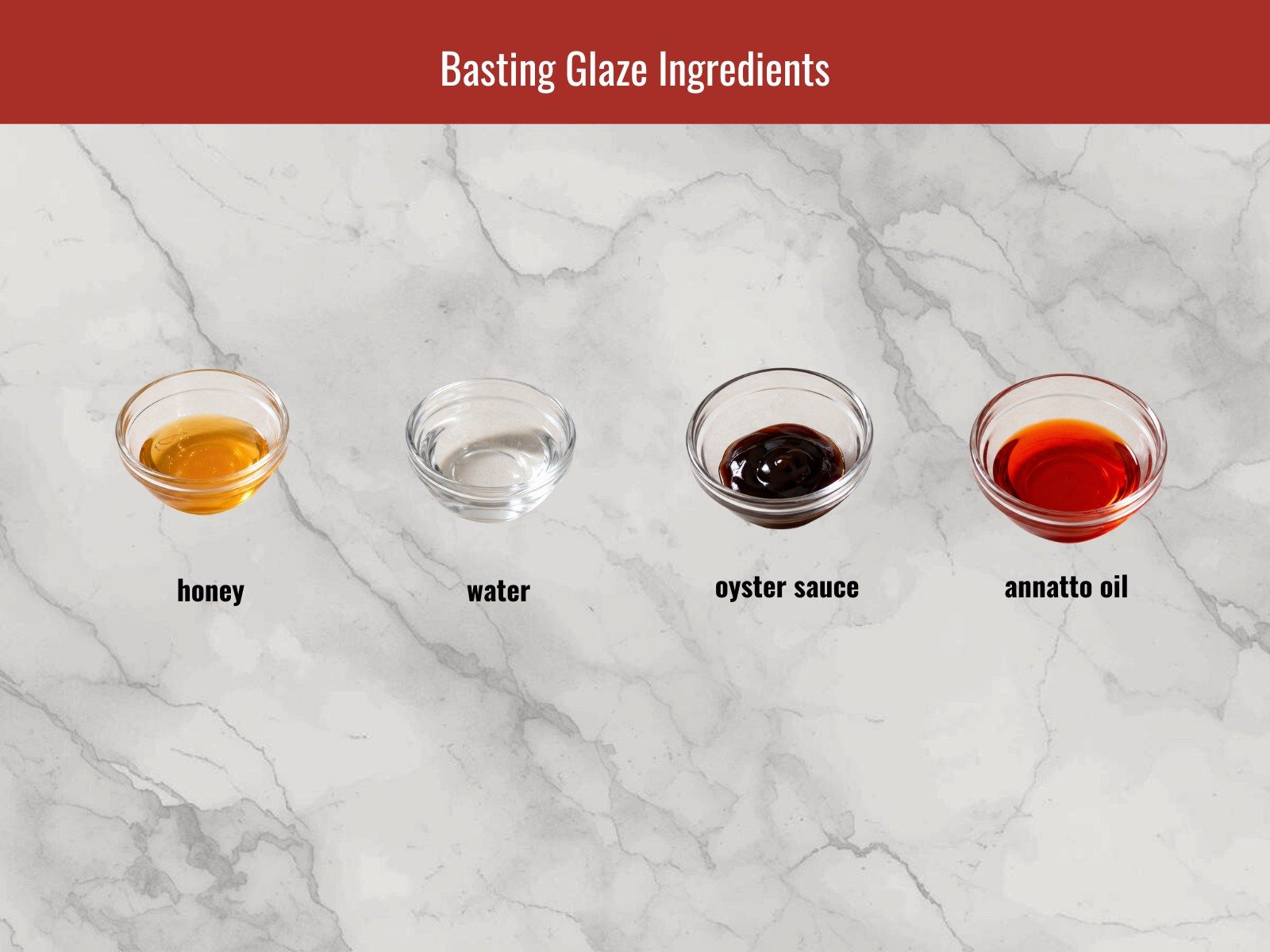
Basting glaze
- 1 tbsp honey;
- 1 tbsp water;
- 1/2 tbsp oyster sauce;
- 1 tbsp annatto oil.
Add the glaze near the end of cooking. Honey applied too early can burn before the center reaches a safe temperature.
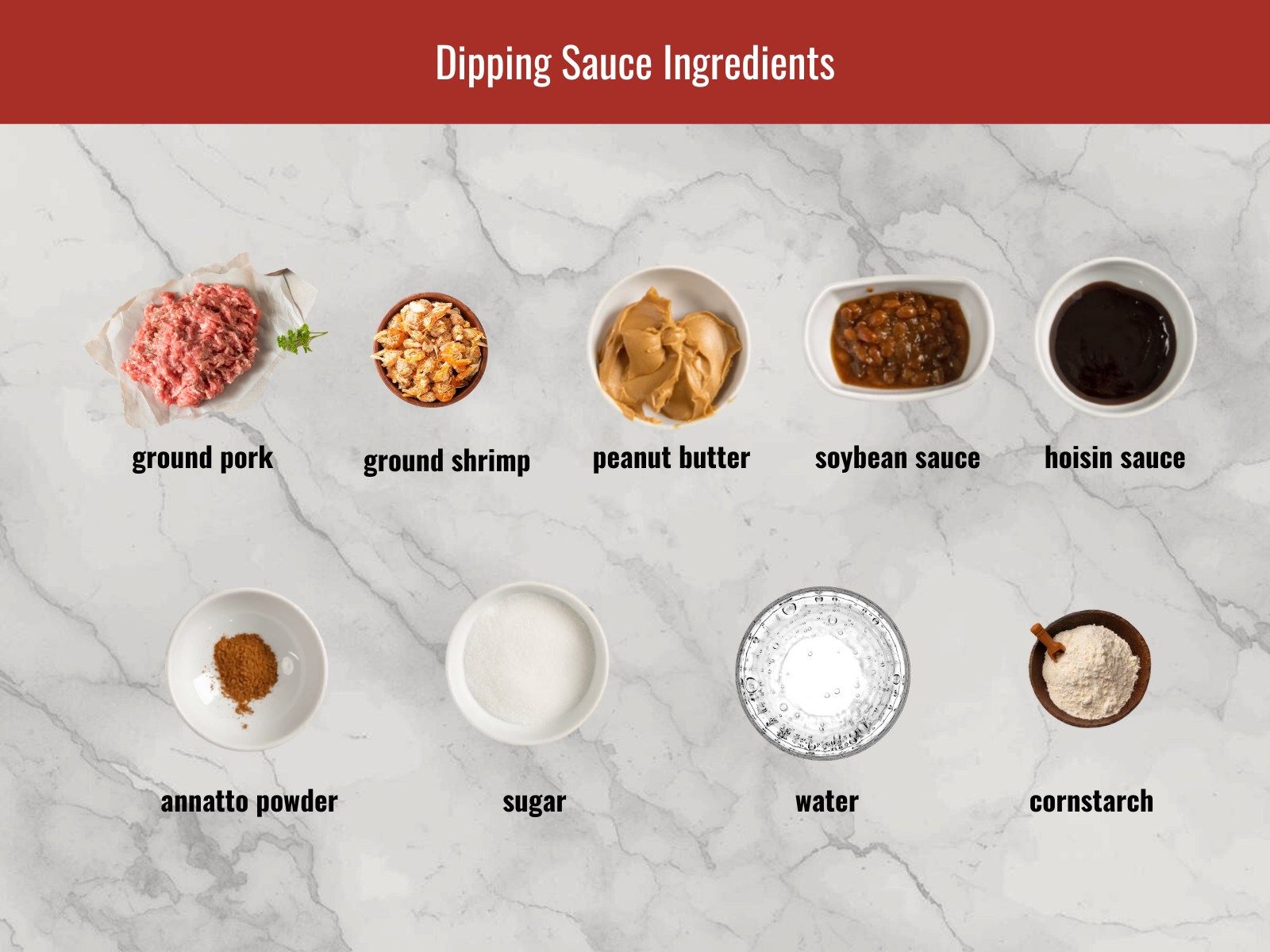
Dipping Sauce (Nước Chấm Nem Nướng)
- 7 oz (200 g) ground pork, simmered right into the sauce to give it some real body.
- 5.3 oz (150 g) ground shrimp, which adds a sweet, briny flavor you just can't get from pork alone.
- 1 tbsp neutral oil.
- 3.5 oz (100 g) peanut butter, to thicken the sauce and make the texture smooth and velvety.
- 8.8 oz (250 g) soybean sauce (tương hột). This is the savory backbone of the sauce. Cholimex or any similar brand works great.
- 3.5 oz (100 g) hoisin sauce, for extra sweetness and a deeper color.
- 1 tsp annatto powder, just for another pop of color.
- 2 tbsp sugar.
- 10 fl oz (300 ml) of water.
- 1 tsp cornstarch, to get the sauce to the perfect dipping consistency, thick but still easy to spoon out.
- Chopped chili, fried shallots, and crushed peanuts to scatter on top right before you serve it.
With the meat and sauce ready, the rest is just about picking fresh, contrasting ingredients for wrapping. Look for crisp, fragrant herbs, then set everything out so everyone can build their own rolls.
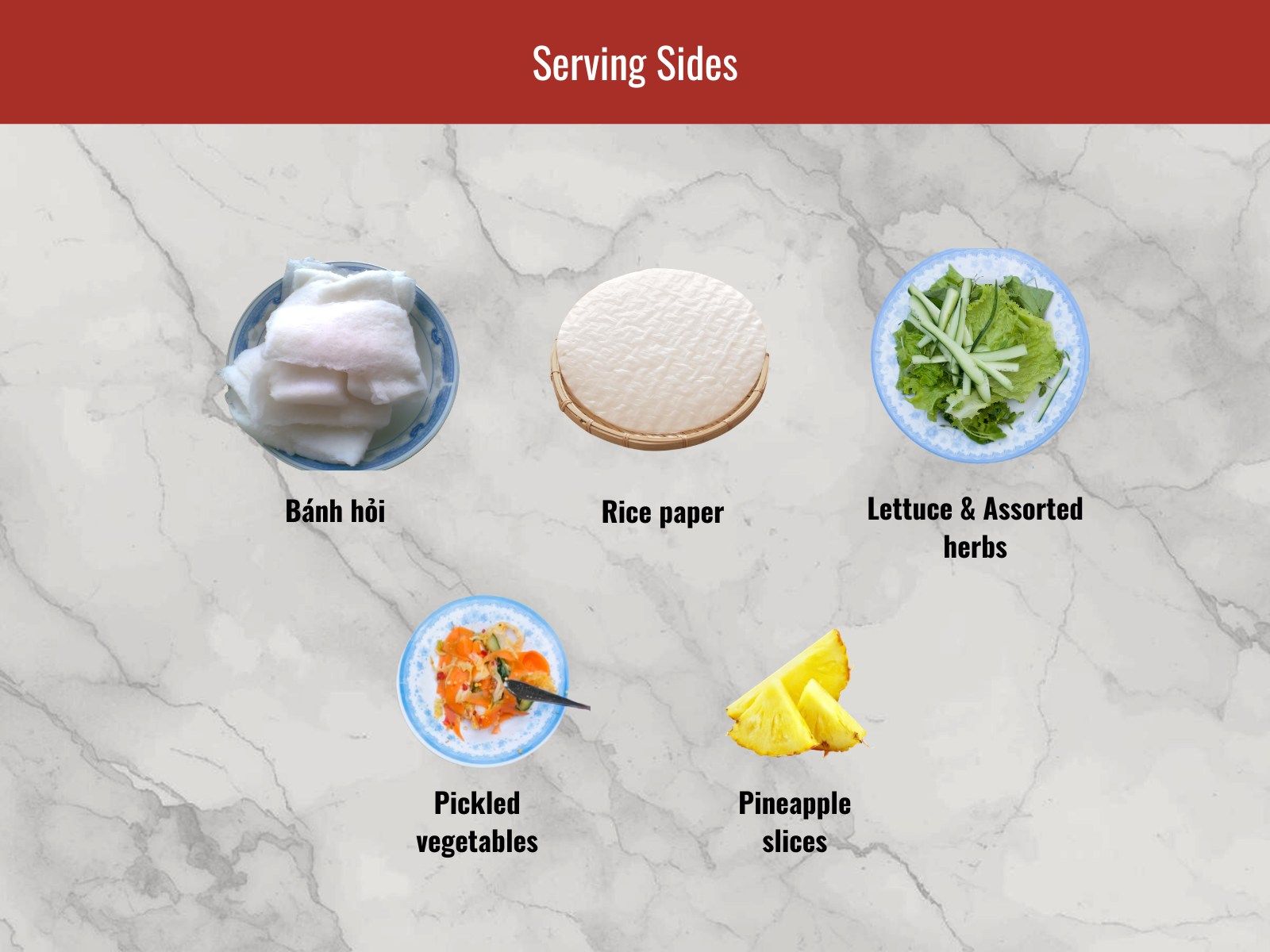
Serving Sides
- Bánh hỏi (woven rice vermicelli sheets)
- Rice paper (bánh tráng)
- Lettuce
- Assorted herbs (rau thơm: perilla, mint, sorrel, garlic chives)
- Cucumber
- Pickled vegetables (đồ chua)
- Pineapple slices, if you like a little extra sweetness in your wrap
How to Make Nem Nuong Step by Step
Making nem nuong takes 17 main steps and about 5 hours 30 minutes, including 1 hour 15 minutes of preparation, 45 minutes of cooking, and 3 hours 30 minutes of chilling and resting. The recipe makes approximately 20 large skewers.
Steps 13 through 17 for the dipping sauce can be completed while the pork rests in Step 8, even though they appear later in the recipe for easier reading.
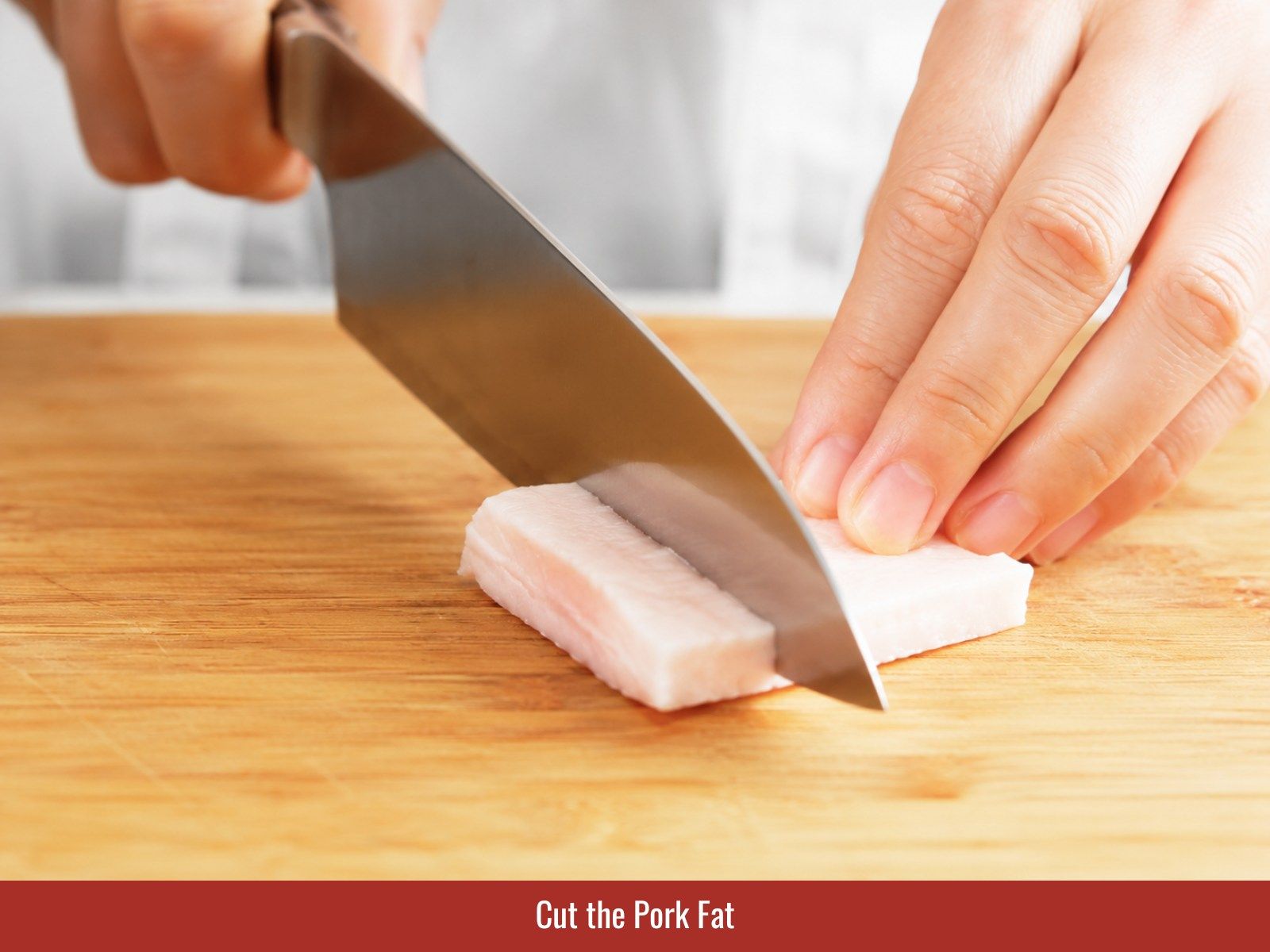
Step 1: Cut the Pork Fat
Cut 8.8 oz (250 g) pork back fat into evenly sized cubes about the size of a small pea. Uniform pieces distribute more evenly through the pork paste and help prevent large pockets of rendered fat.
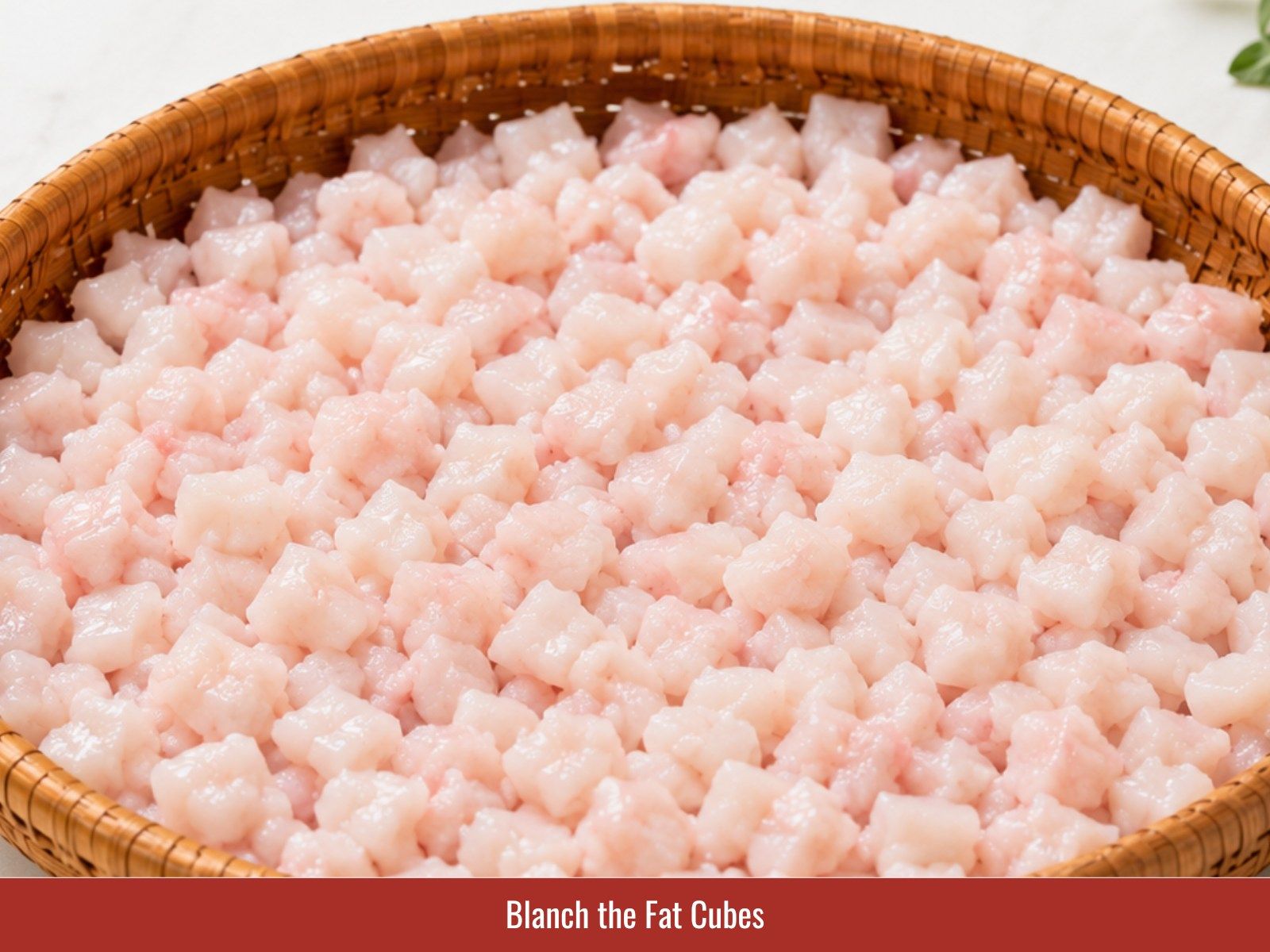
Step 2: Blanch the Fat Cubes
Add the pork fat cubes to boiling water and blanch for 2 to 3 minutes, just until the outside firms. Drain immediately and pat them thoroughly dry with paper towels. This quick blanch removes the raw pork smell and helps the cubes hold their shape later.
The fat is not fully cooked at this stage. It will finish cooking inside the nem nuong.
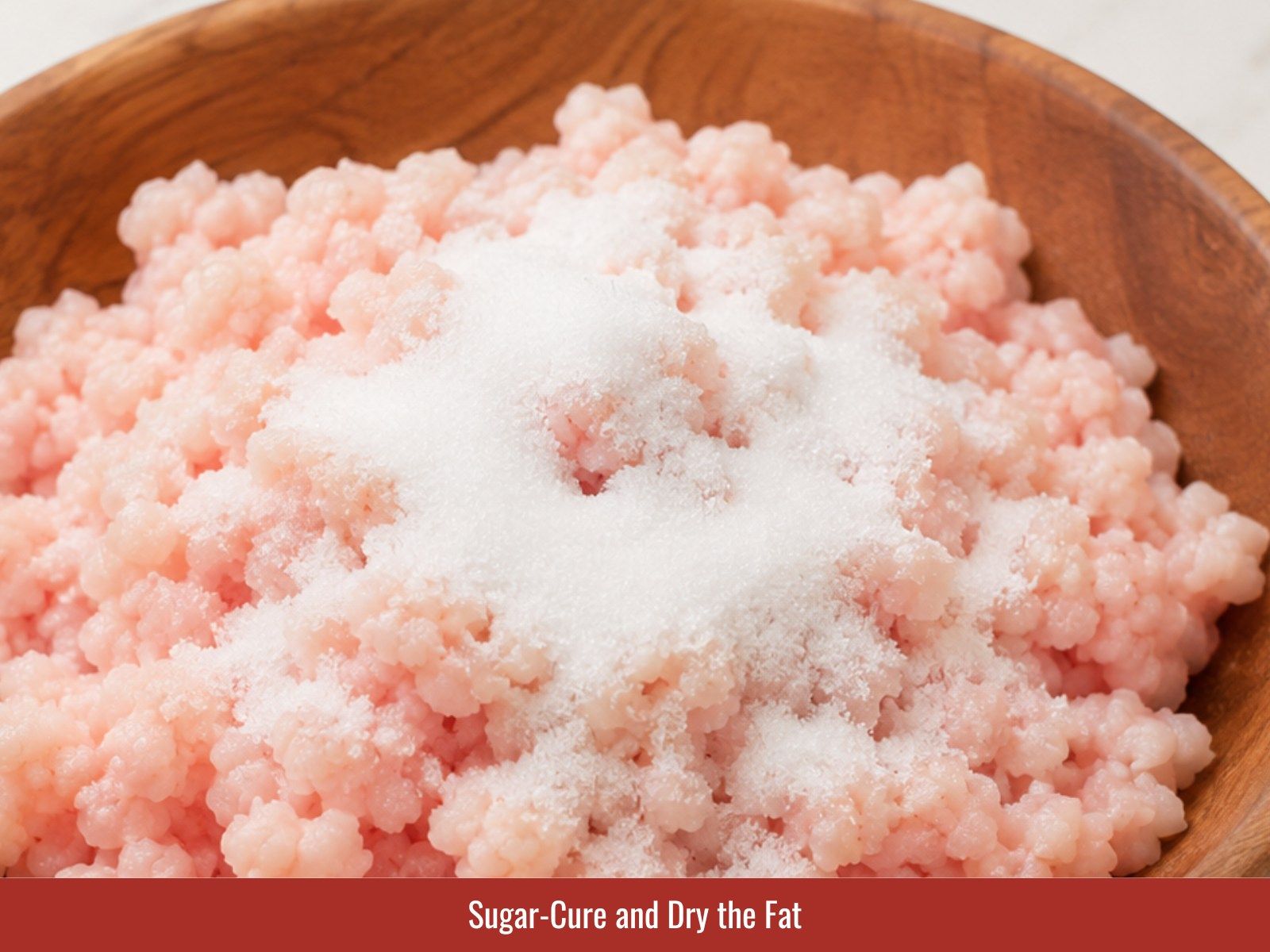
Step 3: Sugar-Cure and Dry the Fat
Toss the blanched fat with about 3 tbsp sugar, then knead gently until every cube is coated. Sun-dry for 1.5 hours, or oven-dry at 250°F (120°C) for the same time, until the cubes turn translucent.
Most English-language recipes skip this step, but it makes a real difference. The sugar draws out moisture, so the fat stays firmer after grilling and gives each bite that small, sweet, juicy pop.
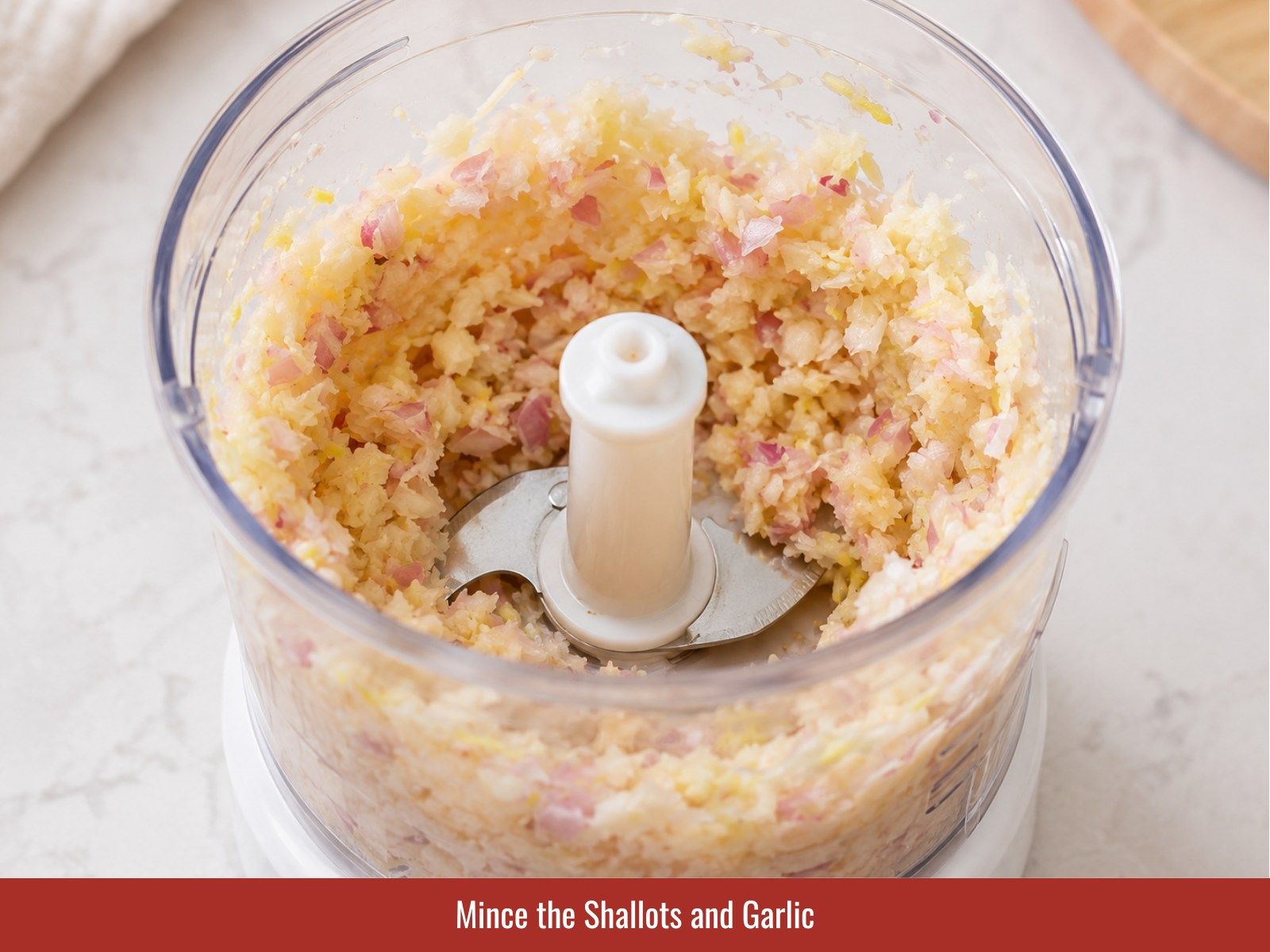
Step 4: Mince the Shallots and Garlic
Combine 2.5 oz (70g) shallots and 1.8 oz (50g) garlic in a food processor and pulse until finely minced, then reserve a small spoonful for the dipping sauce. The rest will go straight into the pork paste.
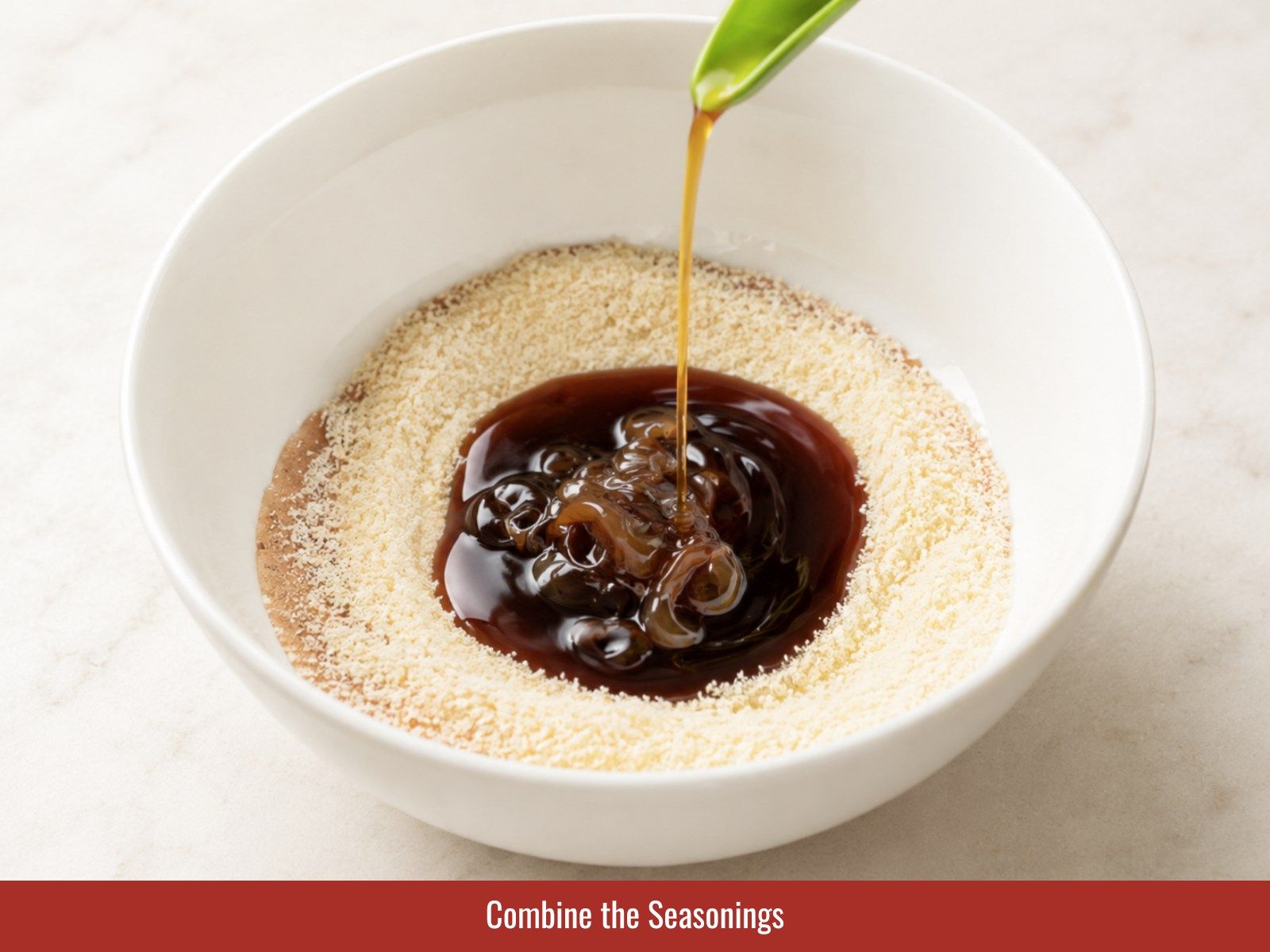
Step 5: Combine the Seasonings
In a bowl, stir together 2 tbsp fish sauce, 2 tbsp seasoning powder, 2 tbsp condensed milk, 2 tbsp oyster sauce, 1 tsp annatto powder, 1 tsp pepper, and 1 tsp five-spice powder until combined.
You can use CHIN-SU anchovy fish sauce for a rounded savory base, then adjust the seasoning to taste.
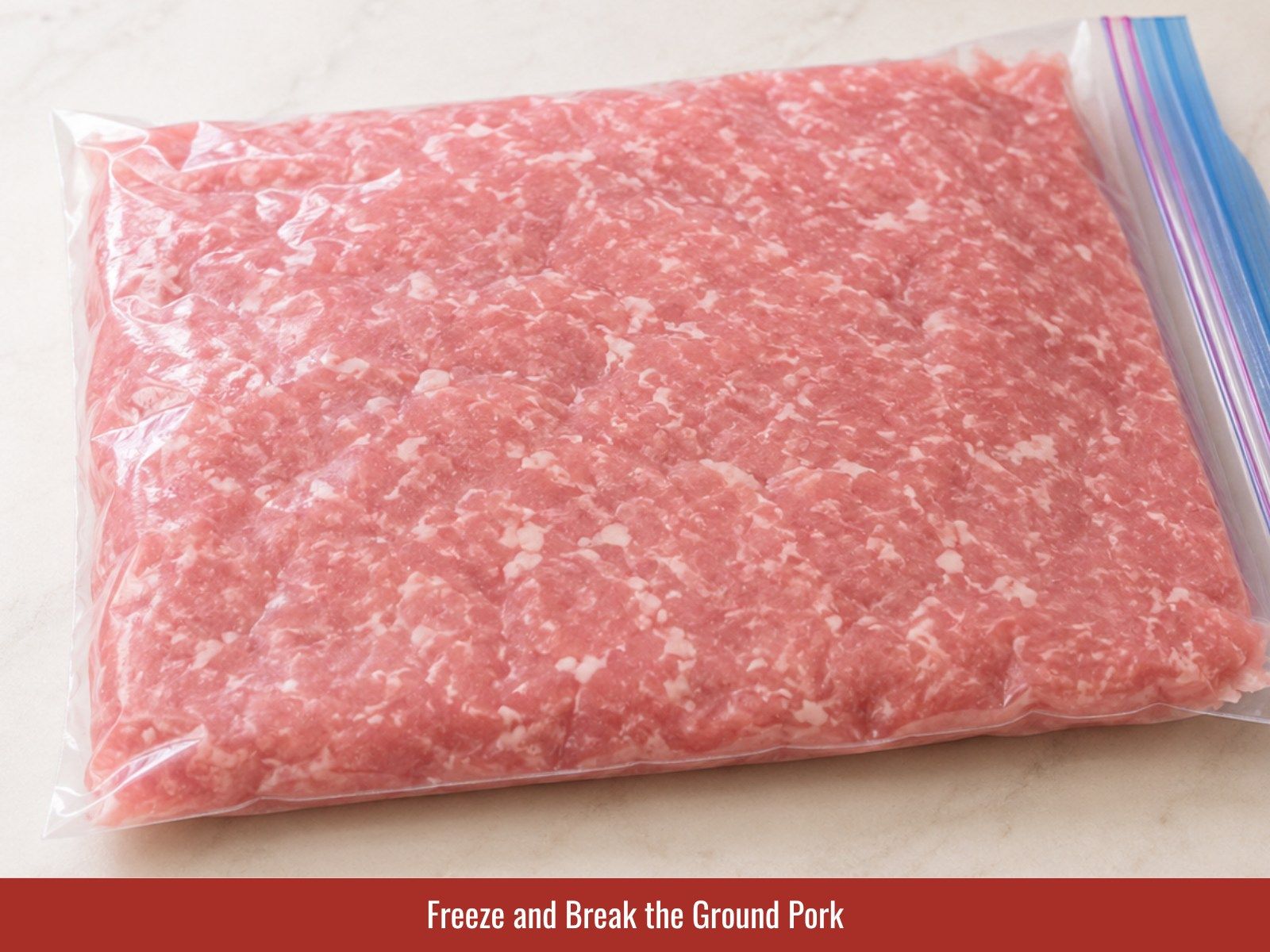
Step 6: Freeze and Break the Ground Pork
Spread 3.3 lb (1.5 kg) ground pork in a shallow layer and freeze for 30 to 45 minutes, until the edges are firm but the meat remains flexible enough to break apart. Do not freeze it solid.
Chill the stand-mixer bowl and paddle attachment at the same time. Keeping the pork and equipment cold helps prevent the fat from smearing and supports a smooth, springy texture.
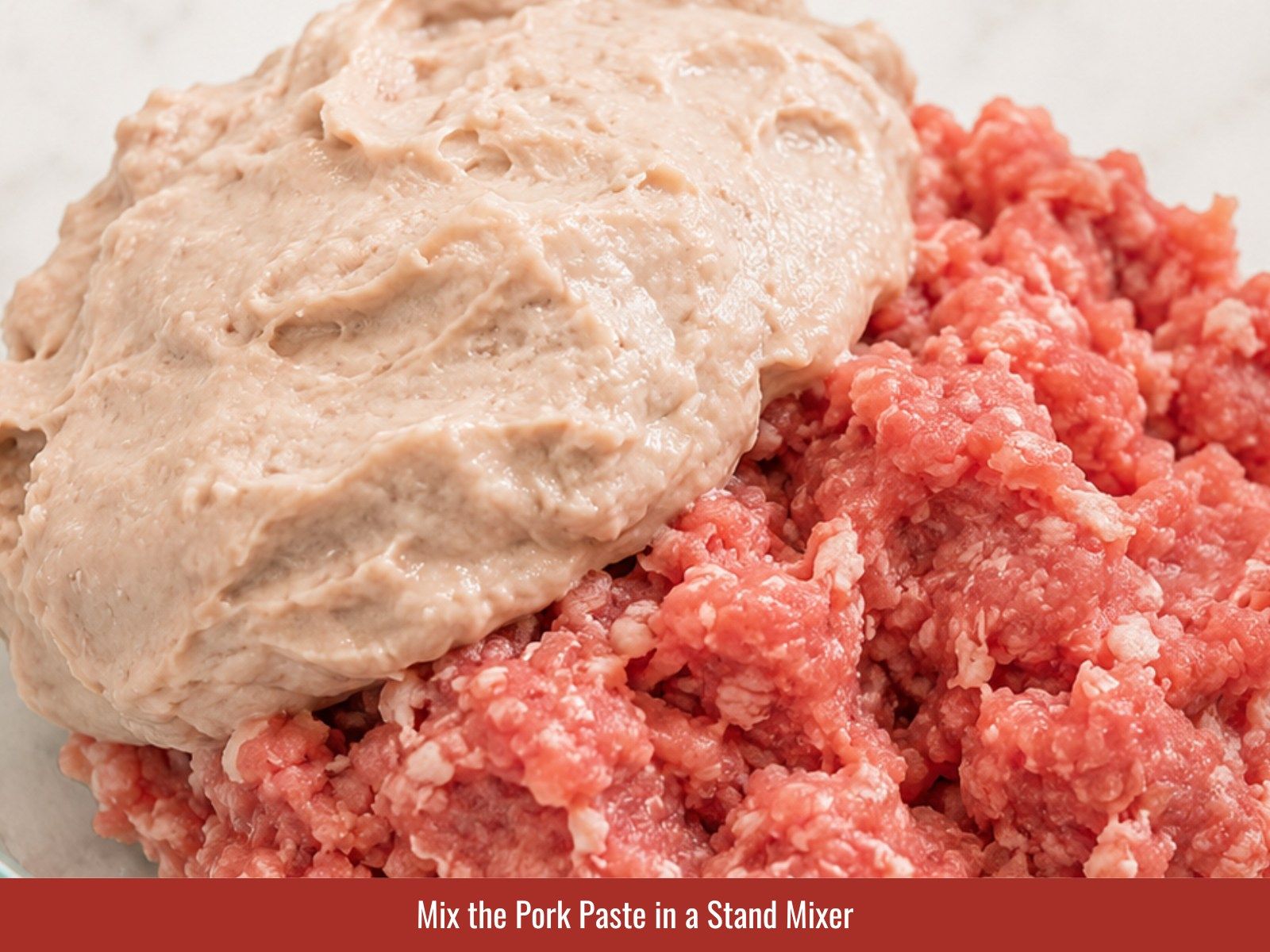
Step 7: Mix the Pork Paste in a Stand Mixer
Place the chilled ground pork and 1.1 lb (500 g) giò sống in the cold mixer bowl. Mix on speed 1 for 1 minute. Gradually add the minced aromatics and seasoning mixture, then increase to speed 2 and mix for 2 minutes.
Add 3 tbsp tapioca starch, followed by the chilled mỡ đường. Mix on speed 3 for another 2 to 3 minutes, just until the paste becomes tacky, cohesive, and slightly glossy, with the fat cubes evenly distributed.
This process is related to quết thịt, the Vietnamese technique of repeatedly pounding or mixing meat to develop a firm, springy texture. Stop when the paste feels sticky, holds its shape, and begins to pull away from parts of the bowl without smearing the fat. If it becomes warm or greasy, refrigerate the bowl for 15 to 20 minutes before continuing.
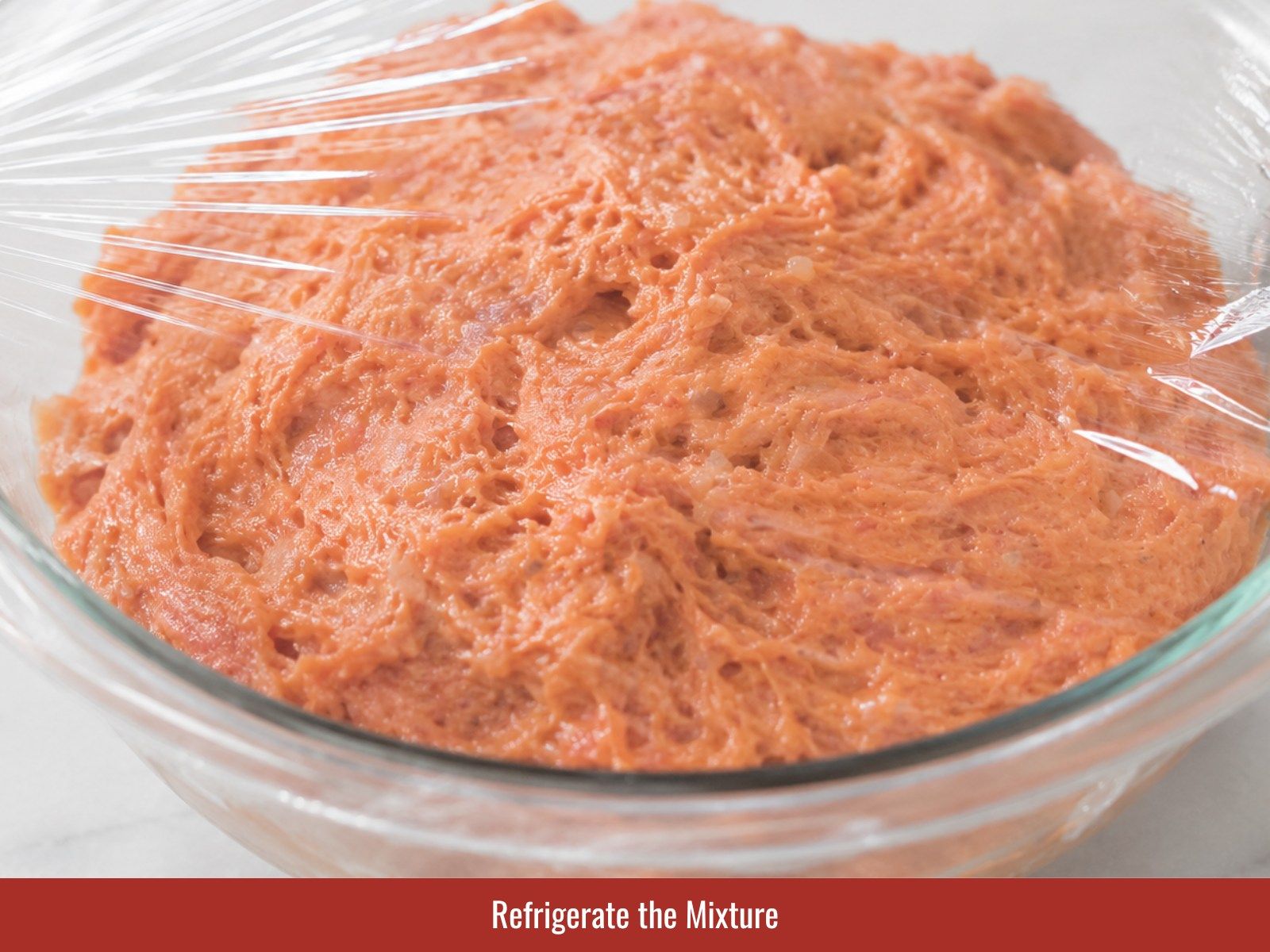
Step 8: Refrigerate the Mixture
Transfer the pork mixture to a covered container and refrigerate for 2 to 4 hours. Chilling firms the paste, distributes the seasoning more evenly, and makes it easier to shape around the skewers.
Keep the mixture refrigerated until ready to shape. Use or freeze the raw pork mixture within 1 to 2 days.
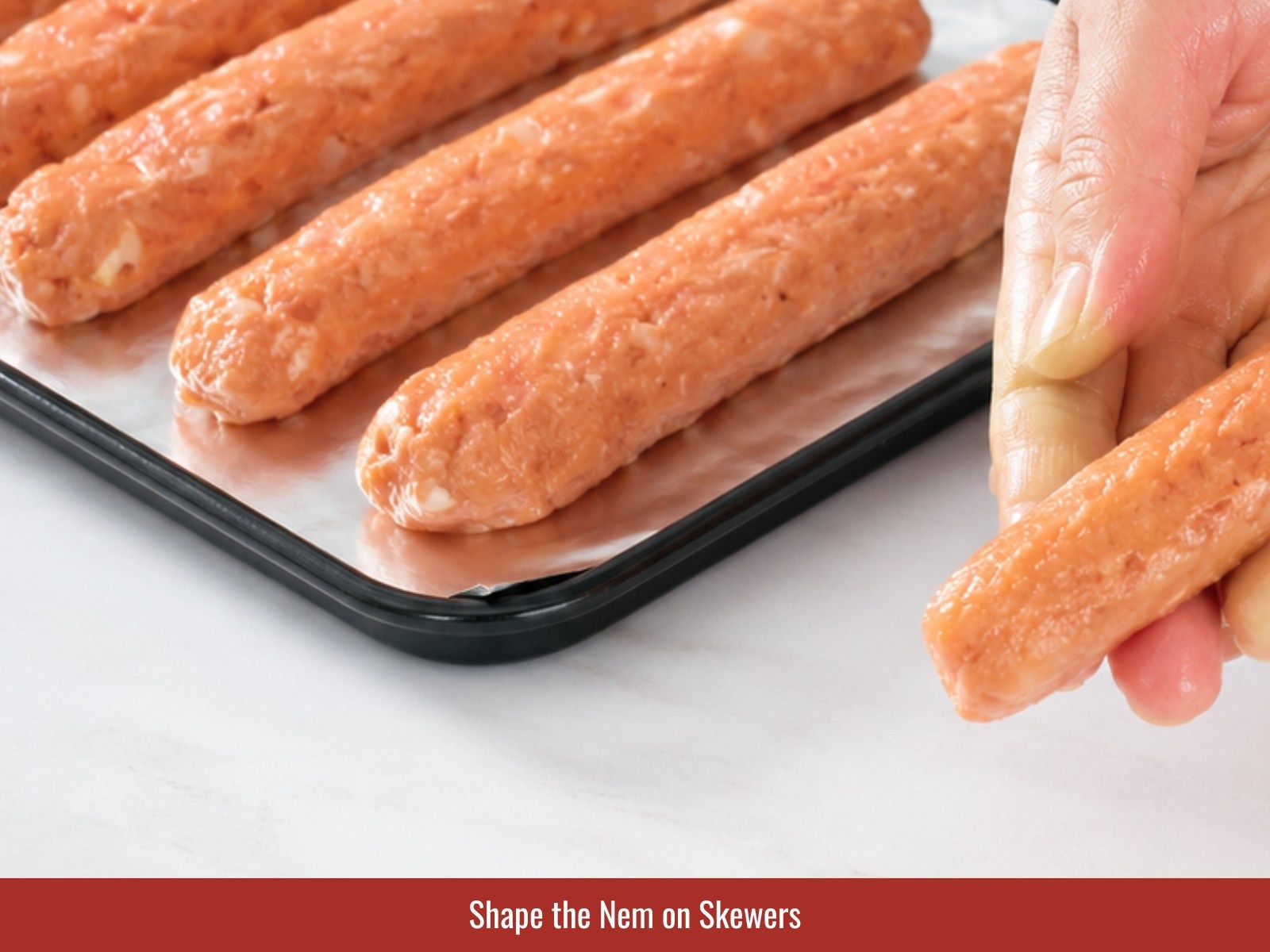
Step 9: Shape the Nem on Skewers
Soak bamboo skewers in water for 30 minutes when grilling over charcoal. Soaking is optional for oven cooking.
Lightly oil your hands or use a sheet of plastic wrap. Portion about 4 oz (110 g) of pork mixture for each large skewer, then press it evenly around the skewer to form a smooth cylinder. Keep the thickness even so the center cooks at the same rate as the ends.
Place each shaped skewer on a lined tray and refrigerate it while you finish the rest. This method of shaping meat around skewers for grilling is known as nướng lụi.
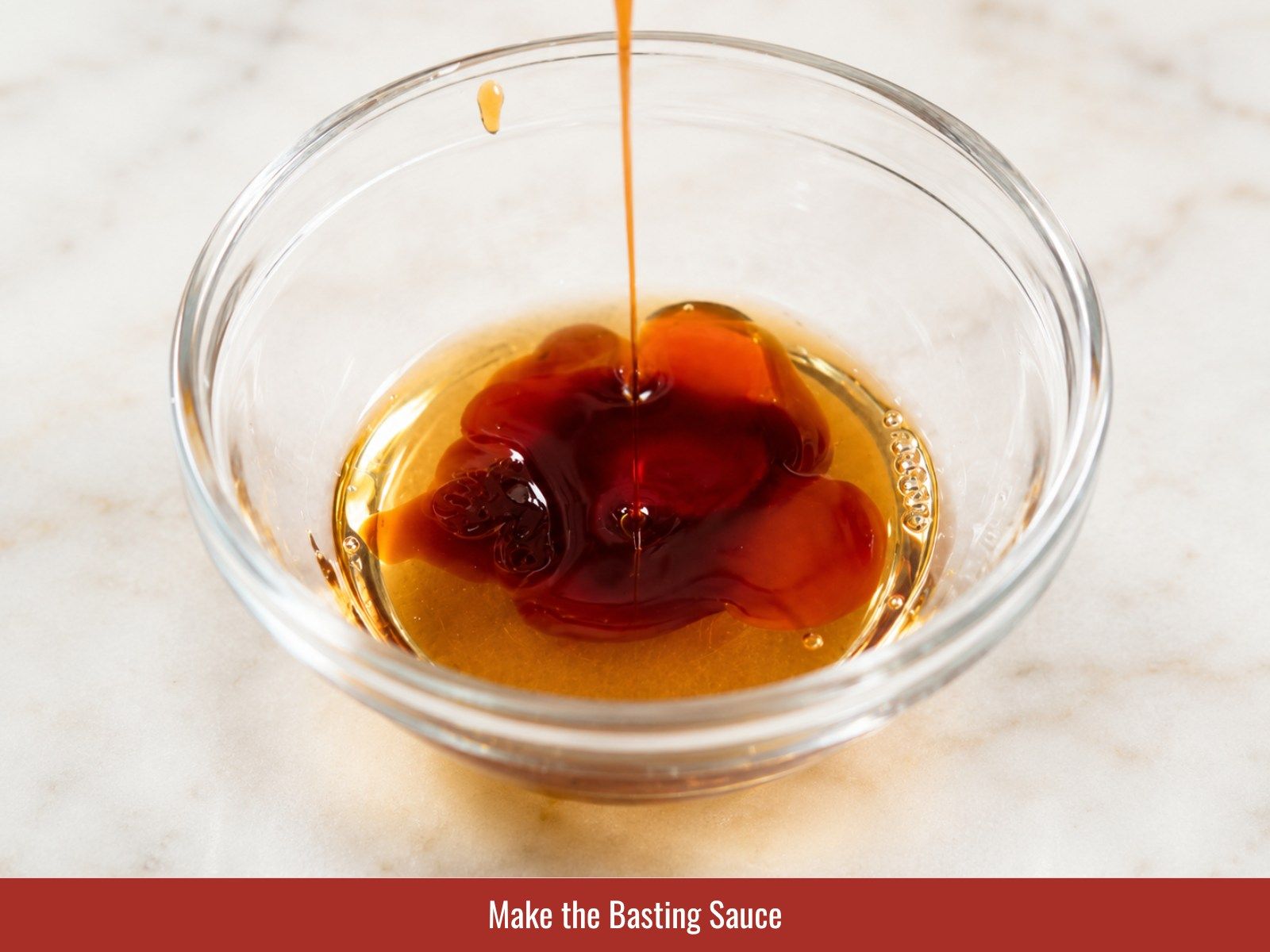
Step 10: Make the Basting Sauce
Whisk together 1 tbsp honey, 1 tbsp water, ½ tbsp oyster sauce, and 1 tbsp annatto oil until smooth. Set the glaze aside and brush it onto the skewers near the end of cooking for color and caramelization. Adding it too early may cause the honey to darken before the pork is fully cooked.
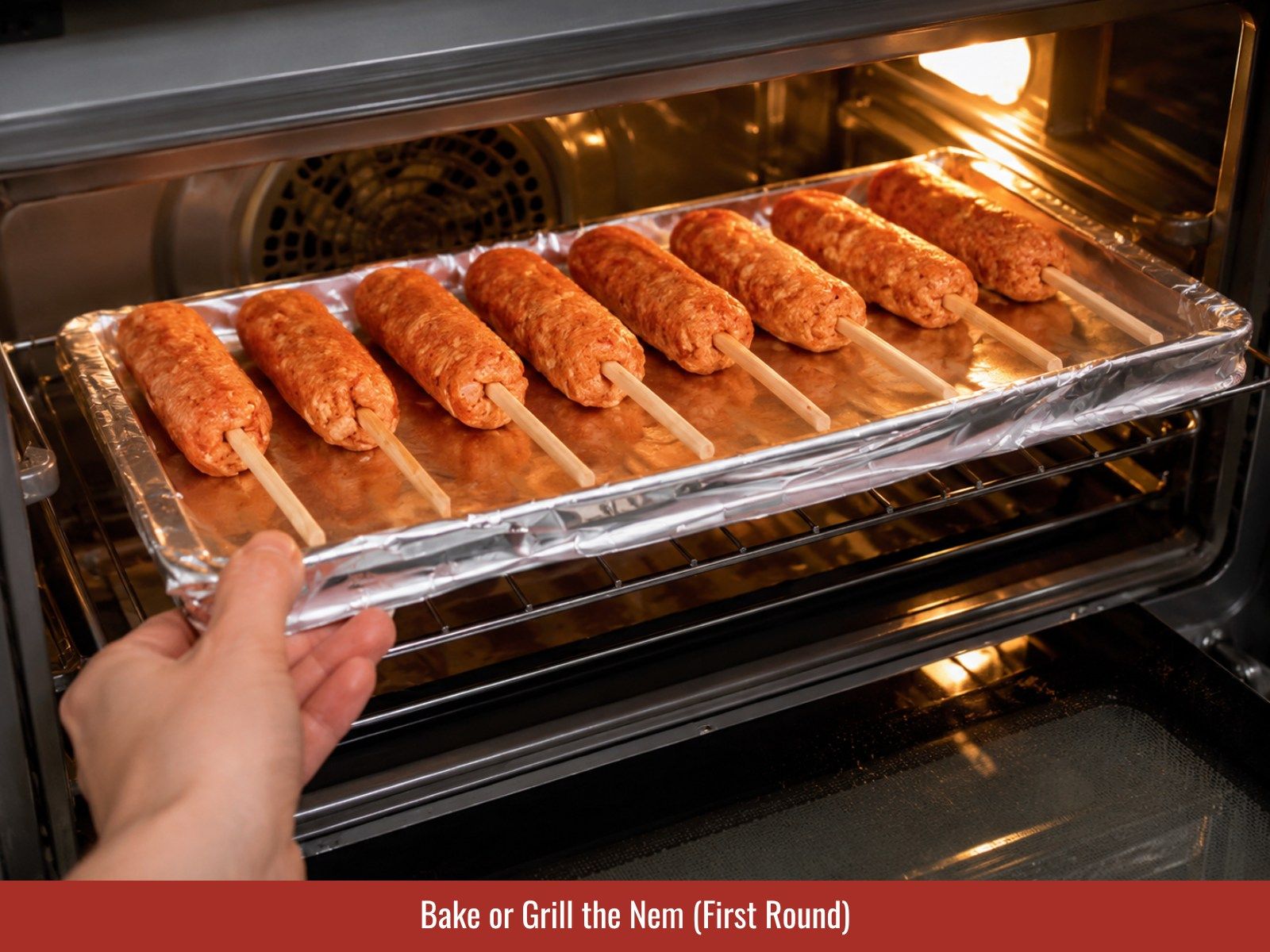
Step 11: Bake or Grill the Nem (First Round)
For charcoal grilling, prepare a medium-hot fire with both direct and cooler zones. Grill the skewers over direct heat for about 10 to 12 minutes, turning every 2 to 3 minutes. Move them to the cooler side if the surface browns before the centers cook through.
For oven cooking, preheat the oven to 400°F (205°C). Arrange the skewers on a rack set over a lined baking sheet. Bake for 10 minutes, turn them, then continue cooking for another 8 to 12 minutes.
Cooking time varies with the thickness of the “nem” and the heat of the oven or grill.
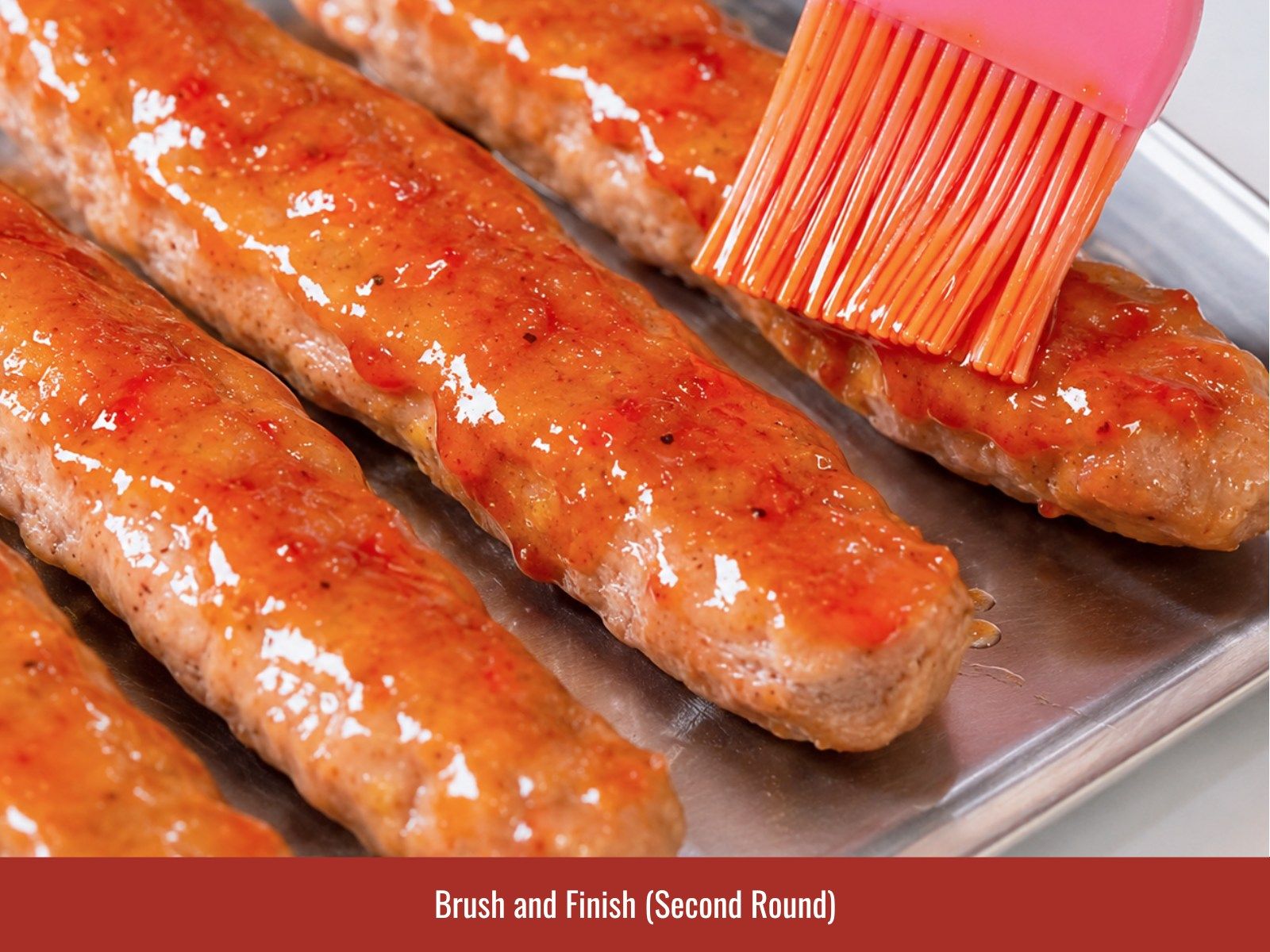
Step 12: Brush and Finish (Second Round)
Brush the basting sauce evenly over the skewers, then return them to the oven for 5 more minutes per side. The honey caramelizes the surface into a glossy golden-brown crust. You'll know it's done when the outside is firm and golden with no pink left when you slice one open.
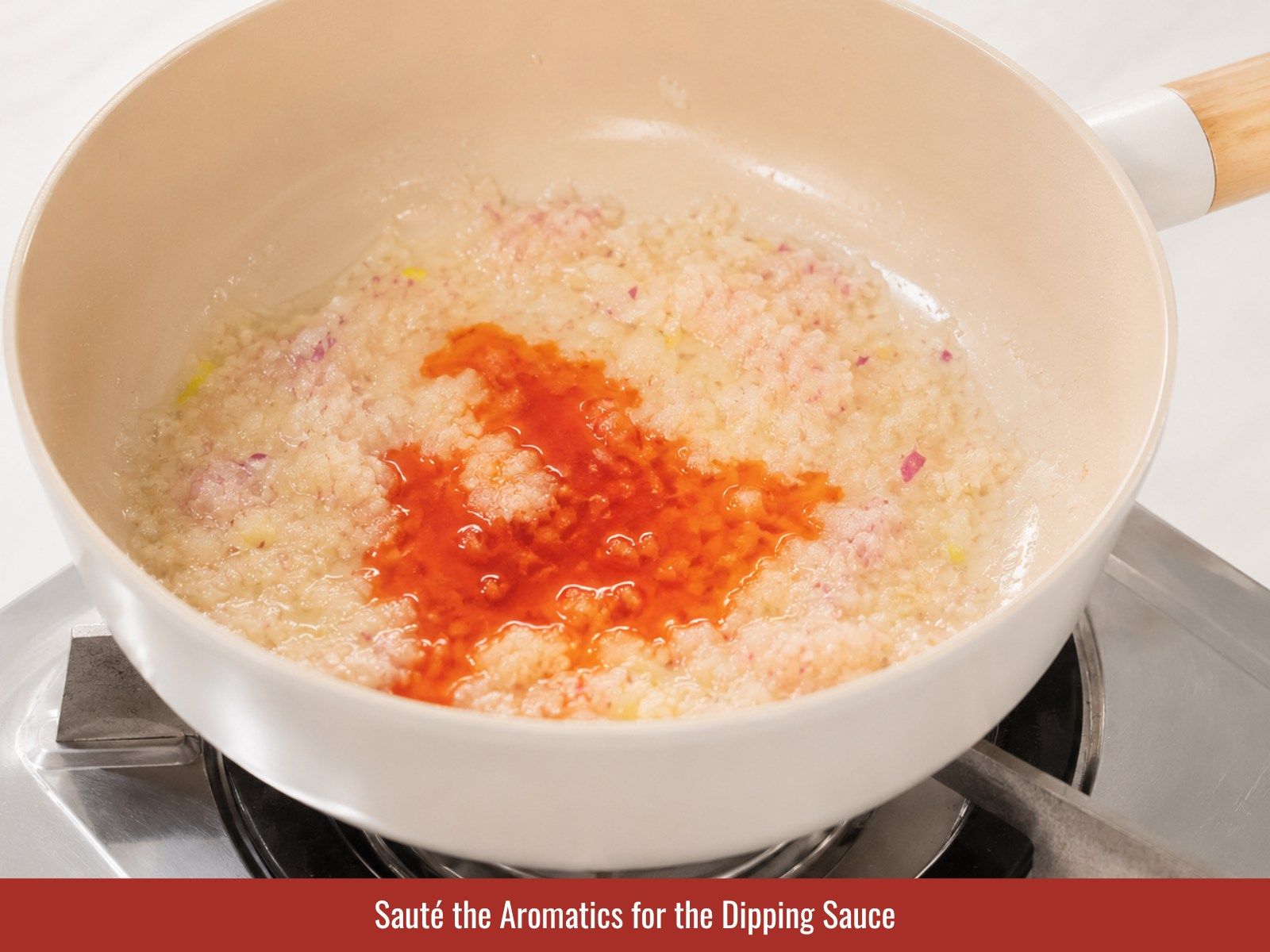
Step 13: Sauté the Aromatics for the Dipping Sauce
Heat 1 tbsp oil in a saucepan over medium heat. Add 1 tbsp of the reserved minced garlic and shallots, then cook for about 30 seconds, just until fragrant. Avoid browning the garlic deeply, as it may turn bitter while the sauce simmers.
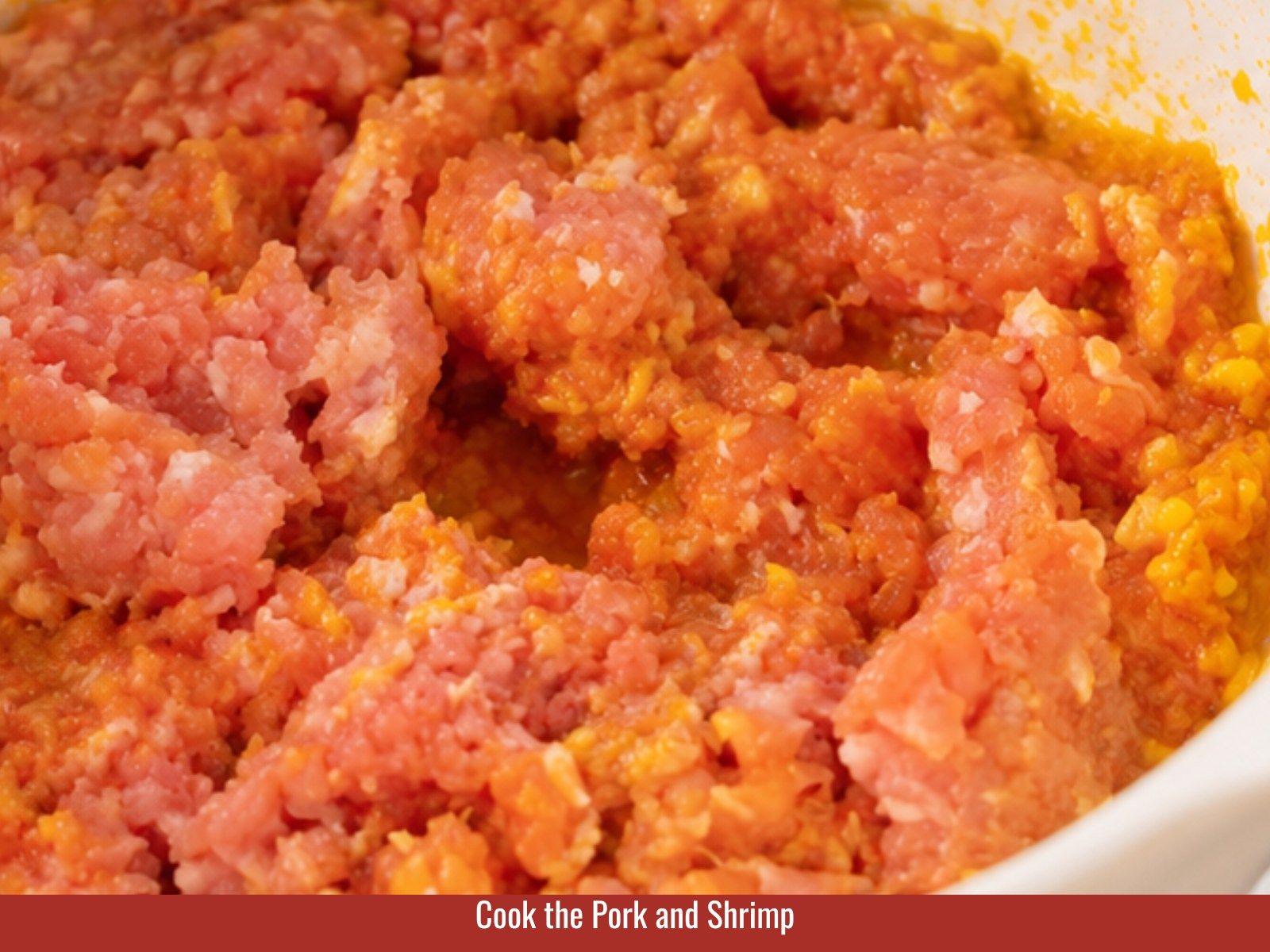
Step 14: Cook the Pork and Shrimp
Add 7 oz (200 g) ground pork and break it into small pieces. Cook until no raw sections remain and the pork reaches 160°F (71°C).
Add 5.3 oz (150 g) ground shrimp and cook for about 2 minutes, until firm and opaque. The pork gives the sauce body, while the shrimp adds mild sweetness and seafood flavor.
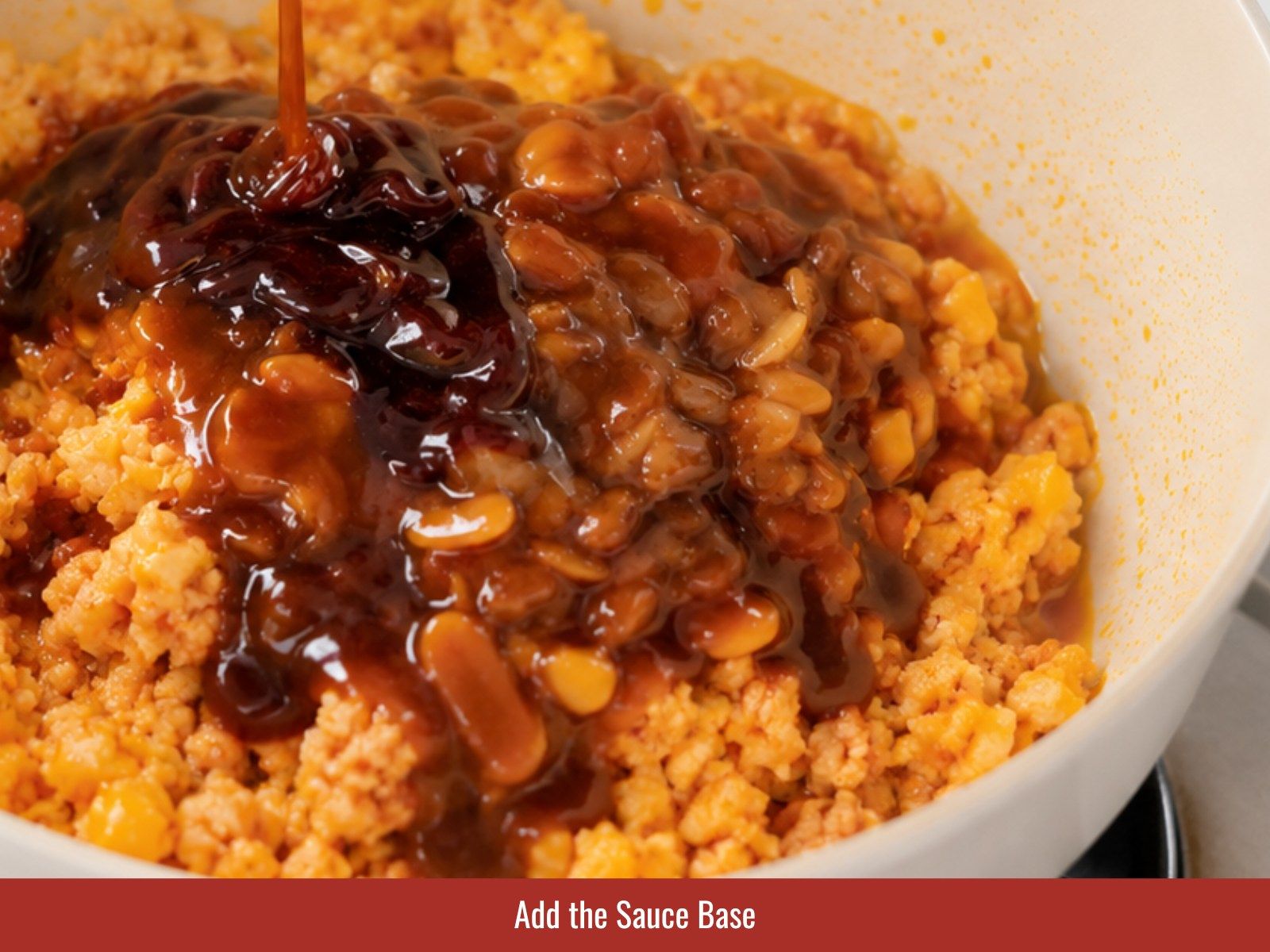
Step 15: Add the Sauce Base
Pour in 1 jar (~8.8 oz / 250g) of soybean sauce (tương hột), 3.5 oz (100g) of hoisin sauce, 3.5 oz (100g) of peanut butter, and 10 fl oz (300ml) of water, then add 2 tbsp of sugar. Stir it all up and let it come to a simmer over medium heat.
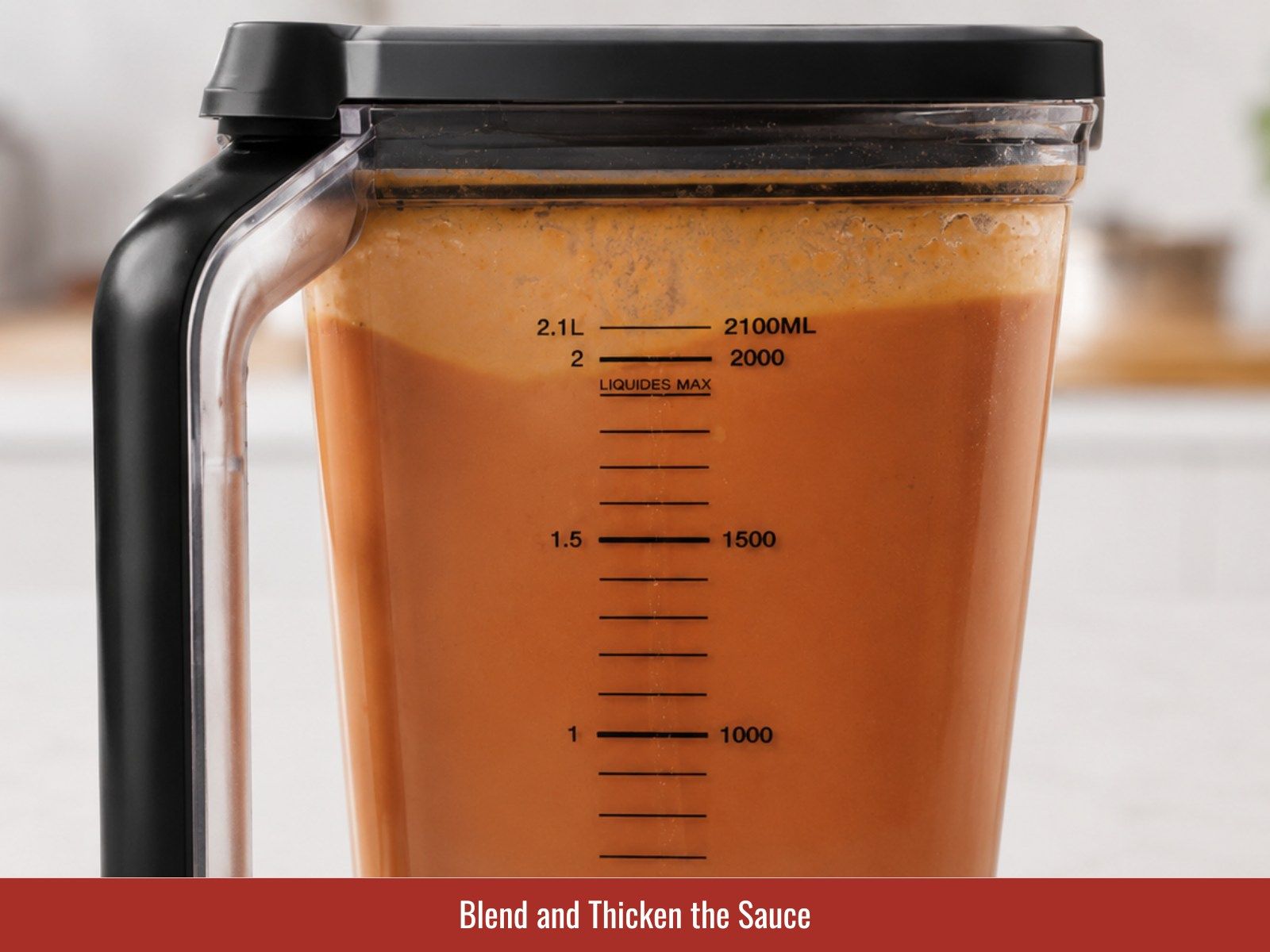
Step 16: Blend and Thicken the Sauce
Pour the sauce into a blender and blend it until it turns completely smooth, then put it back in the pot. Mix 1 tsp cornstarch with a little splash of water, then stir this slurry over low heat until the sauce gets a bit thicker. Keep in mind it will thicken up even more as it cools down.
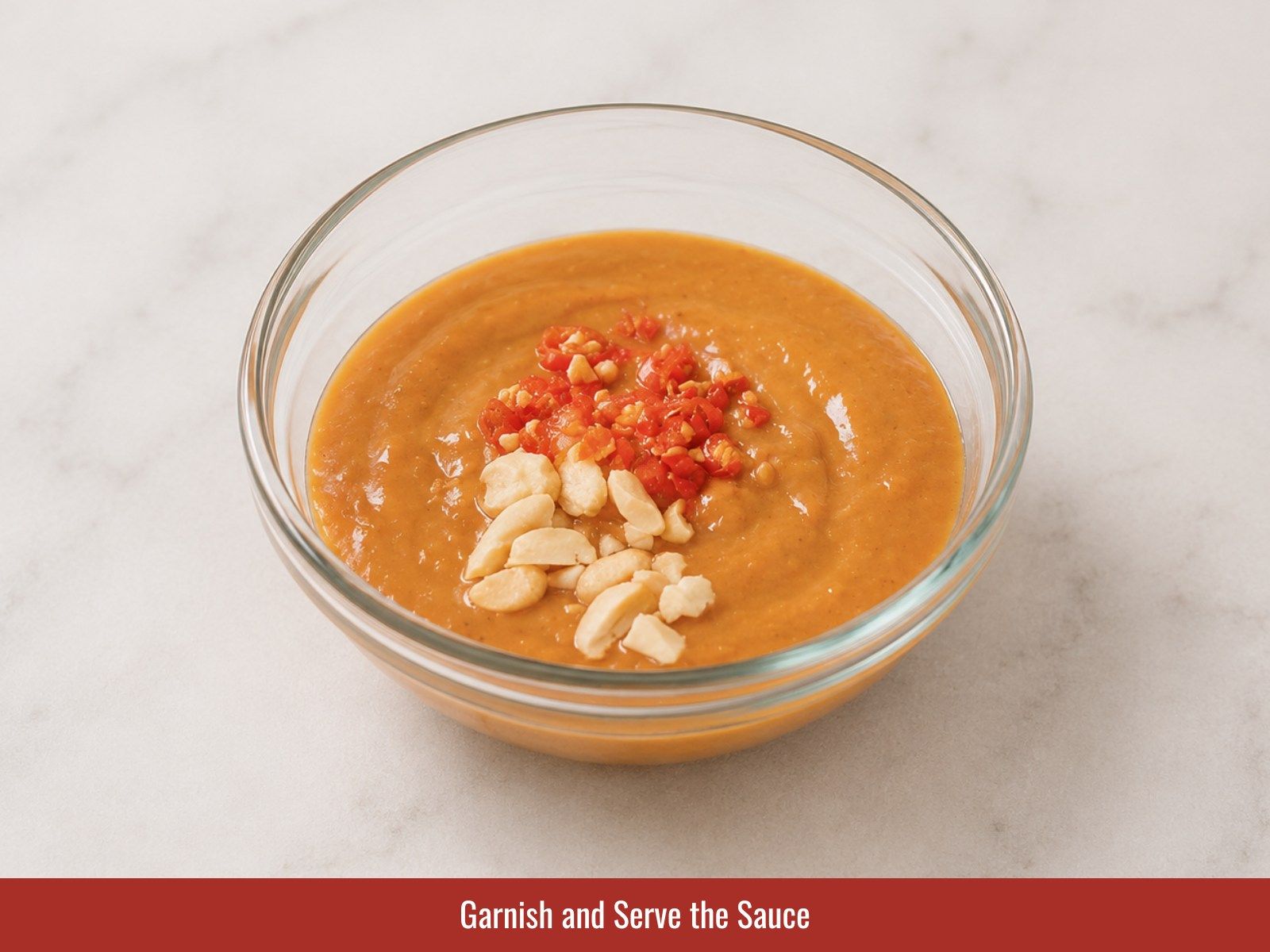
Step 17: Garnish and Serve the Sauce
Top the sauce with some chopped chili, fried shallots, and crushed peanuts right before you set it out. The final sauce should turn out perfectly savory-sweet, with a rich, nutty flavor from the peanut butter and a light hint of shrimp, showing off a nice light brown color that is just salty enough to flavor every single bite without being way too strong on its own.
This soybean and peanut sauce adds richness to the dish, but it requires more ingredients and cooking time. For a lighter dipping sauce that is quicker to prepare, see our Vietnamese nước chấm recipe, made with fish sauce, lime juice, sugar, water, garlic, and chili.
How to Serve Nem Nuong?
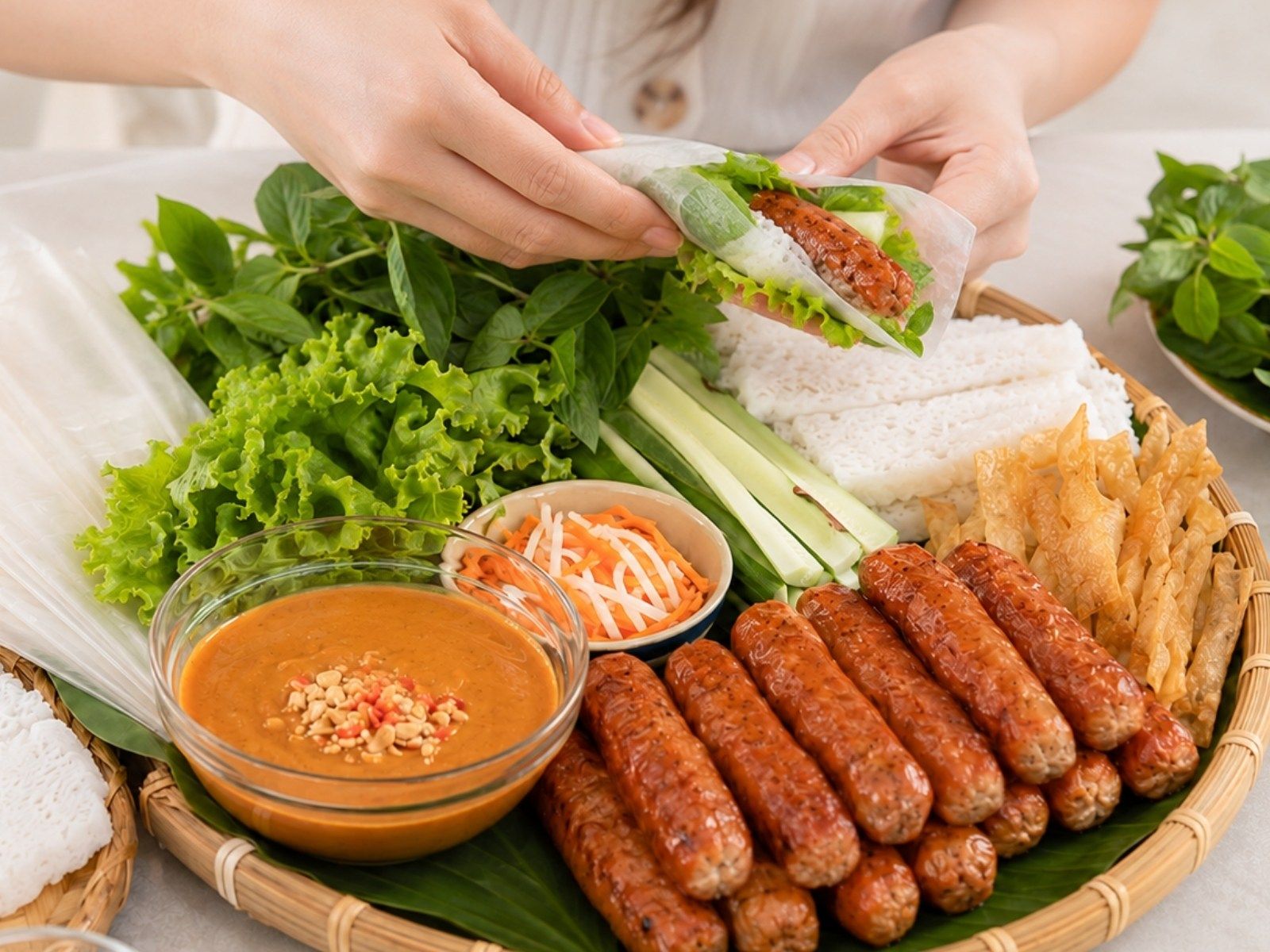
Serve nem nuong as a shared wrap platter with the grilled pork, crisp fried rice paper, rice paper sheets, herbs, cucumber, sour fruit, pickles, and dipping sauce arranged separately at the center of the table.
To assemble one roll:
- Soften the rice paper only when required by its package;
- Add lettuce and several herbs;
- Add cucumber, pickled vegetables, and green mango or starfruit;
- Place one piece of nem nuong on top;
- Add one strip of fried rice paper;
- Fold in the sides and roll tightly;
- Dip one end into the pork-shrimp sauce.
Traditional Khánh Hòa accounts describe locally produced rice paper that did not require soaking. Commercial rice-paper products differ in thickness and starch composition, so briefly dip only the sheets that require hydration.
The crisp fried wrapper is not merely a garnish. Its brittle crunch contrasts with the springy pork, chewy rice paper, juicy cucumber, sour fruit, and thick sauce, helping distinguish a Ninh Hòa-style roll from a basic fresh spring roll.
Nem nuong can also be served:
- With bánh hỏi;
- Over rice vermicelli as bún nem nướng;
- Inside bánh mì;
- As individual patties without skewers;
- As preassembled rice-paper rolls.
Place CHIN-SU Hot Sauce at the table for diners who want additional mild chỉ thiên chili and fermented-garlic heat. Keep it as an optional condiment rather than mixing it into the shared dipping sauce.
Tips For the Best Nem Nuong
These are 5 small choices that make the difference between good nem nuong and great nem nuong.
- Keep the pork cold the whole time you mix. Keep the pork semi-frozen before mixing to prevent the fat from warming up; this helps the paste stay firmer and springier. If the fat warms up, it can smear into the mixture, leaving the sausage with a grainy texture.
- Sugar-cure the pork fat properly. This ensures the fat pieces stay crisp and juicy inside the grilled sausage. If you skip this step, the fat melts out more easily, and the sausage loses part of its signature bite.
- Soak the bamboo skewers before grilling. 30 minutes in water helps protect the skewers from burning over the coals. If you are baking the nem nuong in the oven, you can skip this step.
- Brush the basting sauce only in the last 5 to 10 minutes. Honey burns quickly, so glazing too early yields a bitter char instead of a golden, caramelized finish.
- Mix longer, not harder. 5 to 6 minutes in a stand mixer is the floor for that springy bounce. If the paste is under-mixed, the cooked sausage can turn loose or crumbly.
What Can You Substitute or Change in Vietnamese Grilled Pork Sausage?
These substitutions help you make nem nuong with US grocery store ingredients without losing the dish's core flavor. Some swaps will slightly change the texture, color, or smoky finish, but they still keep the sausage savory, juicy, and easy to serve at home.
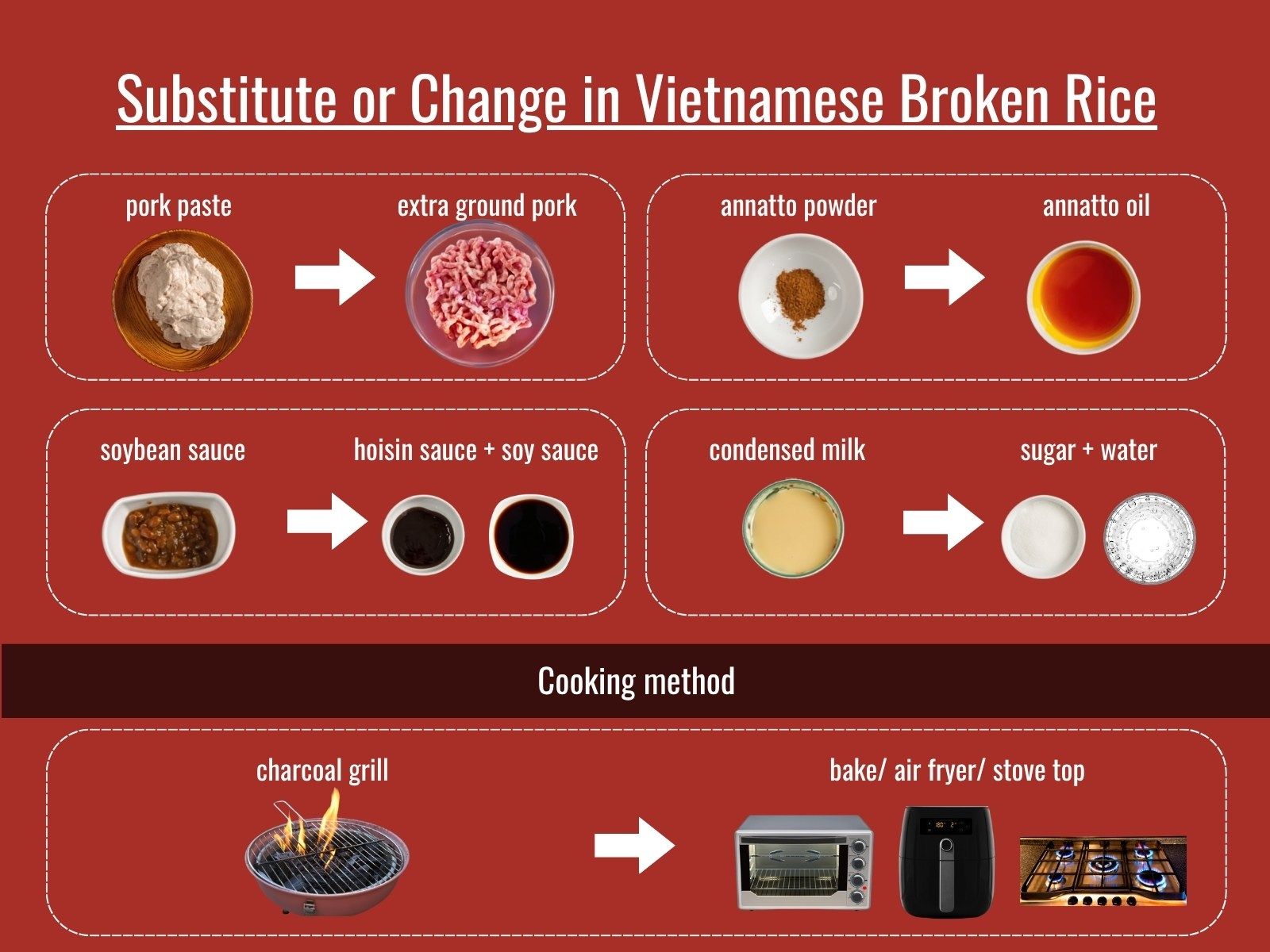
- Use extra ground pork instead of pork paste (giò sống). The sausage will lose some of its springy bounce, but it can still hold together if you mix it well and keep the pork cold. Most Asian grocery stores carry the paste frozen if you'd rather not swap.
- Use hoisin sauce with a splash of soy sauce instead of soybean sauce (tương hột). This makes the dipping sauce slightly sweeter and less savory-deep. Cholimex sauce is still worth buying if you can find it at an Asian market.
- Use annatto oil instead of annatto powder. Warm 1 tbsp seeds in 2 tbsp oil over low heat for 3 minutes, then strain for a brighter color. You can also skip this step since it changes the color more than the flavor.
- Use 1 tbsp sugar and 1 tbsp water instead of condensed milk. This keeps the gentle sweetness, though you lose some of the browning help that condensed milk gives on the grill.
Cooking Method Alternatives
- Bake instead of grilling over charcoal. Use a 380°F (190°C) oven and bake for 15 minutes per side. You will lose some of the smoky char from the grill, but the oven gives you a steadier, easier cook.
- Use an air fryer when you want it faster. Cook at 375°F (190°C) for 12 to 15 minutes, turning halfway through. The outside still browns nicely, and the cleanup is much lighter than grilling.
- Cook on the stovetop if that is what you have. Heat a pan over medium heat with 1/2 tsp oil, then turn them every 2 minutes for 10 to 12 minutes. The crust will be firmer and less smoky, but it still works well for a home version.
Make these swaps when you need to, but the closer you stay to the original ingredients, the closer you get to the true Nha Trang nem nuong flavor.
How to Store Vietnamese Grilled Pork Sausage?
Store the pork mixture, cooked skewers, dipping sauce, and fresh accompaniments separately to protect their texture and keep them safe.
- Raw pork mixture: Keep it covered at 40°F (4°C) or below, and cook or freeze it within 1 to 2 days.
- Shaped raw skewers: Freeze them on a tray until firm, then transfer them to freezer-safe packaging. Thaw overnight in the refrigerator before cooking.
- Cooked nem nuong: Refrigerate within 2 hours of cooking and use within 3 to 4 days. Reheat only the amount needed to 165°F (74°C) in an oven, air fryer, skillet, or microwave.
- Pork-shrimp dipping sauce: Transfer it to a separate shallow airtight container, refrigerate within 2 hours, and use within 3 to 4 days. Reheat to 165°F (74°C), adding warm water if it becomes too thick.
- Frozen dipping sauce: The sauce can be frozen, but the peanut and fermented soybean mixture may separate after thawing. Stir or blend it again while reheating.
- Fresh accompaniments: Store the herbs, cucumber, sour fruit, pickles, rice paper, and fried wrappers separately. Keep the fried rice paper away from moist ingredients so it remains crisp.
Have you tried making nem nuong at home yet, or are you still gathering ingredients? Drop your questions, tweaks, or results in the comments below so other home cooks can learn from them too. If this recipe worked for you, a quick star rating helps more people find it. Share your finished nem nuong on social media with #CHINSU, and if you want to try it with CHIN-SU fish sauce or chili sauce, grab a bottle at chinsu.com.
Explore more Vietnamese food recipes and find your next favorite dish.
Nem Nuong
Nem nướng is a Vietnamese grilled pork sausage from Ninh Hòa, made from ground pork, giò sống, and sugar-cured pork fat shaped around skewers. It is honey-glazed and wrapped in rice paper with herbs and a pork-shrimp dipping sauce.
Prep time
1 hr 15 min
Cook time
45 min
Total time
5 hr 30 min
Recipe type
Food
Cuisine
Vietnamese
Method
Grilling
Servings
10
Calories
725 kcal/serving (2 skewers)
Ingredients
Instructions
- 1Step 1: Cut the Pork Fat. Cut 8.8 oz (250 g) pork back fat into even cubes about the size of a small pea.
- 2Step 2: Blanch the Fat Cubes. Blanch the fat cubes in boiling water for 2 to 3 minutes, just until the outside firms. Drain and pat thoroughly dry; the fat finishes cooking inside the nem.
- 3Step 3: Sugar-Cure and Dry the Fat. Toss the blanched fat with about 3 tbsp sugar until coated. Sun-dry for 1.5 hours, or oven-dry at 250°F (120°C) for the same time, until the cubes turn translucent.
- 4Step 4: Mince the Shallots and Garlic. Pulse 70 g shallots and 50 g garlic in a food processor until finely minced, reserving a small spoonful for the dipping sauce.
- 5Step 5: Combine the Seasonings. Stir together 2 tbsp fish sauce, 2 tbsp seasoning powder, 2 tbsp condensed milk, 2 tbsp oyster sauce, 1 tsp annatto powder, 1 tsp pepper, and 1 tsp five-spice powder.
- 6Step 6: Freeze and Break the Ground Pork. Spread 1.5 kg ground pork in a thin layer and freeze for 30 to 45 minutes until the edges firm but it still breaks apart. Chill the mixer bowl and paddle at the same time.
- 7Step 7: Mix the Pork Paste in a Stand Mixer. Mix the pork and 500 g giò sống on speed 1 for 1 minute, add the aromatics and seasonings, then speed 2 for 2 minutes. Add 3 tbsp tapioca starch and the cured fat and mix on speed 3 for 2 to 3 minutes until tacky and glossy.
- 8Step 8: Refrigerate the Mixture. Cover and refrigerate the pork mixture for 2 to 4 hours until firm. Use or freeze the raw mixture within 1 to 2 days.
- 9Step 9: Shape the Nem on Skewers. Soak bamboo skewers for 30 minutes if grilling over charcoal. With oiled hands, press about 4 oz (110 g) of mixture evenly around each skewer into a smooth cylinder, then chill the shaped skewers on a lined tray.
- 10Step 10: Make the Basting Sauce. Whisk 1 tbsp honey, 1 tbsp water, ½ tbsp oyster sauce, and 1 tbsp annatto oil until smooth and set aside for the end of cooking.
- 11Step 11: Bake or Grill the Nem (First Round). Grill over a medium-hot charcoal fire for 10 to 12 minutes, turning every 2 to 3 minutes and moving to the cooler side if needed. Or bake on a rack at 400°F (205°C) for 10 minutes, turn, and bake 8 to 12 minutes more.
- 12Step 12: Brush and Finish (Second Round). Brush the glaze over the skewers and cook 5 more minutes per side until glossy golden brown, firm outside, and no longer pink inside.
- 13Step 13: Sauté the Aromatics for the Dipping Sauce. Heat 1 tbsp oil over medium heat and cook 1 tbsp of the reserved garlic and shallots for about 30 seconds, just until fragrant and not browned.
- 14Step 14: Cook the Pork and Shrimp. Add 200 g ground pork, breaking it up, and cook until it reaches 160°F (71°C). Add 150 g ground shrimp and cook about 2 minutes until firm and opaque.
- 15Step 15: Add the Sauce Base. Stir in 250 g soybean sauce, 100 g hoisin sauce, 100 g peanut butter, 300 ml water, and 2 tbsp sugar, then bring to a simmer over medium heat.
- 16Step 16: Blend and Thicken the Sauce. Blend the sauce until smooth and return it to the pot. Stir in 1 tsp cornstarch mixed with a splash of water over low heat until slightly thickened.
- 17Step 17: Garnish and Serve the Sauce. Top the sauce with chopped chili, fried shallots, and crushed peanuts just before serving.
Notes
Serving Style: Serve as a shared wrap platter: roll each skewer piece in rice paper with lettuce, herbs, cucumber, pickles, and sour fruit, then dip into the sauce. It also works with bánh hỏi, over rice vermicelli, or in bánh mì.
Storage: Refrigerate cooked nem within 2 hours and use within 3 to 4 days; keep the dipping sauce separately for 3 to 4 days. Freeze shaped raw skewers and thaw overnight in the fridge before cooking.
Reheating: Reheat only what you need to 165°F (74°C) in an oven, air fryer, skillet, or microwave, and warm the sauce with a little water if it thickens.
Nutrition · Per 2 large skewers (about 220 g) Serving
Calories
725 kcal
Carbohydrates
16.4 g
Sugar
9.0 g
Protein
34.8 g
Fat
57.2 g
Sodium
1388 mg
Potassium
669 mg
Vitamin C
3 mg
Nutrition is calculated per 2 skewers, excluding the dipping sauce, rice paper, herbs, and vegetables.
Frequently Asked Questions
Nem nuong is pink because of annatto powder or annatto seed oil, a natural, plant-based dye commonly used in Vietnamese cooking. Restaurant versions sometimes add curing powder (sodium nitrite) for a brighter pink, but homemade nem nuong with annatto alone lands at a warm orange-pink.
Yes, you can make nem nuong in an air fryer. Set it to 375°F (190°C) and cook for 12 to 15 minutes, turning the skewers halfway through. The texture comes out close to oven-baked nem nuong, though you'll miss the smoky char of charcoal.
One large nem nuong skewer from this recipe contains approximately 370 calories before the dipping sauce and serving sides. Two tablespoons of the pork-peanut dipping sauce add about 50 to 55 calories.
A serving of two large skewers with two tablespoons of sauce contains approximately 795 calories, excluding rice paper, fried rice-paper crisps, herbs, fruit, and pickled vegetables. The exact count varies with the fat content of the ground pork, the giò sống brand, the amount of fat rendered during grilling, and how much glaze remains on the skewers.Nem nướng translates directly to "grilled sausage." "Nem" refers to a type of processed meat or sausage, and "nướng" means grilled or roasted. On US menus, it usually shows up as "Vietnamese grilled pork sausage" or "grilled pork meatballs."
No, nem nuong is one type of Vietnamese sausage, not the whole category. Vietnam has several: nem chua (fermented pork roll), chả lụa (steamed pork sausage), and nem nướng (grilled pork sausage). Nem nuong is the grilled one, known for its smoky flavor and springy chew.
The pork may have become too warm, received too little mixing, or contained too little effective binding protein. Keep the meat and equipment cold and mix until the paste becomes tacky, cohesive, and slightly glossy.
Too much giò sống, starch, or mixing can create an overly tight texture. The skewers may also have been overcooked. Measure the ingredients accurately and stop cooking once the center reaches 160°F (71°C).
No. Nem nuong is cooked by grilling, while nem chua is fermented. They belong to the broader nem family but use different preparation and food-safety methods.
No. Ninh Hòa restaurants use different proprietary nước lèo formulas. Some contain pork, liver, sticky rice, soybean products, peanuts, or other thickeners. This recipe uses pork, shrimp, fermented soybeans, hoisin, and peanut butter.
Did you make this recipe?
We love seeing it. Tag
@chinsu.usa
on Instagram, or leave a rating below — it helps other cooks find the recipe.
Pin this for later
Save this recipe to your board and keep it ready for your next cooking inspiration.
Save to Pinterest
CHIN-SU KITCHEN TEAM
CHIN-SU Kitchen Team are the creative experts behind the delicious recipes featuring CHIN-SU sauces. With years of experience and a passion for flavor, our team carefully selects recipes from a variety of trusted chefs and bloggers, bringing together the best culinary insights to present you with the most suitable and exciting dishes. Every recipe is chosen to inspire you to create meals that are not only tasty but also easy to prepare, enhancing your dining experience. Join us as we explore a wide range of sauces and flavors, and elevate every meal with the perfect recipe for your table!
User Reviews
Featured Articles
Com Tam Recipe: A Delicious Vietnamese Broken Rice Dish
Bun Cha Hanoi Recipe
Beef Rib Pho Recipe - Vietnamese Beef Rib Noodle Soup
Nem Chua Recipe - Vietnamese Fermented Pork/Beef
SUBSCRIBE TO GET
MORE INFO
Want the latest and greatest recipes, updates, and more from us,
straight to your inbox? Subscribe and get our NEWS!