Banh Canh Cua Recipe - Vietnamese Crab Thick Noodle Soup
Published: Jul 19, 2026 by CHIN-SU
Updated: Jul 31, 2026 by CHIN-SU
Tested by CHIN-SU Kitchen Team
Banh canh cua (bánh canh cua) is a Vietnamese crab noodle soup made with thick rice- or tapioca-based noodles, crab, shrimp, and a savory broth colored with crab roe or annatto oil. In Vietnam, especially in southern cities, many diners buy it from specialist shops or street stalls rather than cook a full pot at home. It is not tied to one mealtime and may be eaten for breakfast, lunch, an afternoon meal, or dinner. This version combines pork-rib broth with sautéed crab roe and a light tapioca slurry for a silky texture that coats the noodles without becoming gluey.
Whether you grew up eating bánh canh cua or want to explore Vietnamese noodle soups beyond phở, this recipe explains how to prepare the crab, keep the broth clean, and control the final thickness. In this article, CHIN-SU shares the banh canh cua recipe to make at home, tips for balancing the crab broth, and how Vietnamese diners season and serve each bowl. The recipe takes about 2 hours, and makes 8 bowls.
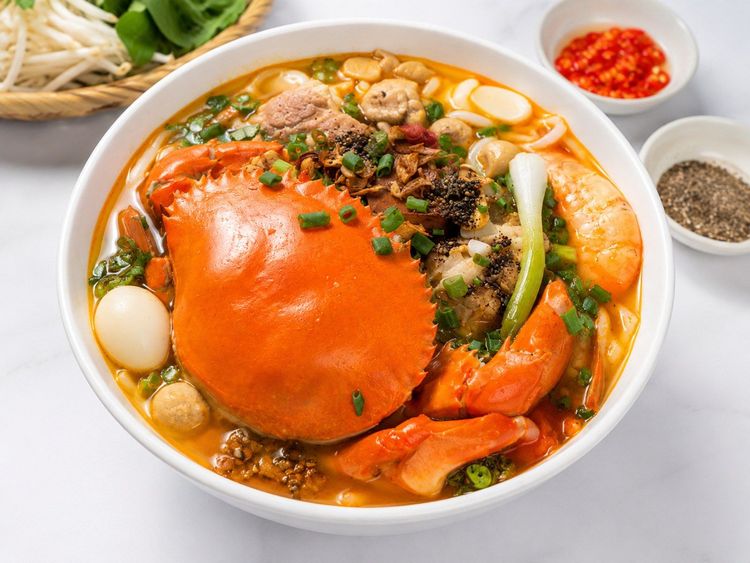
Table Of Contents
- What Is Banh Canh Cua?
- Why You'll Love Banh Canh Cua
- Banh Canh Cua Ingredients
How to Make Banh Canh Cua Step by Step
- Step 1: Clean the crab
- Step 2: Parboil the pork ribs and pork skin
- Step 3: Start the broth
- Step 4: Blanch the blood cake
- Step 5: Blanch the shrimp
- Step 6: Prepare the Quail Eggs
- Step 7: Add the vegetables to the broth
- Step 8: Break down the crab and extract the roe
- Step 9: Slice the pork skin and blood cake
- Step 10: Fry the aromatics
- Step 11: Sauté the crab roe in annatto oil
- Step 12: Sauté the crab
- Step 13: Sauté the mushrooms
- Step 14: Strain the broth
- Step 15: Add the toppings to the broth
- Step 16: Season the broth
- Step 17: Cook the noodles in the broth
- How to Serve Banh Canh Cua
- Tips for the Best Banh Canh Cua
- What Can You Substitute or Change in Vietnamese Crab Thick Noodle Soup?
- How to Store Vietnamese Crab Thick Noodle Soup
What Is Banh Canh Cua?
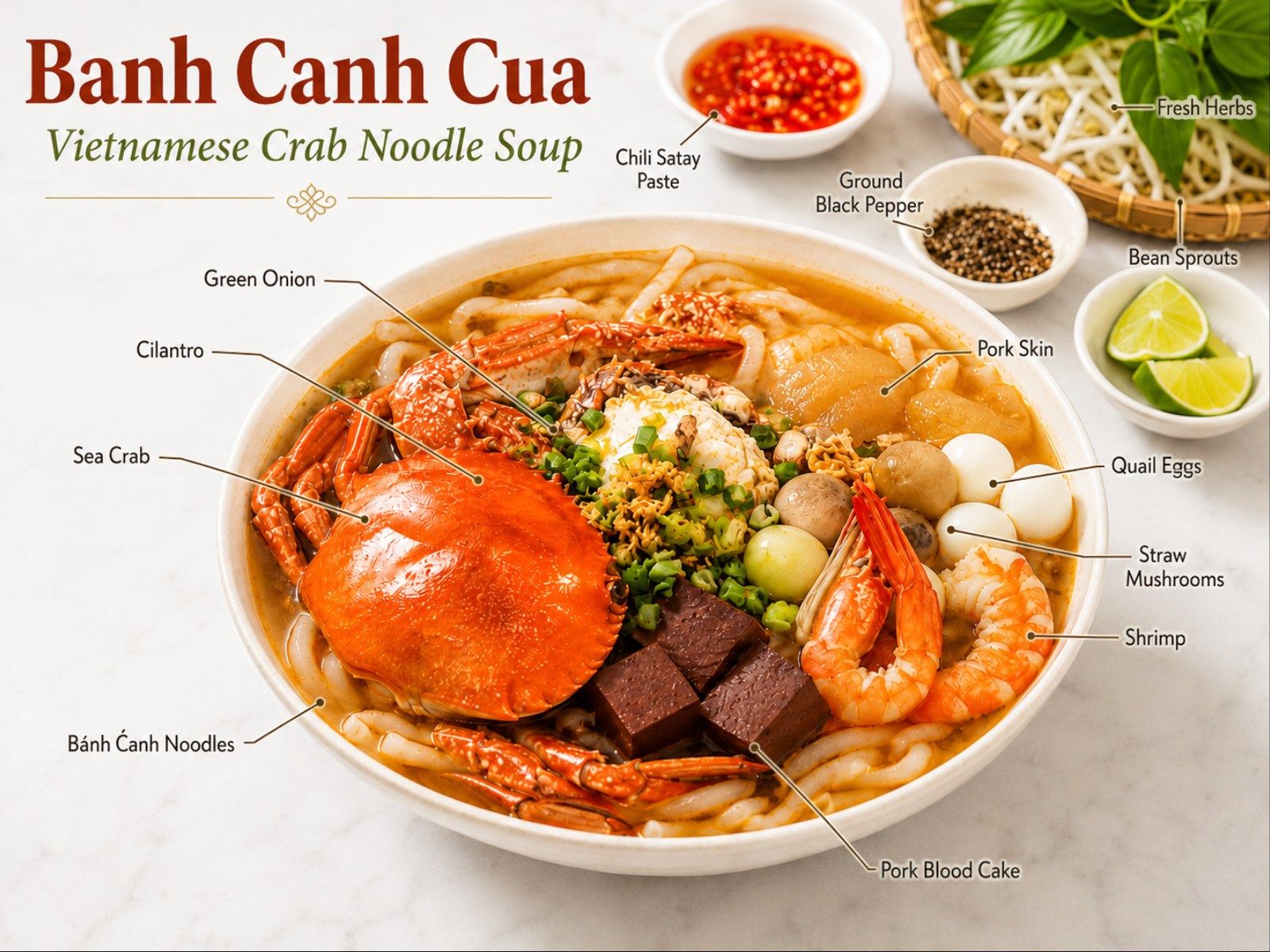
Vietnamese crab thick noodle soup (bánh canh cua) is a filling bowl of thick, chewy noodles in a sweet, orange-red pork bone broth, topped with sautéed crab, shrimp, quail eggs, blood cake, and straw mushrooms. The noodles are made from tapioca flour, or a mix of tapioca and rice flour, which gives them that soft, slippery chew and helps thicken the soup. The broth gets its orange color from annatto oil (dầu điều) or crab roe (gạch cua), and its silky texture from a tapioca starch slurry stirred in at the very end.
English speakers can pronounce bánh canh cua approximately as “bahn kahn kwah.” Bánh canh refers to the thick noodles and the broader family of soups made with them, while cua means “crab”. Bánh canh cua is one variation within the wider bánh canh family. In reality, banh canh cua belongs to southeastern Vietnam and the coastal areas of central and southwestern Vietnam, where crab and seafood are everywhere.
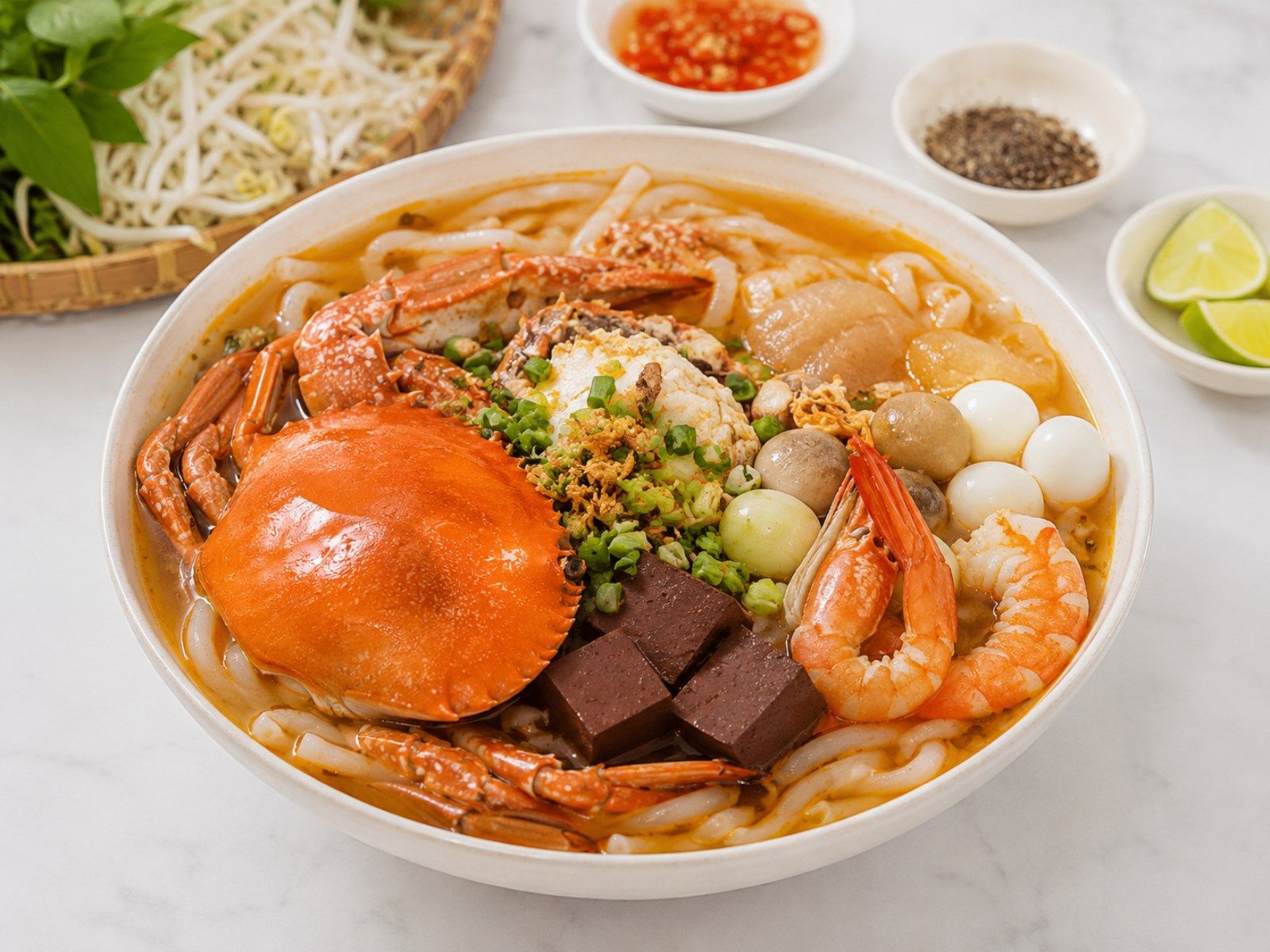
In the US, you will sometimes see it on menus as "Vietnamese crab udon" because the plump noodles look a lot like Japanese udon, even though the flour is different. One spoonful tells you what to expect: a sweet crab broth with a thick, silky body, brought to life by black pepper, lime, and fresh herbs.
As a current price reference, bánh canh cua at Ho Chi Minh City shops is commonly listed at about 30,000 to 60,000 VND per bowl. The US restaurant examples checked range from about $15.50 to $25 per bowl. Prices vary by location, portion size, crab quantity, toppings, and ordering platform.
Why You'll Love Banh Canh Cua
This banh canh cua packs sweet crab, thick, chewy noodles, and a rich orange broth into 1 bowl and takes about 40 minutes of active cooking.
- Rich, sweet flavor. The pork bone broth simmers with crab and annatto oil into a naturally sweet soup, brought out by a splash of fish sauce (nước mắm) that coats every noodle.
- Toppings you control. Pile on quail eggs, blood cake, mushrooms, and shrimp, or keep it to just crab and noodles. Every bowl is yours to build.
- Easier than it looks. Most of the 2 hours is spent hands-off, simmering broth. Active cooking runs under 40 minutes, and most of that is just sautéing the toppings.
Banh Canh Cua Ingredients
This banh canh cua is made up of 5 component groups: a broth base, crab and seafood, toppings, noodles, and garnishes.
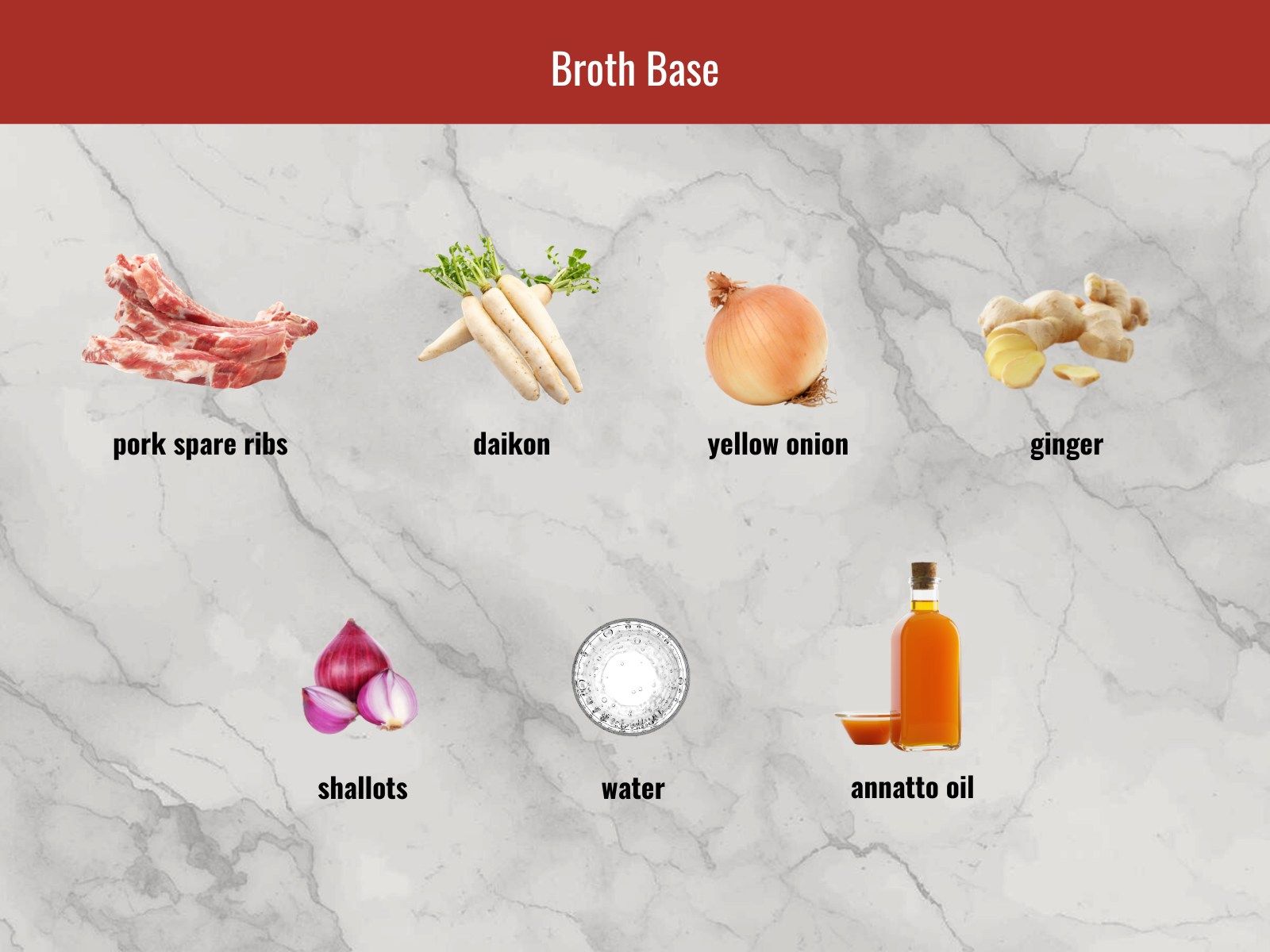
Broth Base
- 1.75 pounds (800 g) pork spare ribs.
- 2 medium daikon, about 14 ounces (400 g) total.
- 1 large yellow onion, about 7 ounces (200 g).
- 1.5 ounces (40 g) fresh ginger.
- 1.75 ounces (50 g) shallots.
- 1 gallon (3.8 L) of water.
- 3 tablespoons annatto oil.
Crab and Seafood
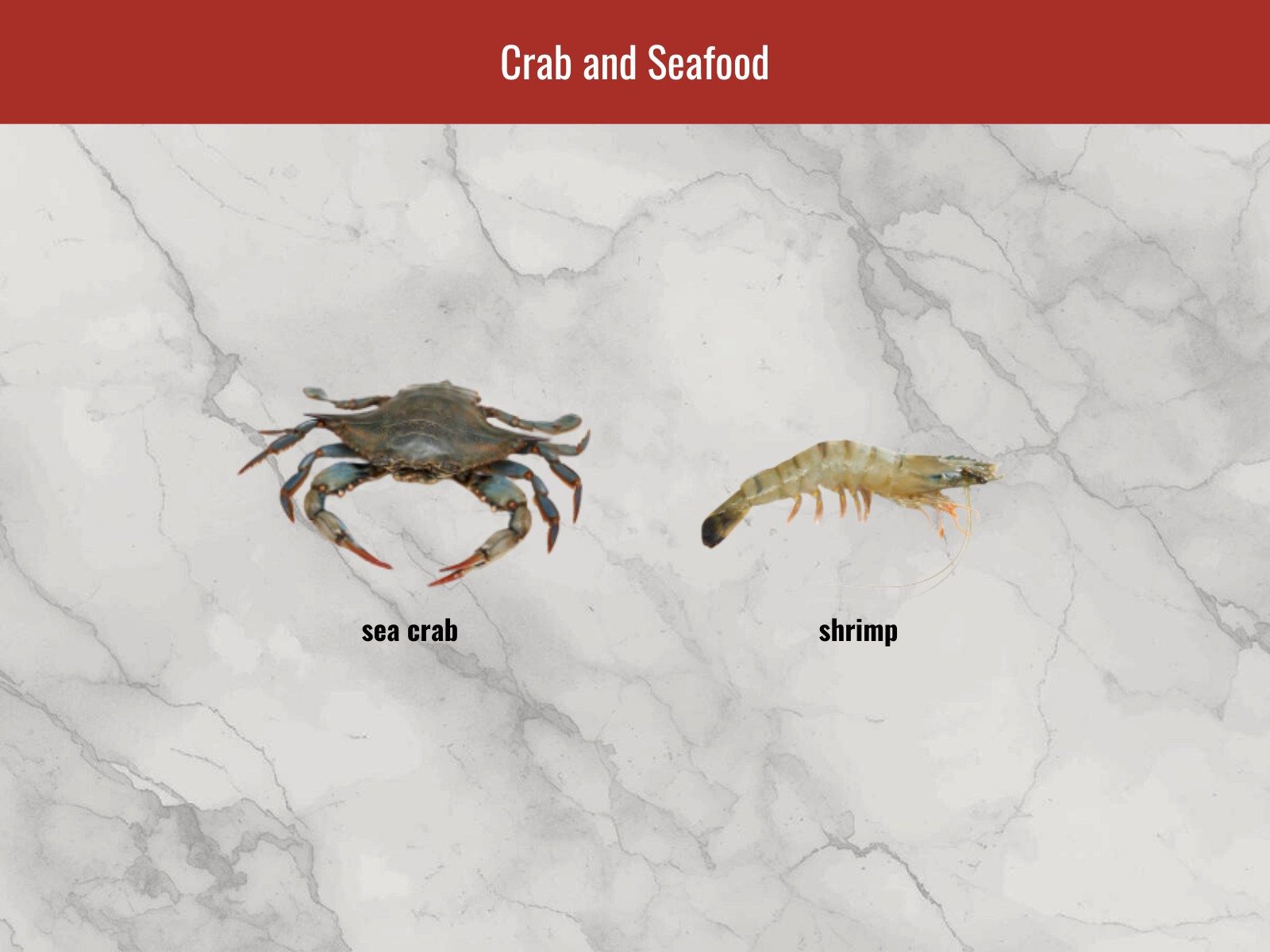
- 2.2 pounds (1 kg) of whole sea crab, about 4 crabs. We go with female crabs (cua cái) since they carry more roe, which gives the broth a deeper orange color and richer sweetness. At the market, squeeze the shell and the belly apron; if both feel firm and hard, the crab is meaty. A pink-red tint on the upper joint of the claw is another sign of thick flesh.
- 3.5 ounces (100 g) of shrimp.
Toppings
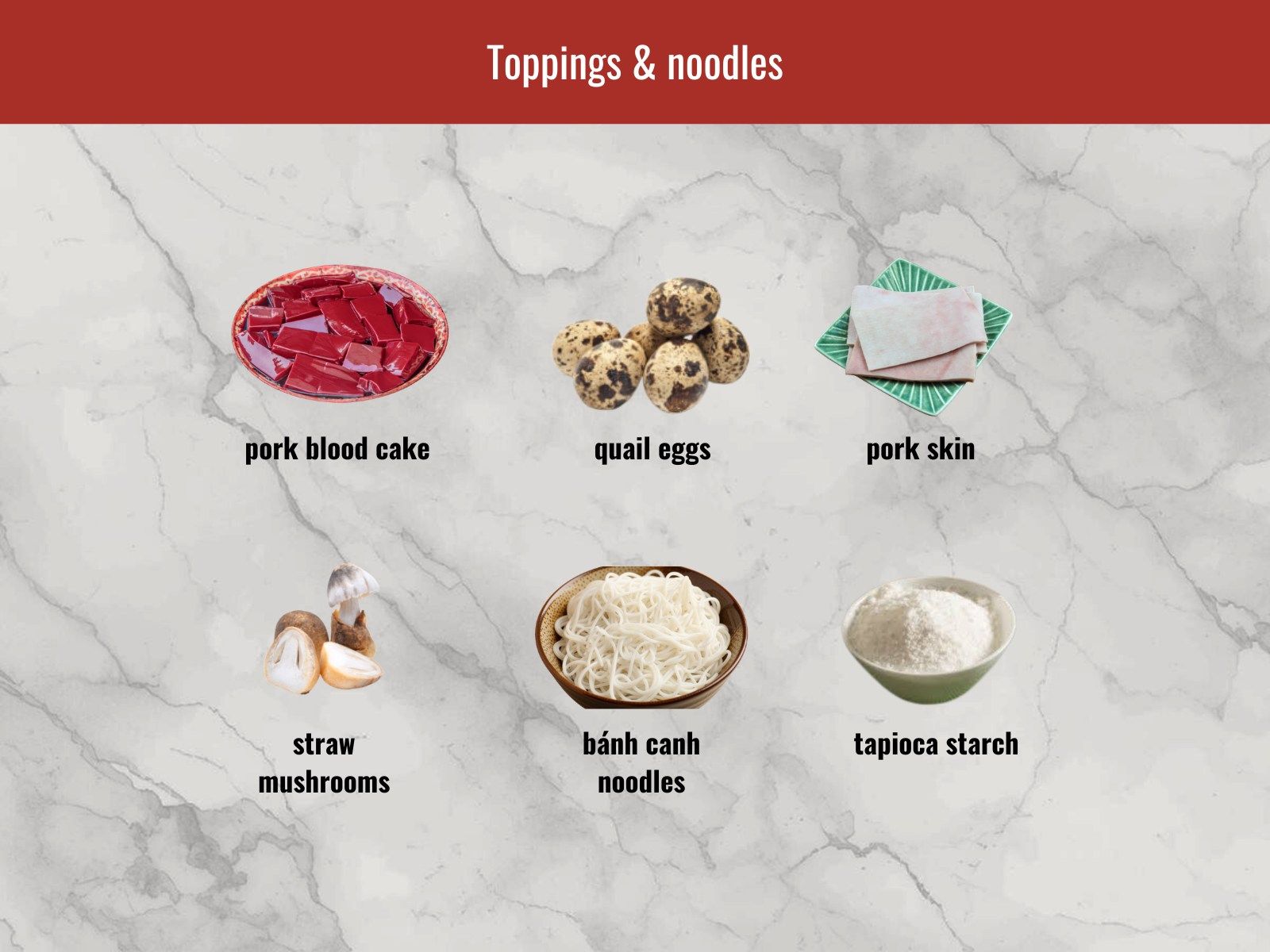
- 7 ounces (200 g) pork blood cake (huyết heo).
- 20 quail eggs.
- 3.5 ounces (100 g) pork skin (da heo).
- 7 ounces (200 g) of straw mushrooms (nấm rơm). Soak the straw mushrooms in salt water and rinse them before cooking, which washes out grit and any tinny smell from canned ones.
Noodles
- 2.2 lb (1 kg) fresh bánh canh noodles. Check the package to determine whether they are made from rice flour, tapioca starch, or a blend, as each type produces a different texture and releases a different amount of starch.
- 40 g tapioca starch and ⅓ cup (80 ml) cool water for the slurry.
Garnishes and Condiments
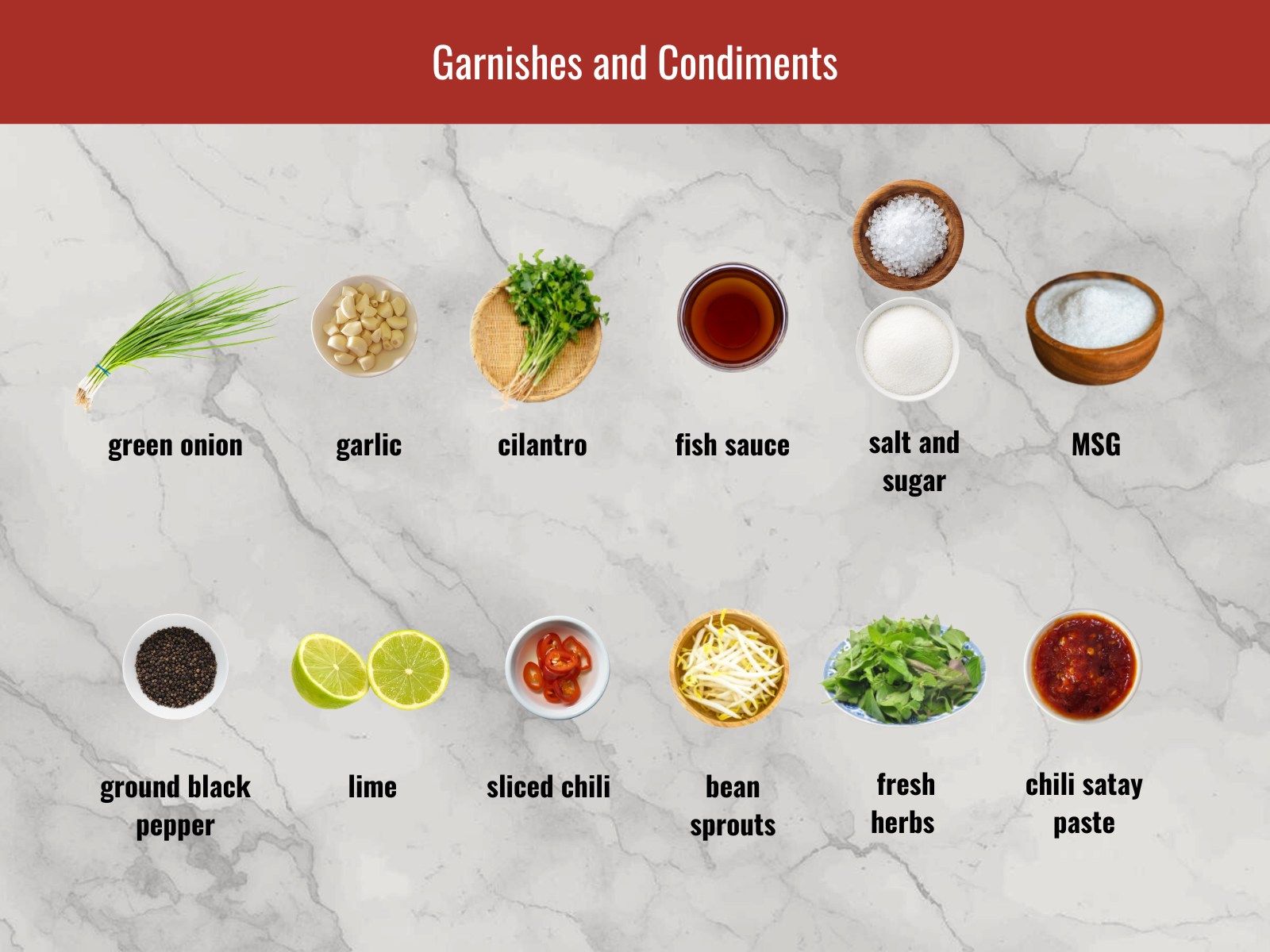
- 3 to 4 stalks of green onion and cilantro (ngò rí).
- 6 cloves of garlic.
- Seasoning, to taste: fish sauce, salt, sugar, MSG, and ground black pepper.
- Serving sides: lime wedges, sliced chili, bean sprouts (giá), fresh herbs, and chili satay paste (sa tế ớt).
How to Make Banh Canh Cua Step by Step
Banh canh cua takes about 2 hours to make across 17 steps, including the time needed to simmer the broth. Active preparation and cooking take approximately 40 minutes. This recipe makes about 8 large bowls.
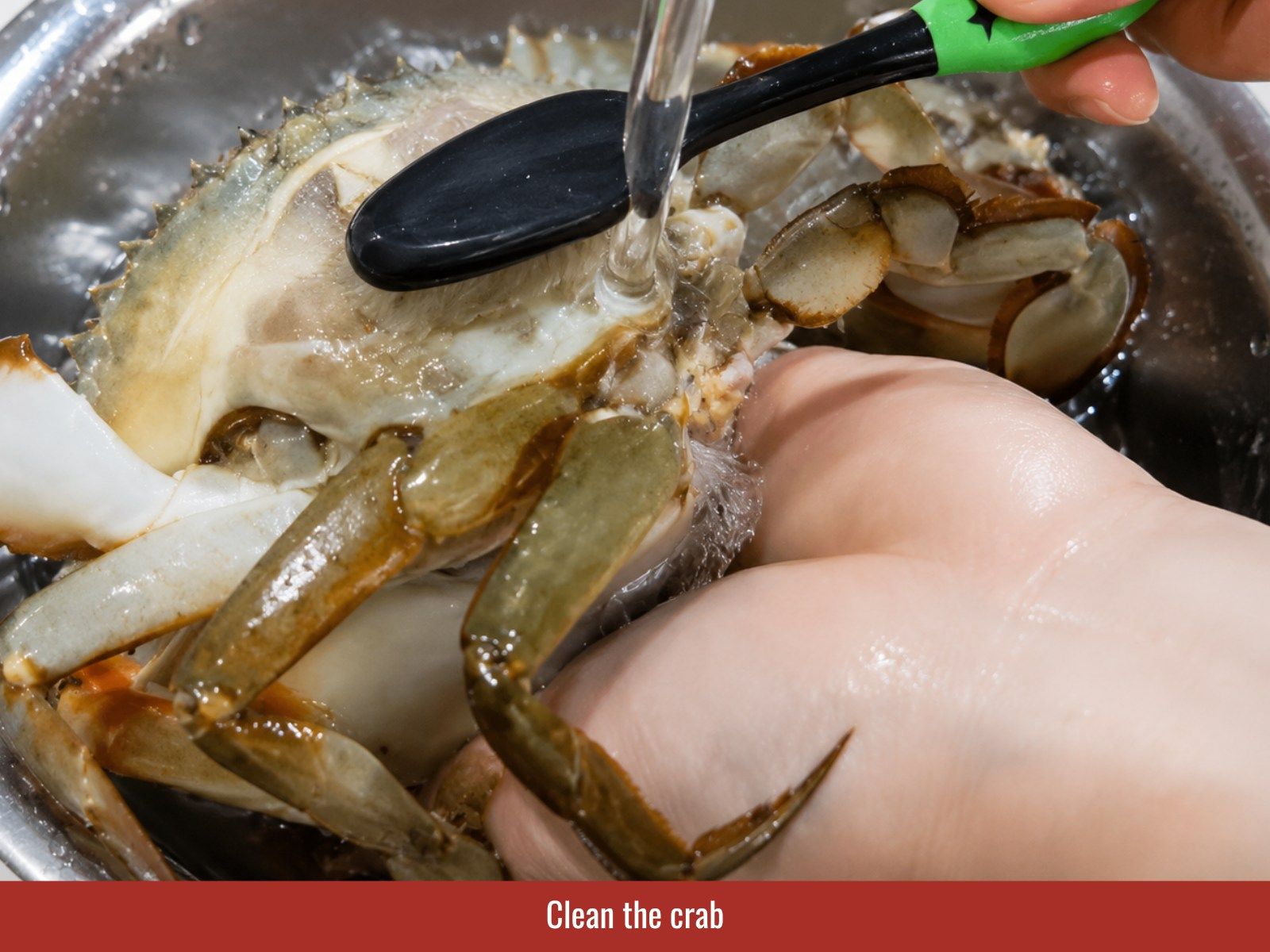
Step 1: Clean the crab
Scrub the crabs under cold running water with a stiff brush to clear mud and grit from the shell, legs, and joints. Drain them and set them aside. Keep the crabs tied until you break them down in Step 8.
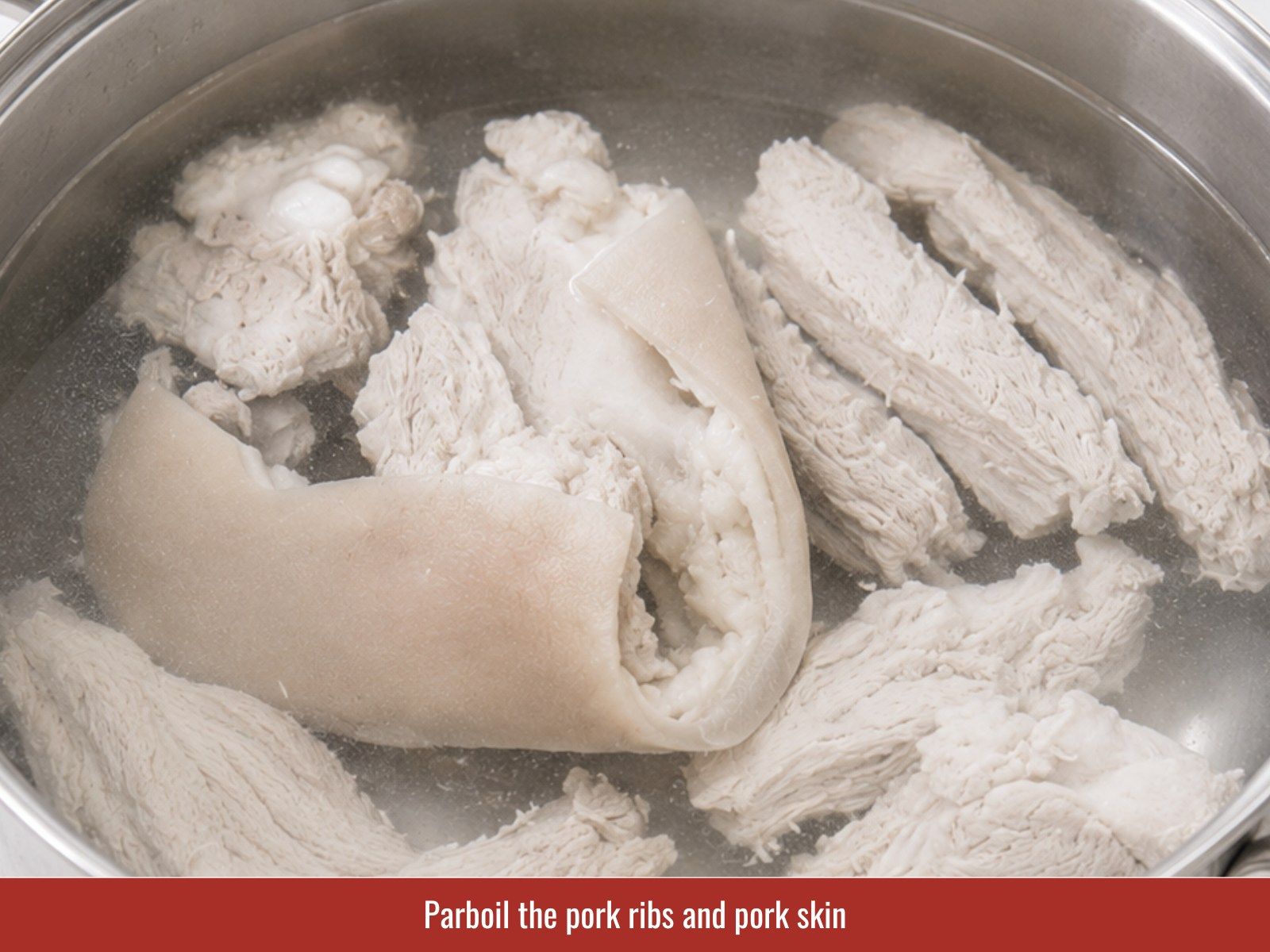
Step 2: Parboil the pork ribs and pork skin
Place the pork ribs and pork skin in a pot of cold water with the smashed shallots, ginger, and a pinch of salt. Bring to a boil and cook for 1 minute, then drain and rinse the pork under cold water. Clean the pot before returning the pork for the main simmer.
Vietnamese cooks call this technique “chần xương”. Briefly boiling and rinsing the ribs, then cleaning the pot, helps remove surface impurities and keeps the broth clearer.
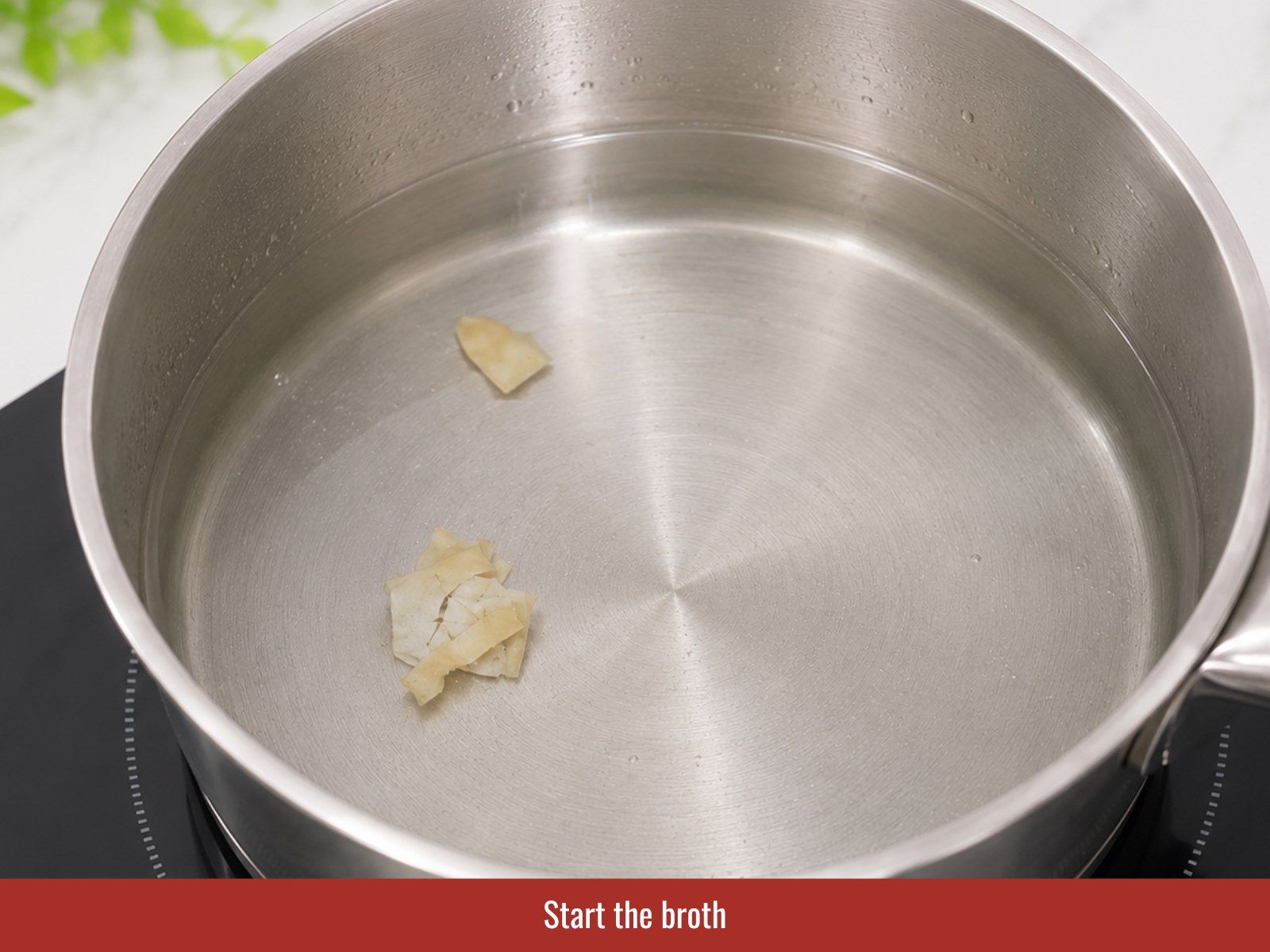
Step 3: Start the broth
Return the cleaned pork ribs and pork skin to the clean pot with 1 gallon (3.8 L) of fresh water. Bring it to a boil, skim off any foam, then reduce to a low simmer. Let it cook for 20 minutes before you add the vegetables.
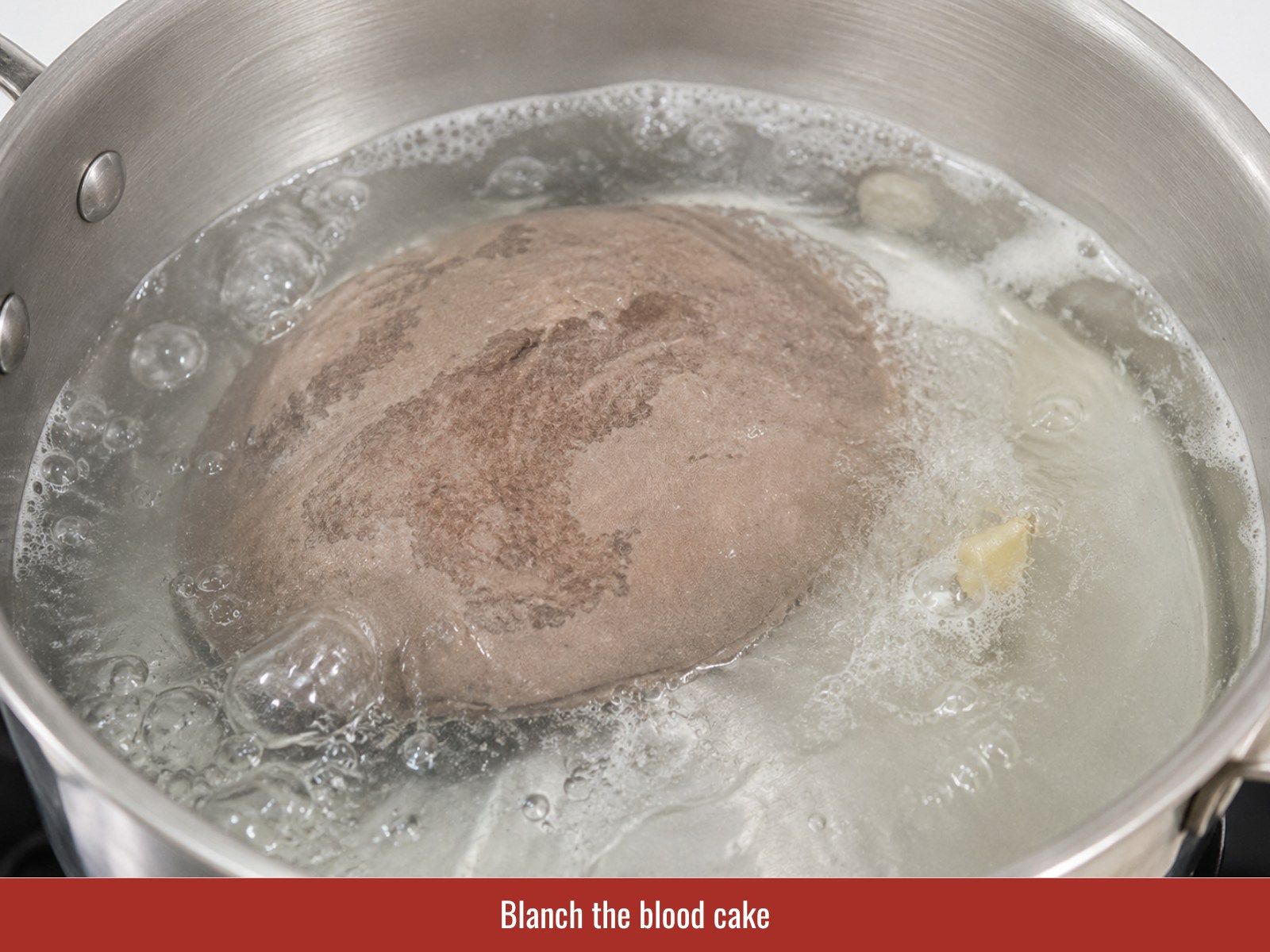
Step 4: Blanch the blood cake
Bring a separate pot of water to a boil with smashed ginger, smashed shallots, and a pinch of salt. Add the blood cake, simmer for 5 minutes, then take it out. Plunge it into ice water for 5 minutes, then drain; this firms up the texture and rinses out impurities.
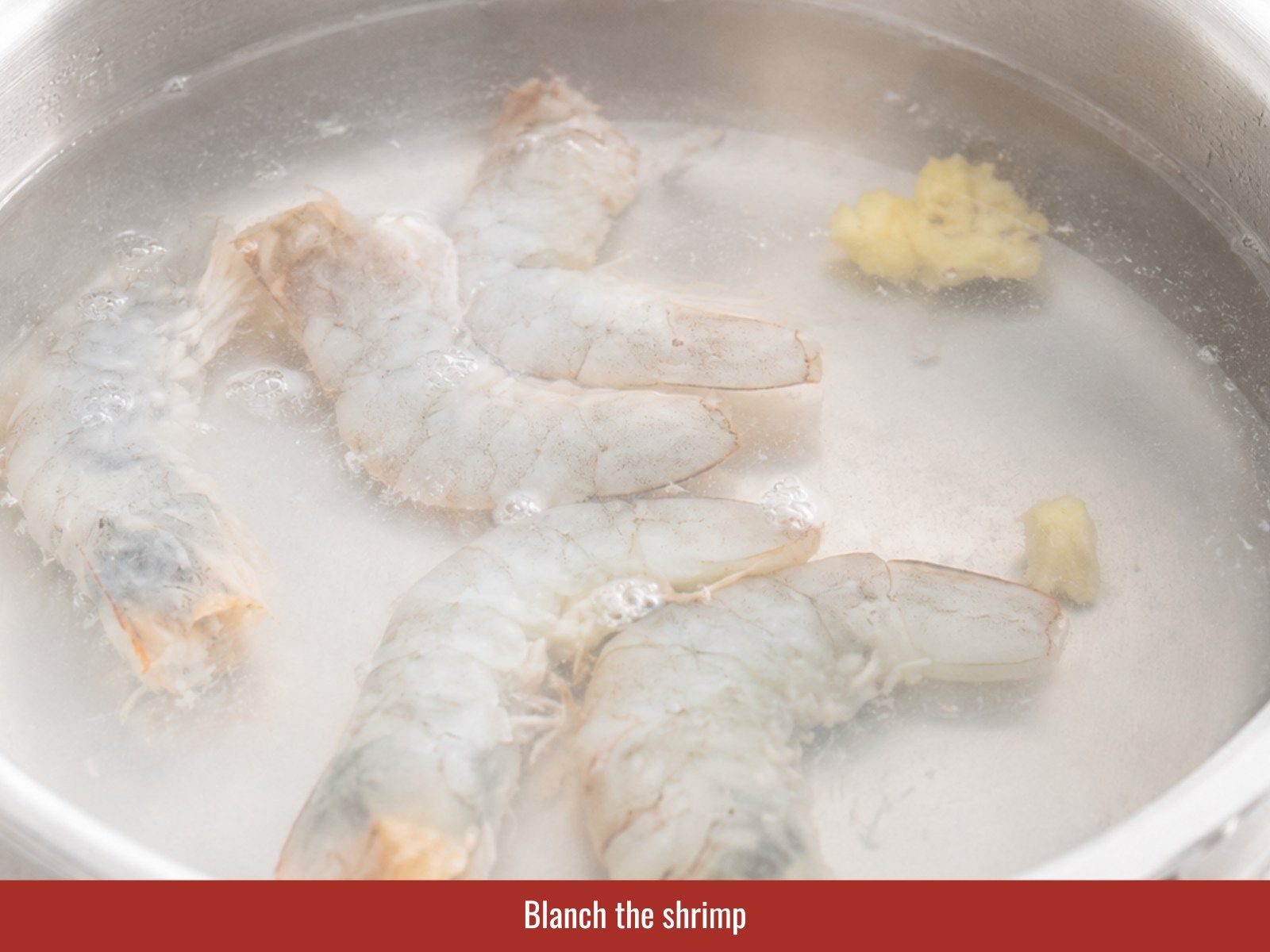
Step 5: Blanch the shrimp
Drop the shrimp into boiling water for 15 seconds, then pull them out right away. The leftover heat finishes cooking them through. Set them aside for assembly.
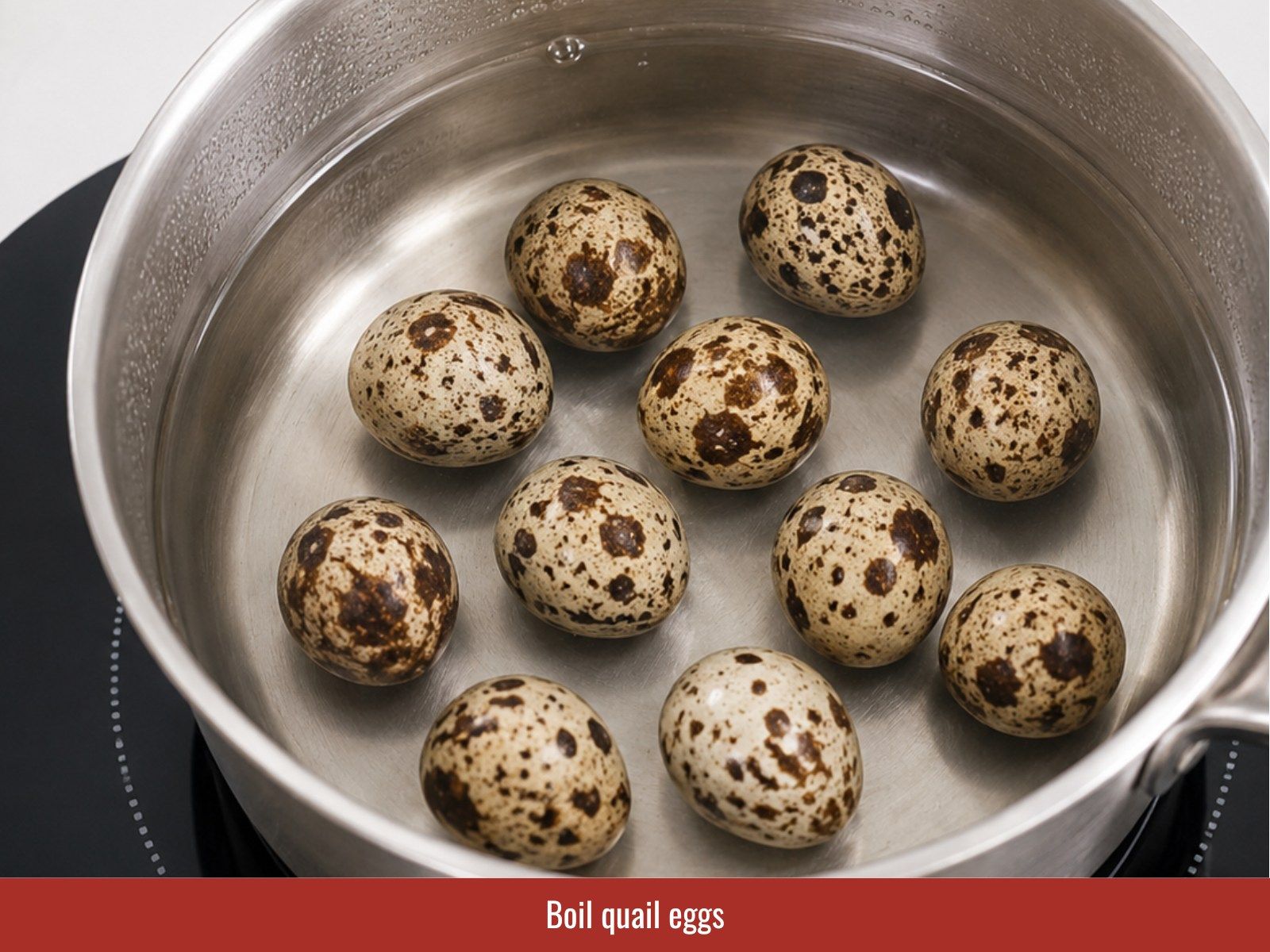
Step 6: Prepare the Quail Eggs
Boil and peel 20 quail eggs, or drain packaged cooked quail eggs according to the label instructions. Set them aside until ready to add to the broth.
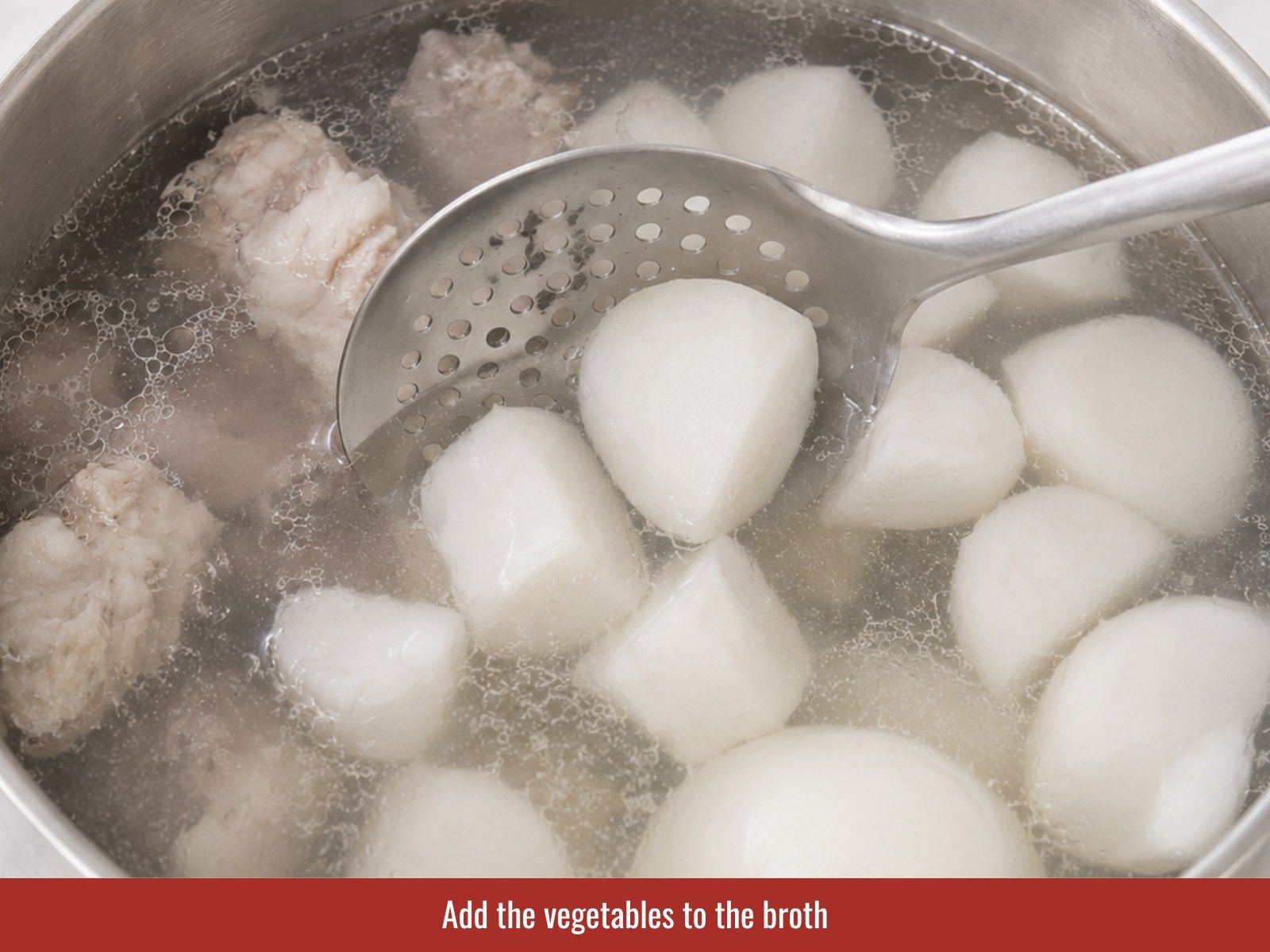
Step 7: Add the vegetables to the broth
Add the whole yellow onion, daikon chunks, and cilantro root stalks to the simmering broth and keep it low. These vegetables sweeten the broth, and you will remove them once it has simmered for 1 hour and 30 minutes.
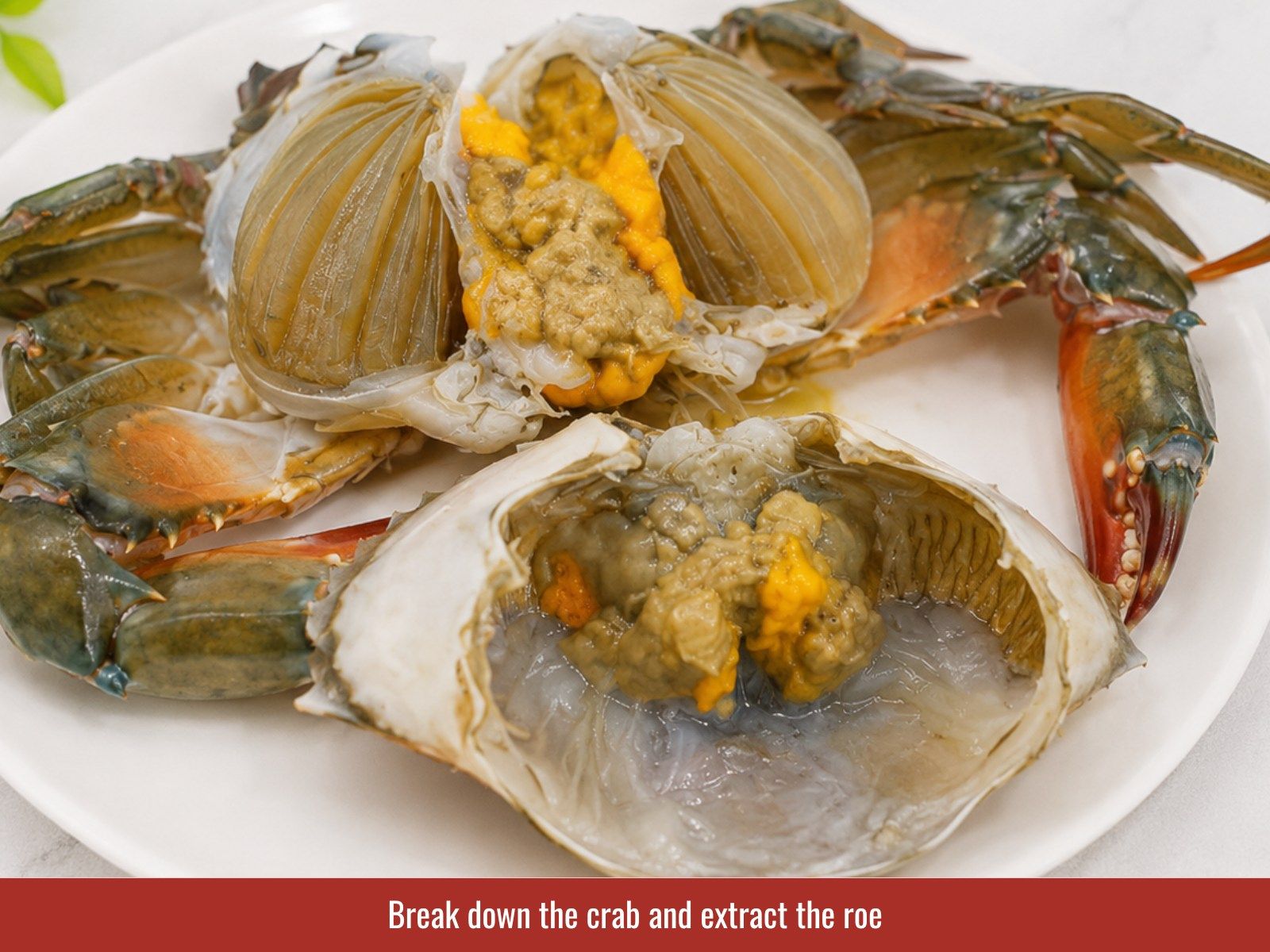
Step 8: Break down the crab and extract the roe
Before breaking the crab down, pierce the center underside to put it down quickly and humanely. Flip each crab over, remove the apron (yếm), and lift off the top shell (mai), then discard the gills (mang). Scrape the orange crab roe into a separate bowl and cut each crab body in half.
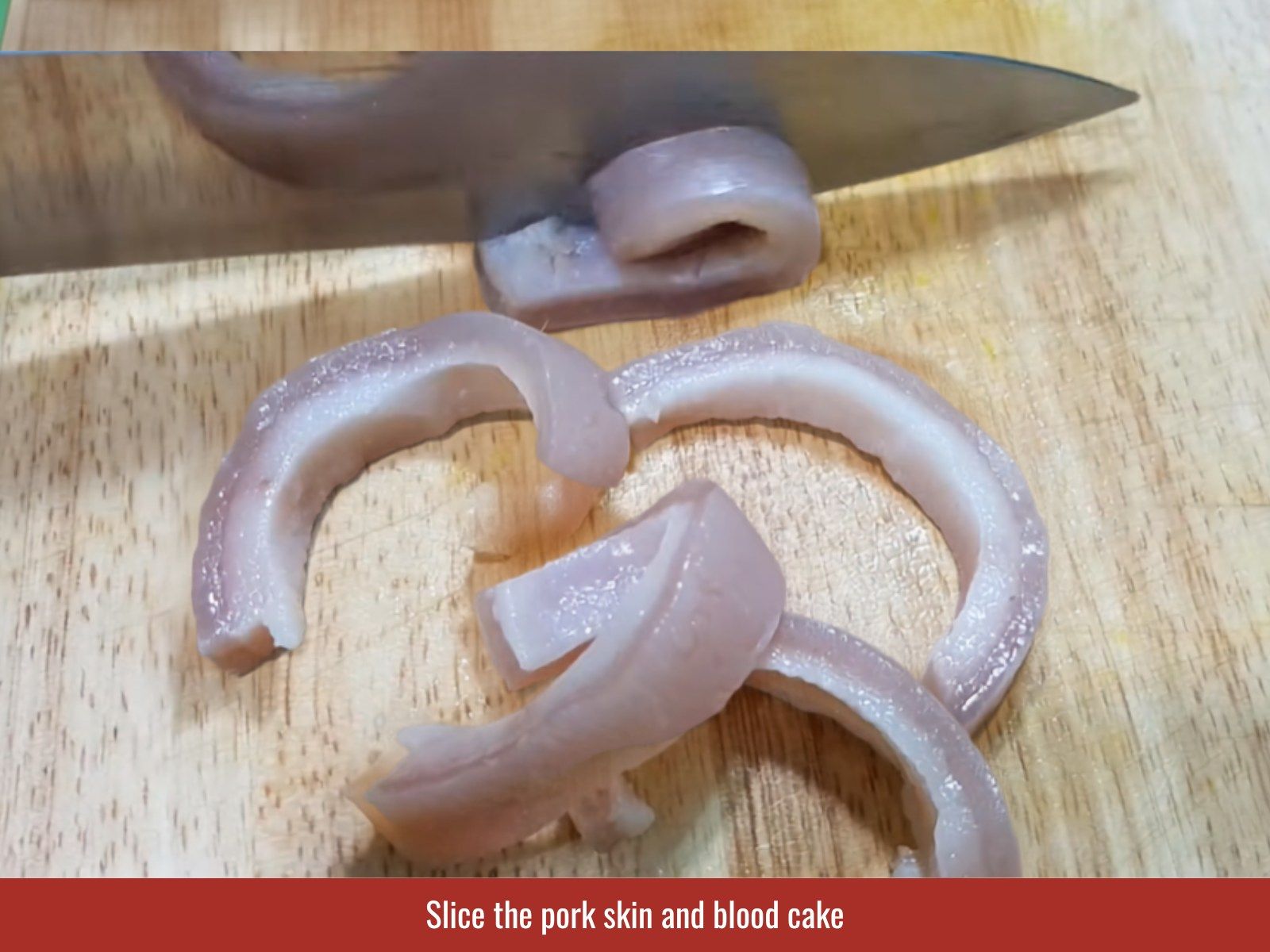
Step 9: Slice the pork skin and blood cake
After about 30 minutes of simmering, lift the pork skin out of the broth and slice it into thin strips. Cut the blanched blood cake into bite-sized squares. Set both aside.
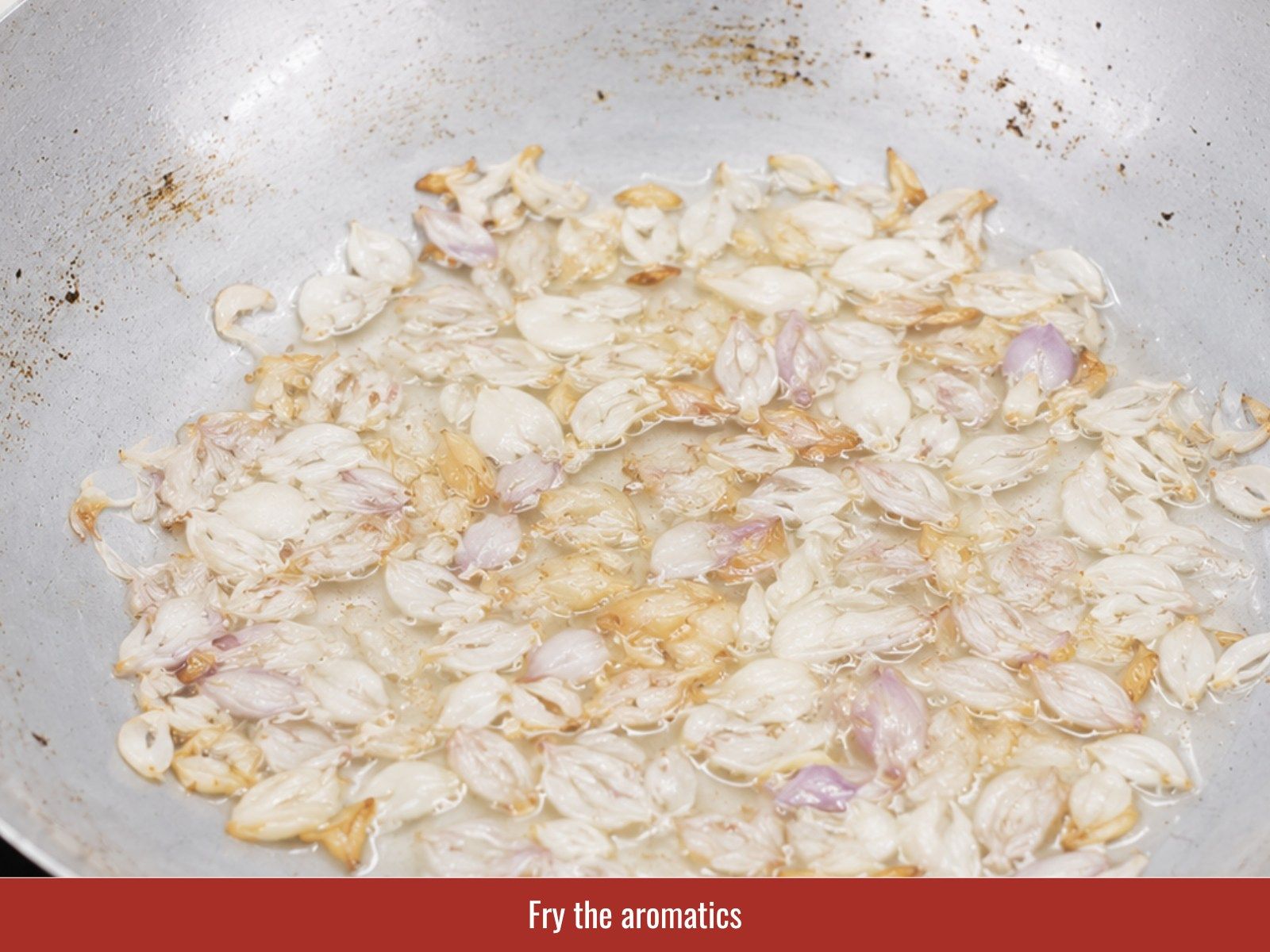
Step 10: Fry the aromatics
Heat the oil in a pan over medium heat, then add the minced garlic and sliced shallots. Cook them until fragrant and pale gold, a Vietnamese technique called “phi thơm”, taking care not to let them turn dark and bitter. Scoop them out and reserve the aromatic oil for sautéing the crab roe, crab, and mushrooms in the next steps.
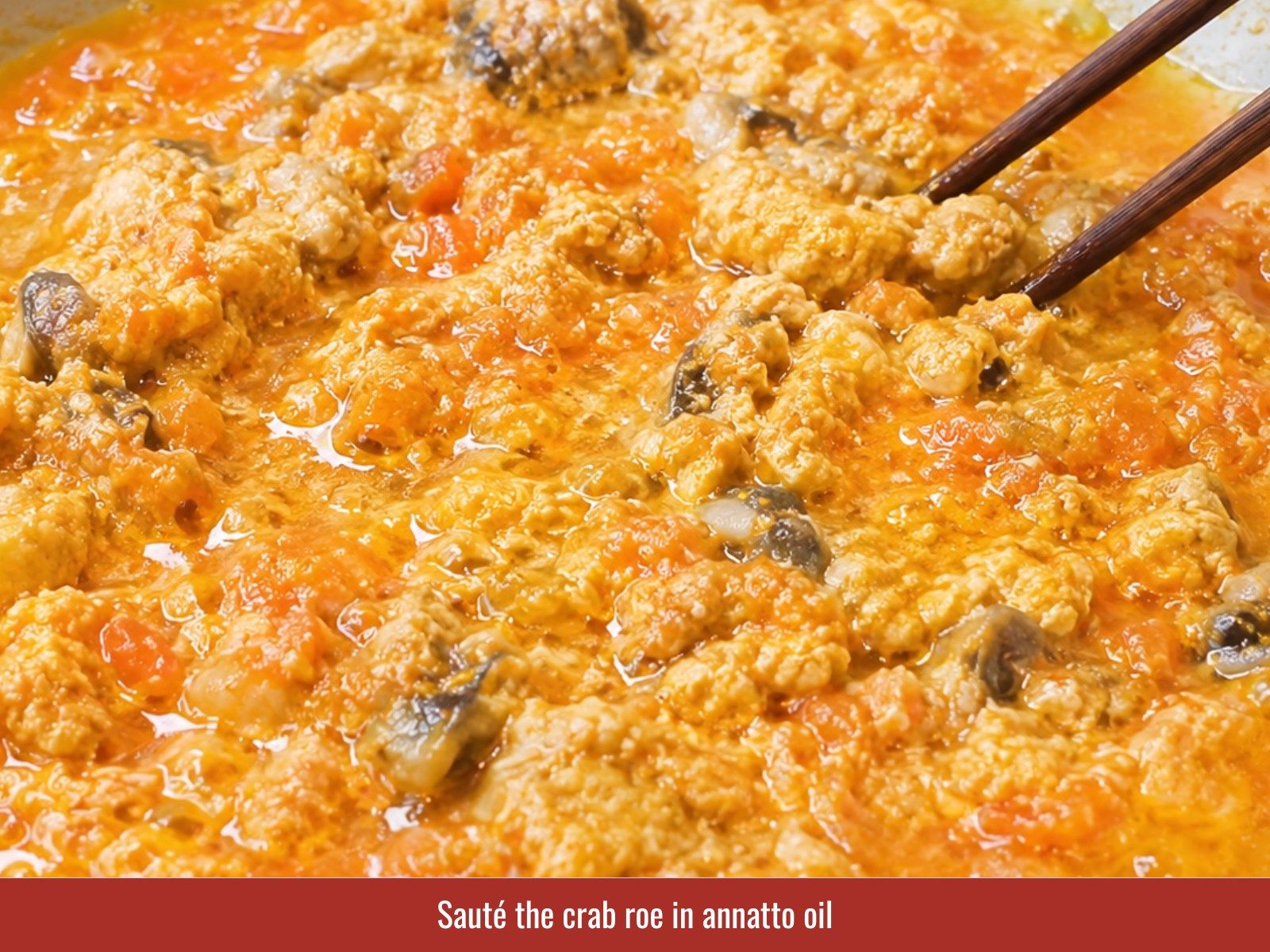
Step 11: Sauté the crab roe in annatto oil
Heat 3 tablespoons annatto oil over low heat, add the crab roe and 2 tablespoons of the fried aromatic oil, and sauté for 1 minute. Season with 1 teaspoon each of seasoning powder, sugar, and fish sauce plus ½ teaspoon pepper, then set aside. This sautéed roe is the heart of the dish's color and flavor, so keep the heat low to avoid scorching.
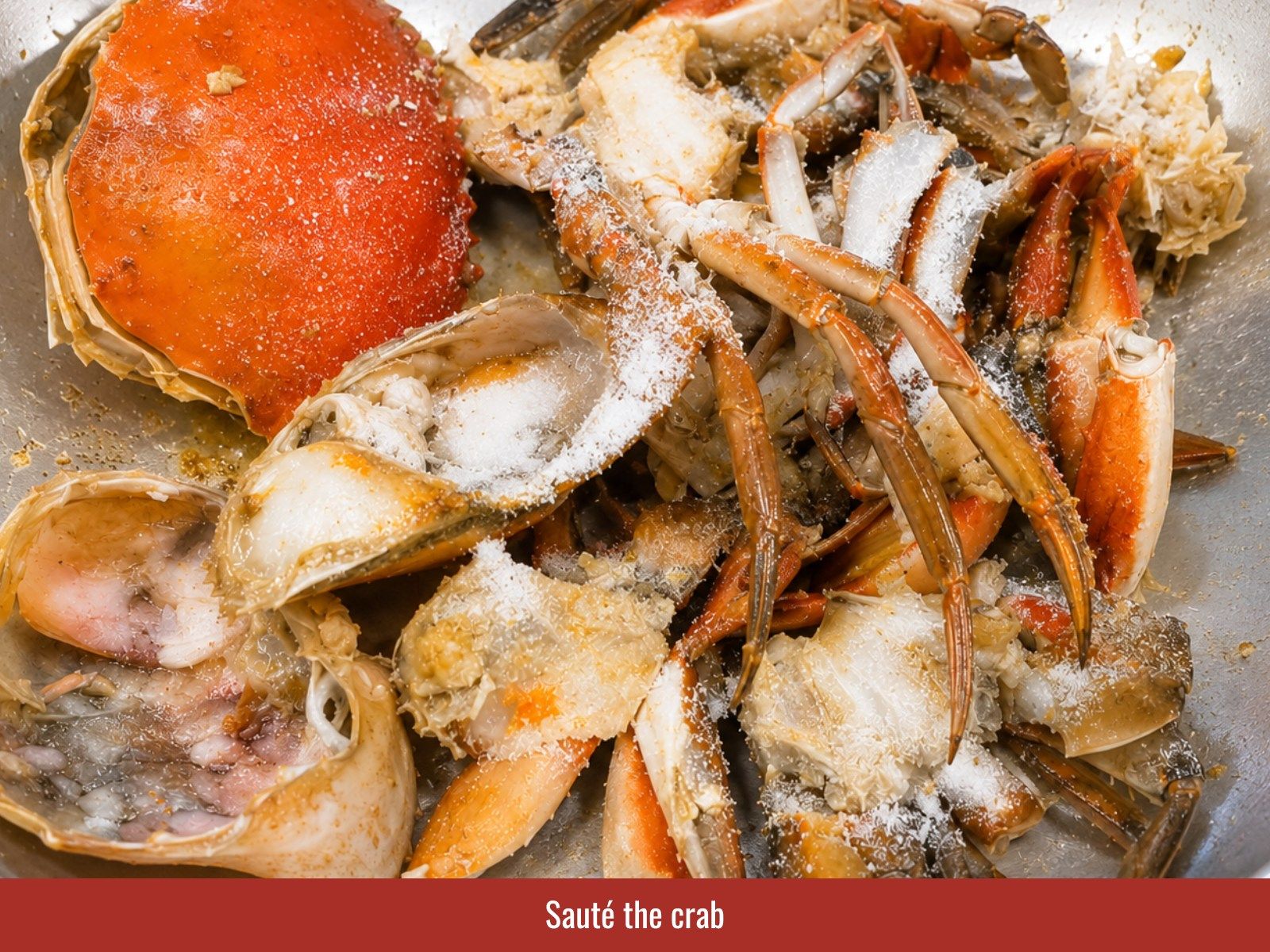
Step 12: Sauté the crab
In the same pan, heat 2 tablespoons of the aromatic oil, add the halved crab bodies, and sauté over medium heat for 2 minutes. Season with ½ tablespoon salt (9 g), 1 tablespoon seasoning powder (15 g), and 1 tablespoon sugar (13 g). Toss them to coat, then take the pan off the heat and set it aside.
Step 13: Sauté the mushrooms
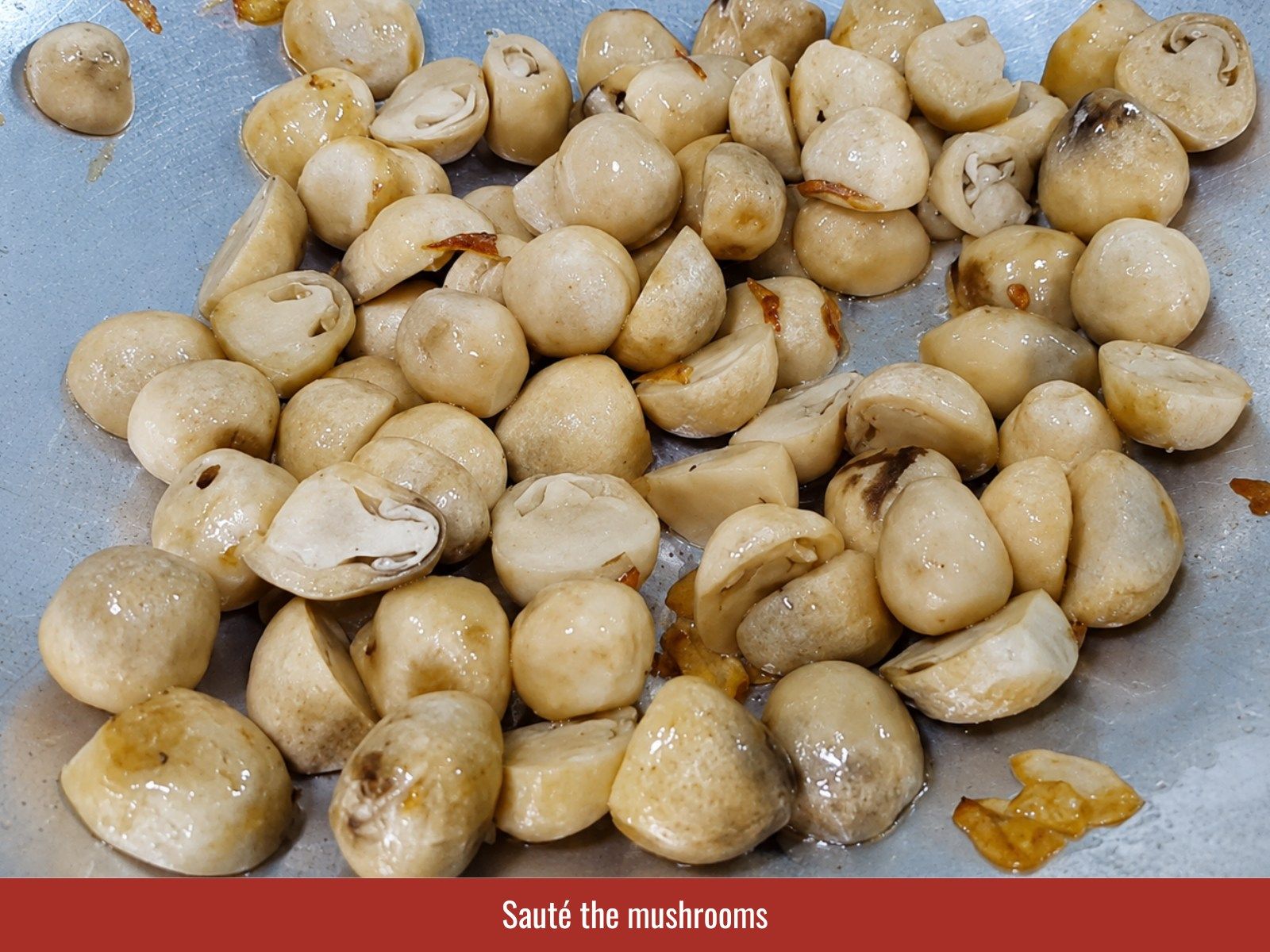
Heat 2 tablespoons of the aromatic oil, throw in the straw mushrooms, and sauté over high heat for 30 seconds. Season with ½ teaspoon salt, 1 teaspoon each of seasoning powder and sugar, and ½ teaspoon pepper, then take it off the heat.
Step 14: Strain the broth
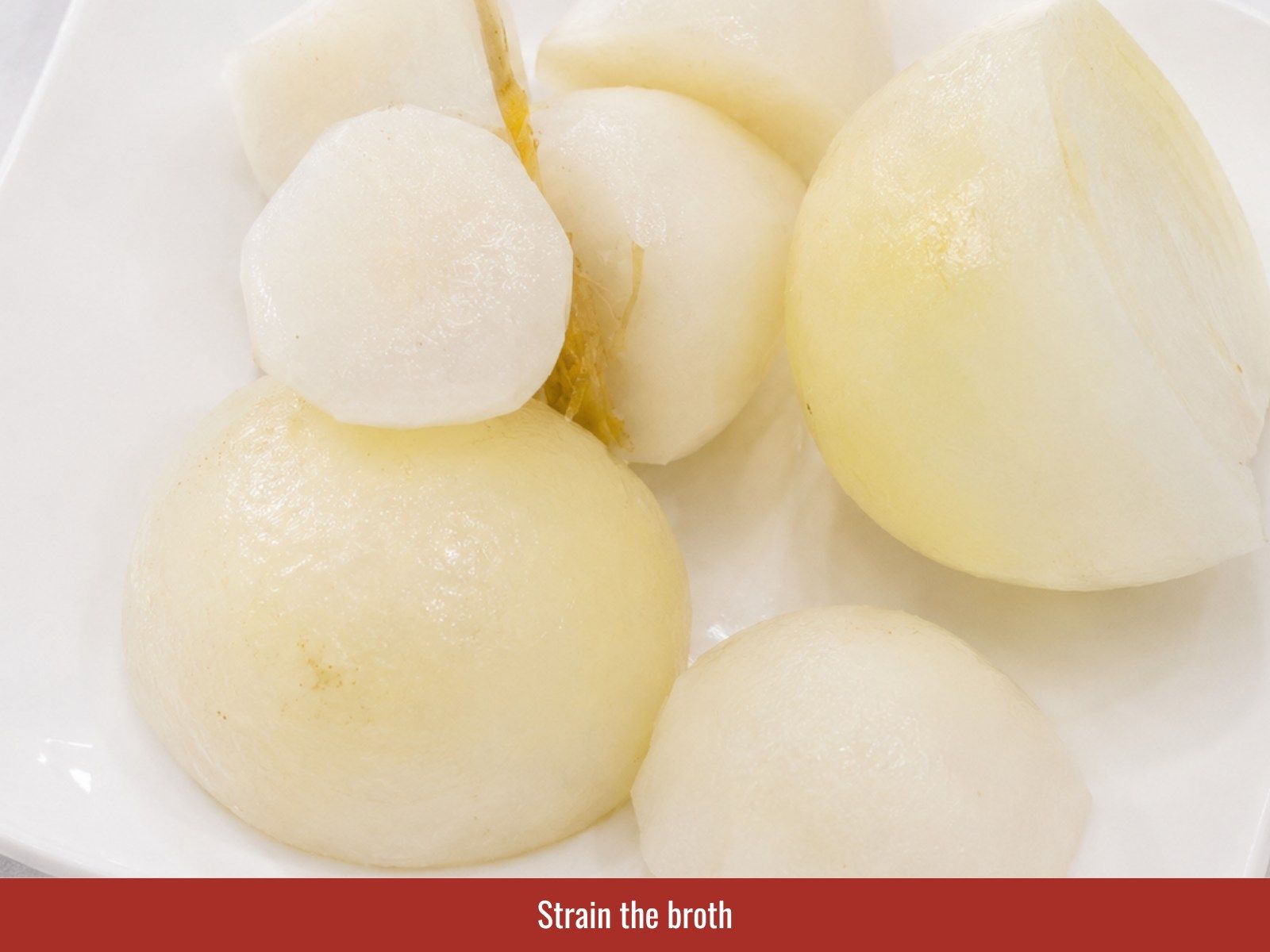
Once the broth has simmered for about 1 hour and 30 minutes total, scoop out the yellow onion, daikon, and cilantro stalks and throw them away. The broth should be down to around 3 quarts (3 L) by now, with the pork ribs super tender and falling off the bone.
Step 15: Add the toppings to the broth
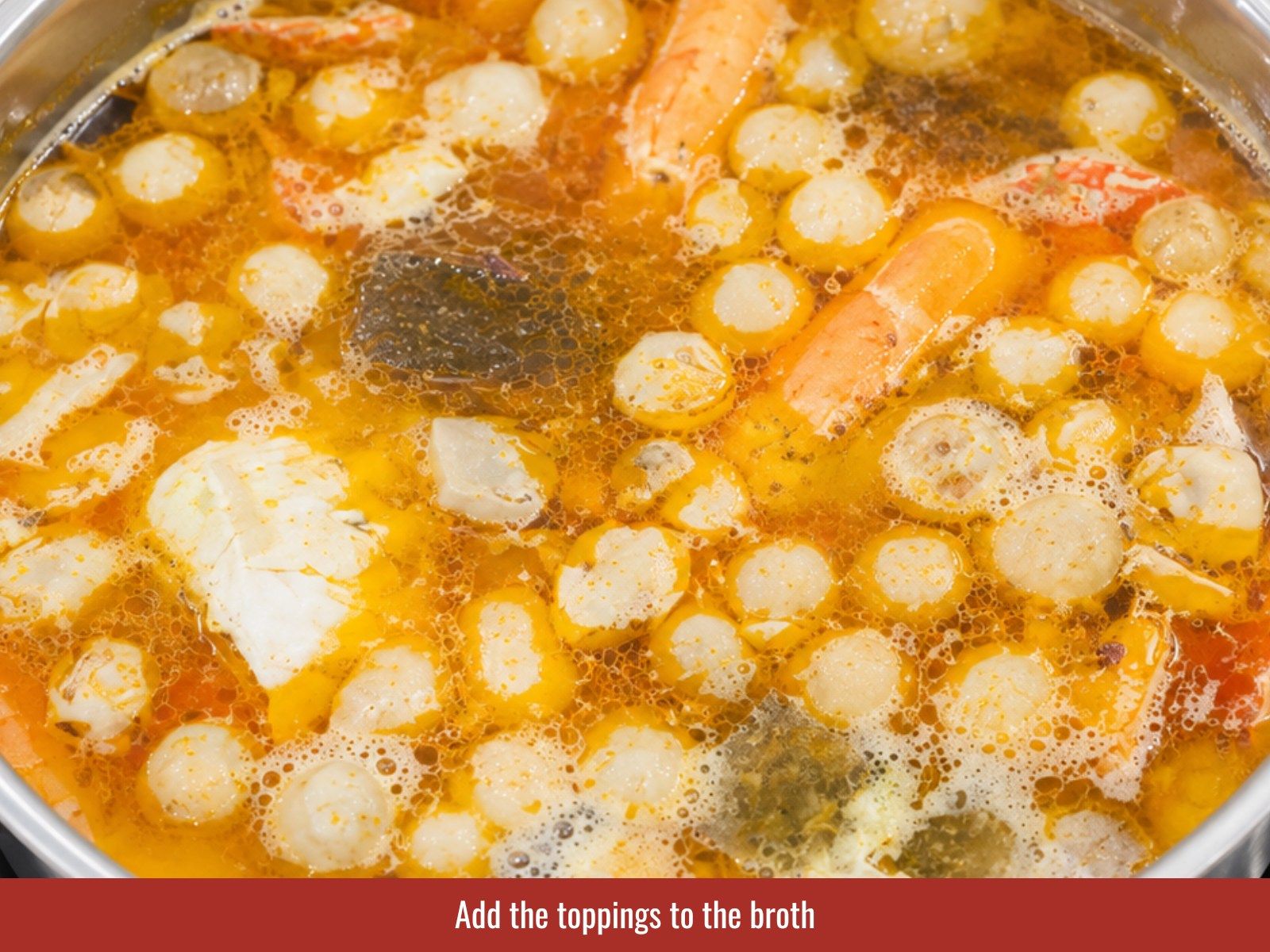
Slide the sautéed crab, blood cake, pork skin, quail eggs, blanched shrimp, sautéed mushrooms, and sautéed crab roe into the broth. Let everything simmer together for a bit so all the flavors blend perfectly.
Step 16: Season the broth
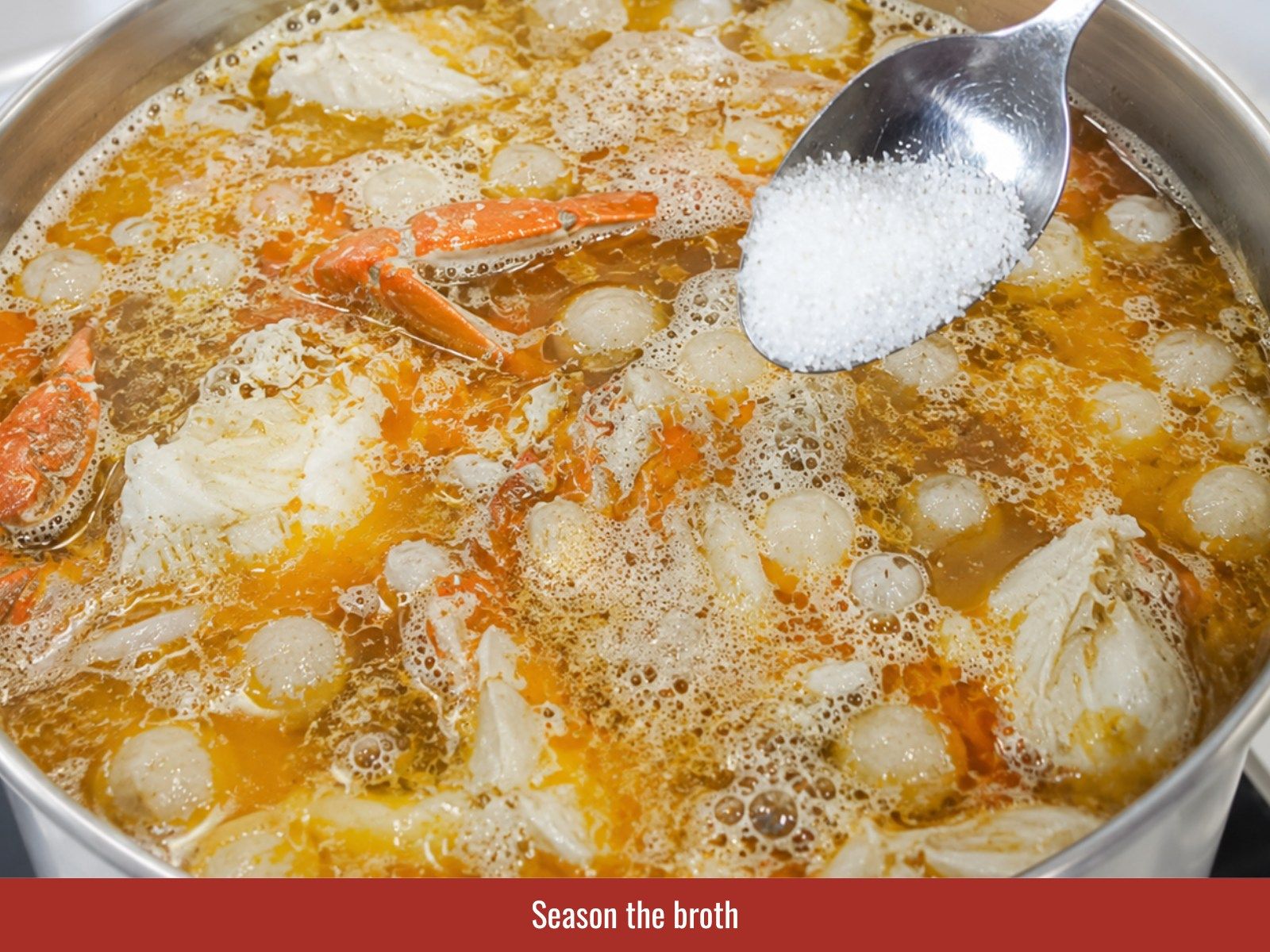
Stir in the salt (20 g), sugar (20 g), MSG (10 g), and fish sauce (15 g, about 1 tablespoon), then taste it and tweak the broth until you get a good balance of sweet, salty, and umami. Good fish sauce makes a huge difference here, so we go with CHIN-SU fish sauce for its clean anchovy flavor and well-balanced saltiness.
Step 17: Cook the noodles in the broth
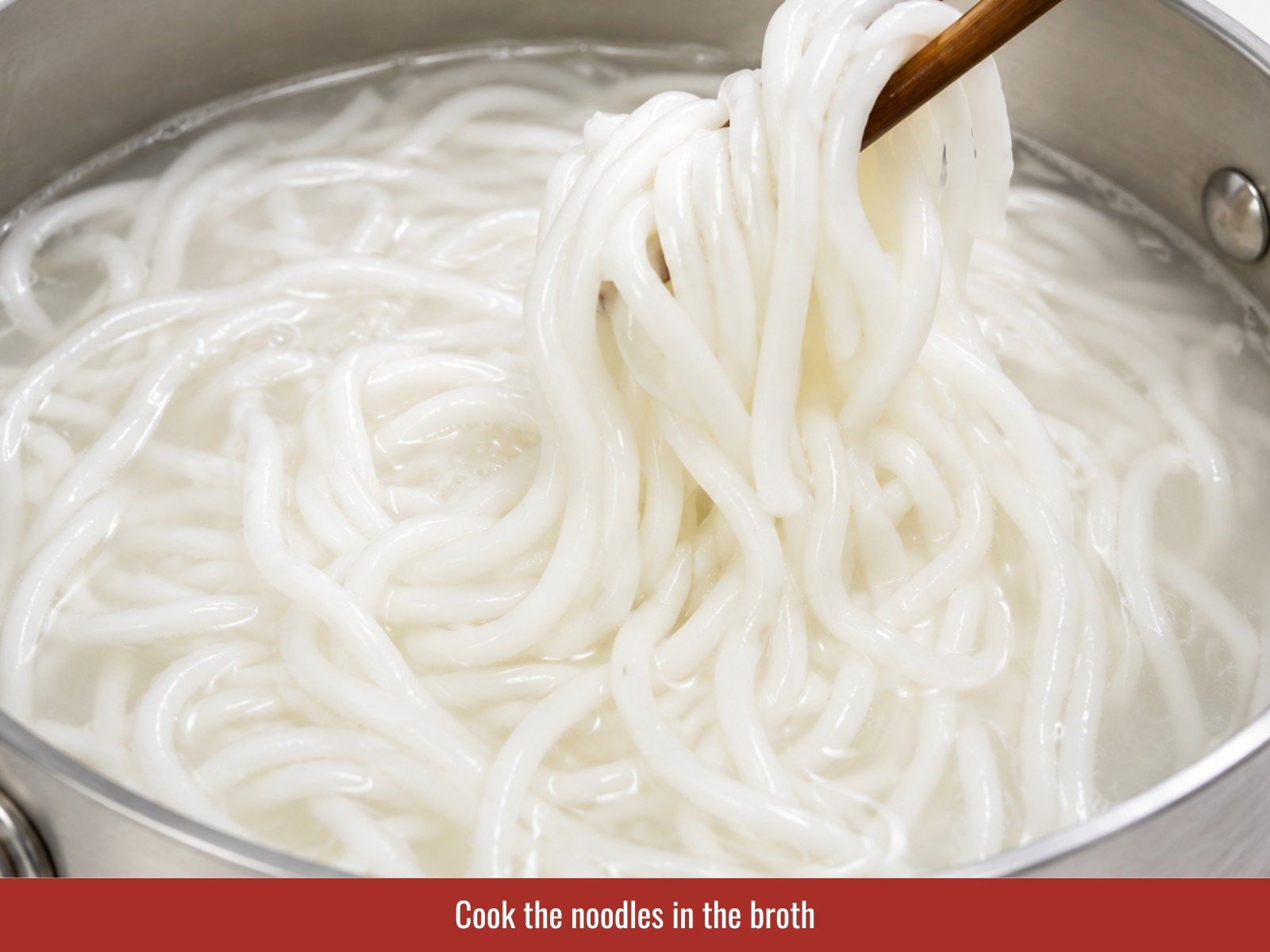
For better control over the broth’s consistency, cook the bánh canh noodles in a separate pot according to the package instructions, then drain well. If needed, toss them with ½ teaspoon sesame oil to prevent sticking.
Stir the tapioca slurry again, then pour it gradually into the gently simmering broth while stirring. Stop when the broth lightly coats a spoon, as it will continue to thicken slightly as it cools.
You can cook the noodles directly in the broth in batches for about 1 minute, but they will release additional starch. In that case, add only as much slurry as needed to avoid making the broth too thick. Divide the noodles among bowls, ladle the hot broth and toppings over them, and serve immediately.
How to Serve Banh Canh Cua
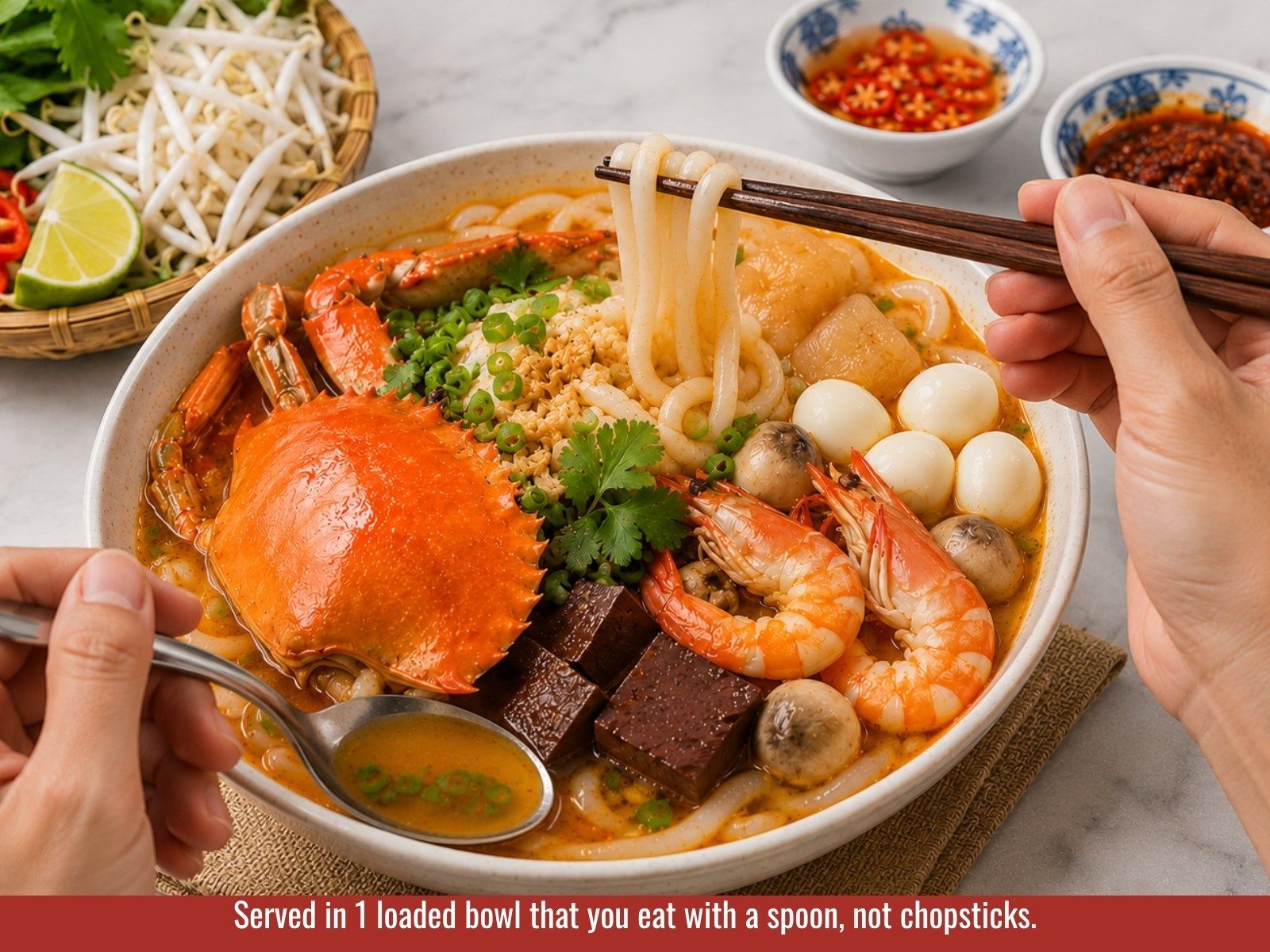
Serve banh canh cua hot. Divide the thick noodles among individual bowls, ladle over the crab broth, then add the toppings. A full bowl may include:
- Thick tapioca noodles in the sweet, orange-red crab broth.
- Sautéed crab, blanched shrimp, quail eggs, blood cake, and straw mushrooms piled on top.
- Green onion, cilantro, fried shallots, and a crack of black pepper to finish.
- A side plate of bean sprouts, fresh herbs (rau sống), sliced Thai or bird's eye chili, and lime wedges.
- A fish sauce chili dip (nước mắm ớt) for the crab and shrimp.
Serve each bowl with both chopsticks and a soup spoon. Use the chopsticks for the noodles and larger pieces, and the spoon for the broth, eggs, mushrooms, and smaller toppings. Add lime, sliced chili, or chili satay gradually to taste. CHIN-SU Vietnamese Hot Sauce can also be served on the side for extra heat.
Tips for the Best Banh Canh Cua
These 5 small choices separate good banh canh cua from great banh canh cua.
- Choose female crabs if you can. Female crabs carry more roe, which gives the broth a deeper orange color and richer flavor.
- Parboil the pork and clean the pot. Skipping this leaves the broth cloudy and off-tasting, so rinse the pork under cold water after parboiling and scrub the pot before adding fresh water.
- Sauté the crab roe over low heat. High heat scorches the roe and turns it bitter, while 1 minute on low is enough to release its color and aroma.
- Pull the onion and daikon out on time. Left for more than 1.5 hours, they break apart and cloud the broth.
- Cook the noodles in the broth for the most flavor. The noodles soak up the crab broth and release starch that naturally thickens the soup, so cook them separately only if you want a lighter bowl.
What Can You Substitute or Change in Vietnamese Crab Thick Noodle Soup?
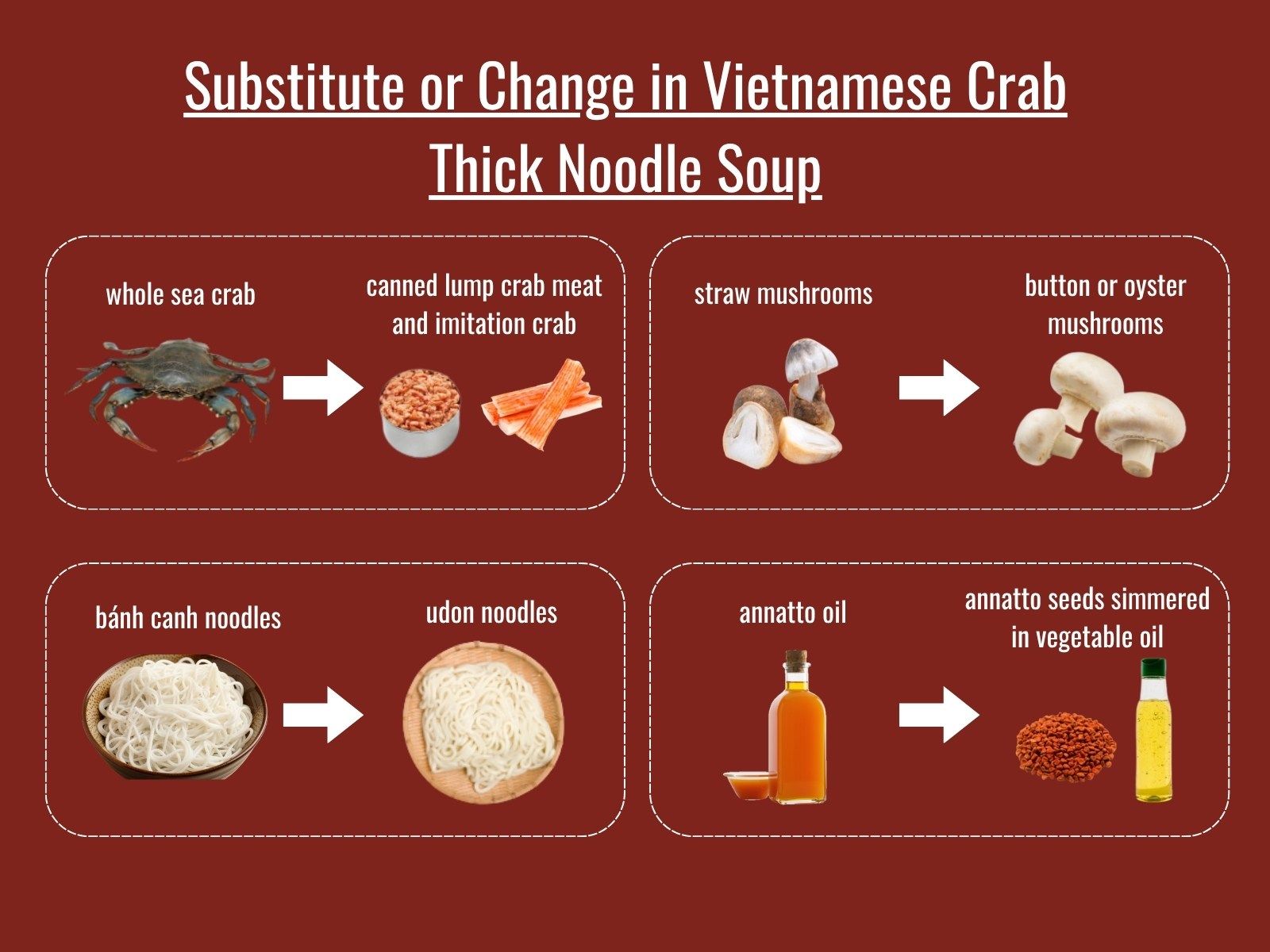
These substitutions help you make banh canh cua with US grocery store ingredients without losing the dish's core flavor.
- Canned lump crab meat and imitation crab can stand in for whole sea crab. They are faster with no shells to crack, but you lose the roe and the natural orange broth, so add extra annatto oil to make up for it.
- Udon noodles can replace the bánh canh noodles. The bite is close, thick, and chewy, though udon is wheat-based and won't thicken the broth as much.
- Button or oyster mushrooms fill in for straw mushrooms. They taste milder but still add texture, and straw mushrooms are usually sold canned at Asian grocery stores.
- Pork blood cake is easy to leave out if it is unfamiliar. It is a texture topping, not a flavor driver, so the soup works fine without it.
- Annatto seeds simmered in vegetable oil for 1 to 2 minutes can replace annatto oil. With neither on hand, the broth tastes the same but misses its orange-red color.
Banh canh cua is a stovetop dish from start to finish, so there is no pressure-cooker shortcut to swap in. Make changes where you need to, but the closer you stay to the original ingredients, the closer you get to that classic Southern Vietnamese flavor.
How to Store Vietnamese Crab Thick Noodle Soup
Banh canh cua is best straight from the pot, so you should only store it when saving leftovers for the next day. For the best texture, keep the broth and noodles in separate containers. The broth and its toppings keep in an airtight container in the fridge for 3 to 4 days, and the noodles keep in a sealed bag for up to 2 days, though it is better to boil fresh ones when reheating. Prep the herb and garnish plate fresh each time rather than storing it. To serve, bring the broth back to a rolling boil on the stovetop and pour it over fresh or reheated noodles.
Have you tried making banh canh cua at home yet, or are you still deciding which crab to start with? Drop your questions, tweaks, or results in the comments below. No question is too small, and every batch is worth talking about. If this recipe worked for you, a quick star rating goes a long way toward helping other home cooks find it. Share your finished bowls on social media with #CHINSU and tag us, since we read every single one. Ready to stock your pantry for the next pot? CHIN-SU fish sauce is right there waiting at chinsu.com.
Frequently Asked Questions
The difference between banh canh cua and bun rieu (bún riêu) comes down to the noodles and the broth. Banh canh cua uses thick tapioca noodles in a starch-thickened pork bone broth, while bun rieu uses thin rice vermicelli in a lighter, tomato-based crab broth.
Yes, you can use udon noodles instead of banh canh noodles. Udon is the closest match in size and chew, but it is wheat-based, so the broth won't thicken the same way. Make sure to cook the udon in a separate pot.
The crab that works best for banh canh cua is whole sea crab (cua biển), which is the traditional choice. In the US, blue crab and Dungeness crab both work great, and canned lump crab meat is an easy shortcut, though you will need extra annatto oil for color since it does not have any roe.
To thicken the broth for banh canh cua, you have 2 main methods. You can cook the noodles right in the broth so they release starch naturally, or stir a mix of 3 tablespoons of tapioca starch and water into the simmering broth for 5 minutes. Most home cooks do both.
Banh canh cua is gluten-free as long as the noodles are made from tapioca flour or a tapioca and rice flour blend. Check the package, though, since some store-bought versions add wheat flour, and udon noodles contain wheat and are not gluten-free.
Banh canh cua features crab, seafood toppings, and a silky orange broth often colored with crab roe or annatto oil. Banh canh Trang Bang is a Tay Ninh specialty served with a clearer pork broth, sliced boiled pork, and a generous plate of fresh herbs. They use similar thick noodles but differ in broth, protein, toppings, and regional identity.
Use fresh crab, remove the gills and digestive material completely, and rinse away any shell grit. Sauté the crab roe gently with garlic and annatto oil before adding it to the broth. Avoid overcooking the crab, as prolonged boiling can intensify its marine aroma.
Swollen noodles cannot return to their original texture. Remove them from the broth, thin the soup with hot stock or water, and serve it with freshly prepared noodles. Cook and store the noodles separately when making the dish ahead.
Yes, but cornstarch produces a slightly cloudier broth with less elasticity and gloss. Mix it with cold water and add it gradually rather than using a fixed one-to-one substitution. Avoid boiling the thickened broth for too long because cornstarch can lose thickening power.
Starch clumps when it is added dry, mixed with warm water, or poured too quickly into boiling broth. Combine 1 part starch with about 2 parts cold water, stir the slurry again before using, and pour it slowly into the gently simmering broth while stirring continuously.
Banh Canh Cua Recipe
1. Ingredient
Broth Base
- 1.75 lb (800 g) pork spare ribs.
- 2 medium daikon radishes, about 14 oz (400 g).
- 1 large yellow onion, about 7 oz (200 g).
- 1.5 oz (40 g) fresh ginger.
- 1.75 oz (50 g) shallots.
- 1 gallon (3.8 L) water.
- 3 tablespoons annatto oil.
Crab and Seafood
- 2.2 lb (1 kg) whole sea crab, about 4 crabs.
- 3.5 oz (100 g) shrimp.
Toppings
- 7 oz (200 g) pork blood cake (huyết heo).
- 20 quail eggs.
- 3.5 oz (100 g) pork skin (da heo).
- 7 oz (200 g) straw mushrooms, soaked and rinsed.
Noodles
- 2.2 lb (1 kg) fresh bánh canh noodles.
- 40 g tapioca starch and 1/3 cup (80 ml) cool water for the slurry.
Garnishes and Condiments
- 3 to 4 stalks green onion and cilantro (ngò rí).
- 6 cloves garlic.
- Seasoning: fish sauce, salt, sugar, MSG, ground black pepper to taste.
- Serving sides: lime wedges, sliced chili, bean sprouts (giá), fresh herbs, and chili satay paste (sa tế ớt).
2. Instructions
- Step 1: Clean the Crab. Scrub crabs under cold water, drain, and tie them until ready to break down.
- Step 2: Parboil Pork Ribs and Skin. Boil with smashed shallots, ginger, and salt for 1 minute, drain, rinse, and clean the pot.
- Step 3: Start the Broth. Return ribs and skin to pot with 1 gallon (3.8 L) water. Bring to boil, skim foam, then reduce to low simmer for 20 minutes.
- Step 4: Blanch the Blood Cake. Boil in water with smashed ginger and shallots 5 minutes. Plunge into ice water and drain.
- Step 5: Blanch the Shrimp. Boil 15 seconds, then remove and set aside.
- Step 6: Prepare the Quail Eggs. Boil and peel 20 eggs; set aside.
- Step 7: Add Vegetables to Broth. Add onion, daikon, and cilantro root stalks to simmering broth for 1 hour 30 minutes; remove before serving.
- Step 8: Break Down the Crab. Remove apron, top shell, gills, scrape roe, halve crab bodies.
- Step 9: Slice Pork Skin and Blood Cake. After 30 minutes simmer, slice and set aside.
- Step 10: Fry the Aromatics. Heat oil; sauté garlic and shallots until pale gold. Reserve oil.
- Step 11: Sauté Crab Roe in Annatto Oil. Heat 3 tablespoons annatto oil, add crab roe and 2 tablespoons aromatic oil, sauté 1 minute, season, set aside.
- Step 12: Sauté the Crab. Heat 2 tablespoons aromatic oil, sauté crab halves 2 minutes, season, then remove.
- Step 13: Sauté the Mushrooms. Heat 2 tablespoons aromatic oil, sauté mushrooms 30 seconds, season, then remove.
- Step 14: Strain the Broth. Remove vegetables after 1 hour 30 minutes; broth reduces to ~3 quarts (3 L).
- Step 15: Add Toppings to Broth. Add sautéed crab, blood cake, pork skin, quail eggs, shrimp, mushrooms, and crab roe; simmer to blend flavors.
- Step 16: Season the Broth. Stir in salt, sugar, MSG, and fish sauce; adjust taste.
- Step 17: Cook the Noodles. Cook noodles separately per package instructions or in batches in broth; add tapioca slurry gradually until lightly coats a spoon. Serve noodles in bowls with broth and toppings.
3. Storage: Store broth and toppings in airtight containers in fridge up to 3–4 days. Store noodles separately up to 2 days. Reheat broth to boiling before serving.
4. Yield: 8 large bowls
5. Serving Style: Vietnamese crab thick noodle soup with seafood, pork, quail eggs, straw mushrooms, and garnishes

CHIN-SU KITCHEN TEAM
CHIN-SU Kitchen Team are the creative experts behind the delicious recipes featuring CHIN-SU sauces. With years of experience and a passion for flavor, our team carefully selects recipes from a variety of trusted chefs and bloggers, bringing together the best culinary insights to present you with the most suitable and exciting dishes. Every recipe is chosen to inspire you to create meals that are not only tasty but also easy to prepare, enhancing your dining experience. Join us as we explore a wide range of sauces and flavors, and elevate every meal with the perfect recipe for your table!
User Reviews
Featured Articles
How To Make Hot Honey Sauce at Home
How To Make Buffalo Hot Sauce at Home
Vinegar-Based Hot Sauce Recipe: How to Make It at Home
Smoked Hot Sauce Recipe: How to Make It With Fresh Jalapeños
How To Make Creamy Hot Sauce at Home?
SUBSCRIBE TO GET
MORE INFO
Want the latest and greatest recipes, updates, and more from us,
straight to your inbox? Subscribe and get our NEWS!