Bun Cha Hanoi Recipe
By CHIN-SU Kitchen Team
Updated Sep 22, 2026
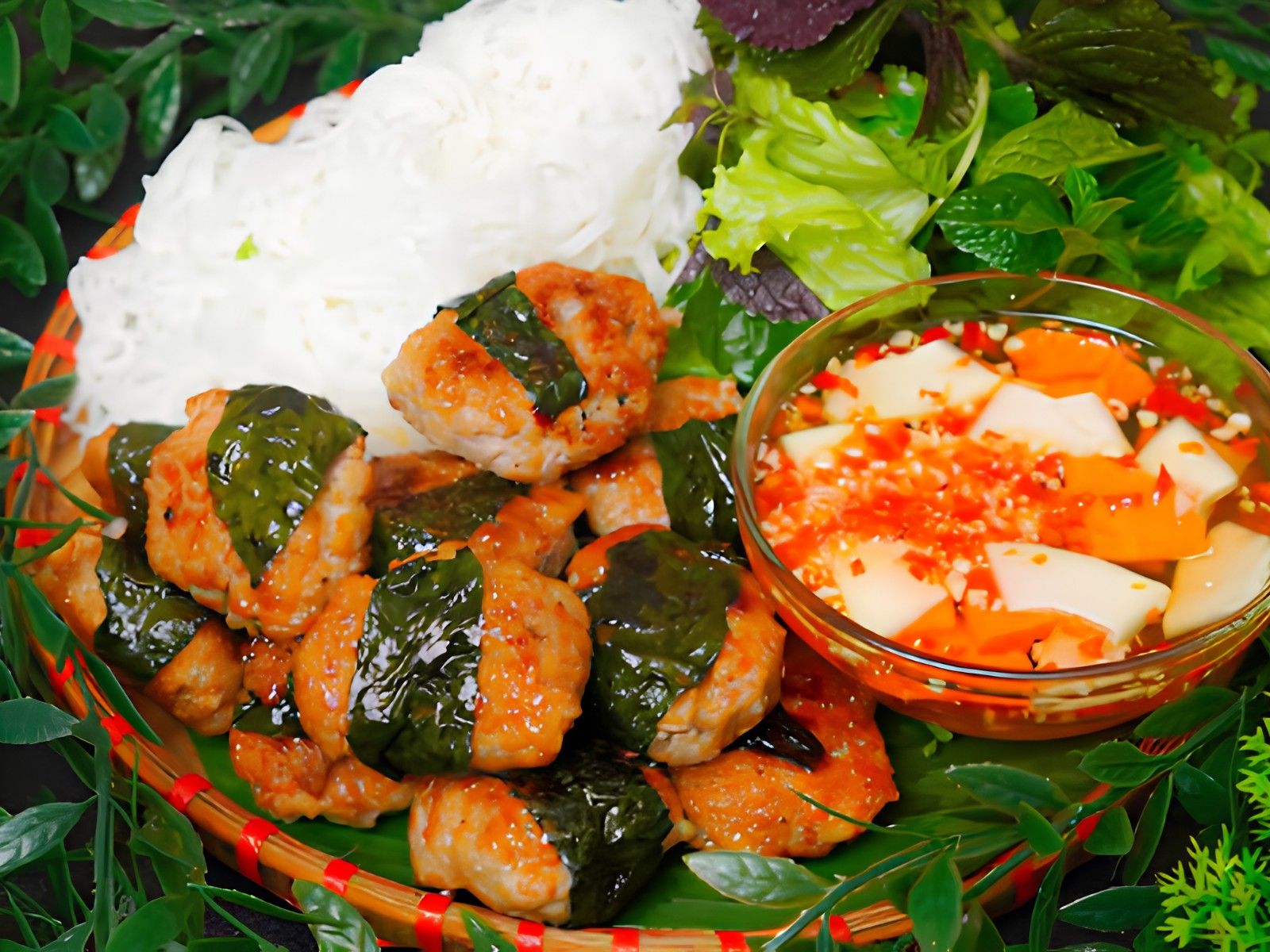
Tested in the CHIN-SU kitchenBún chả Hanoi is one of Hanoi’s most famous street foods and a quintessential Northern Vietnamese dish, featuring smoky, succulent pork patties and pork belly slices served with an umami-rich dipping sauce, tender vermicelli noodles, vibrant herbs, and crunchy pickles for a comforting and satisfying meal. Food writer Vũ Bằng wrote that the entire city was already crazy about bún chả as early as 1959. The dish gained worldwide attention in 2016 when President Barack Obama and Anthony Bourdain enjoyed it together at a small restaurant in Hanoi.
Locals usually eat bún chả for lunch. Bún chả shops in Hanoi typically open around 10 a.m. and often sell out by early afternoon, so it is considered a lunchtime dish rather than a dinner option. What makes it so amazing is the contrast. You get smoky, charcoal-grilled pork patties and sweet, caramelized belly slices sitting in a warm, tangy-sweet fish sauce broth. Then you eat it with cold rice vermicelli and a bunch of fresh herbs. Every single bite gives you a mix of warm and charred, cool and soft, plus bright and fresh flavors all at the same time.
Maybe you grew up eating at bun cha stalls back home and now live far away, or maybe you tried it once and just cannot stop thinking about that dipping sauce. Either way, making it from scratch is the best way to get it right, because you rarely find it on menus outside of Vietnamese restaurants.
In this guide, CHIN-SU shares the complete bun cha Hanoi recipe, great tips for a balanced dipping sauce and perfectly charred pork, and the traditional way Hanoian families serve it. The recipe takes about 4 hours in total, but 3 to 4 of those hours are just for letting the meat marinate. So, while the pork is sitting in the fridge, you can easily mix the sauce, pickle the veggies, and wash your herbs. The actual cooking time takes less than 40 minutes.
3 hr 20 min
Prep time
40 min
Cook time
4 hr
Total time
What Is Bun Cha Hanoi?
Bun cha Hanoi is a quintessential Northern Vietnamese dish. It brings together 2 cuts of grilled pork, savory patties, and sliced pork belly, all served in individual bowls of warm dipping sauce (nước chấm) broth with fresh rice vermicelli and a big plate of fresh herbs and pickled veggies for everyone to share. To help you say it like a local, the name sounds a lot like "boon chah ha noy" (IPA: [ɓun˨˩ ca˧ˀ˦˥ hæˈnɔɪ]). The word "chả" just refers to the grilled pork itself.
A food writer named Vu Bang first wrote about this dish back in 1959, and the very first restaurant that served it opened up on Gia Ngu (Gia Ngư) street in Hanoi's Hoan Kiem (Hoàn Kiếm) district, Vietnam. It became famous all over the world in May 2016, when President Obama and Anthony Bourdain grabbed a table and shared some bún chả Hà Nội at Bun Cha Huong Lien (Bún Chả Hương Liên) for an episode of Parts Unknown.
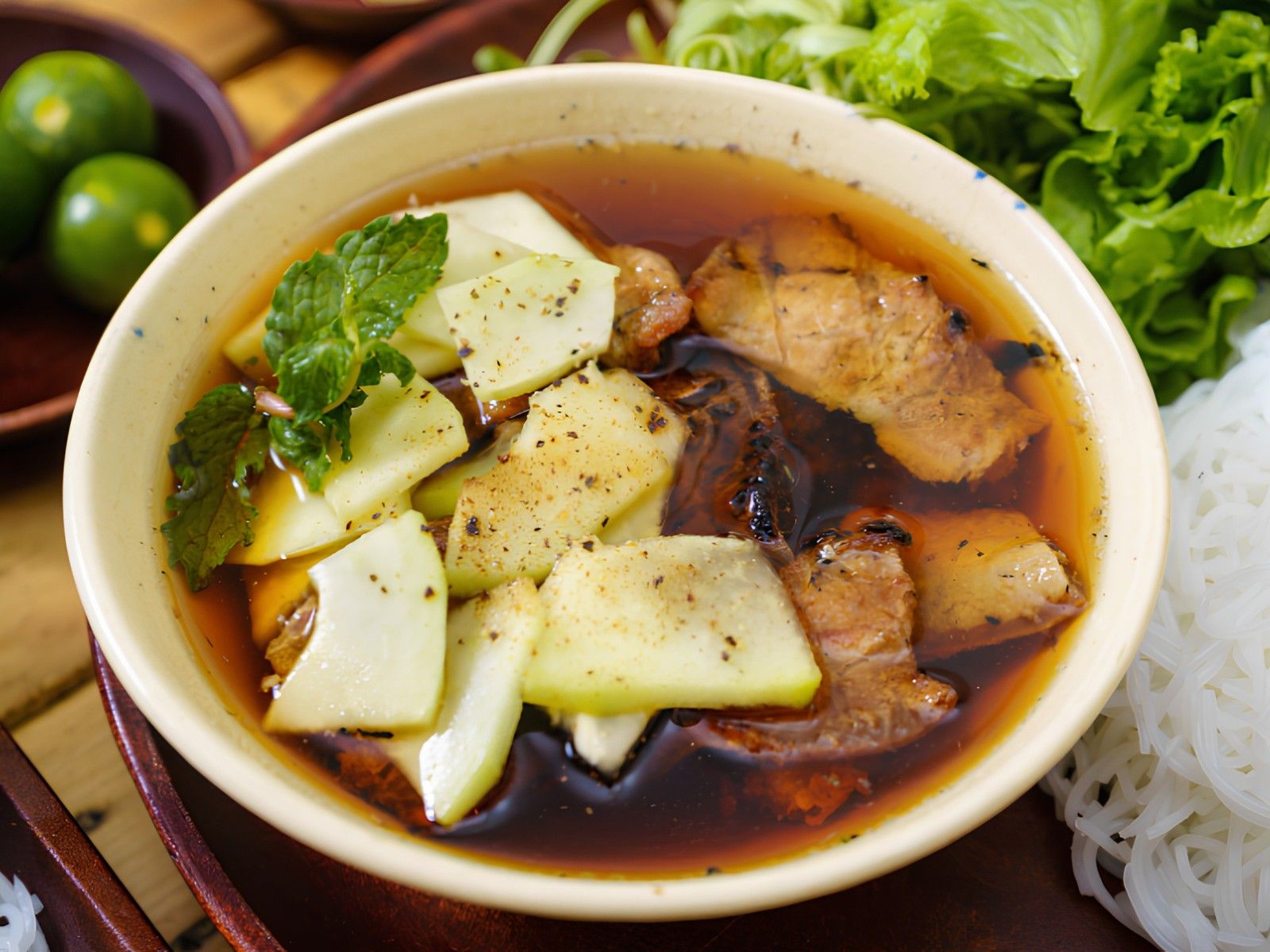
You will usually find it on American menus listed under "bun" or "grilled pork noodles," where smoky pork mixes with a warm, tangy-sweet broth and fresh herbs in every single bite. What makes it different from Southern noodle bowls like bun thit nuong (bún thịt nướng) is that every single ingredient comes out separately, and you get the dipping sauce warm instead of at room temperature.
In Hanoi today, a full serving at a neighborhood shop costs about VND 40,000 to 70,000 (roughly $1.50 to $2.70) while the same dish at a Vietnamese restaurant in the U.S. usually costs $15 to $20. That price gap is exactly why making it from scratch pays off.
Why You'll Love Bun Cha Hanoi
You're going to love this bun cha Hanoi because it brings 5 distinct flavors together: smoky, salty, sweet, sour, and herbal. Every single bite tastes a little different depending on what you decide to dip and grab.
- It is a beautifully arranged plate, not just a standard 1-bowl meal. Each part brings something special to the table: smoky charcoal-grilled pork, a warm broth that is both tangy and sweet, crunchy pickled carrots and green papaya, and a big handful of cool, fresh herbs. You get to put each bite together yourself, so the whole meal feels like a lot more than just the sum of its parts.
- It is completely perfect for making ahead of time. You can leave the pork to marinate overnight, and then mix up your dipping sauce and pickle your veggies 1 day before you want to eat. When it is finally time for dinner, you only have to focus on grilling the pork and boiling the noodles.
- It is easily simple enough for a busy weeknight. This recipe only takes 6 straightforward steps and requires around 40 minutes of actual hands-on work. Plus, you will not need any special equipment other than a regular grill and a few mixing bowls. The marinade does almost all of the heavy lifting for you while you just take care of the rest.
Bun Cha Hanoi Ingredients
This bun cha comes together from 4 distinct parts: the pork and marinade, the dipping sauce, the pickled veggies, and the final noodle-and-herb spread. This recipe easily serves 4 to 6 people, and most of the amounts below follow traditional Vietnamese home cooking, which means you basically season your aromatics, pickles, and herbs to taste instead of sticking to exact measurements.
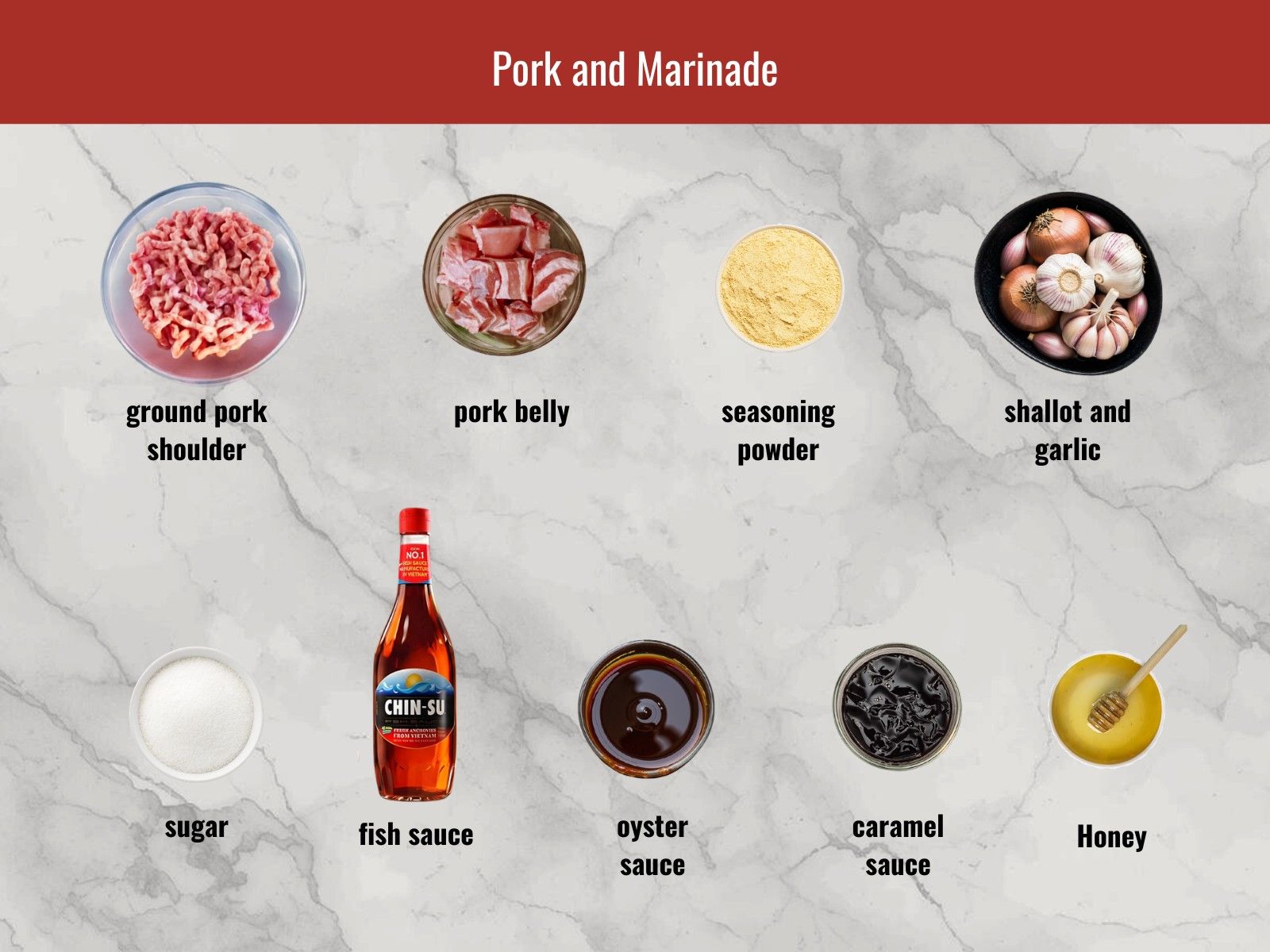
Pork and Marinade
- 1.1 pounds (500g) ground pork shoulder. Mincing it by hand gives you a much better texture than machine-ground meat, and it is perfect for forming the patties.
- 1.1 pounds (500g) pork belly, sliced thin. The fat melts down beautifully and gets super crispy on the grill.
- 1 tablespoon seasoning powder. This seasoning powder works as the core savory base for your whole marinade.
- 1 tablespoon sugar. Sugar helps the pork caramelize perfectly right on the grill surface.
- 1 tablespoon fish sauce. You use fish sauce to season the meat from the inside out with a rich umami flavor. You can try CHIN-SU fish sauce for this recipe.
- 1 tablespoon oyster sauce. Oyster sauce adds a nice color and keeps the meat from drying out while you are grilling it.
- 1 tablespoon caramel sauce (nước hàng, see Step 1). Caramel sauce is what gives the pork its signature deep amber color.
- Shallot and garlic, minced to taste. These are the essential aromatic bases that you need for the marinade.
- Honey, optional. Adding a bit of honey gives the meat an extra fragrance and helps it get a deeper brown color on the grill.
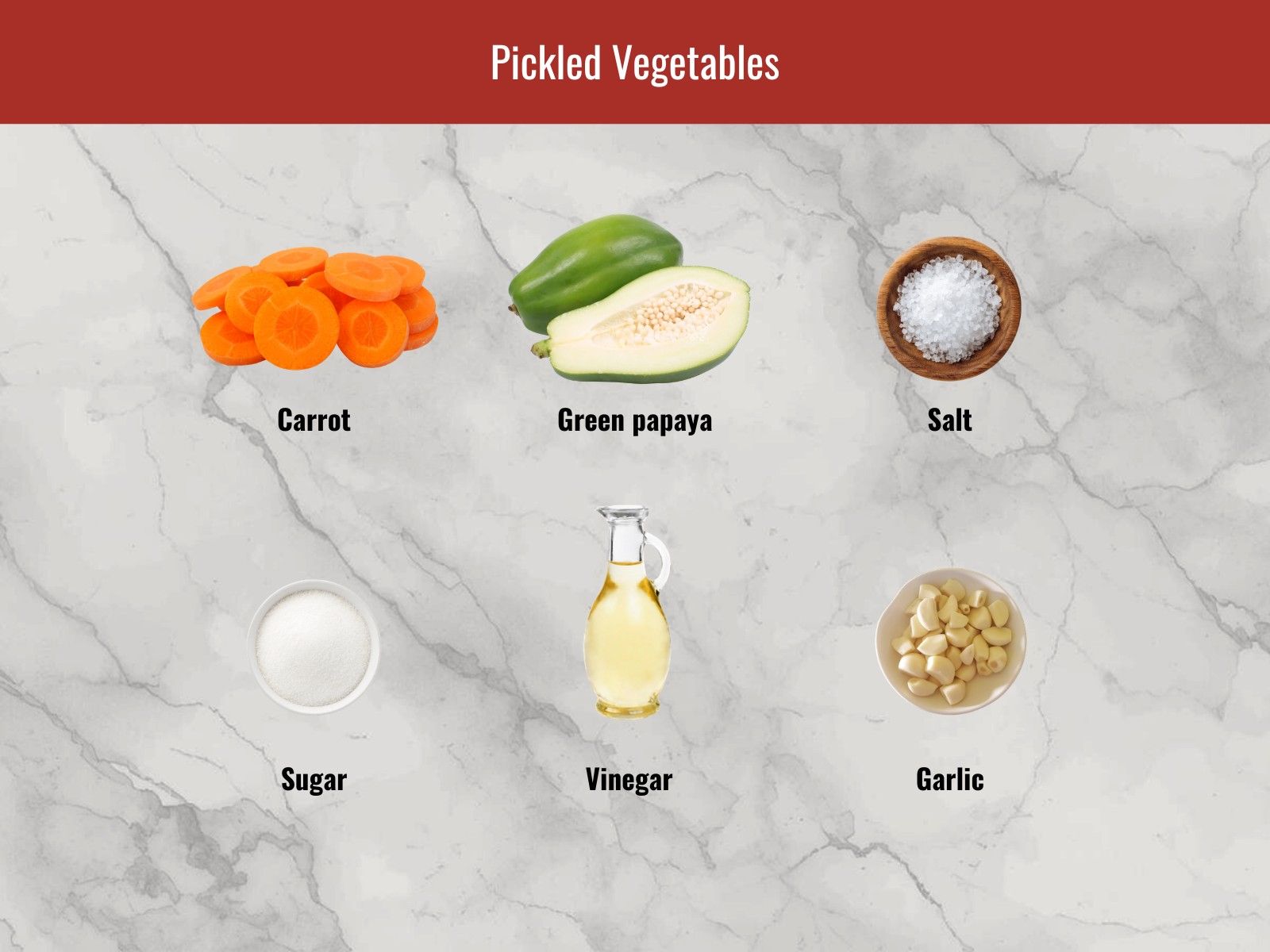
Pickled Vegetables
- Carrot, peeled and thinly sliced.
- Green papaya or kohlrabi, peeled and thinly sliced. This is the type of pickle commonly served at Hanoi shops, and it stays crisp even in the warm sauce. Seeded, thinly sliced cucumber is optional and is more often found in homemade versions than in shops.
- Salt, sugar, vinegar, and garlic for the quick-pickle brine, mixed to your own taste.
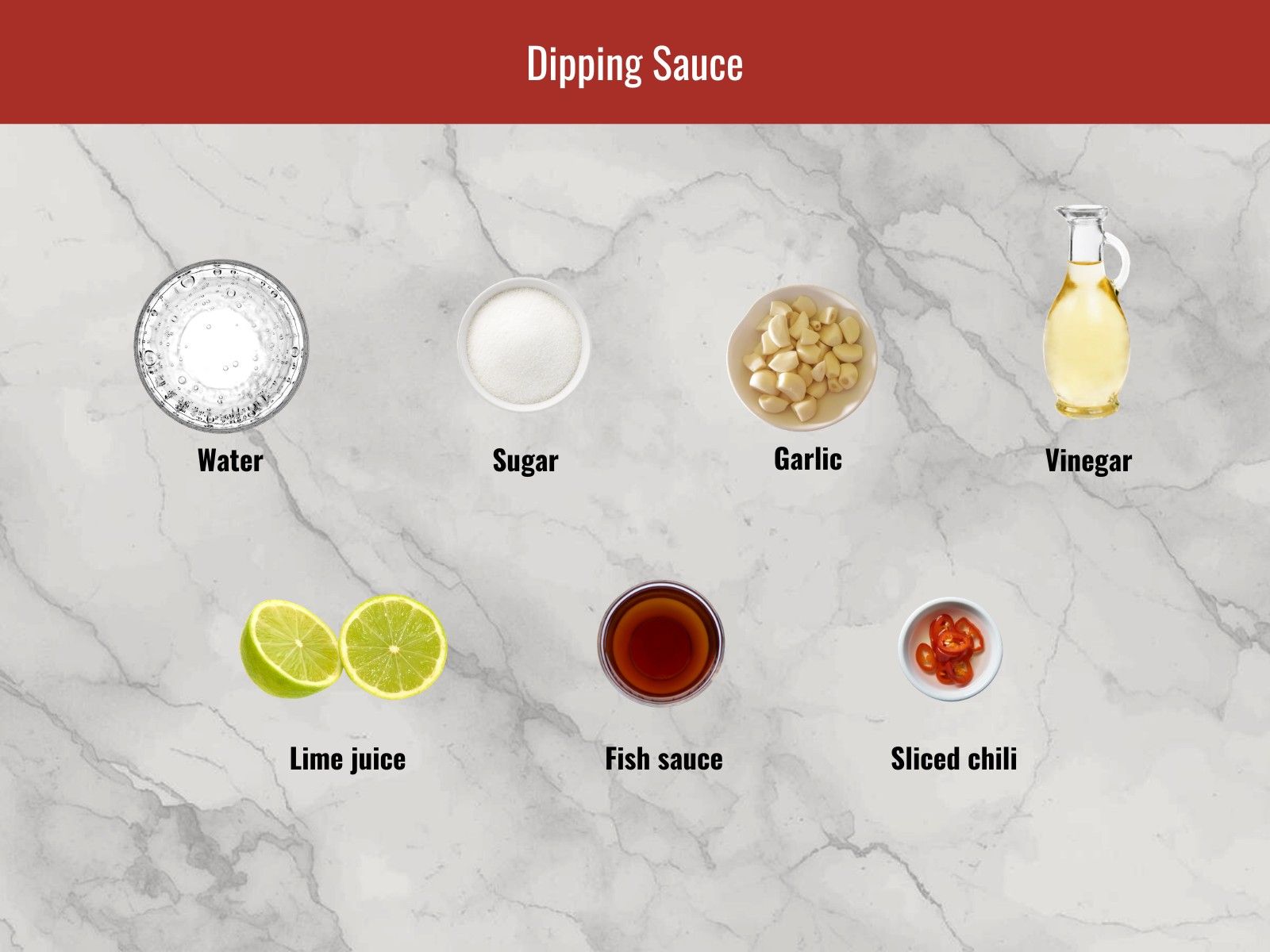
Dipping Sauce
- Water, sugar, garlic, vinegar, lime juice, and fish sauce, mixed to taste, boiled briefly, and served warm. A good starting ratio runs 3 parts water to 1 each of fish sauce, sugar, and vinegar.
- Sliced chili and lime wedges for adjusting at the table.
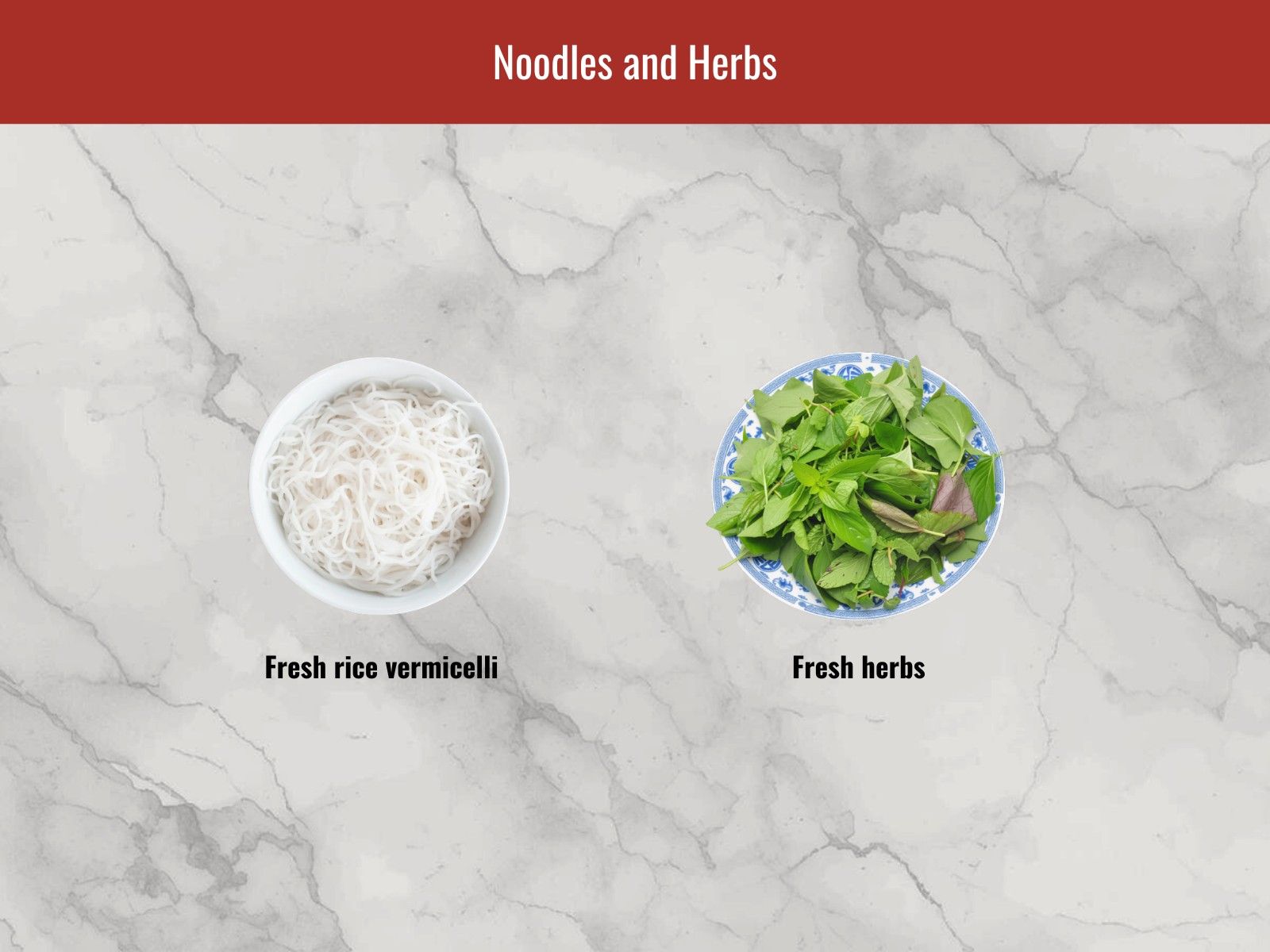
Noodles and Herbs
- Fresh rice vermicelli. This is the traditional choice, ready to serve without cooking, and you can easily pick it up in the refrigerated section at Asian grocery stores. But you can just use dried rice vermicelli instead and cook it according to the package instructions if fresh is unavailable.
- Fresh herbs: including lettuce, perilla, Vietnamese lemon balm (kinh giới), peppermint, Thai basil and bean sprouts.
How to Make Bun Cha Hanoi Step by Step
The whole bun cha comes together in about 4 hours, and you can just sit back for most of that time while the meat marinates. The active cooking actually takes less than 40 minutes across 6 simple steps. You can think of it in 3 easy stages: first, make your caramelized sugar and marinade; second, prep your dipping sauce and pickled veggies while the pork marinates; and finally, grill the pork and cook the noodles right before you are ready to serve.
Step 1: Make the Caramelized Sugar (Nước Hàng)
Put 3 tablespoons of sugar and a splash of water into a small pan over medium heat. Instead of stirring it with a spoon, just swirl the pan around gently until the sugar melts completely and turns a dark amber color, which looks like iced tea, in about 3 to 4 minutes.
As soon as it hits that color, pour in 2 tablespoons of water to stop it from cooking any further, give it a quick stir to combine everything, and then set it aside.
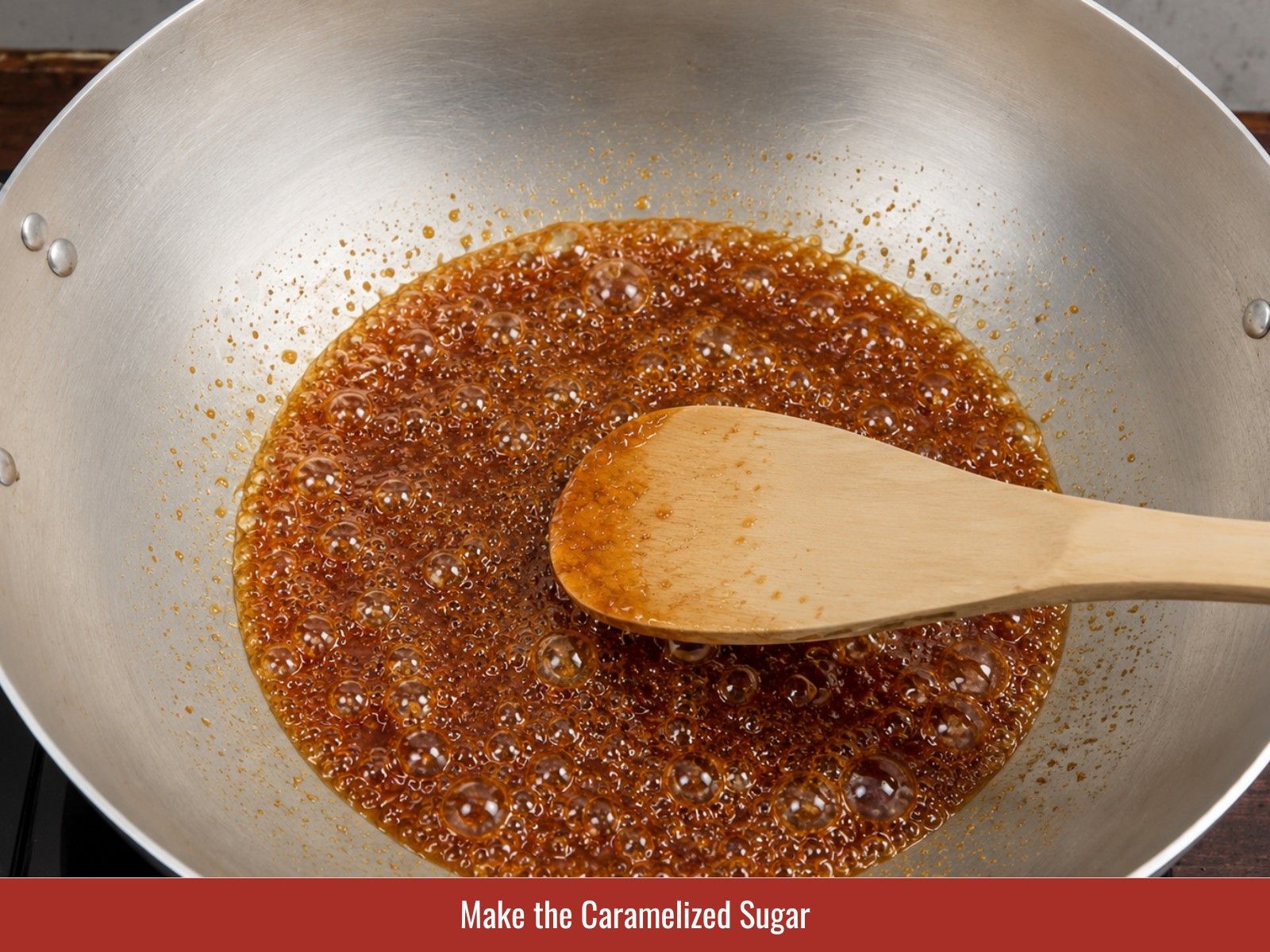
You are really looking for a deep amber tone here. If your sugar turns completely black, it means it is burnt, so you will need to throw it out and start over. A lot of recipes skip this step entirely, but this is exactly what gives the pork that awesome restaurant-style color.
Step 2: Marinate the Pork
Mix the ground pork shoulder with 1 tablespoon each of seasoning powder, sugar, fish sauce, oyster sauce, and your caramelized sugar, then throw in the minced shallot and garlic. Stir in a little honey at this point if you happen to have some on hand.
One thing you will not find in this marinade is lemongrass. Northern-style cha skips it; lemongrass belongs to Southern grilled pork like bun thit nuong (bún thịt nướng), and adding it here pulls the flavor south.
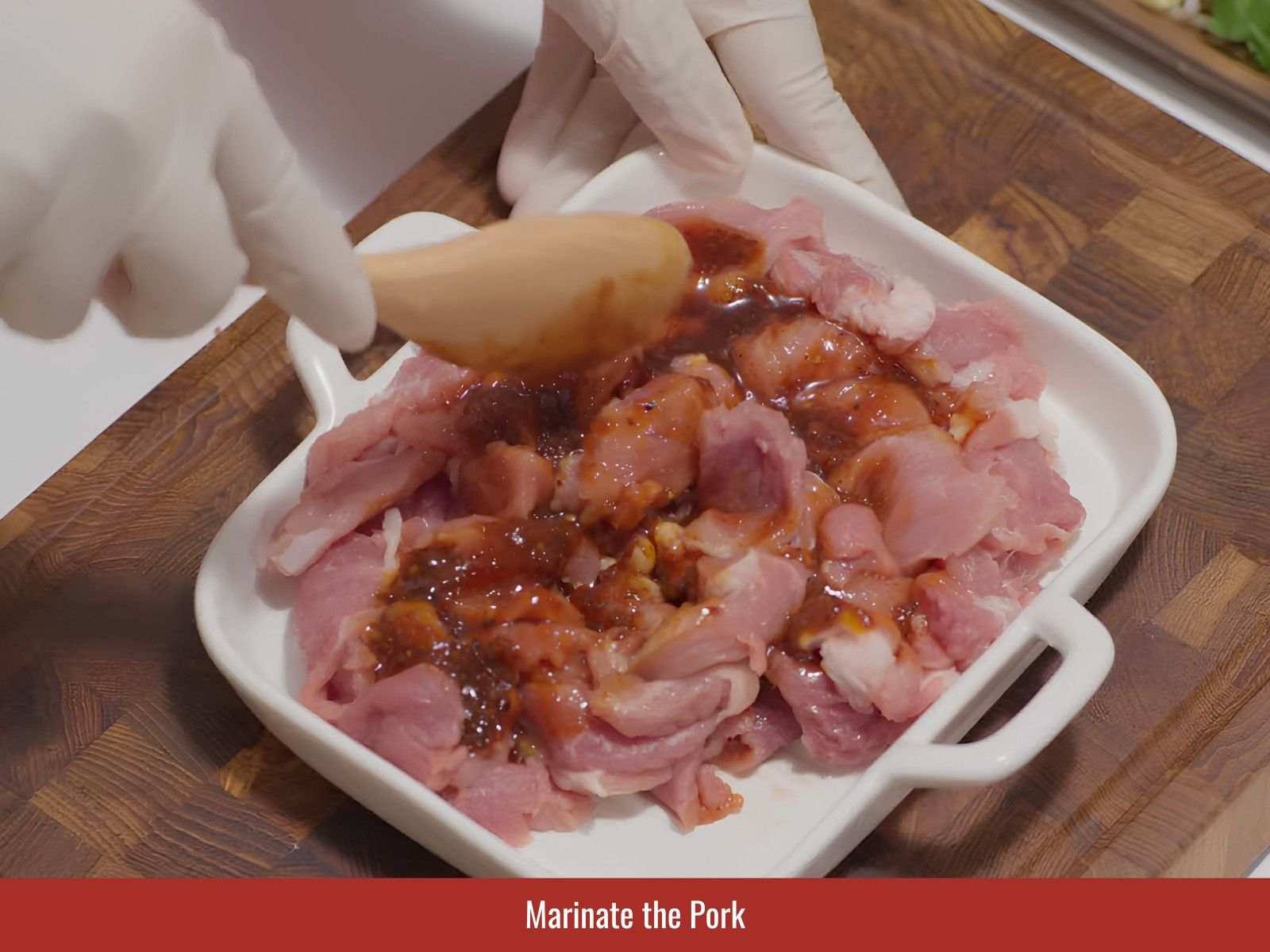
Next, toss the sliced pork belly in the exact same marinade, but keep it in a separate container so it is easy to grill the 2 different cuts apart later on. To get clean, even belly slices, put the meat in the freezer until it is firm but not rock solid, then slice it neatly into 1/4-inch (6mm) pieces while it is still semi-frozen.
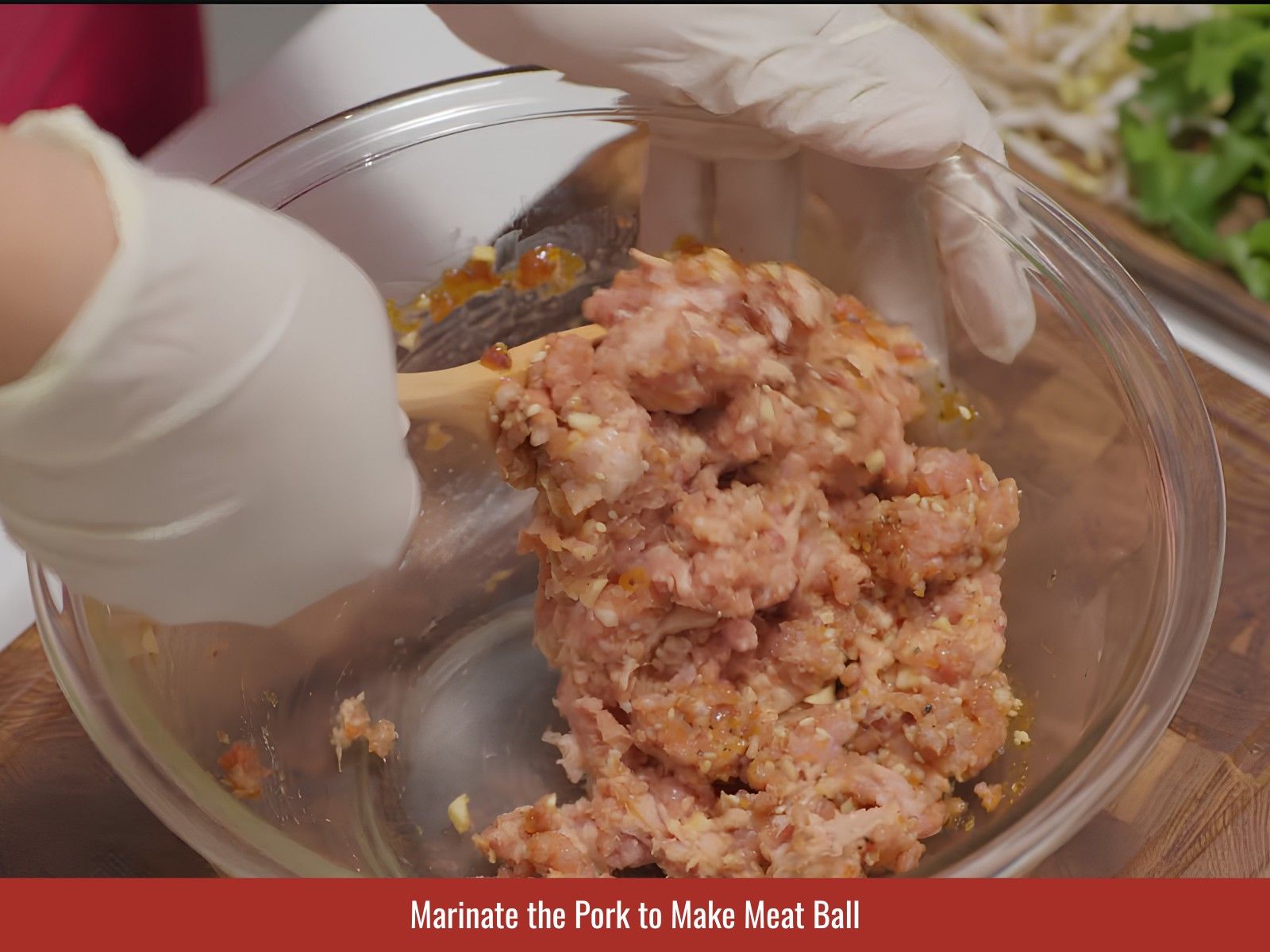
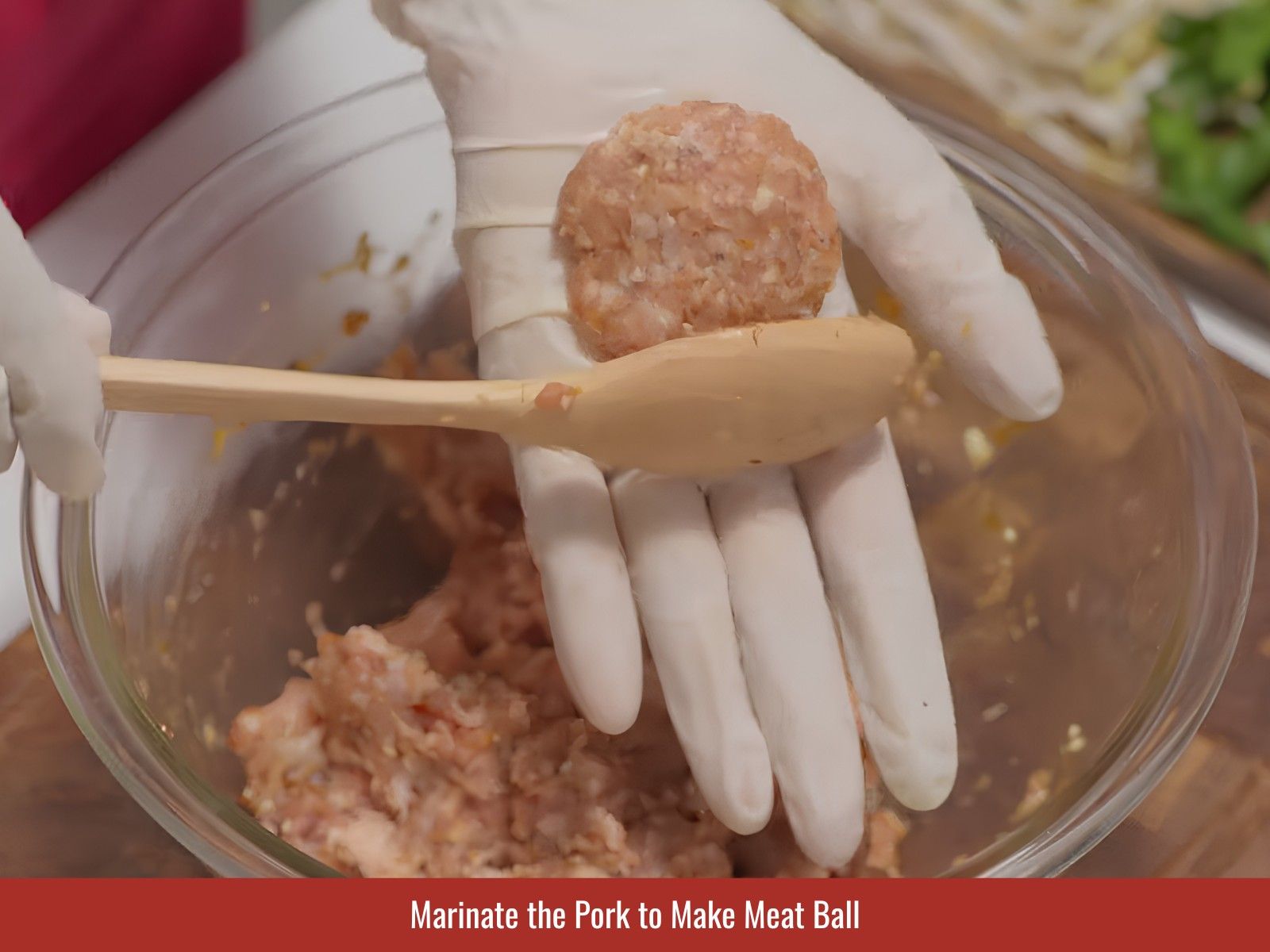
Cover both containers and keep them in the fridge for at least 2 to 3 hours, or just leave them overnight to get the deepest flavor. When you open the container up, the meat should look perfectly coated and smell incredibly fragrant.
Step 3: Make the Pickled Vegetables
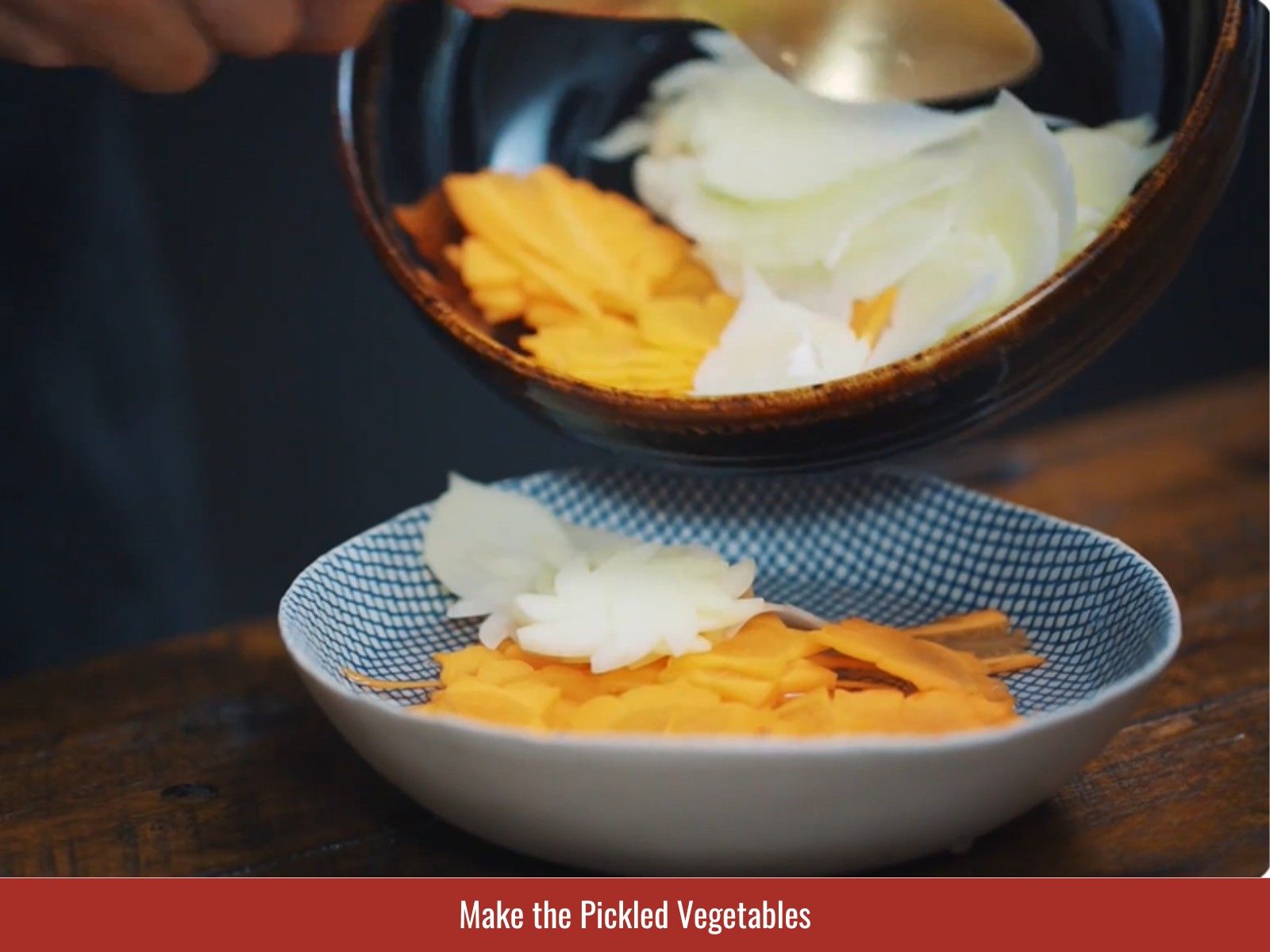
Peel and thinly slice your green papaya or kohlrabi along with the carrot. Toss the slices with 1 tablespoon of salt, let them drain for 10 minutes, and squeeze out the excess water afterward to keep the pickle crisp.
From there, mix the drained vegetables with sugar, vinegar, and minced garlic, then let them sit at room temperature for 1 to 2 hours while the pork marinates.
Add a few seeded cucumber slices to the mix if you like the extra crunch, though papaya or kohlrabi carries the dish on its own.
Step 4: Make the Dipping Sauce
Start with an amount of water that matches how much sauce you want to make, then stir in sugar, minced garlic, vinegar, and fresh lime juice to set up a sweet-and-sour base.
Once that base tastes balanced, you can add fish sauce 1 spoonful at a time, making sure to taste as you go until the sour, salty, and sweet flavors all fit together perfectly. A good starting point is 3 parts water to 1 part each of fish sauce, sugar, and vinegar, though the original recipe leaves the final decision up to your own taste.
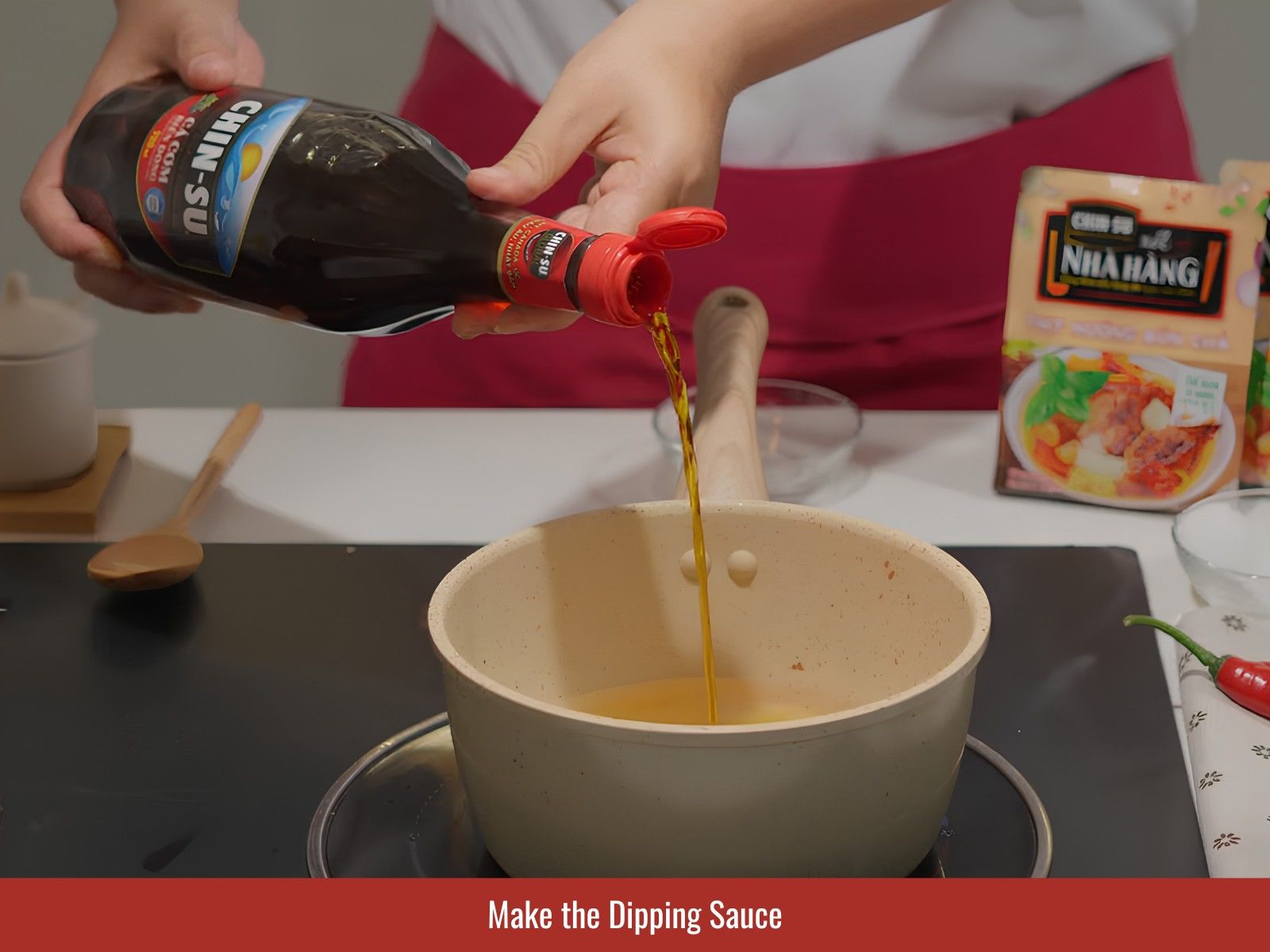
After you get the balance right, bring the sauce to a brief boil, keep it warm until you are ready to serve, and throw in some sliced fresh chili to add a bit of heat.
The fish sauce you pick really shapes the whole sauce, since its protein level (measured in degrees of nitrogen, or °N) brings out the umami flavor. Here, we use CHIN-SU anchovy fish sauce for its clean anchovy base and balanced saltiness.
Step 5: Grill the Pork
Roll your marinated ground pork into small, even balls, and then press each one down slightly to make a patty.
After that, place the patties and belly slices on different areas of your grill rack and cook them over charcoal until both sides turn a beautiful golden brown. Make sure to grill these 2 cuts separately because they do not cook at the same speed. The oyster sauce you put in the marinade keeps the meat nice and juicy, so it will not dry out or burn too easily.
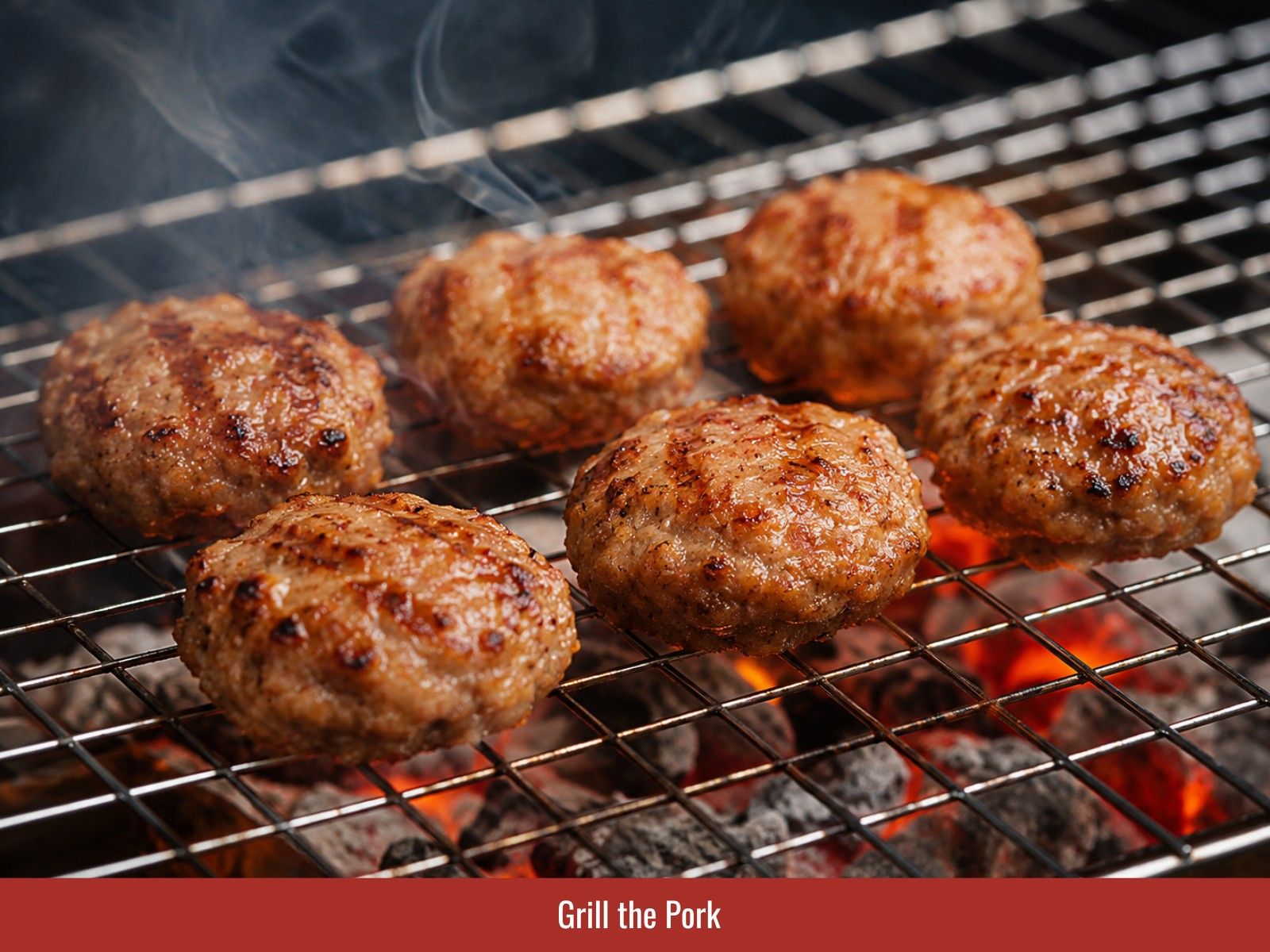
Charcoal grilling (nướng than hoa) is worth the extra effort here. While you grill the pork, the fat drips right down onto the hot coals, creating that classic sizzle and smoke that give bun cha its amazing smoky smell and crispy, charred edges. If you do not have a charcoal grill, just place the pork on a foil-lined rack and bake it at 425°F (220°C) using both the top and bottom oven heat for about 10 minutes per batch.
You might not even need to flip the belly slices if both heating elements are turned on. No matter which way you do it, you want to look for a perfect golden-brown finish with that rich amber shade from the caramelized sugar and oyster sauce.
Step 6: Cook the Noodles
Go for fresh rice vermicelli (bún tươi) if you can find it, since the original Vietnamese recipe uses it straight out of the package with no cooking at all. You just need to separate the strands and put them on a plate. You will easily find fresh vermicelli in the refrigerated section at most Asian grocery stores.
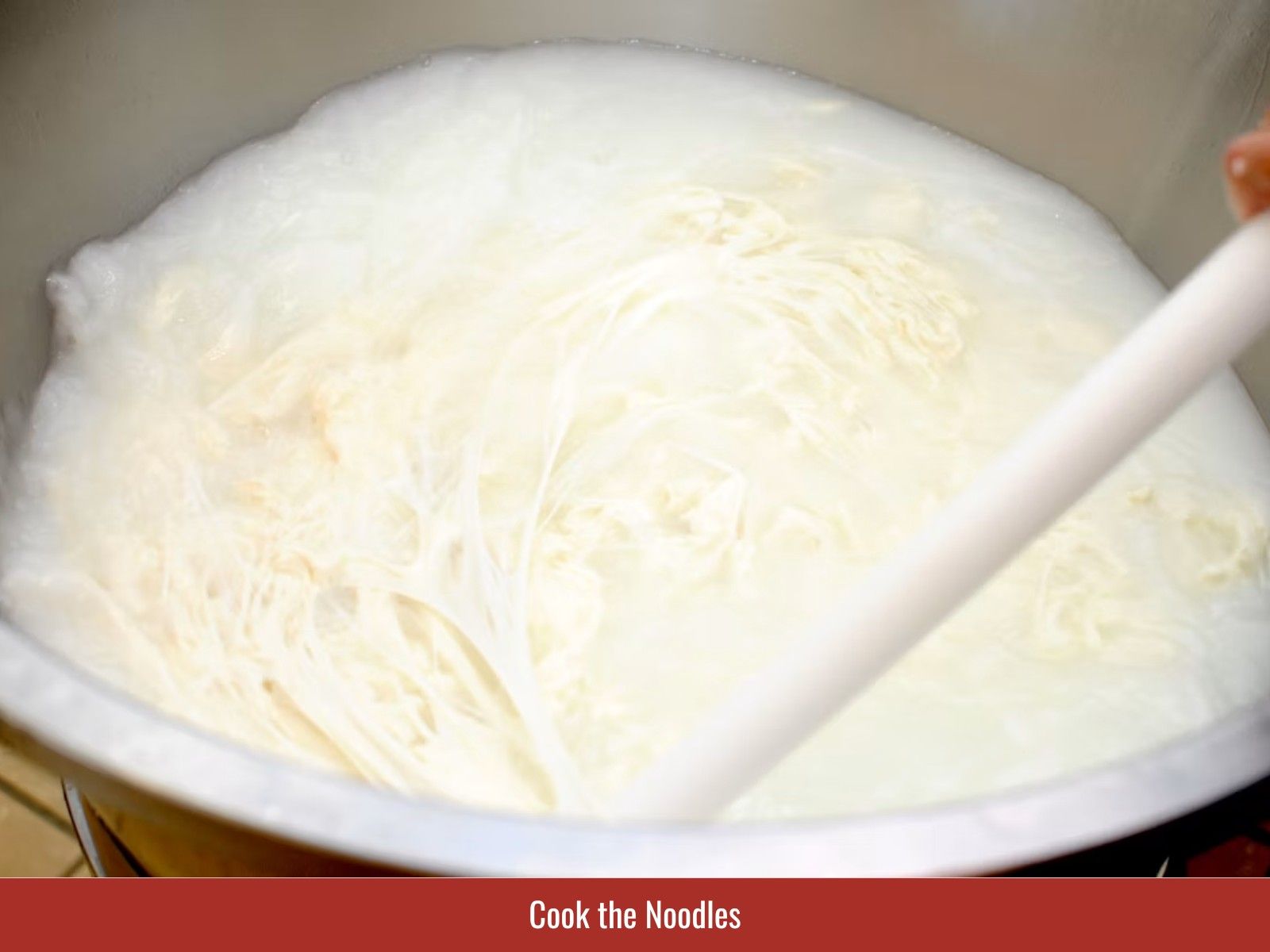
If you cannot find fresh rice vermicelli, you can still use dried rice vermicelli (bún khô), which is really common in the US. This time, bring a large pot of water to a boil and cook the noodles according to the package instructions, usually for 3 to 5 minutes. Once they are nice and tender, drain them and rinse them under cold running water to stop the cooking process and wash off the surface starch, then set them aside.
How to Assemble and Serve Bun Cha Hanoi
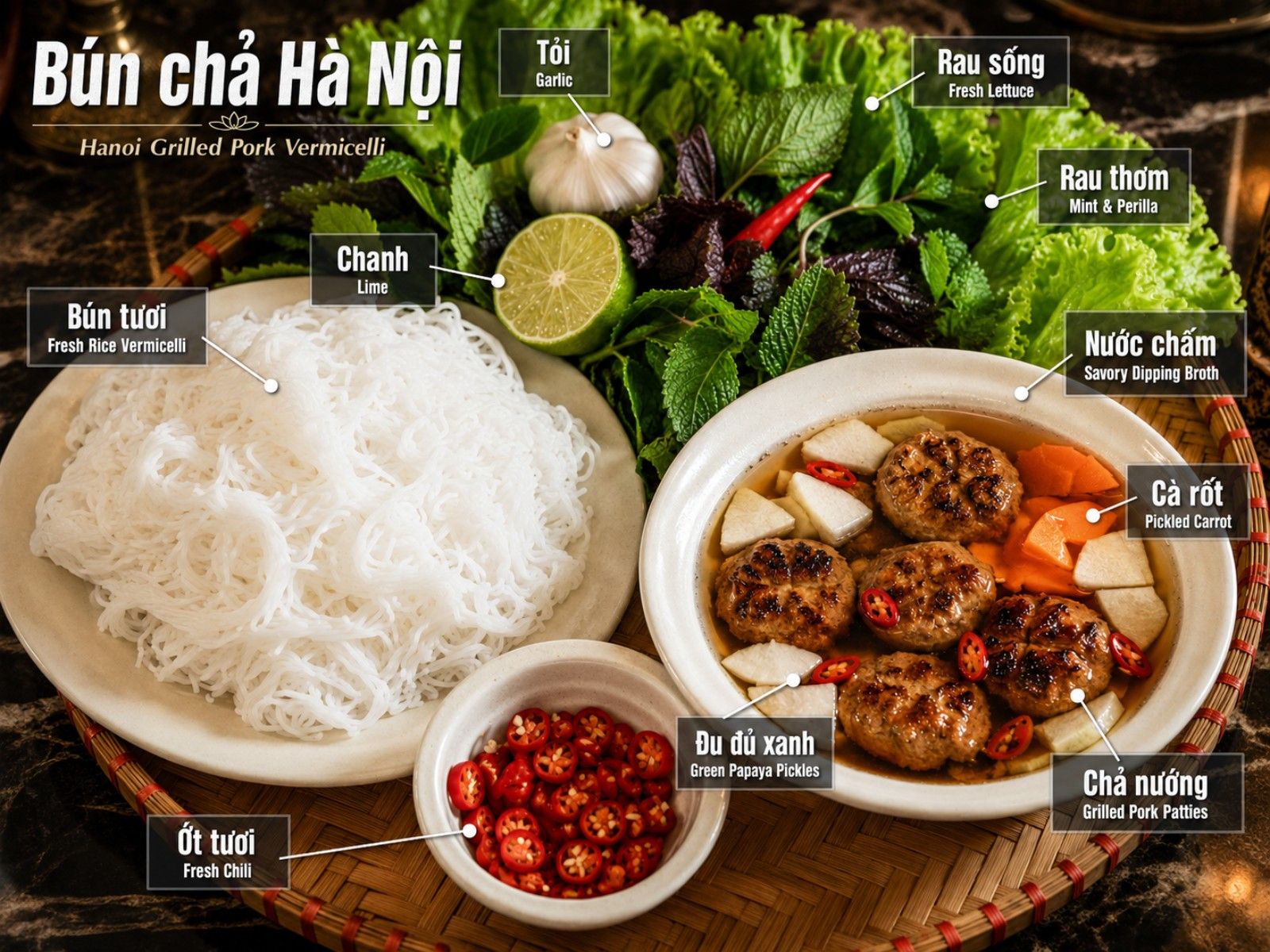
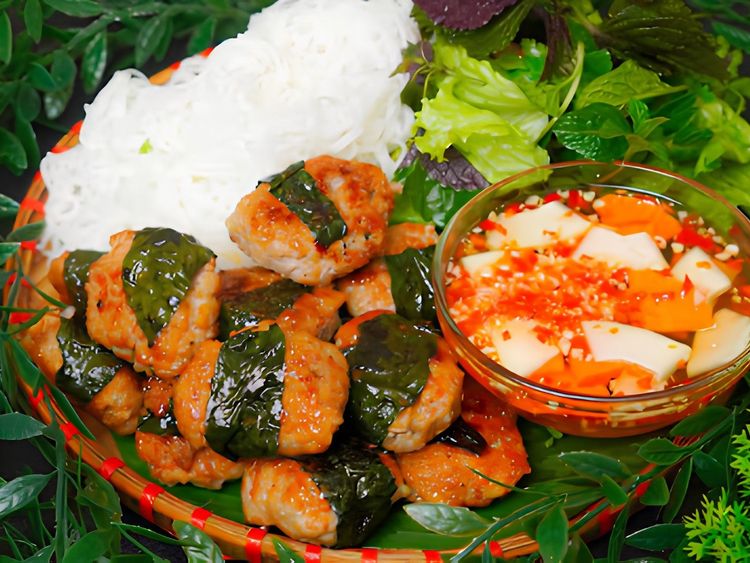
Bun cha Hanoi is a build-your-own meal where each part arrives on its own plate. Nothing is put together beforehand, so everyone gets to dip and make each bite according to their own taste. The classic setup looks like this:
- Rice vermicelli (bún), placed on a shared plate right in the middle.
- Grilled pork, including both the savory patties and sliced belly, kept nice and warm.
- An individual bowl of warm dipping sauce for each person, with a few patties and belly slices dropped right in.
- Pickled carrot and green papaya, spooned out right next to the sauce.
- A huge plate of fresh herbs, shared right in the center of the table.
- Lime wedges, kumquats, extra vinegar, fish sauce, and chili set out on the table so everyone can adjust things as they go.
To eat it, just grab a small bundle of noodles and herbs with your chopsticks, dip it into the warm sauce, and then pick up some pork and pickled veggies to eat in that exact same bite.
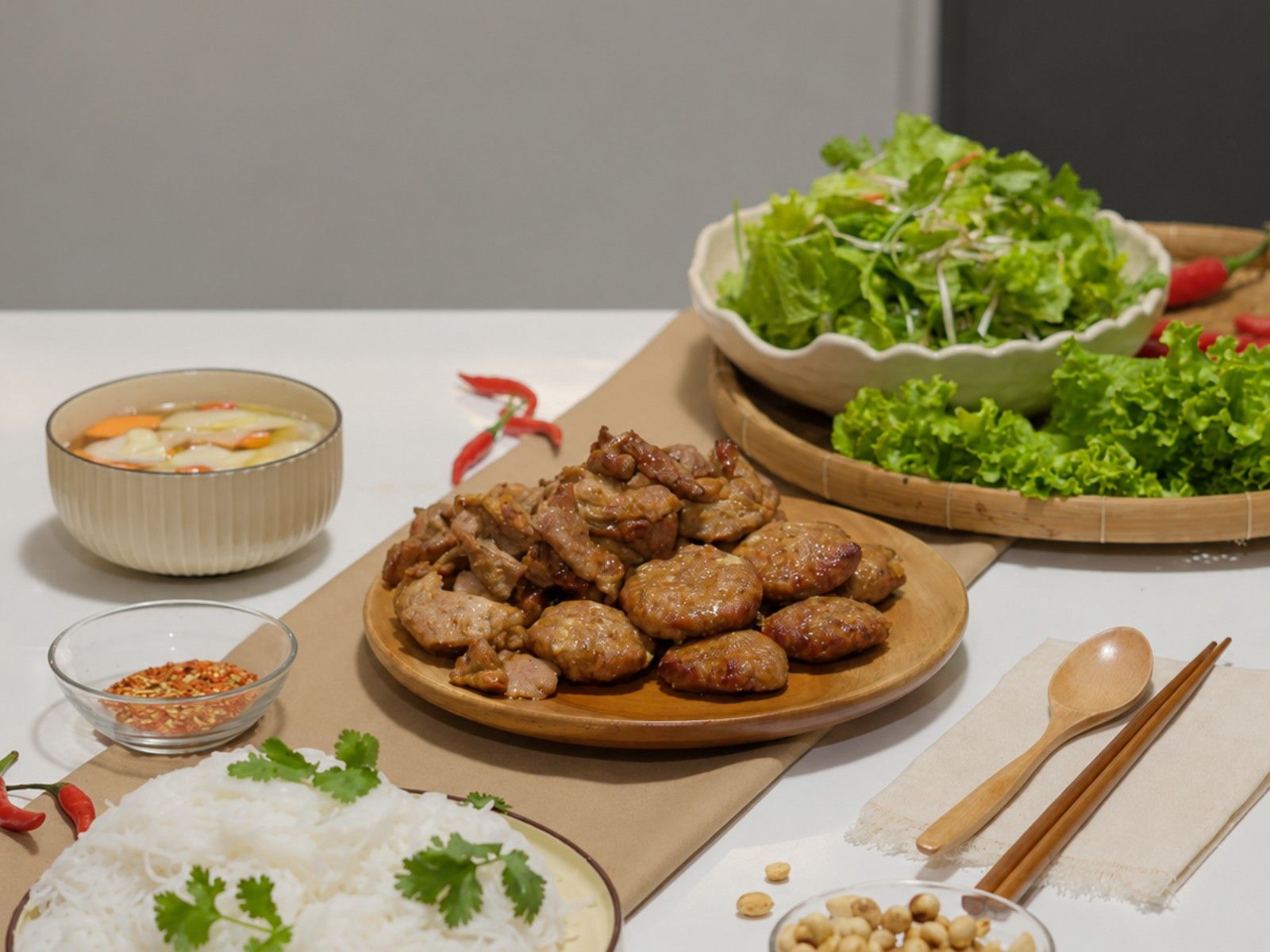
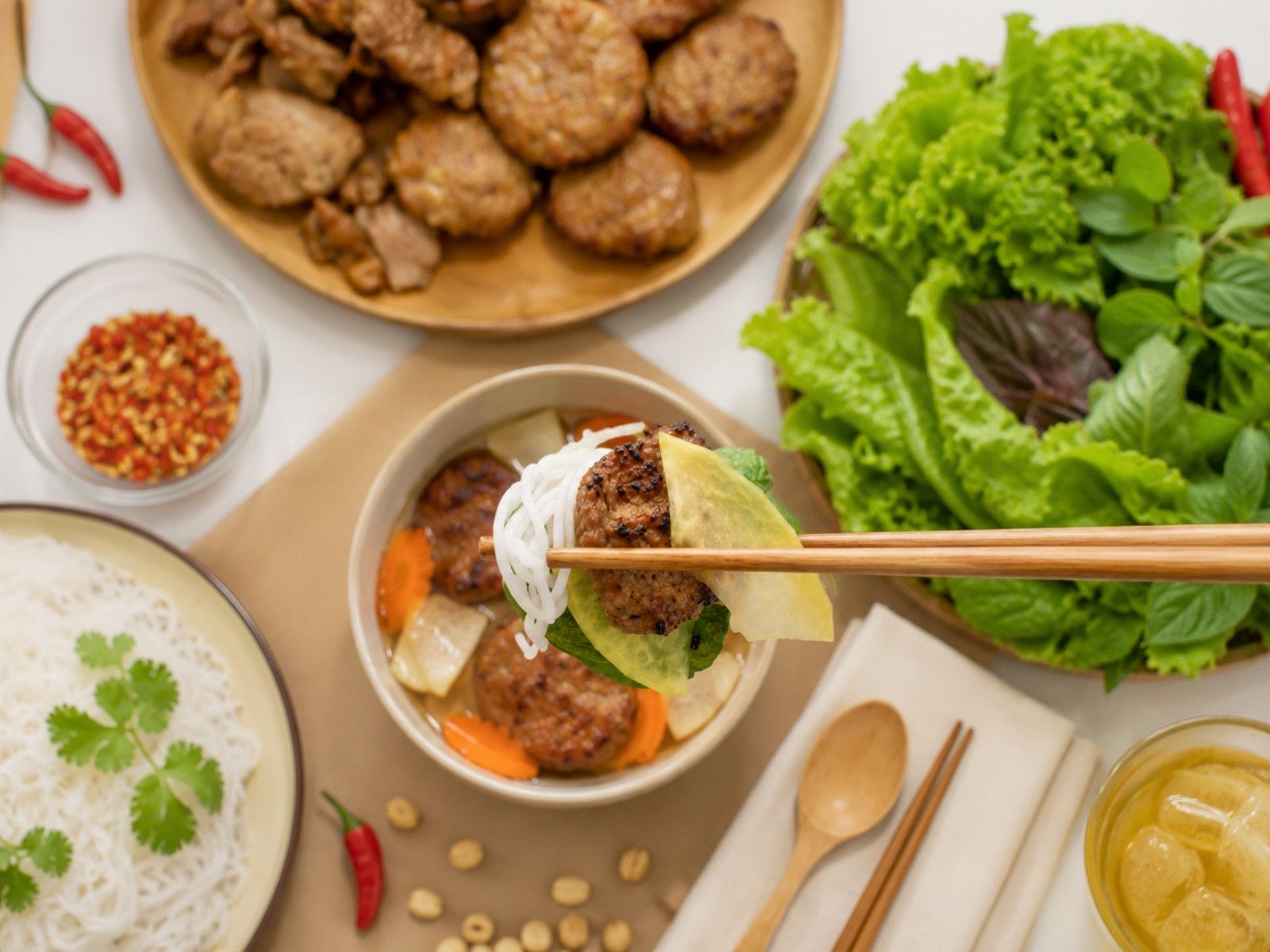
That social, dip-as-you-go rhythm is exactly how the street stalls in Hanoi serve it for lunch, usually between 11 AM and 2 PM, where you can easily find a spot just by looking for the smoke rising over a "chả" sign. A lot of people in Vietnam like to squeeze a little lime or kumquat juice into their bowl and splash in some extra vinegar or fish sauce, so each person can really tailor the sauce to their own liking.
Tips for the Best Bun Cha Hanoi
These are 5 small ways that make a huge difference between good bun cha and great bun cha.
- Marinate overnight if you can. The minimum is 2 to 3 hours, but letting it rest overnight allows the fish sauce and garlic to season the pork all the way through. You can marinate it in the morning for lunch, or at midday for dinner.
- Stop the caramelized sugar at dark amber. Take the sugar off the heat the moment it reaches that deep amber tone, since burnt sugar turns the pork a murky color instead of the golden-brown you want.
- Grill the patties and belly slices separately. The 2 cuts cook at different rates, so keeping them on separate sections of the rack helps each piece finish evenly.
- Add honey to the marinade if you have it. A spoonful brings out extra fragrance once the pork hits the grill and deepens the brown color, though it is completely optional.
- Serve the dipping sauce warm. A warm bowl keeps the grilled pork fat from congealing on the surface of the broth, which is exactly what gives bun cha its clean, glossy finish.
What Can You Substitute or Change in Bun Cha Hanoi?
These 7 substitutions help you make bun cha Hanoi with US grocery store ingredients without losing the dish's core flavor. The original Vietnamese recipe is the standard here, so think of these as ways to work with what you can find, not upgrades.
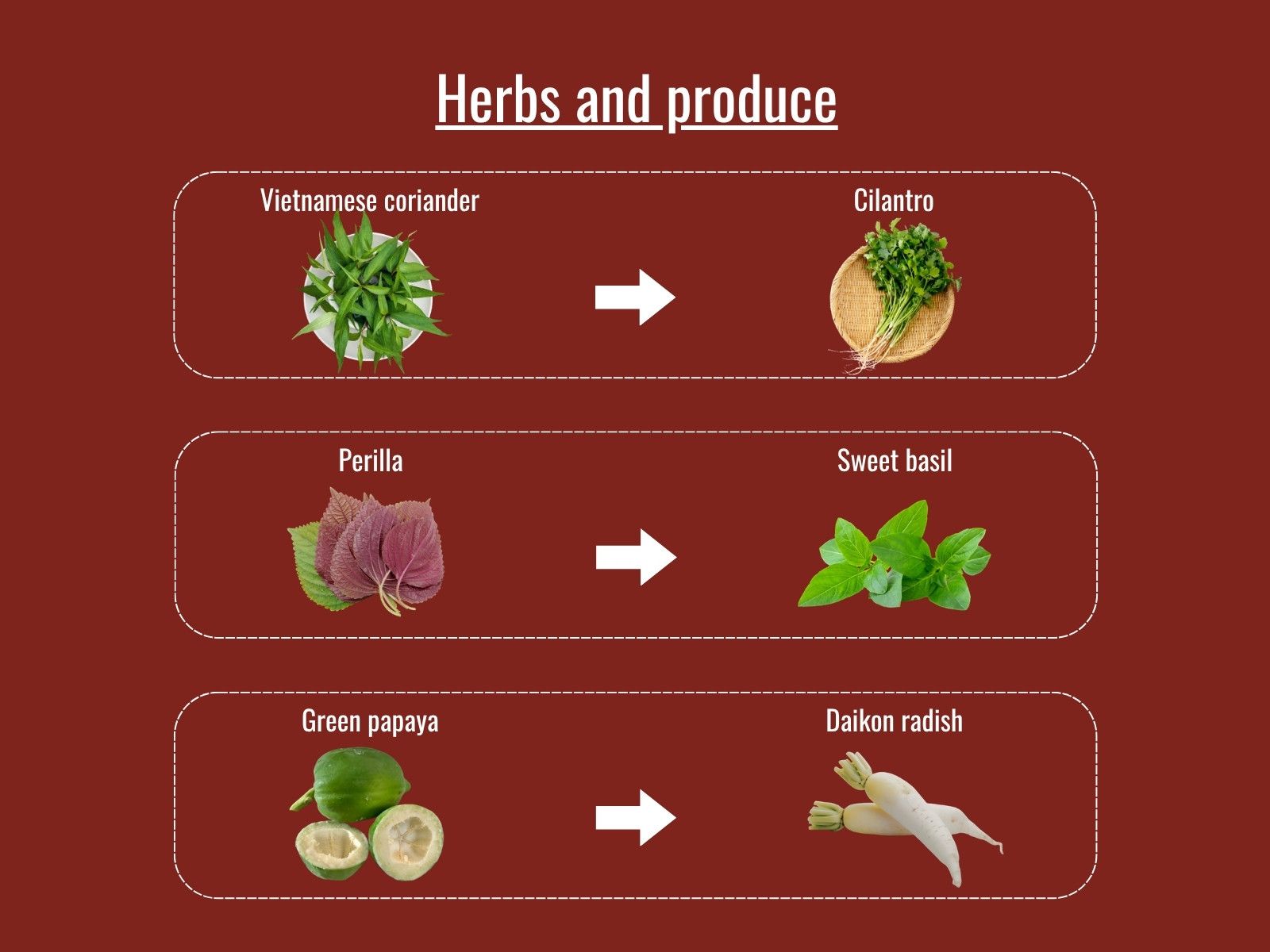
Herbs and produce
- Cilantro stands in for Vietnamese coriander. It runs milder and less peppery, but it still brings that fresh herbal layer. Rau răm is available at most Asian grocery stores if you'd rather use it.
- Sweet basil covers for perilla. You lose the earthy, slightly anise-like note, so keep the original if you can find it at an Asian grocery store.
- Vietnamese lemon balm (kinh giới) is fine to skip. Its minty-peppery aroma is unique to Northern Vietnamese herb plates and has no close match, though the dish holds up fine without it.
- Daikon radish replaces green papaya (đu đủ xanh). Both are pickled the same way in a vinegar-sugar brine and are available at Asian grocery stores.
Pork and seasoning
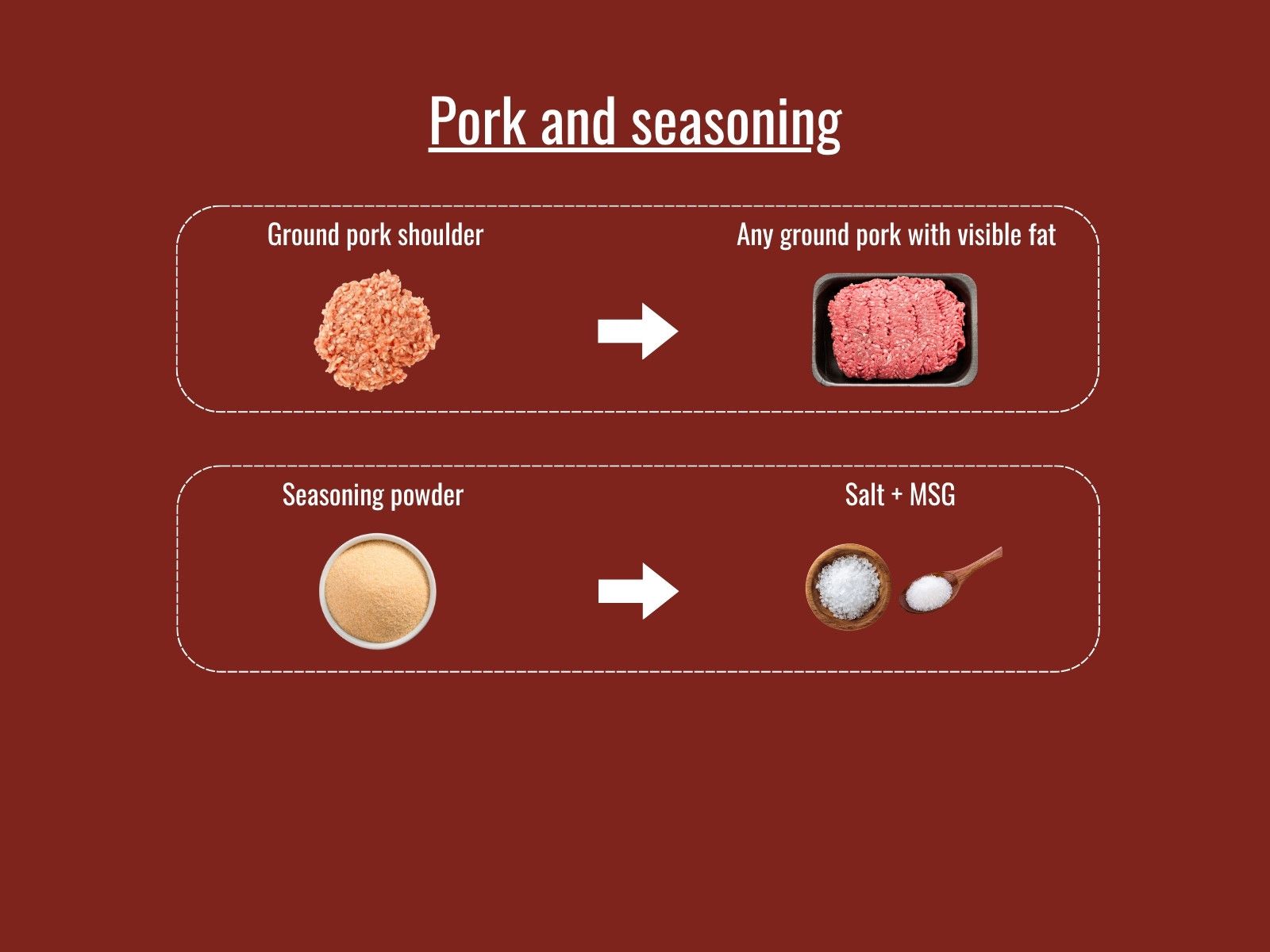
- Any ground pork with visible fat works for ground pork shoulder. If only lean pork is available, mix in 20 to 25% pork fat to keep the patties moist on the grill.
- Half a teaspoon of salt plus a pinch of MSG subs for seasoning powder. Seasoning powder is found in Asian grocery stores; the swap tastes slightly less rounded.
Dipping sauce
For a faster alternative to homemade nước chấm, CHIN-SU sweet & sour fish sauce provides a ready-made base that you can adjust to taste before serving.
Cooking method
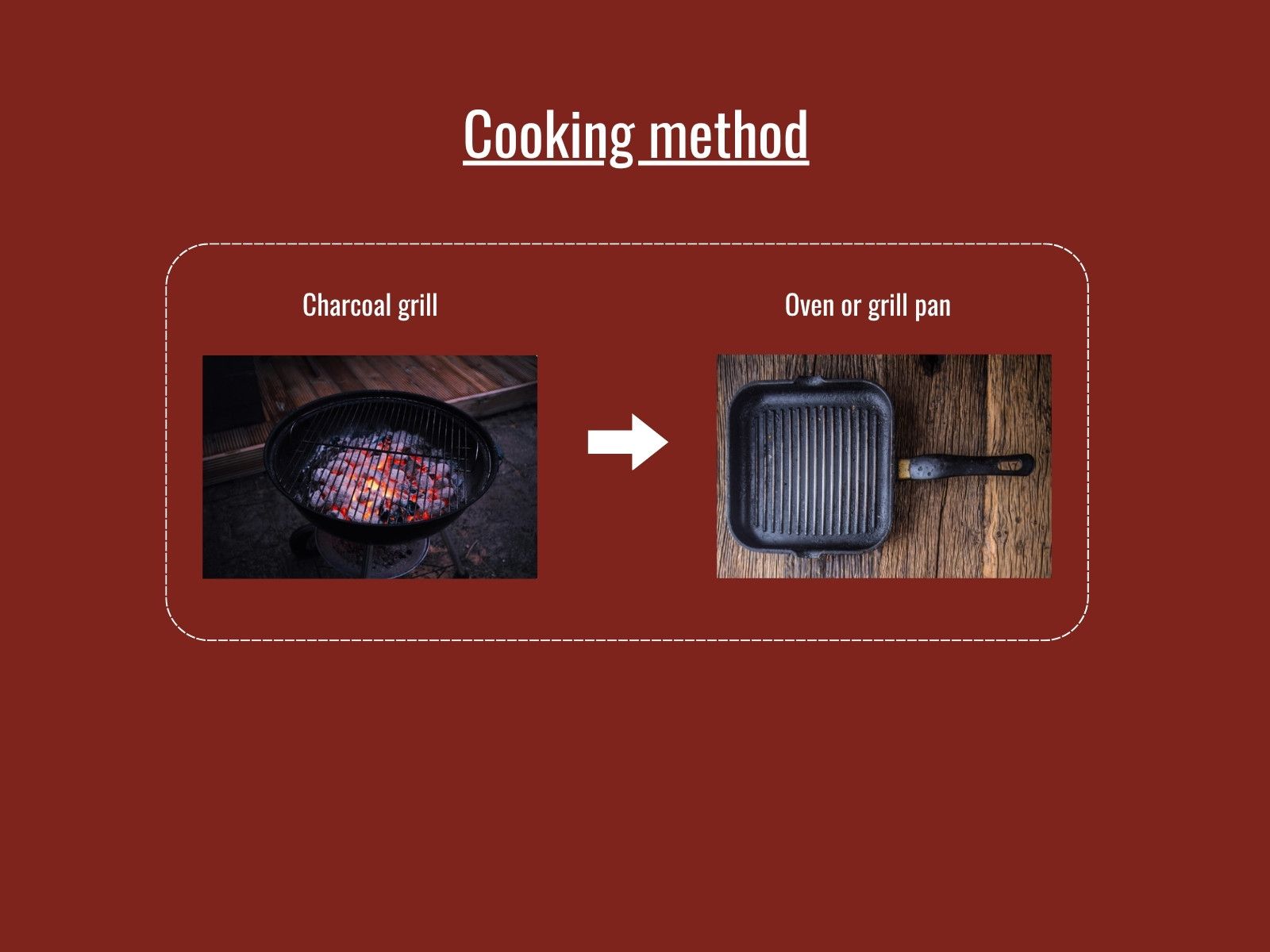
- An oven or grill pan handles the job without a charcoal grill. Bake at 425°F (220°C) for 10 minutes with both heating elements, or sear on a grill pan over high heat for 2 to 3 minutes per side. Charcoal gives the signature smoky char, the oven browns well without smoke, and the grill pan is fastest but least authentic.
Also, there are two more tricks from Vietnamese American home cooks worth stealing: freeze the pork belly for 45 to 50 minutes before slicing, since semi-frozen belly cuts into clean ¼-inch (6mm) pieces, and keep the dipping sauce at a gentle simmer until you ladle it out, which stops the pork fat from coagulating on the surface. The closer you stay to the original ingredients, the closer you get to the authentic Hanoi flavor.
How to Store Bun Cha Hanoi
Bun cha is definitely best eaten right fresh off the grill, so you will only really store it when you want to prep ahead or save some leftovers for the next few days. To store bun cha Hanoi properly, make sure to keep each component separately for the best texture, since putting everything together ahead of time completely soaks the noodles and ruins the fresh herbs.
You can keep the grilled pork in an airtight container for 3 to 4 days, and then just reheat it in a dry skillet over medium-high heat to crisp up the surface again. The dipping sauce easily keeps for 5 to 7 days when it is sealed up, and you can just warm it up on the stovetop before serving, while the pickled vegetables will also stay good for 5 to 7 days right in their brine. Cooked vermicelli lasts for about 2 days, though fresh noodles always taste much better. You should definitely always prep your herbs fresh right before you eat.
Watch the video to discover another convenient bun cha Hanoi recipe from CHIN-SU!
Have you tried whipping up bun cha Hanoi at home yet, or are you still picking out your herbs? Feel free to drop your questions, tweaks, or results in the comments down below. If this recipe worked out for you, leaving a quick star rating really helps other home cooks find it. Make sure to share your finished bun cha on social media with #CHINSU because we love to read every single one. Curious whether CHIN-SU fish sauce goes well with your bun cha? Grab a bottle at chinsu.com and give it a try today.
Frequently Asked Questions
The main difference is how each dish is served: bun cha keeps every component separate, while bún thịt nướng piles everything into one bowl. With bun cha, the grilled pork rests in a bowl of warm dipping broth that you add noodles and herbs into as you eat. Bún thịt nướng instead layers the pork and noodles together with room-temperature sauce drizzled on top. Bun cha comes from Hanoi in the north, while bún thịt nướng is a Southern Vietnamese dish.
Yes, you can make bun cha without a charcoal grill. This time, bake the pork in an oven at 425°F (220°C) with the oven set to top and bottom heat for about 10 minutes per batch. A grill pan over high stovetop heat also works, around 2 to 3 minutes per side. Charcoal gives the most authentic smoky flavor, but both alternatives turn out well.
The herbs that go with bun cha are lettuce, perilla, Vietnamese lemon balm (kinh giới), peppermint, Thai basil, and bean sprouts. That traditional herb plate is what you build each bite from. Any mix you can get your hands on works fine, and cilantro fills in for Vietnamese coriander if that's what you have.
A serving of bun cha runs roughly 854 calories. That serving carries 44g of fat, 68g of carbs, and 48g of protein, figured across 4 to 6 servings per batch. Your own numbers shift with how much pork and noodles you plate.
Yes, you can make most of bun cha ahead of time. Marinate the pork the night before, then prep the dipping sauce and pickled vegetables the day before too. Cook the noodles a few hours ahead, but grill the pork fresh, since that smoky, charred flavor is at its best straight off the coals.
Bún chả dipping sauce is usually served at room temperature or slightly warm, not piping hot. The grilled pork is often placed directly into the sauce, which naturally warms it. Avoid serving it straight from the refrigerator, as very cold sauce can dull the flavors. If prepared ahead, let's warm it gently before serving.
Did you make this recipe?
We love seeing it. Tag
@chinsu.usa
on Instagram, or leave a rating below — it helps other cooks find the recipe.
Pin this for later
Save this recipe to your board and keep it ready for your next cooking inspiration.
Save to Pinterest
CHIN-SU KITCHEN TEAM
CHIN-SU Kitchen Team are the creative experts behind the delicious recipes featuring CHIN-SU sauces. With years of experience and a passion for flavor, our team carefully selects recipes from a variety of trusted chefs and bloggers, bringing together the best culinary insights to present you with the most suitable and exciting dishes. Every recipe is chosen to inspire you to create meals that are not only tasty but also easy to prepare, enhancing your dining experience. Join us as we explore a wide range of sauces and flavors, and elevate every meal with the perfect recipe for your table!
User Reviews
Featured Articles
Vietnamese Catfish Recipe | Caramelized Catfish in Clay Pot
How To Make Hot Honey Sauce at Home
How To Make Buffalo Hot Sauce at Home
How To Make Creamy Hot Sauce at Home?
Hot Sauce Recipe: How to Make with Any Chili Pepper
SUBSCRIBE TO GET
MORE INFO
Want the latest and greatest recipes, updates, and more from us,
straight to your inbox? Subscribe and get our NEWS!