Beef Rib Pho Recipe - Vietnamese Beef Rib Noodle Soup
By CHIN-SU Kitchen Team
Updated Oct 1, 2026
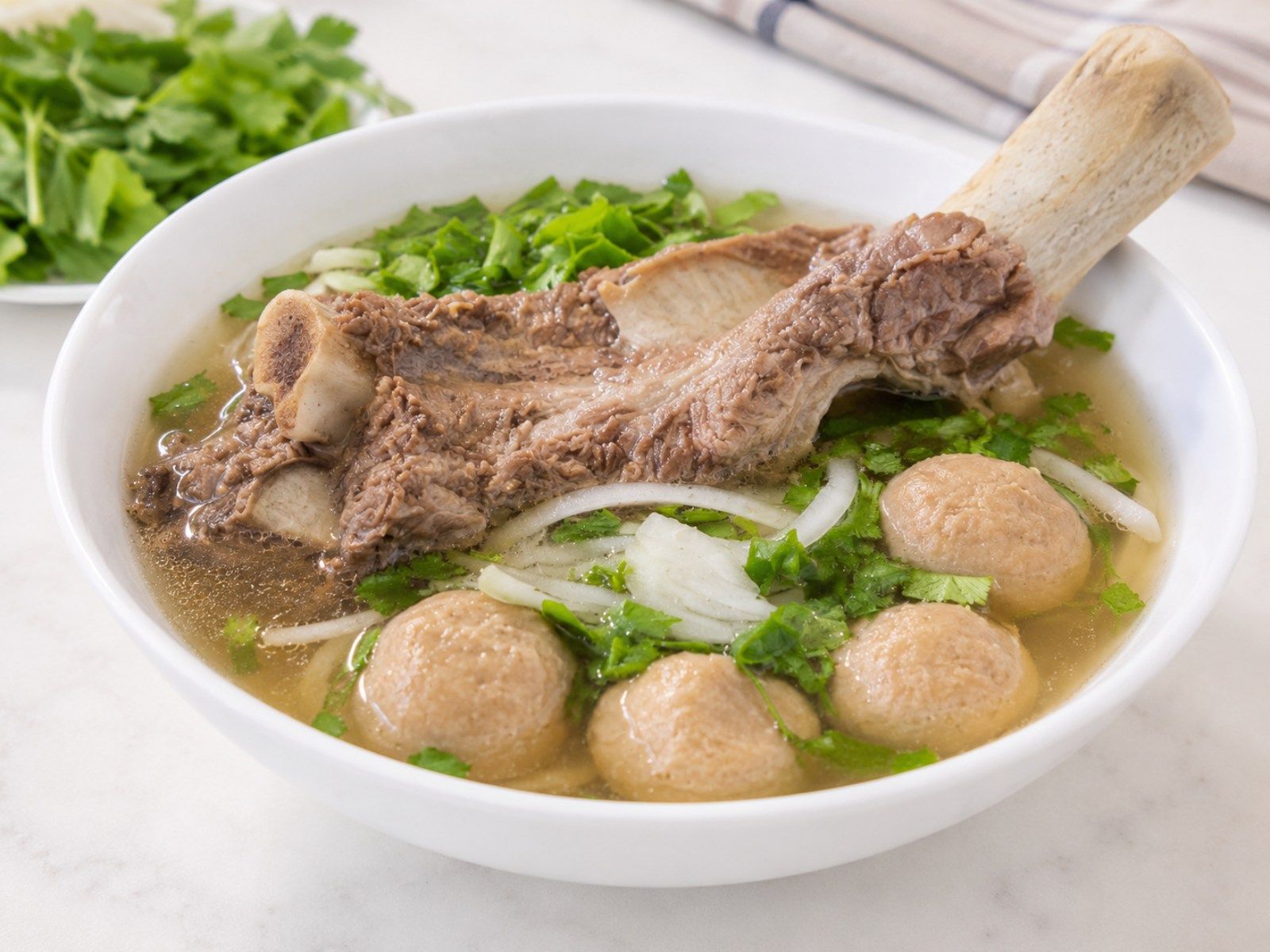
Tested in the CHIN-SU kitchenBeef rib pho (phở sườn bò) is the homemade version of pho that relies on bone-in beef ribs rather than the traditional leg bones and brisket. Regular beef pho is the national dish of Vietnam, loved in noodle shops all over the world, and it originated in Northern Vietnam, where cooks first boiled beef bones to make a clear, sweet broth. The rib version keeps that same vibe but gets two jobs done with just one cut, giving you a clear, rich broth warmed with star anise and cinnamon, tender rib meat that falls right off the bone, and soft rice noodles.
Whether you grew up eating pho and miss the taste, or you just love it but live nowhere near a good Vietnamese restaurant, this recipe lets you make it from scratch at home. Right here, CHIN-SU shares a beef rib pho recipe with a complete step-by-step guide, tips for a clear, deep broth, and how Vietnamese families actually serve it. The whole process takes about 2.5 hours and serves 4 people, with just about 30 minutes of active prep. The ribs then simmer on their own for about 2 hours while you take care of other things.
30 min
Prep time
2 hr
Cook time
2 hr 30 min
Total time
What Is Beef Rib Pho?
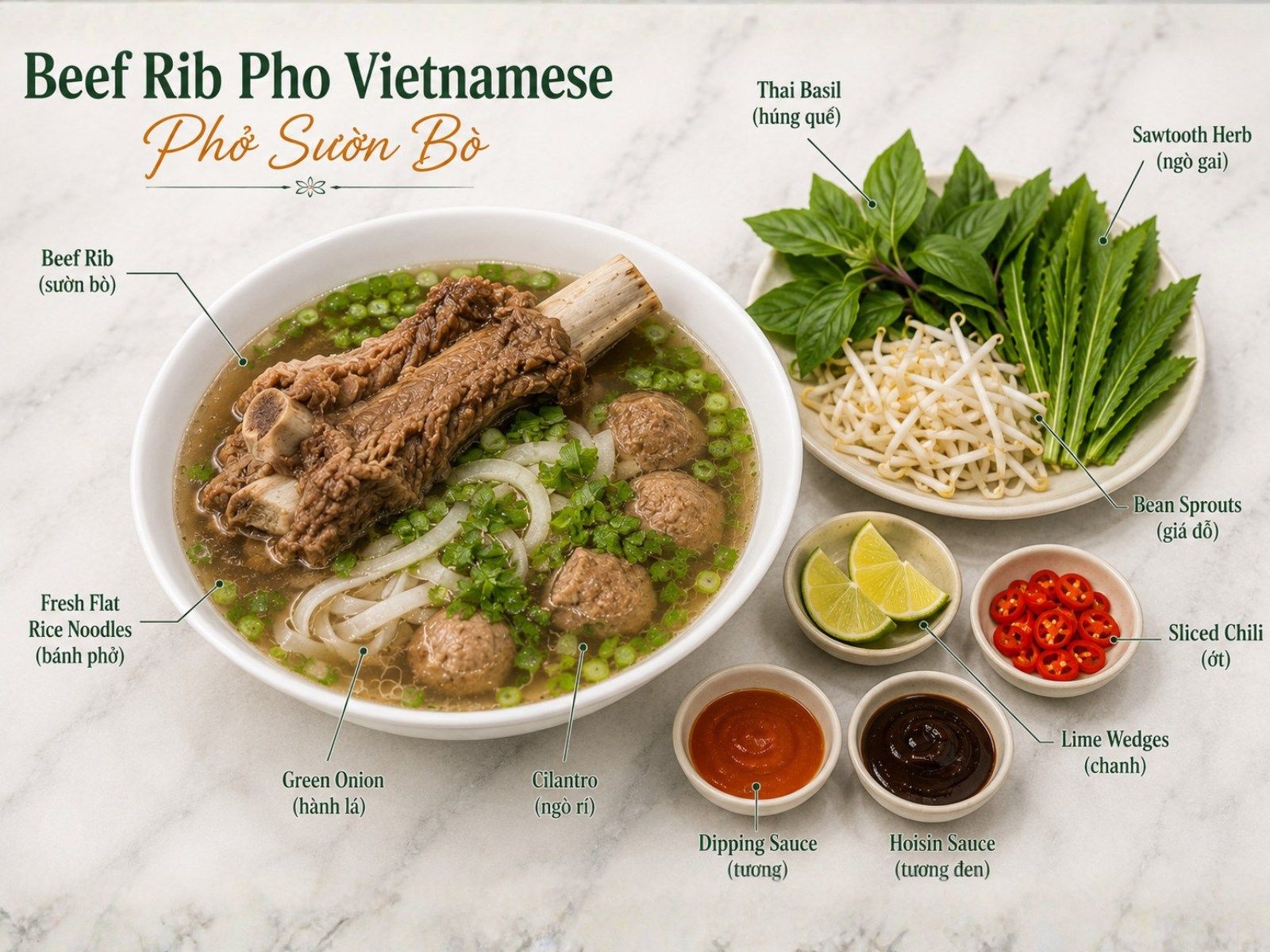
Beef rib pho, or phở sườn bò, is a variation of Vietnamese beef pho made with tender, bone-in ribs. The ribs flavor the clear, aromatic broth as they simmer, then return to the bowl as a hearty topping alongside flat rice noodles called bánh phở, scallions, onions, and fresh herbs. English speakers can pronounce phở sườn bò approximately as “fuh suhn baw.” In Vietnamese, sườn bò means “beef ribs.”
Rather than a separate regional style, phở sườn bò is a version of phở bò defined by its main cut of meat. Beef pho may be served with rare beef, brisket, flank, tendon, tripe, meatballs, ribs, or a combination of toppings. Using meaty ribs gives the broth additional beef flavor and makes the cooked meat the centerpiece of the bowl.
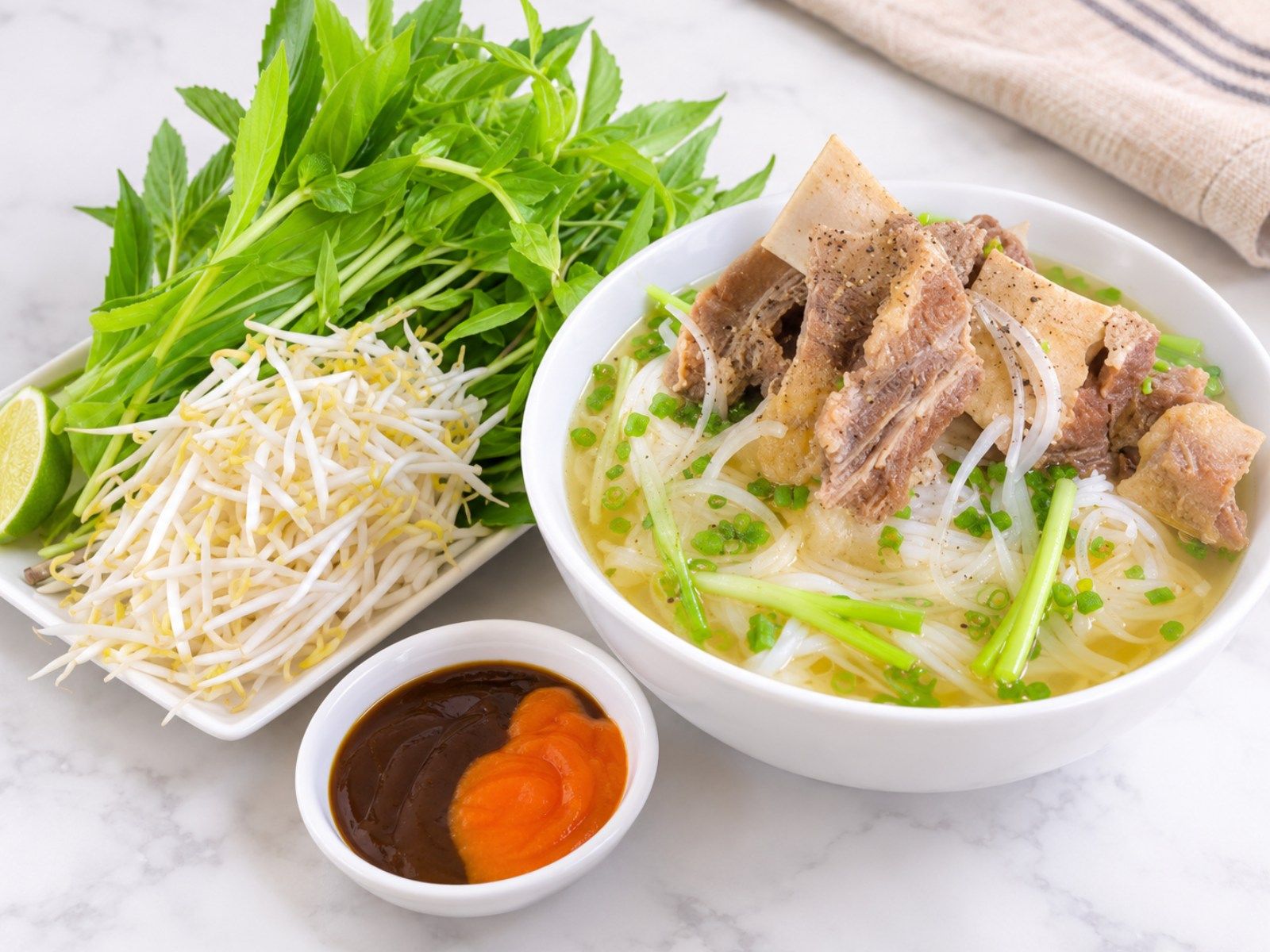
The garnishes vary by region and restaurant. Northern-style pho is often served simply with scallions, onion, and black pepper, while southern-style bowls may come with bean sprouts, Thai basil, lime, chili, and table sauces. Charred onion, ginger, star anise, and cassia cinnamon are familiar pho aromatics; ingredients such as red dates belong to individual interpretations rather than the standard flavor profile.
In the United States, the dish may appear on menus as “beef rib pho,” “short rib pho,” or “pho with beef ribs.” The large rib portion often positions it as a premium bowl, with restaurant examples ranging from $18 to $29.99, though prices vary by location and serving size.
Why You'll Love Beef Rib Pho?
Beef rib pho gives you a full-flavored bowl of Vietnamese noodle soup in about 2 hours, with just 1 cut of meat doing all the hard work.
- Deep flavor straight from the ribs. Beef ribs give off a ton of collagen and marrow as they simmer, so the soup turns full-bodied and silky in half the time leg bones alone would ever need.
- One protein means less fuss. You can skip buying a separate set of bones, the brisket, and the rare beef. Only 1 cut goes into the pot and comes out as your main topping, so there is less to shop for and less to prep.
- Way faster than traditional pho. A standard "phở bò" broth usually simmers for 6 to 8 hours, but beef ribs get you there in about 2 hours since the smaller bones break down much faster. A splash of fish sauce (nước mắm) at the end completely rounds out the savory depth.
Beef Rib Pho Ingredients
This beef rib pho comes together from 4 groups of ingredients: the ribs and broth base, the spices, the broth seasoning, and the noodles and toppings. This recipe serves 4.
Ribs and Broth Base
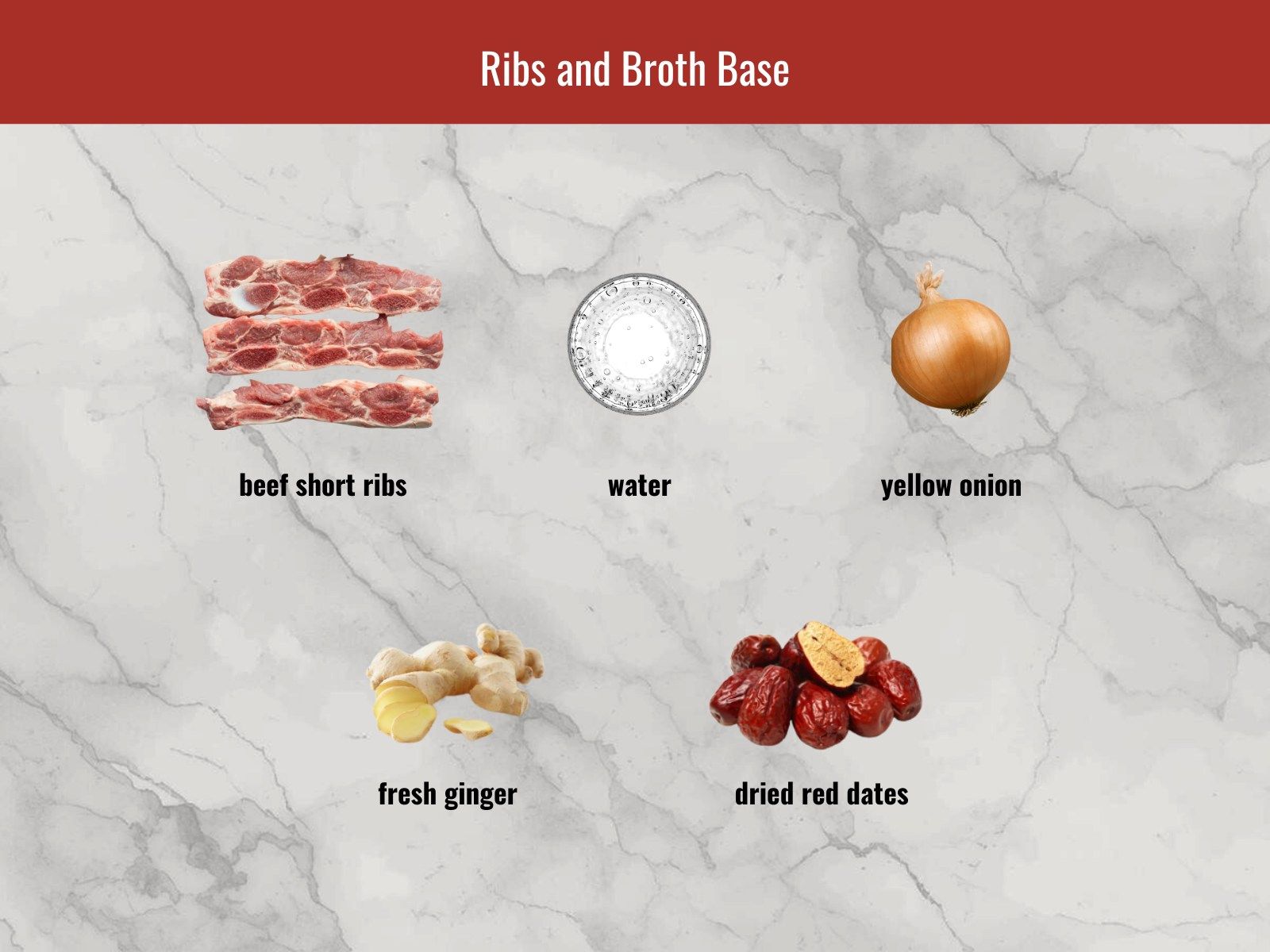
- 2.2 lb (1 kg) bone-in English-cut beef short ribs, cut between the bones into pieces about 2 to 3 inches (5 to 7.5 cm) long. Short ribs provide enough meat for both the broth and the finished bowls and hold up well during a long simmer. At the butcher counter, press the meat lightly: fresh ribs spring back and show a natural pink color with firm, white fat that looks slightly translucent. Skip any pieces with cloudy yellow fat, a sticky surface, or a sour smell, and go for ribs with more lean meat than fat so the broth stays clean and the bowl isn't greasy.
- 3.5 quarts (3.3 liters) of water. Water forms the base of the broth.
- 1 large yellow onion. The onion gets charred before it goes into the pot.
- 2 knobs of fresh ginger. The ginger gets charred before it goes into the pot.
- 1.8 ounces (50 g) dried red dates (táo đỏ), optional. They add sweetness but are not required for a standard beef pho profile.
Broth Spices
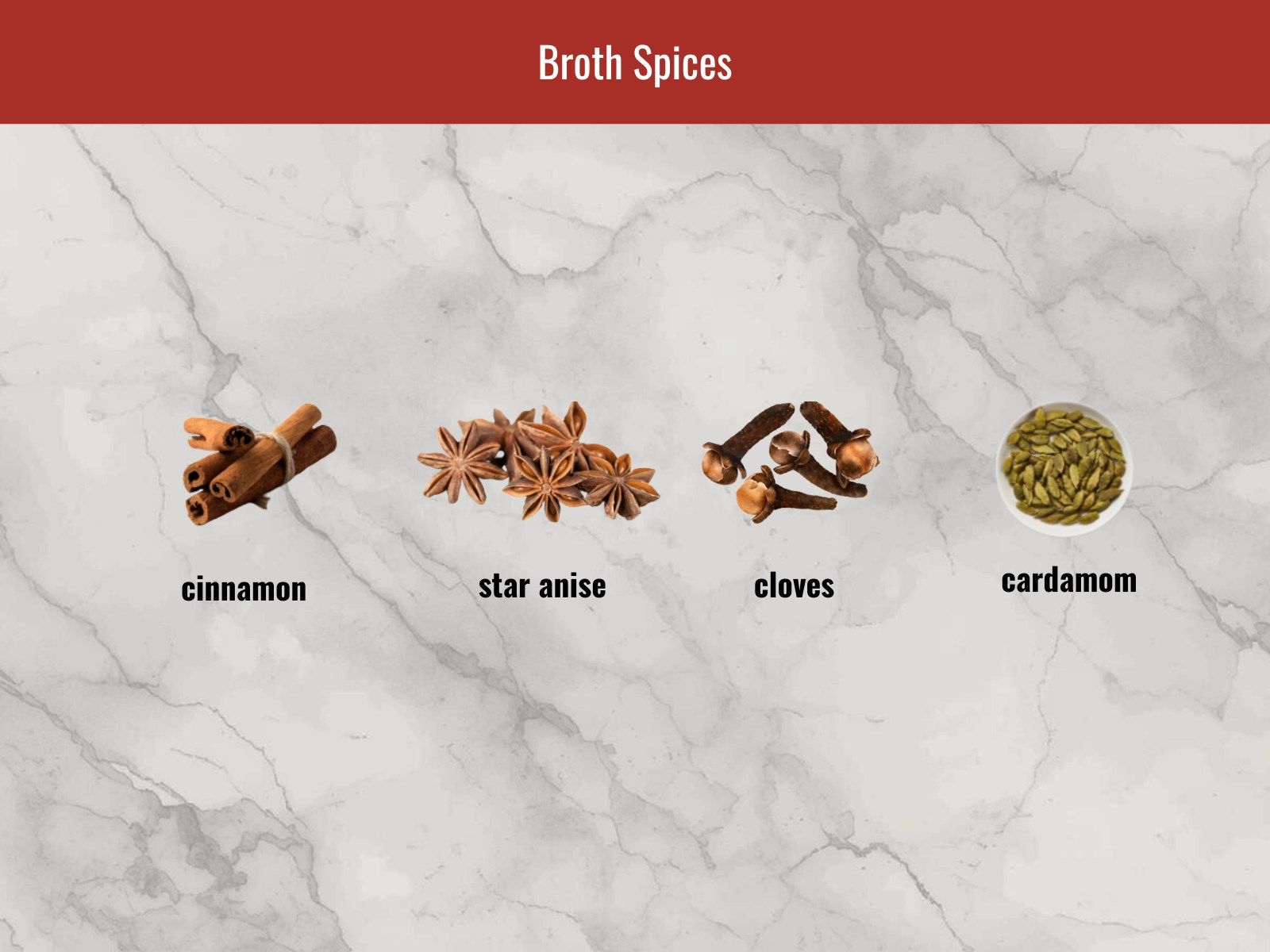
1 pho spice packet (for 3.5 quarts/3.3 liters). The packet holds star anise (hoa hồi), cinnamon (quế), cloves (đinh hương), and cardamom (thảo quả), and you will find it at Asian grocery stores or online.
Broth Seasoning
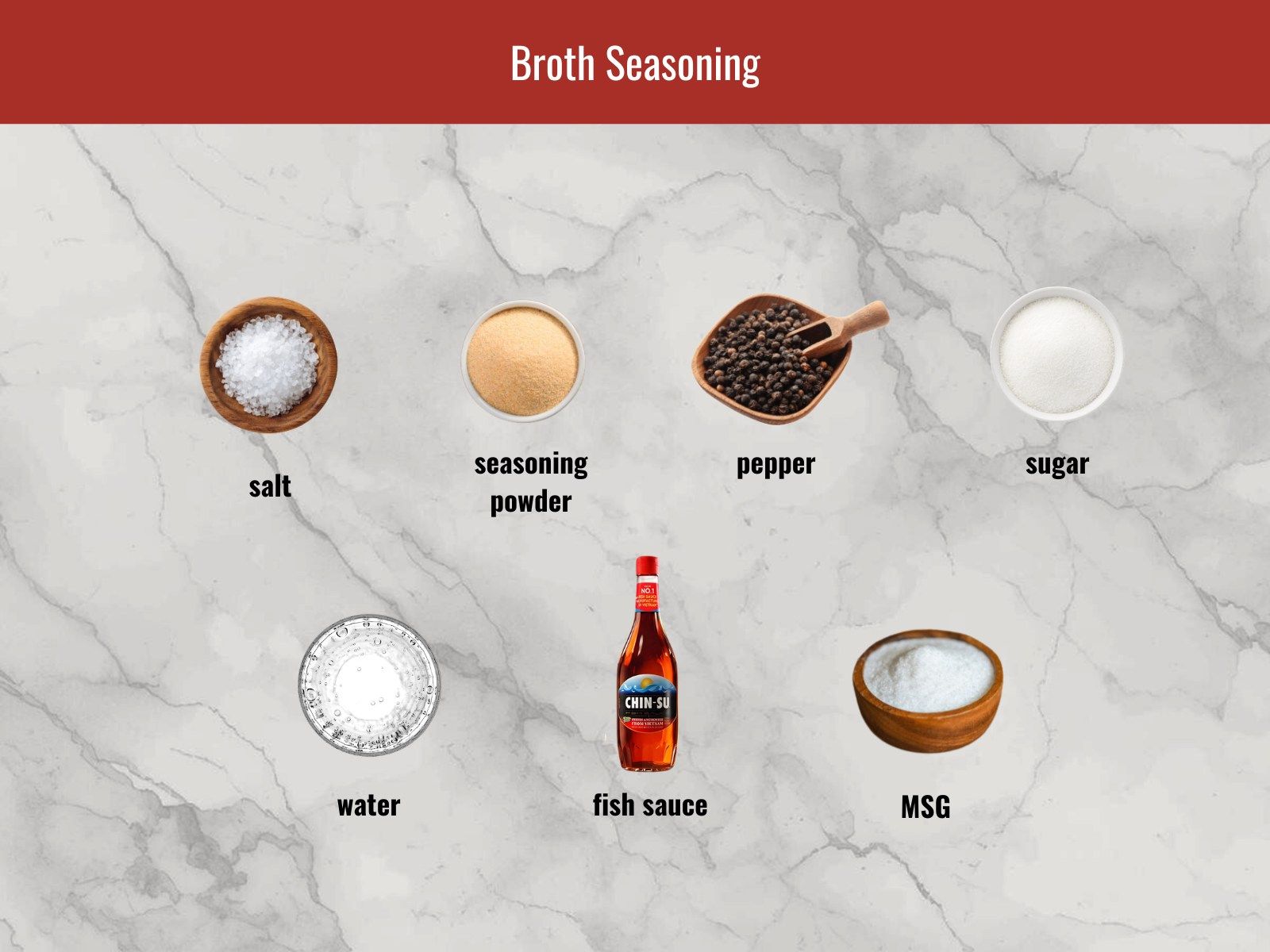
- 2 teaspoons salt. Salt sets the savory base of the broth.
- 2 teaspoons MSG (optional). MSG deepens the soup's umami, and you can leave it out if you prefer.
- 4 tablespoons seasoning powder (hạt nêm). Seasoning powder adds savory body to the broth.
- Sugar and pepper to taste. Sugar and pepper fine-tune the balance once the broth is built.
- Vietnamese fish sauce, to taste. Fish sauce gives the broth its salted-anchovy depth, and good fish sauce makes a real difference here, so you can try CHIN-SU fish sauce for its clean anchovy base and balanced salt.
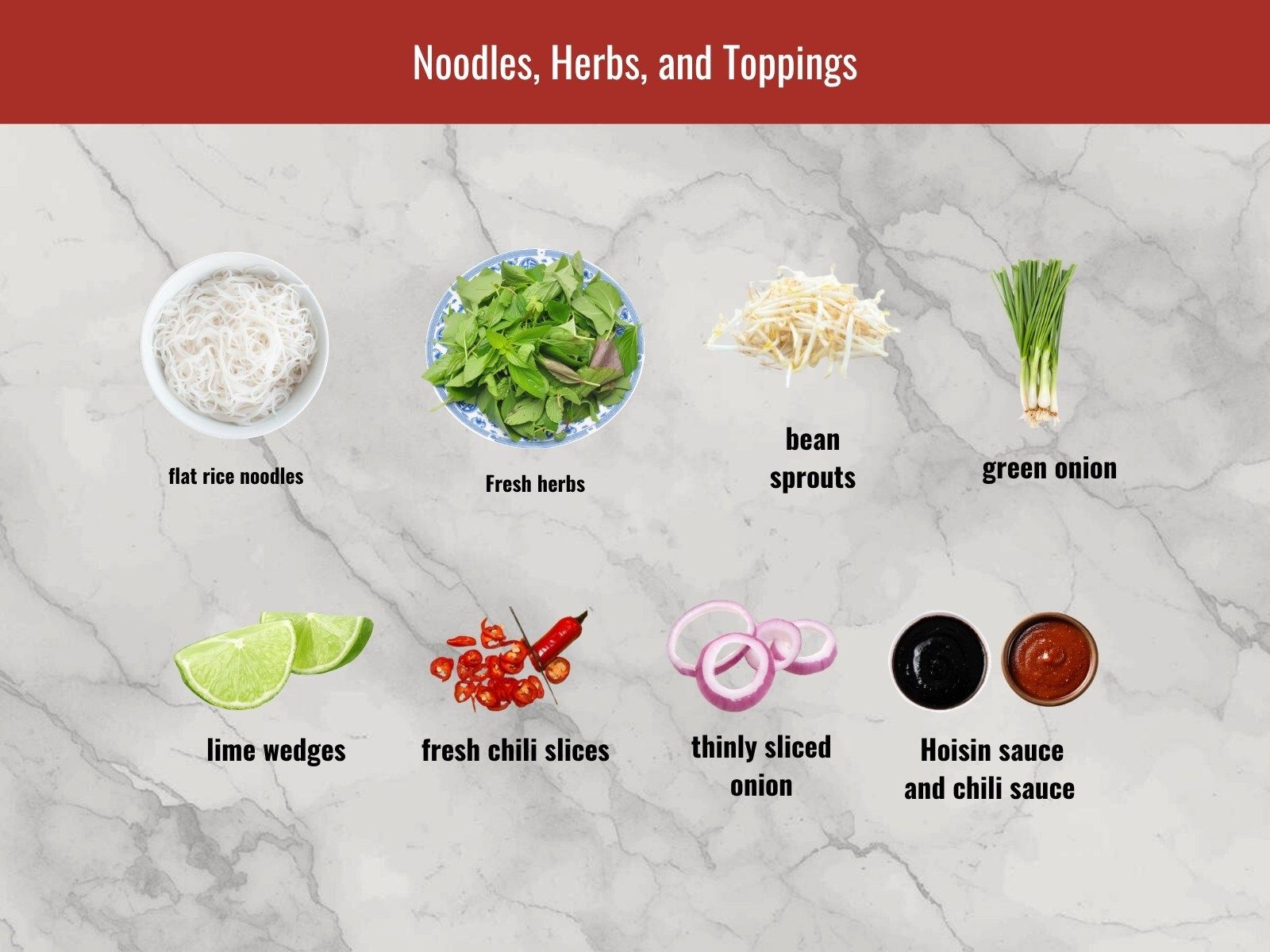
Noodles, Herbs, and Toppings
- 2.2 pounds (1 kg) fresh flat rice noodles (bánh phở). Look for fresh flat rice noodles in the refrigerator section of Asian or Vietnamese grocery stores; if fresh ones aren't available, dried flat rice noodles work as a substitute (cook per the package directions, usually 5 to 7 minutes).
- 5 stalks green onion and 3 sprigs cilantro, chopped. Green onion and cilantro go on top of the finished bowl.
- Thai basil (húng quế), sawtooth herb (ngò gai), and bean sprouts. These fill out the fresh herb plate served on the side.
- Lime wedges, sliced chili, and dipping sauce (tương, hoisin). Set these aside so everyone can finish their own bowl.
How to Make Beef Rib Pho Step by Step?
Beef rib pho takes about 2.5 hours to make, including 30 minutes of active preparation and cooking. The remaining time is mostly hands-off while the ribs simmer and the broth develops. The recipe comes together in 10 steps and makes 4 bowls.
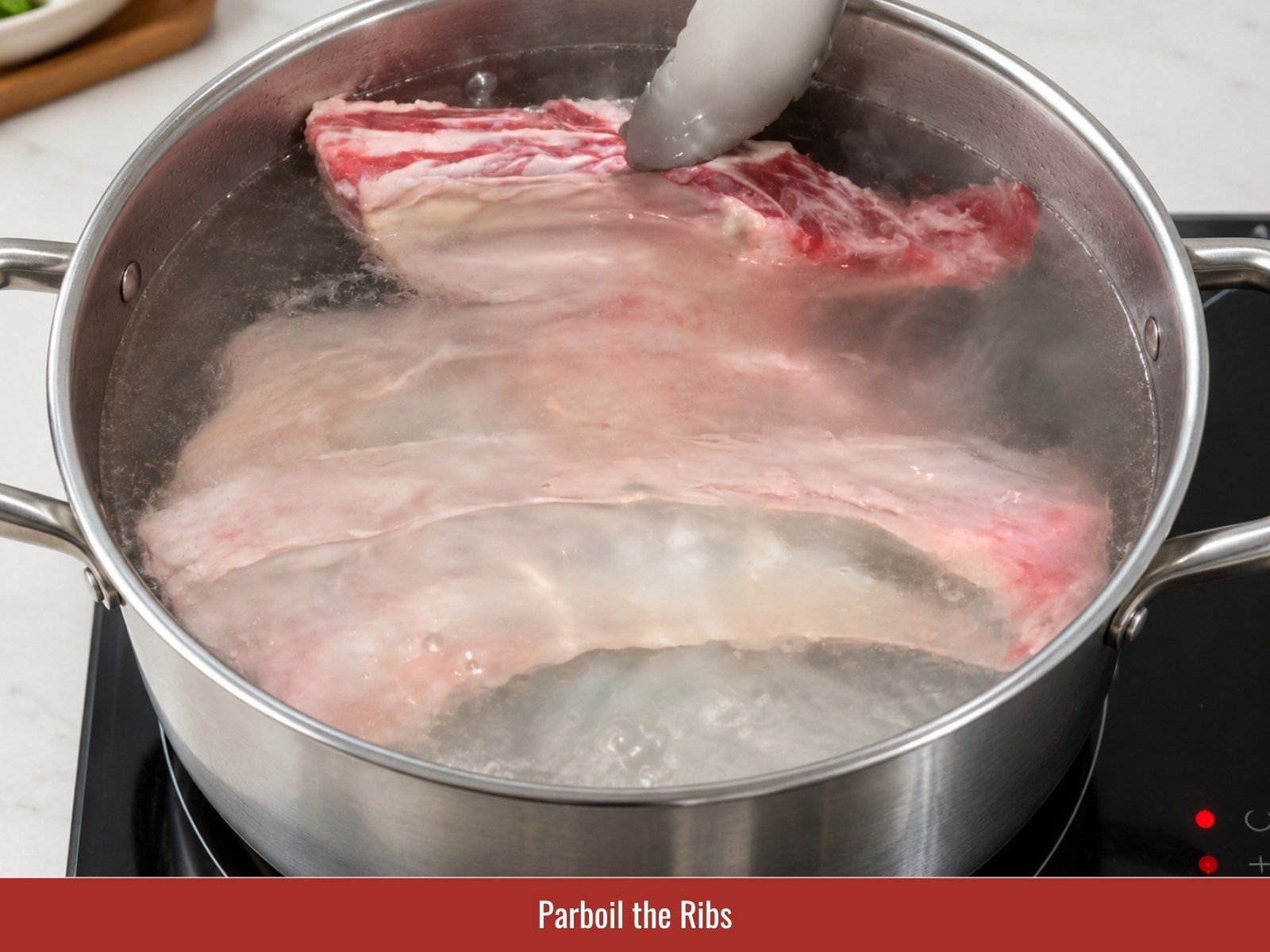
Step 1: Parboil the Ribs
Place the ribs in a pot and cover them with cold water. Bring to a boil and cook for 5 minutes, then drain and rinse the ribs. Scrub the pot clean before starting the main broth.
Parboiling removes loose surface proteins and helps produce a clearer broth.
Step 2: Char the Onion and Ginger
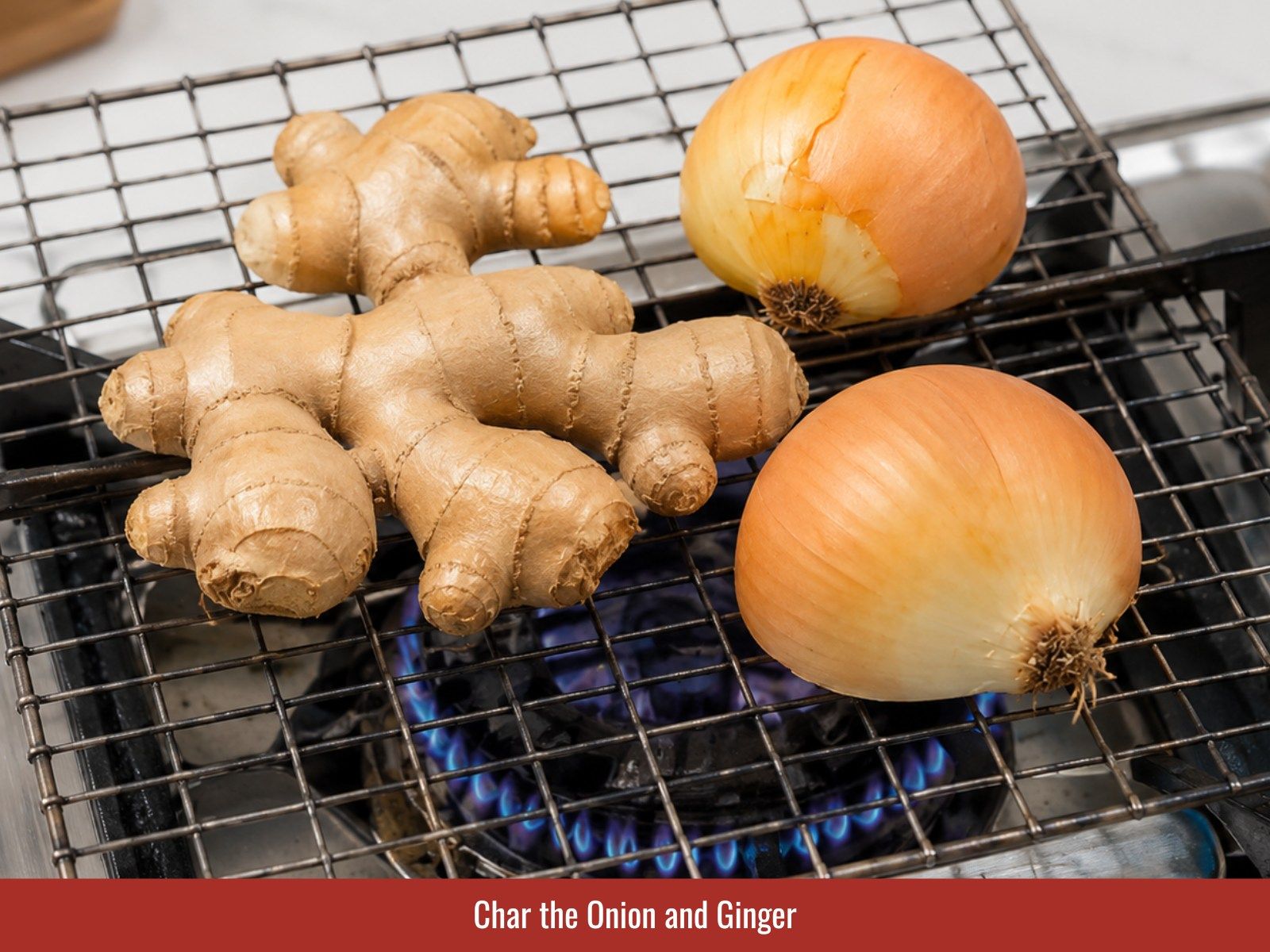
Char the whole onion (skin on) and ginger over an open flame or in a dry skillet until the outer layer blackens lightly and the kitchen smells sweet. Peel off the charred skin, score 2 shallow cuts into the bottom of the onion, and leave the ginger whole. Charring takes the raw bite out and adds a natural sweetness to the broth.
Step 3: Prep the Herbs and Garnishes
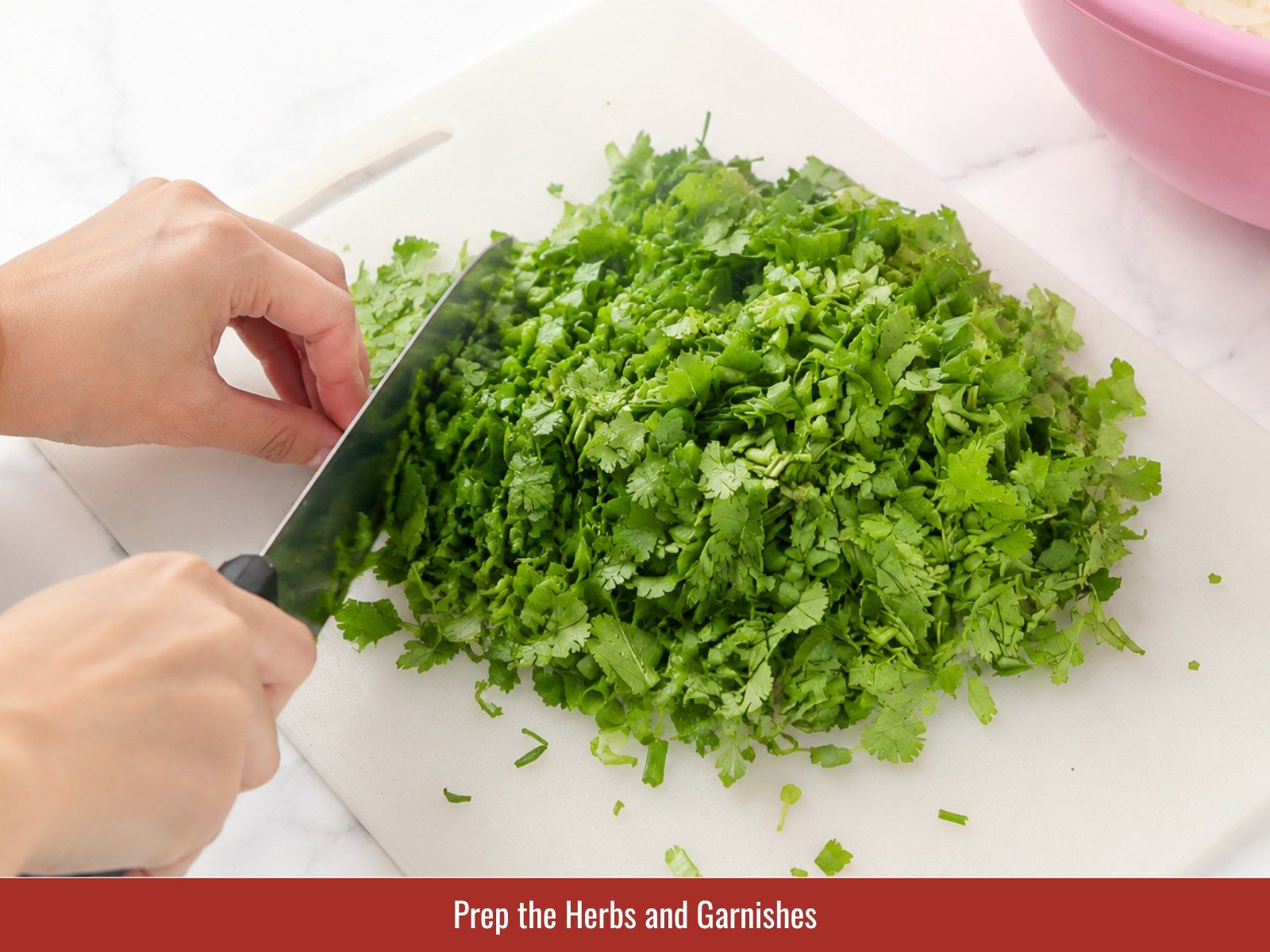
Wash all the herbs and greens first. Chop the green onion and cilantro, then pick the Thai basil and sawtooth herb leaves. Rinse the bean sprouts and set them aside to drain.
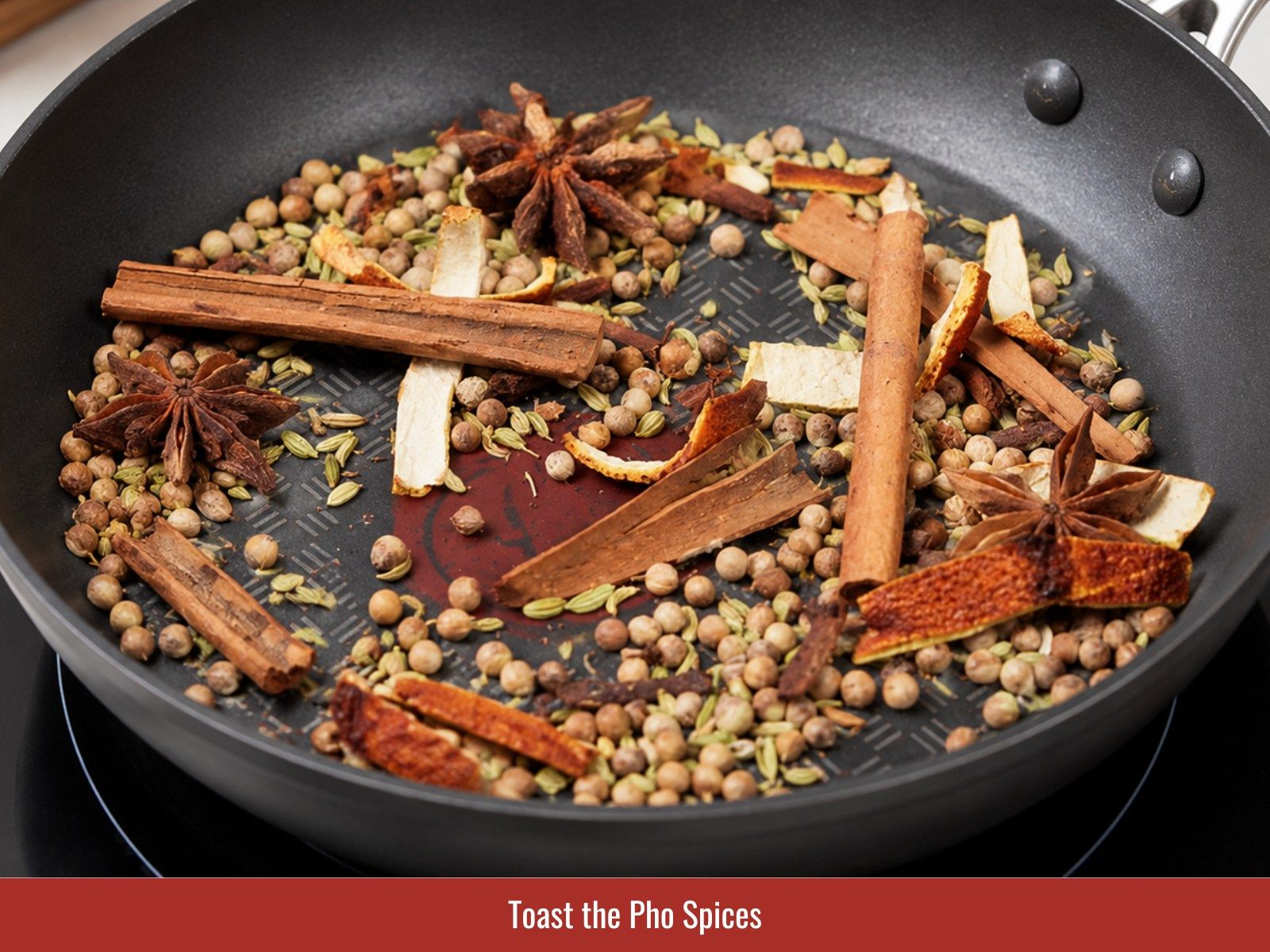
Step 4: Toast the Pho Spices
Pour the pho spice packet into a dry skillet over low heat and stir constantly for 2 to 3 minutes, until the spices release their aroma, then remove from heat. Transfer the toasted spices into a small cloth bag or cheesecloth pouch and tie it shut (if you skipped the packet, bag your own star anise, cinnamon, cloves, cardamom, and a pinch of five-spice powder).
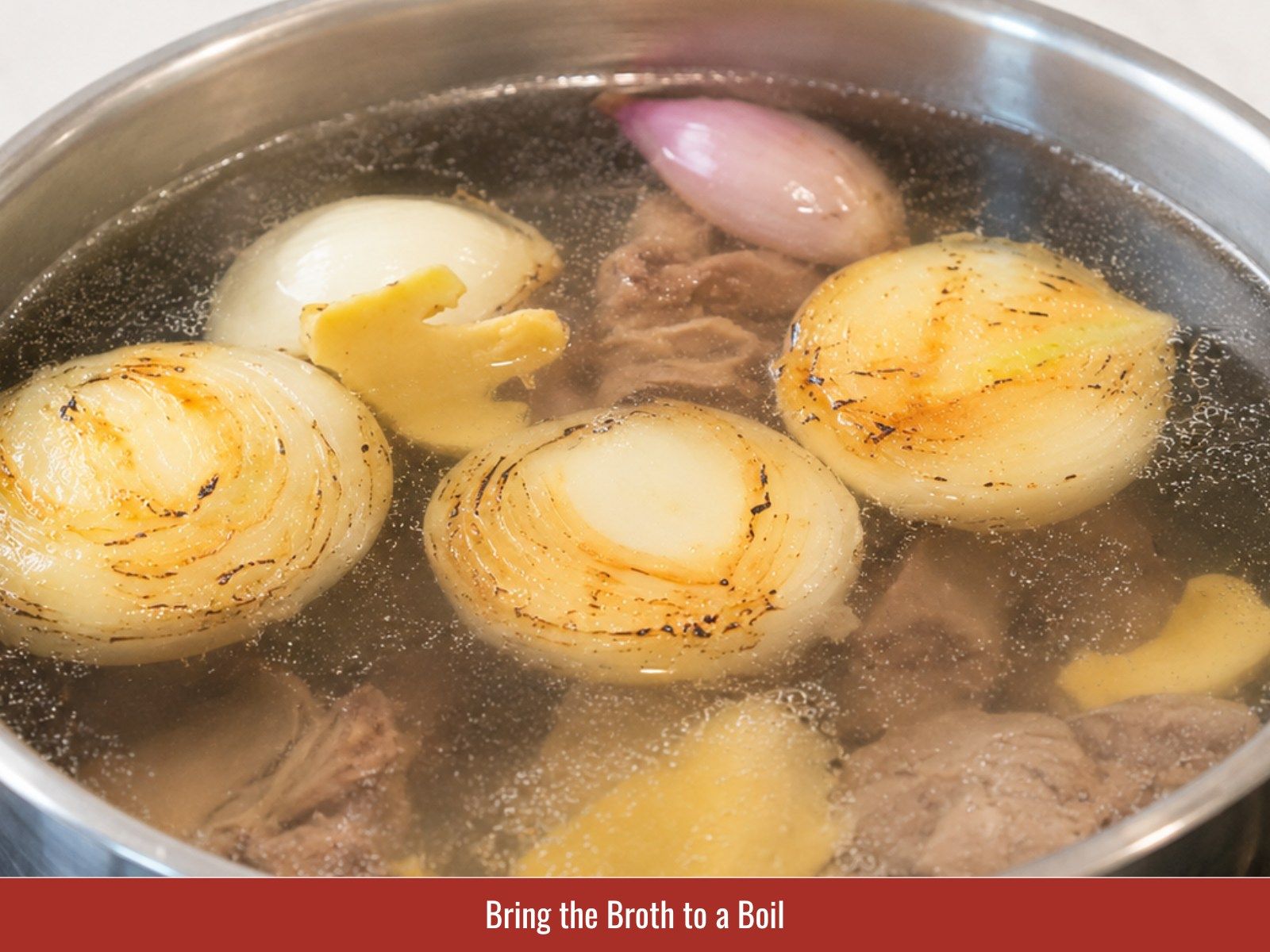
Step 5: Bring the Broth to a Boil
Pour 3.5 quarts (3.3 liters) of water into the clean pot. Add the charred onion, charred ginger, spice bag, and red dates if using. Red dates are an optional addition to this recipe rather than a standard phở ingredient. Bring the water just to a boil over high heat.
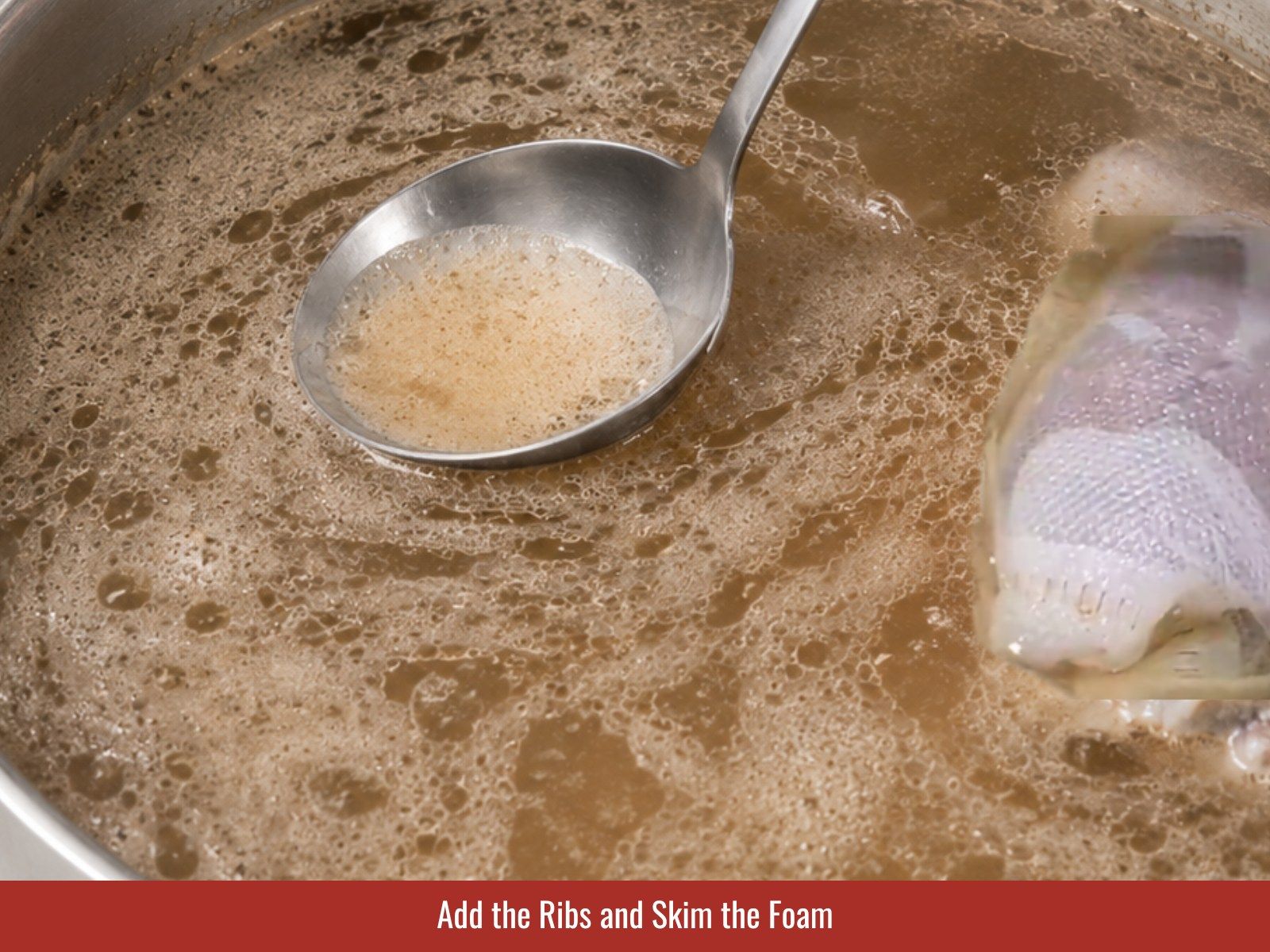
Step 6: Add the Ribs and Skim the Foam
Add the parboiled ribs to the pot and let the broth return to a gentle boil. Foam may rise during the first few minutes, so skim it off with a ladle or fine-mesh spoon until the surface looks clear.
Avoid a hard rolling boil, which can stir impurities and fat back into the broth.
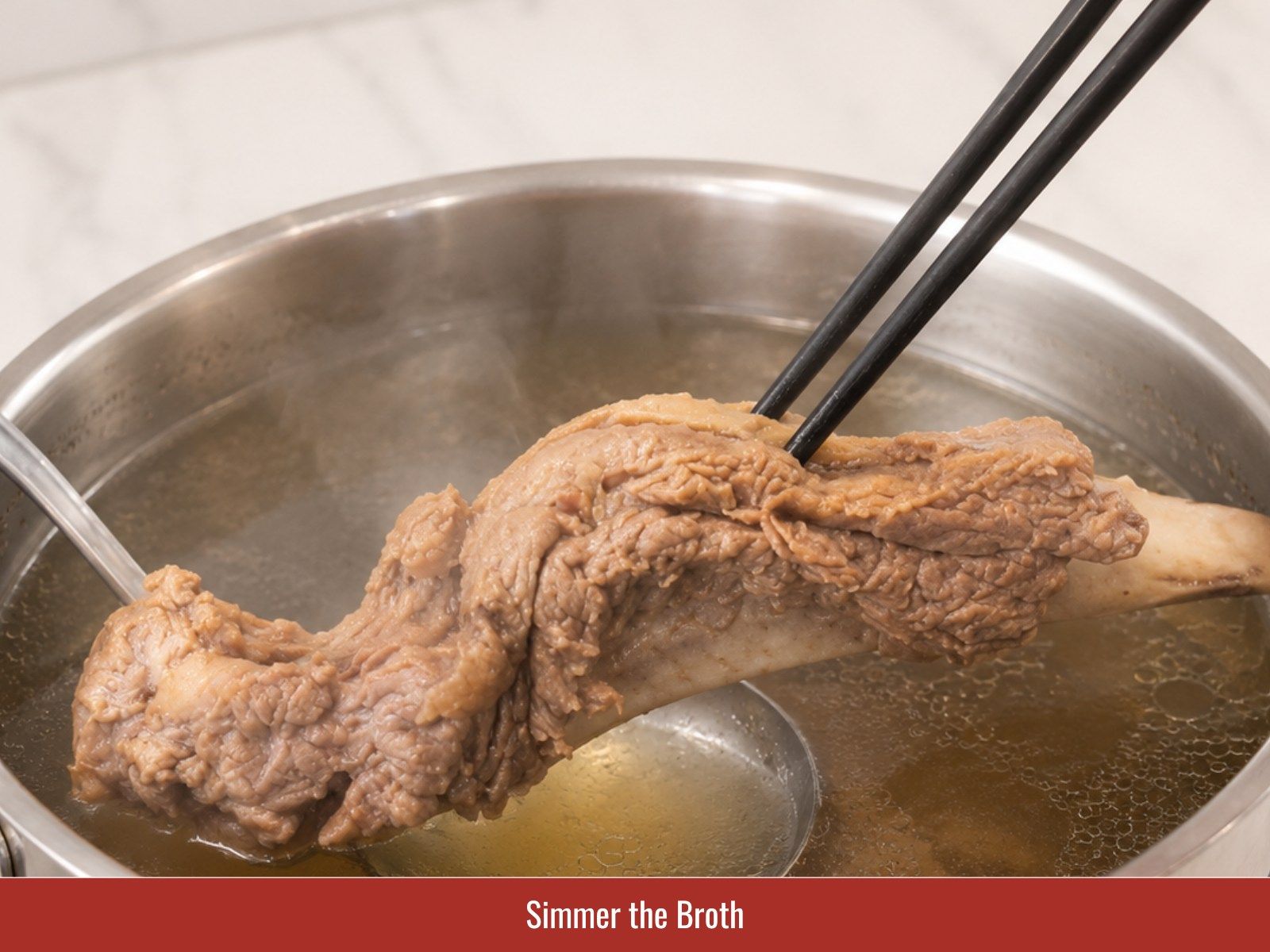
Step 7: Simmer the Broth
Reduce the heat to maintain a gentle simmer and keep the pot partially uncovered. Remove the spice bag once its aroma is noticeable but not overpowering.
Simmer the ribs for 1½ to 2 hours, or pressure-cook them for 45 to 60 minutes. The ribs must reach at least 145°F (63°C) with a 3-minute rest for safety, but continue cooking until the connective tissue softens and the meat is tender. The ribs are fully done when a chopstick slides right through the meat with no resistance.
Add hot water if needed to keep the ribs submerged, then adjust the finished broth to about 2½ quarts (2.4 liters).
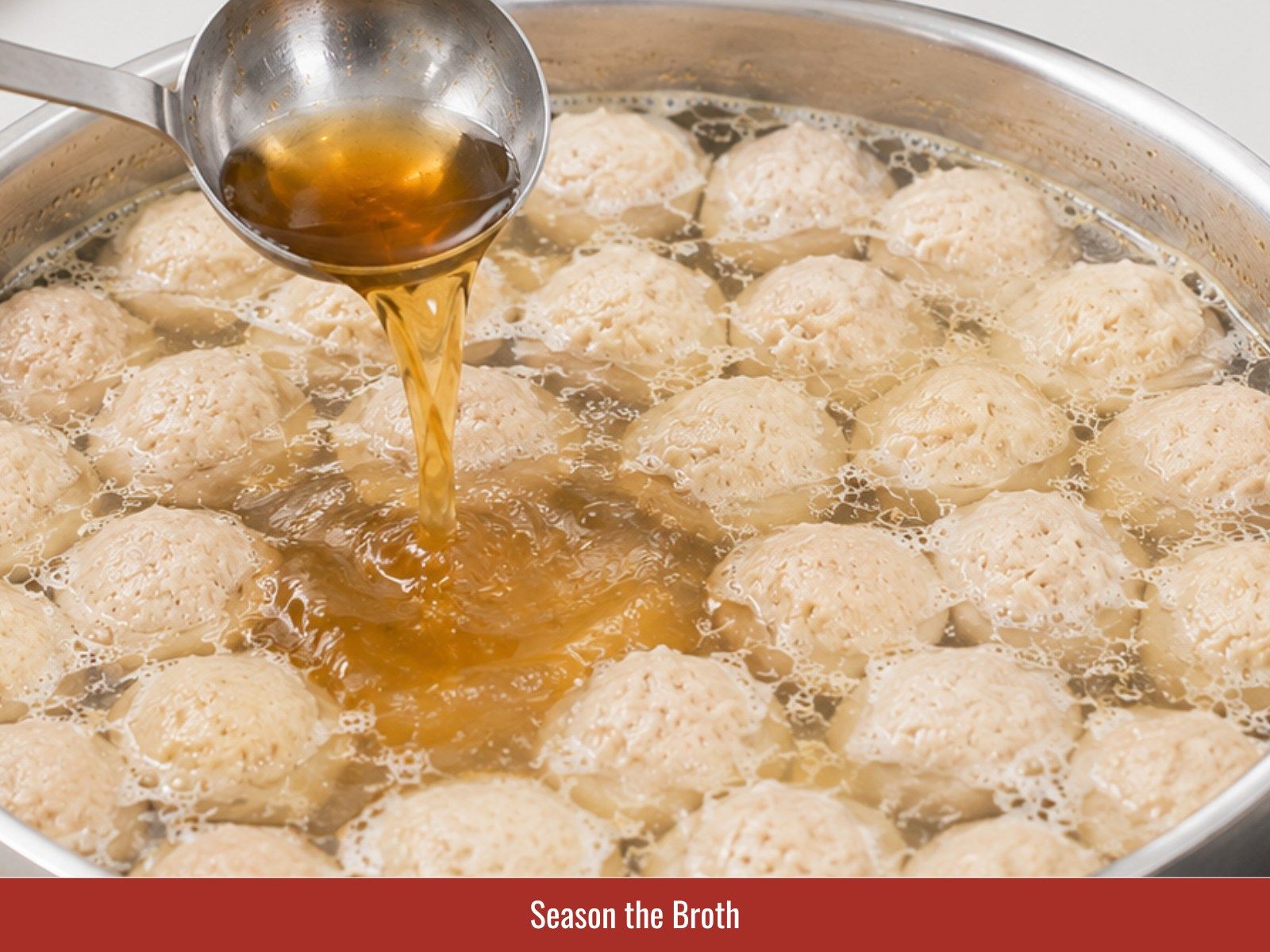
Step 8: Season the Broth
Once the ribs are nice and tender, stir in 2 teaspoons of salt, 2 teaspoons of MSG, 4 tablespoons of seasoning powder, and a quick pinch of sugar and pepper. Add fish sauce to taste to bring out an extra layer of umami. Since a high-quality fish sauce makes a huge difference in the broth's depth, you can try CHIN-SU premium anchovy fish sauce for its clean anchovy flavor and perfectly balanced saltiness.
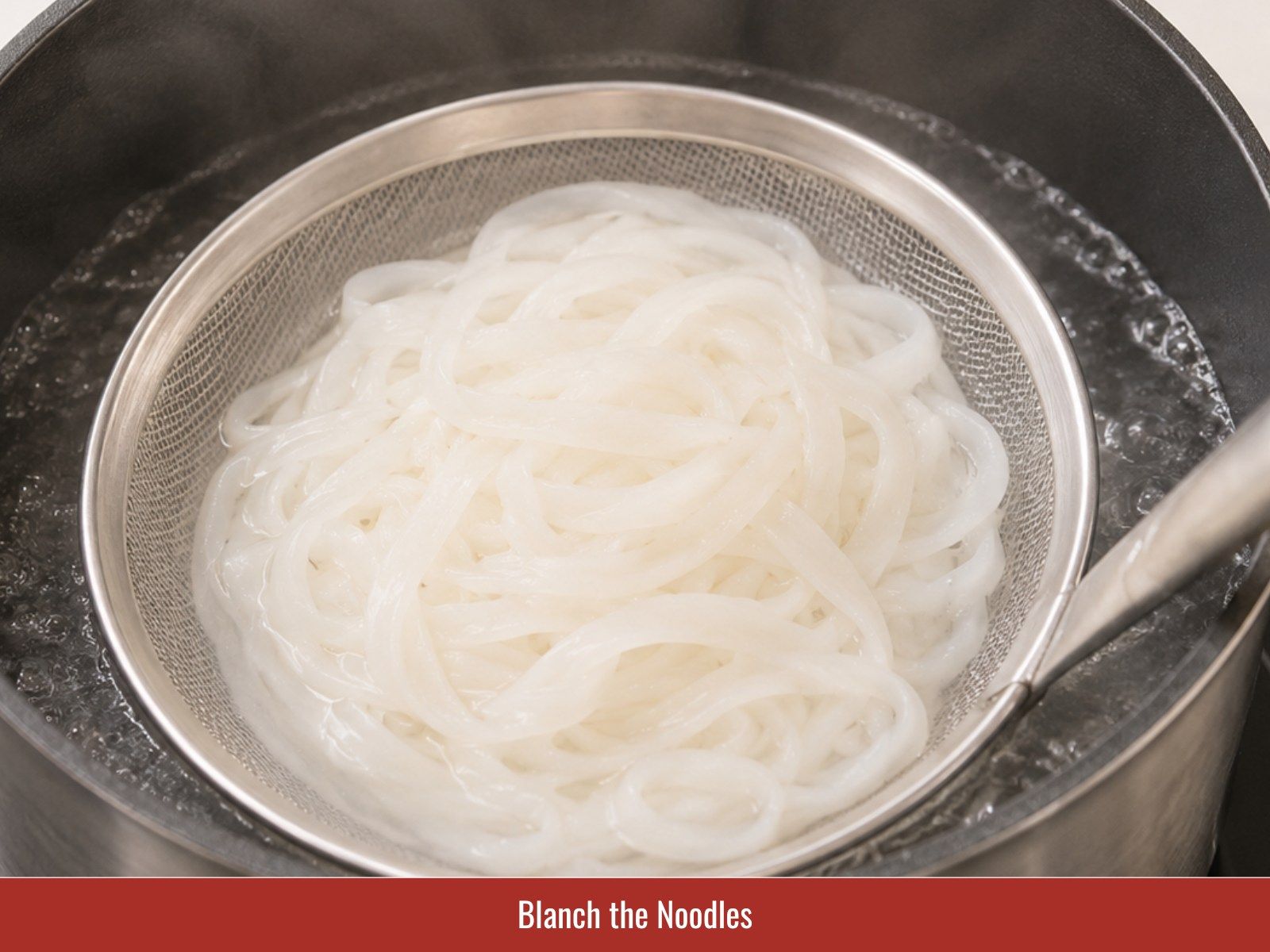
Step 9: Blanch the Noodles
Get a separate pot of water boiling. Toss in the fresh rice noodles and give them a gentle stir for about 10 to 15 seconds, just until they loosen up and soften, then drain them immediately. Leaving them in the water any longer will make the noodles turn completely mushy.
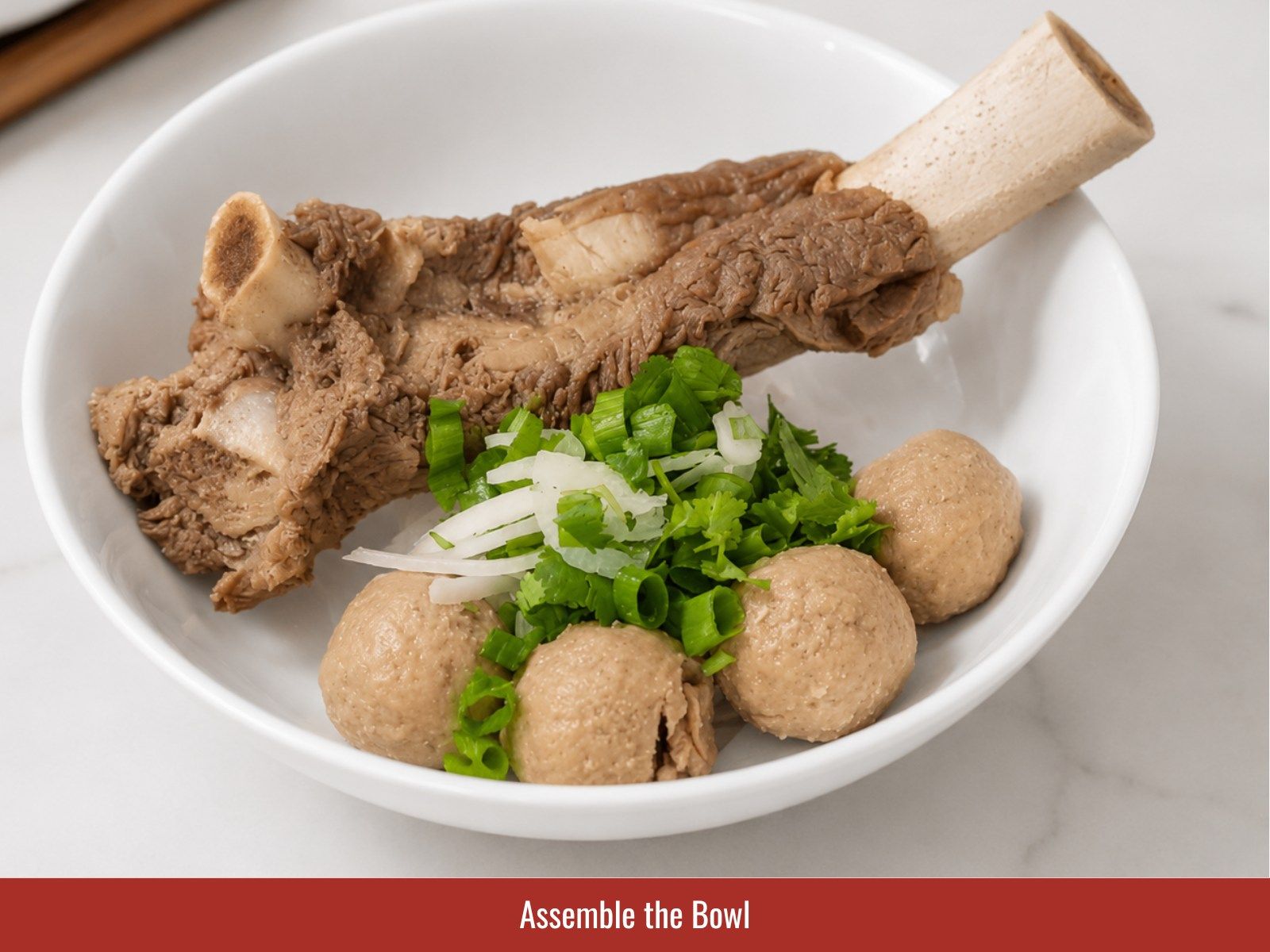
Step 10: Assemble the Bowl
Put a serving of the blanched noodles into each bowl and scatter the chopped green onion and cilantro right over the top. Place 2 to 3 pieces of the simmered ribs on top, then ladle the piping hot broth over everything until the noodles are completely covered.
How to Serve Beef Rib Pho?
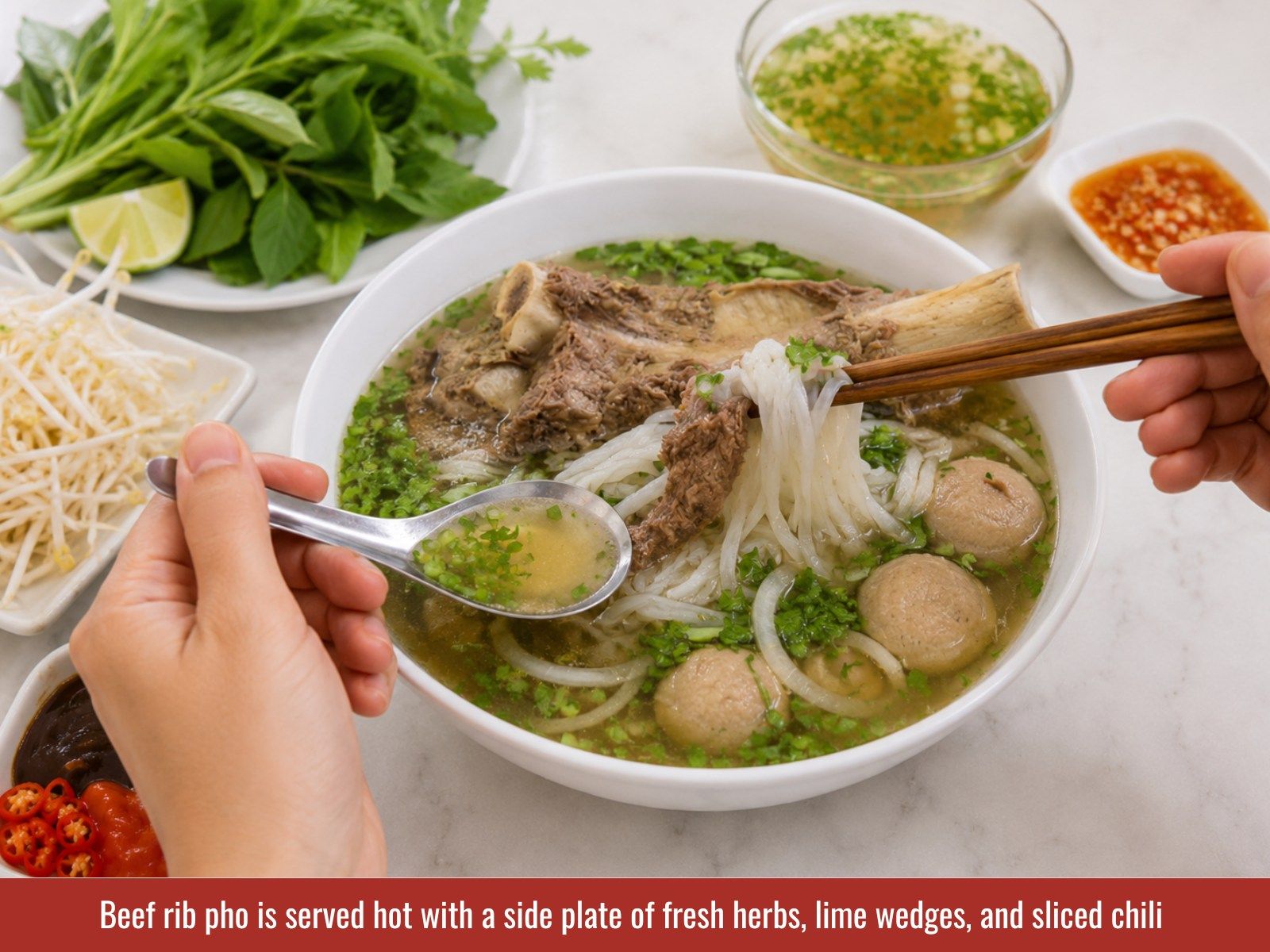
Beef rib pho is served hot, 1 bowl per person, with a side plate of fresh herbs, lime wedges, and sliced chili for everyone to add as they like. The bowl comes out with noodles, ribs, and broth, and everything else stays on the side. The usual setup is:
- Flat rice noodles under the broth.
- 2 or 3 pieces of simmered ribs on top.
- Thai basil, sawtooth herb, and bean sprouts to add as you eat.
- Lime wedges and sliced chili.
- Hoisin sauce and chili sauce on the side.
Taste the broth before adding anything. Lime can be squeezed into the bowl for extra acidity, but it is optional. Northern-style pho is often enjoyed with fewer additions, while Southern-style servings may include more herbs, sprouts, hoisin sauce, and chili sauce. Keep stronger sauces in a separate dish for dipping the ribs rather than mixing large amounts into the broth.
Serve CHIN-SU Hot Sauce for Pho on the side so each diner can add chili heat without changing the entire pot of broth.
Tips for the Best Beef Rib Pho
These are 5 small choices that separate a good beef rib pho from a great one.
- Pick ribs with plenty of meat on the bone. Ribs that are mostly bone give weak broth and leave nothing for the bowl, so go for whole, uncut pieces.
- Keep the simmer gentle. A rolling boil clouds the broth and pulls too much fat into the liquid, so you want only tiny bubbles breaking the surface.
- Skim the foam in the first 10 minutes. Most impurities rise early, and clearing them keeps the broth clear and clean-tasting.
- Use a pressure cooker to save time. If 2 hours feels long, a pressure cooker gets the ribs tender in 45 to 60 minutes once the water reaches pressure.
- Don't skim off all the fat. A thin layer of fat on the surface carries flavor, so take off the excess but leave enough to coat your spoon lightly.
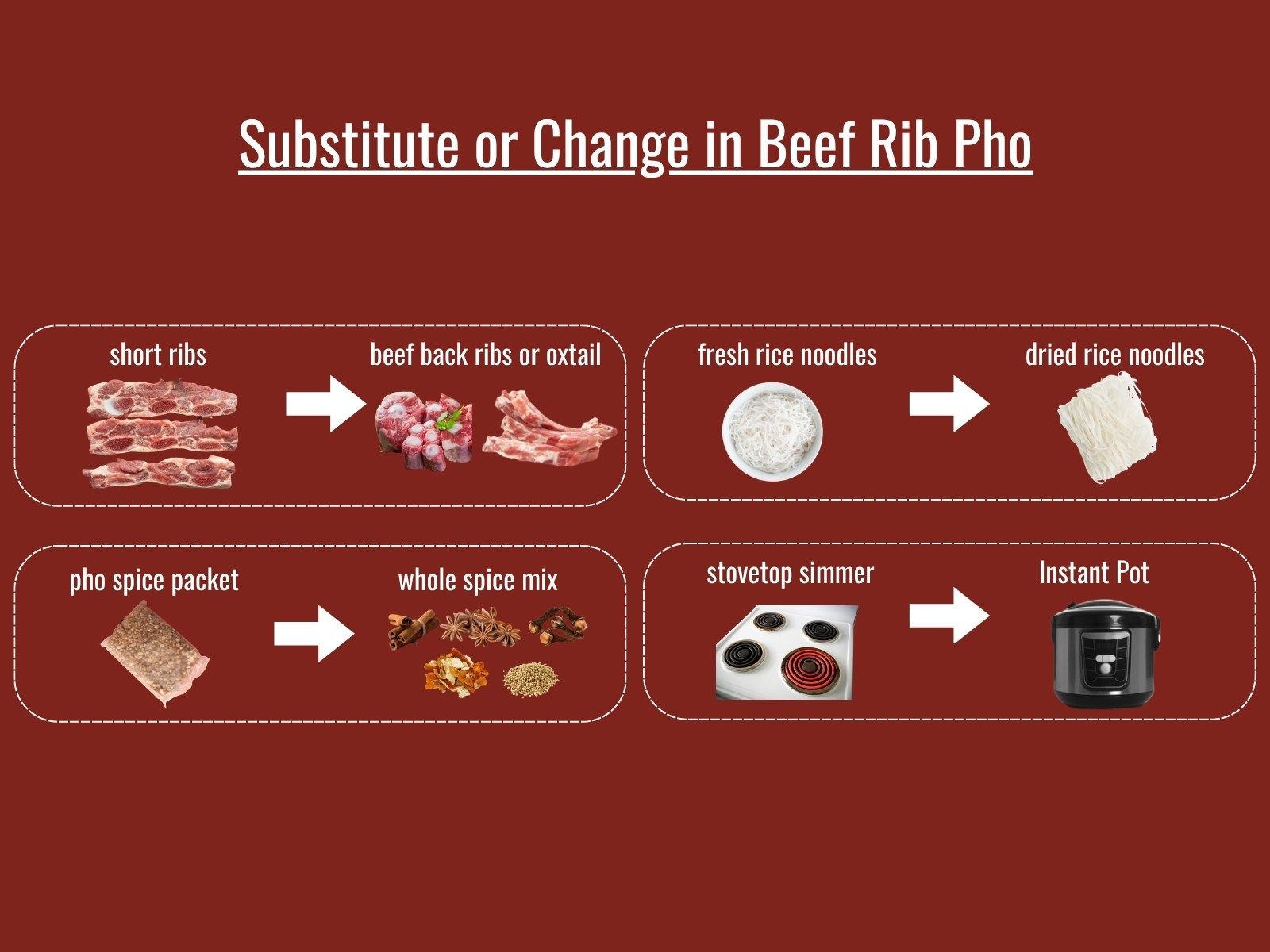
What Can You Substitute or Change in Beef Rib Pho?
These 4 swaps help you make beef rib pho with US grocery store ingredients without losing the dish's core flavor.
- A pho spice packet can stand in for whole spices, or vice versa. If you want more control over the flavor, skip the packet and toast 2 to 3 cinnamon sticks, 3 to 4 star anise, 5 to 6 cardamom pods, 2 to 3 cloves, and 1 teaspoon of five-spice powder in a dry pan, then tie them in a cheesecloth bag.
- Dried rice noodles replace fresh ones. Cook dried rice noodles according to the package directions, usually for 5 to 7 minutes in boiling water. The texture comes out a little firmer, but you will easily find them at most regular US supermarkets.
- Beef back ribs or oxtail can be swapped in for short ribs. Short ribs have more lean meat; back ribs have more connective tissue and collagen; and oxtail costs more but makes the richest broth. Each choice shifts the broth's body and fat level.
- An Instant Pot serves as a stovetop replacement. Pressure cook on high for 45 minutes, let it release naturally for 15 minutes, then go straight to seasoning.
You can make swaps where you need to, but the closer you stay to the original ingredients, the closer you get to the full-flavored Vietnamese broth.
How to Store Beef Rib Pho?
Beef rib pho is best eaten the day you make it, but you can easily save the broth and ribs for leftovers. Make sure to put each part in its own airtight container, because they don't last the same amount of time.
You can keep the broth and ribs in the fridge for 3 to 5 days, or freeze them for up to 3 months. Keep the noodles in a sealed bag in the fridge for just 2 days, but it is always better to cook them fresh when you can, since stored noodles take in odors and get too soft. It is best to assemble the herb plate fresh each time rather than save it. To reheat, just bring the broth to a rolling boil, and then pour it right over your noodles.
Tell us which rib cut you reach for, short ribs for the meat or back ribs for that silky broth. Drop your results in the comments, and if this recipe worked out for you, a quick star rating helps other home cooks find it. Share a photo of your bowl on social media with #CHINSU, since we love to see them. Curious whether CHIN-SU chili sauce or fish sauce goes with your beef rib pho? Grab a bottle at chinsu.com and give it a try.
Discover more Vietnamese food recipes:
Frequently Asked Questions
Bone-in English-cut short ribs work best because they provide enough meat for the topping while adding beef flavor and body to the broth. Choose pieces cut between the bones into lengths of about 2 to 3 inches (5 to 7.5 cm).
Yes, but beef back ribs have less meat per bone and are not a direct substitute by weight. They work better when broth flavor matters more than the rib topping, or when another cooked beef cut will be added to each bowl.
Beef rib pho is better understood as a cut-based variation of phở bò than as a separate regional style. It can be served with either Northern-style garnishes or the larger herb and condiment selection associated with Southern-style pho.
No. Red dates appear in some family and fusion recipes, but they are not a defining ingredient in standard phở bò. In this recipe, they should remain optional rather than being presented as part of the essential pho spice blend.
Cloudiness can result from skipping the parboiling step, allowing the broth to boil too vigorously, or stirring the pot frequently. Parboil and rinse the ribs, skim the foam, and maintain a gentle simmer to keep the broth clearer.
Short ribs contain substantial fat and marbling. Skim excess fat during cooking, or chill the strained broth and remove the solidified fat before reheating. Leave only a small amount for aroma and body.
Remove the ribs once the meat is tender but still attached to the bone. Keep them covered separately while straining and seasoning the broth, then place one portion in each bowl before serving.
Yes. Parboil the ribs first, place the spices in a removable bag, and pressure-cook the ribs for about 45 to 60 minutes. Measure and season the broth after pressure cooking, since the final volume and concentration may differ from the stovetop version.
This recipe targets about 2.5 quarts (2.4 liters) of finished broth for 4 bowls. Allow approximately 2.5 cups (590 ml) per large bowl, then divide the noodles, ribs, and garnishes evenly.
Beef rib pho takes about 2.5 hours from start to finish. Active preparation and cooking require approximately 30 minutes, while the ribs simmer for 1.5 to 2 hours until the connective tissue softens and the meat becomes tender.
Did you make this recipe?
We love seeing it. Tag
@chinsu.usa
on Instagram, or leave a rating below — it helps other cooks find the recipe.
Pin this for later
Save this recipe to your board and keep it ready for your next cooking inspiration.
Save to Pinterest
CHIN-SU KITCHEN TEAM
CHIN-SU Kitchen Team are the creative experts behind the delicious recipes featuring CHIN-SU sauces. With years of experience and a passion for flavor, our team carefully selects recipes from a variety of trusted chefs and bloggers, bringing together the best culinary insights to present you with the most suitable and exciting dishes. Every recipe is chosen to inspire you to create meals that are not only tasty but also easy to prepare, enhancing your dining experience. Join us as we explore a wide range of sauces and flavors, and elevate every meal with the perfect recipe for your table!
User Reviews
Featured Articles
Com Tam Recipe: A Delicious Vietnamese Broken Rice Dish
Bun Cha Hanoi Recipe
Nem Chua Recipe - Vietnamese Fermented Pork/Beef
SUBSCRIBE TO GET
MORE INFO
Want the latest and greatest recipes, updates, and more from us,
straight to your inbox? Subscribe and get our NEWS!