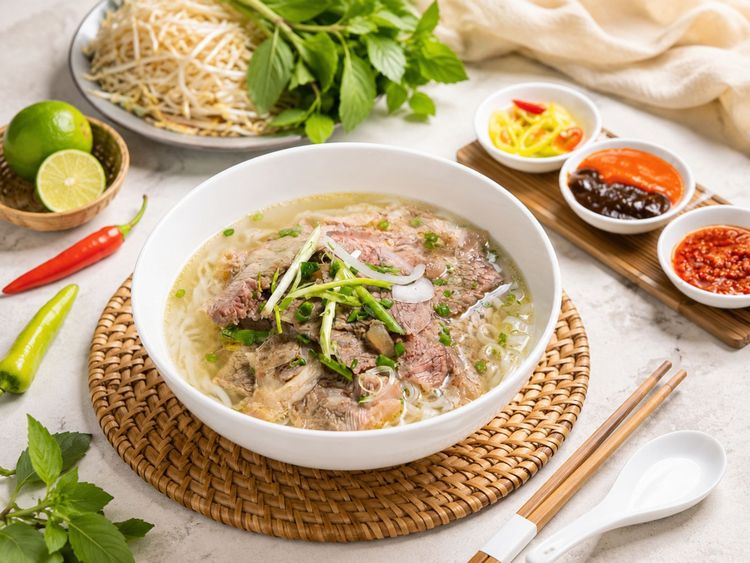
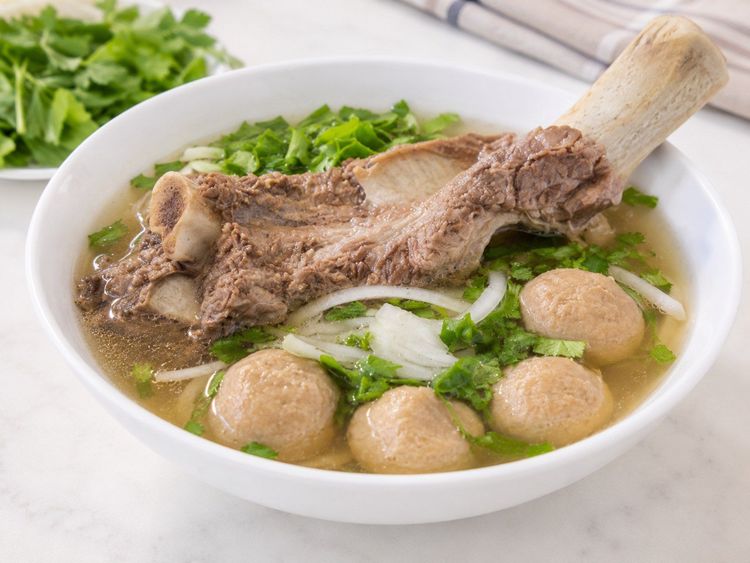
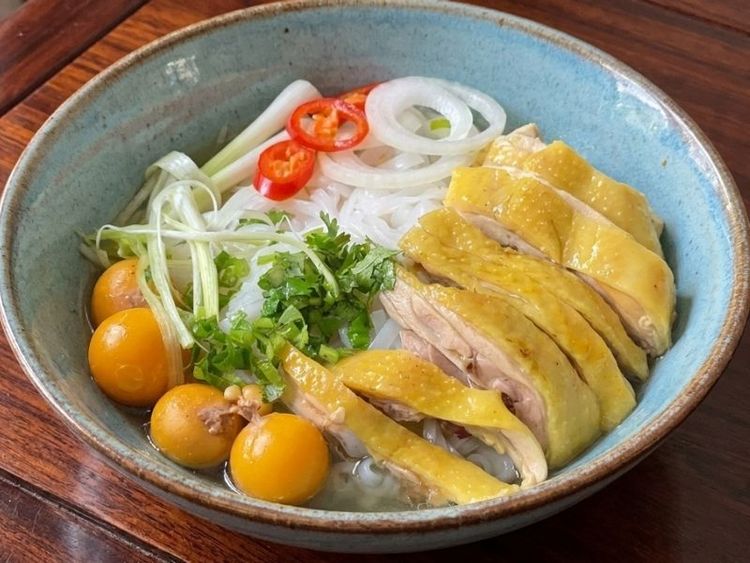
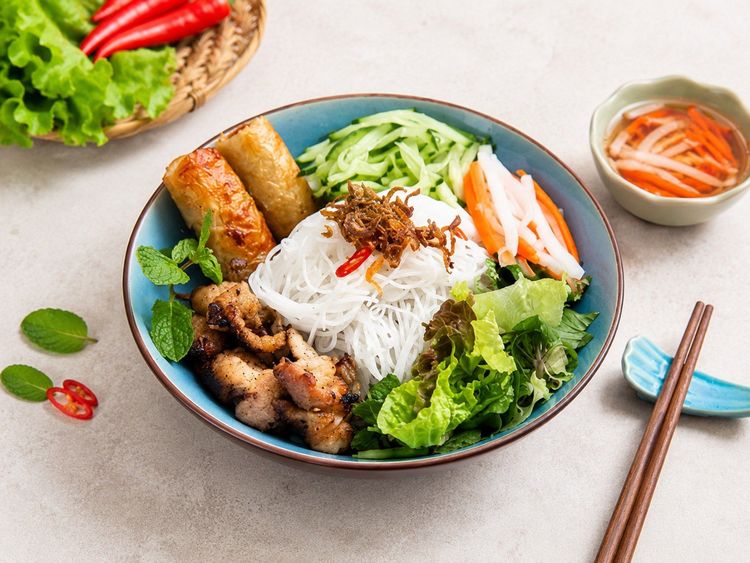
Bun Bo Hue Recipe - Vietnamese Spicy Beef & Pork Noodle Soup
Published: Aug 20, 2026 by CHIN-SU
Updated: Sep 8, 2026 by CHIN-SU
Tested by CHIN-SU Kitchen Team
Bun bo Hue (bún bò Huế) is a Vietnamese spicy beef noodle soup from Hue, Central Vietnam, made with beef shank, pork hock, thick round rice noodles, lemongrass, and fermented shrimp paste. Compared with pho, the broth has a stronger lemongrass aroma, richer pork-and-beef flavor, and a deeper savory character from fermented shrimp paste.
In Vietnam, bun bo Hue is eaten throughout the day, including breakfast, lunch, and dinner. The dish is recognized for balancing spicy, salty, sour, sweet, and herbal flavors rather than relying on one dominant taste. Its bold lemongrass aroma and rich broth make it especially satisfying on cooler days.
In this article, CHIN-SU shares the bun bo Hue recipe to make at home, techniques for keeping the broth clear, managing fermented shrimp paste, and preparing beef and pork toppings correctly. The recipe takes about 2 hours, including 45 minutes of active preparation and 1 hour 15 minutes of simmering, and makes 6 to 8 bowls.
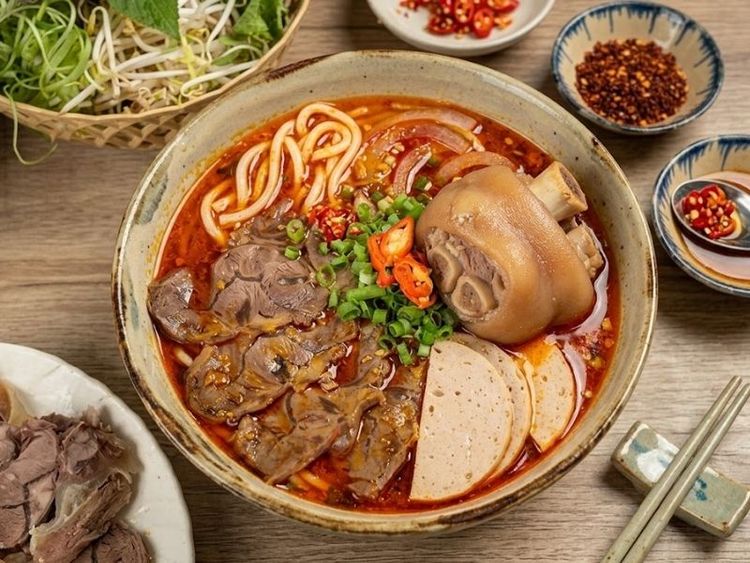
Table Of Contents
- What Is Bun Bo Hue?
- Why You'll Love Bun Bo Hue?
- Bun Bo Hue Ingredients
How to Make Bun Bo Hue Step by Step?
- Step 1: Roast the Aromatics
- Step 2: Prep the Lemongrass, Chilies, and Pineapple
- Step 3: Parboil the Meat and Bones
- Step 4: Pressure Cook the Beef
- Step 5: Simmer the Pork Bones and Hock
- Step 6: Prepare The Fermented Shrimp Paste
- Step 7: Make the Chili Lemongrass Paste
- Step 8: Combine the Two Pots
- Step 9: Season the Broth
- Step 10: Cook the Noodles and Slice the Meat
- Step 11: Assemble the Bowl
- How to Serve Bun Bo Hue?
- Tips for the Best Bun Bo Hue
- What Can You Substitute or Change in Bun Bo Hue?
- How to Store Bun Bo Hue?
What Is Bun Bo Hue?
Bun bo Hue (bún bò Huế) is a Vietnamese spicy beef noodle soup from Hue in Central Vietnam, made with beef shank, pork hock, and thick round rice noodles in a broth flavored with lemongrass and fermented shrimp paste.
The name describes the main elements of the dish:
- Bún refers to the round rice noodles used in the bowl.
- Bò means beef.
- Huế refers to the city where this noodle soup became strongly associated.
English speakers usually pronounce bun bo Hue close to “boon boh hway.”
Hue was the imperial capital of Vietnam under the Nguyen Dynasty, and the city developed a distinctive culinary identity that includes both royal dishes and everyday foods. Bun bo Hue belongs to the everyday food tradition of Hue rather than being classified as a royal-court dish.
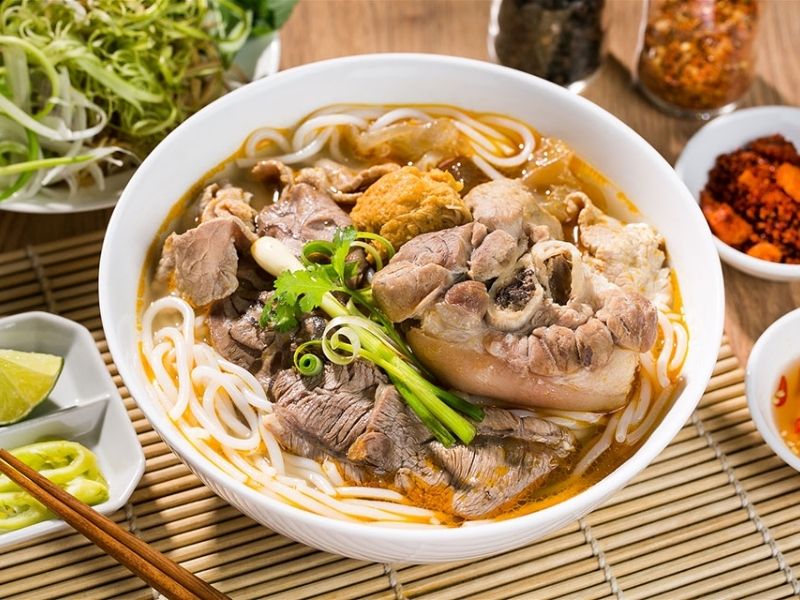
The dish is often compared with pho because both are Vietnamese noodle soups, but their structures are different. Bun bo Hue uses thick round rice noodles, lemongrass, fermented shrimp paste, and a stronger chili profile, while pho uses flat rice noodles and a clearer broth built around charred aromatics and warm spices.
In the United States, bun bo Hue appears on Vietnamese restaurant menus under its Vietnamese name or as spicy beef noodle soup. The broth is known for its combination of savory beef and pork flavors, bright lemongrass aroma, fermented depth, and fresh herbs added at the table.
Why You'll Love Bun Bo Hue?
You’ll love this bun bo Hue recipe because it creates a deeply layered Vietnamese noodle soup where the heat, herbs, and fermented flavors can be adjusted to your preference.
- You control the heat. Many versions prepare chili lemongrass paste separately, allowing each diner to adjust the spice level. Some recipes also incorporate sa tế into the broth, so the heat level depends on the preparation style.
- The flavor comes in layers. Beef shank, pork hock, lemongrass, and fermented shrimp paste each contribute a different part of the broth’s character, creating a deeper flavor profile than a single-protein soup.
- Most of the cooking time is hands-off. The meat and broth simmer gradually while the aromatics and seasonings develop, allowing one pot to create multiple components for a complete bowl.
Bun Bo Hue Ingredients
To make this bun bo Hue, you’ll prepare five component groups: the meat and bones, the broth aromatics, the chili lemongrass paste, the broth seasoning, and the noodle-and-herb spread served at the table.
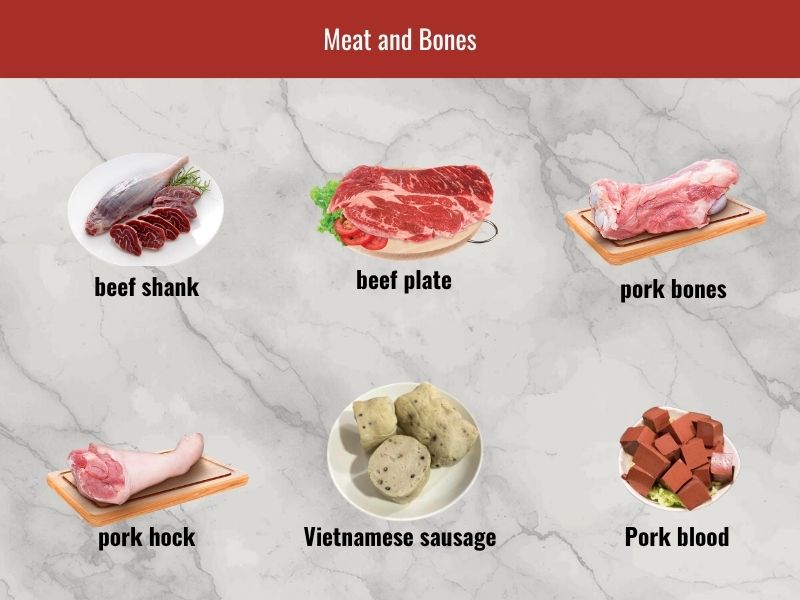
Meat and Bones
- 2.2 lb (1 kg) beef shank (bắp bò). Beef shank is one of the defining ingredients of bun bo Hue because it provides firm slices with a slightly gelatinous texture from connective tissue.
- 11 oz (300 g) beef plate (nạm bò). Beef plate adds a softer, richer cut that contrasts with the firmer texture of beef shank.
- 1.1 lb (500 g) pork bones (xương heo). Pork bones add body and richness to the broth. Beef bones can also be used, but they create a different balance of flavors.
- 1.75 lb (800 g), about 1 whole pork hock (giò heo). Pork hock contributes collagen, texture, and a traditional topping served with the finished bowl.
- Vietnamese sausage (chả), sliced. Different regions and restaurants serve bun bo Hue with different types of Vietnamese sausage. Some Hue-style versions include chả tôm quết, a pounded shrimp cake, while many restaurants use chả bò (beef sausage) or chả lụa (pork sausage).
- Pork blood (huyết heo), optional. Cooked pork blood cake is a traditional topping in some versions of bun bo Hue. It has a soft texture and can be omitted without changing the core flavor of the broth.
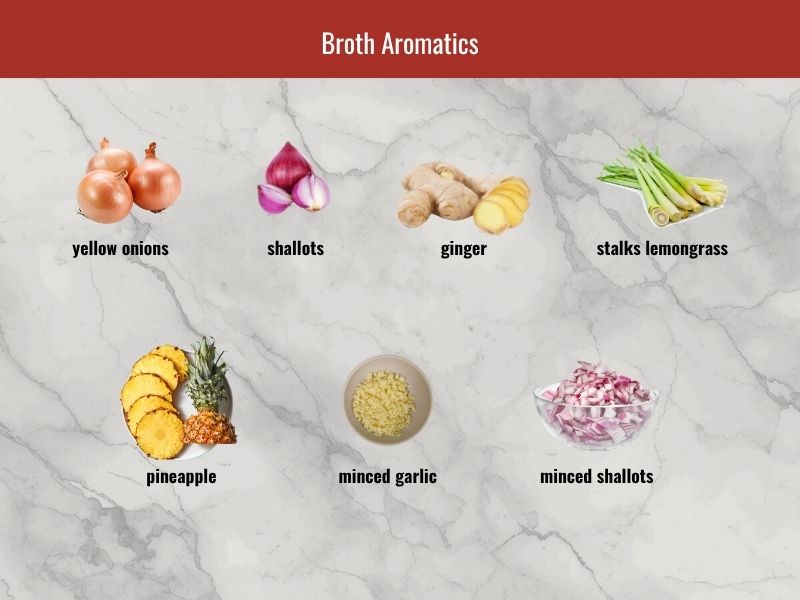
Broth Aromatics
These aromatics create the signature fragrance of bun bo Hue. They are added together to build a broth with sweetness, citrus notes, and depth.
- 1.5 lb (700 g), about 2 yellow onions (hành tây), 2.8 oz (80 g) shallots (hành tím), and 2.5 oz (70 g) ginger (gừng), roasted. Roasting develops deeper sweetness and aroma while reducing the sharp raw notes of fresh aromatics.
- 8 stalks of lemongrass (sả). Lemongrass is one of the defining aromas of bun bo Hue. Use part of the lemongrass for the chili paste and bruise the remaining stalks to infuse the broth.
- 1.1 lb (500 g) fresh pineapple (thơm), cut into wedges, optional. Pineapple is used in some modern and regional versions to add sweetness and acidity, but it is not required in every traditional bun bo Hue recipe.
- 0.7 oz (20 g) garlic (tỏi) and 2 shallots, minced, for the chili lemongrass paste. These aromatics create the savory foundation of the sa tế-style topping.
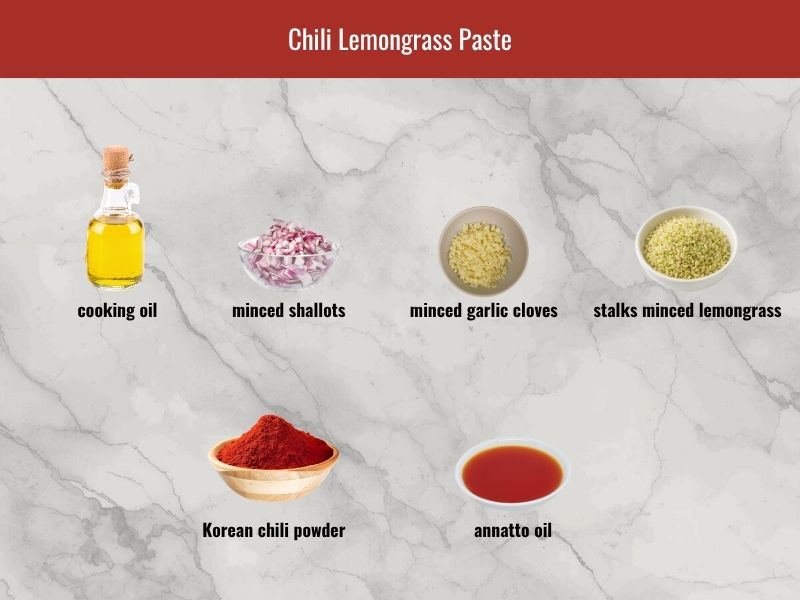
Chili Lemongrass Paste (Sa Tế)
- 3 tbsp cooking oil. Oil carries the aroma of lemongrass, garlic, shallots, and chili throughout the paste.
- 2 minced shallots, 4 minced garlic cloves, and 2 minced lemongrass stalks. These aromatics create the main fragrance of the chili paste.
- 1 tbsp Korean chili powder (gochugaru) or fresh minced chili. Chili provides heat and color, while the exact spice level can be adjusted based on preference.
- 2 tbsp annatto oil (dầu màu điều). Annatto oil provides the characteristic red-orange color of many bun bo Hue bowls. It contributes color more than heat.
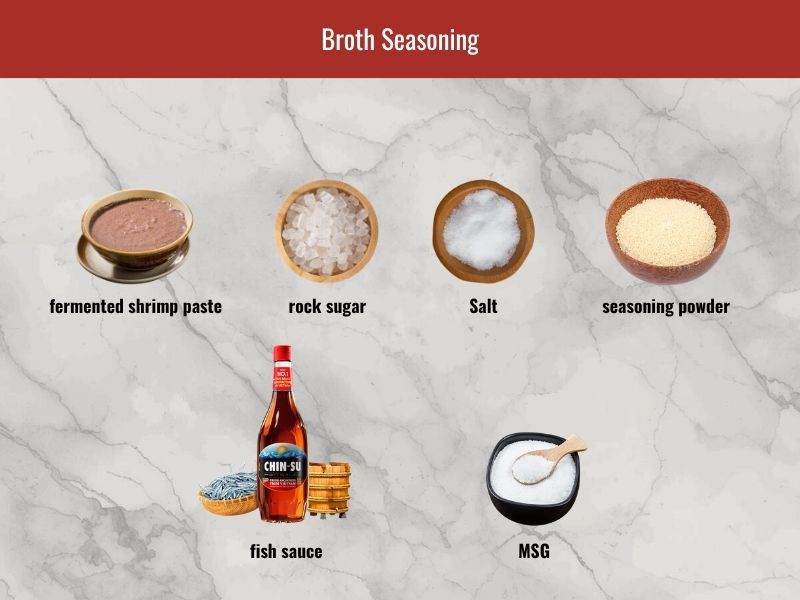
Broth Seasoning
- 2.8 oz (80 g) fermented shrimp paste (mắm ruốc Huế). Fermented shrimp paste is one of the defining flavor components of traditional bun bo Hue. Some home cooks reduce or omit it for accessibility, but the broth will lose part of its characteristic fermented depth.
- 2.3 oz (65 g) rock sugar (đường phèn). Rock sugar balances the savory broth with a clean sweetness.
- Salt, about 3.5 tsp total. Salt is added during different cooking stages to build the final seasoning gradually.
- 2 tbsp seasoning powder (hạt nêm). Seasoning powder adds additional savory depth to the broth.
- 3 tbsp fish sauce (nước mắm). Fish sauce contributes salty depth and aroma during final seasoning. Taste after adding because different fish sauces vary in saltiness and intensity.
- ½ tbsp MSG (bột ngọt), optional. MSG enhances savory depth and can be omitted based on preference.
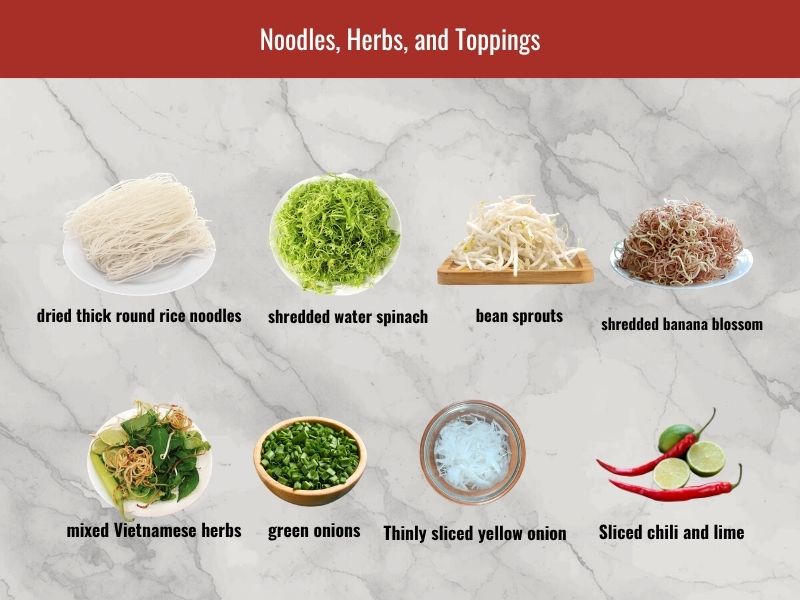
Noodles, Herbs, and Toppings
- 1.75 lb (800 g) dried thick round rice noodles. Bun bo Hue uses thick round rice noodles that are larger than the vermicelli used in many Vietnamese noodle dishes. The noodle size helps it hold up against the rich broth.
- 14 oz (400 g) shredded water spinach (rau muống bào) and 7 oz (200 g) bean sprouts (giá). These fresh vegetables add crunch and balance the richness of the broth.
- 7 oz (200 g) shredded banana blossom (bắp chuối bào), optional. Banana blossom is a traditional accompaniment in many servings. Shredded cabbage can be used when banana blossoms are unavailable.
- Mixed Vietnamese herbs (rau răm, húng cây, quế, ngò gai). Fresh herbs add aroma and help balance the bold broth.
- 4 green onions (hành lá), thinly sliced. Green onion adds freshness to the finished bowl.
- Thinly sliced yellow onion soaked in ice water. Ice water reduces the sharp raw onion flavor and creates a crisp texture.
- Sliced chili and 2 limes (chanh), cut into wedges. These allow diners to adjust acidity and heat at the table.
How to Make Bun Bo Hue Step by Step?
The whole pot comes together in about 2 hours, with roughly 45 minutes of hands-on work. The process follows five stages: preparing the aromatics, cooking the meats, preparing the fermented shrimp paste and chili lemongrass paste, combining and seasoning the broth, and assembling each bowl.
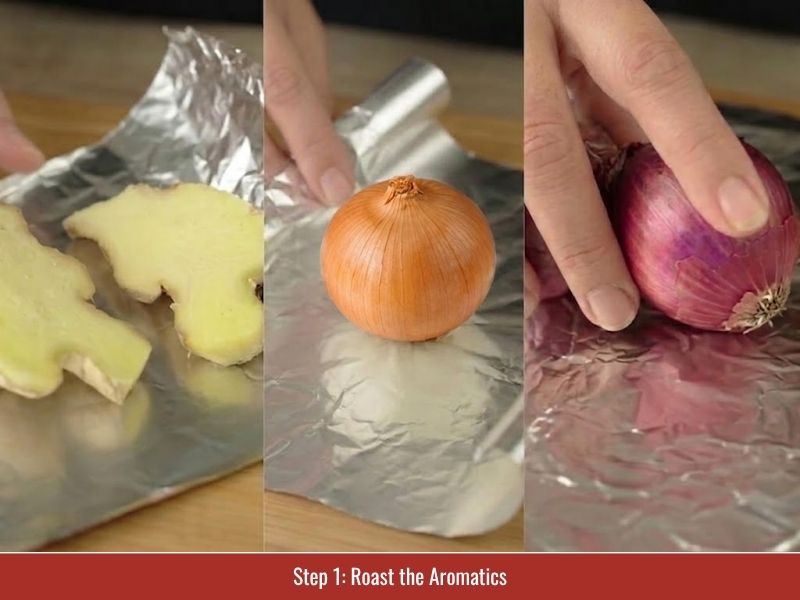
Step 1: Roast the Aromatics
Wrap the ginger, shallots, and yellow onion separately in foil and roast at 350°F (175°C) for about 15–20 minutes, depending on the size of each ingredient.
Roasting develops deeper sweetness and aroma while reducing the sharp raw notes of fresh aromatics. This Vietnamese technique of lightly charring aromatics helps create the fragrant base associated with many traditional noodle broths.
Peel away any burnt outer layers, then rinse the aromatics before adding them to the broth.
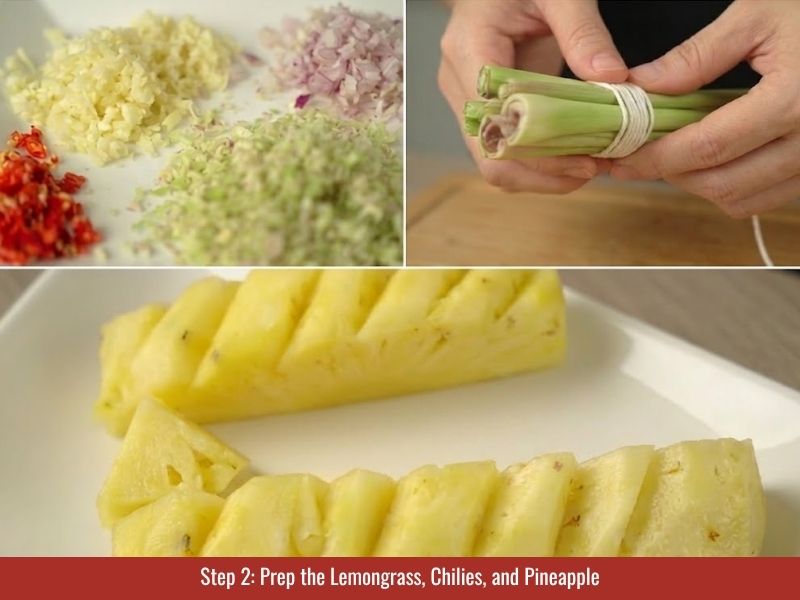
Step 2: Prep the Lemongrass, Chilies, and Pineapple
Mince 2 stalks of lemongrass for the chili lemongrass paste.
Bruise the remaining 6 stalks and tie them together so they can be removed easily from the broth later.
Mince 2 shallots and 4 garlic cloves for the chili paste. Cut the pineapple into wedges if using. Pineapple can add sweetness and acidity to some versions of bun bo Hue, but it is optional rather than a required ingredient.
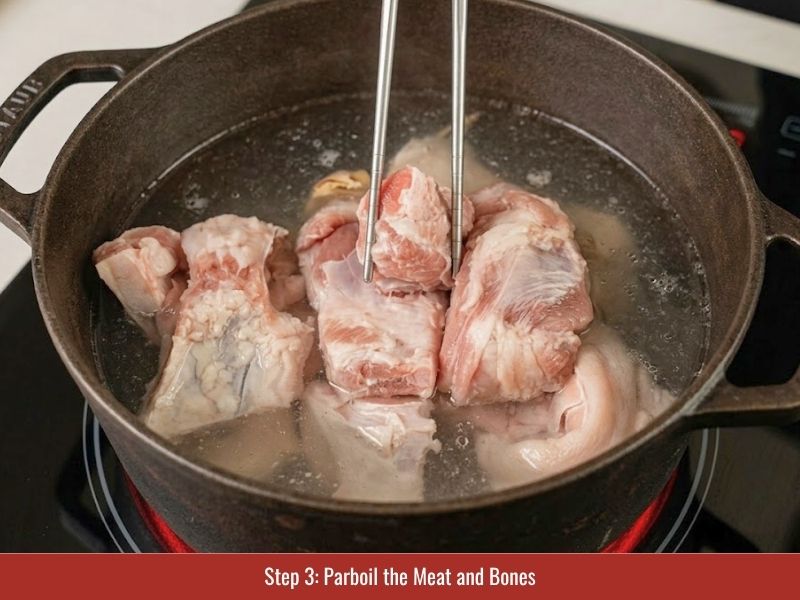
Step 3: Parboil the Meat and Bones
Bring a pot of water to a boil with a few slices of ginger and ½ tbsp salt.
Add the pork bones, pork hock, beef shank, and beef plate separately, then blanch each group briefly for about 2 minutes. Remove the meat and bones, then rinse thoroughly under running water.
This step is mainly for removing impurities and improving broth clarity, not for fully cooking the meat.
Step 4: Pressure Cook the Beef
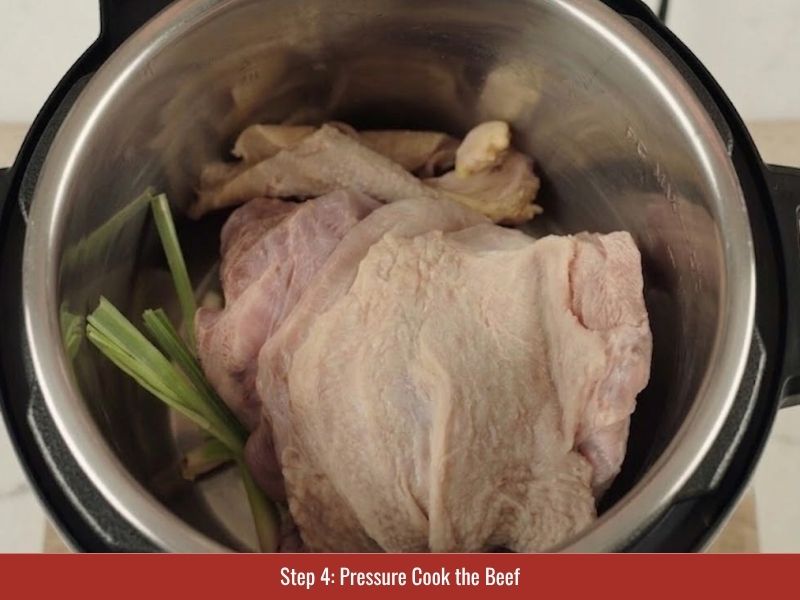
Place the bruised lemongrass at the bottom of a pressure cooker, then add the beef shank and beef plate with 2 L water.
Season with 1 tsp salt, ½ tbsp seasoning powder, 15 g rock sugar, roasted onion, roasted ginger, one roasted shallot, and pineapple if using.
Pressure cook for 25 minutes until the beef becomes tender while still firm enough to slice.
If using a stovetop method, simmer the beef gently until tender. The longer cooking time allows collagen to develop but requires more monitoring.
Step 5: Simmer the Pork Bones and Hock
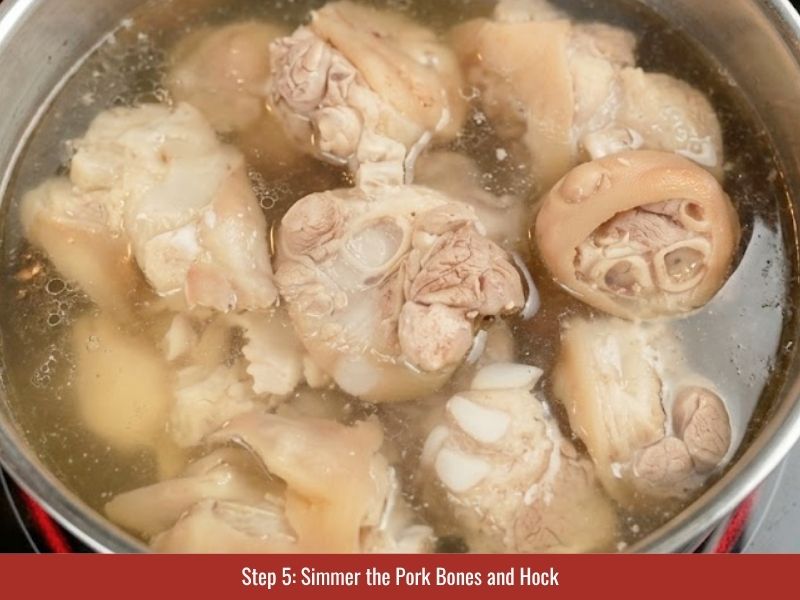
Add the pork bones and pork hock to 2.5 L water with 1 tsp salt, 20 g rock sugar, roasted onion, roasted shallot, roasted ginger, and bruised lemongrass.
Bring the pot to a simmer and remove foam from the surface. Add pineapple if using, then simmer gently for about 50 minutes.
Remove the pork hock when the skin and tendon become tender but still slightly springy. Transfer it briefly to ice water to help maintain its shape and texture.
Step 6: Prepare The Fermented Shrimp Paste
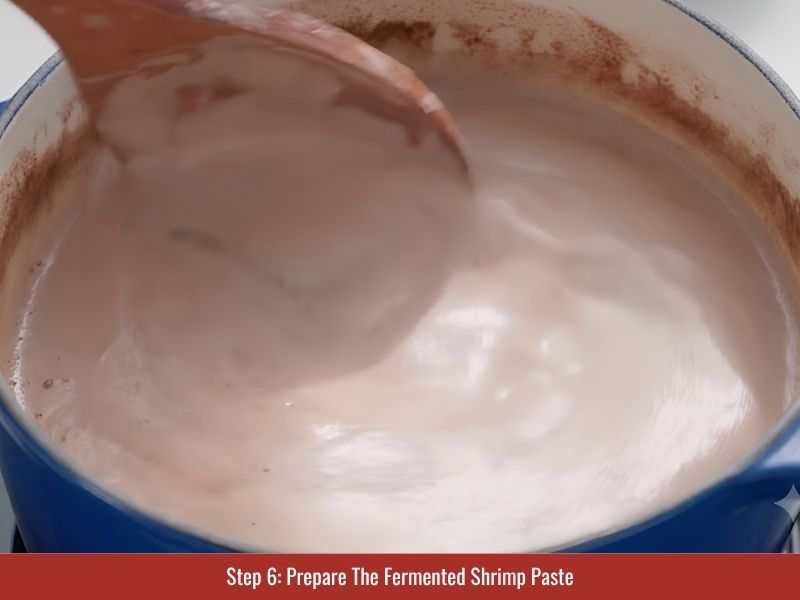
Mix 80 g fermented shrimp paste (mắm ruốc Huế) with 500 ml water and bring it to a boil.
Reduce the heat and simmer for about 3 minutes to soften the strongest aroma. Turn off the heat and allow the mixture to settle before pouring only the clearer liquid from the top into the broth.
This technique incorporates the fermented shrimp flavor while reducing sediment that can affect broth clarity. The aroma of fermented shrimp paste is naturally strong, so good ventilation helps during cooking.
Step 7: Make the Chili Lemongrass Paste
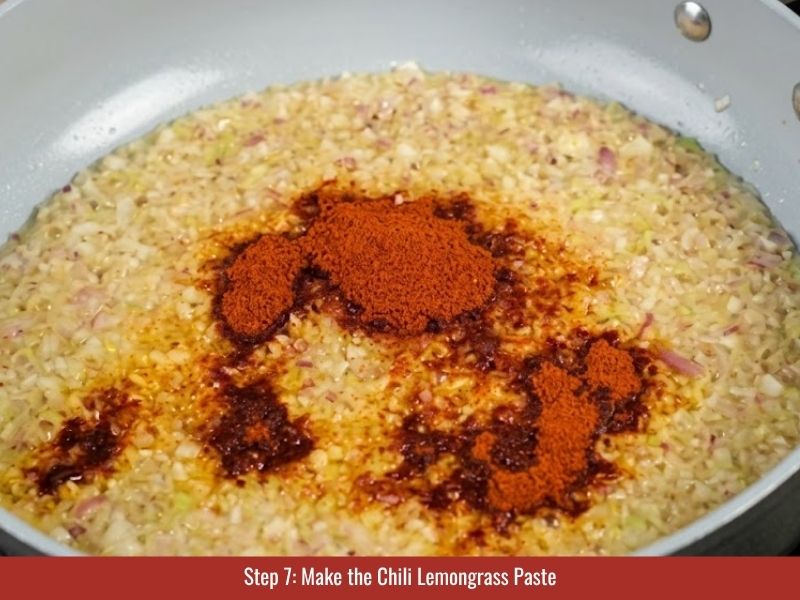
Heat 3 tbsp oil and fry the minced shallots, garlic, and lemongrass until fragrant and lightly golden.
Add 1 tbsp chili powder or fresh minced chili and 2 tbsp annatto oil, then stir until combined.
Sa tế can be prepared separately and added at serving, or incorporated into the broth depending on the preferred style. Keeping it separate allows diners to control the spice level.
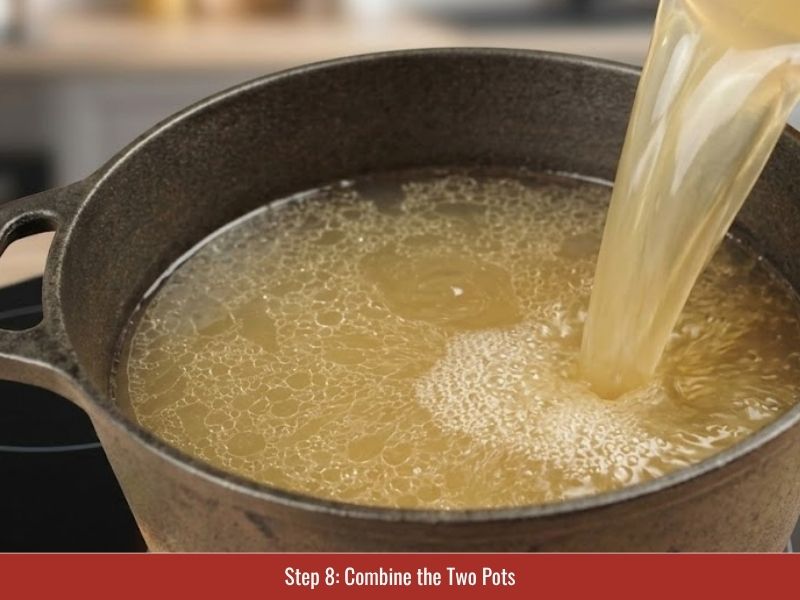
Step 8: Combine the Two Pots
Remove the bones, aromatics, and lemongrass from the pork broth.
Pour the beef cooking liquid into the pork broth while keeping the flavorful liquid from both cooking stages. Add the clearer shrimp paste liquid and the chili lemongrass paste.
Adjust the total volume with boiling water if needed until the broth reaches approximately 4.5 L.
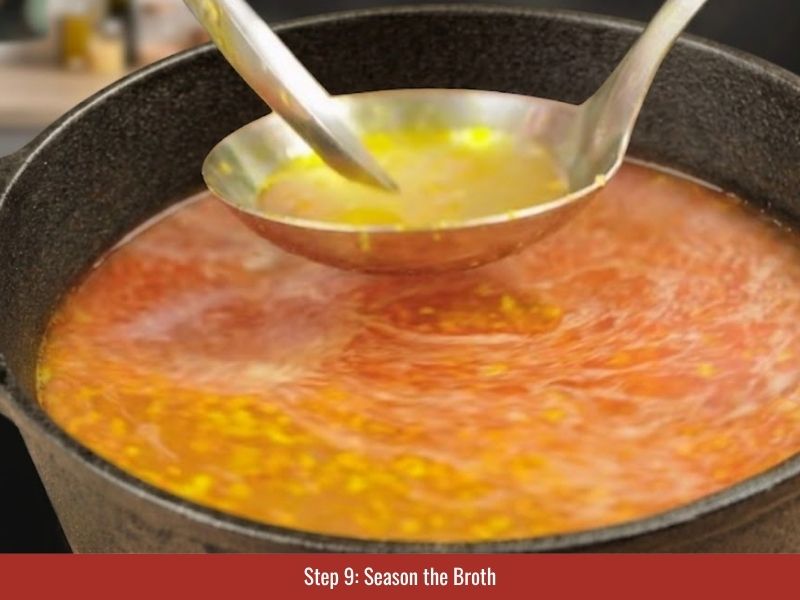
Step 9: Season the Broth
Season the combined broth with 1 tbsp seasoning powder, ½ tbsp salt, 30 g rock sugar, 3 tbsp fish sauce, and ½ tbsp MSG (optional).
CHIN-SU fish sauce can be used as the fish sauce base for this final seasoning step.
Taste and adjust gradually because the broth already contains seasoning from the meat, bones, and fermented shrimp paste. The finished broth should taste savory first, with lemongrass aroma, gentle sweetness, fermented depth, and adjustable chili heat.
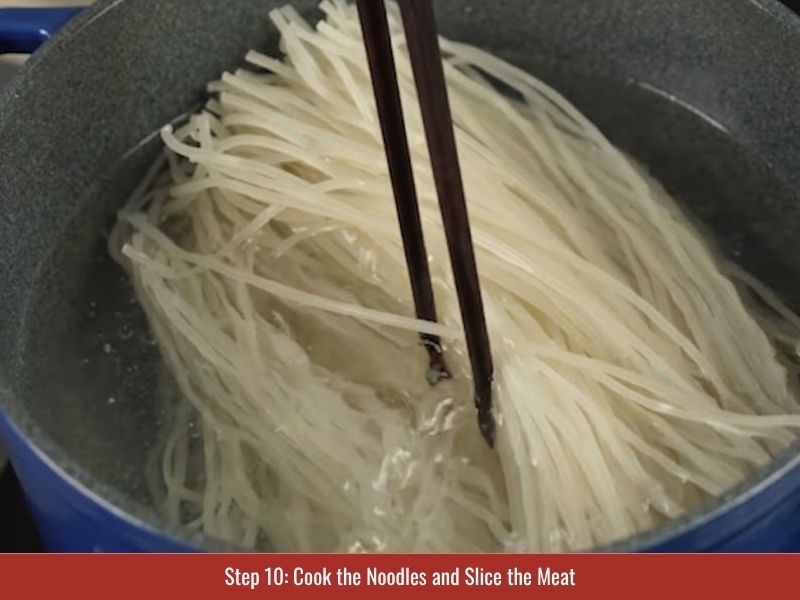
Step 10: Cook the Noodles and Slice the Meat
Prepare the thick round rice noodles according to the package instructions.
For dried bun bo Hue noodles, soak and boil until tender but still springy, then rinse briefly and drain.
Slice the cooled beef shank and beef plate into thin pieces about ¼ inch (6 mm) thick, then slice the pork hock and Vietnamese sausage. Keep the slices large enough to retain their texture in the finished bowl.
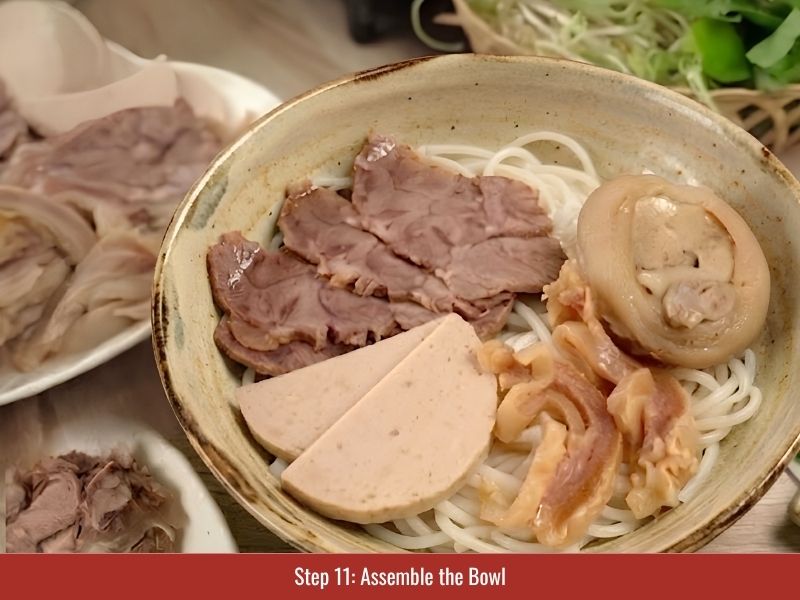
Step 11: Assemble the Bowl
Place the cooked noodles into each bowl, then arrange the sliced beef shank, beef plate, pork hock, and Vietnamese sausage on top.
Add sliced onion and green onion, then ladle the hot broth over everything.
Serve immediately with herbs, lime, chili, and fresh vegetables at the table.
How to Serve Bun Bo Hue?
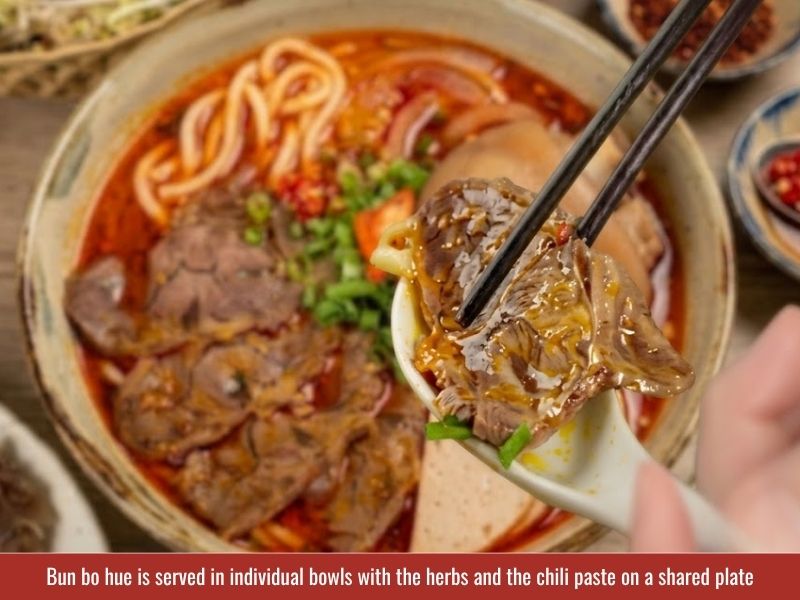
Bun bo Hue is served in individual bowls with herbs, fresh vegetables, lime, and chili arranged separately so each person can adjust the balance of spice, acidity, and freshness. Unlike some noodle dishes where all toppings are added before serving, bun bo Hue is often finished at the table according to personal preference.
A traditional serving setup includes:
- Fresh herbs and vegetables, such as Vietnamese coriander (rau răm), Thai basil, cilantro, shredded water spinach, and bean sprouts.
- Sliced onion and green onion, added for freshness and aroma.
- Lime wedges and sliced chili, allowing diners to adjust acidity and heat.
- Shredded banana blossom (bắp chuối bào), a traditional accompaniment that adds crunch and a slightly floral flavor.
- Chili lemongrass paste (sa tế), added gradually based on each person’s preferred spice level.
For diners who prefer additional heat, CHIN-SU chili sauce can be served alongside the chili condiments as an optional spicy addition.
The eating ritual is part of the experience. Many diners first taste the broth on its own, then gradually add lime, chili, and herbs to adjust the bowl. The noodles and meat are eaten with chopsticks, while a spoon is used for the rich broth.
In Hue, bun bo Hue is commonly associated with breakfast, but it is not limited to the morning. Vietnamese restaurants and households serve the dish throughout the day, including lunch and dinner. Outside Hue, restaurant versions may adjust the spice level, shrimp paste intensity, and toppings to suit local preferences.
Tips for the Best Bun Bo Hue
These techniques help create a clear, aromatic broth with the layered flavor and texture that define bun bo Hue.
- Keep the broth at a gentle simmer. A rolling boil forces fat and proteins into the liquid, making the broth cloudy. Gentle heat allows the meat, bones, and aromatics to release flavor gradually while keeping the broth cleaner.
- Blanch the meat and bones before simmering. This step, known as trụng xương/thịt, removes surface impurities and helps create a clearer broth. It prepares the ingredients for flavor extraction rather than fully cooking them.
- Use fermented shrimp paste carefully. Mắm ruốc Huế provides the characteristic savory depth of bun bo Hue, but adding only the clearer liquid after settling helps control sediment and keeps the broth balanced.
- Prepare the chili lemongrass paste separately when serving different spice preferences. Sa tế can be mixed into the broth or served on the side depending on the regional style and household preference. Keeping it separate gives each diner control over the heat.
- Cook the noodles close to serving time. Thick rice noodles continue absorbing liquid after cooking. Blanch them shortly before serving so they remain springy and do not dilute the broth.
What Can You Substitute or Change in Bun Bo Hue?
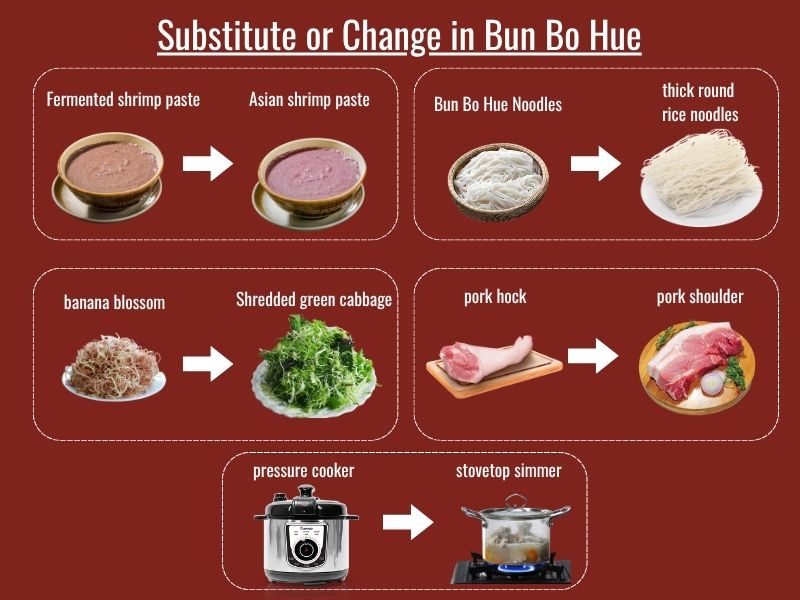
These substitutions help adapt bun bo Hue ingredients based on availability while keeping the dish’s defining elements: lemongrass aroma, beef-and-pork broth, fermented depth, and thick rice noodles.
- Fermented shrimp paste (mắm ruốc Huế) can be replaced with another Vietnamese or Southeast Asian fermented shrimp paste. The flavor will vary because regional shrimp pastes differ in aroma and intensity. Reducing or omitting it creates a milder broth but removes one of the signature flavors of traditional bun bo Hue.
- Thick bun bo Hue noodles can be replaced with regular thick round rice vermicelli. The dish remains recognizable, although the noodle texture will differ because dedicated bun bo Hue noodles are larger and designed to hold the stronger broth.
- Banana blossoms (bắp chuối bào) can be replaced with shredded cabbage. Cabbage provides a similar crunch and is easier to find in many supermarkets, although banana blossom has a more traditional flavor.
- Pork hock (giò heo) can be replaced with pork shoulder. Pork shoulder provides meat but loses the collagen-rich texture from skin and tendon that makes pork hock distinctive in the bowl.
- Pressure cooking can be replaced with stovetop simmering. A stovetop method requires more time but allows easier skimming and monitoring of broth clarity. Simmer the beef gently until tender rather than relying on a fixed cooking time.
Make these substitutions when needed, but keeping the original ingredients provides the closest flavor to a traditional bowl of bún bò Huế.
How to Store Bun Bo Hue?
Store bun bo Hue components separately to preserve the broth clarity, meat texture, and noodle consistency. A fully assembled bowl does not store well because the noodles continue absorbing broth and become soft over time.
Store the broth in an airtight container for up to 3–4 days in the refrigerator or freeze it in portions for up to 3 months. Allow the broth to cool before storing, then reheat only the amount needed for each serving.
Store cooked beef, pork hock, and other meat toppings separately in the refrigerator for up to 3–4 days. Keep sliced meat with a small amount of broth to help maintain moisture and prevent the surface from drying out during storage.
Store cooked noodles separately and use them within 1–2 days for the best texture. Rice noodles continue absorbing moisture after cooking, so keeping them outside the broth helps prevent them from becoming soft and swollen.
Store chili lemongrass paste (sa tế) separately in a sealed container. Keeping it apart allows you to adjust the spice level after reheating and helps preserve the aroma of the lemongrass and chili.
Prepare fresh herbs, bean sprouts, banana blossom, and lime close to serving time because these ingredients lose their freshness faster than the cooked components.
Have you made bun bo hue at home yet, or are you still tracking down the fermented shrimp paste? Drop your questions, tweaks, or results in the comments below. If this recipe worked for you, a quick star rating helps other home cooks find it, and we'd love to see your bowl on social media with #CHINSU. That lemongrass-and-shrimp-paste broth is worth the afternoon, and the heat is yours to set: grab a bottle of CHIN-SU chili sauce at chinsu.com and pour your own.
Frequently Asked Questions
Bun bo Hue and pho are both Vietnamese noodle soups, but they differ in noodles, aromatics, and broth style. Bun bo Hue uses thick round rice noodles, lemongrass, fermented shrimp paste, and a stronger chili profile, while pho uses flat rice noodles and a clearer broth built around charred aromatics and warm spices.
Bun bo Hue is usually associated with spicy flavors, but the heat level depends on how much sa tế or chili paste is added. Some versions include chili during cooking, while others serve the chili paste separately so diners can control the spice.
Yes, bun bo Hue commonly includes pork alongside beef. Pork bones and pork hock contribute body and texture to the broth, while beef shank and other beef cuts provide the main beef flavor.
Yes, but the broth will lose the fermented savory depth that helps define traditional bun bo Hue. Some home adaptations reduce or omit shrimp paste for accessibility, but the flavor profile becomes milder.
Bun bo Hue uses thick round rice noodles that are larger than the thin rice vermicelli used in many Vietnamese noodle dishes. The noodle thickness helps it carry the rich broth and heavier toppings.
Pork blood (huyết heo) is a traditional optional topping with a soft, firm texture similar to a savory tofu-like cube. It is commonly sold pre-cooked at Vietnamese markets and can be omitted if unavailable.
Bun Bo Hue (Vietnamese Spicy Beef Noodle Soup) Recipe
1. Ingredient
Meat and Bones
- 2.2 lb (1 kg) beef shank.
- 11 oz (300 g) beef plate.
- 1.1 lb (500 g) pork bones.
- 1.75 lb (800 g) pork hock.
- Vietnamese sausage (chả), sliced.
- Pork blood (huyết heo), optional.
Broth Aromatics
- 1.5 lb (700 g) yellow onions, about 2 onions, roasted.
- 2.8 oz (80 g) shallots, roasted.
- 2.5 oz (70 g) ginger, roasted.
- 8 stalks lemongrass.
- 1.1 lb (500 g) fresh pineapple, cut into wedges (optional).
- 0.7 oz (20 g) garlic, minced.
- Additional shallots for chili lemongrass paste.
Chili Lemongrass Paste (Sa Tế)
- 3 tablespoons cooking oil.
- 2 minced shallots.
- 4 minced garlic cloves.
- 2 minced lemongrass stalks.
- 1 tablespoon Korean chili powder (gochugaru) or fresh minced chili.
- 2 tablespoons annatto oil.
Broth Seasoning
- 2.8 oz (80 g) fermented shrimp paste (mắm ruốc Huế).
- 2.3 oz (65 g) rock sugar.
- About 3.5 teaspoons salt.
- 2 tablespoons seasoning powder.
- 3 tablespoons fish sauce.
- ½ tablespoon MSG (optional).
Noodles, Herbs, and Toppings
- 1.75 lb (800 g) dried thick round rice noodles.
- 14 oz (400 g) shredded water spinach.
- 7 oz (200 g) bean sprouts.
- 7 oz (200 g) shredded banana blossom (optional).
- Mixed Vietnamese herbs: rau răm, Thai basil, cilantro, and sawtooth herb.
- 4 green onions, thinly sliced.
- Thinly sliced yellow onion soaked in ice water.
- Sliced chili.
- 2 limes, cut into wedges.
2. Instructions
- Step 1: Roast the Aromatics. Wrap ginger, shallots, and yellow onion separately in foil and roast at 350°F (175°C) for 15–20 minutes until fragrant. Remove burnt outer layers and rinse before using.
- Step 2: Prep Lemongrass, Chilies, and Pineapple. Mince 2 lemongrass stalks for the chili paste. Bruise the remaining lemongrass stalks and tie them together for the broth. Prepare minced garlic, shallots, and optional pineapple.
- Step 3: Parboil the Meat and Bones. Blanch pork bones, pork hock, beef shank, and beef plate separately in boiling water with ginger and salt for about 2 minutes. Rinse thoroughly to remove impurities.
- Step 4: Pressure Cook the Beef. Add bruised lemongrass, beef shank, and beef plate with 2 L water. Season with salt, seasoning powder, rock sugar, roasted aromatics, and optional pineapple. Pressure cook for 25 minutes until tender.
- Step 5: Simmer the Pork Bones and Hock. Cook pork bones and pork hock with water, roasted aromatics, lemongrass, salt, and rock sugar. Simmer gently for about 50 minutes until tender.
- Step 6: Prepare the Fermented Shrimp Paste. Mix fermented shrimp paste with water and bring to a boil. Simmer briefly, allow sediment to settle, then add only the clearer liquid into the broth.
- Step 7: Make the Chili Lemongrass Paste. Fry shallots, garlic, and lemongrass in oil until fragrant. Add chili powder and annatto oil, then stir until combined.
- Step 8: Combine the Broths. Remove bones, aromatics, and lemongrass. Combine beef cooking liquid, pork broth, clearer shrimp paste liquid, and chili lemongrass paste. Adjust the volume to about 4.5 L.
- Step 9: Season the Broth. Add seasoning powder, salt, rock sugar, fish sauce, and optional MSG. Adjust gradually until the broth becomes savory, aromatic, slightly sweet, and spicy.
- Step 10: Cook the Noodles and Slice the Meat. Prepare thick rice noodles according to package instructions. Slice beef shank, beef plate, pork hock, and Vietnamese sausage into serving pieces.
- Step 11: Assemble the Bowl. Add noodles to bowls, arrange meat toppings, pour hot broth over everything, and serve with herbs, vegetables, lime, and chili.
3. Storage: Store broth, meat toppings, noodles, and chili lemongrass paste separately. Refrigerate broth and cooked meats for 3–4 days or freeze broth for up to 3 months. Store cooked noodles separately for 1–2 days. Prepare herbs, bean sprouts, banana blossom, and lime close to serving.
4. Yield: 6–8 servings
5. Serving Style: Central Vietnamese spicy beef noodle soup with lemongrass broth, thick rice noodles, beef shank, pork hock, fermented shrimp paste, fresh herbs, and chili condiments

CHIN-SU KITCHEN TEAM
CHIN-SU Kitchen Team are the creative experts behind the delicious recipes featuring CHIN-SU sauces. With years of experience and a passion for flavor, our team carefully selects recipes from a variety of trusted chefs and bloggers, bringing together the best culinary insights to present you with the most suitable and exciting dishes. Every recipe is chosen to inspire you to create meals that are not only tasty but also easy to prepare, enhancing your dining experience. Join us as we explore a wide range of sauces and flavors, and elevate every meal with the perfect recipe for your table!
User Reviews
Featured Articles
SUBSCRIBE TO GET
MORE INFO
Want the latest and greatest recipes, updates, and more from us,
straight to your inbox? Subscribe and get our NEWS!