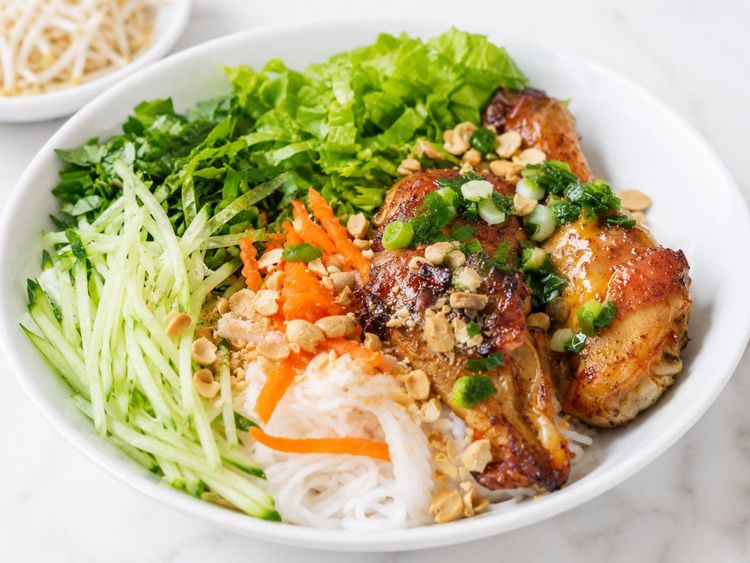
Vietnamese Chicken and Rice Recipe - Turmeric Chicken Rice
Published: Jul 19, 2026 by CHIN-SU
Updated: Jul 31, 2026 by CHIN-SU
Tested by CHIN-SU Kitchen Team
Vietnamese chicken and rice, or cơm gà, is a one-plate meal of tender chicken, flavorful rice, fresh vegetables, herbs, and dipping sauce. The rice is often cooked with chicken broth, rendered fat, turmeric, or other seasonings, while the chicken may be poached, roasted, or fried depending on the recipe.
Cơm gà is served both at home and at casual food shops throughout Vietnam. It is not tied to one fixed mealtime and can be eaten for breakfast, lunch, or dinner. Each plate combines rich chicken and seasoned rice with fresh, sour, or savory accompaniments that balance the meal.
This Central Vietnamese-inspired version features poached chicken, turmeric rice, a crisp salad, and a fish sauce-based dipping sauce, with an optional modern egg-yolk sauce. In this article, CHIN-SU guides you through safely poaching the chicken, cooking separate golden rice grains, preparing the salad, and assembling each plate. The recipe takes about 1.5 hours, including around 45 minutes of active preparation and cooking, and serves 4 to 6 people.
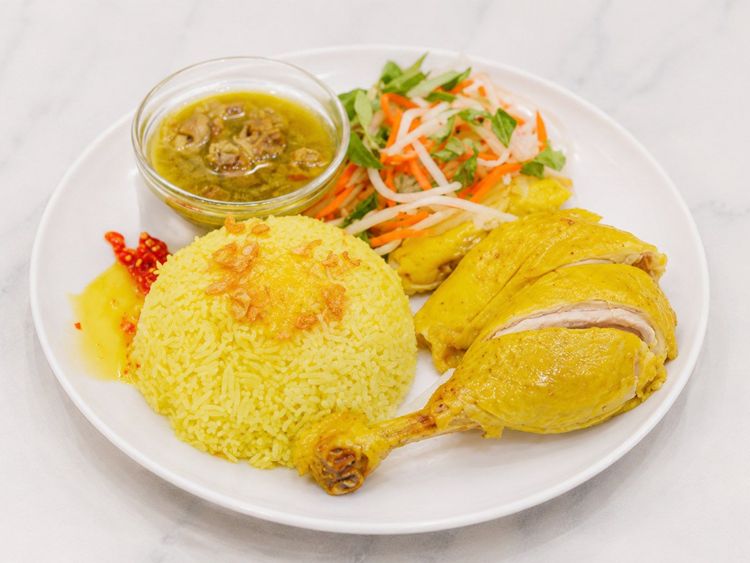
Table Of Contents
- What Is Vietnamese Chicken and Rice?
- Why You'll Love This Vietnamese Chicken and Rice Recipe
- Vietnamese Chicken and Rice Ingredients
How to Make Vietnamese Chicken and Rice Step by Step
- Step 1: Clean the Chicken
- Step 2: Render the Chicken Fat
- Step 3: Boil the Chicken
- Step 4: Stir-Fry the Gizzards
- Step 5: Cook the Turmeric Rice
- Step 6: Shred and Season the Chicken
- Step 7: Toss the Sweet-Sour Salad
- Step 8: Make the Dipping Sauce
- Step 9: Make the Optional Egg-Yolk Sauce
- Step 10: Fry the Shallots
- How to Serve Vietnamese Chicken and Rice
- Tips for the Best Vietnamese Chicken and Rice
- What Can You Substitute in Vietnamese Chicken and Rice?
- How to Store Vietnamese Chicken and Rice
What Is Vietnamese Chicken and Rice?
Vietnamese chicken and rice, or cơm gà, is a one-plate meal of cooked chicken served with rice flavored by chicken broth, rendered chicken fat, turmeric, or regional seasonings. Fresh herbs, vegetables, pickles, light broth, and dipping sauce often complete the plate. Cơm means “cooked rice,” while gà means “chicken,” and English speakers can pronounce the name approximately as “guhm gah.”
Cơm gà refers to a broad family of regional dishes rather than one standardized national recipe. It belongs to the wider Southeast Asian chicken-rice tradition, and Hội An chicken rice is often linked to Hainanese influence introduced through migration and trade. Vietnamese cooks developed distinct local versions using turmeric-yellow rice, shredded or chopped chicken, rau răm, salads, pickles, broth, and fish sauce-based condiments.
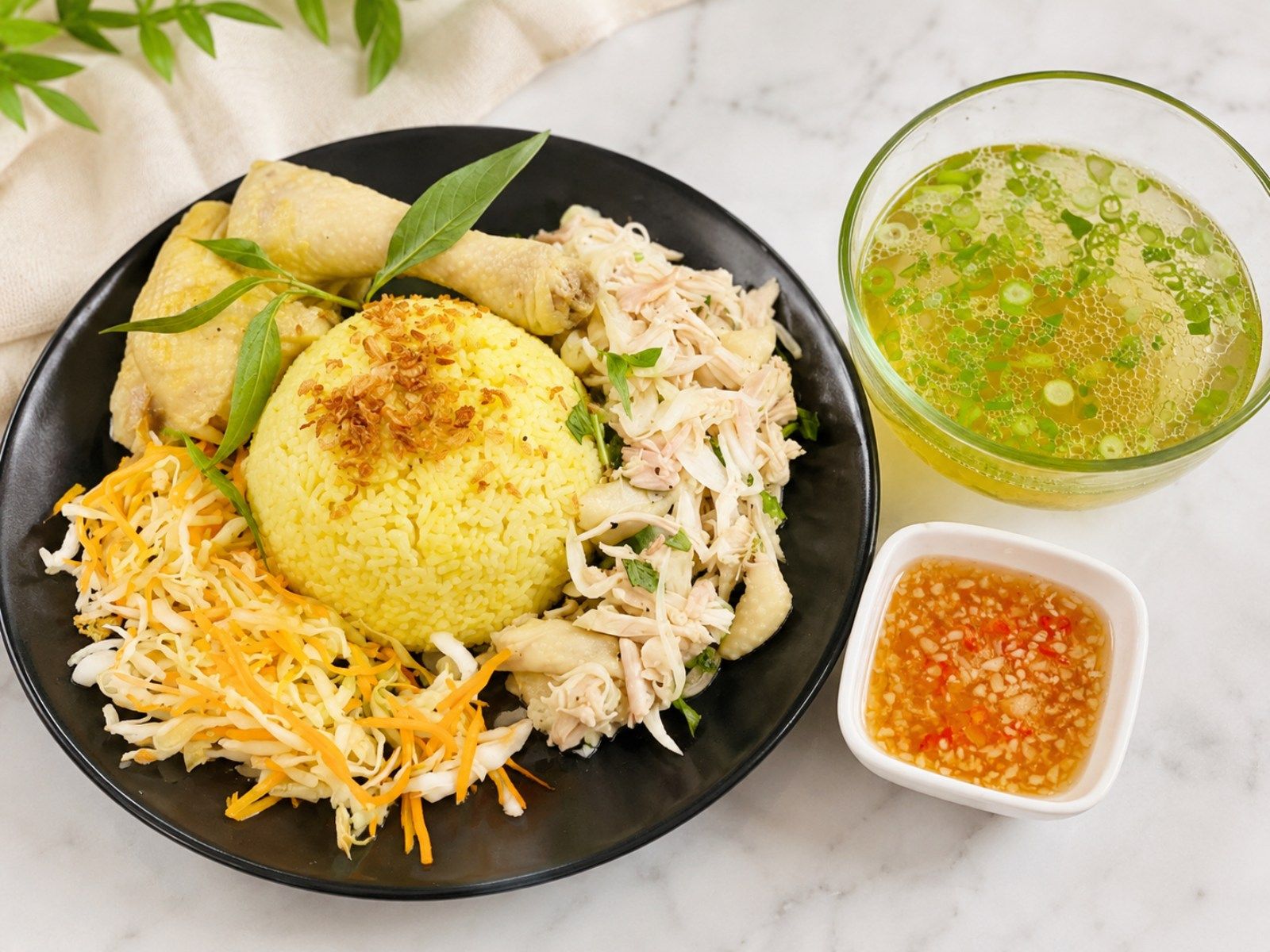
Hội An commonly serves shredded chicken with golden rice, green papaya salad, herbs, and broth. Tam Kỳ versions may feature either shredded chicken with onion or chopped chicken with a separate dipping salt or fish sauce. In Phú Yên, the plate often includes yellow rice, rau răm, cucumber, pickled vegetables, and a concentrated garlic-chili fish sauce.
Cơm gà is eaten throughout the day rather than at one fixed mealtime. Shops may serve it from morning through dinner, while home-cooked versions vary according to each family’s preferred chicken cut, rice preparation, herbs, salad, and dipping sauce. Current restaurant listings in Vietnam place a standard plate at roughly 25,000 to 70,000 VND, though prices vary by location, portion size, and toppings.
On US menus, Hội An-style cơm gà and Hainanese chicken rice may both appear as “chicken rice.” Hội An-style plates usually include shredded chicken, yellow rice, herbs, and salad, while cơm gà Hải Nam more commonly features poached chicken, fragrant rice, and ginger, chili, or soy-based sauces.
Why You'll Love This Vietnamese Chicken and Rice Recipe
Every part of the bird earns its place here: the meat becomes the topping, the rendered fat flavors the rice, and the poaching broth cooks the whole plate together.
- Layered flavor, not just color. The turmeric rice drinks up the chicken broth as it cooks, the sweet-sour salad cuts the richness, and a creamy egg yolk sauce rounds it off, a Hội An finish most recipes leave out.
- 1 chicken, a full meal. A single bird hands you everything you need: meat for the topping, fat to cook the rice, broth to poach in, and bones for a light side soup.
- About 45 minutes of real work. Most of the clock is hands-off poaching and resting, so you can toss the salad and stir the fish sauce dipping sauce while the chicken sits in the pot.
Vietnamese Chicken and Rice Ingredients
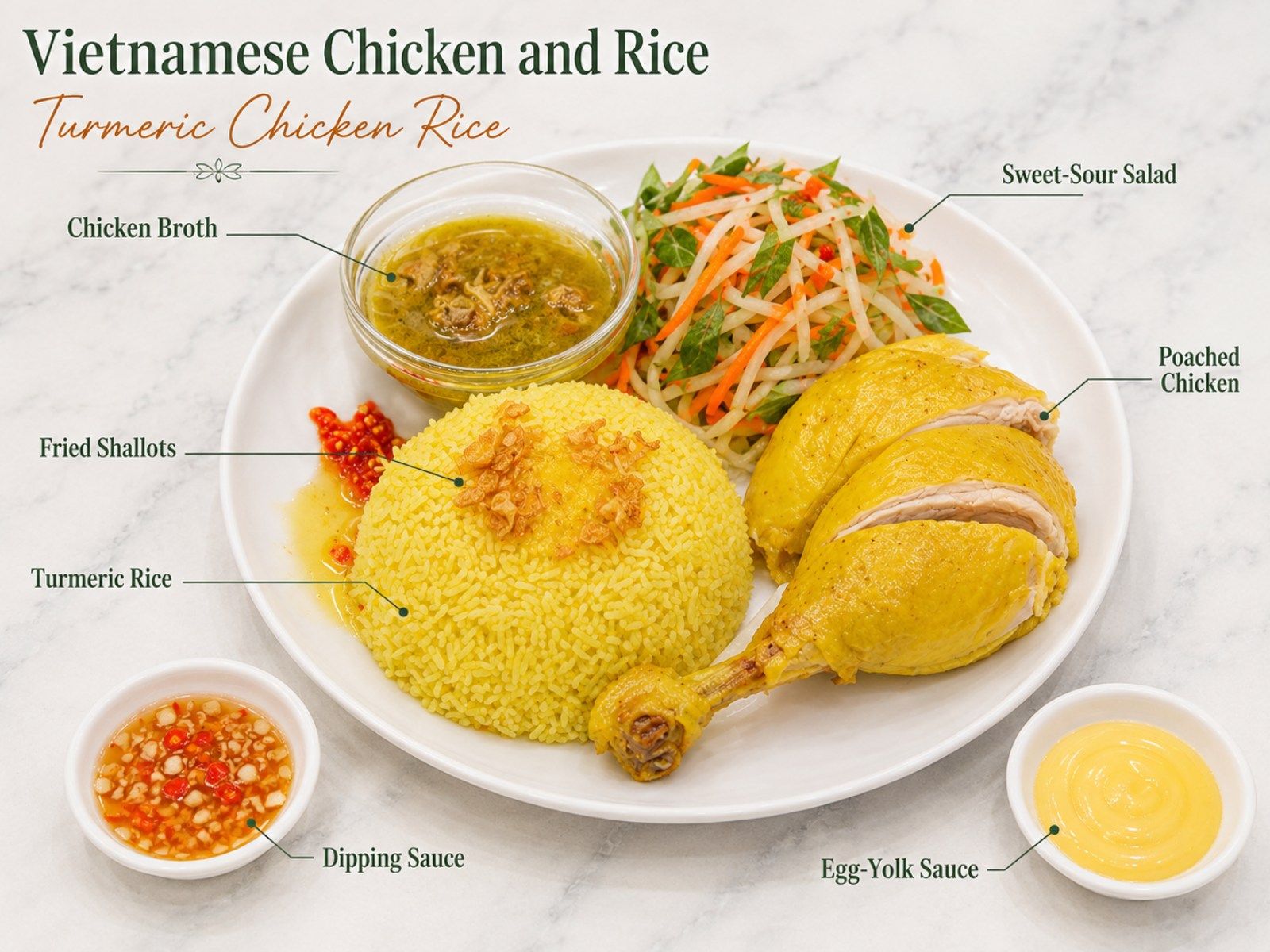
This Vietnamese chicken and rice comes down to about 20 ingredients across 5 main parts: the chicken and broth, the turmeric rice, the sweet-sour salad, the dipping sauce, and the egg yolk sauce.
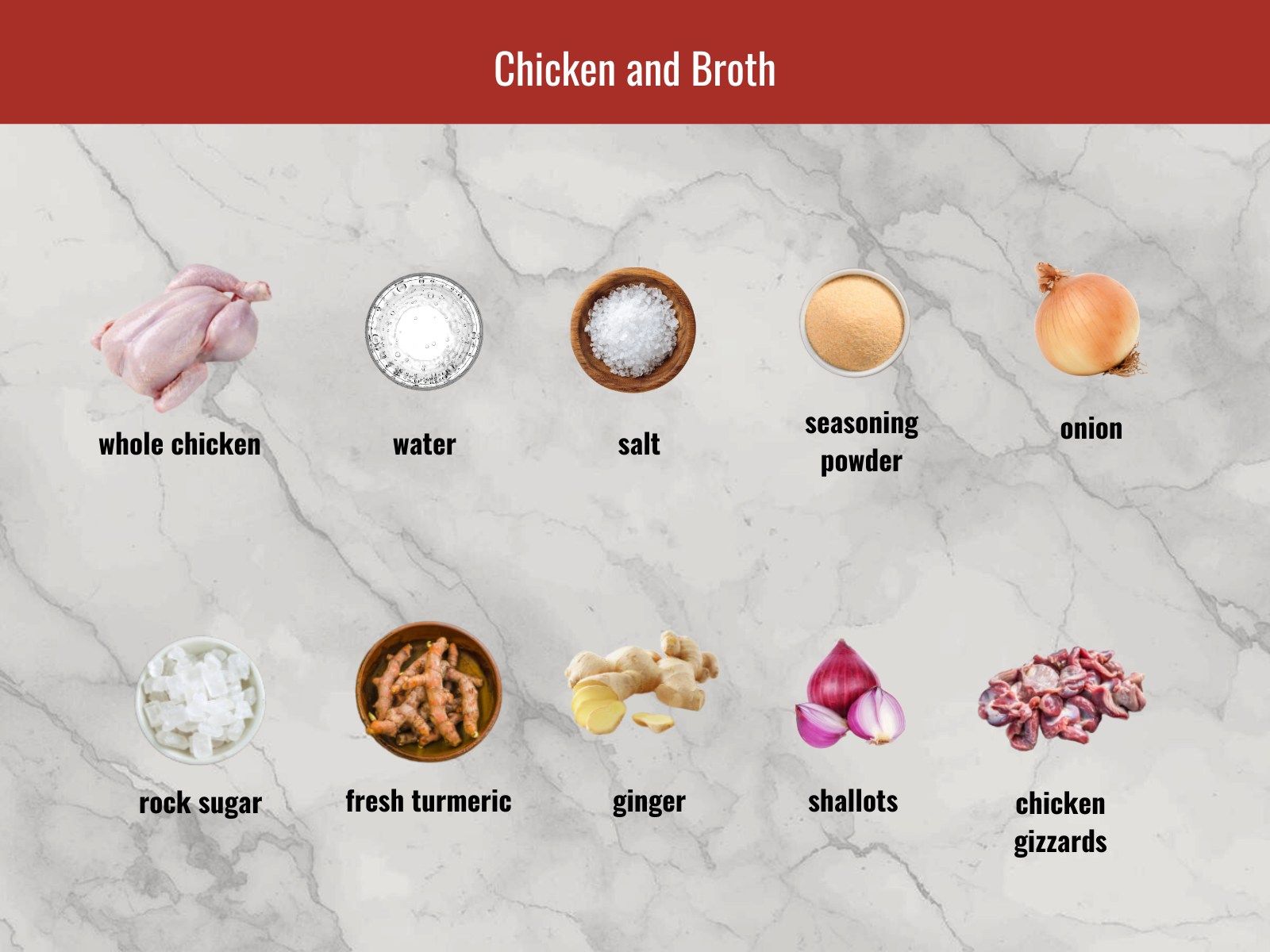
Chicken and Broth
- 1 whole chicken, about 4 to 4.5 lb (1.8 to 2 kg). You want to opt for free-range chicken (gà ta) here because the meat stays firmer, the skin turns a natural gold during poaching, and the fat underneath renders a deeper, more aromatic oil for the rice. Regular supermarket chicken still works, but if you can track down free-range at an Asian grocery store (often labeled "gà đi bộ" or "free-range"), this is the dish where it really pays off.
- 3 quarts (2.8 L) of water. Water needs to cover the chicken fully so it poaches evenly.
- 1 tsp salt, 1 tsp seasoning powder, 1 Tbsp (10 g) rock sugar. These 3 seasonings flavor the poaching broth right from the start.
- 1 oz (25 g) fresh turmeric, sliced, plus 4 to 5 slices of ginger. Fresh turmeric beats powder in this pot because it stains the chicken skin as it poaches and gives the broth a sharper, earthier aroma. If you can't find fresh turmeric, 1 tsp turmeric powder will do the trick, or you can mix both.
- 2 shallots, sliced, plus 1/2 large onion. Shallots and onions build the aromatic base of the broth.
- Chicken gizzards (optional). Set the gizzards aside for the stir-fry, which goes on the plate later.
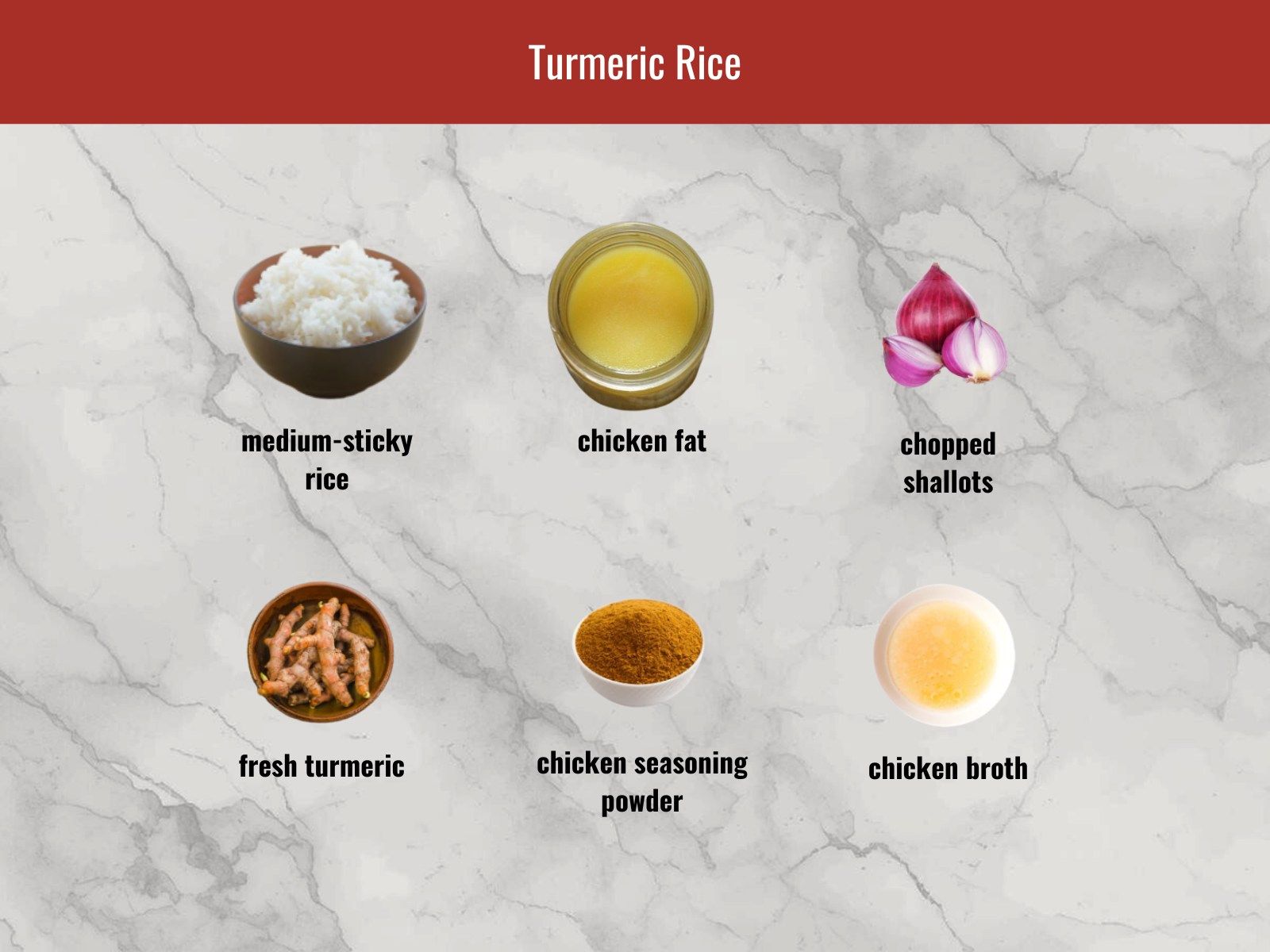
Turmeric Rice
- 1.1 lb (500 g) medium-grain white rice. This type of rice absorbs the chicken broth and turmeric while remaining tender and separate after cooking. Jasmine rice also works, though its longer grains produce a lighter, looser texture.
- 1 Tbsp rendered chicken fat, plus 1/2 Tbsp chopped shallots and 4 to 5 slices of fresh turmeric. Rendered chicken fat gives the rice a richer aroma and a deeper golden color than pork fat or plain cooking oil. We render it from the fat trimmed off the chicken cavity.
- 1 tsp chicken seasoning powder. Seasoning powder steps up the savory flavor as the rice cooks.
- Chicken broth from poaching. Broth replaces the water entirely, and the rice cooks until it absorbs the liquid.
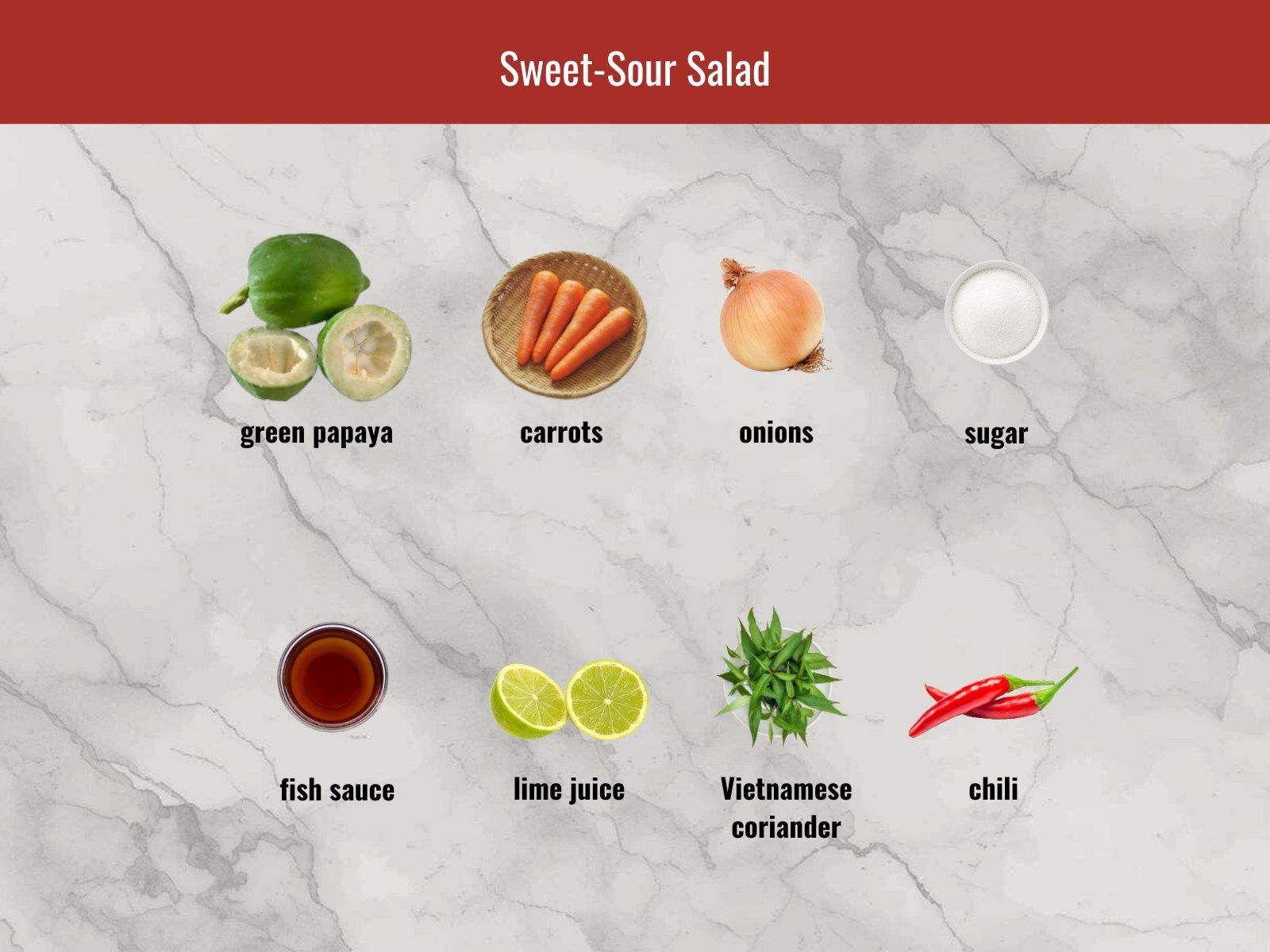
Sweet-Sour Salad
- 12 oz (350 g) mixed shredded green papaya, shredded carrots, and sliced onions. Green papaya is the usual base, but shredded water spinach, shredded banana blossom, or cabbage all hold the dressing just as well when papaya is hard to find.
- 1/2 Tbsp sugar, 1 tsp fish sauce, 1 Tbsp lime juice. These 3 make the sweet-sour dressing.
- Vietnamese coriander (rau răm), plus chopped chili. Vietnamese coriander (rau răm) is the herb that makes or breaks this salad. You can add mint and basil alongside it if your family likes a fuller herb spread.
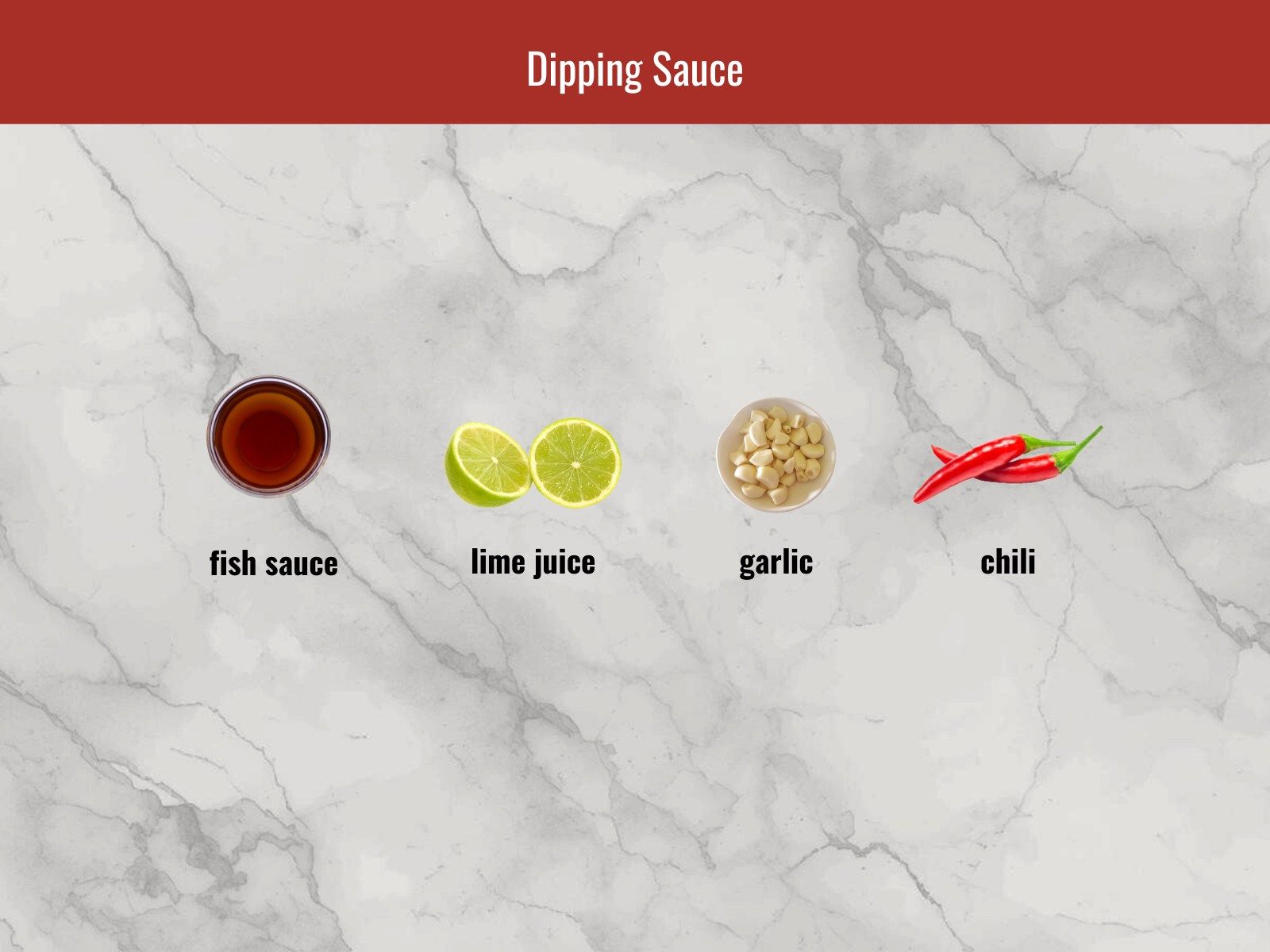
Dipping Sauce
- 5 Tbsp fish sauce. Fish sauce is the savory base of the sauce.
- 5 Tbsp sugar. Sugar balances out the salt.
- 5 Tbsp lime juice. Lime juice is the sour backbone.
- 1 Tbsp minced garlic, plus minced chili to taste. Garlic and chili bring aroma and heat.
Optional Modern Egg-Yolk Sauce
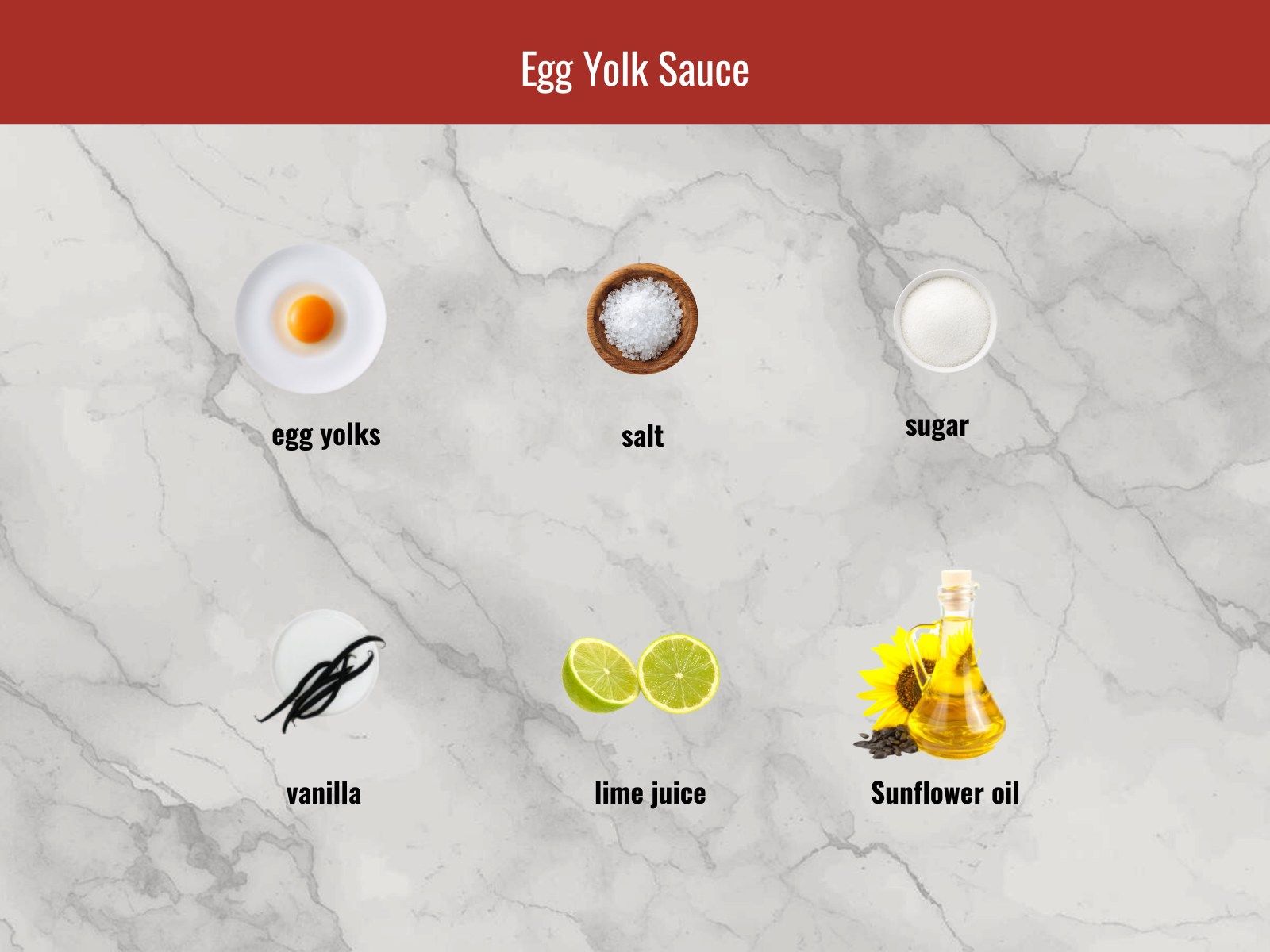
- 2 egg yolks. Egg yolks form the emulsion base.
- 1 pinch salt, 1 tsp sugar, 1 tsp lime juice, 1/2 tsp vanilla. These seasonings go into the yolks before the oil.
- Sunflower oil, added 1 tsp at a time. Adding the oil 1 teaspoon at a time mixes up the liquid into a creamy, mayonnaise-like sauce.
Garnish
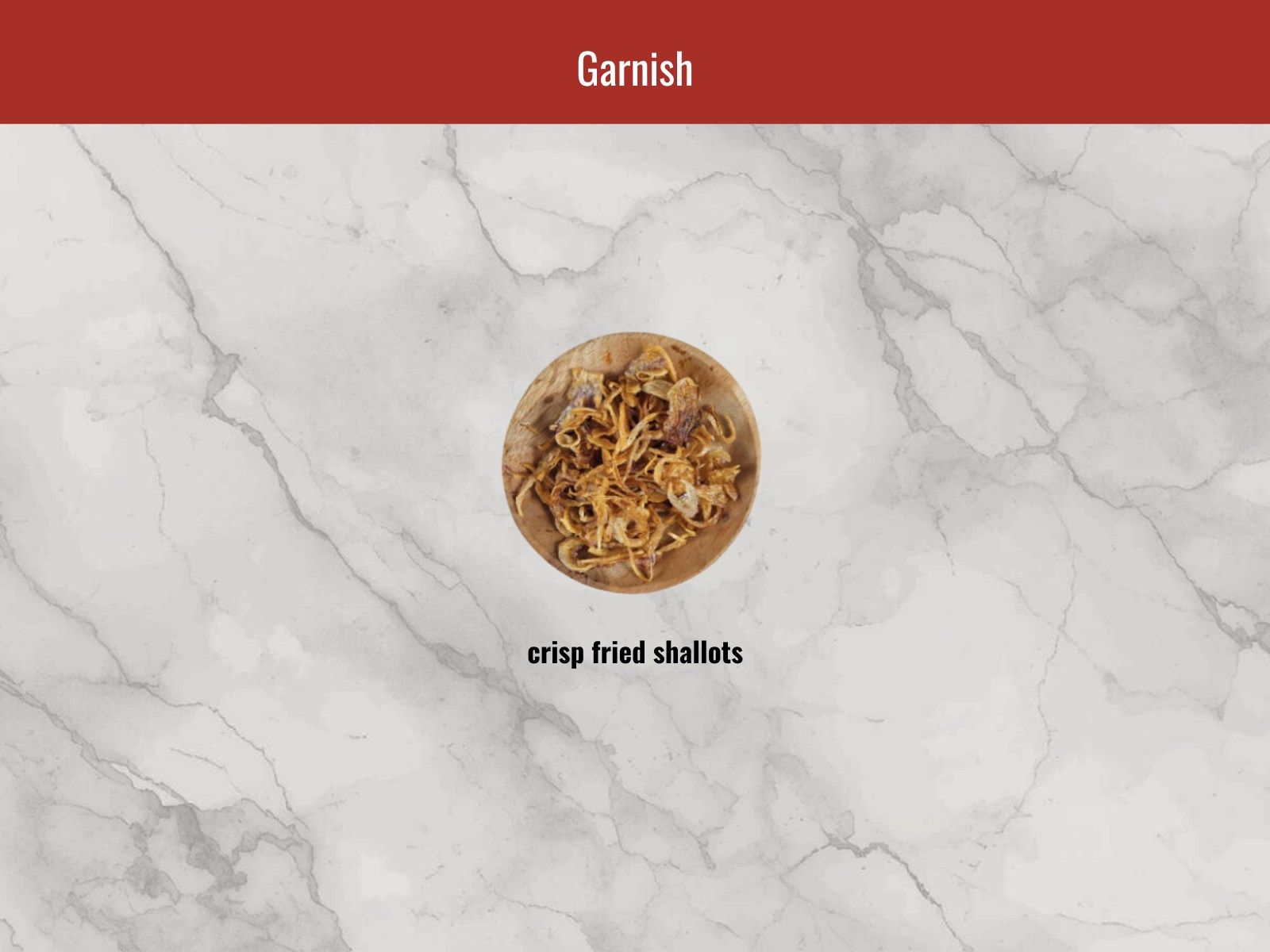
2 shallots, thinly sliced. Thinly sliced shallots fry up into crisp fried shallots (hành phi) for scattering over the finished plate.
How to Make Vietnamese Chicken and Rice Step by Step
Vietnamese chicken and rice takes about 1.5 hours to make, with around 45 minutes of active preparation and cooking. The recipe comes together in 10 steps, and much of the chicken poaching time is hands-off, allowing you to prepare the other components while it cooks and rests.
Step 1: Clean the Chicken
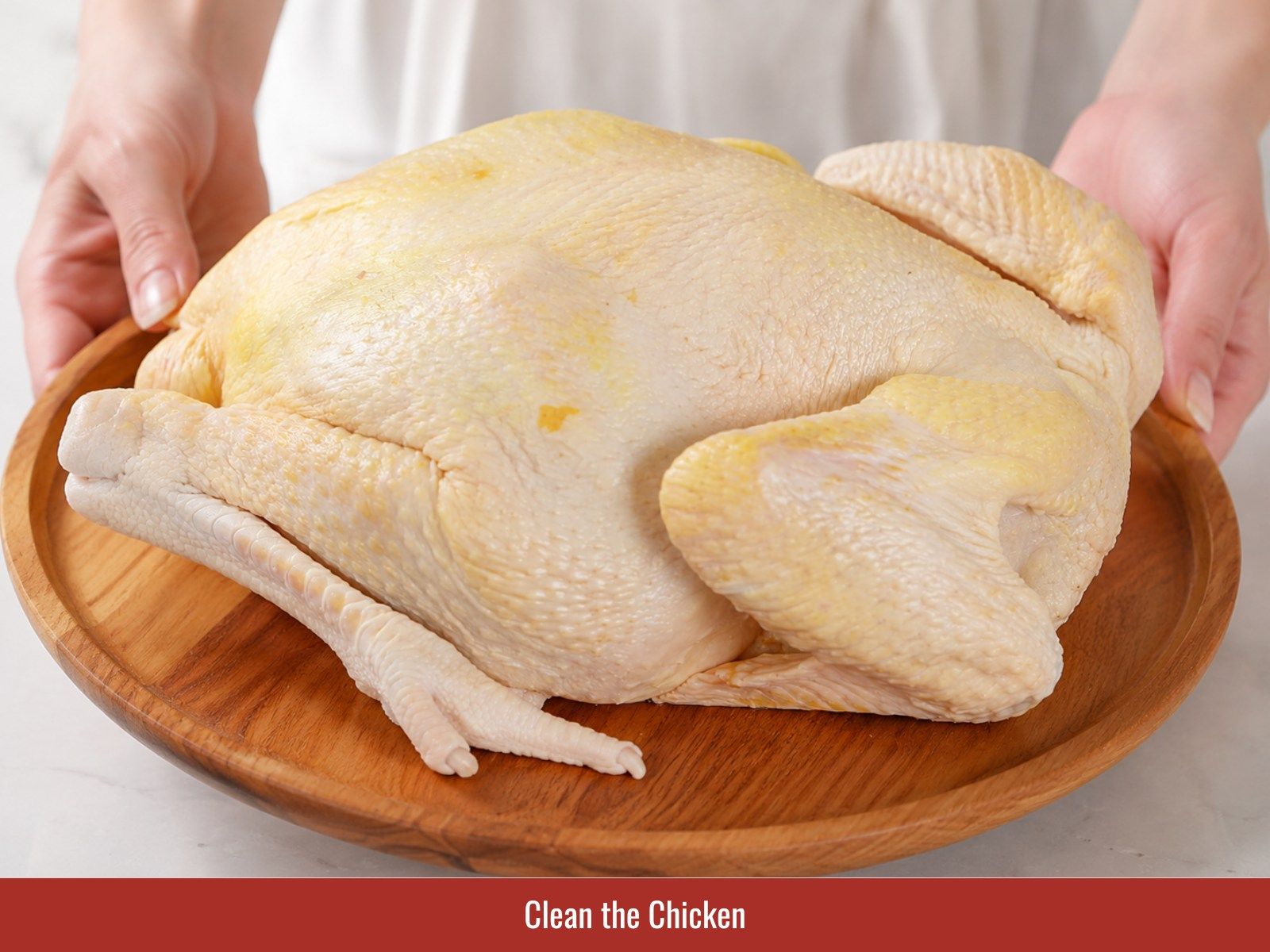
Rub the chicken skin and cavity all over with salt and lime juice, scrubbing well to deal with any odor. Rinse it several times under cold running water, then pat it dry.
Trim the fat from around the cavity opening and set it aside. You will render it in Step 2 for the rice and the gizzard stir-fry.
Step 2: Render the Chicken Fat
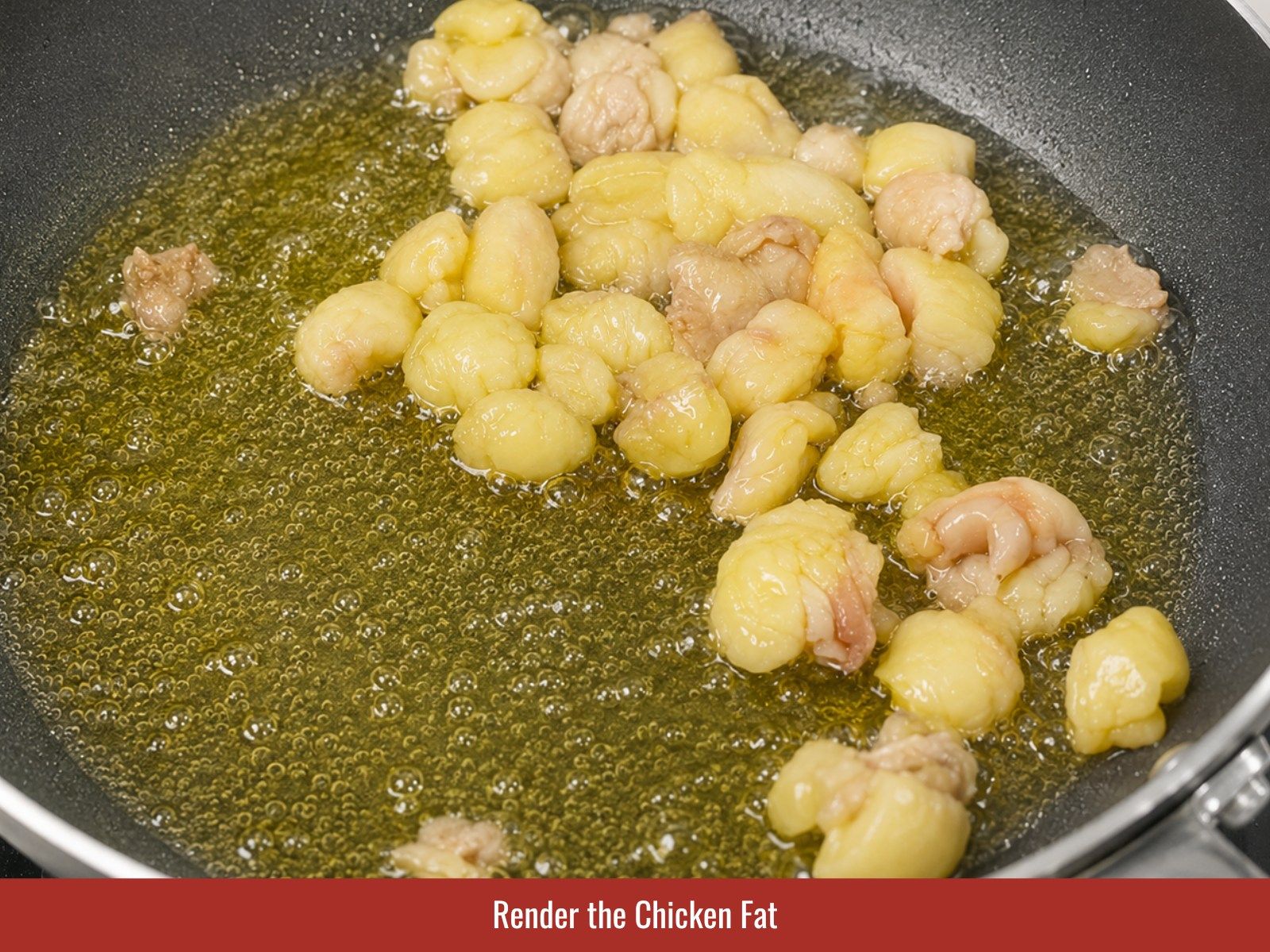
Cut the reserved cavity fat into small pieces and heat it in a dry pan over medium heat until the fat melts and the solids turn golden and crispy. Scoop out about 2.5 Tbsp of rendered fat in total, then set it aside: 1 portion for the rice, 1 for the gizzard stir-fry.
If you come up short on chicken fat, pork fat or a neutral cooking oil is fine to fall back on, though chicken fat gives the best color and aroma.
Step 3: Boil the Chicken
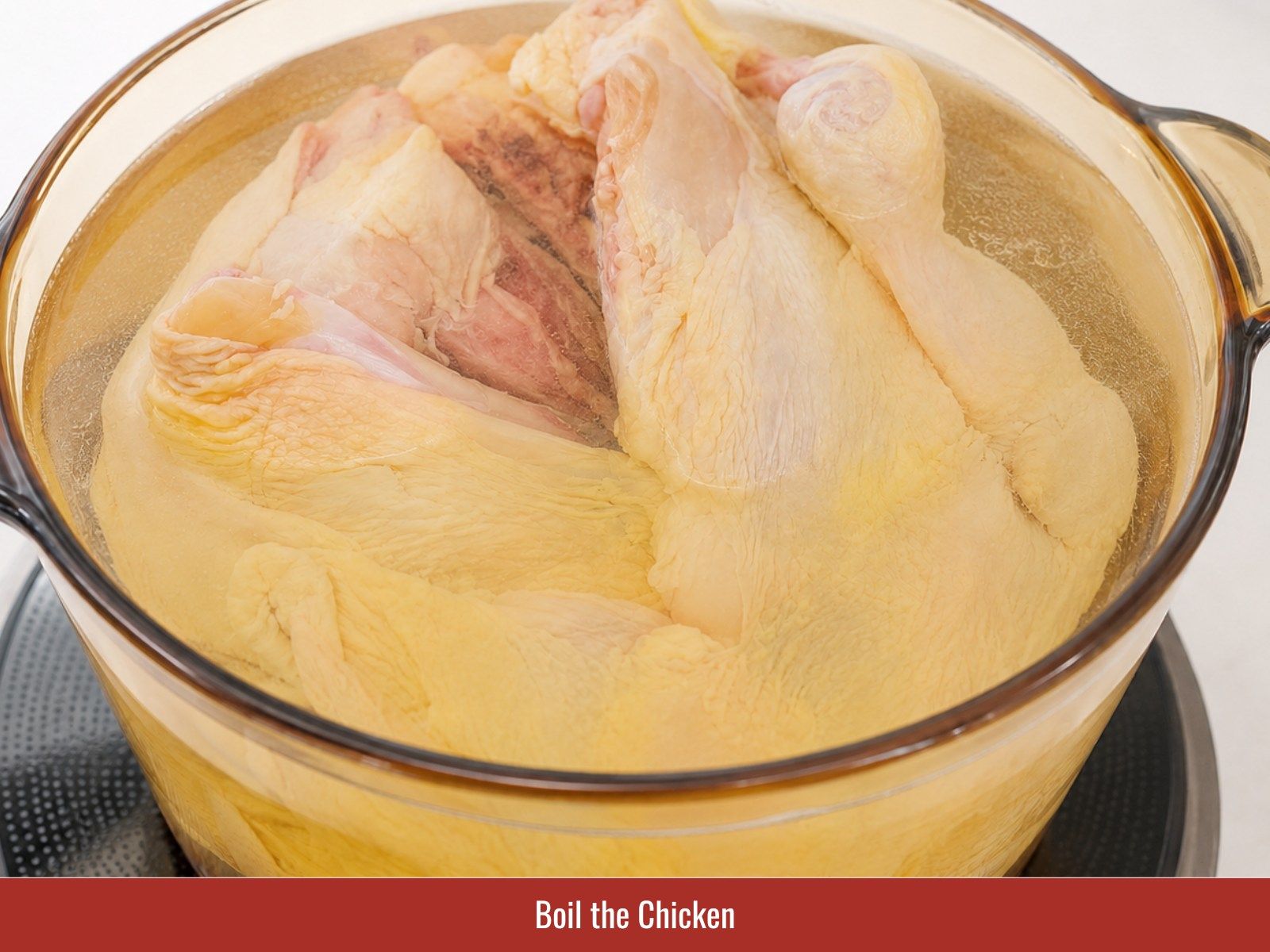
Bring 3 quarts (2.8 L) of water to about 160°F (70°C), the point at which small bubbles just begin forming at the bottom of the pot. Dip the whole chicken in and out 3 to 4 times so the skin firms up and won't tear once it's fully submerged.
Pro-technique: This quick dipping step can help the skin firm gradually and may reduce the chance of tearing during poaching, especially with delicate-skinned chicken.
Lower the chicken all the way in and add 1 tsp salt, 1 tsp seasoning powder, 1 Tbsp rock sugar, 1 oz (25 g) sliced turmeric, 4 to 5 ginger slices, 2 sliced shallots, and 1/2 onion. Bring it to a rolling boil, skim off the foam, then drop the heat to medium.
Boil for 30 to 35 minutes, adjusting the time to suit the size of your bird, and flip the chicken halfway through so it cooks evenly. Turn off the heat, cover the pot, and let the chicken rest in the hot broth for 30 minutes, allowing the residual heat to gently finish the meat and keep it tender.
Step 4: Stir-Fry the Gizzards
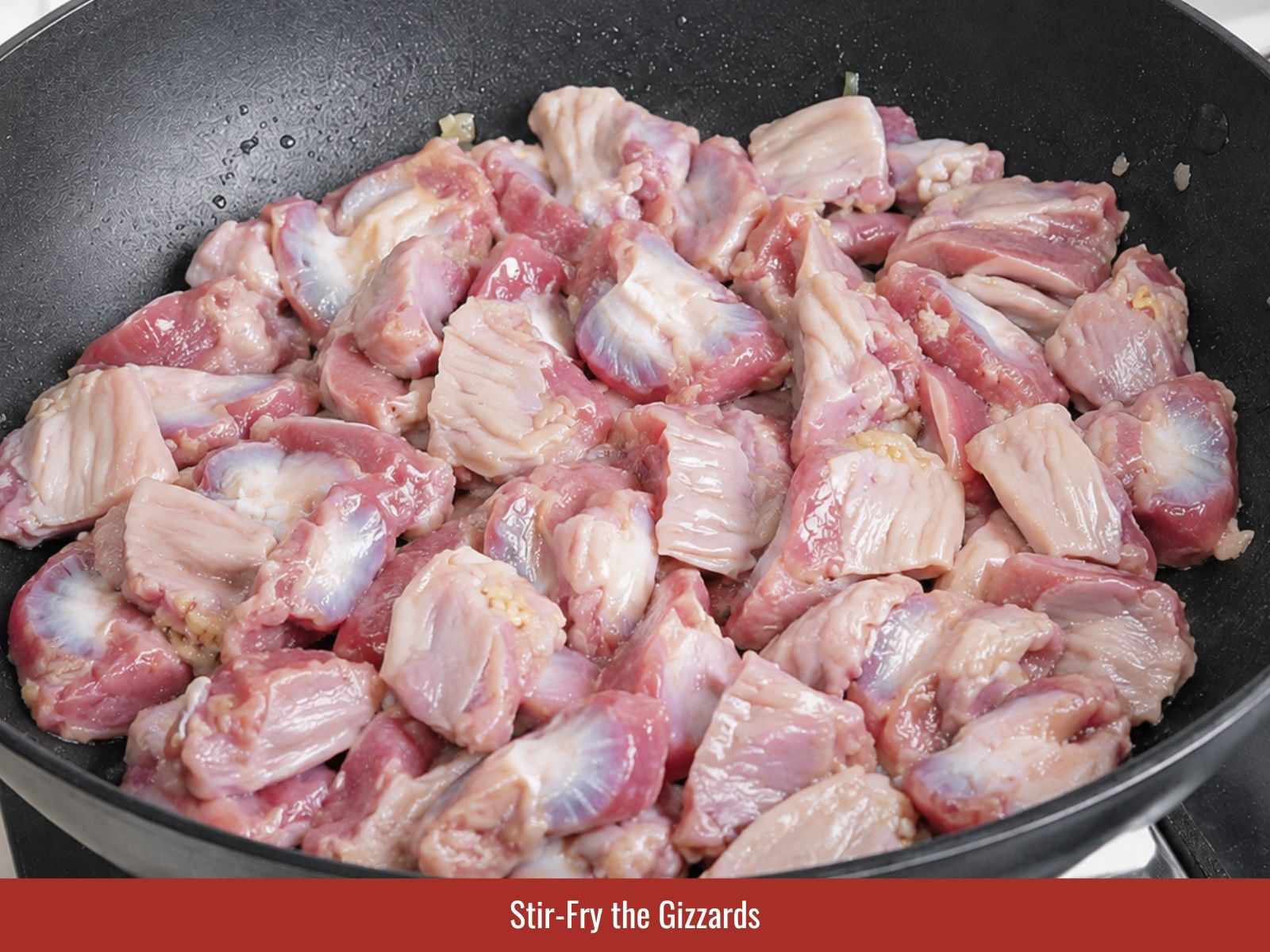
Wash the gizzards in diluted salt water with a squeeze of lime to clear any odor, then cut them into bite-sized pieces with diagonal cuts for a cleaner look on the plate.
Heat 1.5 Tbsp rendered chicken fat in a pan, add 1/2 Tbsp chopped shallots and 1/2 Tbsp chopped garlic, and sauté until fragrant. Add the gizzards and stir-fry over high heat until they firm up.
Pour in 2 ladles of chicken broth and season with 1 tsp seasoning powder, 1 tsp sugar, 1/3 tsp pepper, and 2 tsp fish sauce. Cook until the gizzards are tender, then stir in 1 tsp turmeric powder off the heat to intensify the color.
Step 5: Cook the Turmeric Rice
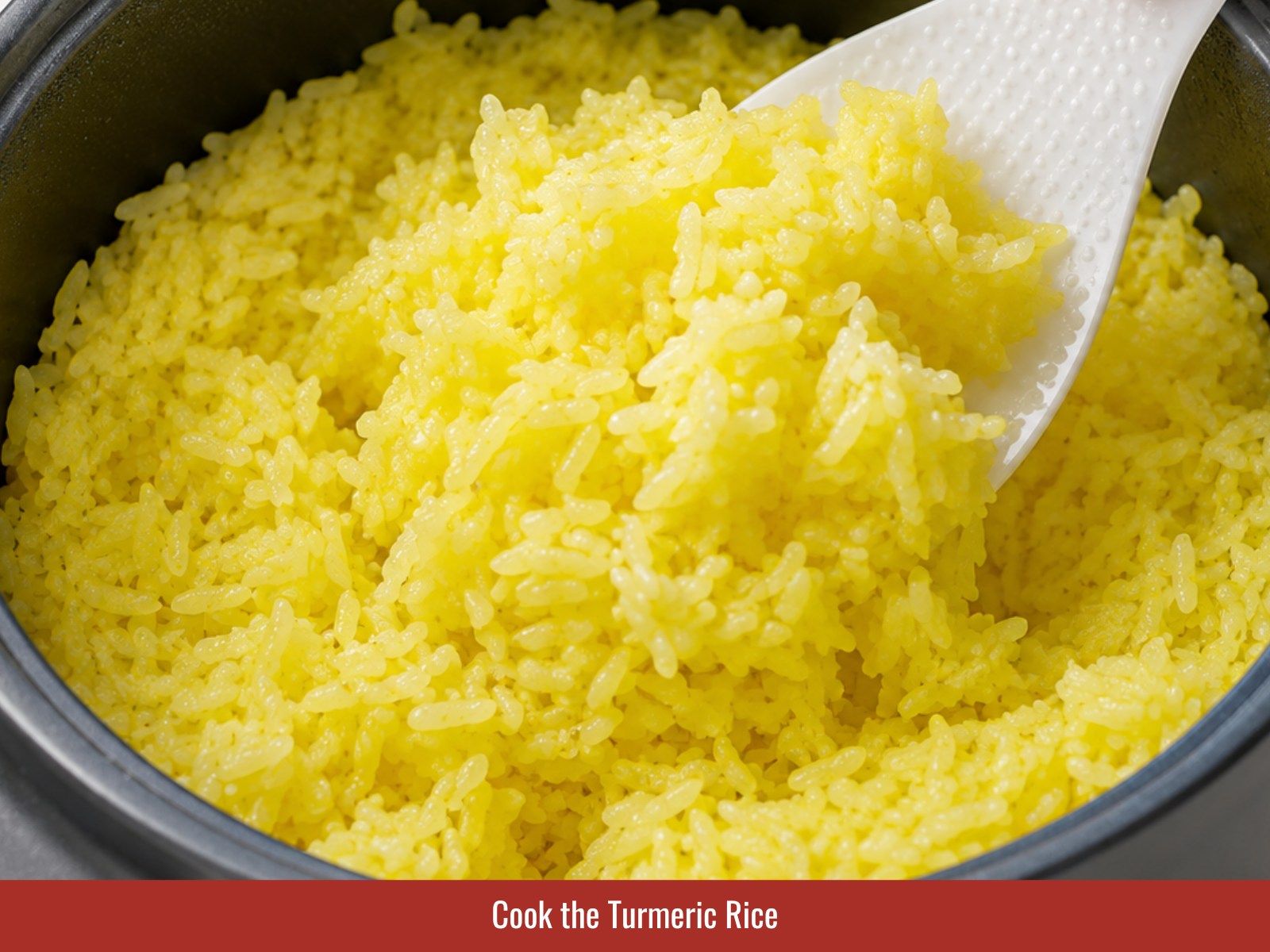
Rinse 1.1 lb (500 g) rice and drain it well. Heat 1 Tbsp of rendered chicken fat in a pan, add 1/2 Tbsp of chopped shallots and 4 to 5 slices of fresh turmeric, and stir-fry until fragrant. Add the rice and stir until every grain is coated in the fat, then stir in 1 tsp chicken seasoning powder. This technique is called rang gạo.
Transfer the rice to a rice cooker and add enough chicken poaching broth to sit just level with or slightly above the surface of the rice. Start with slightly less liquid than the rice package recommends because the grains have already been coated in fat. Cook on the normal setting, then let the rice rest for 10 minutes before fluffing.
Cooking the rice in chicken broth adds flavor and richness. Measure the liquid carefully so the grains remain tender and separate rather than wet or mushy.
Step 6: Shred and Season the Chicken
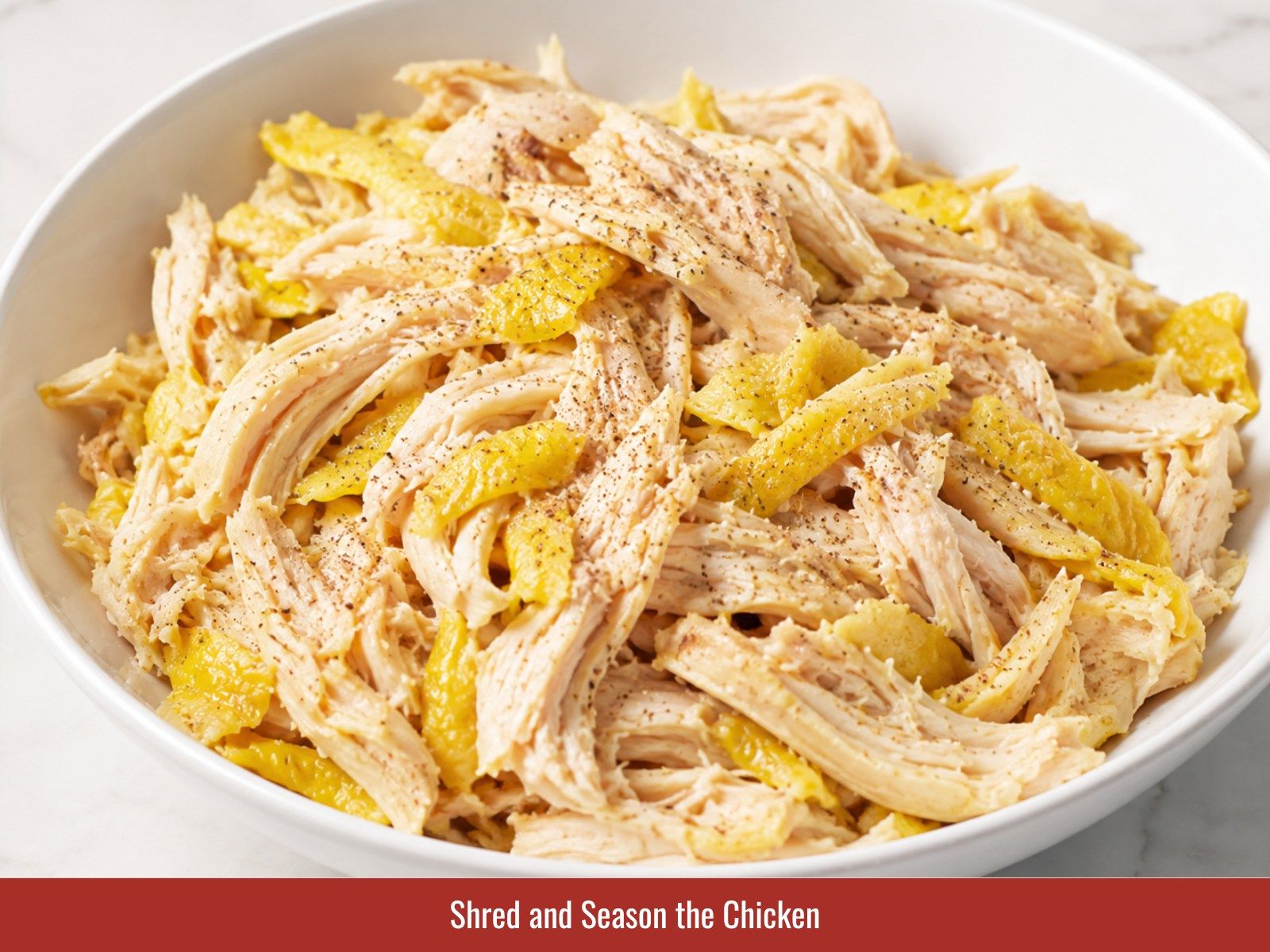
Lift the chicken out of the broth once the 30-minute rest is up. Set aside 2 thighs to chop and plate as a garnish piece, then shred the rest by hand into bite-sized strips, keeping them chunky rather than fine. This technique is called “xé phay”. Cơm gà may be served with shredded chicken, chopped pieces, or a mix of both.
Season the shredded chicken with 1/3 tsp salt, 1 tsp sugar, 1/3 tsp pepper, and 2 tsp lime juice. Toss until the meat takes on the seasoning evenly.
Step 7: Toss the Sweet-Sour Salad
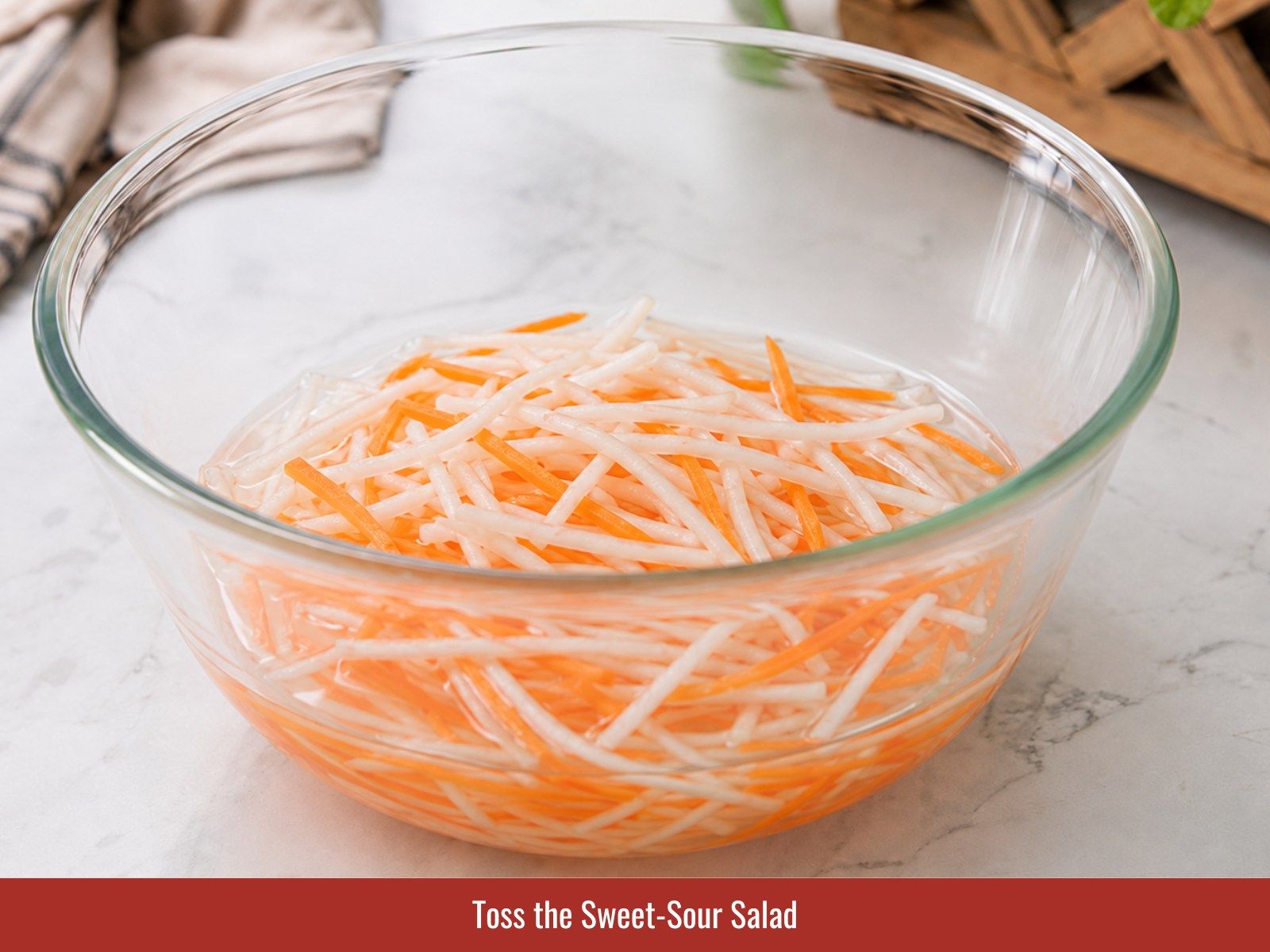
Combine 12 oz (350 g) shredded papaya, shredded carrots, and sliced onions in a bowl. Add 1/2 Tbsp sugar, 1 tsp fish sauce, and 1 Tbsp lime juice, then toss until the vegetables soak up the dressing.
Add a handful of Vietnamese coriander (rau răm) and chopped chili. Mix briefly, about 15 to 20 seconds, so the herbs stay fresh and don't wilt.
Step 8: Make the Dipping Sauce
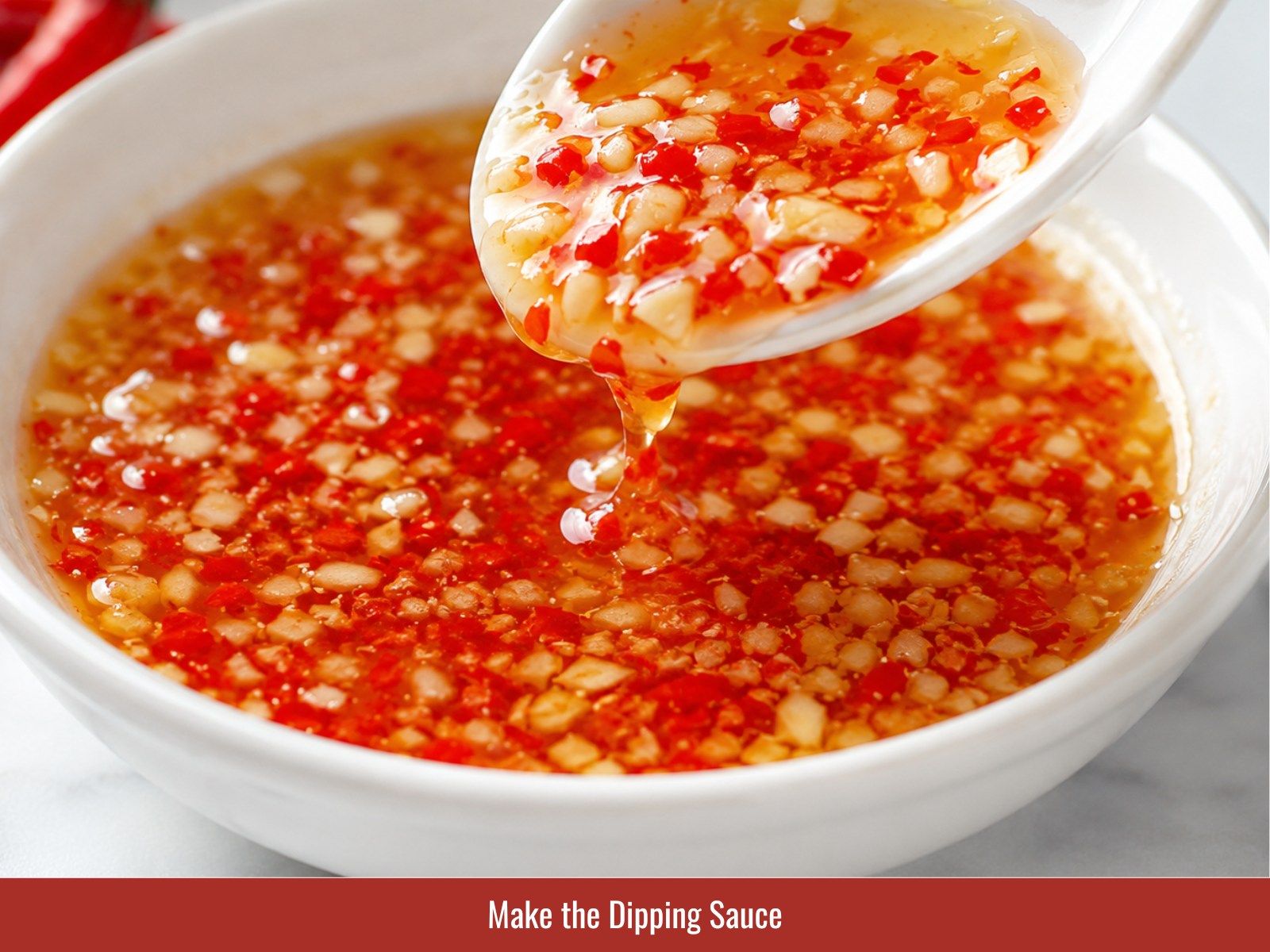
Combine 5 Tbsp fish sauce, 5 Tbsp sugar, and 5 Tbsp lime juice in a bowl and stir until the sugar fully dissolves. Add 1 Tbsp minced garlic and minced chili to taste.
The ratio is 1:1:1, fish sauce to sugar to lime juice, and you adjust from there: more lime for a sharper tang, a little more sugar to soften the salt.
The fish sauce you pick shapes the whole dipping sauce. We use CHIN-SU fish sauce here because its clean anchovy base and balanced salt level give a rounder dipping sauce without much extra adjusting.
Serve the nước chấm in small bowls and spoon it gradually over the chicken rather than pouring it over the entire plate. For a detailed guide to ingredient ratios, substitutions, and flavor adjustments, see our complete Vietnamese nước chấm recipe.
Step 9: Make the Optional Egg-Yolk Sauce
Place 2 pasteurized egg yolks in a heat-safe bowl. Add a pinch of salt, 1 tsp sugar, 1 tsp lime juice, and 1/2 tsp vanilla.
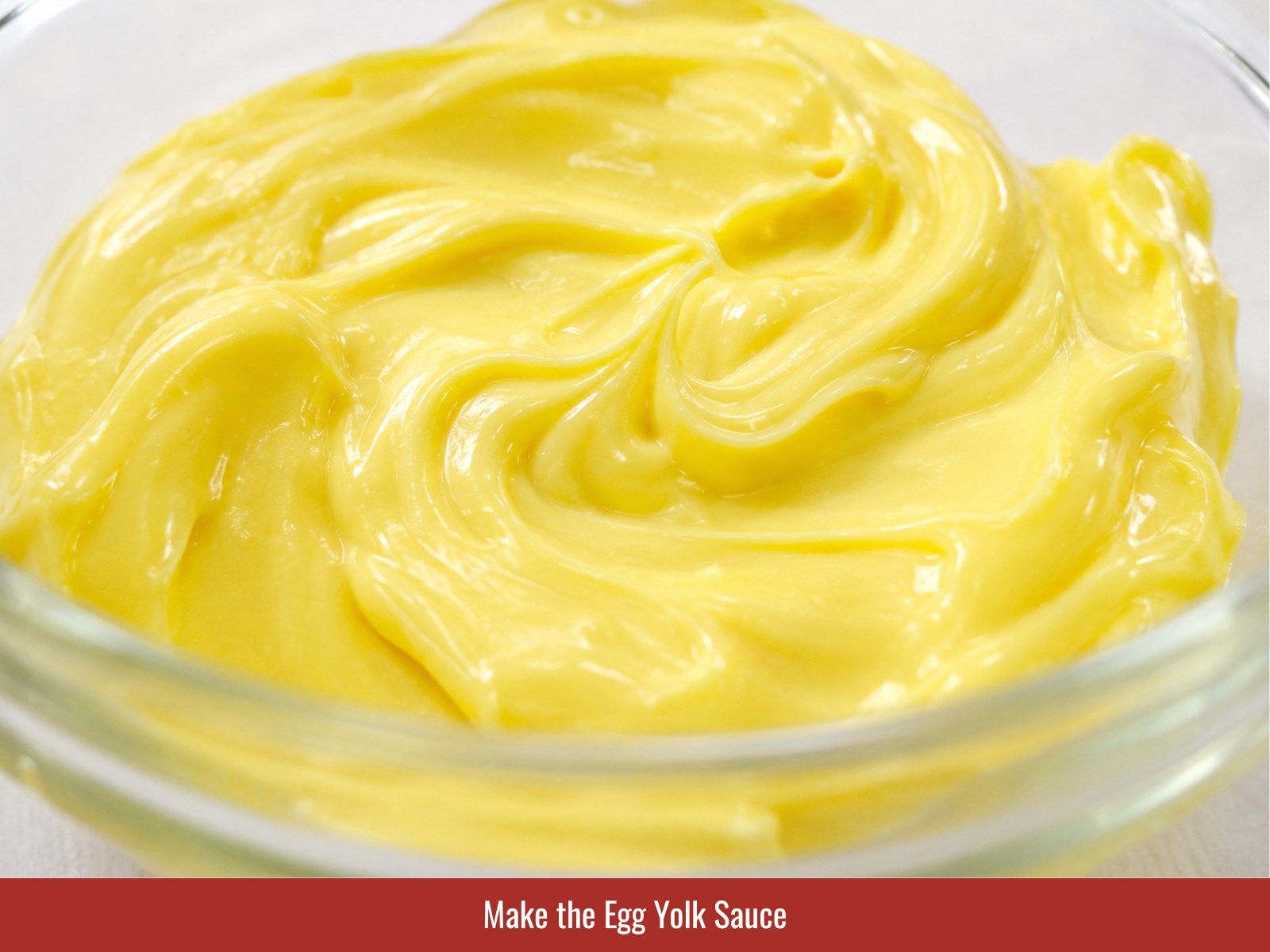
Set the bowl over a pot of hot water with the heat turned off. Beat with an electric mixer on medium speed until the mixture becomes pale and fluffy, then remove the bowl from the pot.
Add sunflower oil 1 tsp at a time, beating each addition in fully before adding more. Continue until the sauce becomes smooth, glossy, and thick enough to hold its shape. Adding the oil too quickly may cause the emulsion to separate.
This creamy sauce is an optional modern addition to this recipe rather than a required traditional component of Vietnamese chicken rice. Keep it refrigerated until serving and do not leave it at room temperature for extended periods.
Step 10: Fry the Shallots
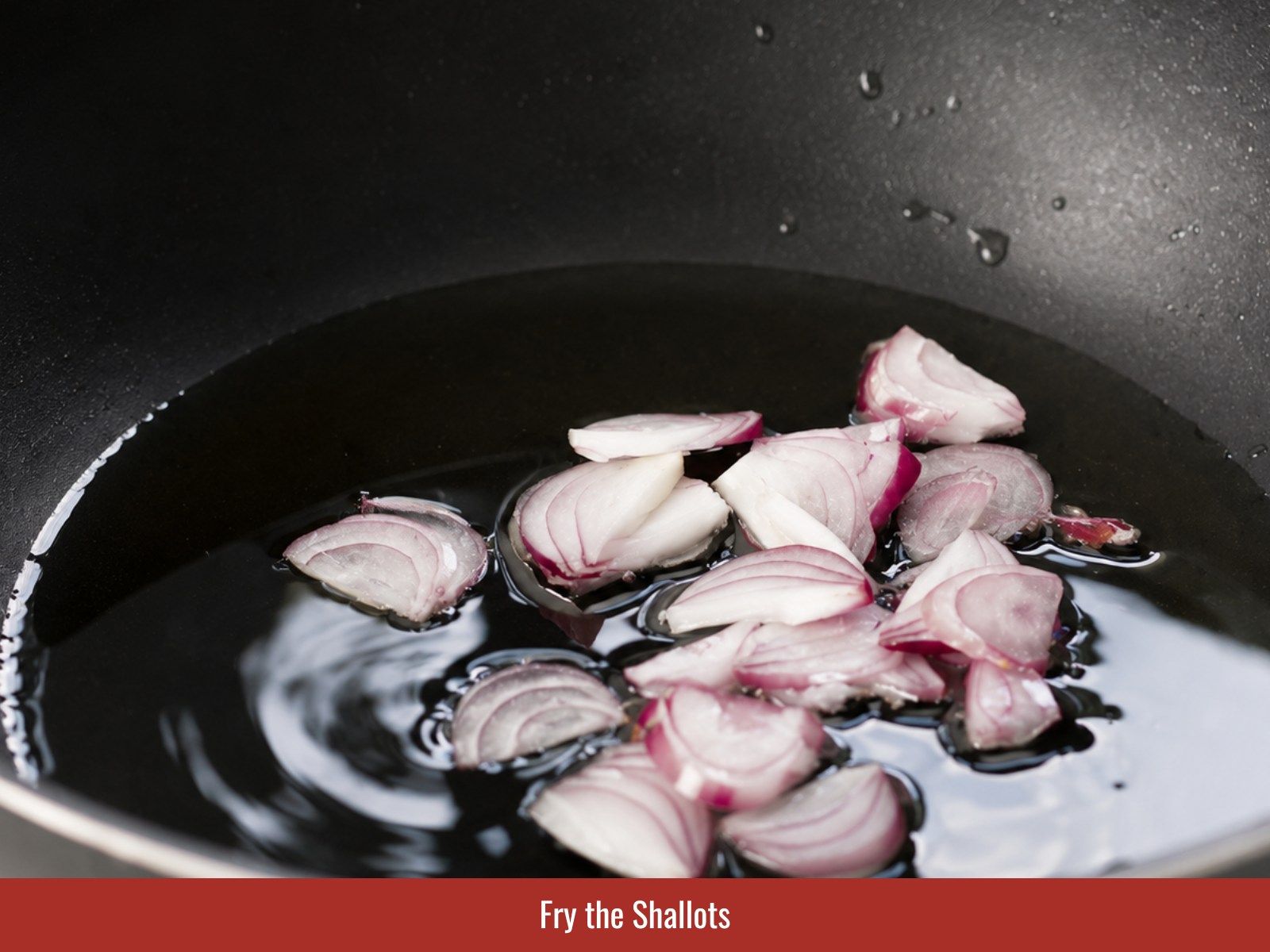
Thinly slice 2 shallots and whip them up in the leftover rendered chicken fat, or a small splash of oil, over medium heat until golden and crispy. Drain them on a paper towel.
Keep the shallot oil in the pan and drizzle it over the finished plate for 1 more layer of flavor.
How to Serve Vietnamese Chicken and Rice
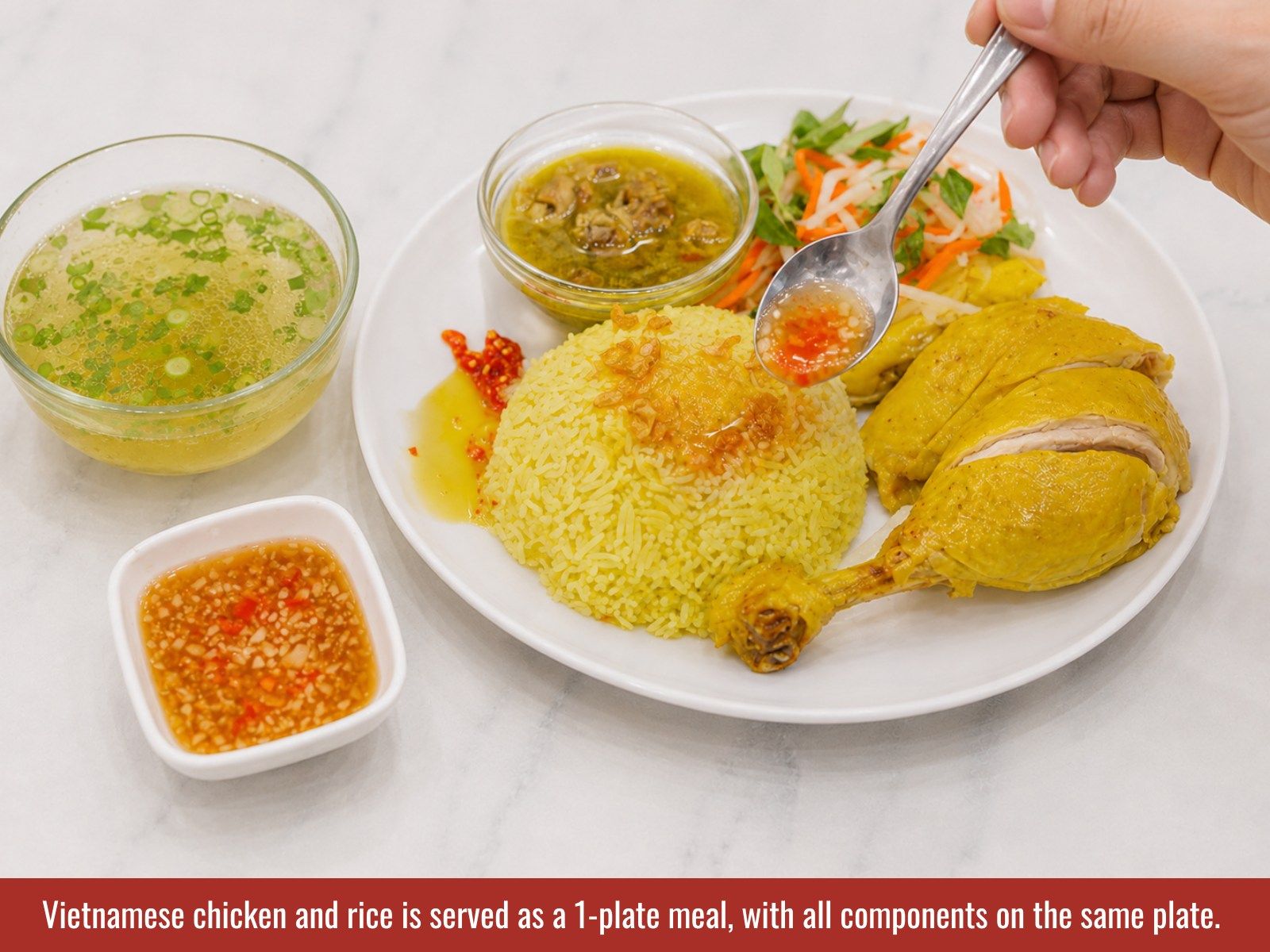
Serve Vietnamese chicken and rice as a one-plate meal. Press the turmeric rice into a small bowl, invert it onto the plate to form a neat mound, then arrange the remaining components around it:
- Turmeric rice in the center
- Shredded chicken, chopped thigh pieces, or a mix of both on one side
- Sweet-sour green papaya, carrot, and Vietnamese coriander salad on the other
- Optional gizzard stir-fry served alongside
- Fried shallots scattered over the rice and chicken
- Fish sauce-based dipping sauce in individual bowls
- Optional nước mạ and egg-yolk sauce
Strain some of the reserved chicken poaching broth into small bowls and season it lightly with salt, scallions, and ground black pepper. Serve the warm broth alongside the plate to sip between bites.
Add the sauces gradually. Spoon a little nước mạ over the rice, use the fish sauce for dipping or lightly seasoning the chicken, and add a small amount of egg-yolk sauce to the rice or chicken if desired.
Eat the chicken, rice, and salad together, alternating with sips of broth. Lime, fresh chili, and CHIN-SU Original Vietnamese Hot Sauce can also be served at the table for individual seasoning.
Tips for the Best Vietnamese Chicken and Rice
These 5 small choices make the difference between good Vietnamese chicken and rice and a great one.
- Dip the chicken before boiling. Lowering the whole bird in and out of 160°F (70°C) water 3 to 4 times tightens the skin so it won't split during cooking.
- Rest the chicken in the broth. Leaving it covered for 30 minutes after boiling lets the meat finish cooking gently, so it stays juicy and tender instead of drying out.
- Use free-range chicken if you can find it. Asian grocery stores often carry free-range chicken (gà ta), so keep an eye out for "walking chicken" (gà đi bộ), since its meat is firmer with more flavorful fat.
- Toast the rice before cooking. Sautéing the rice with chicken fat and turmeric before the broth goes in locks in the color and gives each grain a nuttier flavor.
- Add the oil slowly to the egg yolk sauce. Work in 1 teaspoon at a time because too much oil at once breaks up the emulsion, leaving you with a separated, oily mess.
What Can You Substitute in Vietnamese Chicken and Rice?
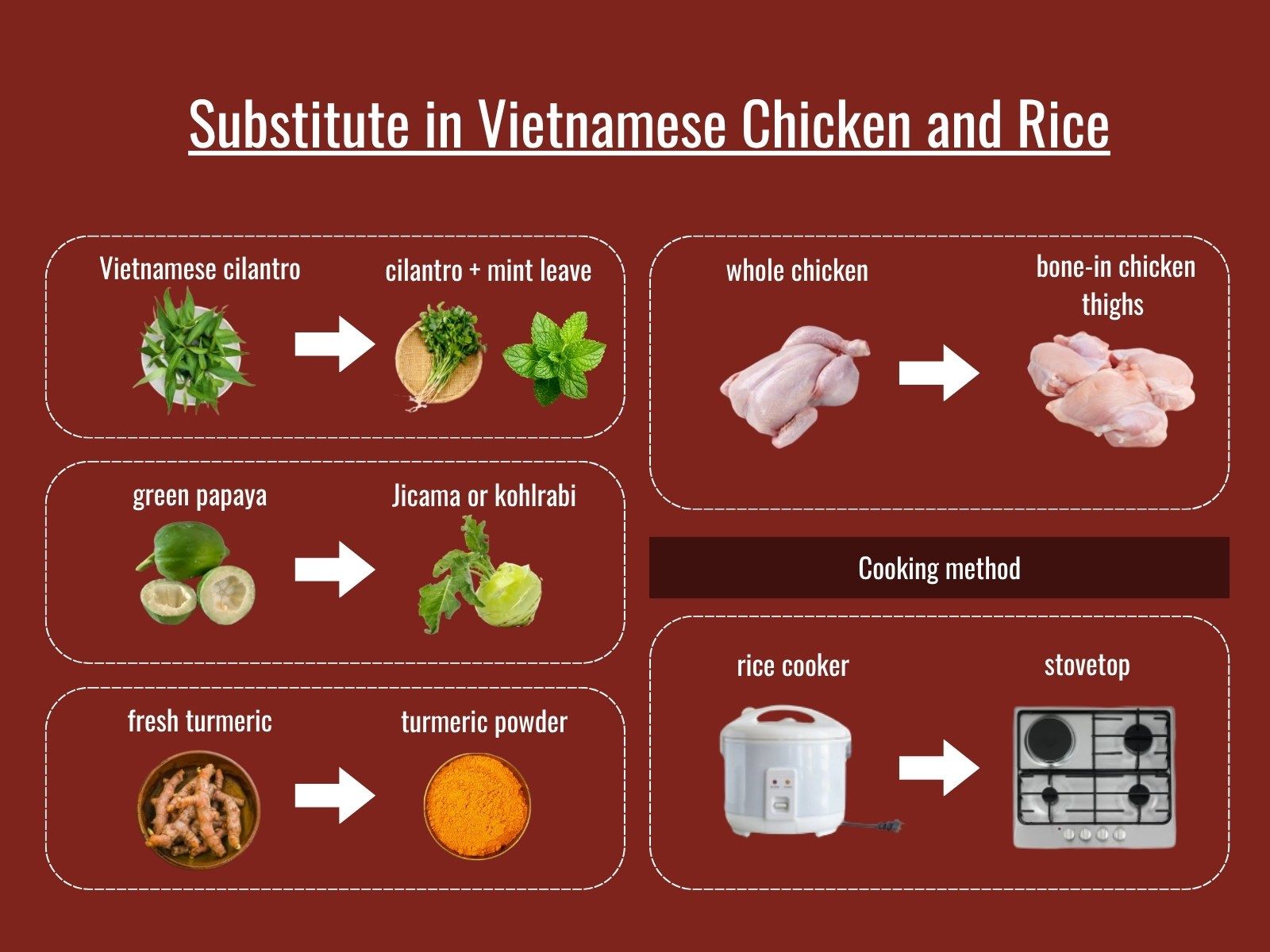
These 5 substitutions help you make Vietnamese chicken and rice with US grocery store ingredients without losing the dish's core flavor. Most of the swaps involve trading in a hard-to-find item for something at a regular supermarket, with only a small change in texture or aroma.
- Cilantro plus a few mint leaves can stand in for Vietnamese coriander (rau răm). You lose the peppery bite of rau răm, but the herbal freshness still comes through. Track down rau răm at an Asian grocery store if you can, since it makes a noticeable difference.
- Jicama or kohlrabi can be shredded, just like green papaya. Both run a little sweeter and less crunchy than papaya, but they hold the dressing well.
- Turmeric powder replaces fresh turmeric, using about 1 tsp per 25 g of fresh. The color comes out the same, though fresh turmeric carries a sharper, earthier aroma that powder can't fully match.
- 2 lb (900 g) of bone-in chicken thighs can replace a whole chicken. Thighs give you less broth, so top up with store-bought chicken broth for the rice, and they stay juicier than breasts.
- The stovetop fills in if you don't have a rice cooker. Add the broth, bring it to a boil, reduce to low, cover, and cook for 15 to 18 minutes; don't lift the lid while it cooks.
Make these swaps when you have to, but the closer you stay to the original ingredients, the closer you get to the authentic flavor.
How to Store Vietnamese Chicken and Rice
Store the chicken, rice, giblets, nước mạ, salad, dipping sauce, and egg-yolk sauce in separate airtight containers. Refrigerate the cooked chicken, rice, and giblets within 2 hours and use them within 3 to 4 days.
Reheat only the portion needed, adding a small amount of chicken broth if the rice has dried out. Heat the chicken, rice, and nước mạ until they reach 165°F (74°C).
Prepare the salad and fried shallots fresh when possible. Keep the pasteurized egg-yolk sauce refrigerated and make it as close to serving time as practical. Assemble each plate only when ready to eat.
Have you tried making Vietnamese chicken and rice at home yet, or is this your 1st time cooking turmeric rice? Drop your questions, tweaks, or results in the comments below. If this recipe worked for you, a quick star rating helps other home cooks find it, and we'd love to see how yours turned out, so share your finished plate on social media with #CHINSU, since we read every one. Curious whether CHIN-SU fish sauce or chili sauce works with your plate? Grab a bottle at chinsu.com and give it a try.
Frequently Asked Questions
No. Hội An chicken rice is one regional version of the broader Vietnamese chicken-rice family. Tam Kỳ and Phú Yên have established styles with different vegetables, pickles, sauces, and chicken preparations.
Vietnamese chicken rice (Cơm Gà) is a Central Vietnamese dish made with local free-range chicken (gà ta), turmeric-yellow rice, and a fish sauce dipping sauce, while Hainanese chicken rice comes from Hainan, China. The Hainanese version uses Wenchang chicken, plain ginger-garlic rice, and a 3-sauce set of ginger-scallion oil, chili sauce, and soy sauce.
Nước mạ is a savory giblet sauce associated with Hội An chicken rice. It is made by cooking chicken heart, gizzard, and liver with seasonings and poaching broth.
Yes, you can use chicken thighs instead of a whole chicken. Use about 2 lb (900 g) of bone-in, skin-on thighs and poach them for 25 to 30 minutes in seasoned water, then use the broth for the rice. The yield is smaller, so top up with store-bought chicken broth if needed.
Fresh turmeric gives Vietnamese chicken rice its yellow color. Sliced turmeric goes into the poaching broth, which tints the chicken skin, and the rest is sautéed with shallots and chicken fat as the rice toasts. Turmeric working in both the broth and the rice pan is what builds that deep golden color.
The rice may have received too much broth, may not have drained fully, or may have been stirred too soon. Measure the liquid, let the rice rest for 10 minutes, then fluff it gently.
Maintain a gentle simmer rather than a rolling boil. Remove the chicken when the breast and innermost thigh reach 165°F (74°C), then rest it before shredding.
Medium-grain white rice works well because it absorbs the chicken broth and turmeric while remaining tender and separate. Long-grain jasmine rice is also suitable, though it produces lighter, looser grains. Do not use glutinous or sticky rice, as it creates the wrong texture for cơm gà.
Vietnamese Chicken and Rice (Cơm Gà)
1. Ingredient
Chicken and Broth
- 1 whole chicken, about 4 to 4.5 lb (1.8 to 2 kg).
- 3 quarts (2.8 L) water.
- 1 teaspoon salt.
- 1 teaspoon seasoning powder.
- 1 tablespoon (10 g) rock sugar.
- 1 oz (25 g) fresh turmeric, sliced, plus 4–5 slices ginger.
- 2 shallots, sliced, plus 1/2 large onion.
- Optional: chicken gizzards for stir-fry.
Turmeric Rice
- 1.1 lb (500 g) medium-grain white rice.
- 1 tablespoon rendered chicken fat.
- 1/2 tablespoon chopped shallots.
- 4–5 slices fresh turmeric.
- 1 teaspoon chicken seasoning powder.
- Poaching broth from chicken.
Sweet-Sour Salad
- 12 oz (350 g) mixed shredded green papaya, shredded carrots, and sliced onions.
- 1/2 tablespoon sugar.
- 1 teaspoon fish sauce.
- 1 tablespoon lime juice.
- Vietnamese coriander (rau răm), plus chopped chili.
Dipping Sauce
- 5 tablespoons fish sauce.
- 5 tablespoons sugar.
- 5 tablespoons lime juice.
- 1 tablespoon minced garlic, plus minced chili to taste.
Optional Egg-Yolk Sauce
- 2 egg yolks.
- Pinch of salt.
- 1 teaspoon sugar.
- 1 teaspoon lime juice.
- 1/2 teaspoon vanilla.
- Sunflower oil, added 1 teaspoon at a time.
Garnish
- 2 shallots, thinly sliced and fried (hành phi).
2. Instructions
- Step 1: Clean the Chicken. Rub chicken with salt and lime juice, rinse, and pat dry. Trim fat.
- Step 2: Render Chicken Fat. Cut reserved fat into small pieces; melt in a dry pan over medium heat. Reserve 2.5 Tbsp for rice and gizzards.
- Step 3: Boil the Chicken. Bring water to 160°F (70°C), dip chicken in/out 3–4 times, then submerge fully. Add salt, seasoning powder, rock sugar, turmeric, ginger, shallots, and onion. Boil 30–35 minutes, then cover and let rest 30 minutes.
- Step 4: Stir-Fry the Gizzards. Wash and cut into bite-sized pieces. Heat 1.5 Tbsp rendered chicken fat, add 1/2 Tbsp chopped shallots and 1/2 Tbsp chopped garlic, sauté, add gizzards, 2 ladles broth, 1 tsp seasoning powder, 1 tsp sugar, 1/3 tsp pepper, 2 tsp fish sauce. Cook until tender, stir in 1 tsp turmeric off heat.
- Step 5: Cook the Turmeric Rice. Rinse rice, heat 1 Tbsp rendered chicken fat, sauté 1/2 Tbsp chopped shallots and 4–5 turmeric slices. Stir rice until coated. Add 1 tsp seasoning powder. Transfer to rice cooker, add chicken poaching broth. Cook and rest 10 minutes.
- Step 6: Shred and Season the Chicken. Lift chicken from broth, set aside 2 thighs, shred the rest. Season with 1/3 tsp salt, 1 tsp sugar, 1/3 tsp pepper, 2 tsp lime juice.
- Step 7: Toss the Sweet-Sour Salad. Combine shredded vegetables, sugar, fish sauce, lime juice, coriander, and chopped chili. Mix 15–20 seconds.
- Step 8: Make the Dipping Sauce. Mix fish sauce, sugar, lime juice, garlic, and chili. Adjust ratio to taste.
- Step 9: Make Optional Egg-Yolk Sauce. Whisk yolks, salt, sugar, lime juice, vanilla over hot water. Add sunflower oil 1 tsp at a time until smooth. Refrigerate until use.
- Step 10: Fry the Shallots. Slice 2 shallots and fry in leftover rendered fat or oil until golden and crispy. Drain.
- Step 11: Assemble the Plate. Serve turmeric rice, shredded/chopped chicken, salad, optional gizzards, fried shallots, dipping sauce, and egg-yolk sauce if using.
3. Storage: Store chicken, rice, gizzards, sauces, and salad separately in airtight containers. Refrigerate cooked items within 2 hours. Consume within 3–4 days. Reheat gently, adding a splash of broth if rice dries out.
4. Yield: 4 servings
5. Serving Style: Southern Vietnamese chicken rice with turmeric rice, shredded chicken, sweet-sour salad, dipping sauces, and fried shallots

CHIN-SU KITCHEN TEAM
CHIN-SU Kitchen Team are the creative experts behind the delicious recipes featuring CHIN-SU sauces. With years of experience and a passion for flavor, our team carefully selects recipes from a variety of trusted chefs and bloggers, bringing together the best culinary insights to present you with the most suitable and exciting dishes. Every recipe is chosen to inspire you to create meals that are not only tasty but also easy to prepare, enhancing your dining experience. Join us as we explore a wide range of sauces and flavors, and elevate every meal with the perfect recipe for your table!
User Reviews
Featured Articles
SUBSCRIBE TO GET
MORE INFO
Want the latest and greatest recipes, updates, and more from us,
straight to your inbox? Subscribe and get our NEWS!