Goi Cuon Recipe - Vietnamese Fresh Spring Rolls With Peanut Dipping Sauce
Published: Aug 20, 2026 by CHIN-SU
Updated: Sep 8, 2026 by CHIN-SU
Tested by CHIN-SU Kitchen Team
Goi cuon (gỏi cuốn) is a Vietnamese fresh spring roll made with boiled pork belly, shrimp, rice vermicelli, lettuce, fresh herbs, and softened rice paper, then served at room temperature with dipping sauce. Unlike fried rolls such as chả giò, gỏi cuốn is assembled fresh without frying the wrapper, creating a soft, slightly chewy texture with cool herbs, tender protein, and savory dipping sauce in every bite.
Gỏi cuốn is commonly enjoyed as a light meal, appetizer, or shared dish at Vietnamese restaurants, family meals, and gatherings. The mild rice paper wrapper allows the flavors of the fillings and dipping sauce to stand out, creating a balance of fresh vegetables, herbs, noodles, shrimp, and pork.
This recipe adapts the traditional preparation for a home kitchen. CHIN-SU shares how to handle rice paper without tearing, prepare the fillings, roll the ingredients evenly, and make the peanut dipping sauce that brings the plate together.
The recipe takes about 1 hour 30 minutes, including preparation, cooking, and assembly, and makes approximately 20 rolls. Serve them with pickled carrot and daikon, fresh herbs, iced tea, or other Vietnamese dishes for a larger meal.
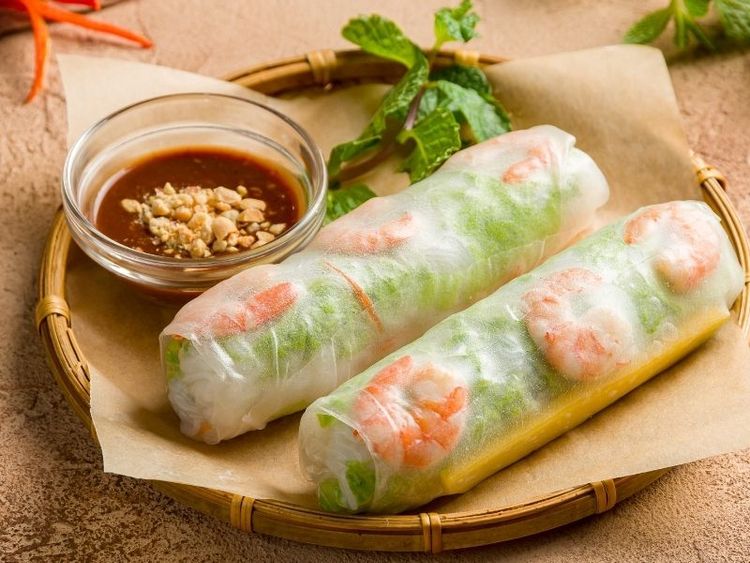
Table Of Contents
What Is Goi Cuon?
Goi cuon is a Vietnamese fresh spring roll made by wrapping cooked ingredients, fresh herbs, vegetables, and rice vermicelli inside softened rice paper. The rolls are served fresh at room temperature, with a soft and slightly chewy wrapper that carries the flavors of the fillings and dipping sauce.
The name describes the structure of the dish: gỏi refers to Vietnamese preparations that combine fresh ingredients, vegetables, and herbs, while cuốn means rolled or wrapped. English speakers usually pronounce gỏi cuốn close to “goy koon” ([ɣɔj˧˩ kuən˧˦]), although English spelling cannot fully represent Vietnamese tones.
Gỏi cuốn is commonly translated into English as Vietnamese fresh spring rolls, summer rolls, salad rolls, or rice paper rolls. These names describe the appearance of the dish, while the Vietnamese term identifies its cultural preparation style more precisely.
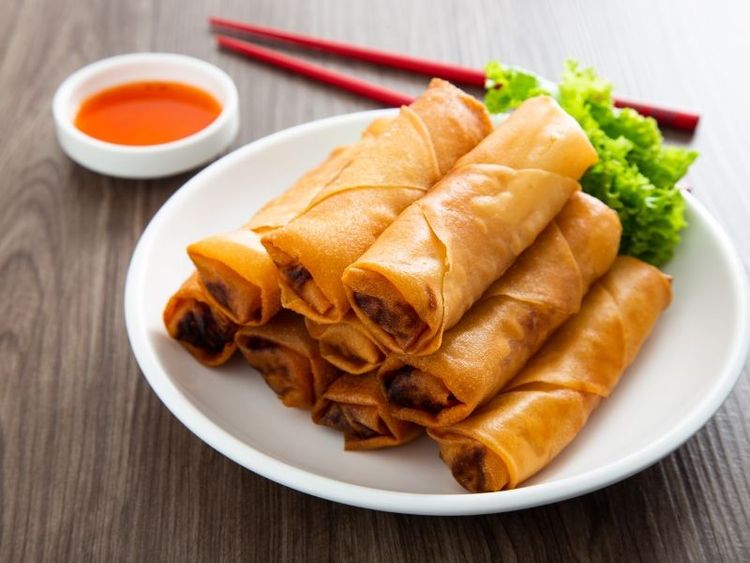
Unlike fried rolls such as chả giò, gỏi cuốn uses a softened rice paper wrapper without frying, creating a fresh contrast between herbs, vegetables, rice vermicelli, shrimp, pork, and dipping sauce.
Regional naming also varies. Southern Vietnam commonly uses gỏi cuốn, while Northern Vietnam often uses nem cuốn. The dish belongs to the wider Vietnamese cuốn family, which includes foods wrapped in rice sheets or leaves.
What Is The Difference Between Goi Cuon And Cha Gio?
The main difference between goi cuon and cha gio is how the wrapper is prepared: goi cuon uses softened rice paper assembled fresh, while cha gio uses a wrapper that is deep-fried until crisp.
| Attribute | Goi Cuon | Cha Gio |
| Wrapper | Softened rice paper | Fried wrapper |
| Cooking method | Freshly assembled without frying | Deep-fried until golden and crisp |
| Filling | Pork, shrimp, rice vermicelli, lettuce, and fresh herbs | Seasoned pork, shrimp, vegetables, and noodles |
| Texture | Soft, chewy, fresh, and herb-forward | Crispy exterior with a savory filling |
| Serving style | Fresh rolls with herbs and dipping sauce | Fried rolls with dipping sauce |
Both dishes can share ingredients such as pork, shrimp, noodles, and herbs, but they create different eating experiences. Goi cuon focuses on freshness, soft textures, and herb balance, while cha gio focuses on frying, browning, and crispness.
Why You'll Love Goi Cuon?
You’ll love this goi cuon recipe because it delivers a fresh, customizable meal with no frying and a simple rolling process that anyone can learn.
- Fresh and balanced. Each roll combines protein, vegetables, rice vermicelli, and herbs without deep frying, creating a light texture with layers of flavor.
- Perfect for sharing. The ingredients are prepared separately and placed on the table, allowing everyone to build and roll their own fresh spring rolls.
- Easy to customize. Adjust the protein, vegetables, and herbs based on availability while keeping the same simple wrapping method.
- Simple to master at home. The first few rolls may take practice, but the folding technique becomes easier as the repeated motion becomes familiar.
Goi Cuon Ingredients
This goi cuon comes together from four component groups: the pork and shrimp, the noodles and wrappers, the vegetables and herbs, and the peanut dipping sauce.
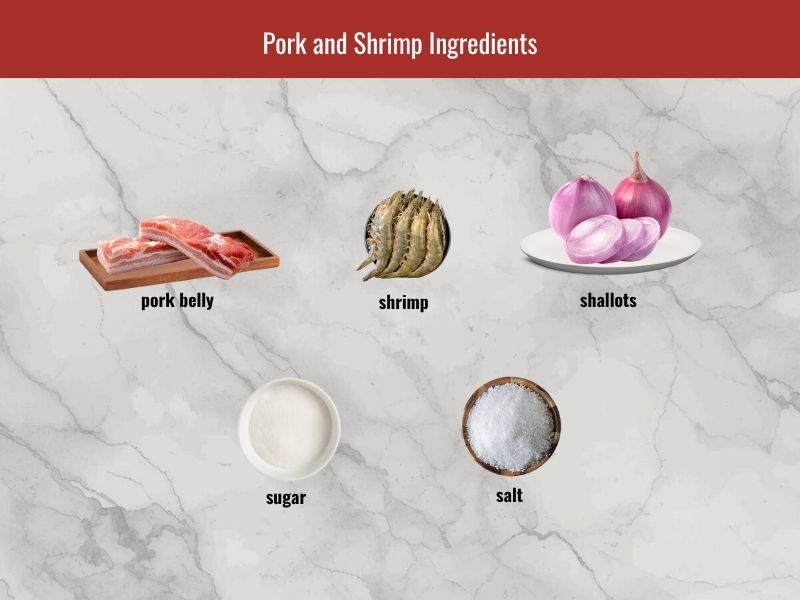
Pork and Shrimp
- 1.3 lb (600 g) pork belly (thịt ba rọi), skinless and boneless. Pork belly gives each roll both lean meat and fat, which tastes better here than a lean cut does.
- 1.5 lb (700 g) shrimp, shell on. Shrimp gets split in half lengthwise so it lies flat in the roll instead of pushing against the wrapper. Medium shrimp around size 31/35 makes wrapping easiest, and keep in mind that shrimp shrinks a little as it cooks.
- 1 shallot, sliced. Shallot goes into the pork water and gives the boiled meat a background sweetness.
- 1 tsp salt and 1 tsp sugar, for the pork water. Salt and sugar season the pork from the outside in while it boils, so the meat tastes finished on its own.
Noodles and Wrappers
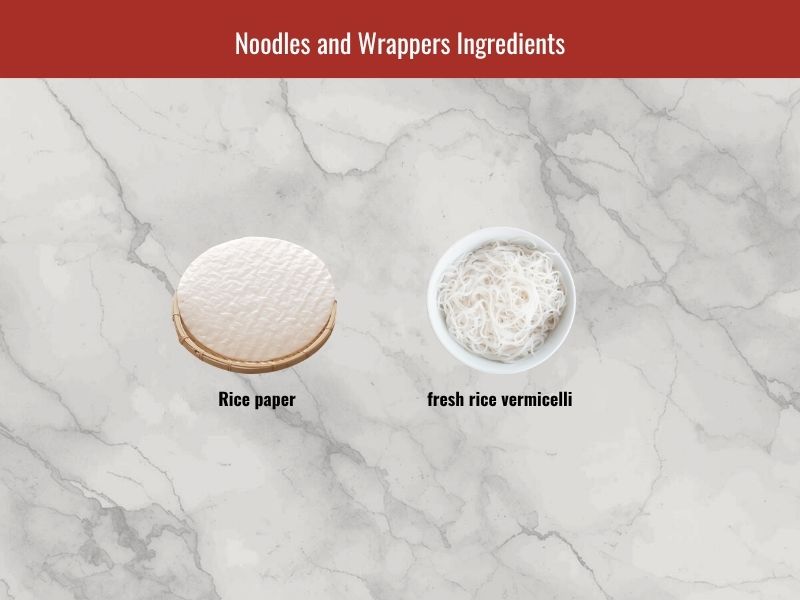
- Rice paper (bánh tráng), the thicker kind sold for fresh rolls. This type of rice paper holds together while you roll instead of splitting, and round or square sheets both work. Look for sheets labeled bánh tráng rather than the thinner tapioca sheets, which are more delicate and tear more easily. American rice paper usually has tapioca flour added for strength, so it handles more easily than the pure rice-flour sheets sold in Vietnam. You will find several brands side by side at any Asian grocery store.
- Fresh rice vermicelli (bún). Rice vermicelli fills out the roll and softens the bite between the meat and the herbs. Thin noodles are the easiest to arrange inside a roll.
Vegetables and Herbs
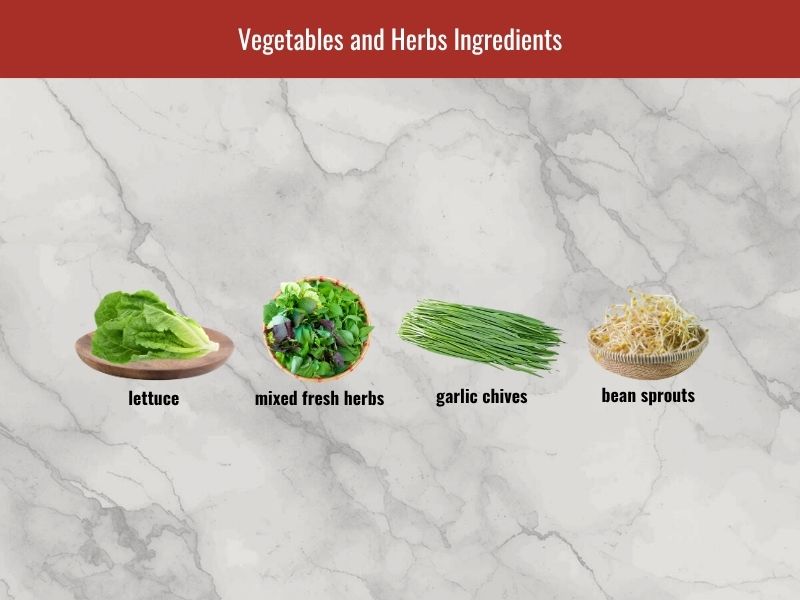
The greens here are not garnish; they are half the roll, and the quantities are loose enough that you can go by eye.
- Leaf lettuce and a mix of fresh herbs. Leaf lettuce and herbs go in first and give the roll its cool, fresh half, with the exact mix a matter of preference. Mint is the standard, and cilantro and Thai basil are common additions.
- Garlic chives (lá hẹ), trimmed. Garlic chives are the one herb that stays whole and sticks out of the finished roll, and this recipe treats them as essential.
- Bean sprouts. Bean sprouts add a raw crunch against the soft noodles and go in with the herbs.
Peanut Dipping Sauce (Tương Xào)
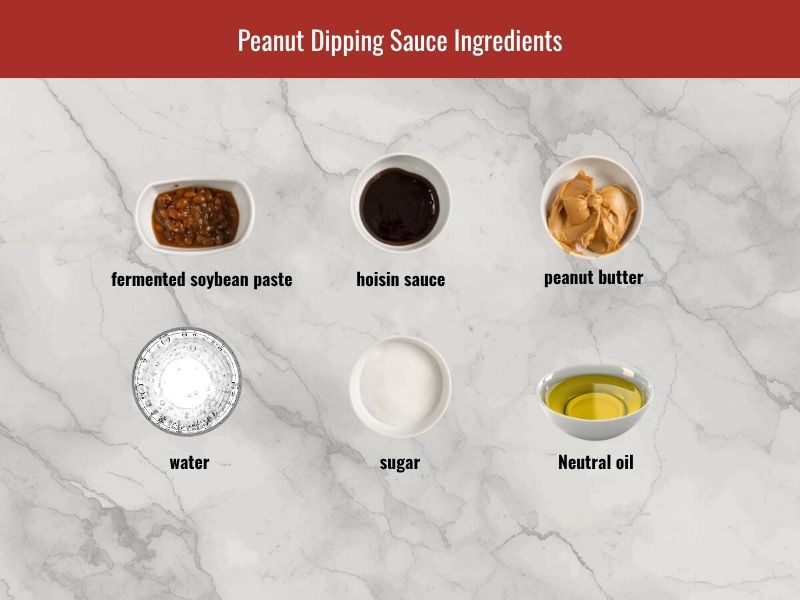
The sauce decides whether the dish works, and a homemade one beats the jarred kind by a wide margin.
- ⅔ cup fermented soybean paste (tương hột), blended smooth. Fermented soybean paste is the base of this sauce and gives it the savory depth that peanut butter alone cannot. Look for one that isn't too salty and isn't too dark in color. You will find it in the sauce aisle of an Asian grocery store, and there is a swap in the substitutions section if your store doesn't stock it.
- ½ cup hoisin sauce. Hoisin sauce brings the sweetness and the dark color that make this a dipping sauce rather than a paste. Jarred hoisin tends to be less sweet than bottled, which keeps the finished sauce from turning cloying.
- 2 tbsp peanut butter. Peanut butter thickens the sauce and carries the roasted flavor, and both chunky and smooth work.
- ⅔ cup water. Water thins the sauce to a dipping consistency, and it will thicken again as it cools.
- 2 tbsp sugar. Sugar balances the salt in the soybean paste, and the amount is worth adjusting to taste.
- 1 tbsp cooking oil and 1 tbsp minced shallot. Oil and shallot start the sauce, and frying the shallot until golden is what gives the finished sauce its aroma.
For the sauce bowls, set out roasted peanuts, fried shallots, minced chili, and a little pickled vegetable (đồ chua) to spoon over the top.
How to Make Goi Cuon Step by Step?
Making goi cuon takes about 1 hour 30 minutes, including 30–40 minutes of cooking the pork and preparing the fillings, followed by assembly. The process has seven steps: cooking the pork and shrimp, preparing the fillings, making the dipping sauce, and rolling the fresh spring rolls.
Step 1: Boil the Pork
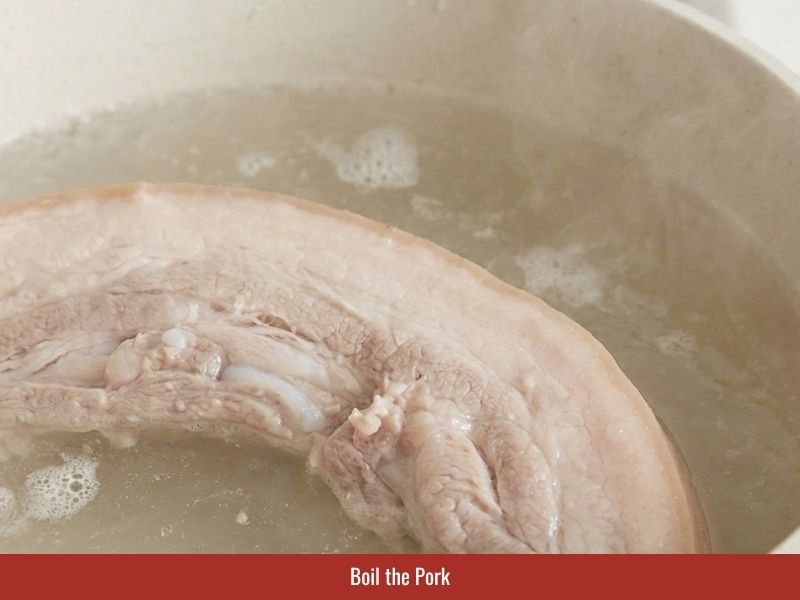
Wash the pork belly with salt and diluted vinegar, then put it in a pot with water, 1 tsp salt, 1 tsp sugar, and 1 sliced shallot. Boil it over medium heat, turning the pork now and then so it cooks evenly.
Give it 30 to 40 minutes, depending on how thick your piece is. The pork is done when a skewer pushed into the thickest part draws no pink liquid, which is the same check as an instant-read thermometer reading 145°F (63°C).
Step 2: Ice-Bath the Pork
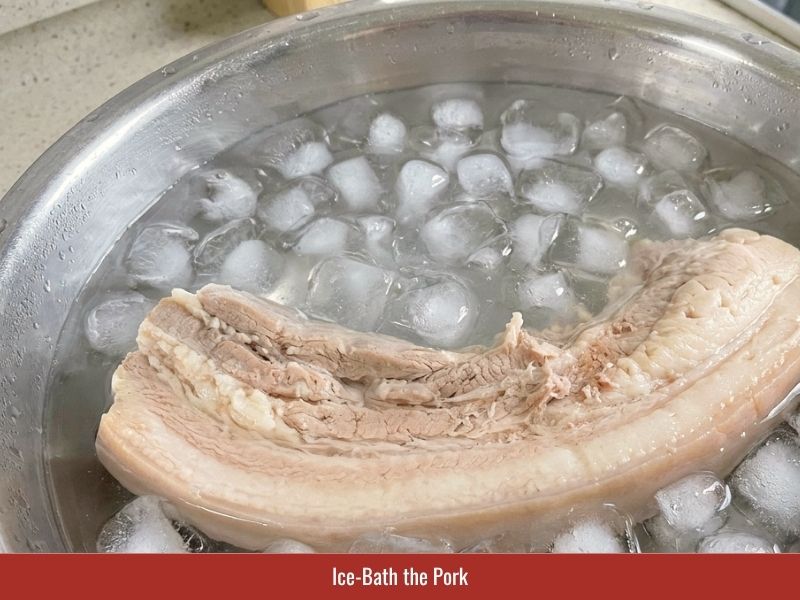
Transfer the cooked pork directly into a bowl of iced water.
The cold water helps firm the meat, keeps the surface from darkening, and makes the pork easier to slice cleanly later. Leave it in the ice bath while preparing the shrimp.
Step 3: Devein and Cook the Shrimp
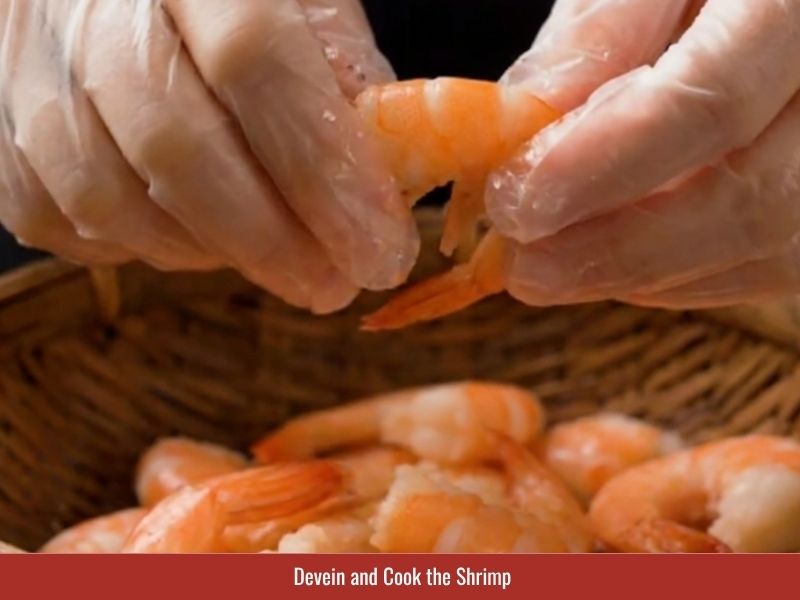
Remove the vein from the shrimp, then rinse and drain them well. Frozen shrimp should be fully thawed before cleaning and cooking.
Cook the shrimp in the same pork broth immediately after removing the pork. The seasoned cooking liquid gives the shrimp additional flavor without requiring a separate marinade.
Cook for 4–5 minutes until the shrimp become opaque and firm, then transfer them to the same ice bath to maintain a fresh, slightly firm texture.
Step 4: Slice the Pork and Shrimp
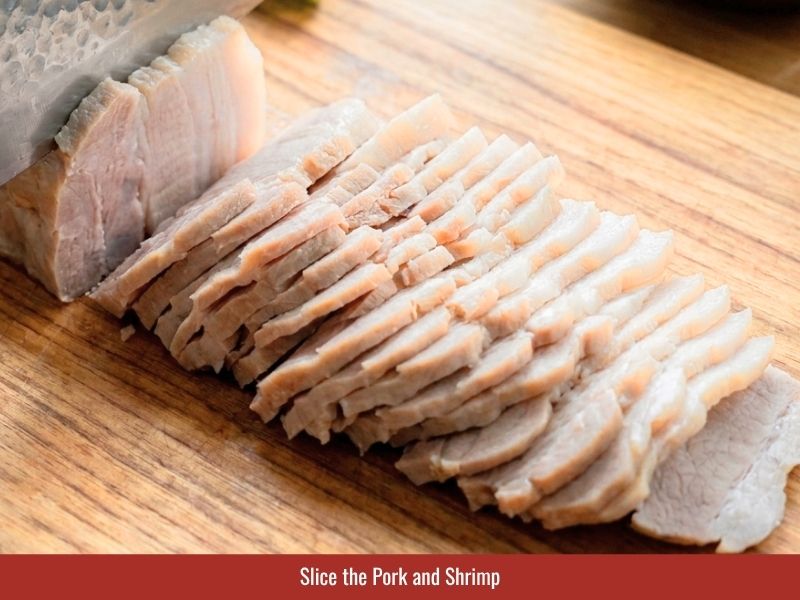
Peel the cooled shrimp and cut each one lengthwise into two flat halves. Halved shrimp sit more evenly inside the roll and reduce pressure on the softened rice paper.
Drain the pork and slice it into even pieces across the grain. Cooling the pork first creates cleaner slices and helps each piece fit neatly inside the wrapper.
Step 5: Prepare the Noodles and Vegetables
Arrange the fresh rice vermicelli loosely on a plate so it is easier to portion during rolling.
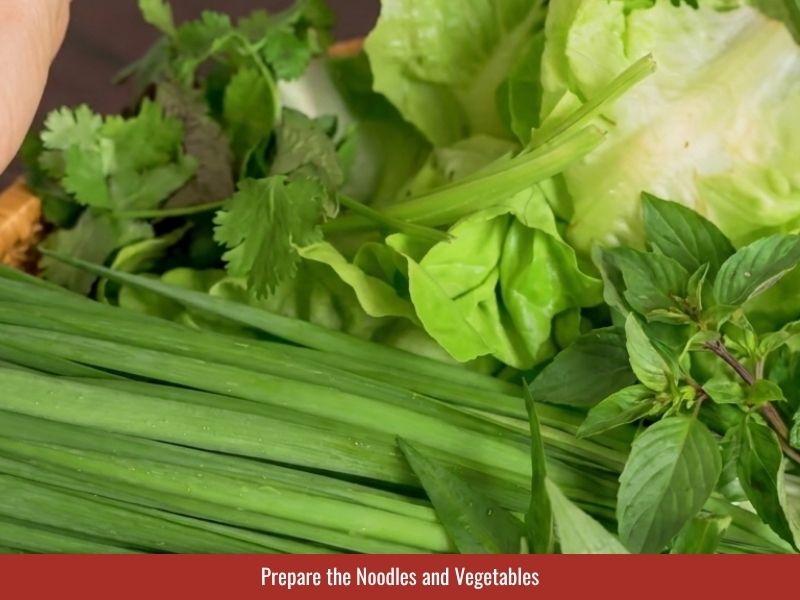
Wash the lettuce, herbs, and bean sprouts, then drain them thoroughly. Excess water on the vegetables can weaken the rice paper and make the rolls harder to handle.
Trim the garlic chives to a length that allows them to extend slightly beyond the finished roll, which is a common presentation style for Vietnamese fresh spring rolls.
Step 6: Make the Peanut Dipping Sauce
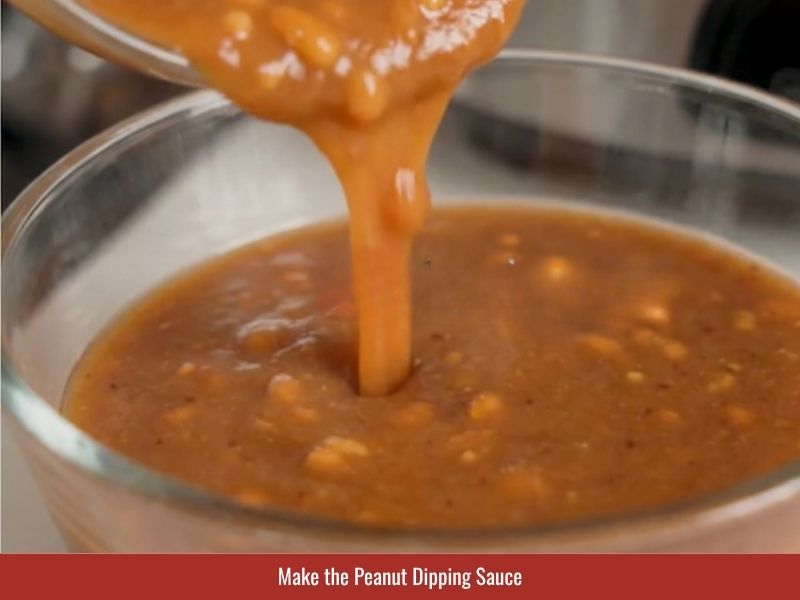
Blend ⅔ cup fermented soybean paste until smooth. Heat 1 tbsp oil in a pot and fry 1 tbsp minced shallot until fragrant.
Add the blended paste, ½ cup hoisin sauce, 2 tbsp peanut butter, ⅔ cup water, and 2 tbsp sugar. Stir until combined and bring the sauce to a gentle simmer.
The finished sauce should be savory, lightly sweet, and rich from the peanut butter. It thickens naturally as it cools, so avoid reducing it further. Adjust the sweetness based on your preference.
Step 7: Roll the Goi Cuon
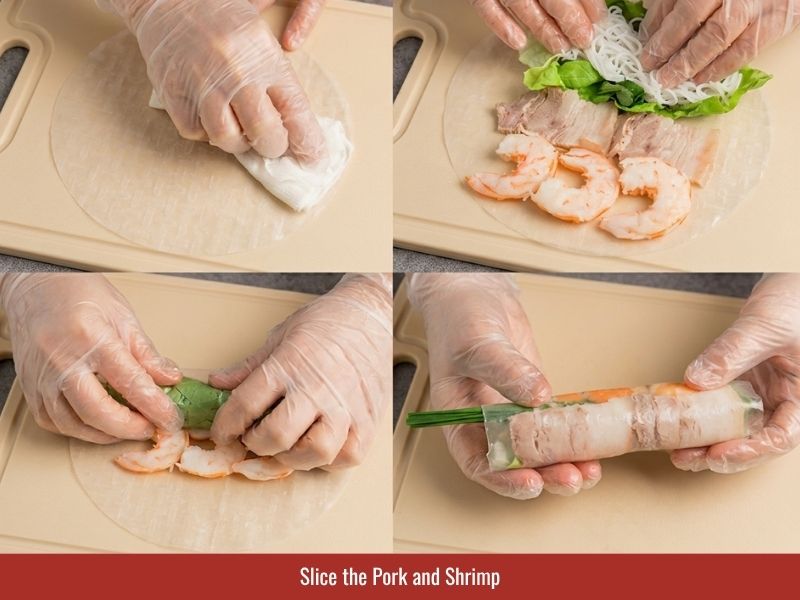
Place a rice paper sheet on a clean surface and soften it with a quick pass through warm water or by wiping it with a damp cloth. Avoid soaking the wrapper because excess water makes it difficult to control during rolling.
Layer the filling in order: lettuce first, followed by herbs, bean sprouts, and rice vermicelli. Place 2 slices of pork on top, then arrange 3 shrimp halves in a row with the cut side facing up.
This arrangement follows the Vietnamese rolling technique of placing visible ingredients near the outer side of the wrapper, creating a neat appearance when the roll is finished.
Fold the sides inward, roll forward tightly but gently, then place a garlic chive across the filling before completing the roll. Leave about 4–5 cm (2 inches) of chives extending from one end.
Cover finished rolls with a damp cloth while working to prevent the rice paper surface from drying out. This recipe makes approximately 20 rolls.
How to Assemble and Serve Goi Cuon?
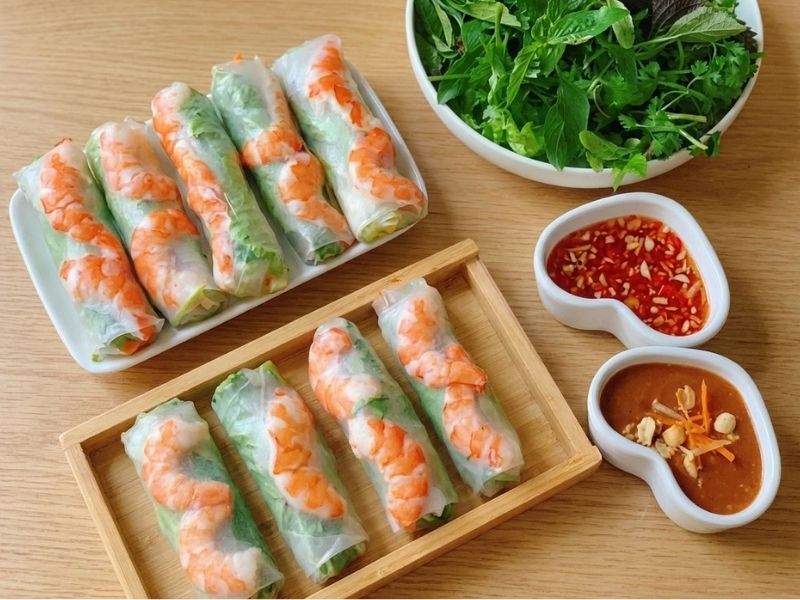
Goi cuon is served as a build-your-own platter, with each ingredient arranged separately so everyone can roll their own fresh spring rolls at the table. The rolling process is part of the meal experience, although pre-rolled rolls can also be prepared when serving guests.
Set out the components separately:
- Rice paper wrappers, with a shallow bowl of warm water for softening.
- Lettuce, fresh herbs, and vegetables.
- Rice vermicelli, sliced pork, shrimp, and garlic chives.
- Dipping sauce, served in individual bowls.
Soften one wrapper at a time, add the fillings, and roll while the remaining wrappers stay dry. Cut longer rolls diagonally in half before serving if they are easier to handle.
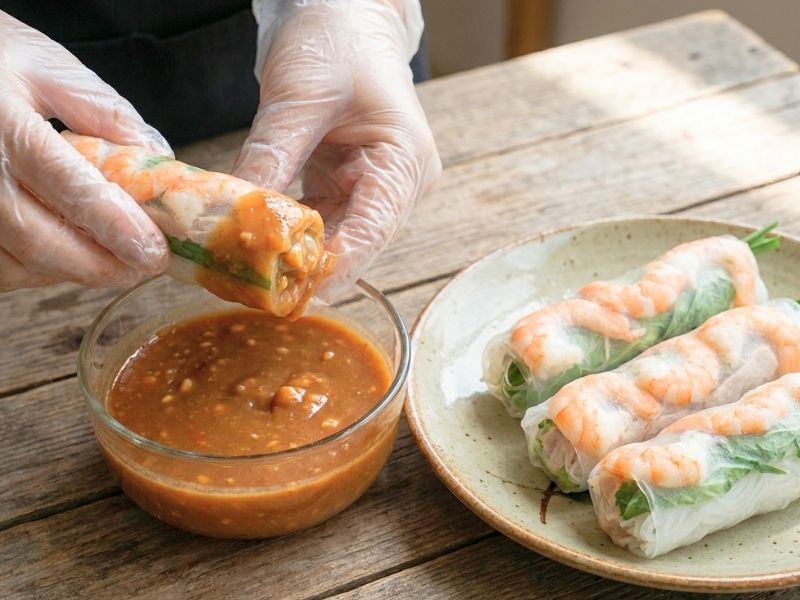
Goi cuon is traditionally eaten by hand and dipped generously into sauce. Each person can adjust the amount of herbs, noodles, fillings, and sauce based on personal preference.
Some households serve goi cuon with peanut dipping sauce, while others prefer nước chấm made with fish sauce, lime, sugar, garlic, and chili. CHIN-SU fish sauce can be used as the base for a traditional Vietnamese dipping sauce.
Tips for the Best Goi Cuon
These five techniques make the biggest difference between neat, flexible goi cuon and rolls that tear during assembly.
- Do not over-wet the wrapper. Rice paper continues softening after leaving the water or damp cloth, so it should still feel slightly firm when the filling is added. A wrapper that becomes too soft is more likely to tear or stick.
- Prepare the rolling station before softening the first wrapper. Have the pork, shrimp, noodles, herbs, vegetables, and sauce ready before rolling begins. A softened wrapper left waiting becomes sticky and difficult to handle.
- Keep the ingredients dry. Drain the rice vermicelli, vegetables, herbs, and shrimp well before assembling. Excess water inside the roll weakens the wrapper and affects its texture.
- Do not overfill the rolls. Keep about 1–1.5 inches (2.5–4 cm) of empty space on each side and arrange the filling into a neat line. Overfilled rolls are harder to tighten and more likely to split.
- Keep finished rolls separate. Rice paper becomes naturally sticky after rolling, so place finished rolls apart or cover them with a damp cloth while working to prevent the wrappers from sticking together.
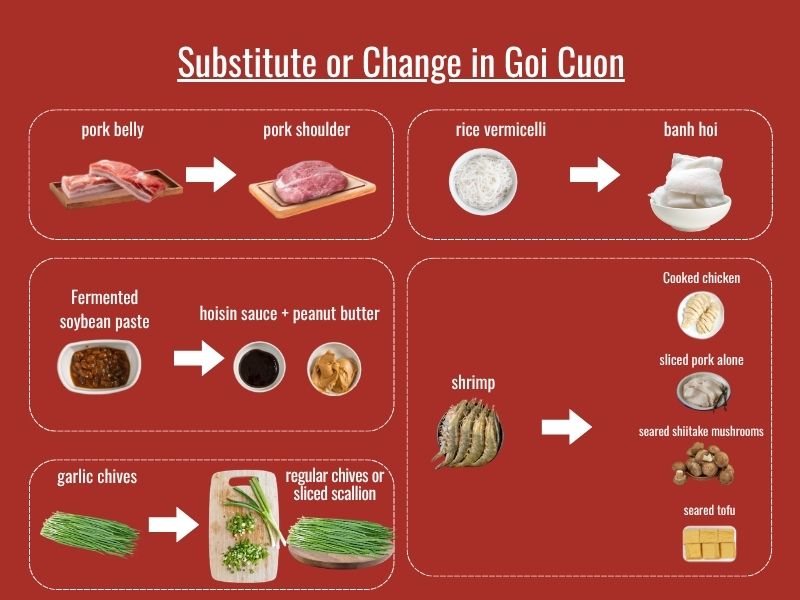
What Can You Substitute or Change in Goi Cuon?
These substitutions help you adapt goi cuon ingredients based on availability while keeping the balance between soft wrappers, fresh vegetables, protein, and dipping sauce.
- Fermented soybean paste (tương hột) in peanut sauce can be replaced with more hoisin sauce and peanut butter. The sauce will still work, but it will taste sweeter and less complex because fermented soybean paste provides a deeper savory flavor.
- Pork belly (thịt ba rọi) can be replaced with pork shoulder. Pork shoulder creates a leaner roll with less richness while maintaining a tender texture. Grilled pork can also be used for a different smoky flavor.
- Rice vermicelli (bún) can be replaced with bánh hỏi or other thin rice noodles. Bánh hỏi creates a lighter, less sticky texture and can be easier to portion inside the roll.
- Shrimp can be replaced with cooked chicken, sliced pork, seared tofu, or mushrooms. These alternatives change the sweetness and flavor of the roll, but the wrapping method remains the same.
- Garlic chives (lá hẹ) can be replaced with regular chives, sliced scallions, or omitted. The roll will lose some of the mild garlic aroma and visual contrast, but the structure remains unchanged.
- Peanut dipping sauce can be replaced with nước chấm. Fish sauce-based dipping sauce creates a lighter, sharper flavor compared with the richer peanut-based sauce.
How to Store and Hold Goi Cuon?
Goi cuon is best enjoyed shortly after rolling because the rice paper wrapper gradually changes texture as it absorbs moisture from the fillings. For preparation ahead, cook and prepare the fillings separately, then assemble the rolls close to serving time to maintain the soft wrapper and fresh ingredients.
Finished rolls can be held for a short period at room temperature when covered and arranged with space between each roll. Avoid stacking them directly because rice paper becomes sticky and can tear when separated. If storing multiple rolls temporarily, place parchment paper or plastic wrap between layers and cover them with a damp cloth or plastic wrap to prevent the wrappers from drying out.
Cooked shrimp, pork, noodles, herbs, and vegetables can be prepared in advance and refrigerated separately. Rolling the goi cuon shortly before serving provides the best balance between a soft wrapper, fresh fillings, and clean texture.
Peanut dipping sauce can be stored separately in a sealed container in the refrigerator for up to 5 days. Stir the sauce before serving because the ingredients may separate during storage.
Are you rolling these for the first time, or is this the goi cuon your family has always bought by the tray? Let us know in the comments, along with any questions, tweaks, or results. If the recipe worked out for you, a quick star rating really helps other home cooks find it. Share a photo of your platter on social media with #CHINSU, since we love seeing every one of them. And if you want to put a bowl of nước chấm next to the peanut sauce, grab a bottle of CHIN-SU fish sauce at chinsu.com and give it a try.
Frequently Asked Questions
Goi cuon is usually called Vietnamese fresh spring rolls in English. It may also appear on menus as summer rolls, salad rolls, or rice paper rolls. These labels describe the appearance of the dish, while the Vietnamese name identifies the traditional preparation style more precisely.
English speakers usually pronounce goi cuon close to “goy koon.” Vietnamese tones cannot be fully represented through English spelling, so this pronunciation is only an approximation.
Traditional goi cuon commonly includes pork, shrimp, rice vermicelli, lettuce, fresh herbs, bean sprouts, and garlic chives wrapped in softened rice paper. Variations may use grilled pork, grilled beef, tofu, or other proteins depending on the recipe.
Goi cuon is often considered a lighter Vietnamese dish because it uses fresh herbs, vegetables, shrimp, pork, and rice paper without deep frying. The overall nutrition depends on factors such as the pork cut, noodle amount, and dipping sauce used.
Rice paper tears when it is over-soaked, overfilled, or handled before it softens evenly. Soften the wrapper briefly, allow it to relax on the rolling surface, and keep the filling compact. Thick whole shrimp can also create pressure points, which is why halving shrimp helps create a smoother roll.
Goi cuon sticks together because softened rice paper becomes naturally adhesive as it dries. Keep finished rolls separated and avoid stacking them directly to prevent the wrappers from bonding.
Yes, but goi cuon has the best texture when rolled close to serving time. Prepare the pork, shrimp, noodles, vegetables, and sauce ahead, then assemble the rolls shortly before eating.
Goi cuon is commonly served with peanut-based dipping sauce or nước chấm made with fish sauce, lime, sugar, garlic, and chili. The preferred sauce varies by household and region.
Summer rolls are an English menu term for goi cuon, but the Vietnamese name is more specific. The term refers to fresh rice paper rolls rather than fried spring rolls.
Goi Cuon (Vietnamese Fresh Spring Rolls) Recipe
1. Ingredient
Pork and Shrimp
- 1.3 lb (600 g) pork belly, skinless and boneless.
- 1.5 lb (700 g) shrimp, shell on.
- 1 shallot, sliced.
- 1 teaspoon salt, for pork cooking water.
- 1 teaspoon sugar, for pork cooking water.
Noodles and Wrappers
- Rice paper (bánh tráng) for fresh rolls.
- Fresh rice vermicelli (bún).
Vegetables and Herbs
- Leaf lettuce.
- Fresh herbs such as mint, cilantro, and Thai basil.
- Garlic chives (lá hẹ).
- Bean sprouts.
Peanut Dipping Sauce (Tương Xào)
- ⅔ cup fermented soybean paste (tương hột), blended smooth.
- ½ cup hoisin sauce.
- 2 tablespoons peanut butter.
- ⅔ cup water.
- 2 tablespoons sugar.
- 1 tablespoon cooking oil.
- 1 tablespoon minced shallot.
- Roasted peanuts, fried shallots, minced chili, and pickled vegetables for topping.
2. Instructions
- Step 1: Boil the Pork. Cook pork belly with water, sliced shallot, 1 teaspoon salt, and 1 teaspoon sugar over medium heat for 30–40 minutes until fully cooked. The pork should reach at least 145°F (63°C) internally.
- Step 2: Ice-Bath the Pork. Transfer cooked pork into ice water to firm the texture, prevent darkening, and make slicing easier.
- Step 3: Cook the Shrimp. Remove shrimp veins, rinse, and cook them in the pork broth for 4–5 minutes until opaque and firm. Transfer shrimp to ice water.
- Step 4: Slice the Pork and Shrimp. Peel shrimp and slice each one lengthwise into two flat halves. Slice cooled pork evenly across the grain.
- Step 5: Prepare the Noodles and Vegetables. Arrange rice vermicelli, wash and drain lettuce, herbs, bean sprouts, and trim garlic chives for rolling.
- Step 6: Make the Peanut Dipping Sauce. Blend fermented soybean paste until smooth. Fry minced shallot in oil until fragrant, then add soybean paste, hoisin sauce, peanut butter, water, and sugar. Simmer gently until combined and adjust sweetness to taste.
- Step 7: Roll the Goi Cuon. Soften rice paper with warm water or a damp cloth. Layer lettuce, herbs, bean sprouts, rice vermicelli, pork slices, and shrimp halves. Fold the sides inward, add garlic chives, then roll tightly but gently. Cover finished rolls with a damp cloth while preparing the remaining rolls.
3. Storage: Goi cuon is best eaten shortly after rolling. Store pork, shrimp, noodles, herbs, vegetables, and sauce separately to maintain texture. Peanut dipping sauce can be stored in a sealed container in the refrigerator for up to 5 days. Avoid stacking finished rolls directly because rice paper becomes sticky and can tear.
4. Yield: About 20 rolls
5. Serving Style: Vietnamese fresh spring rolls with pork, shrimp, rice vermicelli, herbs, vegetables, and peanut dipping sauce

CHIN-SU KITCHEN TEAM
CHIN-SU Kitchen Team are the creative experts behind the delicious recipes featuring CHIN-SU sauces. With years of experience and a passion for flavor, our team carefully selects recipes from a variety of trusted chefs and bloggers, bringing together the best culinary insights to present you with the most suitable and exciting dishes. Every recipe is chosen to inspire you to create meals that are not only tasty but also easy to prepare, enhancing your dining experience. Join us as we explore a wide range of sauces and flavors, and elevate every meal with the perfect recipe for your table!
User Reviews
Featured Articles
SUBSCRIBE TO GET
MORE INFO
Want the latest and greatest recipes, updates, and more from us,
straight to your inbox? Subscribe and get our NEWS!