Banh Xeo Recipe - Crispy Vietnamese Sizzling Pancake with Pork and Shrimp
Published: Aug 20, 2026 by CHIN-SU
Updated: Sep 8, 2026 by CHIN-SU
Tested by CHIN-SU Kitchen Team
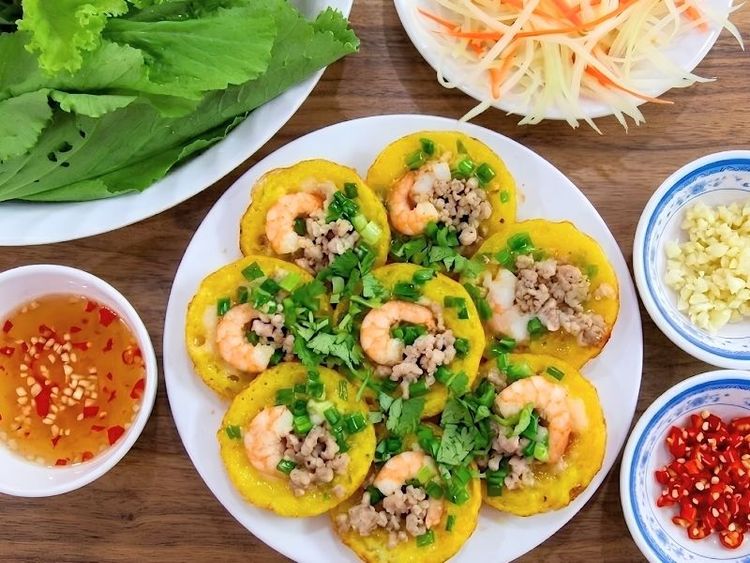
Banh xeo (bánh xèo) is a Vietnamese savory rice-flour pancake cooked in a hot skillet until crisp, then folded around a filling of pork, shrimp, bean sprouts, and vegetables. Regional styles vary across Vietnam: Central-style bánh xèo are typically smaller and thicker, while Mekong Delta versions are larger, with thin, crisp edges and batter that commonly includes turmeric and coconut milk. This home-style recipe makes 8 pancakes for 4 servings, each about 8.5–10 in (22–25 cm) wide, with golden edges, a tender center, and a savory pork-and-shrimp filling.
Crisp bánh xèo depends on four factors: batter consistency, pan temperature, filling moisture, and controlled steaming. CHIN-SU walks through the complete banh xeo recipe, explains how to keep the shell crisp, offers substitutions for harder-to-find ingredients, and shows how the pancakes are traditionally wrapped and eaten. The full recipe takes about 1 hour 15 minutes: 30 minutes of preparation and 45 minutes of cooking.
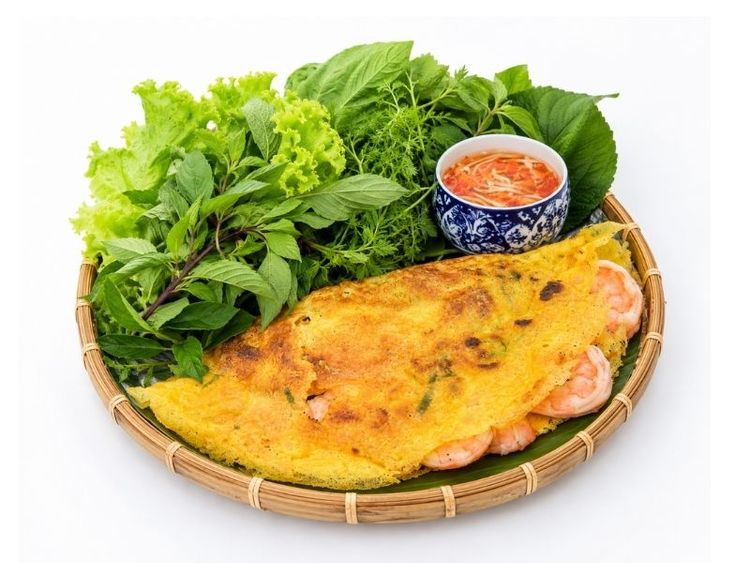
Table Of Contents
- What Is Banh Xeo?
- Why You'll Love Banh Xeo?
- Banh Xeo Ingredients
How to Make Banh Xeo Step by Step?
- Step 1: Cook the Pork Belly
- Step 2: Cool and Slice the Pork
- Step 3: Stir-Fry the Shrimp
- Step 4: Mix the Batter
- Step 5: Rest the Batter
- Step 6: Prepare the Vegetables and Pickles
- Step 7: Make the Fish Sauce Dipping Sauce
- Step 8: Pour and Fill the Pancake
- Step 9: Cover and Cook the Filling
- Step 10: Uncover and Crisp the Shell
- Step 11: Fold and Lift It Out
- Step 12: Rest the Pancakes on a Rack
- How to Serve Banh Xeo?
- Tips for the Best Banh Xeo
- What Can You Substitute or Change in Banh Xeo?
- How to Store Banh Xeo?
What Is Banh Xeo?
Banh xeo is a Vietnamese savory rice-flour pancake made from a thin batter that sizzles when poured into a hot skillet, creating a crisp golden shell around fillings such as pork, shrimp, and bean sprouts. Often translated as Vietnamese pancake or Vietnamese crepe, bánh xèo is traditionally torn into smaller pieces, wrapped with lettuce and fresh herbs, then dipped into a fish sauce-based dressing.
The name bánh xèo means “sizzling cake” or “sizzling pancake,” referring to the sound (xèo) created when the batter hits the hot pan and oil. This cooking technique creates the signature texture of bánh xèo: crisp edges, a thin browned exterior, and a softer interior that carries the aroma of rice flour, coconut milk, and savory fillings.
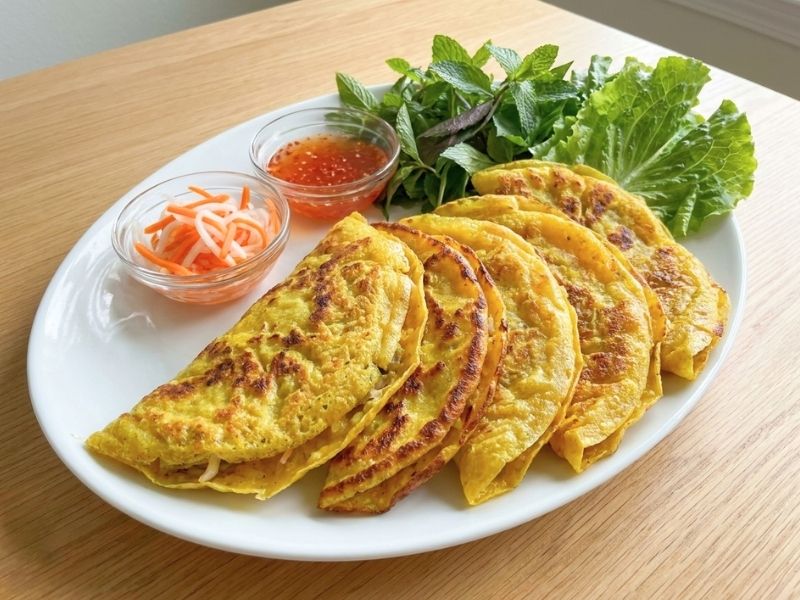
Bánh xèo has many regional variations across Vietnam rather than one fixed recipe. Central Vietnamese versions are often smaller and thicker, commonly served as individual portions, while Southern Mekong Delta versions are usually larger, thinner, and designed for wrapping with generous amounts of herbs and vegetables. Batter ingredients and fillings also vary by household and region, with ingredients such as shrimp, pork, bean sprouts, scallions, mushrooms, turmeric, coconut milk, and local vegetables appearing in different styles.
The way bánh xèo is eaten is part of the dish’s identity. Unlike a Western-style pancake served as a single portion, Vietnamese diners usually break the pancake into smaller pieces, combine them with fresh greens and herbs, then dip each bite into nước chấm. This creates a balance between the crispy pancake, savory filling, fresh herbs, and sweet-sour sauce.
Over time, bánh xèo has become one of Vietnam’s most recognizable dishes internationally. Regional cooking traditions continue to shape different versions while preserving the same essential elements: sizzling batter, crisp texture, fresh wrapping greens, and flavorful dipping sauce.
Why You'll Love Banh Xeo?
There are four practical reasons this home-style banh xeo works well for a shared meal.
- The shell stays crisp longer. A thin batter, hot pan, controlled filling moisture, oil around the edges, and wire-rack resting help maintain bánh xèo’s signature crunch.
- It makes a complete meal for sharing. This recipe makes 8 pancakes for 4 servings, with each pancake measuring about 8.5–10 in (22–25 cm) and served with herbs, vegetables, and fish sauce dipping sauce.
- The preparation is simple to organize. While the batter rests, you can prepare the pork, shrimp, vegetables, and dipping sauce before cooking the pancakes.
- Everyone builds their own bite. Diners can wrap pieces of bánh xèo with lettuce and fresh herbs, then adjust each bite with the dipping sauce.
Banh Xeo Ingredients
This banh xeo comes together from four component groups: the batter, the filling, the sauce and pickles, and the herb platter.
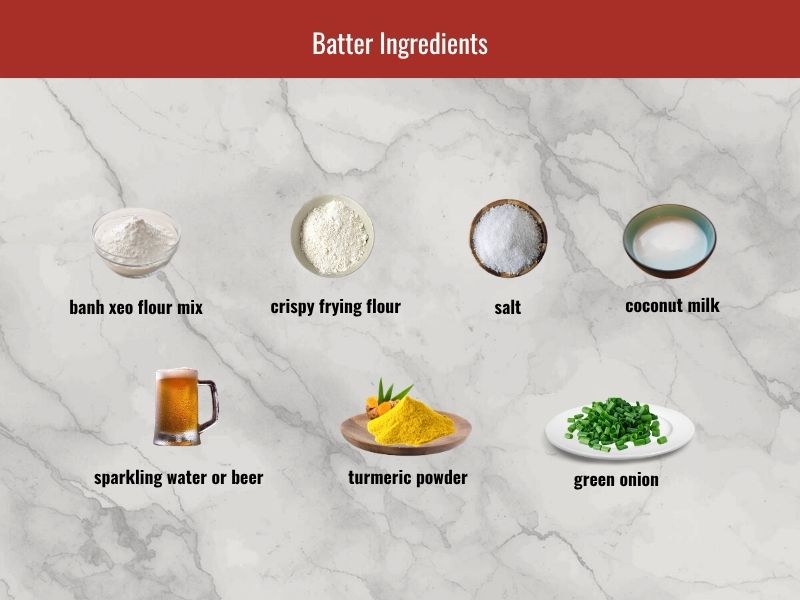
Batter
- 8.8 oz (250 g) banh xeo flour mix (bột bánh xèo). The flour mix provides a convenient base for the batter, and half of a 17.6 oz (500 g) bag is enough for this recipe.
- 3 tbsp crispy frying flour (bột chiên giòn). Crispy frying flour adds extra crunch, although crispness also depends on batter consistency, pan temperature, oil, and cooking technique.
- 1/2 tsp salt. Salt seasons the batter and balances the filling.
- 5 fl oz (150 ml) coconut milk. Coconut milk adds richness and gentle sweetness, especially common in Southern-style bánh xèo.
- 17 fl oz (500 ml) sparkling water or beer. Carbonation helps create a lighter batter, while beer adds aroma and color.
- 1 tsp turmeric powder (bột nghệ). Turmeric gives the pancake its golden color.
- 2 stalks green onion (hành lá), thinly sliced. Green onion adds aroma throughout the pancake.
Filling
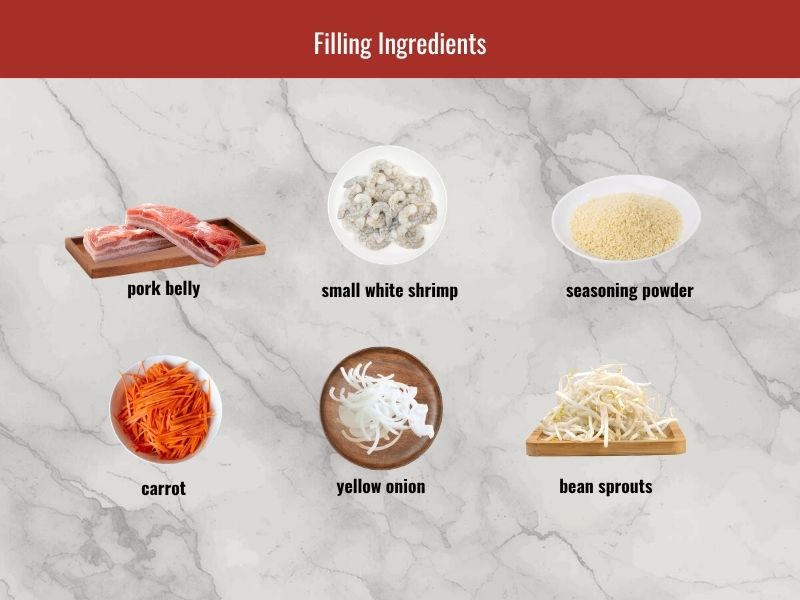
- 1.1 lb (500 g) pork belly (thịt ba rọi). Pork belly keeps the filling tender with a balance of meat and fat.
- 10.6 oz (300 g) small white shrimp, peeled. Small shrimp distribute evenly and make the pancake easier to fold.
- 1/2 tsp seasoning powder (hạt nêm). Seasoning powder adds extra flavor to the shrimp.
- 1 medium carrot, julienned. Carrot adds sweetness and crunch.
- 1/2 yellow onion, thinly sliced. Onion softens during cooking and adds sweetness.
- 7 oz (200 g) bean sprouts (giá). Bean sprouts add freshness and contrast with the crispy shell.
Dipping Sauce (Nước Chấm) and Pickled Vegetables
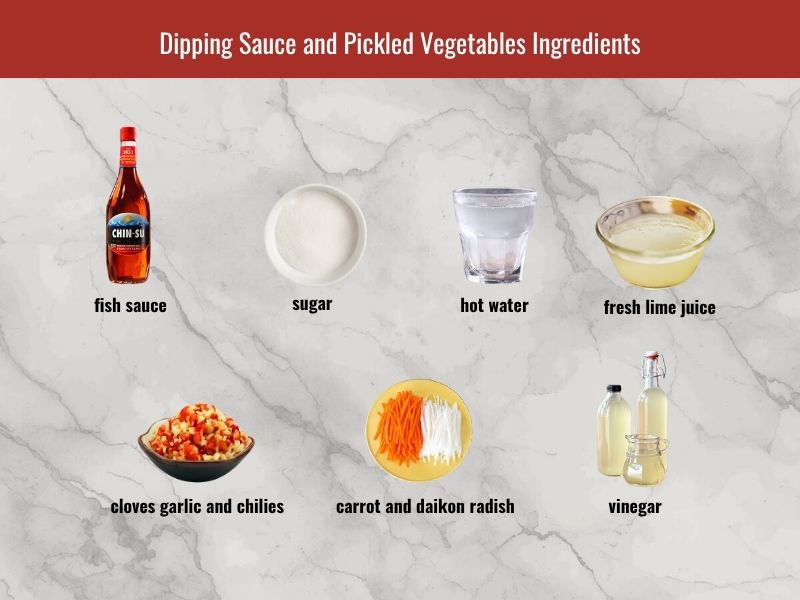
- 3 tbsp fish sauce (nước mắm). Fish sauce provides the savory base of the dipping sauce.
- 3 tbsp sugar. Sugar balances the saltiness of the fish sauce.
- 6 tbsp hot water. Hot water helps dissolve the sugar.
- 1 tbsp fresh lime juice. Lime juice adds acidity and freshness.
- 2 cloves garlic and 1 to 2 fresh chilies, finely minced. Garlic and chili add aroma and heat.
- 1 carrot and a piece of daikon radish, julienned, for pickling. Carrot and daikon create crunchy Vietnamese-style pickles (đồ chua).
- Vinegar, for the pickles. Vinegar provides the acidity needed for quick pickling.
Herbs and Wrappers
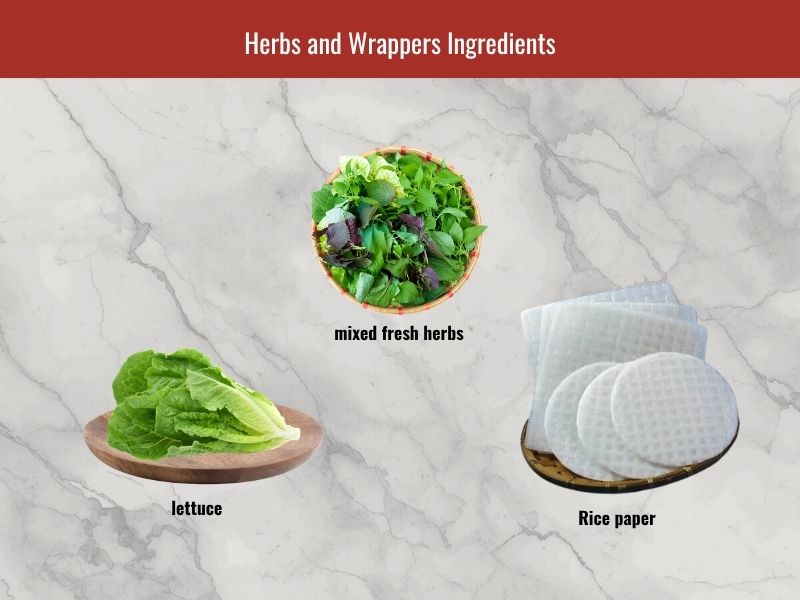
The herb platter balances the richness of the fried pancake and is part of the traditional way of eating bánh xèo.
- 1 head of lettuce, leaves separated. Lettuce wraps the pancake pieces and adds freshness.
- Mixed fresh herbs: mint, perilla (tía tô), cilantro, and Vietnamese coriander. Fresh herbs add aroma and balance.
- Rice paper (bánh tráng), for wrapping. Rice paper is commonly served with some Central Vietnamese bánh xèo styles.
How to Make Banh Xeo Step by Step?
Making banh xeo takes 12 main steps and about 1 hour 15 minutes, including 30 minutes of preparation and 45 minutes of cooking. The batter rests while the filling, vegetables, pickles, and dipping sauce are prepared. This recipe makes eight 8.5–10 in (22–25 cm) pancakes.
Step 1: Cook the Pork Belly
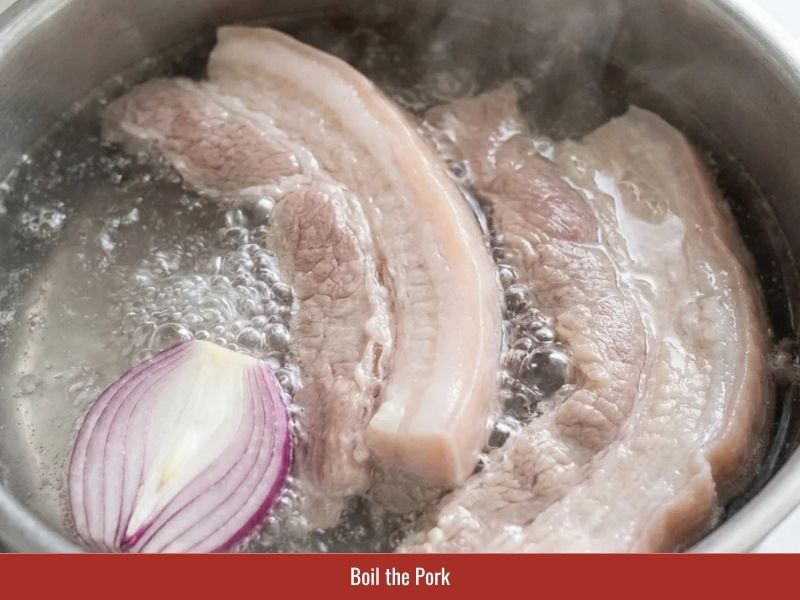
Place 1.1 lb (500 g) pork belly in a pot, cover with water, and add a pinch of salt with a few shallots for aroma.
Bring the water to a gentle simmer and cook until the thickest part of the pork reaches at least 145°F (63°C). Remove it from the heat and let it rest for at least 3 minutes.
Avoid washing raw pork with salt, lime, or vinegar before cooking, as rinsing raw meat can spread bacteria through splashing.
Step 2: Cool and Slice the Pork
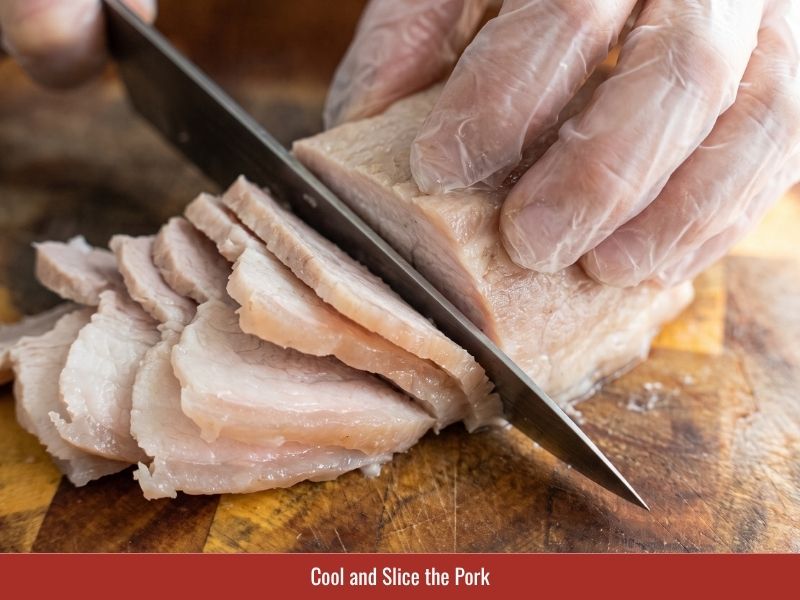
Transfer the cooked pork belly to a clean plate and let it cool until it is easy to handle.
Slice the meat thinly across the grain. Cooling firms the fat and meat, making cleaner slices that remain flat when placed inside the pancake.
Keep the sliced pork covered while preparing the remaining ingredients.
Step 3: Stir-Fry the Shrimp
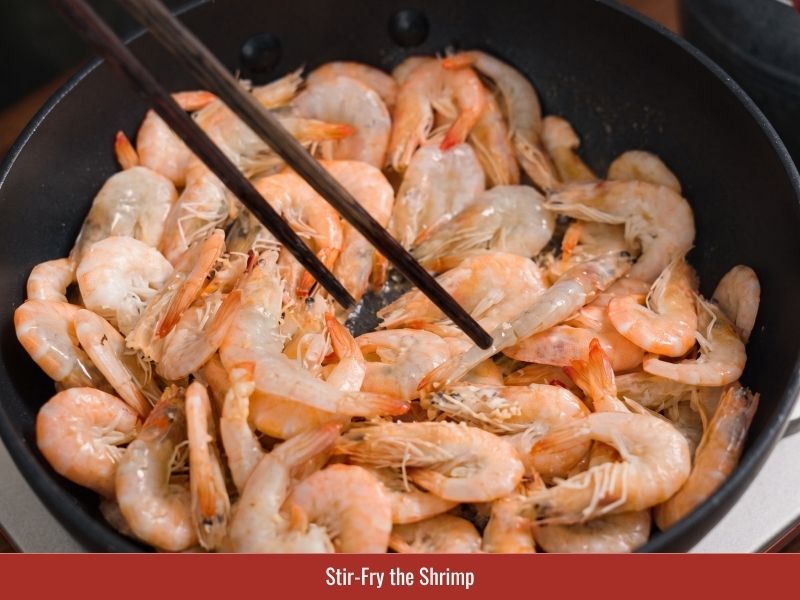
Heat a small amount of oil over medium heat, then add 10.6 oz (300 g) peeled shrimp.
Season with 1/2 tsp seasoning powder and cook until the shrimp become firm and opaque. Allow excess liquid to evaporate before removing them from the pan, because wet filling can release steam and reduce crispness.
Turn them out into a bowl.
Step 4: Mix the Batter
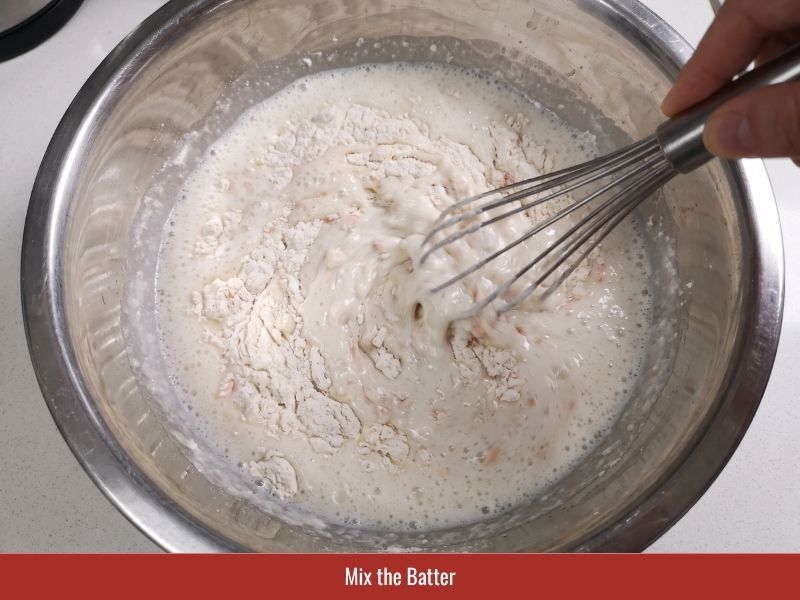
Combine 8.8 oz (250 g) banh xeo flour mix, 3 tbsp crispy frying flour, and 1/2 tsp salt in a bowl.
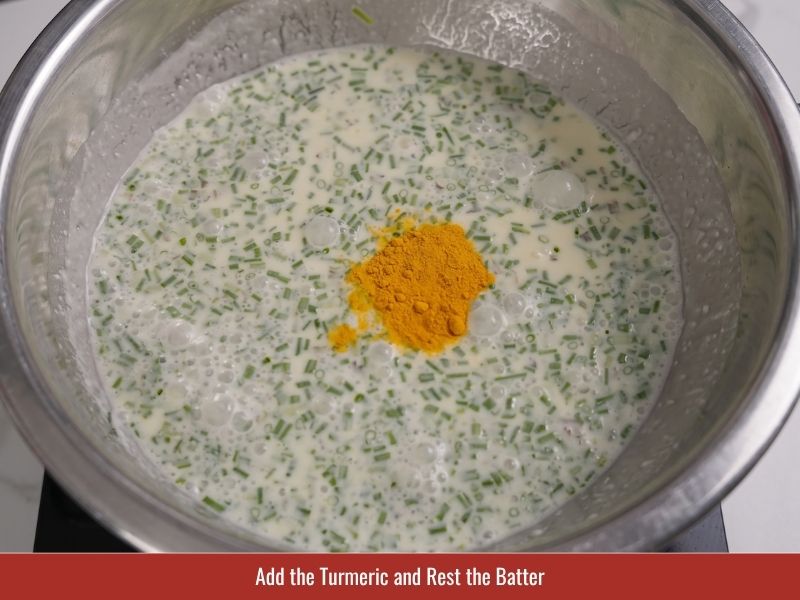
Gradually add 5 fl oz (150 ml) coconut milk and 17 fl oz (500 ml) sparkling water or beer, then stir until smooth. Add 1 tsp turmeric powder and sliced green onion, mixing until evenly distributed.
The batter should be thin and pourable, allowing it to spread quickly across the hot pan.
Step 5: Rest the Batter
Let the batter rest for 20 to 30 minutes. Use this time to prepare the vegetables, pickles, herbs, and dipping sauce.
Stir the batter again before cooking because rice flour settles during resting. A properly rested batter spreads more evenly and helps create a thinner, crispier shell.
Step 6: Prepare the Vegetables and Pickles
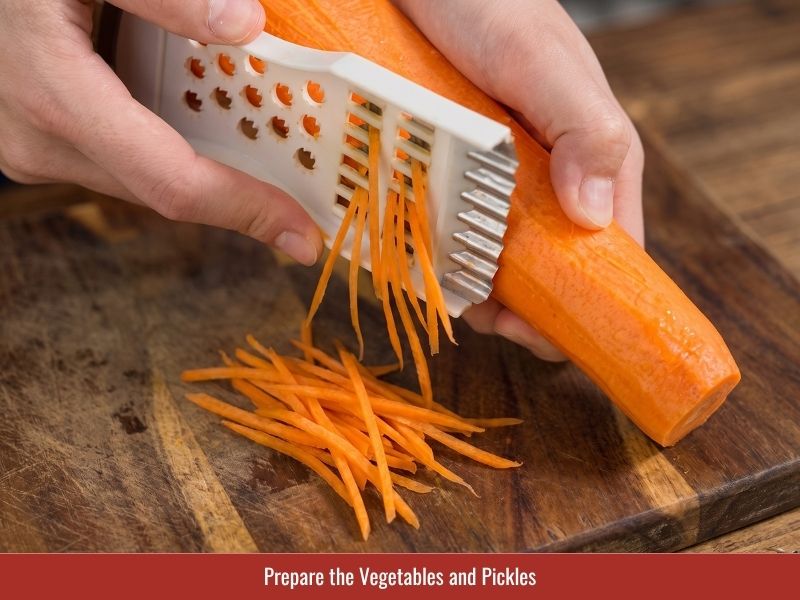
Julienne the carrot and thinly slice the onion. Rinse the bean sprouts and drain them thoroughly.
For the quick pickles, combine the julienned carrot and daikon with 2 tbsp rice vinegar, 1 tbsp sugar, and 1/4 tsp salt. Toss well and let them stand while the pancakes cook.
Wash the lettuce and herbs, then dry them thoroughly. Excess water on the greens dilutes the dipping sauce and makes rice-paper wraps harder to hold.
Step 7: Make the Fish Sauce Dipping Sauce
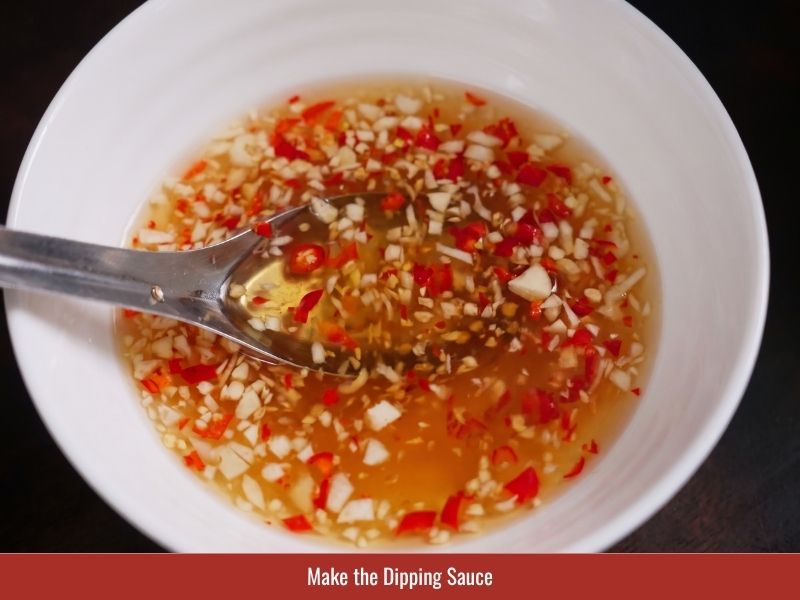
Dissolve 3 tbsp sugar in 6 tbsp hot water. Stir in 1 tbsp lime juice and 2 tbsp fish sauce. Taste the mixture before adding the reserved third tablespoon of fish sauce. Add it when the sauce needs more savory depth and saltiness.
Finish with the minced garlic and chili. The sauce should balance sweet, salty, sour, and spicy flavors without overpowering the pancake.
You can use CHIN-SU fish sauce as the base for its balanced savory flavor, then adjust the sweetness, acidity, and saltiness based on personal preference.
Step 8: Pour and Fill the Pancake
Heat a 9–10 in (23–25 cm) skillet and add a thin layer of oil.
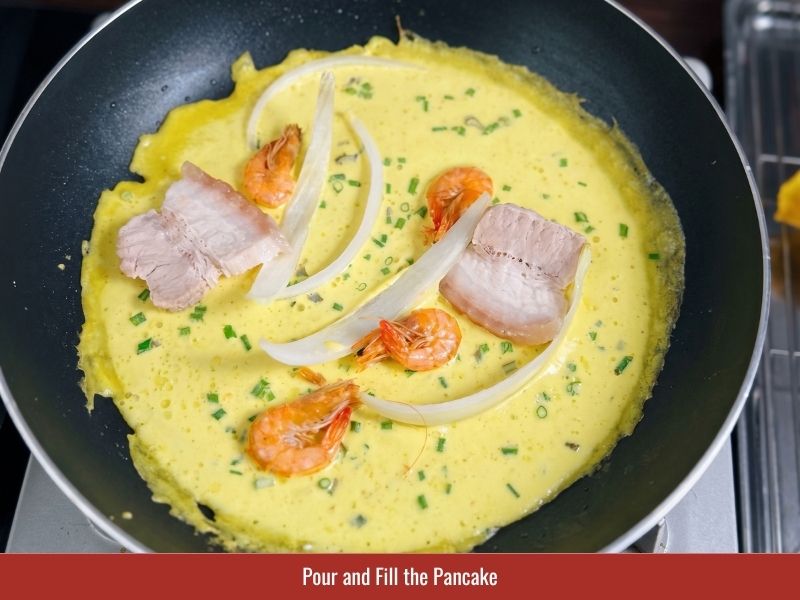
Stir the batter before each pancake, then pour in about one-eighth of the mixture. Quickly rotate the pan so the batter spreads into a thin layer.
Add the pork, shrimp, carrot, onion, and bean sprouts to one side of the pancake. Avoid overfilling because excess moisture prevents the shell from becoming crisp.
Step 9: Cover and Cook the Filling
Cover the pan and cook for about 1 minute over medium heat.
This short covered stage helps the batter set and warms the filling. Remove the lid once the surface is cooked and no longer looks wet.
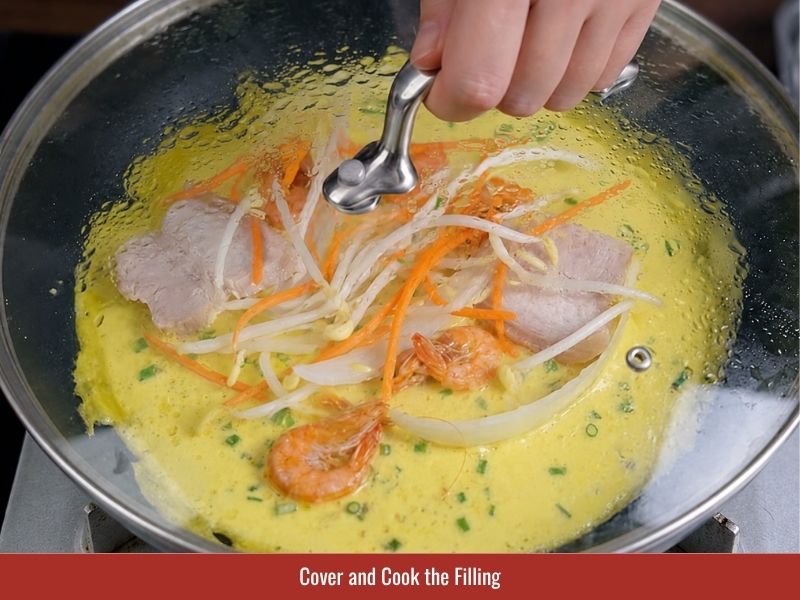
Step 10: Uncover and Crisp the Shell
Reduce the heat to medium-low or low as needed for your pan and burner.
Drizzle a small amount of oil around the outer rim. Continue cooking uncovered until the edge begins lifting from the skillet, the underside turns golden, and heavy steam stops escaping from the pancake.
This stage removes moisture. The finished bánh xèo should have a dry, crisp rim while retaining a slightly more tender center.
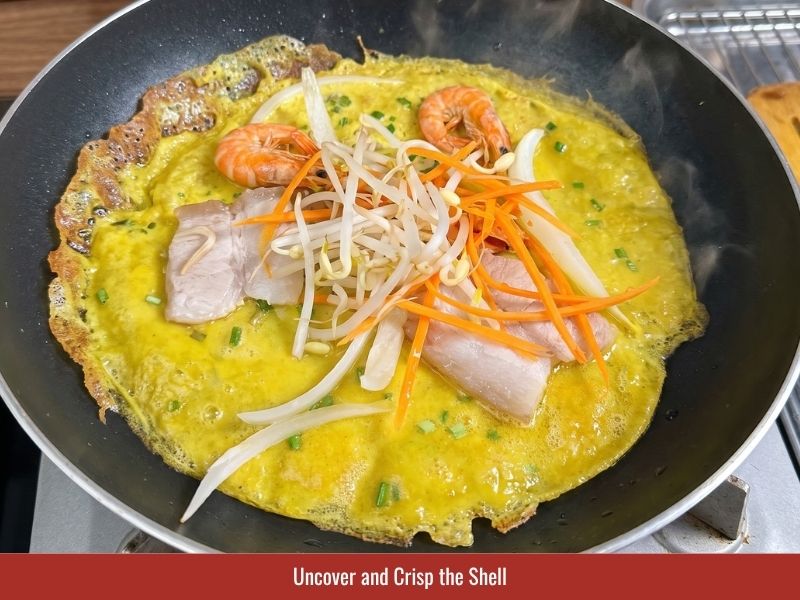
Step 11: Fold and Lift It Out
Slide a spatula under the crisp edge to confirm that the pancake releases naturally.
Fold the empty half over the filling to form a semicircle. Avoid pressing hard, which can crack the shell and squeeze moisture from the vegetables.
Transfer the pancake carefully from the skillet.
Run two or three pans at once the way Vietnamese cooks do, since one pancake at a time leaves everyone waiting.

Step 12: Rest the Pancakes on a Rack
Place each finished bánh xèo on a wire rack in a single layer.
Do not stack hot pancakes. Steam trapped between stacked shells quickly softens the crisp surface. Continue cooking the remaining batter, stirring before each pour, until all 8 pancakes are finished.
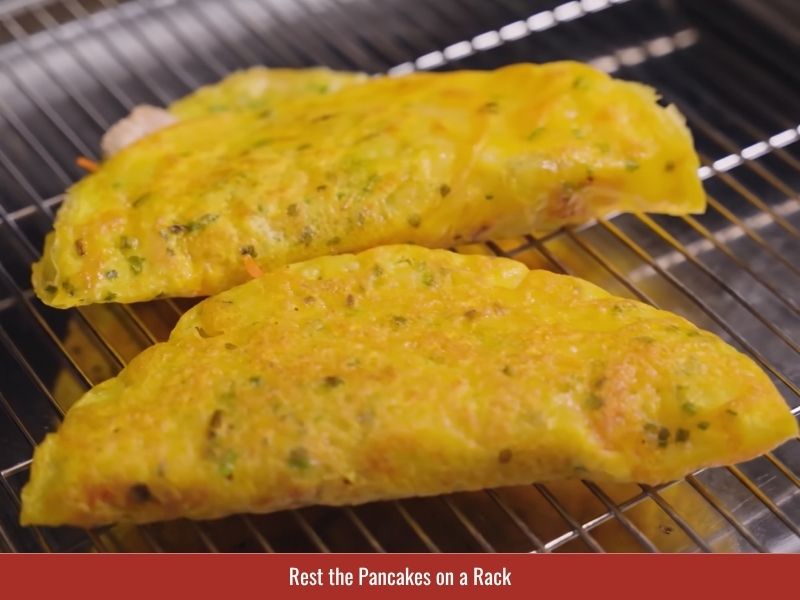
How to Serve Banh Xeo?
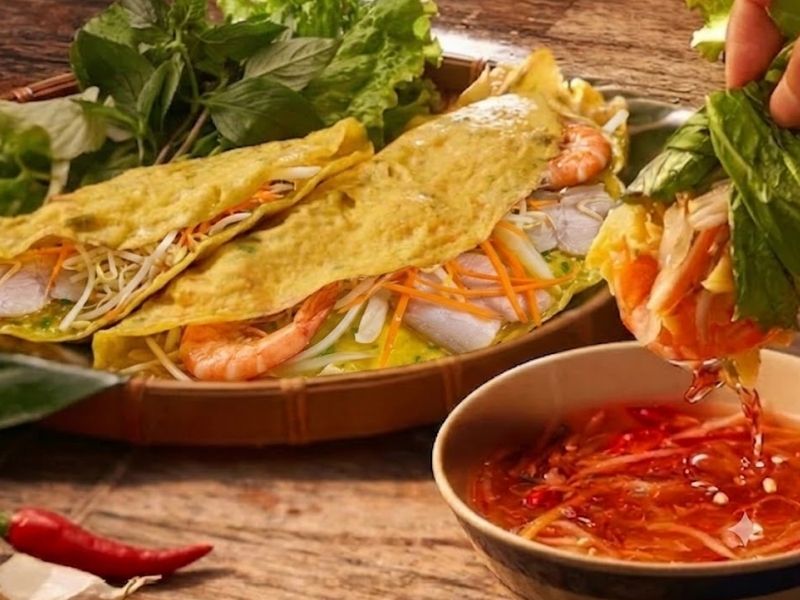
Serve banh xeo hot with lettuce, fresh herbs, pickled carrot and daikon, rice paper, and fish sauce dipping sauce placed at the center of the table. Instead of receiving a finished plate, diners usually tear pieces of the pancake and build each bite themselves. A typical serving sequence is:
- Tear off a bite-size piece of hot bánh xèo.
- Place it on lettuce or softened rice paper.
- Add fresh herbs and pickled vegetables.
- Roll it into a small wrap.
- Dip it into nước chấm and eat immediately while the shell is crisp.
You can also skip the wrapping altogether and spoon the sauce straight over a piece.
The wrapping style varies by region. Southern bánh xèo is often served with a wider variety of fresh leaves and herbs, while some Central Vietnamese versions include rice paper as part of the wrapping method.
The shared serving style is an important part of the bánh xèo experience. Pancakes are cooked one after another and served immediately, while the herbs, pickles, and dipping sauce stay in the middle of the table so everyone can customize each bite.
Tips for the Best Banh Xeo
These five techniques have the biggest impact on whether banh xèo turns out thin, crisp, and golden instead of soft and heavy.
- Heat the pan before adding the batter. The batter should sizzle immediately when it hits the skillet. A lukewarm pan allows the batter to sit instead of setting quickly.
- Keep the batter thin and well mixed. Stir the batter before every pancake because rice flour settles between pours. A fluid batter spreads easily and creates a thinner, crispier shell.
- Control filling moisture. Cook the shrimp until excess liquid evaporates, drain wet vegetables, and avoid overfilling. Too much moisture creates steam that softens the shell.
- Add oil around the rim. The outer edge is where bánh xèo develops its strongest crunch, and a small amount of oil helps the shell crisp and lift from the pan.
- Finish uncovered and rest on a rack. After the covered stage sets the batter, cook uncovered to remove moisture. Place finished pancakes on a rack instead of stacking them to prevent trapped steam from softening the crust.
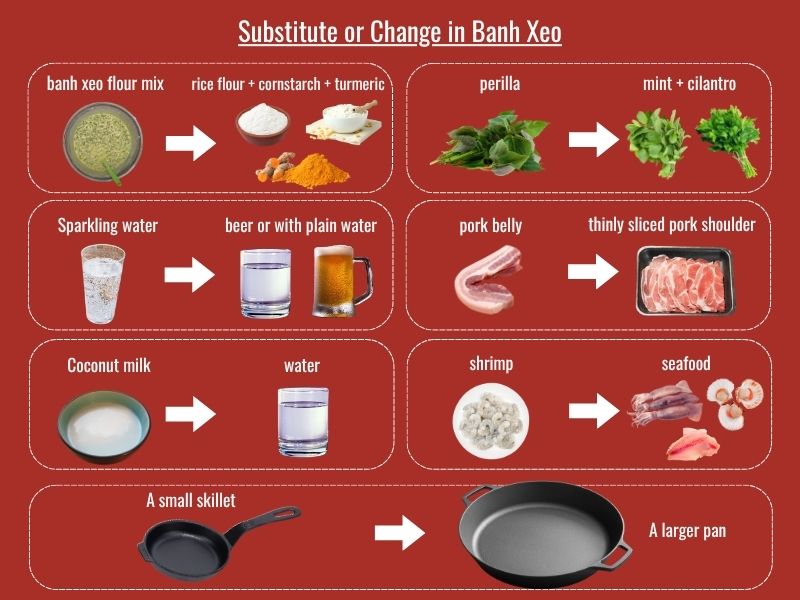
What Can You Substitute or Change in Banh Xeo?
These substitutions help you adapt bánh xèo ingredients based on availability while keeping the key elements: a thin crisp batter, savory filling, fresh herbs, and dipping sauce.
- Banh xeo flour mix can be replaced with rice flour, cornstarch, and turmeric. Homemade batter gives you more control, but packaged mixes provide a more consistent ratio of rice flour and starch.
- Sparkling water can be replaced with beer or plain water. Beer adds extra aroma and browning, while plain water still works when batter thickness and pan temperature are controlled.
- Coconut milk can be replaced with water for a lighter batter. Coconut milk is more common in Southern and Mekong Delta-style bánh xèo, while some Central versions use a simpler rice-flour batter.
- Perilla (tía tô) can be replaced with shiso, or a combination of mint and cilantro. Shiso provides the closest aromatic profile, although the herb platter will have a slightly different flavor.
- Pork belly can be replaced with thinly sliced pork shoulder. Pork shoulder creates a leaner filling with a firmer texture because it contains less fat.
- Shrimp can be replaced with other seafood such as squid, scallops, or small pieces of firm fish. Cook and drain seafood before adding it to the pancake to avoid excess moisture.
- A small skillet can be replaced with a larger pan. A larger pan creates a wider pancake similar to some Mekong Delta styles, but it requires more batter and careful heat control to keep the shell crisp.
The closest substitutions will maintain the original texture and balance of bánh xèo.
How to Store Banh Xeo?
Banh xeo is best enjoyed straight from the pan, so storing it is mainly for keeping leftovers crisp rather than preparing it ahead. Store the pancakes, batter, herbs, pickles, and dipping sauce separately to prevent moisture from softening the shell.
Keep cooked pancakes in a covered container in the refrigerator for up to 3–4 days. Place parchment paper between pancakes once cooled, then reheat them in an air fryer or oven until the edges become crisp again. Avoid microwaving if you want to keep the original texture.
Store leftover batter in a sealed container in the refrigerator and use it within 1–2 days for the best quality. Stir well before cooking because rice flour settles during storage.
Keep lettuce, herbs, pickles, and dipping sauce in separate containers. Do not assemble the wraps before storing, as the greens and sauce will soften the pancake.
Have you made banh xeo at home before, or is this your first time trying it? Tell us how it turns out in the comments, along with any questions or tweaks you made along the way, and leave a star rating so other home cooks can find the recipe. If you post a photo, tag it with #CHINSU so we can see your pancakes. And if you want to taste what a different fish sauce does to your dipping sauce, grab a bottle of CHIN-SU fish sauce at chinsu.com and give it a try.
Frequently Asked Questions
Banh xeo batter is mainly made from rice flour and water, with variations that may include turmeric, coconut milk, scallions, beer, sparkling water, or additional starches. This recipe uses bánh xèo flour mix, crispy frying flour, coconut milk, sparkling water, turmeric, and scallions.
Banh xeo becomes soft when the batter is too thick, the pan is not hot enough, the filling contains excess moisture, or steam remains trapped during cooking. Use a thin batter, a fully heated skillet, dry fillings, and uncovered finishing to improve crispness.
Banh xeo sticks when the skillet is not properly heated, the surface lacks enough oil, or the pancake is moved before the bottom sets. Preheat the pan, add a thin layer of oil, and wait until the edges naturally release before folding.
Banh xeo tears when the shell is not crisp enough, the batter does not set properly, or the pancake contains too much filling. Cook until the edges are firm and crisp, then fold gently without pressing the shell.
Yes, you can prepare banh xeo batter ahead and refrigerate it for 1–2 days. Stir well before cooking because rice flour settles during storage.
No, coconut milk is not required in all banh xeo recipes. It is more common in Southern and Mekong Delta styles, while some Central Vietnamese versions use a simpler rice-flour-based batter.
No, rice paper is optional because serving styles vary by region. Many people wrap bánh xèo with lettuce and herbs, while some Central Vietnamese styles also include rice paper.
Central Vietnamese bánh xèo is usually smaller and thicker, while Mekong Delta versions are larger with thinner, crispier edges. Regional differences also appear in batter ingredients, fillings, herbs, and dipping sauces.
Bánh xèo is commonly approximated in English as “ban say-oh,” although the Vietnamese tones cannot be fully represented in English spelling. The word xèo refers to the sizzling sound of the batter hitting the hot pan.
Banh xeo is a Vietnamese dish with established regional traditions in Central and Southern Vietnam. Similar rice-based pancakes exist in neighboring Southeast Asian cuisines, but the dish itself is strongly associated with Vietnamese culinary culture.
Yes, banh xeo can be made vegetarian by replacing pork and shrimp with plant-based fillings. Common options include mushrooms, tofu, mung beans, jicama, and additional vegetables. Use a vegetarian dipping sauce instead of fish sauce.
Banh Xeo (Vietnamese Sizzling Pancake) Recipe
1. Ingredient
Batter
- 8.8 oz (250 g) banh xeo flour mix (bột bánh xèo).
- 3 tablespoons crispy frying flour (bột chiên giòn).
- 1/2 teaspoon salt.
- 5 fl oz (150 ml) coconut milk.
- 17 fl oz (500 ml) sparkling water or beer.
- 1 teaspoon turmeric powder.
- 2 stalks green onion, thinly sliced.
Filling
- 1.1 lb (500 g) pork belly.
- 10.6 oz (300 g) small white shrimp, peeled.
- 1/2 teaspoon seasoning powder.
- 1 medium carrot, julienned.
- 1/2 yellow onion, thinly sliced.
- 7 oz (200 g) bean sprouts.
Dipping Sauce (Nước Chấm) and Pickles
- 3 tablespoons fish sauce.
- 3 tablespoons sugar.
- 6 tablespoons hot water.
- 1 tablespoon fresh lime juice.
- 2 cloves garlic, minced.
- 1–2 fresh chilies, minced.
- 1 carrot and a piece of daikon radish, julienned.
- Vinegar, for quick pickling.
Herbs and Wrappers
- 1 head lettuce, leaves separated.
- Mixed fresh herbs: mint, perilla (tía tô), cilantro, and Vietnamese coriander.
- Rice paper (bánh tráng).
2. Instructions
- Step 1: Cook the Pork Belly. Place pork belly in a pot with water, a pinch of salt, and shallots for aroma. Simmer until the thickest part reaches at least 145°F (63°C), then rest for at least 3 minutes.
- Step 2: Cool and Slice the Pork. Let the cooked pork cool until easy to handle, then slice thinly across the grain and keep covered.
- Step 3: Stir-Fry the Shrimp. Cook peeled shrimp with seasoning powder over medium heat until firm and opaque. Allow excess liquid to evaporate before removing.
- Step 4: Mix the Batter. Combine banh xeo flour mix, crispy frying flour, and salt. Add coconut milk and sparkling water or beer gradually until smooth. Mix in turmeric powder and sliced green onion.
- Step 5: Rest the Batter. Let the batter rest for 20–30 minutes. Stir again before cooking to redistribute settled rice flour.
- Step 6: Prepare the Vegetables and Pickles. Julienne carrot and daikon, slice onion, rinse bean sprouts, and prepare lettuce and herbs. Mix pickles with vinegar, sugar, and salt, then let rest while cooking.
- Step 7: Make the Fish Sauce Dipping Sauce. Dissolve sugar in hot water, then add lime juice and fish sauce. Adjust seasoning and finish with minced garlic and chili.
- Step 8: Pour and Fill the Pancake. Heat a 9–10 inch (23–25 cm) skillet with oil. Stir batter, pour about one-eighth of the mixture, and rotate the pan quickly to create a thin layer. Add pork, shrimp, carrot, onion, and bean sprouts to one side.
- Step 9: Cover and Cook the Filling. Cover the skillet and cook for about 1 minute until the batter sets and the filling warms.
- Step 10: Uncover and Crisp the Shell. Cook uncovered over medium-low heat. Add a small amount of oil around the edges and continue until the pancake becomes golden and crisp.
- Step 11: Fold and Lift the Pancake. Slide a spatula underneath the crisp edge, fold the pancake over the filling, and transfer carefully to a plate.
- Step 12: Rest the Pancakes on a Rack. Place finished pancakes in a single layer on a wire rack. Avoid stacking to prevent trapped steam from softening the crust.
3. Storage: Store cooked bánh xèo, batter, herbs, pickles, and dipping sauce separately. Refrigerate cooked pancakes for 3–4 days and reheat in an air fryer or oven to restore crispness. Store leftover batter for 1–2 days and stir well before cooking.
4. Yield: 8 pancakes (about 8.5–10 inches / 22–25 cm each), 4 servings
5. Serving Style: Vietnamese crispy rice-flour pancakes wrapped with lettuce and herbs, served with pickled vegetables and fish sauce dipping sauce

CHIN-SU KITCHEN TEAM
CHIN-SU Kitchen Team are the creative experts behind the delicious recipes featuring CHIN-SU sauces. With years of experience and a passion for flavor, our team carefully selects recipes from a variety of trusted chefs and bloggers, bringing together the best culinary insights to present you with the most suitable and exciting dishes. Every recipe is chosen to inspire you to create meals that are not only tasty but also easy to prepare, enhancing your dining experience. Join us as we explore a wide range of sauces and flavors, and elevate every meal with the perfect recipe for your table!
User Reviews
Featured Articles
SUBSCRIBE TO GET
MORE INFO
Want the latest and greatest recipes, updates, and more from us,
straight to your inbox? Subscribe and get our NEWS!