Dua Cai Chua Recipe - Vietnamese Pickled Mustard Greens
Published: Aug 20, 2026 by CHIN-SU
Updated: Sep 8, 2026 by CHIN-SU
Tested by CHIN-SU Kitchen Team
Dua chua (dưa chua) is a Vietnamese fermented pickle made from mustard greens that are wilted, packed with aromatics, and submerged in a salted brine until they develop a mild sour flavor. Unlike quick pickles that mainly rely on vinegar, traditional dua chua develops its acidity through lactic fermentation.
In Vietnamese meals, dua chua is valued as a contrast to richer dishes. It is commonly served with steamed rice, braised pork, fried fish, and other savory foods. During Tết meals, it is especially appreciated alongside heavier dishes such as thịt kho and sticky rice because the sour, crunchy greens help balance richer flavors.
In this article, CHIN-SU shares the dua chua recipe to make at home, techniques for keeping fermented mustard greens crisp, and how Vietnamese families use this pickle beyond a simple side dish. The recipe takes about 3–5 days, with only 30 minutes of hands-on preparation, and makes 1 large jar from 2.2 lb (1 kg) mustard greens.
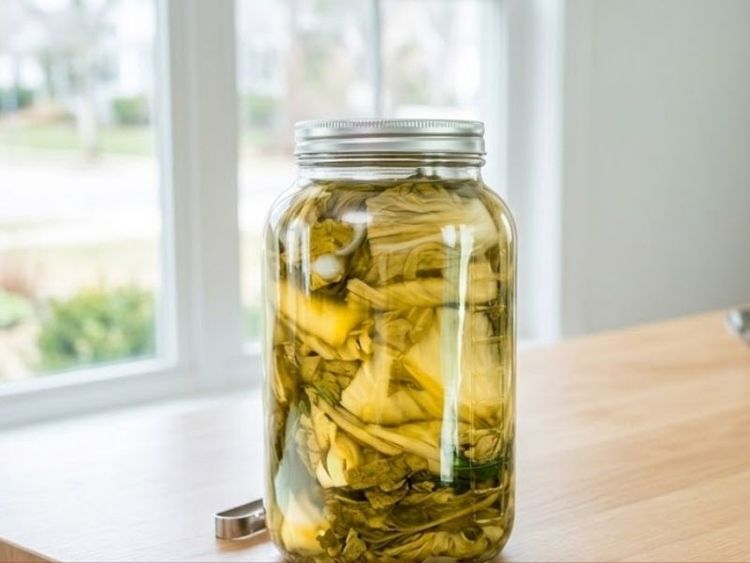
Table Of Contents
What Is Dua Chua?
Dua chua is a Vietnamese fermented pickle made from mustard greens that are wilted and submerged in a salted brine with aromatics until they develop a sour, slightly salty flavor. The sourness comes mainly from fermentation rather than soaking the vegetables in vinegar.
Vietnamese pickled mustard greens can appear under several related names. Dưa cải chua refers specifically to fermented mustard greens, while dưa muối is a broader term for vegetables preserved with salt. In everyday conversation, many Vietnamese speakers use dưa chua as a common name for sour pickled vegetables, especially mustard greens.
Dua chua is different from đồ chua, the quick carrot-and-daikon pickle commonly served with bánh mì. Đồ chua usually relies on vinegar for acidity and can be ready quickly, while dua chua develops its sour flavor through fermentation.
Dua chua should also be separated from dưa món, a Central Vietnamese pickle commonly associated with Tết meals. Dưa món uses a different combination of vegetables and seasoning methods, often including ingredients such as carrots, daikon, papaya, or other vegetables.
Regional and household variations exist across Vietnam. Some families prefer mustard greens cut into smaller pieces for faster fermentation, while others ferment larger sections of greens. The finished pickle is commonly served beside rice meals, braised dishes, and fried foods rather than eaten as the main component of a meal.
Why You'll Love Dua Chua?
You’ll love this dua chua recipe because it transforms simple mustard greens into a crunchy fermented side dish with only a short preparation time.
- The sourness develops naturally. Salt brine fermentation creates a deeper, rounder acidity compared with quick vinegar pickles.
- The texture stays crisp. Wilting the greens before fermentation helps reduce excess water and allows the stems to maintain their crunch.
- The recipe fits everyday meals. One jar can accompany steamed rice, thịt kho, fried fish, braised dishes, or become an ingredient in sour soups and stir-fries.
Dua Chua Ingredients
This dua chua recipe comes together from two component groups: the mustard greens with aromatics, and the salted fermentation brine.
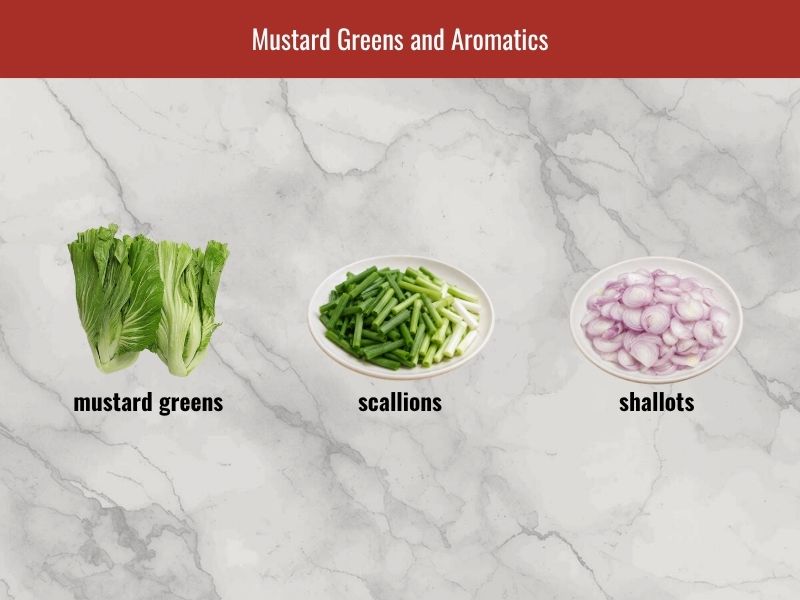
Mustard Greens and Aromatics
- 3 heads mustard greens (cải bẹ xanh), about 2.2 lb (1 kg). Mustard greens are the foundation of dua chua. Their thick stems provide the crunchy texture that remains after fermentation. Choose mature greens with firm stems rather than very young leaves because older stems generally maintain better structure.
At Asian markets, mustard greens are often labeled gai choy or gai choi. The exact size varies depending on growing conditions, so adjust the number of heads based on the final weight.
- 1 small bunch of scallions (hành lá), cut into lengths. Scallions add a fresh onion aroma and are commonly fermented together with mustard greens.
- 4–5 shallots (hành tím), thinly sliced. Shallots contribute fragrance and mild sweetness throughout fermentation.
Brine
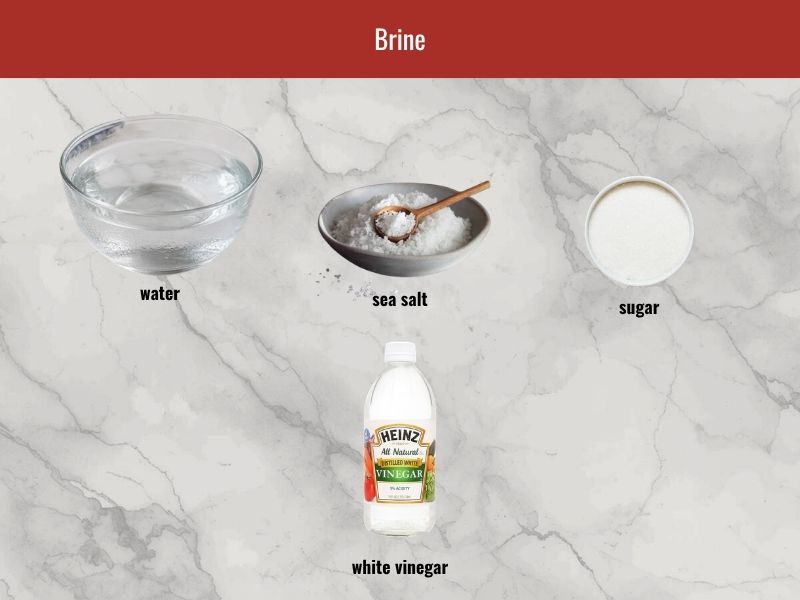
- 6 cups (1.5 L) water. Water creates the fermentation environment and should be enough to keep all greens fully submerged.
- 3 tbsp sea salt. Salt creates the conditions for lactic acid fermentation, helps maintain vegetable texture, and limits the growth of undesirable microorganisms when the recipe is prepared correctly. Do not significantly reduce the salt amount without adjusting the fermentation method.
- 1 tbsp sugar. Sugar balances the flavor of the brine and can support fermentation activity, but the finished pickle should remain sour rather than sweet.
- 3 tbsp white vinegar, optional. Traditional dua chua develops its characteristic sourness through fermentation. Some home recipes add a small amount of vinegar for a more predictable acidity or faster sour flavor, but vinegar is not the main source of fermentation.
How to Make Dua Chua Step by Step
Making dua chua takes about 30 minutes of hands-on preparation, followed by 2–5 days of fermentation depending on temperature and taste preference. It comes down to six steps: wilt the greens, cook and cool the brine, cut everything, sterilize the jar, pack it, and let it ferment.
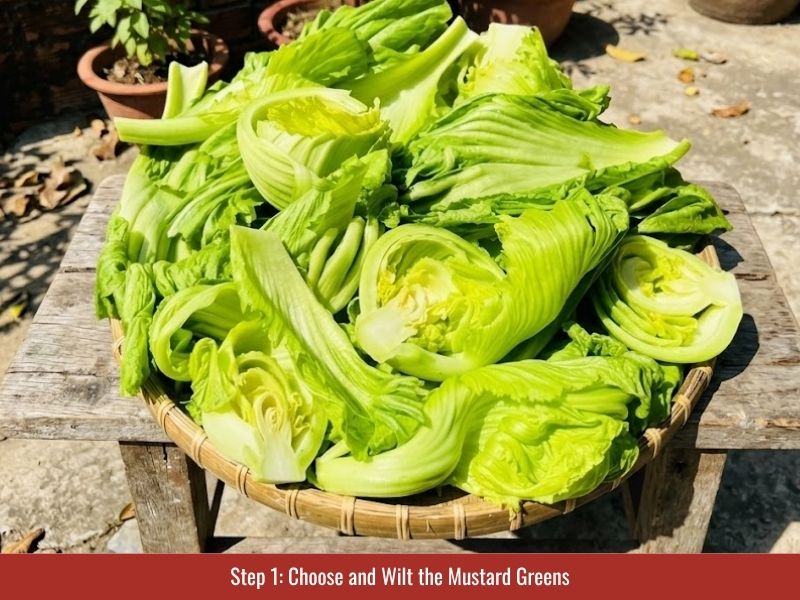
Step 1: Choose and Wilt the Mustard Greens
Hang the whole heads of mustard greens in the sun for one day, until the leaves go limp. No sun that week? Hang them somewhere breezy indoors until they wilt, or run them through a dehydrator or a low oven at 122°F (50°C) for about 2 hours. Wilting drives off some of the water in the leaves. That is what keeps the greens firm in the brine instead of going soft, and it means they take up the salt brine in place of the water they lost.
The greens stay whole and unwashed at this stage. Washing comes later, after they have wilted.
Step 2: Cook the Brine
Bring 6 cups (1.5 L) water to a boil with 3 tbsp sea salt and 1 tbsp sugar. Stir until the salt and sugar dissolve completely, then allow the brine to cool to room temperature.
If using vinegar, add 3 tbsp white vinegar only after the brine has cooled. The vinegar provides additional acidity but does not replace the fermentation process.
Preparing the brine early gives it enough time to cool before it comes into contact with the greens. Warm brine can soften the vegetables and affect the final texture.

Step 3: Wash and Cut the Greens
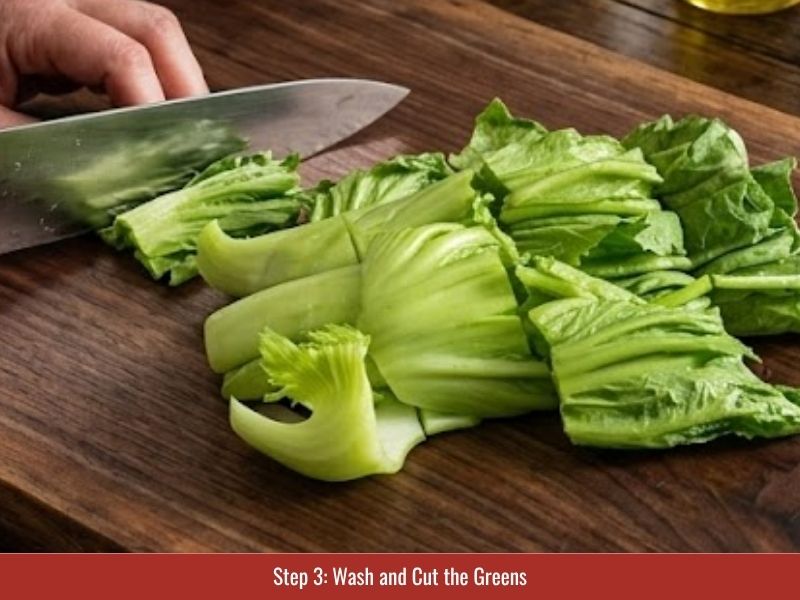
After the mustard greens have wilted, wash them thoroughly and drain well.
Cut the greens into bite-sized pieces, then cut the scallions into sections and slice the shallots thinly.
Cutting the greens into smaller pieces can shorten fermentation time and makes the pickle easier to serve. Leaving larger sections intact is also possible and creates a more traditional presentation.
Make sure excess water is removed before packing because additional water changes the salt concentration of the brine.
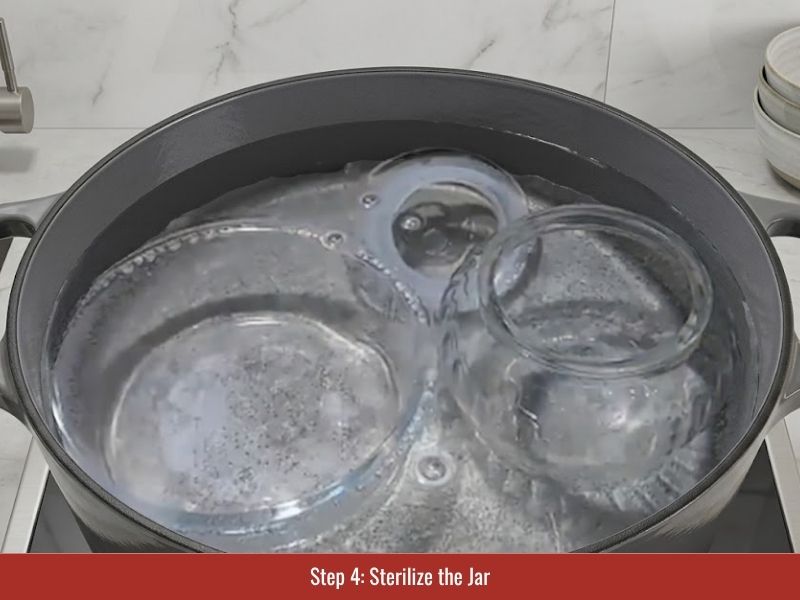
Step 4: Sterilize the Jar
Use a clean glass or ceramic container for fermentation.
Scald the jar with boiling water or wash it thoroughly with hot water, then allow it to dry before adding the vegetables. This reduces unwanted contamination and creates a more predictable fermentation environment.
Do this properly, because it is what prevents the two failures that ruin a jar: a film forming on the surface and the brine turning slimy. Glass is convenient because you can observe the brine level and fermentation progress. If using a metal lid, choose a food-safe corrosion-resistant option designed for acidic foods.
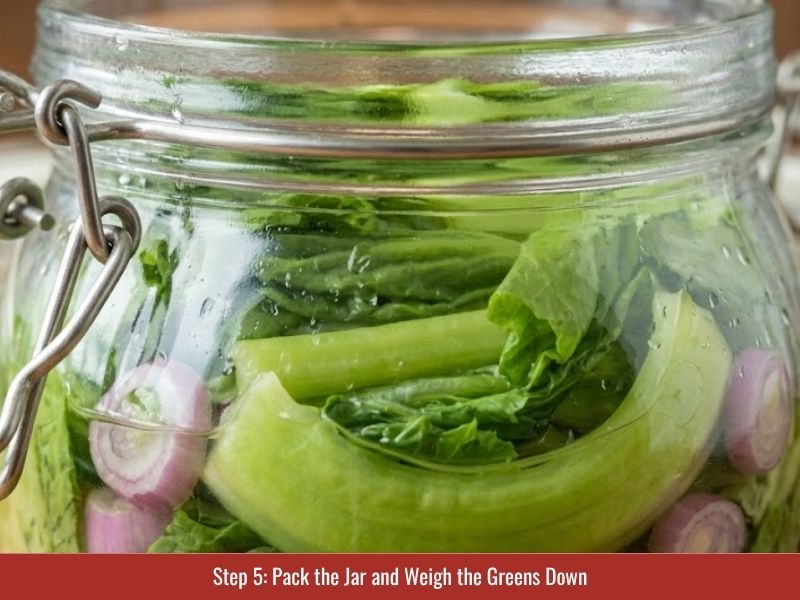
Step 5: Pack the Jar and Weigh the Greens Down
Place the mustard greens, scallions, and shallots into the jar.
Pour the cooled brine over the vegetables until everything is fully submerged. Press the greens down with a clean weight, small plate, or fermentation weight to keep them below the brine surface.
Keeping the vegetables submerged limits exposure to air and helps maintain a stable fermentation environment.
Close the jar loosely or use a fermentation lid that allows gas to escape, depending on the container being used.
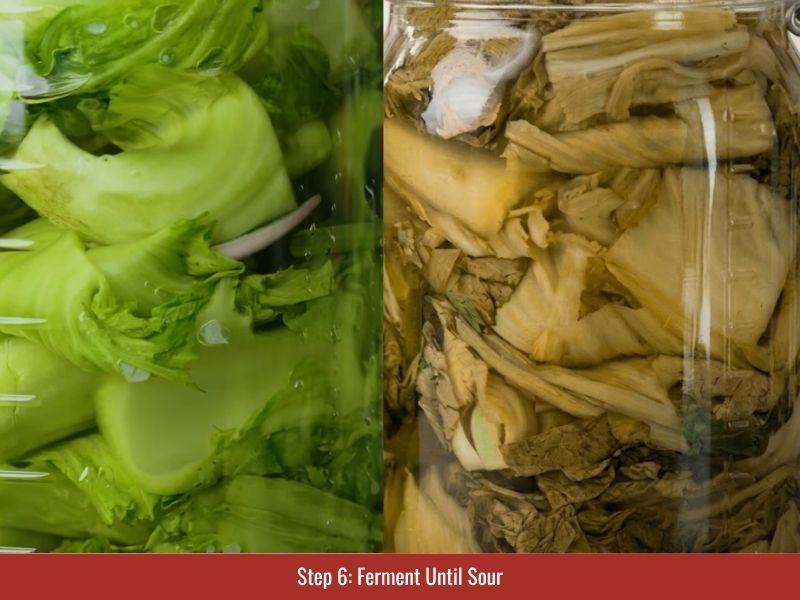
Step 6: Ferment Until Sour
Keep the jar at room temperature until the greens develop the desired sourness.
In a warm environment, dua chua may be ready in about 2–3 days. In a cooler kitchen, fermentation can take 3–5 days or longer.
Lactic acid bacteria are generally more active in warm conditions, while cooler temperatures slow the fermentation process. Instead of relying only on a fixed timeline, check the pickle by appearance, aroma, texture, and taste.
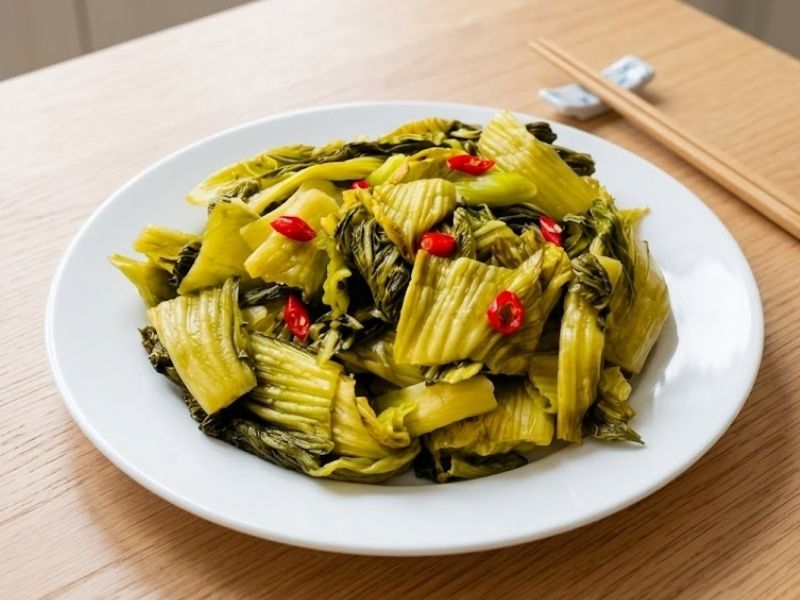
The greens are ready when they turn yellow-green, smell pleasantly sour, retain some crunch, and lose most of their raw mustard bitterness.
Once the flavor reaches your preferred level, transfer the jar to the refrigerator to slow further fermentation.
What To Eat With Dua Chua?
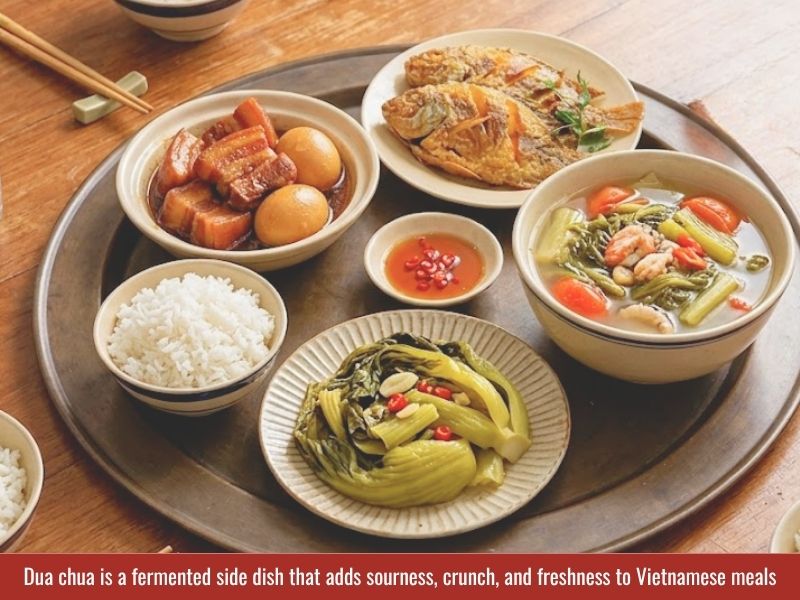
Dua chua is a fermented side dish that adds sourness, crunch, and freshness to Vietnamese meals, especially when served with richer or more savory dishes. It is usually eaten in small portions alongside steamed rice and main dishes rather than served as the centerpiece of a meal.
Common ways to enjoy dua chua include:
- Braised pork and eggs (thịt kho). The rich, savory flavor of caramelized pork and eggs is balanced by the sour and crunchy mustard greens, making this one of the most familiar pairings during Tết meals.
- Steamed rice with braised or fried dishes. Vietnamese families commonly serve dua chua with everyday dishes such as fried fish, braised meat, or other savory foods. The acidity of the pickle refreshes the palate and balances heavier flavors.
- Dua chua mixed with fish sauce and chili. Some households season fermented mustard greens with chili, garlic, and fish sauce before serving them with hot rice. This creates a more savory and spicy version of the pickle, with CHIN-SU fish sauce adding depth and aroma while keeping the sour flavor balanced.
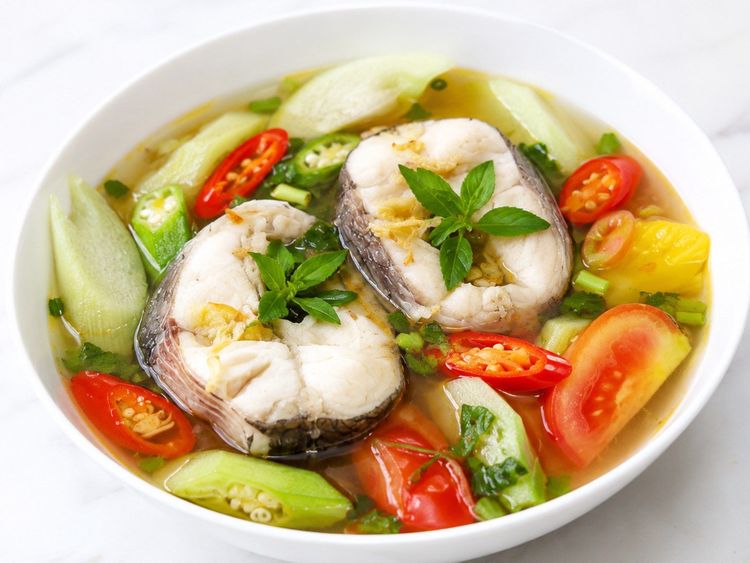
- Sour soup (canh dưa chua). When the pickle becomes more sour, it can be cooked into soup, where the fermented greens add acidity and depth to the broth.
- Stir-fried or braised dishes. Older batches of dua chua are often reused as a cooking ingredient, adding sourness to stir-fries and braised dishes instead of being served only as a side.
Dua chua is especially valued in Vietnamese family meals because it creates contrast. The sour, crunchy greens balance rich dishes such as thịt kho, sticky rice, and other savory foods, which is why fermented mustard greens appear during Tết meals and regular rice meals throughout the year.
Tips for the Best Dua Chua
These five techniques help create dua chua with balanced sourness, crisp texture, and a stable fermentation process.
- Keep the salt ratio consistent. Salt affects fermentation, texture, and the balance between desirable and undesirable microorganisms. Reducing salt significantly can change the fermentation conditions and make the result less predictable.
- Reduce excess moisture before fermentation. Wilting the mustard greens helps maintain crunch by removing some water before the vegetables enter the brine. Sun wilting is traditional, but other methods can achieve the same moisture reduction.
- Keep all vegetables below the brine surface. Greens exposed to air ferment less predictably and are more likely to develop surface issues. A clean weight helps maintain full submersion.
- Taste based on fermentation progress, not only time. Warm environments speed up fermentation, while cooler conditions slow it down. Begin checking after a few days and move the jar to the refrigerator once the sourness reaches your preferred level.
- Keep clean handling practices throughout fermentation. Use clean jars, clean utensils, and avoid returning used utensils or contaminated ingredients into the jar.
What Can You Substitute or Change in Dua Chua?
These substitutions help adapt dua chua ingredients and fermentation methods based on availability while preserving the key characteristics of fermented mustard greens.
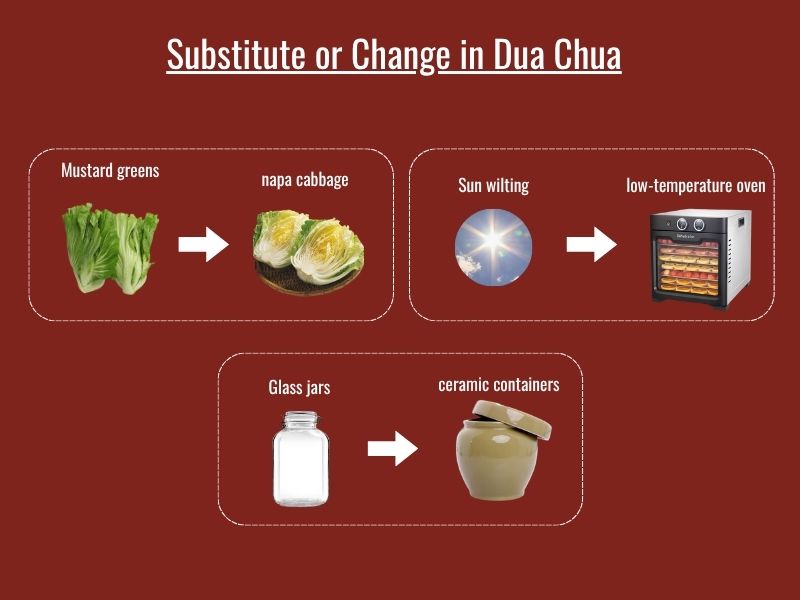
- Mustard greens (cải bẹ xanh) can be replaced with napa cabbage or daikon leaves. Mustard greens provide the traditional peppery flavor and firm stems, while napa cabbage creates a milder pickle with a softer texture. Daikon leaves are closer in texture but may be harder to find.
- Sun wilting can be replaced with indoor wilting methods. A well-ventilated room, dehydrator, or low-temperature oven can reduce moisture when sunlight is unavailable. These methods may slightly change the texture compared with traditional sun-wilted greens.
- Glass jars can be replaced with ceramic fermentation containers. Both materials are suitable for acidic fermentation when properly cleaned. Avoid containers that are not designed for food use or acidic environments.
- Sugar can be adjusted or reduced. Sugar affects flavor balance and may support fermentation activity, but the main sourness of dua chua comes from lactic fermentation rather than sweetness.
- Vinegar can be omitted. Traditional fermentation can create the sour flavor without vinegar. If vinegar is used, treat it as an optional acidity adjustment rather than a replacement for fermentation.
Make these changes when needed, but keeping mustard greens, salt brine, and proper fermentation conditions provides the closest result to traditional Vietnamese dua chua.
How to Store Dua Chua?
Store dua chua in the refrigerator once it reaches the desired sourness to slow further fermentation and preserve texture. Fermentation continues after the pickle is ready, so colder storage helps control how quickly the flavor becomes stronger.
Keep the greens fully submerged in the brine and store them in a clean, covered container. Properly handled dua chua can keep for several weeks in the refrigerator while gradually developing a stronger sour flavor.
Use clean chopsticks or utensils when removing the pickle from the jar. Returning used utensils or food particles into the container can introduce unwanted contamination and shorten storage life.
If the pickle becomes too sour for eating as a side dish, it can be used as a cooking ingredient in dishes such as canh dưa chua, stir-fries, or braised dishes.
Is this your first jar, or are you finally making the dua chua you grew up eating out of somebody else's refrigerator? Tell us in the comments how yours turned out, and whether you cut the greens small or left the heads whole. Questions and tweaks are welcome down there too. If the recipe worked for you, a star rating helps other home cooks find it. We would love to see your jar on social with #CHINSU. Making a pot of "thịt kho" to go with it? Grab a bottle of CHIN-SU fish sauce at chinsu.com and give it a try.
Frequently Asked Questions
Dua chua is Vietnamese fermented pickled mustard greens. It is also called dưa cải chua when specifically referring to mustard greens, while dưa muối is a broader term for vegetables preserved with salt.
Dua chua usually takes about 2–5 days to ferment, depending on temperature, vegetable size, and fermentation preference. Smaller-cut greens often sour faster, while larger pieces take longer.
Dua chua may not become sour because fermentation is moving slowly due to cooler temperatures, insufficient time, or an incorrect salt ratio. Keep the vegetables submerged and allow more time before adjusting the recipe.
Dua chua becomes soft when too much moisture remains in the greens, fermentation continues too long, or the pickle is stored warm for an extended period. Proper wilting, correct salt concentration, and refrigeration after reaching the desired sourness help maintain texture.
A white film can indicate surface yeast activity or unwanted growth depending on its appearance, smell, and texture. A healthy ferment should smell pleasantly sour and remain free from slimy texture or unusual odors. When in doubt, discard the batch rather than consuming it.
Yes, many people taste dua chua during fermentation to check how the sourness develops. It can be eaten once the flavor reaches the preferred balance between sourness, saltiness, and crunch.
Dua chua and kimchi are both fermented vegetable dishes, but they are different culinary traditions. Dua chua focuses on mustard greens fermented in a simple salt brine and commonly accompanies Vietnamese rice meals, while kimchi uses different vegetables, seasonings, and preparation methods.
Dua Chua (Vietnamese Fermented Mustard Greens Pickle) Recipe
1. Ingredient
Mustard Greens and Aromatics
- 3 heads mustard greens (cải bẹ xanh), about 2.2 lb (1 kg).
- 1 small bunch scallions, cut into lengths.
- 4–5 shallots, thinly sliced.
Brine
- 6 cups (1.5 L) water.
- 3 tablespoons sea salt.
- 1 tablespoon sugar.
- 3 tablespoons white vinegar (optional).
2. Instructions
- Step 1: Choose and Wilt the Mustard Greens. Leave whole mustard greens unwashed and wilt them in sunlight for 1 day until the leaves become limp. If sunlight is unavailable, wilt them in a ventilated area, dehydrator, or low oven at 122°F (50°C) for about 2 hours.
- Step 2: Cook the Brine. Bring water, sea salt, and sugar to a boil. Stir until fully dissolved, then allow the brine to cool to room temperature. Add white vinegar only after cooling if using.
- Step 3: Wash and Cut the Greens. Wash wilted mustard greens thoroughly, drain well, and cut into serving-size pieces. Cut scallions into sections and slice shallots thinly. Remove excess surface water before fermentation.
- Step 4: Sterilize the Jar. Clean a glass or ceramic fermentation container with hot water or boiling water. Allow the container to dry before adding vegetables.
- Step 5: Pack the Jar and Submerge the Greens. Add mustard greens, scallions, and shallots into the jar. Pour cooled brine over the vegetables until fully submerged. Use a clean weight or plate to keep the greens below the liquid surface.
- Step 6: Ferment Until Sour. Keep the jar at room temperature for 2–5 days depending on temperature and preferred sourness. The pickle is ready when the greens turn yellow-green, develop a pleasant sour aroma, retain some crunch, and lose most of their raw bitterness. Transfer to the refrigerator once the desired flavor is reached.
3. Storage: Store dua chua in a clean covered container in the refrigerator once fermentation reaches the preferred sourness. Keep vegetables fully submerged in brine and use clean utensils when serving. Properly stored dua chua can keep for several weeks while continuing to develop a stronger sour flavor.
4. Yield: About 1 jar of fermented mustard greens
5. Serving Style: Vietnamese fermented mustard greens served as a sour, crunchy side dish with rice meals, braised dishes, fried foods, soups, and stir-fries

CHIN-SU KITCHEN TEAM
CHIN-SU Kitchen Team are the creative experts behind the delicious recipes featuring CHIN-SU sauces. With years of experience and a passion for flavor, our team carefully selects recipes from a variety of trusted chefs and bloggers, bringing together the best culinary insights to present you with the most suitable and exciting dishes. Every recipe is chosen to inspire you to create meals that are not only tasty but also easy to prepare, enhancing your dining experience. Join us as we explore a wide range of sauces and flavors, and elevate every meal with the perfect recipe for your table!
User Reviews
Featured Articles
SUBSCRIBE TO GET
MORE INFO
Want the latest and greatest recipes, updates, and more from us,
straight to your inbox? Subscribe and get our NEWS!