15 Vietnamese Noodle Dishes And What Makes Each One Different
Published: Sep 14, 2026 by CHIN-SU
Updated: Sep 30, 2026 by CHIN-SU
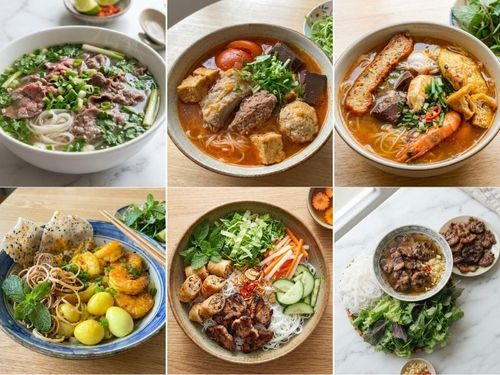
Vietnamese noodle dishes are a diverse part of Vietnamese cuisine, combining different noodle types, cooking methods, broths, sauces, herbs, and regional ingredients to create distinct culinary experiences. Unlike a single category of noodle soup, Vietnamese noodles include full-broth soups, lightly broth dishes, dry noodle bowls, stir-fried noodles, and noodles served with dipping sauces.
Phở is the most recognized Vietnamese noodle dish, featuring flat rice noodles, aromatic broth, and fresh herbs. However, Vietnamese noodle culture extends far beyond phở, with dishes such as Bún Bò Huế, Bún Riêu, Bún Chả, Mì Quảng, Cao Lầu, and Hủ Tiếu representing different noodle structures and regional traditions. Vietnamese noodles are built around several noodle families, including bún (rice vermicelli), bánh phở (flat rice noodles), bánh canh (thick noodles), miến (glass noodles), hủ tiếu noodles, bánh đa (broad rice noodles), and mì-style noodles.
In this guide, CHIN-SU will let you explore representative Vietnamese noodle dishes, noodle types, serving formats, flavor systems, and regional characteristics that make Vietnamese noodles unique.
Phở
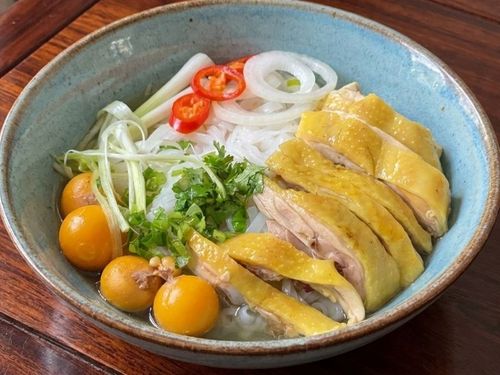
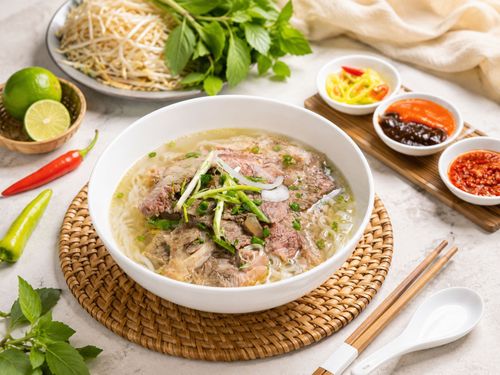
Phở is a Vietnamese noodle soup made with flat rice noodles, aromatic broth, herbs, and commonly beef or chicken. It is one of the most recognized Vietnamese noodle dishes and represents the importance of broth, noodle texture, and fresh accompaniments in Vietnamese cuisine.
The defining noodle in phở is bánh phở, a flat rice noodle with a soft and smooth texture. Unlike bún, which uses thin round rice vermicelli, bánh phở creates a wider surface that absorbs the aromatic broth while maintaining a tender bite.
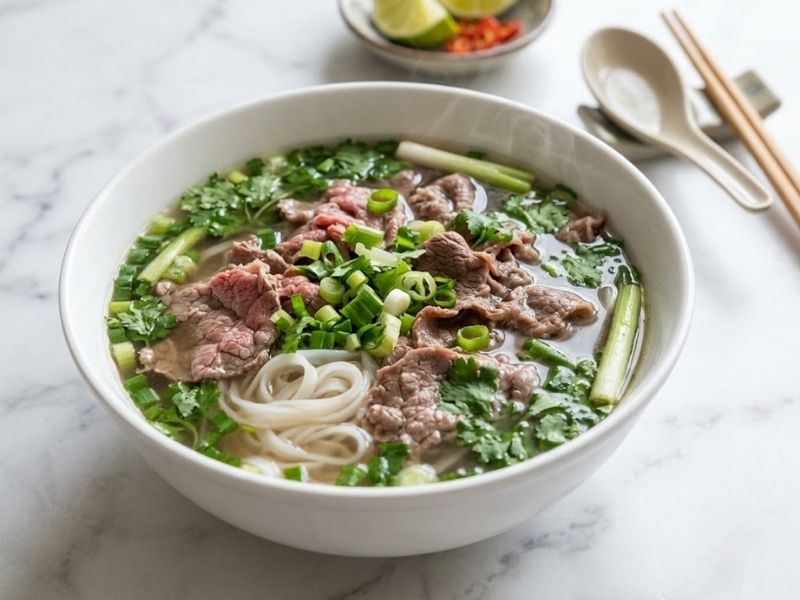
Phở has a strong association with Northern Vietnam, especially Hanoi, where traditional versions emphasize a clear, fragrant broth made by simmering ingredients such as bones, spices, and aromatics. Today, phở is enjoyed throughout Vietnam and has developed regional variations with differences in seasoning, toppings, and serving styles.
The traditional serving format of phở is a full-broth noodle soup, where noodles, broth, and protein are combined in one bowl. Common variations include:
- Phở bò: beef phở with different cuts of beef.
- Phở gà: chicken phở with a lighter broth profile.
The broth provides the main flavor structure of phở. Aromatic ingredients, herbs, onions, and spices create a savory and fragrant base, while fresh additions such as herbs, lime, and chili allow diners to adjust the balance of flavors. Our beef pho recipe shows how to build this aromatic broth at home.
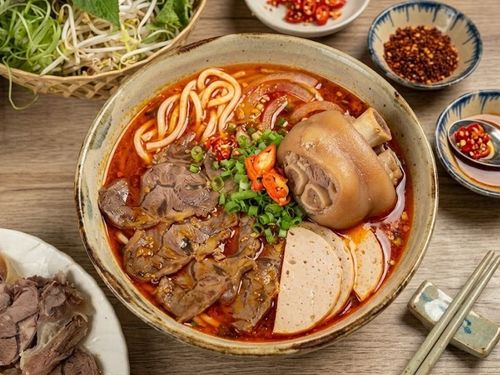
Bún Bò Huế
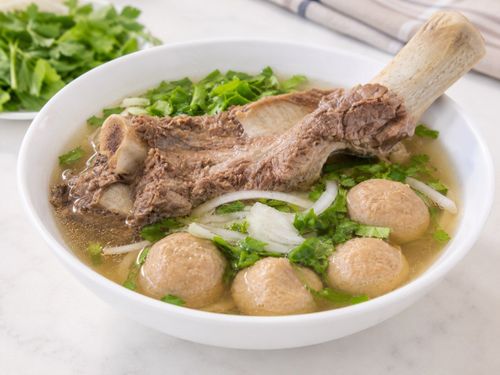
Bún Bò Huế is a Central Vietnamese noodle soup that combines thick round rice noodles, aromatic broth, beef, herbs, and a distinctive spicy flavor profile associated with Huế cuisine.
The defining noodle of this dish is bún, a round rice vermicelli that differs from the flat rice noodles used in phở. Bún Bò Huế typically uses thicker noodles than many other bún dishes, creating a more substantial texture.
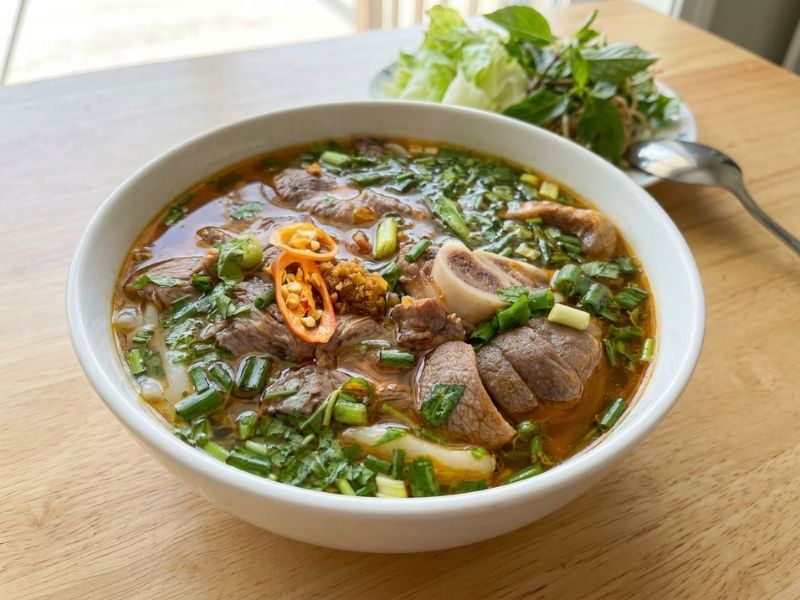
Bún Bò Huế originates from Huế, a city in Central Vietnam known for its regional cuisine and historical connection to imperial Vietnamese food traditions. The dish reflects Central Vietnamese preferences for stronger seasoning, aromatic ingredients, and more pronounced flavors.
The dish follows a full-broth serving format, with noodles served in a flavorful soup base. Its broth commonly features:
- Lemongrass aroma.
- Savory meat-based flavors.
- Chili-forward seasoning.
- Fermented seasoning elements in some preparations.
Beef is the central protein component, although specific cuts and accompanying ingredients vary between preparations. Fresh herbs and vegetables provide contrast against the rich broth.
Compared with phở, Bún Bò Huế creates a different experience through its thicker noodles, stronger aromatics, and more prominent spicy character.
Bún Riêu
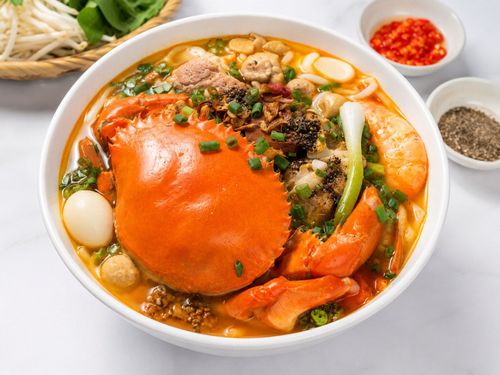
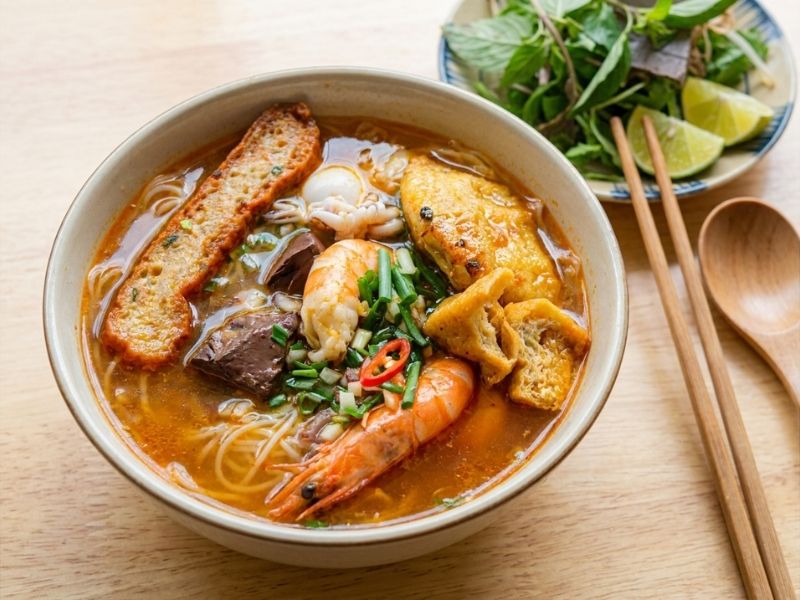
Bún Riêu is a Vietnamese rice vermicelli soup known for its tomato-based broth, crab-associated flavors, fresh herbs, and savory balance.
The noodle used in Bún Riêu is bún, the thin round rice vermicelli commonly found throughout Vietnamese cuisine. The noodle itself is mild in flavor, allowing the broth and toppings to create the main identity of the dish.
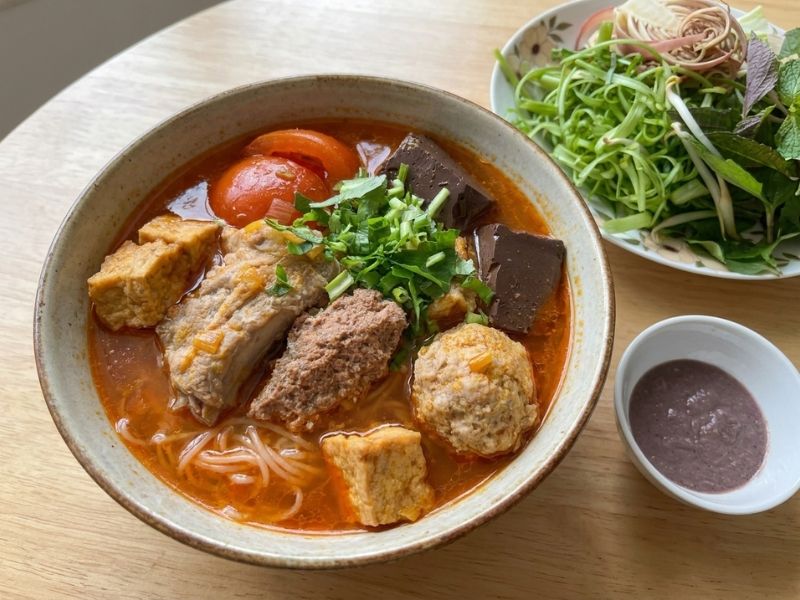
Bún Riêu is commonly associated with Northern Vietnamese and the Red River Delta, home to the small freshwater paddy crabs called cua đồng, though you'll now meet it anywhere in the country. Its structure differs from beef-based noodle soups because its main flavor foundation comes from seafood and tomato elements rather than meat-focused broth.
Those paddy crabs are far too small to pick meat from, so cooks pound them whole, strain the liquid, and add it to the pot. As it heats, the crab protein rises and sets into the soft floating curds that "riêu" refers to. Ripe tomatoes supply the acidity and the color. That makes it the clearest case here of a Vietnamese soup whose body comes from a protein suspended in the liquid rather than from bones.
Bún Mắm
Bún Mắm is a Southern Vietnamese noodle soup with round rice vermicelli, fermented fish-based broth, seafood, meat components, and fresh regional vegetables.
The noodle base is bún, a rice vermicelli commonly used in many Vietnamese dishes. In Bún Mắm, the noodle provides a neutral texture that allows the fermented broth and accompanying ingredients to become the dominant elements.
Bún Mắm has a strong connection with Southern Vietnam, especially the Mekong Delta, where fermented seafood ingredients are an important part of local culinary traditions.
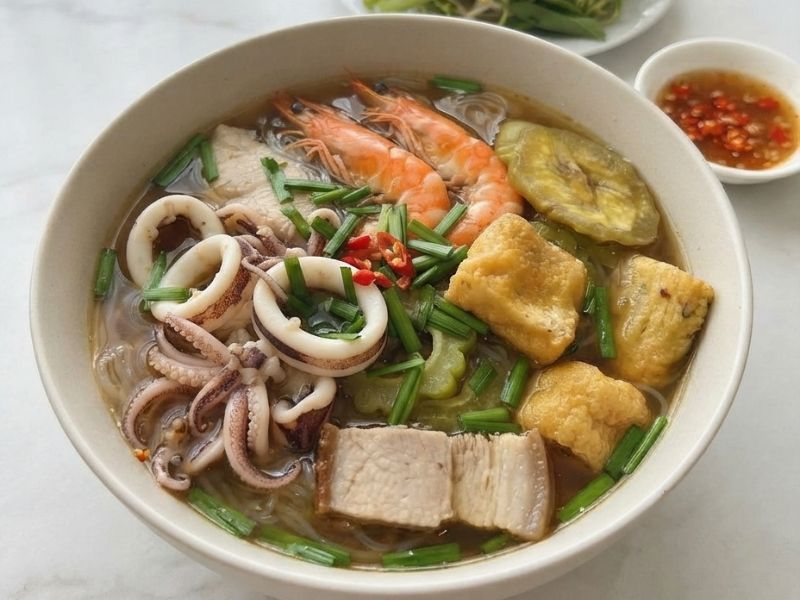
The dish uses a full-broth format, with fermented fish-based seasoning creating its signature flavor. The broth is characterized by:
- Deep savory notes.
- Fermented aroma.
- Seafood-based umami.
- Complex seasoning layers.
Common components in Bún mắm include:
- Fish.
- Shrimp.
- Pork.
- Fresh herbs.
- Regional vegetables.
Bún Mắm is different from Bún Mắm Nêm. Although both use fermented fish-based seasonings, they represent different serving systems:
- Bún Mắm: noodle soup with fermented fish broth.
- Bún Mắm Nêm: dry noodle dish using fermented fish sauce as a dressing.
Bánh Canh
Bánh Canh is a Vietnamese thick-noodle dish family defined by its chewy noodles, soup-based preparations, and regional variations using seafood, meat, or fish-based ingredients.
Unlike thin rice vermicelli or flat rice noodles, Bánh Canh is recognized primarily through noodle texture. The noodles are thick, soft, and chewy, creating a heavier mouthfeel compared with many Vietnamese noodle dishes.
Bánh Canh noodles can be made from different starch combinations, including:
- Rice flour.
- Tapioca starch.
- A combination of rice and tapioca ingredients.
Because Bánh Canh represents a dish family rather than one fixed recipe, its broth and toppings vary significantly by region. Common versions include:
- Bánh Canh Cua with crab.
- Bánh Canh Cá with fish.
- Bánh Canh Giò Heo with pork leg.
Most versions use a soup-based serving format, where the thick noodles are combined with a flavorful broth and protein components. Among these variations, our banh canh cua recipe focuses on the crab-based version with its thick, chewy noodles.
Unlike phở or bún-based soups where broth often defines the dish first, Bánh Canh is identified primarily through its unique noodle form.
Hủ Tiếu
Hủ Tiếu is a Southern Vietnamese noodle dish family that can be served as either a noodle soup or a dry noodle bowl with sauce, meat, seafood, and fresh toppings. Hủ Tiếu uses a distinctive noodle type associated with Southern Vietnamese cuisine. The noodles are typically lighter and thinner than many thick noodle varieties, creating flexibility across different serving styles.
One important characteristic of Hủ Tiếu is that the dish does not have only one format. It can appear as:
- Soup-based Hủ Tiếu with broth.
- Dry Hủ Tiếu served with seasoning sauce and broth separately.
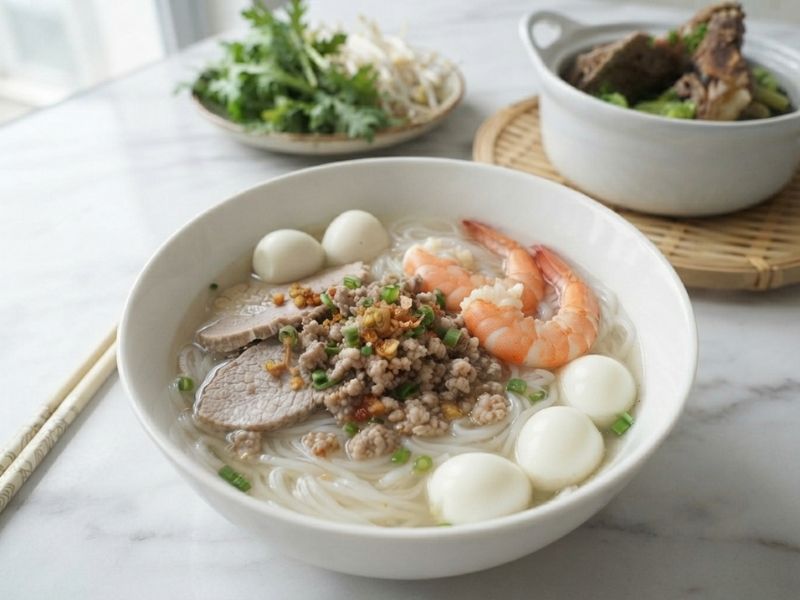
Protein ingredients vary depending on the regional style and preparation. Common components include:
- Pork.
- Seafood.
- Shrimp.
- Other meat ingredients.
Dry versions demonstrate an important principle in Vietnamese noodle culture: noodles do not always depend on a large amount of broth. Sauce and seasoning can become the primary flavor carrier.
Bánh Đa Cua
Bánh Đa Cua is a Hải Phòng noodle specialty that combines broad rice noodles, crab-based broth, vegetables, and regional ingredients into a distinctive Northern Vietnamese noodle dish. The defining noodle of this dish is bánh đa, a broad rice noodle with a firmer texture and darker appearance in many Hải Phòng-style preparations. Unlike bánh phở, which is primarily recognized through its smooth flat texture in phở, bánh đa creates a more substantial bite that contributes strongly to the identity of the dish.
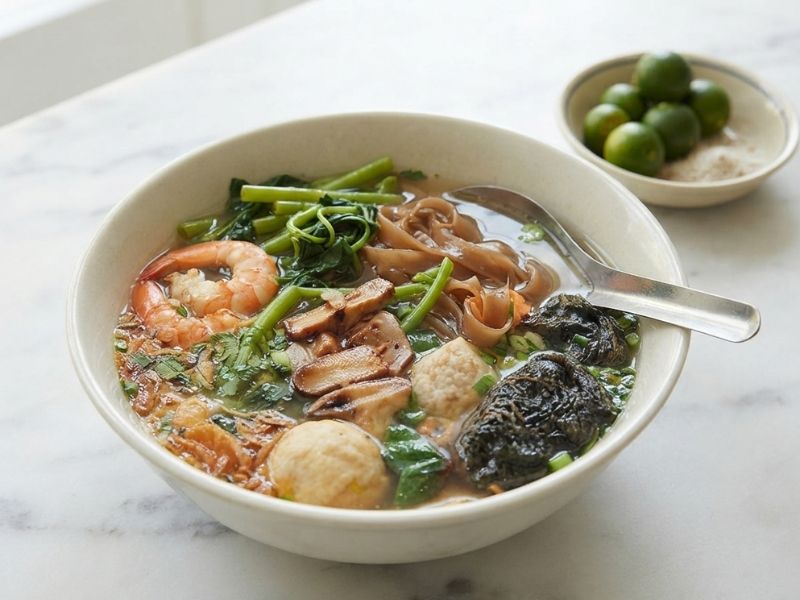
Bánh Đa Cua has a strong geographic connection with Hải Phòng, a coastal city in Northern Vietnam. The dish reflects the relationship between regional ingredients and local noodle traditions, combining rice-based noodles with seafood elements from the surrounding area.
The dish is usually served as a full-broth noodle soup, with crab contributing the main flavor foundation. Common components include:
- Crab-based broth.
- Bánh đa noodles.
- Fresh greens and herbs.
- Seafood or meat components depending on preparation.
- Fried or textural toppings in some versions.
Bánh Đa Cua expands the Vietnamese noodle category beyond the more internationally recognized rice vermicelli and phở formats by showing how different regions develop their own noodle identities.
Bún Chả
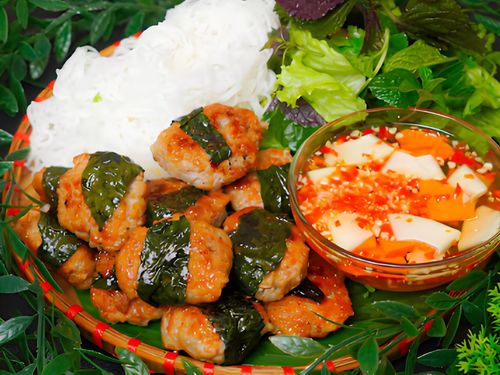
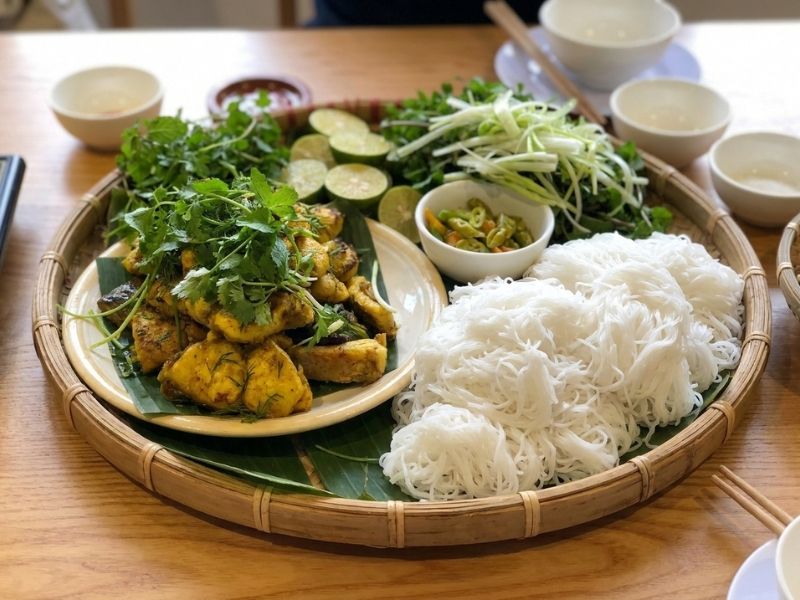
Bún Chả is a Hanoi noodle dish made with rice vermicelli, grilled pork, fresh herbs, vegetables, and a fish-sauce-based dipping liquid rather than a traditional noodle broth. The noodle component is bún, a thin round rice vermicelli commonly used across Vietnamese cuisine. However, unlike soup-based bún dishes such as Bún Bò Huế or Bún Riêu, Bún Chả uses a different serving system where noodles are combined with grilled meat, herbs, and dipping liquid.
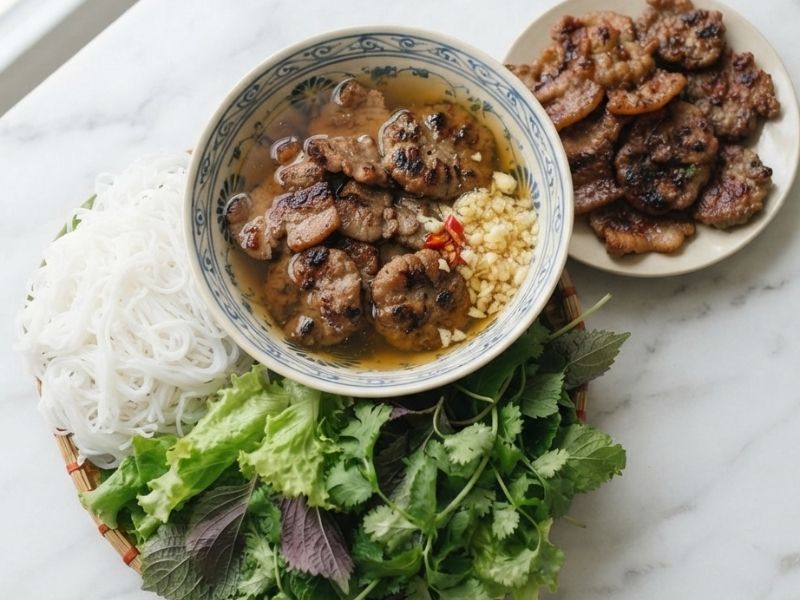
Bún Chả is strongly associated with Hanoi and Northern Vietnamese cuisine. The dish demonstrates that Vietnamese noodle dishes are not limited to bowls of soup. Instead, noodles can function as a base that connects grilled proteins, fresh vegetables, and seasoning sauces.
The main components include:
- Rice vermicelli.
- Grilled pork.
- Fresh herbs.
- Vegetables.
- Fish-sauce-based dipping liquid.
The grilled pork creates the main savory and smoky element through the cooking process. The dipping liquid provides balance through a combination of salty, sweet, sour, and aromatic flavors.
The distinctive attribute of Bún Chả is its dipping-liquid serving format. The sauce does not simply add flavor at the end; it functions as a central seasoning component that defines how the noodles and grilled meat are experienced together.
That rhythm has a consequence nobody else explains. Because the liquid is met bite by bite, the noodles never sit in it and never soften into it. The texture holds from first mouthful to last. Bún chả introduces the dipped format, and it makes the cleanest case for a Vietnamese noodle dish defined by a liquid that never touches the noodle in the kitchen. Our bun cha recipe follows this traditional dipping format with grilled pork, rice vermicelli, herbs, and nước chấm.
Bún Thịt Nướng
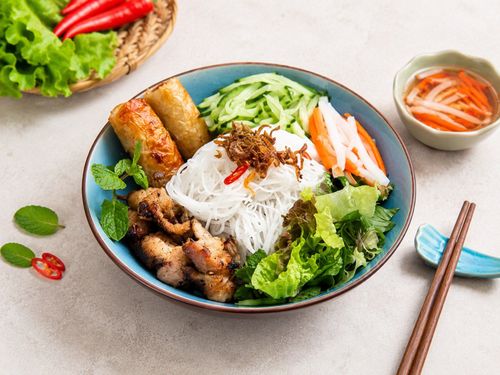
Bún Thịt Nướng is a Southern Vietnamese dry noodle bowl made with rice vermicelli, grilled pork, fresh herbs, vegetables, toppings, and a savory dressing.
Like Bún Chả, this dish uses bún, but the preparation creates a completely different eating experience. Instead of serving noodles with a separate dipping liquid, Bún Thịt Nướng is commonly assembled as a dressed noodle bowl where ingredients are combined before eating.
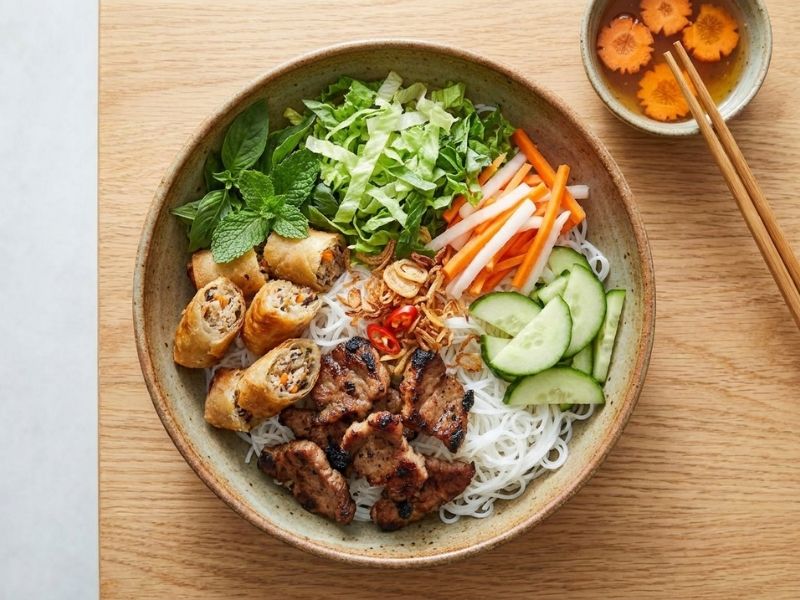
The main components include:
- Rice vermicelli.
- Grilled pork.
- Fresh herbs.
- Vegetables.
- Peanuts or crunchy toppings.
- Fish-sauce-based dressing.
The grilled pork provides smoky and savory flavors, while herbs and vegetables introduce freshness. The dressing connects the components through a balanced combination of salty, sweet, sour, and aromatic notes. Our bun thit nuong recipe brings these grilled, fresh, and savory elements together in one bowl.
Bún Bò Nam Bộ
Bún Bò Nam Bộ is a Southern Vietnamese dry noodle dish that combines rice vermicelli, beef, herbs, vegetables, peanuts, and a savory dressing instead of a full broth.
The noodle base is bún, which provides a soft and neutral foundation for the stronger flavors from the beef, herbs, and seasoning sauce.
Unlike Bún Bò Huế, which is a Central Vietnamese noodle soup with aromatic broth, Bún Bò Nam Bộ uses a dry or lightly dressed preparation. The dish demonstrates how Vietnamese noodle dishes can transform through differences in serving format while sharing similar core ingredients.
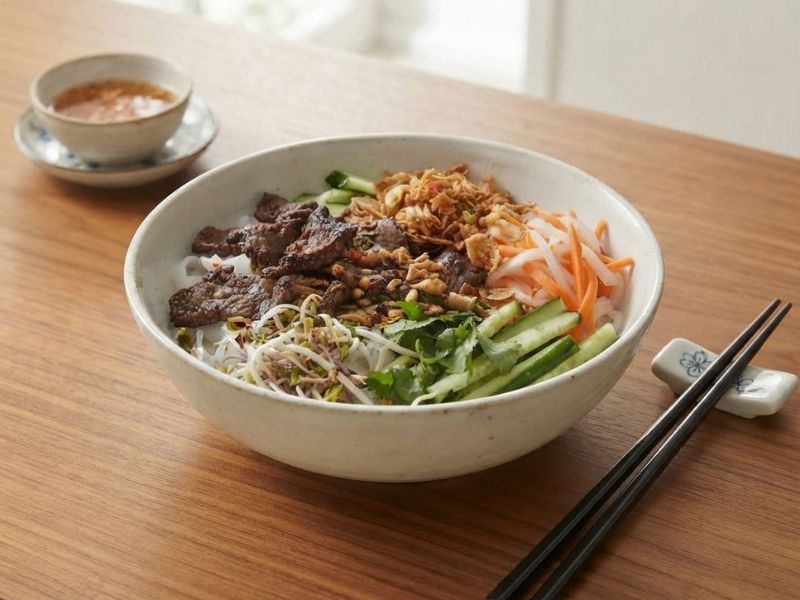
The main components include:
- Rice vermicelli.
- Stir-fried or cooked beef.
- Fresh herbs.
- Vegetables.
- Peanuts.
- Fried shallots.
- Seasoning sauce.
The flavor structure depends on the relationship between warm and fresh elements:
- Warm beef adds savory depth.
- Soft noodles absorb the dressing.
- Fresh herbs create aromatic contrast.
- Peanuts and fried shallots provide texture.
This dish represents an important category within Vietnamese noodles: dishes where the sauce replaces broth as the primary carrier of flavor.
Mì Quảng
Mì Quảng is a Central Vietnamese noodle dish from Quảng Nam that uses broad noodles, a small amount of concentrated broth, protein toppings, herbs, peanuts, and regional ingredients.
The noodle itself is one of the defining elements. Mì Quảng uses broad rice noodles that create a wide surface for absorbing seasoning while maintaining a noticeable texture.
The serving format sits between soup and dry noodles:
- A small amount of concentrated broth.
- Noodles as the main base.
- Layered toppings added above.
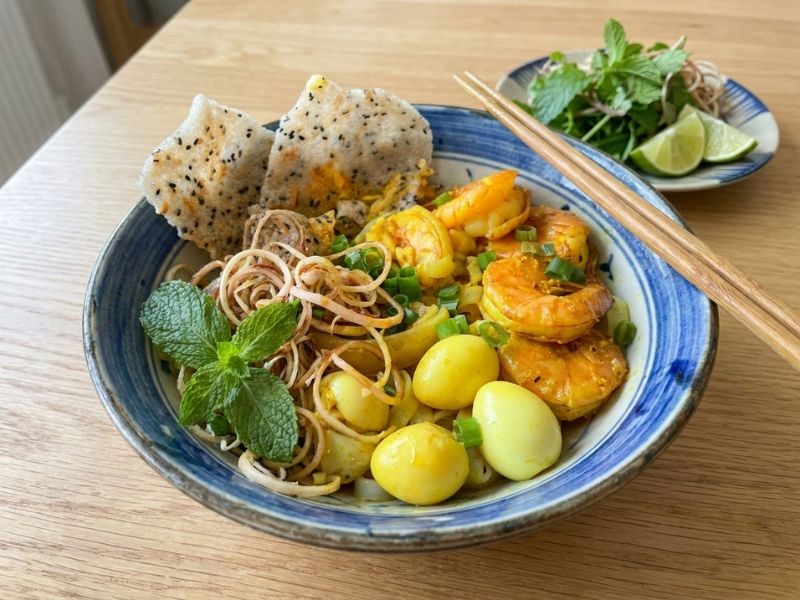
Common components include:
- Pork.
- Chicken.
- Shrimp.
- Fresh herbs.
- Peanuts.
- Rice crackers in some preparations.
The flavor profile emphasizes concentration rather than volume. The smaller amount of liquid allows the seasoning, toppings, and noodle texture to remain prominent.
Cao Lầu
Cao lầu is a noodle dish from Hội An in central Vietnam, made with thick, chewy yellow-tinted rice noodles, sliced char siu-style pork, and only a spoonful or two of broth. The noodles are the whole story. They are rice soaked in lye water, nước tro, an alkaline solution made by mixing water with wood ash. Raising the pH that way changes how the rice starch behaves. Wikipedia describes the result as noodles made from rice soaked in lye water, which gives them a chewy, springy texture and a grayish-brown or yellowish color. It is the same principle behind the chew in ramen noodles.
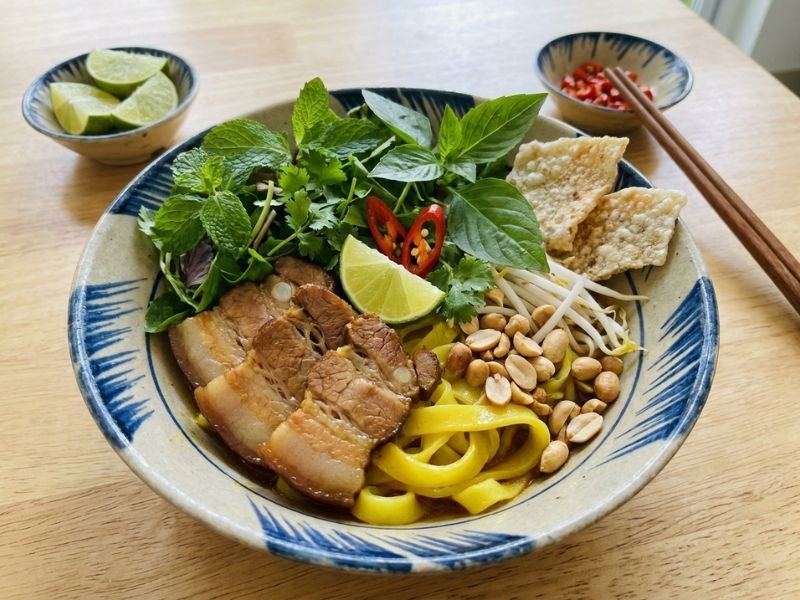
Local tradition holds that the lye should come from ash of certain plants on the nearby Cham Islands, and the water from the ancient Bá Lễ well in town, and that the dish is rarely found elsewhere. Wikipedia frames this with "Legend states" rather than as documented. That hedge is worth keeping, since several travel sources repeat the well-water claim as established.
The rest of the bowl is five-spice marinated pork with fresh greens and crisp fried squares of the same noodle dough on top. You toss it at the table, because there is too little liquid to eat it as a soup. Set it beside mì Quảng, and the contrast sharpens. Both are Central dishes with almost no broth, but mì Quảng gets its identity from the concentrated ladle, while cao lầu comes from noodles transformed before they reach the pot.
Bún Mắm Nêm
Bún mắm nêm is a dressed central Vietnamese noodle bowl in which rice vermicelli is tossed with mắm nêm, a fermented anchovy sauce. It should not be confused with bún mắm, which is a soup. The noodle is round bún served with no broth, in a dish strongly associated with Đà Nẵng in central Vietnam.
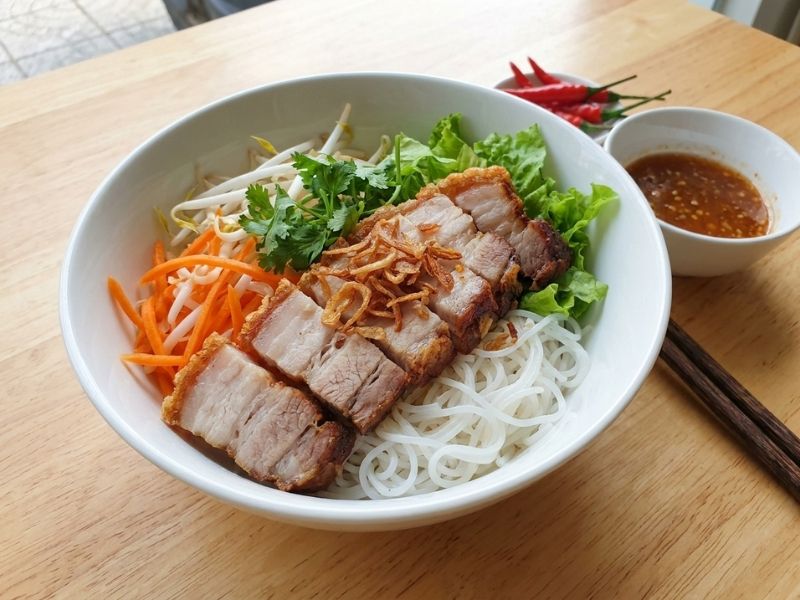
Mắm nêm is thicker and more pungent than nước mắm, and it usually reaches the bowl already mixed with pineapple, garlic, chili, and sugar. That prepared sauce is the entire seasoning system, not a broth, and it goes over sliced pork with herbs and green banana. If you want to build something similar at home, try CHIN-SU fish sauce as the base and adjust from there. Set it beside bún mắm earlier in this article, and the lesson is clear. Two dishes can share a name root and a fermented base and still belong to completely different categories, one a soup and one a dressed bowl. Naming similarity is not structural similarity.
Miến Lươn
Miến lươn is a northern Vietnamese dish of eel with glass noodles, served either in a light broth or dry with the eel crisped. The noodles in this dish is miến, clear glass noodles made from mung bean starch rather than rice. Wikipedia describes them as cellophane clear glass noodles, slightly chewy, thin, and cylindrical, and lists miến lươn as the representative dish made with them. It belongs to northern Vietnam and is particularly associated with Hanoi food.
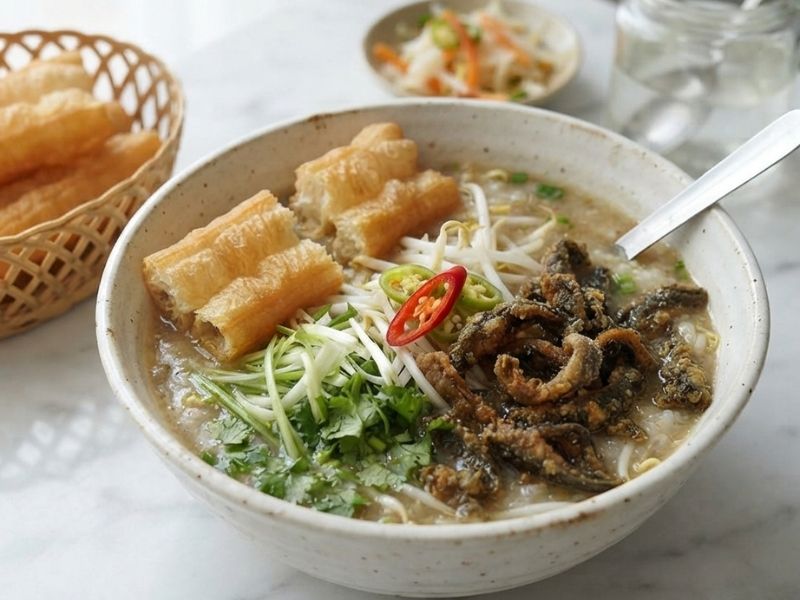
It works in both formats because mung bean starch behaves differently from rice starch when it hits hot liquid. That is why the same dish can arrive as a light soup or dry, with the eel fried crisp and holding up either way.
Phở Xào
Phở Xào is a Vietnamese stir-fried noodle dish that uses flat rice noodles, vegetables, protein, and seasoning instead of the broth-based format associated with traditional phở.
The noodle base is bánh phở, the same flat rice noodle family commonly associated with phở soup. However, the cooking method changes the texture and flavor structure completely.
Instead of combining noodles with aromatic broth, Phở Xào uses a stir-frying method where noodles interact directly with heat, oil, vegetables, and seasoning.
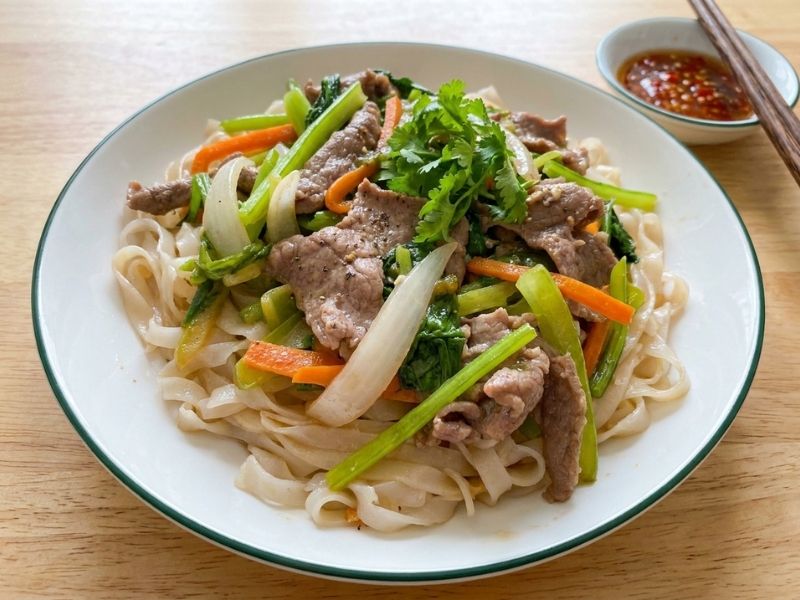
Common components include:
- Flat rice noodles.
- Beef or other proteins.
- Vegetables.
- Aromatics.
- Seasoning sauce.
What Makes Vietnamese Noodle Dishes Different From One Another?
Vietnamese noodle dishes differ through seven main attributes: noodle type, noodle texture, serving format, broth or sauce system, ingredients, regional preparation, and cooking method. Although many Vietnamese noodles use similar foundations such as rice noodles, herbs, and savory seasonings, each dish creates a different experience by changing the relationship between these elements.
The first difference comes from the noodle itself. Vietnamese cuisine uses several noodle families, including thin rice vermicelli, flat rice noodles, thick chewy noodles, glass noodles, and broad rice noodles. The noodle structure influences how the dish interacts with broth, sauce, and toppings.
The second difference is the serving format. Vietnamese noodles are not limited to noodle soups. Some dishes, such as phở and bún bò Huế, depend on aromatic broth, while others, such as bún chả and bún thịt nướng, rely on dipping liquids or dressings. Dishes such as mì Quảng and cao lầu use minimal liquid to concentrate flavors around the noodles and toppings.
The third difference is the flavor system. Broths, fermented seasonings, dipping sauces, and dressings create different taste profiles:
- Clear and aromatic broth in phở.
- Lemongrass and chili-forward broth in bún bò Huế.
- Tomato and crab-based flavors in bún riêu.
- Fermented fish-based seasoning in bún mắm and bún mắm nêm.
- Fish-sauce-based dipping liquids in bún chả.
Regional identity also shapes Vietnamese noodle dishes. Northern Vietnam, Central Vietnam, and Southern Vietnam each develop different relationships between local ingredients, seasoning preferences, and preparation techniques. These regional noodle traditions are also an important part of Vietnamese street food.
What Are The Main Types Of Vietnamese Noodles?
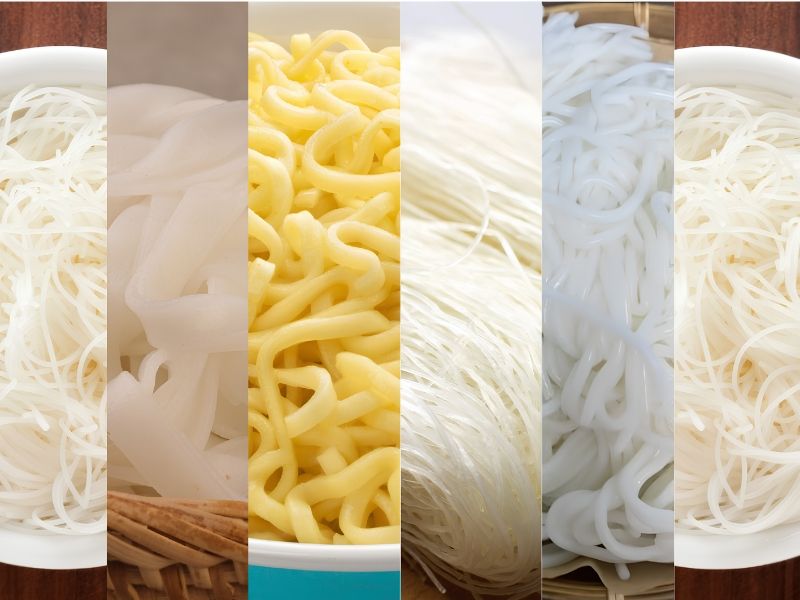
Vietnamese cooking uses six main noodle families: bún, bánh phở, mì, miến, bánh canh, and hủ tiếu, and most are made from rice rather than wheat. These are the names printed on packages in Vietnamese groceries, usually with no English on the bag. Knowing them is what makes that aisle navigable.
- Bún. Thin, round, white rice noodles, often sold as rice vermicelli, and the most widely used noodle in Vietnamese cooking. The gauge varies by dish, so buying bún means choosing a thickness: finer for cold bowls, thicker for heavy broths like bún bò Huế. Our guide to using fish sauce covers the dressings and dips these bowls are seasoned with.
- Bánh phở. Flat rice noodles sold in several widths, best known from phở and also used in stir-fries. A flat ribbon presents more surface to liquid than a round strand of the same weight, which is why a clear phở broth tastes fuller than it looks.
- Mì. Wheat or egg noodles, usually yellow. This is the one to watch. Two well-known dishes carry mì in the name and contain no wheat at all: mì Quảng uses wide rice noodles, and cao lầu uses rice treated with lye. Check the ingredient list, not the dish name. For an actual wheat-noodle dish, see our garlic noodles.
- Miến. Clear glass noodles made from mung bean starch rather than rice, described as slightly chewy, thin, and cylindrical. That starch sets into a springy strand that resists hot liquid, so miến holds its texture in broth far longer than a rice noodle. Dry, it looks a lot like bún, which is easy to mix up. The same noodles fill chả giò.
- Bánh canh. Thick, chewy noodles made from rice flour, tapioca starch, or a blend, sharing their name with the soups made from them. More tapioca gives a chewier, more translucent strand, and shed starch slightly thickens the broth.
- Hủ tiếu. Southern rice noodles sold in several textures from soft to notably chewy, and one of the few Vietnamese words naming both a noodle and a dish family. Andrea Nguyen notes a single hủ tiếu dish may use up to three kinds of noodles, and the chewier dried type survives being tossed dry
- Bánh Đa. Bánh đa is a broad rice noodle category associated with dishes such as Bánh Đa Cua from Hải Phòng. Compared with bánh phở, bánh đa commonly has a firmer texture and a broader noodle structure. A representative dish is Bánh Đa Cua, where the noodle combines with crab-based broth, seafood flavors, vegetables, and regional ingredients.
Frequently Asked Questions
No. Vietnamese noodle dishes use several noodle types, including rice noodles, glass noodles, wheat-based noodles, and thick starch-based noodles.
Rice noodles are among the most common foundations in Vietnamese cuisine, including:
- Bún
- Bánh phở
- Bánh canh
Dishes such as miến lươn use glass noodles, while some mì dishes use wheat or egg noodle styles. The noodle type depends on the specific dish and regional preparation.
No. Vietnamese noodle dishes range from mild to spicy depending on the dish, region, preparation method, and added condiments.
Some dishes have stronger spicy characteristics:
- Bún Bò Huế often includes chili-forward flavors.
- Some Central Vietnamese dishes use more pronounced spicy seasoning.
Other dishes, such as phở, are often served with optional chili so diners can adjust heat according to preference.
Some Vietnamese noodle dishes can be gluten-free, but a rice noodle base does not automatically make the entire dish gluten-free.
People avoiding gluten need to check:
- Noodle ingredients.
- Sauces.
- Seasonings.
- Processed toppings.
- Cross-contact during preparation.
Rice noodles such as bún and bánh phở do not contain wheat ingredients, but sauces and additional ingredients may affect the final dish.
Yes, Vietnamese noodle dishes can be vegetarian, and some meat-free versions are established dishes rather than adaptations. A meat-free bún riêu, bún riêu cua chay, replaces the crab curd with coagulated soy milk in the same tomato broth. One caveat matters more than the toppings: traditional fish sauce is made from fish, so a bowl with no visible meat may still not be vegetarian. Ask about the seasoning base.
Vietnamese noodle dishes are eaten across different meal occasions, including breakfast, lunch, dinner, and lighter meals.
Examples include:
- Phở as a familiar Vietnamese breakfast food, as well as a daytime meal.
- Bún dishes served for lunch or dinner.
- Regional noodle specialties enjoyed throughout the day.
The eating occasion depends on the specific dish, location, and personal preference rather than one fixed rule.
Vietnamese noodle dishes come with toppings chosen for aroma, crunch, and acidity: herbs such as Thai basil, mint, cilantro, and perilla; bean sprouts, peanuts, and fried shallots; and lime or pickled vegetables. Perilla is the one most Americans haven't met: a broad purple-backed leaf with a faintly aniseed edge. The herb plate is part of the dish, not a garnish. In the US, sweet basil commonly stands in for Thai basil.
Yes, Vietnamese noodle dishes differ by region, generally running toward clearer, lighter broths in the north, stronger and spicier seasoning in the center, and sweeter flavors with more herbs in the south. The structural pattern is easier to defend than the flavor one. The minimal-broth format is Central, covering mì Quảng and cao lầu, while the dipped format is Northern, as in bún chả. Dishes travel, so treat these as tendencies, not rules. Our guides to Vietnamese street food and Hanoi food go deeper.

CHIN-SU KITCHEN TEAM
CHIN-SU Kitchen Team are the creative experts behind the delicious recipes featuring CHIN-SU sauces. With years of experience and a passion for flavor, our team carefully selects recipes from a variety of trusted chefs and bloggers, bringing together the best culinary insights to present you with the most suitable and exciting dishes. Every recipe is chosen to inspire you to create meals that are not only tasty but also easy to prepare, enhancing your dining experience. Join us as we explore a wide range of sauces and flavors, and elevate every meal with the perfect recipe for your table!
User Reviews
Featured Articles
Chao Tom Recipe: Vietnamese Shrimp on Sugarcane
17 Vietnamese Soups to Know, From Phở to Everyday Canh
Vietnamese Breakfast Foods: 15 Dishes Locals Eat in the Morning and Why
Goi Cuon Recipe - Vietnamese Fresh Spring Rolls With Peanut Dipping Sauce
SUBSCRIBE TO GET
MORE INFO
Want the latest and greatest recipes, updates, and more from us,
straight to your inbox? Subscribe and get our NEWS!