Vietnamese Breakfast Foods: 15 Dishes Locals Eat in the Morning and Why
Published: Sep 14, 2026 by CHIN-SU
Updated: Sep 18, 2026 by CHIN-SU
Breakfast in Vietnam is as much about the rhythm of the morning as the food itself. By the time the streets begin to fill, pots of phở and hủ tiếu are already steaming, bánh mì is being assembled at roadside stalls, and packets of xôi are waiting for people on their way to work or school. Breakfast comes from all kinds of places, from market stalls and small neighborhood shops to pushcarts in alleys and a few tables set up in front of someone’s home. In the Mekong Delta, the same morning rhythm reaches the water, where boats at floating markets serve hot noodles and coffee alongside the day’s produce.
What people eat changes from one region to another. Hanoi mornings are closely associated with phở, bánh cuốn, xôi, and cháo. Central Vietnam brings bún bò Huế and mì Quảng, and further south, hủ tiếu, cơm tấm, bánh mì, and sizzling eggs with bread are familiar morning choices. Many of these dishes are also eaten later in the day, so breakfast in Vietnam follows local habits, the places that open early, and what fits naturally into the start of the day rather than a fixed breakfast-only menu.
In this guide, CHIN-SU introduces 15 Vietnamese breakfast foods through their flavors, ingredients, regional roots, and the way they are enjoyed in everyday life. Together, they offer a closer look at how differently a morning can begin in Hanoi, Huế, Saigon, or the Mekong Delta, while still feeling unmistakably Vietnamese.

Phở
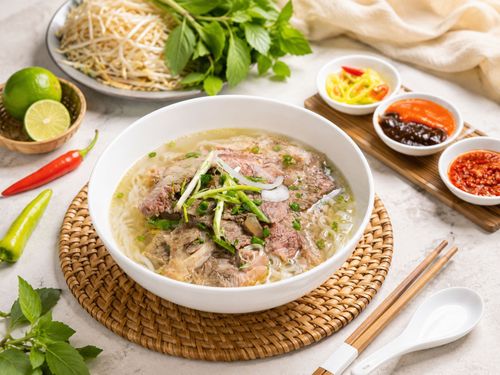
Phở is one of the most familiar ways to start a morning in Vietnam, especially when something hot and freshly made sounds good. By early morning, many phở shops are already busy, with steam rising from stockpots and bowls moving quickly from the kitchen to small tables outside. In Hanoi, office workers and early risers sit over steaming bowls while the streets around them are still coming to life.
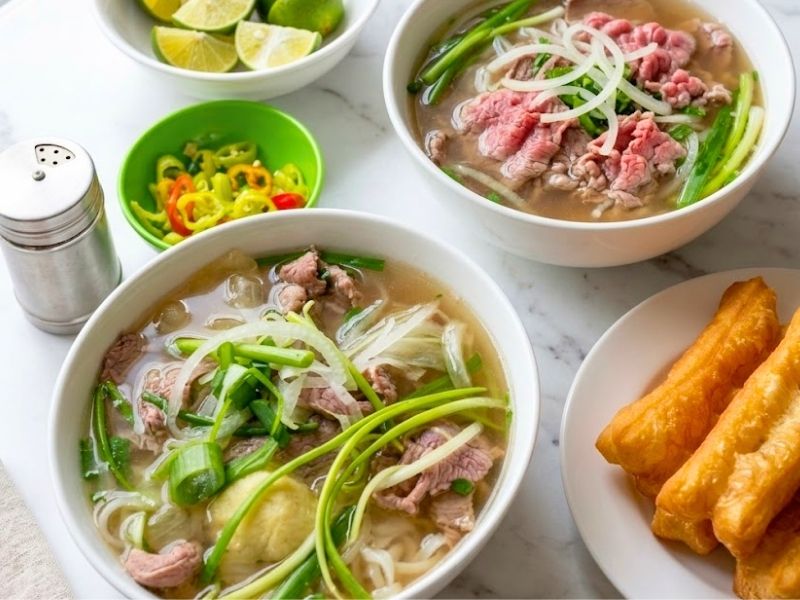
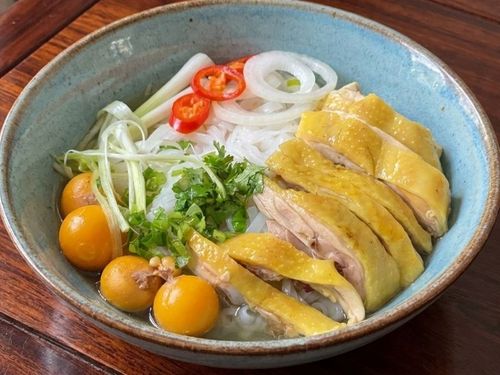
Soft flat rice noodles sit beneath slices of beef or chicken, scallions, herbs, and a clear aromatic broth. Beef phở brings a deep savory flavor with charred ginger, onion, star anise, and cinnamon in the background. Chicken phở tastes gentler and cleaner, with the sweetness of the chicken coming through more clearly. On a cool morning, the first spoonful is as much about the warmth and fragrance rising from the bowl as the broth itself.
How phở arrives also changes as you travel. Hanoi phở is usually more restrained, often accompanied by fresh chili, pickled garlic, lime, or quẩy. Southern versions commonly come with a larger plate of bean sprouts, basil, culantro, lime, and sauces. Whichever style you meet, take a spoonful of broth before adding anything. It gives you a chance to taste what the cook has spent hours building before you adjust the bowl to your own taste.
Bánh Mì
Bánh mì fits naturally into the rhythm of a Vietnamese morning and is also one of the country’s most familiar forms of Vietnamese street food. From roadside carts and market stalls to neighborhood bakeries opening early, fresh baguettes are split and filled as people stop on the way to work, school, or the market. A good loaf feels light in the hand, with a thin crust that crackles at the first bite and an airy center holding pâté, Vietnamese cold cuts or grilled meat, cucumber, pickled carrot and daikon, cilantro, chili, and sauce.
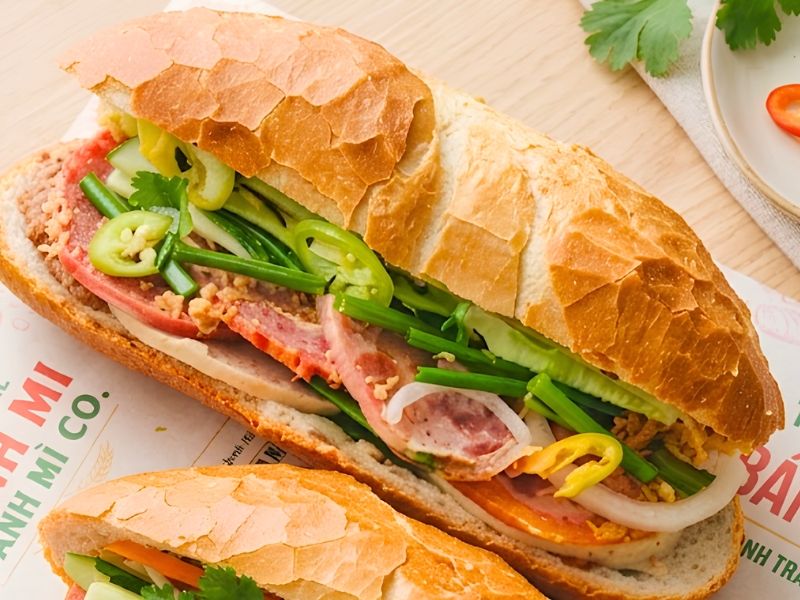
What goes inside changes as you travel. Bánh mì thịt in Saigon often layers pâté, butter, char siu or Vietnamese ham, pork floss, pickles, cucumber, herbs, and a house sauce that brings salty, sweet, and spicy notes together. Along the coast, bánh mì chả cá replaces the cold cuts with warm, springy fish cake and herbs, while Hội An is known for generously filled loaves with pork, pâté, vegetables, and richly seasoned sauces. The baguette stays familiar, while every city finds its own way to fill it.
Part of the pleasure is catching bánh mì while the bread is still crisp. Crumbs fall with each bite as rich pâté and meat meet sharp pickles, cool cucumber, fresh herbs, and a little chili heat. In southern Vietnam, pairing bánh mì thịt with a bạc xỉu or Vietnamese coffee makes the morning feel especially familiar: one hand around the sandwich, a cold or strong coffee nearby, and breakfast finished before the day has fully picked up speed.
Xôi
Xôi is one of those Vietnamese breakfasts that feels made for a busy morning, served hot from a steaming basket and wrapped up within minutes. Glutinous rice gives it a soft, pleasantly chewy texture, and even a modest portion feels substantial. In Hanoi, xôi sellers are a familiar sight near markets, schools, office streets, and neighborhood corners from early morning, with the rice kept warm under cloth inside large baskets or steamers.
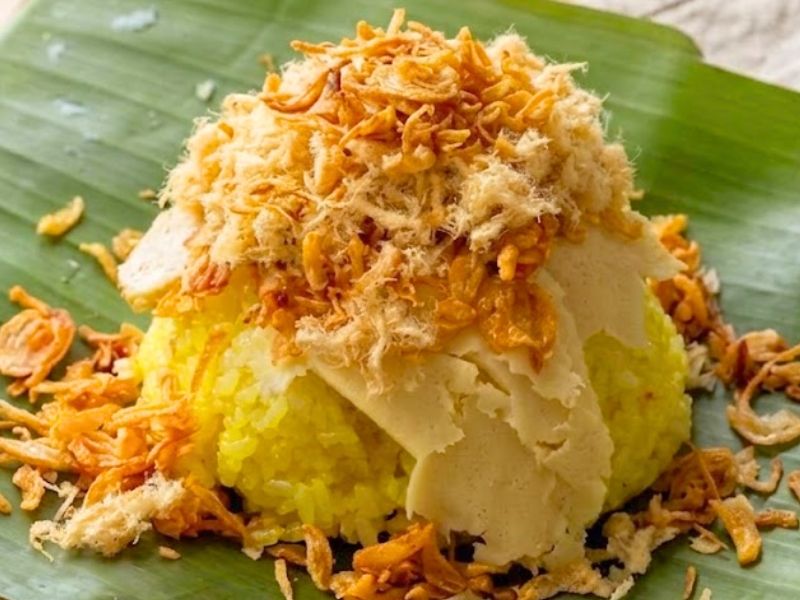
The choices go well beyond one kind. Xôi xéo is perhaps the most recognizable Hanoi version, with golden sticky rice, smooth mung bean, fried shallots, and a little rendered fat or scallion oil. Xôi lạc brings the nuttiness of peanuts, xôi ngô mixes sticky rice with tender corn, and xôi đỗ xanh or xôi đỗ đen adds the soft, earthy texture of beans. White sticky rice is also served with ruốc, chả, braised pork, eggs, or Chinese sausage, so the same base can move from simple to quite generous depending on what you order.
The style changes again in Saigon, where xôi mặn often comes piled with char siu, roast chicken, Chinese sausage, pork floss, pâté, or quail eggs. Whichever version you choose, part of the pleasure is opening the warm packet and catching the smell of steamed rice, fried shallots, or savory toppings all at once. That combination of warmth, portability, and endless variations is what has kept xôi so closely tied to Vietnamese mornings.
Bánh Bao
Bánh bao is a familiar Vietnamese breakfast for mornings when you want something warm that fits easily in one hand. Fresh buns sit inside a steaming cabinet or stacked steamer, staying hot until someone stops to order one on the way to work or school. Break the bun open and the steam carries the aroma of seasoned pork and mushrooms, while the slightly sweet dough keeps the savory center from tasting too heavy.
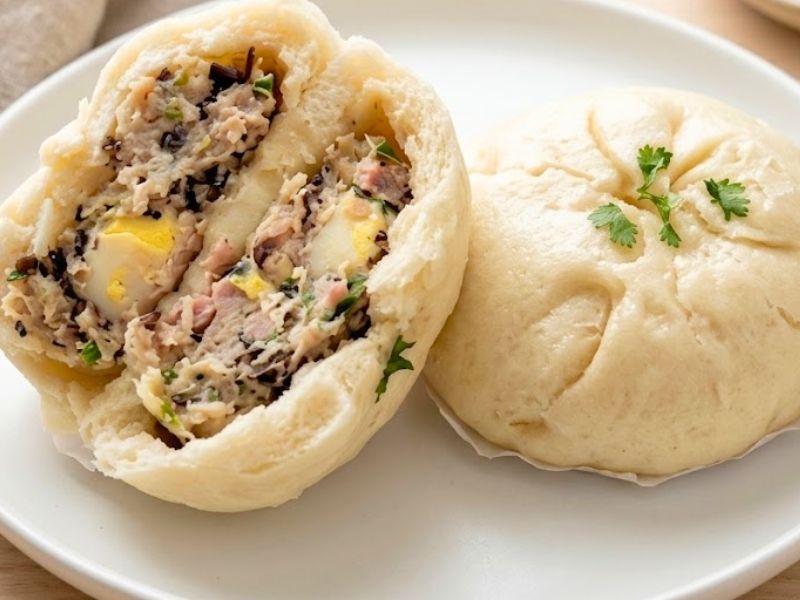
The classic filling brings together minced pork, wood ear mushrooms, glass noodles, and often egg or Chinese sausage, although recipes vary from shop to shop. What makes bánh bao enjoyable is how those textures meet in one bite, from the fluffy steamed dough to juicy meat, crisp mushroom, and the firmer piece of egg in the center. Some shops also sell simpler meat buns, vegetarian versions, or richer fillings such as char siu and salted egg.
You will find bánh bao at dedicated street stalls and small steamers, and it also shares the counter with other breakfast foods at some bánh mì shops and bakeries. Long-running Saigon businesses such as Như Lan sell bánh bao alongside bánh mì, bánh giò, giò chả, and other ready-to-eat foods, which makes it an easy addition to the morning stop. Whether it comes from a neighborhood steamer or a bakery counter, the best part is often the same: opening the warm bun while it is still giving off steam and eating it before the morning gets too busy.
Bánh Cuốn
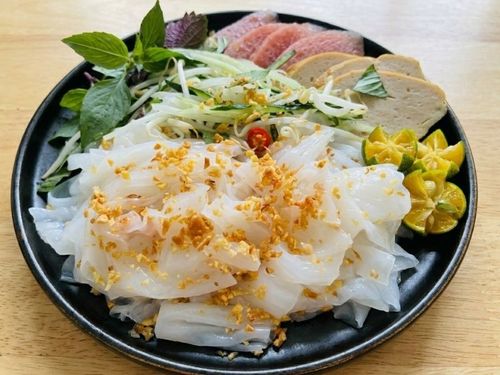
Bánh cuốn is a northern Vietnamese breakfast of thin steamed rice sheets, usually wrapped around minced pork and wood ear mushrooms. In Hanoi, it is the kind of dish that feels especially at home in the morning, when plates of warm bánh cuốn arrive with fried shallots still fragrant on top and a small bowl of dipping sauce waiting beside them.
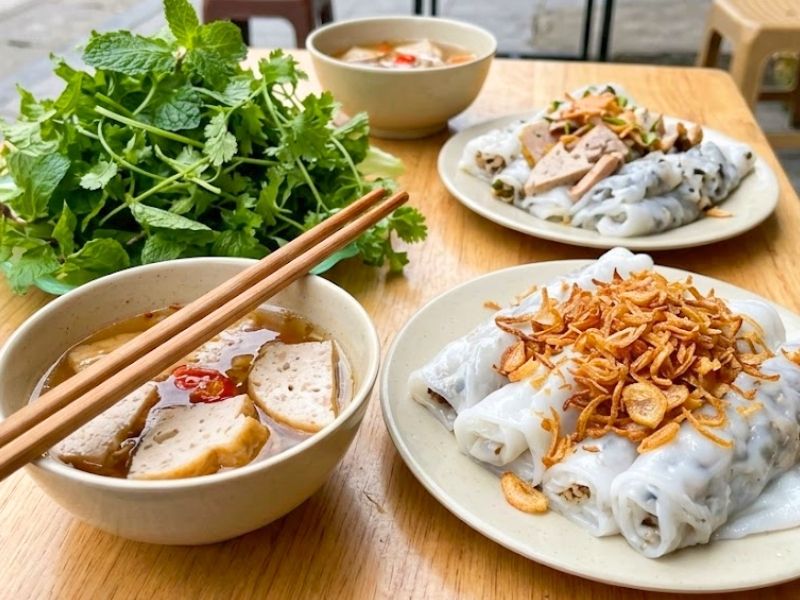
The rice sheets are soft, smooth, and delicate enough to almost melt as you bite through them. Inside, the pork brings savoriness while the wood ear mushrooms add a light crunch, and slices of chả quế or giò make the plate a little more substantial. Then comes the nước chấm, lightly sweet, salty, and tangy, which ties everything together without covering the gentle flavor of the rice. A little fresh herb or fried shallot in the same bite adds just enough freshness and texture to keep the plate interesting from start to finish. If you want to recreate it at home, our bánh cuốn recipe covers the full method.
Hanoi also has a simpler version in bánh cuốn Thanh Trì, where the rice sheets are served without filling and the texture of the bánh takes center stage. Older traditions pair the dipping sauce with a tiny amount of cà cuống, an intensely aromatic water bug essence that is much harder to find today. It is a small detail that gives bánh cuốn Thanh Trì an even stronger connection to Hanoi’s older food traditions.
Cháo
Cháo is a familiar Vietnamese breakfast made by simmering rice until the grains soften into a warm, spoonable porridge. In the morning, it appears at neighborhood cháo shops, market stalls, and small eateries where a pot stays hot for the breakfast crowd. The texture is soft and gentle, making cháo a lighter start to the day than many grilled, fried, or noodle-based breakfasts. Black pepper, scallions, fried shallots, ginger, or rau răm bring most of the aroma.
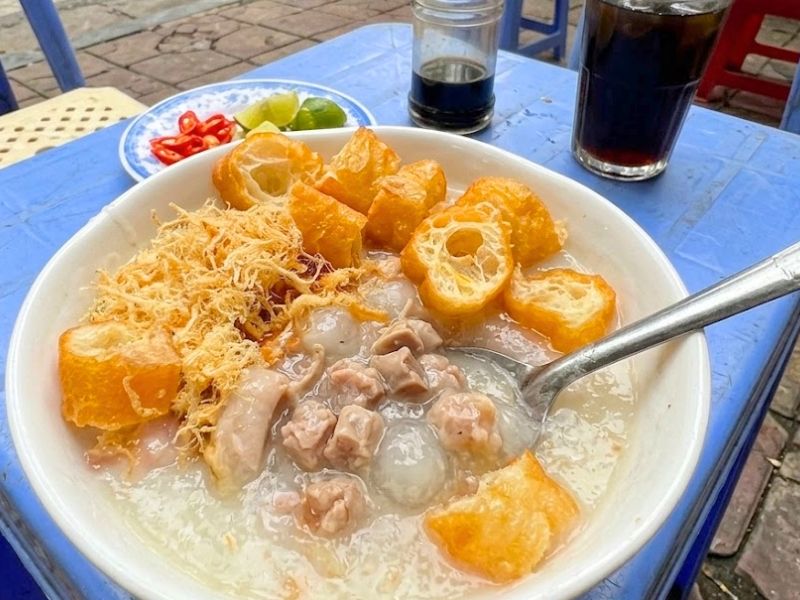
What you order changes the whole bowl. Cháo gà comes with tender chicken and ginger, cháo sườn is thicker and richer with pork, while cháo lòng brings pork offal, herbs, and a deeper savory flavor. In Hanoi, cháo trai is another familiar morning choice, finished with mussel meat, pepper, rau răm, and pieces of crisp quẩy that gradually soften in the hot porridge.
Cháo suits mornings when you want something warm and satisfying without starting the day with a heavy meal. You eat it slowly with a spoon, adding pepper, herbs, or quẩy as you go, which gives the bowl a calm, comforting rhythm that feels especially natural early in the day.
Bánh Mì Ốp La
Bánh mì ốp la is a familiar Vietnamese breakfast built around fried eggs and a crisp baguette, especially common in Saigon. The eggs arrive hot from the pan with lightly crisp edges and soft yolks, while the bread is airy inside and crackly enough to tear apart by hand. Depending on the shop, pâté, Vietnamese sausage, cold cuts, onions, cucumber, or pickled vegetables round out the plate and bring salty, rich, fresh, and tangy notes into the same breakfast.
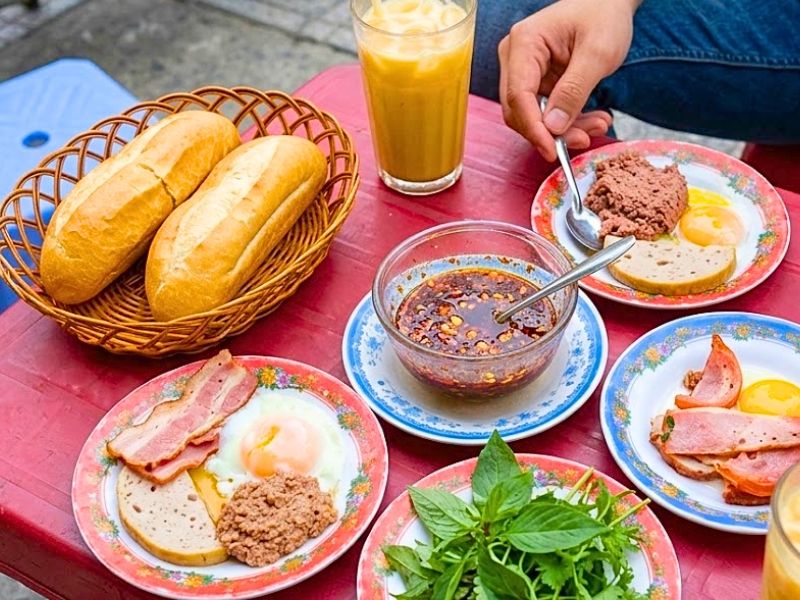
The experience changes with how it is served. At some stalls, the fried eggs go straight into the baguette for an easy breakfast on the move. At sit-down shops, the eggs stay in a small skillet and the baguette comes on the side, ready to dip into runny yolk, pâté, and the juices left in the pan. The bread softens where it touches the egg but keeps enough crust to give each bite a little crunch.
In Saigon, this style of breakfast fits naturally into the morning street scene. Long-running spots such as Bánh Mì Hòa Mã serve eggs from a small storefront into the surrounding alley, where low tables fill quickly after opening. The sound of the pan, the smell of toasted bread, and the first piece dipped into warm yolk are as much a part of bánh mì ốp la as the ingredients themselves.
Bún Riêu
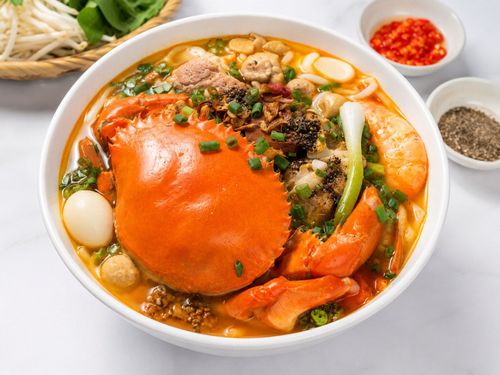
Bún riêu is one of those northern Vietnamese breakfasts that feels especially at home in a busy Hanoi morning. By the time market stalls and neighborhood shops are filling up, pots of red-orange broth are already simmering with tomato, freshwater crab, and the savory aroma of mắm tôm. Compared with phở, the flavor is brighter and more tangy, with a gentle sweetness from the crab and enough acidity from the tomato to wake up the palate early in the day.
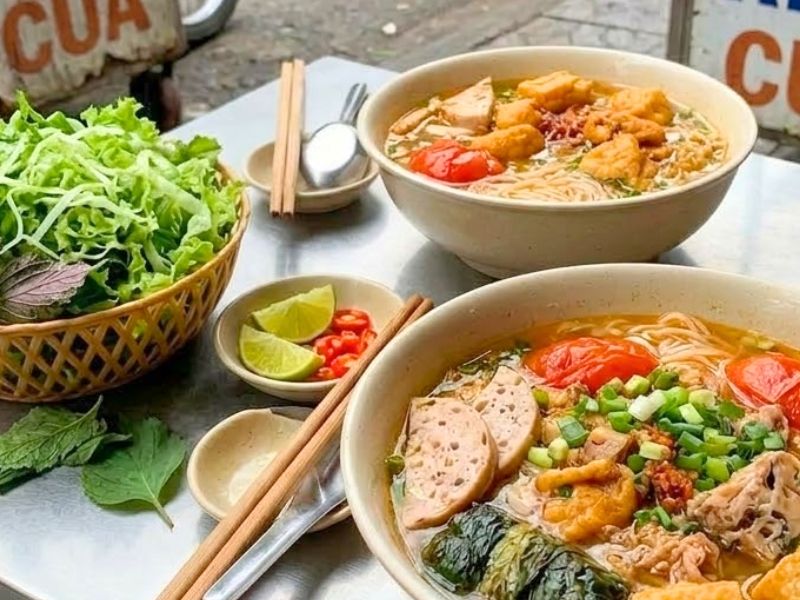
The riêu cua is what gives the bowl its character. Freshwater crab is pounded, strained, and cooked until soft curds rise through the broth, then served with rice vermicelli, fried tofu, tomato, scallions, and fresh herbs. Some shops keep the bowl quite simple, while others add snails, giò, beef, or congealed blood. Among Vietnamese noodle dishes, bún riêu stands out for the way tomato, crab, and mắm tôm give the broth such a bright, distinctive character.
A plate of herbs, lime, fresh chili, and sometimes extra mắm tôm usually sits close by, so you can adjust the bowl little by little after tasting the broth first. In a simple Hanoi-style serving, a squeeze of lime and a few herbs are often all it needs. That balance of warm broth, fresh greens, gentle sourness, and crab flavor is what makes bún riêu such an easy bowl to look forward to at the start of the day.
Bún Bò Huế
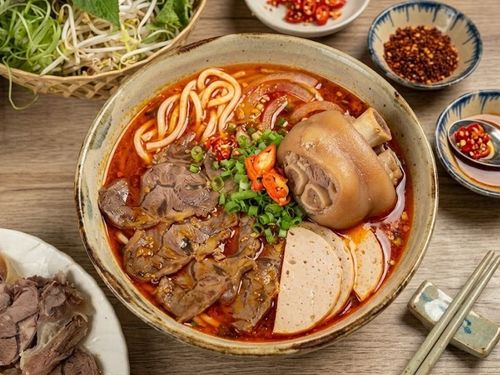
Bún bò Huế is a familiar breakfast across Vietnam, with its roots in Huế and a flavor that is easy to recognize from the first spoonful. The broth is rich and fragrant with lemongrass, followed by the savory depth of mắm ruốc and a warming chili heat. Thick round noodles sit beneath beef, pork knuckle, chả, and other toppings, while banana blossom, herbs, lime, and fresh greens bring freshness to the bowl.
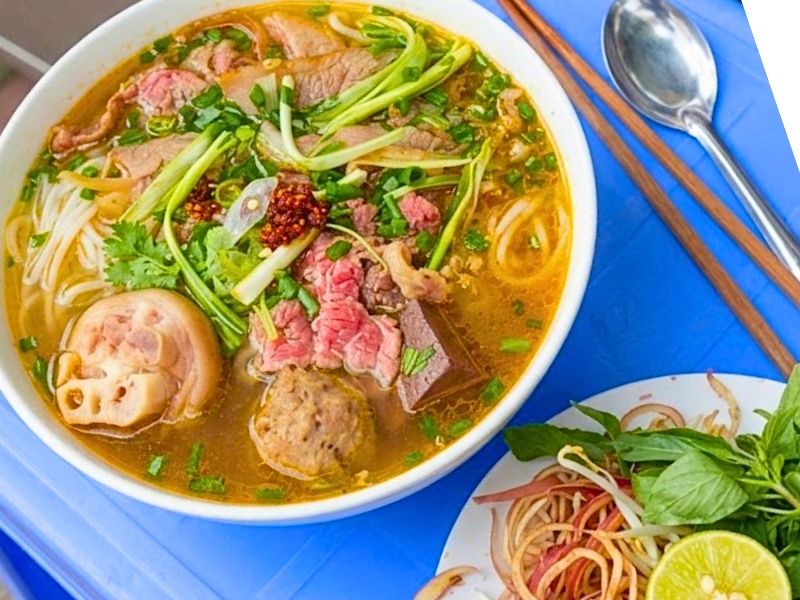
In Huế, the dish is woven especially closely into everyday life and remains one of the most recognizable expressions of Hue food. For generations, women known locally as o or mệ carried pots of bún through the streets or served it from small neighborhood stalls, and many local shops still keep those familiar forms of address in their names. Outside Huế, bún bò Huế is now easy to find from Hanoi to Ho Chi Minh City, with broth, toppings, and spice levels adjusted to local tastes.
For breakfast, the appeal is in the way the bowl wakes up the senses. The steam carries lemongrass first, then comes the deeper fermented savoriness and chili warmth, followed by the fresh crunch of herbs and banana blossom. Taste the broth before adding lime or extra chili, then adjust it little by little to see how the bowl changes as you eat.
Mì Quảng
Mì Quảng is a familiar way to start the day across the Quảng Nam–Đà Nẵng cultural region, where market stalls and neighborhood quán begin serving bowls from early morning. Wide rice noodles sit over fresh greens with only a shallow ladle of concentrated nước nhưn, usually cooked with chicken, pork, shrimp, fish, or a combination of them. Roasted peanuts, green chili, herbs, and sesame rice crackers bring fragrance and crunch, giving the bowl plenty of character without filling it with broth.
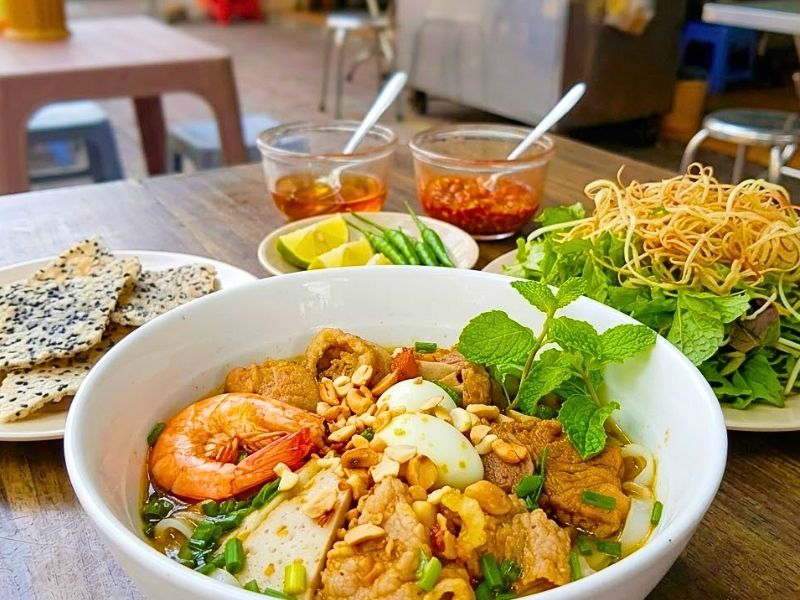
The bowl changes once you start mixing everything together. The nước nhưn coats the soft noodles, roasted peanuts add a nutty bite, and pieces of bánh tráng stay crisp at first before slowly softening around the edges. Rau sống brings freshness between richer mouthfuls, while nén gives many traditional versions a warm, distinctive aroma. Chicken, pork, shrimp, snakehead fish, and other local ingredients change from one cook to another, so two bowls of mì Quảng rarely taste exactly the same.
Mì Quảng also carries a long connection to Phú Chiêm, a village known for generations of handmade noodle making and the old tradition of mì gánh. Sellers once prepared noodles before dawn, then carried fresh noodles and steaming pots of nước nhưn by shoulder pole to nearby towns and as far as Đà Nẵng. In August 2024, the folk knowledge of Mì Quảng was added to Vietnam’s National Intangible Cultural Heritage list. The recognition gives a formal name to something local mornings have reflected for generations: mì Quảng is not simply a regional specialty, but part of the everyday food culture of xứ Quảng.
Hủ Tiếu
Hủ tiếu is a familiar breakfast across Southern Vietnam, from small carts in Saigon to noodle shops throughout the Mekong Delta. A hot bowl usually begins with a clear, gently sweet broth built from pork bones and dried seafood, then comes alive with fried garlic, scallions, chives, and fresh herbs. Pork, minced meat, shrimp, liver, or quail eggs fill out the bowl, while the noodles bring a light chew that makes hủ tiếu feel noticeably different from the softer strands of phở.
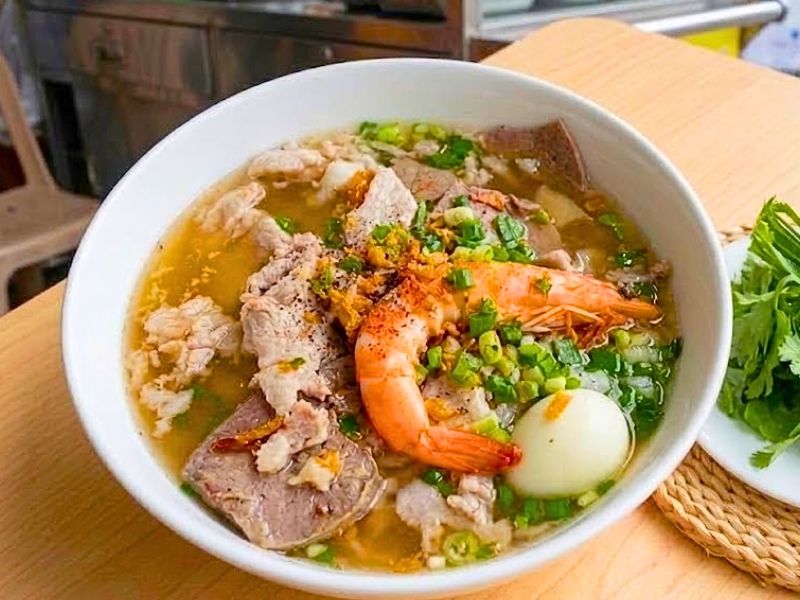
There is also more than one hủ tiếu to wake up to. Hủ tiếu Nam Vang reflects Cambodian, Chinese, and Vietnamese influences and often arrives generously topped with pork, shrimp, offal, quail eggs, and fried garlic. Hủ tiếu Mỹ Tho is known for its thinner, firmer noodles and sweet-savory broth, while hủ tiếu Sa Đéc has its own chewy rice noodles and a distinctly southern character. In many shops, the dish comes nước, with broth in the bowl, or khô, with the noodles seasoned separately and a small bowl of hot broth served on the side.
That choice between nước and khô is part of the pleasure. One morning, you might want to spoon up the hot broth with every mouthful; another time, the dry version lets the noodles, fried garlic, meat, and sauce stand out more clearly, with the broth sipped in between. Hủ tiếu has travelled through several culinary traditions before becoming thoroughly at home in southern Vietnam, and its many local versions make it the kind of breakfast you can return to again and again without getting quite the same bowl twice.
Cơm Tấm
Cơm tấm is one of Saigon’s most recognizable breakfasts, and by early morning, the smoky-sweet aroma of pork sizzling over charcoal is already drifting through neighborhood streets. At small shops and roadside stalls, plates of broken rice come together quickly with sườn nướng, its caramelized edges carrying the familiar mix of fish sauce, garlic, and sugar. A fried egg often lands beside the pork, making the plate feel generous enough to carry you well beyond breakfast.
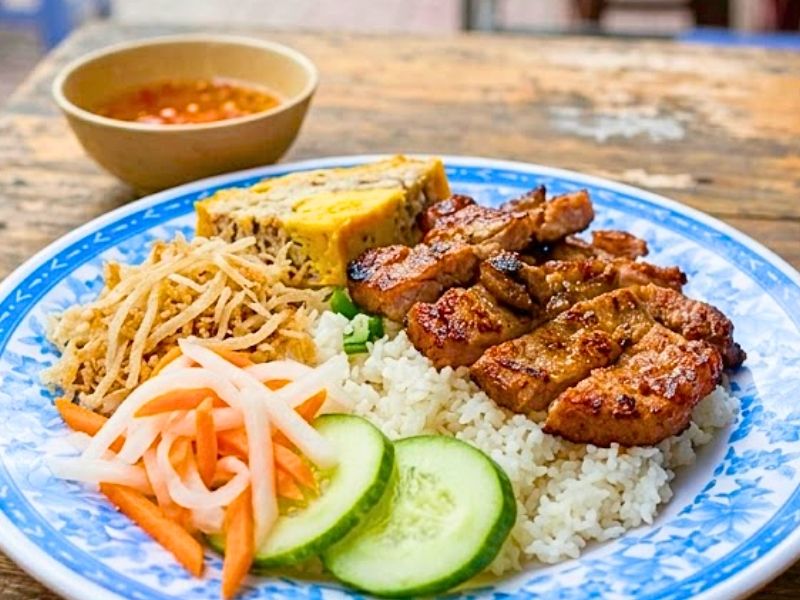
The classic order is cơm tấm sườn bì chả, with grilled pork, thin strands of pork skin tossed with toasted rice powder, and a steamed pork-and-egg loaf. Mỡ hành melts into the warm rice, cucumber and pickled carrot or daikon bring a fresh crunch, and the nước mắm pha ties everything together. In southern Vietnam, the dipping sauce often leans sweeter, soaking into the broken grains and picking up bits of pork, egg, and pickle with every spoonful.
The broken rice itself carries part of the dish’s history. These fractured grains were once a less valuable by-product of rice milling, yet over time they became the foundation of one of the dishes most closely associated with Saigon food. Cơm tấm is now eaten from breakfast until late at night, though the morning scene still feels especially familiar, with charcoal grills smoking at the curb, pork crackling over the heat, and plates moving from grill to table as the city starts its day.
Bò Né
Bò né brings a louder, livelier kind of breakfast to the Vietnamese morning, arriving at the table on a small cast-iron pan that is still sizzling. Beef, fried egg, onions, and often pâté continue to cook in the heat, while a warm baguette and fresh vegetables wait alongside. The pan fills the air with the smell of seared beef, butter, and black pepper, and the egg keeps bubbling around the edges for a few moments after it reaches the table. Bò né is especially familiar across southern and south-central Vietnam, including coastal cities such as Nha Trang and Phan Thiết.
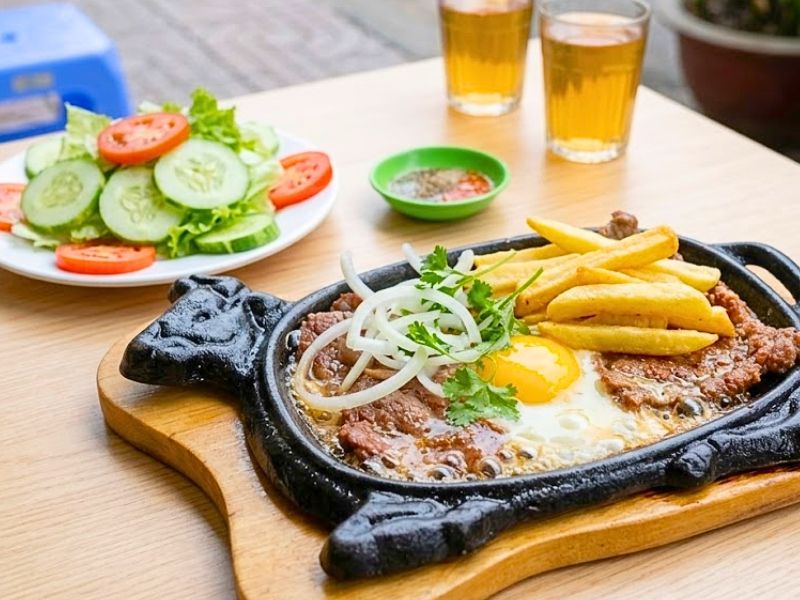
The baguette is meant to get involved. Tear off a piece and drag it through the soft egg yolk, pâté, and beef juices, or use it to scoop up a piece of beef and onion straight from the pan. Cucumber, tomato, pickled vegetables, or a simple salad bring a fresh break between the richer bites. Some shops add sausage or xíu mại, turning the little pan into a generous breakfast where beef, egg, bread, and house extras all come together.
Even the name bò né carries some of the fun of eating it. Bò means beef, while né means to dodge, a playful reference to the way diners instinctively lean back when hot oil spits from the sizzling pan. That moment has become part of the dish itself: the crackle reaches the table first, the aroma follows, and breakfast is already happening before you tear into the first piece of bread.
Bánh Mì Chảo
Bánh mì chảo takes the familiar flavors of bánh mì and spreads them across a plate, turning a quick street breakfast into something you sit down and eat piece by piece. Instead of tucking everything inside the baguette, shops serve fried egg, pâté, sausage, xíu mại, cold cuts, or xá xíu separately in a small pan, often with a savory tomato-based sauce underneath. The baguette comes alongside, still crisp on the outside and ready to pick up whatever is left in the pan.
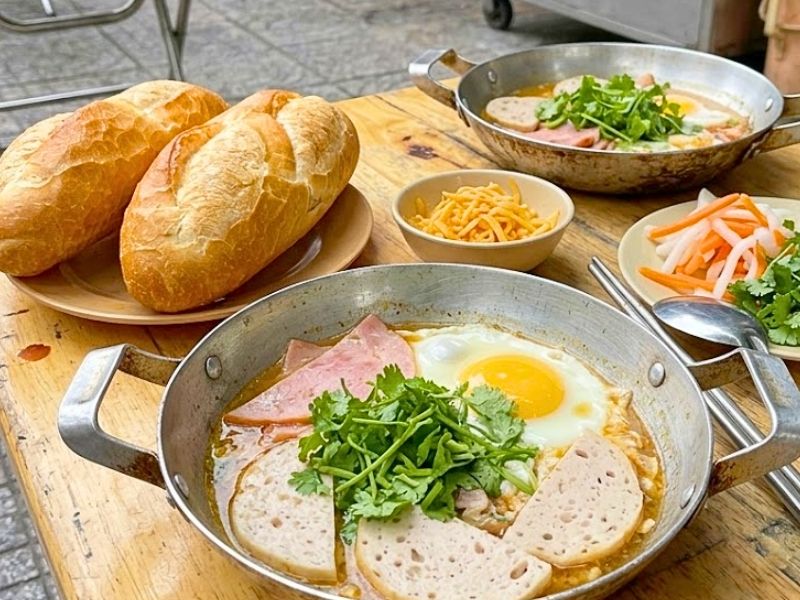
That is where bánh mì chảo becomes especially satisfying. Tear off a warm piece of bread, dip it into the sauce and soft egg yolk, then add a little pâté, xíu mại, or meat before taking the next bite. Some pieces stay crisp; others soften as they soak up the sauce. Cucumber, pickled vegetables, and fresh herbs bring a lighter, sharper bite in between, so you keep moving back and forth between rich, savory mouthfuls and something fresh.
Bánh mì chảo has been part of Hanoi’s street-food scene for decades, and it still suits mornings when there is enough time to linger over breakfast instead of carrying a bánh mì away in one hand. The pleasure is in building each bite differently: a little more pâté on one piece, more egg yolk on the next, then one last piece of bread to sweep up the sauce left at the bottom.
Bánh Giò
Bánh giò is the kind of breakfast that feels especially at home on a cool Hanoi morning, warm in the hand and still steaming when the banana leaf is opened. Beneath the leaf is a soft rice-flour cake wrapped around seasoned pork and wood ear mushrooms, with shallots and black pepper giving the filling a deeper savory note. The texture is almost custard-like when hot, while the banana leaf leaves a gentle fragrance that rises with the first curl of steam.
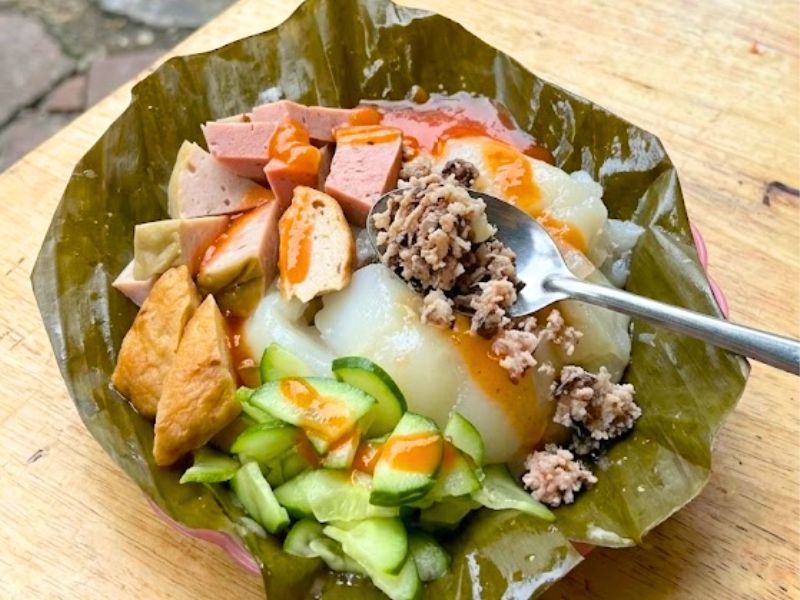
For generations, bánh giò has been part of Hanoi’s everyday street food. Older mornings were once marked by bicycle vendors calling “bánh giò đây” through neighborhood streets; today, the same breakfast is easier to find at market stalls, sidewalk shops, and small counters tucked between houses. Some people eat it just as it is, while a fuller plate comes with giò lụa, chả cốm, pickled vegetables, black pepper, soy sauce, or chili sauce. Each addition changes the soft, mild cake in a different way, adding something crisp, tangy, salty, or spicy around it.
Part of the pleasure is how little bánh giò asks of you. Open the leaf, take a spoonful while it is still hot, and the soft outer layer gives way almost immediately to the savory filling inside. It is simple enough for a quick stop on the way to work, yet warm and filling enough to make the morning feel a little slower before the day properly begins.
How Vietnamese Breakfast Changes From North To South
Vietnamese breakfast changes as you travel from north to south, with each region bringing its own ingredients, seasonings, and everyday dishes to the morning table. There is no single breakfast style for northern, central, or southern Vietnam, yet the differences become clear through the foods people return to each morning.
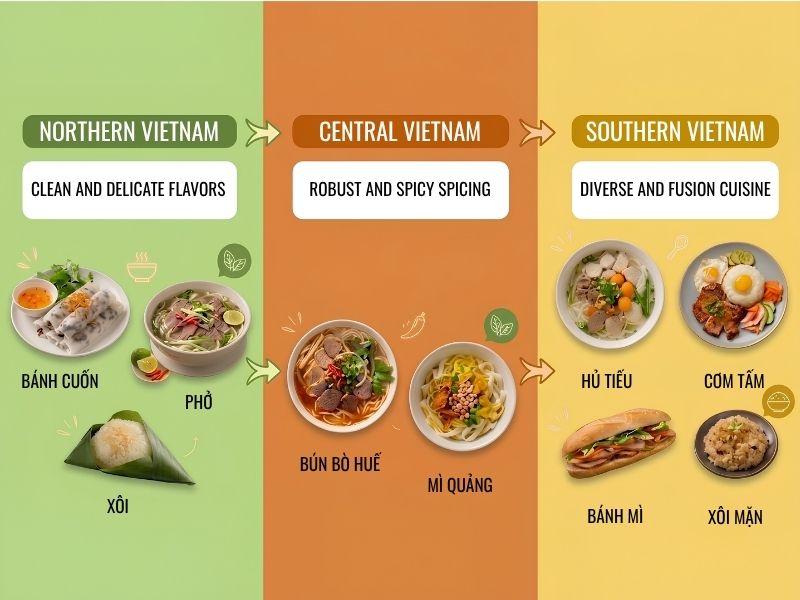
In the north, especially Hanoi, breakfast often centers on clear broths, delicate rice dishes, and simple seasoning that lets the main ingredients stand out. Phở brings aromatic beef or chicken broth, bánh cuốn pairs soft steamed rice sheets with nước chấm, and xôi appears early at markets and neighborhood stalls. Many of these dishes are closely tied to the morning routine, when people stop for a quick bowl or plate before work and school.
In Central Vietnam, breakfast often carries stronger aromas and more pronounced seasoning. Huế starts the morning with bún bò, where lemongrass, chili, and mắm ruốc give the broth its distinctive depth. Around Quảng Nam and Đà Nẵng, mì Quảng brings wide rice noodles, concentrated nước nhưn, fresh greens, roasted peanuts, and bánh tráng into a bowl that feels completely different from a full-broth noodle soup.
In Southern Vietnam, breakfast offers an especially wide range of choices. Hủ tiếu, cơm tấm, bánh mì, xôi mặn, and egg dishes all have a familiar place in the morning, reflecting the mix of southern Vietnamese, Chinese, and Khmer influences across the region. In Ho Chi Minh City, many of these foods also stay on the menu well beyond breakfast, so the same dishes that start the morning continue naturally into lunch and later meals.
Why Are So Many Vietnamese Breakfast Foods Savory?
Vietnamese breakfasts are mostly savory because breakfast follows the same meal structure that shapes everyday Vietnamese cooking: a starch at the center, something savory for depth, and herbs, vegetables, or condiments to balance it. In the morning, that starch might be rice in cơm tấm or xôi, rice noodles in phở and hủ tiếu, or bread in bánh mì. Broth, grilled meat, eggs, pâté, fish sauce, pickles, and fresh herbs then turn those staples into a complete meal rather than a sweet first bite.
Breakfast also needs to carry people into a busy morning. A bowl of noodles, a plate of rice with grilled pork, or a filled bánh mì gives more substance than a light pastry alone, which suits routines built around work, school, markets, and early commuting. That helps explain why hot, freshly cooked dishes are so visible from the first hours of the day, especially around neighborhood stalls, markets, and roadside shops.
There is also less of a strict divide between “breakfast food” and “food for the rest of the day.” Phở, bánh mì, hủ tiếu, xôi, and cơm tấm all continue beyond the morning, so breakfast is defined more by what is fresh, available, and satisfying at that hour than by a separate category of dishes. Sweet flavors still have their place through sweet xôi, soy milk, or cà phê sữa, but they sit alongside a much broader savory morning culture rather than setting the pattern for the meal.
Where Do Vietnamese People Eat Breakfast?
Vietnamese people eat breakfast at local markets, sidewalk quán, pushcarts, bakeries, small restaurants, and simple food stalls tucked into neighborhood streets. By early morning, many of these places are already serving students, market sellers, office workers, and regular customers on their way through the day. A phở shop starts with stockpots steaming near the entrance, a xôi seller works from a basket of hot sticky rice, and a bánh mì counter keeps bread, pâté, meat, pickles, and herbs close at hand for quick orders.
The morning rush gives these places their own rhythm. Between roughly 6 and 8 a.m., bowls move quickly across small tables, bánh mì is wrapped to go, and customers settle onto low stools with trà đá beside them. Some breakfast vendors close once the busiest hours are over, while others continue serving lunch. Regulars often return to the same stall day after day, already knowing how their usual bowl, plate, or sandwich will taste.
In the Mekong Delta, breakfast also happens on the water. At floating markets such as Cái Răng, trading begins around dawn, and smaller boats weave between produce vessels selling hot noodles, coffee, and other ready-to-eat food. The setting is different, yet the meal feels just as everyday: breakfast is simply served from one boat to another instead of across a sidewalk counter.
These 15 Vietnamese breakfast foods are a good starting point for understanding just how varied a morning meal in Vietnam can be. Some days call for a steaming bowl of noodles, others for xôi or bánh mì on the go, and sometimes a plate of cơm tấm or sizzling eggs is exactly what you want. Once you know a few of these dishes, choosing breakfast from a Vietnamese menu becomes much easier, and you also start to recognize the regional flavors, eating habits, and small morning rituals that make each one feel different.
Frequently Asked Questions
There is no single breakfast that represents all of Vietnam. Phở, bánh mì, xôi, and cháo are familiar across much of the country, while local favorites become more visible as you travel. In Huế, that might mean bún bò; around Quảng Nam and Đà Nẵng, mì Quảng; and across the south, hủ tiếu and cơm tấm are part of the morning routine.
Vietnamese breakfast usually begins early, with the busiest hours often falling between about 6 and 8 a.m. Market stalls and breakfast shops start preparing before then, so broth is hot, xôi is steaming, and bánh mì fillings are ready when students, workers, and market sellers begin arriving.
Yes. Rice is at the center of several familiar Vietnamese breakfasts. Xôi uses glutinous rice, cháo cooks ordinary rice down into a soft porridge, and cơm tấm turns broken rice into a full plate with grilled pork, egg, and other toppings. At home, leftover or freshly cooked rice also appears at breakfast depending on the household.
No. Many dishes associated with breakfast continue well beyond the morning. Phở, bánh mì, bún bò Huế, hủ tiếu, and cơm tấm are all eaten at other times of day. What makes them feel like breakfast is often the habit of eating them early and the vendors that specialize in serving the morning crowd.
Phở, bánh mì, bánh cuốn, and xôi are four easy starting points because each gives you a different kind of Vietnamese breakfast. Phở is warm and broth-based, bánh mì is crisp and easy to eat on the move, bánh cuốn is soft and delicate, and xôi shows how sticky rice becomes a filling savory meal with toppings such as pork, chicken, mung bean, or fried shallots.
Vietnamese breakfast happens both at home and outside, although buying breakfast from a neighborhood stall or small shop is a familiar part of the morning routine. Many vendors specialize in one dish, which is why people often have a regular phở shop, xôi seller, bánh mì cart, or hủ tiếu place they return to.
Home breakfasts tend to be simpler, with dishes such as cháo, eggs, bánh mì, xôi, or food already prepared in the kitchen. More labor-intensive dishes are often easier to buy from specialists who have been cooking broth, steaming rice, or preparing fillings since before sunrise.
Yes. Eggs appear in several familiar Vietnamese breakfasts. A fried egg slips easily into bánh mì, sits beside grilled pork on cơm tấm, or arrives still bubbling on the hot pan of bò né and bánh mì chảo. Boiled and steamed eggs also appear in other breakfast dishes depending on the region and household.
The nutritional profile of a Vietnamese breakfast depends on the dish, ingredients, and portion size. A bowl of phở or cháo differs substantially from a plate of cơm tấm with grilled pork and fried egg, just as bánh cuốn differs from a heavily filled bánh mì.
Broth-based dishes often include herbs and vegetables, while rice, noodles, meat, sauces, and fried toppings change the amount of sodium, fat, and energy in the meal. These differences are easier to understand in the wider context of healthy Vietnamese food, where cooking method, balance, and portion all shape the meal.
Children in Vietnam eat many of the same breakfast foods as adults, usually in smaller or simpler portions. Cháo is a familiar choice because of its soft texture, while bánh bao, bánh mì, xôi, and small bowls of noodles are easy to eat before school.
The exact breakfast depends on the family, region, and how much time there is in the morning, so there is no single breakfast reserved specifically for children.Coffee, tea, and soy milk are familiar drinks around Vietnamese breakfast. In the south, cà phê sữa đá or bạc xỉu often follows a bánh mì, cơm tấm, or bowl of noodles, while hot tea is common at small breakfast shops across the country.
The drink does not always arrive with the food. It is common to finish breakfast first, then sit a little longer over coffee or move to a nearby café, stretching a quick morning meal into a slower start to the day.
Yes, phở works perfectly well as an everyday breakfast if it fits your preferences and overall diet. In Vietnam, regular customers often return to the same neighborhood phở shops because they know the broth, cut of meat, herbs, and seasoning they like.
Eating phở regularly does not mean every bowl tastes the same. Beef or chicken, different cuts of meat, regional styles, condiments, and the cook’s broth all change the experience from one shop to another.

CHIN-SU KITCHEN TEAM
CHIN-SU Kitchen Team are the creative experts behind the delicious recipes featuring CHIN-SU sauces. With years of experience and a passion for flavor, our team carefully selects recipes from a variety of trusted chefs and bloggers, bringing together the best culinary insights to present you with the most suitable and exciting dishes. Every recipe is chosen to inspire you to create meals that are not only tasty but also easy to prepare, enhancing your dining experience. Join us as we explore a wide range of sauces and flavors, and elevate every meal with the perfect recipe for your table!
User Reviews
Featured Articles
Banh Xeo Recipe - Crispy Vietnamese Sizzling Pancake with Pork and Shrimp
Banh Khot Recipe - Vietnamese Savory Mini Coconut Pancakes
Nem Nuong Recipe: Vietnamese Grilled Pork Sausage
17 Vietnamese Soups to Know, From Phở to Everyday Canh
SUBSCRIBE TO GET
MORE INFO
Want the latest and greatest recipes, updates, and more from us,
straight to your inbox? Subscribe and get our NEWS!