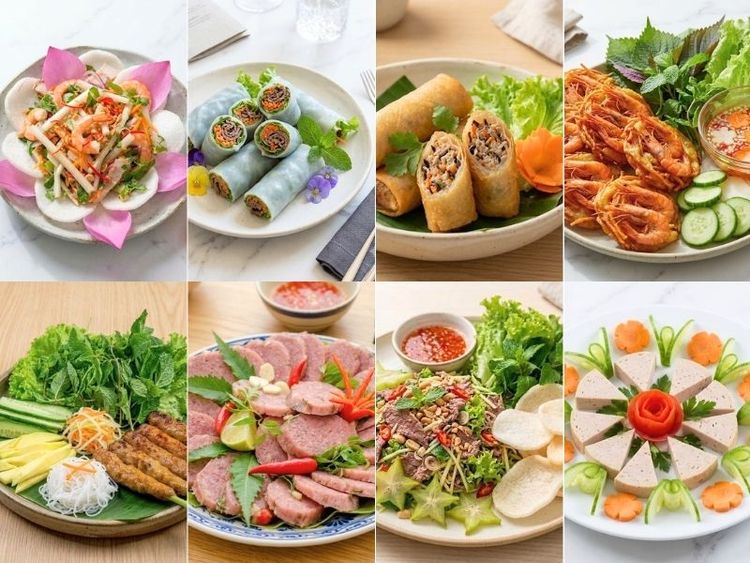
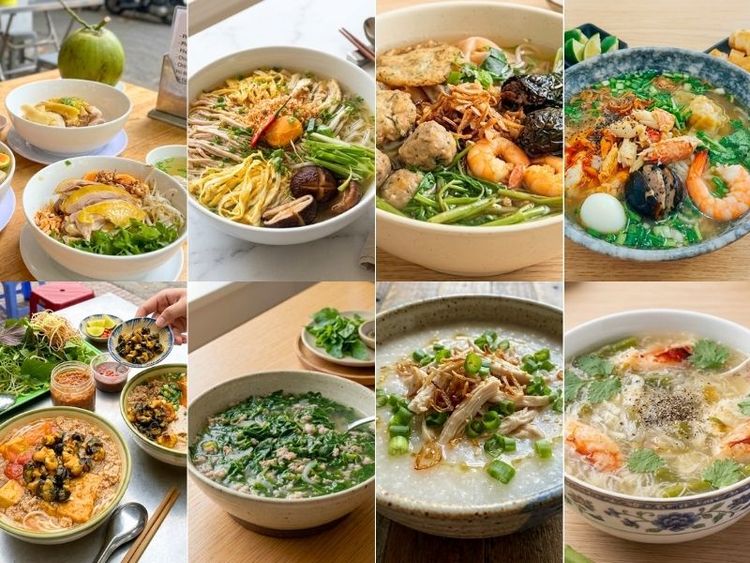
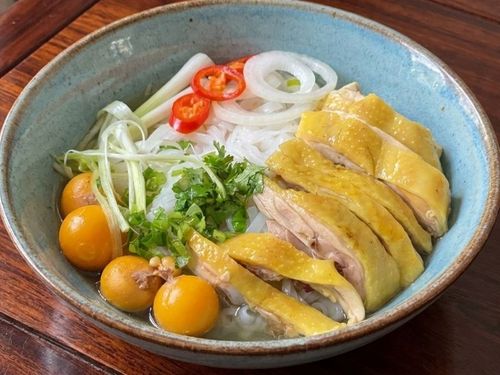
Hue Food: 14 Traditional Dishes From Vietnam’s Old Imperial Capital
Published: Sep 14, 2026 by CHIN-SU
Updated: Sep 21, 2026 by CHIN-SU
Taking your seat at a table in Hue means stepping straight into Vietnam's most colorful and sensory-rich food tradition. You look across the table and notice a kaleidoscope of small plates arriving all at once: a delicate ceramic saucer of steamed rice cake here, a fragrant parcel of shrimp dumplings there, and a vibrant bowl of clam rice resting at room temperature beside them. Locals often say you can order Hue food in Hanoi or Saigon, but it never quite tastes the same as it does in the old imperial capital.
What catches you next is the intoxicating warmth of spice. Surrounded by central Vietnam's rolling mountains and lush valleys, Hue cooks have access to an abundance of fresh chilies and aromatics. That makes this the one region in Vietnam famous for unapologetically bold, fiery flavors, where cooks simmer chilies directly inside the bubbling broth rather than just leaving them as a tabletop garnish.
Both traditions trace their roots back to the Nguyen dynasty, which made Hue its royal seat for 143 years. The imperial kitchens perfected the art of serving dozens of intricate, bite-sized dishes at a single banquet, and that refined rhythm still shapes everyday street stalls and family dinners across the city today.
In this guide, CHIN-SU walks you through fourteen iconic Hue dishes, from legendary bowls of bún bò Huế and royal steamed rice cakes to savory clam rice, serene Buddhist vegetarian spreads, and sweet alley desserts: what goes into each one, when locals sit down to savor them, and why the flavors land so differently from the Vietnamese food most people meet abroad.

Bún Bò Huế
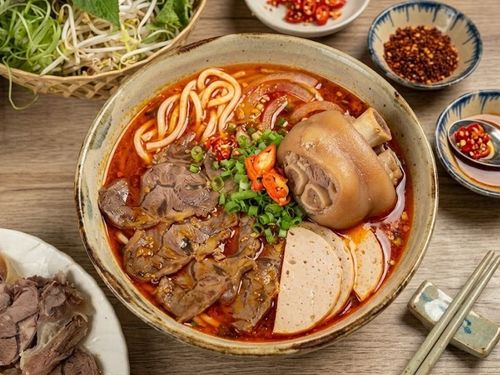
Bún bò Huế is a Vietnamese rice noodle soup of sliced beef and pork, seasoned with lemongrass and fermented shrimp paste, and served with thick round noodles. It is one of the few Vietnamese dishes that proudly carries a place name right in its title, and the moment you taste that first spoonful, you understand why the city wanted the credit.
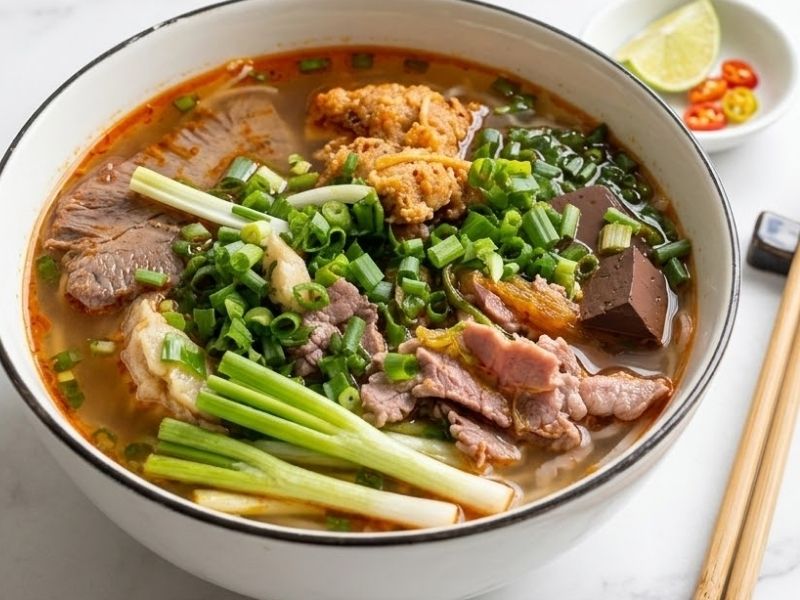
The soup traces its origins back to the late 1500s and early 1600s under the Nguyen lords, evolving alongside the royal court's love for complex seasonings. Whether it was originally created for the royal family or crafted by palace kitchen staff, it quickly became a beloved street staple that captures the culinary soul of the city.
Locals reach for a steaming bowl at breakfast to kick off their morning, while others hunt down a late-night stall after sharing a few cold beers with friends. The unmistakable aroma that greets you comes from bruised lemongrass stalks and fermented shrimp paste (mắm ruốc). When simmered slowly in the pot, the shrimp paste loses any sharp fishiness and transforms into a deep, earthy umami base that lingers delightfully on your palate.
Your bowl arrives brimming with tender slices of beef shank, succulent pork knuckle, and fresh herbs, alongside lime wedges and spicy chili oil so you can adjust the heat to your liking. If you want to build this legendary soup at home, our bún bò Huế recipe walks you through the step-by-step method.
Bánh Canh Cua
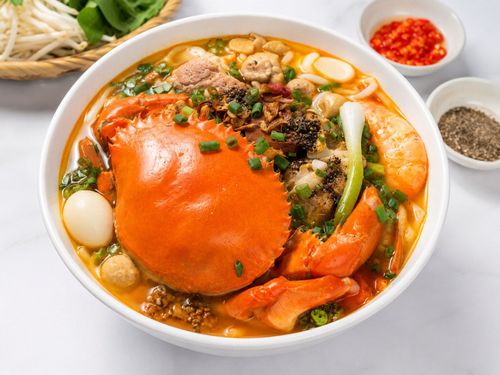
Bánh canh cua is a Vietnamese crab noodle soup made with thick, chewy tapioca noodles in a broth thickened until it coats the spoon. What sets this comforting bowl apart is its glossy, gravy-like broth, which clings to your spoon and delivers an immediate rush of sweet crab flavor.
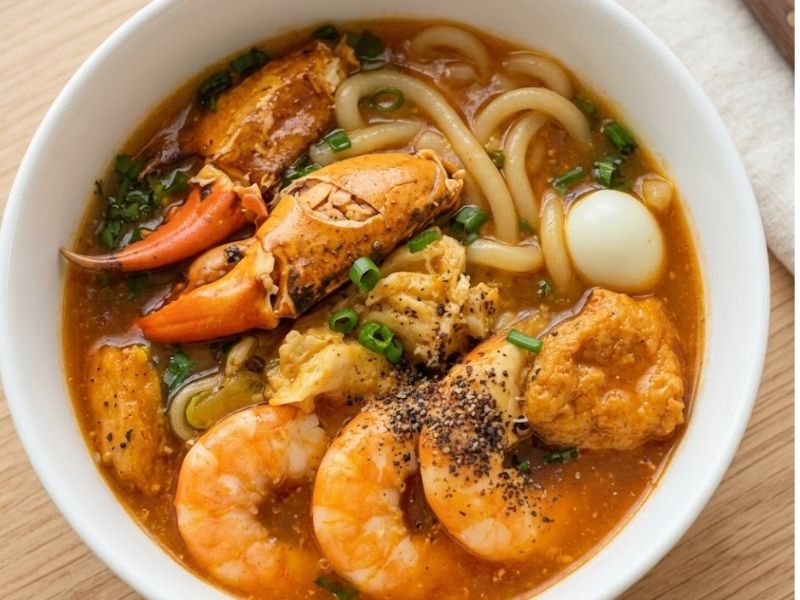
Hue's distinctive version hails from Nam Phổ, a historic village on the eastern edge of the city celebrated for its unique noodle-making craft. Locals treat bánh canh Nam Phổ as a beloved late-afternoon comfort snack. Vendors often set up their sidewalk stalls around three in the afternoon, ladling steaming soup into small bowls for schoolchildren and neighbors gathering on low plastic stools before dinner.
The noodles themselves are rolled from tapioca and rice flour, cut into short, translucent strands that turn wonderfully soft and slippery. Swimming alongside them are sweet shreds of fresh crab meat, juicy shrimp, and tender pork meatballs, giving the broth a vibrant orange-red color from slow-stewed annatto oil and crab essence.
Before digging in, sprinkle on a generous handful of chopped green onions, cracked black pepper, and a dash of minced bird's-eye chili in fish sauce. The rich, silky broth warms you up from the inside out, showcasing a soothing side of central cooking that you can explore further in our guide to Vietnamese noodle dishes. Our banh canh cua recipe explores this crab-based version with its thick noodles and rich broth.
Cơm Hến
Cơm hến is a Hue rice dish of tiny basket clams served over rice, and unlike almost every rice dish Americans know, it comes to the table at room temperature. That cool temperature is entirely deliberate, allowing the crisp greens and crunchy toppings to retain their vibrant snap against the warm clam broth.
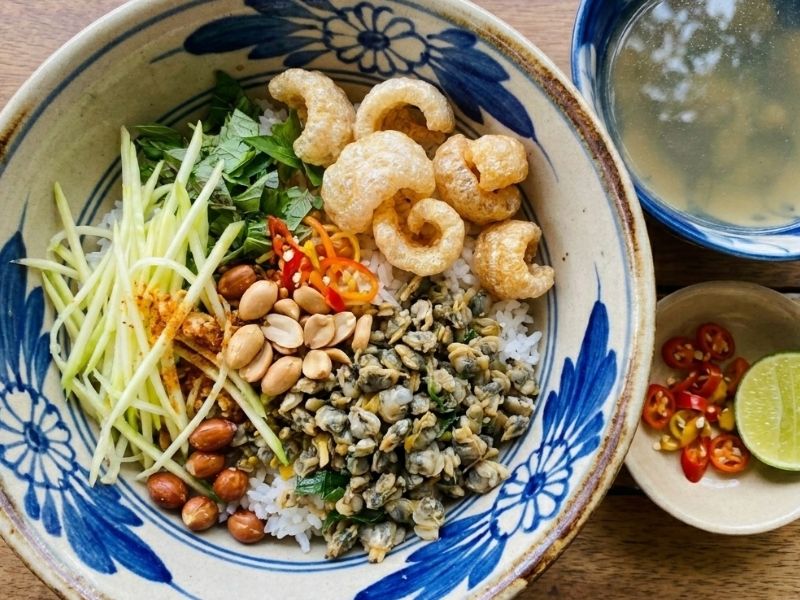
The dish was born on Cồn Hến, a peaceful sandy islet nestled in the Perfume River just east of the Citadel. When Nguyen court geomancers laid out the imperial capital, this islet represented the Azure Dragon in their feng shui plans, though everyday fishermen simply knew it as the best place to harvest sweet baby river clams. Today, Hue families enjoy cơm hến as a light morning breakfast or an afternoon street snack rather than a heavy sit-down dinner.
Cooks pile cooled white rice high with stir-fried baby river clams, crunchy roasted peanuts, crispy fried pork rinds (tóp mỡ), and roasted sesame seeds. The real excitement comes from the mountain of fresh herbs and raw greens: shredded banana blossom, tangy green mango or starfruit, and crunchy elephant ear stems (bạc hà) that soak up every drop of seasoning.
A pungent spoonful of mắm ruốc (fermented shrimp paste) and fiery chili paste rests right under the toppings. You toss everything together with your chopsticks, then spoon in the steaming bowl of clam broth served on the side. The interplay of cool rice, crunchy cracklings, briny clams, and tongue-tingling chili creates an unforgettable sensory rush. To understand how fermented condiments shape dishes like this, explore our guide on how to use fish sauce.
Bún Hến
Bún hến is the same Hue clam preparation as cơm hến, served over rice vermicelli instead of rice. Nearly every stall in Hue that serves clam rice also offers bún hến, giving diners a refreshing noodle alternative that you can order side-by-side.
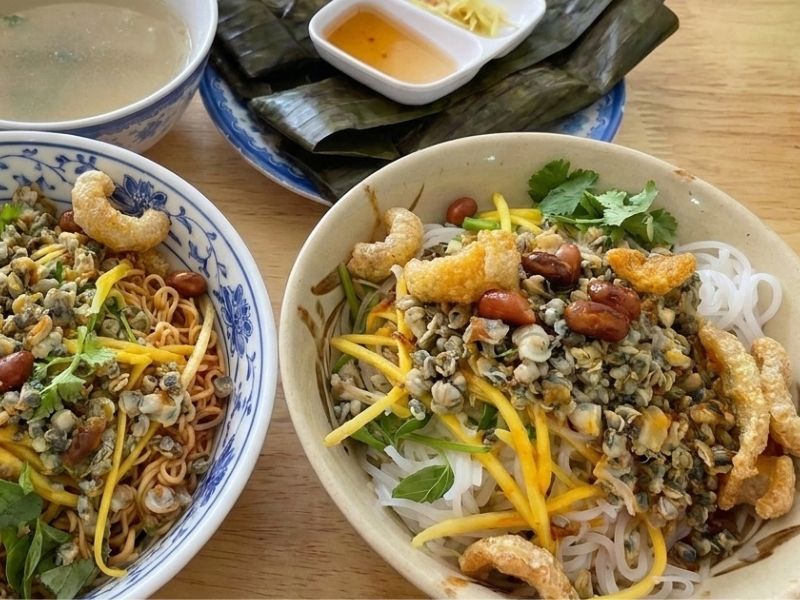
You will often see regulars pulling up low plastic chairs in the early morning, pointing to the noodle basket when they want something light, cooling, and effortless to slurp down before heading to work. The swap makes a noticeable difference to the palate, as thin rice vermicelli threads the savory clam juices and chili oil through the bowl rather than absorbing them all at once.
Tossed into the noodles are the same generous toppings: sweet baby clams, crispy fried pork cracklings, toasted peanuts, julienned green mango, and thinly shredded banana blossoms. Every mouthful delivers an invigorating contrast of silky noodles, crunchy greens, and savory seafood essence.
Just like its rice-based sibling, your bowl comes with a piping-hot cup of seasoned clam broth on the side. You can splash a few spoonfuls directly over your noodles to loosen them up, or take soothing sips between bites to balance the fiery heat of the chili paste.
Bánh Bèo
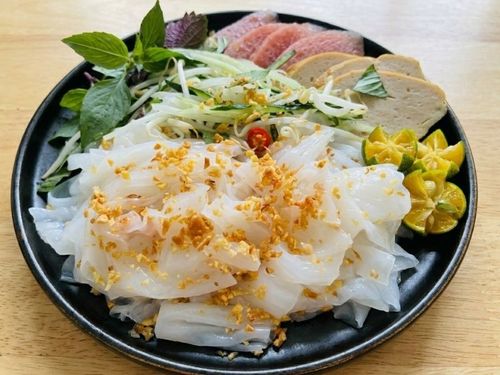
Bánh bèo is a Hue steamed rice cake made in, and eaten out of, a small ceramic saucer, topped with dried shrimp and crisp pork fat. The saucer serves as both mold and plate, producing a delicate cake roughly the size of a silver dollar.
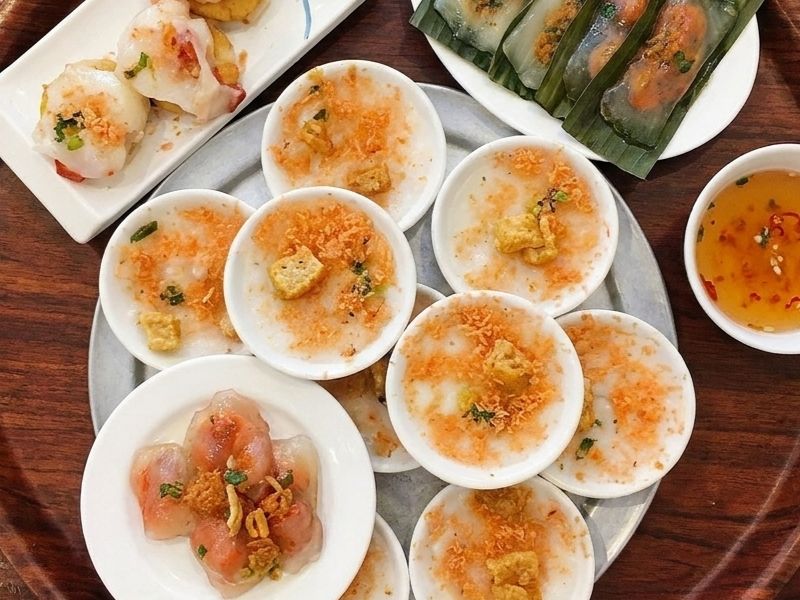
Vendors in Hue almost always prepare bánh bèo alongside bánh nậm and bánh bột lọc, a famous trio that locals affectionately call the city's royal cakes. Their miniature size dates back to the banquets of the Nguyen dynasty between 1802 and 1945, where emperors favored a spread of many artistic, bite-sized dishes rather than a single heavy meal.
The name translates poetically as "water fern cake," reflecting the round, indented shape that mimics floating duckweed leaves. Cooks pour a thin batter of rice flour and tapioca starch into shallow ceramic saucers, steaming them over roaring heat until a small dimple forms in the center. That hollow is then showered with vibrant orange dried shrimp flakes, golden crispy pork fat (tóp mỡ), and fragrant scallion oil.
Part of the joy of eating bánh bèo is the leisurely tableside ritual. You drizzle a spoonful of sweet, savory fish sauce infused with sliced bird's-eye chilies over the cake, then use a small spoon to loosen the edges and lift the silky disc in one bite. Nobody ever orders just a single saucer; locals routinely order stacks of ten or twenty saucers to share around the table. This shared style is what makes bánh bèo a natural part of Vietnamese appetizers.
Bánh Nậm
Bánh nậm is a flat steamed rice cake from Hue, spread thin inside a banana leaf and topped with seasoned shrimp and pork before steaming. It is officially recognized by Vietnam's national tourism board as one of Hue's signature culinary specialities, cherished by locals for its delicate texture and comforting flavor.
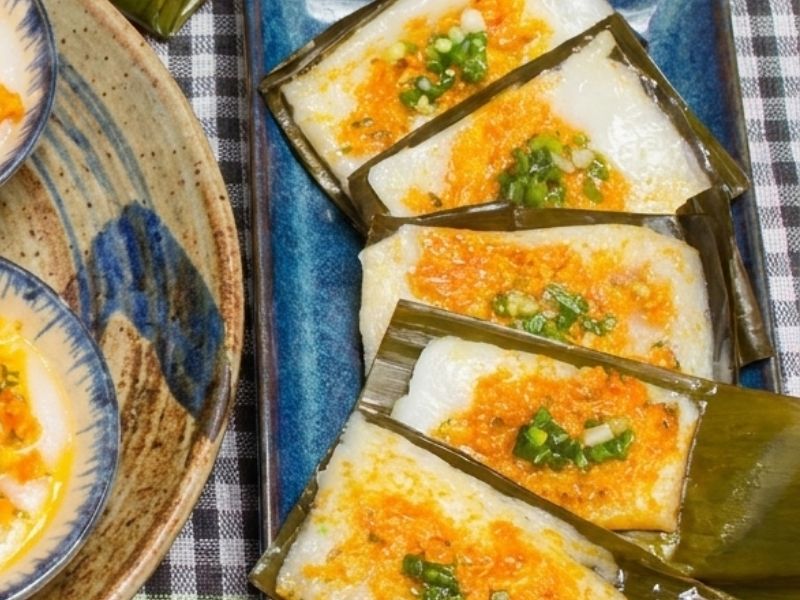
Hue families frequently gather in the late afternoon to share a plate of warm leaf parcels over hot tea. The banana leaf does wonderful double duty: it holds and shapes the cake during steaming, and then unfolds into a natural plate when it arrives at your table.
To prepare it, cooks gently heat a batter of rice flour and tapioca starch until it forms a smooth, velvety paste. They spread this batter paper-thin onto a softened banana leaf, top it with a savory mixture of minced shrimp and pork browned with scallions and fish sauce, and fold the leaf into a neat, flat rectangular parcel before steaming.
When you unwrap the warm green parcel, the grassy, tea-like fragrance of steamed banana leaf greets your senses right away. The cake itself is delightfully soft and silky, melting gently on your tongue the moment you spoon it up. Drizzle on a few drops of light fish sauce with sliced chilies, and you will see why this humble street parcel has remained a local favorite for generations. If you want to whip up the dipping sauce at home, try CHIN-SU fish sauce as your flavorful base and check out our nước chấm guide for the ideal proportions.
Bánh Bột Lọc
Bánh bột lọc are small, translucent tapioca dumplings from Hue, filled with shrimp and pork belly so the filling shows through the wrapper. The name translates loosely as "clarified flour cake," celebrating the crystal-clear wrapper that showcases the jewel-like pink shrimp and golden caramelized pork belly nestled inside.
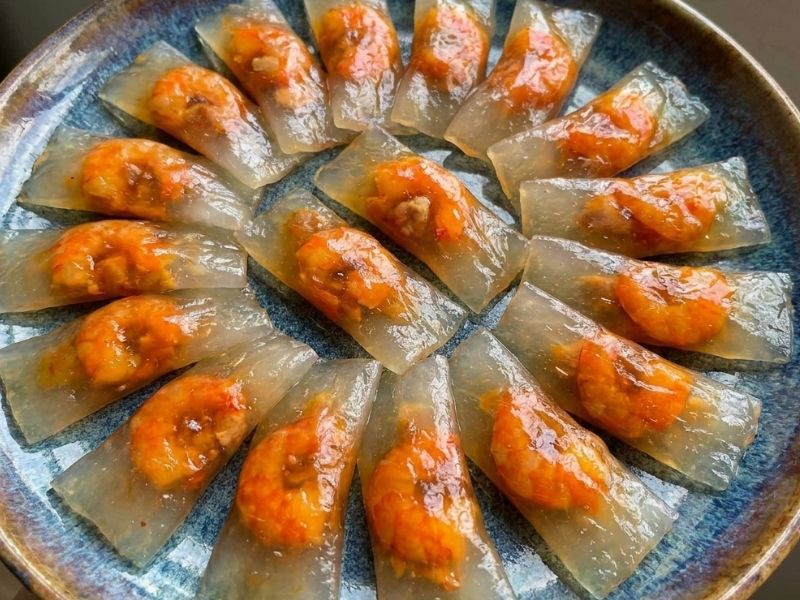
Developed during Hue's imperial era, this dumpling perfectly reflects the royal court's fondness for food that looks as artistic as it tastes. Locals treat texture as an essential dimension of good cooking, and this dumpling is where that passion shines brightest.
You will encounter bánh bột lọc in two classic styles throughout Hue. The first is bánh bột lọc lá, wrapped in banana leaves and steamed to infuse the dough with a subtle herbal aroma. The second is bánh bột lọc trần, boiled bare until glossy and tossed in fragrant scallion oil with crispy fried shallots. Both styles make wonderful afternoon snacks or communal appetizers before dinner.
The steamed tapioca starch gives the wrapper an irresistible, springy chew that yields smoothly to the savory, caramelized shrimp and rich pork belly inside. Dip each dumpling generously into a bowl of sweet chili fish sauce and pop it whole into your mouth. Their durability also makes them a favorite food gift for travelers, and a staple on menus featuring Vietnamese appetizers across the country.
Bánh Ram Ít
Bánh ram ít is a Hue dish of two cakes stacked into one: a soft steamed glutinous rice dumpling sitting on a thin, deep-fried disc. It is widely celebrated as one of the most inventive creations of Hue's royal cuisine, built entirely around playful culinary contrast.
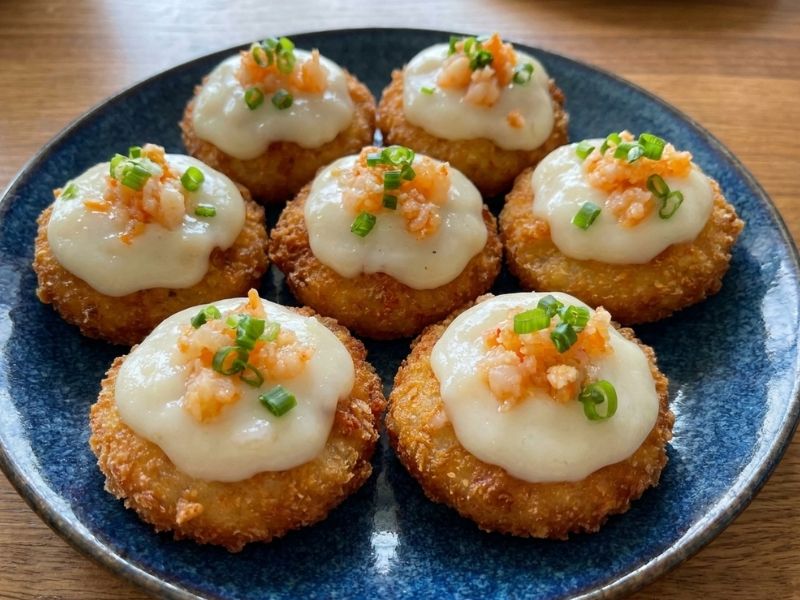
While street vendors selling the classic steamed trio of bèo, nậm, and lọc are everywhere, finding stalls that master both halves of bánh ram ít takes a bit of local know-how, making every plate feel like a special treat. Vendors tend to keep shorter hours for it, serving eager regulars who gather in the late afternoon.
The top portion (ít) is a tender, pillowy dumpling made from glutinous rice flour wrapped around savory minced pork, shrimp, and shallots. It perches directly on top of the bottom portion (ram), a disc of rice dough deep-fried until blistered, crunchy, and golden brown. A shower of bright orange dried shrimp powder and scallion oil finishes the presentation.
The secret to enjoying bánh ram ít is to eat each piece in a single mouthful. Dip the stack into a bowl of light, sweet fish sauce spiked with red chili, and take a bite that captures both layers simultaneously. The velvety, chewy dumpling and the shattering crisp base combine into a spectacular interplay of textures that defines Hue's culinary genius.
Bánh Khoái
Bánh khoái is a small, crisp Hue pancake made from a rice-flour batter enriched with egg yolk, folded in half over shrimp, pork, and bean sprouts. While travelers often compare it to southern bánh xèo, bánh khoái is very much Hue's own creation, deeply rooted in the royal city and rarely found outside central Vietnam. For the southern version, our bánh xèo recipe explains the crispy rice pancake technique.
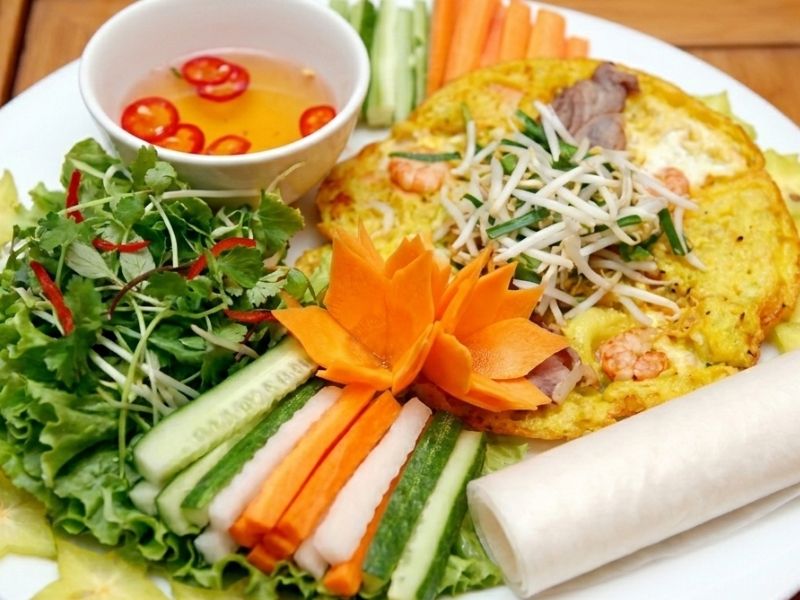
The name khoái is believed to derive from the billowing smoke of charcoal stoves (khói) where vendors fry the pancakes to order in personal cast-iron skillets. It is a hearty afternoon and evening favorite, especially comforting during the chilly, drizzly winter days that often blanket the city.
Cooks whisk egg yolks and a splash of water directly into the rice flour batter, creating a thicker, richer shell that crisps up with deep golden crevices. Inside rests a generous stuffing of fresh whole shrimp, thin slices of seasoned pork belly, and tender bean sprouts, folded over into a thick half-moon that stays wonderfully crunchy.
Instead of the light, sweet-sour fish sauce served with southern pancakes, bánh khoái arrives with nước lèo, a rich, velvety dipping sauce simmered from pork liver, fermented soybean paste, and ground roasted peanuts. Your plate comes with a vibrant salad of lettuce, fresh herbs, and thin slices of green fig (vả), a local fruit with a pleasantly tart, astringent bite. Break off a piping-hot piece of pancake with your chopsticks, wrap it in fresh greens and fig slices, and dunk it into the warm peanut-liver sauce for a truly unforgettable bite.
Bánh Ướt Thịt Nướng
Bánh ướt thịt nướng is a Hue dish of thin steamed rice sheets wrapped around charcoal-grilled pork and fresh herbs, eaten as small rolls. After the crisp shell of the pancake above, this dish offers a silky, refreshing counterpart that locals celebrate as one of the city's signature creations.
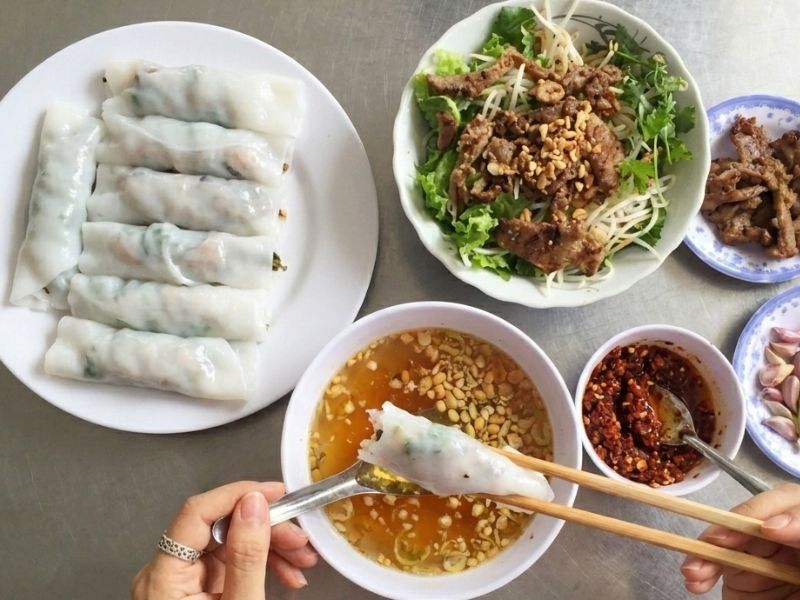
This specialty has a storied pedigree along the Perfume River, particularly in the Kim Long district, where riverside stalls have grilled pork over open braziers for over a century. It is a quintessential afternoon food, drawing locals and visitors alike for a light, sociable meal by the breezy water.
Cooks marinate thin slices of pork shoulder with crushed lemongrass, shallots, honey, and toasted sesame seeds, grilling them over glowing charcoal until smoky and caramelized. Freshly steamed sheets of bánh ướt are laid flat, layered with crisp lettuce, fresh mint, and aromatic herbs, and neatly rolled around the fragrant grilled pork into handheld logs.
Unlike northern steamed rolls that are eaten with chopsticks and warm diluted fish sauce, these rolls are often enjoyed with your hands and dipped into a thick, garlicky fermented soybean sauce or a rich peanut dip. The cool, slippery rice noodle wrapper provides a soothing backdrop for the warm, smoky pork and peppery herbs, making each roll an absolute pleasure to eat.
Nem Lụi
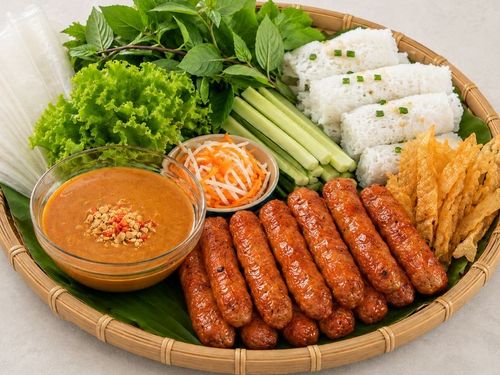
Nem lụi is a Hue skewer of seasoned ground pork molded around a stalk of lemongrass and grilled over charcoal, and what sets it apart is the sauce it gets dipped in. While grilled pork skewers exist across Vietnam, Hue's version with its intoxicating lemongrass aroma and thick dipping sauce is the one food lovers travel across the country to taste.
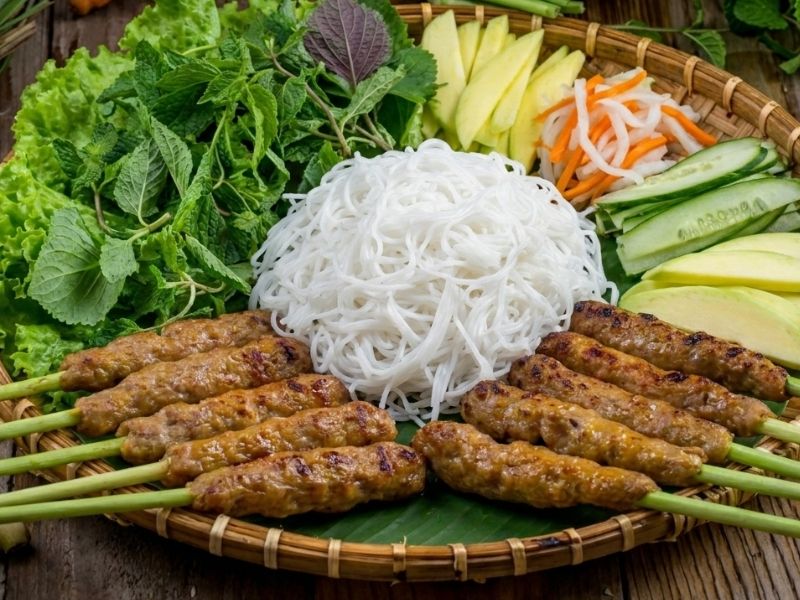
As late afternoon turns to evening across Hue, the mouthwatering scent of pork sizzling over charcoal wafts down side streets and alleyways. Nem lụi is the city's ultimate gathering food; friends and coworkers pack outdoor tables to share skewers over icy glasses of beer, making it one of the most vibrant dining scenes in central Vietnam.
Cooks blend finely minced pork with pork fat, shallots, and garlic, molding the savory mixture tightly around thick stalks of fresh lemongrass. As the skewers roast over glowing embers, the lemongrass releases its fragrant essential oils directly into the meat from the inside out. Served alongside is Hue's signature nước lèo, a warm, thick dipping sauce slow-cooked from ground peanuts, roasted sesame, fermented soybean paste, and pork liver until rich and velvety.
Eating nem lụi is an interactive, hands-on experience. You place a sheet of translucent rice paper in your palm, add crisp lettuce, fresh mint, cucumber ribbons, and tart green starfruit, then grip the skewer inside the roll and slide the lemongrass stalk free. Dunk the roll generously into the warm, nutty sauce, and savor the smoky pork, herbal crunch, and creamy dip in one glorious mouthful.
Cơm Chay
Cơm chay is Hue's vegetarian cooking, full meals of rice with vegetable, tofu, and mushroom dishes, served in temples, at home, and in dedicated vegetarian restaurants across the city. It represents a grand branch of central Vietnamese culinary art rather than an afterthought on the menu.
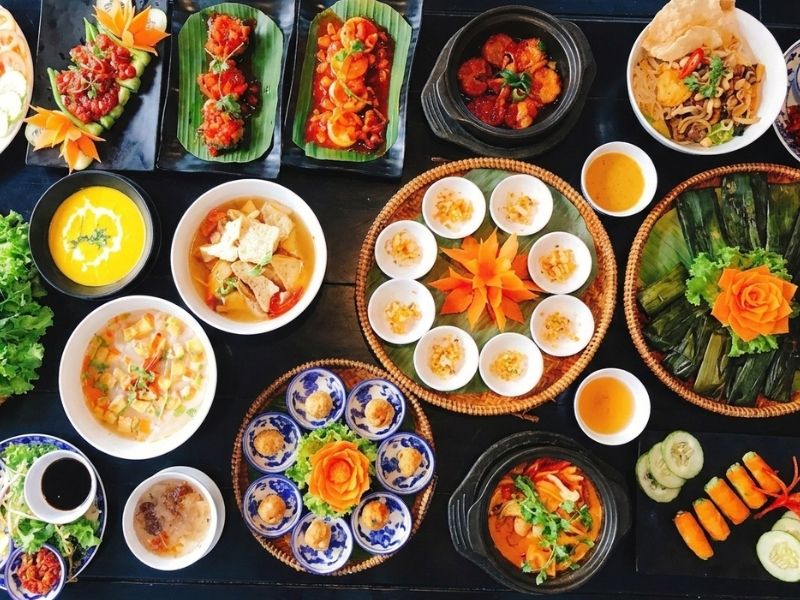
Hue is the historic heart of Vietnamese Buddhism, home to over a hundred active pagodas and centuries-old monasteries. As part of their spiritual practice, local families observe meat-free dining on the 1st and 15th days of every lunar month, filling the city's charming all-vegetarian restaurants with multi-generational families sharing a peaceful meal.
Rather than treating vegetarian meals as plain or restrictive, Hue chefs draw upon royal court techniques to turn plant-based ingredients into exquisite feasts. Trays arrive laden with dishes crafted from firm tofu, fragrant wild mushrooms, simmered young jackfruit, and green bananas. Local green fig (vả) is a beloved staple here as well, braised gently until it develops a tender, meaty texture that absorbs savory seasonings.
Sit down to a traditional cơm chay spread and you will be treated to the same imperial elegance that defines the rest of Hue dining: five, six, or seven small dishes served in delicate bowls alongside steamed jasmine rice. It is deeply nourishing, surprisingly complex, and an inspiring testament to Hue's enduring Buddhist culture.
Chè Huế
Chè is the Vietnamese family of sweet soups and puddings, and in Hue it splits into two distinct lines: the refined court versions and the plain alley versions sold by the cup. The city has a national reputation for the sheer variety of its sweet soups, with some local counts reaching as high as fifty different styles.
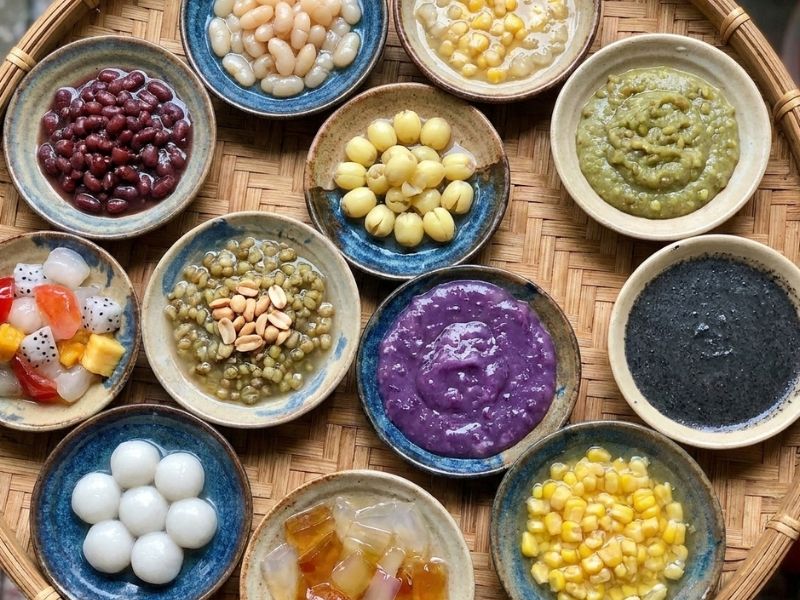
In Hue, dessert is predominantly an evening affair. After dusk settles over the Citadel, dessert stalls open along dimly lit alleys, their glass display cases glowing with dozens of colorful pots. Groups of friends gather on tiny plastic stools to chat and spoon sweet soups from small glasses, while dishes like sweetcorn chè (chè bắp) also serve a solemn cultural purpose as ceremonial offerings during ancestral worship.
Hue is famous across Vietnam for boasting up to fifty distinct varieties of sweet soup. Several remain legendary royal specialties, such as chè đậu ngự, crafted from prized imperial moon beans with a buttery, melt-in-your-mouth texture, chè đậu ván made from hyacinth beans, and golden taro pudding (chè môn sáp vàng) simmered with pandan leaves.
The most famous culinary marvel is chè bột lọc heo quay, which features small cubes of crispy roasted pork belly encased in translucent tapioca dough, floating in warm, ginger-infused sugar syrup. Taking a bite delivers an astonishing harmony of sweet syrup, spicy ginger warmth, chewy tapioca, and savory, crackling pork. It is an unforgettable royal invention that showcases the adventurous spirit of Hue's dessert makers, which you can explore alongside everyday treats in our guide to Vietnamese street food.
What Do These Hue Dishes Have in Common?
The fourteen Hue dishes above share three defining qualities: portions are small and arrive several at a time, the savory depth comes from artisanal fermented seasonings, and chili is treated as an essential cooking ingredient. When you explore the imperial city's food scene, you quickly discover that Hue cooking is united by three core culinary principles:
- Small, artistic portions served communally: Rather than sitting down to one massive bowl, dining in Hue is all about variety and presentation. Steamed rice cakes arrive in dainty saucers, dumplings come wrapped in bite-sized banana leaf parcels, and noodle bowls are sized so you can taste multiple creations in a single sitting.
- Savory depth built on fermented seasonings: Central cooks bypass plain salt in favor of deeply complex, artisanal ferments. Pungent mắm ruốc (fermented shrimp paste) anchors the broth of bún bò Huế and seasons cơm hến, while fermented soybean paste forms the luscious foundation of the nước lèo sauce for nem lụi and bánh khoái.
- Chili treated as a core cooking ingredient: In northern and southern Vietnam, chilies are usually left on the table for diners to add if they wish. In Hue, chilies simmer directly in the soup kettles, sizzle into marinades, and blend into dipping sauces, giving the cuisine its celebrated, fiery soul that sets it apart from Vietnamese food in the rest of the country.
Why Is Hue Food Spicier and Served in Smaller Portions?
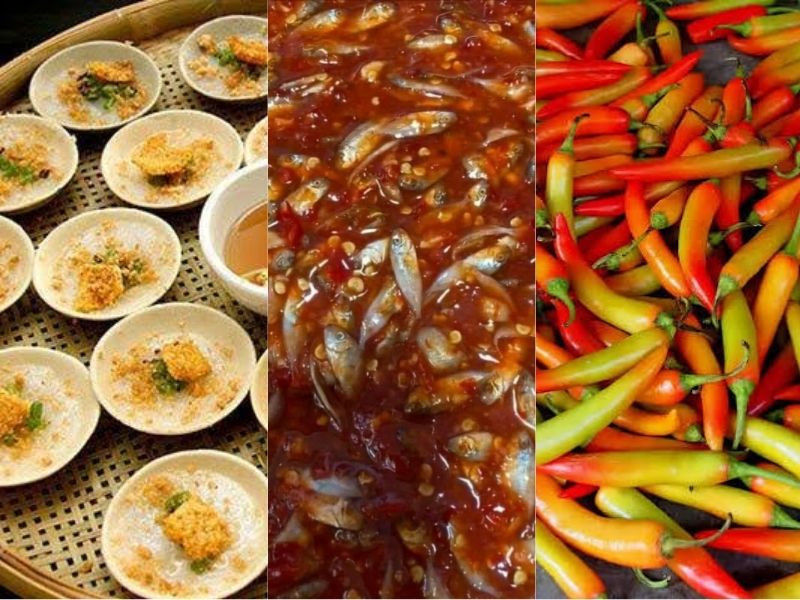
Hue food is spicier and served in smaller portions because two separate forces shaped the city: central Vietnam's mountainous terrain produced spices, making this the one region that cooks with real heat, and Hue spent 143 years as the imperial capital, where court kitchens served many small, carefully presented dishes at a single sitting. When comparing Hue's vibrant flavors with the rest of Vietnam, these two influences explain why the culinary experience feels so distinct:
Central Vietnam's geography played a decisive role in shaping local taste. Sheltered by the Truong Son mountain range, the region experiences hot, dry winds in the summer and heavy rains in the winter, conditions that favor the cultivation of pungent black pepper, aromatic lemongrass, and fiery red chilies. While northern cooking leans on gentle black pepper and southern food balances spice with sweetness, Hue cooks embraced heat as a warming, restorative element in everyday life. That is why dishes like bún bò Huế arrive with an invigorating fiery kick that stands in striking contrast to the delicate broths of Hanoi food.
The miniature serving sizes, meanwhile, are the living legacy of the Nguyen dynasty, which ruled Vietnam from Hue between 1802 and 1945. Court banquets were elaborate culinary showcases where emperors demanded visual perfection and endless variety. To satisfy the monarch, the palace assembled the Thượng Thiện board, an elite culinary team composed of the 50 finest chefs selected from across the entire kingdom.
Rather than fading into history books, that courtly elegance trickled down into neighborhood alley stalls and home kitchens. Hue people preserved the tradition of dining on multiple small, beautifully prepared plates rather than a single oversized bowl. When you eat in Hue, do as the locals do: order an assortment of saucers, dumplings, and rolls, place them in the middle of the table, and share the feast with friends.
Why Does Hue Have So Much Vegetarian Food?
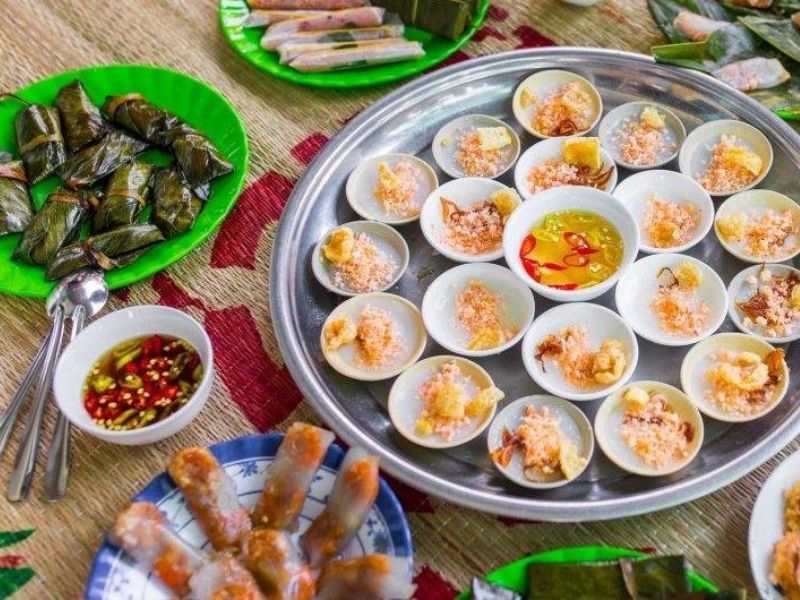
Hue is Vietnam's center of vegetarian cooking because the city is the historic heart of Vietnamese Buddhism, with 108 pagodas and over 300 temples, and because the Nguyen court adopted vegetarian practice, leaving both a religious habit of eating vegetarian twice a month and a developed body of meat-free cooking. These historical and religious roots elevated meat-free dining into one of Hue's greatest culinary achievements:
Hue has served as the spiritual cradle of Vietnamese Buddhism since the 16th century, today boasting 108 grand pagodas and over 300 historic temples scattered throughout its pine-forested hills and quiet riverbanks. When the Nguyen lords and subsequent emperors made Hue their capital, Buddhist philosophy deeply influenced court life, elevating meat-free cooking from simple monastic fare into a refined art form.
During major royal ceremonies and mourning rites, the palace kitchens prepared vast banquets that were entirely meat-free, eventually recording more than 125 distinct vegetarian recipes. Court chefs applied their full creativity to local ingredients, learning how to coax rich, complex flavors out of mushrooms, young jackfruit, tofu, and lotus seeds while crafting presentations fit for royalty.
This heritage remains very much alive in Hue homes today. Practicing Buddhists throughout the city eat vegetarian meals on the 1st and 15th days of every lunar month, ensuring that local vegetarian eateries are filled with neighborhood regulars rather than just visiting travelers. For food lovers cooking at home, this means Hue vegetarian dishes are not bland compromises with the meat removed, but complete, satisfying culinary masterpieces in their own right.
From the first morning slurp of spicy, lemongrass-scented bún bò Huế to an evening spent sharing saucers of delicate steamed rice cakes with friends, Hue’s food scene tells an unforgettable story of royal refinement and spirited local pride. It invites you to pull up a chair, marvel at the variety of small plates before you, and savor the bold harmony of central Vietnamese flavors. Nearly every iconic dish on this table comes alive through its dipping sauce or savory simmer, and it all starts with quality fish sauce. If you are ready to bring the vibrant, royal flavors of Hue into your own home, pick up a bottle of CHIN-SU fish sauce and let your culinary journey begin!
Frequently Asked Questions
Yes, Hue food is generally spicier than food from the rest of Vietnam, though the heat is not spread evenly across every dish. You will find the deepest heat in noodle soups like bún bò Huế and in savory dipping sauces spiked with fresh chili paste. However, delicate steamed rice cakes like bánh bèo and bánh nậm are naturally mild, and stalls always keep sliced chilies and chili oil on the side so you can customize the spice level to your own taste.
Hue is best known for bún bò Huế, its fiery lemongrass beef noodle soup, alongside delicate royal steamed rice cakes like bánh bèo, bánh nậm, and bánh bột lọc, and its signature clam rice, cơm hến. These beloved dishes remain deeply tied to the city's unique identity. Hue is also celebrated nationwide as Vietnam's capital of vegetarian cuisine and sweet dessert soups (chè).
The main difference between bún bò Huế and phở lies in the seasoning and noodles: bún bò Huế features thick round vermicelli in a spicy, robust broth simmered with lemongrass and fermented shrimp paste, while beef pho uses flat rice noodles in a clear, delicately spiced broth. Bún bò Huế is also simmered with both beef and pork, creating a bolder, earthier soup than northern phở.
Yes, you can easily find Hue food across the US, especially in Vietnamese communities with specialized restaurants and grocery markets. Bún bò Huế is a fixture on almost every Vietnamese menu alongside phở. For royal rice cakes like bánh bèo and bánh nậm, look for eateries specializing in central Vietnamese cuisine or check the deli counters of Asian supermarkets, where frozen bánh bột lọc is widely available to steam at home.
Hue royal cuisine is the sophisticated style of cooking developed in the Nguyen dynasty court kitchens, distinguished by many small, colorful, and artfully presented dishes served together at a single meal. While you won't find formal royal banquets served on every street corner, the spirit of royal cooking thrives in everyday Hue dishes, from the miniature saucers of bánh bèo to the intricate balance of flavors in every bite.

CHIN-SU KITCHEN TEAM
CHIN-SU Kitchen Team are the creative experts behind the delicious recipes featuring CHIN-SU sauces. With years of experience and a passion for flavor, our team carefully selects recipes from a variety of trusted chefs and bloggers, bringing together the best culinary insights to present you with the most suitable and exciting dishes. Every recipe is chosen to inspire you to create meals that are not only tasty but also easy to prepare, enhancing your dining experience. Join us as we explore a wide range of sauces and flavors, and elevate every meal with the perfect recipe for your table!
User Reviews
Featured Articles
Vietnamese Appetizers: 17 Small Bites From Across Vietnam
Saigon Food: 16 Traditional Dishes and Why They Taste Different
Hanoi Food: 15 Traditional Dishes and Why They Taste Different
17 Vietnamese Soups to Know, From Phở to Everyday Canh
SUBSCRIBE TO GET
MORE INFO
Want the latest and greatest recipes, updates, and more from us,
straight to your inbox? Subscribe and get our NEWS!