Hanoi Food: 15 Traditional Dishes and Why They Taste Different
Published: Sep 14, 2026 by CHIN-SU
Updated: Sep 18, 2026 by CHIN-SU
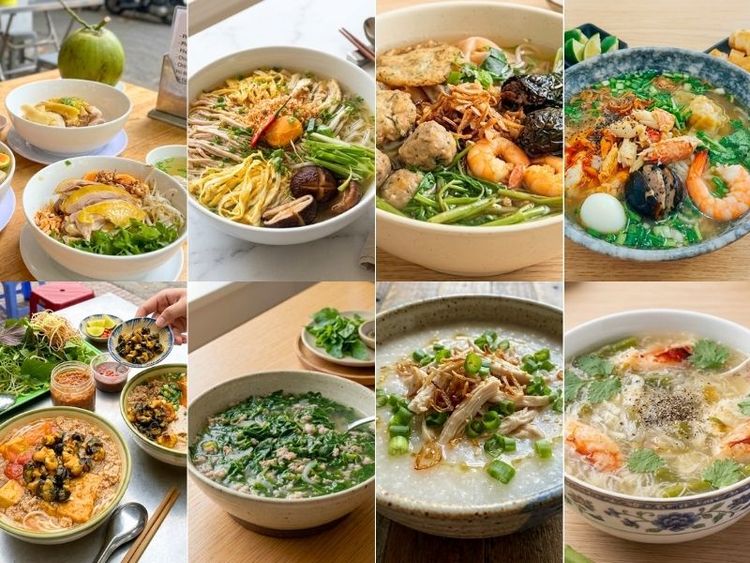
Waking up early in Hanoi means stepping straight into a world of enticing food aromas. You catch the comforting scent of beef bone broth simmering in giant sidewalk pots, the mouthwatering smell of charcoal-grilled pork drifting down tree-lined streets, and the lively sizzle of turmeric-marinated catfish landing on a hot tabletop burner. These are the flavors of Hanoi, and they offer an unforgettable culinary journey that tastes delightfully distinct from the Vietnamese dishes most people encounter overseas.
Rather than overwhelming your palate with fiery chilies or heavy sweetness, Hanoi cooking is celebrated for its elegance and delicate balance. Northern cooks let prime ingredients speak for themselves, reaching for cracked black pepper rather than chili heat, keeping sugars light, and using fragrant local herbs to lift every bite. The result is clean, layered flavors built from patient simmering and subtle seasoning choices.
As the historic cradle of Vietnamese civilization, the Red River Delta has nurtured these recipes over generations. Iconic dishes born right here, from tangy bún riêu to silky bánh cuốn, eventually traveled south with migrating families, becoming national treasures while keeping their soulful northern roots intact.
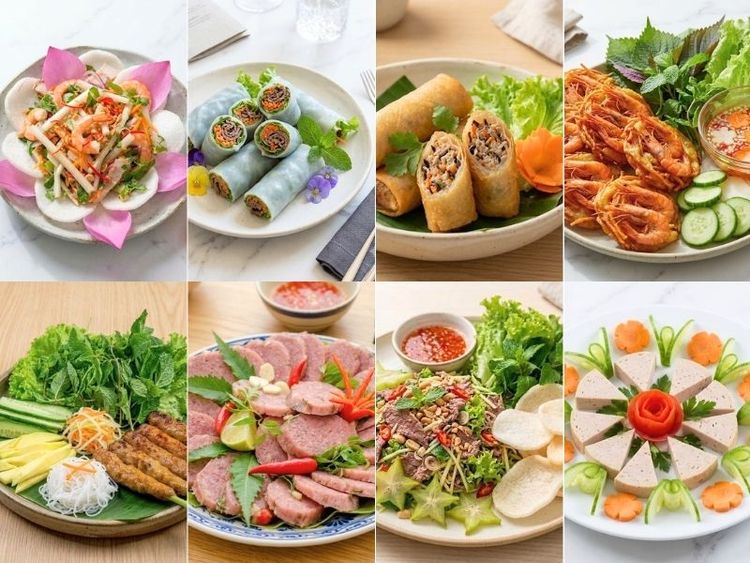
In this guide, CHIN-SU walks you through fifteen iconic Hanoi dishes, from world-famous phở and bún chả to delicate steamed rice rolls and velvety egg coffee: what goes into each one, when locals sit down to enjoy them, and how the northern delta pantry brings them all to life.

Table Of Contents
Phở
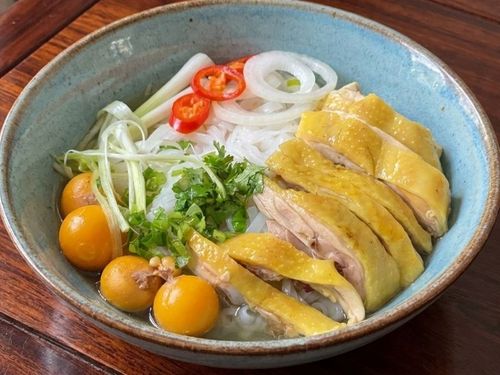
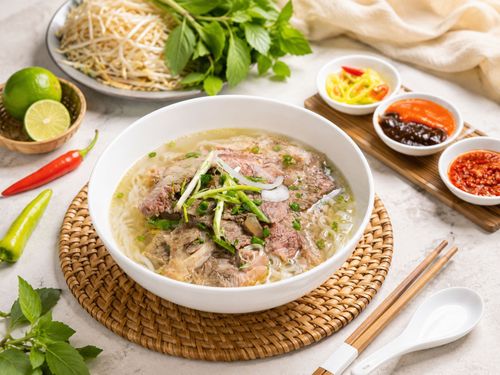
Phở is Vietnam’s iconic noodle soup of flat rice noodles in a clear, deeply fragrant bone broth, topped with tender slices of beef or chicken. When you sit down to a northern bowl, what strikes you first is the sheer purity of the soup. While modern phở traces its origins to Nam Định province between 1900 and 1907, it was on the bustling street corners of Hanoi where the dish was refined into the celebrated standard embraced by the entire nation.
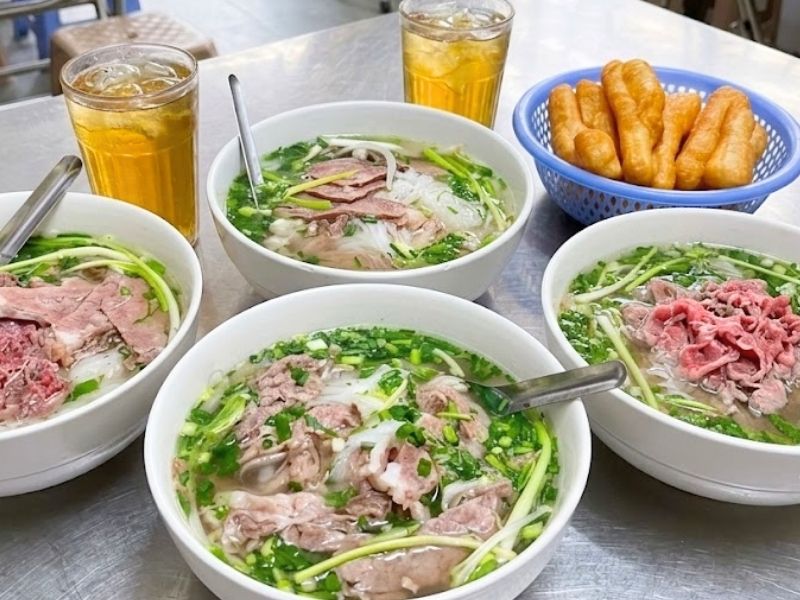
Hanoians love starting their day with a steaming bowl of phở, often pulling up tiny plastic stools on the sidewalk before seven in the morning. Silky flat rice noodles (bánh phở) rest beneath paper-thin slices of beef or fragrant poached chicken, submerged in a crystal-clear broth that has simmered for hours with charred ginger, onions, and warming spices like star anise and cinnamon.
When the vendor sets the hot bowl before you, it arrives garnished simply with finely diced green onions and cilantro. On your table, you’ll find jars of crunchy pickled garlic, fresh chili sauce, and golden crispy crullers (quẩy) that you tear and dunk directly into the hot broth to soak up its rich, savory essence.
Unlike southern-style bowls that arrive with sweet hoisin sauce and a sprawling garden of bean sprouts, culantro, and Thai basil, a classic Hanoi bowl is served essentially finished. Locals savor the broth just as the cook crafted it, adding perhaps a few slices of fresh chili or a spoonful of garlic vinegar. If you want to recreate these classics at home, our beef pho recipe and chicken pho recipe cover the traditional approach to both broths.
Bún Chả
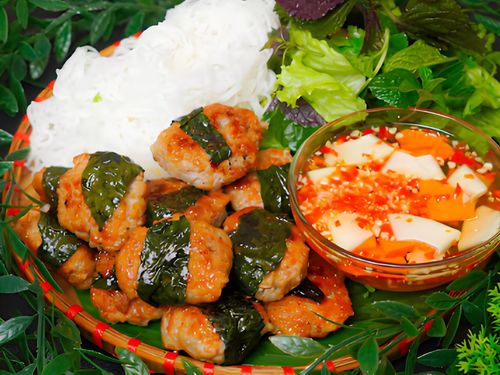
Bún chả is Hanoi's famous grilled pork dish, featuring smoky patties and caramelized pork belly served over rice vermicelli, a mountain of fresh herbs, and a bowl of warm, sweet-savory dipping sauce. What makes this dish such a joy to eat is that nothing is pre-mixed for you. Every element arrives in its own dish, inviting you to build each mouthful exactly the way you like.
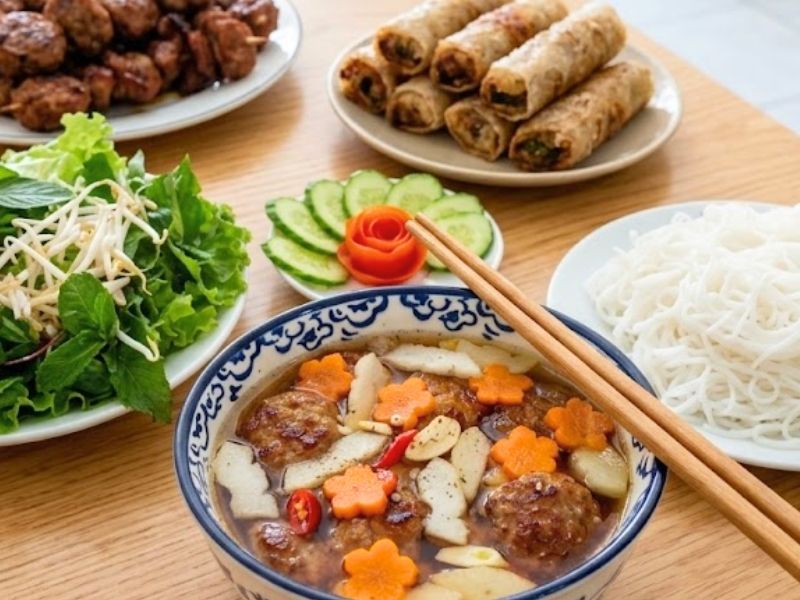
This is the undisputed king of Hanoi lunches. Around midday, the tantalizing aroma of pork grilling over glowing charcoal braziers wafts through city alleys, tempting hungry crowds to sidewalk tables just as writer Vũ Bằng described back in 1959.
The dish captured the world's imagination in May 2016, when President Barack Obama and Anthony Bourdain famously shared a casual three-dollar bún chả lunch on low plastic stools. What delighted locals most was seeing the international visitors fall in love with a dish that belongs so intimately to Hanoi.
Your bowl comes with two delicious cuts of pork: thin, charred slices of pork belly and juicy, seasoned minced pork patties. They rest in a warm dipping liquid made from diluted fish sauce balanced with vinegar, sugar, lime juice, crushed garlic, and sliced chili, dotted with crunchy pickled green papaya. A generous platter of cool rice vermicelli noodles and fresh local greens arrives alongside, including crisp lettuce, Vietnamese balm (kinh giới), and Hanoi’s prized Láng village basil.
To eat it like a local, lift a small nest of noodles and herbs with your chopsticks and dip them directly into the warm pork bowl. Quality fish sauce is the backbone of that flavorful broth; reach for CHIN-SU fish sauce to build your base at home, and follow our bún chả recipe to dial in the balance.
Bún Thang
Bún thang is Hanoi's elegant "five-color" noodle soup, featuring delicate rice vermicelli in a crystal-clear chicken broth, topped with an intricate mosaic of finely shredded ingredients. Nearly twenty distinct components come together in this bowl, sliced into thread-thin ribbons and arranged across the surface like the colorful folds of a silk fan.
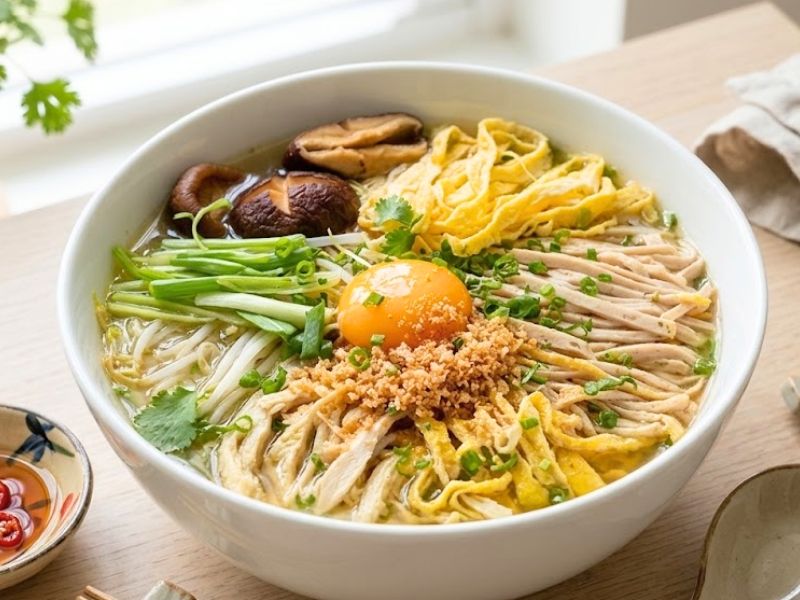
This culinary masterpiece began as a thrifty post-Tết tradition, created by northern home cooks to transform festive holiday leftovers into a fresh, elegant meal. Even today, Hanoi families associate bún thang with the cozy days right after the Lunar New Year, celebrating its delicate flavors and vibrant presentation.
The shimmering broth is slow-simmered from chicken, dried shrimp, and dried shiitake mushrooms, yielding an extraordinarily clean, naturally sweet savoriness without any heaviness. Across the soft noodles, cooks neatly arrange shredded poached chicken, pink ribbons of Vietnamese pork sausage (giò lụa), golden threads of paper-thin egg omelet, and finely shredded dried shrimp. Fragrant Vietnamese coriander (rau răm) provides the signature herbal aroma that greets you before your first spoonful.
Take a sip, and you’ll find that not a single ingredient overwhelms the others. Everything exists in total harmony. Traditional old-school versions finish with a tiny drop of giant water bug essence (cà cuống) for a captivating floral aroma. To see how northern broths compare with soups across the country, check out our guide to Vietnamese soups.
Bún Riêu
Bún riêu is a vibrant Vietnamese noodle soup featuring rice vermicelli in a tangy, tomato-rich broth, crowned with fluffy clouds of freshwater paddy crab paste. The broth glows a brilliant ruby-red from ripe tomatoes, delivering a bright, mouthwatering tang that balances the rich sweetness of the crab.
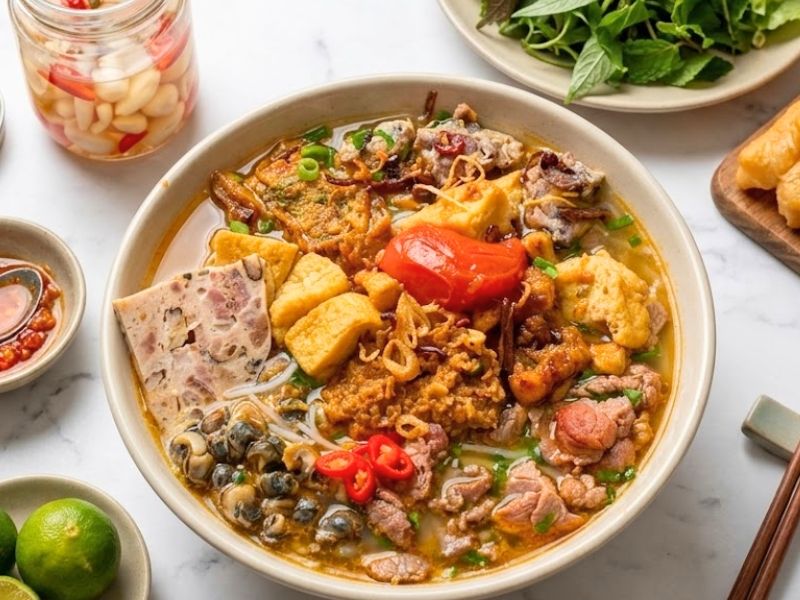
This bowl is a direct gift of the Red River Delta, where freshwater paddy crabs have lived in flooded rice fields for centuries. Northern cooks pound the tiny crabs whole in stone mortars, carefully straining the liquid so that when it simmers, the crab proteins rise to the top into soft, savory, soufflé-like clouds (riêu).
What gives northern bún riêu its distinctive flavor is giấm bỗng, a traditional fermented rice vinegar made from sticky rice wine lees. Its gentle, winey tang works alongside fresh tomatoes and tamarind to create a refreshing sourness that wakes up your taste buds.
Locals flock to neighborhood stalls for a quick, comforting breakfast or lunch, enjoying the piping-hot soup over tender rice vermicelli, fried tofu cubes, and crab cakes. A mountain of fresh greens arrives alongside, including shredded banana blossom, split morning glory stems, and fresh perilla, which you plunge straight into the steaming broth for a delightfully crisp contrast.
Bún Đậu Mắm Tôm
Bún đậu mắm tôm is a quintessential Hanoi street platter featuring pressed blocks of rice vermicelli, piping-hot crispy fried tofu, and pungent fermented shrimp paste, served with fresh herbs. Its name reveals the whole setup: three core ingredients that unite into one of the most craveable communal meals in the capital.
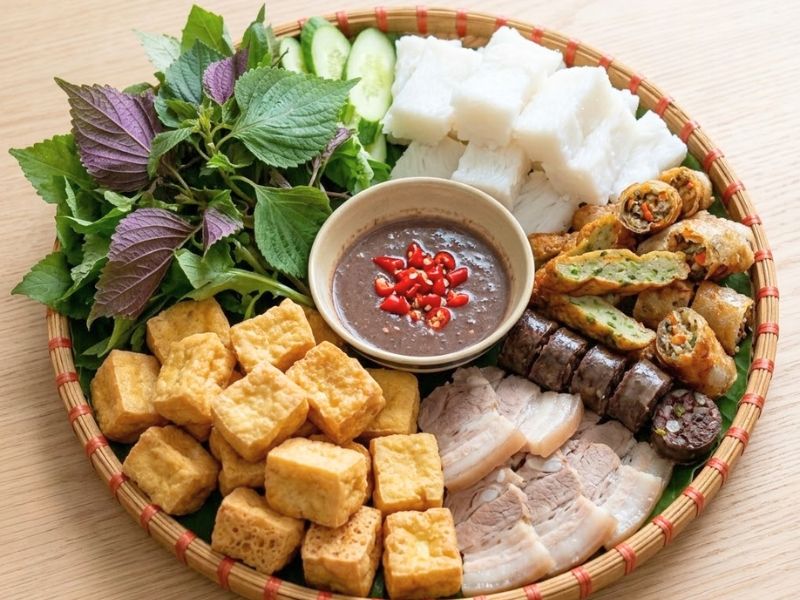
This is neighborhood comfort food at its best, drawing office workers, students, and groups of friends to lively alley stalls for a leisurely lunch. Everything is served together on a round woven bamboo tray (mẹt) lined with fresh banana leaves.
The undisputed star of the platter is mắm tôm, a deeply savory, purple-gray fermented shrimp paste with an undeniably bold aroma. The real magic happens when you whip it at your table: squeeze in fresh calamansi or lime juice, add a pinch of sugar and sliced birds-eye chili, and whisk rapidly with your chopsticks until it transforms into a light, frothy, fragrant dip. That simple step completely softens the pungent paste into an addictive umami bomb.
Alongside golden tofu cubes that are blistered and crispy on the outside and custardy on the inside, you get bite-sized squares of pressed rice noodles, slices of boiled pork belly, and savory young-rice pork patties (chả cốm). Wrap a piece of tofu with aromatic Vietnamese balm (kinh giới) and perilla, dip it generously into the frothy sauce, and savor the unforgettable rush of textures. If you're curious about Vietnam's diverse sauces, our guide on how to use fish sauce helps you navigate the options.
Chả Cá Lã Vọng
Chả cá Lã Vọng is Hanoi's legendary sizzling fish dish, featuring tender turmeric-marinated catfish tossed tableside with heaping mounds of fresh dill and spring onions. Dating back to 1871, the dish was created by the Đoàn family on Hàng Sơn Street, and it became so famous that the city eventually renamed the entire road Phố Chả Cá (Grilled Fish Street) in its honor.
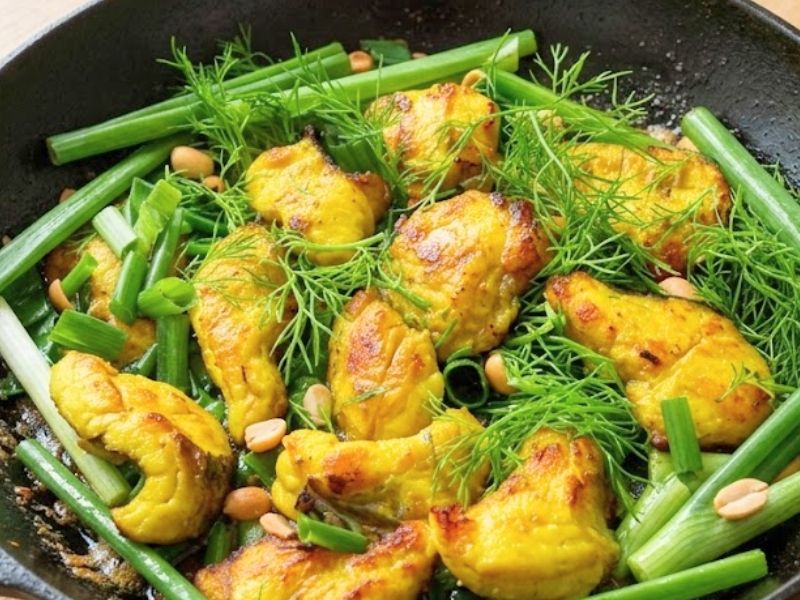
The traditional recipe calls for cá lăng (freshwater catfish), prized for its sweet, firm, bone-free fillets. Cooks marinate generous chunks of fish in golden turmeric, spicy galangal, and tart fermented rice lees (mẻ), pre-grilling them over charcoal until fragrant before bringing them to your table.
Dining on chả cá is a festive, interactive ritual that is especially wonderful for an evening out with friends. A sizzling pan of oil arrives over a tabletop burner, and the server tosses in mountains of feathery green dill and sweet spring onions, letting them wilt and sizzle around the golden fish.
You scoop hot fish and aromatic greens into your bowl over cool rice vermicelli noodles, top with toasted peanuts, and drizzle with piquant mắm tôm or a light fish sauce dressing. While dill is rarely used in southern cooking, here it is the soul of the dish, giving every bite a fragrant, herbal lift. For more delicious ways noodles take center stage, explore our roundup of Vietnamese noodle dishes.
Bánh Tôm Hồ Tây
Bánh tôm Hồ Tây are golden, crispy fritters made of sweet freshwater shrimp and shredded sweet potato nestled in a light rice-flour batter, deep-fried to perfection. Named after Hanoi's scenic West Lake (Hồ Tây), these crunchy snacks have been fried up at open-air stalls along the lakeshore since the 1930s.
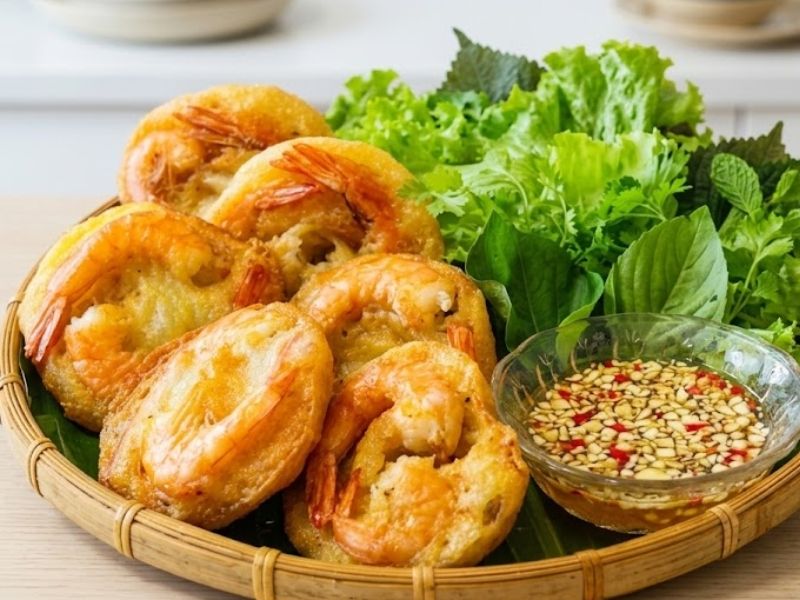
They are the ultimate late-afternoon treat, popular with locals enjoying a breezy stroll by the water after a long day. Cooks toss julienned sweet potato in a seasoned rice-flour batter, place fresh, shell-on freshwater shrimp right on top, and lower the patty into bubbling oil until blistered and golden.
The shredded sweet potato cooks into a light, airy nest with a satisfying crunch, while the whole shrimp turns wonderfully sweet and crisp. Because fried street foods in Hanoi always come with balance, your hot fritters arrive with a fresh herb basket and a bowl of light, sweet-sour dipping sauce.
Wrap each crunchy piece inside a crisp lettuce leaf with mint and Vietnamese coriander, then dip it into the nước chấm alongside slices of pickled green papaya. That dynamic interplay of hot crunch, cool greens, and tangy dip makes this a standout among Vietnamese appetizers.
Miến Lươn
Miến lươn is a northern Vietnamese specialty pairing springy glass noodles with freshwater swamp eel, served either dry with fresh herbs or in a deeply soothing, rich broth. Just like the paddy crabs in bún riêu, these freshwater eels thrive in the nutrient-rich delta waterways, providing a lean, nutrient-dense protein that Hanoians have cherished for generations.
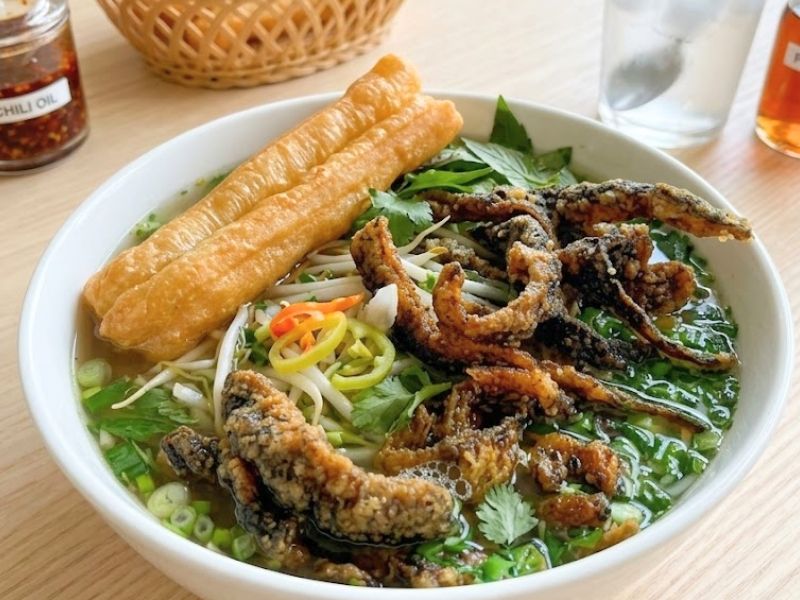
The noodles (miến dong) are crafted from canna root (arrowroot) starch rather than mung bean, giving them an exceptionally resilient, springy chew that holds its bite beautifully. The eel itself is prepared in two delicious ways: gently braised with turmeric until melt-in-your-mouth tender, or deep-fried into crispy, golden savory curls.
Locals turn to miến lươn as a restorative comfort meal, perfect for an energizing breakfast or a light, soothing late supper. You can order it miến lươn nước (submerged in a rich, dark broth simmered from eel bones, ginger, and shallots) or miến lươn trộn (tossed dry with crispy shallots, roasted peanuts, and a sweet-tangy soy dressing). Both versions are generously topped with peppery Vietnamese coriander (rau răm), whose warm, citrusy kick complements the rich eel perfectly.
Bánh Cuốn Thanh Trì
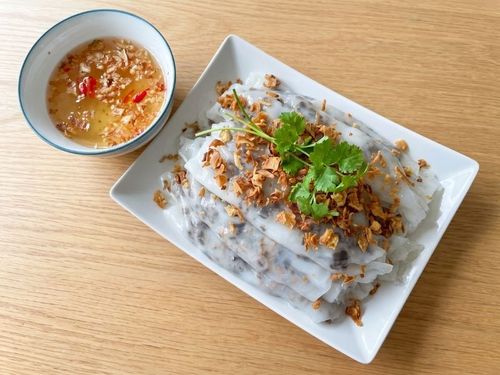
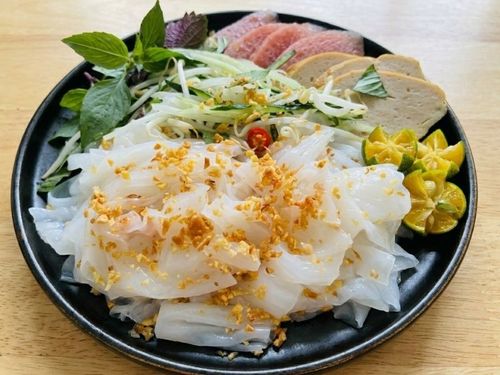
Bánh cuốn Thanh Trì is Hanoi’s celebrated steamed rice sheet dish, renowned for its gossamer-thin, silky texture and understated, delicate flavor. Hailing from Thanh Trì village just south of the city center, this specialty represents northern rice-steaming craftsmanship at its peak.
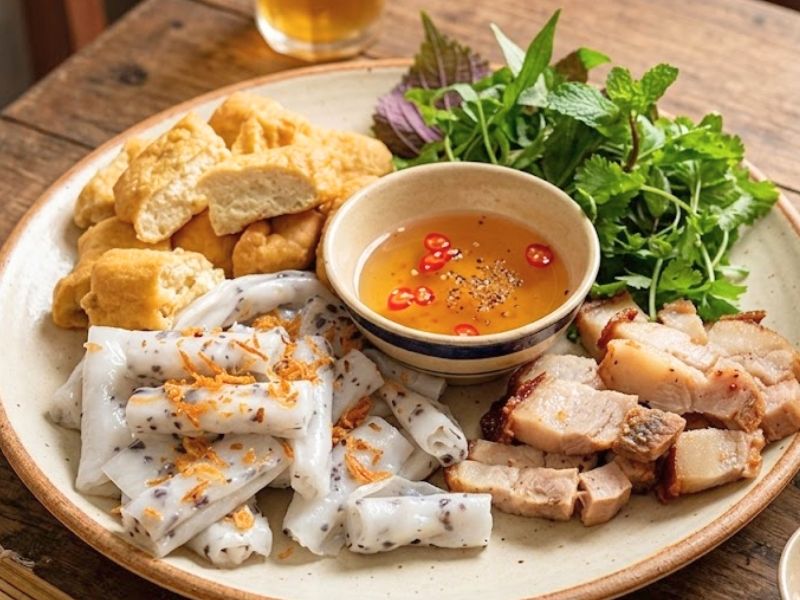
Watching a skilled vendor make them is pure street theater. She ladles a thin, fermented rice batter onto a taut cloth stretched over boiling water, covers it for a few seconds, and then uses a thin bamboo wand to lift off an impossibly sheer, translucent sheet of steaming rice paper.
While southern variations are rolled around heavy fillings, traditional Thanh Trì sheets are often served plain, folded gently like silk scarves so diners can appreciate the clean, floral fragrance of fresh steamed rice. Other stalls fill them lightly with seasoned minced pork, shallots, and crunchy wood ear mushrooms.
A plate arrives showered with golden crispy fried shallots, fresh herbs, and thick slices of savory Vietnamese pork roll (chả quế or chả lụa). You dip each tender bite into a bowl of warm, mild fish sauce, occasionally scented with a traditional drop of cà cuống (water bug essence). For a fun cooking project at home, our bánh cuốn recipe breaks down the batter, and you can also explore its southern cousin, bánh ướt.
Bánh Gối
Bánh gối, or Hanoi's "pillow cake," is a comforting, golden fried pastry stuffed with seasoned ground pork, wood ear mushrooms, glass noodles, and quail eggs. Its playful name comes from its plump, pleated half-moon shape, which looks just like a tiny, cozy pillow.
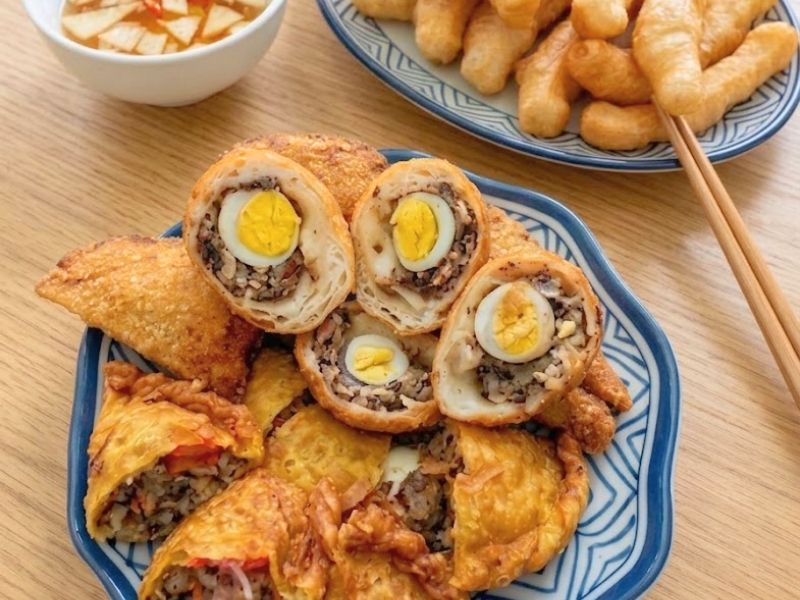
These golden turnovers are a favorite afternoon street snack, especially during the crisp, chilly days of autumn and winter. You’ll spot street-side frying carts surrounded by students and workers grabbing a hot bite on their way home.
The pastry shell is made from a thin wheat-and-rice dough that bubbles into a wonderfully flaky, blistered crust when deep-fried. Inside lies a piping-hot filling of savory minced pork, slippery glass noodles, crunchy black fungus, and a whole hard-boiled quail egg tucked in the middle.
The vendor snips each pastry into bite-sized pieces with shears right before serving. You wrap a warm piece in fresh lettuce leaves and herbs, then dunk it into a sweet-tangy dipping sauce studded with crunchy pickled green papaya and a hint of chili.
Bánh Mì
Bánh mì in Hanoi is a crisp, airy baguette filled with rich French-style pâté, savory Vietnamese cold cuts, creamy butter, and fresh herbs, showcasing the capital’s minimalist approach to sandwich-making. What sets the Vietnamese baguette apart is its light-as-air crumb and crackly, paper-thin crust, made with a blend of wheat and rice flour that shatters satisfyingly the moment you take a bite.
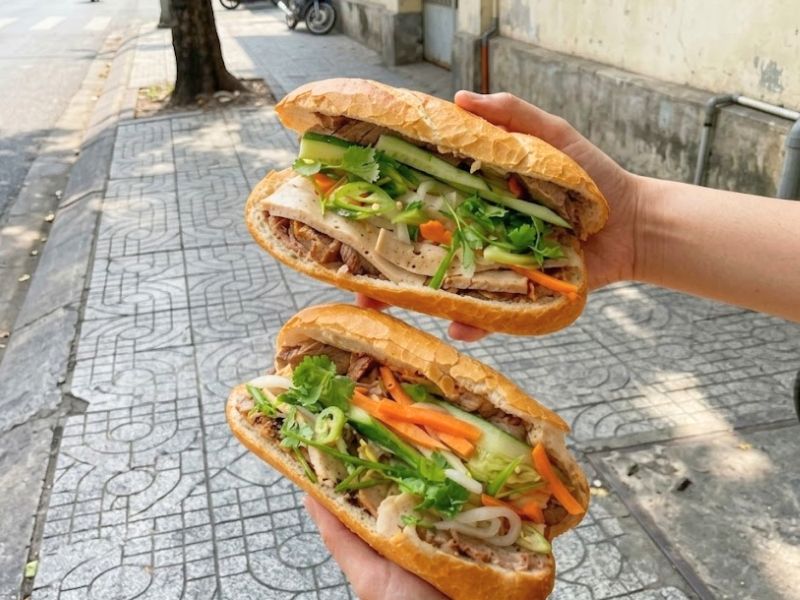
While southern baguettes often burst with dozens of contrasting toppings, Hanoi favors a more understated profile that lets high-quality liver pâté and warm bread take center stage. You’ll find locals grabbing one for breakfast from a sidewalk cart or enjoying it on the go between errands.
Across the city, two styles dominate. The first is the classic hand-held sandwich, generously smeared with velvety pork liver pâté, layered with sliced pork roll (chả lụa), a smear of rich butter, a dash of chili sauce, and a sprig of fresh cilantro. The second favorite is bánh mì chảo, where savory eggs, meatballs, and pâté arrive bubbling hot in a personal cast-iron skillet, meant to be scooped up with torn chunks of warm bread. Discover more morning street eats in our guide to Vietnamese street food.
Nộm Bò Khô
Nộm bò khô is Hanoi's addictive green papaya and beef jerky salad, tossing crunchy ribbons of unripe fruit with sweet-spicy dried beef, roasted peanuts, and fresh herbs in a zesty dressing. If you're looking for the ultimate afternoon refresh, this crunchy salad is an absolute must-try.
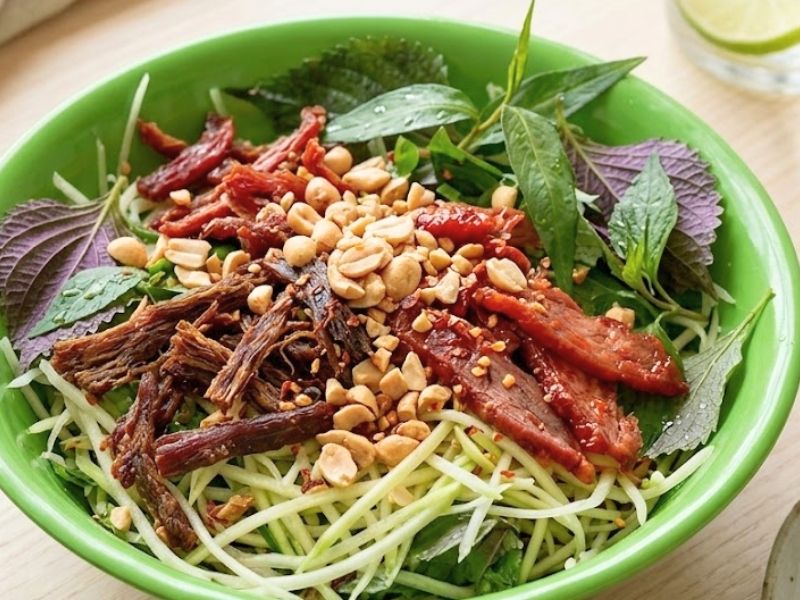
Around Hoàn Kiếm Lake and the winding alleys of the Old Quarter, you’ll see locals gathered on low stools in the late afternoon, chatting animatedly over plates piled high with this colorful salad. Crisp green papaya and carrot are shredded into fine matchsticks that pack an exhilarating snap.
Piled on top are dark, chewy strips of spiced beef jerky marinated with five-spice powder, toasted peanuts, and heaps of fresh mint and peppery Vietnamese coriander (rau răm). Unlike Thai som tam, which is pounded in a mortar, Hanoi vendors toss the salad lightly to order, dressing it with a mild, sweet-tangy fish sauce vinaigrette that keeps the papaya perfectly crisp. You can learn how to balance this style of dressing in our nước chấm guide.
Xôi Xéo
Xôi xéo is Hanoi’s iconic breakfast sticky rice, featuring chewy, turmeric-tinted glutinous rice topped with delicate shavings of cooked mung bean paste, sweet rendered shallot oil, and crispy fried shallots. With its bright, sunny yellow color and rich aroma, a packet of xôi xéo is one of the most welcoming morning sights in the city.
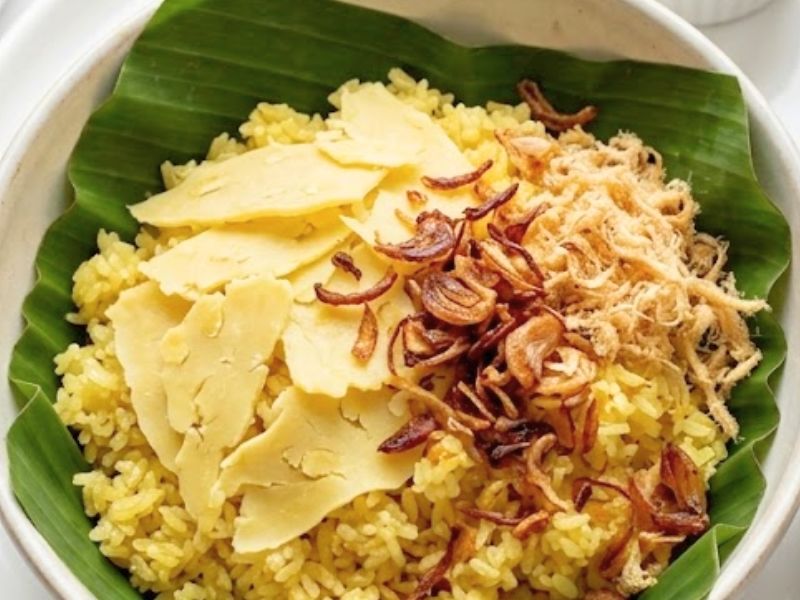
Vendors wake up before dawn to steam the glutinous rice (gạo nếp) with turmeric water, producing grains that are plump, glossy, and delightfully chewy. What makes xôi xéo uniquely northern is the vendor's signature shaving motion: she holds a dense, cooked ball of seasoned yellow mung beans and quickly shaves wafer-thin ribbons over the hot rice with a sharp knife, creating a velvety, buttery blanket.
She then ladles a spoonful of fragrant, golden rendered shallot fat over the top and showers the parcel with crispy fried shallots. Wrapped in fresh banana leaves or paper, it’s a warm, portable breakfast that keeps commuters and school kids energized until midday. You eat it directly from the leaf with your hands or a spoon, and heartier appetites can add savory toppings like braised pork (thịt kho) or Vietnamese ham (giò lụa).
Chè
Chè is Vietnam's beloved universe of sweet soups, puddings, and dessert beverages, highlighting seasonal beans, fragrant grains, and cooling lotus seeds. In Hanoi, sweet soups are crafted with a lighter touch than in the south, skipping heavy coconut milk in favor of clear, gentle sweetness and delicate aromas.
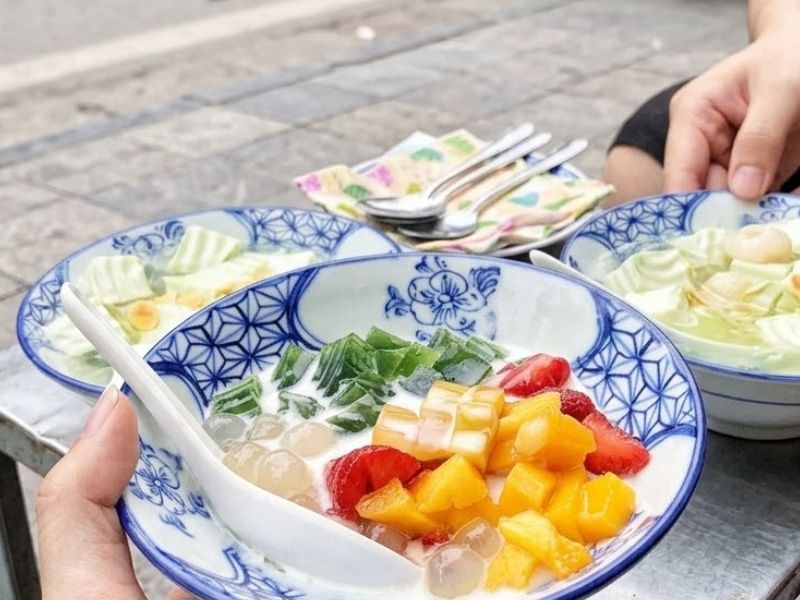
Locals enjoy chè as a cooling afternoon treat or a relaxing evening dessert after dinner, spooned slowly from a small glass while sitting sidewalk-side with friends. Northern favorites center on lotus seed soup (chè hạt sen), sweet mung bean, and above all, chè cốm.
Cốm, young green sticky rice harvested during Hanoi's brief and romantic autumn season, is the soul of northern culinary poetry. Traditionally produced in Vòng village on the city's outskirts, these delicate, immature grains are toasted and gently pounded until flat, carrying a sweet, milky scent. Simmered into a silky pudding with tapioca pearls and pandan leaves, chè cốm captures the nostalgic fragrance of a northern autumn in every single spoonful. On chilly winter nights, locals switch to warm bowls of ginger-spiced cassava soup (chè sắn) or sesame dumplings floating in piping-hot syrup (sủi dìn).
Cà Phê Trứng
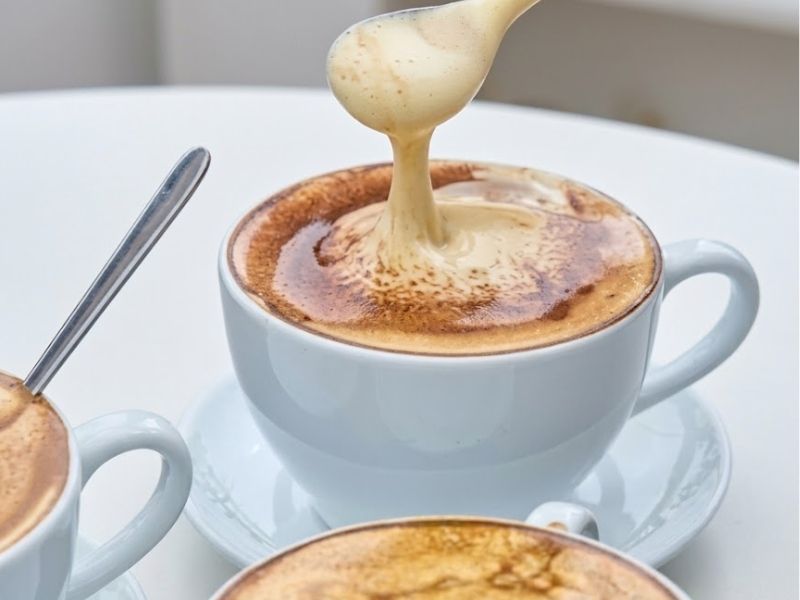
Cà phê trứng, or Vietnamese egg coffee, is Hanoi's decadent coffee creation featuring robust, dark-dripped coffee topped with a thick, velvety custard foam made from whipped egg yolks and condensed milk. It is coffee elevated into a luxurious dessert, and it holds a special place in the city's heart because Hanoi is where it was born.
The drink was created in the late 1940s by bartender Nguyễn Văn Giảng at the historic Sofitel Legend Metropole hotel. Facing a severe milk shortage during the war, he cleverly whipped egg yolks with sweetened condensed milk to create a frothy, custard-like crown that mimicked French café au lait, and later opened the famous Café Giảng to share his masterpiece.
To prepare it, fresh egg yolks are whipped vigorously with condensed milk and sugar until they expand into a pale, airy, incredibly rich foam with zero raw egg taste. This sweet custard is spooned gently over a freshly brewed, concentrated cup of dark Vietnamese robusta coffee.
Your cup typically arrives resting in a small bowl of hot water to keep it warm throughout your visit. Use a small spoon to taste the sweet, tiramisu-like custard on top, then dig deeper to blend it with the bold, bittersweet coffee below. It's a comforting, leisurely ritual best enjoyed in a cozy café on a cool Hanoi afternoon.
What Do These Hanoi Dishes Have in Common?
These 15 Hanoi dishes share three defining qualities: a deep culinary restraint that prioritizes clean balance over aggressive spice, an abundance of fresh local herbs treated as primary ingredients, and a reliance on freshwater delta ingredients. When you explore the capital's food scene, you quickly realize that northern cooking avoids fiery heat or heavy sweetness. Instead, it charms diners through subtle seasoning and harmonious layering, tied together by three core principles:
- Subtle seasoning and restraint: Broths are slow-simmered for clarity rather than clouded with heavy spices. Northern cooks reach for cracked black pepper to bring gentle warmth instead of piling on fiery chilies, and they rely on natural, delicate ferments like giấm bỗng (rice wine lees) and mẻ (fermented rice) rather than sharp citrus to balance acidity.
- Herbs treated as primary ingredients: Fresh greens in Hanoi are never an optional afterthought or simple garnish; they are essential to the flavor profile of every bowl. Feathery dill gives chả cá its unmistakable character, peppery rau răm anchors bún thang and miến lươn, fragrant kinh giới cuts the richness of bún đậu, and prized Láng basil completes bún chả.
- Freshwater bounty from the Red River Delta: With Hanoi situated inland among waterways, traditional recipes celebrate freshwater proteins rather than ocean seafood. Cooks turn to flooded rice paddies, lakes, and streams for tender paddy crabs, swamp eels, freshwater shrimp, and sweet river catfish.
Why Hanoi Food Tastes Milder Than Southern Vietnamese Food
Hanoi food tastes milder and more balanced than southern cooking because northern Vietnam’s cooler climate historically limited tropical spice production, creating a culinary tradition rooted in subtle seasoning, black pepper warmth, and natural ingredient flavors. When comparing northern and southern bowls, several key factors explain why the flavors diverge so noticeably:
- Climate and agricultural differences: Southern Vietnam enjoys tropical sunshine year-round, nurturing abundant crops of fresh chilies, sugarcane, and coconut palms. In contrast, northern Vietnam experiences four distinct seasons, including cold, overcast winters that historically limited spice farming and encouraged a more restrained palate.
- Warming pepper instead of fiery chili: With tropical spices scarce, northern cooks learned to create depth through slow simmering and subtle seasonings. Cracked black pepper and fresh ginger became the primary sources of heat, providing comforting warmth rather than the mouth-numbing burn of southern bird's-eye chilies.
- Cultural roots and migration: As the historic cradle of Vietnamese culture, northern kitchens developed foundational dishes like phở, bún riêu, and bánh cuốn. When migrating families carried these recipes south, cooks adapted them to southern abundance, helping shape the sweeter, richer character associated with Saigon food.
- Perception shaped by overseas restaurants: Because the majority of Vietnamese families who opened restaurants in the United States originated from the south, international diners grew up expecting sweet broths, bean sprouts, and squeeze bottles of hoisin. When you enjoy a northern bowl in Hanoi served simply with green onions, pickled garlic, and crispy quẩy, you are tasting the original, unadorned classic just as northern cooks intended.
Which Local Ingredients Shape Hanoi Cooking?
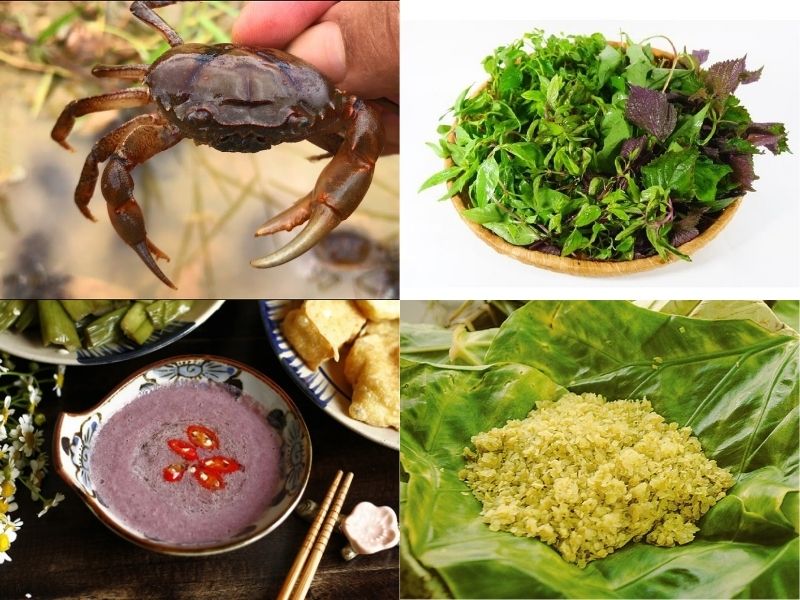
Hanoi cooking is uniquely shaped by freshwater catch from the Red River Delta, fragrant indigenous herbs, artisanal fermented vinegars, and fleeting seasonal harvests. These local treasures form the unmistakable fingerprint of northern cuisine.
Freshwater Delta Bounty
Because Hanoi sits nestled within the river delta, traditional proteins come straight from local waterways rather than the open sea. Sweet freshwater paddy crabs create the fluffy floating clouds in bún riêu, swamp eels provide the nourishing bite in miến lươn, whole lake shrimp crisp up in bánh tôm Hồ Tây, and river catfish sizzles in chả cá Lã Vọng.
Herbs Used as Core Ingredients
Fragrant greens in Hanoi are essential to the architecture of northern dishes rather than mere decoration. Feathery dill transforms chả cá into a northern icon, peppery Vietnamese coriander (rau răm) adds warmth to bún thang and eel noodles, and aromatic Vietnamese balm (kinh giới) and perilla pair perfectly with crispy tofu. Láng village basil, with its petite and intensely fragrant leaves, remains the gold standard for bún chả.
Artisanal Fermented Seasonings
Northern cooks rely on gentle, traditional ferments to build savory depth without overloading food with dry spices. In addition to fermented shrimp paste (mắm tôm), kitchens celebrate mẻ (sour fermented rice) and giấm bỗng (sticky rice wine lees), which impart a delicate, wine-like tartness to soups and marinades. Quality fish sauce remains the cornerstone of every dipping bowl, making CHIN-SU fish sauce an ideal, reliable starting point in any kitchen.
Fleeting Seasonal Delicacies
The Hanoi culinary calendar changes intimately with the weather, bringing ingredients that appear for only a few weeks each year. Autumn brings the romantic harvest of cốm (young green sticky rice from Vòng village), late autumn welcomes rare sandworms (rươi), and older traditional recipes celebrated the floral essence of cà cuống. In the evenings, locals gather around sidewalk carts for plates of steaming freshwater snails seasoned with ginger and lemongrass, a seasonal ritual that must be experienced fresh on the spot.
To help you navigate ordering and enjoying these northern specialties, here are answers to the most common questions travelers and food lovers ask about Hanoi food.
From the first morning sip of a fragrant phở broth to the sizzle of turmeric fish shared with friends at dinner, Hanoi's food scene tells a story of patience, balance, and quiet pride. It is a cuisine that invites you to slow down, pull up a stool, and discover how a few fresh ingredients can create pure culinary magic. Nearly every memorable dish here is elevated by the magic of dipping sauces, and that begins with a well-crafted fish sauce. If you're ready to bring the soulful flavors of Hanoi into your own kitchen, start with a bottle of CHIN-SU fish sauce and let the culinary adventure unfold!
Frequently Asked Questions
The most famous food in Hanoi is phở, closely followed by bún chả, chả cá Lã Vọng, and bánh cuốn. What makes these dishes so special is that they were either born in the capital or refined on its historic streets, cementing their status as true icons of northern Vietnamese culture.
Obama and Anthony Bourdain ate bún chả during their famous 2016 dinner in Hanoi. The two sat on low blue plastic stools at Bún Chả Hương Liên, sharing plates of grilled pork, rice vermicelli, fried seafood rolls, and cold bottles of Hanoi beer for just six dollars, introducing this beloved local lunch to food lovers worldwide.
Hanoi food focuses on subtle, savory balance and gentle black pepper heat, while Saigon food leans noticeably sweeter and features spicier broths and generous piles of fresh herbs. The difference comes down to geography and climate: the tropical south enjoys abundant coconut milk, sugarcane, and fresh chilies, while the cooler north emphasizes clear broths, delicate natural ferments, and restrained seasoning.
People in Hanoi typically eat warm, savory dishes for breakfast, with phở, sticky rice (xôi), and freshly steamed bánh cuốn being the everyday favorites. Grabbing a quick, nourishing meal from a sidewalk vendor before seven in the morning is a cherished daily habit across the city. For a deeper look at morning eating habits, explore our guide to Vietnamese breakfast foods.
Yes, you can easily cook authentic Hanoi dishes at home in the US using common Asian market staples and simple, smart ingredient substitutions. Flat rice noodles, dried vermicelli, and quality fish sauce are readily available in most grocery stores. If local northern ingredients are hard to find, firm catfish easily substitutes for cá lăng, fresh mint or Thai basil works in place of Láng basil, and canned crab paste provides a great base for bún riêu broth.

CHIN-SU KITCHEN TEAM
CHIN-SU Kitchen Team are the creative experts behind the delicious recipes featuring CHIN-SU sauces. With years of experience and a passion for flavor, our team carefully selects recipes from a variety of trusted chefs and bloggers, bringing together the best culinary insights to present you with the most suitable and exciting dishes. Every recipe is chosen to inspire you to create meals that are not only tasty but also easy to prepare, enhancing your dining experience. Join us as we explore a wide range of sauces and flavors, and elevate every meal with the perfect recipe for your table!
User Reviews
Featured Articles
17 Vietnamese Soups to Know, From Phở to Everyday Canh
Vietnamese Appetizers: 17 Small Bites From Across Vietnam
SUBSCRIBE TO GET
MORE INFO
Want the latest and greatest recipes, updates, and more from us,
straight to your inbox? Subscribe and get our NEWS!