Vietnamese Appetizers: 17 Small Bites From Across Vietnam
Published: Sep 14, 2026 by CHIN-SU
Updated: Sep 21, 2026 by CHIN-SU
Vietnamese appetizers are all about contrast: cool herbs against warm grilled meat, crisp wrappers around savory fillings, soft rice cakes beside bright, tangy dipping sauces. A plate of gỏi cuốn feels fresh and light, chả giò brings a crackly bite straight from the fryer, while bánh khọt, bò lá lốt, and chạo tôm arrive with the smoky, savory aromas that make sharing “just one more” almost impossible.
In Vietnam, these dishes do not always stay neatly in the role of a first course. At restaurants, weddings, and larger celebrations, khai vị often opens the meal with gỏi, rolls, soups, or small shared plates. In everyday eating, the same dishes move easily between appetizer, snack, and part of a larger spread. In this guide, CHIN-SU introduces 17 Vietnamese appetizers through the flavors, textures, regional stories, and dipping sauces that make each bite feel distinct.
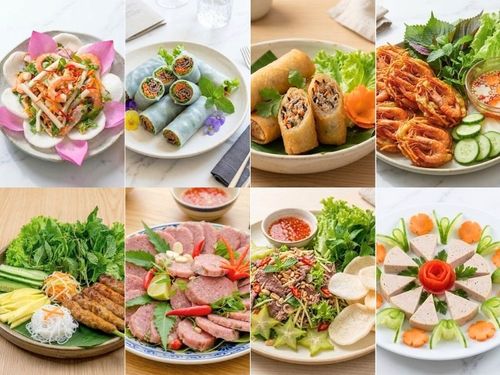
Table Of Contents
- Gỏi Cuốn
- Bò Bía
- Phở Cuốn
- Chả Giò
- Bánh Khọt
- Bánh Tôm
- Bột Chiên
- Gỏi Bò Bóp Thấu
- Gỏi Gà
- Gỏi Ngó Sen
- Nem Nướng
- Chạo Tôm
- Bò Lá Lốt
- Nem Lụi
- Bánh Bèo
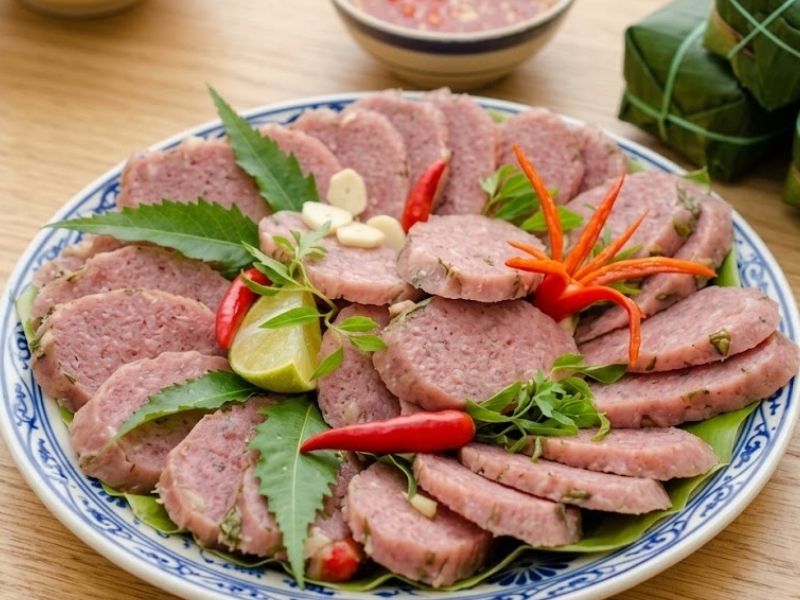
- Chả Lụa
- Nem Chua
- What Dipping Sauces Go With Vietnamese Appetizers?
- Do Vietnamese Meals Have Appetizer Courses?
- How Vietnamese Appetizers Change From North To South
- Which Vietnamese Appetizers Should You Start With?
Gỏi Cuốn
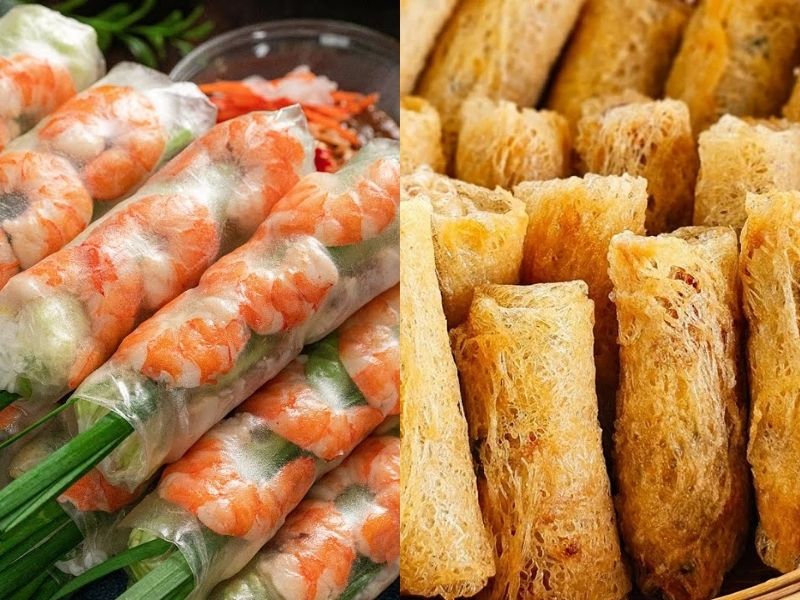
Gỏi cuốn is one of Vietnam’s most familiar fresh appetizers, with shrimp, pork, rice vermicelli, lettuce, and herbs tucked inside a soft sheet of rice paper. The first thing you notice is how bright the roll looks: pink shrimp, white noodles, and green herbs showing through the translucent bánh tráng. Bite into it and the textures come one after another, from crisp vegetables and tender meat to soft noodles and the gentle chew of the wrapper. Our gỏi cuốn recipe follows this classic shrimp-and-pork combination for anyone who wants to make it at home.
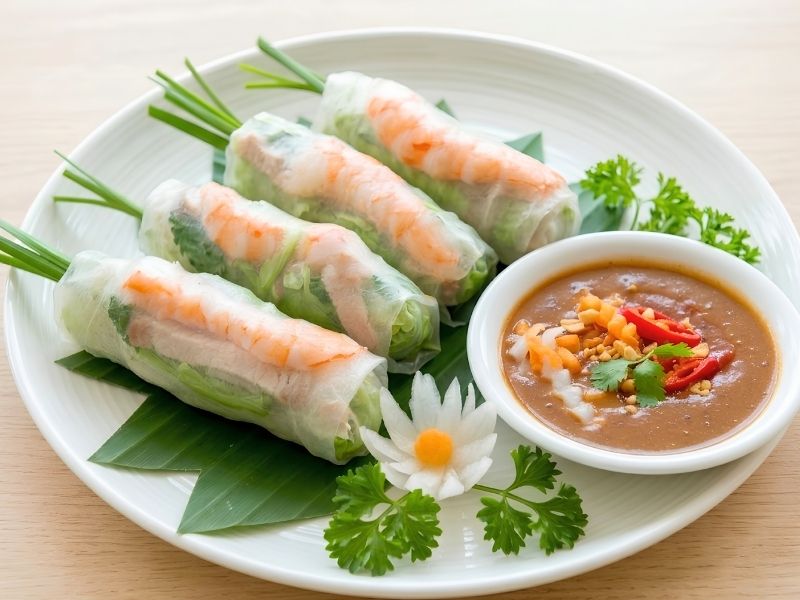
In Ho Chi Minh City, gỏi cuốn also carries the easygoing spirit of món ăn chơi, the kind of food people pick up when they want something light between meals. Vietnam Tourism recalls it as a childhood snack commonly bought from sidewalk vendors after school, and that informal way of enjoying gỏi cuốn still fits the dish today. It is food meant to be picked up by hand, shared from the same plate, and eaten slowly enough to enjoy the contrast between the soft wrapper and the fresh filling.
The dipping sauce gives each bite its final character. Hoisin-peanut sauce makes the roll richer and nuttier, nước chấm brings a lighter sweet-sour balance, while mắm nêm adds a deeper fermented savoriness. Try one bite without sauce, then dip the next. The roll itself stays light and clean, while the sauce shifts the flavor toward sweet, tangy, salty, or deeply savory.
Bò Bía
Bò bía wraps stir-fried jicama, Chinese sausage, dried shrimp, thin egg strips, and herbs inside soft rice paper, creating a roll that is richer and more savory than gỏi cuốn. The jicama still keeps a gentle crunch and natural sweetness, while lạp xưởng adds a sweet-salty richness and dried shrimp brings a deeper savory note. Thin ribbons of egg soften the mixture, so each bite moves between crisp, chewy, soft, and slightly sweet.
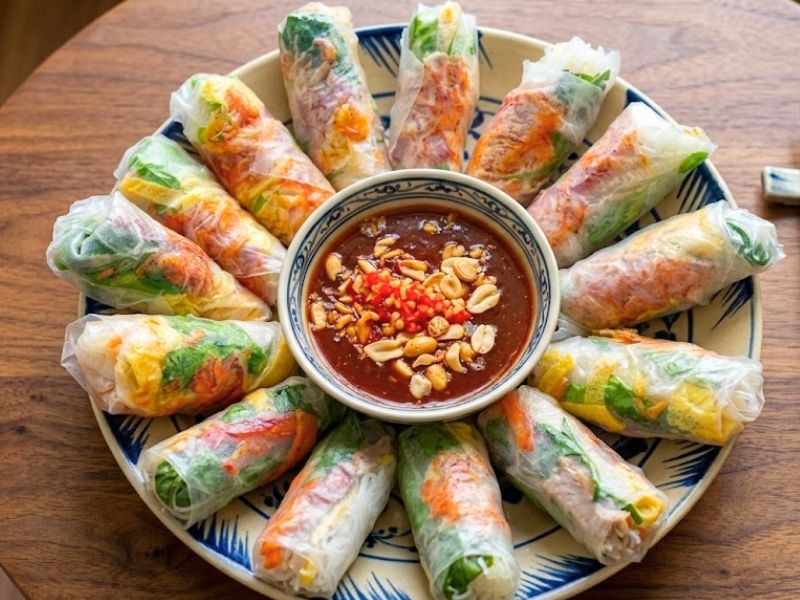
The name often catches first-time diners by surprise. Bò usually means beef in Vietnamese, yet bò bía contains no beef at all. Its name traces back to the Teochew and Hokkien popiah tradition, which gradually took on its own pronunciation and character in Vietnamese cooking. That connection still shows in the combination of rice paper, Chinese sausage, dried shrimp, egg, and vegetables.
In southern Vietnam, bò bía has long felt at home as món ăn chơi, sold from small carts and neighborhood stalls when you want something light to share between meals. The rolls usually come with a thick hoisin-peanut sauce, and that is where everything comes together: the nutty sweetness catches the jicama, sausage, and shrimp in the same bite. Pick up a roll, give it a generous dip, and the contrast between the soft wrapper, crisp filling, and rich sauce makes the next one easy to reach for.
Phở Cuốn
Phở cuốn is a light Hanoi appetizer made for sharing, with soft bánh phở wrapped around stir-fried beef, lettuce, coriander, and fresh herbs. Each roll is small enough for one or two bites, making it easy to pass around the table before a larger meal or alongside other small plates. The bánh phở stays smooth and tender, while the warm, garlicky beef and cool greens give every bite a fresh contrast.
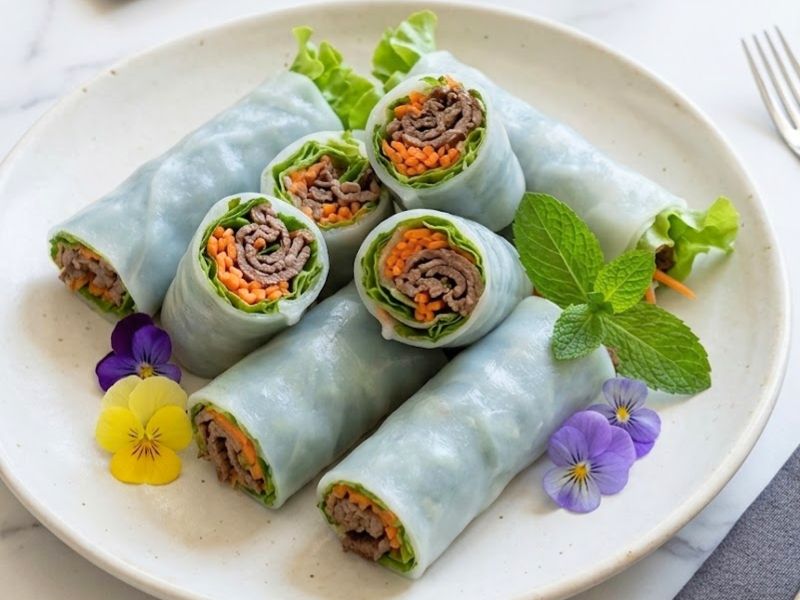
A plate of phở cuốn usually comes with nước chấm on the side. Fish sauce, sugar, acidity, garlic, and chili sharpen the mild rice sheet and bring the beef and herbs together. Dip just one end and the roll keeps its balance, with soft bánh phở, savory meat, crisp greens, and a bright salty-sweet sauce all meeting in the same bite.
Phở cuốn is closely tied to Ngũ Xã, beside Trúc Bạch Lake in Hanoi, where it became a neighborhood specialty in the early 2000s. One widely documented account traces the dish to a local phở shop that began using whole bánh phở sheets to wrap beef and herbs instead of cutting them into noodles for soup. Nearby shops soon followed, and Ngũ Xã became one of Hanoi’s best-known places for phở cuốn. That light, shareable format still suits the dish perfectly today: a plate in the middle, a bowl of nước chấm beside it, and one roll disappearing after another.
Chả Giò
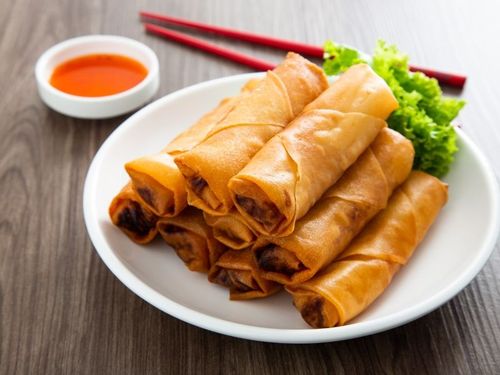
Chả giò is one of Vietnam’s most familiar fried appetizers, with thin rice paper wrapped around a savory filling of pork, shrimp, glass noodles, mushrooms, and vegetables. Straight from the fryer, the wrapper turns blistered and crisp while the filling stays soft and juicy inside. In northern Vietnam, the dish is better known as nem rán, while Central Vietnam has related versions called ram. What goes inside changes from one kitchen to another, with crab, jicama, taro, bean sprouts, and other vegetables appearing across regional and family recipes.
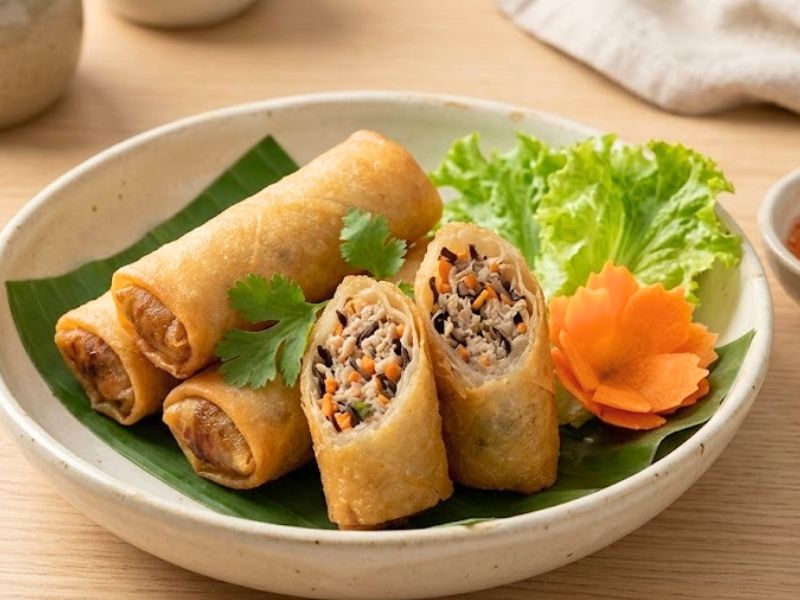
The first bite is all about contrast. The wrapper cracks as you bite through it, then gives way to the warmer, softer filling underneath. Chả giò is often wrapped with lettuce and fresh herbs before being dipped into sweet-sour nước chấm, so every mouthful moves between crisp, savory, cool, and tangy. Served this way, even a freshly fried roll still feels bright enough to keep reaching for another.
Chả giò also belongs naturally on a table meant for sharing. It appears at family gatherings, parties, Tết meals, and restaurant appetizer spreads, often piled onto a plate while still hot so everyone can take one as they eat. In northern holiday meals, nem rán commonly sits beside bánh chưng, boiled chicken, and giò. On an ordinary day, a few crisp rolls with herbs and nước chấm are enough to make the table feel a little more inviting. If you want to bring that same combination to your own table, our chả giò recipe walks through the filling, rolling, and frying process step by step.
Bánh Khọt
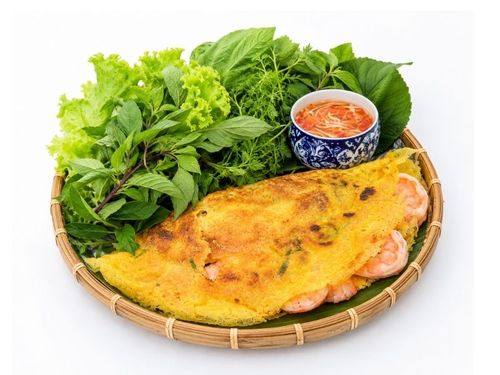
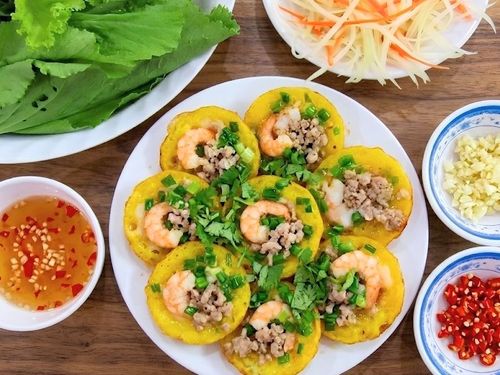
Bánh khọt are small savory rice pancakes that work naturally as a shared Vietnamese appetizer, especially when they arrive hot with crisp edges and sweet shrimp on top. The Vũng Tàu style is the best known, cooked in round molded pans until the bottoms turn golden and crunchy while the centers stay soft. Shrimp, scallions, and sometimes shrimp floss or scallion oil add sweetness and fragrance without making each piece feel too heavy.
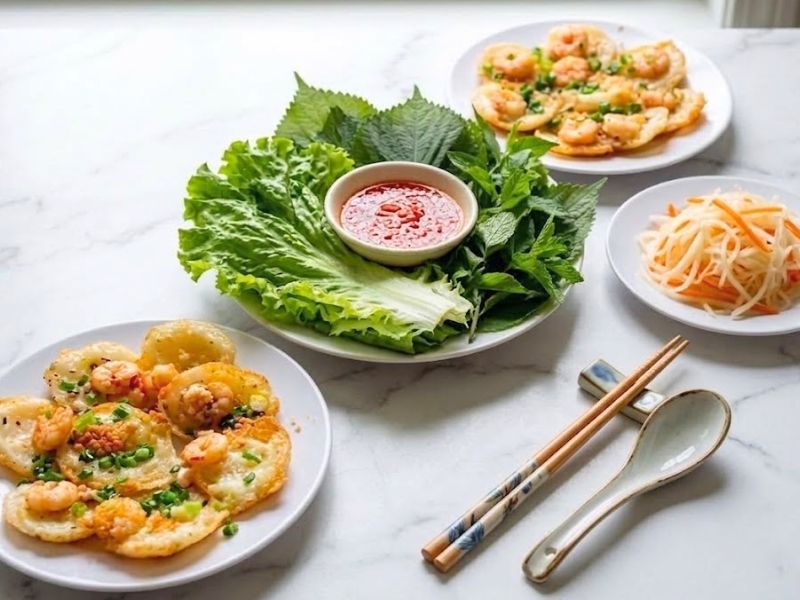
The plate really comes together once the greens and nước chấm arrive. Tuck one bánh khọt into lettuce or mustard greens with herbs such as perilla, fish mint, or basil, wrap it loosely, then dip it into the sweet-sour sauce. Shredded green papaya often sits in the nước chấm, adding another crisp layer. The cool greens soften the richness of the fried batter, while the sauce brings acidity and saltiness that sharpen the shrimp and rice pancake.
In Vũng Tàu, bánh khọt is both a local specialty and a familiar món ăn chơi to share with friends or family. Each piece is small enough to wrap and finish in a few bites, which makes a plate easy to pass around while everyone builds their own combination of herbs, greens, and sauce. Other regions have their own bánh khọt and bánh căn traditions, while the Vũng Tàu version remains one of the styles most closely tied to the city’s food identity. If you want to recreate that crisp pancake, fresh-herb, and nước chấm combination at home, our bánh khọt recipe walks through the full method.
Bánh Tôm
Bánh tôm is a crisp Hanoi appetizer made with whole shrimp, shredded sweet potato, and a light golden batter, usually served hot for the table to share. The edges turn crunchy straight from the oil, while the center stays softer and slightly sweet from the potato. The shrimp sits visibly on top, often with the shell still on, adding another crisp bite and a gentle seafood sweetness.
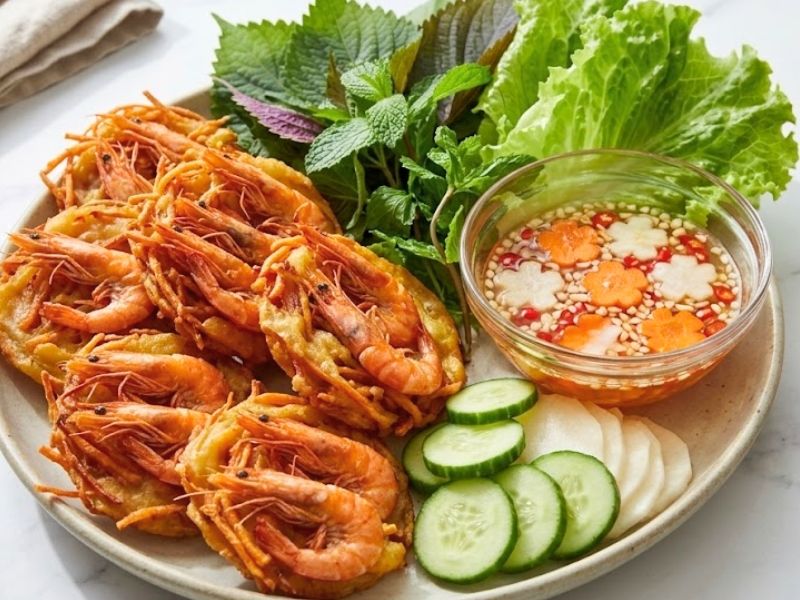
The fritter really comes alive with the greens and nước chấm beside it. Wrap a piece in lettuce with fresh herbs, add a little pickled papaya or carrot, then dip it lightly into the sweet-sour sauce. The cool greens and sharp pickles cut through the fried batter, while the nước chấm brings enough acidity and sweetness to keep each bite bright rather than heavy.
Bánh tôm is closely tied to Hồ Tây, or West Lake, in Hanoi, where early versions used small freshwater shrimp caught from the lake. The dish later became strongly associated with the well-known Bánh Tôm Hồ Tây restaurant on Thanh Niên Street. That connection still shapes how many people think of the dish today: a plate of hot fritters in the middle, herbs and nước chấm within reach, and everyone taking pieces as they go.
Bột Chiên
Bột chiên is a crisp, savory Saigon appetizer made from cubes of rice-flour cake pan-fried with egg until the edges turn golden while the centers stay soft and chewy. Scallions cook into the egg and release a gentle oniony aroma, while shredded green papaya or pickled vegetables bring something cool and crunchy to the plate. The best pieces come straight from the pan, with crisp corners, a tender middle, and just enough egg clinging to each cube.
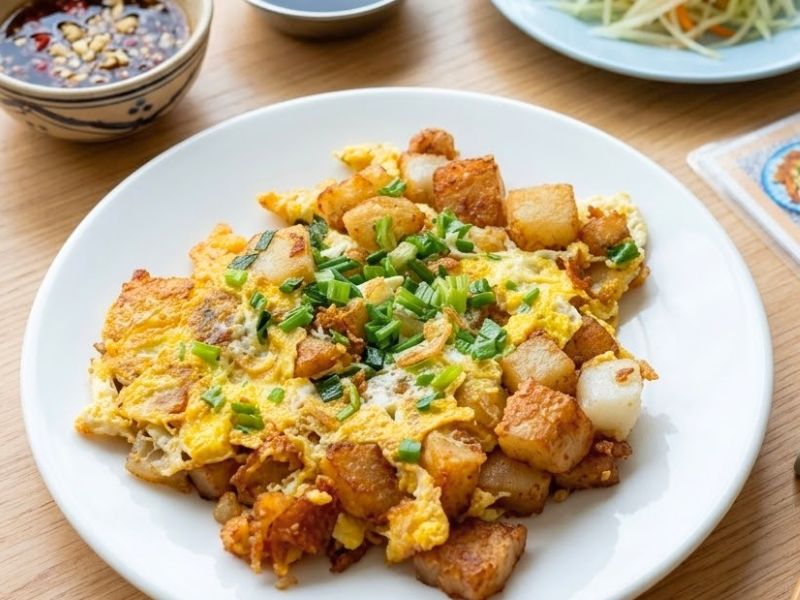
What sets bột chiên apart from many other Vietnamese appetizers is the sauce. Instead of nước chấm, it is commonly served with a soy-based mixture of vinegar, sugar, and chili, giving the mild rice cake and rich egg a salty, tangy lift. Some people spoon a little over the plate, while others dip each piece as they eat. Between bites, the green papaya cuts through the richness and keeps the plate from feeling too heavy.
Bột chiên also carries a strong Chinese-Saigon connection, with roots in the food traditions of Chinese communities in southern Vietnam, especially around Chợ Lớn. Over time, it became a familiar part of Saigon food, particularly as an afternoon street snack served from sidewalk shops and neighborhood carts. A hot plate works just as well for one person as it does in the middle of the table, making bột chiên an easy dish to share when you want something crisp, savory, and satisfying without committing to a full meal.
Gỏi Bò Bóp Thấu
Gỏi bò bóp thấu is a bright, refreshing Vietnamese appetizer built around tender beef, crisp vegetables, fresh herbs, and a lively fish sauce dressing. Thin slices of beef mingle with green banana, star fruit, onion, carrot, and sometimes pineapple, creating a bite that moves from savory meat to sharp acidity, gentle bitterness, and crunch. Roasted peanuts, fried shallots, basil, and coriander add fragrance and texture without weighing the salad down.
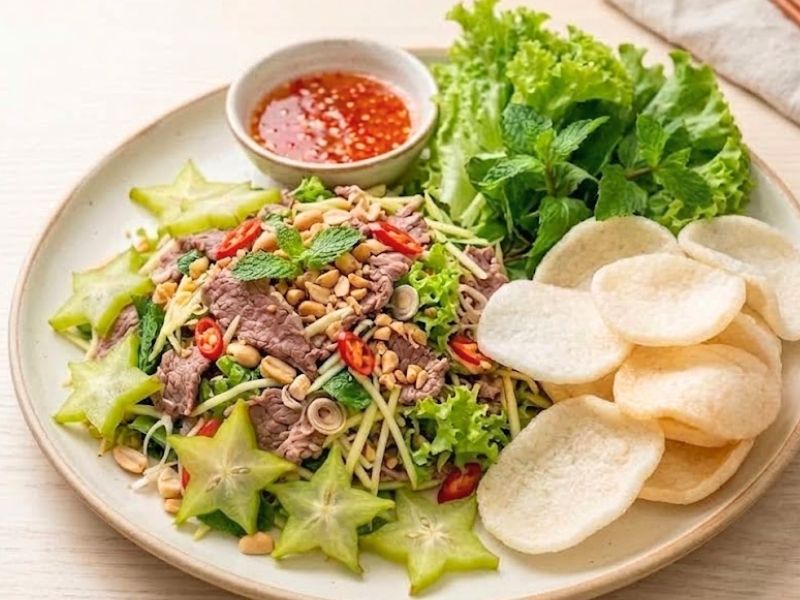
What gives the dish its character is the way everything is mixed together. Fish sauce, lime, sugar, garlic, and chili coat the beef and vegetables with a salty, sour, sweet, and spicy balance, while the herbs release more aroma as the salad is tossed. The name bóp thấu reflects this hands-on preparation, where the ingredients are gently worked together so the seasoning reaches every part of the dish rather than sitting only on the surface.
Gỏi bò bóp thấu often appears at parties, family gatherings, and restaurant tables before or alongside richer dishes. It is commonly served with bánh phồng tôm, whose light, crisp texture makes a natural scoop for the salad. Take a little beef, a few crunchy vegetables, and some herbs with each cracker, and the combination feels fresh enough to wake up the appetite while still giving every bite plenty of flavor.
Gỏi Gà
Gỏi gà is a bright Vietnamese appetizer that brings tender chicken, crisp vegetables, fresh herbs, and a lively fish sauce dressing together on one shared plate. Shredded poached chicken is tossed with cabbage or banana blossom, sliced onion, carrot, and rau răm, while roasted peanuts or fried shallots add a nutty crunch on top. The chicken stays soft and savory against the sharper bite of the vegetables, giving the salad plenty of contrast without feeling heavy.
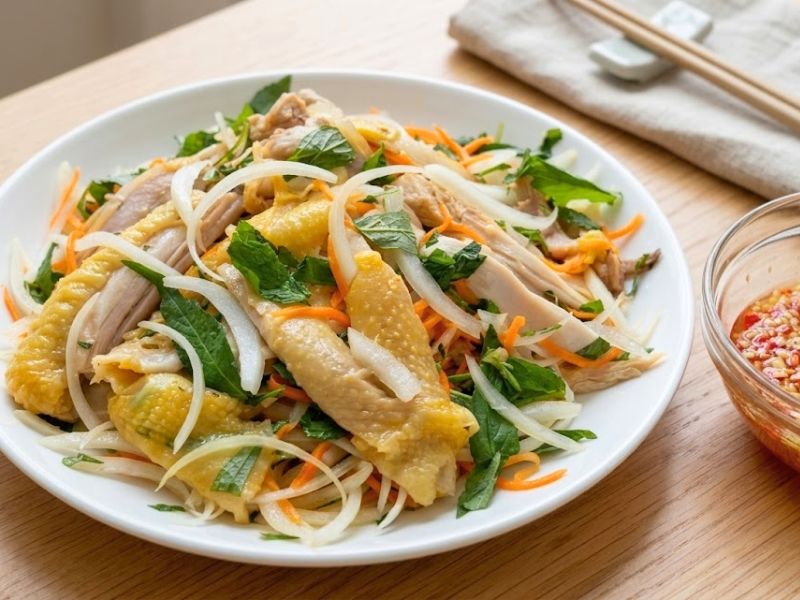
The dressing is what wakes everything up. Lime brings acidity, fish sauce adds savory depth, and sugar, garlic, and chili round out the balance without covering the flavor of the chicken. Bánh phồng tôm often comes alongside, adding a light, crisp scoop for the salad and making it easy for everyone at the table to reach in for a bite.
Gỏi gà moves easily between family meals, parties, and larger gatherings. In the Mekong Delta, it also appears in cháo gỏi gà, where the chicken broth becomes a light porridge and part of the meat is tossed into the salad. One dish comes warm and comforting, the other cool, crisp, and tangy, which makes the pairing especially satisfying on a shared table.
Gỏi Ngó Sen
Gỏi ngó sen is a refreshing southern Vietnamese appetizer built around the cool, juicy crunch of young lotus stems. The stems are tossed with shrimp, boiled pork, carrot, onion, rau răm, roasted peanuts, and fried shallots, then dressed with fish sauce, lime, sugar, garlic, and chili. Even after mixing, the ngó sen keeps its firm bite, giving the salad a lightness that works especially well at the beginning of a shared meal.
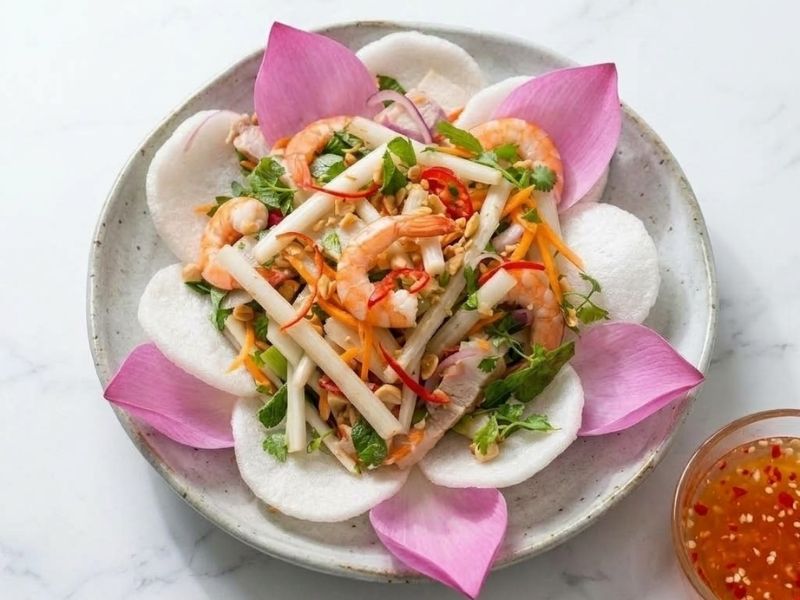
That texture is what makes the dish so distinctive. The hollow lotus stems snap gently between the teeth, while shrimp and pork bring sweetness and savoriness around them. Rau răm adds a peppery herbal note, and peanuts or fried shallots bring a final layer of richness. Bánh phồng tôm often comes on the side, making it easy to scoop up a little salad and get crisp crackers, juicy lotus stem, meat, herbs, and dressing in the same bite.
Gỏi ngó sen is especially familiar in southern Vietnamese cooking, where it appears at family gatherings, parties, and restaurant tables before richer dishes arrive. The salad also shows how completely the lotus becomes part of Vietnamese food culture, from seeds and roots to stems and leaves. Here, the ngó sen stays at the center of the plate, carrying the dressing while keeping every mouthful bright, tangy, and clean.
Nem Nướng
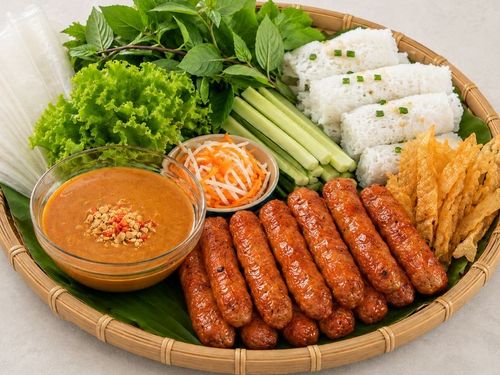
Nem nướng is a smoky grilled pork appetizer from Khánh Hòa, especially associated with Ninh Hòa and Nha Trang, where the aroma of pork charring over the grill is part of the experience. The meat is finely seasoned and grilled until the outside develops caramelized edges while the inside stays juicy and springy. A serving usually arrives with rice paper, crisp fried bánh tráng, cucumber, pickled vegetables, green mango or star fruit, and a generous pile of fresh herbs, turning one plate of grilled pork into a much more colorful spread.
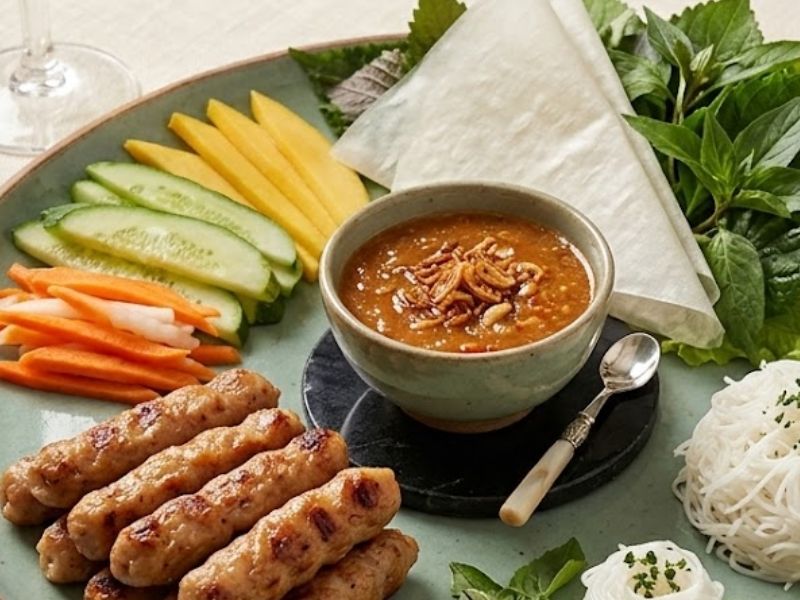
What makes nem nướng especially enjoyable is the mix of textures and flavors around the meat. Smoky pork sits against cool herbs and crisp vegetables, while shards of fried bánh tráng add a sharp crunch that lasts through the first few bites. Because everyone builds their own roll, the balance changes naturally from one piece to the next, sometimes fresher and more herbaceous, sometimes richer with more pork and crispy bánh tráng.
The dipping sauce is just as distinctive as the nem itself. Nha Trang-style versions are thick, savory, and gently sweet, with recipes varying by shop and often drawing on pork, liver, shrimp, peanuts, or fermented soybean seasonings. The sauce brings the grilled meat, vegetables, and herbs together without hiding their individual flavors. Our nem nướng recipe follows the same combination of smoky pork, fresh accompaniments, and rich dipping sauce that makes this such an easy appetizer to share around the table.
Chạo Tôm
Chạo tôm is a fragrant Huế-style appetizer made by wrapping seasoned shrimp paste around short pieces of sugarcane, then steaming, grilling, or frying them until the outside turns lightly golden. The shrimp stays springy and juicy, with garlic, fish sauce, and a little pork fat adding savory richness, while the sugarcane lends a gentle sweetness from the center. Served with lettuce and fresh herbs, each piece feels rich enough to be satisfying without becoming too heavy at the start of a meal.
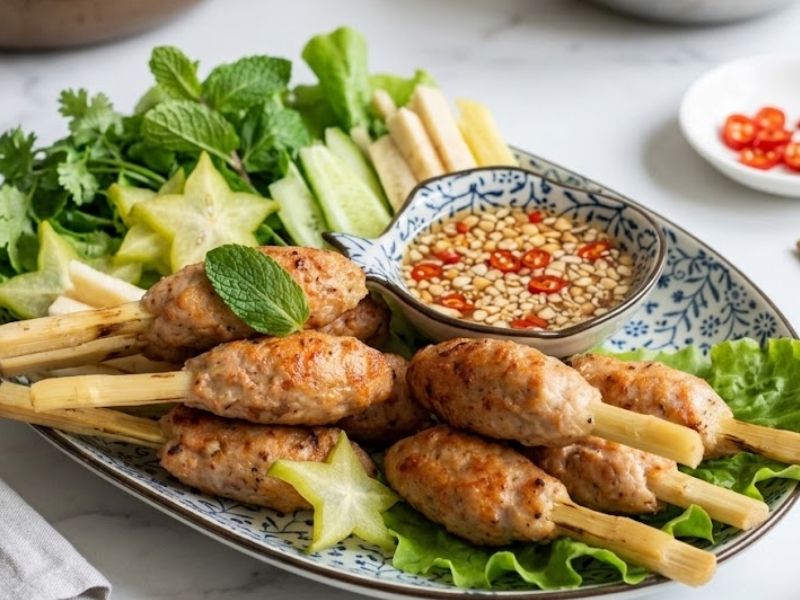
Part of the fun is deciding how to eat it. You can bite the shrimp straight from the cane or slide it off and wrap it with herbs before dipping. Once the shrimp is gone, the sugarcane still has one last role: chew it briefly to release the sweet juice, then set the fibrous piece aside. That small ritual makes chạo tôm especially memorable, with the sweetness of the cane lingering after the savory shrimp is finished.
Chạo tôm is closely associated with Huế, where careful preparation and elegant presentation run through many of the city’s traditional dishes. Once reserved more often for special occasions, it now appears on restaurant and banquet menus as an appetizer meant to be shared. A few pieces of chạo tôm, fresh herbs, lettuce, and nước chấm bring together sweetness, savoriness, fragrance, and texture in a way that wakes up the palate without taking over the meal. Follow our chao tom recipe to recreate this Huế-style shrimp appetizer at home.
Bò Lá Lốt
Bò lá lốt is a smoky Vietnamese appetizer that brings seasoned beef and fragrant lá lốt leaves together over the grill. As the rolls cook, the leaves darken at the edges and release a warm, peppery aroma into the juicy beef inside. Scallion oil and roasted peanuts often finish the plate, adding richness and crunch to the charred, herbaceous flavor. The dish is especially familiar in southern Vietnam, where it often appears as part of a larger spread rather than on its own.
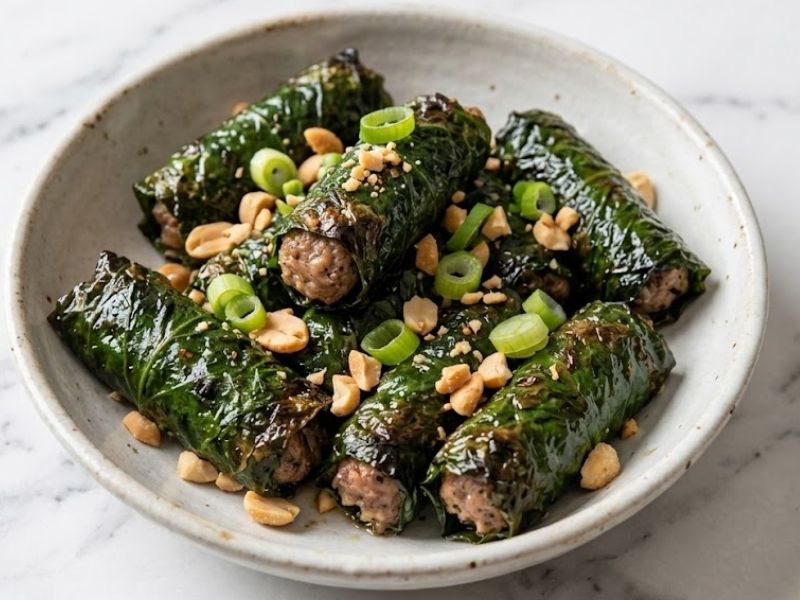
The grilled rolls are only the beginning. A full plate usually comes with rice paper, rice vermicelli, lettuce, herbs, cucumber, and pickled vegetables, giving everyone the chance to build each bite differently. Wrap one roll with a little bún and fresh greens, then dip it into the sauce while the beef is still warm. Mắm nêm, often balanced with pineapple, garlic, chili, and sugar, is a familiar southern pairing, adding a deeper fermented savoriness that works especially well with the smoky beef and aromatic leaves.
One detail worth knowing is that lá lốt is not the same leaf used for chewing with areca nuts, even though English menus sometimes translate it loosely as “betel leaf.” Its fragrance is one of the things that gives bò lá lốt its character, especially once the leaves hit the grill. The dish also appears in the southern bò bảy món, or seven courses of beef tradition, which helps explain why a few small rolls feel so natural at the center of a shared table, passed around with herbs, rice paper, and dipping sauce.
Nem Lụi
Nem lụi is a fragrant Central Vietnamese appetizer, especially associated with Huế, where seasoned pork is shaped around lemongrass stalks or bamboo skewers and grilled over charcoal. The outside takes on a light char while the meat stays juicy and springy, with shallots, garlic, fish sauce, and black pepper building the savory flavor underneath. When lemongrass is used, its citrusy aroma gently perfumes the pork as it cooks.
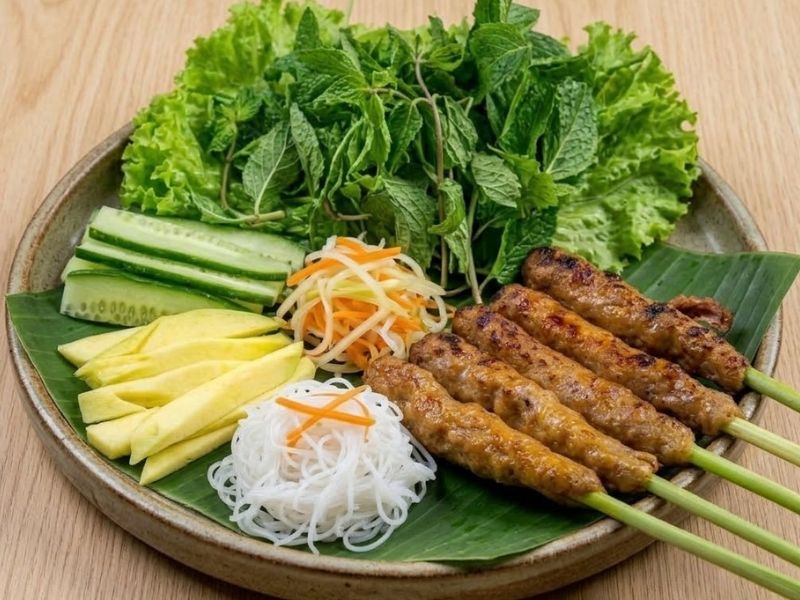
Once the skewers reach the table, the dish becomes much more than grilled meat. Slip the pork off, lay it onto rice paper, then add herbs, cucumber, bean sprouts, pineapple, green banana, or whatever fresh vegetables come alongside. The smoky pork meets crisp greens and tart fruit in the same roll, giving each bite enough freshness to balance the richness from the grill.
The thick dipping sauce is what gives nem lụi its final character. Huế-style versions are often rich with peanuts and other savory ingredients, creating a fuller, nuttier sauce than the lighter nước chấm served with many fried appetizers. Spoon or dip just enough onto each roll and the sauce settles into the herbs, fruit, and warm pork without covering them. On a shared table, nem lụi is the kind of appetizer that invites everyone to build their own bite, adjusting the balance of smoky, fresh, tart, and savory as they go.
Bánh Bèo
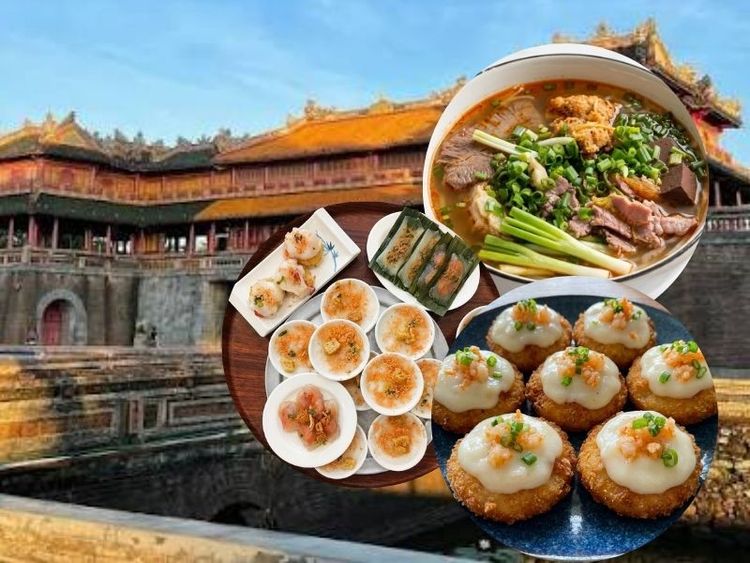
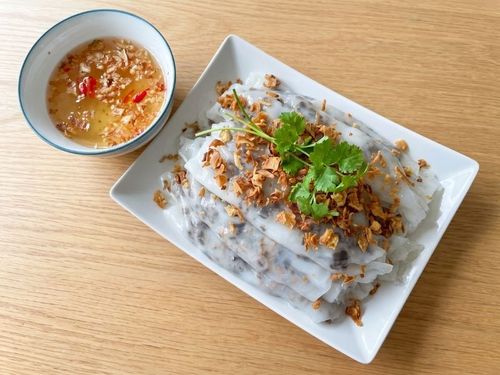
Bánh bèo is a delicate Huế appetizer served in small ceramic dishes, each holding a soft steamed rice cake topped with shrimp, scallion oil, fried shallots, and crisp pork skin. The rice cake is mild and tender with a gentle chew, leaving plenty of room for the toppings to come through. A spoonful of lightly sweetened fish sauce adds saltiness and heat, while the fried shallots and pork crackling bring enough crunch to make each little cake feel complete.
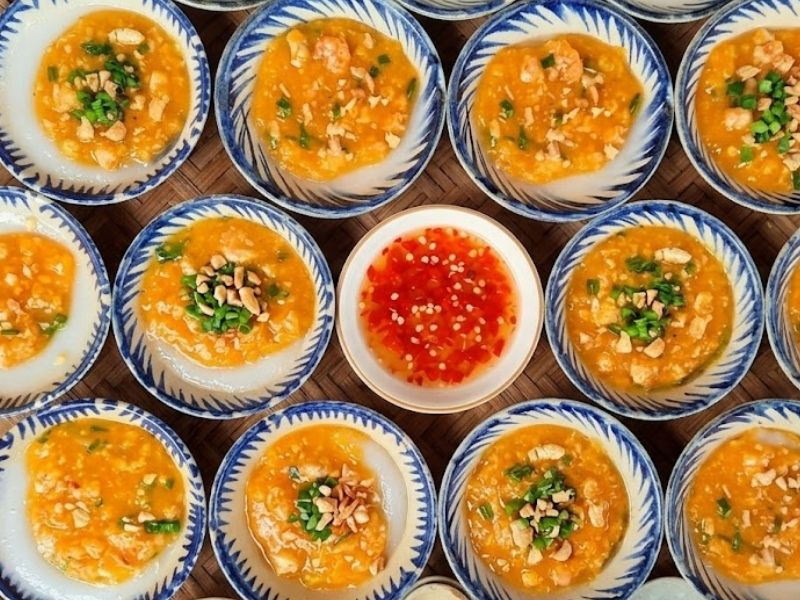
Part of the pleasure is the way bánh bèo fills the table. Instead of one large plate, several small dishes arrive together, and you work through them one by one, spooning a little fish sauce over each before taking a bite. That style of eating fits naturally with Huế’s idea of “ăn hương ăn hoa”, where food is enjoyed in modest, carefully balanced bites rather than piled generously onto a single plate.
Bánh bèo is also part of the wider world of Hue food, alongside other small steamed bánh such as bánh nậm, bánh lọc, and bánh ram ít. A few chén are light enough to open a meal, while a larger spread lets everyone sample several textures and flavors before moving on to something more substantial. The combination of soft rice cake, savory toppings, crisp garnish, and fish sauce gives each small portion enough character to stand confidently on the table.
Chả Lụa
Chả lụa is a mild, savory Vietnamese appetizer with a smooth, springy texture that makes it especially easy to slice and serve in small portions. Lean pork is pounded into a fine paste, seasoned with fish sauce, wrapped tightly in banana leaves, and cooked until firm. When the leaves are opened, they leave a gentle fragrance on the meat, while the fish sauce adds depth without overpowering its clean pork flavor. In northern Vietnam, the same dish is commonly called giò lụa.
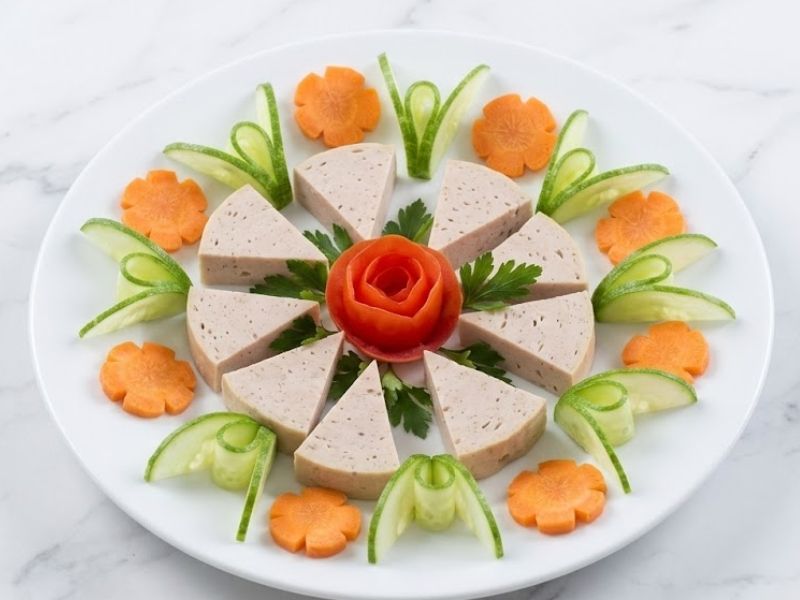
On an appetizer plate, chả lụa needs very little around it. Thin slices sit comfortably beside pickled onions or vegetables, fresh chili, or a small dish of chili fish sauce, giving the table something softer and milder between tangy gỏi, crisp fried rolls, and fermented dishes. The same familiar flavor also appears in bánh cuốn, bánh mì, xôi, and bánh dày, so many diners already know chả lụa long before they eat it on its own.
Chả lụa also has a familiar place at Tết, weddings, family memorial meals, and larger gatherings. A whole roll is sliced as needed and added to the table alongside other dishes, which suits the communal way these meals are served. During Tết, it often appears beside bánh chưng, pickled vegetables, and other festive foods, giving a simple pork roll a natural place in both everyday eating and special occasions.
Nem Chua
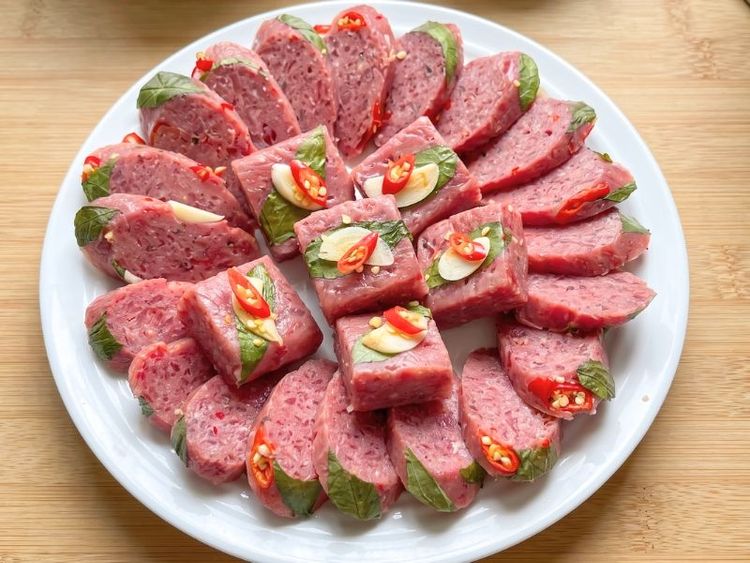
Nem chua is a tangy Vietnamese appetizer with a firm, springy bite and the unmistakable aroma of garlic and fresh chili. Lean pork and finely sliced pork skin are seasoned, wrapped tightly in leaves, and fermented until the mixture becomes firm and develops its characteristic sourness. The first bite brings acidity first, followed by savory pork, a little sweetness, and the gentle chew of the skin, giving nem chua a character completely different from the grilled and fried appetizers around it.
Thanh Hóa is the place most closely associated with nem chua, although different regional styles appear across Vietnam. Thanh Hóa versions are commonly wrapped with lá đinh lăng or guava leaf, together with slices of garlic and chili that perfume the pork as it rests. Once unwrapped, each small piece is ready to eat as it is, with chili sauce often served alongside for an extra layer of heat.
Nem chua moves easily between món ăn chơi, món nhậu, and a shared appetizer. A few pieces fit naturally among other small savory dishes at family gatherings and casual get-togethers, while boxes of Thanh Hóa nem chua are also a familiar gift to bring home. There is little ceremony at the table. You unwrap one, add a slice of garlic or chili if you like, and pass the rest around. For a closer look at how that signature sourness and springy texture are created, our nem chua recipe covers the process from seasoning to fermentation.
What Dipping Sauces Go With Vietnamese Appetizers?
Dipping sauce is part of the identity of many Vietnamese appetizers, changing the flavor of a bite as much as the wrapper, filling, herbs, or cooking method. Crisp chả giò becomes brighter with sweet sour nước chấm, smoky bò lá lốt gains a deeper fermented savoriness from mắm nêm, while gỏi cuốn and bò bía often come with a thicker peanut or hoisin based sauce that adds richness to their fresh fillings.
One distinction makes Vietnamese dipping sauces much easier to understand. Nước mắm is fermented fish sauce itself, while nước chấm is a prepared dipping sauce made from it. A typical Vietnamese fish sauce recipe combines fish sauce with water, sugar, lime or vinegar, garlic, and chili to balance salty, sweet, sour, and spicy flavors. The proportions change by household, restaurant, region, and dish.
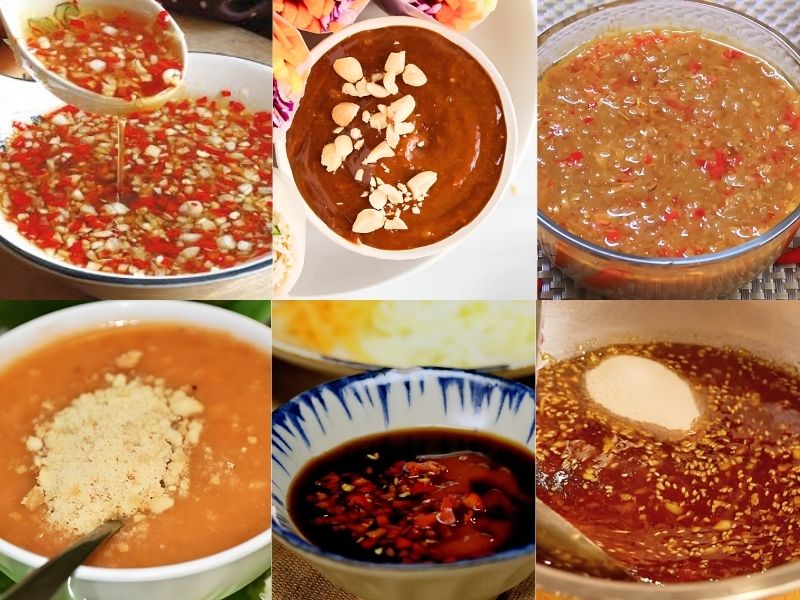
| Dipping Sauce | Flavor | Appetizers Commonly Served With It |
| Nước chấm | Salty, sweet, tangy, garlicky | Chả giò, bánh khọt, bánh tôm, phở cuốn, chạo tôm, bánh bèo |
| Peanut or hoisin-based sauce | Thick, nutty, savory-sweet | Gỏi cuốn, bò bía, some styles of nem nướng |
| Mắm nêm | Deeply savory, fermented, pungent, often balanced with pineapple and chili | Bò lá lốt and some grilled or rolled dishes |
| Thick house dipping sauce | Savory-sweet, nutty, sometimes built with fermented soybean or meat stock | Nem nướng, nem lụi |
| Soy-vinegar sauce | Salty, tangy, slightly sweet | Bột chiên |
| Fish sauce dressing | Bright, salty-sour-sweet | Gỏi gà, gỏi ngó sen, gỏi bò bóp thấu |
How the sauce is used matters too. Gỏi is tossed with its dressing before it reaches the table, bánh bèo gets a little sauce spooned over each rice cake, while phở cuốn and gỏi cuốn are dipped one bite at a time. Nem chua often needs no sauce because fermentation, garlic, and chili already give it plenty of tang and savoriness. CHIN SU’s guide to how to use fish sauce explains how the same seasoning works differently in dipping sauces, dressings, marinades, broths, and other dishes.
Regional preferences add another layer. Northern nước chấm often leans saltier and sharper, while southern versions commonly carry more sweetness. Central Vietnamese appetizers make especially memorable use of fermented sauces and thicker dips alongside grilled meats, rolls, and small bánh. These are regional tendencies rather than fixed rules, so the same appetizer can taste noticeably different from one table to another.
Do Vietnamese Meals Have Appetizer Courses?
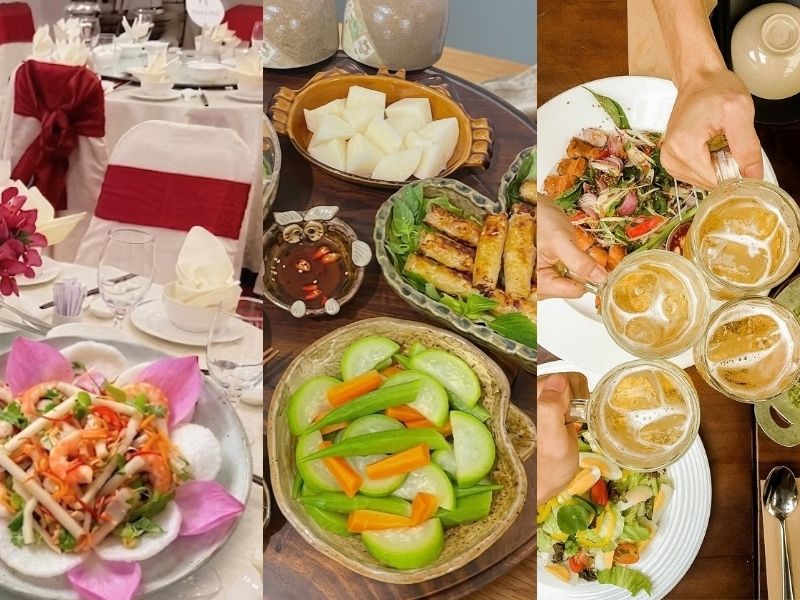
Yes. Vietnamese restaurants, weddings, and formal banquets often begin with a course called khai vị, while everyday family meals usually follow a more communal style. Gỏi, chả giò, small soups, and other lighter dishes commonly arrive first at larger gatherings, giving everyone something fresh or savory to share before the main courses reach the table.
At home, dishes are more often placed in the center together. Rice, soup, vegetables, meat or fish, and dipping sauces are shared at the same time, so foods such as chả giò, gỏi gà, or chả lụa do not always sit in a separate appetizer course. Their role changes with the meal and the occasion.
You will also hear món ăn chơi for casual bites and món nhậu for dishes shared with drinks. Both overlap with what English menus often call appetizers, yet they describe how and when the food is enjoyed rather than a strict place in the meal. That flexibility is why the same Vietnamese small plate might open a banquet, appear with drinks, or simply sit among several dishes at a family table.
How Vietnamese Appetizers Change From North To South
Vietnamese appetizers take on different flavors and serving styles as you move from north to south, although regional boundaries are never absolute. In the north, dishes such as bánh tôm and phở cuốn often keep their ingredients distinct, with fresh herbs and lighter nước chấm adding contrast without covering the main flavors. The result tends to feel clean and balanced, whether the plate is fried, rolled, or served with fresh greens.
In Central Vietnam, appetizers often bring stronger seasonings and more attention to the sauce beside them. Huế contributes dishes such as bánh bèo, chạo tôm, and nem lụi, each with its own combination of herbs, fermented seasonings, seafood, or thick dipping sauces. Chili, fish sauce, shrimp paste, and other fermented flavors also appear frequently along the central coast, giving many small dishes a more pronounced savory character.
Further south, appetizers often bring more fresh greens, crisp vegetables, tropical fruit, and sweeter seasoning into the same bite. Gỏi cuốn, bò bía, bánh khọt, bò lá lốt, and gỏi ngó sen all show that balance in different ways. Ho Chi Minh City adds another layer through Chinese, Khmer, and regional Vietnamese influences, which is why a southern appetizer table moves so naturally between fresh rolls, grilled meats, salads, and street snacks.
Which Vietnamese Appetizers Should You Start With?
If Vietnamese appetizers are new to you, start with gỏi cuốn, chả giò, and one grilled dish such as nem nướng. Together, they show three very different sides of the category: the cool herbs and soft rice paper of a fresh roll, the crisp shell and savory filling of a fried roll, and the smoky sweetness of grilled meat wrapped with herbs at the table.
From there, let your preferences lead the way. Bánh khọt or bánh tôm are good next choices if you enjoy crisp edges and dipping sauces, while gỏi ngó sen or gỏi bò bóp thấu bring more acidity, freshness, and crunch. If you want something with a stronger fermented character, try bò lá lốt with mắm nêm or nem chua, where the flavors become noticeably more assertive.
When ordering several dishes to share, the most enjoyable spread usually mixes styles rather than repeating one. A fresh roll, something fried, a gỏi, and a grilled plate give you herbs, crunch, smoke, acidity, and different dipping sauces in the same meal. It is also one of the easiest ways to see how broad Vietnamese appetizers can be.
These 17 Vietnamese appetizers show just how much variety can fit into a few shared plates, from fresh rolls and crisp fritters to grilled skewers, tangy gỏi, steamed bánh, and fermented bites. Some are best wrapped with herbs, some come alive with the right dipping sauce, and others are simply meant to be picked up and passed around the table. CHIN-SU hopes this list gives you a few new dishes to look for the next time you order Vietnamese food, plan a shared meal, or want to explore beyond the appetizers you already know.
Frequently Asked Questions
Most Vietnamese appetizers are mild, with extra heat added through fresh chili, chili sauce, mắm nêm, or the dipping sauce served alongside. Gỏi cuốn and bánh bèo stay relatively gentle, while nem chua and some grilled or fermented dishes bring more noticeable heat.
Gỏi cuốn, bò bía, phở cuốn, gỏi gà, gỏi ngó sen, and nem chua are commonly served cool or at room temperature. These dishes rely on fresh herbs, crisp vegetables, tender meat or seafood, and bright dressings rather than heat from frying or grilling.
Yes. Vegetarian Vietnamese appetizers include tofu gỏi cuốn, mushroom filled chả giò, meat free gỏi, and several steamed bánh. Tofu, mushrooms, glass noodles, vegetables, and herbs replace meat or seafood in many versions.
The dipping sauce is the part worth checking. Traditional nước chấm contains fish sauce, while mắm nêm is also fish based, so vegetarian versions need a soy based dip or nước chấm chay made without fish sauce.
Gỏi cuốn is a fresh rice paper roll served cool, while chả giò is filled and fried until crisp. Gỏi cuốn usually combines herbs, rice vermicelli, pork, and shrimp, while chả giò has a cooked savory filling and is commonly served with lettuce, herbs, and nước chấm.
American menus sometimes call both dishes spring rolls, so “fresh” and “fried” are the easiest clues to tell them apart.
Chả giò, gỏi gà, gỏi ngó sen, chả lụa, nem chua, nem nướng, and other small grilled dishes work well on a shared party table. They are easy to portion and serve alongside several other plates.
Fresh rice paper rolls are best prepared closer to serving so the wrappers stay soft and the herbs remain fresh.
Nem chua, chả lụa, gỏi ingredients, and chả giò filling are among the easiest Vietnamese appetizers to prepare ahead. Fried rolls can be assembled earlier and cooked closer to serving, while salads are best dressed shortly before they reach the table so the vegetables keep their texture.
Fresh rolls such as gỏi cuốn are better assembled near serving time because rice paper gradually dries and firms as it sits.
Khai vị means an appetizer or opening course served before the main dishes. The term appears most often on restaurant, wedding, and banquet menus, where gỏi, fried rolls, soups, or other lighter plates open the meal.
Everyday Vietnamese family meals are usually more communal, so the same dish might appear alongside rice, soup, meat, and vegetables rather than in a separate appetizer course.

CHIN-SU KITCHEN TEAM
CHIN-SU Kitchen Team are the creative experts behind the delicious recipes featuring CHIN-SU sauces. With years of experience and a passion for flavor, our team carefully selects recipes from a variety of trusted chefs and bloggers, bringing together the best culinary insights to present you with the most suitable and exciting dishes. Every recipe is chosen to inspire you to create meals that are not only tasty but also easy to prepare, enhancing your dining experience. Join us as we explore a wide range of sauces and flavors, and elevate every meal with the perfect recipe for your table!
User Reviews
Featured Articles
SUBSCRIBE TO GET
MORE INFO
Want the latest and greatest recipes, updates, and more from us,
straight to your inbox? Subscribe and get our NEWS!