What Is a Red Chili Pepper? Heat and Uses Explained
Published: Jul 28, 2026 by CHIN-SU
Updated: Jul 30, 2026 by CHIN-SU
A red chili pepper is a broad culinary term for a ripe chili with red skin, not a single variety. Red chilies come from several Capsicum species, especially Capsicum annuum, Capsicum frutescens, and Capsicum chinense. Common cooking varieties range from about 1,000 to 100,000 Scoville Heat Units (SHU), although red habaneros and superhot peppers can exceed that range.
Common examples include mild Kashmiri chili at approximately 1,000 to 2,000 SHU, Fresno pepper at 2,500 to 10,000 SHU, chile de árbol at 15,000 to 30,000 SHU, cayenne at 30,000 to 50,000 SHU, and Thai chili at 50,000 to 100,000 SHU. Their size, flesh, flavor, and culinary use depend on the variety rather than the red color alone.
The word chili comes from the Classical Nahuatl word chīlli, while “red” usually describes the mature color of the fruit. Many chilies become sweeter, fruitier, and more aromatic as they ripen, but red color does not guarantee maximum heat. Cultivar genetics, growing conditions, and harvest timing determine whether capsaicin increases, stabilizes, or declines during ripening.
The sections below identify common red chili varieties, explain their flavor and heat differences, and show how to use, store, and substitute fresh, dried, powdered, and flaked forms.
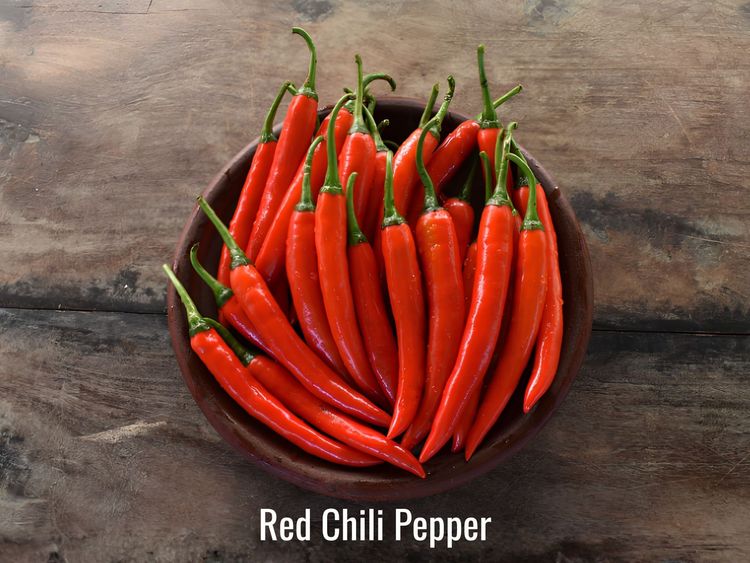
Table Of Contents
What Is a Red Chili Pepper?
- How Hot Are Red Chili Peppers?
How to Use Red Chili Peppers in Cooking
- How to Store Red Chili Peppers
- What Can You Substitute for Red Chili Peppers?
What Is a Red Chili Pepper?
A red chili pepper is a catch-all name for a mature chili with red skin, covering dozens of varieties with different heat levels, sizes, textures, and flavors. When a recipe calls for a “red chili pepper,” the intended ingredient depends on the cuisine. It may mean a fresh Fresno pepper, a long cayenne-type chili, a small Thai chili, or a dried pepper such as chile de árbol or Kashmiri chili.
Chili peppers have a long history in the Americas. Capsicum annuum was domesticated in Mexico thousands of years ago before chilies spread worldwide through European trade during the Columbian Exchange. The word chili comes from the Nahuatl chīlli, while “red” describes the pepper’s mature color.
Most common red chilies belong to Capsicum annuum, including cayenne, Fresno, Kashmiri, and chile de árbol. Other red-ripening peppers belong to Capsicum frutescens, such as Tabasco, and Capsicum chinense, such as habanero. “Red chili pepper” therefore describes color and culinary use rather than one botanical species.
Common culinary red chilies range from about 1 to 6 inches (2.5 to 15 cm) long. Their forms may be short, slender, curved, conical, cylindrical, or lantern-shaped. Wall thickness also varies: Fresno peppers have more fresh flesh, while cayenne, Thai chili, and chile de árbol have thinner walls that dry more readily.
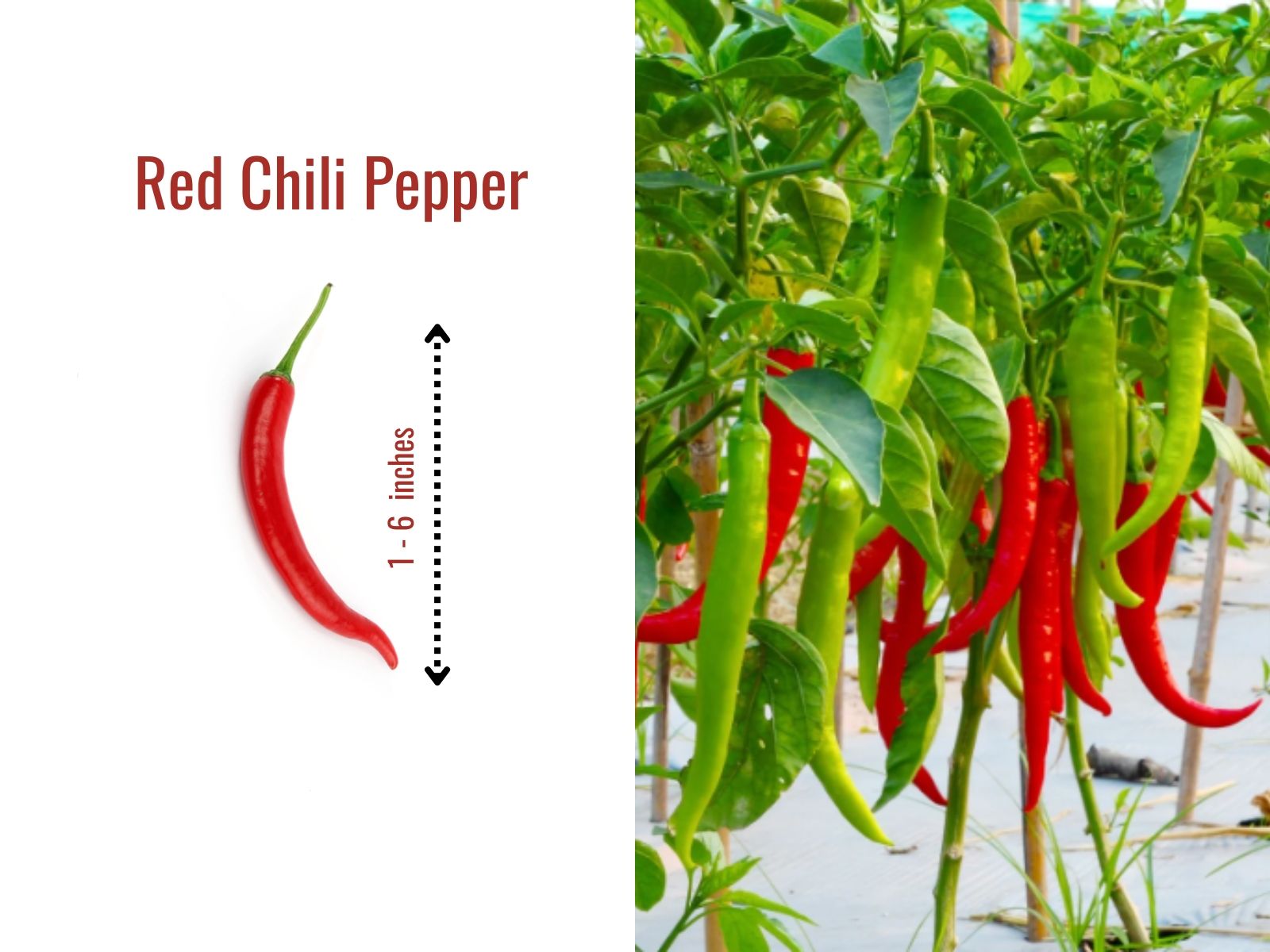
Many chili varieties change from green to red as they mature, sometimes passing through yellow or orange. However, the exact color sequence and flavor development depend on the cultivar.
| Color | Ripeness Stage | Typical Flavor Character |
| Green | Immature or mature-green | Grassy, vegetal, crisp, and less sweet |
| Yellow or orange | Transitional stage in some varieties | Brighter, fruitier, and increasingly aromatic |
| Red | Mature color | Usually sweeter, richer, and more aromatic; heat varies |
Red color does not guarantee maximum pungency. Capsaicinoids may increase, stabilize, or decline during ripening depending on the cultivar, growing environment, and harvest stage.
The following varieties commonly appear when recipes refer to red chilies:
- Kashmiri chili: A mild Indian red chili, commonly cited at 1,000–2,000 SHU. Its deep color and gentle warmth suit curries, tandoori marinades, sauces, pickles, and dishes where color matters more than intense heat.
- Fresno chili: A fresh, moderately hot red pepper with a jalapeño-like shape, usually measuring 2,500–10,000 SHU. Use it in salsa, ceviche, pickles, garnishes, and fresh hot sauce.
- Chile de árbol: A slender Mexican chili at approximately 15,000–30,000 SHU. It is commonly sold dried and develops roasted, nutty notes when briefly toasted, making it useful in salsa roja, soups, stews, and chili oil.
- Calabrian chili: An Italian red chili with fruity, earthy, and smoky heat. Common estimates place it around 25,000–40,000 SHU, although the exact level varies among cultivars and prepared products. Use it in pasta, pizza, seafood, tomato sauces, chili oil, and jarred paste.
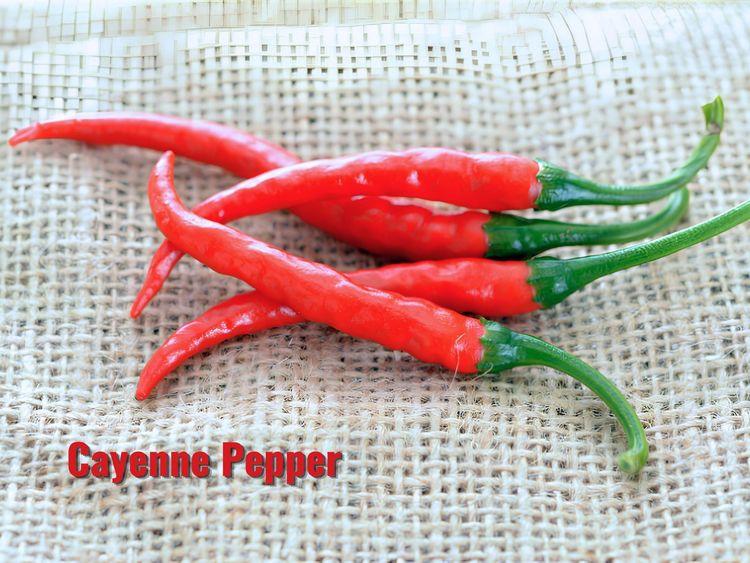
- Cayenne pepper: A long, thin-walled red chili with clean heat, generally measuring about 25,000–50,000 SHU. It is widely ground into cayenne powder and used in hot sauces, dry rubs, marinades, seasoning blends, and crushed red pepper products.
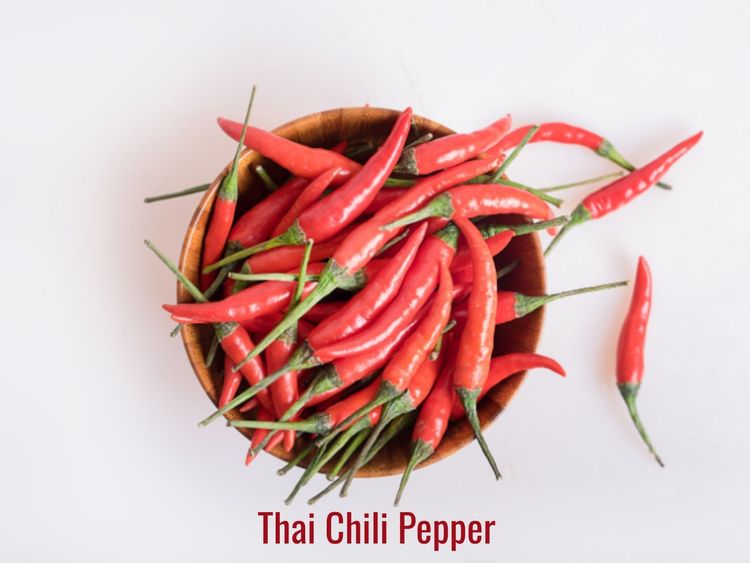
- Thai chili or bird’s-eye chili: A small red chili that typically measures 50,000–100,000 SHU. Its sharp heat works in Southeast Asian stir-fries, soups, curry pastes, dipping sauces, noodle dishes, chili oil, and fresh condiments.
What Do Red Chili Peppers Taste Like?
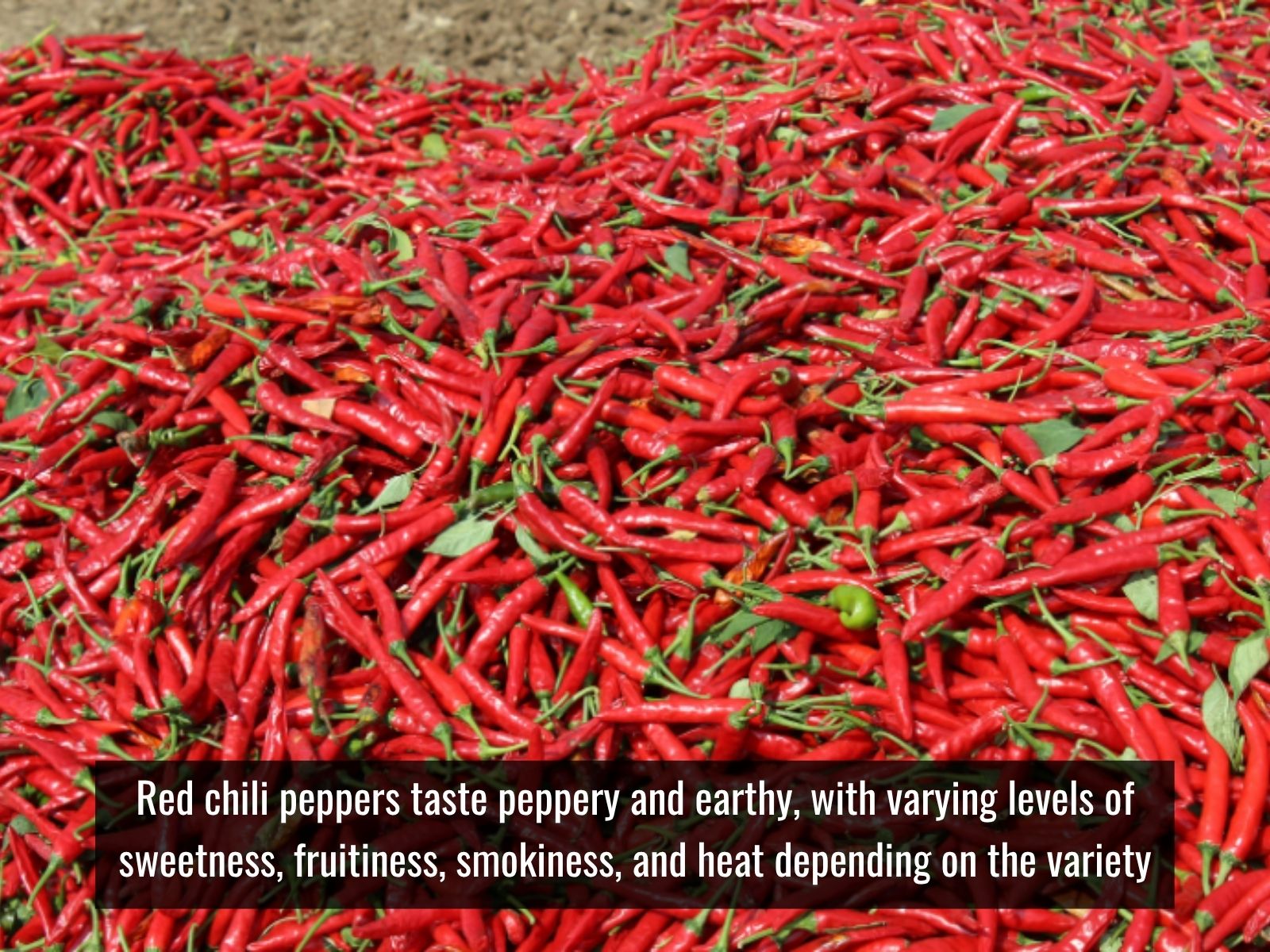
Red chili peppers taste peppery and earthy, with varying levels of sweetness, fruitiness, smokiness, and heat depending on the variety. Their pungency ranges from mild warmth to a sharp, lingering burn, so the specific pepper determines the flavor more than its red color.
Cayenne provides clean, direct heat with limited sweetness, making it useful as a background spice. Thai chili tastes brighter, sharper, and more pungent, while chile de árbol develops roasted and nutty notes when briefly toasted. Kashmiri chili provides deep red color, gentle warmth, and a mild dried-pepper flavor.
Ripening often makes chilies sweeter, fruitier, and less grassy as their sugars, pigments, and aromatic compounds change. However, red peppers are not always hotter than green ones. Capsaicinoid levels may increase, stabilize, or decline during ripening depending on the cultivar, growing conditions, and harvest stage.
Preparation changes the flavor further. Fresh red chilies retain bright aroma and crisp texture in salsa, salads, and garnishes. Drying concentrates their fruitiness, sweetness, and earthiness, while brief toasting adds roasted or nutty notes. Cooking chilies in oil spreads their heat more evenly throughout sauces, curries, and stir-fries.
Are Chili Flakes, Red Pepper Flakes, and Crushed Red Pepper the Same?
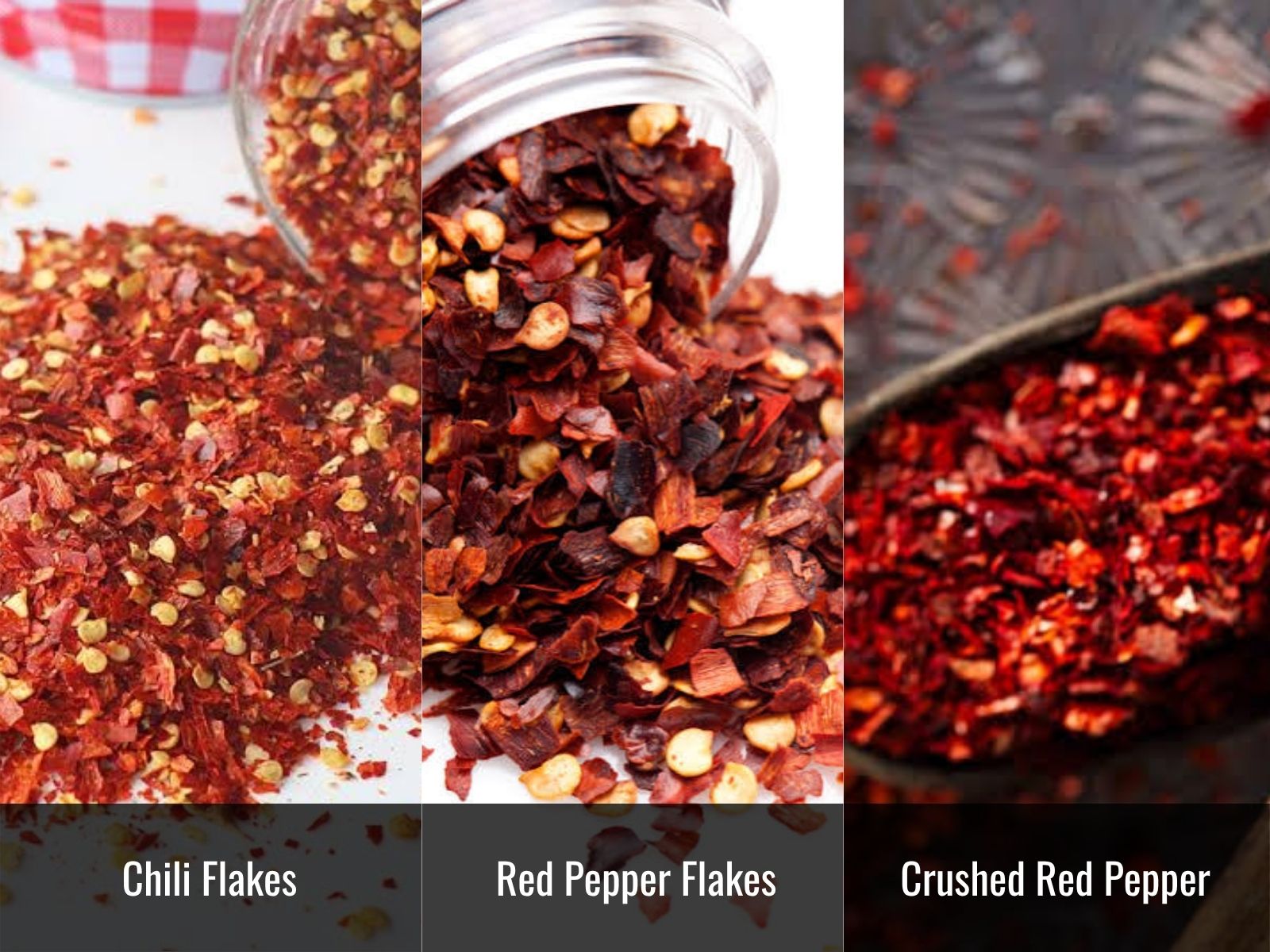
Red pepper flakes and crushed red pepper usually refer to the same spice in U.S. recipes: dried red chilies crushed into coarse pieces, often with visible seeds. Chili flakes and red chili flakes are broader terms whose heat, texture, and flavor depend on the pepper variety, cuisine, and brand.
| Term | What It Usually Means | Key Difference | Best Uses |
| Red pepper flakes | Common U.S. spice-rack flakes made from dried red chilies | Usually the same as crushed red pepper; often made from cayenne-type peppers or a chili blend | Pizza, pasta, eggs, soups, and roasted vegetables |
| Crushed red pepper | Another common U.S. name for red pepper flakes | Usually a synonym rather than a separate spice | Pizza, pasta, sauces, and finishing heat |
| Chili flakes or chile flakes | Broad term for crushed dried chilies | May refer to standard flakes or specialty products such as Aleppo, Thai, or Calabrian chili | Stir-fries, sauces, noodles, and general seasoning |
| Red chili flakes | Flakes made from dried red chilies | Often interchangeable with chili flakes, but the specific pepper may vary by cuisine | Curries, noodles, dipping oils, and chili oil |
| Gochugaru | Korean red chili flakes or coarse powder | Usually fruitier, sweeter, and less sharply pungent than standard crushed red pepper | Kimchi, Korean stews, marinades, and sauces |
| Thai chili flakes | Crushed dried Thai or bird’s-eye chilies | Usually sharper and hotter than standard U.S. red pepper flakes | Thai noodle dishes, soups, dipping sauces, and stir-fries |
How Hot Are Red Chili Peppers?
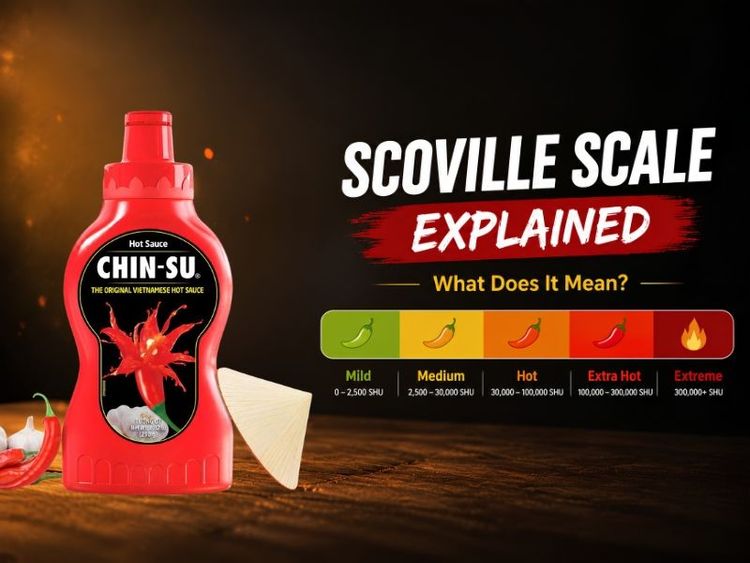
Common red chili peppers range from about 1,000 to 100,000 Scoville Heat Units (SHU), depending on the variety, placing them across the mild, medium, and hot tiers of the Scoville scale. Pure capsaicin measures approximately 16,000,000 SHU, so even hot red chilies sit far below concentrated capsaicin.
Heat also varies within a single variety, not just between varieties. Water availability, temperature, fruit maturity, and other growing conditions can raise or lower capsaicinoid levels, but their effects differ among cultivars. Therefore, the numbers below represent typical ranges rather than fixed values.
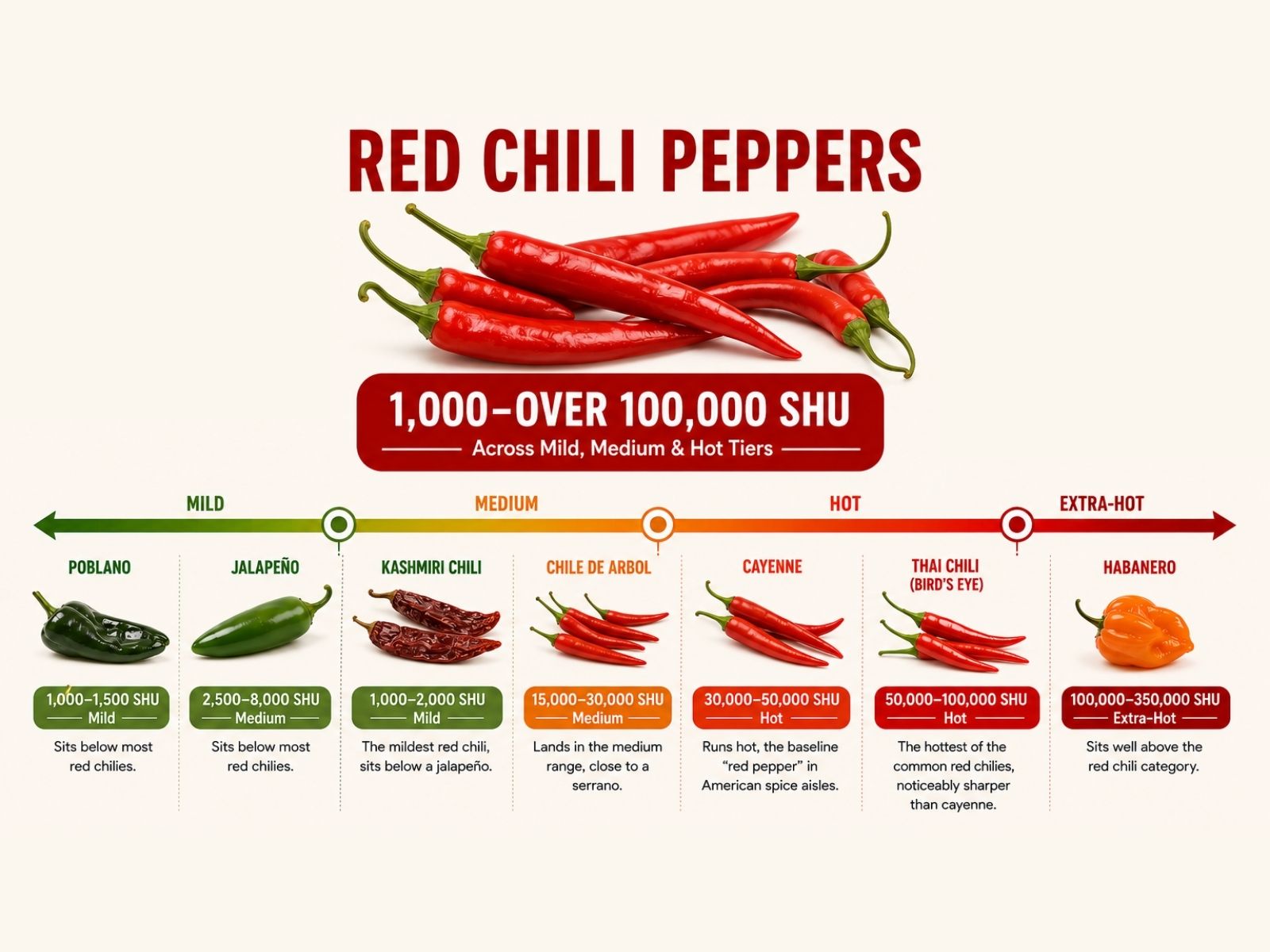
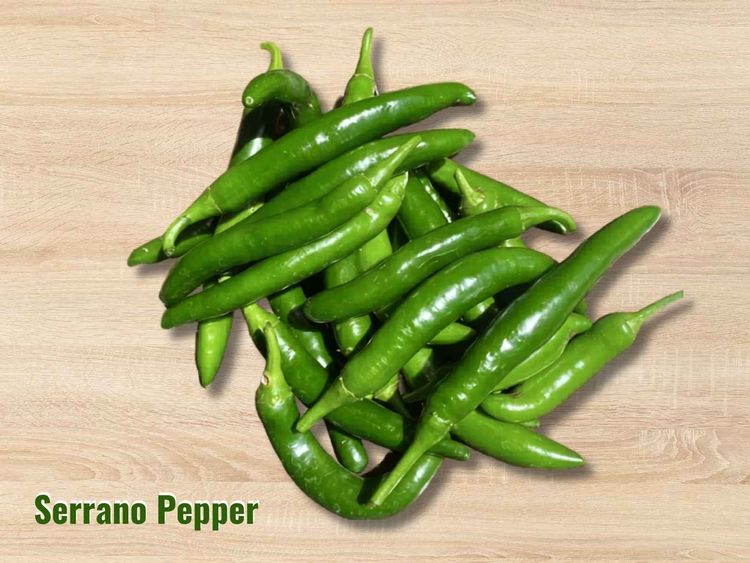
Because “red chili pepper” is a category, it helps to place each common variety on the scale. Kashmiri chili is the mildest in this comparison at about 1,000 to 2,000 SHU, sitting below a jalapeño. Chile de árbol lands at 15,000 to 30,000 SHU, close to a serrano pepper. Cayenne peppers runs hot at 30,000 to 50,000 SHU and is the standard “red pepper” found in many American spice aisles. Thai chili peppers, or bird’s-eye chili, is the hottest pepper in this comparison at 50,000 to 100,000 SHU, noticeably hotter than cayenne.
A few familiar reference peppers help frame this range:
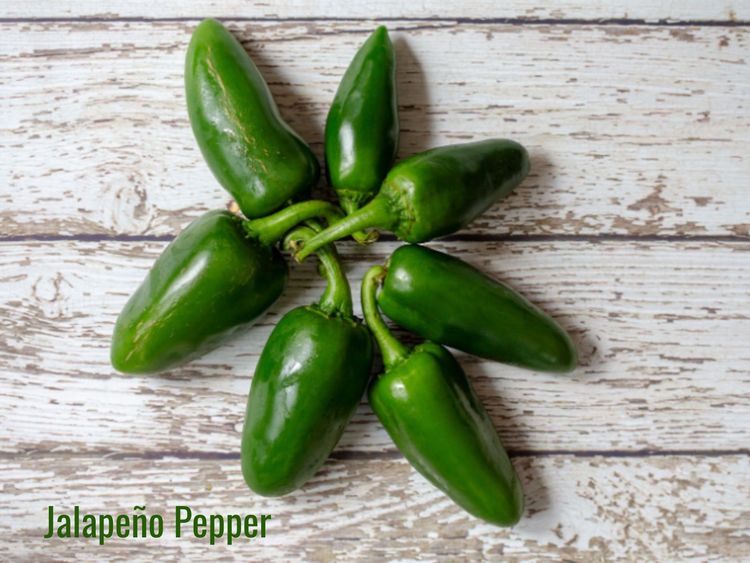
- Poblano peppers measure about 1,000 to 1,500 SHU, while jalapeños range from 2,500 to 8,000 SHU.
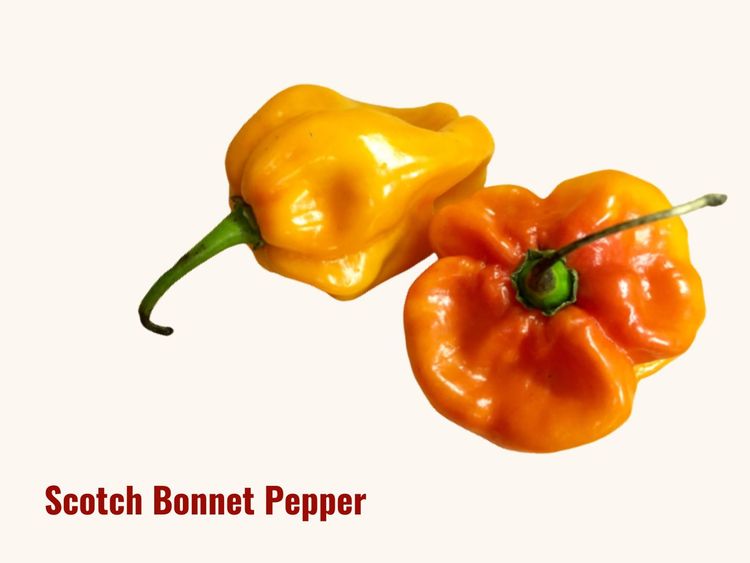
- Habanero peppers sit well above the listed red chilies at approximately 100,000 to 350,000 SHU.
How to Use Red Chili Peppers in Cooking
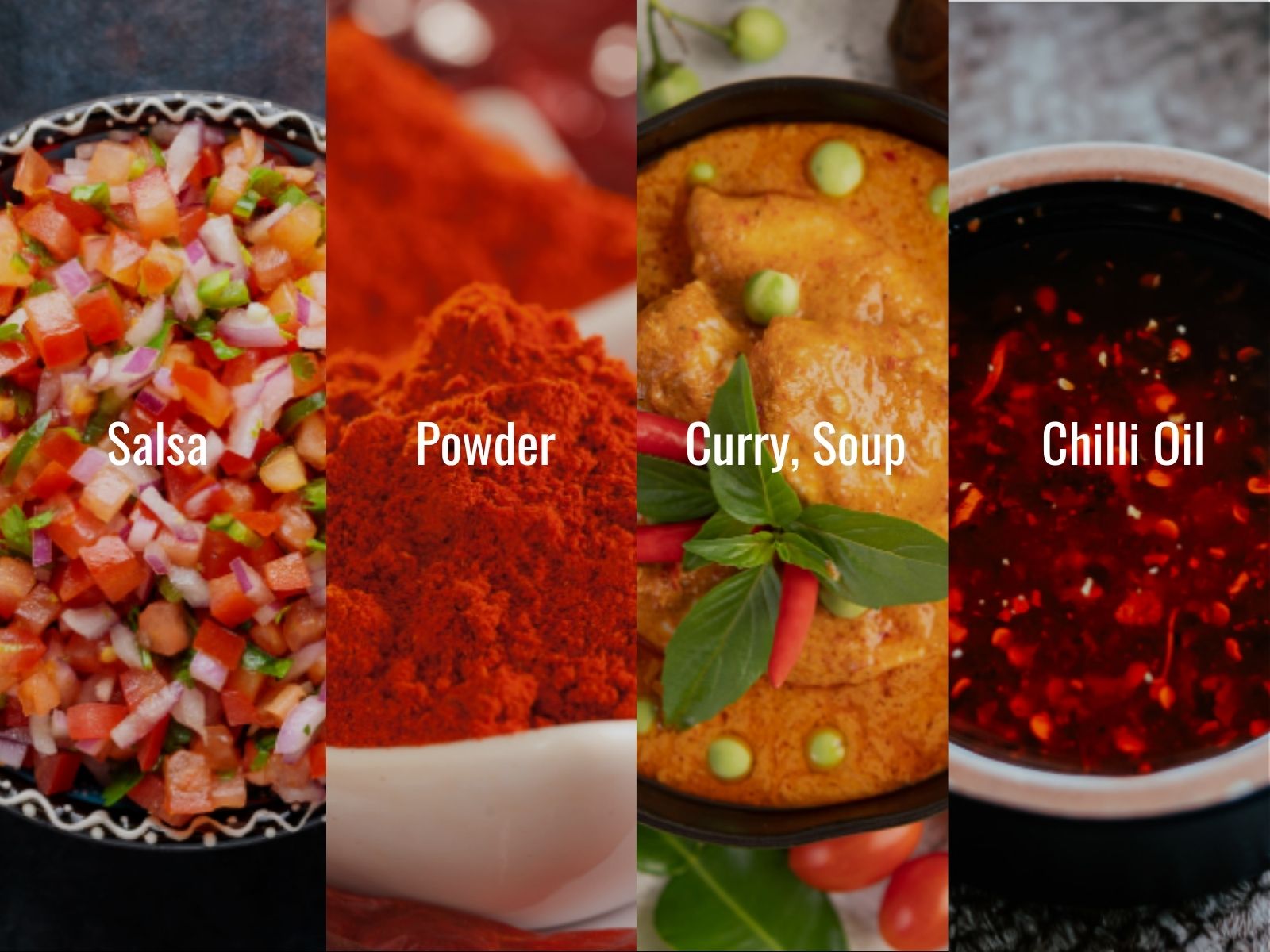
Use red chili peppers fresh in salsas and stir-fries, dried in sauces and curry pastes, ground into flakes or powder, blended into hot sauce, or infused into chili oil. Choose the variety and form based on the flavor, texture, and heat the dish requires.
Fresh hot red chilies provide about 40 kcal per 100 g, along with approximately 144 mg of vitamin C, 0.506 mg of vitamin B6, and provitamin A carotenoids. They are also about 88% water. Actual nutrient values vary by variety, maturity, and growing conditions. Capsaicinoids have been studied for thermogenesis and inflammation-related effects, although normal culinary servings do not produce major metabolic changes or treat health conditions.
- Fresh red chilies: Slice or mince Fresno, ripe jalapeño, Thai chili, or another fresh red variety into salsas, salads, stir-fries, noodles, curries, eggs, sandwiches, and dipping sauces. Fresno peppers add moderate heat and fruitiness, while Thai chilies provide sharper, more concentrated pungency. Remove some of the pale placental tissue and inner ribs when you want less heat.
- Whole dried chilies: Toast dried peppers briefly until fragrant to develop roasted and nutty notes. Soak them in hot water for 15–20 minutes when they need to soften for blending. Use Kashmiri chili in curries and marinades, chile de árbol in salsa and chili oil, dried Thai chili in curry pastes, and Calabrian chili in pasta and tomato-based sauces.
- Red chili hot sauce: Blend fresh or rehydrated red chilies with vinegar, garlic, salt, and optional sugar. Fresno peppers produce a moderately hot, fruity sauce, cayenne adds clean heat, and Thai chilies create a sharper, hotter version. Cooked sauces have a smoother flavor, while fermented sauces develop deeper acidity and complexity.
- Red pepper flakes: Sprinkle crushed red pepper over pizza, pasta, eggs, roasted vegetables, soups, noodles, and dipping oils. Flakes add visible pieces and intermittent bursts of heat rather than spreading evenly through the dish.
- Red chili powder: Mix cayenne or another ground red chili into dry rubs, marinades, sauces, soups, curry pastes, and seasoning blends. Powder disperses more evenly than flakes, making it better for consistent heat throughout a recipe.
- Chili oil: Infuse dried red chilies or flakes in oil for noodles, dumplings, soups, rice, and stir-fries. The oil carries capsaicin and chili aroma without adding fresh pepper texture. Refrigerate homemade chili oil unless you follow a tested shelf-stable preservation method.
Can You Eat Red Chili Peppers Every Day?
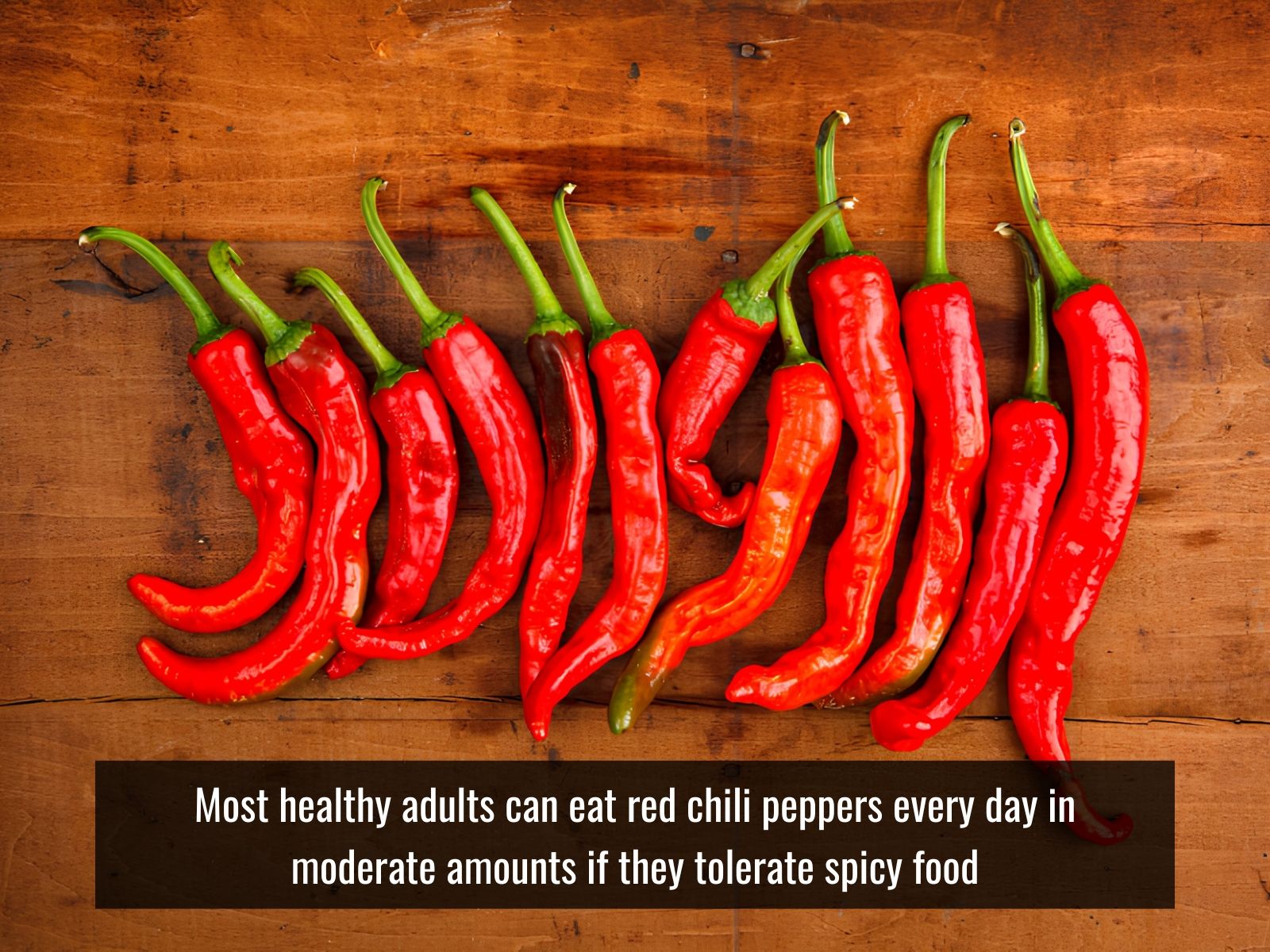
Yes, most healthy adults can eat red chili peppers every day in moderate amounts if they tolerate spicy food. No single daily portion suits everyone because red chilies range from mild Kashmiri peppers at 1,000–2,000 SHU to much hotter cayenne and Thai chilies.
Regular exposure may reduce the perceived oral burn over time, but it does not prevent digestive discomfort. Mild Kashmiri chili may suit larger culinary amounts, while cayenne or Thai chili usually requires smaller portions.
Removing the pale placental tissue and inner ribs reduces more heat than removing the seeds alone. Cooking may distribute capsaicin throughout the dish, but it does not reliably make a hot pepper mild.
Reduce or avoid red chilies if they trigger heartburn, abdominal burning, nausea, or diarrhea. People with IBS, GERD, or capsaicin sensitivity should follow their individual symptom tolerance rather than a fixed serving rule.
How to Store Red Chili Peppers
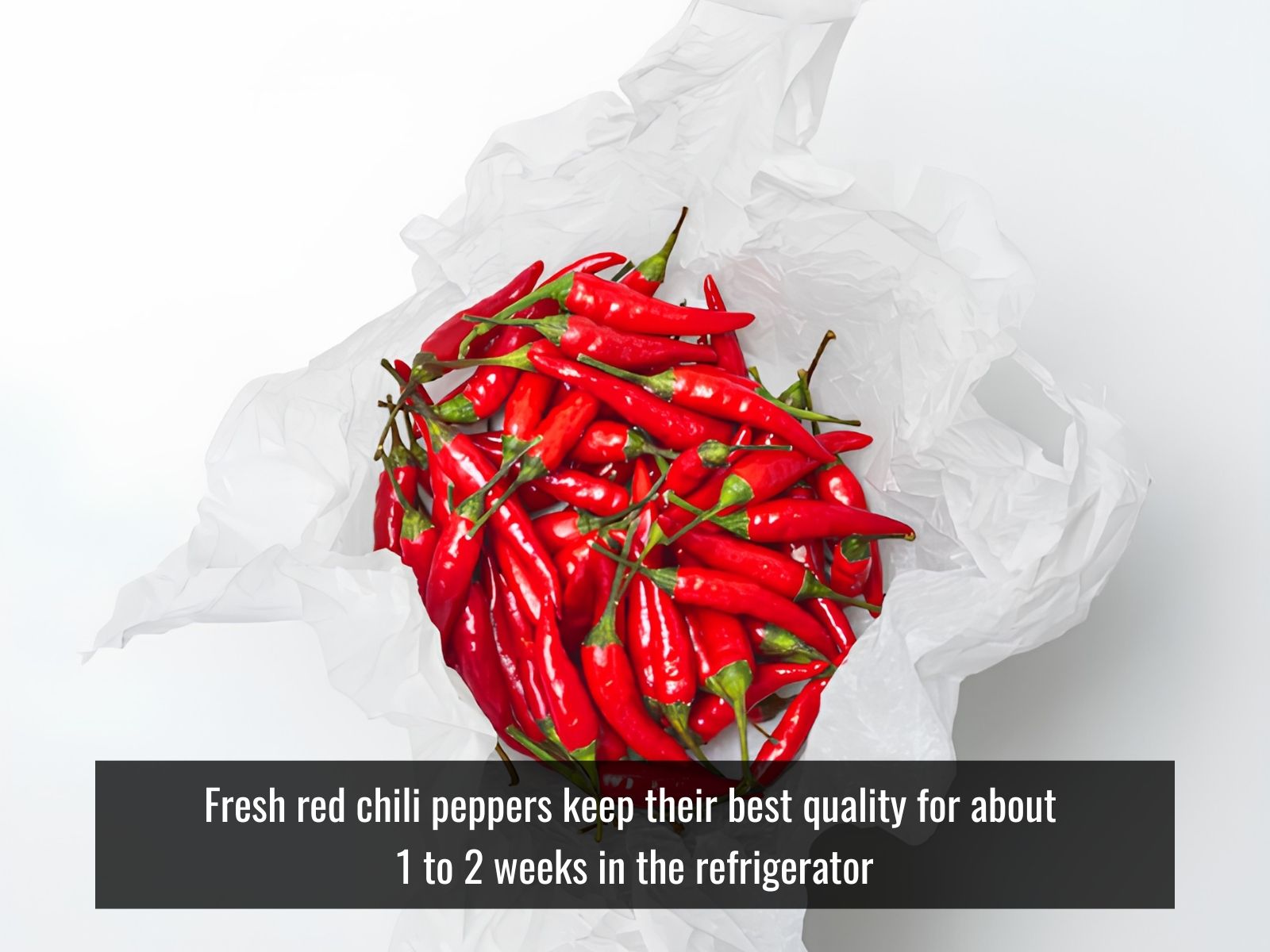
Fresh red chili peppers keep their best quality for about 1 to 2 weeks in the refrigerator. Store them whole, dry, and unwashed in a perforated bag or breathable container. Wash them only before use, and discard peppers that become moldy, slimy, deeply sunken, or unusually soft.
For longer storage, freeze the peppers whole or sliced. Wash, stem, and dry them first, then freeze them on a lined tray before transferring them to an airtight freezer bag. Hot peppers do not require blanching. Their texture softens after thawing, so use them in soups, curries, sauces, stews, and stir-fries rather than fresh dishes.
To dry red chilies, place them in a dehydrator at about 140°F (60°C), or follow the manufacturer’s vegetable setting. Small peppers may be left whole, while larger or thicker-walled varieties dry more evenly when slit or sliced. Continue until the pods are fully dry, flexible, or brittle, depending on the variety; drying time varies with size, wall thickness, humidity, and airflow.
Cool the dried peppers completely before sealing them in an airtight container. Store them away from heat, light, air, and moisture, and use them within 6 to 12 months for the strongest color, aroma, and heat. Whole dried chilies retain flavor longer than flakes or powder.
What Can You Substitute for Red Chili Peppers?
The closest substitute depends on the form you need: cayenne powder for dry heat, serrano for fresh applications, and red pepper flakes for finishing. With so many peppers under one label, the best swap comes down to matching heat and texture, as shown in this table:
| Substitute | Ratio | Flavor vs. Red Chili Pepper | Best Used In |
| Cayenne powder | ¼ to ½ tsp per fresh pepper | Clean, sharp heat; no texture | Sauces, dry rubs, cooked dishes |
| Serrano pepper | 1:1 | Brighter, citrus-forward, similar heat to milder red chilies | Fresh salsas, raw applications |
| Red pepper flakes | ¼ tsp per fresh pepper | Mild to moderate; slightly smoky | Finishing sprinkle, chili oil, pasta |
| Gochugaru (Korean red flakes) | 1 tsp per fresh pepper | Fruity, mildly sweet, moderate heat | Korean dishes, stews, marinades |
Use fresh substitutes for raw applications and dried substitutes for cooked dishes. No single option replicates every variety in the red chili category, so match the substitute to the heat level, texture, and flavor profile your recipe requires.
References
- DeWitt, D. (1999). The Chile Pepper Encyclopedia. William Morrow.
- Irandoost, P., Lotfi Yagin, N., Namazi, N., Keshtkar, A., Farsi, F., Mesri Alamdari, N., & Vafa, M. (2021). The effect of Capsaicinoids or Capsinoids in red pepper on thermogenesis in healthy adults: A systematic review and meta-analysis. Phytotherapy Research: PTR, 35(3), 1358–1377. https://doi.org/10.1002/ptr.6897
- Pathirana, R. (2013). Peppers: Vegetable and Spice Capsicums, 2nd edition, by Paul W. Bosland and Eric J. Votava. Crop Production Science in Horticulture Series 22. Wallingford, UK, CABI, 2012. 248 pp. ISBN 9781845938253. New Zealand Journal of Crop and Horticultural Science, 41, 102–103. https://doi.org/10.1080/01140671.2012.745161
- Tewksbury, J. J., & Nabhan, G. P. (2001). Seed dispersal. Directed deterrence by capsaicin in chilies. Nature, 412(6845), 403–404. https://doi.org/10.1038/35086653
- Kraft, K. H., Brown, C. H., Nabhan, G. P., Luedeling, E., Luna Ruiz, J.deJ., Coppens d'Eeckenbrugge, G., Hijmans, R. J., & Gepts, P. (2014). Multiple lines of evidence for the origin of domesticated chili pepper, Capsicum annuum, in Mexico. Proceedings of the National Academy of Sciences of the United States of America, 111(17), 6165–6170. https://doi.org/10.1073/pnas.1308933111
- USDA FoodData Central. Peppers, hot chili, red, raw (FDC #170106). https://fdc.nal.usda.gov
- Wikipedia. Chili pepper. https://en.wikipedia.org/wiki/Chili_pepper
Frequently Asked Questions
Yes, crushed red pepper and chili flakes are the same product in most American grocery stores: dried, crushed red chili peppers, usually cayenne or a cayenne blend, with the seeds left in. Some brands label them differently, but the contents are the same. Korean chili flakes, or gochugaru, are a separate product with a coarser grind and a fruitier flavor.
Yes, red chili peppers are usually hot, but their heat level depends on the variety. The category includes mild peppers such as Kashmiri chili at approximately 1,000 to 2,000 SHU and hotter varieties such as cayenne at 30,000 to 50,000 SHU or Thai chili at 50,000 to 100,000 SHU.
Most red chili peppers are hotter than jalapeños, which measure 2,500 to 8,000 SHU. Cayenne ranges from 30,000 to 50,000 SHU, and Thai chili ranges from 50,000 to 100,000 SHU, both well above the jalapeño range. Kashmiri chili is the exception at 1,000 to 2,000 SHU, falling just below a jalapeño.
The difference between red pepper flakes and chili powder is the grind and the mix. Red pepper flakes are coarsely crushed dried peppers, usually cayenne, with visible seeds, so they deliver pure pepper heat. Chili powder is a fine blend that often includes cumin, garlic powder, oregano, and paprika alongside ground chili, which gives it a fuller, more flavorful seasoning. The two are not interchangeable.
Fresh red chili peppers do need refrigeration; store them in a paper bag or breathable container, where they keep for 1 to 2 weeks. Dried red chilies do not need refrigeration. You can keep them in an airtight container at room temperature for up to 6 months.
A dried red chili pepper goes by different names depending on the variety. Dried cayenne is sold as cayenne powder or red pepper flakes, while dried arbol is known as chile de arbol. Dried Kashmiri is sold as Kashmiri chili powder, valued for its color over its heat. In general, any whole dried red chili at the grocery store is likely cayenne or a cayenne-type pepper.

CHIN-SU KITCHEN TEAM
CHIN-SU Kitchen Team are the creative experts behind the delicious recipes featuring CHIN-SU sauces. With years of experience and a passion for flavor, our team carefully selects recipes from a variety of trusted chefs and bloggers, bringing together the best culinary insights to present you with the most suitable and exciting dishes. Every recipe is chosen to inspire you to create meals that are not only tasty but also easy to prepare, enhancing your dining experience. Join us as we explore a wide range of sauces and flavors, and elevate every meal with the perfect recipe for your table!
User Reviews
Featured Articles
SUBSCRIBE TO GET
MORE INFO
Want the latest and greatest recipes, updates, and more from us,
straight to your inbox? Subscribe and get our NEWS!