What Is a Hungarian Wax Pepper? Flavor and Uses Explained
Published: Jul 28, 2026 by CHIN-SU
Updated: Jul 30, 2026 by CHIN-SU
A Hungarian wax pepper (Capsicum annuum) is a thick-fleshed Hungarian chili that measures 1,000 to 15,000 Scoville Heat Units (SHU), placing it in the mild-to-medium heat range. Its pale yellow color and tapered shape closely resemble a banana pepper, but a Hungarian wax pepper at 15,000 SHU can be about 30 times hotter than a banana pepper measuring 500 SHU.
The name reflects both its role in Hungarian cooking and the glossy, wax-like sheen of its skin. Hungarian wax peppers commonly appear in stews, stuffed-pepper dishes, salads, and pickles, where their crisp flesh, sweet tang, and variable heat add both texture and flavor.
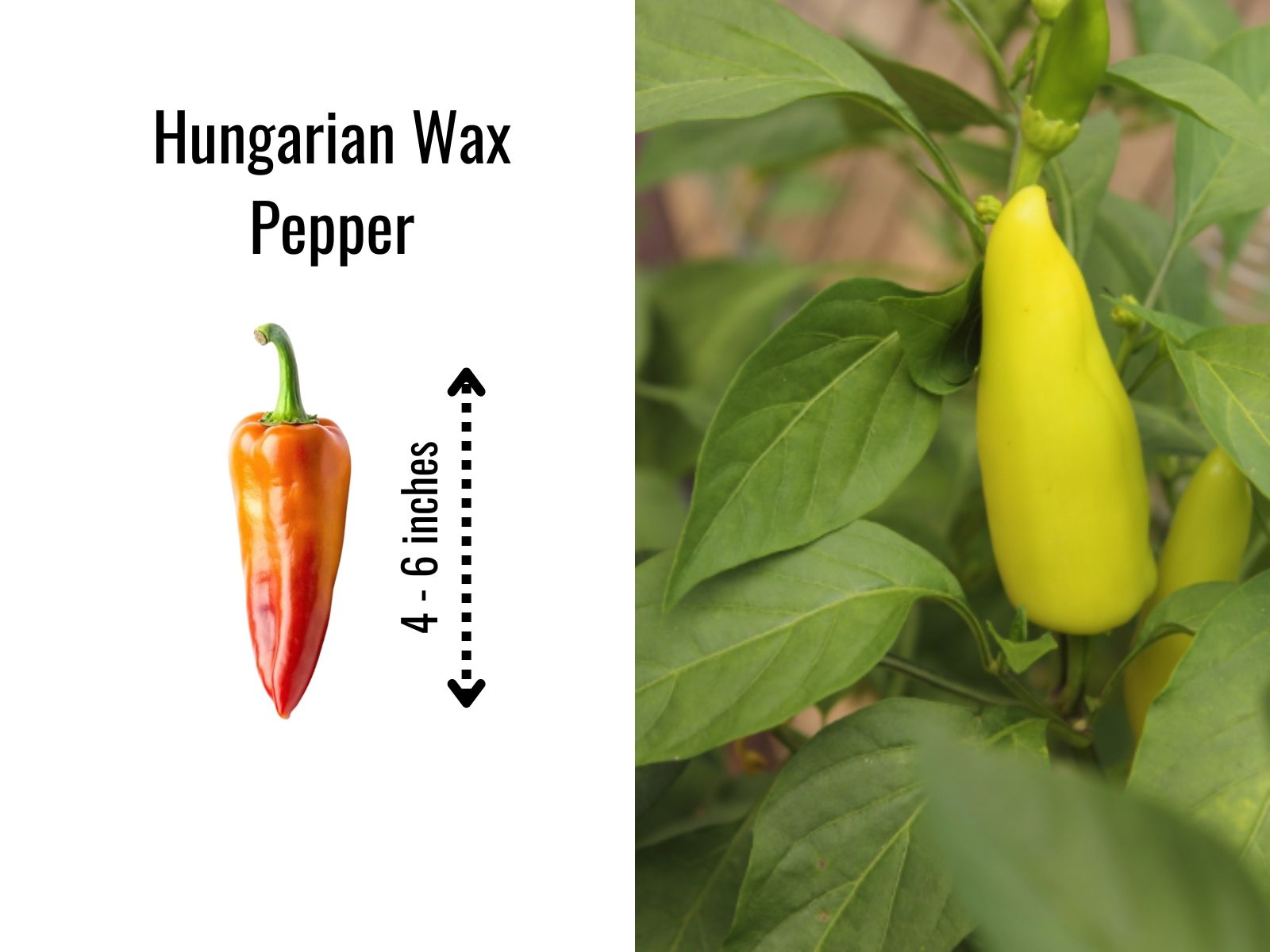
Each pepper typically grows 4 to 6 inches (10 to 15 cm) long and tapers to a rounded point. The pods begin pale yellow, then turn orange or deep red as they mature, developing a sweeter and fuller flavor along the way.
In this article, CHIN-SU explains what Hungarian wax peppers are, how hot they get on the Scoville scale, how their flavor shifts with ripeness, how they compare to banana peppers, how to cook and store them, and what to substitute when you cannot find one.
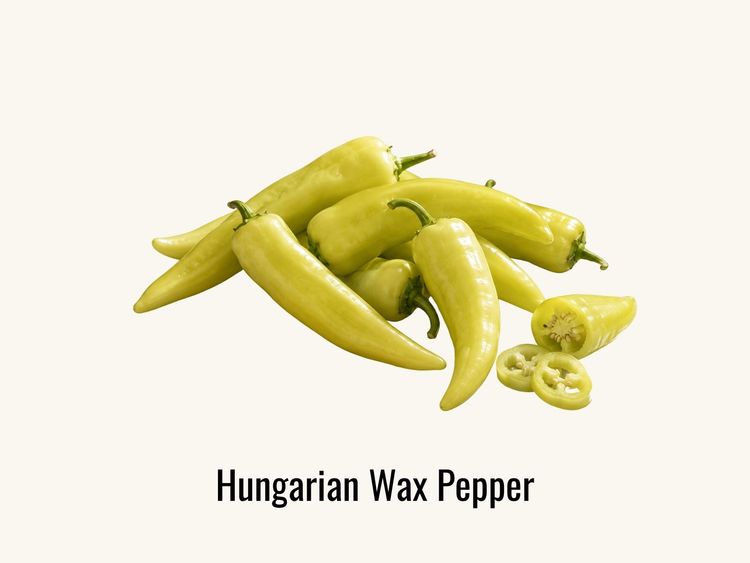
Table Of Contents
What Is a Hungarian Wax Pepper?
- How Hot Are Hungarian Wax Peppers?
How to Use Hungarian Wax Peppers in Cooking
- How to Store Hungarian Wax Peppers
- What Can You Substitute for Hungarian Wax Peppers?
What Is a Hungarian Wax Pepper?
A Hungarian wax pepper (Capsicum annuum) is a thick-fleshed chili associated with Hungarian and Central European cooking. The word “wax” describes the pepper’s smooth, glossy skin.
Chili peppers originated in the Americas and reached Hungary by the late sixteenth century, likely through Ottoman and Balkan trade routes. Hungarian growers later developed many sweet and hot pepper types for fresh cooking, stuffing, pickling, and paprika production.
A Hungarian wax pepper typically grows 4 to 6 inches (10 to 15 cm) long, although some fruits become larger when left to mature. Its curved, conical body tapers to a rounded point. The substantial flesh gives raw slices a crisp bite and helps the pepper retain its shape during stuffing, roasting, and pickling.
Hungarian wax peppers change color and flavor as they mature:
| Color | Ripeness Stage | Typical Flavor Character |
| Pale yellow | Commonly harvested immature | Crisp, sweet, and tangy |
| Bright yellow | Developing | More peppery while retaining sweetness |
| Orange | Maturing | Fruitier, softer, and more aromatic |
| Red | Fully ripe | Sweetest and most developed; heat varies |
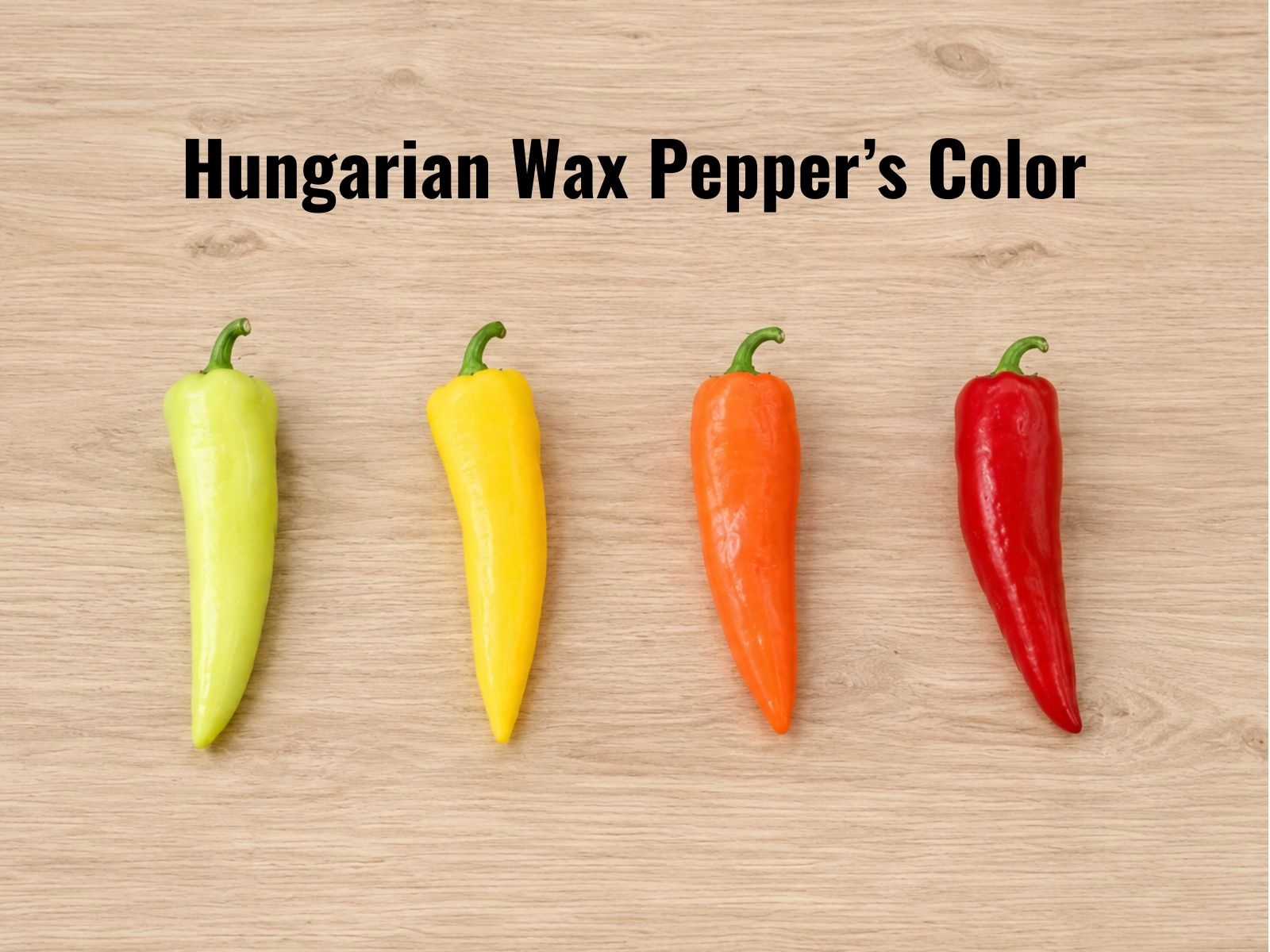
The pods commonly mature from pale yellow through orange to red. Ripeness changes sweetness, aroma, and texture, while cultivar genetics and growing conditions determine the exact heat. A red pepper does not always contain more capsaicin than every pale yellow or orange pod.
Several Hungarian pepper terms often appear alongside Hungarian wax pepper, but they do not all identify equivalent cultivars:
- TV paprika: The abbreviation comes from tölteni való, meaning “for stuffing.” This mild, thick-fleshed pepper type works well for stuffing with meat, rice, or vegetables and cooking in tomato sauce. Hungary’s plant authority classifies TV paprika as a distinct sweet market category rather than one Hungarian wax cultivar.
- Lecsó paprika: This market and culinary term covers mild peppers suited to lecsó, a Hungarian stew made with peppers, tomatoes, onions, and paprika. Growers often harvest these peppers when yellow, orange-tinged, or fully mature.
- Bogyiszlói paprika: This hot Hungarian pepper type takes its name from the village of Bogyiszló. It has thick, firm flesh, a conical shape, and substantially more pungency than mild stuffing peppers.
- Szentesi paprika: This name identifies peppers produced within the protected Szentes growing region rather than one simple cultivar. The European Union registered Szentesi paprika as a Protected Geographical Indication in 2014, covering qualifying sweet, hot, and specialty peppers from the defined area.
What Do Hungarian Wax Peppers Taste Like?
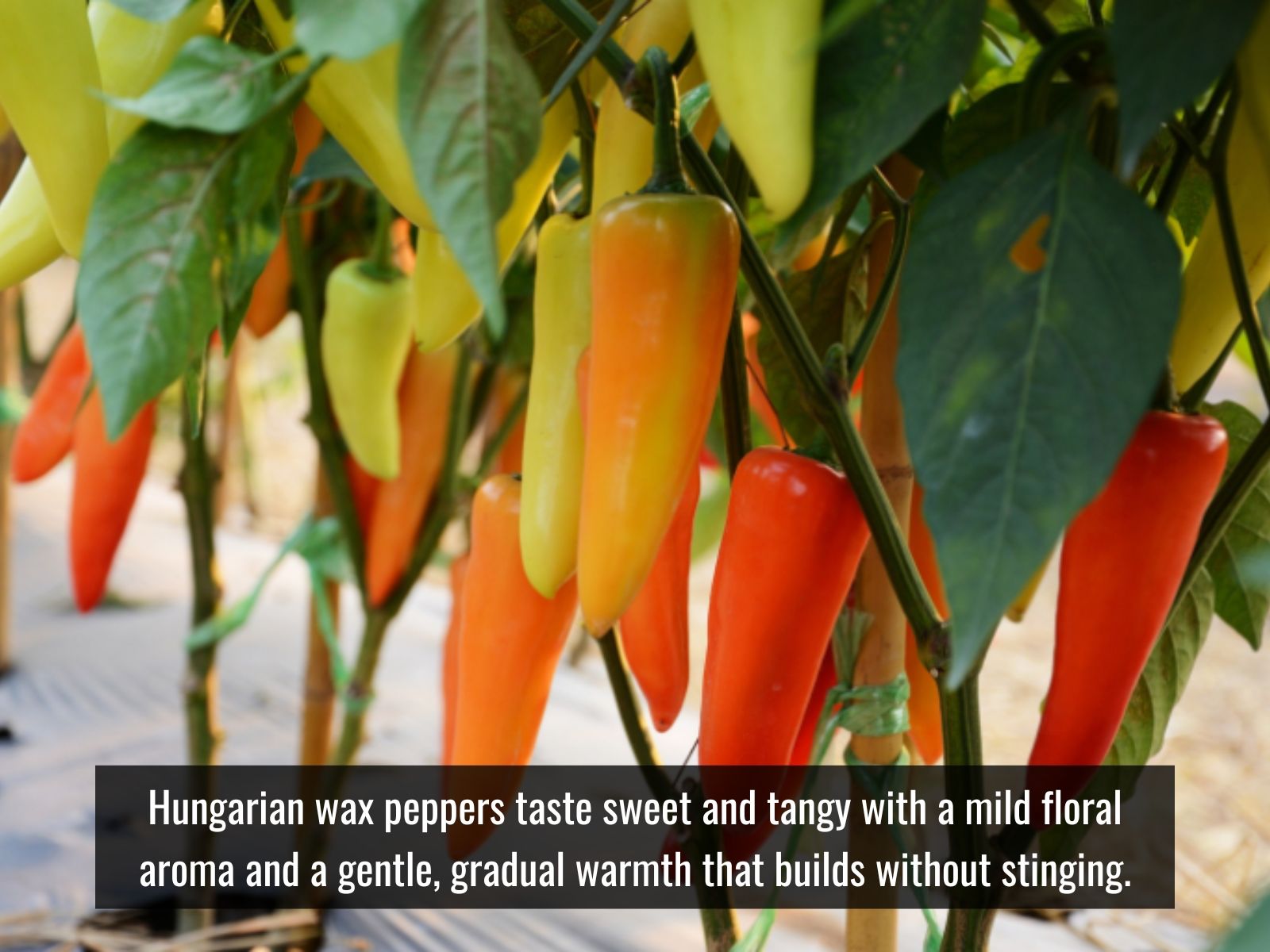
Hungarian wax peppers taste sweet and tangy, with a mild floral aroma and peppery heat that ranges from gentle warmth to a noticeable burn. The sweetness usually appears first, while the heat often builds gradually as you continue eating.
Ripeness changes the flavor. Pale yellow peppers taste crisp, fresh, and subtly tangy, while fully ripe red pods develop stronger sweetness, fruitiness, and aroma. Cultivar genetics, temperature, water availability, and other growing conditions determine the exact heat, so ripeness does not increase pungency at the same rate in every pepper.
Their substantial flesh gives Hungarian wax peppers a firm, crunchy bite. Most capsaicinoids concentrate in the pale placental tissue and inner ribs, so removing these parts reduces more heat than removing the seeds alone.
Raw Hungarian wax peppers retain their crisp texture and sweet tang in salads, sandwiches, and fresh salsa. Roasting, grilling, or stuffing softens the flesh and brings the sweetness forward. Cooking also spreads the heat through fillings, sauces, and cooking liquids, creating a more integrated flavor.
Are Hungarian Wax Peppers Different from Banana Peppers?
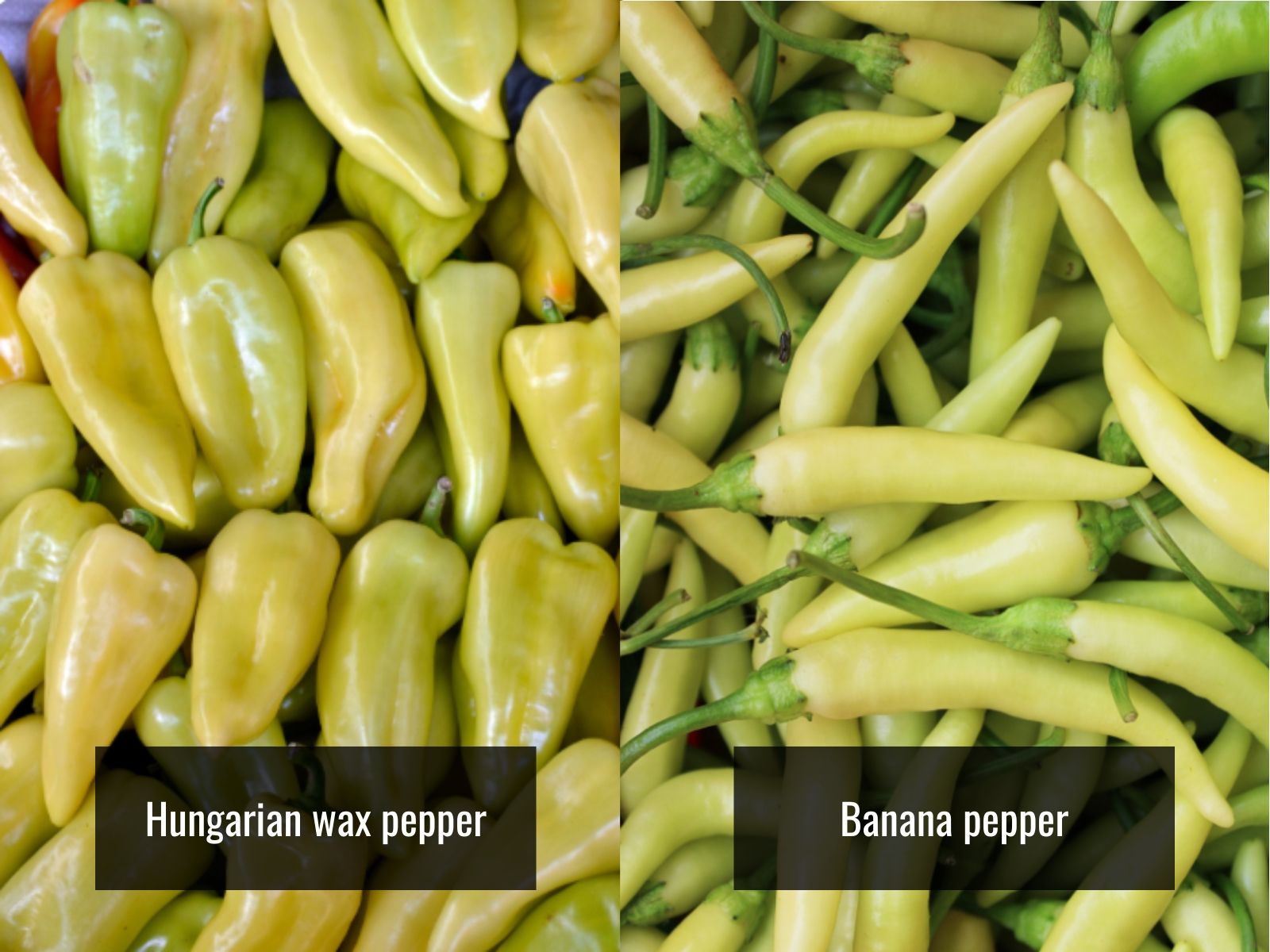
Hungarian wax peppers and banana peppers both belong to Capsicum annuum and share a similar yellow, tapered appearance. Their clearest difference is heat: a Hungarian wax pepper can reach 15,000 SHU, about 30 times hotter than a banana pepper at 500 SHU.
| Attribute | Hungarian Wax Pepper | Banana Pepper |
| Length | 4–6 in (10–15 cm) | 4–6 in (10–15 cm) |
| Body shape | Tapered, plump, and conical | Tapered, slimmer, and often curved |
| Skin and flesh | Glossy, waxy, crisp, and substantial | Smooth, waxy, crisp, and mild |
| Heat | 1,000–15,000 SHU | 0–500 SHU |
| Flavor | Sweet, tangy, and variably hot | Sweet, mild, and gently tangy |
| Cooking performance | Retains its shape during stuffing, roasting, and pickling | Works well raw, sliced, or pickled |
| Best uses | Stuffed peppers, goulash, lecsó, roasting, and pickling | Sandwiches, pizza, antipasto, salads, and pickled rings |
How Hot Are Hungarian Wax Peppers?
Hungarian wax peppers measure 1,000 to 15,000 Scoville Heat Units (SHU), placing them in the mild-to-medium tier of the Scoville scale. At the low end, a Hungarian wax pepper sits close to a mild poblano pepper at 1,000 to 2,000 SHU. At the high end, it can reach nearly twice the heat of an 8,000-SHU jalapeño pepper. For perspective, pure capsaicin measures about 16,000,000 SHU, while Pepper X averages 2,693,000 SHU, so the Hungarian wax pepper remains near the gentle end of the scale.
Not every Hungarian wax pepper reaches the same heat level. Genetics, temperature, water availability, soil conditions, plant stress, and harvest maturity all affect capsaicinoid concentration. Hotter or drier growing conditions can increase pungency in some plants, but the effect varies. Fully ripe red peppers may also become hotter than earlier-picked fruit, although heat does not rise at the same rate in every cultivar.
The specific Hungarian pepper type matters as well. TV paprika is usually mild and grown mainly for stuffing, while Bogyiszlói paprika provides substantially more heat and can overlap the Hungarian wax range. Szentesi paprika identifies a protected regional pepper category rather than one cultivar, so it does not have a single fixed SHU level.
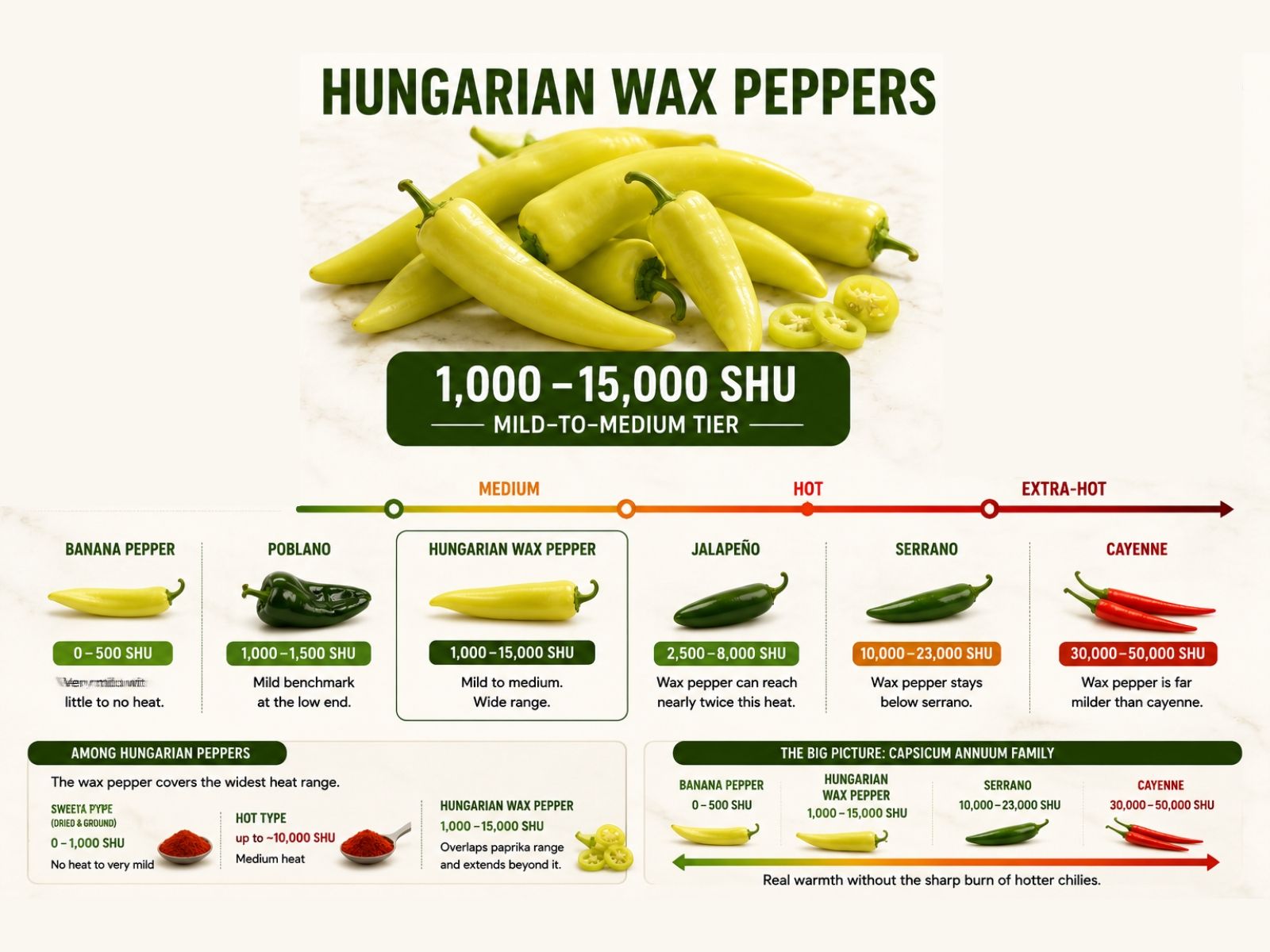
Among Hungarian peppers, Hungarian wax covers a broad heat range.
- Sweet paprika peppers may contain little or no noticeable heat, while hotter paprika types can approach or overlap the Hungarian wax range.
- Banana peppers: Measure 0 to 500 SHU, making them milder than Hungarian wax peppers.
- Jalapeño peppers: Measure 2,500 to 8,000 SHU, overlapping part of the Hungarian wax range.
- Serrano peppers: Measure 10,000 to 23,000 SHU. Hotter Hungarian wax peppers can reach the lower end of this range.
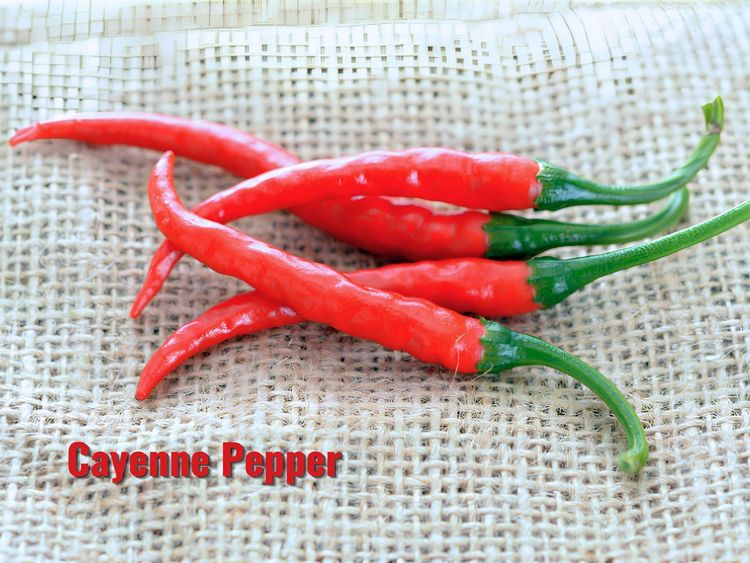
- Cayenne peppers: Measure 30,000 to 50,000 SHU, making them substantially hotter than Hungarian wax peppers.
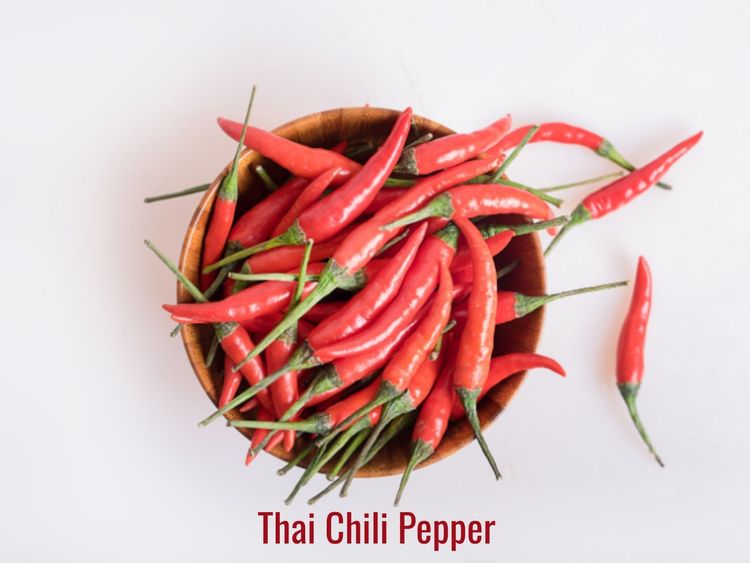
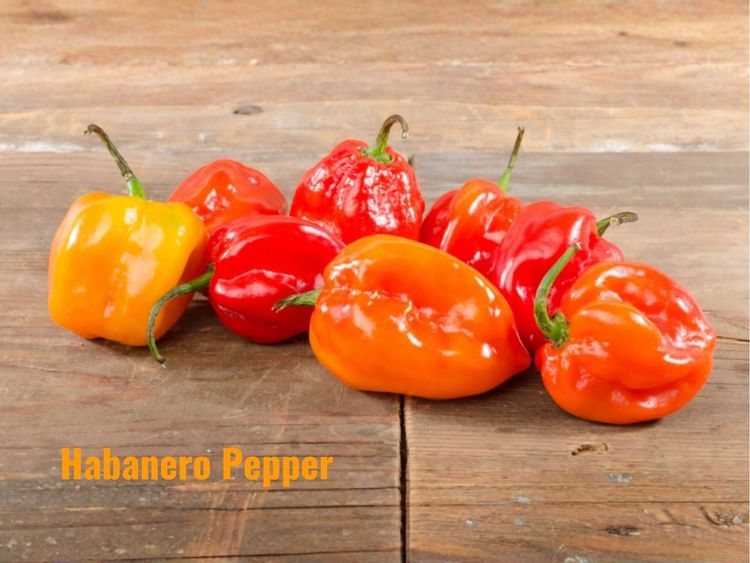
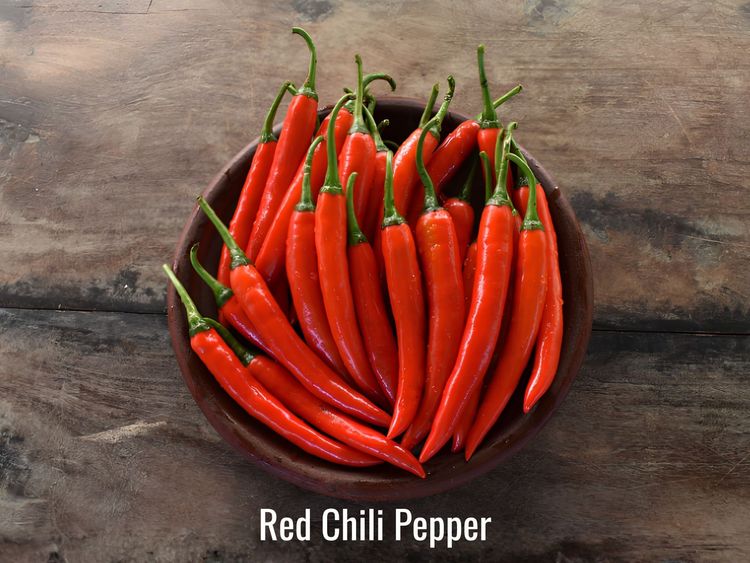
This middle range gives Hungarian wax peppers noticeable warmth without the stronger burn of cayenne, Thai chili pepper, habanero pepper, or superhot peppers.
How to Use Hungarian Wax Peppers in Cooking
Use Hungarian wax peppers raw in salads and sandwiches, stuffed and roasted, simmered in Hungarian stews, pickled for longer storage, or blended into sauces and condiments. Their firm flesh works across fresh and cooked dishes, while their variable heat adds anything from gentle warmth to a stronger peppery bite.
A 100 g (3.5 oz) serving of raw Hungarian pepper provides about 29 kcal, 127.7 mg of vitamin C, 2.1 g of dietary fiber, and carotenoid compounds that contribute provitamin A. Actual values vary by cultivar, maturity, and growing conditions. Capsaicinoids have also shown modest effects on thermogenesis in controlled research, although normal culinary portions produce a limited metabolic effect.
- Fresh and raw: Slice Hungarian wax peppers into rings or strips for salads, sandwiches, pizza, fresh salsa, and charcuterie boards. Their substantial flesh retains a crisp, sweet, and tangy bite after cutting. Taste a small piece first because two peppers with the same color can differ considerably in heat.
- Stuffed and roasted: The broad cavity and firm flesh hold fillings without collapsing quickly. Remove the cores and fill the peppers with seasoned ground meat, rice, cheese, grains, or vegetables. Roast them at 400°F (200°C) for about 20–25 minutes, depending on pepper size and filling density. Ground beef, pork, lamb, and veal should reach 160°F (71°C), while ground poultry should reach 165°F (74°C).
Hungarian stuffed peppers, or töltött paprika, traditionally use mild stuffing peppers such as TV paprika. Hungarian wax peppers provide a hotter alternative and work well with tomato-based sauce. - Stews and slow-cooked dishes: Slice Hungarian wax peppers into lecsó, goulash, soups, and braised dishes to add sweetness, body, and mild heat. In lecsó, cooks simmer the peppers with onions, tomatoes, and paprika until they soften into the base. Add them early for a softer texture and more integrated flavor, or reserve some until later to retain freshness and shape.
- Pickled peppers: Pickling preserves the firm texture and adds sharp acidity. Slice the peppers into rings for sandwiches, salads, burgers, and charcuterie, or pickle smaller pods whole. Quick refrigerator pickles must remain chilled and are not shelf-stable. For canned peppers, follow a tested recipe without changing the vinegar strength, vinegar-to-water ratio, jar size, or processing time.
- Sauces and condiments: Hungarian wax peppers also provide enough flesh to add body to hot sauce, salsa, relish, and pepper jelly. Blend roasted or sautéed peppers with vinegar, garlic, and salt for a refrigerated Hungarian wax pepper hot sauce. Dice fresh or pickled peppers with tomatoes, onions, herbs, and vinegar for salsa or relish. For pepper jelly, cook chopped peppers with vinegar, sugar, and pectin using a tested preservation recipe.

Can You Eat Hungarian Wax Peppers Every Day?
Yes, most healthy adults can eat Hungarian wax peppers every day if they tolerate spicy food. For one adult serving, start with ½ to 1 pepper per meal. For a dish serving four people, 2 to 3 peppers usually provide noticeable heat without dominating the recipe.

Repeated exposure can make the oral burn feel less intense over time, although digestive tolerance still varies.
Remove the pale placental tissue and inner ribs when you want less heat. The seeds may carry pungent oils, but the surrounding placental tissue contains most of the capsaicinoids.
Reduce the portion or avoid Hungarian wax peppers if they trigger heartburn, abdominal pain, nausea, or diarrhea. People with GERD often identify spicy foods as a symptom trigger.
How to Store Hungarian Wax Peppers
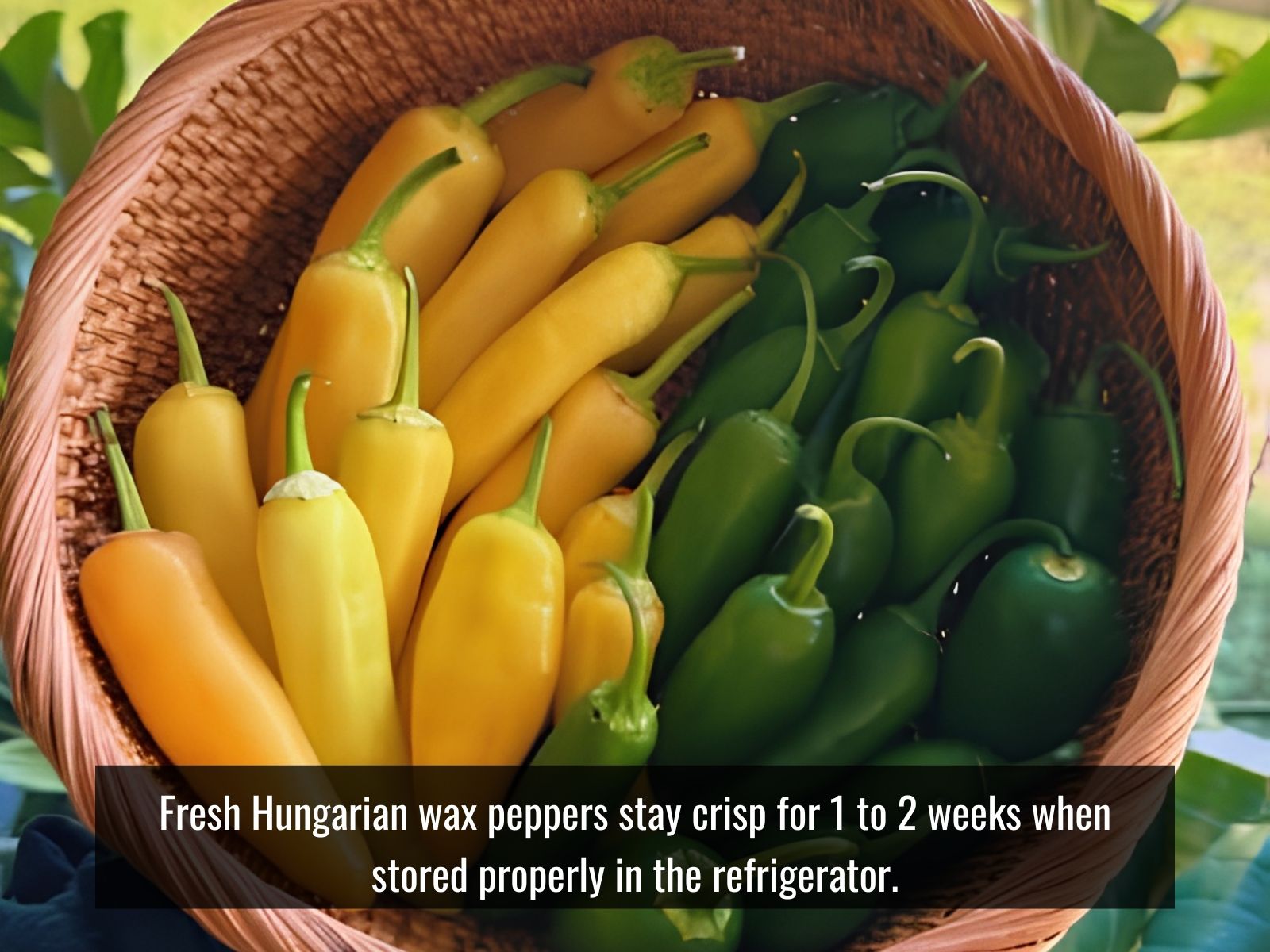
Fresh Hungarian wax peppers stay crisp for about 1 to 2 weeks under suitable cool conditions. Keep them whole, dry, and unwashed in a perforated bag or breathable container. Wash them only before use, and remove any pepper that develops mold, slime, leaking liquid, or extensive soft spots. Extended refrigeration may cause surface pitting because peppers are sensitive to temperatures below 45°F (7°C).
For longer storage, freeze the peppers whole, sliced, or chopped. Wash, stem, and dry them thoroughly, then spread them on a lined tray until firm before transferring them to an airtight freezer bag. Use them within about 6 months for the best quality. Their texture softens after thawing, so frozen Hungarian wax peppers work best in lecsó, goulash, soups, stews, sauces, and stuffed-pepper fillings.
Drying is the third option, although the pepper’s substantial flesh requires more time than thin-walled chilies. Slit or slice the peppers, then dry them in a dehydrator at about 135–140°F (57–60°C) until every piece becomes fully brittle. For oven drying, maintain approximately 140–150°F (60–66°C) with adequate ventilation and watch the peppers closely to prevent scorching.
Let the dried peppers cool completely before placing them in an airtight container away from heat, light, air, and moisture. Use them within about 6 to 12 months for the strongest flavor, color, and heat. Whole dried pieces retain their quality longer than flakes or powder, so grind them only as needed.
What Can You Substitute for Hungarian Wax Peppers?
The closest substitute for a Hungarian wax pepper is a banana pepper for mild applications, or a jalapeño when you need matching heat. The right pick depends on whether you care more about the sweet-tangy flavor or the original's heat level.
| Substitute | Ratio | Flavor vs. Hungarian Wax | Best Used In |
| Banana pepper | 1:1 | Milder, less tangy, thinner walls | Sandwiches, pizza, antipasto (when heat is not critical) |
| Jalapeño | 1:1 | Earthier, grassier, similar heat range | Stuffed peppers, salsas, roasted dishes |
| Pepperoncini | 1:1 | Milder, tangier, wrinkled skin | Pickled applications, salads, and Mediterranean dishes |
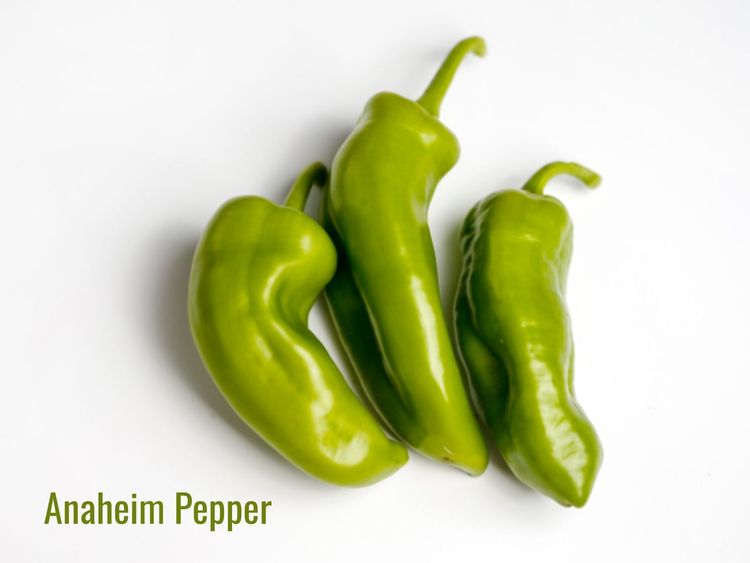
| Anaheim pepper | 1:1 | Milder, larger, thinner heat | Stuffed or roasted preparations needing a bigger cavity |
One rule keeps substitutions on track: fresh substitutes for fresh applications, dried substitutes for cooked applications only. For more on matching heat, see our guide to the jalapeño pepper, and for a larger, milder stuffing pepper, our guide to the Anaheim pepper covers the swap in detail. No substitute fully replicates the Hungarian wax pepper's mix of sweet tang and gradual warmth behind a thick, waxy skin.
References
- USDA FoodData Central. Peppers, Hungarian, raw (FDC #168578). https://fdc.nal.usda.gov
- Irandoost, P., Lotfi Yagin, N., Namazi, N., Keshtkar, A., Farsi, F., Mesri Alamdari, N., & Vafa, M. (2021). The effect of Capsaicinoids or Capsinoids in red pepper on thermogenesis in healthy adults: A systematic review and meta-analysis. Phytotherapy Research: PTR, 35(3), 1358–1377. https://doi.org/10.1002/ptr.6897
- Tewksbury, J. J., & Nabhan, G. P. (2001). Seed dispersal. Directed deterrence by capsaicin in chilies. Nature, 412(6845), 403–404. https://doi.org/10.1038/35086653
- European Commission. Geographical Indications Register: Szentesi paprika (PGI). https://ec.europa.eu/agriculture/eambrosia/geographical-indications-register/
- Saveur. Hungarian Yellow Wax Peppers. https://www.saveur.com/hungarian-yellow-wax-peppers
Frequently Asked Questions
No, a Hungarian wax pepper is not the same as a banana pepper. Both are Capsicum annuum cultivars with a similar yellow, tapered shape, but they differ in heat. Hungarian wax peppers range from 1,000 to 15,000 SHU, while banana peppers top out at 500 SHU, so at median levels, a Hungarian wax runs roughly 30 times hotter.
A Hungarian wax pepper is a specific yellow, tapered pepper commonly eaten fresh, stuffed, roasted, or pickled. “Hungarian paprika pepper” refers more broadly to pepper varieties grown for fresh use or for drying and grinding into paprika. Hungarian wax is one pepper type, while paprika peppers include several sweet, mild, and hot forms.
Yes. “Hungarian yellow wax pepper,” “yellow Hungarian wax pepper,” and “Hungarian wax pepper” usually refer to the same pepper group. “Yellow” describes the pale-to-bright-yellow stage when it is commonly harvested. “Hungarian hot yellow wax pepper” emphasizes hotter forms, while “sweet Hungarian yellow wax pepper” usually describes milder wax-style peppers.
Pick Hungarian wax peppers according to their intended use. Pale or bright yellow peppers are crisp and tangy, making them suitable for salads, sandwiches, stuffing, and quick pickles. Orange peppers are sweeter and work well for roasting or sautéing. Fully ripe red peppers have softer flesh and more developed flavor, making them useful for sauces, roasting, and drying.
It depends on the specific pepper. Hungarian wax peppers range from 1,000 to 15,000 SHU, while jalapeños range from 2,500 to 8,000 SHU. At the low end, a Hungarian wax is milder than a jalapeño; at the high end, it reaches nearly twice the heat of the hottest one. Ripeness, growing conditions, and variety all shift the result, and Bogyiszlói runs hottest.
Hungarian wax pepper turns red means it is fully ripe. Hungarian wax peppers shift from pale yellow to bright yellow, then orange, and finally red as they mature on the plant. The red stage concentrates more capsaicin and develops a sweeter, fruitier flavor. A red Hungarian wax pepper is safe to eat and is often preferred for roasting because its sugars caramelize.
Refrigeration is the best way to store Hungarian wax peppers, since it extends shelf life to 1 to 2 weeks. At room temperature, fresh Hungarian wax peppers soften within 3 to 5 days. Store them whole and unwashed in a paper bag or breathable container in the crisper drawer. Sealed plastic traps moisture and encourages mold.

CHIN-SU KITCHEN TEAM
CHIN-SU Kitchen Team are the creative experts behind the delicious recipes featuring CHIN-SU sauces. With years of experience and a passion for flavor, our team carefully selects recipes from a variety of trusted chefs and bloggers, bringing together the best culinary insights to present you with the most suitable and exciting dishes. Every recipe is chosen to inspire you to create meals that are not only tasty but also easy to prepare, enhancing your dining experience. Join us as we explore a wide range of sauces and flavors, and elevate every meal with the perfect recipe for your table!
User Reviews
Featured Articles
What Is an Anaheim Pepper? Flavor and Uses Explained
What Is a Thai Chili Pepper? Heat and Uses Explained
Hot Sauce Scoville Scale Explained: What Does It Mean?
What Is a Tabasco Pepper? Heat and Uses Explained
What Is A Cayenne Pepper? Heat and Uses Explained
SUBSCRIBE TO GET
MORE INFO
Want the latest and greatest recipes, updates, and more from us,
straight to your inbox? Subscribe and get our NEWS!