What Is a Pepperoncini Pepper? Flavor and Uses Explained
Published: Jul 28, 2026 by CHIN-SU
Updated: Jul 30, 2026 by CHIN-SU
A pepperoncini pepper (Capsicum annuum) is a thin-walled, mild chili associated with Italian and Greek cooking. It measures 100 to 500 Scoville Heat Units (SHU), placing it near the gentle end of the scale. Most Americans recognize pepperoncini as the pale yellow-green, wrinkled peppers served pickled with Greek salads, antipasto, sandwiches, and pizza.
The name comes from Italian: peperoncino is singular, while peperoncini is plural. American English also uses “pepperoncini” for one pepper or as a collective ingredient. In Italian, peperoncino can refer broadly to chili peppers, while U.S. usage usually points to the mild pickled type.
Pepperoncini typically grow 2 to 3 inches (5 to 8 cm) long and have thin, crinkled skin. Cooks commonly harvest them while pale yellow-green, although the pods turn red when fully ripe. U.S. markets may also use names such as Tuscan pepper, golden Greek pepper, sweet Italian pepper, or friggitello for pepperoncini or closely related mild pickling peppers.
Coming up, you’ll learn how pepperoncini taste fresh and pickled, how they compare with banana peppers, how hot they are, and how to use, store, or substitute them.
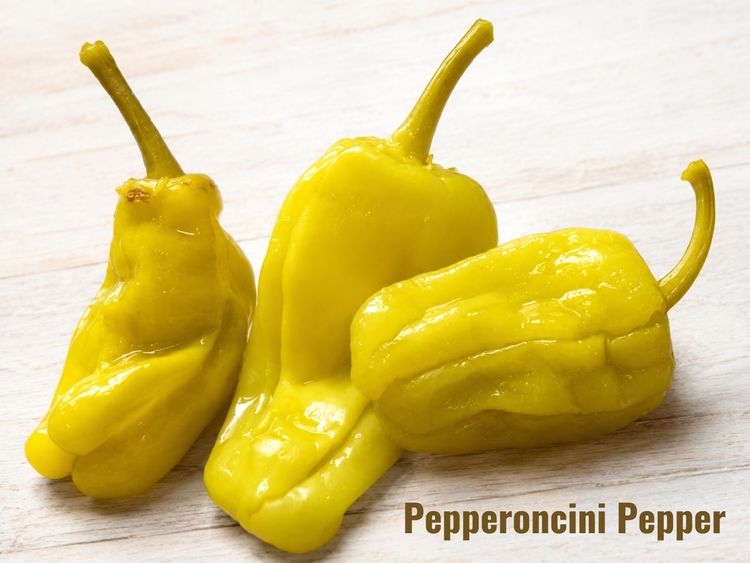
Table Of Contents
What Is a Pepperoncini Pepper?
- Pepperoncini vs. Banana Pepper: What’s the Difference?
- How Hot Are Pepperoncini Peppers?
How to Use Pepperoncini in Cooking
- How to Store Pepperoncini
- What Can You Substitute for Pepperoncini?
What Is a Pepperoncini Pepper?
A pepperoncini pepper is a small, tapered Capsicum annuum chili. It typically grows 2 to 3 inches (5 to 8 cm) long and has thin, crinkled skin, mild heat, and a fresh tang that becomes stronger after pickling.
Like other domesticated chili peppers, pepperoncini traces its botanical ancestry to the Americas. European trade introduced Capsicum peppers to the Mediterranean after the late fifteenth century, and growers later developed mild types suited to Italian, Greek, and Mediterranean cooking.
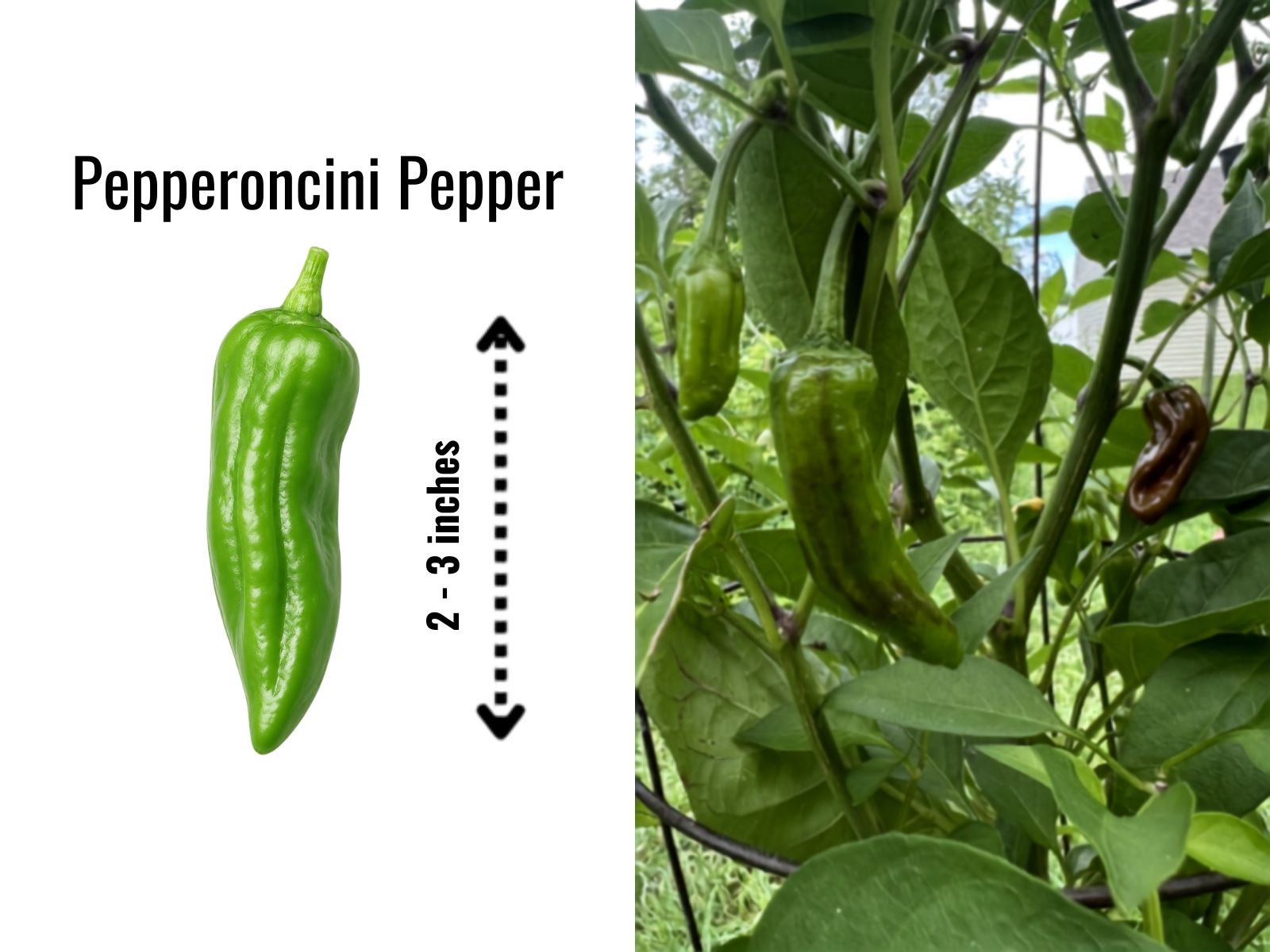
The name changes meaning with context. In Italian, peperoncino is a broad term for a chili pepper, while peperoncini is its plural form. In American English, “pepperoncini” usually refers to the pale yellow-green, mildly pungent pepper served pickled in Greek salads, antipasto, sandwiches, and pizza.
Some markets also associate pepperoncini with friggitelli, but the terms do not always identify the same cultivar. Friggitello commonly refers to related mild Italian frying peppers, while American pepperoncini labels often cover mild pickling types.
Pepperoncini change in color and flavor as they mature:
| Color | Ripeness Stage | Typical Flavor Character |
| Light yellow-green | Common harvest stage | Tangy, vegetal, mildly bitter, and gently warm |
| Yellow | Developing | Sweeter, less vegetal, and more aromatic |
| Orange or red | Fully ripe | Sweetest, softer, and less sharply tangy |
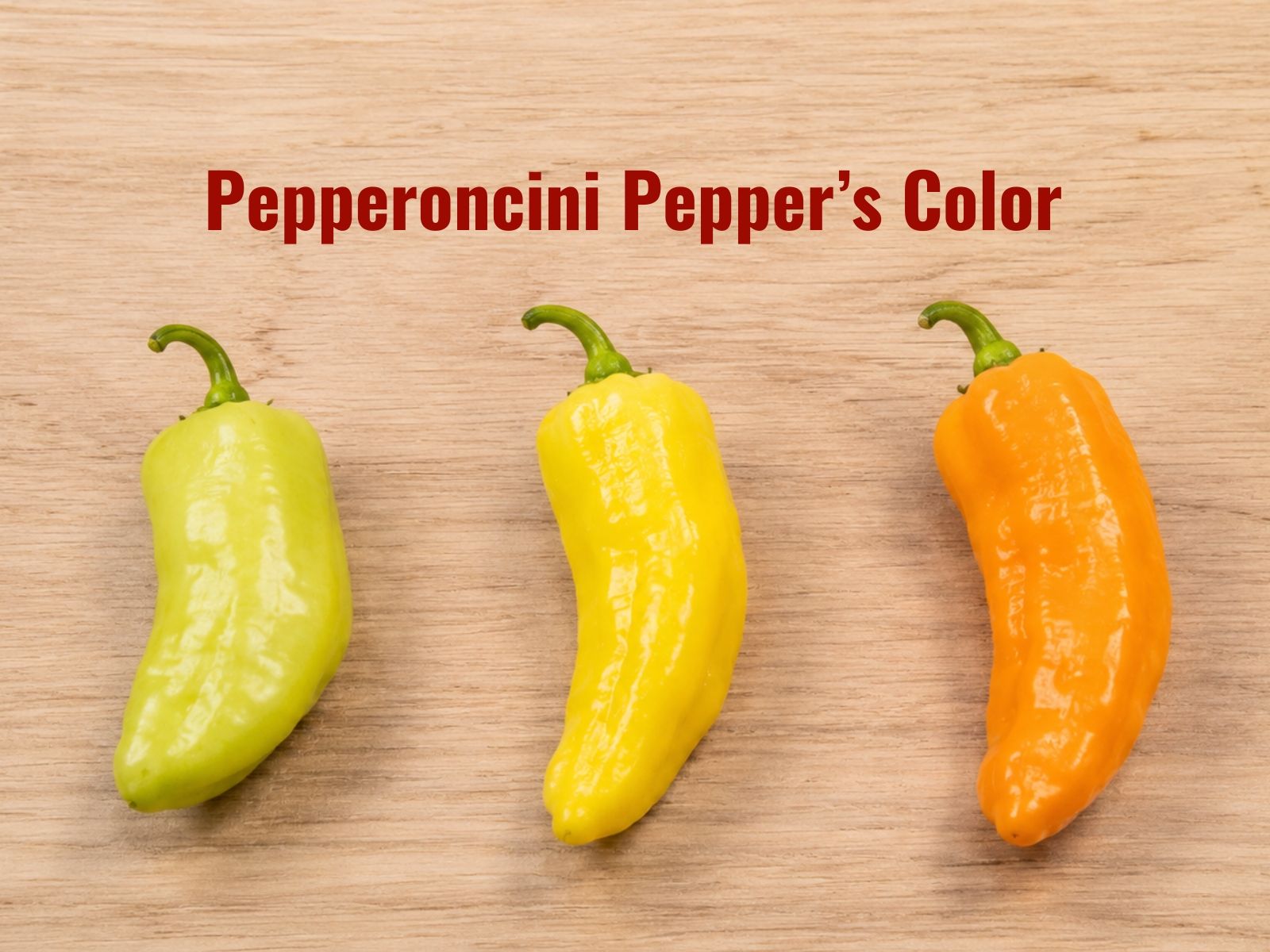
Growers commonly harvest pepperoncini at the light yellow-green stage because the firm texture and tangy flavor work well for pickling. Fully ripe peppers become softer and sweeter, while genetics and growing conditions still influence their exact heat.
Fresh pepperoncini retain thin, wrinkled skin, which helps distinguish them from many smoother banana peppers. However, appearance alone may not confirm the variety because related mild peppers often share a yellow color and tapered shape.
Labels such as “golden Greek,” “Tuscan,” and “sweet Italian” may describe related mild peppers with small differences in length, curve, sweetness, and bitterness. Golden Greek types commonly appear in pickled products, while Italian frying types often go into sautéed dishes, pasta sauces, sandwiches, and antipasto.
What Do Pepperoncini Taste Like?
Pepperoncini taste tangy, slightly sweet, and faintly bitter, with gentle warmth that barely registers as heat. Their flavor leans bright and briny rather than spicy, especially in the pickled form most commonly sold in the United States.
Fresh and pickled pepperoncini have noticeably different profiles. Fresh peppers retain mild sweetness, vegetal freshness, and a subtle bitter edge. Pickling brings vinegar and salt to the front, softens the bitterness, and creates the sour, pickle-like flavor associated with jarred pepperoncini.
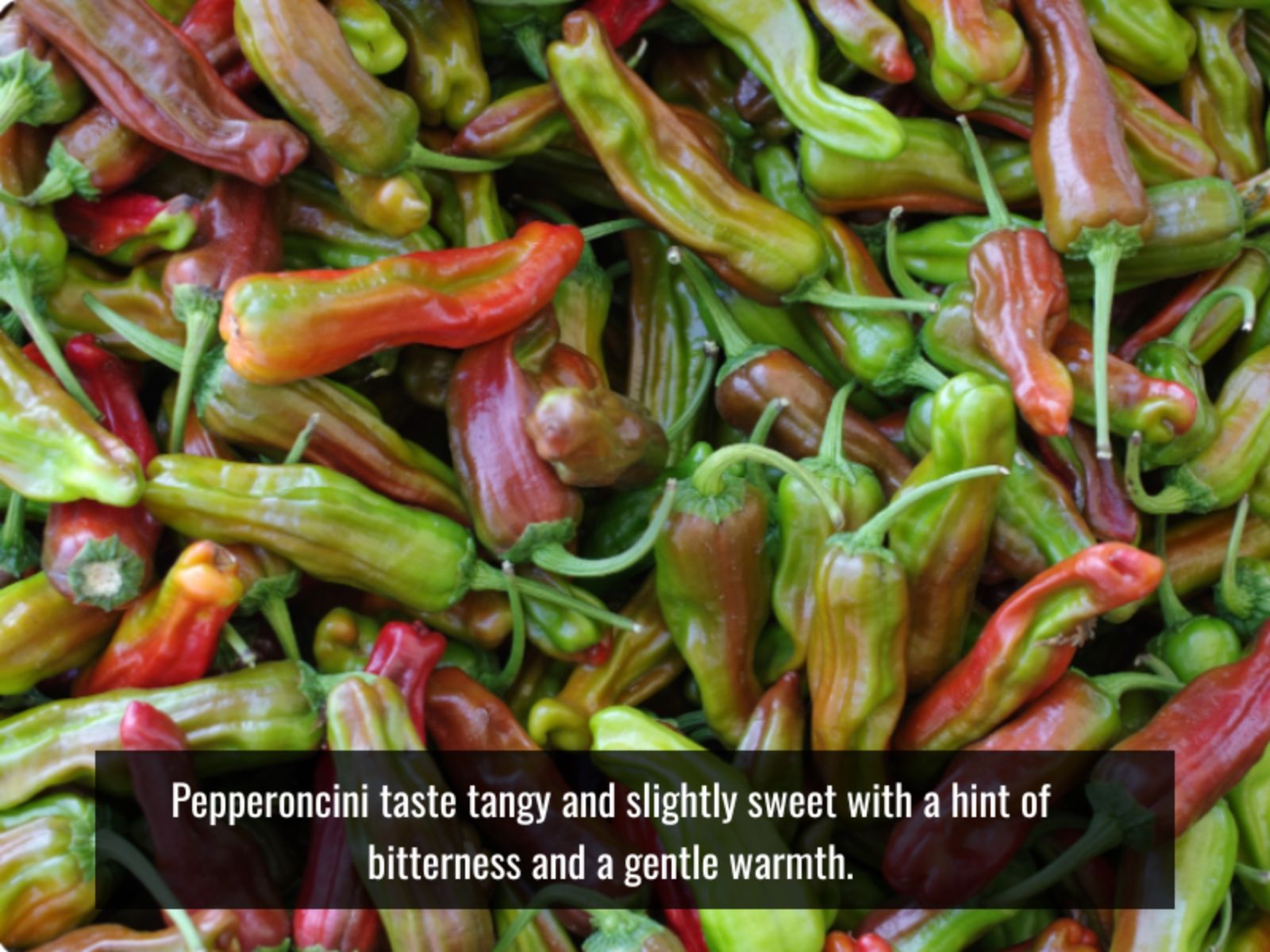
Ripeness also changes the taste. Pale yellow-green peppers taste sharper, tangier, and more vegetal, while fully ripe orange or red peppers become sweeter, softer, and more aromatic.
Their low heat of 100 to 500 SHU allows tanginess and sweetness to remain dominant. Thin, pliable flesh gives pickled pepperoncini a tender bite with some crunch, making them suitable for salads, sandwiches, antipasto, pizza, cheese, and rich meats. Fresh peppers also work well sautéed or roasted, while pepperoncini brine adds acidity to marinades, vinaigrettes, sauces, and slow-cooked dishes.
Pepperoncini vs. Banana Pepper: What’s the Difference?
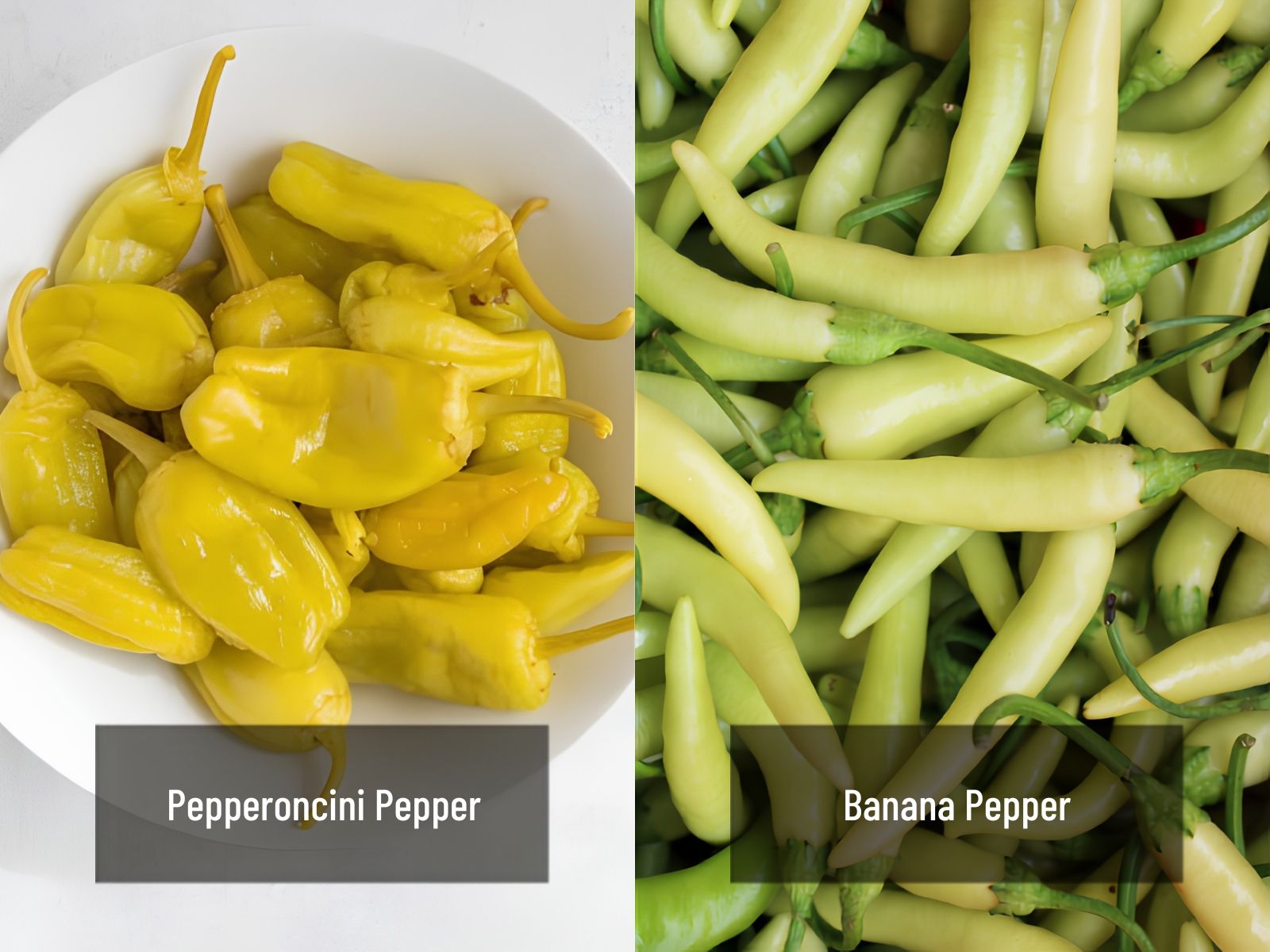
Pepperoncini and banana peppers are different Capsicum annuum peppers with similarly mild heat, but pepperoncini are shorter, more wrinkled, softer, and tangier, while banana peppers are longer, smoother, firmer, and usually sweeter. Both are often sold pickled, which is why shoppers mix them up so easily.
| Attribute | Pepperoncini | Banana Pepper |
| Species | Capsicum annuum | Capsicum annuum |
| Length | Usually 2 to 3 in (5 to 8 cm) | Usually 2 to 4 in (5 to 10 cm) |
| Shape | Shorter, tapered, slightly curved, rounded tip | Longer, more curved, pointed tip |
| Skin | Thin, wrinkled, and relatively soft | Smooth, waxy, and firmer |
| Wall Thickness | Thin | Thicker |
| Heat | Approximately 100 to 500 SHU | Approximately 0 to 500 SHU |
| Flavor | Tangier, more acidic, and sometimes faintly bitter | Sweeter, milder, and more pepper-forward |
| Common U.S. Form | Often pickled whole or sliced | Often sold fresh or as pickled rings |
| Texture When Sliced | Softer bite, thinner walls | Larger, firmer, smoother rings |
| Best Use | Greek salads, antipasto, sandwiches, vinaigrettes, and slow-cooked meat | Pizza, sandwiches, nachos, salads, and stuffing |
Banana pepper rings are not automatically pepperoncini. “Pepper rings” describes the cut, not the variety. Many packaged yellow pepper rings use banana peppers, although pepperoncini can also be sliced into rings, so check the label when the exact pepper matters.
How Hot Are Pepperoncini Peppers?
Pepperoncini peppers measure 100 to 500 Scoville Heat Units (SHU), placing them near the bottom of the mild tier on the Scoville scale. They provide gentle warmth rather than a noticeable burn and sit much closer to a bell pepper at 0 SHU than to a jalapeño at 2,500 to 8,000 SHU.
Not every pepperoncini reaches the same heat level. Cultivar genetics, temperature, water availability, maturity, growing conditions, and individual fruit variation all influence capsaicinoid concentration. However, these differences remain modest because pepperoncini stay within a narrow, low-heat range.
Pepperoncini overlap closely with banana peppers, which measure 0 to 500 SHU. Some banana peppers contain no detectable heat, while pepperoncini usually provide at least a gentle warmth.
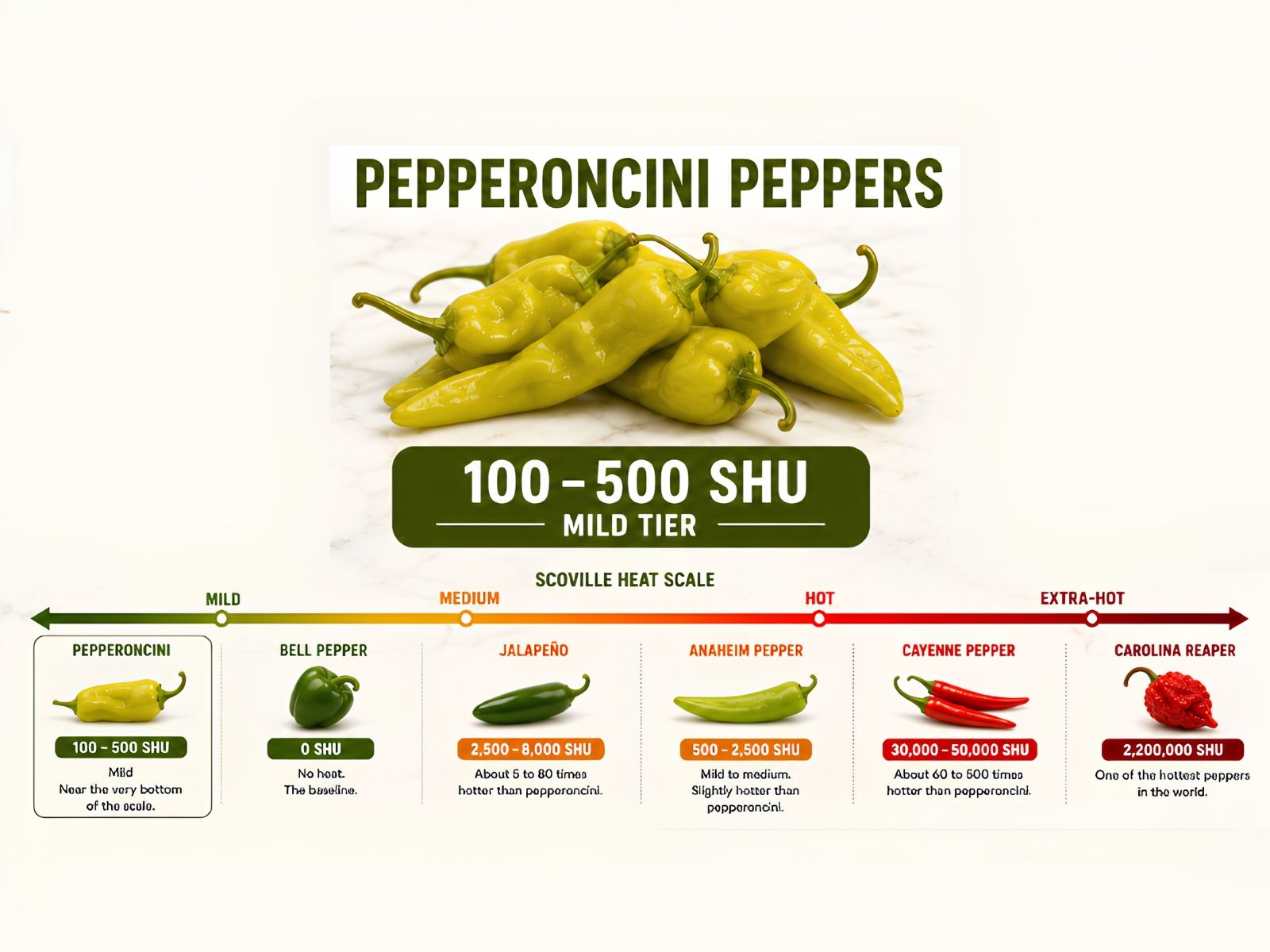
Among peppers associated with Mediterranean cooking, pepperoncini rank near the mildest end. Calabrian chilies vary by cultivar but commonly measure around 25,000 to 40,000 SHU, making them approximately 50 to 400 times hotter than pepperoncini.
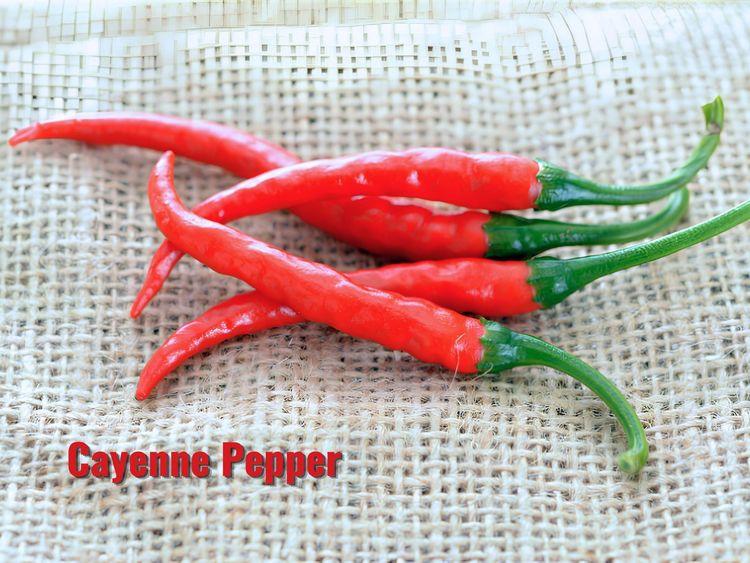
Compared with familiar kitchen peppers, pepperoncini are about 5 to 80 times milder than jalapeño peppers and 60 to 500 times milder than cayenne peppers at 30,000 to 50,000 SHU. This gentle heat makes pepperoncini suitable for salads, sandwiches, pizza, antipasto, and pickled condiments without overpowering the other ingredients.
How to Use Pepperoncini in Cooking
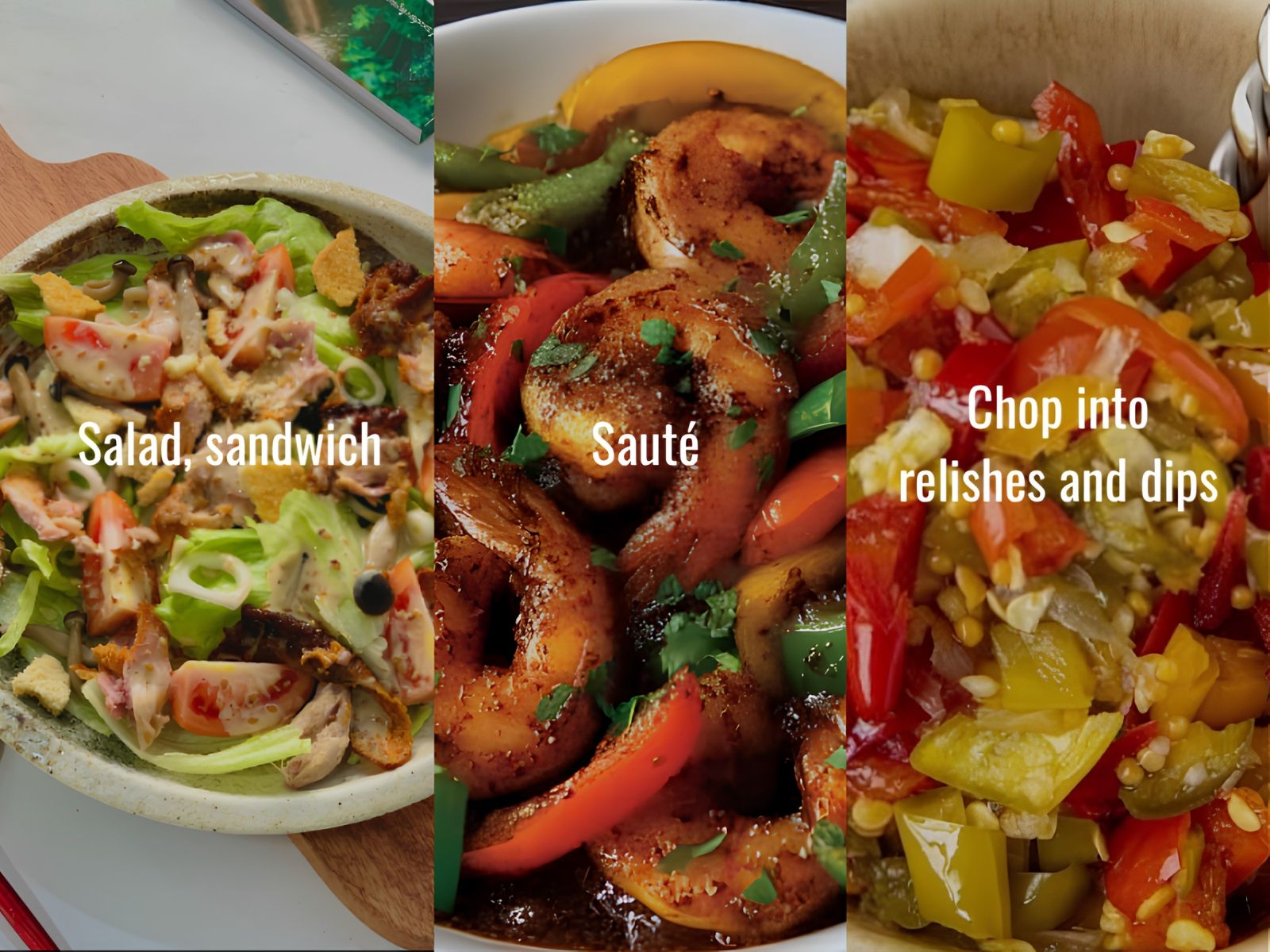
Use pepperoncini straight from the jar in salads and sandwiches, slow-cook them with beef, sauté or roast them fresh, or chop them into relishes, dips, and dressings. Their mild heat and tangy acidity balance rich, salty, and fatty foods.
Pickled pepperoncini contain few calories but can add substantial sodium. A typical 3-pepper serving, about 28 g (1 oz), may provide around 10 kcal and 340 mg of sodium, although values vary by brand, portion, and brine. Check the label and drain the peppers when you need less brine or salt.
- Pickled pepperoncini: Serve them whole or sliced in Greek salads, sub sandwiches, wraps, antipasto platters, pasta salads, grain bowls, and cheese boards. They pair naturally with cured meat, feta, mozzarella, olives, artichokes, tomatoes, and vinaigrette.
- Brine, relish, and dips: Use the brine in vinaigrettes, sandwich dressings, meat marinades, mayonnaise-based dips, pasta salad dressing, and braising liquids. For pepperoncini relish, finely chop the peppers with onion, herbs, olives, and a little brine or vinegar. Serve it with burgers, sandwiches, grilled meat, fish, or cheese.
- Slow-cooked beef: Add whole pickled pepperoncini and a measured amount of brine to pot roast or shredded beef. During cooking, the peppers soften and release acidity into the braising liquid. Mississippi pot roast and Italian beef-style sandwiches are two common applications.
- Fresh, sautéed, or roasted: Sauté fresh pepperoncini briefly with olive oil and garlic, or roast them until the skin softens and lightly chars. Their thin flesh cooks quickly. Serve them with sausages, grilled meat, seafood, beans, or pasta.
- Pepperoncini hot sauce: Blend fresh or drained pickled peppers with vinegar, garlic, salt, and optional herbs to create a mild, tangy sauce. Follow a pepperoncini hot sauce recipe for specific ingredient ratios, preparation steps, and storage guidance.
- Pizza, burgers, and sandwiches: Add drained slices to pizza, cheeseburgers, grilled cheese, deli sandwiches, and subs. Draining removes excess brine that could soften bread or make pizza crust soggy.
Pepperoncini contribute more tang and texture than heat. Use pale yellow-green peppers for a sharper, more vegetal flavor and fully ripe red peppers for greater sweetness.
Can You Eat Pepperoncini Every Day?
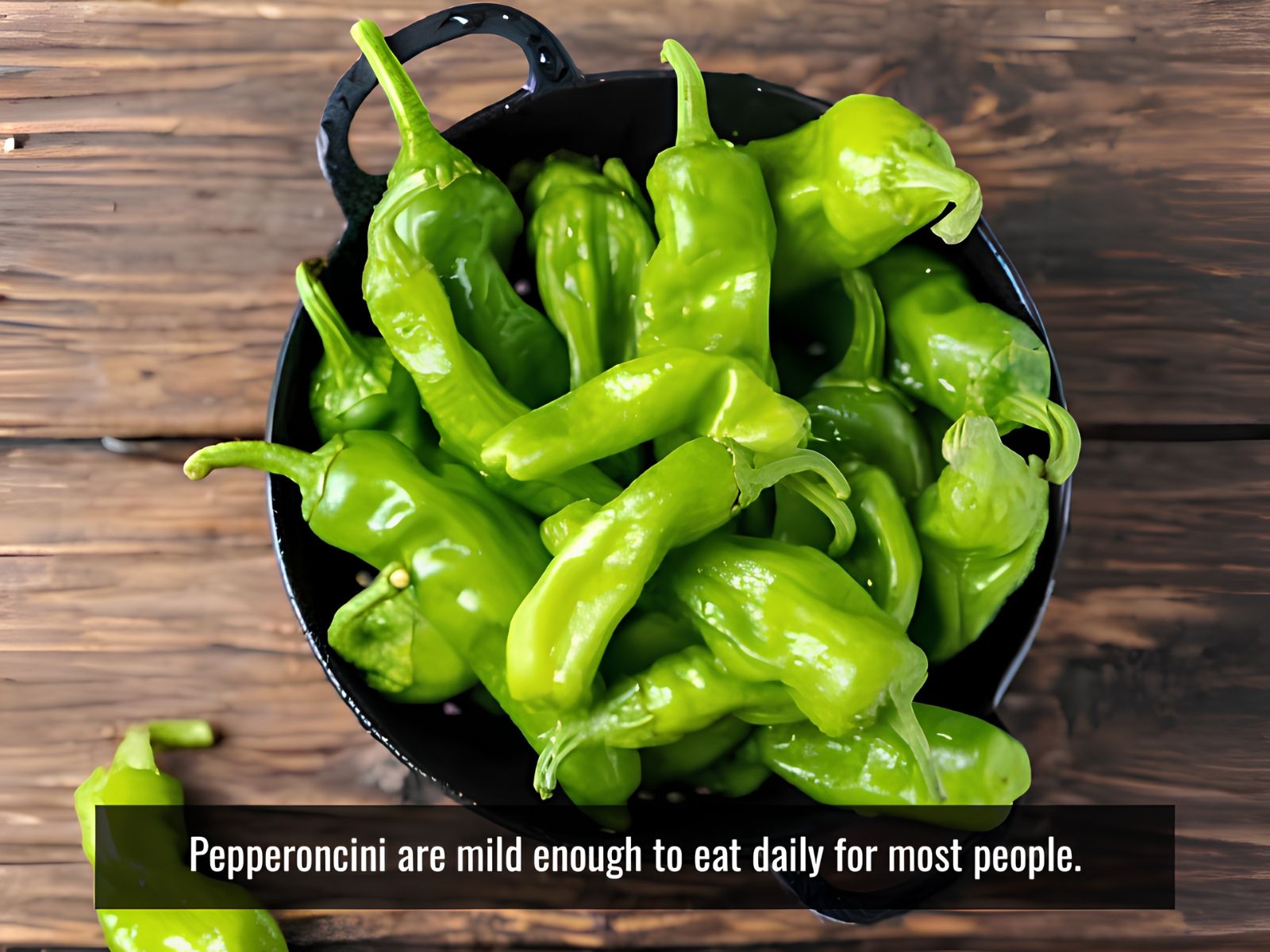
Yes, most healthy adults can eat pepperoncini every day in moderate portions if they tolerate pickled and acidic foods. At 100 to 500 SHU, pepperoncini provide gentle warmth, so capsaicin is rarely the main concern.
Sodium matters more with jarred pepperoncini. A product that contains 340 mg of sodium per 3 peppers provides about 680 mg when you eat 6, before counting the salt in sandwiches, pizza, cheese, or cured meat. Sodium varies by brand and brine, so check the nutrition label and reduce the portion when the meal already contains salty ingredients.
People with GERD, IBS, sensitive digestion, or vinegar intolerance may react to the acidic brine. Fresh pepperoncini contain less added sodium and acidity than pickled versions. Removing the seeds offers little benefit because pepperoncini are already mild, while most capsaicinoids occur around the pale placental tissue and inner ribs.
How to Store Pepperoncini
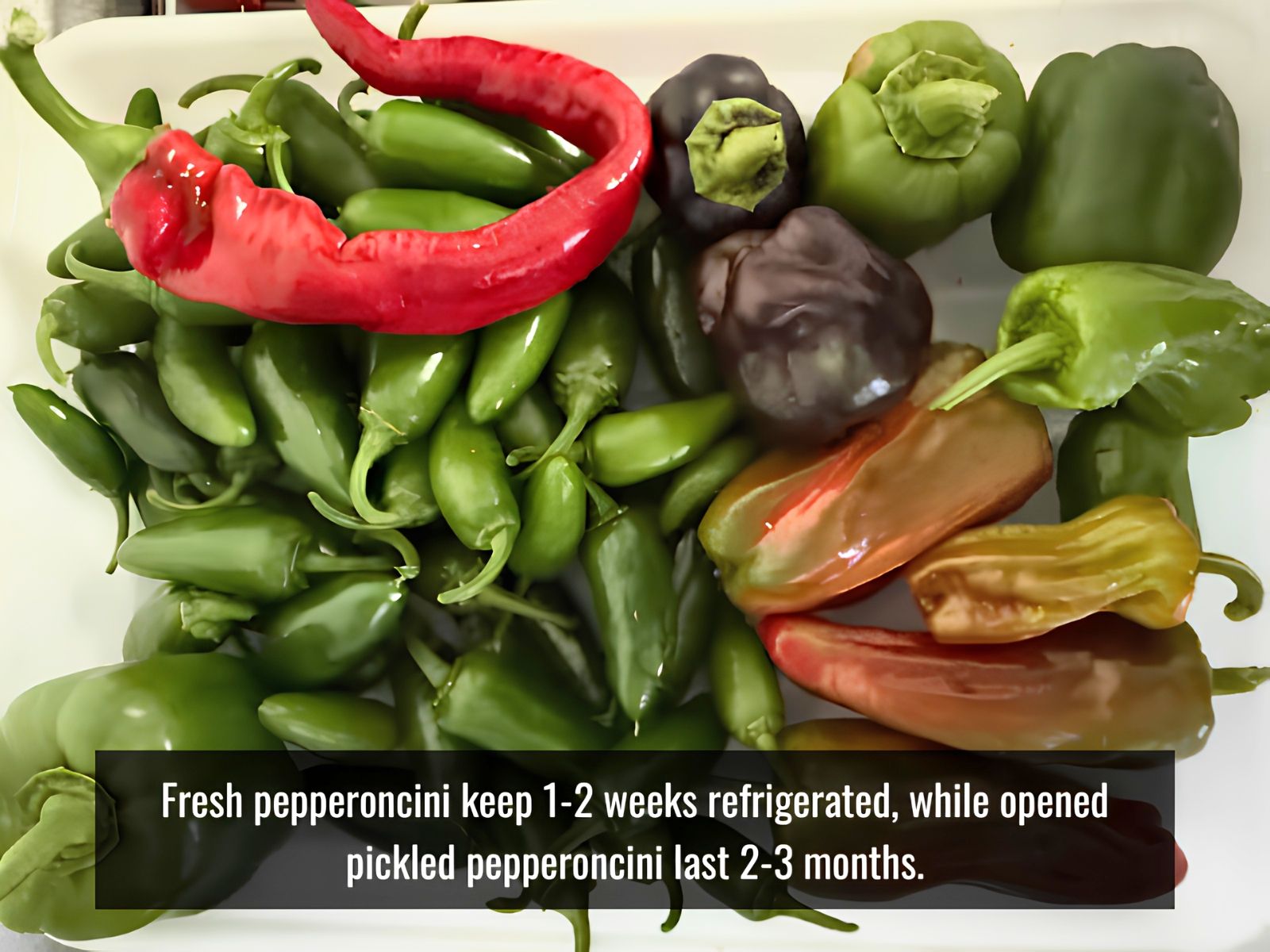
Fresh pepperoncini keep for about 1 to 2 weeks under suitable cool conditions. Opened pickled pepperoncini require refrigeration, but their storage time depends on the brand, brine, preservatives, and packaging.
Keep fresh peppers whole, dry, and unwashed in a perforated bag or breathable container. Wash them only before use, and discard any pepper that develops mold, slime, leaking liquid, extensive soft spots, or an unusual fermented odor. Prolonged refrigeration below 45°F (7°C) may cause surface pitting.
For longer storage, wash and dry the peppers, freeze them whole or sliced on a lined tray, then transfer them to an airtight freezer bag. Use them within 8 to 12 months for the best quality. Their texture softens after thawing, so frozen pepperoncini work best in pot roast, soups, pasta, sauces, and other cooked dishes.
After opening a commercial jar, close the lid tightly, refrigerate the peppers, and keep them covered by brine. Follow the manufacturer’s storage instructions; use a 2-to-3-month window only when the label supports it. Discard the product if you notice mold, slime, unexpected fizzing, foul odors, or a swollen lid.
Store unopened shelf-stable jars in a cool, dark pantry until the manufacturer’s stated date. Keep products sold refrigerated chilled before and after opening. Use a tested recipe when pickling fresh pepperoncini at home, and retain the specified vinegar, water, salt, jar size, and processing time.
What Can You Substitute for Pepperoncini?
The closest substitute for pepperoncini is a banana pepper. It matches the mild heat and pickles the same way, which makes it a clean one-to-one swap in most recipes. A few other peppers stand in well too, depending on the dish and how much heat you want.
| Substitute | Ratio | Flavor vs. Pepperoncini | Best Used In |
| Banana pepper | 1:1 | Sweeter, less tangy, similar mild heat | Sandwiches, salads, nachos (closest visual and heat match) |
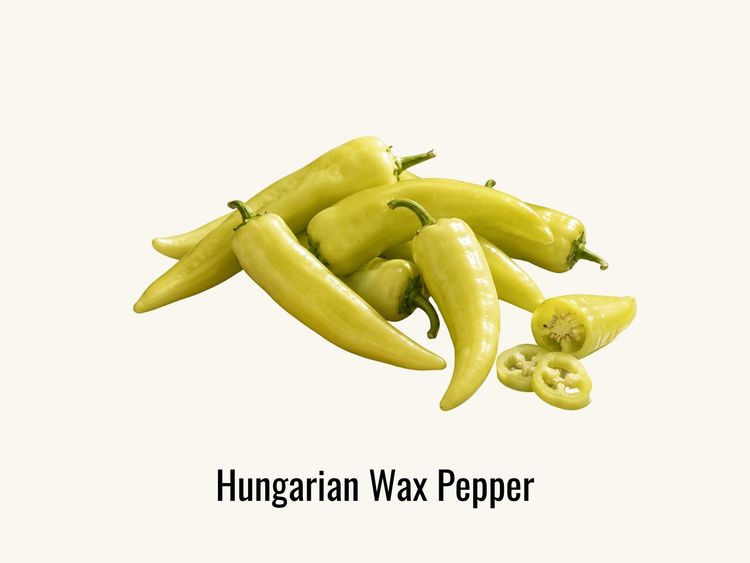
| Hungarian wax pepper | Use half the amount | Hotter (5,000 to 15,000 SHU), similar shape | Cooked dishes where more heat is welcome |
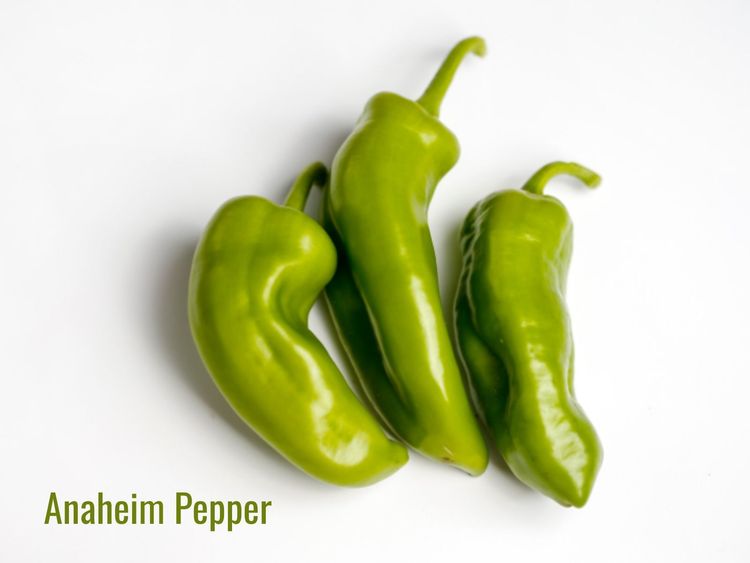
| Anaheim pepper | 1:1 | Milder, thicker walls, less tangy | Stuffing, roasting, sautéing (not a pickled swap) |
| Cherry pepper | 1:1 | Slightly hotter, rounder shape, piquant | Antipasto platters, stuffed and jarred applications |
For pickled uses, a banana pepper is the only clean swap. For cooked dishes, any mild-to-medium pepper works, so reach for an Anaheim pepper when you want something gentle or a jalapeño when you want a real step up in heat. No substitute fully copies pepperoncini, though. That mix of wrinkled texture, tangy bite, and gentle warmth is its own thing.
References
- Pathirana, R. (2013). Peppers: Vegetable and Spice Capsicums, 2nd edition, by Paul W. Bosland and Eric J. Votava. New Zealand Journal of Crop and Horticultural Science, 41, 102–103. https://doi.org/10.1080/01140671.2012.745161
- Tewksbury, J.J., & Nabhan, G.P. (2001). Seed dispersal. Directed deterrence by capsaicin in chilies. Nature, 412(6845), 403–404. https://doi.org/10.1038/35086653
- Wikipedia. Peperoncino. https://en.wikipedia.org/wiki/Peperoncino
- Wikipedia. Pepperoncini. https://en.wikipedia.org/wiki/Pepperoncini
Frequently Asked Questions
No, sport peppers and pepperoncini are different peppers, although both are commonly sold pickled. Sport peppers are usually smaller, firmer, and noticeably hotter and are best known as a topping for Chicago-style hot dogs. Pepperoncini are larger, more wrinkled, and milder, with a tangy, slightly sweet flavor.
Not necessarily. “Yellow pepper” describes color rather than one specific variety and often refers to a yellow bell pepper. Pepperoncini are distinct mild chilies, usually harvested pale yellow-green, with thin, wrinkled skin. Yellow bell peppers are larger, smooth-skinned, sweet, thick-fleshed, and non-spicy.
A pepperoncini is a mild Capsicum annuum chili associated with Italian and Greek-style cooking. It is small, tapered, thin-walled, and wrinkled and is commonly harvested pale yellow-green. In the United States, pepperoncini are most often eaten pickled. At approximately 100 to 500 SHU, they provide gentle warmth rather than intense heat.
No, pepperoncini are not hotter than jalapeños. At 100 to 500 SHU, they run roughly 5 to 80 times milder than jalapeños (2,500 to 8,000 SHU). In terms of heat, a pepperoncini sits closer to a bell pepper than to a jalapeño
In Italian, the standard pronunciation is peh-per-awn-CHEE-nee, since a "c" before an "i" makes a "ch" sound in Italian. In American English, you will also hear pep-er-ahn-CHEE-nee.
Pepperoncini need to be refrigerated only after opening. Unopened jars can stay in the pantry at room temperature, but once you open one, refrigerate the jar with the lid sealed tight. The pickled peppers keep for 2 to 3 months as long as they stay submerged in brine. Fresh pepperoncini also belong in the crisper drawer, where they last 1 to 2 weeks
"Peperoncino" (one "p," singular) is the Italian word for any hot chili pepper. "Pepperoncini" (double "p," plural) is the American English name for one specific mild, pickled variety. In Italy, the hot Calabrian chili (25,000 to 40,000 SHU) is a peperoncino, whereas in the US, pepperoncini refers to the mild Tuscan or Greek pepper (100 to 500 SHU) sold in jars.

CHIN-SU KITCHEN TEAM
CHIN-SU Kitchen Team are the creative experts behind the delicious recipes featuring CHIN-SU sauces. With years of experience and a passion for flavor, our team carefully selects recipes from a variety of trusted chefs and bloggers, bringing together the best culinary insights to present you with the most suitable and exciting dishes. Every recipe is chosen to inspire you to create meals that are not only tasty but also easy to prepare, enhancing your dining experience. Join us as we explore a wide range of sauces and flavors, and elevate every meal with the perfect recipe for your table!
User Reviews
Featured Articles
Hot Sauce Scoville Scale Explained: What Does It Mean?
What Is a Thai Chili Pepper? Heat and Uses Explained
What Is a Ghost Pepper? Heat, Safety, and Uses Explained
What Is a Poblano Pepper? Flavor and Uses Explained
What Is a Pepperoncini Pepper? Flavor and Uses Explained
What Is a Hungarian Wax Pepper? Flavor and Uses Explained
SUBSCRIBE TO GET
MORE INFO
Want the latest and greatest recipes, updates, and more from us,
straight to your inbox? Subscribe and get our NEWS!