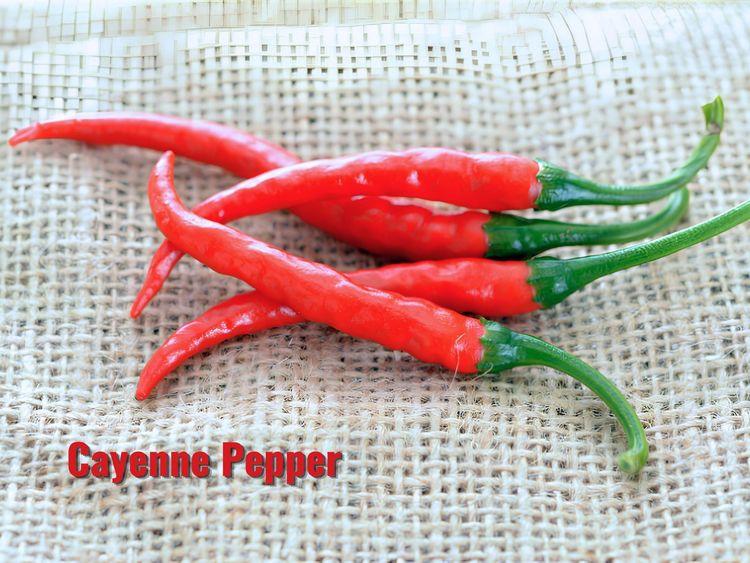
What Is a Jalapeño Pepper? Heat and Uses Explained
Published: Jul 28, 2026 by CHIN-SU
Updated: Jul 30, 2026 by CHIN-SU
A jalapeño pepper (Capsicum annuum) is a thick-walled Mexican chili pepper that measures 2,500 to 8,000 Scoville Heat Units (SHU), placing it in the medium range of the scale. Its thick, waxy walls are what set it apart from thinner chilies, since they hold their shape when the pepper is stuffed or roasted rather than collapsing under heat.
The name tells you where it comes from. "Jalapeño" is Spanish for "from Xalapa," the capital of Veracruz in Mexico, and the pepper has become a kitchen staple far beyond its birthplace. Today, it ranks as the most popular fresh chili pepper in the United States and accounts for nearly 30% of Mexico's chili production. Most jalapeños you meet run 2 to 4 inches (5 to 10 cm) long, with smooth, glossy skin, deep green when unripe and red once fully ripe, and thick-walled flesh that gives them a large cavity built for stuffing.
In this article, CHIN-SU walks you through what jalapeño peppers are, how hot they get on the Scoville scale, how their flavor shifts from green to red, how to cook with them across fresh, roasted, and preserved preparations, and how to store and substitute them at home.
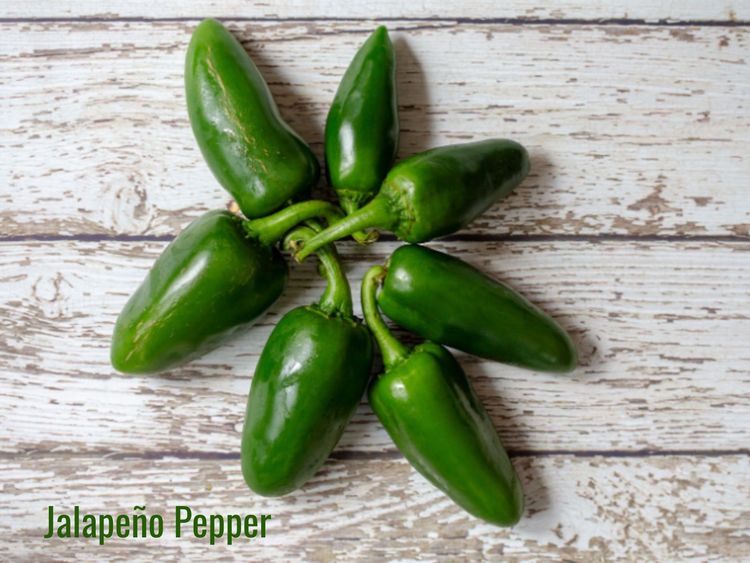
Table Of Contents
What Is a Jalapeño Pepper?
- How Hot Are Jalapeño Peppers?
How to Use Jalapeño Peppers in Cooking?
- How to Store Jalapeño Peppers?
- What Can You Substitute for Jalapeño Peppers?
What Is a Jalapeño Pepper?
A jalapeño pepper is a medium-heat Mexican chili with thick, waxy walls that set it apart from thinner peppers like the serrano. It belongs to the Capsicum annuum species, grows 2 to 4 inches (5 to 10 cm) long in a conical, pod-like shape, and is named after Xalapa, the capital of Veracruz in Mexico, though the pepper is no longer commercially grown there. The Spanish word "jalapeño" simply means "from Xalapa," and you will also see the pepper called "cuaresmeño," "chile gordo" (fat chili), or "huachinango" once it ripens to red.
This pepper has been on the table far longer than the name suggests. The Aztecs grew and traded jalapeños before the Spanish conquest, and Bernardino de Sahagún's Florentine Codex records Aztec markets selling chipotles, which are smoke-dried jalapeños, alongside mole made from them. Today, Mexico still leads in chili production, accounting for close to 30% of the country's total, while in the United States, California grows the most, followed by New Mexico and Texas. Texas thought enough of the pepper to name it the official State Pepper in 1995.
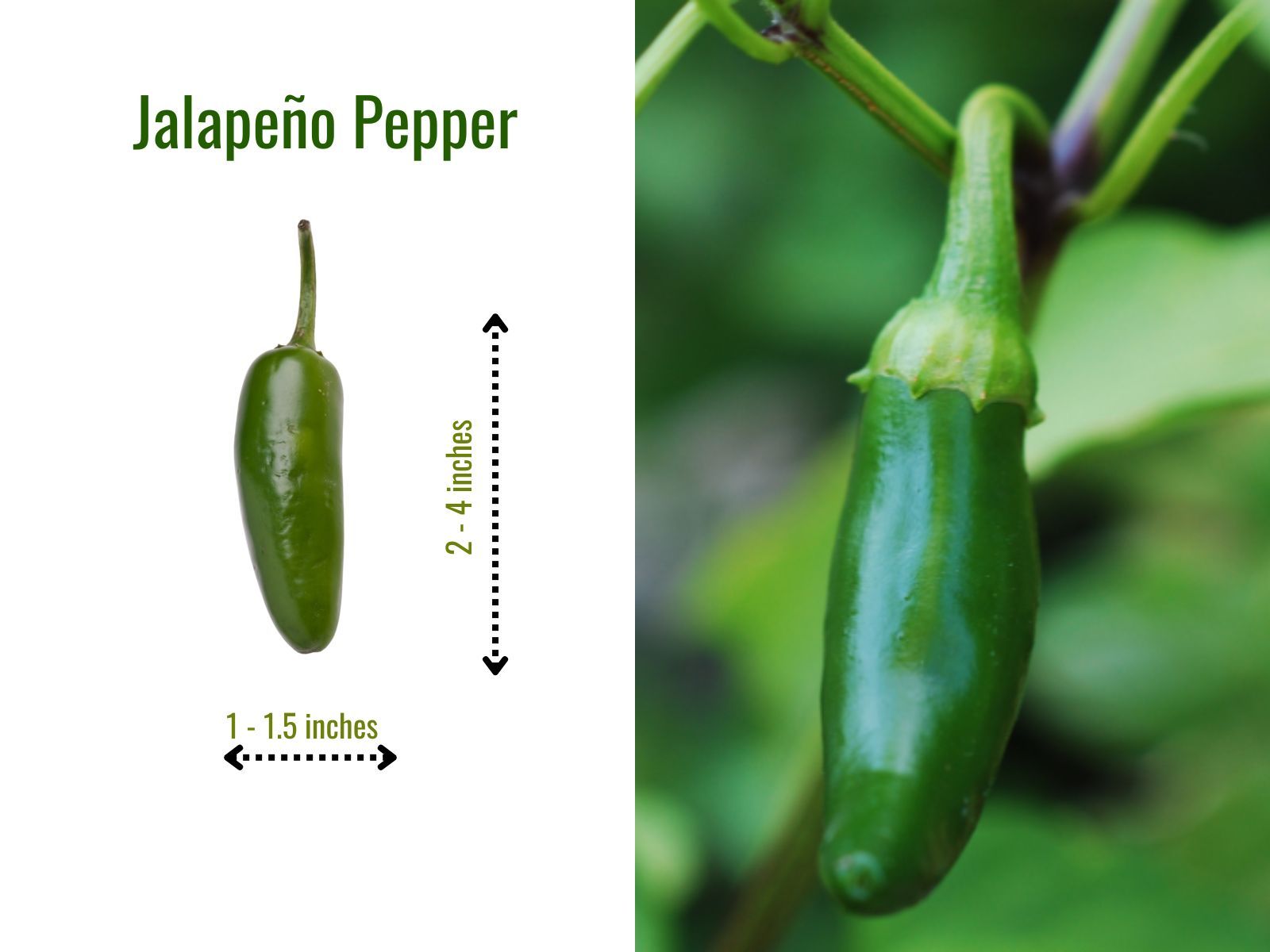
Physically, a jalapeño is easy to read once you know what to look for. It runs 2 to 4 inches (5 to 10 cm) long and 1 to 1.5 inches (25 to 38 mm) wide, hanging down from the plant in a conical, pod-like shape. One pound (454 g) usually contains about 12 to 25 jalapeños, depending on the size and weight of each pepper.
The skin is thick, smooth, waxy, and glossy, and those walls run noticeably heavier than a serrano's thin skin. That extra thickness is why a jalapeño holds its shape through roasting and stuffing, while a thinner pepper breaks down faster. It also gives the pepper a large inner cavity, making it the go-to for poppers.
Color tells you where the pepper sits in its life, and each stage carries its own flavor, as shown in this table:
| Color | Ripeness Stage | Flavor Character |
| Deep green | Unripe (most common in stores) | Bright, grassy, vegetal, slightly bitter |
| Yellow-orange | Maturing | Transitional, milder grassiness |
| Red | Fully ripe | Sweeter, fruitier, deeper heat |
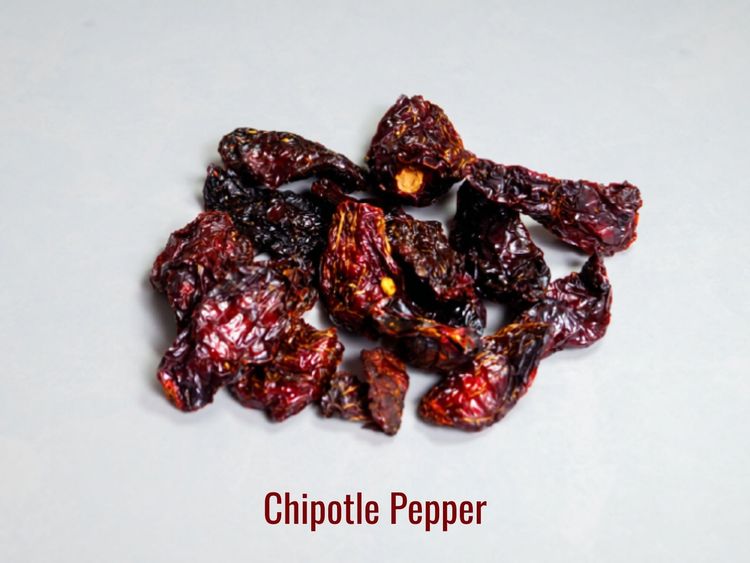
A few fresh varieties fill out the family: Early Jalapeño matures fast on a compact plant, TAM Mild Jalapeño is bred down to a gentle 1,000 to 1,500 SHU, Mucho Nacho runs larger and hotter, and Purple Jalapeño turns ornamental purple while staying edible. Smoke and dry a fully ripe red jalapeño, and it becomes a chipotle, an earthy, smoky pepper most people have eaten without realizing it started here.
What Do Jalapeño Peppers Taste Like?
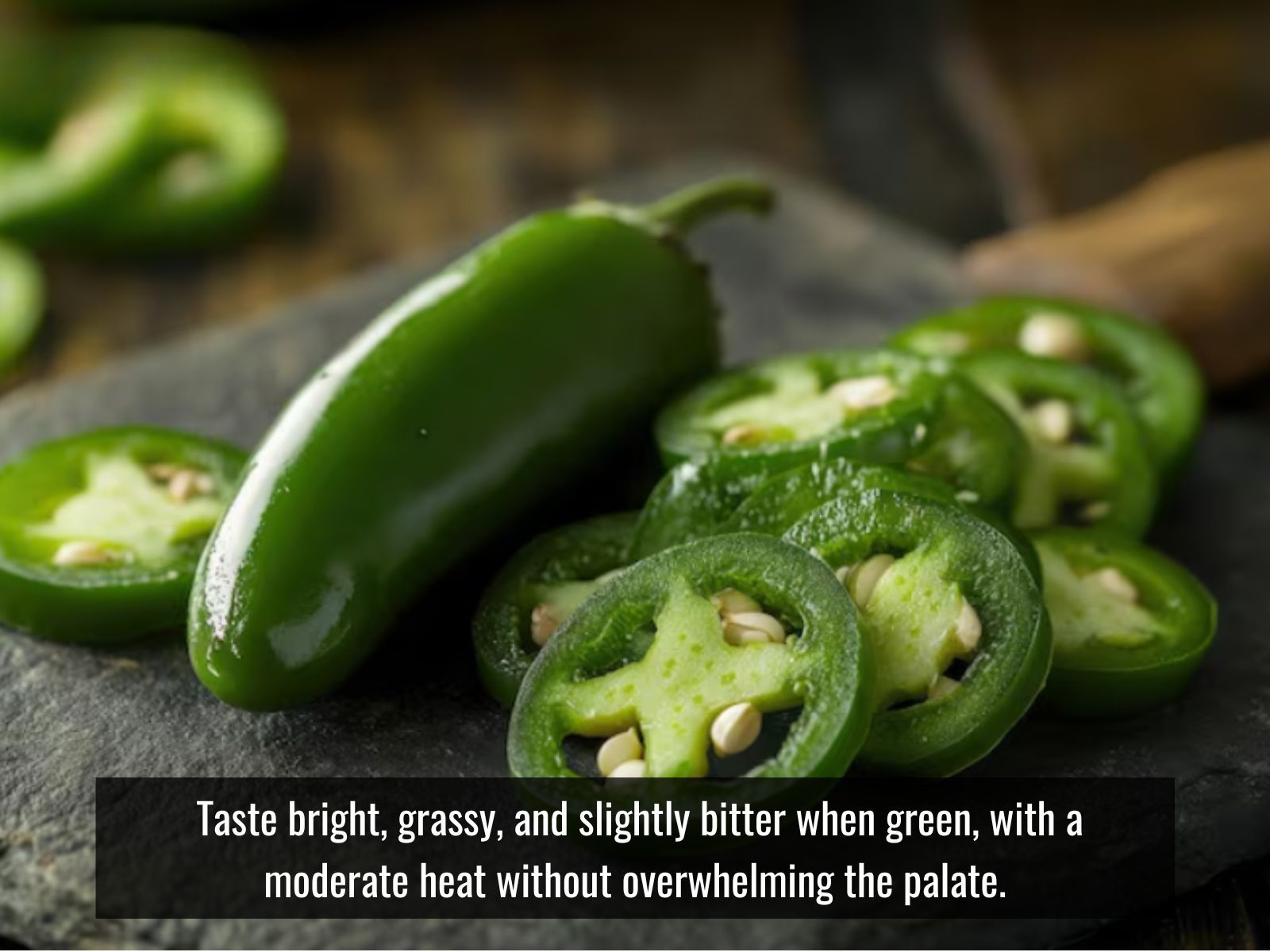
Jalapeño peppers taste bright, grassy, and slightly bitter when green, with a moderate front-of-mouth heat that builds steadily without overwhelming the palate. How hot and how sweet a given pepper runs comes down to a few things: size, since smaller jalapeños tend to carry more heat, color, since green reads grassy and vegetal while red turns sweeter and fruitier, and growing stress, since drought and erratic watering push capsaicin higher.
Ripeness shifts the flavor most. Green jalapeños hold that signature sharp, vegetal bite, while red jalapeños lose the bitterness and gain sweetness along with a slightly deeper heat. The heat stays within the same range at both stages, though red jalapeños that spend more time on the vine tend to sit higher in that band. There is also a mechanical reason a raw jalapeño feels the way it does, and it comes back to those thick, waxy walls. The dense flesh slows capsaicin release compared with a thin-skinned pepper like a serrano, so a bite delivers a building warmth rather than an immediate sting. That slower release is exactly why jalapeño works in dishes where you want noticeable but manageable heat spread across several bites rather than concentrated in one bite.
Are Jalapeño Peppers Different from Serrano Peppers?
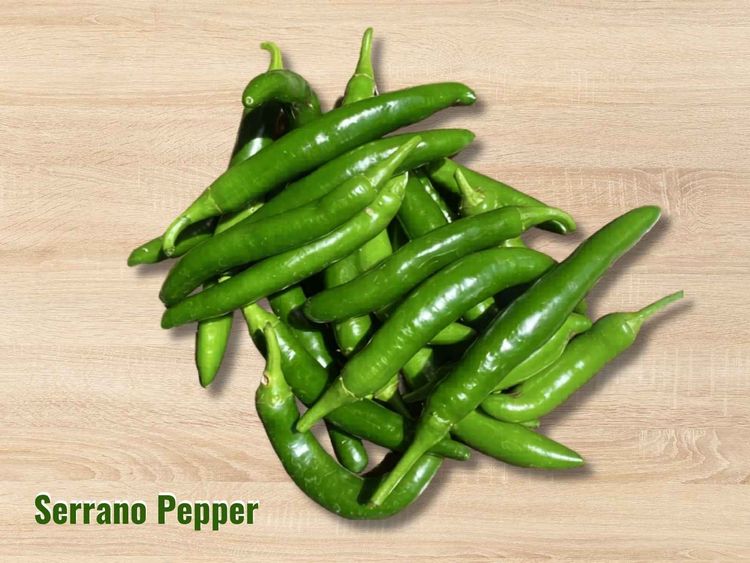
Jalapeño and serrano peppers both come from Mexico and belong to the same species (Capsicum annuum), but they differ in size, wall thickness, heat, and best cooking use. The serrano runs slimmer and hotter, with thin skin, while the jalapeño is broader and milder, with thick, waxy walls; the table below lays out the differences side by side.
| Attribute | Jalapeño Pepper | Serrano Pepper |
| Length | 2 to 4 in (5 to 10 cm) | 2 to 4 in (5 to 10 cm) |
| Body Shape | Broad, conical, rounded | Narrow, slender, pointed tip |
| Skin | Thick, waxy, glossy | Thin, smooth |
| Heat (SHU) | 2,500 to 8,000 | 10,000 to 23,000 (2 to 5x hotter) |
| Flavor | Bright, grassy, slight bitterness | Crisp, sharp, citrus-forward |
| Cooking Performance | Holds shape when roasted, stuffed, or grilled | Breaks down fast, blends smoothly in sauces |
| Best Use | Stuffed poppers, nachos, pickled, roasted | Fresh salsas, pico de gallo, ceviche |
How Hot Are Jalapeño Peppers?
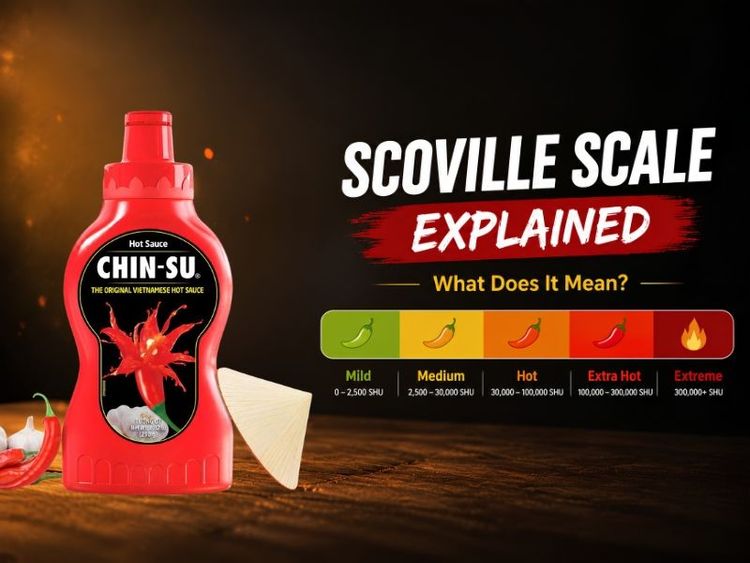
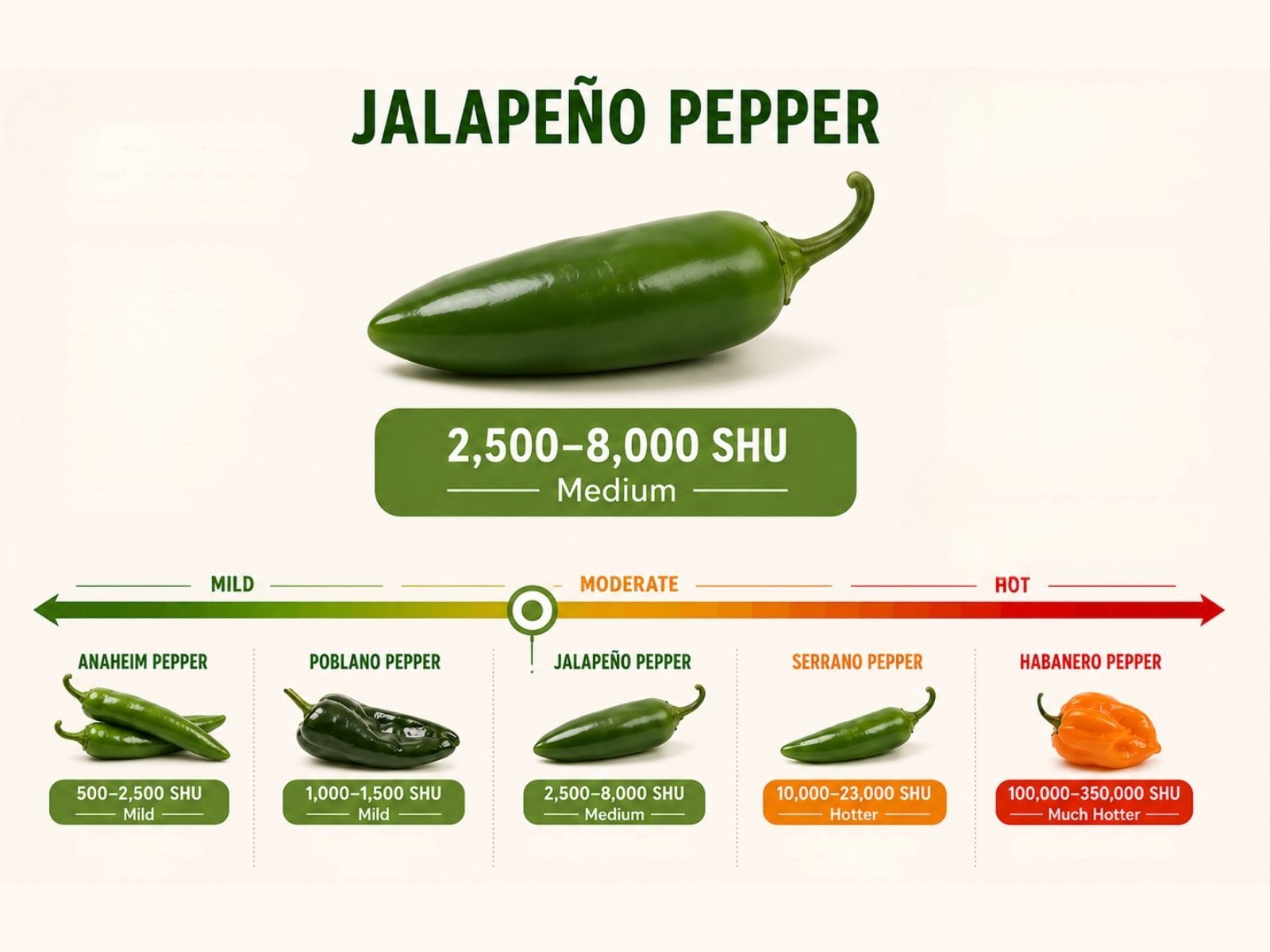
Jalapeño peppers measure 2,500 to 8,000 Scoville Heat Units (SHU), placing them in the medium tier of the scale.
The Scoville scale measures capsaicin concentration in SHU units, so higher numbers indicate more heat. In a jalapeño, that capsaicin concentrates in the white placental membrane and the seeds, not in the flesh itself, which is why scraping the insides tames the burn.
Not every jalapeño hits the same number, though. A pepper grown under heat stress, dry soil, or erratic watering carries more capsaicin than one raised in cool, well-watered conditions. Ripeness pushes it further, since red jalapeños spend more time on the vine and generally sit higher in the SHU range than green ones. You can even spot the hotter ones before cutting: the brown lines called corking on the skin are a visible sign that a jalapeño runs on the spicier side.
Compared with other Mexican chili peppers, jalapeño sits right in the middle.
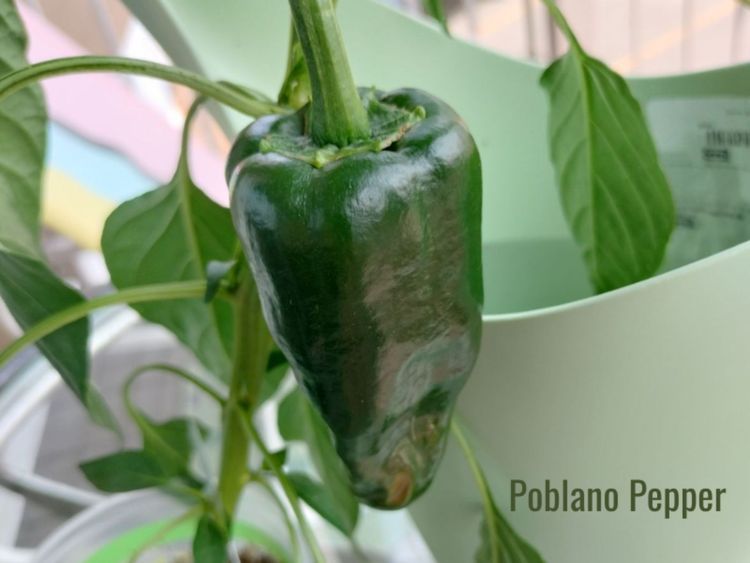
- Poblano (1,000 to 1,500 SHU) and Anaheim (500 to 2,500 SHU) run milder
- Serrano (10,000 to 23,000 SHU) is the direct step up, delivering 2 to 5 times more heat.
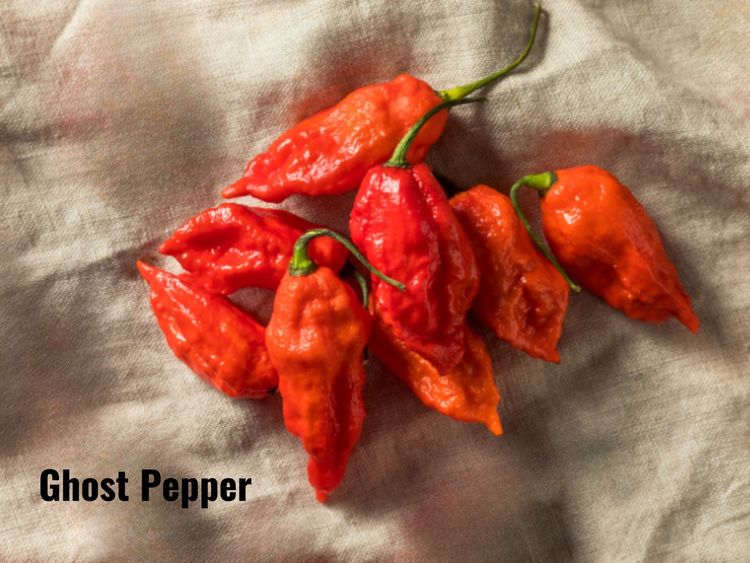
- Habanero (100,000 to 350,000 SHU) sits far above the rest.
How to Use Jalapeño Peppers in Cooking?
Use jalapeño peppers fresh in salsas and on nachos, stuffed and roasted as poppers, pickled for tacos and sandwiches, or smoked into chipotle for sauces and marinades. Their thick walls, large cavity, and moderate heat make jalapeño one of the most versatile cooking peppers in the world, working across raw, cooked, and preserved dishes without overpowering the rest of the plate.
There is a nutritional payoff to reaching for jalapeño, too. A 100 g serving contains just 29 kcal yet provides 119 mg of vitamin C, which is about 132% of the daily value and more than you get from an orange (USDA FoodData Central). The same serving brings 0.419 mg of vitamin B6 (roughly 25% of the daily value), 2.8 g of fiber, and 91.7 g of water, so most of the pepper is hydration. The capsaicin does more than add heat: it is linked to a modest thermogenic effect, an average increase of about 34 kcal burned per day, along with anti-inflammatory activity (Irandoost et al., 2020). That profile makes jalapeño a low-calorie way to add both heat and vitamin C to any meal.
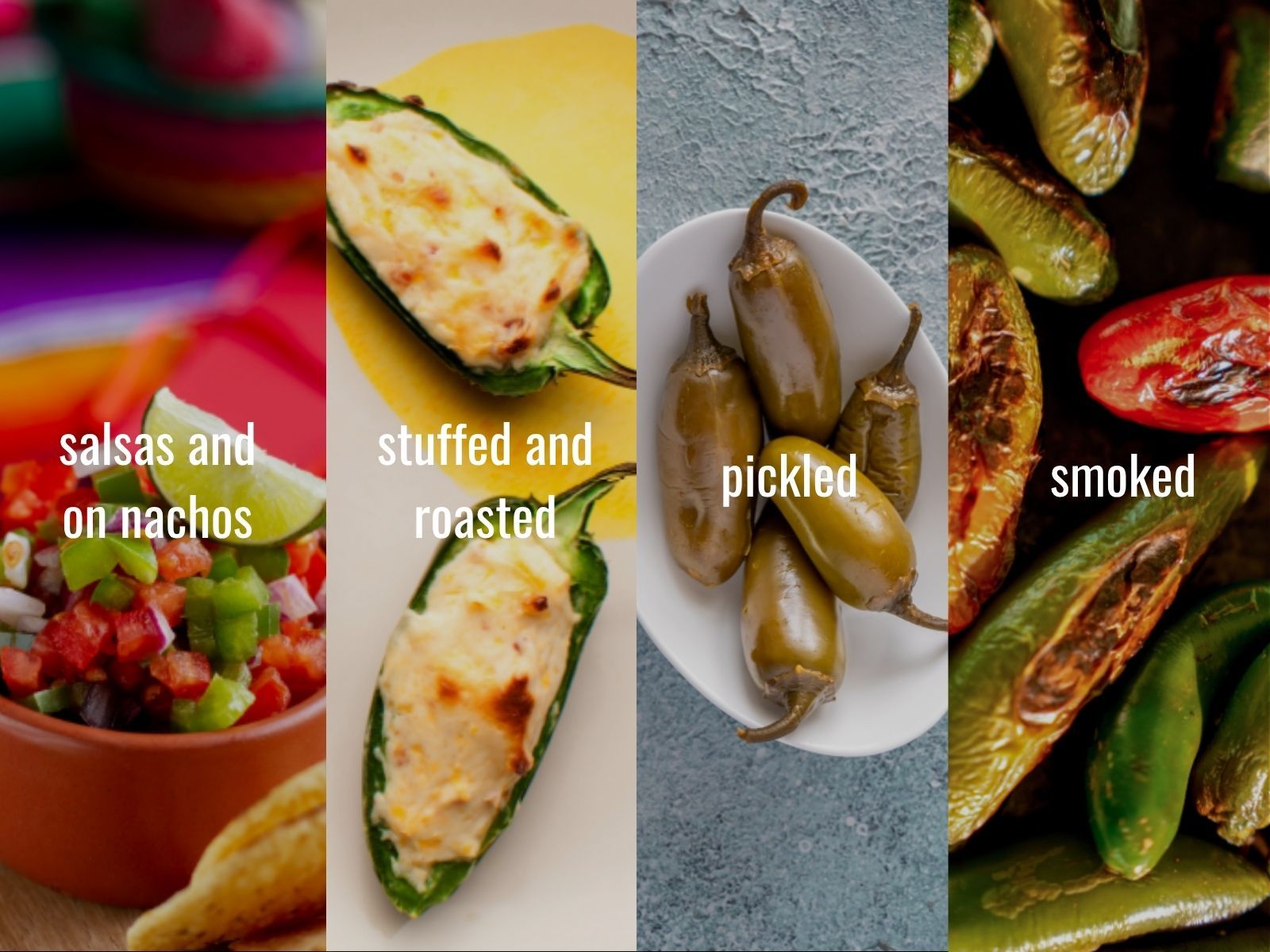
The simplest way to enjoy a jalapeño is raw. Diced into salsa, pico de gallo, or guacamole, it adds a bright, grassy bite, and thin rings scatter easily over nachos, tacos, burgers, sandwiches, and pizza. In Vietnamese cooking, raw jalapeño slices are served alongside pho (phở) and tucked into banh mi (bánh mì) as a crunchy, spicy garnish. The thick walls hold their crunch even when sitting in hot broth, which is exactly what you want in a bowl of soup.
Cooking opens up a second set of uses. That large inner cavity makes jalapeño the pepper of choice for poppers: halve them, fill with cream cheese or cheddar, wrap in bacon, and bake at 375°F (190°C) for 20 to 25 minutes. Roasting or grilling blisters the skin, softens the flesh, and pulls out a faint sweetness the raw pepper only hints at. For a tangy option, slice jalapeños into rings and cover them in a hot brine of white vinegar, salt, and sugar. Pickled jalapeños are ready in 24 to 48 hours, keep for weeks in the refrigerator, and add a sharp crunch to tacos, nachos, and sandwiches.
See more: Homemade jalapeno hot sauce
The last two uses transform the pepper entirely. Dry and smoke a ripe red jalapeño, and it becomes a chipotle, the base for adobo sauce, chili, marinades, and barbecue rubs, with a smoky, earthy character that has earned its own following apart from the fresh pepper. Jalapeño is also the starting point for many bottled hot sauces, including sriracha, which is made from ripe red jalapeños. If you want to see where jalapeño fits among the broader world of hot sauce varieties, that is a natural next stop.
Can You Eat Jalapeño Peppers Every Day?
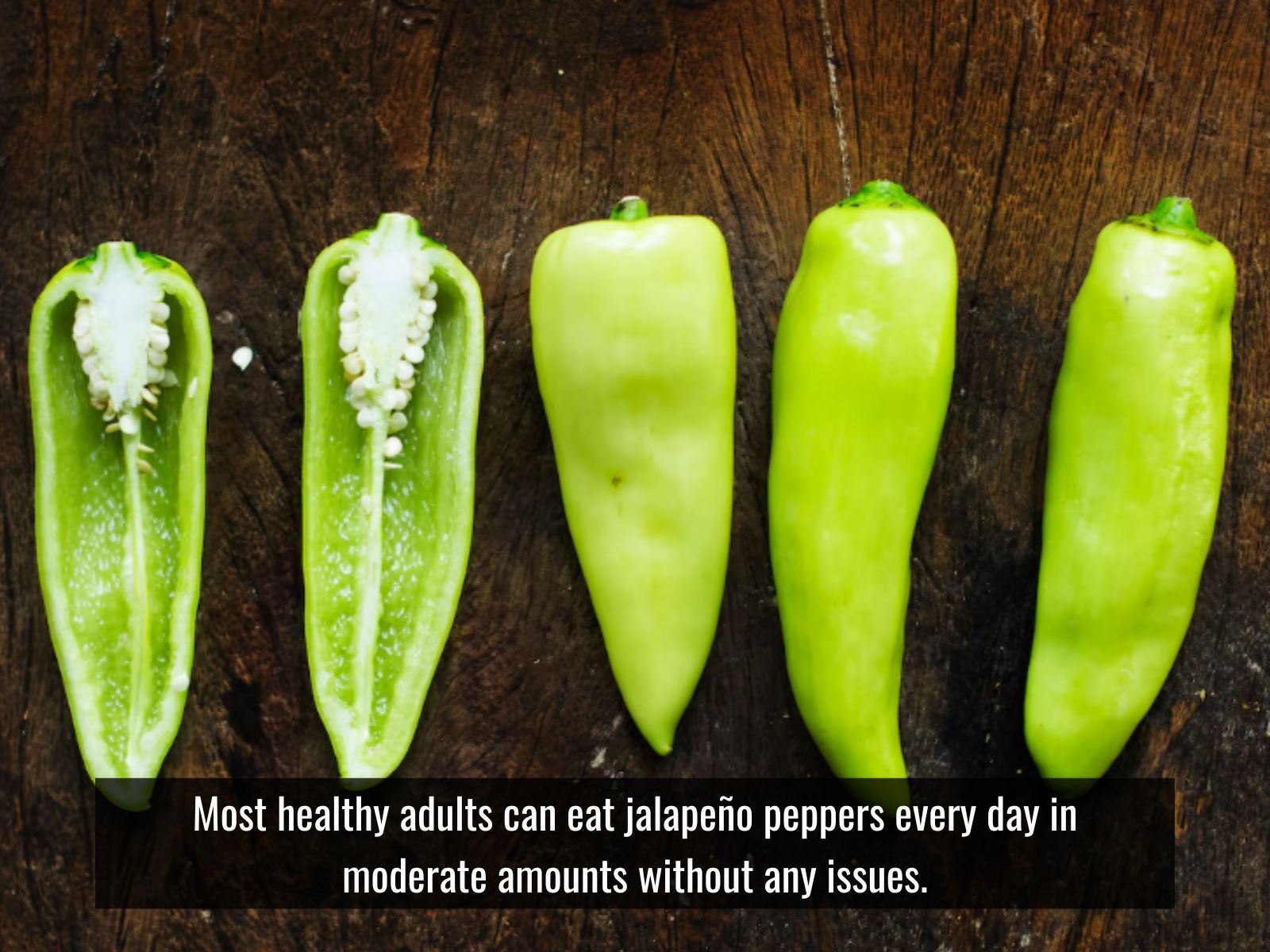
Yes, most healthy adults can eat jalapeño peppers every day in moderate amounts without any issues. Capsaicin tolerance builds over time, so people who eat jalapeños regularly develop a higher threshold and feel less of the burn. For average tolerance, 1 to 3 raw jalapeños per meal is considered moderate, and removing the seeds and the white membrane, where capsaicin is concentrated, cuts the heat by roughly 30 to 40%. Cooking further softens their intensity compared with eating them raw.
There is a group that should be more careful. People with IBS, GERD, or acid reflux may need to limit or avoid jalapeños, since capsaicin activates the same TRPV1 receptors in the digestive tract that it triggers in the mouth, which can lead to discomfort in sensitive individuals. There is no evidence that capsaicin damages the gut in healthy adults, but it can irritate a pre-existing condition. If you are new to spicy food, start with half a pepper and build up from there.
How to Store Jalapeño Peppers?
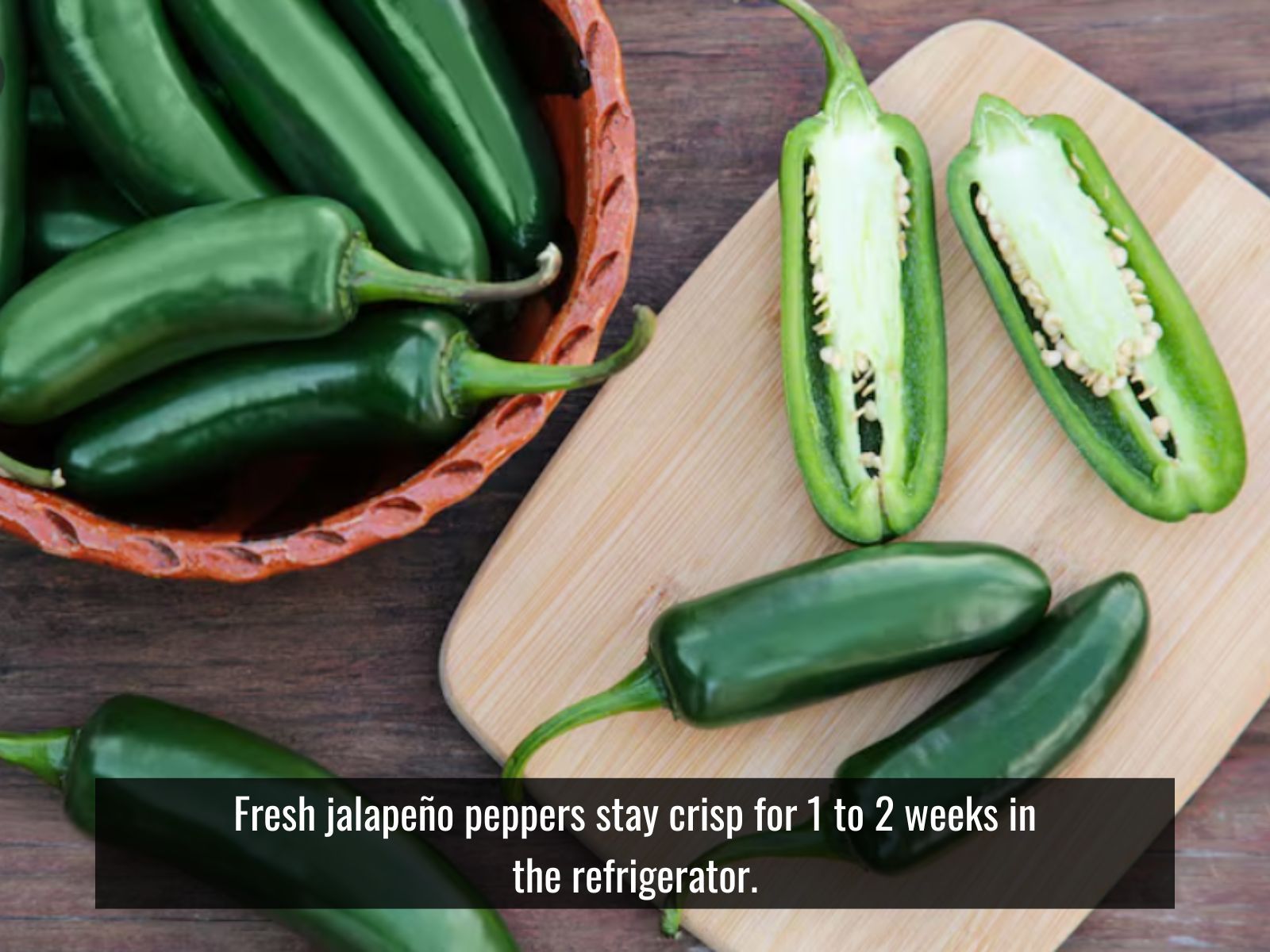
Fresh jalapeño peppers stay crisp for 1 to 2 weeks in the refrigerator. Keep them whole and unwashed in a paper bag or a breathable container in the crisper drawer, and skip sealing them in airtight plastic, since trapped moisture speeds up spoilage. Under tightly controlled conditions, around 7.5°C (45.5°F) with steady humidity, that window can stretch to 3 to 5 weeks.
For longer storage, freezing works well. Wash and dry the peppers, then slice them or leave them whole and pack them into airtight freezer bags, where they hold their best quality for 3 to 6 months. Thawed jalapeños lose their raw crunch, so they are best in cooked dishes like sauces, soups, and stir-fries. Freezing does not touch the heat, though, since capsaicin survives the freezer intact even as the texture softens.
Drying gives you a pantry staple. Run the peppers through a food dehydrator at 125°F to 135°F (52°C to 57°C) until fully dry, then grind them into flakes or powder and store them in an airtight container, where they stay flavorful for up to 1 year. Pickling is another way to stretch a batch, and the method determines how long it lasts. Refrigerator-pickled jalapeños in a quick vinegar brine keep for 2 to 4 weeks, while water-bath-canned jalapeños keep for up to 1 year, unopened.
What Can You Substitute for Jalapeño Peppers?
The closest substitute for jalapeño peppers is the serrano pepper. A few other peppers stand in well, depending on the dish and the heat you want; the table below breaks down the best options.
| Substitute | Ratio | Flavor vs. Jalapeño | Best Used In |
| Serrano pepper | Same quantity (except 2 to 5x more heat) | Crisper, sharper, citrus-forward, less bitter | Fresh salsas, sauces that need smooth blending |
| Fresno pepper | 1:1 | Similar heat, sweeter, less grassy | Roasted applications, hot sauces |
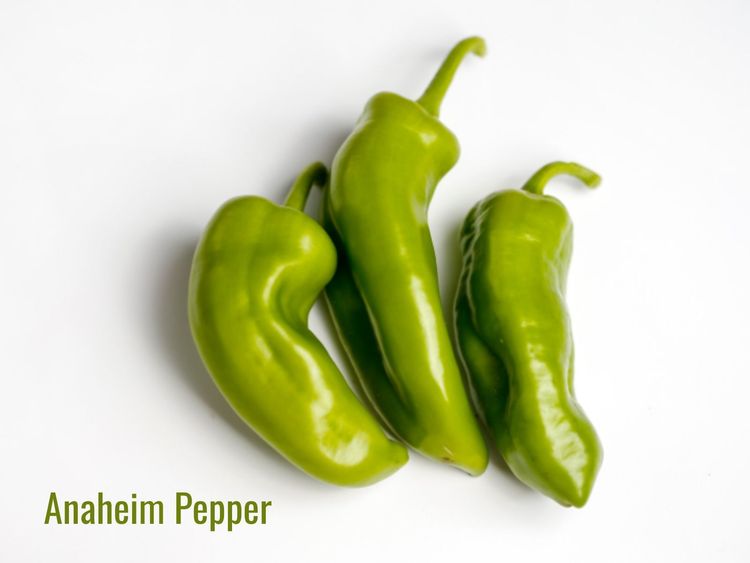
| Anaheim pepper | Use 2x quantity | Much milder, earthy, less biting | Stuffing (larger cavity), roasting |
| Chipotle pepper (dried) | 1 Chipotle ≈ 1 jalapeño | Smoky, earthy, deeper complexity | Chili, marinades, BBQ rubs (cooked dishes only) |
The rule of thumb is simple: fresh substitutes work best for fresh applications, and dried substitutes belong in cooked applications only. When you want the same crisp bite in a raw salsa, a serrano pepper is the closest match, just sharper and hotter. Reach for an Anaheim pepper when you need a milder, roast-friendly stand-in with a larger cavity for stuffing. No substitute fully replicates jalapeño's combination of thick-walled crunch, moderate heat, and grassy brightness, so the best swap depends on which of those three traits your dish leans on most.
References
- DeWitt, D. (1999). The Chile Pepper Encyclopedia. William Morrow.
- USDA FoodData Central. Peppers, jalapeno, raw (FDC ID 168576). https://fdc.nal.usda.gov
- Pathirana, R. (2013). Peppers: Vegetable and Spice Capsicums, 2nd edition, by Paul W. Bosland and Eric J. Votava. Crop Production Science in Horticulture Series 22. Wallingford, UK, CABI, 2012. 248 pp. ISBN 9781845938253. New Zealand Journal of Crop and Horticultural Science, 41, 102–103. https://doi.org/10.1080/01140671.2012.745161
- Irandoost, P., Lotfi Yagin, N., Namazi, N., Keshtkar, A., Farsi, F., Mesri Alamdari, N., & Vafa, M. (2021). The effect of Capsaicinoids or Capsinoids in red pepper on thermogenesis in healthy adults: A systematic review and meta-analysis. Phytotherapy Research: PTR, 35(3), 1358–1377. https://doi.org/10.1002/ptr.6897
Frequently Asked Questions
No, jalapeño peppers are not hotter than serrano peppers. Serranos are the hotter of the two, measuring 10,000 to 23,000 SHU against a jalapeño's 2,500 to 8,000 SHU. At the same quantity, a serrano can deliver 2 to 5 times the heat of a jalapeño, which is why cooks reach for it when they want a sharper bite.
A red jalapeño is simply a fully ripe jalapeño. Every jalapeño starts green and turns red if you leave it on the plant long enough to finish maturing. Red jalapeños taste sweeter, run slightly hotter, and lose the grassy edge of green ones. Both the green and red stages are safe and good to eat.
Yes, you can eat jalapeño pepper seeds without any problem. Most of the heat actually comes from the white membrane, called the placenta, that surrounds the seeds rather than the seeds themselves. Removing both the seeds and the membrane cuts the heat by roughly 30 to 40%, which is a handy trick when you want flavor with less burn.
A dried, smoked jalapeño is called a chipotle. Chipotles start as fully ripe red jalapeños that are smoke-dried over wood until they turn deep and leathery. They carry an earthy, smoky flavor and show up sold whole, ground into powder, or packed in adobo sauce.
Jalapeño peppers do not strictly need refrigeration, but they stay firmest when you chill them. Store them unwashed in a paper bag in the crisper drawer, where they hold their quality for 1 to 2 weeks. Left at room temperature, they soften and wrinkle within a few days.

CHIN-SU KITCHEN TEAM
CHIN-SU Kitchen Team are the creative experts behind the delicious recipes featuring CHIN-SU sauces. With years of experience and a passion for flavor, our team carefully selects recipes from a variety of trusted chefs and bloggers, bringing together the best culinary insights to present you with the most suitable and exciting dishes. Every recipe is chosen to inspire you to create meals that are not only tasty but also easy to prepare, enhancing your dining experience. Join us as we explore a wide range of sauces and flavors, and elevate every meal with the perfect recipe for your table!
User Reviews
Featured Articles
SUBSCRIBE TO GET
MORE INFO
Want the latest and greatest recipes, updates, and more from us,
straight to your inbox? Subscribe and get our NEWS!