Is Hot Sauce Gluten Free?
Published: Jun 18, 2026 by CHIN-SU
Updated: Jul 8, 2026 by CHIN-SU
Most hot sauces are gluten-free because their base ingredients - chili peppers, distilled vinegar, and salt - contain no gluten proteins. A standard bottle built from these three components won't cause problems for anyone avoiding gluten. The risk comes from the additives some brands use. Soy sauce, malt vinegar, and wheat-based thickeners can introduce gluten into an otherwise safe product. That means the answer depends less on “hot sauce” as a category and more on the specific ingredient list and manufacturing practices behind each bottle.
This matters because hot sauce is a regular part of many people’s meals: 74% of Americans use hot sauce weekly, according to an Instacart survey. For the 1 in 133 Americans with celiac disease, according to the Celiac Disease Foundation, checking what’s in the bottle is not optional.
So which ingredients should you check, and which brands are safe? This article covers gluten science, an ingredient-by-ingredient breakdown, label-reading methods, and brand-specific status.
Table Of Contents
- What Is Gluten and Why Does It Matter in Hot Sauce?
Are Hot Sauce Ingredients Naturally Gluten Free?
Do Asian-Style Hot Sauces Contain Gluten?
How To Know if a Hot Sauce Is Gluten Free
What Is Gluten and Why Does It Matter in Hot Sauce?
Gluten is a group of proteins, gliadin and glutenin, found in wheat, barley, and rye. When flour meets water, these two proteins bond and form the stretchy network that gives bread dough its elastic structure. That binding property is why some food manufacturers add gluten as a thickener or processing agent in sauces and condiments.
For people with celiac disease, gluten triggers an autoimmune response. The immune system attacks the villi - small, finger-like projections lining the small intestine - and reduces the body's ability to absorb nutrients like iron, calcium, and B vitamins over time. Non-celiac gluten sensitivity produces similar symptoms, such as bloating, fatigue, and digestive distress, but without the intestinal damage associated with celiac disease.
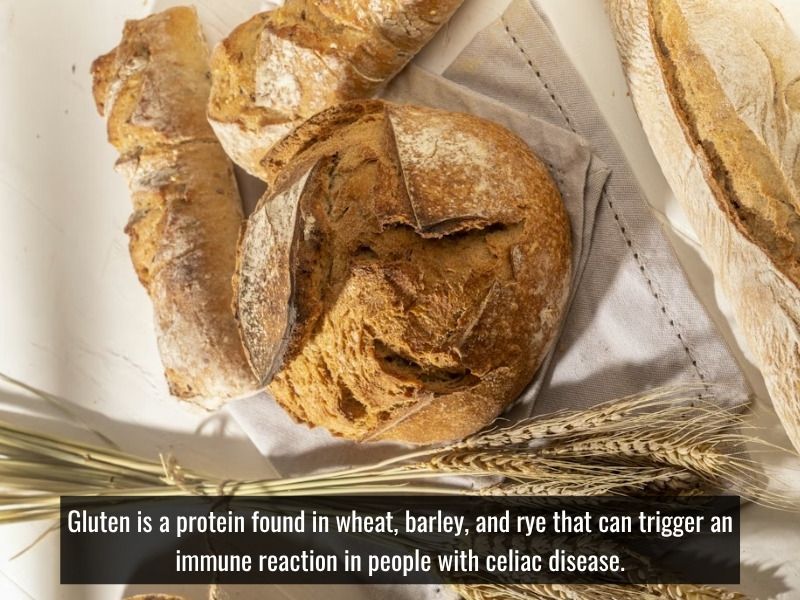
The numbers show why this matters for hot sauce labels. 1 in 133 Americans has celiac disease, according to the Celiac Disease Foundation. 6% of the US population, roughly 18 million people, live with non-celiac gluten sensitivity, per Beyond Celiac. So, in 2013, the FDA set the safety threshold at 20 parts per million (ppm) for any product bearing a "gluten-free" label under 21 CFR 101.91. For both groups, reading condiment labels is a daily habit, and hot sauce does not get a free pass.
With those numbers and that threshold, the next question is practical: which hot sauce ingredients pose a gluten risk, and which don't?
Are Hot Sauce Ingredients Naturally Gluten Free?
Most traditional hot sauces are gluten-free. The three base ingredients - chili peppers, vinegar, and salt - have no connection to wheat, barley, or rye. And that holds true across American, Latin American, and most Asian hot sauce styles.
Peppers belong to the nightshade family (Solanaceae). They share zero botanical relation with gluten-bearing grains. Distilled vinegar is safe regardless of its starting grain because the distillation process removes proteins, including gluten. This applies to distilled white vinegar, apple cider vinegar, and rice vinegar. Salt is a mineral with no protein content. Garlic, onion, citrus juice, sugar, and pure spices are also gluten-free in their unprocessed forms. When a hot sauce sticks only to these ingredients and not to anything else, there's no gluten risk from the recipe itself.
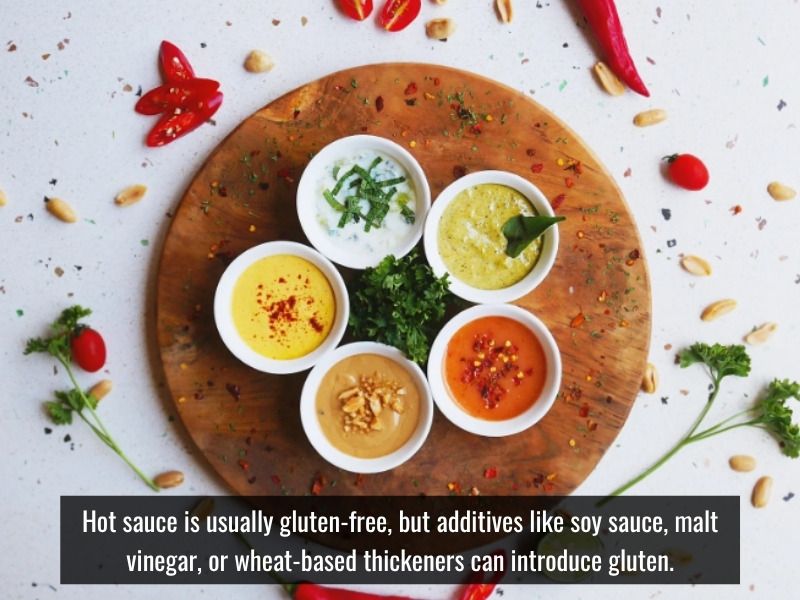
The risk enters through additives and flavor enhancers that some manufacturers blend in. Here are the hidden gluten sources worth watching for:
- Soy sauce: Traditional soy sauce is brewed with wheat alongside soybeans. Many Asian-style chili sauces and sriracha-type products use soy sauce as a base flavor component. Wheat-free tamari is a safe substitute.
- Malt vinegar: Malt vinegar is made from malted barley, a gluten grain. It shows up in British-style hot sauces and Worcestershire-based blends. Distilled malt vinegar carries a lower risk than undistilled, but both types need label scrutiny.
- Modified food starch: It is often used as a thickener. When the label doesn't specify the starch source, it may be wheat-based. Cornstarch and xanthan gum are common gluten-free alternatives.
- Worcestershire sauce: Worcestershire sauce often contains malt vinegar. One well-known brand's US version is labeled gluten-free, while the UK and Canada versions of the same product contain malt vinegar and are NOT gluten-free.
- HVP (Hydrolyzed Vegetable Protein): HVP (Hydrolyzed Vegetable Protein) is a flavor enhancer that can be derived from wheat. It's most common in processed or shelf-stable sauces with complex flavor profiles. Under FALCPA, wheat must be declared on the label if HVP is wheat-sourced.
A good rule of thumb: if the ingredient list is short - peppers, vinegar, salt, garlic - you're likely in the clear. The longer that list gets, the closer you'll want to read it.
Do Asian-Style Hot Sauces Contain Gluten?
Some Asian-style hot sauces contain gluten, but many do not. The difference depends on whether soy sauce or wheat-based thickeners appear in the formula.
For example, Huy Fong Foods Sriracha uses chili paste, garlic, sugar, vinegar, and salt. No soy sauce in the formula, so it's naturally gluten-free. Sambal oelek - the chunky Indonesian chili paste - typically runs the same way: ground chili, salt, and vinegar. But always check brand-specific labels because formulas vary between manufacturers.
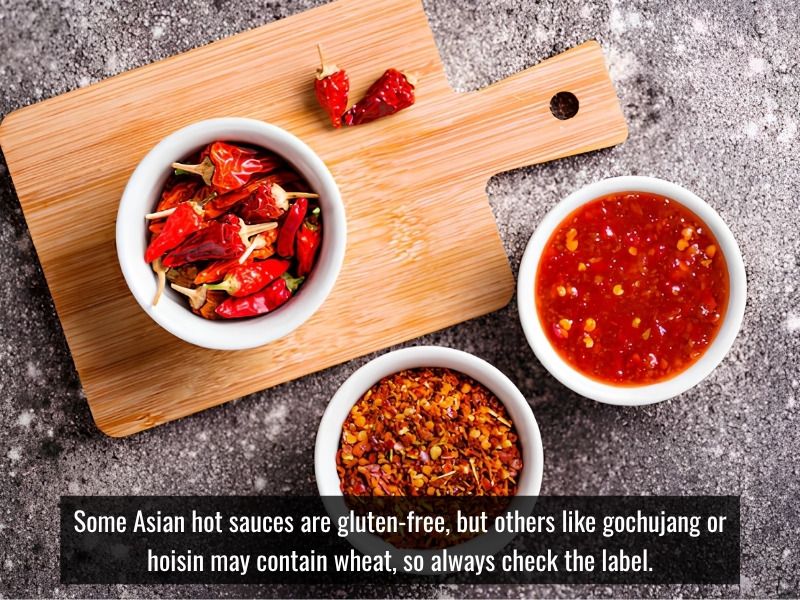
But Gochujang is a different story. This Korean chili paste is traditionally fermented with wheat flour or barley malt, which means it often contains gluten. Sweet chili sauce needs a label check too - some brands use modified starch or soy sauce in their recipes. Hoisin sauce, though often shelved near hot sauces at the grocery store, contains wheat flour and is never gluten-free.
Not every product labeled "chili sauce" or "hot sauce" at an Asian grocery follows the same recipe. Treat each label individually.
Is CHIN-SU Hot Sauce Gluten Free?
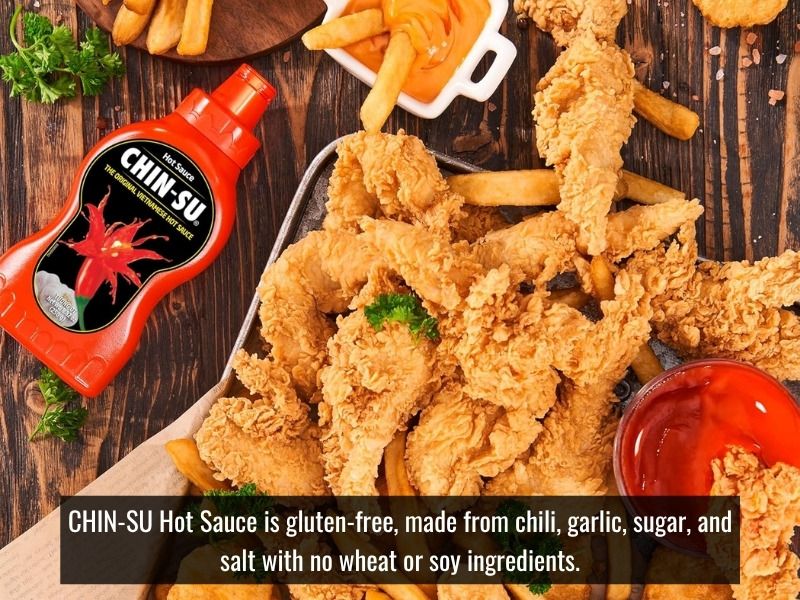
CHIN-SU Chili Sauce is gluten-free. The formula contains no soy sauce, wheat, barley, or any gluten-containing grain.
CHIN-SU Chili Sauce is made from celestial chili pepper (ớt chỉ thiên), garlic, sugar, and salt. The peppers are charcoal-grilled before processing, giving the sauce its distinct smoky pepper flavor. The garlic undergoes fermentation - a process that develops depth without any need for soy sauce or wheat-based additives. Neither the grilling nor the fermentation step introduces gluten-bearing grains into the product. That chili-and-garlic fermentation method is what sets CHIN-SU apart from soy-based Asian chili sauces. The flavor comes from the peppers and garlic themselves, so gluten never enters the formula. You can check the full ingredient list at chinsu.com.
How To Know if a Hot Sauce Is Gluten Free
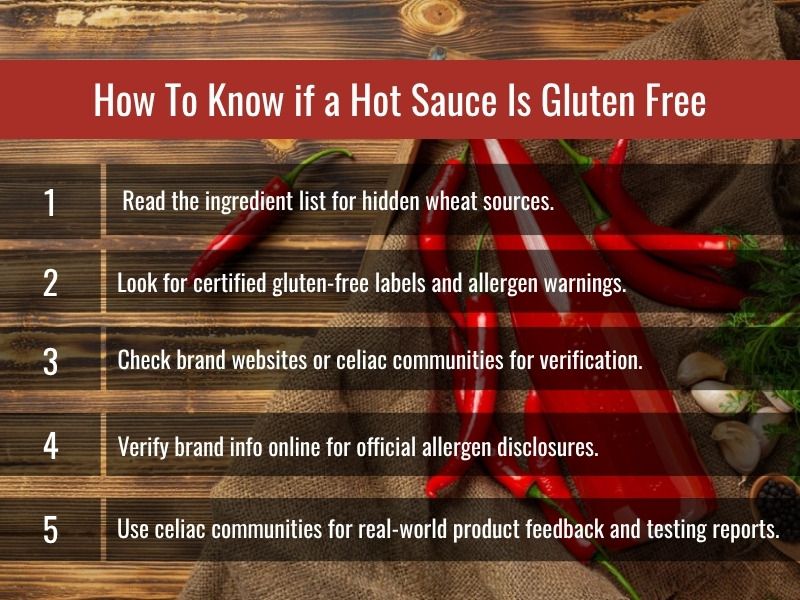
There are three methods to confirm whether a hot sauce is gluten-free: reading the ingredient list for wheat, barley, or rye derivatives, checking for a certified gluten-free label, and reviewing the manufacturer's allergen statement.
- Read the ingredient list first. Know the hidden names. "Malt" means barley. "HVP" without a source listed means potential wheat. "Modified starch" without an origin means check the brand website. "Soy sauce" on a label indicates wheat unless labeled wheat-free tamari.
- Check for a certification mark. Third-party certifications from GFCO, NSF International, or GFFS mean the product has been tested below 20 ppm gluten. The Gluten-Free Certification Organization uses a stricter 10 ppm threshold. That's the strongest verification available.
- Review the allergen statement. Look at the "Contains" or "May Contain" field. "May contain wheat" signals shared facility risk, not an ingredient declaration. Under FALCPA, wheat must be declared in the ingredient statement or a "Contains" line.
- Research brands you buy often. Many hot sauce companies publish allergen details online. The table below covers the most-searched brands.
- Check community resources. Celiac forums like r/Celiac on Reddit and Celiac.com offer crowd-sourced brand reviews from people who test products daily.
Popular Hot Sauce Brands - Gluten-Free Status
The table below compares the gluten-free status of 10 popular hot sauce brands sold in the US, based on each brand's official FAQ, product labeling, and ingredient documentation as of 2025.
| Brand | GF Status | Key Ingredients | Note |
| Cholula | Check label | Arbol and piquin peppers, salt, vinegar, spices, xanthan gum | Gluten is declared on the label if present. Cholula recommends reading ingredient statements at the time of purchase |
| CHIN-SU | No gluten-containing grains in formula | Chili pepper (110 g/kg), garlic, sugar, salt, tomato paste, xanthan gum (415), modified starch (1422) | Vietnamese chili garlic sauce. No wheat, barley, or rye ingredients. No official GF certification on the label |
| Crystal | GF | Aged red peppers, vinegar, salt | Certified Gluten Free, Non-GMO, Kosher, and Halal |
| Frank's RedHot | Check the label per variety | Aged cayenne, distilled vinegar, water, salt, garlic powder | Gluten is always declared on the label. Only products with a "Gluten Free" claim on packaging have been validated as GF on that manufacturing line |
| Louisiana | Not GF | Aged peppers, vinegar, salt | Brand FAQ states products are not considered gluten-free |
| Sriracha (Huy Fong) | GF | Chili, sugar, salt, garlic, vinegar | Wheat is not present in products or plants per Huy Fong Foods documentation |
| Tabasco | GF | Tabasco peppers, distilled vinegar, salt | Labeled Gluten Free and Non-GMO across the hot sauce line |
| Tapatio | GF | Red peppers, water, salt, spices, vinegar | Confirmed Gluten Free, MSG Free, and Sugar Free |
| Texas Pete | GF | Peppers, vinegar, salt, xanthan gum, garlic | Confirmed gluten-free per brand FAQ |
| Valentina | GF per product labeling | Water, chili peppers, vinegar, salt, spices | Labeled Gluten Free and Vegan on retail packaging |
CHIN-SU Hot Sauce uses chỉ thiên chili pepper and garlic - no soy sauce, no wheat, no barley. For more about the full ingredient list and product range, visit chinsu.com.
Most hot sauces are safe for a gluten-free diet - peppers, distilled vinegar, and salt don't contain gluten. Five ingredients to watch: soy sauce, malt vinegar, modified food starch, Worcestershire sauce, and HVP. When in doubt, check the label or choose a certified product. For a chili sauce made from celestial chili pepper and garlic with no wheat or soy derivatives, visit chinsu.com.
Masan Consumer's flagship brands, including CHIN-SU, Nam Ngư, Vincafé, etc., are sold across major markets such as the United States, Japan, South Korea, and Australia. In October 2025, CHIN-SU and Nam Ngư products launched on shelves at Costco in the U.S. and South Korea, as well as Woolworths in Australia.
Frequently Asked Questions
Distilled vinegar does not contain gluten. The distillation process removes gluten proteins, making it safe even when the starting grain is wheat. Malt vinegar is the exception - it's made from barley and is not distilled, so it retains gluten. Most US hot sauces use distilled white vinegar, so this is rarely a concern.
Yes, people with celiac disease can eat most traditional hot sauces. Sauces made from peppers, distilled vinegar, and salt contain no gluten. The safest approach is choosing products with a certified gluten-free label or those from manufacturers with transparent allergen policies. Avoid sauces listing soy sauce, malt vinegar, or unspecified "modified food starch" on the label.
Sriracha is naturally gluten-free. Its ingredients - chili, sugar, salt, garlic, and vinegar - contain no wheat, barley, or rye. Different brands making sriracha-style sauces may use different formulas. Kikkoman Sriracha, for example, contains soy sauce (wheat-based) and is NOT gluten-free. Always check the specific brand label, not just the word "sriracha."
A gluten-free certification means the product has been tested by an independent organization and confirmed to contain fewer than 20 ppm of gluten, the threshold set by the FDA. The Gluten-Free Certification Organization uses a stricter 10 ppm standard. That's the highest level of verification available - stronger than a brand's self-declared "gluten-free" claim.
Homemade hot sauce is gluten-free when you control the ingredients. A basic recipe of fresh peppers, distilled vinegar, salt, and garlic contains no gluten. The risk arises if you add soy sauce, Worcestershire sauce, or a wheat-based thickener. Use tamari instead of soy sauce, and cornstarch or xanthan gum instead of wheat-based starch to keep your batch safe.
It depends on how strict your carnivore diet is. A strict carnivore diet usually avoids plant-based ingredients, so hot sauce made with chili peppers, vinegar, garlic, or spices may not fit. However, some people following a more flexible carnivore diet use small amounts of hot sauce as a condiment. If you choose to include it, look for a simple hot sauce with no sugar, seed oils, artificial additives, or high-carb ingredients.
See detail in our article: Can you have hot sauce on carnivore diet?

CHIN-SU KITCHEN TEAM
CHIN-SU Kitchen Team are the creative experts behind the delicious recipes featuring CHIN-SU sauces. With years of experience and a passion for flavor, our team carefully selects recipes from a variety of trusted chefs and bloggers, bringing together the best culinary insights to present you with the most suitable and exciting dishes. Every recipe is chosen to inspire you to create meals that are not only tasty but also easy to prepare, enhancing your dining experience. Join us as we explore a wide range of sauces and flavors, and elevate every meal with the perfect recipe for your table!
User Reviews
Featured Articles
Can You Have Hot Sauce on the Carnivore Diet?
Does Hot Sauce Expire? All Things You Need to Know
Does Hot Sauce Need to Be Refrigerated?
How to Preserve Hot Sauce: 4 Methods to Try
9 Health Benefits of Hot Sauce: Physical, Nutritional, and Metabolic
SUBSCRIBE TO GET
MORE INFO
Want the latest and greatest recipes, updates, and more from us,
straight to your inbox? Subscribe and get our NEWS!