How Is Fish Sauce Made? Inside CHIN-SU's Traditional Fermentation Process
Published: Jun 16, 2026 by CHIN-SU
Updated: Jun 19, 2026 by CHIN-SU
Fish sauce is made from two ingredients: fish and salt, fermented together for months until natural enzymes and salt-tolerant bacteria convert fish protein into a clear, amber liquid rich in amino acids. That transformation does not happen fast. The traditional Vietnamese method follows a 7-phase sequence: selecting anchovies, salting and mixing, loading barrels, fermenting, extracting, blending, and bottling. The full cycle runs 9 to 12 months. Only two ingredients go in. Time and biology do the rest.
This guide walks through each production phase as practiced in Phu Quoc, Vietnam. Phu Quoc is one of two regions most famous for Vietnamese fish sauce production, and its nước mắm became the first Southeast Asian food product to receive an European Union (EU) Protected Designation of Origin (PDO). The island's Stolephorus commersonii anchovies and tropical humidity produce fish sauce with the highest nitrogen concentration among Asian varieties, reaching 30-39 g/L at first-grade level (Nghia et al., 2017). The process begins at the dock, with fresh anchovies still wet from the East Sea.
Phase 1: Selecting Anchovy Raw Materials
Fish sauce production starts with fresh anchovies bought right off fishing boats at the port. No warehouses. No middlemen. At Phu Quoc, each basket weighs about 33 lbs (15 kg) and arrives straight from boats returning from the East Sea (Biển Đông). A purchasing expert inspects every catch at the dock before any deal goes through, and fish left overnight without refrigeration or that show signs of decomposition are turned away on the spot.
The species that makes Phu Quoc fish sauce distinct is Stolephorus commersonii, a black anchovy with higher protein content than varieties caught along other coastlines. This species earned Phu Quoc an EU Protected Designation of Origin for its fish sauce. Fishing season runs from lunar month 11 through lunar month 4, with peak quality during months 2 and 3 when black anchovy is most abundant and protein-rich.
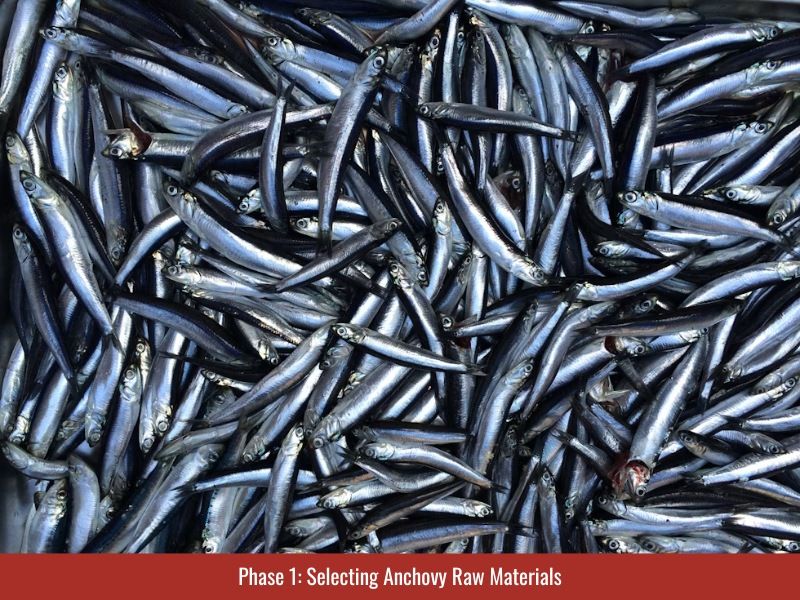
These anchovies go into fermentation whole. No gutting. The viscera hold digestive enzymes, specifically trypsin, chymotrypsin, and cathepsins, that break protein into glutamic acid over the months of fermentation ahead. Removing the organs strips away the biological machinery that produces umami across the next 9 to 12 months
Salting starts on the boat, right after the nets come up. Salt kills spoilage bacteria quickly while preserving halophilic (salt-tolerant) bacteria such as Tetragenococcus halophilus that drive later fermentation. Once the salted anchovies pass inspection at port, they move to the fermentation facility.
Phase 2: Salting and Ratio Mixing
Traditional Vietnamese fish sauce uses a 3:1 ratio, 3 parts anchovy to 1 part salt by weight. This is the standard across most producers. Some Nghệ An producers push the ratio to 4:1 for a higher-protein result. Either way, salt goes in early, first on the boat and then completed at the facility. It does far more than preserve.
The salt itself takes preparation. Salt used in fish sauce ages for at least 12 months before production begins. Fresh salt contains mineral compounds that create bitter, astringent off-flavors in the finished sauce. No amount of fermentation fixes that. Aged salt yields cleaner results from day one.
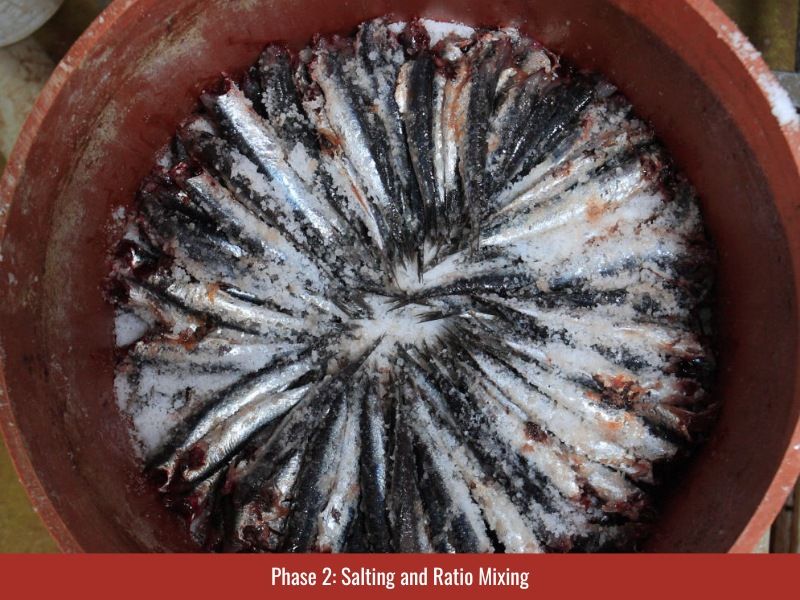
Salt performs 3 functions once mixed with the anchovy. It draws free water from fish tissue via osmotic pressure, creating a low-moisture environment. It suppresses spoilage bacteria while allowing halophilic bacteria to survive and drive fermentation. And it sets the pace for enzyme activity, slowing protein breakdown to months of controlled hydrolysis rather than rapid spoilage. Codex Alimentarius standard (CXS 302-2011) sets the minimum salt concentration in finished fish sauce at 200 g/L.
Once thoroughly mixed, the salted fish is transferred to fermentation barrels.
Phase 3: Barrel Loading and Sealing
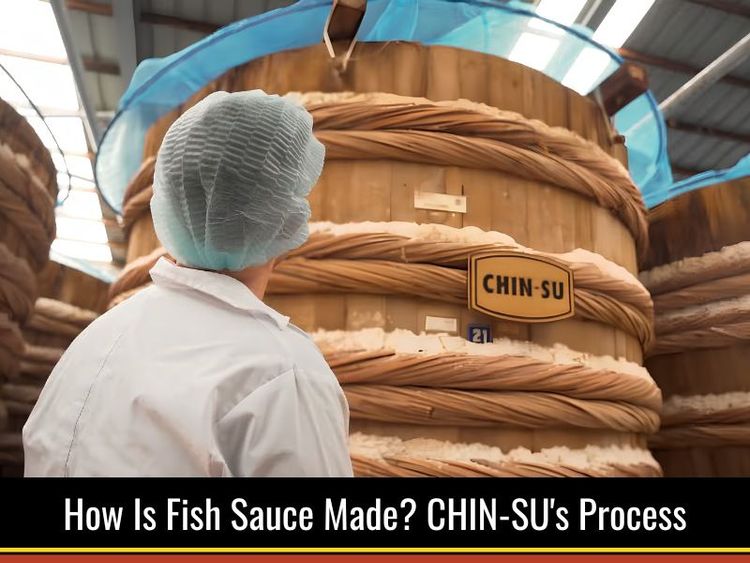
Salted anchovies are packed into large wooden barrels, pressed down with a weight, and sealed to create a low-oxygen environment for fermentation. At the Phu Quoc fermentation house, this step follows a consistent layering pattern. Salted fish goes in layer by layer, each portion pressed flat before the next follows. A heavy weight sits on top to keep the mass compressed. The barrel is then sealed tight.
There are two traditional barrel styles operate at Phu Quoc facilities:
| Barrel Type | Characteristics | Pest Control |
| Phu Quoc hardwood (painted red) | Naturally pest-resistant wood | No extra treatment needed |
| Bamboo-rope bound wood | Standard wood reinforced with bamboo rope | Salt packed between rope layers |
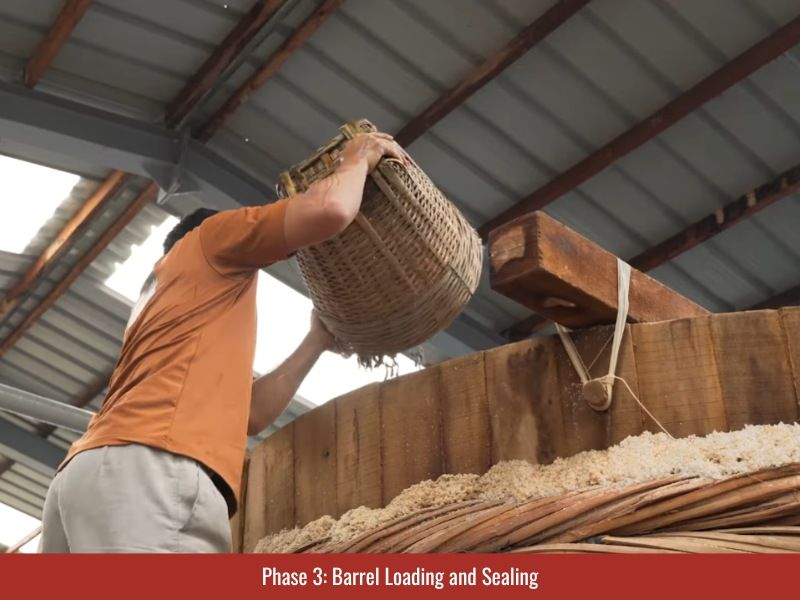
A well-maintained wooden barrel lasts up to 100 years with regular use. Sealing matters because it limits oxygen inside the barrel. Low-oxygen conditions favor the halophilic bacteria and endogenous enzymes that drive proper fermentation. Aerobic bacteria, the kind responsible for spoilage, cannot thrive in this sealed environment. That difference is what separates months of controlled protein breakdown from simple rot.
A single traditional barrel at Phu Quoc holds roughly 15,400 to 28,600 lbs (7 to 13 metric tons) of salted anchovy. Once sealed, these barrels sit undisturbed for 9 to 12 months. The waiting begins.
Phase 4: Fermenting From 9 to 12 Months
Over 9 to 12 months in sealed barrels, natural enzymes and salt-tolerant bacteria break down fish protein into free amino acids, the compounds that give fish sauce its color, aroma, and umami depth. Two parallel biochemical processes drive this transformation.
The first is autolysis (self-digestion, in which the fish's own enzymes break down its proteins). Enzymes already present in the fish viscera, specifically trypsin, chymotrypsin, and cathepsins, hydrolyze fish protein into shorter peptide chains, then into individual free amino acids. The dominant amino acid produced is glutamic acid, the primary source of umami. 4 other key amino acids form alongside it: threonine, alanine, methionine, and histidine. So what produces the actual flavor complexity? 11 taste-active compounds have been identified in Vietnamese fish sauce, with glutamic acid, pyroglutamic acid, and alanine contributing most to umami, sweetness, and overall taste (Park et al., 2002).
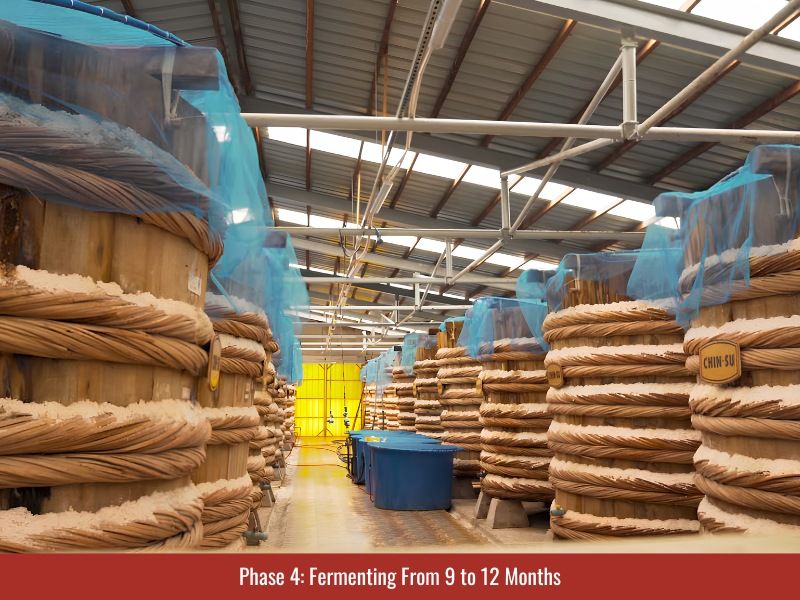
The second is microbial activity. Salt-tolerant bacteria, particularly Tetragenococcus halophilus, colonize high-salinity environments and produce organic acids, esters, and volatile compounds that shape the aroma.
The flavor builds gradually. Here is what each fermentation milestone produces, based on production tasting observations at the facility:
| Month | Color | Aroma | Taste |
| 1 | Very pale, nearly clear | Fresh fish, mild | Light salt, not aggressive |
| 3 | Light gold | Deeper, building | Saltier, early fish sauce character |
| 5 | Gold-brown | Settling, softer | Balanced, umami forming |
| 7 | Similar to month 5 | Slightly lighter than 5 | Very close to month 5 |
| 9 | Warm amber | Rich, pleasant | More pronounced, smoother |
| 12 | Deep red-amber, clear | Subtle, almost fruity | Full, clean, sweet finish |
The most noticeable jump in quality occurs between month 9 and month 12. Months 5 and 7 are nearly indistinguishable in blind tasting. After 12-18 months, quality plateaus. Extending fermentation rarely improves the sauce and risks degrading it.
When fermentation is complete, the barrel is opened, and the liquid is ready for extraction.
Phase 5: Liquid Extraction and Grading
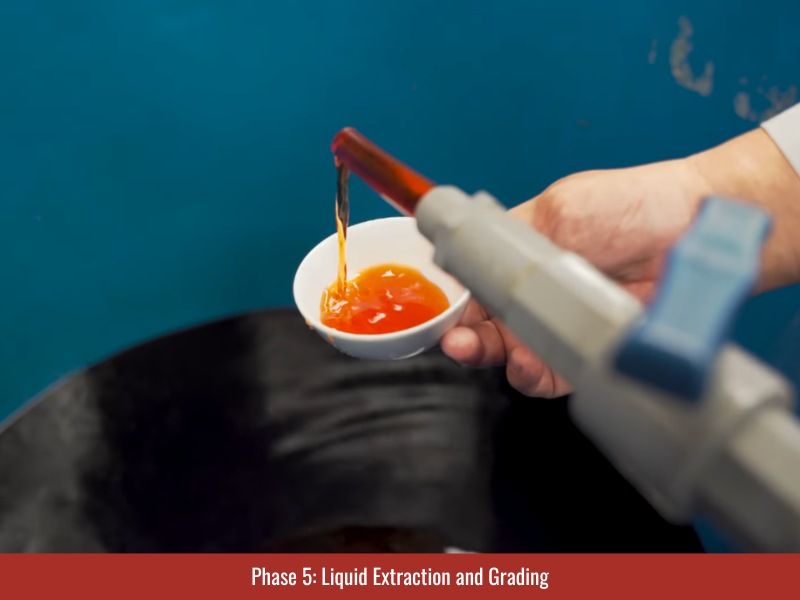
Once fermentation is complete, the barrel is drained from a valve near the bottom. No mechanical pressing. The liquid flows out by gravity alone into a large collection vessel. The first liquid to emerge is nước mắm nhĩ (first press), the highest-grade fish sauce.
First press accounts for 50-70% of the total liquid in the barrel. This extract carries the highest concentration of nitrogen and amino acids. The remaining fish mass is mixed with brine and re-fermented to produce a second extraction, a grade 1 sauce that is lighter in flavor and lower in protein.
Fish sauce quality is measured in °N, grams of total nitrogen per liter. Higher nitrogen means more amino acids and stronger umami intensity. Vietnamese fish sauce from Phu Quoc has the highest nitrogen concentration among Asian fish sauces, with first-grade reaching 30-39 g/L (Nghia et al., 2017). That said, higher °N does not always mean "better" for every palate. It means more concentrated. Preference varies by dish and by cook.
There are two fish sauce nitrogen grading standards apply in Vietnam:
TCVN 5107:2003 (Vietnam National Standard):
| Grade | Nitrogen (g/L) |
| Special | ≥30 |
| Premium | ≥25 |
| Grade 1 | ≥15 |
| Grade 2 | ≥10 |
Phu Quoc Geographical Indication (GI) Standard (QCĐP 01:2023/KG):
| Grade | Nitrogen (g/L) |
| Special | ≥35 |
| Premium | ≥30 |
| Grade 1 | ≥25 |
| Grade 2 | ≥20 |
Phu Quoc sets every threshold 5-10 g/L above the national standard. After extraction, the raw sauce moves through blending and quality control before bottling.
Phase 6: Blending and Quality Control
Natural fermentation produces variation. Even barrels loaded from the same batch of fish, salted at the same ratio, sitting side by side in the same facility, can finish at different nitrogen levels. One barrel might land at 38°N while its neighbor reaches 42°N. Blending harmonizes these differences into a consistent finished product.
This step is craft, not shortcut. Blending combines first-press liquids from multiple barrels to reach a target grade. No artificial nitrogen goes in. No water padding. No synthetic amino acids. The process balances color, aroma, and flavor intensity across barrels so every bottle meets the same standard.
Before bottling, the blended sauce passes a series of quality checks. Nitrogen content (°N) is measured and declared on the label, a requirement under Vietnamese labeling law. Color is assessed against the standard red-amber benchmark, and any cloudiness signals a defect. Aroma is evaluated for clean, balanced character, not harsh or aggressively fishy. pH is tested to confirm it falls within the 5.0 to 6.5 range set by Codex Alimentarius standard (CXS 302-2011). Sauce that meets all parameters moves to bottling.
Phase 7: Bottling and Distribution
After quality control, the finished fish sauce is bottled without sterilization. No heat treatment is needed. The high salt concentration, at or above 200 g/L per Codex Alimentarius standard (CXS 302-2011), acts as a natural preservative that prevents bacterial growth.
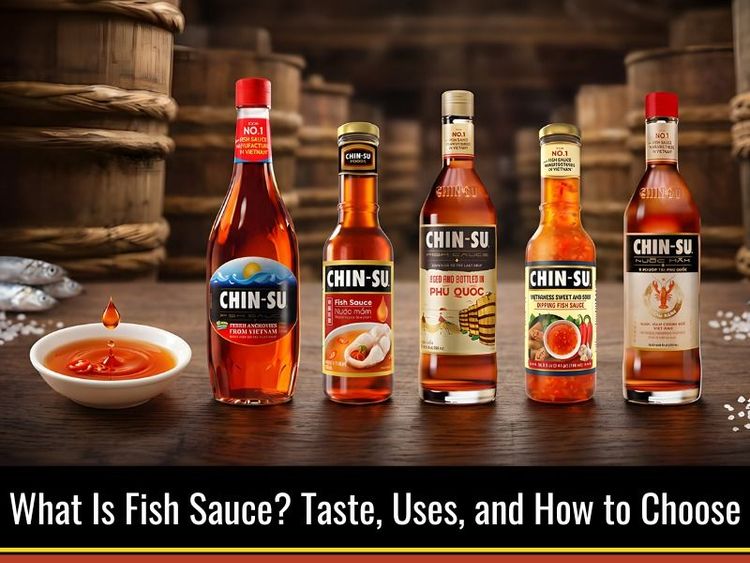
CHIN’SU fermentation base produces 5 distinct product lines:
| Product Line | Flavor Profile | Best For |
| Anchovy | Traditional umami from fermented anchovy | Dipping, seasoning, Vietnamese cooking |
| Salmon | Seafood-forward, richer mouthfeel | Marinating seafood, dipping |
| Sweet & Sour | Pre-mixed sweet-sour balance | Spring rolls, noodle bowls, hotpot |
| Lobster | Rich, sea-forward | Shellfish, crab, grilled seafood |
| Phu Quoc | Southern Vietnam style, bold salt-sweet finish | Braising, grilling, direct dipping |
All 5 lines are available at major US retailers and online through chinsu.com.
That is the full cycle. From anchovy to bottle, 9 to 12 months of patient fermentation.
Fish sauce starts with fresh anchovies pulled from the East Sea, salted on the boat, packed into wooden barrels at Phu Quoc, and left to ferment for 9 to 12 months. Enzymes and halophilic bacteria do the rest, turning solid protein into a clear, amber liquid rich in glutamic acid and natural umami. Seven phases, two ingredients, and a full year of patience produce a condiment that has anchored Vietnamese cooking for generations. Browse the full CHIN-SU fish sauce range at chinsu.com.
Frequently Asked Questions
Properly fermented fish sauce has a mild, clean aroma, not the sharp punch most people expect. Extended fermentation over 9 to 12 months breaks down the raw fishy volatile compounds that cause strong odors. Short-fermented or industrially produced sauce retains more of those compounds, and that is where the reputation comes from. A 12-month sauce smells closer to aged soy sauce than raw seafood. The month-12 sample at the Phu Quoc facility carries a subtle, almost fruity note.
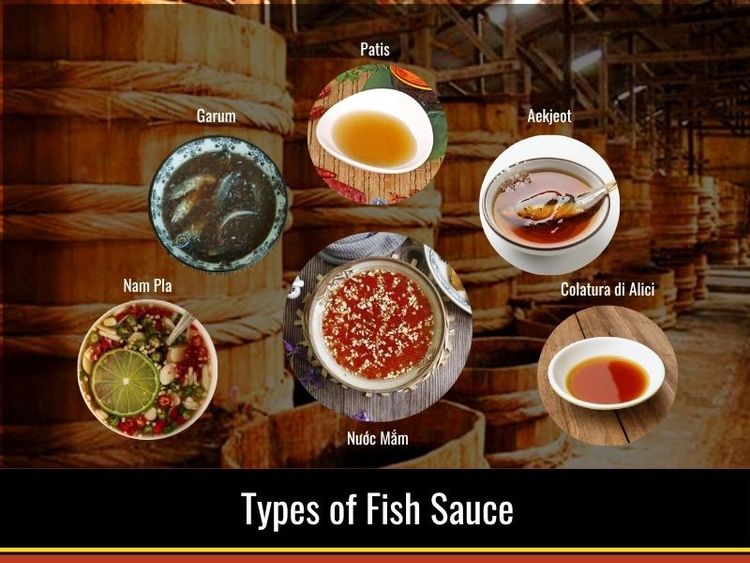
Vietnamese fish sauce (nước mắm) tends to be lighter, sweeter, and carries higher nitrogen content than Thai fish sauce (nam pla). Thai production traditionally uses a 3:2 fish-to-salt ratio compared to Vietnam's 3:1, ferments for a minimum of 8 months, and produces a saltier, more pungent result. Vietnamese nước mắm, particularly from Phu Quoc, holds the highest nitrogen concentrations among Asian fish sauces, with first-grade reaching 30 to 39 g/L (Nghia et al., 2017). Both styles are traditional. The difference comes down to ratio, fermentation length, and the anchovy species used.
The °N on a fish sauce label stands for degrees of nitrogen, grams of total nitrogen per liter. Higher °N means more amino acids dissolved in the sauce, which translates to stronger umami flavor. The market average sits in the mid-20°N range. Anything above 30°N is high-grade, and 40°N is considered optimal for traditionally fermented sauce. That number is the single fastest way to compare fish sauce quality on a store shelf.
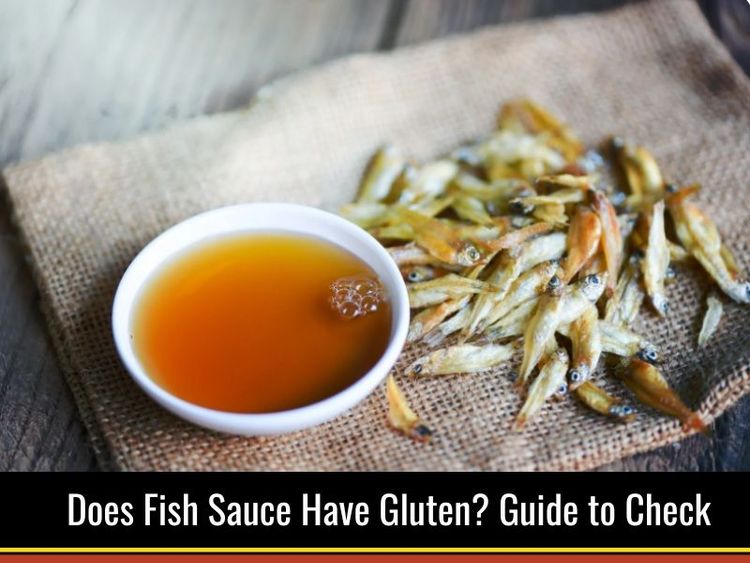
Traditional fish sauce is no gluten because it is made with only fish and salt is gluten-free. Some industrial brands add wheat-based soy sauce or hydrolyzed (broken down with water) wheat protein as filler. The ingredient list tells the full story. If it contains only anchovy (or fish) and salt, it is gluten-free. CHIN-SU fish sauce uses fish and salt as its base.

CHIN-SU KITCHEN TEAM
CHIN-SU Kitchen Team are the creative experts behind the delicious recipes featuring CHIN-SU sauces. With years of experience and a passion for flavor, our team carefully selects recipes from a variety of trusted chefs and bloggers, bringing together the best culinary insights to present you with the most suitable and exciting dishes. Every recipe is chosen to inspire you to create meals that are not only tasty but also easy to prepare, enhancing your dining experience. Join us as we explore a wide range of sauces and flavors, and elevate every meal with the perfect recipe for your table!
User Reviews
Featured Articles
What Is Fish Sauce? Taste, Uses, and How to Choose
Types of Fish Sauce: A Regional Guide to the World's Most Misunderstood Condiment
What Is Fish Sauce Made Of?
Fish Sauce Benefits: Nutrition, Health, and How to Use It Right
Does Fish Sauce Have Gluten?
SUBSCRIBE TO GET
MORE INFO
Want the latest and greatest recipes, updates, and more from us,
straight to your inbox? Subscribe and get our NEWS!