What Is Fish Sauce? Taste, Uses, and How to Choose
Published: Jun 16, 2026 by CHIN-SU
Updated: Jun 19, 2026 by CHIN-SU
Fish sauce is a liquid seasoning made from fish fermented with salt, valued across Southeast Asia and beyond for the salty, savory depth it brings to cooking. The core ingredients are just two: fish (usually anchovies) and salt. Once it hits a hot pan or gets stirred into a broth, the raw fermented smell vanishes. What stays is umami, the background savory note that makes everything around it taste fuller.
Fish sauce is one of the defining flavors of Vietnamese cuisine, a staple seasoning that appears in everything from dipping sauces to marinades, soups, stir-fries, and braised dishes. You’ve probably had it without even knowing it: in your pad thai, in a bowl of phở or bún thịt nướng, or in that orange dipping sauce, nước chấm, from your Vietnamese takeout.
In this article, CHIN-SU will help you cover what fish sauce tastes like, how it's made, how Vietnamese nước mắm differs from Thai and Filipino varieties, how to read a label and choose a good bottle, and how to cook with it whether you grew up with nước mắm on the table or you've never cracked a bottle open.
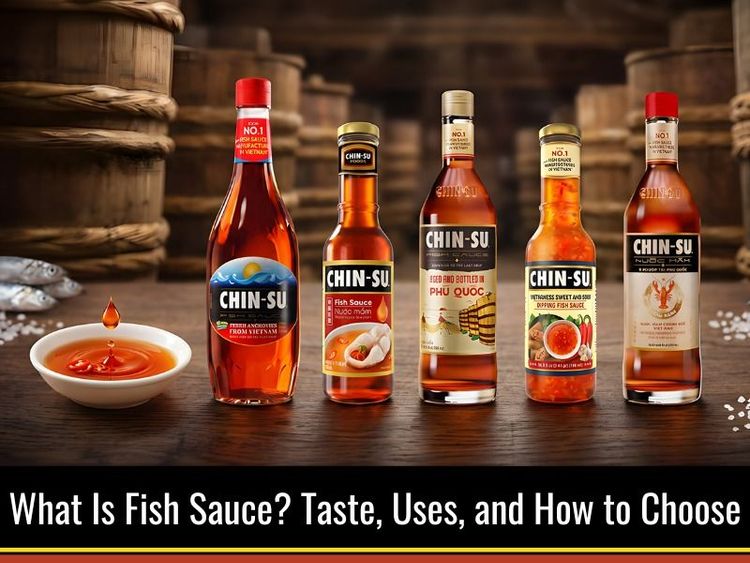
Table Of Contents
What Is Fish Sauce?
Where Did Fish Sauce Come From?
- What Is Fish Sauce Made Of?
How to Choose a Good Fish Sauce?
- How to Use Fish Sauce in Cooking?
- How to Store Fish Sauce
- Fish Sauce Substitutes
What Is Fish Sauce?
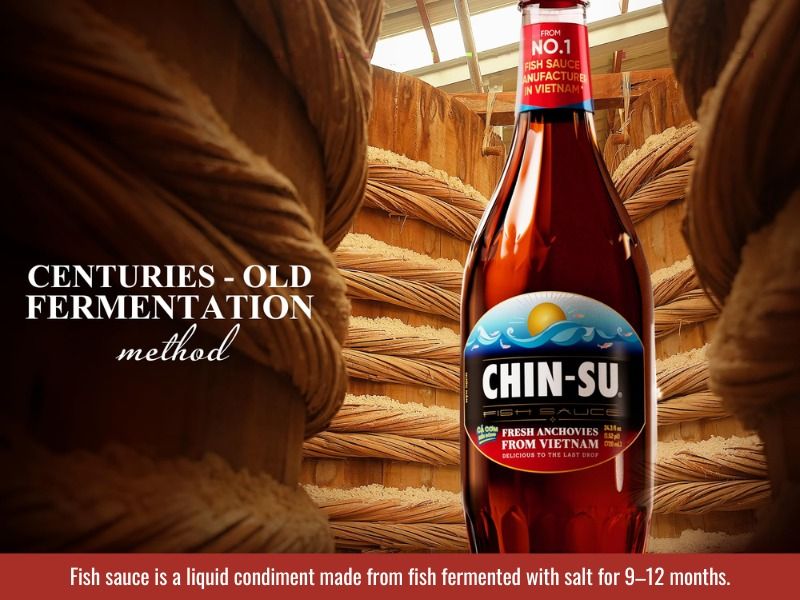
Fish sauce is a liquid condiment made from fish fermented with salt for 9–12 months. Its purpose is to add saltiness and deepen the dish with umami, savory flavor. Fish sauce has a salty, savory taste with a subtle sweetness and a clean, delicate fish aroma. It is used as a seasoning during or after cooking, and as a base in dipping sauces.
What separates fish sauce from soy sauce, table salt, or any other salty condiment is what happens during those months of fermentation. The slow breakdown of fish protein and salt produces glutamate, the same molecule your tongue reads as savory depth. Salt adds salinity. Fish sauce adds natural umami on top of that, and you'll taste the difference the first time you leave it out of a stir-fry.
Fish sauce works in Southeast Asian cooking the way Worcestershire sauce works in Western kitchens: a few dashes that deepen everything in the pot without announcing themselves.
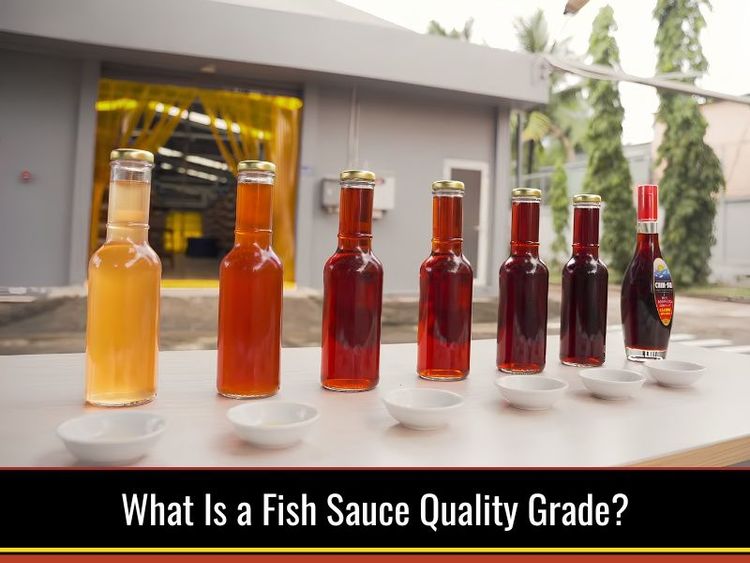
A quality fish sauce runs clear amber to deep gold. Darker color usually means longer fermentation or a second-press extraction, where water passes through the fish solids again to pull remaining flavor. Some labels show a °N number, which measures grams of nitrogen per liter of sauce, a direct reading of protein concentration. 30°N or higher marks a premium grade. Higher nitrogen means more dissolved protein, and that translates to a sauce with fuller body and a rounder finish on the tongue.
Where Did Fish Sauce Come From?
Fish sauce is one of the oldest condiments on record, with the earliest documented production traced to ancient Greece around the 7th century BCE. Greek fishermen along the Black Sea coastline fermented fish into a liquid they called gàros. Romans picked it up and ran with it. They made two versions: liquamen for everyday cooking and garum, a richer product fermented with fish viscera. Production spread across the Mediterranean fast. Pompeii was a major hub, and archaeologists have found processing sites in Spain, Portugal, and North Africa. When Rome declined, salt taxes and trade disruption shut down mass production across Europe. One descendant survived: Italy's colatura di alici, still made by hand in the coastal town of Cetara.

Separately, East and Southeast Asia developed their own fermentation traditions on parallel timelines. Historical records point to fish fermentation in China during the Zhou Dynasty, roughly 2,300 years ago. As fermented bean products (the early ancestors of soy sauce) gained ground in China, fish sauce production shifted south into Vietnam, Thailand, Cambodia, and the Philippines, where it became a foundational cooking ingredient. In Vietnam, it became nước mắm. It never left.
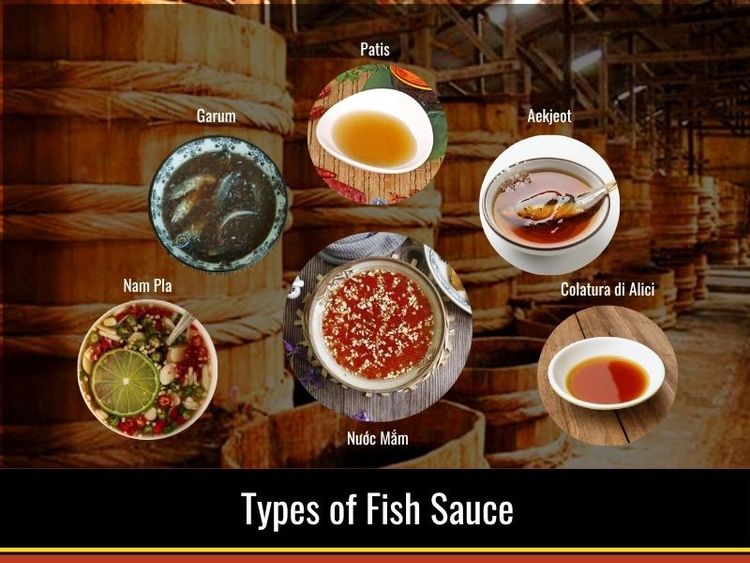
Each country gave fish sauce a different name and a slightly different character:
- Vietnam: nước mắm
- Thailand: nam pla (น้ำปลา)
- Philippines: patis
- Cambodia: tik trei (ទឹកត្រី)
- Laos: nam pa (ນ້ໍາປາ)
- Myanmar: ngan bya yay (ငါးငံပြာရည်)
- Korea: aekjeot (액젓), used in kimchi
- Japan: gyoshō (魚醤)
- China: yúlù (鱼露)
- Italy: colatura di alici
- England: Worcestershire sauce (contains fermented anchovies)
What Makes Vietnamese Fish Sauce Different?
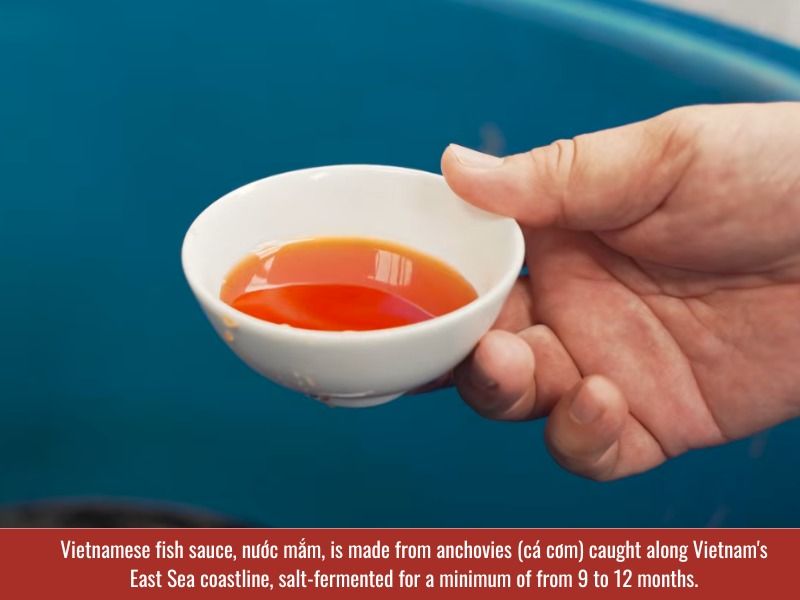
Vietnamese fish sauce, nước mắm, is made from anchovies (cá cơm) caught along Vietnam's East Sea coastline, salt-fermented for a minimum of from 9 to 12 months, and defined by a rounder, faintly sweet profile compared to Thai nam pla. The best bottles carry the mắm nhĩ designation, which signals first-press liquid only. Think of mắm nhĩ as the Vietnamese equivalent of extra-virgin olive oil: the first extraction, undiluted, with the highest protein concentration.
It is also important to distinguish fish sauce (nước mắm) from dipping fish sauce (nước chấm). Nước mắm is the pure fermented fish sauce used for cooking, marinating, and seasoning. Nước chấm is the prepared dipping sauce made by mixing nước mắm with water, lime juice, sugar, garlic, and chilies. Confusing the two can easily make a dish too salty.
Fish sauce is found in 95% of Vietnamese households, and its role goes beyond just cooking. Fish sauce appears in Vietnam's own creation myth, the story of Dragon Prince Lạc Long Quân, whose totem was a fish. That's not just an ingredient. That's a marker of national identity. CHIN-SU Fish Sauce is one of the most recognized names in Vietnamese households, a brand synonymous with nước mắm on the family table.
Among Vietnam’s regional fish sauces, Phú Quốc fish sauce is the most prized. It is made from Stolephorus commersonii anchovies and fermented in traditional wooden vats. In 2013, Phu Quoc fish sauce became the first product in Southeast Asia to receive a Protected Designation of Origin (PDO) from the European Union, the same classification that protects Champagne and Parmigiano-Reggiano. CHIN-SU Fish Sauce draws on this same Vietnamese tradition: anchovy-based, East Sea-sourced, and available in the US at retailers including Costco, Amazon, and Walmart.
What Is Fish Sauce Made Of?
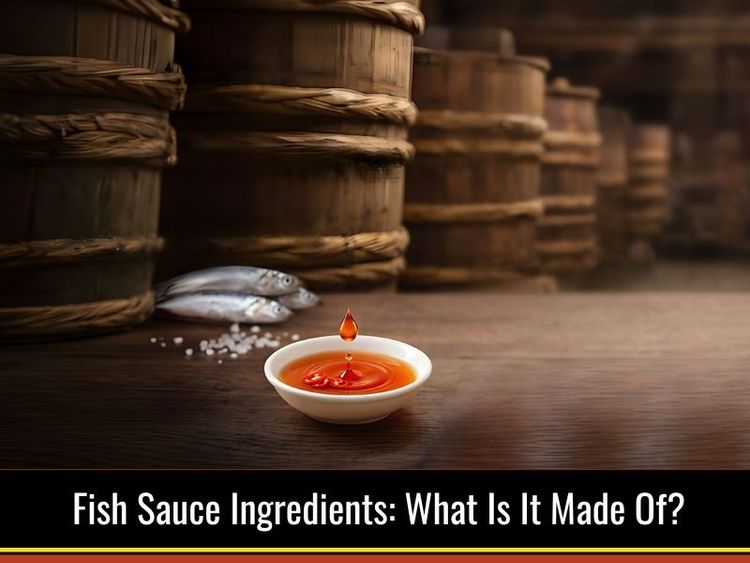
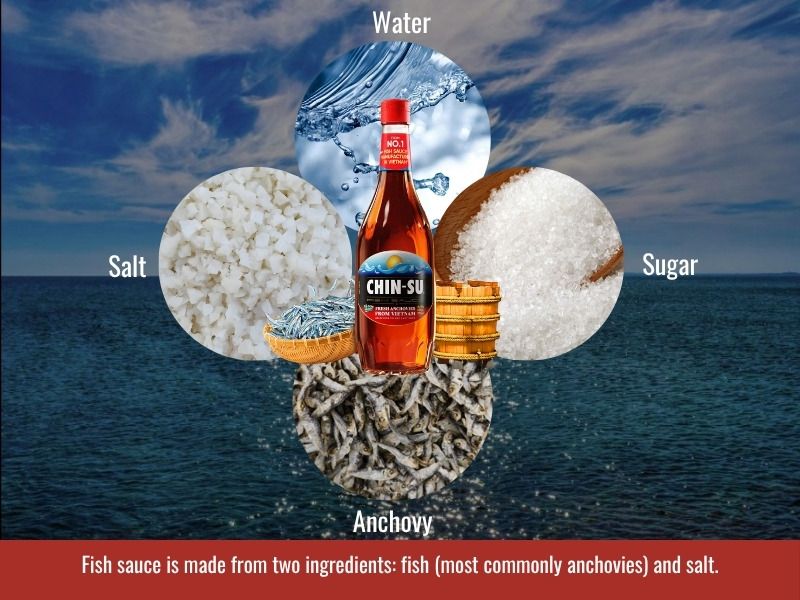
Fish sauce is made from two ingredients: fish (most commonly anchovies) and salt. Some brands add water and a small amount of sugar. A high-quality fish sauce contains nothing else. The ingredient list on the back of the bottle is the fastest way to tell what you're working with.
The production process is more patient than it is complicated. Fish and salt are layered in large vats, typically at a 3:2 fish-to-salt ratio by weight. Fish and salt are layered in large fermentation vats, typically at a 3:2 fish-to-salt ratio by weight. For CHIN-SU fish sauce, the ratio is 3:1, which is considered the “golden ratio” for creating a balanced, rich, and savory nước mắm flavor. The salt draws liquid out of the fish through osmosis, and natural enzymes in the fish gut break down protein over 6 to 18 months. The result is the amber liquid pressed from those vats. That liquid is fish sauce.
Here's what each ingredient actually does in the bottle:
| Ingredient | What It Does |
| Anchovies (or small fish) | Primary source of protein and glutamate |
| Salt | Draws out liquid, controls fermentation, preserves the sauce |
| Water | Added in lower-quality or diluted products to stretch volume |
| Sugar | Small amount; rounds out saltiness in most commercial brands |
Protein content is the most reliable proxy for quality. The more first-press liquid in the bottle, the higher the protein per serving. 2 grams of protein per tablespoon (1 tablespoon = 15 ml) marks a good everyday bottle, and anything above that puts you into the range worth using as a dipping sauce, not just a cooking ingredient.
For a deeper breakdown of fish sauce ingredients and how it is made, let's dive in:
How to Choose a Good Fish Sauce?
A good fish sauce has three label signals: a short ingredient list (anchovies, salt, water, and possibly sugar, nothing else), a minimum of 2 grams of protein per tablespoon, and a clear amber color. If the bottle shows a °N number, aim for 30°N or higher. Price is a rough tiebreaker here. Fish sauce that costs more is usually more concentrated, meaning less water was added after the first press.
That protein number on the nutrition label is the single most useful quality indicator you have in a grocery aisle. Lower-quality fish sauce is diluted with additional water after the first press, reducing the protein concentration per serving. A top-tier anchovy fish sauce can hit 4g of protein per tablespoon at 40°N, while a solid mid-range bottle sits around 2g at roughly 30°N. Bottom-shelf brands sometimes list 0g, which means the bottle is mostly water and salt.
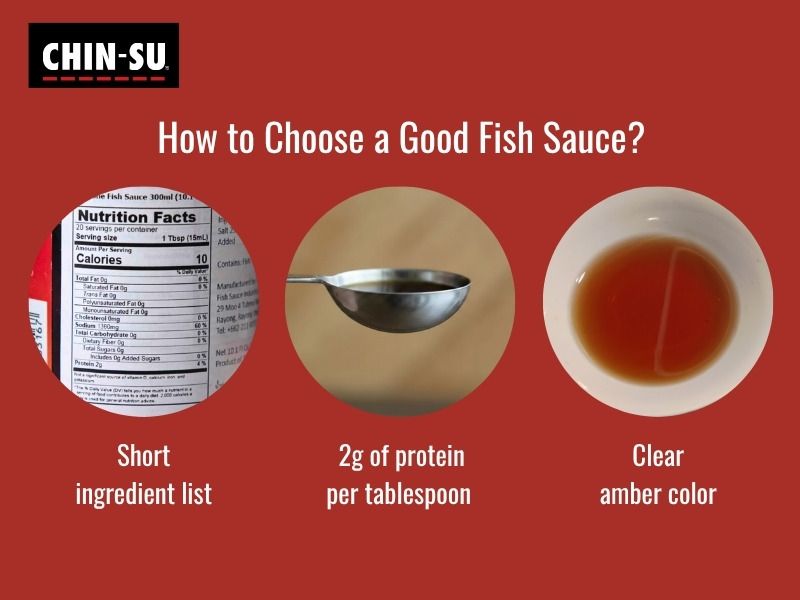
Flip the bottle and scan the ingredient list before anything else. Avoid any fish sauce that lists Monosodium Glutamate (MSG), caramel color, artificial flavoring, or hydrolyzed protein beyond those four basic ingredients. Also skip anything that looks opaque or murky in the bottle. That's a different product entirely, usually a Vietnamese fermented fish paste (mắm nêm) or an unfiltered variety, and it carries a much stronger, more pungent flavor that doesn't suit general cooking.
Why CHIN-SU Fish Sauce Belongs in Your Kitchen?
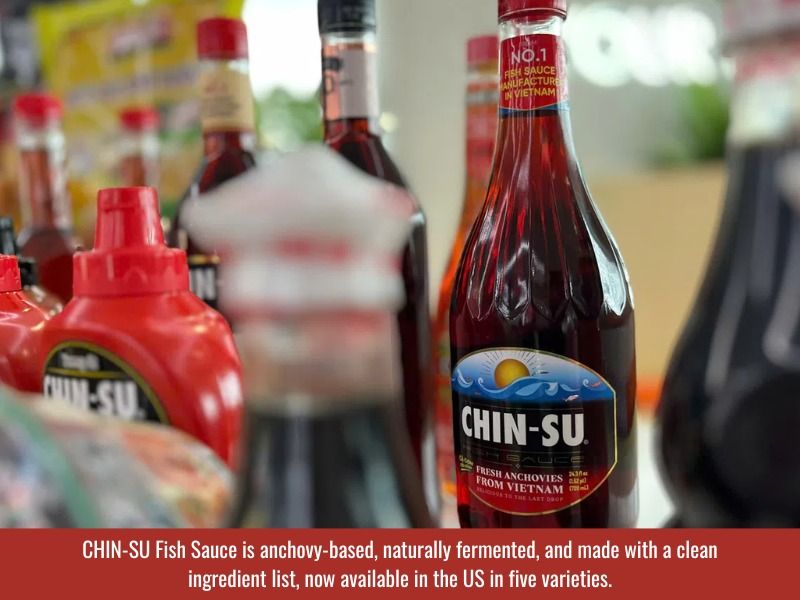
CHIN-SU Fish Sauce meets every quality marker covered above: anchovy-based, a clean ingredient list, and fermented in line with Vietnam's coastal tradition. It's the same brand found in Vietnamese households across the country, now available in the US in five varieties: Vietnamese Fish Sauce, Phu Quoc Fish Sauce, Salmon Fish Sauce, Lobster Fish Sauce, and Sweet and Sour Dipping Fish Sauce.
You can find the full lineup and pick the right bottle for your cooking at chinsu.com. Follow along at #CHINSU for recipes, pairings, and ways to use each variety.
How to Use Fish Sauce in Cooking?
In Vietnamese and broader Southeast Asian cooking, fish sauce is the primary salt source, added to marinades, braises, soups, stir-fries, and dipping sauces, either at the beginning or the end of cooking, depending on the dish.
Vietnamese cooks use nước mắm much like Western cooks use salt. It seasons the broth in phở and bún bò Huế, deepens the caramelized glaze in thịt kho, and becomes nước chấm when mixed with lime juice, sugar, garlic, chilies, and water.
The strong aroma from the bottle can surprise first-time users, but fish sauce does not make cooked food taste fishy. Once heated or diluted, the fermented smell fades, leaving only a deeper, more savory flavor.
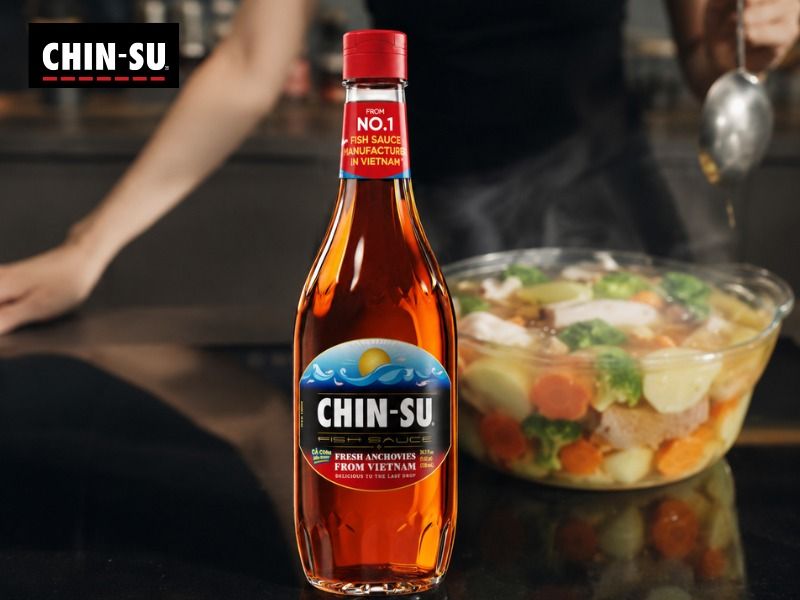
For beginners, start small. Add a few drops to a stir-fry, soup, pasta sauce, chili, Bolognese, braised meat, or marinade. You can also use fish sauce in place of part of the salt, soy sauce, or Worcestershire sauce in recipes like Caesar dressing, meat marinades, or a Bloody Mary.
Used correctly, fish sauce makes food taste richer, fuller, and more balanced without overpowering the dish..
How to Store Fish Sauce
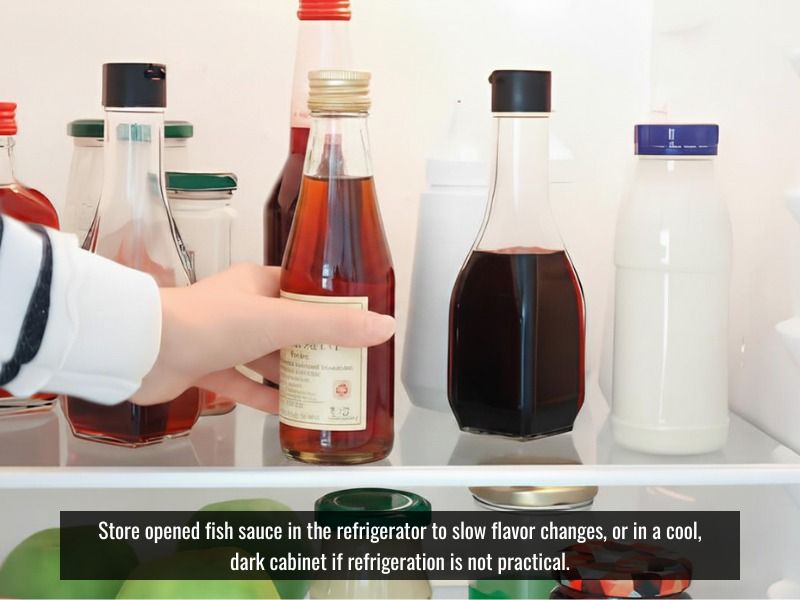
Store opened fish sauce in the refrigerator to slow flavor changes, or in a cool, dark cabinet if refrigeration is not practical. Fish sauce won't spoil. The salt content is too high for bacteria to survive in the bottle. But the flavor does shift over time. An opened bottle gradually becomes more pungent, and the color darkens as the liquid oxidizes. Keeping it cold, sealed tightly, and away from light slows that process down.
How long does fish sauce last? Indefinitely from a safety standpoint, but quality starts to decline after about a year of opening. If you cook with it a few times a month, a standard 17 fl oz (500 ml) bottle will finish well before that window closes. If you only use it occasionally, buy a smaller bottle so the flavor stays closer to what it was when you first cracked the cap.
Fish Sauce Substitutes
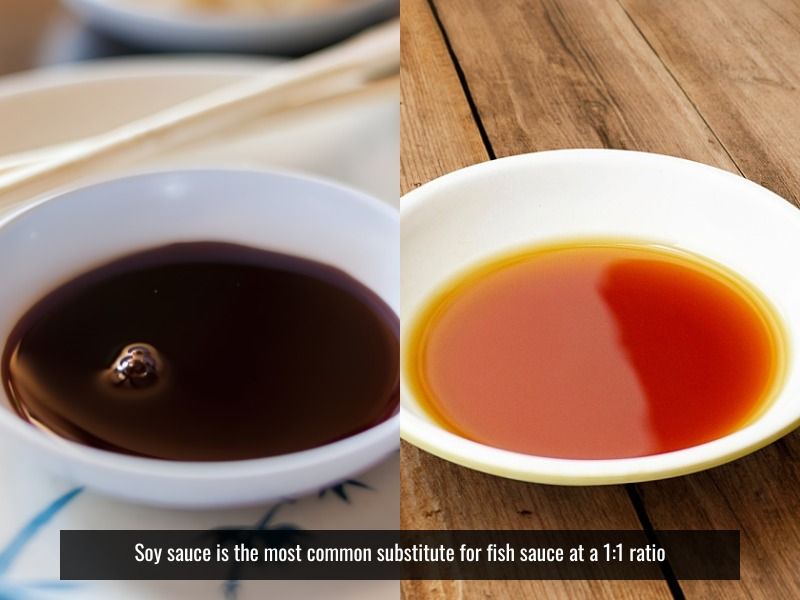
Soy sauce is the most common substitute for fish sauce at a 1:1 ratio, though it lacks the fermented depth that makes fish sauce distinct. Soy sauce is bean-based, so it adds saltiness and some umami, but it lacks the concentrated glutamate produced by months of fish fermentation. The flavor gap is real, and you'll notice it most in dipping sauces and dressings, where fish sauce typically takes the lead.
Fish sauce is a fermented condiment built on two ingredients, anchovies and salt, that delivers umami no other seasoning can replicate. Vietnamese fish sauce stands apart with its rounder, faintly sweet profile and a tradition stretching back centuries. When choosing a bottle, look for a short ingredient list, 2g or more protein per tablespoon, and a clear amber color. Start with a few drops in familiar dishes and work up from there. You'll find the full CHIN-SU fish sauce lineup at chinsu.com.
Frequently Asked Questions
Fish sauce is low in calories and contains protein, vitamin B12, and trace minerals, but it is high in sodium. 1 tablespoon (0.5 fl oz / 15 ml) contains 50 to 60 percent of the Food and Drug Administration (FDA) recommended daily sodium intake. It also provides 1-4 grams of protein per tablespoon, depending on the bottle's quality. Here's what's worth knowing, though: a 2016 study by the Institute of Food Technologists found that using fish sauce in place of table salt reduced sodium chloride intake by 10 to 25 percent while maintaining the same perceived saltiness and flavor intensity. So you're actually using less total sodium when fish sauce does the seasoning.
Fish sauce made from only fish and salt is naturally gluten-free. Some brands, however, add hydrolyzed wheat protein as a flavor enhancer, and that introduces gluten. Always read the ingredient label before buying if you have celiac disease or a gluten sensitivity. Products listing only anchovies (or anchovy extract), salt, water, and sugar are safe. For example, CHIN-SU fish sauce uses a fish-and-salt base, which keeps it free of added wheat protein.
No. Fish sauce and oyster sauce are different products with different textures, colors, and flavor profiles. Fish sauce is thin, clear, and salty, made from fermented fish. Oyster sauce is thick, dark, and slightly sweet, made by reducing oyster extracts. They are not interchangeable in most recipes. Fish sauce adds salty umami to soups, stir-fries, and marinades. Oyster sauce adds a sweet, glossy coating to stir-fried vegetables and proteins. If a recipe calls for one, using the other will noticeably change the dish.
Have oyster sauce at home and wondering if it can replace fish sauce? Read our fish sauce vs oyster sauce guide to understand when the swap works and when it doesn’t.
Yes, but with adjustments. Fish sauce is saltier and more concentrated than soy sauce, so use about three-quarters of the amount a soy sauce recipe calls for. Fish sauce also lacks soy sauce's dark color and its specific bean-fermented taste. In cooked dishes like stir-fries, marinades, and sauces, the swap works well because heat blends the flavors together. In cold applications like dressings and dipping sauces, balance the stronger fish sauce flavor with a bit more acid (lime juice or vinegar) and a pinch of sugar.

CHIN-SU KITCHEN TEAM
CHIN-SU Kitchen Team are the creative experts behind the delicious recipes featuring CHIN-SU sauces. With years of experience and a passion for flavor, our team carefully selects recipes from a variety of trusted chefs and bloggers, bringing together the best culinary insights to present you with the most suitable and exciting dishes. Every recipe is chosen to inspire you to create meals that are not only tasty but also easy to prepare, enhancing your dining experience. Join us as we explore a wide range of sauces and flavors, and elevate every meal with the perfect recipe for your table!
User Reviews
Featured Articles
Types of Fish Sauce: A Regional Guide to the World's Most Misunderstood Condiment
What Is Fish Sauce Made Of?
Fish Sauce Benefits: Nutrition, Health, and How to Use It Right
Does Fish Sauce Have Gluten?
What Is a Fish Sauce Quality Grade?
SUBSCRIBE TO GET
MORE INFO
Want the latest and greatest recipes, updates, and more from us,
straight to your inbox? Subscribe and get our NEWS!