Does Fish Sauce Have Gluten?
Published: Jun 16, 2026 by CHIN-SU
Updated: Jun 18, 2026 by CHIN-SU
Fish sauce is often gluten free because the traditional recipe requires just two simple ingredients: anchovies and sea salt, meaning no wheat, barley, or rye ever enters the production line. However, the final answer still depends on the brand because some bottles may include additives, flavor enhancers, or hydrolyzed wheat protein.
Science and regulations back this up. The U.S. Food and Drug Administration (FDA) defines gluten-free as less than 20 ppm under 21 CFR 101.91, while the international standard CODEX CXS 302-2011 defines fish sauce as a product fermented primarily from fish and salt.
Pure, traditional fish sauce easily clears both standards because no grain ever enters the production process. Still, there's a catch worth knowing. Some commercial brands add flavor enhancers or hydrolyzed wheat protein to balance the taste and boost protein levels, which inadvertently brings gluten into the bottle.
This guide is designed to clarify why pure fish sauce is inherently gluten-free, pinpoint exactly when hidden gluten might slip in, and show you how to confidently scan labels before buying.
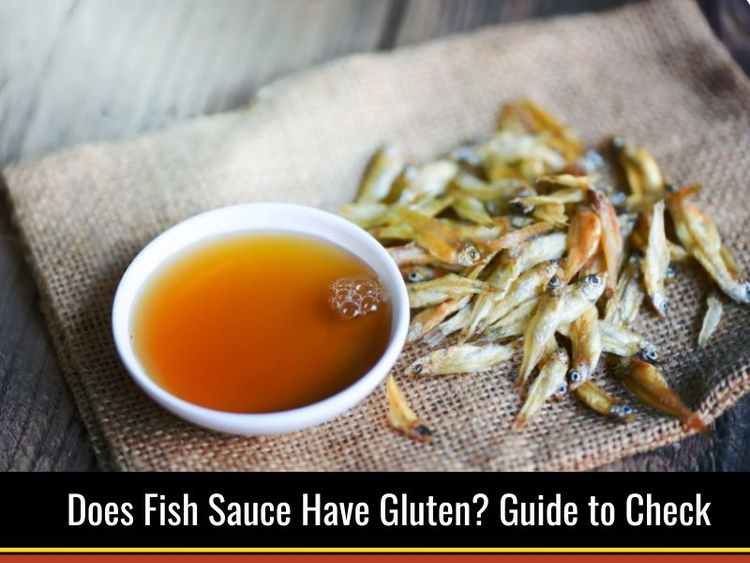
Table Of Contents
Why Is Fish Sauce Gluten-Free?
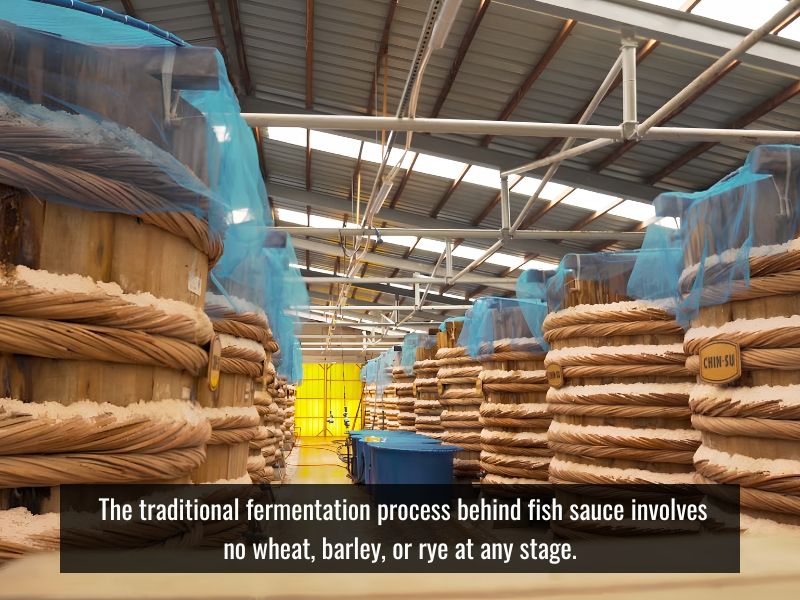
The traditional fermentation process behind fish sauce involves no wheat, barley, or rye at any stage. Whole anchovies get layered with salt in barrels and left to ferment for 12 to 24 months. Over that stretch, fish protein slowly breaks down into amino acids through enzymatic hydrolysis. This simply means natural enzymes help turn fish protein into smaller compounds that create the deep savory flavor of fish sauce, a slow process where the fish essentially digests itself. The protein source is fish. The catalyst is salt. No grain goes in, so no gluten comes out.
This pure simplicity is exactly where fish sauce parts ways with soy sauce. Soy sauce fermentation relies on wheat as a core ingredient, which is exactly why most soy sauce carries gluten. Fish sauce uses zero grain. This single difference is why these two pantry staples sit on opposite sides of a gluten-free shopping list.
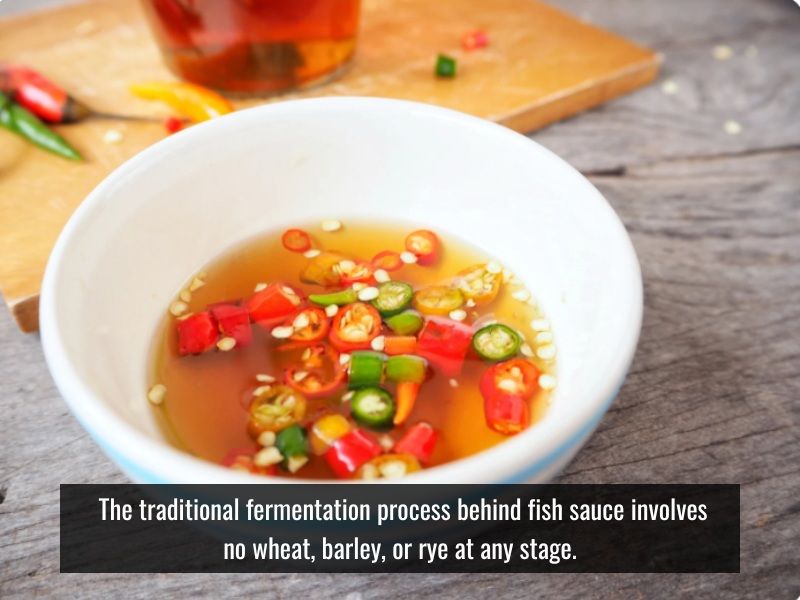
That same simplicity is what defines traditional fish sauce across Southeast Asia, including Vietnamese fish sauce “nước mắm”. Whether it comes from Vietnam or Thailand, the classic method still relies on fish, salt, and time rather than wheat, barley, or rye. Fish sauce ingredients like fresh anchovies, sea salt, and time follow the same gluten-free logic described above: no wheat, barley, rye, or other grain-based ingredients enter the fermentation process. So when “nước mắm” is made traditionally, its gluten-free nature is not a marketing add-on, it comes directly from the way it is produced.
When Does Fish Sauce Contain Gluten?
Fish sauce contains gluten when manufacturers add wheat-derived ingredients to the formula or when the bottle is produced on shared equipment with wheat-based products. Gluten enters through what gets added, not through the fish or salt. There are two pathways that open the door: wheat-derived additives and cross-contamination during manufacturing.
The first pathway runs through Hydrolyzed Wheat Protein, often listed as HVP. Some commercial brands add it as a flavor enhancer to cheaply boost umami instead of waiting for a longer fermentation. HVP is made by breaking wheat protein down into amino acids, and the word "hydrolyzed" doesn't mean the gluten is gone. Gluten peptides can still remain.
Under the Food Allergen Labeling and Consumer Protection Act (FALCPA), wheat must be declared on the label whenever HVP comes from wheat. But does that make every bottle listing HVP off-limits? For anyone managing celiac disease, any bottle showing wheat-derived HVP is an automatic risk unless it carries a verified gluten-free certification.
The second pathway is much quieter but just as risky. Even with a completely clean ingredient list, fish sauce can pick up trace amounts of gluten if processed on shared lines that also handle soy sauce, teriyaki, or other wheat-based condiments. So the safer choice is a fish sauce that checks both boxes: no wheat-derived additives on the label, and a production process that limits cross-contamination. Dedicated gluten-free facilities or recognized certifications, such as Gluten-Free Certification Organization (GFCO), can give shoppers an extra layer of confidence.
How to Check a Fish Sauce Label for Gluten?
To quickly scan a fish sauce label, just need to start with three things: what is in the ingredient list, whether wheat appears in the allergen statement, and whether the bottle carries a gluten-free claim, certification, or brand confirmation. These details help you spot both obvious gluten sources and the quieter risk of cross-contamination before you decide to buy.
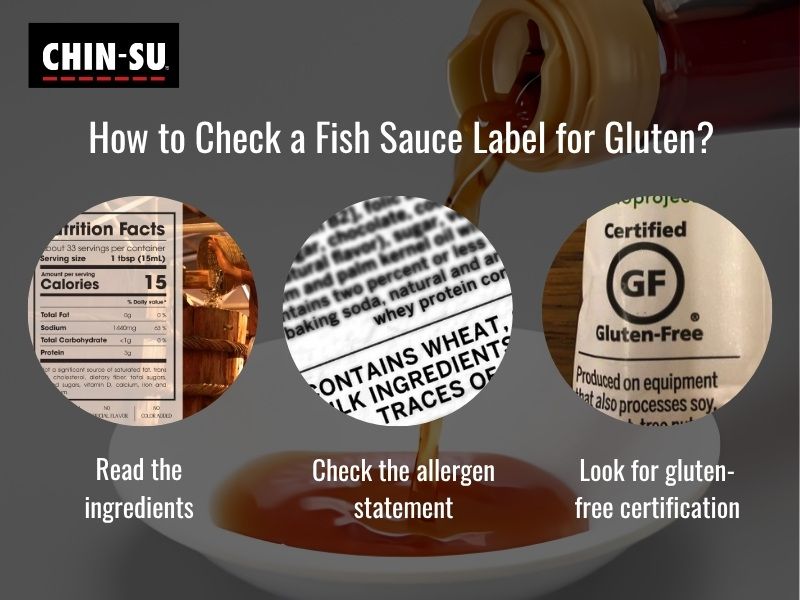
The whole scan takes under a minute once you know what to look for:
- Start with the ingredient list, not the front label. A simple fish sauce should usually list fish or anchovies, salt, water, and sometimes sugar. Be more careful with words like wheat, hydrolyzed wheat protein, barley, malt, soy sauce, or vague “flavoring” blends, because these are the places where hidden gluten is most likely to appear.
- Check the allergen statement, but do not rely on it alone. In the United States, the FALCPA requires wheat to be declared when it is used as an ingredient. That makes wheat easier to spot. However, barley and rye also contain gluten, and they are not covered in the same way as major allergens under FALCPA, so the ingredient list still matters.
- Look for a gluten-free claim or certification. A “gluten-free” claim means the product must meet the FDA standard of less than 20 parts per million (ppm) gluten. A seal from GFCO gives an extra layer of confidence because GFCO uses a stricter 10 ppm threshold for certified products.
- Verify the exact bottle you are buying. Do not assume every fish sauce from the same brand is safe. Formulas can vary by product line, bottle size, or country of sale. If you have celiac disease or strong gluten sensitivity, choose the specific bottle with the shortest ingredient list, a clear gluten-free claim, a trusted certification, or a brand FAQ that confirms its gluten-free status.
What Types of Fish Sauce Are Gluten-Free?
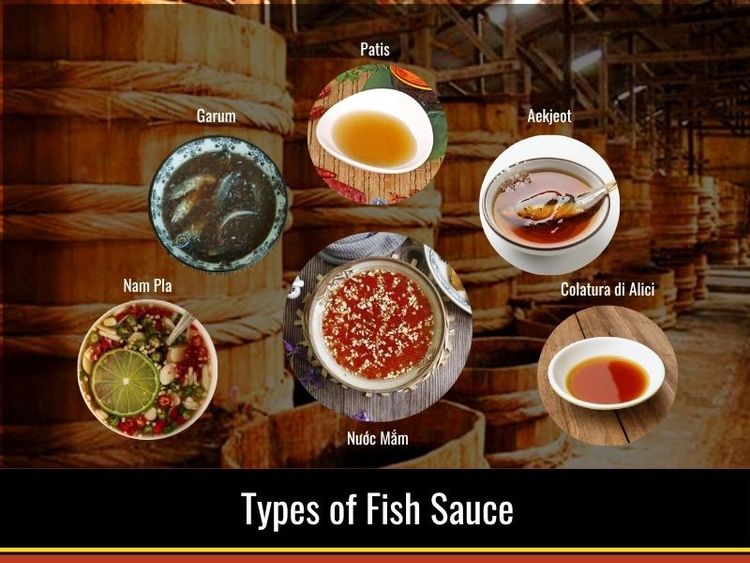
Any traditional fish sauce fermented only from fish and salt is naturally gluten-free. That is why many classic fish sauce styles from Vietnam, Thailand, the Philippines, Korea, and Italy can fit a gluten-free diet when the ingredient list stays clean. The key is not the country on the label, but the formula inside the bottle: fish, salt, time, and no grain-based additives.
Here is how the main traditional fish sauce styles break down by origin:
- Vietnamese Fish Sauce (Nước Mắm): Made by fermenting black anchovies with sea salt in large wooden vats for 6 to 18 months. Phú Quốc fish sauce is especially well known and protected under the European Union’s PDO (Protected Designation of Origin) label.
- Thai Fish Sauce (Nam Pla): Usually brewed from small ocean fish and salt for 9 to 18 months. It is one of the most widely available fish sauce styles in Western supermarkets, and some export bottles clearly display a gluten-free claim or certification.
- Filipino Fish Sauce (Patis): A high-salt liquid made from fermented small fish such as anchovies, sardines, or round scad. Traditional patis is used both in cooking and at the table, with fish and salt as the foundation.
- Korean Fish Sauce (Aekjeot): Often made from anchovies, sand lance, or shrimp fermented for 12 to 24 months. It gives kimchi much of its deep umami base while still relying on seafood and salt rather than wheat.
- Italian Fish Sauce (Colatura di Alici): A concentrated anchovy sauce from the Amalfi Coast, aged in small wooden barrels. Its DOP status protects its origin and traditional production style, which is built around anchovies and sea salt.
The main exceptions are products that move away from traditional fish sauce. Pre-packaged dipping sauces, flavored blends, and some restaurant sauces may mix fish sauce with regular soy sauce, which often contains wheat. Some commercial bottles may also use hydrolyzed wheat protein to deepen the savory taste, so hidden gluten can appear even when the product still looks like standard fish sauce.
For everyday shopping, the safest signal is still a short, clean ingredient list: fish, salt, water, and sometimes sugar. If you have celiac disease or are highly sensitive to gluten, go one step further and choose a bottle with a clear “Gluten-Free” label or trusted certification instead of relying on the ingredient list alone.
Is CHIN-SU Fish Sauce Gluten Free?
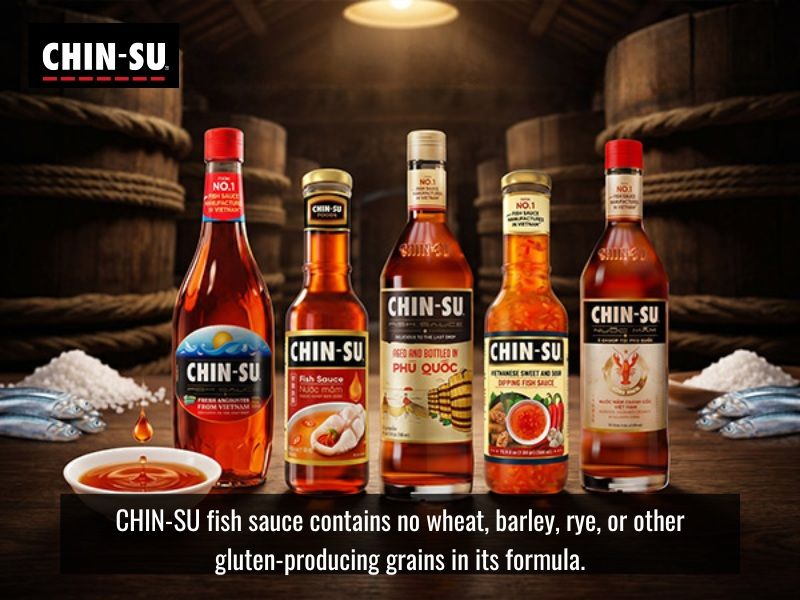
CHIN-SU fish sauce contains no wheat, barley, rye, or other gluten-producing grains in its formula. Its ingredient list stays focused on the classic fish sauce foundation, without the common red flags gluten-sensitive shoppers often watch for, such as hydrolyzed wheat protein, malt extract, or grain-based flavor enhancers. That makes it a safe and flavorful choice for anyone following a gluten-free lifestyle.
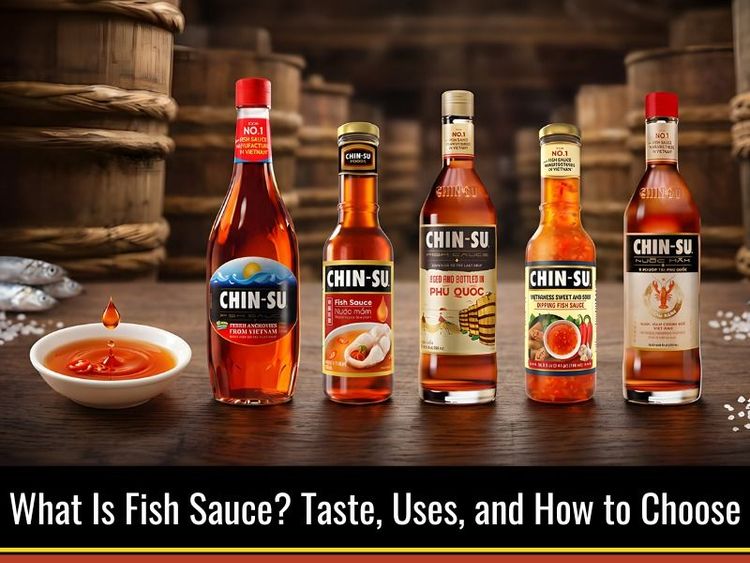
The brand makes five fish sauce varieties: Salmon, Anchovy, Sweet & Sour, Lobster, and Phu Quoc. While each variety brings a different flavor direction, they all stay within a gluten-free formula. None of the added flavor components introduce wheat, barley, rye, or other gluten-producing grains into the bottle.
Nowadays, CHIN-SU's expanding global presence makes it easy to find. You can find CHIN-SU premium fish sauce at Amazon, Walmart, Costco, 99 Ranch Market, and Weee! For more product details, updated availability, and CHIN-SU’s official store information, visit the CHIN-SU product page.
How to Avoid Gluten in Fish Sauce When Dining Out?
When dining out, the safest way to avoid gluten in fish sauce is to ask whether the kitchen uses pure fish sauce or mixes it with soy sauce, wheat-based seasonings, or shared utensils. Fish sauce is often naturally gluten-free, but the risk usually arises in the kitchen when it is used in marinades, dipping sauces, stir-fry bases, dressings, noodle bowls, or curries.
Dining out safely doesn't mean you have to miss out on wonderful flavors. Instead, you can confidently navigate menus by keeping a few gentle strategies in mind.
Before ordering, let your server know you need a strictly gluten-free meal and ask two quick questions: does the fish sauce brand contain wheat-derived additives such as HVP, and is it blended with regular soy sauce or prepared with shared tools? If the answer feels a bit uncertain, it’s always safest to skip the sauce or look forward to a delicious meal cooked at home with a trusted bottle.
Important Precautions
Fish sauce is not the only sauce to check. Many Asian dishes combine fish sauce with soy sauce, oyster sauce, hoisin sauce, teriyaki sauce, chili garlic sauce, or bottled dipping sauces. These sauces may contain wheat, wheat-based soy sauce, malt ingredients, or modified flavor blends depending on the brand and recipe.
This matters most in dishes where the sauce is already mixed in before serving. If you are highly sensitive to gluten or have celiac disease, avoid assuming that a dish is safe just because it mentions fish sauce. Ask about the full sauce base, not only the fish sauce itself.
Fish sauce is made simply from fish and salt, which is naturally gluten-free. The only real concern begins when a brand adds wheat-derived ingredients, such as hydrolyzed wheat protein, or when the sauce is handled alongside gluten-containing products. That is why a quick label check still matters: choose a trusted bottle, confirm what goes into it, and you can cook with confidence. For a closer look at how the sauce is made and what goes into a clean bottle, see our guide on what fish sauce is.
Frequently Asked Questions
Yes, as long as the bottle contains only fish, salt, and water with no wheat-derived additives, it’s completely safe. Pure fish sauce made from these ingredients sits far below the FDA's 20 ppm gluten-free threshold. To dine with complete peace of mind, just steer clear of brands that list hydrolyzed wheat protein and look for a trusted gluten-free label or GFCO certification.
No, most traditional fish sauce contains no soy. However, a few modern blended or flavored versions might include soy sauce in their recipes to balance the flavor. Because soy is a major allergen, US labeling rules require manufacturers to clearly declare 'soy' or 'soybean' on the packaging, making it very easy to spot during a quick scan.
If you need an alternative, Tamari (wheat-free soy sauce), coconut aminos, and vegan fish sauce made from seaweed or mushrooms all work as gluten-free swaps. While each brings its own unique twist to the table, they all deliver that deep, savory umami you are looking for. Just remember to give the label a quick check for a gluten-free stamp before splashing it into your dish.

CHIN-SU KITCHEN TEAM
CHIN-SU Kitchen Team are the creative experts behind the delicious recipes featuring CHIN-SU sauces. With years of experience and a passion for flavor, our team carefully selects recipes from a variety of trusted chefs and bloggers, bringing together the best culinary insights to present you with the most suitable and exciting dishes. Every recipe is chosen to inspire you to create meals that are not only tasty but also easy to prepare, enhancing your dining experience. Join us as we explore a wide range of sauces and flavors, and elevate every meal with the perfect recipe for your table!
User Reviews
Featured Articles
SUBSCRIBE TO GET
MORE INFO
Want the latest and greatest recipes, updates, and more from us,
straight to your inbox? Subscribe and get our NEWS!