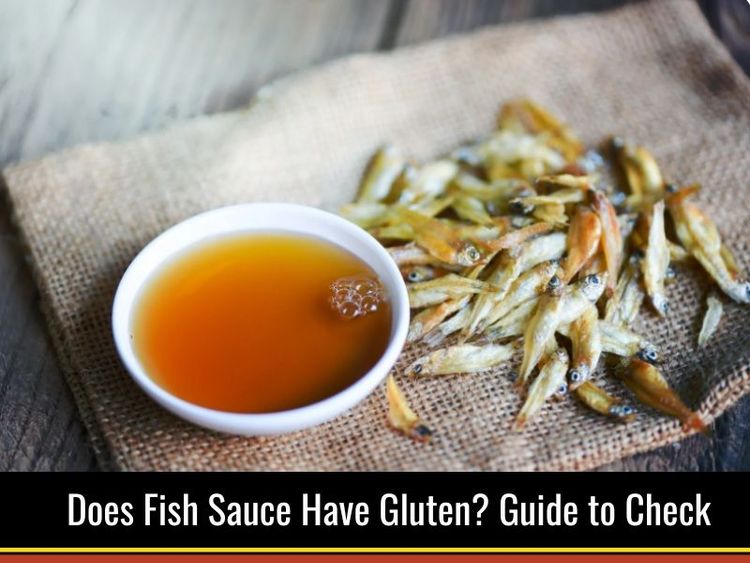
What Is a Fish Sauce Quality Grade?
Published: Jun 16, 2026 by CHIN-SU
Updated: Jun 18, 2026 by CHIN-SU
Fish sauce quality grades measure the nitrogen content in each bottle, expressed in degrees (°N). This number reflects the amount of natural protein and amino compounds released from fish during fermentation. A 40°N fish sauce contains twice the total nitrogen of a 20°N bottle, which generally means more amino acids, deeper umami, and a richer, more concentrated flavor.
In this guide, CHIN-SU breaks down what the nitrogen degree means, how Vietnam's TCVN system and the international Codex Alimentarius classify fish sauce into grades, what each grade tastes like in real cooking, and how to spot the °N on a bottle at your local grocery store. Whether you are shopping at an Asian market or scanning the international aisle at a US supermarket, the information here will help you read any fish sauce label with confidence.
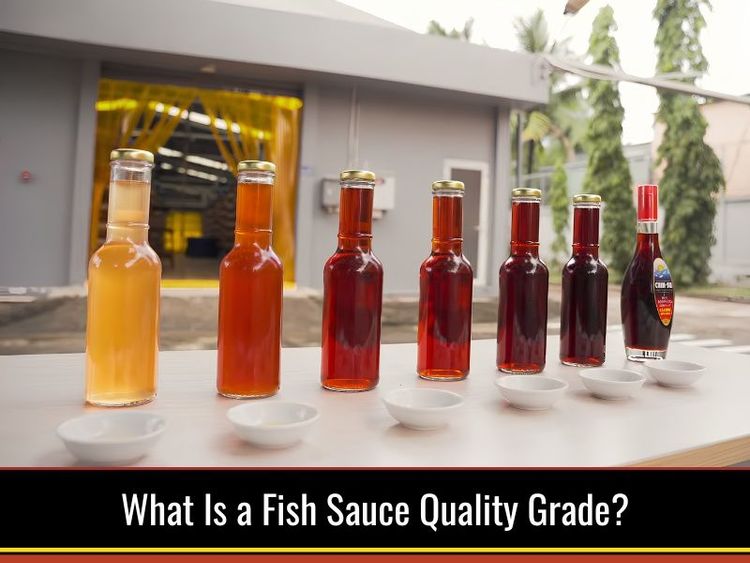
Table Of Contents
What the Nitrogen Degree (N°) on Fish Sauce Mean?
Fish Sauce Grading Standards Around the World
- What Each Grade Tastes Like and When to Use It?
- How to Identify Fish Sauce Nitrogen Degree?
- How to Choose the Right Grade for Your Kitchen
What the Nitrogen Degree (N°) on Fish Sauce Mean?
The nitrogen degree, written as °N, is the single metric that determines the sauce's official grade under both TCVN 5107:2003 and Codex Alimentarius standard (CXS 302-2011). It shows the total nitrogen content in grams per liter (g/L), which comes mainly from fish proteins broken down during fermentation into amino acids and peptides. A 40°N fish sauce contains about 40 g/L of total nitrogen, while a 20°N bottle contains about 20 g/L.
According to Codex CXS 302-2011, fish sauce should contain at least 10 g/L total nitrogen, and amino acid nitrogen should make up at least 40% of total nitrogen. Codex also allows total nitrogen to be declared on labels as a quality indicator.
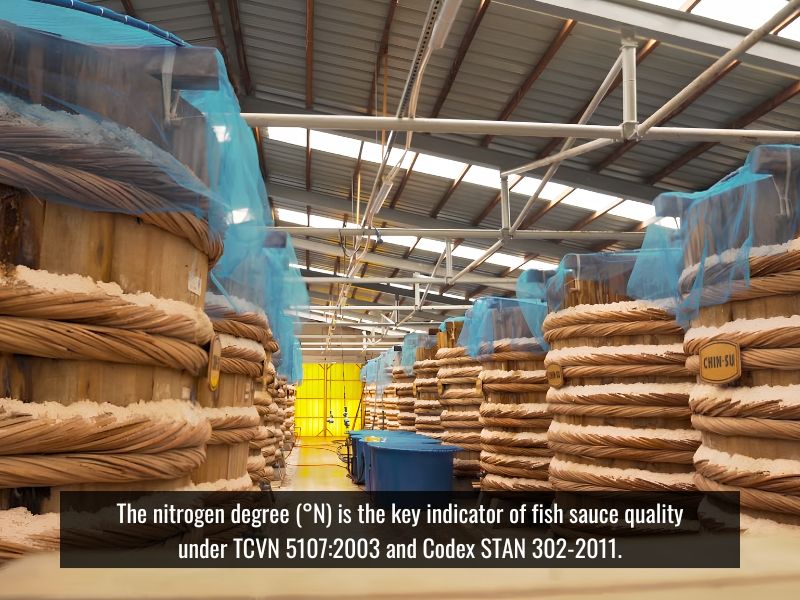
During fermentation, natural enzymes and salt-tolerant microorganisms break down fish muscle proteins into soluble nitrogen compounds. The more complete this breakdown is, the more amino acids are released, creating the rich umami and mild sweetness found in high-quality nước mắm. Vietnamese nước mắm notes that first-grade fish sauce in Vietnam typically has 30–39 g/L total nitrogen, with free amino acids accounting for 60–79% of total nitrogen (Nghia et al., 2017, Ann Food Process Preserv 2(2):1017).
There are three nitrogen types that contribute to the flavor and quality of fish sauce: total nitrogen, amino acid nitrogen, and ammoniacal nitrogen, as explained in this table
| Nitrogen Type | What It Measures | Quality Signal |
| Total Nitrogen | All nitrogen compounds in 1 liter (g/L) | Determines official grade. Higher = higher tier |
| Amino Acid Nitrogen | Free amino acids as % of total nitrogen | Nutritional value and umami depth. Higher ratio = better fermentation |
| Ammoniacal Nitrogen | Ammonia from over-degradation as % of total nitrogen | Spoilage indicator. Lower = cleaner sauce |
How Nitrogen Degree Relates to Fish Sauce Quality?
Yes. nitrogen degree is an important indicator that partly reflects the quality of fish sauce, especially traditional fish sauce. A higher nitrogen degree usually means a richer taste, a clearer savory-sweet aftertaste, and more flavor-forming compounds from fish.
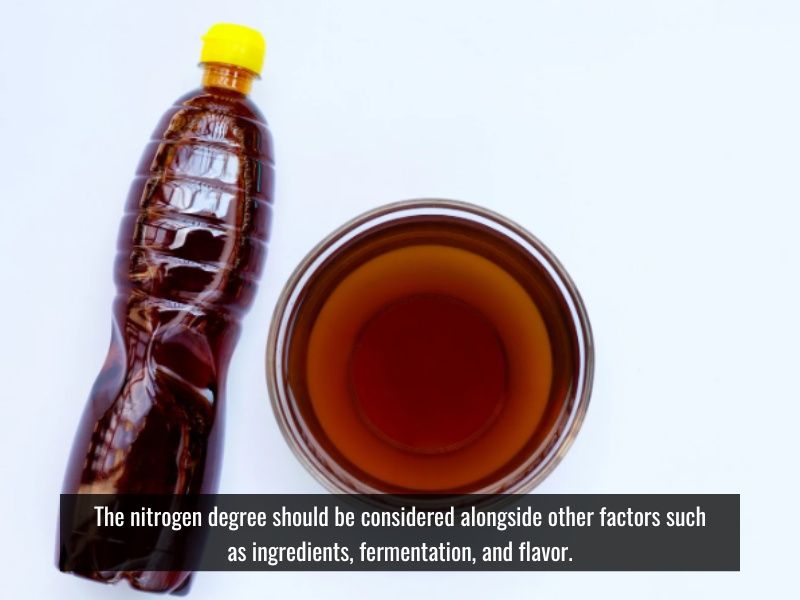
In addition to nitrogen, fish sauce quality should also be evaluated based on the fish used, fermentation time, extraction method, clarity, aroma, flavor balance, amino nitrogen content, and ammonia nitrogen level.
Fish Sauce Grading Standards Around the World
There are two main standards that govern fish sauce quality: Vietnam's national grading system and the international Codex Alimentarius standard.
Vietnam, the largest producer of high-grade fish sauce, operates two grading frameworks: a national standard (TCVN 5107) and a stricter regional standard for Phu Quoc fish sauce. The Codex sets the global baseline (Codex CXS 302-2011). Both systems measure nitrogen content but set different thresholds for each grade.
Vietnamese Fish Sauce Grading Standards (TCVN 5107 and Phu Quoc Geographical Indication)
Vietnam classifies fish sauce into four grades under two systems: the national TCVN 5107 standard and the stricter Phu Quoc Geographical Indication (GI) standard. The national standard, TCVN 5107:2003 (updated by TCVN 5107:2018), divides fish sauce into four tiers based on total nitrogen per liter. Special grade requires ≥30 g/L, Premium requires ≥25 g/L, Grade 1 requires ≥15 g/L, and Grade 2 requires ≥10 g/L. Below 10 g/L, a product cannot legally carry the label "fish sauce" in Vietnam.
There are five chemical indicators separate the four grades under TCVN 5107:
TCVN 5107:2003 Chemical Standards
| Indicator | Special | Premium | Grade 1 | Grade 2 |
| Total nitrogen (g/L), min | ≥30 | ≥25 | ≥15 | ≥10 |
| Amino acid nitrogen (% of total N), min | ≥55% | ≥50% | ≥40% | ≥35% |
| Ammoniacal nitrogen (% of total N), max | ≤20% | ≤25% | ≤30% | ≤35% |
| Acidity as acetic acid (g/L), min | ≥8.0 | ≥6.5 | ≥4.0 | ≥3.0 |
| Salt / NaCl (g/L), range | 245–280 | 260–295 | 260–295 | 260–295 |
Source: TCVN 5107:2003
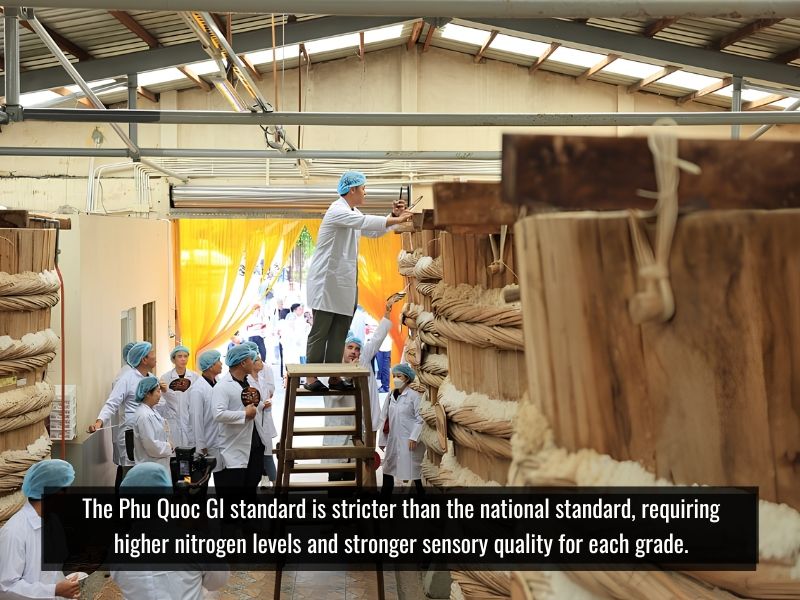
Phu Quoc fish sauce follows a stricter regional standard, QCĐP 01:2023/KG (Phu Quoc Geographical Indication Standard). The nitrogen thresholds run higher across the board. Special grade starts at ≥35 g/L instead of the national ≥30, and even Grade 2 requires ≥20 g/L, double the national minimum. This makes the Phu Quoc GI the strictest fish sauce classification in Vietnam. Beyond the chemistry, the Phu Quoc GI also sets sensory requirements that change by grade. Special grade demands a rich, deep umami sweetness with a pronounced aftertaste, while lower grades show progressively milder flavor profiles:
Phu Quoc GI Sensory Characteristics
| Sensory Trait | Special | Premium | Grade 1 | Grade 2 |
| Taste | Rich, deep umami sweetness; pronounced aftertaste | Umami sweetness; clear aftertaste | Umami sweetness; mild aftertaste | Mild umami sweetness; little aftertaste |
| Color | Medium to dark reddish-brown | Medium to dark reddish-brown | Medium to dark reddish-brown | Medium to dark reddish-brown |
| Aroma | Strong, clean, characteristic fragrance | Characteristic fragrance | Characteristic fragrance | Characteristic fragrance |
Source: Phu Quoc GI, QCĐP 01:2023/KG
All grades under both systems must be translucent, free of sediment (except natural salt crystals), and free of foreign odors. So how do these Vietnamese thresholds compare with what the rest of the world requires?
International Fish Sauce Grading Standard (Codex CXS 302-2011)
The Codex Alimentarius, managed by the Food and Agriculture Organization (FAO) and the World Health Organization (WHO), sets the global floor for fish sauce at 10 g/L total nitrogen (Codex CXS 302-2011). That baseline also requires amino acid nitrogen to be≥40% of total nitrogen, salt to be≥200 g/L, and pH between 5.0 and 6.5. Any product below these numbers cannot be sold as fish sauce under international trade rules.
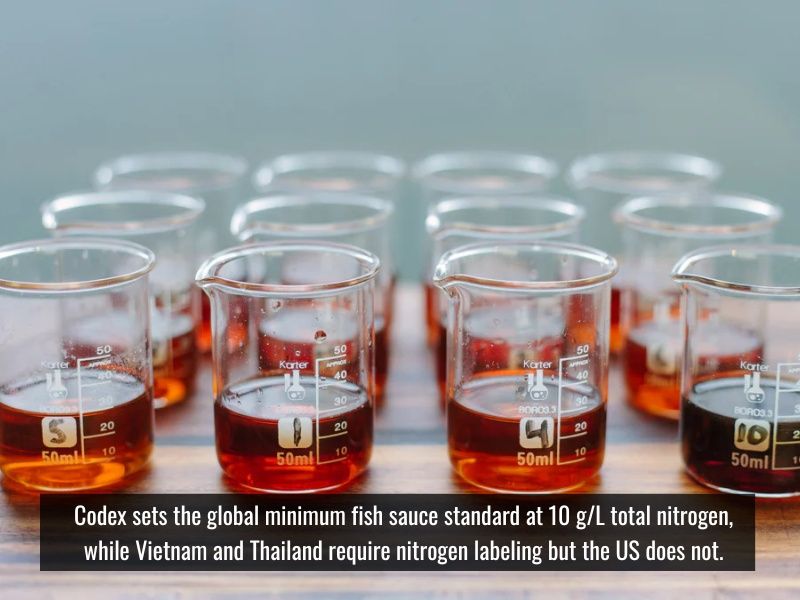
Section 8.3 of the Codex allows individual countries to require that nitrogen content be listed on the label. Vietnam and Thailand enforce this requirement. While the US does not, which is why many bottles on American shelves show protein grams per serving instead of a °N rating.
Now that you know the numbers behind each grade, what do those grades actually taste like in real cooking?
What Each Grade Tastes Like and When to Use It?
Higher-grade fish sauce (30°N and above) delivers a richer umami finish with a sweet aftertaste, while lower grades (10–20°N) taste saltier and work better as a cooking base. The first press sits at the top of the scale, and each subsequent extraction drops the grade because each round pulls less protein from the fish mass.
That difference comes down to concentration. First-press sauce captures amino acids from 12+ months of fermentation into a smaller volume of liquid. The result is deeper umami, a lighter amber color, and a cleaner aroma. Each extraction after that adds brine back to the fish mass, diluting protein while increasing salt, which makes the sauce thinner and sharper.
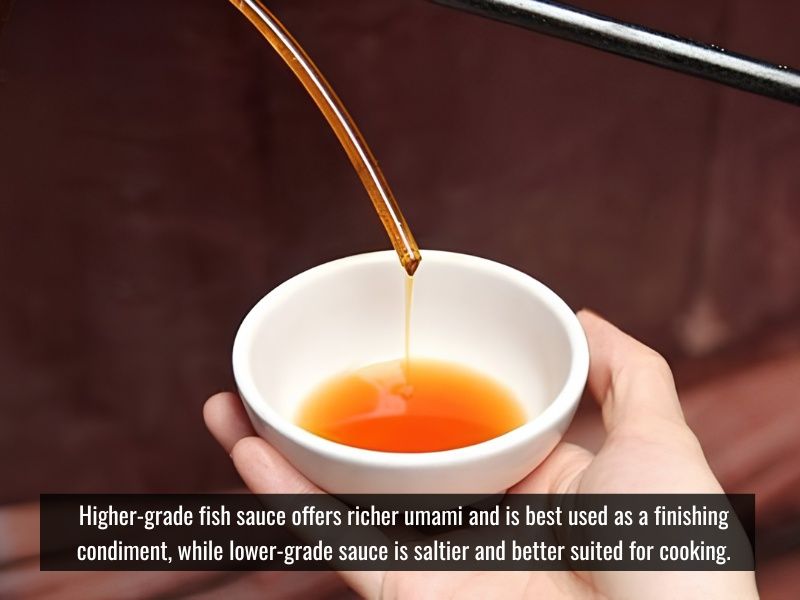
Does a $15 bottle of 40°N sauce belong in a stir-fry? Not really. Heat breaks down the amino acids that make premium sauce worth the price. Save high-grade bottles for raw applications where every nuance comes through.
The table below matches each grade range to the dishes where it performs best:
| Grade Range (°N) | TCVN Tier | Flavor Profile | Best Uses | Use Tip |
| 30°N+ | Special | Deep umami, sweet aftertaste, amber color, clean aroma | Dipping sauce, raw dressings, finishing drizzle, pho condiment | Use straight or dilute 1:1 with lime juice and water |
| 25–30°N | Premium | Balanced umami, moderate sweetness, reddish-brown | All-purpose: cooking and dipping, spring roll sauce, salad dressing | Good for both raw and cooked applications |
| 15–25°N | Grade 1 | Saltier, lighter body, lighter color | Stir-fry, marinades, braises, soup bases | Use 1–2 tbsp per dish; flavor blends into the background |
| 10–15°N | Grade 2 | Thin, salty, minimal umami depth | Bulk cooking, industrial food production, diluted dipping | Best value for large-batch cooking |
Source: Original table based on TCVN 5107 grade thresholds, extraction mechanics, and cooking application patterns.
Of course, knowing which grade you want is only half the job. The other half is finding the nitrogen degree on the actual bottle in front of you.
How to Identify Fish Sauce Nitrogen Degree?
You can identify a fish sauce's nitrogen degree through two paths: reading the label and checking visual and sensory cues. If the label prints °N, that is the nitrogen grade directly. If it shows protein in grams per 100 mL (common on US-market bottles), divide by 6.25 to convert to nitrogen. For example, 12 g protein per 100 mL ÷ 6.25 = roughly 19°N. Watch for one common mixup: some producers print amino acid nitrogen instead of total nitrogen. These are different numbers, and amino acid nitrogen usually reads higher as a percentage, so do not confuse the two.
The ingredient list tells you just as much. Two ingredients (fish and salt) signal a traditional sauce. Additives such as hydrolyzed protein, monosodium glutamate (MSG), sugar, or caramel color indicate a blended or industrial product.
Visual and sensory cues fill in the rest. High-nitrogen fish sauce (30°N+) is reddish-brown, sometimes with a golden-amber hue. The aroma is strong and lingers on your fingers, unlike industrial sauce, which washes off in seconds. The taste finishes with a clean sweetness, not a flat salty bite. On Vietnamese-produced bottles, look for extraction terms: "first press" or "cot/nước cốt/cốt" indicates the top extraction; "premium" signals the second tier; and "anchovy" (cá cơm) identifies the fish species.
And finally, glass bottles preserve quality longer than plastic ones.
How to Choose the Right Grade for Your Kitchen
Match the grade to how you plan to use it. For households that favor bold, savory dishes like braised pork, caramelized fish, or hot pot, a sauce at 40°N or above concentrates flavor in a small amount. For lighter cooking like soups, salads, and stir-fried greens, 30–40°N hits a balanced middle ground. For dipping sauces served alongside boiled meats, spring rolls, or steamed vegetables, 25–30°N offers a mild salted sweetness that does not overpower the food.
A two-bottle setup covers most kitchens: one high-grade (30°N+) for raw applications and one mid-grade (15–25°N) for the wok. Mid-grade sauces cost roughly half as much per fl oz (30 mL). Since heat breaks down the amino acids that make premium sauce worth the price, using your best bottle in a hot pan wastes both flavor and money.
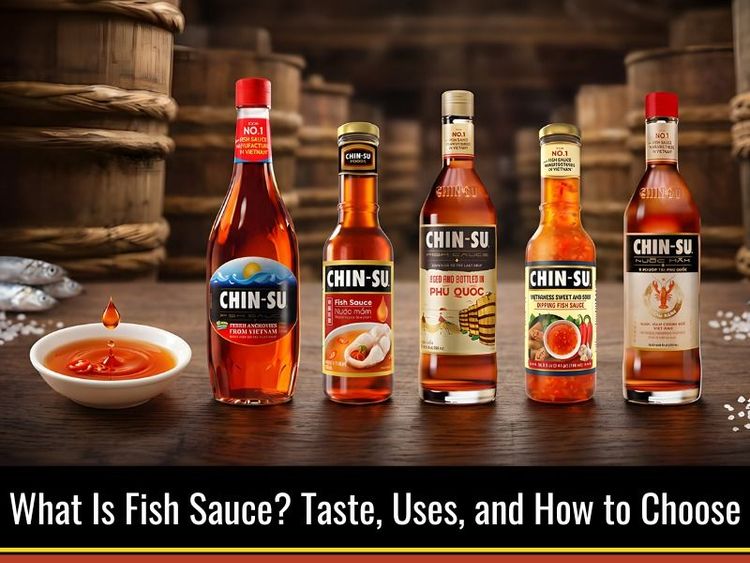
CHIN-SU Fish Sauce products use anchovy from Vietnam's coastal waters. See our fish sauce collection
Store fish sauce in a cool, dry place away from direct sunlight, and seal the cap after each use to preserve nitrogen integrity.
Nitrogen degree (°N) measures how much fish protein made it into the bottle. Vietnam's TCVN system grades sauce from Special (≥30°N) to Grade 2 (≥10°N), and the amino acid ratio matters as much as the total number. The next time you pick up a bottle, flip it around, check the °N or run the protein ÷ 6.25 conversion, and you will know exactly what you are paying for. Ready to taste the difference? Browse [CHIN-SU's fish sauce collection] and find the right grade for your kitchen.
Frequently Asked Questions
Not always. Traditional fermentation usually tops out around 40 to 43°N. Anything above that may involve vacuum concentration, external protein sources, or larger fish species with heavier gut content. The amino acid nitrogen ratio matters more than the raw number because the real high grade fish sauce nutritional benefits come from genuine fermentation, not artificial boosting. A clean 30°N sauce can deliver better umami than an artificially boosted 50°N product.
Both types can print the same °N on their label, but the nitrogen comes from different places.
Traditional vs. Industrial Fish Sauce Comparison
Feature Traditional Industrial Nitrogen source Natural fermentation (fish protein → amino acids) May include hydrolyzed plant protein, external nitrogen, or vacuum concentration Typical N° range 20–40°N (natural ceiling ~43°N) 50–60°N possible via processing Color Deep reddish-brown; darkens after opening Light, translucent; stays consistent Aroma Strong, lingering; hard to wash off hands Mild, light; washes off quickly Ingredients Fish + salt (2 ingredients) Fish extract + water + sugar + MSG + preservatives + flavor Shelf life 2–3 years without preservatives Shorter; depends on preservatives listed on label Fermentation time 12–24 months Weeks to months (enzyme-accelerated) The quickest check is the ingredient list. Two ingredients (fish and salt) means traditional.
Yes, fish size affects nitrogen potential. Larger fish carry a higher ratio of visceral enzymes, which speeds up autolysis (self-digestion by the fish's own enzymes) and can push nitrogen beyond 43°N from fermentation alone. But bigger fish also eat smaller fish (predators vs. plankton-feeding anchovies), and fermenting their gut content produces a heavy, fishy stench. Anchovies, with their tiny stomachs and plant-based diet, yield a cleaner aroma at 30–40°N. Above 43°N from pure anchovy fermentation is nearly impossible without mechanical intervention or an exceptional batch.
40°N means the bottle contains 40 grams of nitrogen per liter. That nitrogen comes from fish protein broken down during fermentation. 40°N is a premium grade.
Properly sealed fish sauce does not expire quickly and stays stable for years thanks to its high salt content, usually around 25–30% by weight. Once opened, the sauce may darken and develop a stronger aroma, but the nitrogen content does not decrease. Store it away from direct sunlight.
Pure fish sauce is no gluten because it is made from fish and salt contains Some industrial sauces add hydrolyzed wheat protein, so always check the ingredient list. CHIN-SU Fish Sauce uses no gluten-containing grains in its formula.

CHIN-SU KITCHEN TEAM
CHIN-SU Kitchen Team are the creative experts behind the delicious recipes featuring CHIN-SU sauces. With years of experience and a passion for flavor, our team carefully selects recipes from a variety of trusted chefs and bloggers, bringing together the best culinary insights to present you with the most suitable and exciting dishes. Every recipe is chosen to inspire you to create meals that are not only tasty but also easy to prepare, enhancing your dining experience. Join us as we explore a wide range of sauces and flavors, and elevate every meal with the perfect recipe for your table!
User Reviews
Featured Articles
What Is Fish Sauce? Taste, Uses, and How to Choose
Types of Fish Sauce: A Regional Guide to the World's Most Misunderstood Condiment
What Is Fish Sauce Made Of?
Fish Sauce Benefits: Nutrition, Health, and How to Use It Right
Does Fish Sauce Have Gluten?
SUBSCRIBE TO GET
MORE INFO
Want the latest and greatest recipes, updates, and more from us,
straight to your inbox? Subscribe and get our NEWS!