Does Fish Sauce Expire? Shelf Life and Storage
Published: Jun 16, 2026 by CHIN-SU
Updated: Jun 18, 2026 by CHIN-SU
Fish sauce does not expire the way milk or meat does. The date printed on your bottle marks peak flavor, not a safety cutoff, and an unopened bottle can last for 2 to 3 years in a cool pantry. Once opened, quality holds for 3 to 6 months at room temperature or up to 12 months in the fridge. That fish sauce shelf life is longer than most people expect, and the bottle in the back of your cabinet is almost certainly still safe.
The three natural forces that make this possible are high salt concentration, fermentation-derived acids, and low water activity. Together, they create a preservation system that bacteria and molds cannot survive. In this guide, CHIN-SU walks you through how long fish sauce lasts, what keeps it stable, how to spot spoilage versus normal changes, how to store it right, and whether a past-date bottle still belongs in your cooking.
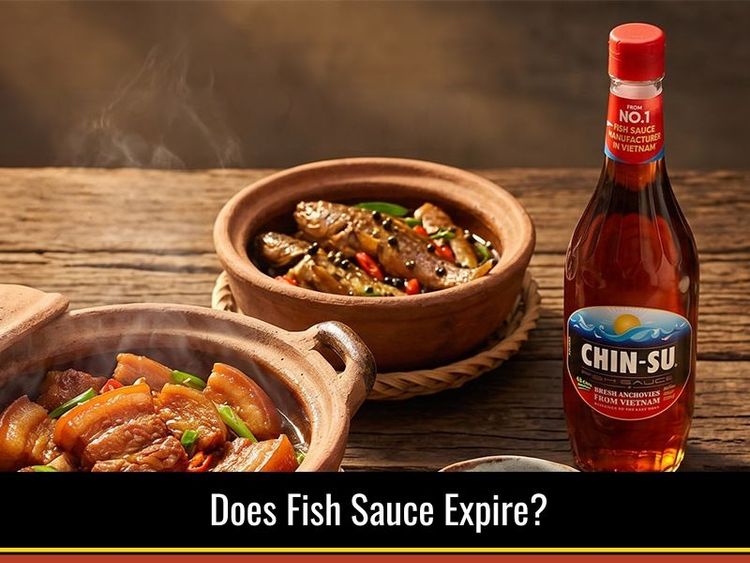
Table Of Contents
Does Fish Sauce Expire?
Fish sauce does not expire the way dairy or meat does. It carries a "best by" date on the label, not a true expiration date, and the sauce remains safe well past that date when stored properly. High salt content and months of fermentation make fish sauce one of the most shelf-stable condiments you will find in any kitchen.
So what does the date on your bottle tell you? That printed date marks when the manufacturer expects peak flavor, not when the sauce becomes unsafe to eat. The Food and Drug Administration (FDA) does not require expiration dates on shelf-stable condiments, and the United States Department of Agriculture (USDA) recommends "Best If Used By" as the standard phrasing to help reduce food waste. Over months and years of sitting in the pantry, the color darkens, and the brightest aroma notes fade. Those are quality shifts, not safety problems.
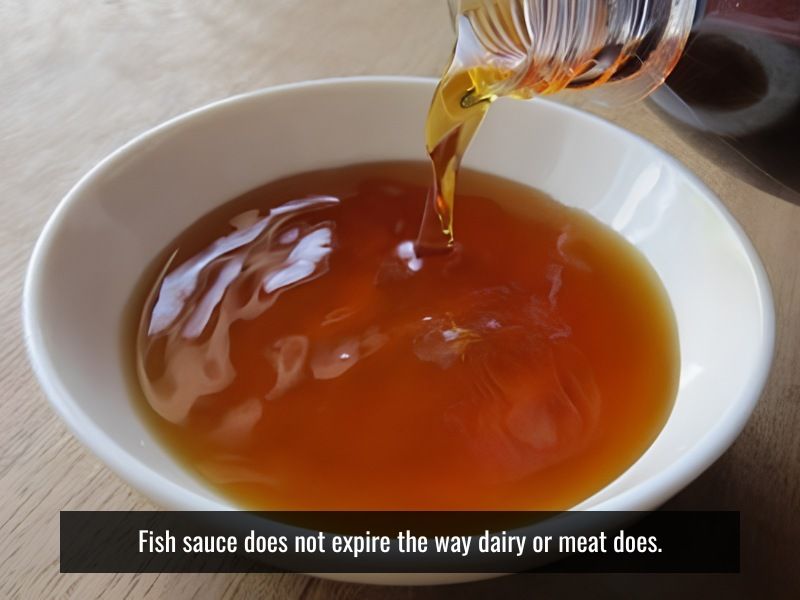
Fish sauce produced to the international Codex standard (CXS 302-2011) contains at least 200 g/L of salt, roughly 20% to 30% by weight (Food and Agriculture Organization - FAO Codex Alimentarius). That concentration creates an environment where harmful bacteria cannot survive, which is why even a long-opened bottle still carries no safety risk when sealed and stored properly.
How Long Does Fish Sauce Last?
Fish sauce shelf life depends on whether the bottle is opened and where you store it. Unopened fish sauce keeps 2 to 3 years in a cool, dark pantry. When opened and refrigerated, it maintains quality for up to 12 months. Opened at room temperature, expect 3 to 6 months before flavor starts to fade.
| Storage Condition | Shelf Life | Notes |
| Unopened, pantry | 2 to 3 years | Cool, dark place. Quality holds well past the best-by date. |
| Opened, room temperature | 3 to 6 months | Seal tight. Keep away from heat and light. |
| Opened, refrigerator | 12 months | Slows oxidation. Best for bottles you use less often. |
| Past best-by (unopened, proper storage) | Up to 1 year beyond | Safe if no spoilage signs. Flavor may be milder. |
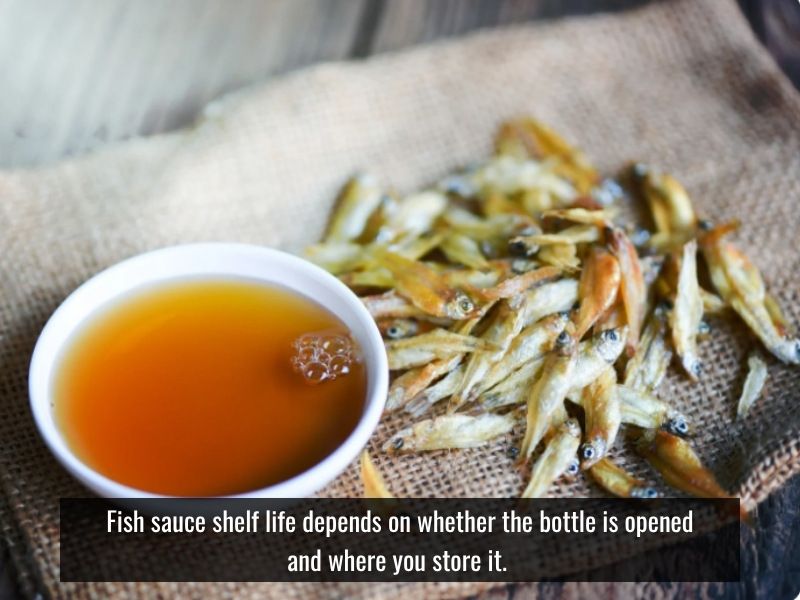
Does keeping it cold make a difference? Refrigeration slows 3 degradation processes: oxidation, bacterial activity, and enzyme breakdown. The sauce stays safe either way, but cold storage keeps the flavor sharper for longer.
Fish sauce goes through 6 to 18 months of fermentation before bottling. That process, paired with 20% to 30% salt by weight, drops water activity below 0.85 (FAO Codex Alimentarius, CXS 302-2011). At that level, bacteria cannot grow. Once you break the seal, air exposure and oxidation gradually dull the flavor, not the safety.
Why Does Fish Sauce Last So Long?
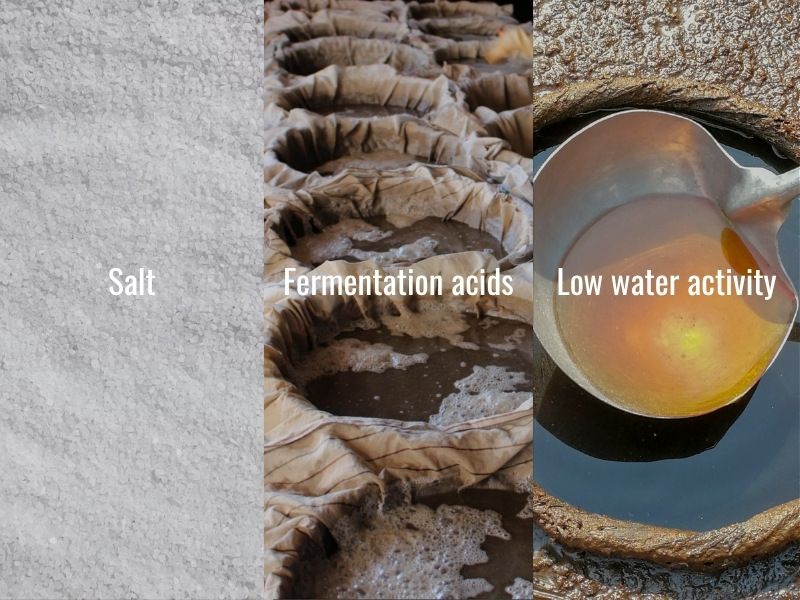
There are three natural mechanisms that work together to keep fish sauce shelf-stable. Fish sauce resists spoilage because of its high salt concentration, the acids produced during fermentation, and its low water activity. These three factors build a preservation system that most bacteria and molds cannot survive.
What keeps bacteria from growing in such a salty liquid?
- Salt (osmotic pressure): A salt concentration of 20% to 30% (at least 200 g/L) draws moisture out of bacterial cells via osmotic pressure. At this level, bacterial survival is not possible.
- Fermentation acids: During 6 to 18 months of fermentation, enzymes break fish protein into amino acids while bacteria produce organic acids, mainly lactic and acetic, that lower pH and block further microbial growth.
- Low water activity: The water in fish sauce is chemically bound to salt, thereby reducing water activity to below 0.85. At that level, pathogens lack sufficient free water to function. Food scientists call this stacking of moderate barriers "hurdle technology".
How to Tell if Fish Sauce Has Gone Bad?
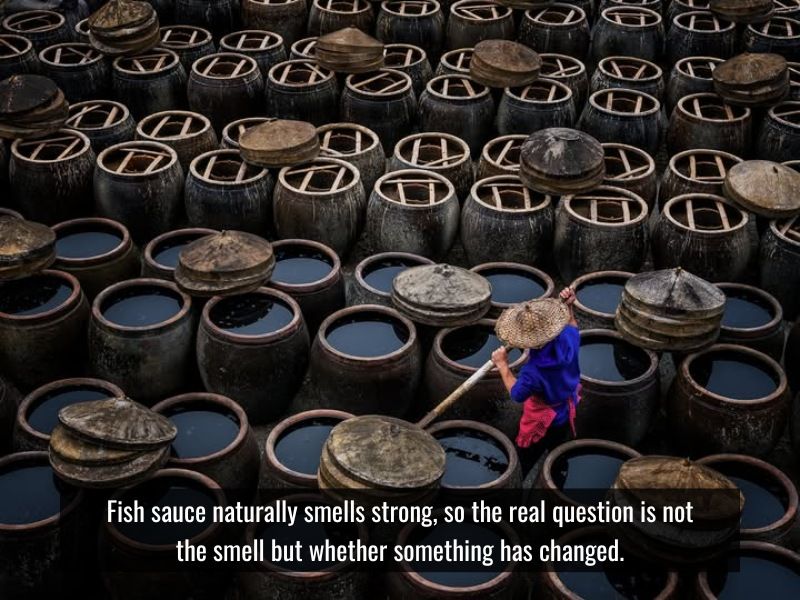
Fish sauce naturally smells strong, so the real question is not the smell but whether something has changed. Things you need to check for are mold on the surface or around the bottle neck; a smell that has shifted from pungent-fishy to rotten or sharp-sour; a slimy or unusually thick texture; or foam and bubbling inside the bottle. If any of these happen, the bottle should go.
Mold or yeast growth on the surface is the clearest warning sign. Discard the entire bottle the moment you spot it. A smell that has turned from the expected pungency to something rotten, chemical, or vinegar-sharp also signals spoilage. A slimy texture or foam forming inside the liquid indicates bacterial contamination. Color alone is not enough to judge, but a near-black shade combined with an off smell tells you the sauce is done.
But not every change means the sauce has gone bad. What about those white crystals at the bottom or around the cap? Those are natural salt precipitation, especially common in cold storage, and they are completely harmless. Slight darkening over months is normal oxidation, cosmetic only. Small floating particles are protein residues from fermentation and are safe. Temporary cloudiness after temperature swings clears on its own.
Here is the simplest rule: if it smells like fish sauce and looks clear or amber, it is fine. If the smell has turned rotten or you see mold, toss it.
How to Store Fish Sauce the Right Way
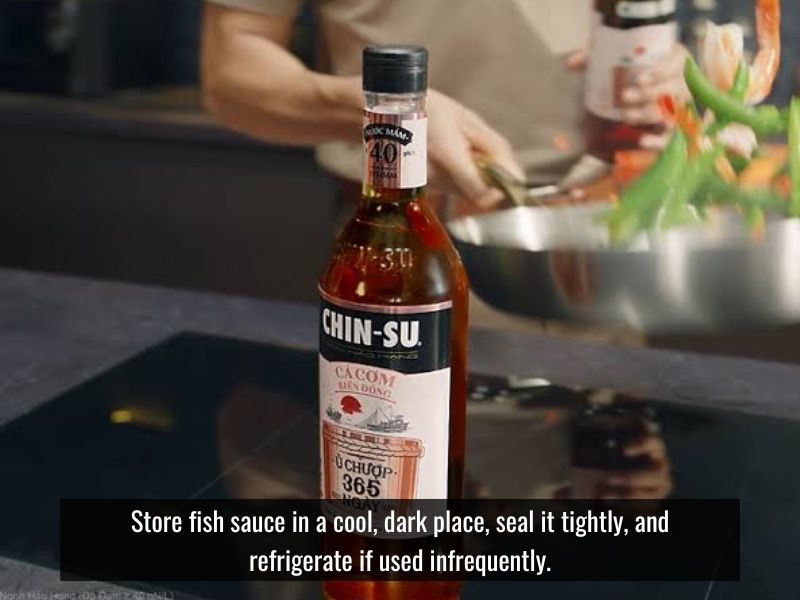
These are simple habits that keep fish sauce at peak flavor for months: store the bottle in a cool, dark place, seal the cap tight after every use, and move it to the fridge if you do not use it weekly.
- Keep the bottle in a cool, dark spot. A pantry or cupboard away from the stove and dishwasher works best. Heat and light speed up oxidation.
- Seal the cap tight after every use. Air exposure drives oxidation, which fades flavor and darkens the color over time.
- Choose glass over plastic for long-term storage. Glass is non-reactive and does not absorb color or odor the way plastic can.
- Pour the sauce out; never dip food or utensils into the bottle. Dipping introduces bacteria and moisture that speed up spoilage.
- Wipe the bottle neck after each use. Residue buildup around the cap invites mold and makes the seal less airtight.
- Move the bottle to the fridge if it sits for weeks between uses. Cold storage slows oxidation, bacterial activity, and enzyme breakdown all at once.
Can You Still Use Fish Sauce After the Expiration Date?
In most cases, yes. Fish sauce past its best-by date is safe to use as long as it shows no spoilage signs. The flavor may be milder, but the sauce still works. Properly stored shelf-stable foods remain safe well beyond their printed dates, according to the USDA. Some producers omit expiration dates entirely and instead recommend storage-based guidance.
If the sauce tastes flat, use it in cooked dishes like stir-fries, soups, and marinades, where other ingredients carry the overall flavor. Avoid using flat fish sauce in raw dipping sauces or fresh dressings, where the loss of taste becomes noticeable. The test is simple: smell it and look at it. If it smells like fish sauce and looks clear or amber, use it. If anything seems off, open a new bottle.
In the section below, let us answer a few more common questions about fish sauce storage.
Frequently Asked Questions
Fish sauce does not go rancid the way cooking oils do. Rancidity is the oxidation of fat, and fish sauce contains very little fat. It is mostly water, salt, and amino acids from fermented fish protein. What people mistake for rancidity is usually flavor degradation from prolonged air exposure. The aroma dulls, and the taste flattens, but that is not the same chemical process as oil turning rancid. If the sauce smells sharply sour or rotten, not just strong and fishy, it has spoiled and should be discarded.
No, fish sauce does not need refrigeration to stay safe. Its salt content blocks bacterial growth at room temperature. Refrigeration does extend flavor quality, though, stretching it from 3 to 6 months at room temperature to 12 months or longer in the fridge. If you cook with fish sauce weekly, the counter works fine. If the bottle sits for months between uses, the fridge is the better choice.
See more: Does fish sauce need to be refrigerated?
Fish sauce rarely goes bad at room temperature. Its salt concentration and low water activity prevent microbial growth even without refrigeration. Quality declines faster, though. Flavor fades and color darkens within a few months of opening, but the sauce stays safe to consume. Store it in a cool, dark spot with the cap sealed tight, and it will hold up well outside the fridge.
Opened fish sauce keeps quality for up to 12 months in the refrigerator. Some bottles may last longer when refrigerated, though the flavor gradually flattens over time. Salt crystals may form in cold storage. They are harmless and dissolve once the sauce reaches room temperature. Check smell and appearance rather than relying on the printed date. If it looks clear or amber and smells like fish sauce, it is still good.

CHIN-SU KITCHEN TEAM
CHIN-SU Kitchen Team are the creative experts behind the delicious recipes featuring CHIN-SU sauces. With years of experience and a passion for flavor, our team carefully selects recipes from a variety of trusted chefs and bloggers, bringing together the best culinary insights to present you with the most suitable and exciting dishes. Every recipe is chosen to inspire you to create meals that are not only tasty but also easy to prepare, enhancing your dining experience. Join us as we explore a wide range of sauces and flavors, and elevate every meal with the perfect recipe for your table!
User Reviews
Featured Articles
What Is Fish Sauce? Taste, Uses, and How to Choose
Types of Fish Sauce: A Regional Guide to the World's Most Misunderstood Condiment
What Is Fish Sauce Made Of?
Fish Sauce Benefits: Nutrition, Health, and How to Use It Right
Does Fish Sauce Have Gluten?
SUBSCRIBE TO GET
MORE INFO
Want the latest and greatest recipes, updates, and more from us,
straight to your inbox? Subscribe and get our NEWS!