Fish Sauce Benefits: Nutrition, Health, and How to Use It Right
Published: Jun 16, 2026 by CHIN-SU
Updated: Jun 18, 2026 by CHIN-SU
Fish sauce is a fermented condiment made from anchovies and salt, used across Southeast Asia for centuries and known in Vietnam as nước mắm. The fish sauce benefits begin with what each tablespoon delivers: 13 or more amino acids, including 5 essential ones your body cannot produce, B vitamins (B6, B12, niacin, and folate), and minerals led by magnesium at 42% Daily Value (DV) per 100g. Its glutamic acid adds umami depth that can reduce total salt in a recipe, and it does so at 6 calories and zero fat.
As a fermented food, fish sauce carries measurable properties beyond basic fish sauce nutrition. Peer-reviewed studies have linked fermented-food diets to increased gut microbiome diversity and identified bioactive peptides with antioxidant activity in anchovy sauce.
Sodium is the tradeoff: it contains 1,410 mg per tablespoon (61% DV). This article breaks down each benefit with the research behind it, then gives you practical portion guidance to use fish sauce with confidence.
Table Of Contents
- Provides Amino Acids Your Body Cannot Make
- Supplies B Vitamins for Energy and Nerve Health
- Delivers Minerals in Every Drop
- Adds Umami Flavor That Can Reduce Total Salt Use
- Flavors Food with Almost Zero Calories and No Fat
- Supports Gut Health as a Fermented Food
- Contains Bioactive Peptides with Antioxidant Properties
- How Much Fish Sauce Should You Use Daily?
- Fish Sauce Nutrition Facts per Serving
- How to Pick a Fish Sauce That Keeps These Benefits
Provides Amino Acids Your Body Cannot Make
Fish sauce delivers 13 or more amino acid types, including 5 essential ones your body cannot produce: lysine, valine, methionine, isoleucine, and threonine. Amino acids are the building blocks of protein. They drive muscle repair, immune response, and dozens of biological processes. Your body needs 20 total, but 9 of those are "essential." Food is the only source.
What sets fish sauce apart is its fermentation. Over 6 to 12 months, enzymes break whole fish muscle into free amino acids that absorb faster than intact protein from cooked fish.
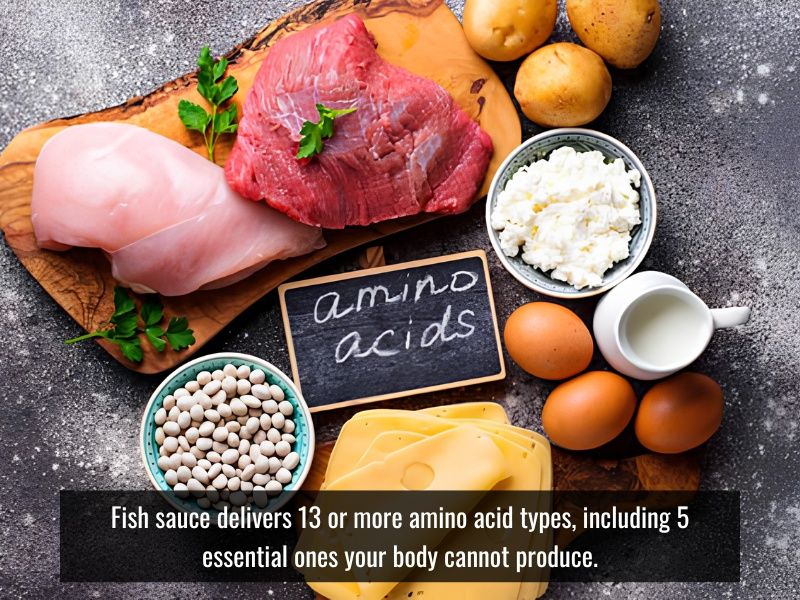
So what do these amino acids actually do? Vietnamese nước mắm ranks highest among Asian fish sauces for amino acid density. First-grade Phu Quoc fish sauce has a total nitrogen content of 39 g/L and an amino acid-to-nitrogen ratio of 79.96%, as documented by Nghia et al. (2017). Lysine supports calcium absorption and immune function. Valine aids muscle cell repair. Methionine contributes to muscle development, and isoleucine helps recovery after illness.
Vietnamese fishermen and divers have long sipped a cup of first-grade fish sauce before heading out to sea, relying on those fast-absorbing free amino acids for warmth and stamina.
Supplies B Vitamins for Energy and Nerve Health
B vitamins are a group of water-soluble nutrients that support energy metabolism, red blood cell production, and nerve function. Per 100g, fish sauce provides 30% Daily Value (DV) of vitamin B6, 20% DV of vitamin B12, 14% DV of niacin, and 13% DV of folate. Per tablespoon, those numbers scale down to roughly 2-5% DV each, but they add up across meals over the course of a day with daily use.
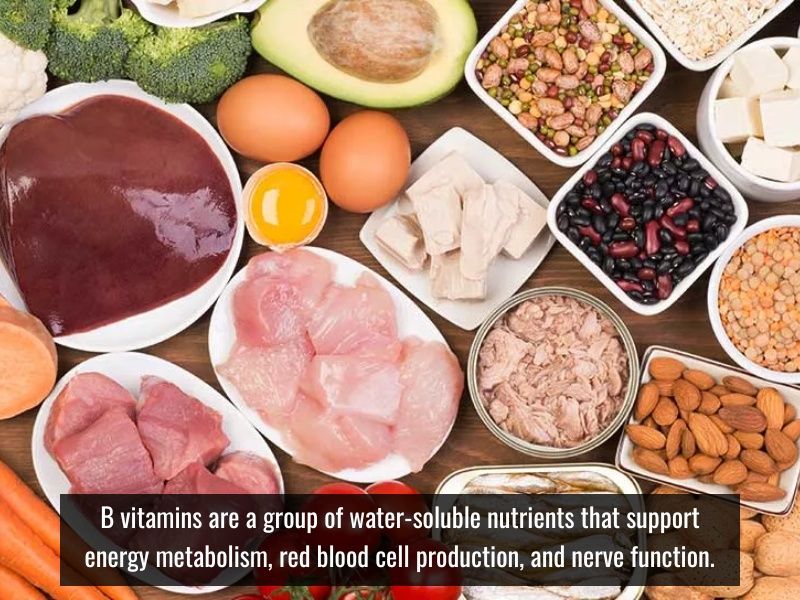
Why does B12 in a condiment matter? 2.4 mcg is the daily B12 target for adults, and this vitamin is difficult to get from plant foods alone. For anyone eating a plant-heavy diet, even a small daily contribution from fish sauce helps close the gap. The fermentation process itself increases B-vitamin content compared with raw fish.
Tablespoon for tablespoon, fish sauce delivers more B12 per calorie than most other condiments on your shelf.
Delivers Minerals in Every Drop
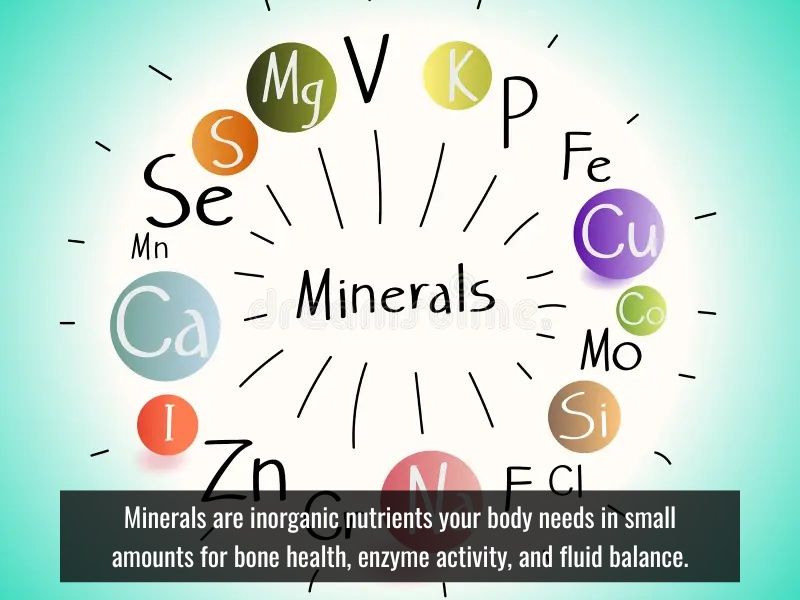
Minerals are inorganic nutrients your body needs in small amounts for bone health, enzyme activity, and fluid balance. The standout here is magnesium: 175 mg per 100g (42% DV), placing fish sauce in the top 3% of all foods for magnesium density. One tablespoon (about 0.5 fl oz) delivers 32 mg (8% DV). Traditional concentrated anchovy fish sauce contains roughly 10 mg of natural iron per 2 teaspoons (0.3 fl oz, or 10 ml) [S13]. Calcium, selenium, and iodine round out the mineral profile.
Why does iodine in fish sauce matter? Iodine supports thyroid hormone production, and fish sauce made from ocean-caught anchovies naturally contains it, unlike most plant-based seasonings.
The iron content in traditional fish sauce was significant enough that researchers used it as a vehicle for a clinical trial. Anemic Vietnamese women who consumed iron-fortified fish sauce for 6 months reached a hemoglobin level of 116.3 g/L, compared with 107.6 g/L in the control group (Thuy et al., 2003).
Adds Umami Flavor That Can Reduce Total Salt Use
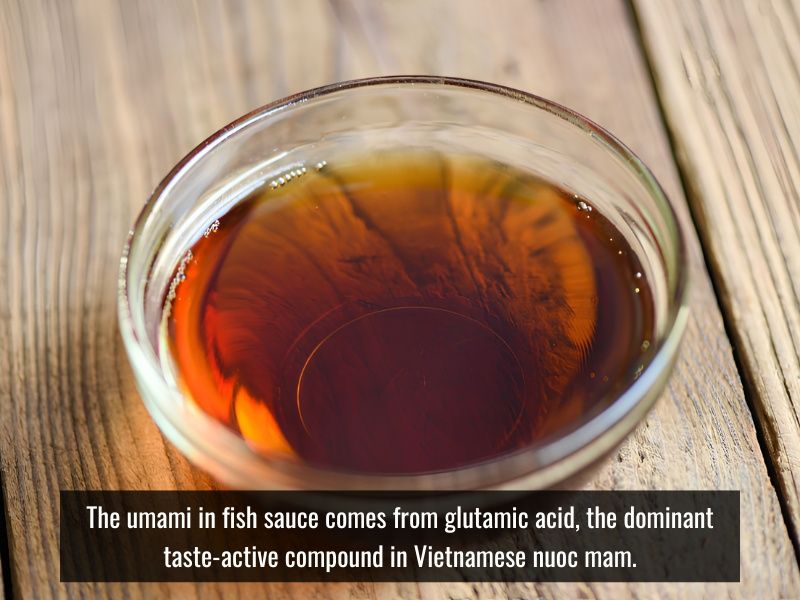
Umami is the fifth basic taste, often described as savory or brothy. The umami in fish sauce comes from glutamic acid, the dominant taste-active compound in Vietnamese nước mắm (Park et al., 2002). Glutamic acid triggers savory receptors on your tongue that amplify the perceived saltiness of food. A small splash of fish sauce makes a dish taste saltier than its actual sodium content suggests.
Here's where it gets practical. ½ teaspoon (about 2.5 ml) of fish sauce in a pot of soup for 4 servings can replace 1 teaspoon of table salt while adding savory depth that salt alone cannot deliver. Fish sauce still has a high sodium content per tablespoon. The benefit is that you need far less of it to reach the same flavor.
Flavors Food with Almost Zero Calories and No Fat
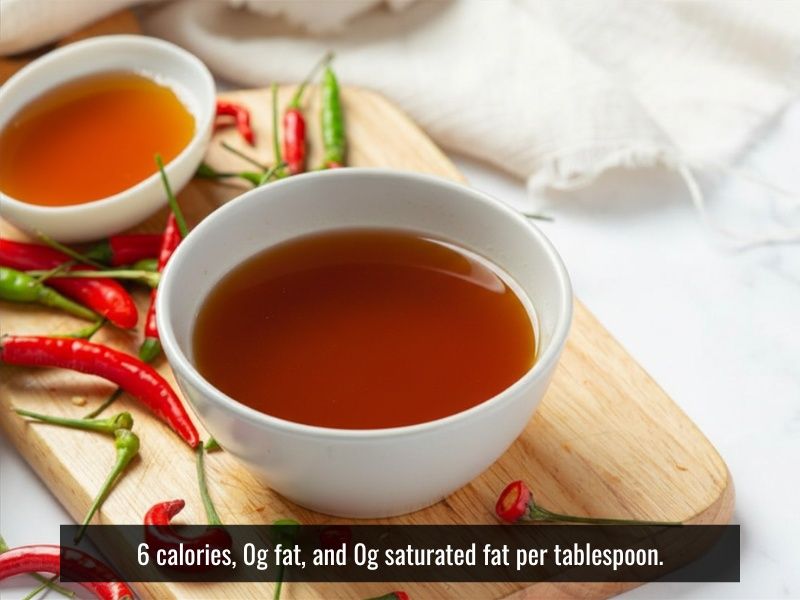
6 calories, 0g fat, and 0g saturated fat per tablespoon. That is the full calorie cost of fish sauce. For comparison, a tablespoon of olive oil contains 119 calories, and a tablespoon of butter contains 102 calories. Fish sauce delivers deep, savory flavor without adding to your calorie or fat counts.
If you cook with calorie-conscious goals in mind, that gap matters. A few splashes of fish sauce across a full day of meals cost you almost nothing but make a real difference on the plate.
Supports Gut Health as a Fermented Food
Gut health refers to the balance of microorganisms in your digestive tract, influencing digestion, immunity, and mood. Fish sauce is a product of months-long fermentation that generates beneficial bacteria and metabolites linked to increased microbiome diversity. A 2021 randomized study at Stanford University (Wastyk, Sonnenburg et al., Cell, n=18 per arm) found that a high-fermented-food diet over 17 weeks increased microbiota diversity while 19 of 93 inflammatory cytokines decreased.
How does fish sauce fermentation relate to gut bacteria? Lactic acid bacteria (LAB) isolated from fermented fish products show probiotic potential and produce bacteriocins that support microbial balance. A 2023 review in Foods (MDPI) confirmed these antioxidant and gut-supporting properties across fermented fish products.

One thing to keep in mind: fish sauce is used in small amounts per serving. Its probiotic contribution is modest compared to yogurt or kimchi. The benefit is additive, part of a broader fermented-food approach rather than a standalone probiotic source.
Contains Bioactive Peptides with Antioxidant Properties
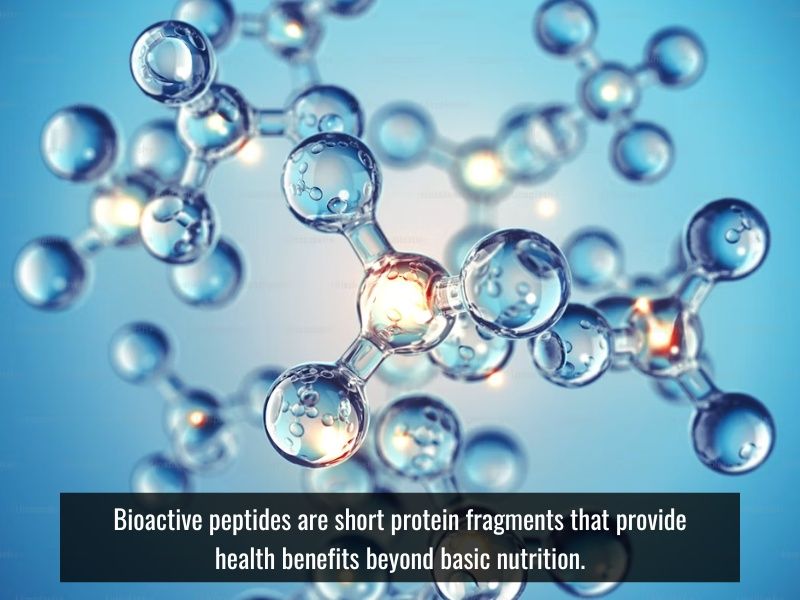
Bioactive peptides are short protein fragments, typically 2 to 20 amino acids long, that produce beneficial effects beyond basic nutrition, including antioxidant and blood-pressure-supporting activity. During fermentation, fish proteins break into these fragments, exposing functional groups that interact with free radicals and defense enzymes.
What makes these peptides biologically active? Najafian and Babji (2018) isolated peptides from Budu fish sauce (a Southeast Asian fish sauce) that exhibited radical-scavenging activity. Sun et al. (2024, Food Chemistry) identified 5 additional peptides in 6-month-fermented anchovy sauce that bind to the Keap1 receptor, a central regulator of the body's antioxidant defense. That 6-month mark produced the strongest antioxidant activity. Angiotensin-converting enzyme (ACE) inhibitory activity, linked to blood pressure regulation, ranges from 3.36% to 77.31% across fermented fish products. A 2023 review confirmed these findings across multiple studies.
Most research to date is laboratory-based. Human clinical trials are still needed, so these remain promising early findings, not proven benefits.
How Much Fish Sauce Should You Use Daily?
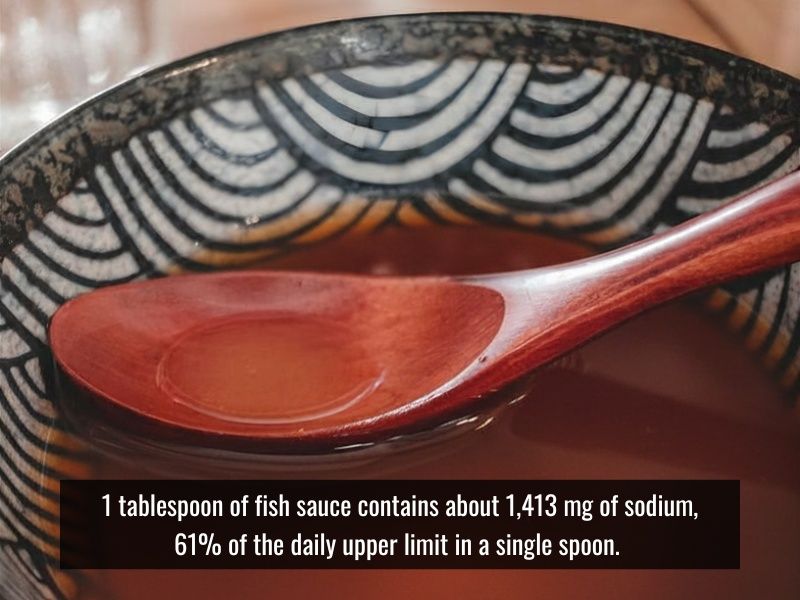
1 tablespoon of fish sauce contains about 1,410 mg of sodium, 61% of the daily upper limit in a single spoon. The American Heart Association (AHA) caps that limit at 2,300 mg per day, with an optimal goal of 1,500 mg for most adults. Americans already average over 3,300 mg daily [S17]. The number is high, and there is no reason to soften it.
How can you get the benefits without overdoing sodium? Use fish sauce by the teaspoon, not the tablespoon. ½ teaspoon (about 2.5 ml) seasons an individual portion. 1 to 2 teaspoons handle a shared dish for 4 to 6 servings. For dipping sauces, dilute with lime juice, water, and a pinch of sugar. Choose naturally fermented fish sauce without added sodium boosters, and balance your meals with potassium-rich foods like bananas, leafy greens, and avocado.
People with hypertension, kidney conditions, or sodium-restricted diets should consult their doctor before using fish sauce regularly.
The sections above covered what fish sauce brings to the table nutritionally and how to keep sodium in check. Below, you'll find the full per-serving nutrition breakdown, how to pick a quality bottle that preserves these benefits, and answers to the questions home cooks ask most.
Fish Sauce Nutrition Facts per Serving
Fish sauce is calorie-light and fat-free, with the standout micronutrients being magnesium and B vitamins. Per tablespoon (0.6 fl oz / 18g), you get 6 calories, ~0.9g protein, 0g fat, 1,410 mg sodium (61% DV), and 32 mg magnesium (8% DV). Per 100g, the density scales up to 42% DV magnesium (placing fish sauce in the top 3% of all foods for this mineral), 30% DV vitamin B6, and 20% DV vitamin B12. Sodium is high per tablespoon, which is exactly why the teaspoon-level portions covered above matter for daily use.
The table below gives you the full per-serving breakdown at a glance.
Nutrient | Per 1 tbsp (18g) | % DV |
| Calories | 6 kcal | — |
| Protein | 0.9 g | ~2% |
| Total Fat | 0 g | 0% |
| Sodium | 1,410 mg | 61% |
| Magnesium | 32 mg | 8% |
| Potassium | 52 mg | 1% |
| Calcium | 8 mg | 1% |
| Iron | 0.14 mg | 2% |
| Folate (B9) | 9 µg | 2% |
| Niacin (B3) | 0.4 mg | 3% |
| Selenium | 1.6 µg | 3% |
Source: USDA FoodData Central
How to Pick a Fish Sauce That Keeps These Benefits
The health benefits above come from naturally fermented fish sauce, and not every bottle on the shelf qualifies. Quality fish sauce contains fish (usually anchovies), salt, and sometimes a small amount of sugar. Skip products listing hydrolyzed protein, caramel color, or added MSG.
Here is what to look for when shopping:
- Ingredient list: Fish and salt as the first two items. Hydrolyzed wheat protein or artificial flavoring means skip.
- Nitrogen degree (°N): Fish sauce quality grades of 20°N and above indicate higher amino acid content from genuine fermentation rather than artificial concentration.
- Color: Amber and clear suggest proper aging. Cloudy or very dark may indicate shortcuts.
- Fermentation time: 12 months or longer yields the fullest nutrient extraction.
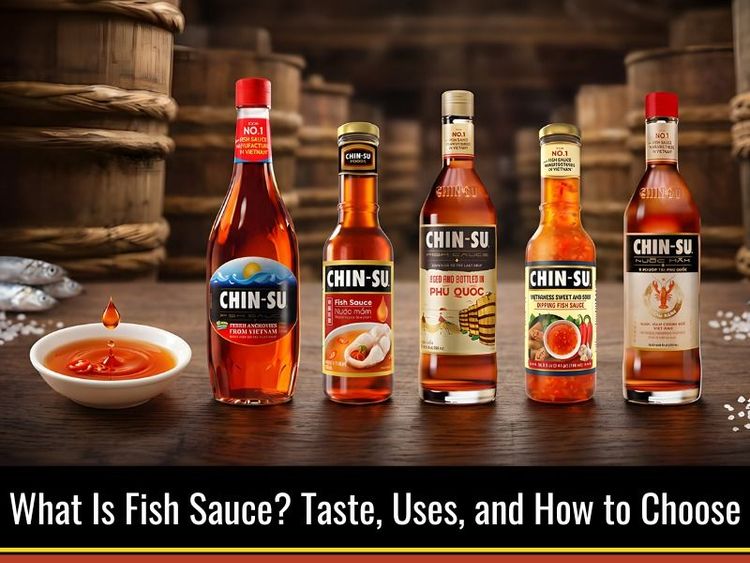
If you want a bottle that checks these boxes, CHIN-SU fish sauce uses fresh anchovies from Vietnam's East Sea and follows a natural fermentation process, so the amino acids and minerals covered in this article carry through to your cooking.
Fish sauce packs amino acids, B vitamins, minerals, and bioactive peptides into every splash. That is real nutritional value well beyond umami. Sodium is a legitimate concern but stays manageable at teaspoon-level portions balanced with potassium-rich foods. For a deeper look at the numbers, read our [fish sauce nutrition] guide. Ready to start cooking?
Frequently Asked Questions
Fish sauce is gluten-free by nature because it is made from fish and salt. Some industrial brands add hydrolyzed wheat protein as a filler, so always read the ingredient label if you have celiac disease or gluten sensitivity. Traditionally fermented fish sauce with a short ingredient list does not contain wheat.
Fish sauce is a fermented product, and fermentation does produce lactic acid bacteria (LAB) with probiotic potential. The high salt concentration means most live bacteria do not survive in the finished sauce. What remains are fermentation-derived metabolites and peptides, not live cultures like those in yogurt or kimchi.
Fish sauce is generally safe during pregnancy at normal cooking amounts. It provides small amounts of vitamin B12 and iron that support prenatal health. If you have pregnancy-related hypertension or are on a sodium-restricted plan, discuss your intake with your doctor.
No, fish sauce does not usually need to be refrigerated because its high salt content helps preserve it. However, after opening, storing it in the refrigerator can help maintain its flavor, aroma, and color for longer. If kept at room temperature, make sure the bottle is tightly closed and stored in a cool, dry place away from direct sunlight.

CHIN-SU KITCHEN TEAM
CHIN-SU Kitchen Team are the creative experts behind the delicious recipes featuring CHIN-SU sauces. With years of experience and a passion for flavor, our team carefully selects recipes from a variety of trusted chefs and bloggers, bringing together the best culinary insights to present you with the most suitable and exciting dishes. Every recipe is chosen to inspire you to create meals that are not only tasty but also easy to prepare, enhancing your dining experience. Join us as we explore a wide range of sauces and flavors, and elevate every meal with the perfect recipe for your table!
User Reviews
Featured Articles
What Is Fish Sauce? Taste, Uses, and How to Choose
Types of Fish Sauce: A Regional Guide to the World's Most Misunderstood Condiment
What Is Fish Sauce Made Of?
Does Fish Sauce Have Gluten?
What Is a Fish Sauce Quality Grade?
SUBSCRIBE TO GET
MORE INFO
Want the latest and greatest recipes, updates, and more from us,
straight to your inbox? Subscribe and get our NEWS!