What Is Fish Sauce Made Of?
Published: Jun 18, 2026 by CHIN-SU
Updated: Sep 25, 2026 by CHIN-SU
Fish sauce is a fermented liquid condiment made from fish and salt. The base formula is that simple: whole anchovies packed in coarse sea salt, left to ferment for months to years, then strained into the clear amber liquid you see on store shelves. Some commercial bottles stretch that base with added water, sugar, or preservatives. The fewer fish sauce ingredients on the label, the higher the quality inside the bottle.
In this guide, CHIN-SU will break down each ingredient and what it does, starting with the anchovies and salt that form the foundation. You'll see how fish sauce ingredients change from country to country across Vietnam, Thailand, the Philippines, Korea, and Japan. We also cover how to read a fish sauce label in 10 seconds and answer common questions about gluten, sodium, and allergens.
Table Of Contents
- What Fish Sauce Is Made Of?
How Fish Sauce Ingredients Differ by Country
- How to Read a Fish Sauce Ingredient Label
What Fish Sauce Is Made Of?
Fish sauce is made from two ingredients: fish and salt. Anchovies are the most commonly used fish. Salt powers the fermentation that turns whole fish into a savory, amber liquid over 6 to 12 months, producing glutamic acid along the way. That amino acid gives fish sauce its natural umami. The recipe has stayed the same for centuries: fish, salt, and time. Some commercial bottles also list water, sugar, or preservatives on their labels, but a shorter ingredient list points to higher quality. Below, we cover the specific fish species producers choose, and the role salt plays in fermentation.
Fish (Anchovies and Other Species)
Anchovies are the primary fish in most commercial fish sauce. These small, oily fish contain high levels of protein that break down during fermentation into amino acids, the compounds responsible for umami. Other species vary by region: mackerel, sardines, sand lance, round scad, and krill all appear in fish sauce production across Southeast Asia and East Asia.
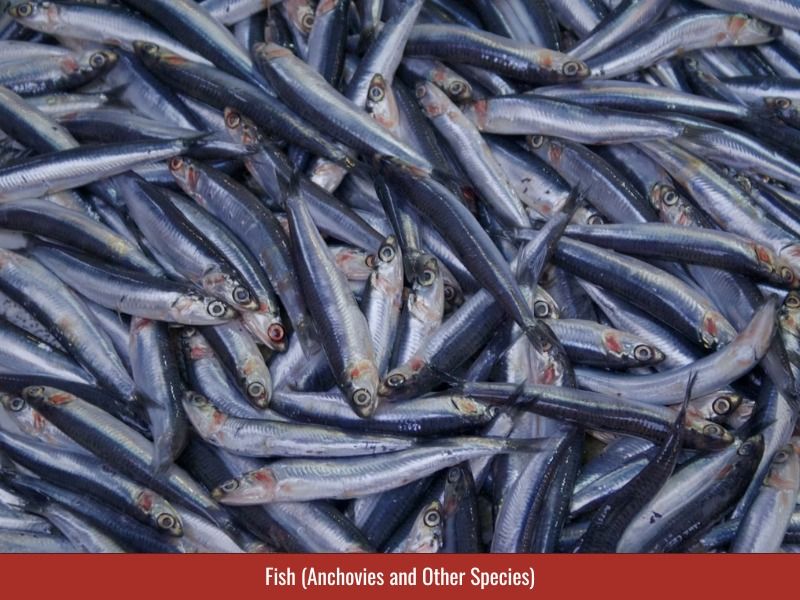
Vietnamese fish sauce relies on cá cơm, the local anchovy family. Several varieties swim along Vietnam's coastline, including black anchovy (cá cơm than), spined anchovy (cá cơm sọc tiêu), and red intestine anchovy (cá cơm đỏ). Among these, black anchovy is the standard for premium Vietnamese fish sauce production. The black anchovy (Stolephorus commersonii) harvested from Phú Quốc waters produces the highest-grade nước mắm and holds European Union (EU) Protected Designation of Origin (PDO) status. Traditional Vietnamese producers mix 3 parts fish to 2 parts salt by weight, then ferment the blend for 6 to 18 months.
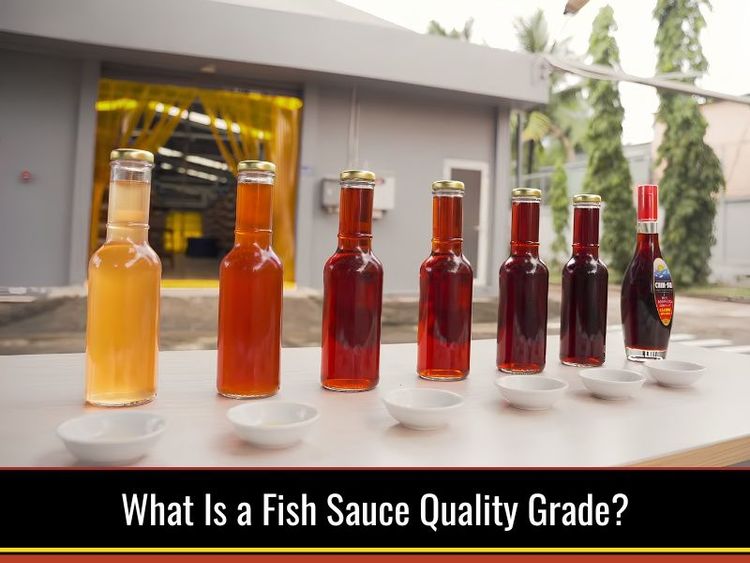
Fish protein is what creates the nitrogen degree (°N) in the finished sauce, the measurement that grades fish sauce quality from 20°N for standard commercial through 30°N for high-grade to 40°N and above for premium first-press.
Salt
Salt is the second ingredient in fish sauce, and it controls three things at once: preservation, liquid extraction, and the speed of fermentation. Production typically uses 20% to 30% salt by weight. During fermentation, salt draws liquid from fish through osmosis, creating the brine that becomes the finished sauce. High salinity blocks spoilage bacteria while allowing salt-tolerant enzymes to work through fish protein over months.
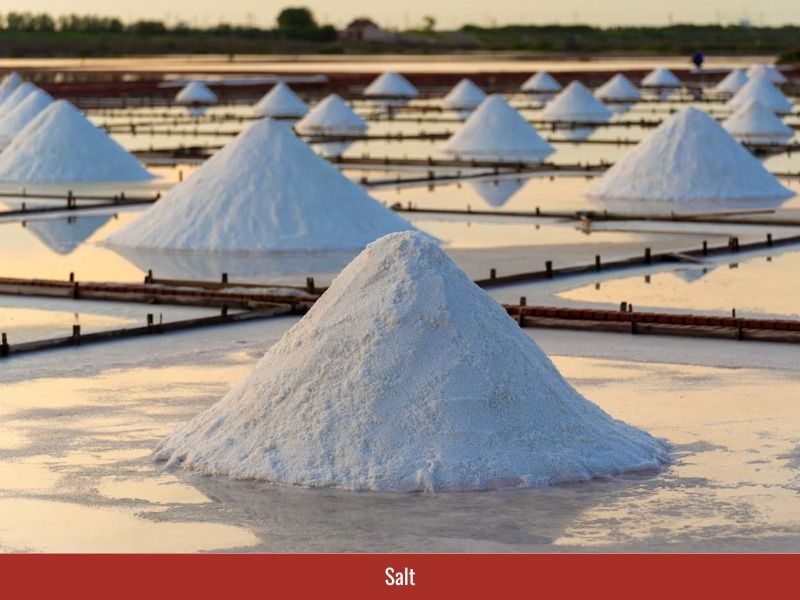
The salt concentration also controls how steadily enzymes convert protein into amino acids; too little invites spoilage, too much slows the breakdown that produces the nitrogen degree (°N) used to grade the final sauce. Traditional producers prefer coarse sea salt for mineral complexity. In the finished product, 1 tablespoon (about 18 ml) delivers 1,400 to 1,700 mg of sodium, about 50% to 60% of the Food and Drug Administration (FDA) daily value because the Codex Alimentarius standard (CXS 302-2011) requires a minimum of 200 g/L salt in the finished product.
Other Ingredients on the Label: Water, Sugar, and Additives
Beyond fish and salt, commercial fish sauce labels often list a few more ingredients. Not all of them signal poor quality, but knowing the difference helps you pick a better bottle.
- Water: Water enters during second- and third-press extraction, diluting the fish protein and weakening the flavor. First-press (extra virgin) fish sauce contains no added water.
- Sugar: Sugar in small amounts, typically 1 to 2 g per serving, balances salt sharpness and is standard practice, not a quality concern.
- Additives: Hydrolyzed protein, caramel color, MSG, and sodium benzoate compensate for the dilution of fish content in lower-grade sauces. If the label lists 5 or more ingredients with unfamiliar names, the sauce has been processed beyond traditional fermentation. One exception: "anchovy extract" is not artificial. It means only the liquid was bottled, not the fish bodies.
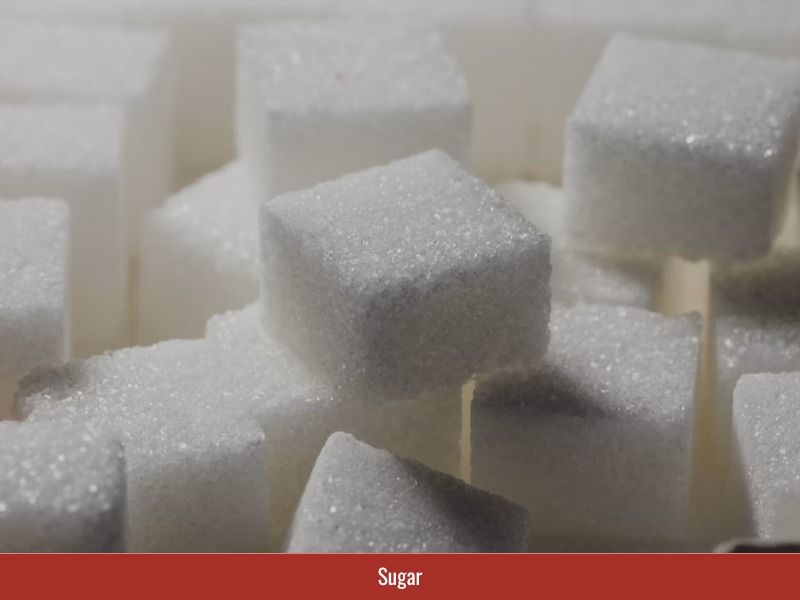
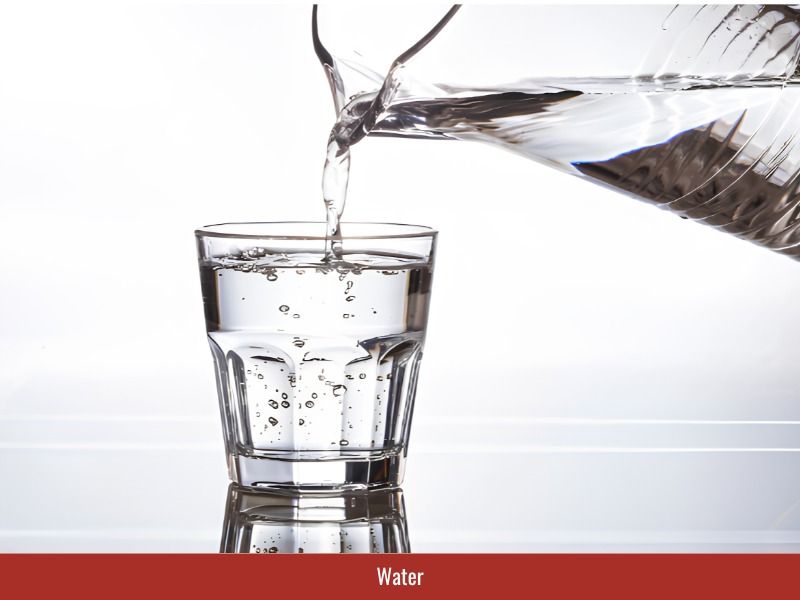
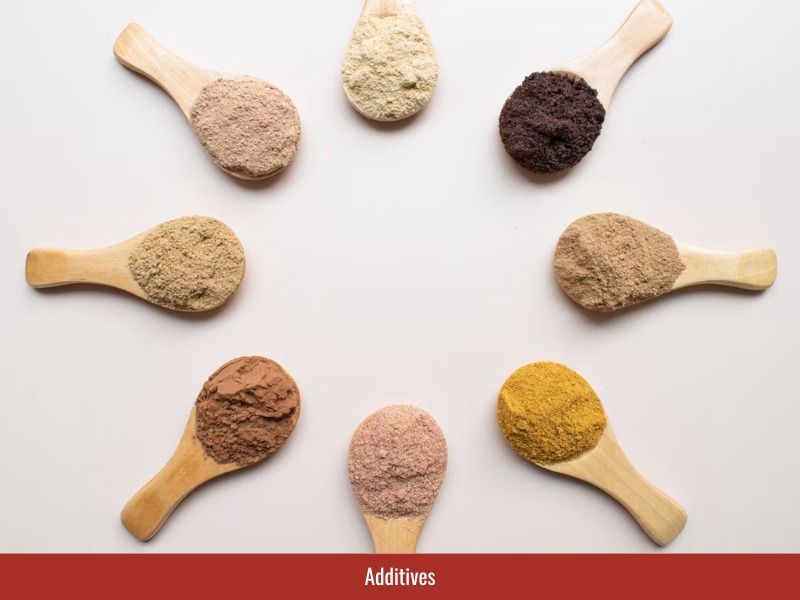
See more about how fish sauce is made to understand how these ingredients are used and how they affect the sauce’s final flavor and quality.
How Fish Sauce Ingredients Differ by Country
Fish sauce ingredients vary by country because each region uses different fish species, salt ratios, and fermentation timelines. Vietnamese nước mắm, Thai nam pla, Filipino patis, Korean aekjeot, and Japanese gyoshō each carry a distinct ingredient profile shaped by local waters and culinary tradition. Coastal geography determines which fish species are available year-round, and local cuisine shapes how the sauce gets used at the table.
Climate matters just as much: warmer tropical regions like Vietnam and Thailand ferment faster, while cooler climates in Korea and Japan often push the process past 12 months. Even the salt type varies from country to country, which affects how quickly enzymes break down fish protein into amino acids.
The table below breaks down the differences in core ingredients used in different fish sauce types across 5 major fish sauce-producing countries.
| Country | Local Name | Primary Fish | Typical Ingredients | Fermentation |
| Vietnam | Nước mắm | Black anchovy (cá cơm) | Anchovies, sea salt | 6-18 months |
| Thailand | Nam pla | Small ocean fish (mixed species) | Fish, salt | 9-12 months |
| Philippines | Patis | Round scad (galunggong) | Round scad, salt (by-product of bagoong) | 6-12 months |
| Korea | Aekjeot | Anchovy, sand lance, shrimp (3 varieties) | Anchovy/sand lance/shrimp, salt | 12-24 months |
| Japan | Gyoshō | Sardine, squid, sandfish | Varies by region | 12-18 months |
Among these traditions, Vietnamese nước mắm is the purest, with the fewest additives and the highest protein concentration per bottle. While Thai nam pla often uses mixed ocean species and Filipino patis is a by-product of bagoong (fermented fish paste), Vietnamese nước mắm sticks to a single fish species and coarse sea salt. Korean aekjeot stands apart by offering 3 distinct varieties based on different seafood bases. That ingredient simplicity in Vietnamese production defines traditional nước mắm and sets the quality standard for CHIN-SU's product line.
What Ingredients Are in CHIN-SU Fish Sauce?
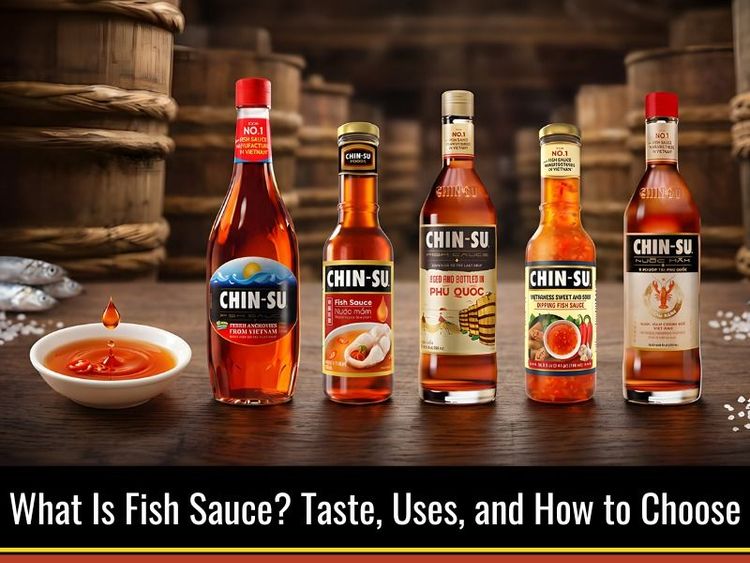
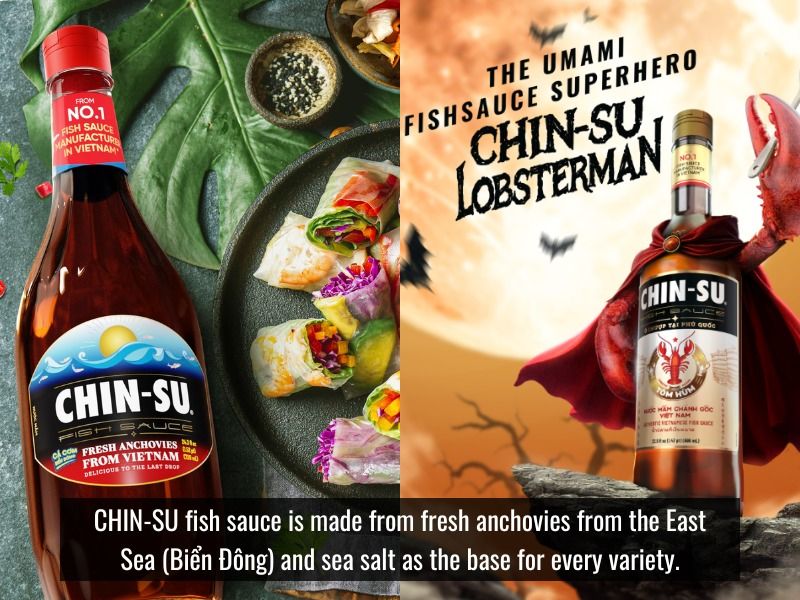
CHIN-SU fish sauce is made from fresh anchovies from the East Sea (Biển Đông) and sea salt as the base for every variety. The lineup includes 5 products, each built on that anchovy-and-salt foundation with a different flavor profile.
- CHIN-SU Anchovy Fish Sauce uses the traditional formula: anchovy extract, salt, and sugar, suited for dipping sauces, seasoning, and marinades across Vietnamese dishes like bún, phở, and lẩu.
- CHIN-SU Salmon Fish Sauce layers salmon flavoring over the same anchovy base for a seafood-forward profile that pairs with grilled fish and noodle soups.
- CHIN-SU Sweet & Sour Fish Sauce variety blends citric acid and sugar for bánh xèo, nem, and spring rolls.
- CHIN-SU Lobster Fish Sauce adds lobster-inspired seasoning for shellfish, crab, and shrimp dishes.
- CHIN-SU Phu Quoc Fish Sauce follows the Southern Vietnamese style, with deeper umami in braised, grilled, and hot pot dishes.
Each CHIN-SU product brings the familiar fish sauce health benefits of an anchovy-and-salt base, while offering a different flavor profile for everyday Vietnamese cooking. The full ingredient labels for all 5 varieties are available our website.
How to Read a Fish Sauce Ingredient Label
Reading a fish sauce label takes about 10 seconds: count the ingredients, check the protein grams, and look for a clear amber color. Those 3 checks tell you almost everything about quality.
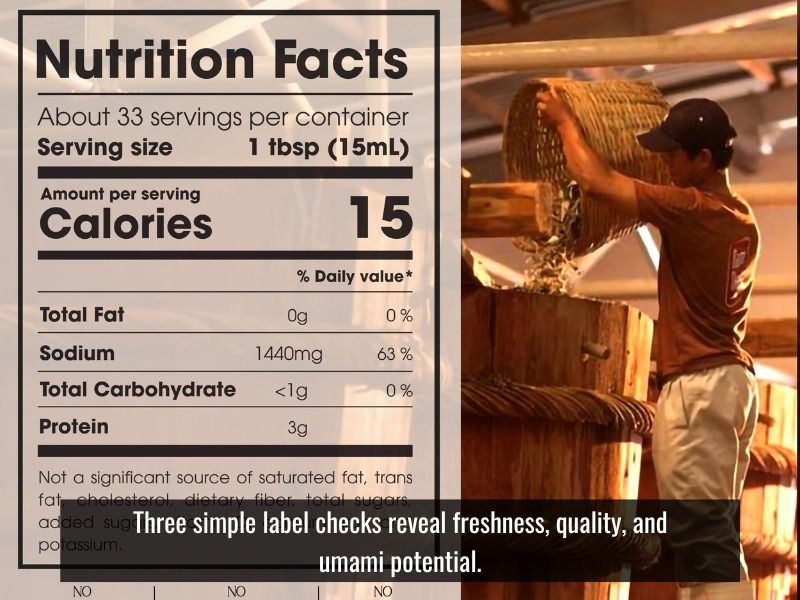
Start with the simplest check on any bottle: count the ingredients. A quality fish sauce lists 2 to 4 items: anchovies, salt, water, and sugar. That's the full recipe for a traditionally fermented sauce. If there are 5 or more ingredients with unfamiliar names, such as hydrolyzed protein or sodium benzoate, it indicates a diluted product that relies on processing shortcuts. The ingredient list tells you what's inside; then the protein content tells you how much fish is actually there.
Protein per serving is the most direct indicator of fish concentration. The °N rating measures grams of nitrogen per liter. Higher °N means more dissolved fish protein and stronger umami. 20°N is standard commercial grade, 30°N is high-grade, and 40°N and above is premium first-press. Phu Quoc fish sauce rated at 43 g/L sits at the top of the commercial scale. On the nutrition panel: 0g protein means mostly flavored water, 1 to 2 g works for everyday cooking, and 4g or more signals premium first-press. One note here: high °N in some industrial sauces comes from tech-assisted concentration, not longer fermentation.
How can you tell quality from the bottle itself? Color is the first visual clue: look for a clear, deep amber-to-reddish-brown liquid. Murky or gray sauce is an unfiltered fermented fish paste (mắm nêm), an entirely different product.
Aroma gives you the next signal. Fish sauce fermented 12 months or longer develops a round, layered scent. Short fermentation produces a sharp, harsh fishy smell that lingers on the palate. The price generally tracks with quality because higher fish concentration per bottle costs more to produce.
Now that you know what goes into a bottle of fish sauce, from the anchovies and salt to the label details that set a quality sauce apart from a diluted one, a few common questions remain.
Next time you pick up a bottle of fish sauce, flip it around. How many ingredients do you count? Drop a comment and tell us what surprised you about the label, or which bottle's been sitting in your pantry the longest. A quick star rating helps fellow nước mắm fans find this guide. Snap your fish sauce shelf and tag #CHINSU. CHIN-SU fish sauce keeps it to anchovies and sea salt, check the full label for yourself at chinsu.com.
Frequently Asked Questions
Traditional fish sauce made from fish and salt is naturally gluten-free, soy-free, and shellfish-free. Some commercial brands add hydrolyzed wheat protein (which contains gluten) or soy-based flavor enhancers. Filipino patis may contain trace amounts of krill from bagoong production. Always check the label for "wheat," "soy," "krill," or "crustacean" if you manage food allergies.
Yes. 1 tablespoon of fish sauce contains 1,400 to 1,700 mg of sodium, roughly 50% to 60% of the FDA's recommended daily limit. That sounds high, but most recipes call for a teaspoon or less per dish. Compared to table salt at 2,325 mg per teaspoon, fish sauce delivers less sodium per serving while adding umami that salt alone cannot.
Fish sauce smells strong because fermentation breaks anchovy proteins into volatile sulfur compounds and amines. The smell is concentrated inside the bottle. Once mixed into food, those compounds bind with other flavors and the fishiness fades. Longer fermentation (12 months or more) reduces the raw smell and produces a rounder, more layered aroma.
Not always. Traditional fish sauce contains only fish and salt, and is fermented for 6 to 24 months, depending on the country. Commercial fish sauce often adds water from second or third-press extraction, sugar, and sometimes hydrolyzed protein, caramel color, monosodium glutamate (MSG), or preservatives. The core ingredients overlap, but commercial versions dilute the fish content and fill the gap with additives.
No. Fish sauce is a thin, clear liquid made from fermented anchovies and salt. Oyster sauce is a thick, dark sauce made by reducing oyster extracts with sugar, soy sauce, and starch. Fish sauce is saltier, thinner, and carries a fermented umami flavor. Oyster sauce is sweeter, thicker, and has a caramelized taste. They are not interchangeable.
You can, but it takes patience. The basic recipe is fresh anchovies and sea salt at a 3:2 ratio by weight, sealed in a glass jar and fermented for 3 to 12 months. The first few weeks produce a strong smell. Most home cooks find a store-bought bottle more practical, but homemade fish sauce lets you control the salt level and fermentation time.

CHIN-SU KITCHEN TEAM
CHIN-SU Kitchen Team are the creative experts behind the delicious recipes featuring CHIN-SU sauces. With years of experience and a passion for flavor, our team carefully selects recipes from a variety of trusted chefs and bloggers, bringing together the best culinary insights to present you with the most suitable and exciting dishes. Every recipe is chosen to inspire you to create meals that are not only tasty but also easy to prepare, enhancing your dining experience. Join us as we explore a wide range of sauces and flavors, and elevate every meal with the perfect recipe for your table!
User Reviews
Featured Articles
Does Fish Sauce Expire? Shelf Life and Storage
Does Fish Sauce Have Gluten?
What Is a Fish Sauce Quality Grade?
How To Use Fish Sauce In Cooking: Asian And Non-Asian Dishes
What Is Fish Sauce? Taste, Uses, and How to Choose
SUBSCRIBE TO GET
MORE INFO
Want the latest and greatest recipes, updates, and more from us,
straight to your inbox? Subscribe and get our NEWS!