How to Preserve Hot Sauce: 4 Methods to Try
Published: Jun 18, 2026 by CHIN-SU
Updated: Jul 6, 2026 by CHIN-SU
Hot sauce stays safe through a balance of acidity, salt, heat treatment, and proper storage. With the right storage approach, a homemade batch can last from a few weeks to several years.
A bottle of hot sauce doesn't spoil the way milk or raw chicken does. It fights back. Vinegar acid, salt, capsaicin, and how you seal the bottle all work together to inhibit bacteria, yeast, and mold. 4.6 is the pH the FDA sets as the safety cutoff for acidified foods, according to SDSU Extension. Below that line, the most dangerous spoilage organisms can't grow.
In this article, CHIN-SU will help you know 4 preservation methods you can use at home: refrigeration, freezing, canning, and fermentation. You will also find a shelf-life table by sauce type, storage advice for store-bought versus homemade sauces, and honest answers about whether freezing changes the flavor. Each method works differently depending on the pH, the ingredients, and how long you need the sauce to last.
Table Of Contents
- What Are the Key Factors That Affect Hot Sauce Preservation?
4 Methods to Preserve Hot Sauce
- How to Preserve Hot Sauce Bought from the Supermarket
What Is the Best Way to Store Homemade Hot Sauce?
- How Long Can Hot Sauce Last in the Fridge After Opening?
- Can You Freeze Hot Sauce Without Affecting Its Flavor?
What Are the Key Factors That Affect Hot Sauce Preservation?
Four factors determine how long hot sauce stays safe and flavorful: pH level, water activity, the preserving power of specific ingredients, and capsaicin stability.
pH Level
Hot sauce with a pH below 4.6 prevents botulism-causing bacteria from growing, and a pH below 3.4 makes hot sauce safe at room temperature even after opening. pH is considered the most important factor determining a hot sauce’s shelf life. Low-acid conditions damage bacterial cell membranes and interfere with the metabolic processes that organisms need to reproduce. The lower the pH, the fewer organisms survive.
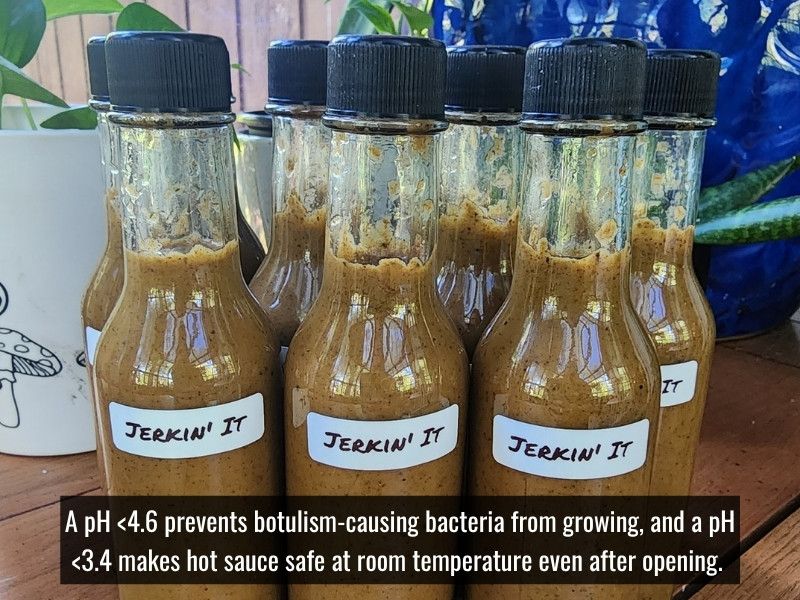
The FDA sets 4.6 as the safety boundary for acidified foods, according to SDSU Extension. Below that line, Clostridium botulinum can't produce toxins. For a sauce that stays safe on your counter after opening, aim for a pH of 3.4 or lower. Most finished hot sauces land between 3.2 and 4.0.
You can use a digital pH meter; test strips lack the precision needed for food safety. If your reading comes in above 4.0, add 1 tablespoon (15 ml) of 5% white vinegar at a time, stir, and retest.
Water Activity (Aw)
Water activity measures how much free water is available for bacteria to use; hot sauces with water activity above 0.85 can support pathogen growth if pH isn't properly controlled.
Water activity (Aw) is different from moisture content. It measures the water available for microbial activity, on a scale from 0 to 1.0, as noted by SDSU Extension. Pure water has an Canning extends shelf life.
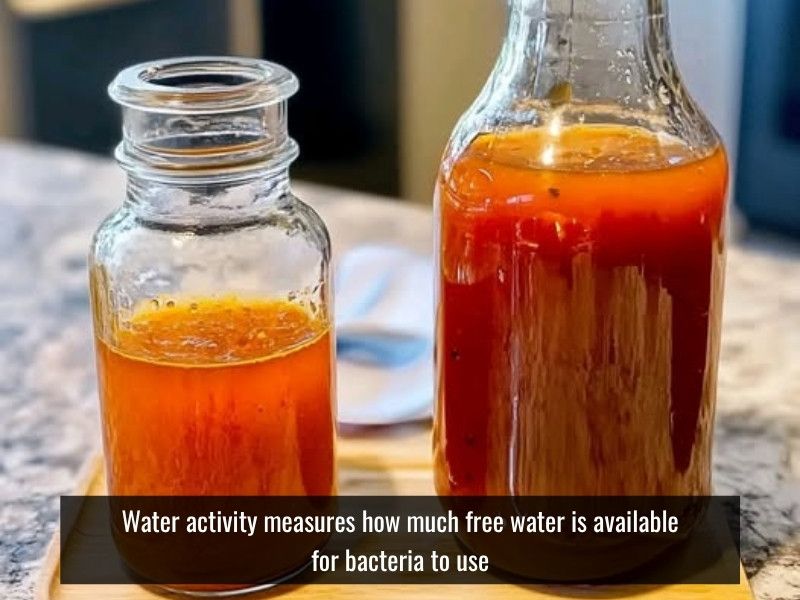
Since most hot sauces have Aw above 0.85, water activity alone can't prevent pathogen growth. That's why pH becomes the primary safety control. Water activity plays a supporting role in the hurdle technology system with salt and sugar, as mentioned below.
Ingredients That Help Preserve Hot Sauce
Vinegar, salt, and sugar are the three most common preserving ingredients in hot sauce. Vinegar lowers pH, salt inhibits bacterial growth, and sugar binds available water.
Vinegar is the single most effective preservative for hot sauce. White distilled vinegar at 5% acidity provides a neutral flavor and strong pH reduction. Apple cider vinegar adds a fruitier note but works the same way. Vinegar also has a special advantage: it's a volatile acid, meaning it evaporates and condenses along with water inside a sealed bottle. Even condensation inside the cap remains acidic. That volatile nature means the acidic environment extends to every surface inside the bottle, not just the liquid.
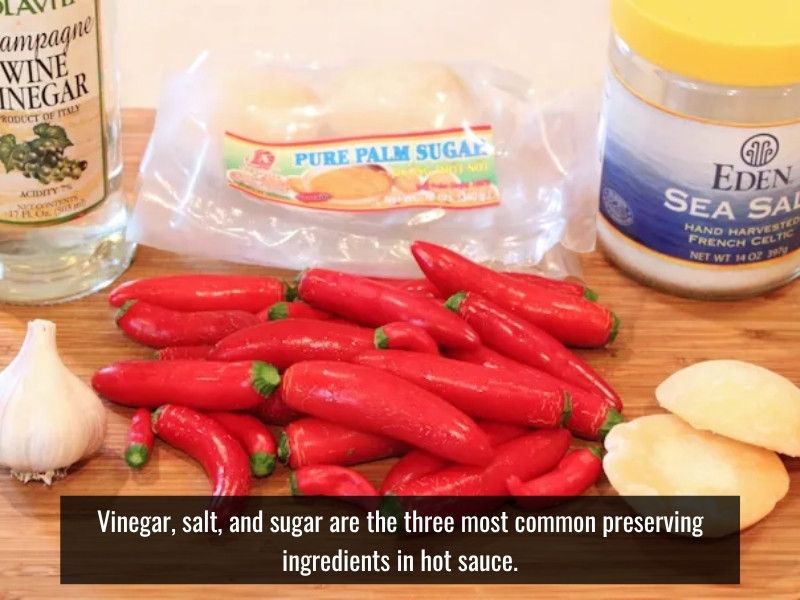
Salt creates osmotic pressure that pulls water out of bacterial cells. Sugar binds free water, reducing Aw. Combined with vinegar's pH reduction, they form the core "hurdle stack" in traditional hot sauce recipes.
Capsaicin Stability
Capsaicin, the compound that creates heat in peppers, has documented antibacterial and anti-virulence properties (Marini et al., 2015, Frontiers in Microbiology), but it cannot replace pH control as the primary preservation method.
Capsaicin contributes to the overall preservation system. Hotter sauces with higher capsaicin concentrations show greater microbial resistance. But a hot sauce with high capsaicin and poor pH control will still spoil.
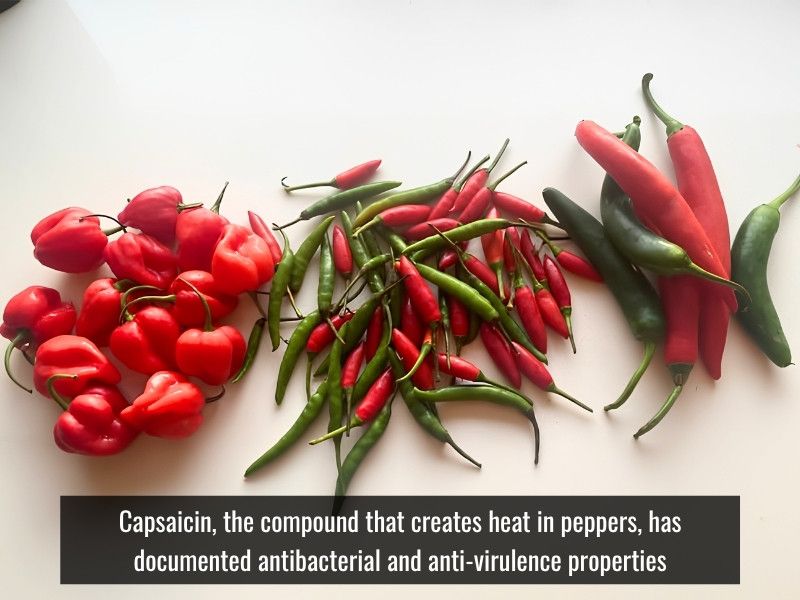
Here's what capsaicin does well: it holds up. Capsaicin is a stable molecule that does not break down quickly under normal storage conditions, so cooking and bottling do not destroy it. The heat level of your sauce stays consistent throughout its shelf life.
But besides capsaicin, peppers also contain active enzyme systems, including peroxidases and other oxidative enzymes, that continue to drive biochemical changes even after harvest (Mateos et al., 2003). These enzymes can contribute to the gradual breakdown of color and flavor compounds during storage. Adding a small amount of ascorbic acid (vitamin C) gives extra protection by reacting with oxygen before it can degrade other compounds.
4 Methods to Preserve Hot Sauce
There are four main methods to preserve hot sauce: refrigeration, freezing, canning (hot-fill or water bath), and fermentation; each suits different sauce types and storage goals.
Choosing the right method depends on what ingredients your sauce contains, how long you need it to last, and whether you want it shelf-stable or stored cold. Simple vinegar-pepper sauces are safe at room temperature after canning. Sauces with fruits or dairy need refrigeration or freezing. Fermented sauces have built-in preservation but require specific handling before bottling.
| Method | Best For | Shelf Life | Requires a fridge? |
| Refrigeration | All sauces, especially fruit-based and homemade | 1 month to 3 years | Yes |
| Freezing | Large batches, long-term backup | Up to 6 months | Yes (freezer) |
| Canning (hot-fill / water bath) | Room-temp shelf stability, gifts, selling | 1-2 years | No (if sealed) |
| Fermentation | Flavor development + natural preservation | 6 months to 3 years | Yes after bottling |
Keep Hot Sauce in Refrigeration
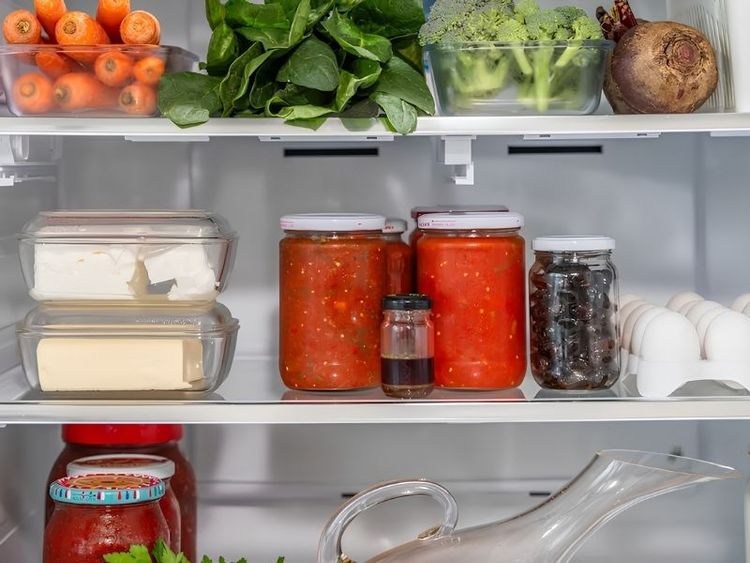
Refrigeration is the simplest way to preserve hot sauce. Cold temperatures slow microbial growth and enzyme activity, keeping the sauce safe and flavorful for weeks to over a year, depending on the recipe.
This method works for every type of hot sauce. It's the safest default when you're not sure about pH or preservation chemistry. Homemade sauces without measured pH should always go in the fridge.
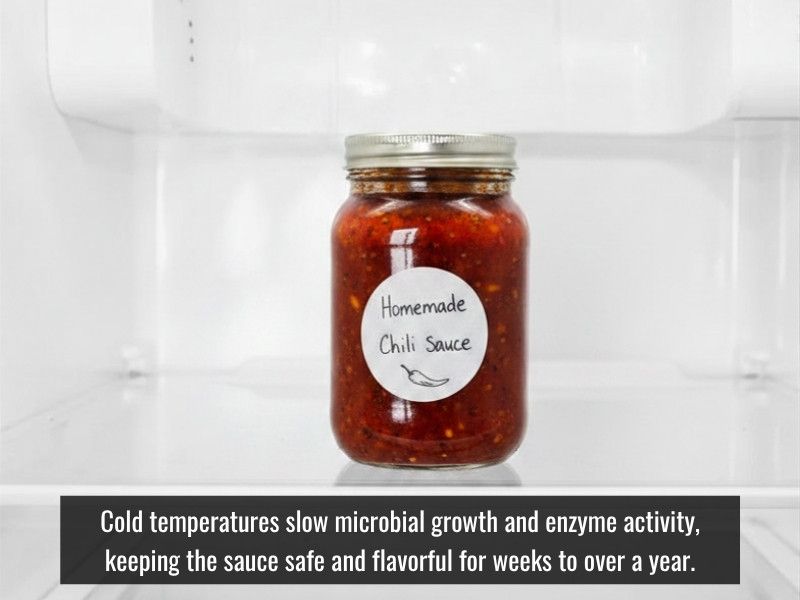
The mechanism is that cold temperatures below 40°F (4°C) slow the metabolic rate of bacteria, yeast, and mold. Enzymes that break down flavor and color also work more slowly in the cold. The sauce doesn't become sterile; the organisms are still alive, but their growth rate drops so much that spoilage takes months instead of days.
There are three types of hot sauce that should always be refrigerated.
- First, homemade sauces made without a measured pH or without vinegar.
- Second, sauces containing fruits, vegetables, or dairy; these ingredients raise water activity and provide nutrients for bacteria.
- Third, commercial sauces that say "Refrigerate After Opening" on the label. Vinegar-heavy hot sauces keep 1 to 3 years refrigerated after opening. Fresh-ingredient sauces stay good for 6 to 24 months. Homemade sauces without vinegar or salt last only 1 to 3 weeks.
So, do all types of hot sauce need to be refrigerated? That’s an interesting fact you can read more about in this article.
Freeze the Hot Sauce
Freezing preserves hot sauce for up to 6 months. Pour it into ice cube trays or freezer-safe containers, leaving headspace for expansion.
Freezing is your best option for large homemade batches you can't use within a few months. The flavor holds up well. Texture may shift slightly; some separation is normal after thawing, and a quick stir fixes it.
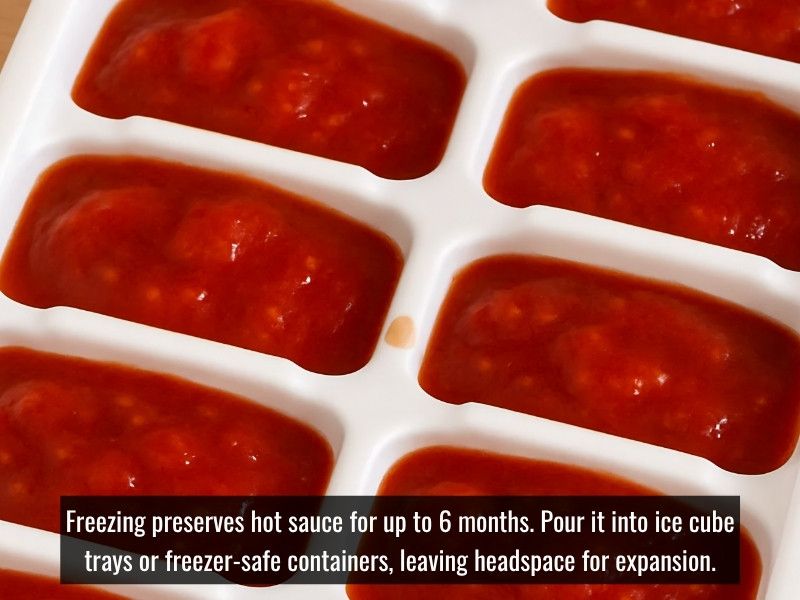
Here's how to freeze hot sauce:
- Cool the sauce completely to room temperature.
- Pour into ice cube trays for portion-sized blocks, or use small freezer-safe containers.
- Leave ½ inch (12 mm) headspace, as the sauce expands when frozen.
- Label with the date and sauce name.
- Freeze at 0°F (-18°C) or below.
- Use within 6 months for the best quality.
- Thaw in the refrigerator overnight. Stir well before serving.
Color may darken slightly after freezing and thawing. That's cosmetic, not a safety concern. Sauces with high oil content may separate more readily; blend briefly after thawing, if needed.
Can and Bottle the Hot Sauce
Canning creates room-temperature shelf stability for 1 to 2 years by combining heat treatment with airtight sealing. Two home-friendly methods work for sauces with a pH below 4.6: hot-fill-hold and water bath canning.
This is the method to use when you want to store hot sauce outside the fridge, give bottles as gifts, or sell at farmers' markets. The sauce must have a measured pH below 4.6 before canning, per SDSU Extension guidelines. All jars and bottles must be sterilized first: boil them for 10 minutes or run them through a dishwasher's sanitize cycle.

Hot-Fill-Hold Method:
- Heat sauce to 180°F (82°C).
- Pour into sterilized glass bottles. Leave ¼ inch (6 mm) headspace.
- Cap tightly.
- Invert bottles for 3 minutes to sterilize the headspace.
- Turn upright, cool at room temperature.
- Check the seal, then press the center of the lid. It should not flex.
Water Bath Method:
- Preheat the hot sauce above 180°F (82°C).
- Preheat jars in boiling water while the sauce heats up.
- Ladle hot sauce into the preheated jars. Leave ½ inch (12 mm) headspace.
- Wipe rims clean with a damp cloth.
- Cover with lids and screw bands on fingertip-tight.
- Submerge jars completely in the water bath canner and process for 10 to 15 minutes.
- Turn off the heat and let jars rest in the water for 5 minutes.
- Remove jars from the canner and set them on a towel-lined counter.
- Wait for those satisfying "ping" sounds as the lids seal. Press the center of each lid after 12 to 24 hours. No flex means a proper seal.
If any jar doesn't seal properly, refrigerate and use within 2 to 3 weeks. Don't reprocess with the same lid.
Ferment the Hot Sauce
Fermentation naturally preserves hot sauce by producing lactic acid, which lowers the pH over time. A 3-week ferment typically reaches a pH of 3.5-4.0, which is safe enough for over a year of refrigerated storage.
Fermented hot sauce develops tangy, layered flavors that cooked sauces can't replicate. Lactic acid bacteria convert sugars in the peppers into lactic acid, creating an acidic environment that blocks harmful organisms. After fermentation, the sauce can be bottled and refrigerated for long-term storage.
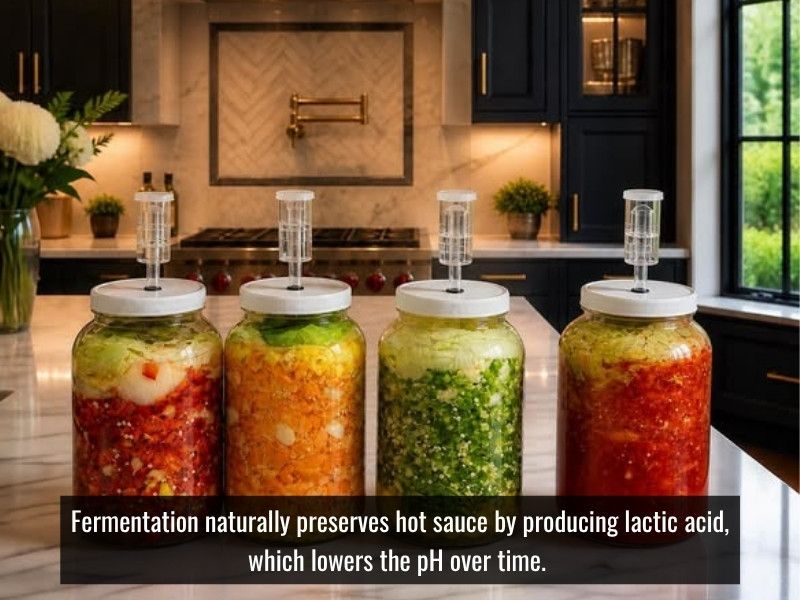
Here's how to ferment hot sauce:
- Blend peppers and garlic. Salt the mash at a 30:1 weight ratio: 15 grams (1 tablespoon) of fine sea salt per 450 grams (1 pound) of mash
- Pack into a glass jar. Cover with cheesecloth or an airlock lid.
- Ferment at room temperature for 12 days. Bubbling indicates active fermentation.
- Blend with vinegar to taste.
- Test pH; target below 3.8.
- To make shelf-stable: bring to a full boil for 1 to 2 minutes (this kills active bacteria and stops gas production), then bottle using the hot-fill-hold method.
- For fridge-only storage, skip boiling and bottle directly; keep refrigerated.
Safety warning: Don't bottle uncooked fermented sauce in sealed containers for room-temperature storage. Active fermentation continues, pressure builds, and bottles can blow out. If giving as gifts, always boil first.
How to Preserve Hot Sauce Bought from the Supermarket
Store-bought hot sauce is already preserved during manufacturing; your job is to protect it from the five factors that degrade quality after you bring it home: light, oxygen, heat, humidity, and bacteria.
Commercial hot sauces undergo precise pH testing, thermal processing, and sealed packaging before reaching the shelf. Unopened, they stay safe in a pantry for years. The preservation challenge begins after you twist off the cap.
Keep it in a cool, dark place; a pantry cabinet away from the stove works well. After opening, cap tightly after every use. Clean the rim and cap threads to prevent crusty buildup that attracts bacteria. Pour the sauce out rather than dipping food directly into the bottle. If the label says "Refrigerate After Opening," follow it. That instruction is specific to the sauce's formulation.
Sauces containing fruits, vegetables, or lower vinegar content degrade faster after opening. Refrigerate these even if the label doesn't say to. A simple vinegar-pepper sauce tolerates room temperature for months after opening. A sauce with mango, peach, or carrots should go in the fridge the day you open it.
What Is the Best Way to Store Homemade Hot Sauce?
The best way to store homemade hot sauce depends on its pH and ingredients. Sauces with a pH below 4.0 can be canned for room-temperature storage, while all other homemade sauces should be refrigerated in sterilized glass jars.
Homemade hot sauce lacks the precise testing and packaging of commercial products. The safest default is to refrigerate in clean, airtight glass containers. Glass doesn't absorb flavors or stain. If you want shelf stability, you need to test pH and use a canning method.
Should I Can Hot Sauce if It Has a Low pH?
Yes, if your hot sauce tests below pH 4.6, water bath canning or hot-fill-hold will extend its shelf life to 1 to 2 years at room temperature without refrigeration.
A low pH is the prerequisite for safe canning, not a guarantee that canning is unnecessary. Even at pH 3.5, an unsealed bottle exposed to air will eventually grow mold or yeast on the surface. Canning seals the sauce in an oxygen-free environment and adds heat treatment that kills remaining organisms and deactivates flavor-degrading enzymes.
When is canning worth it versus just refrigerating? Can your sauce be stored longer than 3 months? Do you want to give bottles as gifts? Do you need room-temperature storage? Or did you make a large batch? Refrigerate instead if you'll use it within weeks, the batch is small, or you prefer the fresh, uncooked flavor.
How Much Vinegar to Add to Hot Sauce to Preserve?
Use 4 fl oz (½ cup / 120 ml) of 5% white vinegar for every 10 oz (280 g) of combined peppers, onions, and garlic to reach a shelf-stable pH of 3.8 or lower.
This ratio produces a sauce acidic enough for preservation without drowning the pepper flavor. Two other validated ratios exist: 3/8 (about 37%) of the total finished sauce volume as 5% vinegar for indefinite safety, and a 50/50 pepper-to-vinegar split for maximum protection, though this creates a thinner, more vinegar-forward sauce.
Here's how to use it:
- Measure your combined pepper, onion, and garlic mixture by weight or volume.
- Add vinegar at the 4 fl oz per 10 oz ratio.
- Blend thoroughly.
- Test pH with a digital meter.
- If above 3.8, add 1 tablespoon (15 ml) more vinegar at a time and retest until the target is reached.
| Ratio | pH Result | Flavor Impact | Best For |
| 4 fl oz per 10 oz (recommended) | ≤ 3.8 | Balanced, pepper flavor leads | Most homemade sauces |
| 37% of the total volume | ≤ 3.6 | Moderate vinegar presence | Long-term pantry storage |
| 50/50 pepper-to-vinegar | ≤ 3.2 | Strong vinegar tang, thinner body | Maximum shelf life, gifts |
Canning extends shelf life by sealing low-pH hot sauce in an oxygen-free environment.
How Long Can Hot Sauce Last in the Fridge After Opening?
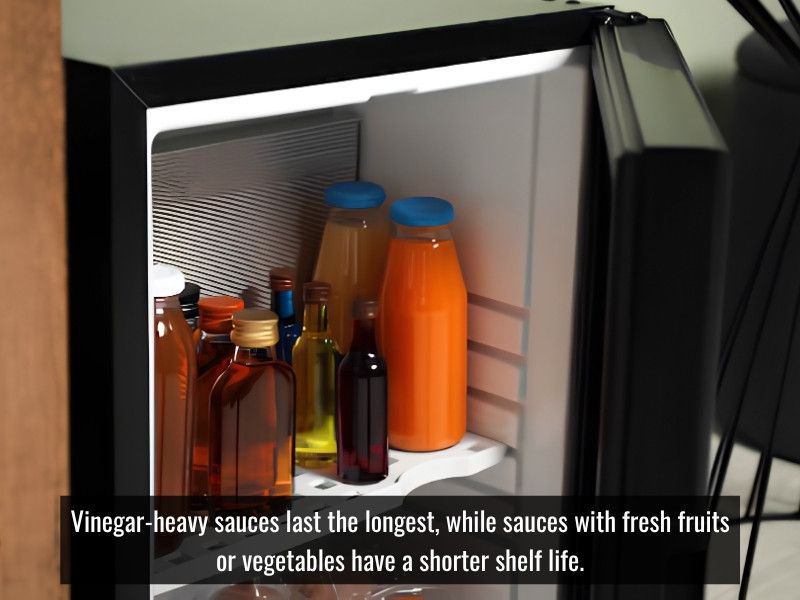
Opened hot sauce lasts 1 months to 3 years in the fridge, depending on the ingredients and preservation method. Vinegar-heavy sauces last the longest, while sauces with fresh fruits or vegetables have a shorter shelf life.
An opened bottle of simple vinegar-based hot sauce keeps for 1 to 3 years refrigerated. Sauces with fresh vegetables or fruits stay good for 6 to 12 months. Homemade sauces without measured pH or significant vinegar should be used within 1 to 3 weeks. Fermented hot sauces last over a year if the pH is at or below 3.2.
| Sauce Type | Opened, Refrigerated | Opened, Room Temp | Unopened, Pantry |
| Vinegar-heavy (commercial) | 1–3 years | 6–12 months | 3–5 years |
| Fresh-ingredient (commercial) | 3–6 months | 1–2 months | 1–2 years |
| Fermented (aged, gochujang-style) | 1–2 years | 6–12 months | 2–3 years |
| Homemade (vinegar-based, pH ≤ 3.8) | 3–6 months | 1–2 weeks | N/A (refrigerate) |
| Homemade (no vinegar / low acid) | 1–3 weeks | Not safe | N/A |
| Frozen | N/A | N/A | Up to 6 months (freezer) |
Can You Freeze Hot Sauce Without Affecting Its Flavor?
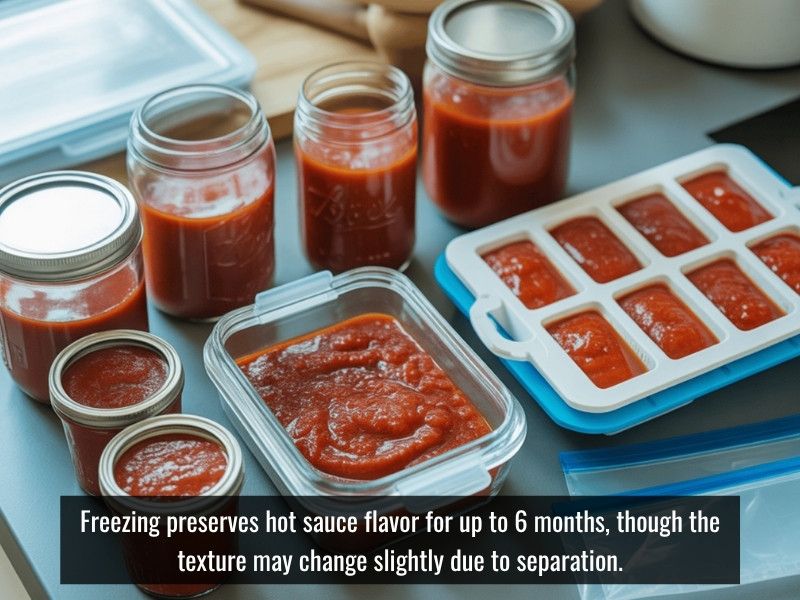
Yes, freezing preserves hot sauce flavor well for up to 6 months, though the texture may change slightly due to separation, which a quick stir or blend fixes after thawing.
The heat level stays the same. The core flavor profile holds. What changes is texture: frozen sauces may separate as water crystals form and break apart the emulsion. Thicker sauces handle freezing better than thin vinegar-based ones. Color may darken slightly, but that's cosmetic, not a safety issue.
Sauces with high oil content may separate more after freezing. If that happens, blend briefly to re-emulsify. For the best results, use ice cube trays; each cube equals roughly 1 tablespoon (15 ml), making it easy to portion. Once frozen solid, pop cubes into a freezer bag and squeeze out the air. Label with the date. Thaw in the fridge overnight, not at room temperature. Stir or blend before use.
For everyday meals when you don't want to thaw frozen sauce, a bottle of CHIN-SU Chili Sauce, made with charcoal-grilled bird's eye chili and fermented garlic, is always ready on the table.
Three things to remember from this guide: 4.6 is the pH safety line set by the FDA; below 3.4 gives you room-temperature stability; and the right vinegar ratio, paired with a proper canning method, can stretch a homemade batch to 2 years on the shelf. Have you bottled a batch of homemade hot sauce, or are you about to try your first one? Drop your questions or storage experiments in the comments below. If this guide helped, give it a star rating so other hot sauce fans can find it and share it with #CHINSU. For a ready-to-use option that pairs with any meal, check out CHIN-SU Hot Sauce and other condiments at chinsu.com.

CHIN-SU KITCHEN TEAM
CHIN-SU Kitchen Team are the creative experts behind the delicious recipes featuring CHIN-SU sauces. With years of experience and a passion for flavor, our team carefully selects recipes from a variety of trusted chefs and bloggers, bringing together the best culinary insights to present you with the most suitable and exciting dishes. Every recipe is chosen to inspire you to create meals that are not only tasty but also easy to prepare, enhancing your dining experience. Join us as we explore a wide range of sauces and flavors, and elevate every meal with the perfect recipe for your table!
User Reviews
Featured Articles
Can You Have Hot Sauce on the Carnivore Diet?
Does Hot Sauce Expire? All Things You Need to Know
Does Hot Sauce Need to Be Refrigerated?
Is Hot Sauce Gluten Free?
9 Health Benefits of Hot Sauce: Physical, Nutritional, and Metabolic
SUBSCRIBE TO GET
MORE INFO
Want the latest and greatest recipes, updates, and more from us,
straight to your inbox? Subscribe and get our NEWS!