Can You Have Hot Sauce on the Carnivore Diet?
Published: Jun 18, 2026 by CHIN-SU
Updated: Jun 17, 2026 by CHIN-SU
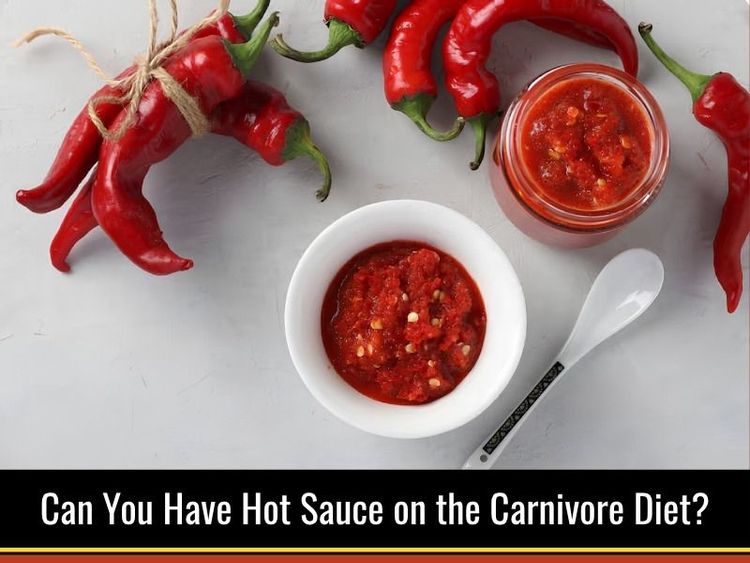
You may be able to have some types of hot sauce on the carnivore diet, depending on which type of carnivore diet you follow. The condition is straightforward: zero added sugar, zero carbs per serving, and a short ingredient list built from peppers, vinegar, and salt. Whether hot sauce fits your plan depends on the version of the diet you're on. Strict carnivore and the Lion Diet exclude all plant-based condiments, no exceptions. Moderate and keto-carnivore approaches accept simple hot sauces used sparingly. For reference, a standard teaspoon (5ml / 0.17 fl oz) of hot sauce contains roughly 0.07g of carbs (1.45g per 100g, USDA FoodData Central). That's a trace amount by any measure.
This article breaks down what the carnivore diet restricts, why hot sauce sits in a gray zone between "allowed" and "off-limits," what to look for on a label, and how much you can safely use without disrupting ketosis or gut healing. If you've been staring at a bottle of hot sauce, wondering whether it belongs on your plate, you're about to get a clear answer.
What Does the Carnivore Diet Actually Restrict?
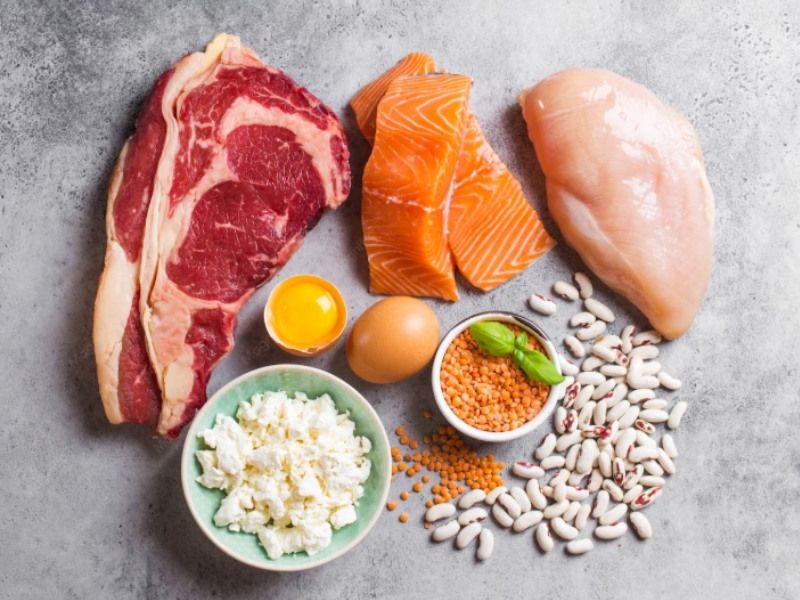
The carnivore diet limits food to animal-derived products - meat, fish, eggs, and select dairy. It excludes all plant-based foods, including vegetables, fruit, grains, and most condiments. Whether a hot sauce fits depends on which version of the diet someone follows, because the rules shift from strict to moderate.
The diet operates by eliminating carbohydrates so the body enters ketosis - a metabolic state where fat becomes the primary fuel source instead of glucose. This zero-carb mechanism is the reason condiment ingredients matter. Any source of sugar or starch, even trace amounts in a condiment, can interfere with ketosis for practitioners on the stricter end.
Not all carnivore diets are the same. The spectrum runs from complete animal-only eating to flexible approaches that allow small amounts of plant-based seasonings. Here's how each type handles hot sauce:
| Type | What It Allows | Hot Sauce Status | Suited For |
| Lion Diet | Ruminant meat (beef, lamb, bison), salt, water only | Not permitted - all plant-based items excluded | Autoimmune healing, severe gut issues, elimination protocol (30-90 days) |
| Standard Carnivore | All meats, organ meats, fish, eggs. No dairy, no seasonings, no plant foods | Not recommended during first 30-90 days; reintroduce cautiously after adaptation | General health reset, weight loss, and inflammation reduction |
| Classic / Relaxed Carnivore | All animal products + eggs + dairy (cheese, butter, cream). Allows minimal plant seasonings in small amounts | Permitted if 0g sugar, 0g carbs, simple ingredient list | Long-term maintenance, general wellness, moderate approach |
| Ketovore / Keto-Carnivore | 90% animal products + up to 10g net carbs from select plant sources (avocados, herbs, spices) | Freely permitted with any low-carb hot sauce | Lifestyle flexibility, social eating, sustainable long-term |
So where does hot sauce actually fall on this spectrum - and what specifically makes it complicated?
Why Hot Sauce Is Complicated on the Carnivore Diet?
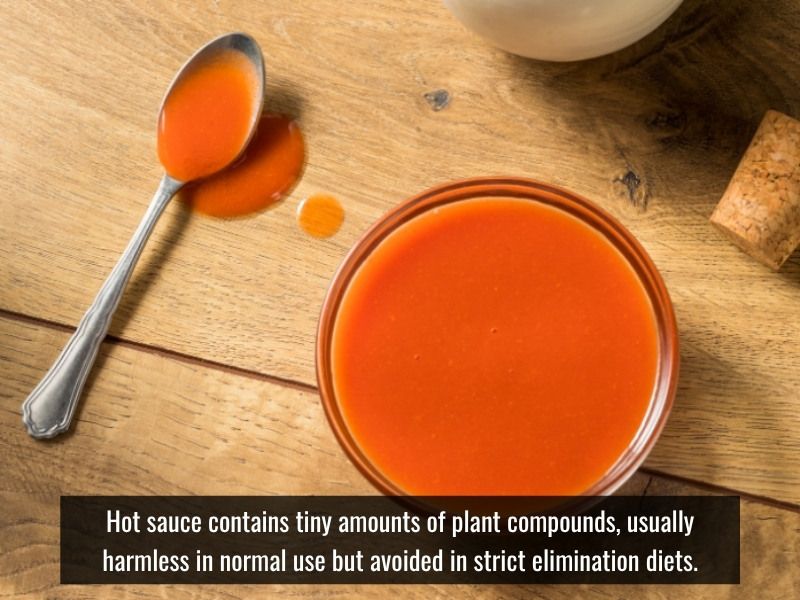
Hot sauce sits in a gray zone. The main issue isn't the heat - it's that chili peppers are plants, vinegar is plant-derived, and most commercial sauces carry added sugar. For a strict carnivore, those three facts disqualify nearly every bottled option. For moderate and keto-carnivore followers, the calculation changes.
Problem 1 - Chili peppers are plants. All hot sauce starts with chili peppers, members of the nightshade family (Solanaceae). Nightshades contain solanine and lectins - compounds some carnivore practitioners avoid because they can trigger inflammation in sensitive individuals. But the quantity in a teaspoon of hot sauce is small. Per USDA FoodData Central, a standard teaspoon of hot sauce contains roughly 0.07g of carbs (1.45g per 100g). The plant exposure from a few dashes of hot sauce is minimal compared to eating a full serving of vegetables. For moderate carnivore followers, this trace amount doesn't disrupt ketosis. For strict carnivore or Lion Diet followers targeting autoimmune healing, even this small plant exposure may interfere with the elimination protocol. Chili peppers also carry anti-nutrients - phytate, oxalate, lectin, and tannin - but at condiment-level quantities (roughly 5-10g per day of actual pepper), these amounts are negligible for most people in good health.
Problem 2 - Vinegar is plant-derived. Distilled white vinegar is produced by fermentation of grain. Apple cider vinegar comes from fermented apples. Both are technically plant-derived. In practice, most moderate carnivore practitioners tolerate vinegar because the fermentation process transforms the plant sugars into alcohol, and the final product contains no carbs. Strict carnivore purists may reject vinegar on principle, but this is a minority position in the carnivore community.

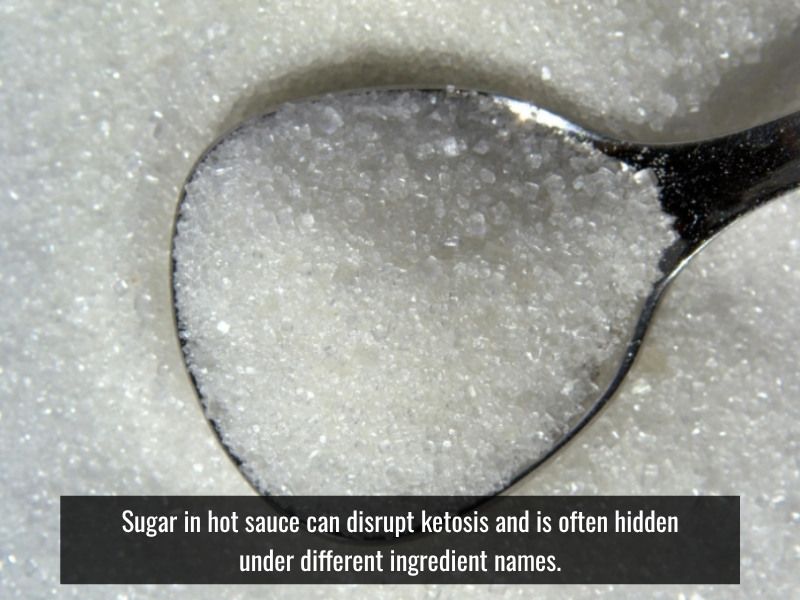
Problem 3 - Added sugar is the real dealbreaker. This is where most commercial hot sauces fail. Even 1g of sugar per teaspoon adds up: 3 teaspoons per day equals 3g sugar, which is enough to trigger an insulin response that disrupts ketosis. Sriracha, for example, contains 1g of sugar per teaspoon (USDA FoodData Central). Over a week of daily use, that's 21g of sugar entering a supposedly zero-carb diet. Sugar also appears under aliases: dextrose, corn syrup, cane sugar, fructose, evaporated cane juice, honey, agave, and fruit concentrate.
So what does a clean hot sauce actually look like on the ingredient list?
What to Look for in a Carnivore-Friendly Hot Sauce
The cleanest hot sauces share a short, recognizable ingredient list: a chili pepper base, vinegar, and salt. That three-ingredient foundation is what carnivore practitioners should use as a baseline. Anything beyond five ingredients - especially sugar, corn syrup, or modified starch - signals a sauce that doesn't fit most carnivore approaches.
In carnivore terms, "clean label" means every ingredient is identifiable by name, no sugar in any form, no seed oils, no synthetic thickeners, and the total ingredient count stays under five. This standard eliminates roughly 70-80% of commercial hot sauces on store shelves.

Here's how common hot sauce ingredients break down for carnivore compliance:
- Chili peppers (fresh, dried, fermented, roasted) are accepted by moderate carnivore in small amounts. Fermentation breaks down natural plant sugars, making fermented sauces slightly more compatible. Charcoal-grilled peppers produce a smoky depth that works well with grilled meat.
- Both distilled vinegar and apple cider vinegar are tolerated. 0g carbs per serving.
- Salt is always allowed - non-negotiable for electrolyte balance on a zero-carb diet.
- Garlic powder appears in trace amounts in sauces like Frank's RedHot. Strict carnivores avoid it. A moderate carnivore allows it.
- Added sugars (any name) are disqualifying: cane sugar, corn syrup, dextrose, fructose, honey, agave, molasses, and fruit concentrate.
- Xanthan gum is a corn-derived thickener in sauces like Cholula. Strict carnivores avoid it. Moderate carnivores debate it.
- Natural flavors can include plant extracts or animal-derived compounds. Safest to avoid strict approaches.
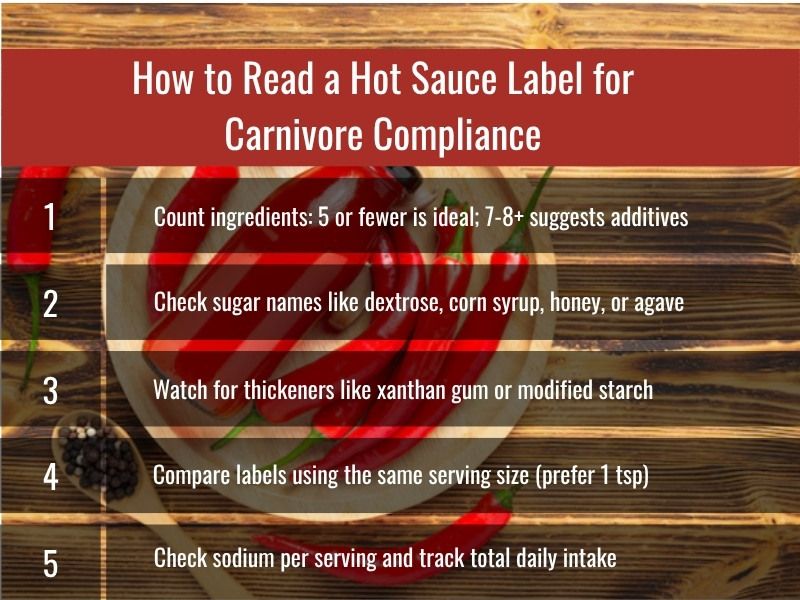
How to Read a Hot Sauce Label for Carnivore Compliance
Read the ingredients list before the nutrition panel. Nutrition labels can show "0g sugar" due to FDA rounding rules for small serving sizes, even when the ingredients list still contains corn syrup or dextrose. The ingredients list shows the truth; the nutrition panel shows approximations.
- Step 1 - Count ingredients. Five or fewer is a reliable signal of a clean product. Tabasco has 3. Frank's RedHot has 5. Anything with more than 7-8 ingredients almost certainly contains additives, thickeners, or sweeteners that complicate compliance with a carnivore diet.
- Step 2 - Scan for sugar aliases. Look for these names in the ingredients list, regardless of what the nutrition panel says: dextrose, cane sugar, corn syrup, high fructose corn syrup, fructose, evaporated cane juice, honey, agave, brown sugar, molasses, fruit concentrate, and fruit puree. If any appear, put the bottle back.
- Step 3 - Check for grain-derived thickeners. Xanthan gum (corn-derived) and modified food starch are used in sauces that prioritize a thick texture. These add 0g carbs on paper, but they're plant-derived processing agents. Strict carnivores avoid them. A moderate carnivore may tolerate them. If the sauce separates naturally when sitting on the shelf, that's actually a good sign - it means no synthetic emulsifiers were added.
- Step 4 - Verify serving size. Some labels use 1 teaspoon (5ml / 0.17 fl oz) as the serving size, others use 1 tablespoon (15ml / 0.5 fl oz). Sugar grams look very different depending on which one is used. A sauce showing "0g sugar" per teaspoon might show "1g sugar" per tablespoon. Always compare labels using the same serving size. Standardize to 1 teaspoon for apples-to-apples comparison.
- Step 5 - Check sodium per serving. Most hot sauces contain 35-200mg of sodium per teaspoon. For carnivore dieters already eating salt-heavy meals and supplementing electrolytes, frequent hot sauce use adds up. Track your total daily sodium intake if you use hot sauce at every meal. The typical daily sodium target for carnivore dieters ranges from 4,000-5,000mg, higher than standard dietary guidelines because the zero-carb state increases sodium excretion through the kidneys.
How Should You Use Hot Sauce on the Carnivore Diet?
For moderate carnivore and ketovore followers - the groups where hot sauce is permitted - the practical question shifts from "can I?" to "how much and how often?" The answer involves both portion control and body monitoring, especially during the early weeks of the diet when the gut is still adapting to an all-meat intake.
Start with 1/4 teaspoon (about 1.25ml) per meal for the first week. That's roughly 2-3 drops from a standard bottle. The goal is to test tolerance, not to season aggressively. Give your body time to respond before increasing.
After 1-2 weeks without digestive issues, most moderate carnivore dieters settle at 1-2 teaspoons (5-10ml / 0.17-0.34 fl oz) per meal. At this amount, carb intake from hot sauce stays under 1g per meal, and capsaicin intake sits around 0.6-1.2mg per serving.
The upper practical limit sits around 1-2 tablespoons (15-30ml / 0.5-1 fl oz) per day across all meals. Beyond this, sodium accumulates, and capsaicin may relax the lower esophageal sphincter, which can cause reflux on a high-fat, meat-heavy diet. Use hot sauce on cooked meals, not on an empty stomach. The fat in meat buffers capsaicin absorption and reduces stomach irritation.
Monitor your body for these signals during the first 30 days:
- Heartburn or acid reflux returning. If reflux appears within 1-2 hours of eating hot sauce, reduce the amount or eliminate it for 7 days before retrying at a lower dose.
- Skin flare-ups such as eczema, psoriasis, or rashes. Chili peppers are nightshades, and nightshade sensitivity is common among people on a carnivore diet for autoimmune conditions. A skin reaction within 24-48 hours warrants a 7-day elimination test.
- Increased cravings for non-carnivore foods. Strong flavors can trigger dopamine-driven hyperpalatability responses. If hot sauce triggers cravings for chips, bread, or other off-plan foods, it may undermine dietary adherence.
- Loose stools or digestive discomfort. Capsaicin accelerates colon transit time. If stool consistency changes, reduce the amount by half or switch to a milder sauce.
Hot sauce works on most carnivore approaches if you choose sauces with zero sugar and simple ingredients. The label tells the story - read it before you buy. For those who want bold, Southeast Asian-inspired heat on their grilled steaks and roasted chicken, CHIN-SU Hot Sauce delivers charcoal-grilled chỉ thiên chili flavor with a clean ingredient list. Visit chinsu.com for the full product range.
Masan Consumer's flagship brands, including CHIN-SU, Nam Ngư, Vincafé, etc., are sold across major markets such as the United States, Japan, South Korea, and Australia. In October 2025, CHIN-SU and Nam Ngư products launched on shelves at Costco in the U.S. and South Korea, as well as Woolworths in Australia.
Frequently Asked Questions
Distilled white vinegar and apple cider vinegar are accepted by most moderate and keto-carnivore followers. Both contain 0g carbs and 0g sugar per serving. Fermentation transforms the plant sugars into vinegar, so vinegar doesn't disrupt ketosis. Only strict Lion Diet followers reject it on principle. In hot sauce quantities, vinegar is not an issue for most practitioners.
Yes, and a homemade version gives full control over every ingredient. For moderate carnivore: blend 10 oz (280g) fresh cayenne peppers with 1 cup (240ml) distilled vinegar and 1 teaspoon salt. Simmer 10 minutes, strain, and bottle. For Southeast Asian-style heat without the effort, CHIN-SU Hot Sauce pairs well with grilled ribeye and pork belly.
For moderate carnivore and ketovore, 1-2 teaspoons (5-10ml) per meal works for most people. The daily ceiling sits around 1-2 tablespoons (15-30ml) total across all meals. Start at 1/4 teaspoon and increase gradually. Lion Diet and strict carnivore followers should use none.

CHIN-SU KITCHEN TEAM
CHIN-SU Kitchen Team are the creative experts behind the delicious recipes featuring CHIN-SU sauces. With years of experience and a passion for flavor, our team carefully selects recipes from a variety of trusted chefs and bloggers, bringing together the best culinary insights to present you with the most suitable and exciting dishes. Every recipe is chosen to inspire you to create meals that are not only tasty but also easy to prepare, enhancing your dining experience. Join us as we explore a wide range of sauces and flavors, and elevate every meal with the perfect recipe for your table!
User Reviews
Featured Articles
Does Hot Sauce Expire? All Things You Need to Know
Does Hot Sauce Need to Be Refrigerated?
How to Preserve Hot Sauce: 4 Methods to Try
Is Hot Sauce Gluten Free?
9 Health Benefits of Hot Sauce: Physical, Nutritional, and Metabolic
SUBSCRIBE TO GET
MORE INFO
Want the latest and greatest recipes, updates, and more from us,
straight to your inbox? Subscribe and get our NEWS!