Sriracha vs. Hot Sauce: Key Differences, Heat & Uses
Published: Sep 15, 2026 by CHIN-SU
Updated: Sep 15, 2026 by CHIN-SU
Sriracha is a specific type of hot sauce with a distinct flavor profile, while hot sauce refers to a broader category of chili-based sauces with different ingredients, textures, and heat levels. Sriracha commonly combines chili peppers, garlic, sugar, and vinegar to create a spicy, sweet, tangy, and savory balance.
The practical difference between hot sauce and Sriracha becomes clearest when Sriracha is compared with a thin, vinegar-forward hot pepper sauce rather than the entire hot sauce category. The main differences involve ingredient balance, flavor, consistency, acidity, sweetness, and culinary use.
Understanding these differences helps you choose the right sauce for topping, dipping, cooking, marinades, and recipe substitutions.
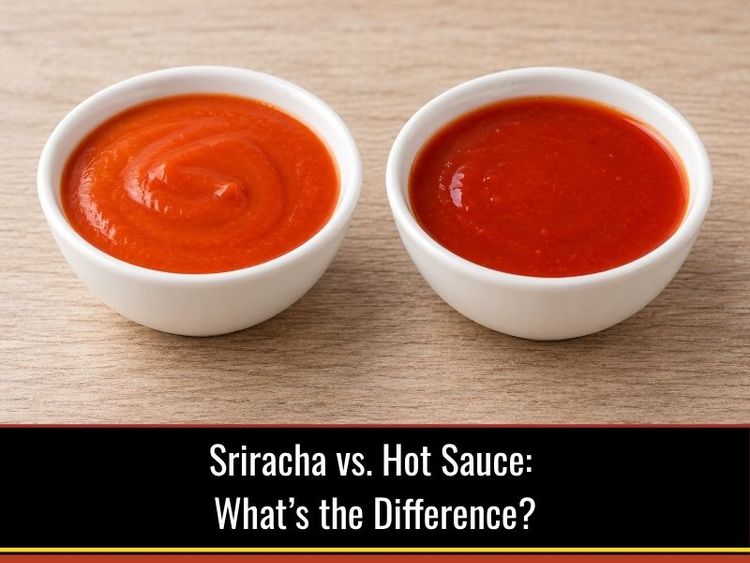
Is Sriracha a Hot Sauce?
Yes, Sriracha is a type of hot sauce. Hot sauce is the broader category, while Sriracha is a specific style of chili sauce within that category.
Sriracha takes its name from Si Racha, a coastal city in Thailand associated with the development of the original sauce style. Modern Sriracha formulas vary by producer, but they commonly combine chili peppers, garlic, sugar, vinegar, and salt or other seasonings.
Hot sauce covers a much wider range of products, including thin vinegar-forward pepper sauces, Sriracha-style sauces, fermented chili sauces, and fruit-based hot sauces. Each hot sauce variety has its own balance of flavor, texture, acidity, sweetness, and heat.
In simple terms, Sriracha belongs to the hot sauce family, while hot sauce includes many styles beyond Sriracha. These styles differ in flavor, texture, acidity, sweetness, and heat, which creates the main differences explored in the comparison below.
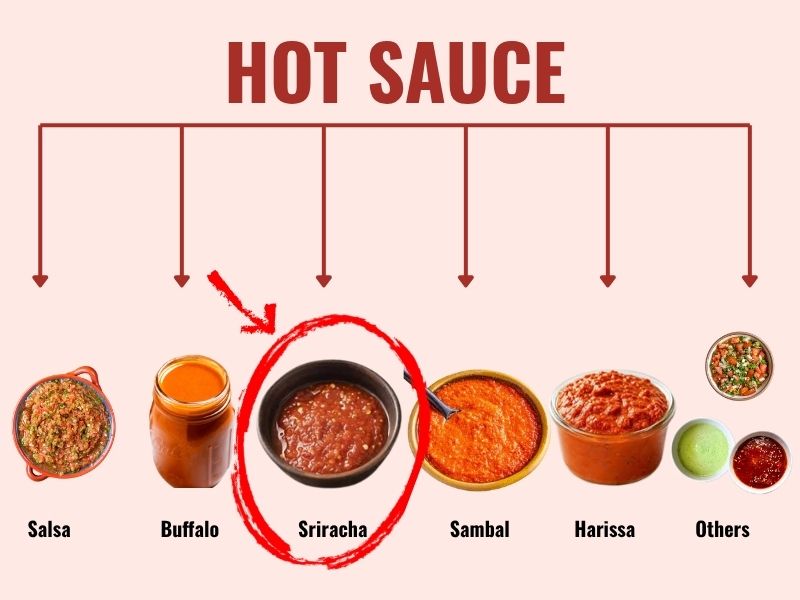
What Is the Difference Between Sriracha and Hot Sauce?
Sriracha differs from typical vinegar-forward hot sauce mainly in ingredient balance, sweetness, acidity, garlic intensity, texture, and culinary function. The ingredients used in hot sauce determine how these factors shape the final flavor, heat perception, and consistency. Both use chili peppers to provide heat, but they deliver that heat differently.
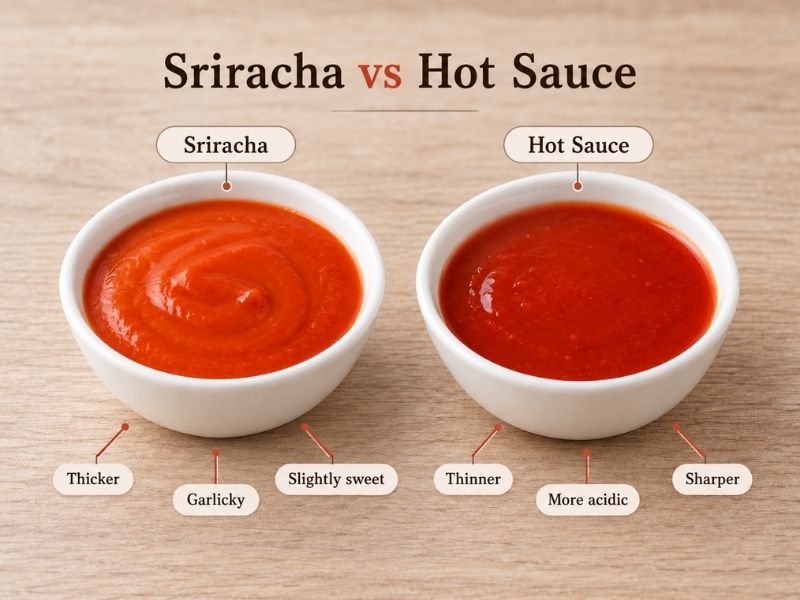
The table below shows the practical differences between the two sauce styles.
| Attribute | Sriracha | Typical Vinegar-Forward Hot Sauce |
| Classification | A specific type of hot sauce | A common style within the broader hot sauce category |
| Typical Base | Chili peppers, garlic, sugar, vinegar, and seasonings | Chili peppers or pepper mash, vinegar, salt, and seasonings |
| Flavor | Chili-forward, garlicky, tangy, and noticeably sweet | Chili-forward, acidic, salty, and sharper |
| Sweetness | Usually more noticeable | Usually lower |
| Acidity | Balanced with chili, garlic, and sweetness | Usually more pronounced |
| Texture | Smooth and relatively thick | Thin, smooth, and pourable |
| Heat | Varies by pepper and formulation | Ranges from mild to extremely hot |
| Typical Use | Topping, dipping, mixing, marinades, and cooking | Dashing, drizzling, seasoning, marinades, and cooking |
The exact flavor and texture vary from one product to another. Sriracha recipes use different peppers and ingredient ratios, while other hot sauces may be thicker, sweeter, smokier, fruitier, or less acidic than the vinegar-forward style used in this comparison.
How Hot Is Sriracha Sauce?
Sriracha sauce generally falls in the mild-to-medium range of hot sauces, with many products measuring a few thousand Scoville Heat Units (SHU). There is no single Scoville rating for Sriracha because each brand uses different chili peppers, chili concentrations, and ingredient ratios. For example, TABASCO Sriracha is rated at 1,000–3,000 SHU, while Flying Goose places Sriracha at approximately 2,000–5,000 SHU.
A common related question is whether Sriracha is hotter than hot sauce. There is no universal yes-or-no answer because hot sauce is the broader category: some hot sauces are milder than Sriracha, while sauces made with hotter peppers can be substantially more intense.
Sriracha gets its heat from capsaicin in chili peppers. A higher proportion of chili or a hotter pepper variety usually produces a stronger heat level, while ingredients such as water, vinegar, sugar, and garlic change the concentration and overall sensory balance of the finished sauce. CHIN-SU Sriracha uses 348 g of chỉ thiên chili per kilogram of sauce and is rated 4/5 for heat on CHIN-SU’s product scale. This gives chili a prominent role in its flavor profile while garlic, sugar, and vinegar provide pungency, sweetness, and acidity.
For the most accurate comparison, check the SHU range or heat rating of the specific Sriracha product rather than using one number for every Sriracha sauce. The Scoville scale for hot sauce helps explain how different chili sauces are measured and compared by heat level.
When Should You Use Sriracha and Vinegar-Forward Hot Sauce?
Use Sriracha when you want chili heat with garlic, mild sweetness, and a thicker texture. Use vinegar-forward hot sauce when you want sharper acidity, a thinner consistency, and heat that spreads quickly through the dish.
The better choice depends on the role the sauce needs to play:
| Culinary Use | Better Fit | Why |
| Coating noodles or fried rice | Sriracha | Its thicker texture clings to the food |
| Topping burgers, sandwiches, or fried foods | Sriracha | It adds heat, garlic, sweetness, and body |
| Mixing into creamy dips or sauces | Sriracha | Its concentrated flavor remains noticeable after mixing |
| Adding flavor to noodle broths | Sriracha | It contributes chili, garlic, sweetness, and acidity together |
| Finishing tacos, pizza, or eggs | Vinegar-forward hot sauce | Its thin texture spreads easily across the surface |
| Adding acidity to rich foods | Vinegar-forward hot sauce | Vinegar provides a sharper, more direct tang |
| Mixing into dressings or marinades | Vinegar-forward hot sauce | Its thinner consistency disperses evenly |
| Adding heat without much sweetness | Vinegar-forward hot sauce | It keeps the flavor more chili-and-vinegar forward |
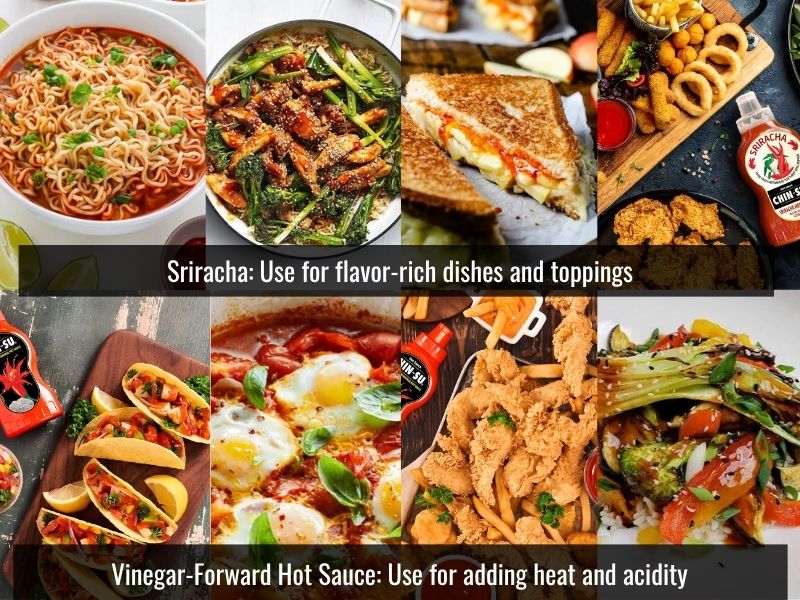
Sriracha is a better fit when the sauce needs to become a noticeable part of the dish, especially in noodles, rice dishes, sandwiches, burgers, fried foods, dips, and broths. CHIN-SU Sriracha Hot Sauce follows this style with chili heat, garlic flavor, sweetness, and balanced acidity, making it suitable for similar everyday uses.
Vinegar-forward hot sauce works better when the goal is to add heat and acidity without adding much sweetness or thickness, especially on tacos, pizza, eggs, fried chicken, roasted vegetables, dressings, and marinades.
The key difference is culinary function: Sriracha adds heat with garlic, sweetness, and body, while vinegar-forward hot sauce adds heat with sharper acidity and a lighter texture.
Can You Substitute Sriracha for Hot Sauce?
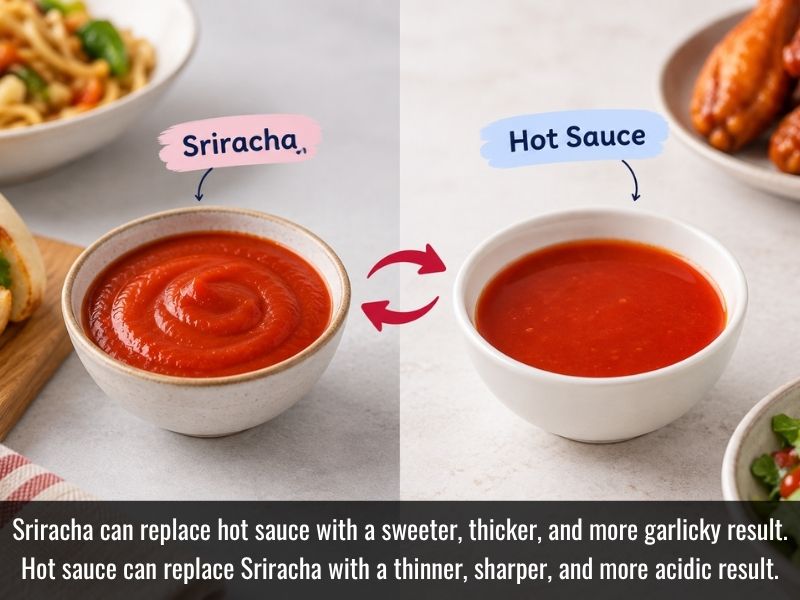
Yes, Sriracha can replace a thin vinegar-forward hot sauce in many recipes, especially when the main goal is to add chili heat. The substitution changes the dish because Sriracha adds more garlic, sweetness, and body, while contributing less sharp acidity.
Sriracha works well as a substitute in marinades, dipping sauces, stir-fries, noodle dishes, sandwiches, and similar recipes where small changes in sweetness or texture do not affect the overall result.
The reverse substitution also works in many cases. Replacing Sriracha with a vinegar-forward hot sauce creates a thinner, more acidic result with less garlic flavor, sweetness, and coating texture.
Substitute gradually rather than using the full amount at once because heat levels vary between products. Taste and adjust the sauce until the balance of heat, acidity, sweetness, and saltiness fits the dish.
The substitution works less well in recipes where Sriracha provides an important part of the texture, such as thick dips, glazes, or coating sauces. In those dishes, a thin hot sauce changes both the flavor and consistency of the final result.
Frequently Asked Questions
Yes, Sriracha is a chili sauce and a type of hot sauce. “Chili sauce” is a broad culinary description for sauces based on chili peppers, while “Sriracha” identifies a more specific style with a characteristic combination of chili, garlic, sweetness, and acidity.
The terminology overlaps rather than creating separate categories. A product can accurately be described as both a Sriracha chili sauce and a hot sauce.Yes, Sriracha is like other hot sauces in that chili peppers provide its heat, but its garlic, sweetness, and thicker texture give it a distinct flavor and consistency.
Compared with a typical vinegar-forward hot pepper sauce, Sriracha usually tastes less sharply acidic and has more body. Other hot sauce styles can differ substantially depending on their peppers, fermentation, sweeteners, fruit, spices, and other ingredients.
Yes, Sriracha and hot sauce can be mixed when you want Sriracha's body and garlic flavor with additional acidity or a different type of chili heat.
The final balance depends on the two products. Add the thinner hot sauce gradually because it changes both heat and consistency while increasing the liquid and acidic components of the mixture.
Sriracha is usually thicker because its formulation contains a denser blended chili base and more solids relative to thin vinegar-forward hot sauces.
Garlic, sugar, chili solids, and the overall liquid-to-solid ratio contribute to its coating texture. Exact consistency varies by producer because ingredient proportions and processing methods differ.
Yes, Sriracha chili sauce is hot because it contains chili peppers that provide capsaicin, the compound responsible for spicy heat. However, Sriracha is designed to balance heat with garlic, sweetness, and acidity rather than deliver only intense spiciness.
The perceived heat level varies by product because brands use different chili varieties, chili concentrations, and formulations.

CHIN-SU KITCHEN TEAM
CHIN-SU Kitchen Team are the creative experts behind the delicious recipes featuring CHIN-SU sauces. With years of experience and a passion for flavor, our team carefully selects recipes from a variety of trusted chefs and bloggers, bringing together the best culinary insights to present you with the most suitable and exciting dishes. Every recipe is chosen to inspire you to create meals that are not only tasty but also easy to prepare, enhancing your dining experience. Join us as we explore a wide range of sauces and flavors, and elevate every meal with the perfect recipe for your table!
User Reviews
Featured Articles
9 Health Benefits of Hot Sauce: Physical, Nutritional, and Metabolic
Can You Have Hot Sauce on the Carnivore Diet?
Does Hot Sauce Need to Be Refrigerated?
Hot Sauce Recipe: How to Make with Any Chili Pepper
SUBSCRIBE TO GET
MORE INFO
Want the latest and greatest recipes, updates, and more from us,
straight to your inbox? Subscribe and get our NEWS!