What Are the Ingredients in Hot Sauce?
Published: Jun 14, 2026 by CHIN-SU
Updated: Jul 10, 2026 by CHIN-SU
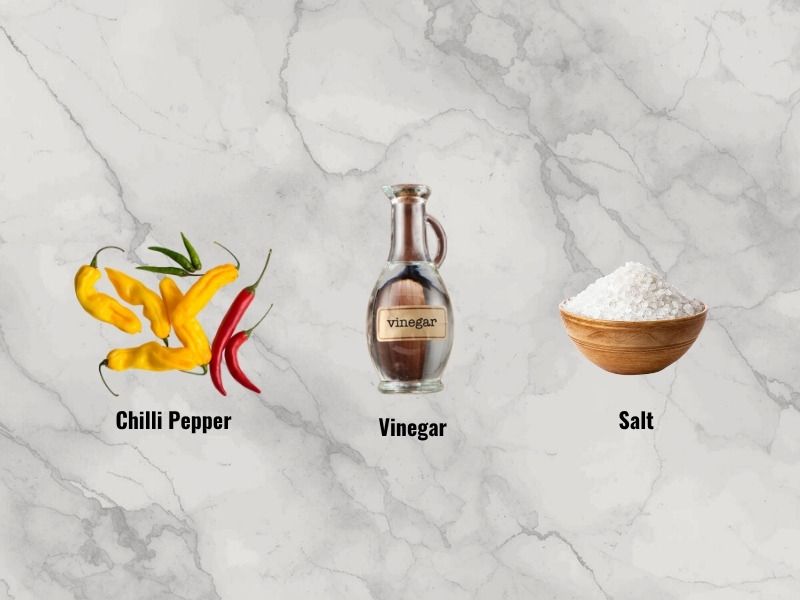
The base ingredients in hot sauce are chili peppers, vinegar, and salt. Every bottle on the shelf shares these three. Peppers deliver heat through capsaicin, vinegar lowers the pH to keep the sauce shelf-stable, and salt concentrates flavor by drawing water out of the pepper mash. That's the formula, whether it's a Louisiana-style bottle or a thick Asian chili sauce. It's been this way since Edmund McIlhenny started bottling Tabasco in 1868. Three ingredients, one foundation.
Beyond that base, secondary ingredients separate one style from another. Garlic, sweeteners, thickeners, and spices each play a different role in how a sauce tastes and how it sits on food. In this guide, CHIN-SU will let you know every ingredient category, explains why each one matters, and shows how the same core formula shifts across Louisiana, Mexican, and Asian chili sauce styles.
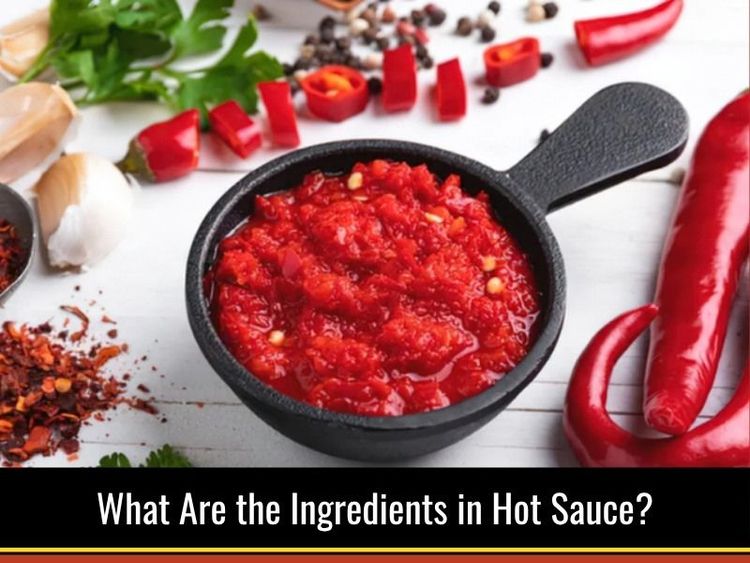
Table Of Contents
What Is the Base of Every Hot Sauce?
Hot sauce has three non-negotiable base ingredients: chili peppers, an acid (usually vinegar), and salt. Every style, from Louisiana to Sriracha, starts here. Without peppers, there's no heat. Without acid, the sauce can't be stored safely. Without salt, the flavor falls flat. These three show up in mass-produced bottles and homemade batches alike.
A "base ingredient" in sauce formulation is any component that the product structurally fails without. Remove one, and you don't get a different sauce. You get something that either can't deliver heat, can't sit on a shelf, or tastes one-dimensional. The two biggest players, peppers and vinegar, each carry enough weight to deserve their own sections below. Salt works right alongside them.
Salt's role goes beyond seasoning. At a concentration of 2-3% by weight, salt draws water out of pepper cell walls through osmosis. That concentrates the flavor compounds inside the mash and amplifies how your tongue perceives both heat and acidity. Salt also creates the right environment for lacto-fermentation in sauces that use it. The FDA mandates that acidified foods, such as hot sauce, reach a finished equilibrium pH of 4.6 or below for shelf stability under 21 CFR Part 114. Most commercial hot sauces land between pH 3.0 and 4.0, well below that legal threshold. That's why vinegar isn't about taste alone. It's a safety requirement.
What Types of Chili Peppers Are Used in Hot Sauce?
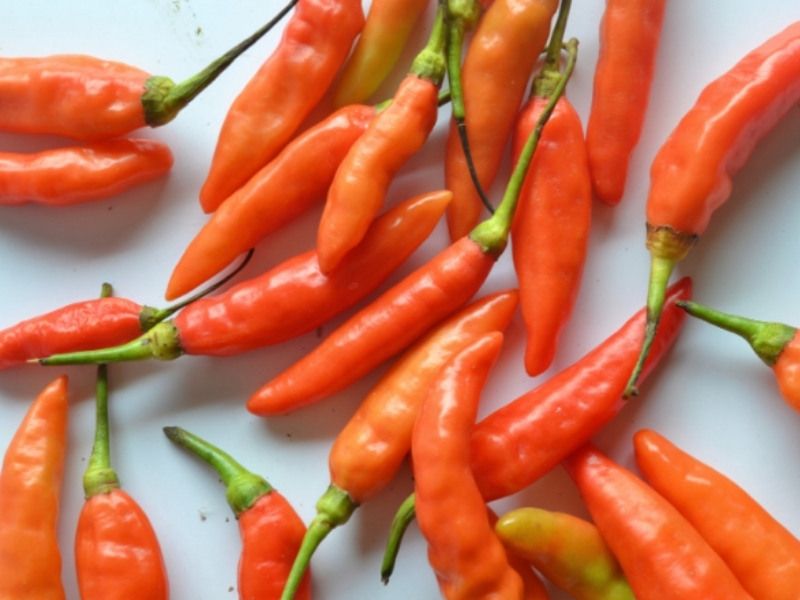
Cayenne peppers are the most widely used pepper in commercial hot sauce. Their neutral, direct heat at 30,000-50,000 SHU (Wikipedia, Scoville Scale) makes them a reliable base that doesn't fight other flavors. You'll find cayenne in Louisiana-style sauces, Texas Pete, and Crystal. After cayenne, the most common picks are jalapeño (Sriracha), habanero (Caribbean sauces), Tabasco peppers (Tabasco brand), and celestial chili pepper (ớt chỉ thiên; Asian chili sauces).
Pepper texture shapes the finished product. Fleshy peppers like jalapeños and habaneros blend into thicker purées. Thin-walled peppers like cayenne and bird's eye chili yield thinner, more pourable sauces. Capsaicin concentrates in the placental tissue, so peppers with more membrane add extra heat but also grittiness if you don't strain the blend.
How a pepper is prepared changes the sauce just as much. Fresh peppers produce bright, grassy, sharp heat. Dried peppers deliver a deeper, smokier flavor because removing water makes them hotter, pound for pound. Fermented peppers develop tangy, umami-rich heat. Tabasco ferments its pepper mash with salt in oak barrels for up to 3 years before adding vinegar. That fermentation naturally produces lactic acid, so some fermented sauces need less added vinegar to reach a safe pH. These preparation methods create noticeably different flavor profiles, making flavor an important consideration when choosing a hot sauce.
What Role Does Vinegar Play in Hot Sauce Ingredients?
Vinegar serves two functions in hot sauce: it preserves the sauce by lowering pH below 4.0, and it sharpens the overall flavor with acidity that balances the pepper's heat. Its acetic acid drops the pH into a range (typically 3.2-4.0) where spoilage bacteria and Clostridium botulinum can't survive. That sour bite also cuts through the fat-soluble capsaicin heat, giving the sauce its brightness.
White distilled vinegar has an acidity of 5% and delivers the sharpest, cleanest acid hit. It's the most common choice in Louisiana-style sauces because it doesn't compete with the pepper flavor. Apple cider vinegar has a variable acidity of 5-6% and softens the edge with a fruity, slightly sweet note, pairing well with habanero and fruit-based sauces. Higher acidity means longer preservation and more sourness. Lower acidity means milder tang but tighter pH monitoring.
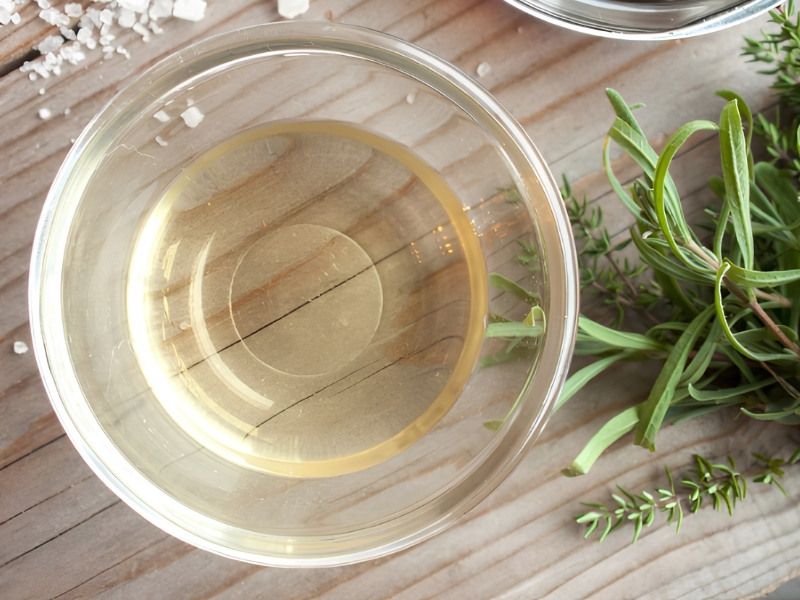
These numbers matter for safety, too. The FDA mandates that shelf-stable acidified foods maintain a finished equilibrium pH of 4.6 or below, and most commercial hot sauces sit well below that threshold at pH 2.8–3.5. For home-produced sauces, a target of 4.0 or lower is recommended.
Fermented styles like Tabasco take a different path: lacto-fermentation generates lactic acid on its own during up to 3 years of barrel aging, so distilled vinegar is added only at the end to thin the sauce and complete acidification. That's why Tabasco tastes less vinegar-forward than Louisiana or Crystal, despite using the same pepper species. The acid still does both jobs (preservation and flavor), but its source and timing vary by method.
What Are the Secondary Ingredients in Hot Sauce?
Beyond the three-ingredient base, most commercial and homemade hot sauces pull from four secondary categories: aromatics, sweeteners, thickeners, and spices. These don't define hot sauce the way peppers, vinegar, and salt do. But they separate a good sauce from a basic one. For example, a Louisiana-style sauce skips most of them while a Caribbean sauce leans on all four. The choice of secondary ingredients is where a sauce maker's personality shows up.
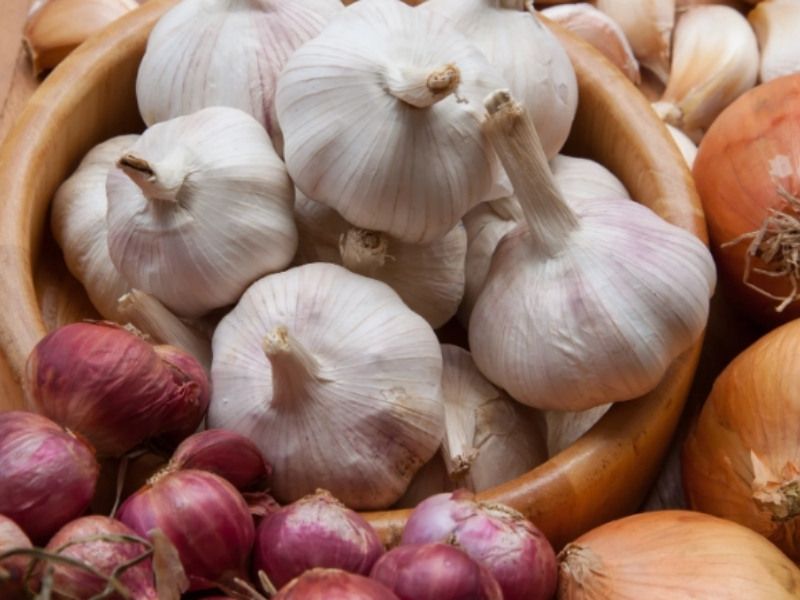
Aromatics like garlic, onion, and shallot add pungent depth and a savory backbone. Sweeteners, whether sugar, honey, or fruit like mango, carrot, pineapple, or peach, round off sharp heat and extend the sauce's food-pairing range. Thickeners like xanthan gum, tomato paste, or carrot purée control viscosity so the sauce clings to food instead of running off the plate. Spices like cumin, smoked paprika, black pepper, coriander, and mustard seed add dimension without adding heat.
What you swap within a single category changes more than you'd expect. Adding mango to a habanero base produces a sauce with natural pectin for thickening, a tropical aroma, and a fruity acidity that works well with seafood and grilled chicken. But if you swap the mango for granulated sugar, the same base becomes a sauce with pure sweetness and caramelization potential but no aroma, pairing better with fried food and wings. Same category. Different outcome.
Garlic is the most common secondary ingredient across the board. It shows up as garlic powder in Louisiana-style sauces, as fresh garlic in Sriracha, and as fermented garlic in CHIN-SU Hot Sauce. Xanthan gum appears in Tapatio and Sriracha as a thickener and emulsifier. Sugar appears in Sriracha but rarely in Louisiana-style sauces, which tend to keep the ingredient list short and acid-forward.
Made from these pure ingredients, hot sauce offers benefits you may not expect. Discover 9 benefits of hot sauce and see why this spicy staple deserves a spot in your daily meals.
How Do Hot Sauce Ingredients Differ by Style?
Hot sauce style determines which ingredients dominate. The same base formula, peppers, acid, and salt, reads completely different depending on the regional tradition behind it. Ingredient ratios shift, secondary ingredients change, and even the preservation method varies. There are three broad styles that dominate the hot sauce world: Louisiana, Mexican, and Asian chili sauce.
First, Louisiana-style hot sauce. A typical Louisiana-style bottle is roughly 60-70% vinegar and water, 25-35% pepper mash, and 2-3% salt. The sauce is thin, pourable, and acid-forward. That ratio is why you can shake it straight from the bottle onto eggs or fried chicken without thinking twice. Louisiana, Crystal, and Texas Pete all follow this template. The pepper mash is usually aged cayenne, blended thin enough to run through a standard bottle neck.
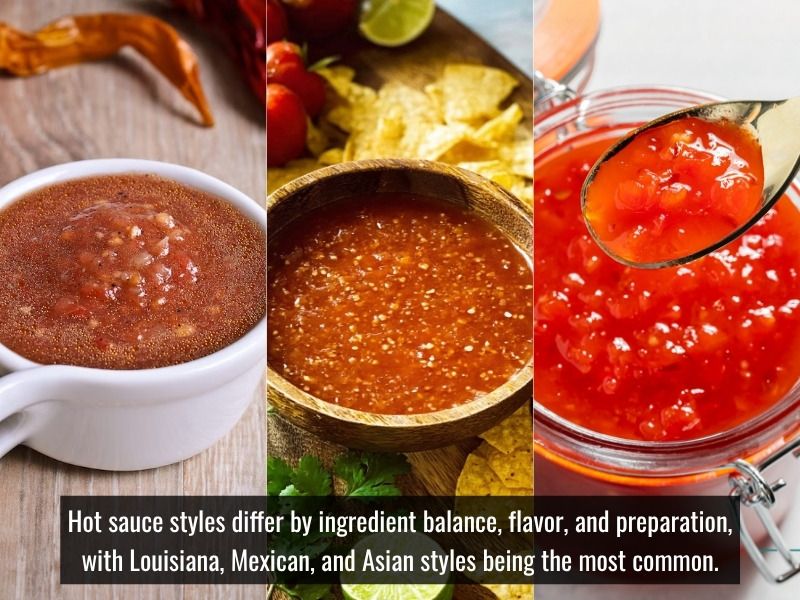
That ratio inverts in Mexican-style sauces. Cholula and Valentina lead with water and pepper, use vinegar sparingly, and add a spice blend. Cholula combines arbol and piquin peppers for a layered, medium heat. Valentina lists water, chili peppers, vinegar, salt, spices, and sodium benzoate. Sriracha (Huy Fong) lists chili as the first ingredient, followed by sugar, salt, garlic, and distilled vinegar. Sugar ranks higher than vinegar on that label, which is why Sriracha tastes sweeter and thicker than anything in the Louisiana family.
Asian chili sauces take a different path. CHIN-SU Chili Sauce follows the Vietnamese tradition of celestial chili peppers. It starts with charcoal-grilled ớt chỉ thiên (celestial chili pepper, 100,000-250,000 SHU), blended with fermented fresh garlic for umami depth. The charcoal grilling caramelizes the pepper skin before blending, creating a roasted aroma that Western vinegar-based sauces don't carry.
Fermented garlic adds the same complexity that Korean black garlic brings to gochujang: a slow-developed sweetness and depth that raw garlic can't replicate. This positions CHIN-SU within the broader Asian chili sauce family alongside Sriracha and sambal, but with a Vietnamese flavor profile built on fire-roasted heat and fermented aromatics.
Every hot sauce starts with the same three ingredients: chili peppers, vinegar, and salt. Peppers set the heat level, vinegar preserves the sauce and adds brightness, and salt ties the flavor together. From there, secondary ingredients like garlic, sweeteners, and spices shape each style. Louisiana-style sauces stay thin and acid-forward. Mexican-style sauces layer spice blends and peppers. Asian chili sauces build depth through fermentation and aromatics. The formula is simple, but the combinations are wide open. Try CHIN-SU Hot Sauce for charcoal-grilled chili pepper heat and fermented garlic depth at chinsu.com.
Masan Consumer's flagship brands, including CHIN-SU, Nam Ngư, Vincafé, etc., are sold across major markets such as the United States, Japan, South Korea, and Australia. In October 2025, CHIN-SU and Nam Ngư products launched on shelves at Costco in the U.S. and South Korea, as well as Woolworths in Australia.
Frequently Asked Questions
Thickeners like xanthan gum, pectin, or starchy vegetables (think carrot purée and tomato paste) add body to a sauce, while more vinegar or water thins it down to a pourable consistency. The peppers play a role, too. Fleshy peppers like jalapeño and habanero naturally contribute more pulp, while straining removes the pulp and seeds for a smoother, thinner result.
Plain hot sauces contain no gluten-bearing ingredients. Tabasco, Frank's, Cholula, Louisiana, and CHIN-SU all use peppers, vinegar, salt, and aromatics with no wheat or barley. The risk comes from flavored varieties that may include soy sauce (wheat) or malt vinegar (barley). If a label says "distilled vinegar," it's gluten-free because distillation removes gluten proteins.
A typical homemade sauce contains 4-6 whole ingredients: fresh peppers, vinegar, salt, garlic cloves, and maybe onion or a sweetener. Commercial sauces use processed ingredients like aged peppers and garlic powder to ensure consistency and shelf life. Some brands add preservatives like sodium benzoate or potassium sorbate. Homemade sauces skip these because they're refrigerated and used within weeks.
The best pairing depends on sauce style. Louisiana-style sauces pair with fried chicken, eggs, po'boys, and gumbo because acid cuts through fat. Mexican-style sauces work on enchiladas, burritos, tamales, and breakfast burritos. Asian chili sauces bring garlic depth to pho, noodle bowls, stir-fries, and fried rice. CHIN-SU Chili Sauce carries celestial chili pepper sharpness and fermented garlic richness that work from pho and spring rolls to grilled meats and stir-fries.

CHIN-SU KITCHEN TEAM
CHIN-SU Kitchen Team are the creative experts behind the delicious recipes featuring CHIN-SU sauces. With years of experience and a passion for flavor, our team carefully selects recipes from a variety of trusted chefs and bloggers, bringing together the best culinary insights to present you with the most suitable and exciting dishes. Every recipe is chosen to inspire you to create meals that are not only tasty but also easy to prepare, enhancing your dining experience. Join us as we explore a wide range of sauces and flavors, and elevate every meal with the perfect recipe for your table!
User Reviews
Featured Articles
SUBSCRIBE TO GET
MORE INFO
Want the latest and greatest recipes, updates, and more from us,
straight to your inbox? Subscribe and get our NEWS!