Is Hot Sauce Keto-Friendly? What the Nutrition Label Actually Tells You
Published: Jun 18, 2026 by CHIN-SU
Updated: Jul 23, 2026 by CHIN-SU
Most hot sauces are keto-friendly. A standard 1-teaspoon (5 ml) serving of a vinegar-based hot sauce contains 0g net carbs, less than 1 calorie, and 0g sugar (USDA FoodData Central). That's a fraction of the 20–50g of daily carbs allowed by a ketogenic diet (StatPearls, NCBI).
However, not every hot sauce tells the same story on its nutrition label. The answer varies by sauce category: vinegar-based, fermented, sriracha-style, tomato-based, fruit-based, sweet chili, and honey-glazed. The difference comes down to what manufacturers add beyond peppers, vinegar, and salt. A plain cayenne sauce and a mango habanero sauce sit on opposite ends of the keto spectrum, and the label is where you'll spot that gap.
This article breaks down the carb count across seven sauce categories, explains what capsaicin brings to a keto diet beyond heat, covers how much hot sauce you can use before carbs add up, shows you how to read a hot sauce label in four steps, and pairs each sauce type with keto-friendly meals. Grab a bottle and let's read the fine print.

Table Of Contents
Is Hot Sauce Keto-Friendly?
Yes. Most hot sauces are keto-friendly. A standard 1-teaspoon (5 ml) serving of a vinegar-based hot sauce contains 0g net carbs, well within the 20–50g daily carb ceiling a ketogenic diet requires.
Hot sauce fits a ketogenic diet because chili peppers, vinegar, and salt, the three core ingredients in most hot sauces, contribute almost no digestible carbohydrates per serving. A whole jalapeño pepper (about 15g) contains only ~0.5g net carbs. Once that pepper is diluted across an entire bottle of sauce, the per-teaspoon contribution is barely a trace.
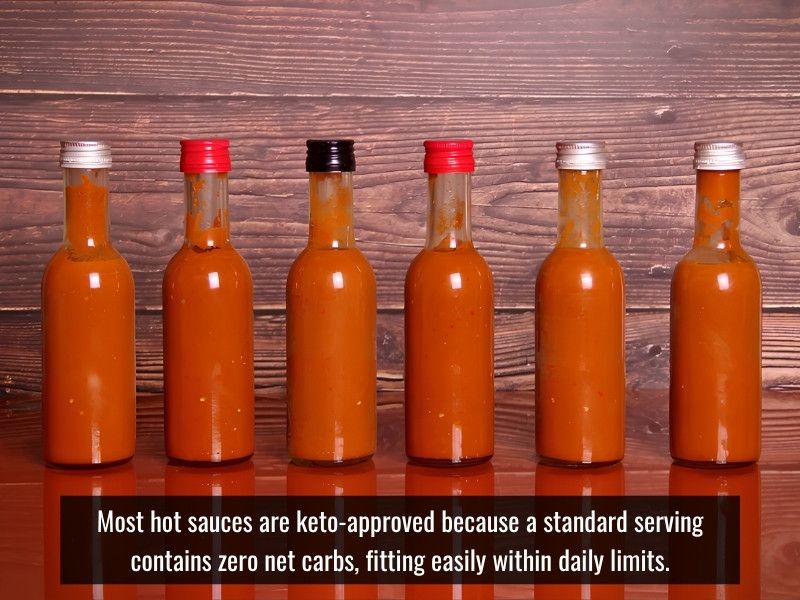
The ketogenic diet restricts daily carbohydrate intake to 20–50g to maintain ketosis, a metabolic state in which the body shifts from burning glucose to burning fat as its primary energy source (StatPearls, NCBI). At 0g carbs per teaspoon, a vinegar-based hot sauce occupies zero space in that daily budget. You could pour it on every meal, and the math doesn't change.
Net carbs, calculated by subtracting dietary fiber and sugar alcohols from total carbohydrates, are the number keto dieters track, not the total carbohydrate figure on the label (StatPearls, NCBI). For most standard hot sauces, total carbs and net carbs are identical because the fiber content is negligible.
Hot sauce only becomes a problem in keto diets when manufacturers add sugar, honey, fruit purees, or starch-based thickeners. Those additions raise the net carb count per serving from near-zero to 2–8g. For example, a mango habanero sauce and a plain cayenne sauce look similar on the shelf, but their carb profiles are nothing alike. One uses fruit puree as a base ingredient; the other sticks to peppers and vinegar.
Reading the nutrition label before any bottle reaches your cart is the most direct way to confirm whether a hot sauce fits your daily carb budget. The sections below break this down by sauce category. The answer shifts depending on what type of hot sauce you're working with. Here's how each category stacks up.
Is Vinegar-Based Hot Sauce Keto Friendly?
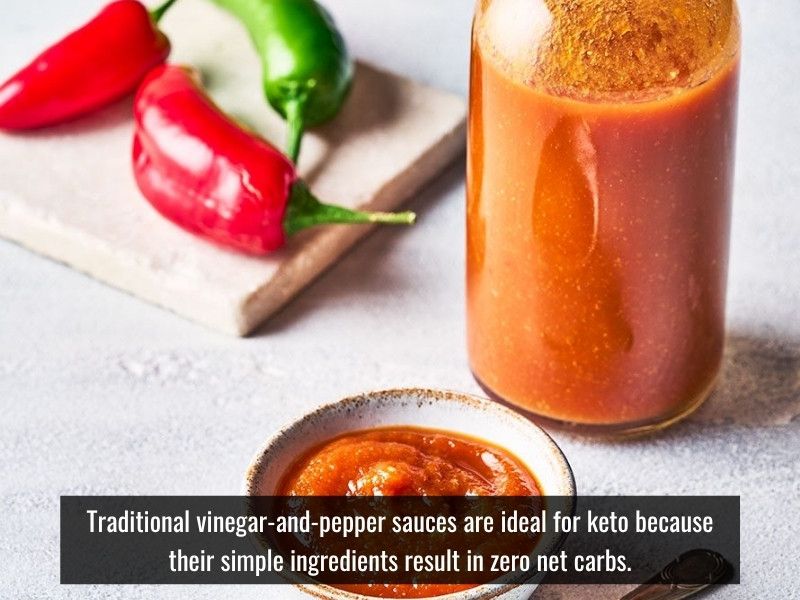
Yes. 0g net carbs per 1-teaspoon (5 ml) serving makes plain vinegar-and-pepper hot sauce one of the safest keto condiments (USDA FoodData Central). This is the most keto-compatible category and the base of most Louisiana-style cayenne sauces.
The ingredient list runs short: aged cayenne peppers, distilled vinegar, water, salt, and sometimes garlic powder. No sugar, no starch, no fruit. That simplicity keeps the carb count at zero across every serving. Aged pepper sauces, cayenne-vinegar sauces, piquin-arbol blends, and water-based pepper sauces all have 0g of carbs per teaspoon. CHIN-SU Hot Sauce contains a small amount of sugar and tomato paste, so check the label and count those carbs toward your daily keto limit.
Is Fermented Chili Sauce Keto Friendly?
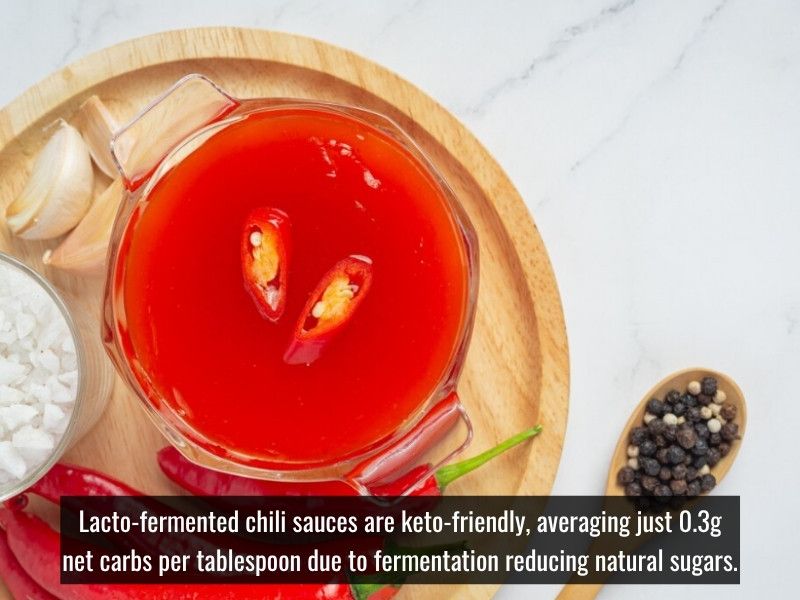
Yes. Lacto-fermented chili sauces, made from whole chili peppers, salt, garlic, and vinegar, land at about 0.3g net carbs per 1-tablespoon (15 ml) serving. The fermentation process consumes residual sugars in the raw pepper base, keeping the net carb count low enough for most keto plans.
During lacto-fermentation, Lactobacillus bacteria feed on the natural sugars in fresh chili peppers and convert them into lactic acid. That conversion gives fermented sauces their tangy depth. A 1-tablespoon serving also delivers about 4 calories, 0.5g sugar, and 175 mg sodium (Norbert's Kitchen). Scale that down to 1 teaspoon, and you're looking at roughly 0.1g net carbs per serving.
If your bottle lists just peppers, salt, garlic, and vinegar, it fits a keto plan.
Is Sriracha-Style Hot Sauce Keto Friendly?
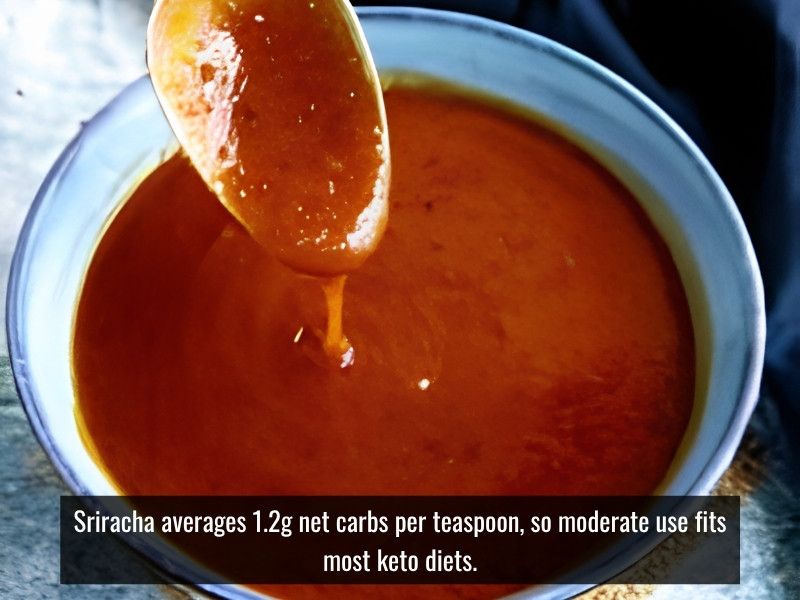
Yes, in moderation. Sriracha-style sauces contain added sugar, delivering about 1.2g net carbs and 1g sugar per 1-teaspoon (6.5g) serving (USDA). At 1 to 2 teaspoons per meal, this fits within most keto carb budgets.
Sugar is what separates sriracha from plain hot sauce. Huy Fong Sriracha lists its ingredients as chili, sugar, salt, garlic, and distilled vinegar. Do the math: 1.2g per teaspoon times 3 teaspoons equals 3.6g carbs, still manageable within a 20 to 50g daily keto threshold.
If you're on strict keto (under 20g per day), limit sriracha to 1-2 teaspoons per meal, or switch to a vinegar-based alternative.
Is Tomato-Based Hot Sauce Keto Friendly?
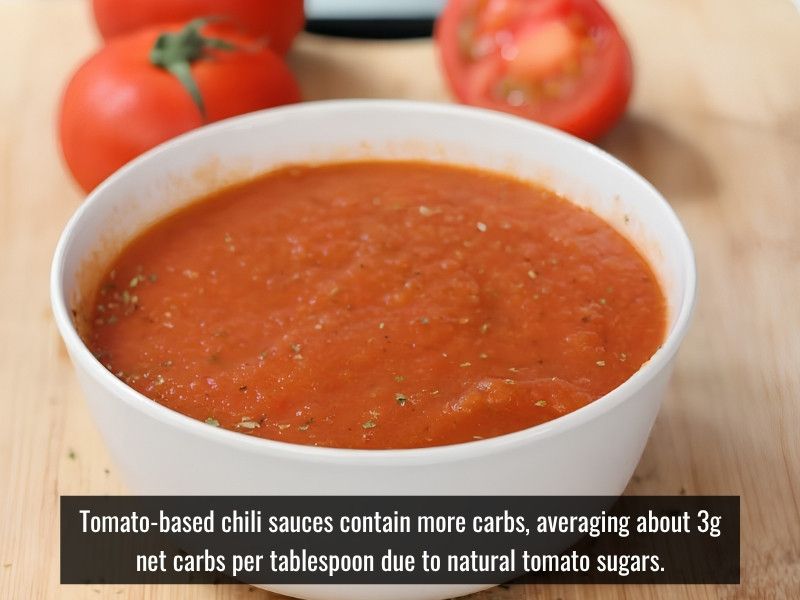
Generally, yes, but check the label. Tomato chili sauces contain about 3g net carbs per tablespoon (17g), more than vinegar-based sauces, because tomato paste and tomato puree carry natural sugars (NutritionValue.org). 16 calories and 2.3g sugar per tablespoon add up if you pour freely.
Tomato paste alone holds about 5g of carbs per tablespoon (USDA FoodData Central). When used as a sauce base, dilution lowers per-serving impact, but not to zero. The thicker the sauce, the more tomato concentrate per serving. Some tomato-based sauces also add sugar on top of the natural tomato sugars, so double-check the "Added Sugars" line on the Nutrition Facts panel.
Is Fruit-Based Hot Sauce Keto Friendly?
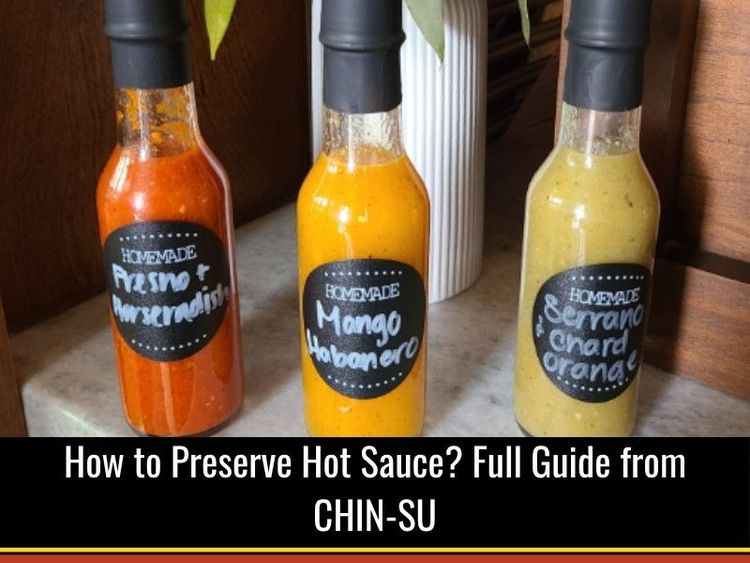
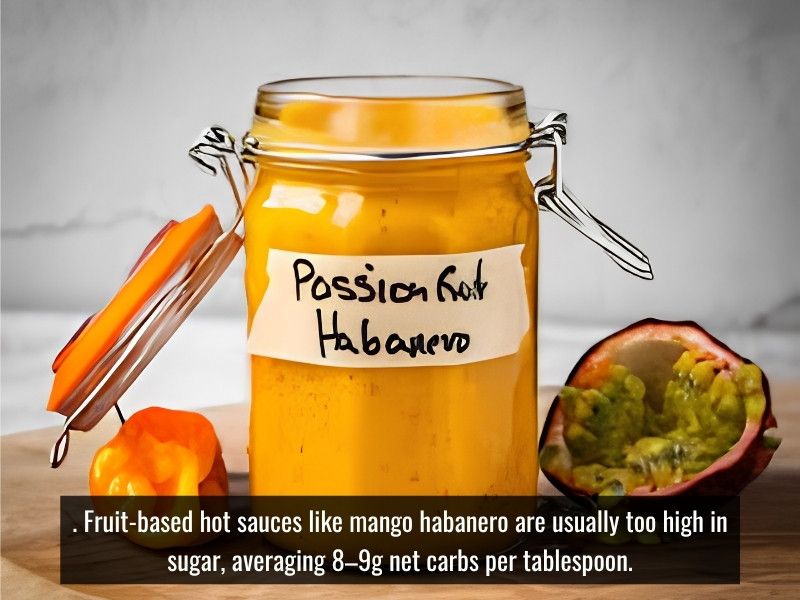
No, for most people on strict keto. Mango habanero, pineapple chili, and peach pepper sauces carry 8 to 9g net carbs per tablespoon from the fruit base alone (MyNetDiary).
Fruit purees such as mango, pineapple, peach, and passion fruit add natural fructose plus added sugar to the formula. A single 2-tablespoon serving of a mango habanero sauce hits 18g of net carbs, nearly the full 20g daily keto budget. That's almost your entire carb allowance from the sauce alone.
These sauces work for non-keto cooking, but swap them for vinegar-based options when you're tracking carbs.
Is Sweet Chili Sauce Keto-Friendly?
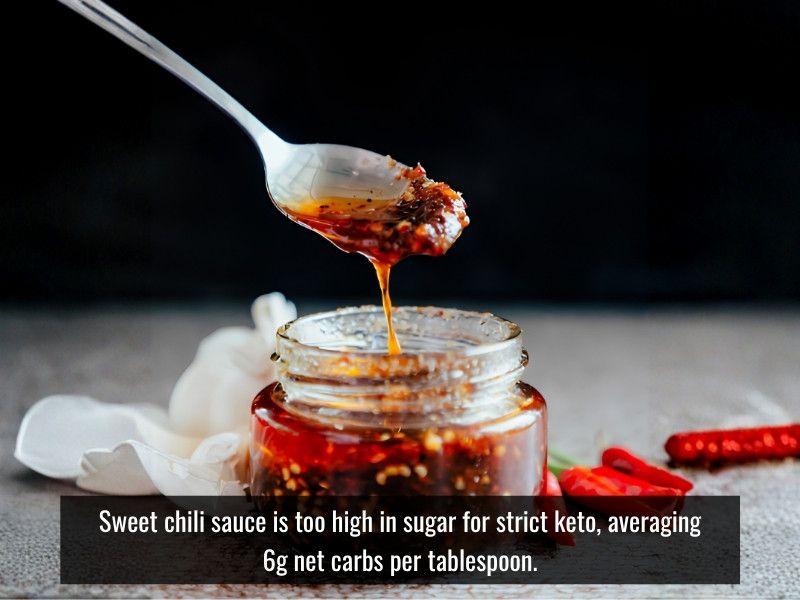
No. Sweet chili sauce is formulated to be sweet first, landing at about 6g net carbs and 5g sugar per tablespoon (15 ml) (NutritionValue.org). It's not compatible with a strict ketogenic carb limit at normal usage volumes.
Sweet chili sauce uses sugar or corn syrup as a primary ingredient, often listed second after water on the label. Thai-style sweet chili sauces register about 6g of carbs per tablespoon. At 2 tablespoons per serving of chicken, that's 12g of carbs from the sauce alone, leaving very little room for anything else in a 20g-carb day.
Is Honey or Glazed Hot Sauce Keto Friendly?
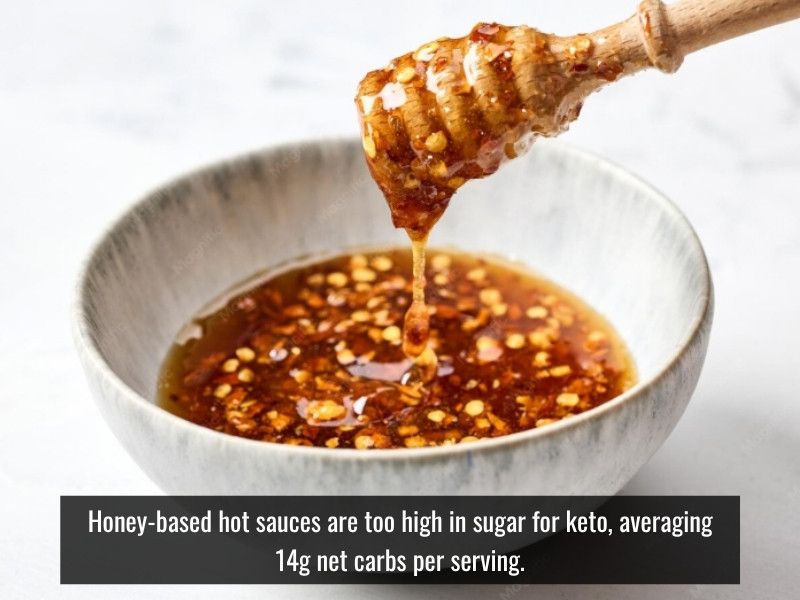
No. Honey buffalo, honey habanero, and glazed-style hot sauces deliver about 14g net carbs and 12g sugar per 2-tablespoon serving (NutritionValue.org).
Any sauce with "honey," "maple," "teriyaki," or "glazed" in its name carries a high-carb load. Pure honey alone contributes 17.3g of carbs per tablespoon (USDA). These sauces pair well with grilled meats, but they break a keto budget fast.
The swap is simple: a plain hot sauce mixed with melted butter gives you a similar coating texture at 0g carbs. Same richness, no sugar.
Can Capsaicin in Hot Sauce Support a Keto Diet?
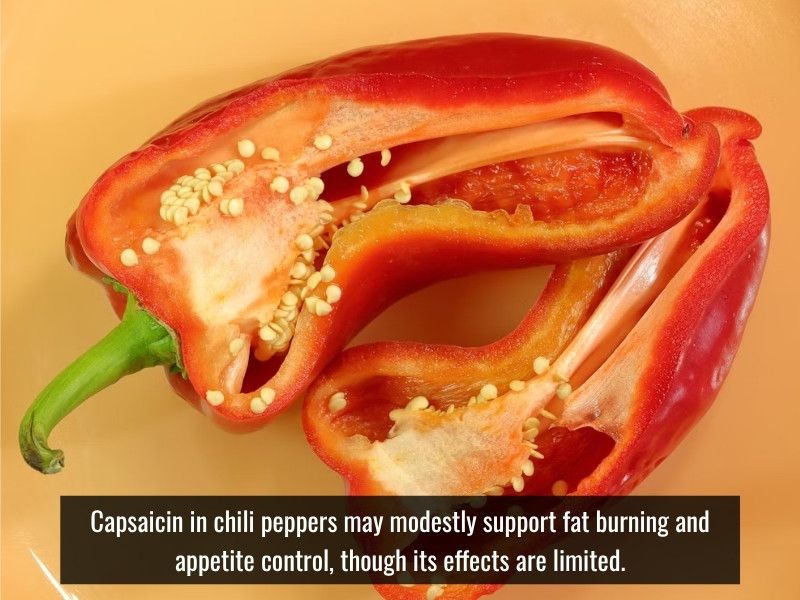
Capsaicin, the active compound in chili peppers, has been shown in two peer-reviewed meta-analyses to modestly increase fat oxidation and reduce appetite (Ludy et al., 2012; Whiting et al., 2014), though results vary across studies. Those effects align with the weight-management goals many people pursue on a ketogenic diet. Capsaicin is a supportive element, not a standalone solution.
Here's how capsaicin works. It increases thermogenesis, meaning your body generates more heat and burns more calories at rest. It tends to suppress ghrelin, the hunger hormone (Smeets & Westerterp-Plantenga, 2009). And it promotes fat oxidation, nudging the body to burn fat stores for energy.
How much does capsaicin increase metabolism? 34 kcal per day on average (WMD: 33.99 kcal/day, 95% CI: 15.95–52.03, I²=0%), according to a 2020 meta-analysis of 10 RCTs by Irandoost et al. (Phytotherapy Research). Modest, not dramatic. But consistent across studies with low variation.
A separate 2023 meta-analysis published in the British Journal of Nutrition reviewed 15 randomized controlled trials covering 762 subjects. Capsaicin supplementation reduced BMI by 0.25 kg/m², body weight by 0.51 kg (about 1.1 lbs), and waist circumference by 1.12 cm (0.44 inches), according to Zhang et al.
Does this mean hot sauce alone causes weight loss? No. 34 extra calories burned per day is a nudge, not a fix. Capsaicin supports a calorie deficit; it doesn't replace one. For keto dieters already managing their intake, the appetite-suppression effect may matter more than the calorie burn.
How Much Hot Sauce Can You Use on Keto?
For vinegar-based hot sauces with 0g carbs per teaspoon, there is no practical keto limit; the carb contribution stays at zero regardless of how many dashes you add. For sauces with 1g or more carbs per serving, portion awareness matters.
Think of it in three tiers. Vinegar-based sauces at 0g carbs per teaspoon can be used freely. Pour 5 teaspoons, and you're still at 0g carbs. Louisiana-style cayenne sauces, aged pepper sauces, and CHIN-SU Chili Sauce all fit here.
Sriracha-style sauces, at 1g of carbs per teaspoon, need a bit more attention. Stay under 3–5 teaspoons per day, and you'll use only 3–5g of carbs, leaving 15–45g for other foods.
Tomato-based, fruit-based, sweet chili, and glazed sauces at 2–8g carbs per tablespoon require the most care. Limit these to 1 tablespoon or less, or skip them on strict keto days.
The rule of thumb here: if the label shows 0g carbs, pour at will. If it shows 1g or more, measure and multiply by the number of teaspoons you actually use. The limiting factor for zero-carb sauces becomes sodium, not carbs. 190–350mg sodium per teaspoon is the typical range for most hot sauces (USDA FoodData Central).
How to Read a Hot Sauce Label for Keto
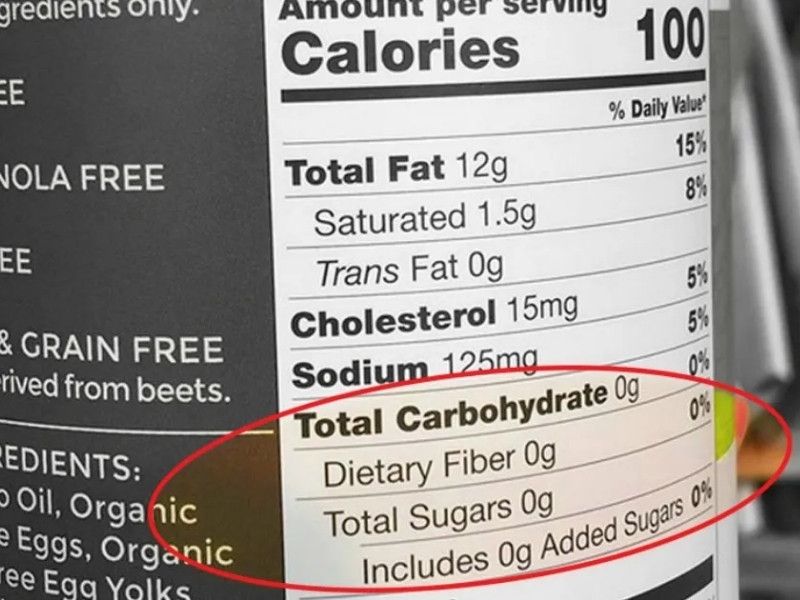
To read a hot sauce label for keto, check three things in order: (1) the serving size listed, (2) net carbs per that serving, and (3) whether any sweetener appears in the ingredient list.
- Find the serving size. Most hot sauce labels list a 1-teaspoon (5 ml) or 1-tablespoon (15 ml) serving. The entire nutrition panel is calculated against that number. If you pour more than the listed amount, multiply. A generous squeeze across a plate of eggs can easily be 1 tablespoon (3 teaspoons), tripling the per-teaspoon number.
- Read total carbs and calculate net carbs. Take the total carbohydrate figure and subtract dietary fiber. For most plain hot sauces, the total carbs are already 0–1g, making the subtraction irrelevant. Where it matters is in tomato-based or thicker sauces that carry more fiber alongside more carbs.
- Scan the "Added Sugars" line. The U.S. Nutrition Facts panel now requires a separate "Added Sugars" disclosure below "Total Sugars," a requirement that has been mandatory since 2020 (FDA). This is the clearest indicator of whether a manufacturer deliberately sweetened the sauce.
- Cross-check the ingredient list. Added sugars sometimes hide behind names you might not recognize: cane juice, evaporated cane sugar, brown rice syrup, tamarind concentrate, date paste, agave nectar, and high fructose corn syrup. If any sweetener appears in the first half of the ingredient list, treat the sauce with caution. The FDA also rounds values below 0.5g to 0g on the label, so a sauce showing "0g carbs" could hold up to 0.49g per serving. At one teaspoon, that's nothing. At 10 across a day, it adds up.
Keto Meals That Pair Well With Hot Sauce
Hot sauce pairs naturally with the high-fat, high-protein staples a keto diet relies on: eggs, grilled chicken, steak, seafood, and cauliflower rice. A few dashes add flavor without touching your carb count.
For breakfast, scrambled eggs with a drizzle of CHIN-SU Chili Sauce change the whole plate. The chili-garlic flavor cuts through the richness of eggs and cheese without adding carbs. Grilled chicken wings tossed in hot sauce mixed with melted butter give you a classic buffalo combination at 0g carbs. Pan-seared salmon with a vinegar-based chili drizzle works just as well.
Cauliflower rice stir-fry with a spoonful of CHIN-SU Hot Sauce as a finishing touch delivers a savory kick without the carbs of regular rice. Avocado halves with hot sauce and a pinch of salt make a fast snack. Pork rinds dipped in a mix of hot sauce and keto mayo (1:1 ratio) are hard to stop eating once you start. For marinades, hot sauce mixed with olive oil, garlic, and lime juice creates a zero-carb base for chicken thighs, shrimp, or pork chops.

Most hot sauces fit a keto diet. Vinegar-based sauces sit at 0g net carbs per teaspoon. Fermented chili sauces come in at under 1g per tablespoon. Sriracha-style sauces work in moderation at about 1.2g per teaspoon. Tomato-based sauces need label checking for 3g per tablespoon. Fruit-based, sweet chili, and honey-glazed sauces carry too many carbs for strict keto. Capsaicin adds a modest metabolic boost on top of zero-carb flavor. The label tells you everything you need to know: check serving size, net carbs, and the ingredient list before you pour. Find CHIN-SU Hot Sauce at chinsu.com and put it to work on your next keto meal.
Keto is not the strictest low-carb diet out there. Carnivore eaters remove plant foods completely, so the hot sauce math shifts even further. See how it holds up in article Can You Have Hot Sauce on a Carnivore Diet?

CHIN-SU KITCHEN TEAM
CHIN-SU Kitchen Team are the creative experts behind the delicious recipes featuring CHIN-SU sauces. With years of experience and a passion for flavor, our team carefully selects recipes from a variety of trusted chefs and bloggers, bringing together the best culinary insights to present you with the most suitable and exciting dishes. Every recipe is chosen to inspire you to create meals that are not only tasty but also easy to prepare, enhancing your dining experience. Join us as we explore a wide range of sauces and flavors, and elevate every meal with the perfect recipe for your table!
User Reviews
Featured Articles
SUBSCRIBE TO GET
MORE INFO
Want the latest and greatest recipes, updates, and more from us,
straight to your inbox? Subscribe and get our NEWS!