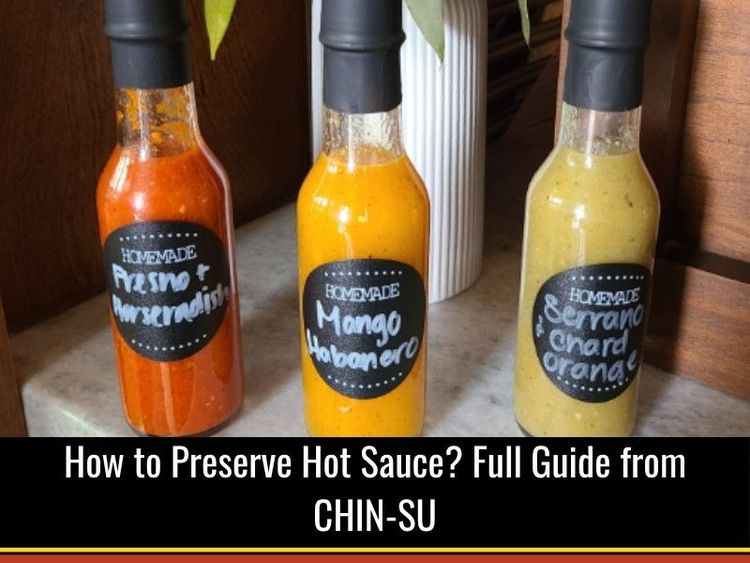
Does Hot Sauce Need to Be Refrigerated?
Published: Jun 18, 2026 by CHIN-SU
Updated: Jul 6, 2026 by CHIN-SU
Most commercially produced hot sauces don't need refrigeration to stay safe, but keeping them in the fridge preserves their flavor, color, and heat for much longer. Hot sauces built on vinegar and salt are shelf-stable at room temperature because their acidity stops bacterial growth. On the other hand, sauces made with fresh fruit, vegetables, oil, or live fermented cultures should always be refrigerated after opening.
The real answer comes down to what's inside the bottle. As a hot sauce manufacturer, CHIN-SU has conducted rigorous testing on storage conditions to help you maximize shelf life and maintain peak quality. In this guide, we will analyze the factors that determine shelf stability and provide detailed storage timelines for different sauce types.
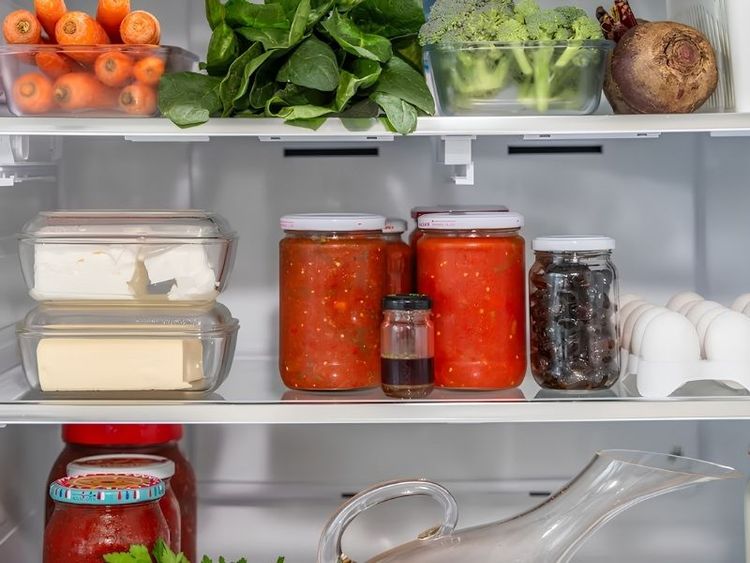
Table Of Contents
Does Hot Sauce Need to Be Refrigerated?
What Determines if Hot Sauce Needs Refrigeration?
- How Long Does Hot Sauce Last Unrefrigerated vs. In the Fridge?
- How to Preserve Hot Sauce Effectively?
Does Hot Sauce Need to Be Refrigerated?
There is no single yes-or-no answer because not all hot sauces are made the same way. It depends on the ingredients. Vinegar-based hot sauces are safe at room temperature, but sauces with fresh fruit, vegetables, or fermented cultures should be refrigerated after opening.

Does Commercial Hot Sauce Need to be Refrigerated?
The majority of commercially produced hot sauces, especially Louisiana-style sauces, stay stable at room temperature because their high vinegar and salt content create conditions that harmful bacteria can't tolerate.
The acidity of vinegar, combined with high salt levels, creates an environment where Clostridium botulinum and other harmful bacteria struggle to survive (Tracey Brigman, associate director of the National Center for Home Food Preservation, confirms this). Capsaicin, the compound that gives peppers their heat, may also help discourage bacterial growth. Many commercial brands also use preservatives to make the sauce even more shelf-stable.
Even so, you may still want to refrigerate these commercial hot sauces to keep them fresh and flavorful for as long as possible. According to the USDA FoodKeeper App, hot sauce kept at room temperature is usually at peak freshness for about six months, while refrigerated bottles can stay fresh for a year or longer.
However, if a commercial hot sauce is made with fresh ingredients like mango, pineapple, garlic, or onions, has an oil base, or contains live fermented cultures, it needs to go in the fridge once you open it. And if the label says "refrigerate after opening," you should follow their advice.
Does Homemade Hot Sauce Need to be Refrigerated?
Homemade, fermented, and all-natural hot sauces should always be refrigerated. Unlike most commercial sauces, homemade batches usually do not undergo pasteurization, precise pH testing, or controlled production, making them less predictable and more vulnerable to microbial growth.
According to Brigman, unless a fermented hot sauce has been pasteurized or made shelf-stable with vinegar or citric acid, it will keep fermenting at room temperature. That means it continues to produce gas, which can cause the container to overflow, crack, or burst.
Moreover, Andre Springer, founder of Shaquanda’s Hot Pepper Sauce, follows the same approach. He refrigerates anything all-natural or anything not stabilized with vinegar, lemon juice, or preservatives such as sodium benzoate. Even when the risk of microbial growth is low, he prefers refrigeration as an extra layer of protection.
What Determines if Hot Sauce Needs Refrigeration?
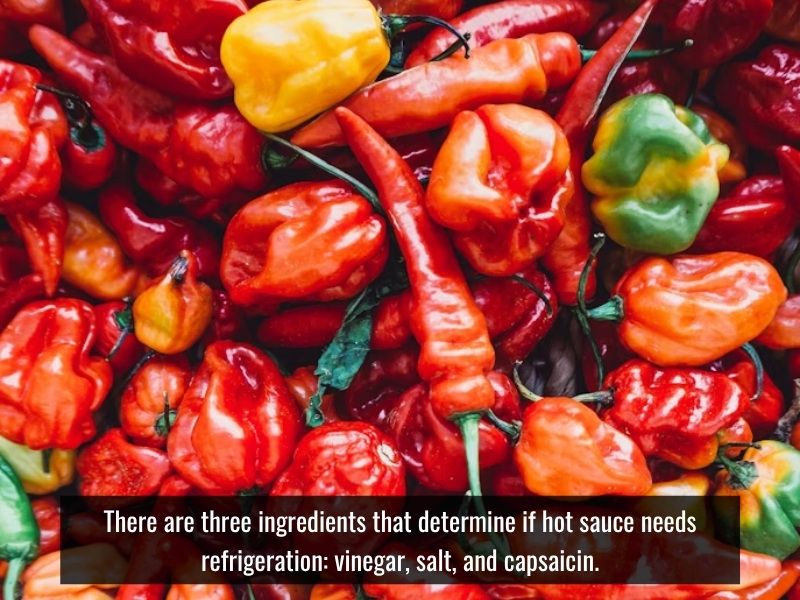
The shelf stability of any condiment comes down to its preservation chemistry. Three core ingredients determine if your sauce is shelf stable or perishable: vinegar, salt, and capsaicin. Together, they create a hostile environment for microorganisms.
Vinegar is the main protector. Tracey Brigman, associate director of the National Center for Home Food Preservation, explains that the acidity of vinegar and the high salt content in hot sauces create conditions that Clostridium botulinum (the bacteria that causes botulism) and other bacteria don't tolerate well. A pH below about 4.6 is the threshold, and if vinegar is the first ingredient on the label, the sauce likely has enough acidity to prevent bacterial growth at room temperature.
Salt further assists by reducing water activity, making it difficult for bacteria to find the moisture they need to reproduce. Finally, the antimicrobial properties of capsaicin provide a final layer of defense.
However, the addition of fresh produce or oils changes this dynamic. When a sauce contains fruit (mango, pineapple, tomato), fresh vegetables (garlic, onions, carrots), or is primarily oil-based, the pH may rise, making it more vulnerable once exposed to oxygen. This is why oil based hot sauces and creamy varieties pose a higher risk and must always be stored in the refrigerator. This aligns with the view of Ty Thames, chef and founder of Mississippi Red Pepper Sauce.
Many hot sauce makers also add artificial preservatives like sodium benzoate for extra protection. Sauces without these preservatives are more vulnerable once opened.
Which Types of Hot Sauce Always Need Refrigeration?
You should refrigerate your hot sauce after opening if it falls into any of these categories. Several types of hot sauce need the fridge not just for quality, but for safety.
- Fruit-based or fresh-ingredient sauces. Sauces containing mango, pineapple, tomato, carrots, garlic, or other fresh produce may not be acidic enough to prevent spoilage at room temperature. Sambal oelek, for example, has a higher water content, making it prone to spoilage if left out. Sweet chili sauce can go bad quickly after opening, despite its high sugar content.
- Oil-based hot sauces. Chili oils and creamy hot sauces pose a higher risk of botulism, especially when they contain raw garlic and are stored in a low-acid environment. Always refrigerate these.
- Fermented hot sauces (unpasteurized). Unless a fermented sauce has been pasteurized or stabilized with added vinegar or citric acid, it will continue to ferment at room temperature. That means it keeps producing gas, which can cause the container to overflow, break, or burst. Gochujang, for instance, benefits from refrigeration to maintain its intended flavor balance. Keeping it cold slows fermentation and holds the sauce right where the maker intended it.
- Homemade hot sauce. Even if you use vinegar, your homemade sauce hasn't undergone the testing that commercial products do. Always refrigerate, and plan to use it within 3 to 6 months.
- Any sauce labeled "refrigerate after opening." The manufacturer has tested its specific formulation and determined that it requires cold storage. Follow that instruction.
If you use hot sauce fast, finishing a bottle within a few weeks, room temperature storage is usually fine, even for sauces that benefit from refrigeration. The concern is extended storage over months.
How Long Does Hot Sauce Last Unrefrigerated vs. In the Fridge?
The lifespan of your sauce shifts significantly depending on its formulation and temperature. If you prefer to keep your condiments on the counter, you might ask: how long does hot sauce last unrefrigerated? For high acidity, vinegar forward sauces, the shelf life is approximately 6 to 12 months before the flavor profile begins to degrade.
Conversely, for those who prioritize longevity, how long do hot sauces last in the fridge? Most commercial bottles stored in the refrigerator remain at peak freshness for 1 to 3 years, providing a much longer window of optimal quality compared to room temperature storage. Below is a detailed breakdown by sauce type:
| Sauce Type | Unopened (Pantry) | Opened (Room Temp) | Opened (Fridge) |
| Vinegar-heavy (Louisiana-style) | 3-5 years | 6-12 months | 1-3 years |
| Fresh ingredient / fruit-based | 1-2 years | 1-2 months | 3-6 months |
| Fermented (gochujang-style) | 2-3 years | 1-2 years | 6-12 months |
How to Preserve Hot Sauce Effectively?
To keep your sauce at peak quality, proper storage is just as important as the ingredients themselves. Whether you choose the pantry or the fridge, follow these expert-backed practices to prevent flavor degradation and ensure your condiment remains shelf stable for as long as possible.
- Maintain a tight seal to prevent oxidation. Oxygen is the greatest enemy of pungency and color. Every time you leave the cap loose, you allow air to enter, which triggers oxidation. This process causes the bright red chili pigments to turn brown and the complex aromatic notes to fade. Always ensure you cap the bottle tight immediately after every use to create an airtight barrier.
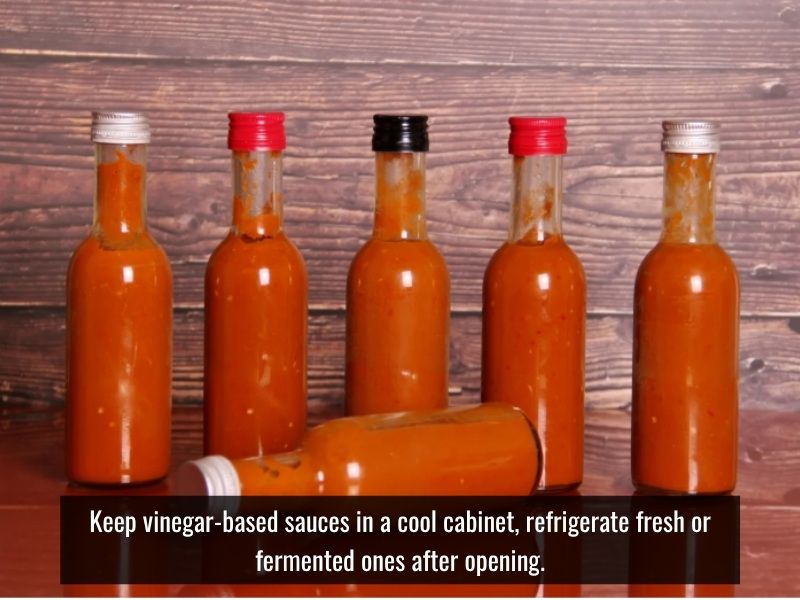
- Choose a cool, dark place. If you keep your bottle in the pantry, ensure it is a cool, dark place away from direct sunlight and heat sources like the oven or dishwasher. Heat fluctuations can destabilize the preservative chemistry of the vinegar and salt, leading to a faster loss of quality. For maximum stability, a lower shelf in a dark kitchen cabinet is ideal.
- Store the bottle upright. Always store the bottle upright to minimize the surface area of the sauce in contact with oxygen inside the bottle. This simple position reduces the rate of oxidation and prevents the sauce from drying out and forming a crusty residue around the seal, which could compromise the airtight seal.
- Clean the bottle neck. A small but vital habit is to wipe the cap and neck after use. Dried sauce buildup in these areas is a primary site for cross contamination and microbial growth because it is constantly exposed to the air. Keeping the opening clean ensures that no unwanted bacteria enter the bottle when you close it.
See to get more in guide about how to preserve hot sauce effectively
Here's your go-to takeaway: vinegar-based hot sauces stay safe on the counter, but sauces with fresh fruit, vegetables, oil, or live cultures belong in the fridge after opening. 6 months is the peak freshness window at room temperature; refrigerated bottles hold their flavor for a year or more. When in doubt, check the label and follow the manufacturer's advice. And for a chili sauce that's built to deliver bold flavor from the very first squeeze, find yours at chinsu.com.
Masan Consumer's flagship brands, including CHIN-SU, Nam Ngư, Vincafé, etc., are sold across major markets such as the United States, Japan, South Korea, and Australia. In October 2025, CHIN-SU and Nam Ngư products launched on shelves at Costco in the U.S. and South Korea, as well as Woolworths in Australia.
Frequently Asked Questions
No, unopened hot sauce is perfectly safe in a cool, dark pantry. The vacuum seal prevents any microbial growth from occurring until the bottle is first opened.
Most commercial vinegar-based sauces won't have this problem at all. The risk applies specifically to sauces with fresh ingredients that can ferment. If a sealed plastic bottle sits in direct sunlight for extended periods, fermentation produces gas that expands inside the container, and that pressure can pop the cap or cause the sauce to gush out when opened. It's rare, but it happens. Keep any sauce with fresh or fermented ingredients away from heat sources and direct sunlight.
Cold temperatures suppress aroma, which can make a sauce feel less complex when you first pour it. But capsaicinoids, the compounds that create the burn, are heat-stable and don't break down with refrigeration. Once the sauce warms on hot food, the full flavor and heat come right back. Refrigeration actually preserves flavor better over time than room temperature storage, which causes oxidation and gradual heat loss.
The exact timeline depends on the sauce type. Vinegar-heavy sauces last the longest in either condition, while fresh-ingredient sauces have the shortest shelf life. 1 to 2 years is the typical refrigerated shelf life for opened hot sauce, according to the USDA FoodKeeper App. At room temperature, plan to use opened sauce within 6 months for the best flavor. For unopened bottles stored in a cool, dark pantry, the shelf life is 2 to 5 years, depending on the formulation. See the full shelf life table in the "How to Preserve" section above for a detailed breakdown by sauce type.
Sauces like Tabasco and Crystal are vinegar-forward and designed to be shelf-stable even after opening. Christian Brown from the McIlhenny Company, the maker of Tabasco, confirms that refrigeration helps slow discoloration but isn't necessary. Sambal oelek, gochujang, and sweet chili sauce should always be refrigerated after opening because of their higher water content and ongoing fermentation. CHIN-SU recommends refrigerating after opening and using within 6 months for the best quality. When in doubt, check the label. The manufacturer's instructions are tailored to that specific formulation.
If you have a large supply of sauce, you might wonder can you freeze hot sauce to extend its life. The answer is yes, you can freeze hot sauce in a freezer safe container for up to six months. While this prevents spoilage, it is often not recommended for quality reasons.
Freezing causes the water in the sauce to form ice crystals, which can lead to texture separation. Once thawed, the smooth emulsifiers in the sauce may break down, leaving you with a watery or clumpy consistency. While the heat level of the peppers usually remains unchanged, the culinary experience may be diminished.
No, your home storage works differently from a restaurant's. Restaurants leave hot sauce bottles out on tables all day, and that's fine for them because they have high turnover. Those bottles get used up in days or weeks. Your home bottle might sit on the counter for months, and that longer timeline changes everything. Extended storage calls for a different approach.
Hot sauce almost always remains safe well beyond the printed date if it's been stored properly. The real question isn't safety; it's whether the sauce still tastes worth eating. Run a quick three-step check: look for mold, unusual color shifts, or bubbling (sight); check for musty or sharp off-odors (smell); and only then taste a small amount. If everything passes, you're fine, though expect some loss of heat and brightness compared to when it was fresh. When in doubt, a new bottle is always the better call.

CHIN-SU KITCHEN TEAM
CHIN-SU Kitchen Team are the creative experts behind the delicious recipes featuring CHIN-SU sauces. With years of experience and a passion for flavor, our team carefully selects recipes from a variety of trusted chefs and bloggers, bringing together the best culinary insights to present you with the most suitable and exciting dishes. Every recipe is chosen to inspire you to create meals that are not only tasty but also easy to prepare, enhancing your dining experience. Join us as we explore a wide range of sauces and flavors, and elevate every meal with the perfect recipe for your table!
User Reviews
Featured Articles
SUBSCRIBE TO GET
MORE INFO
Want the latest and greatest recipes, updates, and more from us,
straight to your inbox? Subscribe and get our NEWS!