Hot Sauce Varieties: A Region-by-Region Guide to Types, Flavors, and Heat
Published: Jun 14, 2026 by CHIN-SU
Updated: Jul 10, 2026 by CHIN-SU
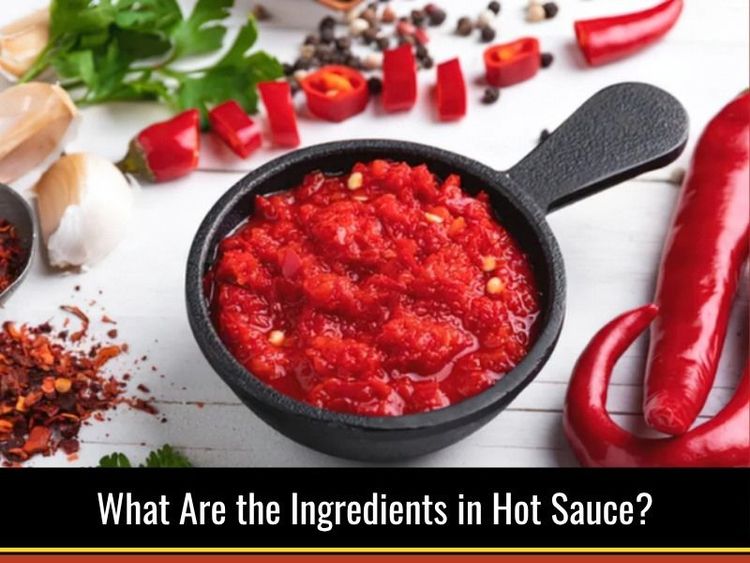
Hot sauce varieties trace back thousands of years to Central and South America, where chile peppers were first cultivated 6,000–6,500 years ago (around 4000–4500 BC), according to archaeological records. From those early ground-pepper pastes, spicy sauces have branched into hundreds of distinctive regional styles, each uniquely shaped by local peppers, traditional cooking methods, and specific flavor preferences. The term covers everything from thin pepper sauce and chunky chili sauce to thick fermented pastes, and the types of hot sauce you'll find on shelves today richly reflect that wide range.
Today, hot sauce varieties are broadly split into two main categories: region of origin and production method. Fermented sauces sit in a salt brine while beneficial bacteria convert sugars into lactic acid, producing deeper, more complex, and layered flavors. Tabasco, sriracha, and gochujang all follow some version of this traditional process. Non-fermented (vinegar-based) sauces skip the waiting game and blend fresh or dried peppers directly with vinegar for a brighter, sharper, and more immediate taste. Both methods create spicy sauces that are truly worth keeping in your kitchen.
In this article, we walks through the major hot sauce regions in order: North America (Louisiana-style, buffalo, green and red chile), then Latin America (aji, molho de pimento, pebre), followed by Asia (sriracha, gochujang, sambal, Vietnamese chili garlic sauce), and finally Africa and the Middle East (harissa, zhug, awaze). At the end, you'll find a detailed heat-level comparison by Scoville rating and a practical pairing guide to match each sauce with the right dish.
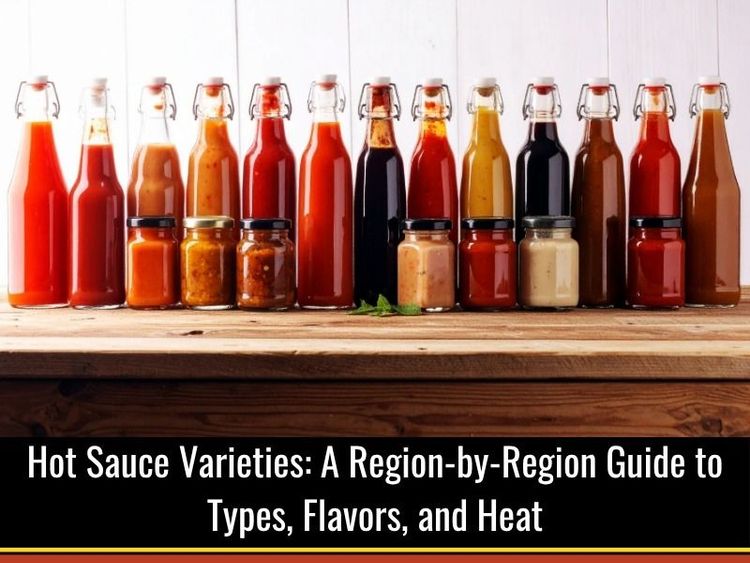
Table Of Contents
North American Hot Sauce Varieties
Latin American Hot Sauce Varieties
Asian Hot Sauce Varieties
African and Middle Eastern Hot Sauce Varieties
- How Do Hot Sauce Varieties Compare by Heat Level?
North American Hot Sauce Varieties
North American hot sauces are rooted in the Louisiana tradition: thin, vinegar-forward cayenne blends that became the blueprint for some of the world's best-known brands. Beyond Louisiana, the continent gave us buffalo sauce, plus the distinctive green and red chile sauces of New Mexico.
Louisiana-Style Hot Sauce
Louisiana-style hot sauce holds the title of the oldest commercial hot sauce style in the United States, built on a simple three-ingredient base of aged cayenne peppers, distilled vinegar, and salt. Tabasco, produced by the McIlhenny Company, has been bottled since 1868. The first US bottled hot sauce hit the market even earlier, in 1807, and that vinegar-and-cayenne formula set the pattern for everything that came after.
The sauce's high vinegar content gives it a bright, tangy bite and a pourable, almost watery consistency. Some versions ferment the pepper mash in oak barrels before blending with vinegar, and that step adds a round depth you won't get otherwise. Others skip long fermentation for a fresher, more straightforward cayenne flavor.
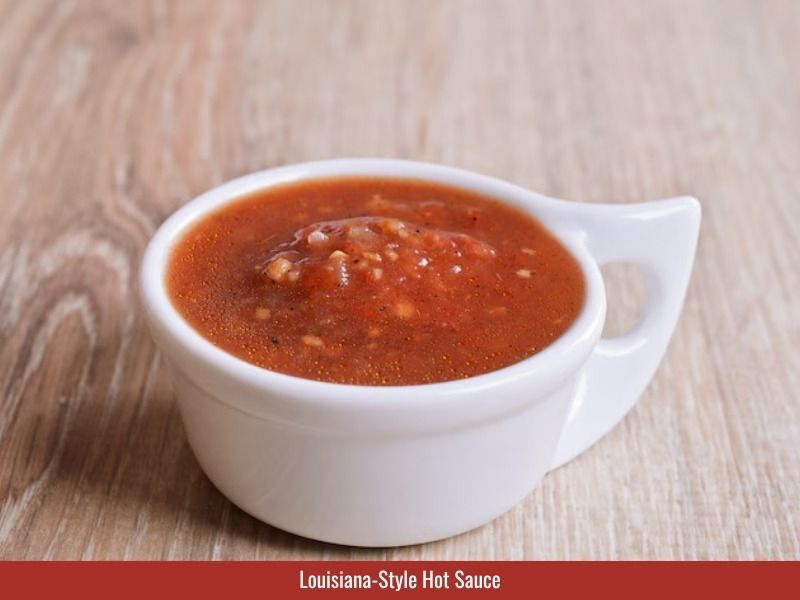
Raw cayenne peppers measure 30,000 to 50,000 SHU, according to PepperScale, but the finished sauce ranges from a much milder 450 to 5,000 SHU, depending on the brand. That sharp acidity cuts through fat, which is why Louisiana-style sauces pair so well with fried chicken, po'boys, gumbo, and eggs. A few dashes go a long way. What makes this Cajun hot sauce different from other styles? The vinegar-to-pepper ratio is higher than most, making it tangier and thinner. It's a finishing sauce, not a cooking base.
Buffalo Sauce
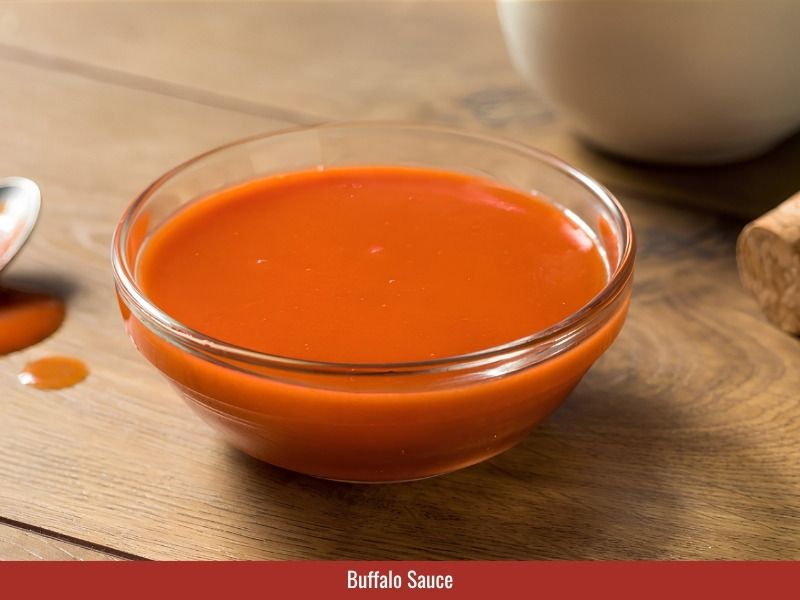
Buffalo sauce turns a standard Louisiana-style hot sauce into a rich, tangy coating by melting it together with butter or margarine, a combination that originated on chicken wings in Buffalo, New York. The standard ratio is roughly equal parts hot sauce and melted butter. The butter tempers the vinegar bite and adds a creaminess that clings to fried wings like nothing else. Heat level is typically low, from under 1,000 SHU to 2,000 SHU in the finished mix, because the butter dilutes the capsaicin. Restaurants across the US serve variations with different hot sauce bases to adjust heat levels. Buffalo wing sauce also works on cauliflower bites, shrimp, pizza, and sandwiches, so don't limit it to game-day wings.
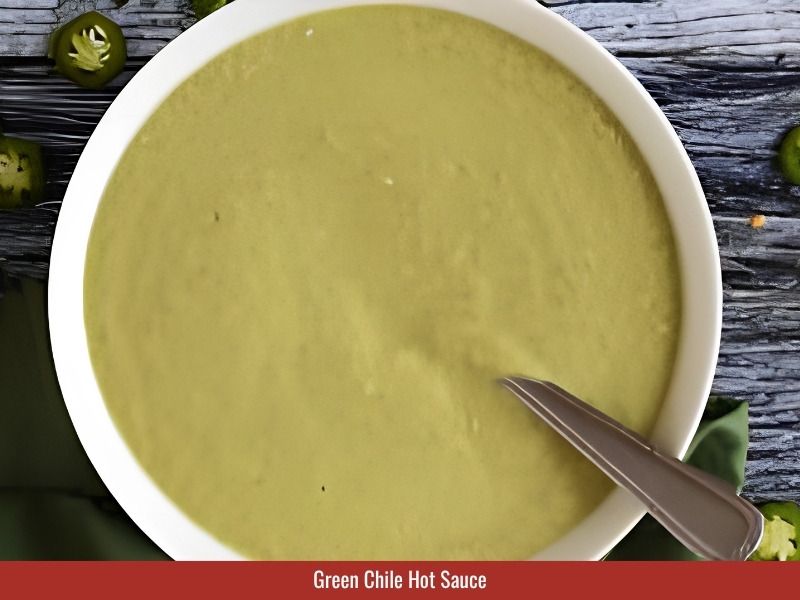
Green Chile Hot Sauce
Green chile hot sauce skips vinegar entirely, relying instead on roasted Hatch, Anaheim, or Rio Grande chile peppers blended into a thick, stew-like sauce native to New Mexico. Hatch chiles are grown exclusively in the Hatch Valley of New Mexico, and they're prized for their earthy, slightly sweet flavor. The sauce is often thickened with flour or a stock base (chicken or beef), which gives it a consistency closer to a gravy than a drizzle. Heat level varies widely by chile variety: mild Hatch chiles sit around 1,000 to 1,500 SHU, while hot varieties can reach 8,000+ SHU. You'll find it on breakfast burritos, enchiladas, chiles rellenos, and even hamburgers. New Mexicans put it on almost everything, and once you try it, you'll understand why.
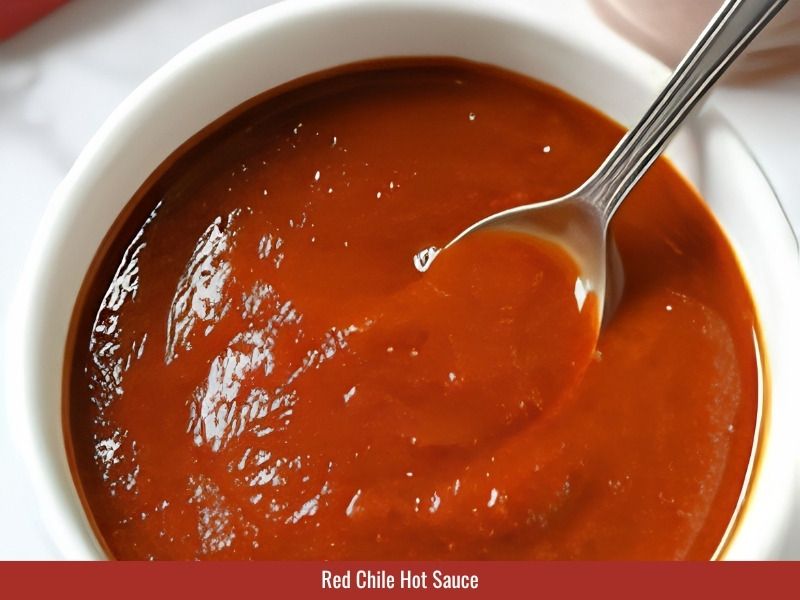
Red Chile Hot Sauce
Red chile hot sauce gets its concentrated, smoky depth from dried red chile pods that are rehydrated and blended into a smooth sauce with garlic, cumin, and sometimes a meat stock. It is the green chile's counterpart in New Mexico. The drying process is the key step: it pulls moisture from the pepper while locking in sugars and capsaicin, giving red chile sauce a heavier flavor than its fresh green counterpart. Some versions add bacon or pork for a savory undertone. Heat level depends on the pod variety. Served over enchiladas, tamales, and burritos, it's frequently offered alongside green chile so diners can choose "red or green?" New Mexico made that the official state question. It also works as a marinade or dip.
Latin American Hot Sauce Varieties
Latin American hot sauces reflect the continent where chile peppers originated, and the variety is staggering. From creamy Peruvian aji to Brazil's fiery molho de pimento and Chile's herbaceous pebre, each country built its own sauce tradition around local peppers and produce. Here's a closer look at three standout styles.
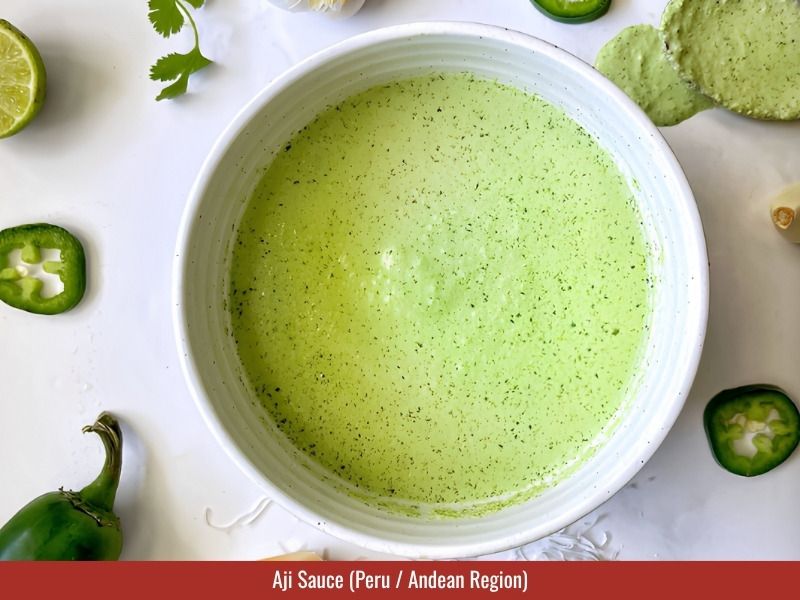
Aji Sauce (Peru / Andean Region)
Aji sauce stands apart from most hot sauces because it's built on a creamy base of mayonnaise or queso fresco rather than vinegar, giving this Peruvian condiment a cool, thick texture and a mild, fruity heat from aji amarillo peppers, lime juice, and cilantro. The raw aji amarillo pepper measures roughly 30,000 to 50,000 SHU, but the cream and citrus reduce the finished sauce's perceived heat. It's popular across Peru, Ecuador, Colombia, Bolivia, and Chile. You'll see it served as a dipping sauce for fried yuca, papas a la Huancaina, grilled chicken, and French fries. Think of it more like a flavored mayo than a drizzle-on hot sauce. If you like your heat wrapped in something cool and tangy, Peruvian aji is your starting point.
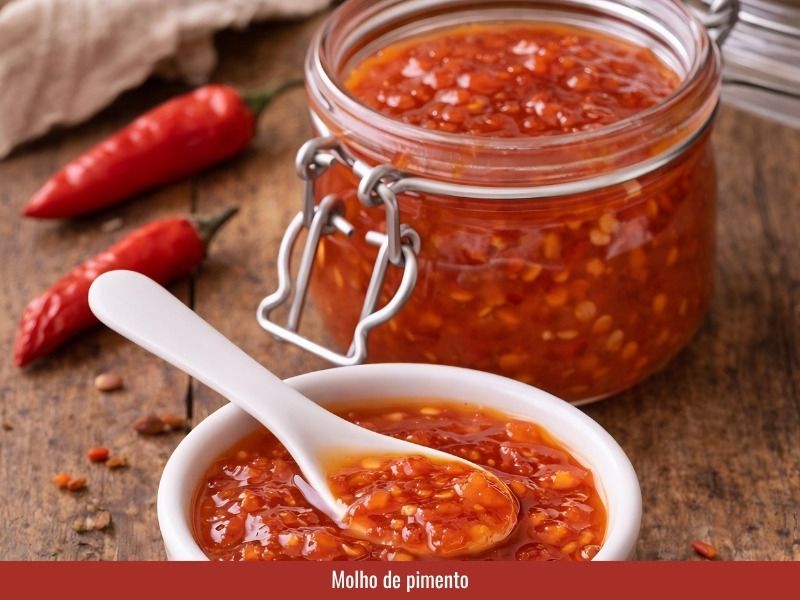
Molho de pimento (Brazil)
Molho de pimento gets its fire from the malagueta pepper, a small Brazilian chile that packs 50,000 to 100,000 SHU, according to PepperScale. The sauce typically combines malagueta peppers with green bell peppers, onions, vinegar, and often tomatoes, oil, lime/lemon juice, or herbs for a spicy-briny profile. That mix of spicy and briny creates a flavor that's distinctly Brazilian. Consistency is chunkier than Louisiana-style and closer to relish. It sits on virtually every table in Brazil, drizzled over rice, beans, grilled meats, and feijoada (black bean stew). Some versions substitute malagueta for habanero when the pepper is hard to source outside Brazil, and the result is close enough to preserve the spirit of the original.
Pebre (Chile)
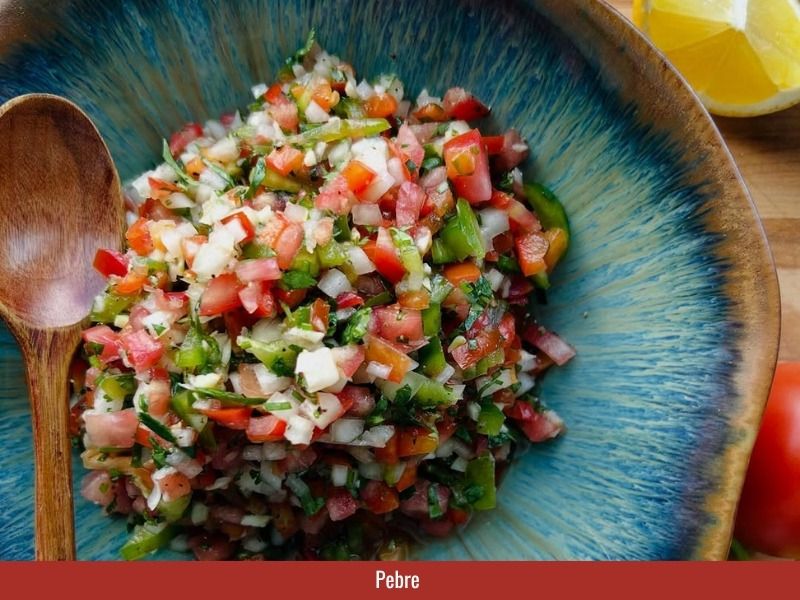
Pebre arrives at the Chilean table cold, alongside a bread basket, before the main meal even begins. This fresh, herbaceous condiment is made from aji chiles, cilantro, tomatoes, onions, vinegar, and garlic. It's more salsa than sauce in texture: chunky, fresh, and bright. The aji chiles provide moderate heat, while cilantro and tomato dominate the flavor. Heat level is adjustable by the cook: home versions range from mild to quite spicy, depending on how many aji seeds are left in the mix.
Asian Hot Sauce Varieties
Asia produces the widest range of hot sauce styles on earth, from fermented pastes and chili-garlic blends to infused oils and thin pepper sauces. There are four styles that dominate global shelves: sriracha, gochujang, sambal, and Vietnamese chili garlic sauce. Each one brings a different flavor profile and a different way to use heat in cooking.
Sriracha
Sriracha owes its global identity to two stories: the coastal Thai city of Si Racha, where the original style began, and Vietnamese immigrant David Tran, who started bottling his garlic-heavy version in Los Angeles in 1980 under the Huy Fong brand. Huy Fong Sriracha is made from red jalapeno peppers (a hybrid variety), garlic, distilled vinegar, sugar, and salt. The peppers are ground fresh, not dried, which gives the sauce a bright, slightly sweet heat at roughly 1,000 to 2,500 SHU. Traditional Thai sriracha tends to be thinner, sweeter, and less garlic-heavy than the American version.
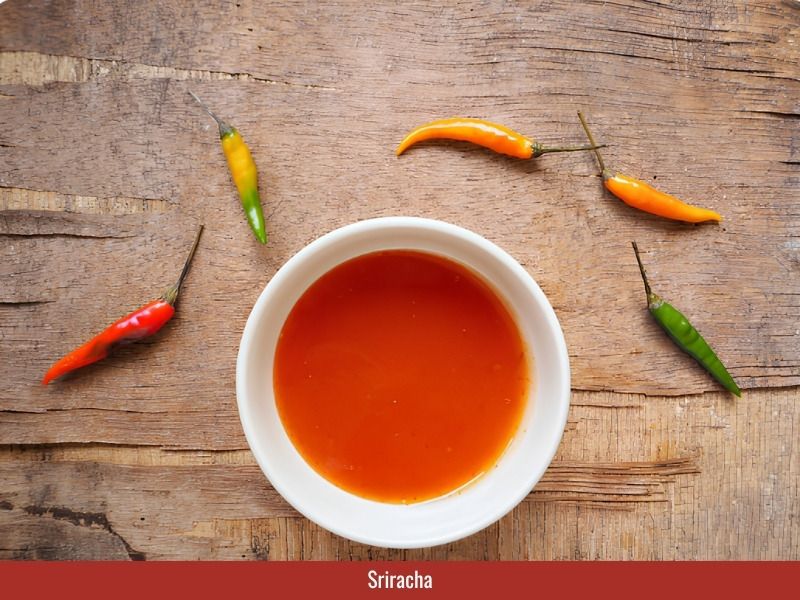
Many sriracha‑style sauces are made by short-fermenting the pepper mash, then acidifying it with vinegar, placing them somewhere between fully fermented and pure vinegar-based ones. Sriracha pairs with noodles, pho, tacos, eggs, pizza, and dipping sauces. It's one of the most versatile hot sauces in any kitchen.
Gochujang (Korea)
Gochujang ferments glutinous rice and soybeans together with red chile pepper flakes (gochugaru) and salt, producing a sweet, funky umami backbone that no other chili product on this list can match. This thick Korean chili paste has been part of Korean cooking since the 16th-17th centuries. It isn't a pouring sauce. It's a dense paste. The fermentation of soybeans and rice creates the sweet, savory depth that sets gochujang apart.
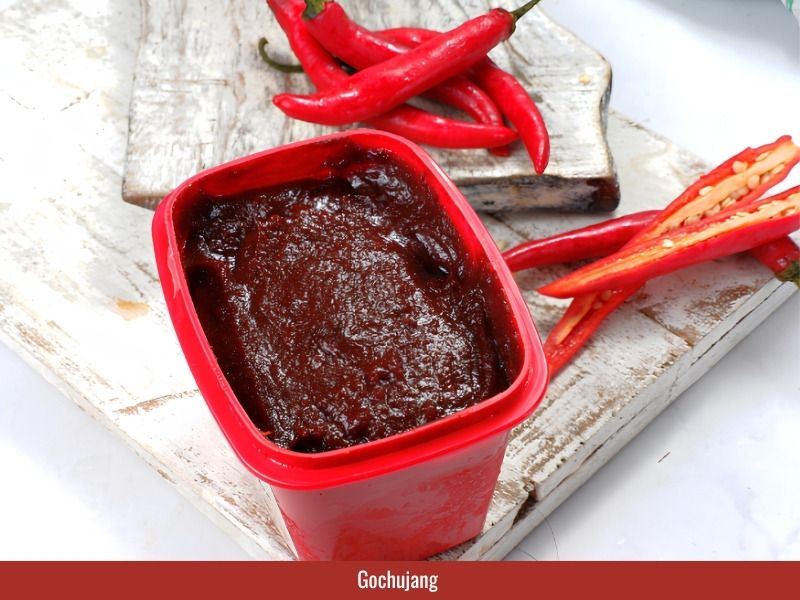
The fermentation period can last 2-3 months or more. During that time, enzymes from the rice and soybean break down starches into sugars, and naturally occurring microbes develop the characteristic depth that makes gochujang taste like nothing else. It works best as a cooking base: stir it into soups, marinades, stir-fry sauces, and bibimbap. Gochujang is now available in US grocery stores in a modern, diluted version of the paste (in a squeeze-bottle format), making it easier than ever to use as a finishing condiment.
Sambal (Indonesia / Southeast Asia)
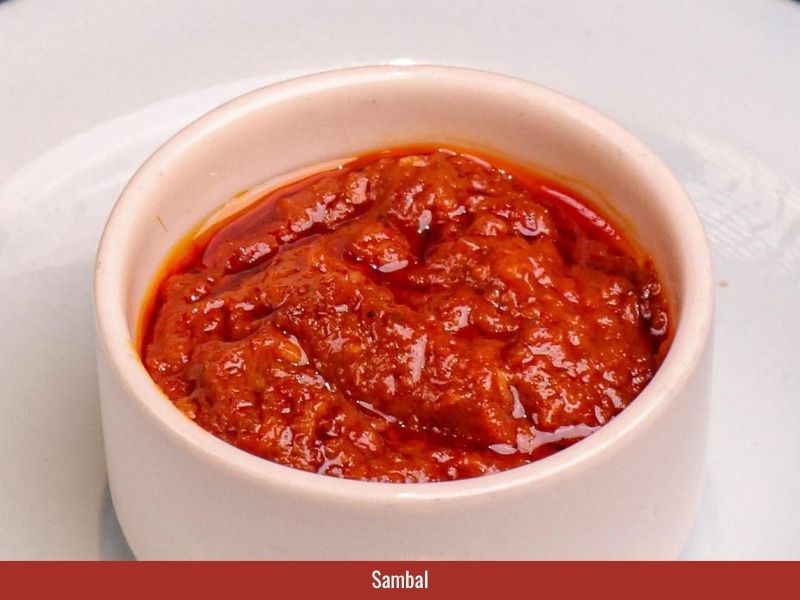
Sambal is an umbrella term for dozens of regional chili pastes across Indonesia and Southeast Asia, with sambal oelek (chili, vinegar, and salt) as its simplest and most widely available form. Beyond sambal oelek, the category includes variations that add shrimp paste (sambal terasi), garlic, ginger, lime, or palm sugar. The texture can range from very coarse and relish‑like to relatively smooth, depending on the type and how it's prepared, and it sits between a paste and a relish. Heat level ranges from medium to hot, depending on the chili variety and the number of seeds left in.
Sambal oelek works as a building-block ingredient: stir it into dressings, sauces, soups, or spread it on toast. It also pairs well with fried rice, satay, grilled tofu, and noodle soups. If you're looking for a Southeast Asian chili paste that does double duty in cooking and at the table, sambal is the one to reach for.
Vietnamese Chili Garlic Sauce
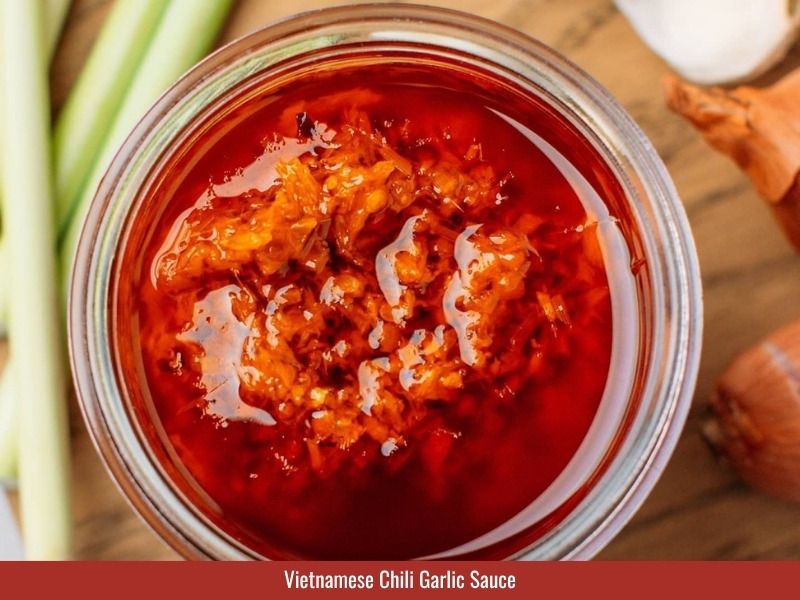
Vietnamese chili garlic sauce hits the palate with garlic first, a trait that separates it from every other chili sauce in this guide. The thick, chunky blend of ground red chili peppers, garlic, vinegar, salt, and usually some sugar or water retains a rough texture with visible bits of pepper and garlic. The flavor is direct: garlic, then chile heat, then a tang of vinegar at the finish. It doubles as a cooking ingredient for stir-fries and marinades and a table condiment for dipping and drizzling.
One well-known version of this style is CHIN-SU Chili Sauce, which uses charcoal-grilled celestial chili peppers blended with fresh, fermented garlic. The charcoal grilling adds a subtle smokiness, and the garlic fermentation deepens the aroma. The result balances four flavor notes, spicy, salty, sweet, and pungent, that Vietnamese cooks call the sauce's "four-note harmony." CHIN-SU works as a finishing topping on pho and noodle bowls, a dipping sauce for spring rolls and grilled meats, or a flavor base for stir-fries.
African and Middle Eastern Hot Sauce Varieties
African and Middle Eastern hot sauces tend to be paste-thick and spice-layered, blending chiles with cumin, coriander, garlic, and fresh herbs rather than relying on vinegar for tang. The flavors here are warm, earthy, and aromatic, shaped by centuries of spice trade traditions. Three styles stand out across this vast region: harissa, zhug, and awaze.
Harissa (North Africa)
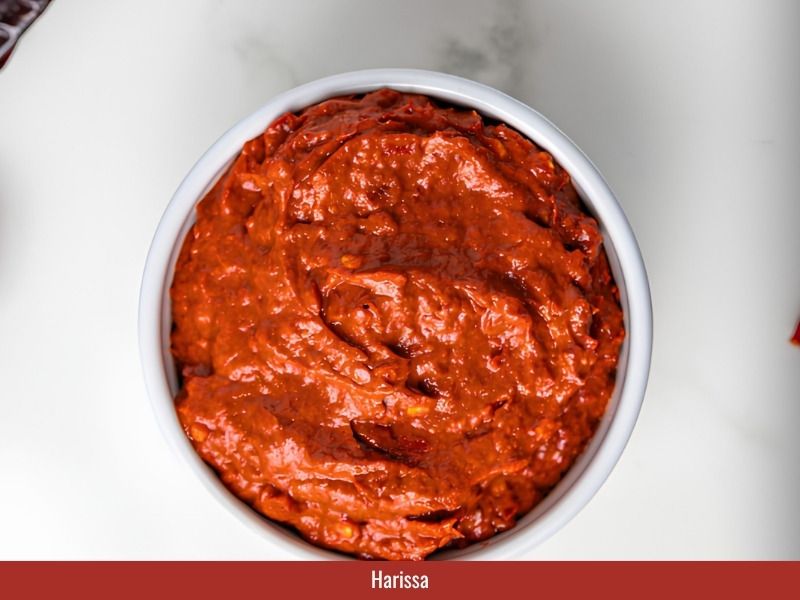
Harissa layers smoky, roasted red chilies with warm spices (coriander, caraway, garlic) and olive oil into a North African chili paste that originated in Tunisia, usually Tunisian baklouti peppers. Its heat is moderate to hot, depending on preparation, but the complexity is what sets it apart: smoky, earthy, and aromatic with warm spice notes. Harissa is also a kitchen staple in Morocco, Libya, and Algeria. You'll find it used as a cooking base, stirred into soups, stews, and couscous; as a marinade for lamb and chicken; or as a condiment, spread on flatbread and mixed into hummus. In the US, harissa has gained steady popularity as a restaurant ingredient in dishes such as roasted vegetables, grain bowls, and shakshuka. A jar, when covered with a layer of olive oil and stored in the fridge, can last several weeks to a couple of months.
Zhug / Schug (Yemen / Middle East)
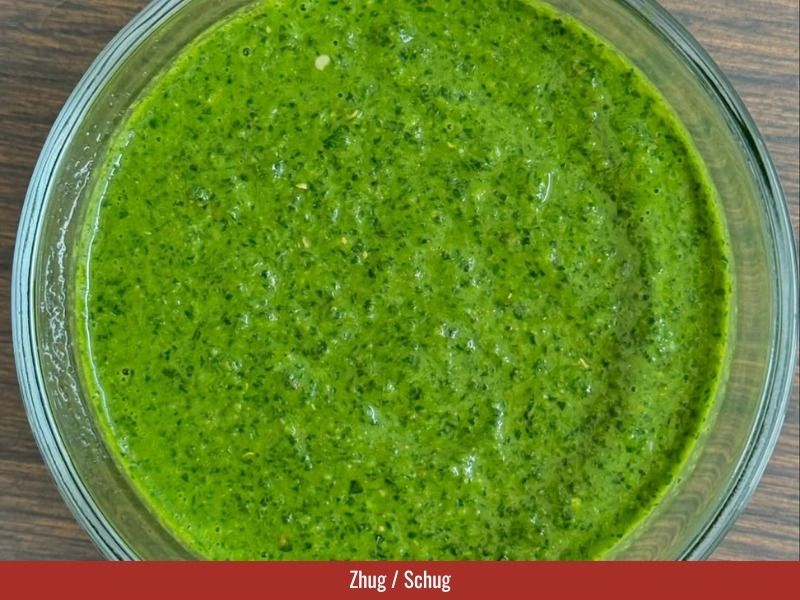
Zhug (also spelled schug) blends fresh green chiles with cilantro and warm spices like cardamom, cumin, and coriander into a thick Yemeni paste that shares the fresh-herb spirit of chimichurri but adds a Middle Eastern warmth. The cilantro and green chiles give it a vivid green color. A red version exists using dried red peppers for a deeper, smokier heat. Zhug is popular across Israel, Palestine, and the broader Middle East, often served with falafel, hummus, grilled meats, and pita bread. It's slightly sweet, and the cardamom-brightened edge sets it apart from other green chili sauces.
Awaze (Ethiopia)
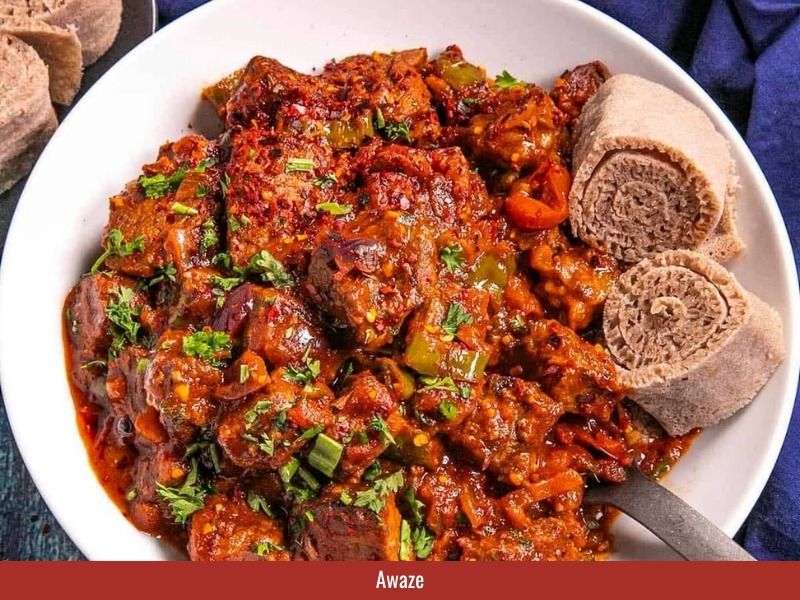
Awaze starts with berbere, Ethiopia's signature spice blend of dried chili, fenugreek, coriander, cardamom, cloves, cumin, cinnamon, ginger, and allspice, then builds the paste with hot peppers, garlic, and sometimes honey or wine. The paste is often thinned with a splash of tej (Ethiopian honey wine) or water to reach a dipping consistency. Heat runs moderate to hot, depending on how much pepper goes in. Awaze accompanies injera (spongy flatbread), stews (wot), and grilled meats. No two family recipes are the same, and that makes Awaze one of the most personalized hot sauces in the world.
How Do Hot Sauce Varieties Compare by Heat Level?
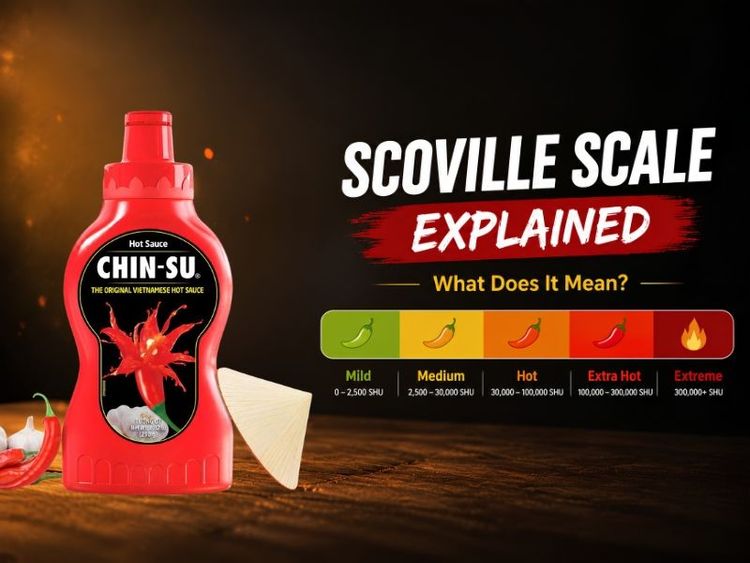
Here’s how the sauce varieties covered in this guide stack up by heat level on the SHU scale, a measure of capsaicin concentration in chili peppers and hot sauces developed by pharmacist Wilbur Scoville.
| Heat Tier | SHU Range (Finished Sauce) | Sauce Varieties (From This Article) | Flavor Character | Best For |
| Mild | 0 - 2,500 | Louisiana-style, buffalo sauce, sriracha, Vietnamese chili garlic / CHIN-SU, aji sauce, green chile (mild Hatch), gochujang | Tangy, bright, approachable | Eggs, tacos, wings, noodles, rice bowls, and dipping |
| Medium | 2,500 - 30,000 | Red chile (hot varieties), sambal oelek, pebre, zhug, awaze | Earthy, spice-layered, herbaceous | Stews, marinades, grilled meats, and flatbread |
| Hot | 30,000 - 100,000 | Molho de pimento (malagueta-based), harissa (varies by pepper blend) | Smoky, deeply spiced, intense | Grilled lamb, couscous, feijoada, slow-cooked stews |
Hot sauce varieties stretch from thin, tangy Louisiana-style blends and creamy Peruvian aji to thick Korean gochujang and smoky North African harissa, each shaped by local peppers, spices, and cooking traditions. Heat levels range from mild (under 2,500 SHU) for everyday eggs and noodles to extreme (300,000+ SHU) for the brave few who chase the burn. With so many styles, flavors, and heat levels available, choosing the right hot sauce depends on what you're cooking and the kind of flavor experience you want. If you want a Vietnamese chili garlic sauce with charcoal-grilled depth and fermented garlic punch, find CHIN-SU Hot Sauce at chinsu.com.
Masan Consumer's flagship brands, including CHIN-SU, Nam Ngư, Vincafé, etc., are sold across major markets such as the United States, Japan, South Korea, and Australia. In October 2025, CHIN-SU and Nam Ngư products launched on shelves at Costco in the U.S. and South Korea, as well as Woolworths in Australia.
Frequently Asked Questions
Hot sauce and pepper sauce refer to the same category of condiment in most contexts. Both describe a spicy sauce made from chile peppers. The term "pepper sauce" is more common in Caribbean and Southern US cooking, while "hot sauce" is the broader, more universal label. Some Caribbean pepper sauces tend to be thicker and more fruit-forward (using scotch bonnet or habanero with mango or papaya) than the thin, vinegar-based sauces Americans typically call "hot sauce."
Neither green nor red hot sauce is automatically hotter. Heat depends on the pepper variety, not the color. A green habanero sauce can be far hotter than a red jalapeno sauce. In New Mexico's green vs. red chile tradition, heat varies by harvest and preparation. The general pattern: red peppers are fully ripe and often slightly sweeter, while green peppers are picked earlier and tend to be more bitter and vegetal. Both can range from mild to very hot.
The best peppers depend on the flavor and heat level you want. Cayenne and jalapeno are the workhorses: versatile, moderate heat, and widely available. Habanero and scotch bonnet deliver fruity, tropical heat. Ghost peppers and Carolina Reapers are for extreme-heat sauces. Bird's eye chili (used in Vietnamese and Thai sauces) offers a sharp, clean spiciness. Aji amarillo brings mild, fruity warmth to creamier sauces.
Yes, hot sauce is classified as a condiment, meaning it's a prepared sauce added to food after cooking or at the table. But many hot sauce varieties also function as cooking ingredients. Gochujang gets stirred into marinades and soups. Harissa is used as a cooking base for stews. Vietnamese chili-garlic sauce works both as a finishing drizzle and as a stir-fry ingredient. The line between condiment and ingredient blurs with thicker, paste-style hot sauces.
Each hot sauce variety has dishes it pairs with best, matching the sauce's flavor profile, texture, and heat level to the food.

CHIN-SU KITCHEN TEAM
CHIN-SU Kitchen Team are the creative experts behind the delicious recipes featuring CHIN-SU sauces. With years of experience and a passion for flavor, our team carefully selects recipes from a variety of trusted chefs and bloggers, bringing together the best culinary insights to present you with the most suitable and exciting dishes. Every recipe is chosen to inspire you to create meals that are not only tasty but also easy to prepare, enhancing your dining experience. Join us as we explore a wide range of sauces and flavors, and elevate every meal with the perfect recipe for your table!
User Reviews
Featured Articles
SUBSCRIBE TO GET
MORE INFO
Want the latest and greatest recipes, updates, and more from us,
straight to your inbox? Subscribe and get our NEWS!