Hot Sauce vs. Buffalo Sauce: What Are the Differences?
Published: Aug 11, 2026 by CHIN-SU
Updated: Sep 15, 2026 by CHIN-SU
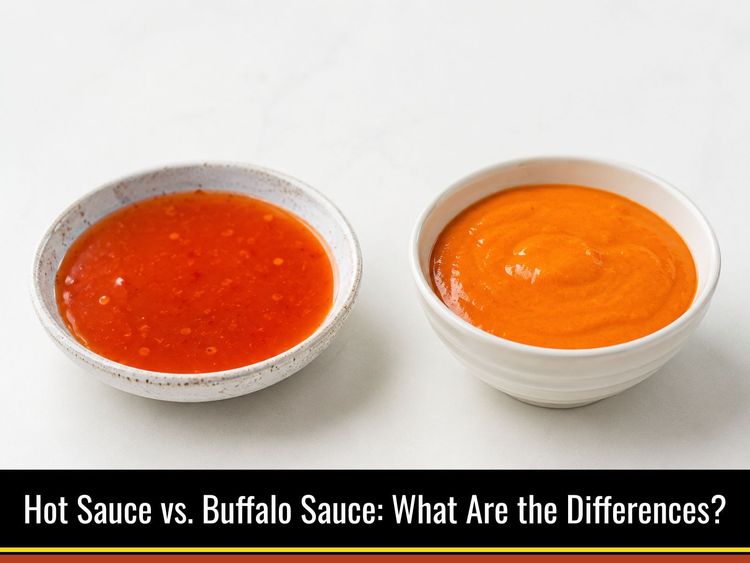
Hot sauce and Buffalo sauce are not the same condiment. Hot sauce is the broader category, while traditional Buffalo sauce combines vinegar-forward cayenne hot sauce with melted butter or another added fat. That added fat makes Buffalo sauce richer, smoother, and better at coating food, while hot sauce remains thinner, sharper, and easier to pour or mix into a dish.
Commercial Buffalo sauces may use butter, margarine, vegetable oil, natural butter flavor, thickeners, or a combination of these ingredients to create a similar coating texture. The exact formulation varies by product.
In this guide, “hot sauce” refers primarily to the thin, vinegar-forward cayenne style represented by Frank’s RedHot Original. Hot sauce as a category also includes sriracha, fermented pepper sauces, fruit-based recipes, chile oils, and many other preparations.We will compare the two products, explain when to use each one, and show how to substitute one for the other.
Is Buffalo Sauce the Same as Hot Sauce?
Hot sauce and Buffalo sauce are not the same condiment. Hot sauce is a broad category of chile-based sauces, while traditional Buffalo sauce is made by combining cayenne hot sauce with melted butter or another source of fat.
The added fat softens the sharp acidity of the vinegar-forward hot sauce, changes the mouthfeel, and helps Buffalo sauce cling to wings and other foods instead of running off.
Hot sauce itself usually relies on peppers, vinegar or another acid, water, salt, and seasonings. The proportions and additional hot sauce ingredients vary by style and brand.
Buffalo sauce starts with that hot sauce base and adds richness. Homemade versions most commonly use butter, while commercial products may use margarine, vegetable oil, butter-type flavor, xanthan gum, or other ingredients to create a smooth coating consistency.
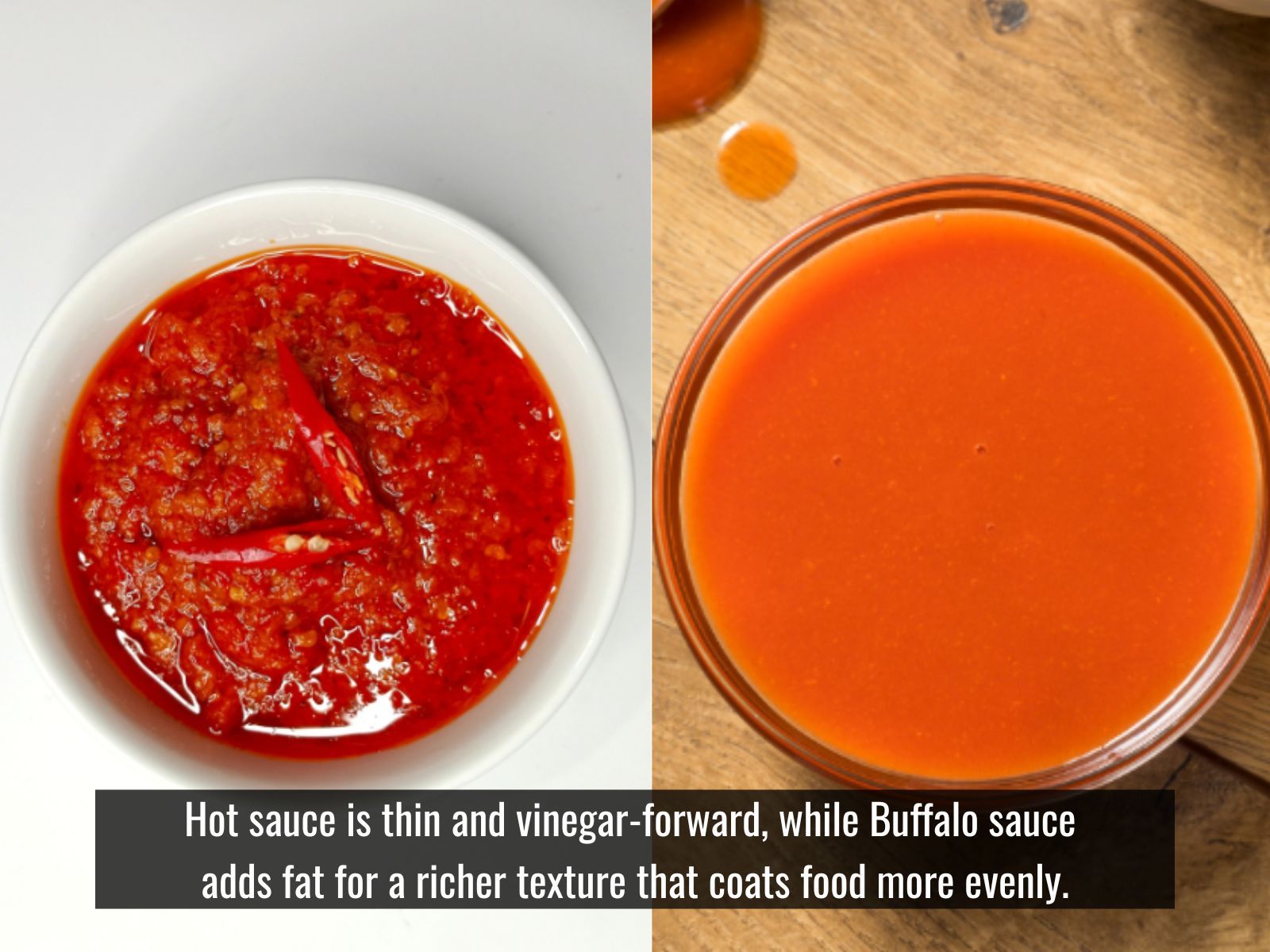
The table below shows the practical differences.
| Attribute | Vinegar-Forward Cayenne Hot Sauce | Traditional Buffalo Sauce |
| Relationship | Used as the base for Buffalo sauce | Made from hot sauce plus fat |
| Typical ingredients | Cayenne peppers, vinegar, water, salt, and seasonings | Cayenne hot sauce and butter, with optional garlic, Worcestershire sauce, or extra vinegar |
| Texture | Thinner and more pourable | Richer, smoother, and more coating |
| Flavor | Sharper, more acidic, and chile-forward | Buttery, tangy, and usually less sharp |
| Heat | More concentrated when used by itself | Usually milder than the base sauce because the heat is distributed through added fat |
| Best suited for | Eggs, tacos, soups, noodles, marinades, and table seasoning | Wings, cauliflower bites, sandwiches, wraps, and dips |
| Commercial exceptions | Ingredients and texture vary across hot sauce styles | May contain butter, margarine, oil, butter-type flavor, or thickeners |
These differences describe traditional Buffalo sauce compared with a thin cayenne hot sauce. Formulas vary by brand. With the differences on the table, the practical question is which one to grab, and what to do when you only have the other.
When to Use Hot Sauce and Buffalo Sauce
You can use Buffalo sauce when food needs a rich, even coating. Choose cayenne hot sauce when a dish calls for concentrated heat and acidity without additional fat.
Use hot sauce when a dish needs concentrated chile heat and acidity without added fat. Use Buffalo sauce when the food benefits from a richer sauce that coats the surface evenly.
Reach for hot sauce when seasoning:
- Eggs and breakfast dishes.
- Tacos and burritos.
- Soups and noodle dishes.
- Marinades and dressings.
- Pizza and finished plates.
Hot sauce distributes easily through liquids and across prepared foods. Its thin consistency makes it useful when you want to increase heat and acidity without adding a buttery coating or substantially changing the texture of the dish.
Reach for Buffalo sauce when preparing:
- Chicken wings and tenders.
- Cauliflower bites.
- Chicken sandwiches and wraps.
- Roasted vegetables.
- Creamy dips and spreads.
Buffalo sauce works particularly well on wings because its added fat and thicker consistency help the sauce adhere to fried or baked surfaces. The richer mouthfeel also suits sandwiches, wraps, dips, and roasted foods.
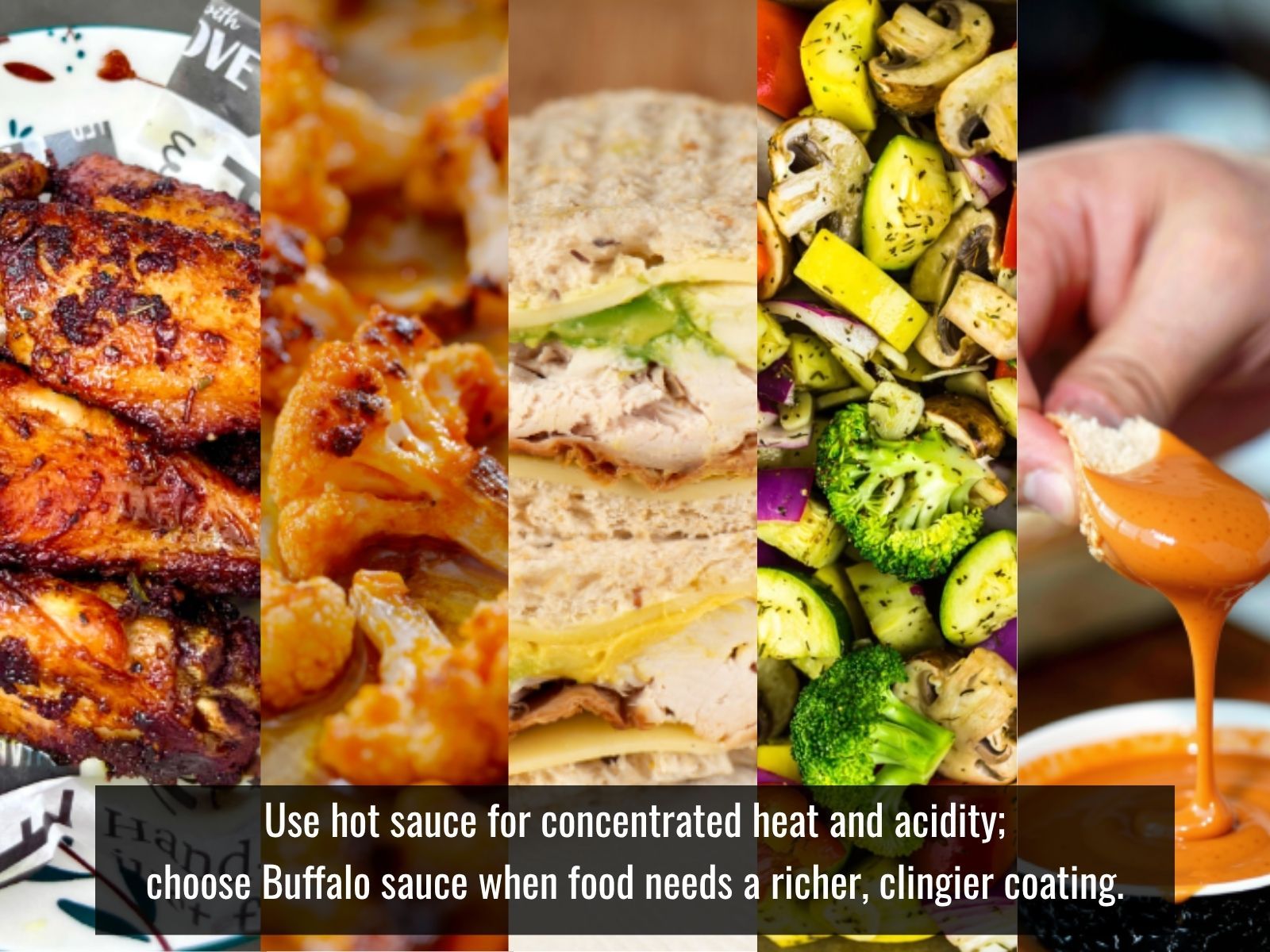
Cayenne hot sauce disperses easily through liquids and adds heat without substantially changing a dish’s texture. It suits foods that need a sharp finishing splash rather than a buttery coating.
Hot sauce can replace Buffalo sauce when you adjust its body and richness. Start with 2 parts cayenne hot sauce and 1 part melted butter, then stir until smooth. Increase the butter for a milder, richer result, or reduce it when you want stronger heat and acidity. For exact measurements, seasonings, and step-by-step instructions, follow this guide on how to make Buffalo hot sauce at home.
Buffalo sauce can also replace hot sauce in sandwiches, roasted vegetables, dips, and other dishes where added richness fits. Use it gradually because it contributes fat, seasoning, and a thicker consistency along with heat.
For dishes that need a pourable chile sauce without the buttery profile of Buffalo sauce, CHIN-SU Hot Sauce provides a balanced combination of heat, saltiness, sweetness, and garlic-forward flavor. It works with eggs, noodles, fried food, grilled meat, sandwiches, and other finished dishes.
Find out which condiment works best for different recipes and cooking techniques.
Reference
The Buffalo History Museum. (n.d.). Who served Buffalo's first wings? https://buffalohistory.org/who-served-buffalos-first-wings
Frequently Asked Questions
Frank's RedHot Original is not the same as Buffalo sauce; it's the cayenne hot sauce traditionally used to make it. Frank's also sells a ready-to-use Buffalo Wings Sauce, whose formula differs from the Original and may vary by market, plus a hotter Hot Buffalo Wings version.
Buffalo sauce is spicy, but it is usually milder than the same cayenne hot sauce used by itself. Butter or another added fat spreads the heat through a larger volume and reduces the sharp impression of the vinegar-forward base.The final heat level depends on the base hot sauce, the ratio of hot sauce to fat, and any additional cayenne or chile ingredients.
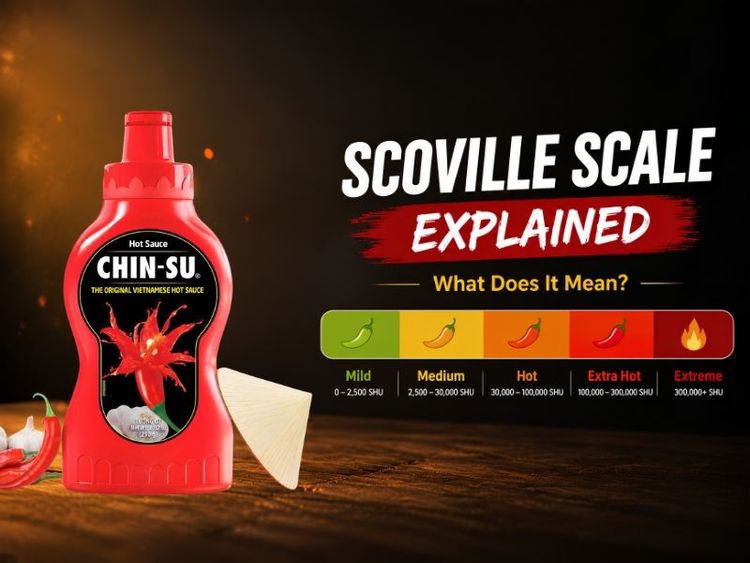
More butter creates a milder, richer result. A hotter base sauce creates a hotter Buffalo sauce. Individual sauces can be compared more consistently using the hot sauce Scoville scale.Buffalo sauce is named after Buffalo, New York, not the animal. The modern cayenne-and-butter Buffalo wing is widely associated with the Anchor Bar in 1964, although the Buffalo History Museum notes the city's wing tradition includes competing accounts, particularly restaurateur John Young and his mumbo sauce.
Buffalo sauce typically contains more calories than plain vinegar-forward hot sauce because Buffalo sauce contains added butter, margarine, oil, or another source of fat.
Plain cayenne hot sauce consists primarily of peppers, vinegar, water, salt, and seasonings, while Buffalo sauce adds a calorie-dense fat component. Exact values depend on the product formula and serving size.
Buffalo wings are a specific type of hot wing, coated in Buffalo-style cayenne-and-fat sauce. "Hot wings" is a broader term for wings made spicy any way: a hot sauce toss, a glaze, a dry rub, or a pepper paste. So not every hot wing is a Buffalo wing.

CHIN-SU KITCHEN TEAM
CHIN-SU Kitchen Team are the creative experts behind the delicious recipes featuring CHIN-SU sauces. With years of experience and a passion for flavor, our team carefully selects recipes from a variety of trusted chefs and bloggers, bringing together the best culinary insights to present you with the most suitable and exciting dishes. Every recipe is chosen to inspire you to create meals that are not only tasty but also easy to prepare, enhancing your dining experience. Join us as we explore a wide range of sauces and flavors, and elevate every meal with the perfect recipe for your table!
User Reviews
Featured Articles
SUBSCRIBE TO GET
MORE INFO
Want the latest and greatest recipes, updates, and more from us,
straight to your inbox? Subscribe and get our NEWS!