How to Choose Hot Sauce That Matches Your Taste and Food
Published: Jun 16, 2026 by CHIN-SU
Updated: Sep 15, 2026 by CHIN-SU
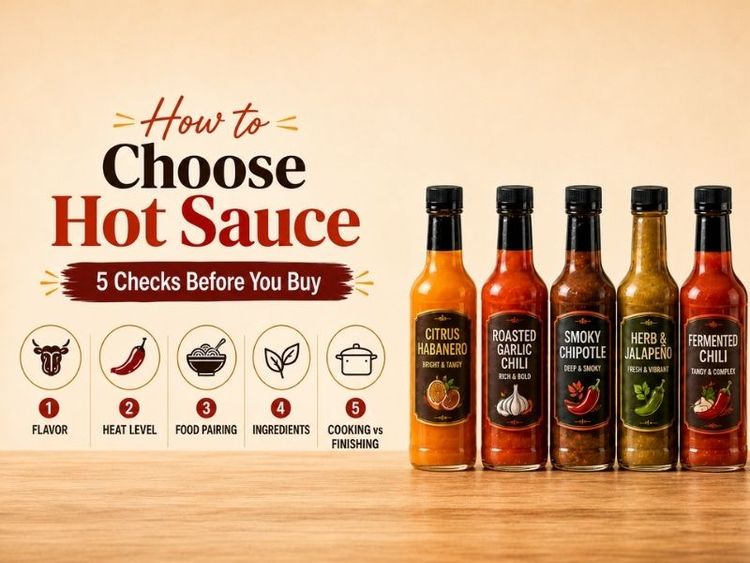
Choosing the right hot sauce comes down to five things: the flavor you enjoy, a heat level you can handle, how well it suits your food, what's actually on the label, and whether you'll cook with it or splash it on at the table.
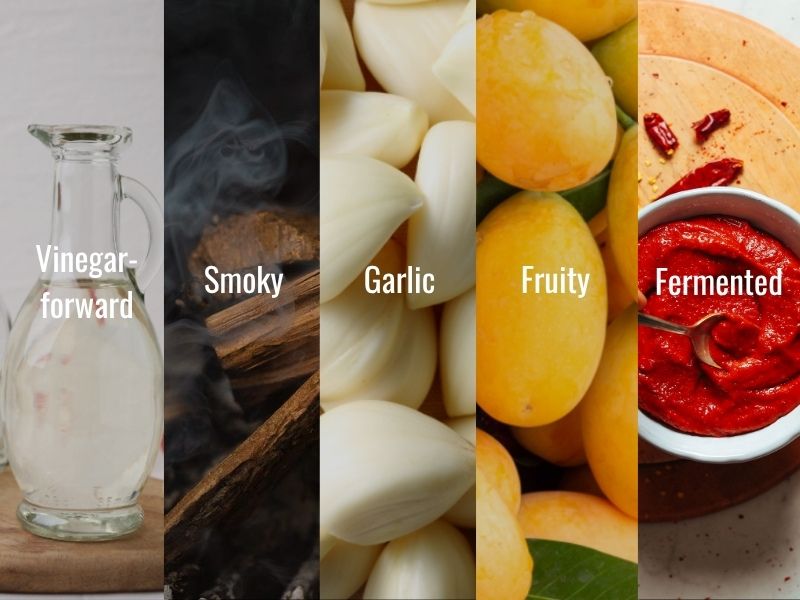
That starts with knowing what kind of flavor you want. A hot sauce can be sharp and vinegar-forward, fermented and savory, fruity, smoky, garlicky, or somewhere in between, depending on the peppers, acid, salt, and aromatics in the bottle. Most people reach for heat first, but flavor is what keeps a sauce in rotation. The best bottle fits the meals you actually eat, has a heat level you can enjoy often, and lists real peppers near the top.
In this guide, CHIN-SU presents practical factors to consider when choosing a hot sauce, from flavor profiles and Scoville heat levels to regional styles, label-reading shortcuts, and the difference between a cooking sauce and a finishing sauce.
Start with Flavor, Not Heat
Flavor profile matters more than heat when you pick a hot sauce. Heat mostly works one way: capsaicin hits your tongue, you feel the burn, and that is the core sensation. Flavor pulls from several directions at once, layering bright acid over toasted aromatics, a touch of sweetness, and savory umami depth. That difference shapes which bottle you reach for every day and which one collects dust in the back of the fridge.
Here's the thing. A sauce you love the taste of, at a heat level you find comfortable, ends up on your eggs, rice, noodles, and tacos. But a sauce that only burns gets one brave try, then it can sit untouched for a year. Taste keeps a bottle in rotation while pain empties it onto a shelf.
Most hot sauces fall into these five flavor families. Knowing which one you lean toward narrows a wall of 50 bottles down to maybe 5 worth your money.
| Flavor Profile | What It Tastes Like | Example Sauces |
| Tangy / Vinegar-forward | Sharp, bright, thin on the tongue | Tabasco, Frank's RedHot, Crystal |
| Smoky | Roasted, charcoal, earthy | Chipotle Tabasco, CHIN-SU Chili Sauce (charcoal-grilled celestial chili) |
| Garlic / Umami | Savory, deep fermented garlic | Huy Fong Sriracha, sambal oelek, chili garlic sauce |
| Fruity / Sweet | Tropical notes of mango and pineapple | Marie Sharp's, Caribbean habanero sauces |
| Fermented | Deep tang, complex, lactic acid layers | Gochujang, fermented Louisiana style (Tabasco ages 3 years) |
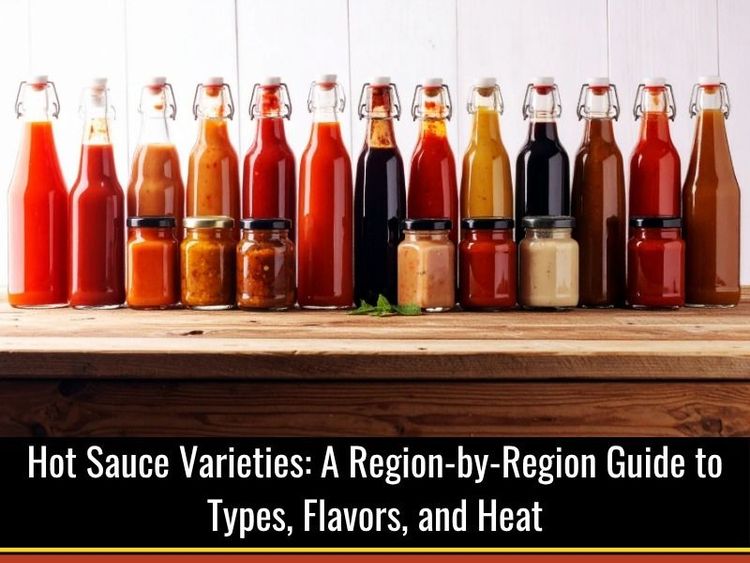
Most people gravitate toward one or two of these profiles and stay there. If you want a wider map of pepper bases, textures, and regional profiles before narrowing your shortlist, use the hot sauce varieties guide as the next step. We recommend you start with the family that already sounds good to you, then branch out once you know what your palate likes.
Match the Heat Level to Your Tolerance
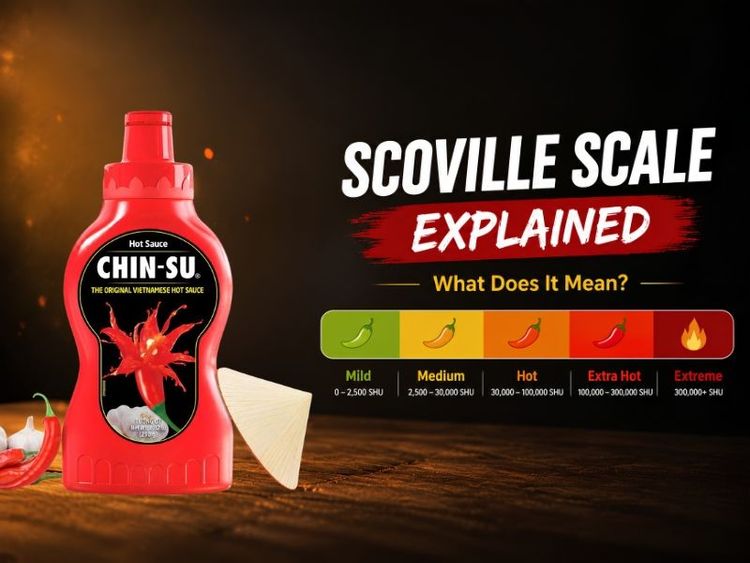
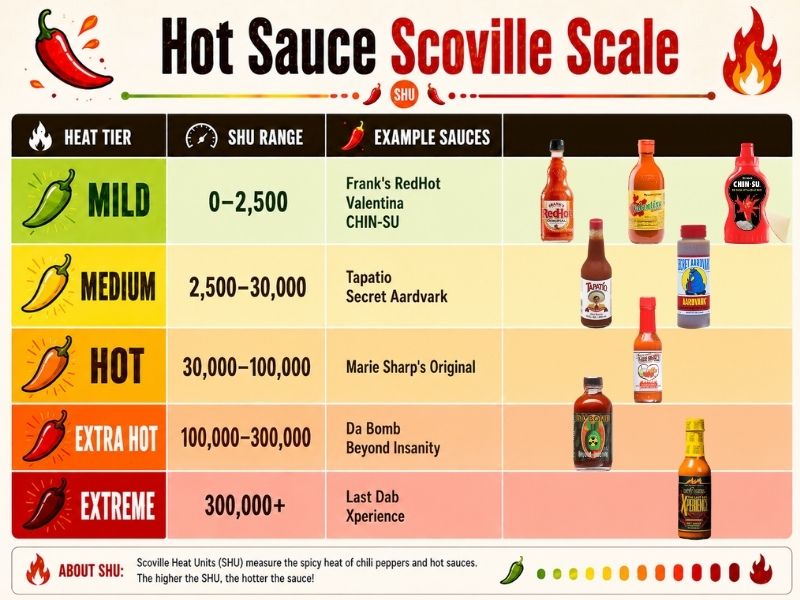
The Scoville scale helps you match a hot sauce to your tolerance by showing its heat level in Scoville Heat Units (SHU). This measurement estimates how much pungency a bottle delivers before you open it. So the higher the SHU, the more capsaicin heat you should expect, and the harder the sauce usually hits.
Why trust the number over the label? Because "Medium" means almost nothing across brands. For example, Valentina calls itself medium at 900 SHU, while Secret Aardvark wears the same word at 15,000 SHU. That's a 16-fold jump hiding behind one vague adjective, and the Scoville figure is what clears up the guesswork.
Heat also feels different depending on the pepper variety, not just the number on the label. ake cayenne, which brings a quick, sharp burn that fades fast. Habanero builds slowly, then lingers for 15 to 20 seconds. Ghost pepper plays the long game, creeping in after you swallow and hanging on for minutes. So knowing that pattern helps you read a bottle before it reads you.
To put real bottles next to real numbers, here's how the five heat tiers stack up:
| Heat Tier | SHU Range | Example Sauces |
| Mild | 0–2,500 | Frank's RedHot (450), Valentina (900), CHIN-SU (1,500–2,000) |
| Medium | 2,500–30,000 | Tapatio (3,000), Secret Aardvark (15,000) |
| Hot | 30,000–100,000 | Marie Sharp's Original (starts at 50,000) |
| Extra Hot | 100,000–300,000 | Da Bomb Beyond Insanity (135,600) |
| Extreme | 300,000+ | Last Dab Xperience (2,693,000+) |
Most everyday cooks live happily in the Mild-to-Medium range. Once you know you're comfortable at around 3,000 SHU on the Scoville scale, like Tapatio, you can size up almost any new bottle at a glance. Start milder than you think you need, then climb one tier at a time, since tolerance builds over a few weeks of regular use.
Pick the Right Style for Your Food
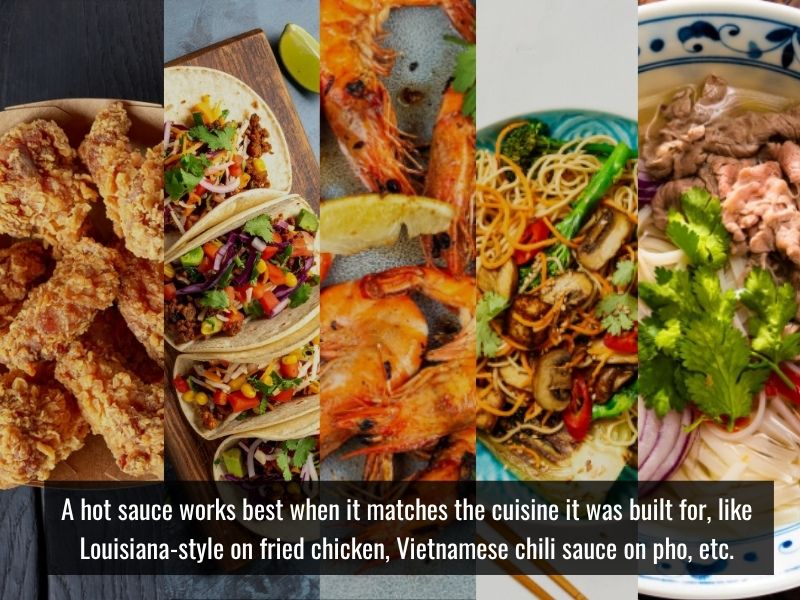
A hot sauce works best when it matches the cuisine it was built for, like Louisiana-style on fried chicken, Vietnamese chili sauce on pho, and Caribbean habanero on grilled seafood. Most regional sauces come from kitchens cooking a certain way, so they carry the acid, heat, texture, and body those dishes ask for. Drop a Louisiana sauce on a taco and it can work, sure, but it rarely sings the way a Mexican sauce does on that same plate.
Consistency matters just as much as origin, and this is where a lot of folks go wrong. A thin vinegar-based hot sauce vanishes into fried, fatty food, brightening every bite without weighing it down. Thick sauces, including sriracha-style chili sauces, cling to noodles and rice where a runny one would just slide off the bowl and pool at the bottom. So before you buy, picture what's on your plate most nights. If you are choosing between these two profiles, this guide to Sriracha vs. hot sauce compares their ingredients, flavor, heat, texture, and best uses side by side.
There are five regional families that cover most of the hot sauces you'll meet, and each one pairs with its own set of dishes. Here's how they line up:
| Style | Base | Best Foods | Example Sauces |
| Louisiana | Vinegar + aged cayenne | Fried chicken, po'boys, gumbo, eggs | Tabasco, Frank's RedHot, Crystal |
| Mexican | Dried peppers + spices | Tacos, eggs, rice, enchiladas | Cholula, Valentina, Tapatio |
| Caribbean | Habanero + fruit or carrot | Jerk chicken, grilled seafood, rice | Marie Sharp's, Scotch bonnet sauces |
| Asian | Fresh chili + garlic, fermented | Noodles, stir-fry, fried rice | Huy Fong Sriracha, sambal oelek |
| Vietnamese | Charcoal-grilled chili + fermented garlic | Pho, spring rolls, grilled meats, banh mi | CHIN-SU Chili Sauce |
If you cook mostly one cuisine, start with that region's sauce, and you'll rarely miss. And if your kitchen wanders across borders the way many do, keep one bottle from each family on the shelf so the right match is always within reach.
Check the Ingredient List
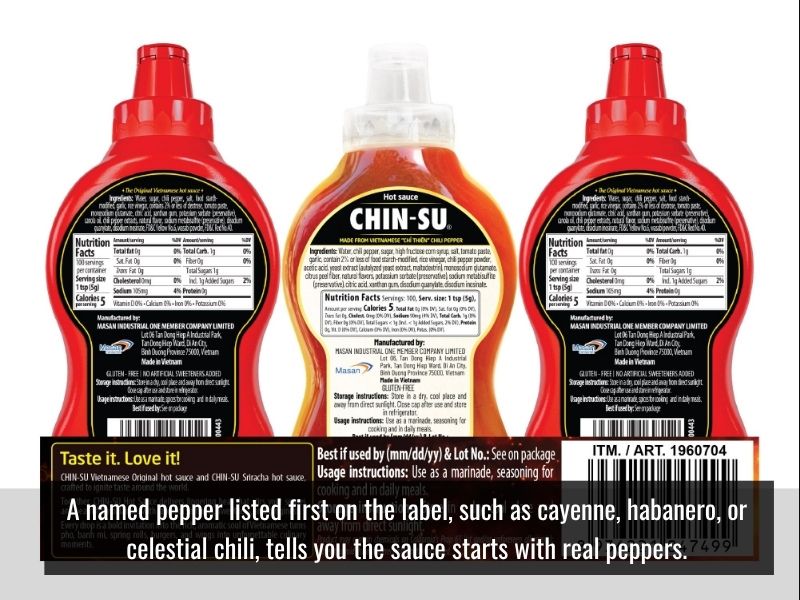
A named pepper listed first on the label, such as cayenne, habanero, or celestial chili, tells you the sauce starts with real peppers. Flip a bottle over and the order is everything, since ingredients sit in line by weight, heaviest first. So when water or vinegar tops the list and pepper appears far down, you may be buying a thin, diluted base dressed up in a fiery label.
How many ingredients should a clean sauce carry? For most bottles, the ingredients in a hot sauce stay simple: 5 to 8 items such as peppers, salt, vinegar, garlic, and maybe a spice or two. Once a list climbs past 15, it's fair to stop and ask why a simple condiment needs that much backup.
Then there's the safety side, and it's worth a closer look. A 2013 study by University of Nevada, Las Vegas researchers, published in the Journal of Environmental Science and Health, tested 25 hot sauce samples and found that 4 samples, or 16 percent, were above the FDA’s 0.1 ppm recommended maximum lead level for candy likely to be consumed frequently by small children. That benchmark is for candy, not hot sauce, so the finding is best read as a traceability signal, not a blanket warning about imported sauces. So, it's worth a glance at where your bottle was made.
One more label trick to watch. "Natural flavors" reads clean and wholesome, but it is a broad FDA labeling category under 21 CFR 101.22. The term does not tell you the exact pepper, spice, extract, or fermentation-derived flavoring used, so it gives you less flavor clarity than a label that names its ingredients directly.
The rule of thumb? Reach for a sauce with a short list, named peppers up top, and acidity from vinegar or fermentation. That's the bottle that earns a spot in your fridge.
Choose the Right Sauce for the Job
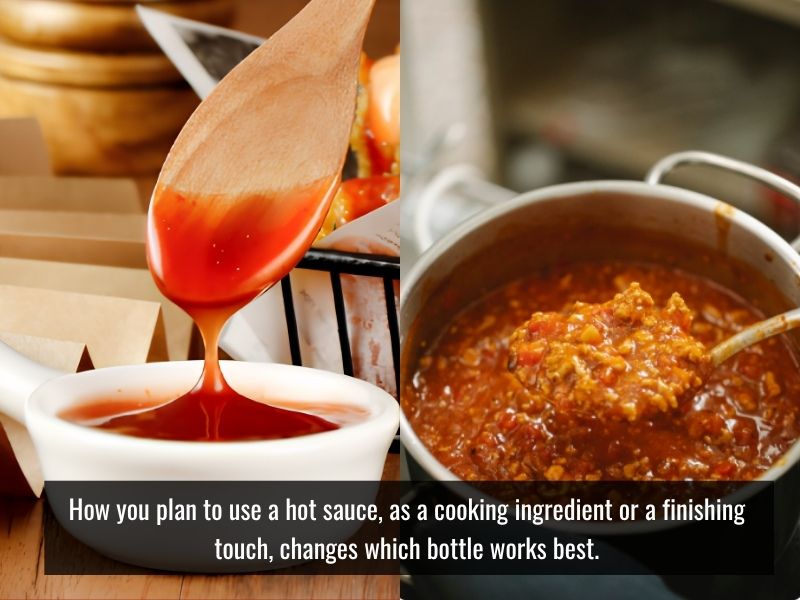
How you plan to use a hot sauce, as a cooking ingredient or a finishing touch, changes which bottle works best. Cooking and finishing are two different jobs, and a sauce that shines raw at the table can fall flat once it meets heat.
When you cook with hot sauce, the heat changes how it tastes. For instance, vinegar-heavy sauces can mellow on the stove as sharp acidity softens. Fruit-based sauces caramelize into glossy glazes, while thick sauces hold their body in marinades and stir-fries.
When you add hot sauce at the end, the sauce stays closer to how it tastes in the bottle. Thin sauces dash brightly across a plated dish; thick ones drizzle or spoon on top; and fermented sauces lend deep, savory flavor with no cooking at all.
So here's the simple call. If you cook often, reach for a thick-based sauce that stands up to heat. If the hot sauce is mostly finished at the table, pick the flavor you already love straight from the bottle.
What Makes a Hot Sauce Worth Buying?
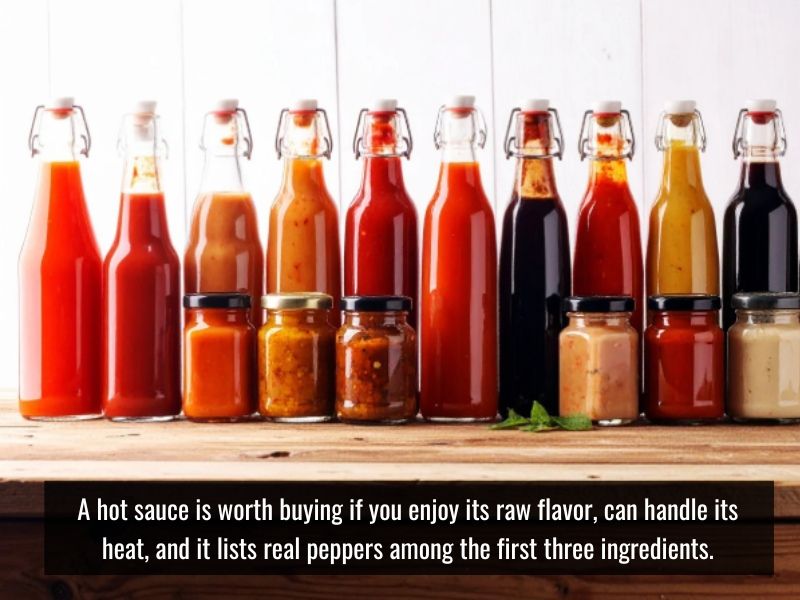
A hot sauce is worth buying when it passes three tests: you like the flavor raw, the heat fits your tolerance, and the label lists real peppers in the first three ingredients.
After the 5 checks above, this final test helps you decide whether the bottle fits your everyday meals.
| Buying test | Pass | Skip |
| Flavor | You can name the lead note: tangy, smoky, fruity, garlicky, or fermented | It tastes only hot or salty |
| Heat | You can use it often without overpowering food | It burns once and then sits unused |
| Label | Peppers, vinegar, salt, garlic, and spices are easy to identify | The list is long, vague, or filler-heavy |
| Food match | It fits 2 or 3 meals you already cook | It only works for one narrow use |
| Use case | You know whether it is better for cooking or finishing | Texture and acidity feel wrong for your meals |
Below are the questions that come up most from folks picking their first bottle, or their next favorite.
Choosing a hot sauce comes down to flavor first, heat second, and label clarity third. From there, match the sauce style to the cuisine you cook most, and decide whether you need one that holds up in the pan or one that tastes best as a raw finish . Start mild and build heat as your tolerance grows, because the best hot sauce is the one you actually use often. Once these factors are clear, comparing bottles becomes much easier. Explore the best hot sauce 2026 list on chinsu.com to find ranked picks across heat levels, flavor profiles, and regional style.
Frequently Asked Questions
Frank's RedHot (450 SHU) and Cholula (1,000 to 2,000 SHU) are the most common starting points for beginners. Both stay mild, sit on nearly every grocery shelf, and taste right at home on eggs, tacos, and pizza. Once that range feels easy, step up to Sriracha (1,000 to 2,500 SHU) or CHIN-SU (1,500 to 2,000 SHU) for a garlic-forward kick.
Price reflects ingredient quality and batch size more than flavor. A $3 bottle of Cholula leans on real arbol and piquin peppers, while a $15 artisan sauce might use rarer peppers or a longer fermentation. Both can taste excellent. Read the ingredient list instead of the price tag.
Yes, you can usually use vinegar-based hot sauce after the printed date if it has been stored properly and shows no signs of spoilage. For many commercial hot sauces, the date is more about peak flavor than a hard safety cutoff, which is why the answer to does hot sauce expire depends on storage, ingredients, and spoilage signs. The sauce may lose color, heat, or sharpness over time, and refrigeration after opening helps it stay fresher longer. Toss it if you see mold, swelling, leaking, off smells, or unusual texture.
Most hot sauces are gluten-free, since the base ingredients of peppers, vinegar, and salt carry no gluten grains. Some bottles add thickeners or flavorings that may sneak in gluten, so a quick label check pays off. Brands with confirmed gluten-free status include Tabasco, Sriracha (Huy Fong), Crystal, Tapatio, and Valentina.

CHIN-SU KITCHEN TEAM
CHIN-SU Kitchen Team are the creative experts behind the delicious recipes featuring CHIN-SU sauces. With years of experience and a passion for flavor, our team carefully selects recipes from a variety of trusted chefs and bloggers, bringing together the best culinary insights to present you with the most suitable and exciting dishes. Every recipe is chosen to inspire you to create meals that are not only tasty but also easy to prepare, enhancing your dining experience. Join us as we explore a wide range of sauces and flavors, and elevate every meal with the perfect recipe for your table!
User Reviews
Featured Articles
Does Hot Sauce Expire? All Things You Need to Know
Does Hot Sauce Need to Be Refrigerated?
How to Preserve Hot Sauce: 4 Methods to Try
Hot Sauce Scoville Scale Explained: What Does It Mean?
Hot Sauce Varieties: A Region-by-Region Guide to Types, Flavors, and Heat
SUBSCRIBE TO GET
MORE INFO
Want the latest and greatest recipes, updates, and more from us,
straight to your inbox? Subscribe and get our NEWS!