Hot Sauce vs. Salsa: What Is the Difference?
Published: Aug 11, 2026 by CHIN-SU
Updated: Sep 15, 2026 by CHIN-SU
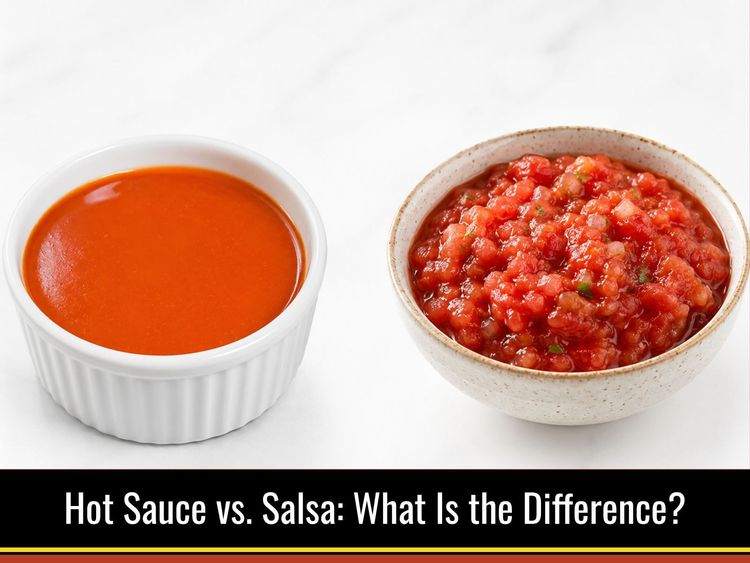
Hot sauce and salsa overlap, but they are not identical in U.S. English. Hot sauce usually refers to a chile-forward, pourable condiment used in small amounts, while salsa covers a broader group of Mexican-style sauces that may be smooth or chunky and based on tomatoes, tomatillos, chiles, or a combination of ingredients.
The confusion starts with the word itself. Salsa means “sauce” in Spanish, so a Mexican hot sauce may be labeled salsa picante. In this guide, we will explain the practical differences between hot sauce and salsa, when to use each one, and how their storage requirements differ.
What Is the Difference Between Hot Sauce and Salsa?
Hot sauce is usually a concentrated, chile-forward condiment poured onto prepared food, while salsa is a broader category of Mexican-style sauces commonly served as a dip, topping, or dish component. The two differ most often in their ingredient balance, texture, acidity, and serving role, although individual products may share characteristics from both categories.
Spanish retains the broad meaning of salsa as “sauce,” while U.S. English commonly uses “salsa” for Mexican-style table sauces and dips. A Mexican hot sauce bottle may read salsa picante, but a U.S. grocery shopper usually understands “salsa” as the tomato, tomatillo, or chile-based sauce sold in a jar or refrigerated container. The same word performs two different jobs.
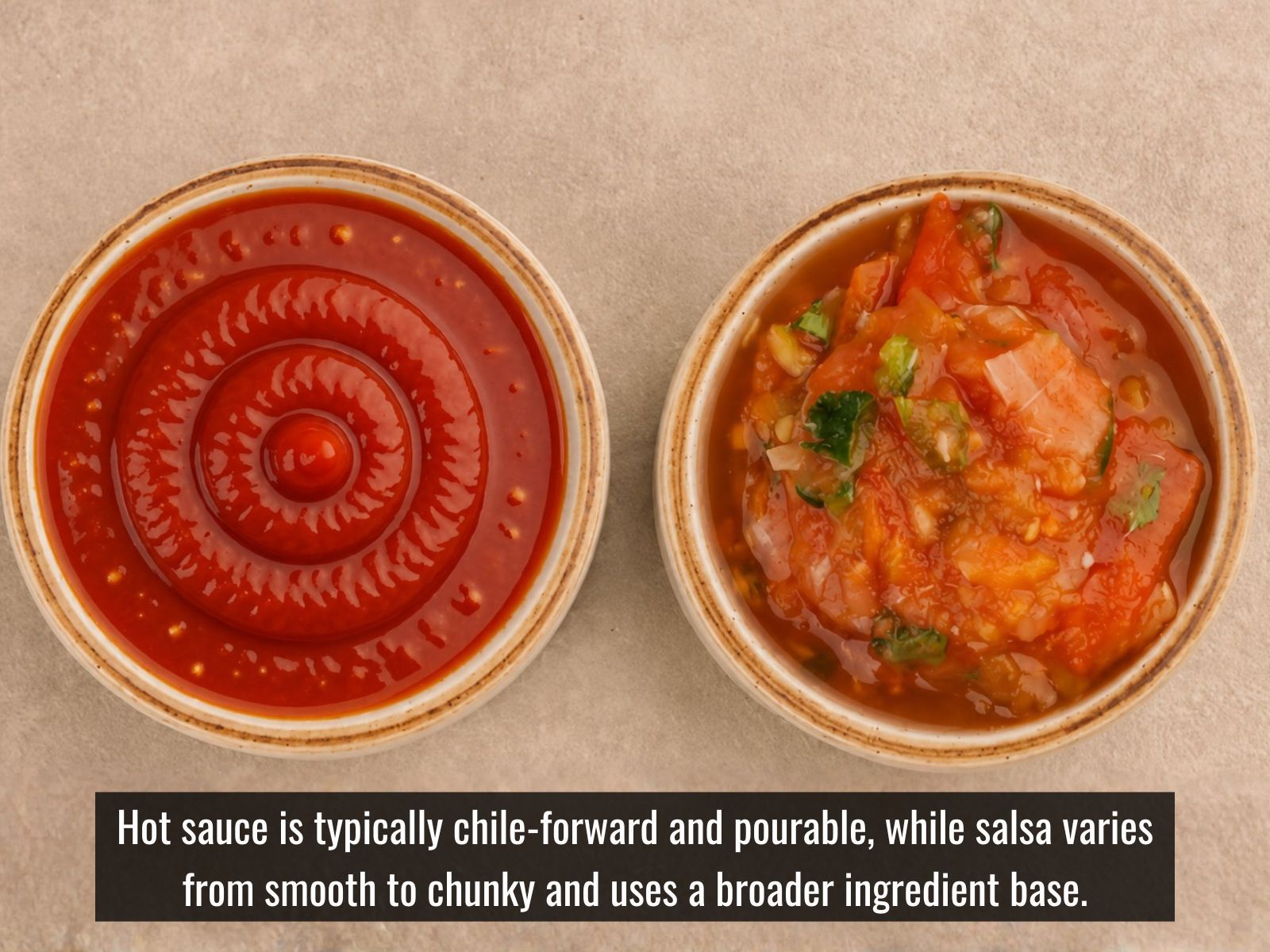
Four practical signals help distinguish hot sauce from salsa at the table.
- The base. Hot sauce ingredients typically center on chile peppers and commonly include vinegar, water, and salt. Salsa may use tomatoes, tomatillos, chiles, fruit, onions, herbs, or several of these ingredients together. Valentina, for example, lists water, chili peppers, vinegar, salt, spices, and sodium benzoate, with no tomato in its formula. Because ingredients appear in descending order by weight, the first items on the label provide a useful clue about the sauce’s composition.
- The texture. Hot sauce is commonly blended into a smooth consistency and may be strained until it pours in a thin stream. Salsa ranges from smooth and pourable to thick and chunky. Pico de gallo represents the chunky end of the category, combining chopped tomatoes, white onion, serrano or jalapeño peppers, cilantro, lime juice, and salt without blending.
- The acid. Hot sauce commonly uses vinegar to create a sharp, consistent acidity and support product stability. Fresh salsa often relies on lime juice, tomatoes, or tomatillos for a brighter flavor, while cooked and commercially packaged salsas may also contain vinegar or another added acid.
- The job. Hot sauce is usually a concentrated finisher added to prepared food in drops, dashes, or a thin pour. Salsa is commonly eaten in larger portions as a dip, taco topping, burrito filling, or accompaniment to grilled meat, seafood, and eggs.
Any single tell can fail on its own. Thin, pourable salsas exist, and so do chunky hot sauces. Texas Monthly is right that no one identifier settles the question, and that is exactly why there are four instead of one. Products that combine features from both categories need a closer look at their labels and intended use. Once the hot sauce vs. salsa distinction is clear, the practical question is when to use each condiment.
When to Use Hot Sauce vs. Salsa
Reach for hot sauce when you want to add heat and tang to a finished dish, a few dashes at a time: eggs, tacos, pizza, noodle soups, wings. Reach for salsa when you want a scoopable, tomato-forward component you eat in quantity, with chips, over grilled fish or chicken, or spooned into a taco or burrito.
Hot sauce is a finisher, added after the cooking is done. It's concentrated, so a few dashes carry heat and acidity across a whole plate without changing the body of the dish. That's why it fits eggs, tacos, pizza, wings, and grain bowls, and why it slides right into a bowl of pho (phở), where a pourable chile sauce dissolves into the soup. The simple rule: if the food is already cooked and you want to adjust the heat at the table, that's hot sauce's job.
Salsa is a component you eat by the spoonful. Because the heat is spread through tomatoes and vegetables, you eat it in volume rather than in dashes. It works as a dip for tortilla chips, a fresh topping for grilled fish, carnitas, or eggs, and a filler for tacos and burritos. Pico de gallo adds crunch, while a smooth salsa roja adds moisture and body. It comes down to the same thing: if you want texture and volume, or something to dip into, that's salsa's job.
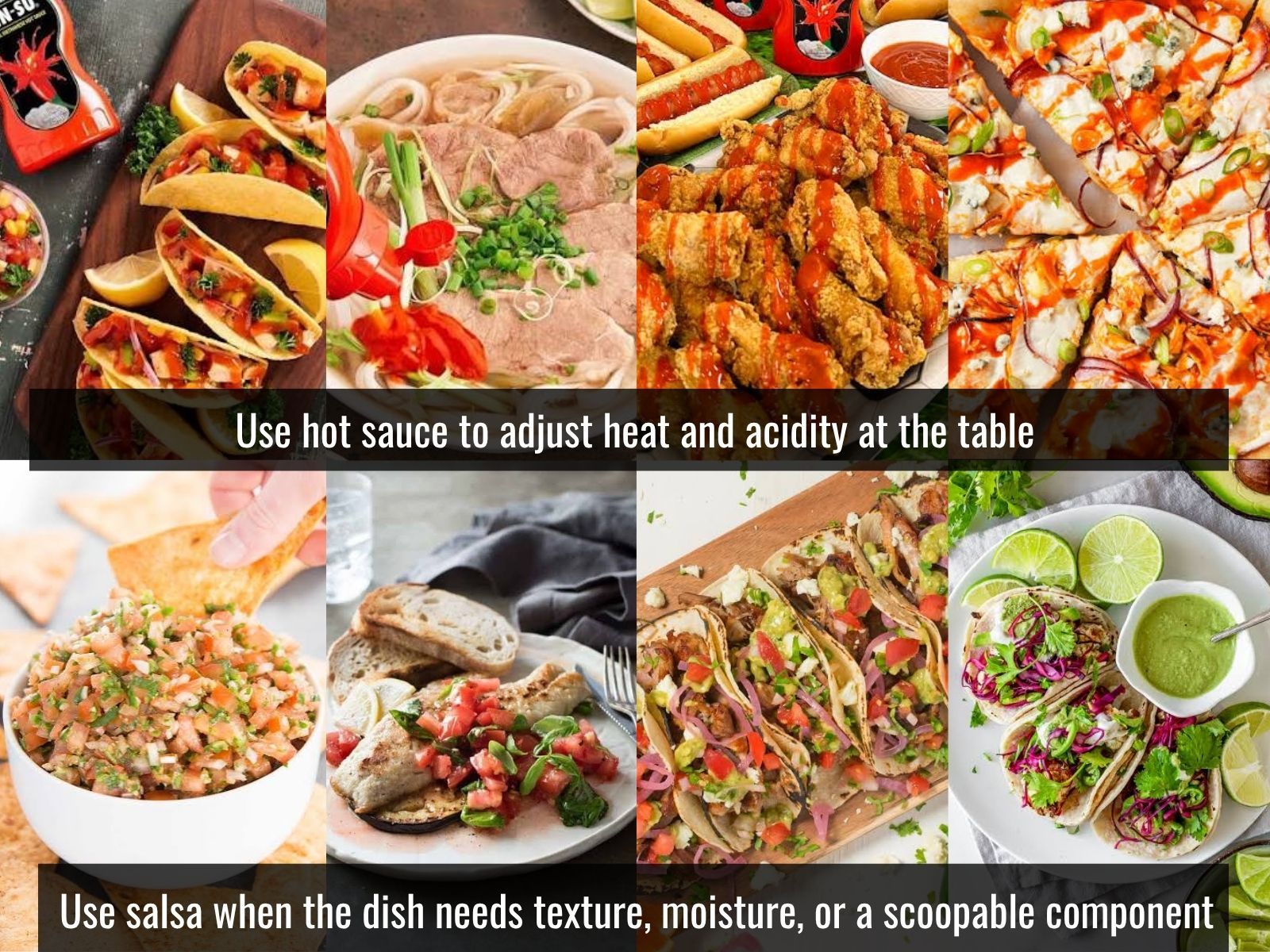
One practical difference between hot sauce and salsa is how they behave as substitutes: either can add heat, but they do not provide the same texture, volume, or dispersion. A few drops of hot sauce cannot provide the volume and texture of salsa, while a spoonful of chunky salsa will not disperse through soup as evenly as a smooth sauce.
CHIN-SU sits on the hot sauce side of the comparison because it is chile-forward, pourable, and designed to season prepared dishes. CHIN-SU Hot Sauce can accompany pho, noodles, eggs, grilled meat, fried food, tacos, and other dishes that benefit from concentrated heat and a balanced savory-sweet flavor.
One more practical difference decides which of the two lives in the pantry and which lives in the fridge.
Choose the right condiment based on your dish, serving style, and desired flavor experience.
How to Store Hot Sauce and Salsa
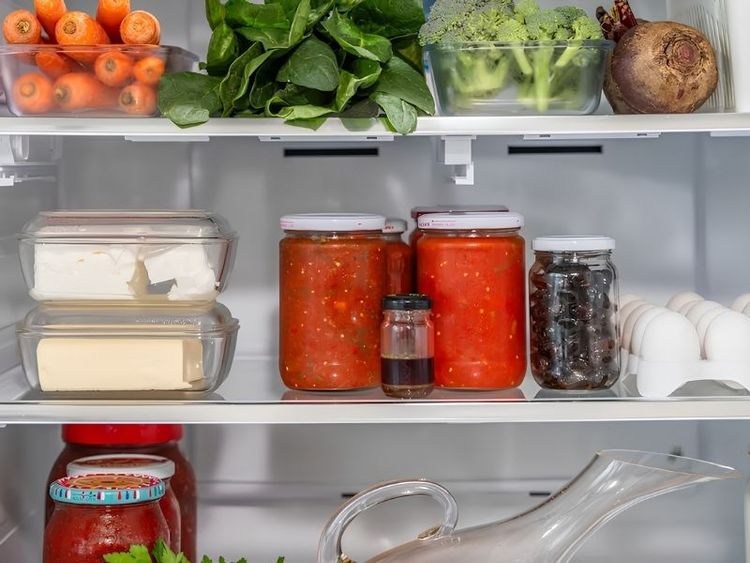
Store unopened shelf-stable hot sauce and jarred salsa in a cool, dry pantry. Fresh salsa, pico de gallo, and any product sold refrigerated should remain at 41°F (5°C) or below. After opening a bottle or jar, follow the label because storage requirements vary by formula and processing method.
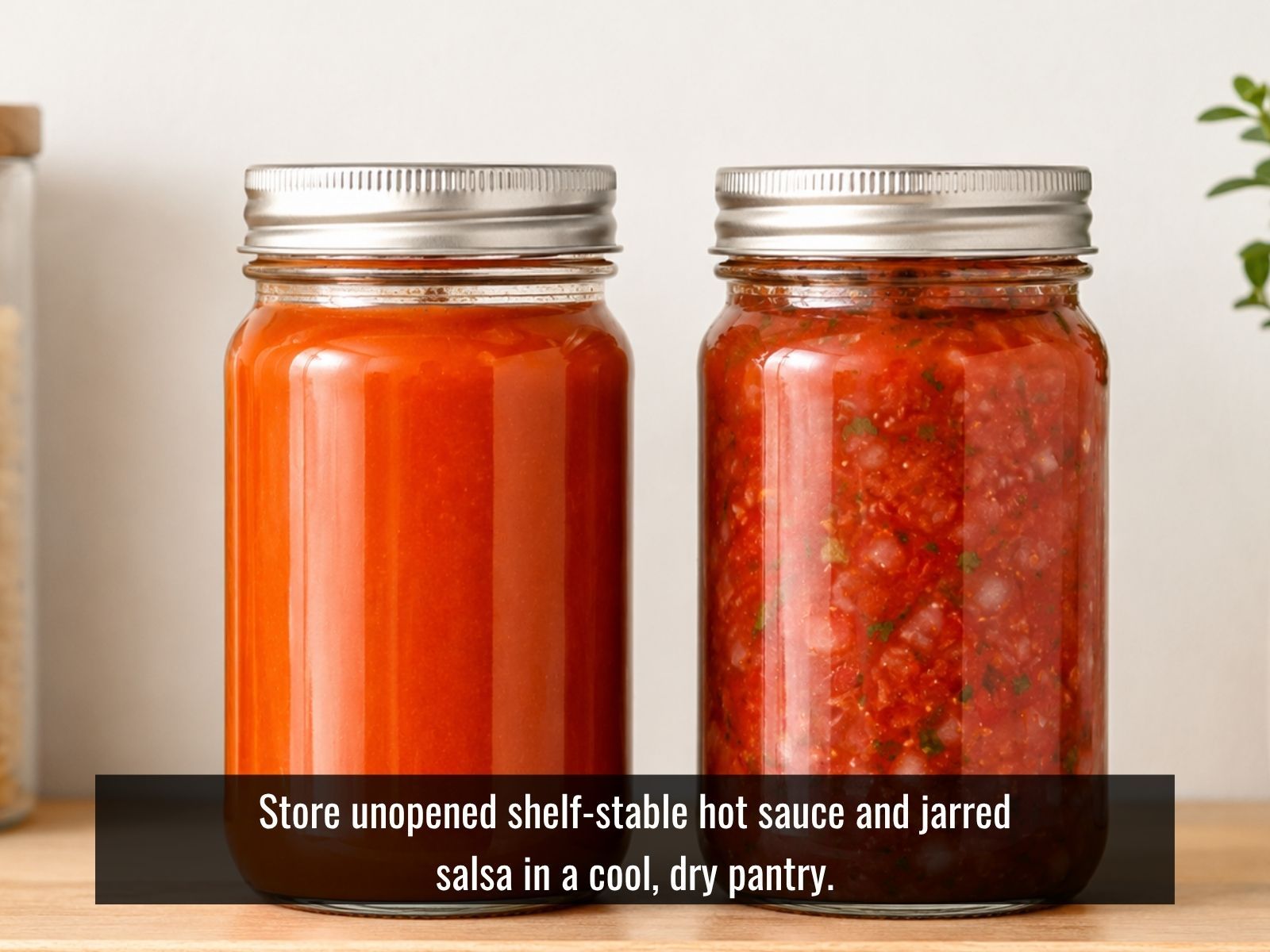
Hot sauce usually lasts longer than fresh salsa because its acidity, salt, processing, and sealed packaging create a less favorable environment for microbial growth. Vinegar or fermentation lowers the pH, while heat treatment and preservatives may provide additional stability. If you are wondering, do you have to refrigerate hot sauce? The answer depends on the product. Some opened hot sauces can remain in the pantry, but refrigeration slows changes in flavor, color, and texture.
There are two ways to store salsa. Fresh salsa contains chopped, perishable ingredients and requires refrigeration unless its acidity has been professionally verified. Shelf-stable jarred salsa is acidified, heat-processed, and sealed before sale. Under FDA rules, an acidified food has a finished equilibrium pH of 4.6 or below and must undergo controlled processing.
Once opened, refrigerate jarred salsa when directed on the label. The practical rule is simple: keep fresh salsa cold, store unopened shelf-stable products in the pantry, and follow the manufacturer’s instructions after opening.
References
- Merriam-Webster. (n.d.). Sauce. In Merriam-Webster.com dictionary. Retrieved July 22, 2026, from https://www.merriam-webster.com/dictionary/sauce
- U.S. Food and Drug Administration. (n.d.). Acidified foods, 21 C.F.R. § 114.80. Retrieved July 22, 2026, from https://www.ecfr.gov/current/title-21/chapter-I/subchapter-B/part-114/subpart-E/section-114.80
- U.S. Department of Agriculture. (n.d.). FoodKeeper app. FoodSafety.gov. Retrieved July 22, 2026, from https://www.foodsafety.gov/keep-food-safe/foodkeeper-app
- Texas Monthly. (n.d.). The Texanist: Are hot sauce and salsa the same thing? Retrieved July 22, 2026, from https://www.texasmonthly.com/being-texan/the-texanist-hot-sauce-and-salsa-same-thing/
Frequently Asked Questions
Yes, pico de gallo is a salsa, specifically a fresh, chunky one. It's made of chopped tomato, white onion, serrano or jalapeño, cilantro, lime, and salt, with nothing blended. Salsa covers many smooth, chunky, fresh, cooked, red, and green preparations. Pico de gallo belongs to the fresh, uncooked group, which shows why salsa describes a category rather than one specific recipe or texture.
Picante sauce and salsa are closely related but not identical. Salsa picante is Spanish for "spicy sauce". In U.S. usage, "picante sauce" usually means a smoother, thinner, pourable tomato-and-chile sauce, while "salsa" more often means the chunkier kind. Both count as salsas in the broad Spanish sense, so the difference is mostly one of texture.
Fresh salsa, pico de gallo, and products sold from a refrigerated case must remain in the refrigerator. An unopened jar labeled shelf-stable can stay in the pantry, but it should move to the refrigerator after opening. Fresh salsa contains perishable cut vegetables and should be chilled promptly. Refrigerated store salsa stays cold before and after opening, while shelf-stable salsa should follow the storage period printed on the jar or listed in the USDA FoodKeeper guidance.
Some Texans do call salsa hot sauce, though usage varies by region. In parts of Texas and the Southwest, the two terms are kept strictly apart, while elsewhere people use them interchangeably. Texas Monthly's long-running advice columnist put it plainly, saying the answer "depends on who you ask," and he admits asking waitstaff for more "hot sauce" when he meant the stuff that comes with the chips (Texas Monthly).
In Spanish, every sauce is a salsa, not just the spicy ones. The word covers all of them, so tomato sauce for pasta is salsa de tomate, and even sweet ones take the word. That's why "hot sauce" and "salsa" aren't opposites in Spanish, since one is simply a narrower case of the other.
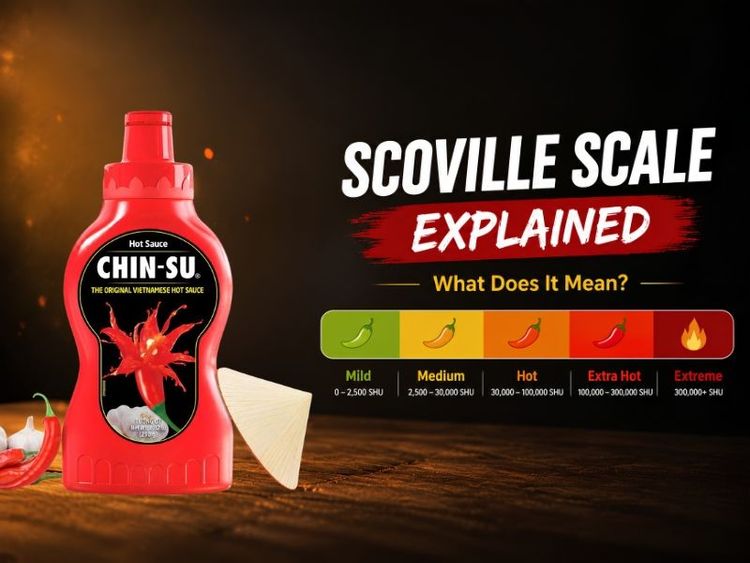
Hot sauce is usually spicier than salsa, but not always. Hot sauce concentrates peppers, so it starts hotter by default. Mild bottles surprise people though, since Cholula Original runs 1,000 to 2,500 SHU and Tabasco Original 2,500 to 5,000 SHU on the Scoville scale, while a habanero salsa can pass both easily.
In Spanish, hot sauce is salsa picante, which translates literally as "spicy sauce." You'll also hear salsita, the diminutive, which comes out to something like "little sauce."

CHIN-SU KITCHEN TEAM
CHIN-SU Kitchen Team are the creative experts behind the delicious recipes featuring CHIN-SU sauces. With years of experience and a passion for flavor, our team carefully selects recipes from a variety of trusted chefs and bloggers, bringing together the best culinary insights to present you with the most suitable and exciting dishes. Every recipe is chosen to inspire you to create meals that are not only tasty but also easy to prepare, enhancing your dining experience. Join us as we explore a wide range of sauces and flavors, and elevate every meal with the perfect recipe for your table!
User Reviews
Featured Articles
SUBSCRIBE TO GET
MORE INFO
Want the latest and greatest recipes, updates, and more from us,
straight to your inbox? Subscribe and get our NEWS!