Thit Kho Trung Recipe - Vietnamese Braised Pork Belly and Eggs
By CHIN-SU Kitchen Team
Updated Sep 23, 2026
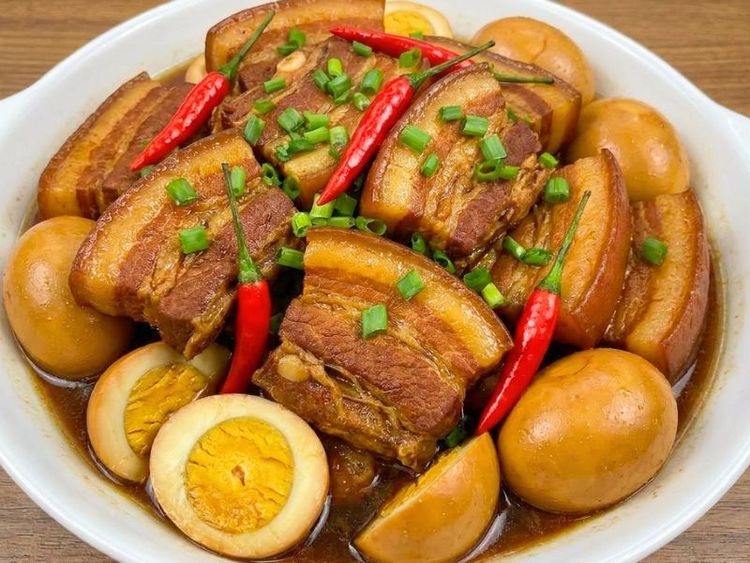
Tested in the CHIN-SU kitchenThit kho (thịt kho), especially thit kho trung or thit kho tau, is a Vietnamese braised pork dish made with pork belly, duck eggs, fish sauce, caramel, and coconut water until the meat becomes tender and the sauce develops a glossy reddish-brown glaze. The dish is strongly associated with Tết meals, although many families also prepare smaller versions throughout the year.
In Vietnamese households, thit kho trung is often cooked in a larger pot for sharing. During Tết, the dish appears alongside steamed rice, pickled vegetables, boiled greens, and other family dishes because the braised pork and eggs can be prepared ahead and served across multiple meals.
In this article, CHIN-SU shares the thit kho recipe to make at home, techniques for creating a balanced fish sauce caramel, controlling the braising liquid, and adding eggs so they absorb the sauce while keeping their texture. The recipe takes about 2 hours, including approximately 40 minutes of active preparation and 1 hour 20 minutes of simmering, and serves 6 to 8 people.

40 min
Prep time
1 hr 30 min
Cook time
2 hr
Total time
What Is Thit Kho Tau?
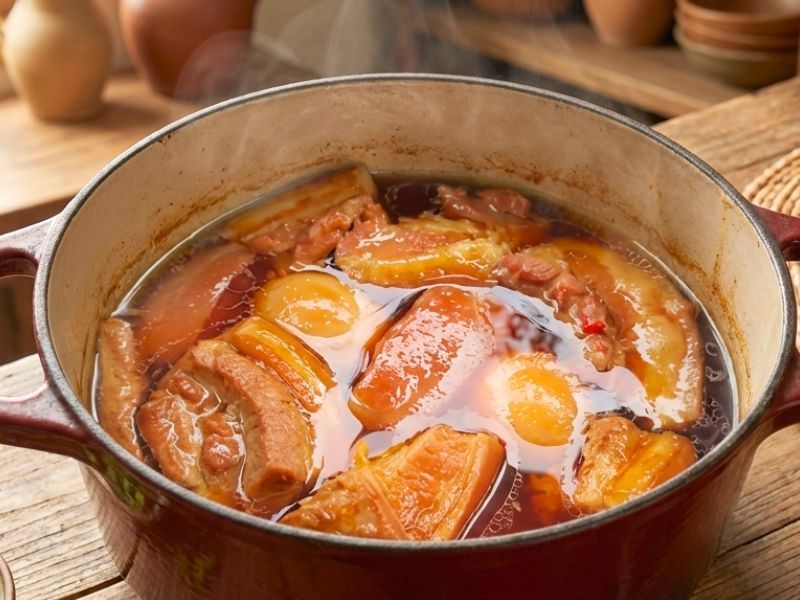
Thit kho tau (thịt kho tàu), also called thit kho trung (thịt kho trứng), is a Vietnamese dish made with pork, most often pork belly, and whole boiled eggs slowly braised in a savory and slightly sweet broth seasoned with fish sauce, coconut water, and sometimes Vietnamese caramel sauce (nước màu). The pork becomes tender while the eggs absorb the flavor and amber brown color of the broth. Traditional Southern Vietnamese thit kho tau retains enough clear, rich broth to spoon over steamed white rice instead of reducing it to a thick glaze.
The name identifies the main ingredient and cooking method:
- Thịt means meat and refers to pork in this dish.
- Kho is a Vietnamese cooking method in which meat, fish, seafood, or tofu simmers slowly in seasoned liquid.
- Trứng means egg, which explains the alternative name thit kho trung.
The meaning of tàu has no universally accepted explanation. One interpretation associates the word with the mildly salty and sweet flavor found in the dish. Another folk account connects the name with food prepared for long boat journeys.
Thit kho tau is closely associated with Southern Vietnam and the Mekong Delta. Families often prepare a large pot for Tết, the Vietnamese Lunar New Year, because the dish serves many people and reheats well over several meals. Vietnamese households also cook it throughout the year as part of an everyday rice meal.
Thit kho tau differs from thit kho tieu, which is a pork braise defined by the stronger aroma and heat of black pepper. Thit kho tieu usually contains less cooking liquid and does not rely on eggs. In contrast, thit kho tau is recognized by its tender pork, whole braised eggs, balanced broth, and generous amount of sauce served over rice.
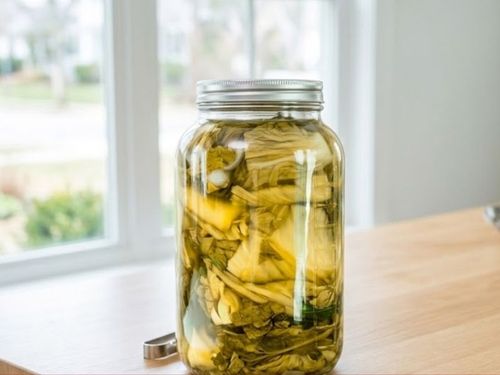
Common accompaniments include pickled mustard greens, pickled bean sprouts, and cu kieu, which are pickled scallion bulbs. Their acidity and crisp texture balance the richness of the pork belly and braising broth.
Why You'll Love This Thit Kho
You’ll love this thit kho recipe because it transforms simple pork belly and eggs into a deeply flavorful Vietnamese family dish designed for sharing.
- A classic Vietnamese Tết dish. The pork and eggs create a complete main dish that pairs naturally with steamed rice and pickled vegetables.
- Flavor that develops over time. The pork becomes more tender and the eggs absorb more of the braising sauce after resting.
- A balanced family meal. The rich pork is traditionally served with fresh vegetables, soup, and pickled sides that balance the concentrated sauce.
Thit Kho Tau Ingredients
This thit kho tau recipe comes together from three component groups: the pork and aromatics, the marinade, and the braising liquid with duck eggs that develops the final savory glaze.
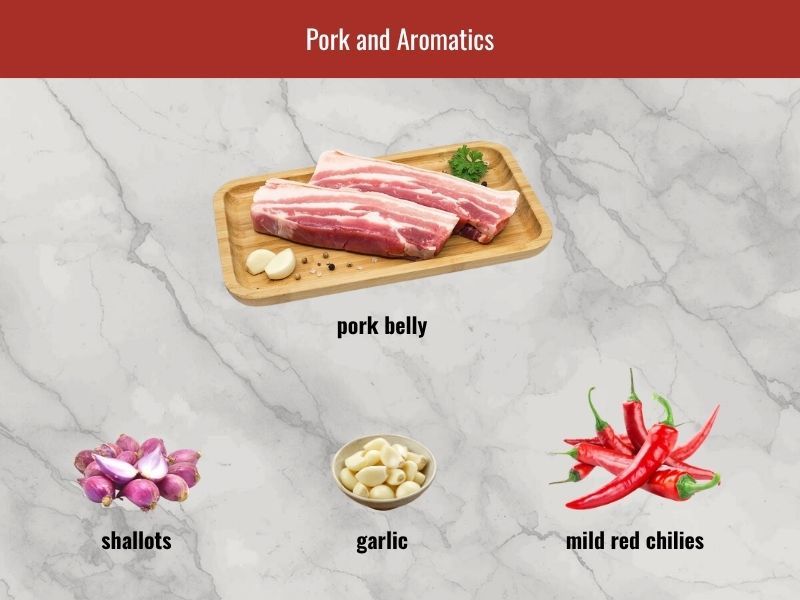
Pork and Aromatics
- 3.3 lb (1.5 kg) pork belly (thịt ba chỉ), ribs removed. Pork belly is the whole dish, and ask for the piece with the rib bones removed, since that leaves the meat thicker with more lean running through it. Vietnamese and other Asian markets carry it.
- 40 g shallots (hành tím) and 20 g garlic (tỏi). Add the shallots and garlic to the marinade as a strained liquid rather than solids, which keeps the braising liquid clear.
- 2 to 3 mild red chilies, seeds removed. The chilies join the same blend and lend warmth and color rather than real heat.
- 2 whole shallots and about 5 garlic cloves. These perfume the braising liquid and come back out after the first hour.
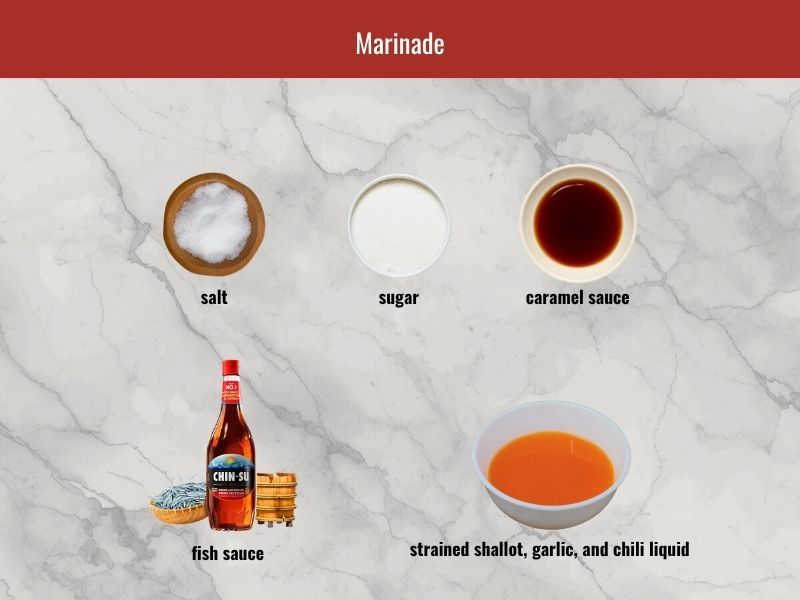
Marinade
- 10 g salt (about ½ tbsp). Salt seasons the pork before any liquid reaches it.
- 30 g sugar (2 tbsp). Sugar balances the fish sauce and helps the finished sauce turn glossy.
- 1 tbsp caramel sauce (nước màu). Caramel sauce gives thit kho tau its reddish-brown color and deeper cooked sweetness. This recipe uses prepared nước màu for convenience, while many Vietnamese cooks also make it by caramelizing sugar directly.
- 4 tbsp fish sauce (nước mắm). Fish sauce provides the main fermented savory flavor of the marinade. Its saltiness and aroma vary between brands, so adjust the final seasoning based on the product used.
- 3 tbsp strained shallot, garlic, and chili liquid. This carries all three aromatics into the meat without any solids.
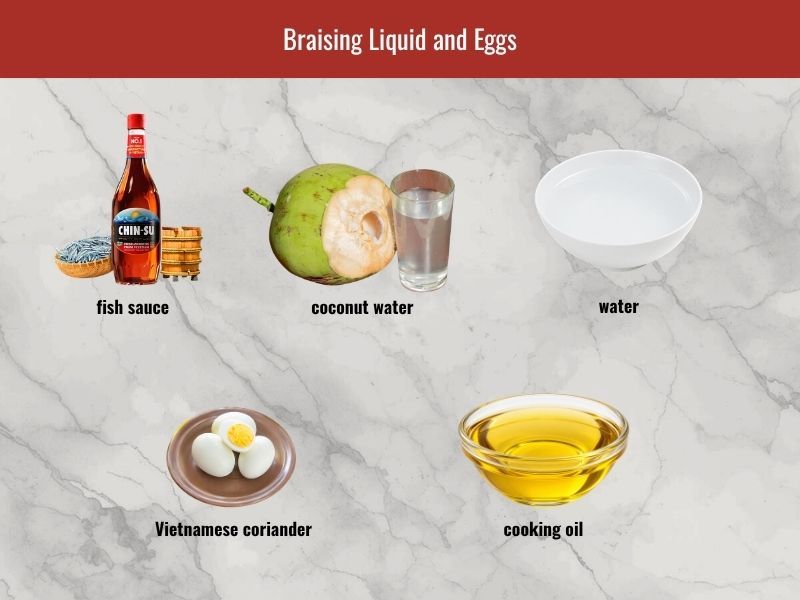
Braising Liquid and Eggs
- 4 tbsp fish sauce (about 60 ml), added during braising. The second addition of fish sauce builds a deeper savory flavor as the sauce reduces around the pork and eggs.
- 1 L (about 4¼ cups) coconut water. Coconut water brings its own light sweetness, so this pot needs less added sugar than versions made with plain water.
- 800 ml (about 3⅓ cups) water. Water makes up the rest so the pot does not turn sweet.
- Duck eggs (hột vịt), hard-boiled and peeled. Duck eggs are commonly used in thit kho tau because their larger yolks create a richer texture and absorb the braising sauce well. Chicken eggs can be used as a practical substitute.
- 1 tbsp cooking oil, for searing. A little is all the pan needs, since the pork renders its own fat almost immediately.
How to Make Thit Kho Tau Step by Step?
Making thit kho tau takes about 2 hours, with approximately 40 minutes of active preparation followed by slow braising. The process follows four stages: preparing the pork, seasoning with aromatics, building the caramel braising sauce, and simmering the pork with duck eggs until tender.
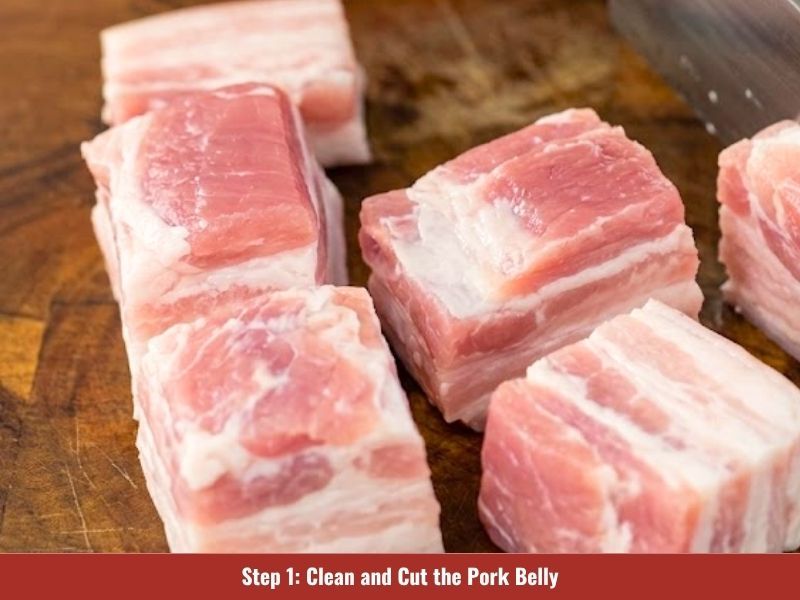
Step 1: Prepare And Cut The Pork Belly
Rub the skin of the 3.3 lb (1.5 kg) pork belly with salt. Hold the knife nearly flat and scrape the skin to remove any remaining hairs and residue without cutting into it. Rinse the pork briefly in lightly salted water mixed with a small amount of vinegar, then rinse again with clean water.
Cut the pork into squares or rectangles measuring about 2 to 2½ inches (5 to 6 cm). Keep the pieces evenly sized so they become tender at the same rate. Make sure each piece contains skin, fat, and lean meat.
Step 2: Blanch the Pork
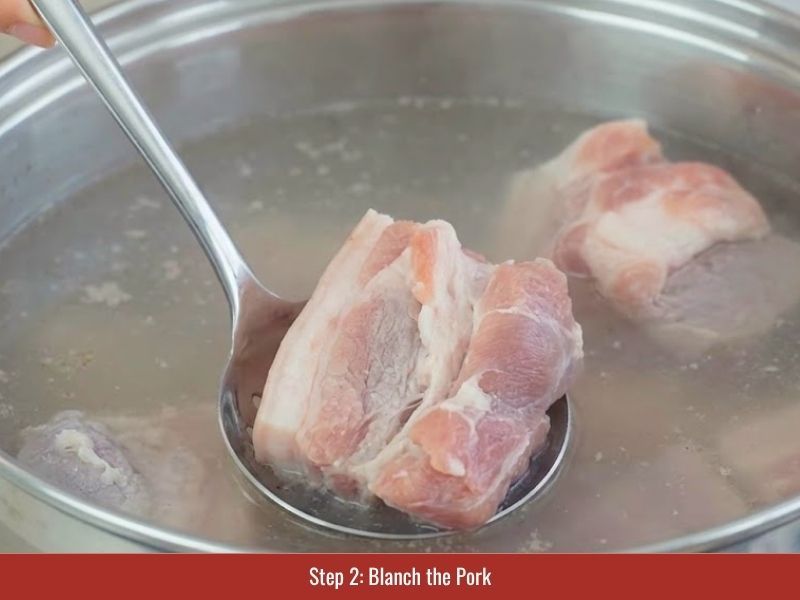
Bring a pot of water to a boil and add the pork. Once the water returns to a boil, blanch for 1 minute, then turn off the heat.
Remove the pork, rinse away the foam and residue, and drain it thoroughly. Excess water can dilute the marinade, so let the pieces dry well before seasoning.
Step 3: Blend and Strain the Aromatics
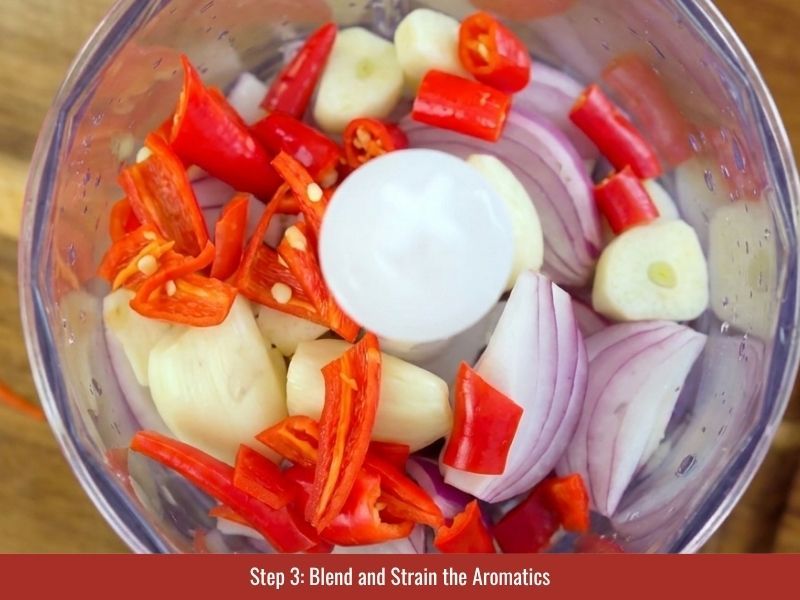
Blend 40 g shallots, 20 g garlic, and 2 to 3 seeded mild red chilies with just enough water to keep the blades moving.
Strain the mixture through a fine sieve or cloth and reserve the liquid. Removing the pulp keeps the aromatics from burning when the pork is seared and helps the braising liquid remain clear.
Step 4: Marinate the Pork
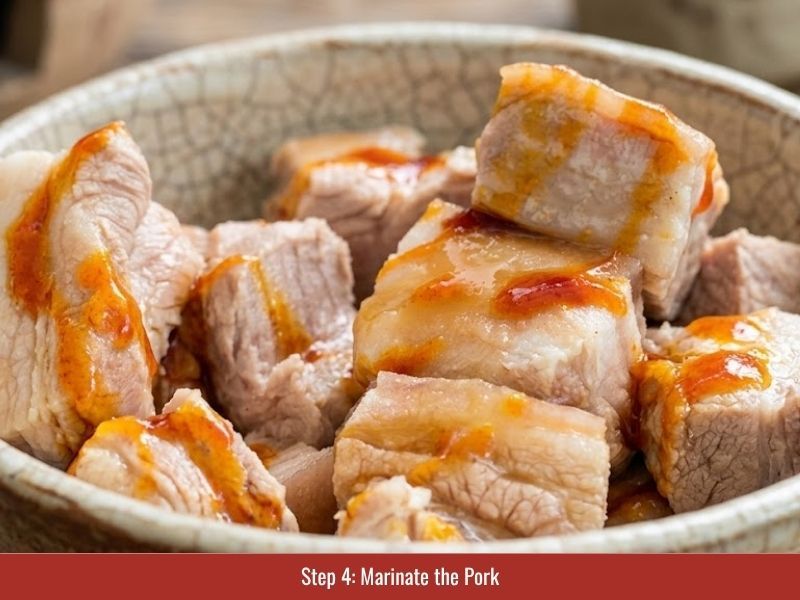
Combine the pork with 10 g salt, 30 g sugar, 1 tbsp caramel sauce, 4 tbsp fish sauce, and 3 tbsp strained aromatic liquid. Massage the seasoning into the pork, then marinate for 30 minutes, turning the pieces once after 15 minutes.
The recipe does not need bouillon powder because the pork and fish sauce provide the savory base. Lift the pork from the bowl before searing and reserve all the marinade liquid.
Step 5: Sear the Pork
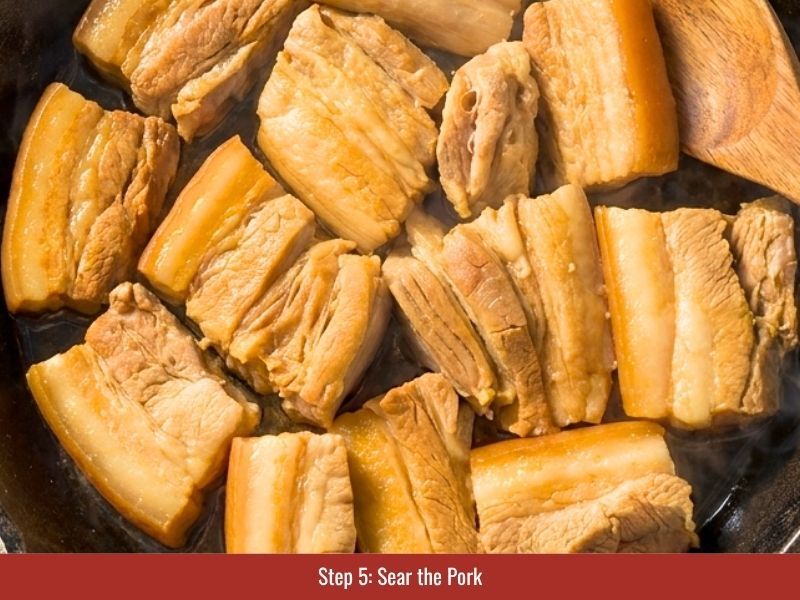
Heat 1 tbsp cooking oil in a pan over medium heat. Add the pork and turn each piece until all sides feel firm and become lightly golden.
Remove the pork as soon as the surface tightens. Do not wait for a dark crust because the sugar can burn and make the finished broth bitter. The reddish brown color develops later from the caramel sauce and coconut water.
Keep the marinade liquid for the next step.
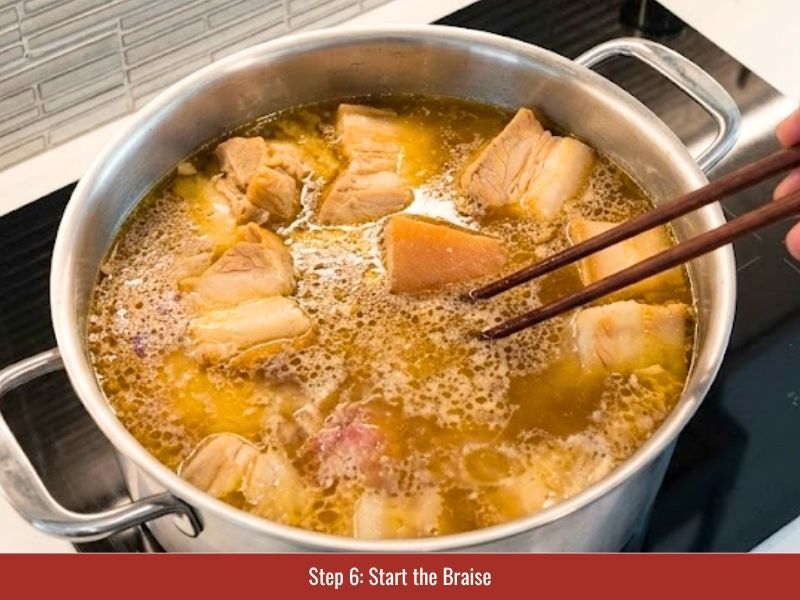
Step 6: Start the Braise
Transfer the seared pork to the braising pot. Bring the reserved marinade to a boil separately, then pour it over the pork. Add 1 L coconut water, 800 ml water, 2 whole shallots, and about 5 whole garlic cloves.
Bring the pot to a boil and skim off the foam until the surface looks clear. Add 4 tbsp fish sauce (about 60 ml).
This recipe was developed with Phu Quoc fish sauce at 30°N. If you use CHIN-SU Phu Quoc Fish Sauce at 40°N, add it gradually and check the final seasoning after the broth has reduced.
Place a chopstick across the rim and rest the lid on top to leave a small gap. This limits evaporation without sealing the pot completely, giving the pork time to soften while the broth reduces gradually. You can also lay a banana leaf or a piece of parchment directly over the surface to keep exposed pieces moist.
Lower the heat until the liquid maintains a gentle simmer with small, steady bubbles.
Step 7: Add the Eggs and Finish
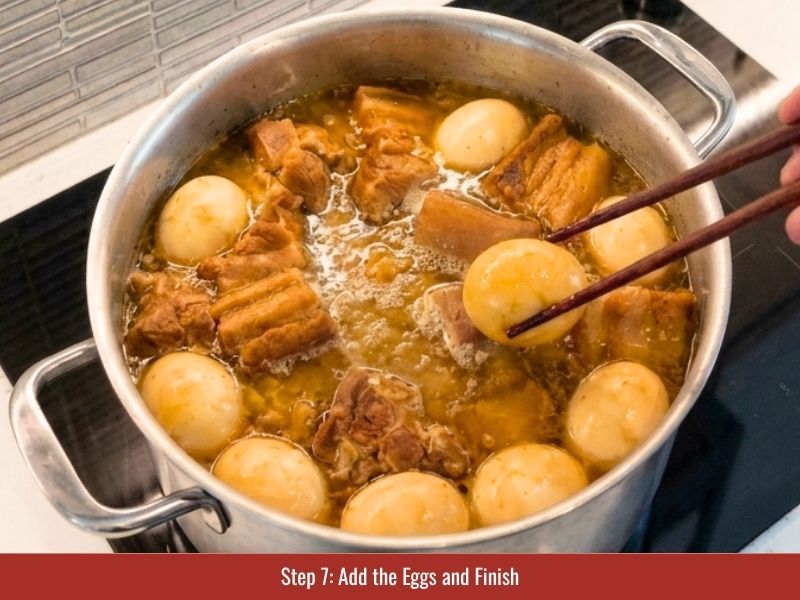
After 1 hour, remove the whole shallots and garlic, then add the boiled and peeled duck eggs. Keep the eggs mostly submerged and turn them once or twice so they absorb the broth and color evenly.
Cook for another 30 minutes, then check the pork. It should be easy to pierce but still hold its shape. Stop cooking when the eggs are amber brown and the reddish brown broth has reduced to about half its original volume while remaining loose enough to spoon over rice.
Taste and adjust the seasoning at the end. Timing varies with the pot and stove. A heavy enameled pot maintains steadier heat, while a thin pot reduces the liquid faster and requires closer attention. Use the tenderness of the pork and the amount of broth as your final guide rather than relying only on the clock.
How To Serve Thit Kho Tau?
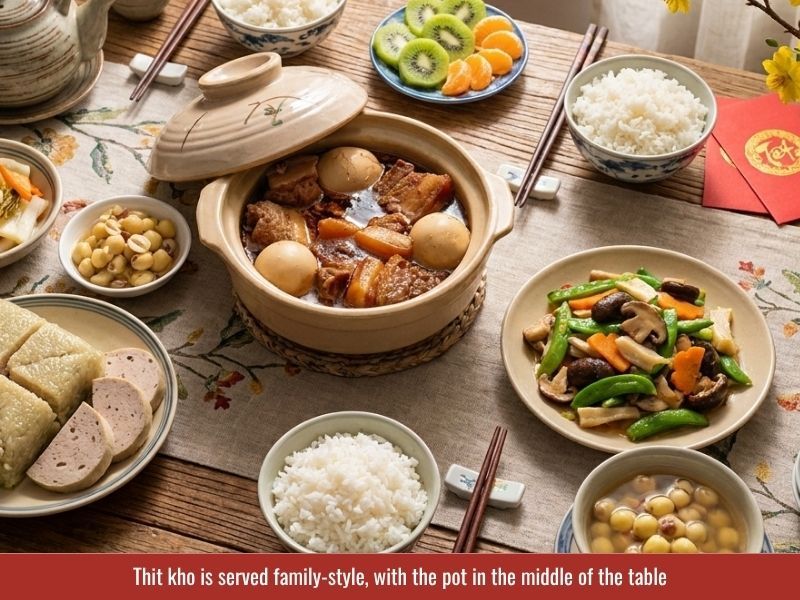
Thit kho tau is served family-style with steamed rice and side dishes that balance the rich pork, eggs, and concentrated braising sauce. Rather than being served as a separate course, the dish is placed in the middle of the table so everyone can spoon pork, egg, and sauce over their own bowl of rice.
A traditional serving combination includes:
- Steamed white rice (cơm trắng). The mild flavor of rice balances the salty-sweet braising sauce and carries the rich pork flavor.
- Pickled vegetables such as dưa cải chua and dưa giá. The sour and crunchy texture cuts through the richness of the pork belly and refreshes the palate.
- Boiled vegetables and fresh greens. Simple vegetables provide contrast to the concentrated sauce and complete the structure of a Vietnamese family meal.
- A bowl of soup (canh). Many Vietnamese meals pair a savory main dish with a lighter soup, creating balance between richer and lighter flavors.
During Tết, thit kho tau is commonly prepared in a larger pot because it can be shared across multiple meals and the flavor often becomes deeper after resting. Some families also serve the pork and eggs with pickled vegetables or fresh greens wrapped in rice paper during holiday gatherings, although the most common everyday way to eat it remains with steamed rice.
Tips for the Best Thit Kho Tau
These techniques help create thit kho tau with tender pork, flavorful eggs, and a balanced glossy sauce.
- Choose pork belly with balanced fat and lean layers. The fat slowly renders during braising and keeps the meat tender, while the lean portion maintains structure.
- Control the caramel carefully. Cook sugar gradually and stop when it reaches a deep amber color. Over-caramelized sugar creates bitterness that cannot be corrected later.
- Braise gently instead of boiling aggressively. A slow simmer allows collagen in the pork belly to soften while keeping the meat intact.
- Add eggs at the right stage. Adding duck eggs after the pork has started tenderizing allows them to absorb the sauce without making the whites overly firm.
- Let the dish rest before serving when possible. Like many braised dishes, thit kho tau often develops deeper flavor after resting because the sauce continues to season the pork and eggs.
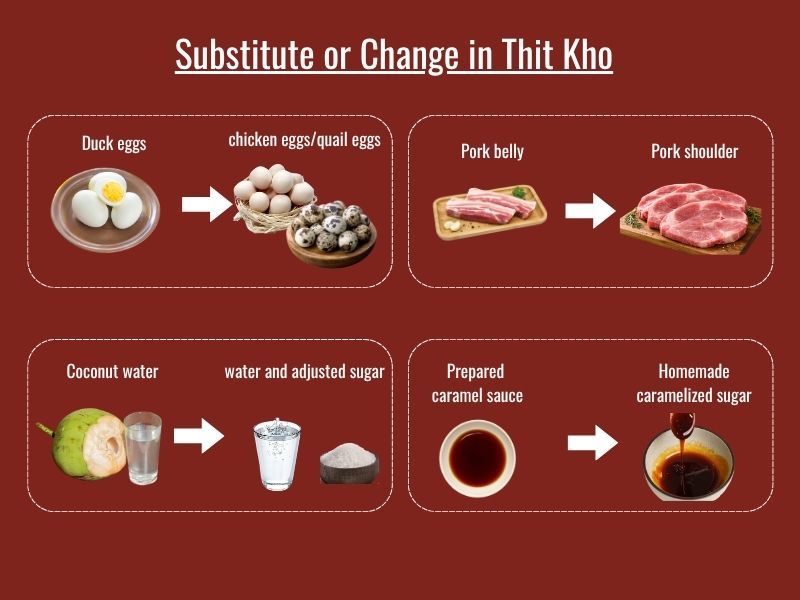
What Can You Substitute or Change in Thit Kho?
These substitutions help adapt thit kho tau based on ingredient availability while preserving the key characteristics of the dish: tender pork, savory caramel sauce, and eggs that absorb the braising flavor.
- Duck eggs can be replaced with chicken eggs or quail eggs. Duck eggs provide a larger yolk and richer texture, but chicken eggs are a practical alternative for home cooking.
- Pork belly can be replaced with pork shoulder or a mixture of pork belly and shoulder. Shoulder creates a leaner dish with less richness, while pork belly provides the traditional soft texture from its fat layers.
- Fresh coconut water can be replaced with water and adjusted sugar. The dish will lose some of the aroma and round sweetness that coconut water provides, but the braising method remains the same.
- Prepared caramel sauce (nước màu) can be replaced by homemade caramelized sugar. Many Vietnamese cooks make nước màu directly by cooking sugar until it reaches the desired color before adding the braising liquid.
- Fish sauce can be replaced with soy sauce for a different style, but the flavor profile will change. Fish sauce provides the fermented savory character associated with traditional thit kho tau.
Make these changes when needed, but keeping pork belly, duck eggs, fish sauce, caramel, and coconut water creates the closest result to a traditional Vietnamese thit kho tau.
How to Store Thit Kho?
Thit kho tau stores well because the pork and eggs continue absorbing the braising sauce after cooking. Many families intentionally prepare larger batches because the flavor often becomes deeper after resting.
Allow the dish to cool before transferring it into an airtight container. Store the pork, eggs, and sauce together in the refrigerator for 3–4 days.
When reheating, warm the dish gently on the stovetop over low to medium heat. Add a small amount of water if the sauce becomes too concentrated after refrigeration.
The fat may solidify on the surface after chilling. This is normal for pork belly dishes; remove some fat if preferred or stir it back into the sauce while reheating.
For longer storage, thit kho tau can be frozen for up to 3 months. Thaw slowly in the refrigerator and reheat gently to maintain the texture of the pork and eggs.
Have you made thit kho before, or is this pot going to be your first? Drop your questions, your tweaks, or your results in the comments below. If the recipe worked for you, a quick star rating helps other home cooks find it, and we would love to see your finished pot on social media with #CHINSU. Curious how a Phú Quốc fish sauce changes the pot? Grab a bottle of CHIN-SU Phu Quoc Fish Sauce at chinsu.com and give it a try.
Frequently Asked Questions
Thit kho tau includes hard-boiled eggs and is strongly associated with Tết meals, while thit kho tieu focuses on pork braised with black pepper and is commonly prepared as a simpler everyday dish.
Thit kho tau is associated with Tết because it can be prepared in a large batch, stored well, and shared across multiple family meals during the holiday period.
Yes. Water can replace coconut water, although the sauce will lose some of the gentle sweetness and aroma that coconut water provides.
Duck eggs need time to absorb the braising sauce. Adding them during the later stage of cooking and allowing them to rest in the sauce helps develop deeper flavor.
The sauce can become too salty when fish sauce is too concentrated or the liquid reduces too far. Add warm water or coconut water gradually to rebalance the sauce.
Pork belly stays tough when the braising time is too short or the heat is too high. A gentle simmer allows collagen to soften and creates the tender texture expected from thit kho tau.
Yes. Many Vietnamese families prepare thit kho tau ahead because the flavor often becomes deeper after resting and reheating.
Pork belly is best, ideally the piece with the ribs removed, since it has more fat and holds its shape through a long braise. Pork shoulder works and runs leaner. Avoid lean cuts like tenderloin, which dry out.
Cloudy means the blended aromatics went in as pulp instead of strained liquid; dark means the pot reduced too far or was reheated too often. Strain the aromatics before they touch the meat, and stop while half the liquid remains.
Did you make this recipe?
We love seeing it. Tag
@chinsu.usa
on Instagram, or leave a rating below — it helps other cooks find the recipe.
Pin this for later
Save this recipe to your board and keep it ready for your next cooking inspiration.
Save to Pinterest
CHIN-SU KITCHEN TEAM
CHIN-SU Kitchen Team are the creative experts behind the delicious recipes featuring CHIN-SU sauces. With years of experience and a passion for flavor, our team carefully selects recipes from a variety of trusted chefs and bloggers, bringing together the best culinary insights to present you with the most suitable and exciting dishes. Every recipe is chosen to inspire you to create meals that are not only tasty but also easy to prepare, enhancing your dining experience. Join us as we explore a wide range of sauces and flavors, and elevate every meal with the perfect recipe for your table!
User Reviews
Featured Articles
Asian Garlic Noodles Recipe - 20 Minute Buttery Garlic Noodle Stir-Fry
Bún Thịt Nướng - Vietnamese Vermicelli Bowl Recipe
Cha Gio Recipe - Vietnamese Fried Spring Rolls
Chao Tom Recipe: Vietnamese Shrimp on Sugarcane
Beef Rib Pho Recipe - Vietnamese Beef Rib Noodle Soup
Bun Bo Hue Recipe - Vietnamese Spicy Beef & Pork Noodle Soup
SUBSCRIBE TO GET
MORE INFO
Want the latest and greatest recipes, updates, and more from us,
straight to your inbox? Subscribe and get our NEWS!