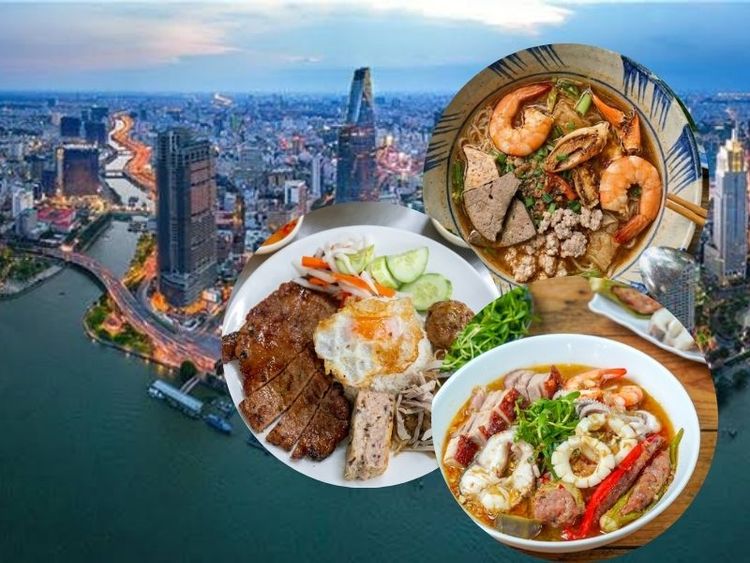
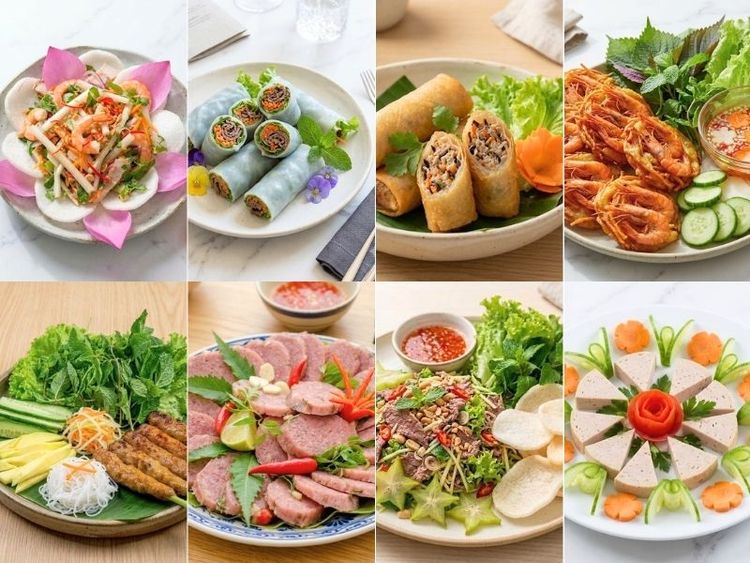
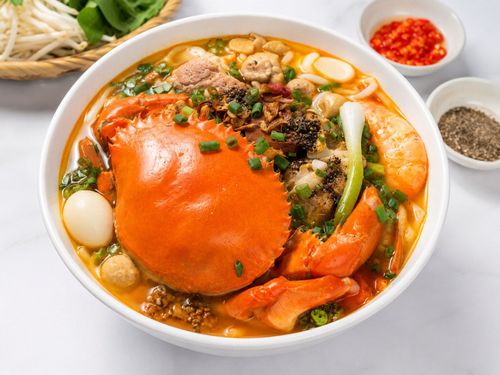
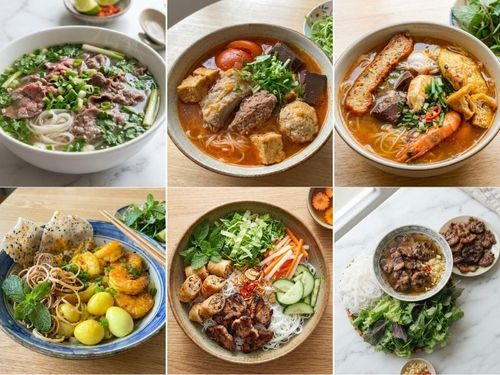
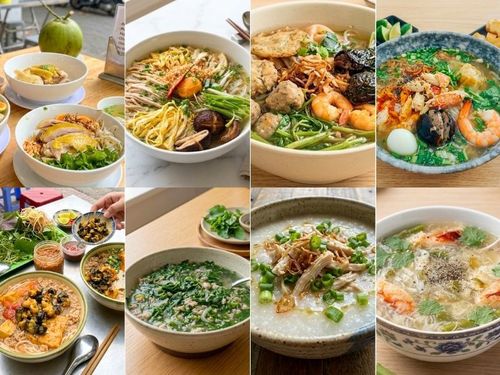
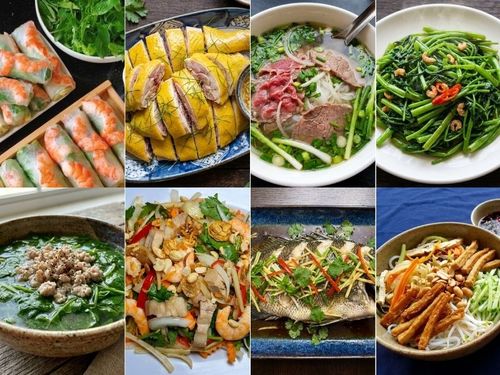
Vietnamese Food: Traditional Dishes, Flavors, and Eating Culture
Published: Sep 30, 2026 by CHIN-SU
Updated: Sep 30, 2026 by CHIN-SU
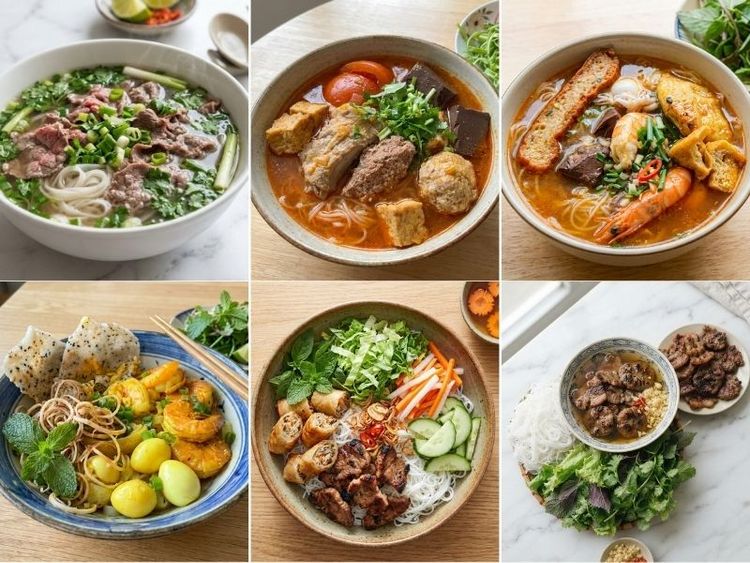
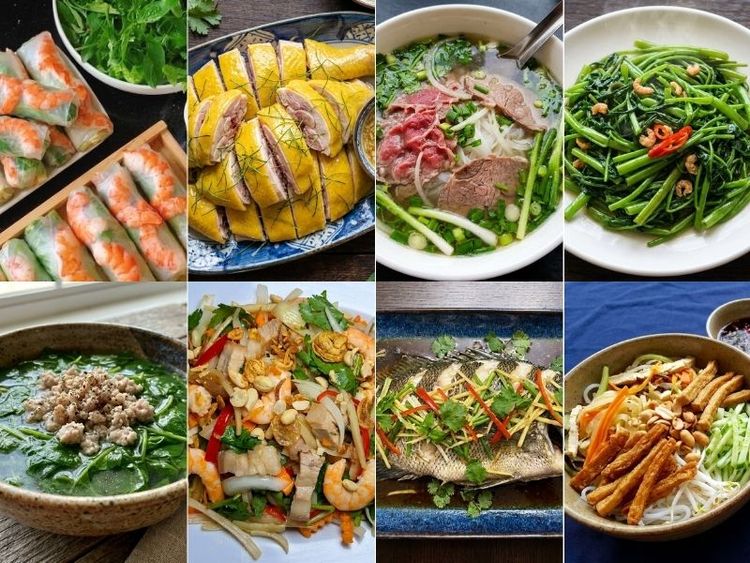
Vietnamese cuisine brings together dishes shaped by rice, fresh herbs, vegetables, seafood, meat, light broths, and fermented seasonings, with fish sauce (nước mắm) providing a defining source of savory depth. Rather than focusing on one dominant flavor, Vietnamese cooking balances salty, sweet, sour, bitter, spicy, and umami elements to create harmony between ingredients. From phở and cơm tấm to bánh xèo, different dishes follow the same approach of combining flavors and textures in balance.
These shared principles vary across Vietnam’s three major regions. Northern Vietnamese cuisine often features lighter seasoning and balanced flavors, central Vietnamese cuisine is known for bolder spices and complex preparations, while southern Vietnamese cuisine commonly uses sweeter flavors, tropical ingredients, and fresh herbs. Local ingredients, climate, and traditions shape these differences, creating distinct regional expressions of the same cuisine.
In this article, CHIN-SU will let you discover the traditional dishes, ingredients, flavors, cooking methods, and dining customs that define Vietnamese cuisine. It covers familiar foods such as phở, bánh mì, bún bò Huế, bánh xèo, and cơm tấm, while explaining the connections behind them: the role of rice, herbs, fermented sauces, cooking techniques, and the way Vietnamese people share meals.

Table Of Contents
- Phở
- Bánh Mì
- Bún Chả
- Bún Bò Huế
- Bánh Xèo
- Gỏi Cuốn
- Chả Giò
- Cơm Tấm
- Cao Lầu
- Mì Quảng
- Bò Lá Lốt
- Chả Cá Lã Vọng
- Canh Chua
- Bánh Cuốn
- Xôi
- Cháo
- Gà Kho Gừng
- Cá Kho Tộ
- What Makes Vietnamese Food Distinctive Beyond Its Famous Dishes?
- What Are the Main Ingredients in Vietnamese Food?
- What Flavors Define Vietnamese Food?
- What Role Do Fish Sauce and Dipping Sauces Play in Vietnamese Food?
- How Does Vietnamese Food Differ by Region?
- How Is a Traditional Vietnamese Meal Served?
Phở
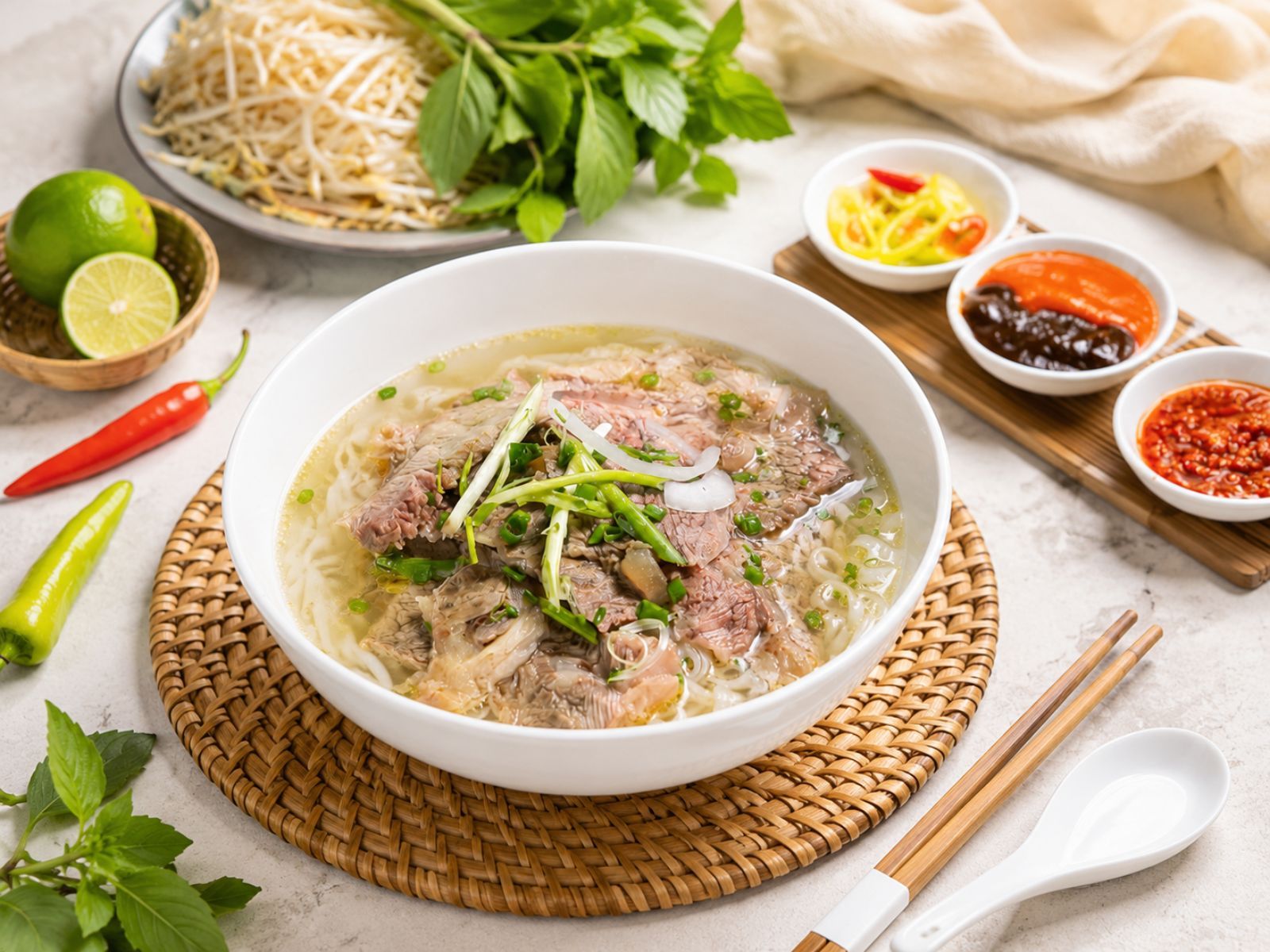
Phở is a Vietnamese noodle soup made with clear, aromatic broth, flat rice noodles, herbs, and usually beef or chicken. It is closely associated with northern Vietnam, especially Hanoi, although it is now enjoyed throughout the country. The exact origin remains debated, with scholars generally recognizing northern Vietnam as its birthplace while French pot-au-feu and Chinese street-vendor theories continue to be discussed.
The broth requires time and patience. Cooks simmer bones with charred onion and ginger, along with star anise, cinnamon, and cloves, creating the distinctive aroma of a bowl of phở. The result is savory and fragrant without feeling heavy, with soft noodles, tender meat, and fresh herbs creating balance. Herbs, lime, and chili are served separately, allowing each diner to adjust the flavor of their own bowl.
That custom makes phở a great introduction to Vietnamese cuisine. A single bowl demonstrates the core approach of Vietnamese cooking: slowly developed broth, fresh herbs added at the end, and personal seasoning at the table. If you want to prepare it at home, our beef pho recipe explains the cooking process in detail.
Bánh Mì
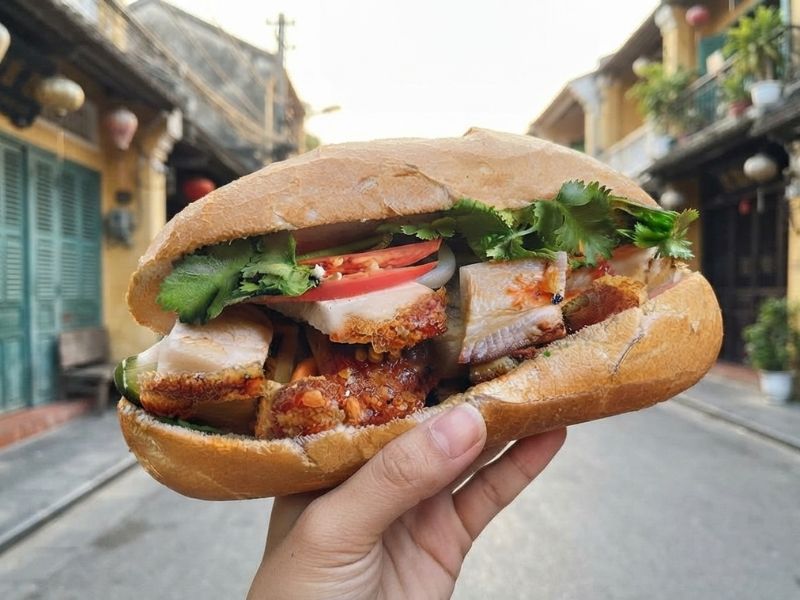
Bánh mì is a Vietnamese sandwich served in a light baguette with a crisp crust, savory fillings, pickled vegetables, and fresh herbs. The baguette was introduced to Vietnam by the French, but Vietnamese cooks transformed it into a distinct sandwich with a shorter shape, thinner crust, softer crumb, and a hollow interior that holds generous fillings. Common fillings include pork, pâté, cold cuts, meatballs, egg, or tofu, combined with pickled carrot and daikon, cucumber, cilantro, chili, and mayonnaise or Maggi seasoning.
Texture defines the bánh mì experience. The contrast between crisp bread, tender fillings, crunchy pickles, and soft herbs creates a combination that is savory, tangy, and fresh, with heat adjusted through the amount of chili added. The most important part is not the French origin of the baguette, but how Vietnamese cooks adapted the format with local ingredients until it became a unique Vietnamese dish.
Bún Chả
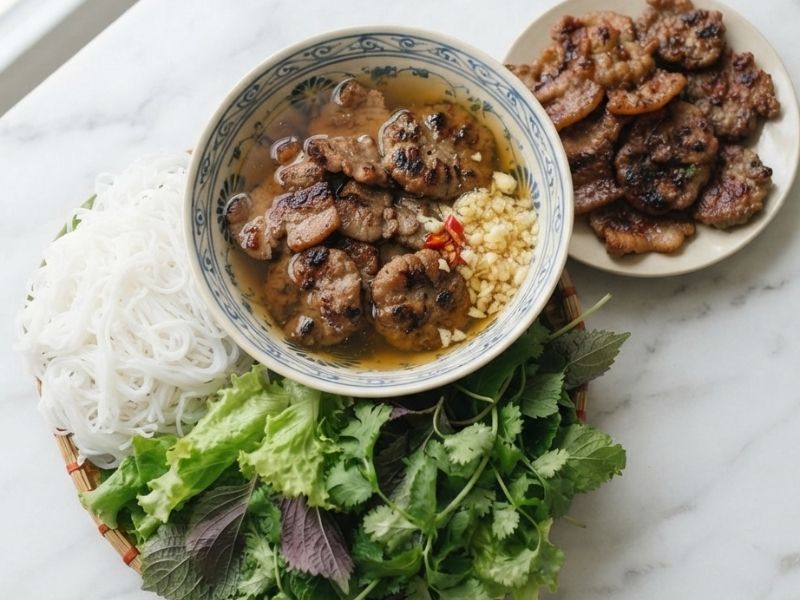
Bún chả is a Hanoi dish of charcoal-grilled pork served with rice vermicelli, fresh herbs, and a bowl of seasoned dipping sauce. The plate includes two types of grilled pork: thin slices of pork belly and small ground-pork patties, served alongside bún (rice vermicelli), herbs, lettuce, and pickled vegetables.
Charcoal grilling is central to the dish. As the pork cooks, fat drips onto the coals, creating smoke that adds depth to the flavor. The dipping sauce is equally important, as it is not simply a side condiment but the element that connects the grilled pork, noodles, and herbs together. The pork is served in diluted fish sauce balanced with sugar, garlic, and chili, creating the foundation that brings the entire dish together.
Eating bún chả means assembling each bite yourself. Diners combine noodles, herbs, pork, and dipping sauce to create their preferred balance of flavors. This same approach appears in other Vietnamese vermicelli dishes, and our bún chả recipe explains how to recreate the grilled pork at home.
Bún Bò Huế
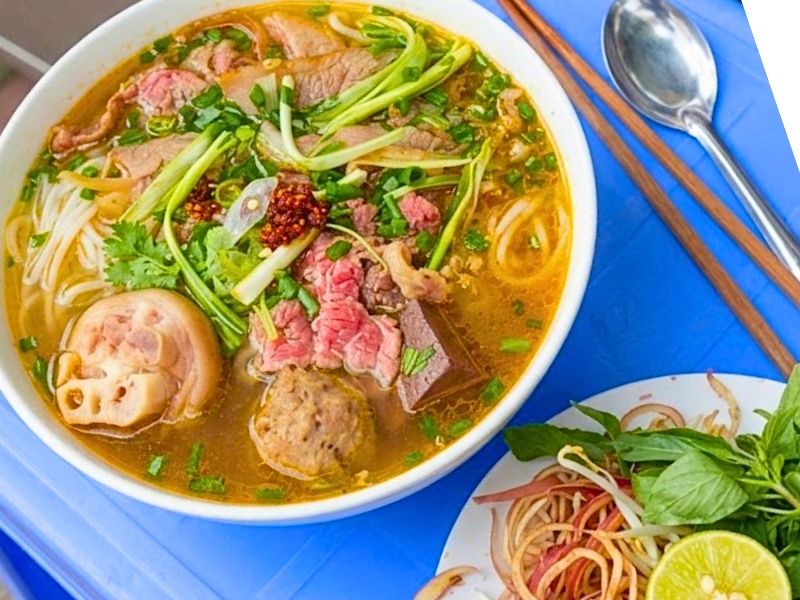
Bún bò Huế is a spicy beef noodle soup from Huế in central Vietnam, featuring a lemongrass-and-chili broth with thick round rice noodles. As the former imperial capital of Vietnam, Huế shaped the dish’s bold and distinctive character. The soup typically includes beef shank, brisket, and sometimes pork knuckle, while annatto seeds create its signature red-orange color. What sets the broth apart is mắm ruốc, a fermented shrimp paste that adds deep savory flavor beneath the lemongrass aroma.
Compared with phở, the difference is immediately noticeable. Phở is clear and restrained, while bún bò Huế is richer, spicier, and more intense. This contrast reflects regional cooking styles, as central Vietnamese cuisine uses chili and stronger seasonings more prominently than northern or southern cuisine. Our bún bò Huế recipe explains the broth-making process if you want to prepare it at home.
Bánh Xèo
Bánh xèo is a Vietnamese crispy rice-flour pancake colored yellow with turmeric and folded around a filling of pork, shrimp, and bean sprouts. Its name comes from the sizzling sound (xèo) created when the batter hits the hot pan. The dish appears throughout Vietnam, with southern versions typically larger and central versions usually smaller.
The cooking process creates its signature texture. A hot, well-oiled pan produces thin, lacy edges that become crisp around the outside while the filling remains tender. Texture is what makes bánh xèo distinctive: the crispy shell, soft filling, crunchy sprouts, and fresh herbs create different sensations in a single bite without one element overpowering the others.
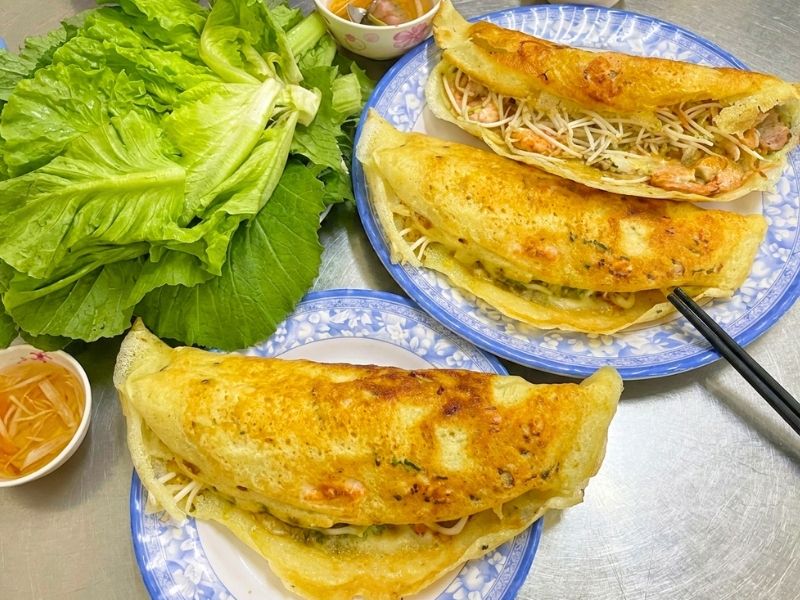
The way bánh xèo is eaten is part of the experience. Diners tear off a piece, wrap it with lettuce or mustard greens and herbs, then dip the roll into nước chấm before eating it by hand. Our guide to making bánh xèo at home explains the batter and cooking technique.
Gỏi Cuốn
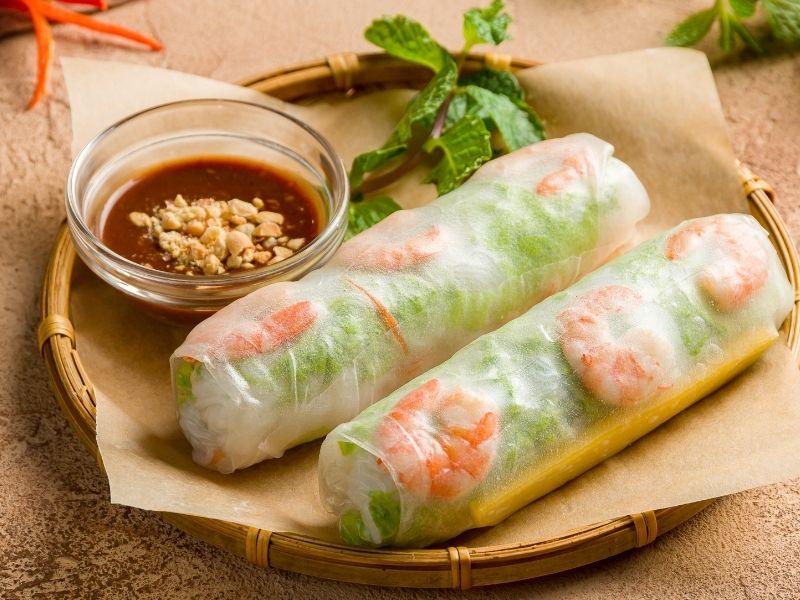
Gỏi cuốn are Vietnamese fresh rolls made with shrimp, pork, rice vermicelli, and herbs wrapped in softened rice paper and served cold. The ingredients are prepared before assembly rather than cooked together, with rice paper briefly dipped in water until it becomes flexible enough to wrap the filling. This wrapping technique highlights a different side of Vietnamese cooking, where preparation and balance matter even without a cooking process involving heat.
The flavor is light and herb-focused, while each ingredient keeps its distinct texture: soft rice paper, crisp vegetables, and tender protein. The dipping sauce plays an important role, usually a peanut-hoisin sauce and sometimes nước chấm. The roll is intentionally mild on its own, allowing the sauce and fresh ingredients to complete the overall flavor. Our gỏi cuốn recipe explains the wrapping technique, which takes practice to master.
Chả Giò
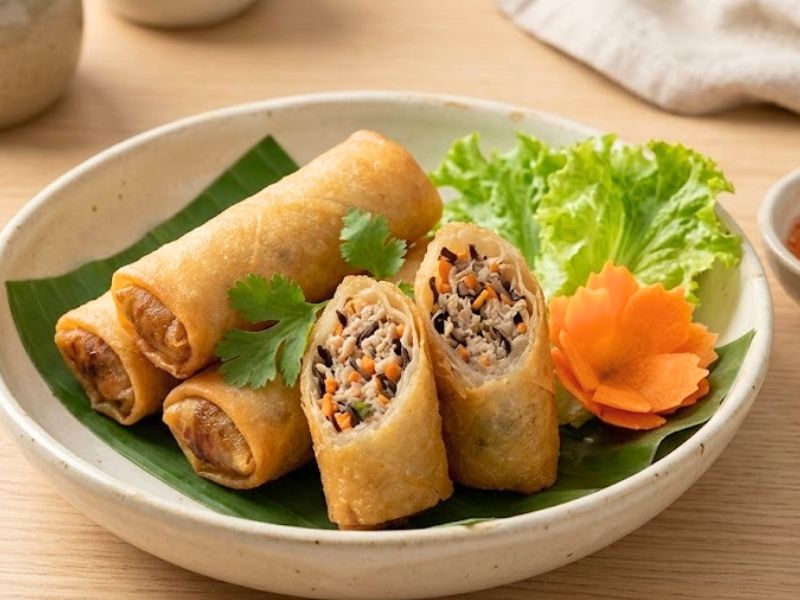
Chả giò are Vietnamese fried rolls filled with ground pork, wood-ear mushrooms, and glass noodles, wrapped in rice paper and deep-fried until crisp. In northern Vietnam, the same dish is known as nem rán, so both names appear depending on the region or menu. The deep-frying method creates a different texture from wheat-wrapped fried rolls, as rice paper forms a thin, uneven, and crisp shell when exposed to hot oil.
Placed next to gỏi cuốn, chả giò highlights the contrast between two similar rolls prepared in opposite ways. One is soft and served cold, while the other is crisp and served hot, showing how Vietnamese cooking transforms the same wrapper into different experiences. Both are commonly served with lettuce, fresh herbs, and nước chấm, reflecting the shared habit of combining fried or fresh rolls with herbs and dipping sauce. Our guide to making chả giò explains the frying technique in detail.
Cơm Tấm
Cơm tấm is a southern Vietnamese rice dish made with broken rice, grilled pork, pickled vegetables, and fish sauce dressing. The broken rice, known as gạo tấm, comes from fractured grains left behind during milling. These smaller grains cook softer than whole rice and absorb sauces differently, which is why they form the foundation of this dish. Cơm tấm is strongly associated with Ho Chi Minh City and southern Vietnam.
A traditional plate includes more than grilled pork alone. Alongside the pork chop, it often comes with chả (steamed egg and pork loaf), bì (shredded pork skin mixed with toasted rice powder), fried egg, pickled carrot and daikon, cucumber, and scallion oil. The rice is steamed, while the pork is marinated with lemongrass, garlic, and fish sauce before grilling until the edges develop a smoky finish.
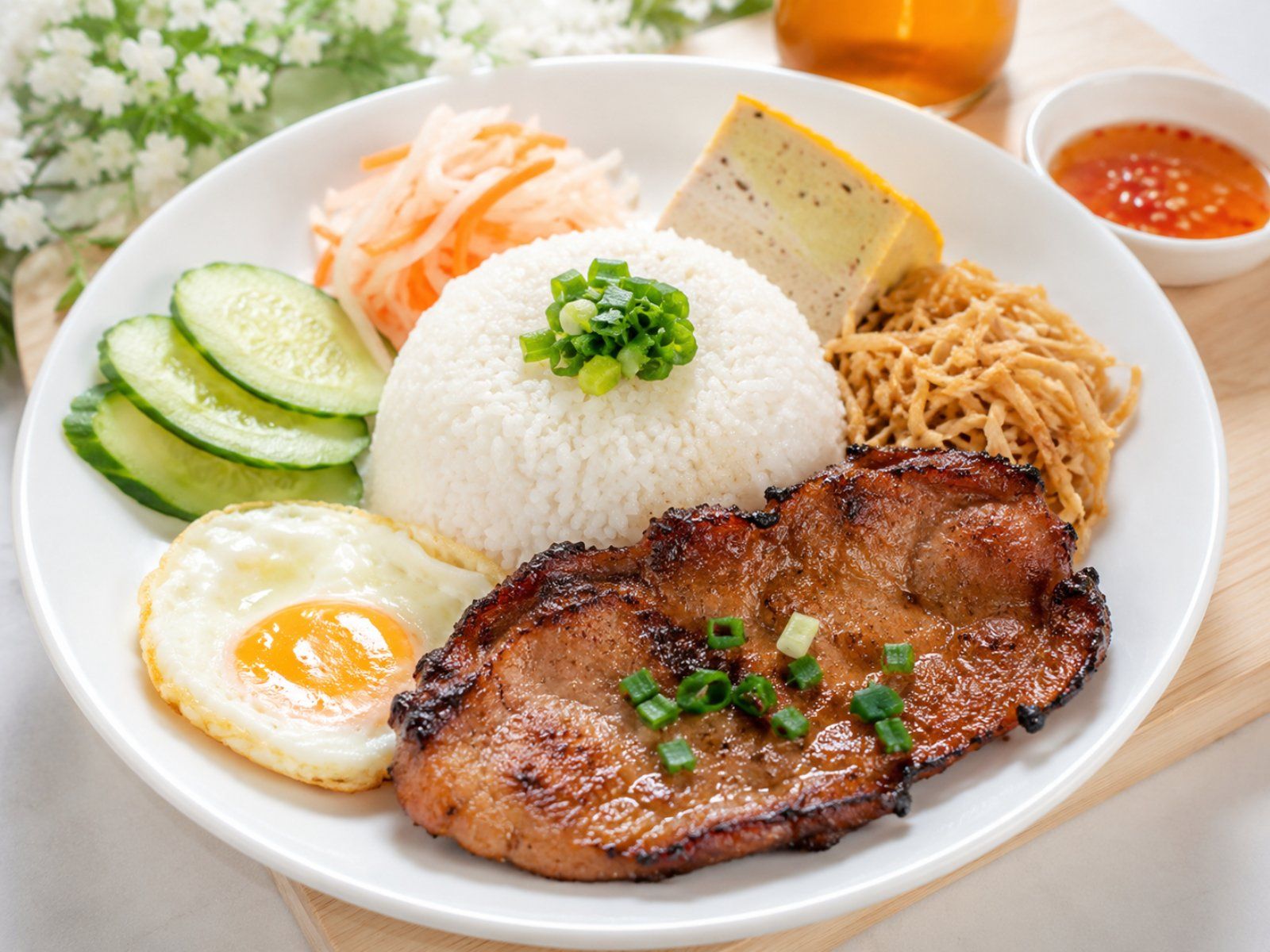
The final bite combines smoky grilled flavors, sweet-sour pickles, and fish sauce dressing poured over the rice. This balance reflects the southern Vietnamese palate, which often features sweeter and more layered flavors compared with northern cooking.
Cao Lầu
Cao lầu is a noodle dish unique to Hội An, a town in central Vietnam, made with thick chewy noodles, sliced pork, fresh herbs, and only a small amount of broth. The dish reflects its local origin, with char siu-style pork, greens, herbs, and crispy fried noodle pieces added on top. Unlike many Vietnamese noodle dishes, cao lầu is defined as much by its location as by its ingredients.
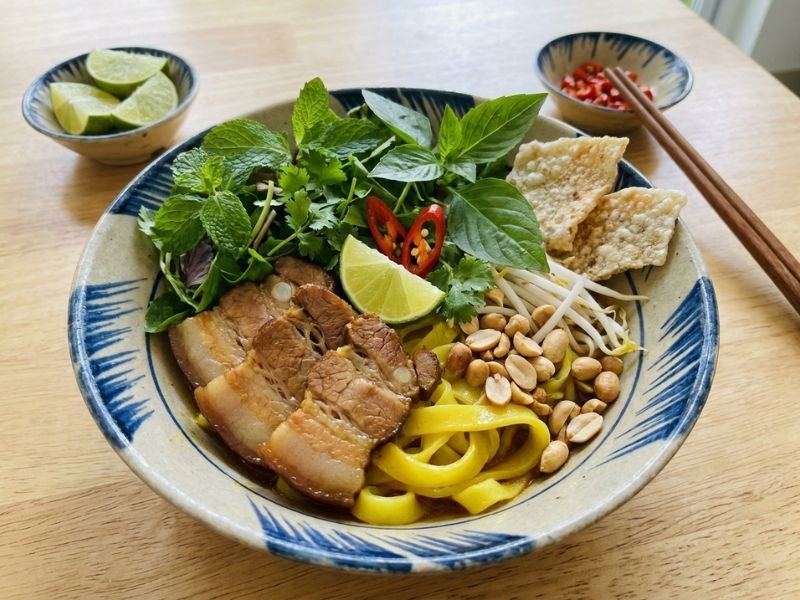
The texture is the feature people remember most. The noodles are dense and chewy, creating a contrast with the soft herbs and crispy fried pieces served alongside them. This distinctive texture comes from soaking the rice in an alkaline solution before milling, and the dish remains closely tied to Hội An rather than appearing widely across Vietnam.
Mì Quảng
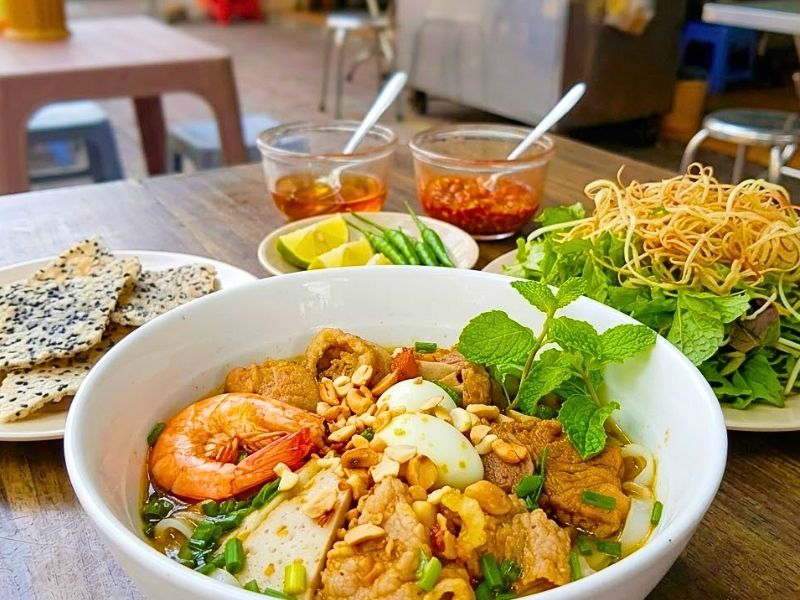
Mì Quảng is a central Vietnamese noodle dish from Quảng Nam province, made with wide rice noodles tinted yellow with turmeric and served with a small amount of concentrated broth. The bowl usually includes shrimp, pork, chicken, or a combination of proteins, along with fresh herbs, peanuts, and toasted sesame rice crackers scattered on top.
Mì Quảng sits between two common noodle categories. Unlike noodle soups with plenty of broth or dry noodle dishes without liquid, it uses only a shallow amount of concentrated broth at the bottom of the bowl to coat the noodles. This changes how the dish is enjoyed: diners toss the ingredients together, while the peanuts and rice crackers remain crisp because they are not submerged in liquid.
Bò Lá Lốt
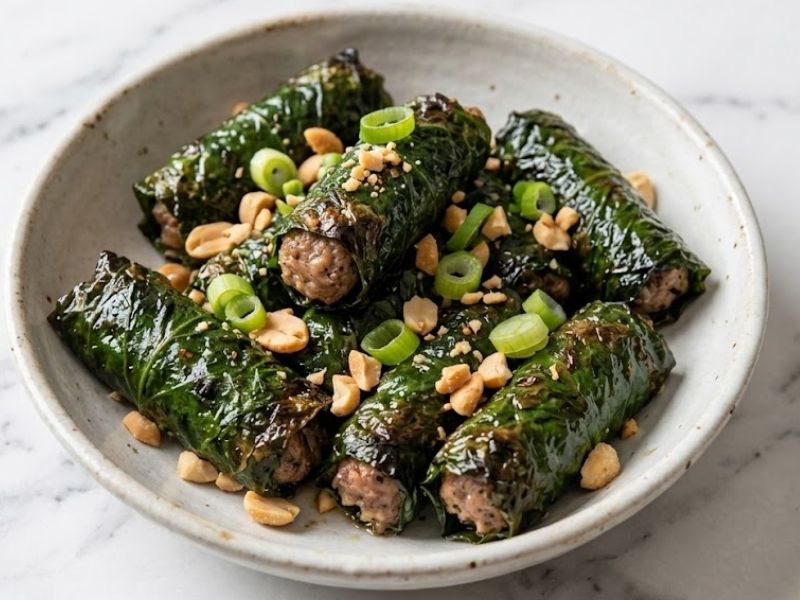
Bò lá lốt is seasoned minced beef wrapped in lá lốt leaves and grilled over charcoal. The leaf requires clarification because its English translation can create confusion. Lá lốt (Piper sarmentosum, also known as wild betel leaf) has a peppery flavor with slight bitterness and releases an aroma that infuses the beef as it grills. It is different from the betel leaf traditionally chewed with areca nut, despite the similar name. The beef is seasoned with garlic, shallot, lemongrass, and fish sauce before grilling.
Aroma is the defining feature of bò lá lốt. As the leaves char over the coals, they create a fragrance that grilled beef alone cannot produce. The dish is served with vermicelli, fresh herbs, rice paper for wrapping, and a bowl of nước chấm.
Chả Cá Lã Vọng
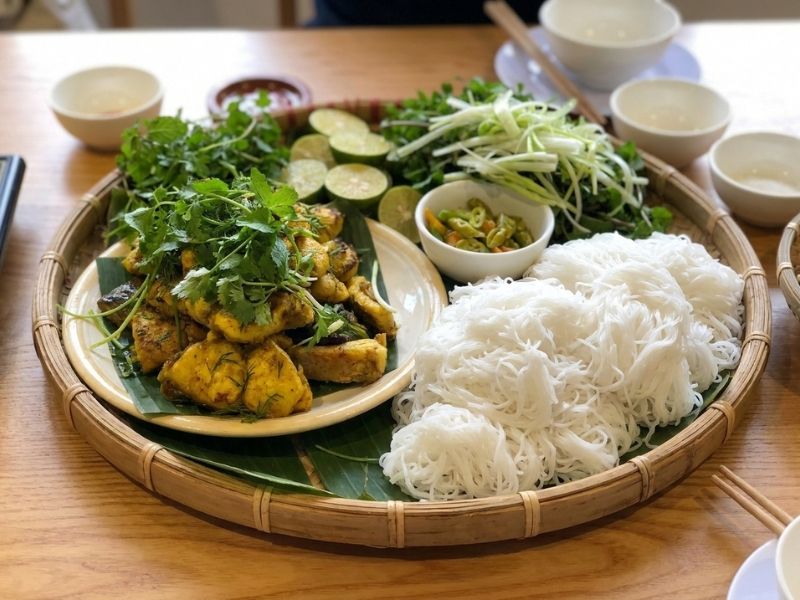
Chả cá Lã Vọng is a Hanoi dish of turmeric-marinated fish cooked in a pan at the table with a generous amount of fresh dill. Unlike many Vietnamese street foods, this is primarily a restaurant dish, with some Hanoi establishments specializing almost exclusively in serving it. The fish is typically a firm white variety such as catfish, marinated with turmeric, galangal, and fermented shrimp paste before being cooked.
The dill is what gives this dish its distinctive character. Using dill in such a large quantity is uncommon in Vietnamese cooking and reflects a northern Vietnamese tradition that differs from southern styles. Diners familiar mainly with southern Vietnamese restaurants in the United States may find this flavor profile unfamiliar. The dish is served with rice vermicelli, roasted peanuts, herbs, and either mắm tôm (fermented shrimp sauce) or nước chấm as an alternative.
Canh Chua
Canh chua is a southern Vietnamese sour soup usually made with fish, tamarind, pineapple, tomato, and vegetables. It originates from the Mekong Delta and southern Vietnam, where freshwater fish and tropical produce are widely available. A typical pot includes catfish or snakehead, sometimes shrimp, along with tamarind, pineapple, tomato, okra, bean sprouts, and elephant ear stem, a vegetable known for its spongy texture that absorbs the flavorful broth.
Tamarind pulp creates the soup’s signature sourness, and the distinction matters: the sour note comes from tamarind, not lime or vinegar. The flavor begins with acidity before developing sweet, salty, and aromatic notes, finished with rice paddy herb (ngò om) and sawtooth coriander (ngò gai), the traditional herbs served with southern sour soup.
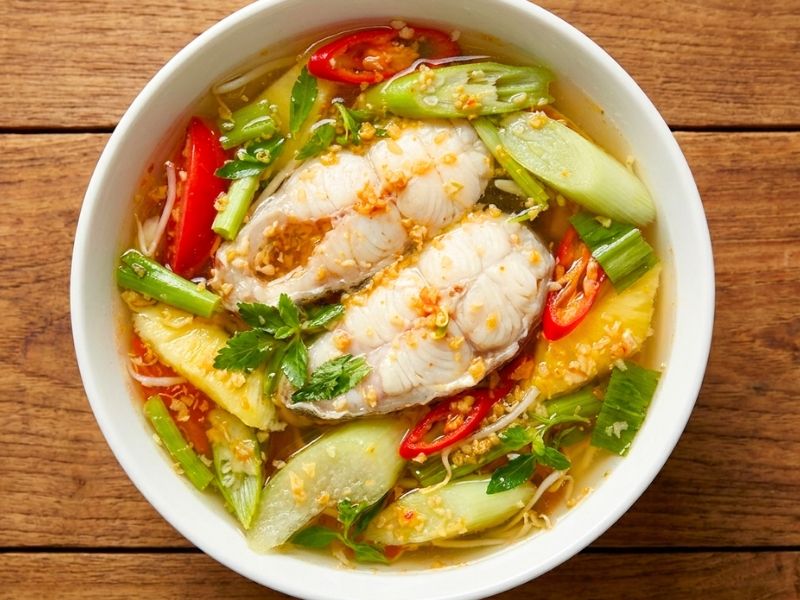
What defines canh chua is balance rather than sourness alone. Tamarind works because sweetness and salt balance its acidity, reflecting the same flavor principle found throughout Vietnamese cooking. Our canh chua recipe provides the ingredient proportions for making this soup at home.
Bánh Cuốn
Bánh cuốn are thin steamed rice sheets rolled around minced pork and wood-ear mushrooms, served with fried shallots and dipping sauce. The technique defines the dish: a thin batter is spread over a cloth stretched above a pot of boiling water, steamed into a translucent sheet within seconds, then lifted and rolled around the filling. It is a traditional dish from northern Vietnam.
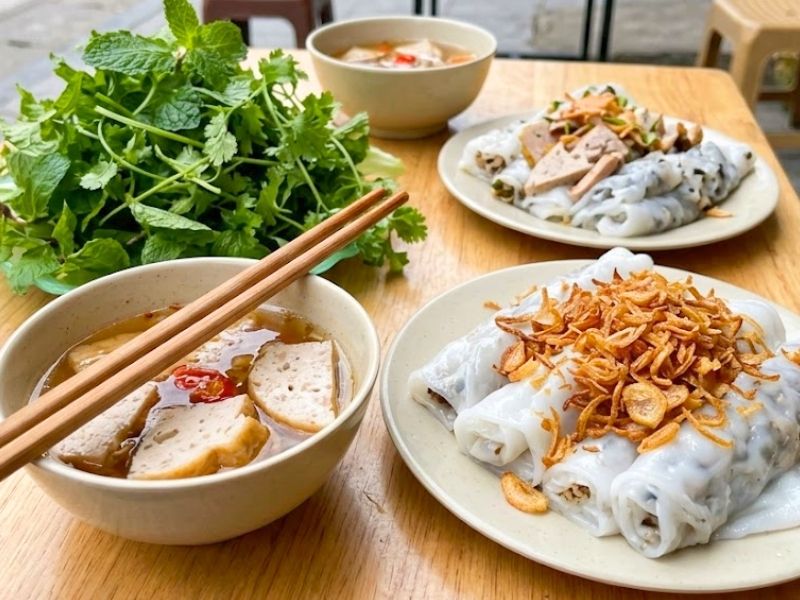
The texture creates a clear contrast with the fried dishes earlier in the list. The rice sheets are soft, delicate, and slightly chewy, finished with fried shallots, fresh herbs, sliced Vietnamese pork sausage (chả lụa), and a bowl of nước chấm. Our bánh cuốn recipe explains how to prepare the sheets at home using a skillet, a practical approach for most home kitchens.
Xôi
Xôi is Vietnamese sticky rice made from glutinous rice, steamed until tender, and served in both savory and sweet versions. The English name can be misleading because glutinous rice contains no gluten. It is a different rice variety with high amylopectin content, and this starch gives the cooked grains their signature sticky texture. Common versions include xôi gà with chicken, xôi xéo with mung bean and fried shallots, and xôi đậu with beans.
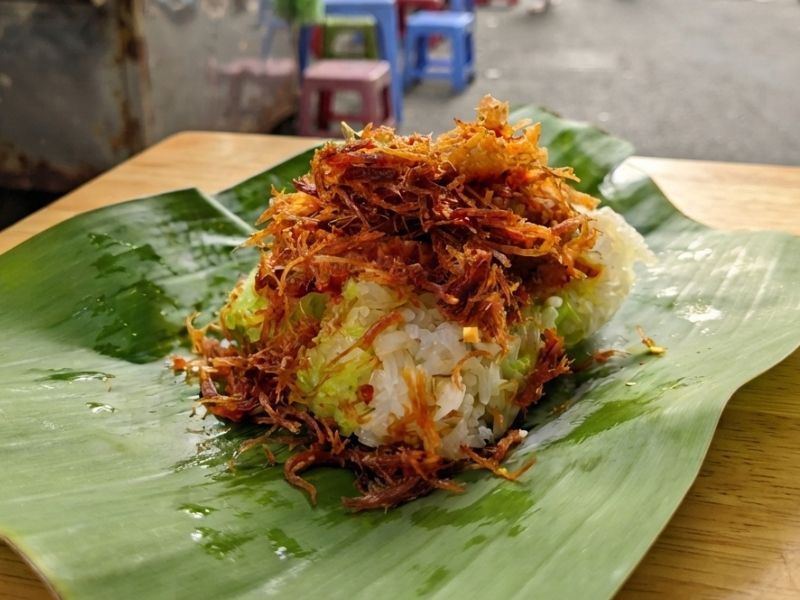
Xôi is filling and easy to carry, which makes it a popular breakfast food and a substantial snack before lunch. It also represents an important part of Vietnamese rice culture because rice appears in many forms beyond noodles, and a cuisine overview focused only on noodle soups would not reflect how Vietnamese people actually eat.
Cháo
Cháo is Vietnamese rice porridge made by simmering rice in a large amount of liquid until the grains break down into a soft, loose congee. The ratio of rice to liquid defines the dish, as cháo uses much more liquid than steamed rice and cooks for a longer time in water or broth. Common versions include cháo gà with chicken, cháo lòng with pork offal, and variations with fish or shrimp, all seasoned with ginger, fish sauce, black pepper, and scallions. Our chicken congee recipe covers the version many families prepare at home.
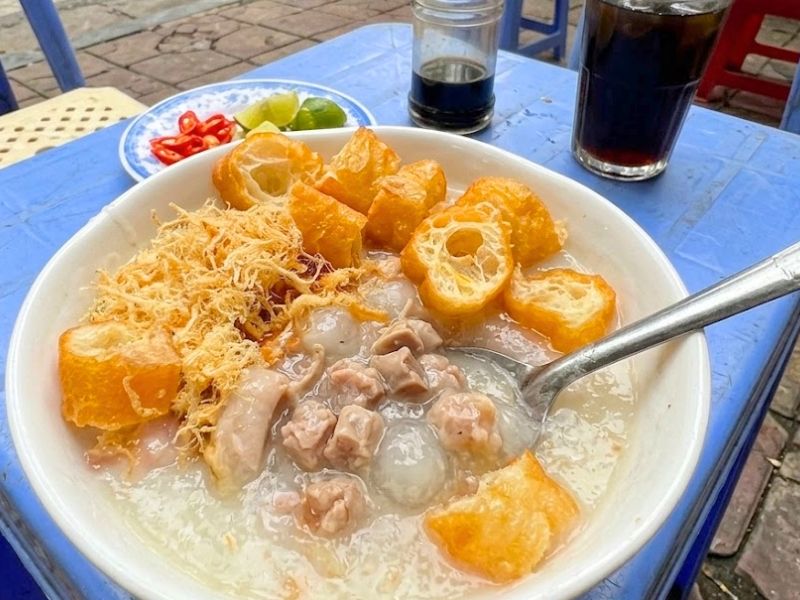
Context is what makes cháo distinctive. It can be eaten as breakfast food, comfort food when someone is unwell, a late-night meal, or food for young children, with its role shaped more by when it is eaten than by the ingredients in the pot. This wide range is unusual, as few dishes in any cuisine connect everyday meals across such different stages of life.
Gà Kho Gừng
Gà kho gừng is Vietnamese braised chicken cooked with ginger and fish sauce in the kho style, simmered until the sauce reduces and coats the meat. This is the first appearance of kho in the article, making it useful to explain the technique clearly. Kho refers to a group of Vietnamese braised dishes where ingredients are simmered with caramel sauce (nước màu), fish sauce, and aromatics until the liquid reduces into a glaze. This version uses chicken pieces, fresh ginger, fish sauce, sugar or caramel, black pepper, and optional chili.
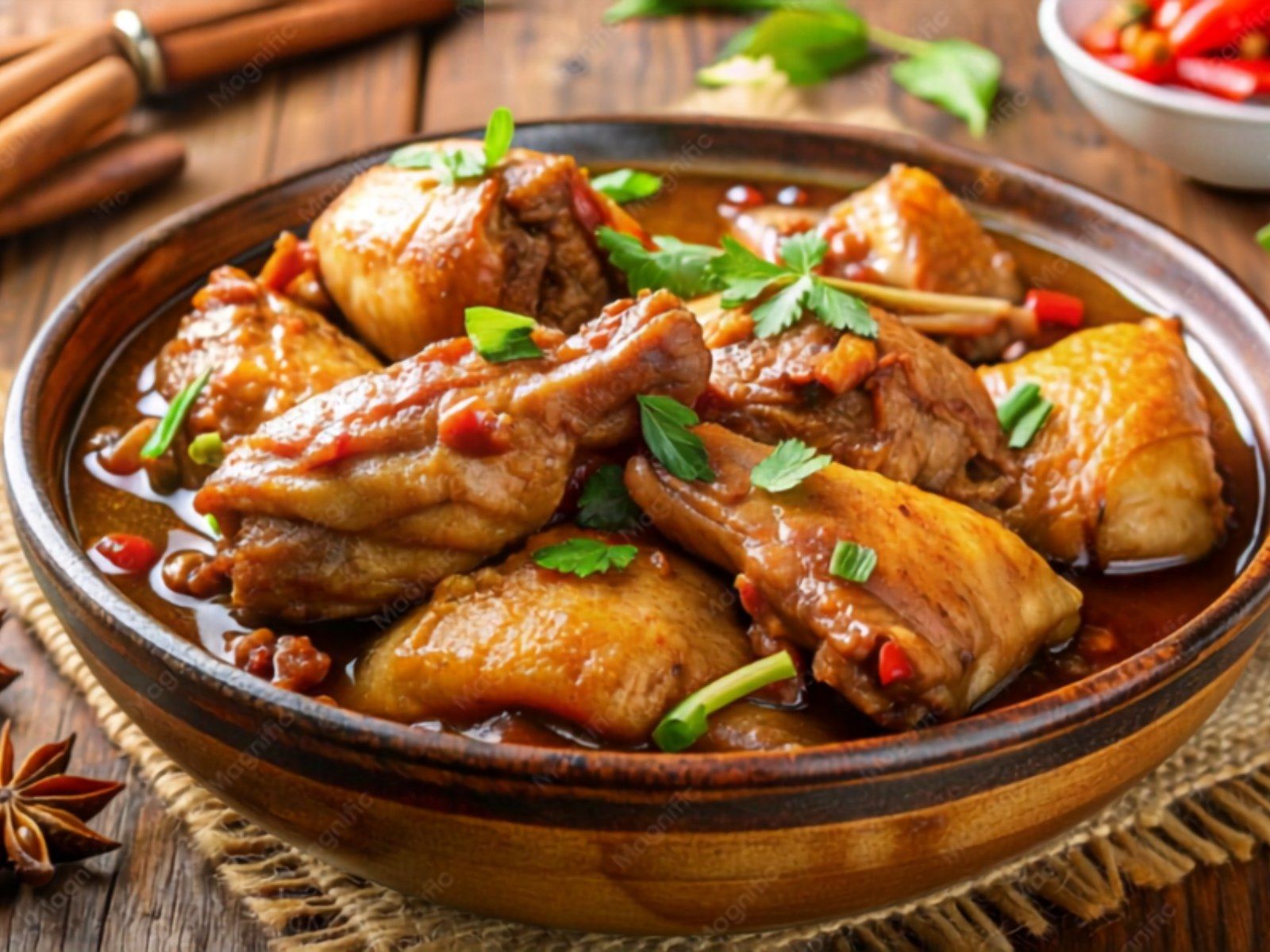
The flavor is savory and deeply seasoned, with sweetness from the concentrated caramel and warmth from the ginger. It is traditionally served with steamed rice and shared as part of a meal rather than plated as an individual dish. Including gà kho gừng highlights an important part of Vietnamese home cooking, since many everyday dishes prepared in family kitchens are less visible to visitors than restaurant favorites.
Cá Kho Tộ
Cá kho tộ is Vietnamese braised fish cooked with caramel and fish sauce, traditionally prepared and served in a clay pot. The dish belongs to southern Vietnam and the Mekong Delta, where catfish is the most common choice. The clay pot is not only a serving vessel; archaeological research on earthenware cooking pots in southern Vietnam, based on organic residues preserved in the clay, suggests that cooking and serving fish in the same vessel has long been part of the local tradition.
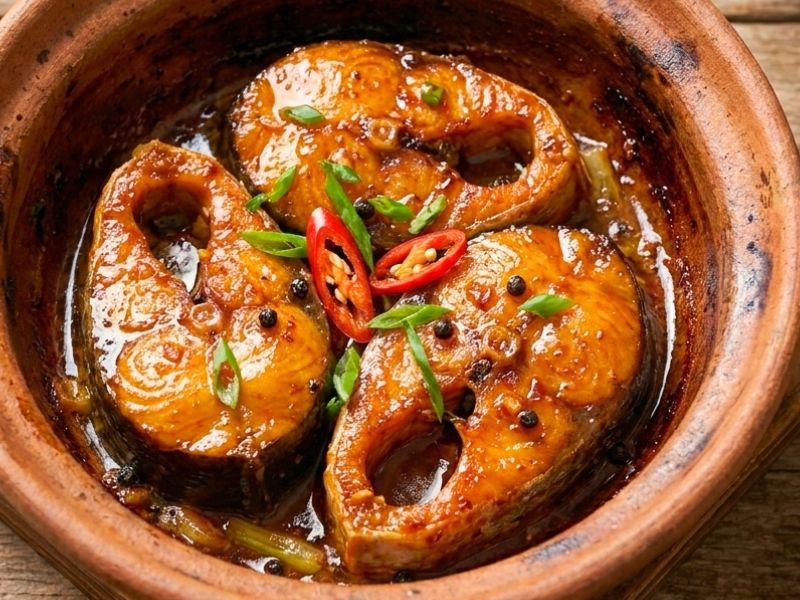
This dish provides the clearest explanation of the kho cooking method in the article. Sugar is first caramelized into a dark nước màu, creating the foundation for the dish before fish sauce, aromatics, and fish are added and simmered until the sauce thickens around the pieces. The result combines savory and sweet flavors with a subtle bitter edge from the caramelization, which is why the sugar is cooked into caramel rather than simply added.
Andrea Nguyen, whose cookbooks have helped introduce Vietnamese cooking to English-speaking readers, describes meals of rice, soup, boiled greens, and fish kho as “Viet soul food.” Our Vietnamese braised catfish recipe explains the caramelization process, which is the most important step to get right.
What Makes Vietnamese Food Distinctive Beyond Its Famous Dishes?
The eighteen dishes above differ in ingredients, region, and preparation, but they draw on the same set of building blocks: rice in several forms, fresh herbs eaten raw, layered rather than dominant flavors, fermented seasonings, and a small group of cooking methods. Watch rice move through the list. It showed up as flat noodles in phở, as a steamed sheet in bánh cuốn, as whole broken grains in cơm tấm, and as paper wrapped around gỏi cuốn and chả giò. Fish sauce did the same from a different direction: the dipping bowl in bún chả, the dressing poured over cơm tấm, the braising liquid in cá kho tộ.
That repetition is what the rest of this article explains. The sections below work through the ingredients Vietnamese cooking returns to, the flavors those ingredients produce and the methods behind them, the role fish sauce and dipping sauces play, how the three regions differ, and how a meal actually reaches the table. Learn those building blocks, and you can read a Vietnamese menu you have never seen before, instead of memorizing dishes one at a time.
What Are the Main Ingredients in Vietnamese Food?
The eighteen dishes above draw on the same short list of building blocks: rice in several forms, fresh herbs eaten raw, a few aromatics, and fermented seasonings led by fish sauce. The groups below are organized by the job each ingredient does in a dish, not alphabetically or by where you find them in a store.
- Rice, rice noodles, and rice paper: Rice appears in more forms than anything else here: steamed at the center of a home meal, flat noodles in phở, round vermicelli in bún chả and bún bò Huế, glutinous rice in xôi, rice paper around gỏi cuốn and chả giò, rice flour batter in bánh xèo and bánh cuốn. Rice paper (bánh tráng) deserves its own note. The historian Vu Hong Lien documents in Rice and Baguette: A History of Food in Vietnam that it is a Vietnamese invention, not a technique inherited from China.
- Fresh herbs and raw vegetables: Herbs are a component of the dish, not a garnish, and they reach the table raw and uncut: cilantro, Thai basil, mint, perilla, rice paddy herb, sawtooth coriander, bean sprouts, and lettuce. This is called rau sống, a plate of raw greens that arrives alongside your food so you can add them as you eat. It is not a side salad. The dish is cooked on the assumption that you'll finish it with them. Thai basil is the one worth seeking out, since sweet basil is the common American substitute and tastes noticeably different.
- Meat and seafood: Pork is the most-used meat, with chicken, beef, and a wide range of seafood alongside it. Vietnam has a long coastline plus the Mekong and Red River deltas, so fish and shellfish are everyday ingredients rather than occasion food.
- Aromatics: Garlic, shallot, ginger, lemongrass, and chili form the base of most savory dishes. Shallot and garlic start nearly every stir-fry, ginger pairs with chicken and fish, lemongrass gives bún bò Huế its identity, and chili is often added at the table rather than in the pot.
- Fermented seasonings: These provide salt and savory depth: fish sauce (nước mắm), fermented shrimp pastes (mắm tôm and mắm ruốc), soybean sauces (tương), soy sauce, and chili sauces. One distinction matters because English blurs it. Mắm is fermented fish or shrimp with the flesh still intact, eaten as a dish or condiment. Nước mắm is the liquid drawn off that fermentation.
What Flavors Define Vietnamese Food?
Vietnamese cooking works with five fundamental tastes, known in Vietnamese as ngũ vị: sweet, salty, bitter, sour, and spicy. Most dishes balance several of these against each other rather than pushing one to the front, and cooks adjust with fish sauce, sugar, lime, chili, and herbs.
The five are a framework for the cuisine, though, not a checklist every dish satisfies. Phở is not trying to be sour. Canh chua is built around sourness on purpose. The framework describes a habit of balance and contrast within one dish. The traditional five also leave out umami, which fish sauce and the other fermented seasonings supply underneath everything else. The tastes are usually linked to the five-element (Wuxing) tradition, each paired to an element: sour to wood, bitter to fire, sweet to earth, spicy to metal, salty to water. Treat that as a traditional organizing idea, not something a cook consults while making dinner.
The dishes above show the balance better: canh chua leads with sour, propped up by sweetness and salt; bún chả sets smoky pork against a sweet-sour dipping sauce; bún bò Huế runs spicy and aromatic together; and cá kho tộ is savory and sweet with a bitter caramel edge.
Those flavors come out of a compact set of methods you have already seen. Simmering produces phở and bún bò Huế, grilling produces bún chả and bò lá lốt, steaming produces bánh cuốn, frying produces chả giò and bánh xèo, braising produces cá kho tộ and gà kho gừng, stir-frying covers everyday vegetable dishes, and gỏi cuốn is assembled with no heat at all. Kho has no clean English equivalent. "Braise" is the closest word, and it still misses the point, since the sugar is cooked dark before anything else enters the pot, and that step gives every kho dish its color and bittersweet edge.
What Role Do Fish Sauce and Dipping Sauces Play in Vietnamese Food?
Fish sauce (nước mắm) is the primary savory seasoning in Vietnamese cooking, and it works in two distinct ways: as a cooking ingredient that seasons marinades, braises, soups, and stir-fries, and as the base of nước chấm, the diluted dipping sauce served alongside many Vietnamese dishes. English-language writing about the cuisine constantly blurs those two roles, and keeping them apart is the fastest way to understand how a Vietnamese kitchen seasons food. As for what fish sauce is: anchovies layered with salt and left to ferment for nine to twelve months, after which the liquid is drawn off. Drawn off, not distilled.
Four functions cover nearly everything fish sauce and its relatives do.
- As a cooking seasoning. Fish sauce goes into marinades, braises, soups, and stir-fries the way salt goes into Western cooking, adding saltiness and savory depth at once. Heat changes it. Once cooked, the aroma that puts people off an open bottle disappears and the savory depth stays.
- As the base of nước chấm. Diluted with water and balanced with sugar, lime or vinegar, garlic, and chili, fish sauce becomes the dipping sauce served with bún chả, bánh xèo, gỏi cuốn, cơm tấm, and bánh cuốn. Proportions shift by region and household, with southern versions sweeter and more diluted and northern versions saltier and sharper. Our nước chấm recipe gives one working ratio.
- As a table condiment in its own right. Some fish sauces are poured straight from the bottle with no dilution, which is common with grilled meats and seafood.
- Alongside other fermented seasonings. Fermented shrimp pastes (mắm tôm and mắm ruốc), soybean sauces (tương), and chili sauces cover the rest, and which one appears depends on the dish and the region.
Here is what that adds up to. Several dishes above stop working without their sauce. Bún chả is grilled pork, noodles, and herbs in three separate piles until the dipping bowl brings them together. Gỏi cuốn is deliberately plain on its own. Kho is not describable as a technique without fish sauce in the definition. That is what makes the sauce structural rather than optional, and it is the biggest thing newcomers to the cuisine miss. One practical note if you're buying your first bottle: fish sauce comes in a range of grades, and bottles differ in saltiness and depth, which our guide to cooking with fish sauce covers. For home cooks exploring Vietnamese flavors, CHIN-SU fish sauce provides a familiar starting point for recreating traditional seasonings.
How Does Vietnamese Food Differ by Region?
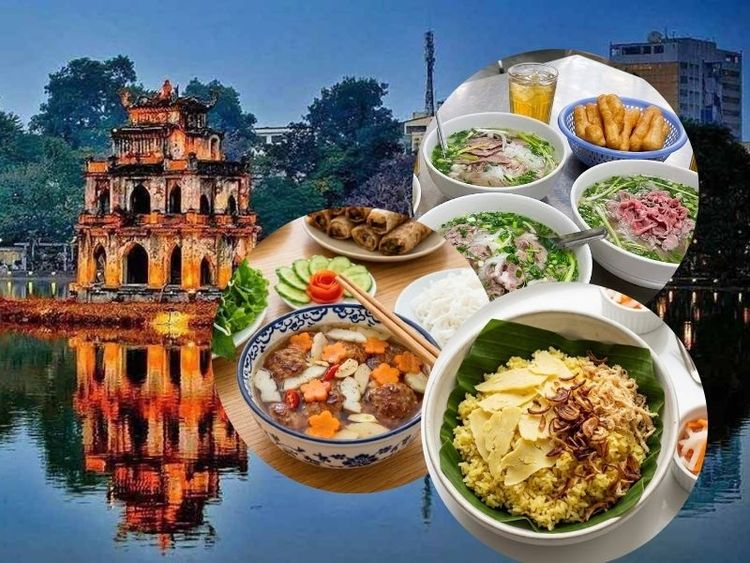
Vietnamese cooking divides into three broad regional styles, northern, central, and southern, shaped by climate, local ingredients, and history. The north centers on Hanoi, and its flavors tend to be more restrained and evenly balanced, with less chili and less sugar than you find further south. Black pepper generally does the work that chili does elsewhere in the country. Four dishes from this article come out of that tradition: phở, bún chả, chả cá Lã Vọng, and bánh cuốn. Freshwater fish and crab appear often, which follows from the Red River delta sitting right there.
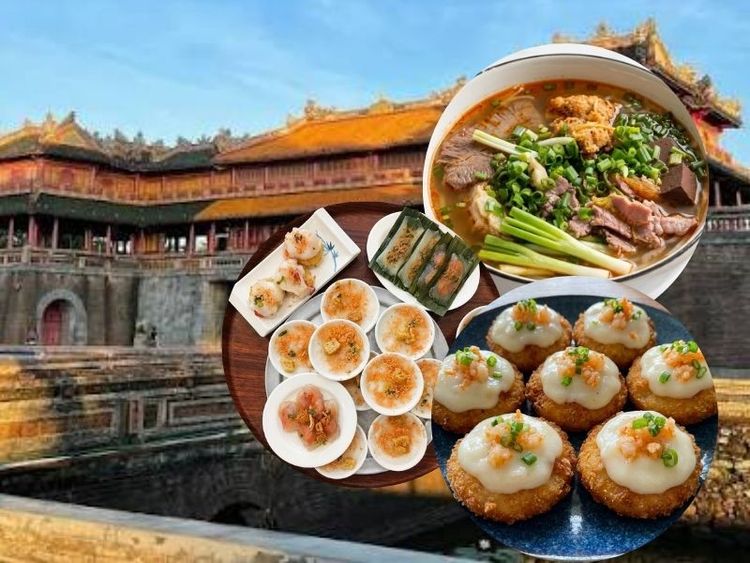
Central Vietnam covers Huế and Quảng Nam, and it is generally the spiciest of the three. Chili and fermented shrimp paste are used more freely here, and a tradition of serving many small, carefully composed dishes at once traces back to Huế's history as the imperial capital. Bún bò Huế, mì Quảng, and cao lầu all belong to this region.
Discover the unique flavors, ingredients, and cooking traditions from Northern, Central, and Southern Vietnam.
The south runs from Ho Chi Minh City down through the Mekong Delta. A warm climate and fertile land mean herbs, tropical fruit, and seafood are all abundant, and southern cooks reach for sugar and coconut milk more often, so the food generally reads sweeter than what you get in the north. Cơm tấm, canh chua, cá kho tộ, and bánh xèo are all southern. This brings up the honest answer to a question people ask constantly: no single dish or flavor profile represents Vietnamese food as a whole, because the country doesn't cook that way.
How Is a Traditional Vietnamese Meal Served?
A traditional Vietnamese meal is served all at once and shared. The table holds steamed rice, one or two main dishes of meat, fish, or tofu, a vegetable dish, a bowl of canh (a light broth-based soup), and dipping sauces, and everyone eats from the shared dishes into their own bowl of rice. Spelled out, the components are cơm (steamed rice), món mặn (savory main dishes), rau (vegetables, boiled, stir-fried, or raw), canh (soup), nước chấm (dipping sauce), and often a small dish of pickles. One rule governs the arrangement: rice bowls are individual, everything else is communal and sits in the middle for everyone to reach.
Three things that puzzle American diners follow from that structure. Canh is not a soup course, because there are no courses. It stays on the table for the entire meal, and people spoon it between bites of rice, which is why a Vietnamese soup is often thin and lightly seasoned: it works as a counterweight to the salty dishes rather than as a dish you finish. There's also no appetizer-main-dessert sequence at home. Dishes an American menu files under appetizers, gỏi cuốn and chả giò among them, arrive with everything else. And the salty dishes are meant to be eaten with rice. A kho braise tastes aggressively salty on its own because it was seasoned to flavor several mouthfuls of plain rice.
This is the meal most of us ate growing up, and it still looks like a weekday dinner. That structure is why the dipping sauce keeps coming up. With several shared dishes on one table, the small bowl of nước chấm lets each person adjust their own bite, making it the last step of seasoning and putting that step at the table rather than in the kitchen. What you've got now is the shape of an everyday Vietnamese table, the thing a menu never shows you.
Frequently Asked Questions
Popular Vietnamese noodle dishes include phở, bún bò Huế, bún chả, mì Quảng, cao lầu, and hủ tiếu. They cover a wide range of structures: some are full soups, some have barely any broth, and some skip broth entirely to pair noodles with grilled meat and a dipping sauce. Our guide to Vietnamese noodle dishes breaks down the noodle types themselves.
Popular Vietnamese street foods include bánh mì, bánh xèo, gỏi cuốn, bánh cuốn, xôi, nem lụi, and pork grilled on a lemongrass stalk. Street food culture differs noticeably by city, and Hanoi, Huế, and Ho Chi Minh City each have specialties you will not reliably find in the other two. See our guide to Vietnamese street food for the full picture.
Common Vietnamese soups fall into three groups: noodle soups like phở and bún bò Huế, sour soups like canh chua, and canh, the light everyday soups served with rice at family meals. Broths range from clear and delicate to sour, spicy, or deeply savory, depending on the group.
Vietnamese people usually eat savory food for breakfast, most commonly phở, bánh mì, xôi, cháo, or bánh cuốn. There is no firm line between breakfast food and food eaten later in the day, which surprises most visitors. Phở is both a breakfast and dinner dish. Our guide to Vietnamese breakfast foods goes further into the morning routine.
Common Vietnamese appetizers on restaurant menus include gỏi cuốn, chả giò, gỏi salads, and skewers like nem lụi and chạo tôm. Worth knowing, though: a traditional Vietnamese home meal does not run appetizer, main, dessert. Everything arrives together, so these dishes are menu categories abroad far more than they are courses in Vietnam.
Yes, Vietnamese cuisine includes a substantial vegetarian tradition, rooted in Buddhist practice and known as ăn chay, built on tofu, mushrooms, vegetables, rice, and noodles. Many restaurants offer chay versions of standard dishes, including phở chay, bánh mì chay, and cơm chay. One caveat matters more than any other: traditional fish sauce is made from fish, so a dish that looks vegetarian often isn't. If you eat vegetarian, ask, or look for chay versions seasoned with plant-based alternatives. Vegetarian is also not the same as vegan, since some chay cooking includes eggs and other animal products.
Much Vietnamese food is naturally gluten-free because it is built on rice rather than wheat, but individual dishes are not automatically safe. Rice noodles, rice paper, and rice flour contain no wheat, and glutinous rice contains no gluten despite what the name suggests. The caveats matter, though. Soy sauce and hoisin sauce usually contain wheat; some fish sauces include wheat-derived ingredients; fried dishes may share oil with wheat-battered items, and cross-contamination is common in a busy kitchen. Anyone with celiac disease needs to check individual products and ask before ordering.
Vietnamese food was shaped by roughly a thousand years of Chinese rule (111 BCE to 938 CE), French colonialism (1859 to 1954), and Vietnamese cooks who adapted what arrived rather than copying it. Wheat noodles, wontons, and stir-frying came from China. The baguette, coffee, and pâté came from France, and bánh mì is the clearest proof of adaptation: a French format rebuilt around Vietnamese ingredients rather than a copy of a French sandwich. After 1975, many Vietnamese people resettled abroad, and the sweeter profile familiar to American diners reflects the southern origins of much of that community.
Vietnamese food spread internationally through communities that settled abroad after 1975, particularly in the United States, France, Australia, and Canada, where family-run restaurants introduced phở and bánh mì to local diners. It landed for concrete reasons: it is herb-heavy, not especially oily, built on rice, easy to adjust for heat at the table, and offering both a light option and a handheld one. Rice paper, fish sauce, and Thai basil now sit in ordinary American supermarkets, which put home cooking within reach of people with no Vietnamese background at all.
Hanoi is known for phở, bún chả, and chả cá Lã Vọng; Huế for bún bò Huế and its many small dishes such as bánh bèo and bánh nậm; Saigon for cơm tấm, bánh mì, and hủ tiếu. They differ because their regions do: northern cooking is generally more restrained, central cooking is the spiciest, and southern cooking uses more sugar and coconut milk. We cover each city separately in our guides to Hanoi food, Hue food, and Saigon food.
Vietnamese food can fit a balanced diet, but its nutritional profile depends on the dish, the ingredients, the portion size, and how it is prepared. Many healthy Vietnamese dishes are built on fresh vegetables and herbs, lean proteins, broths, and rice, with less dairy and oil than many Western cuisines. The other side deserves stating plainly: fish sauce and other seasonings are high in sodium, some dishes carry a lot of added sugar, and fried dishes are fried.

CHIN-SU KITCHEN TEAM
CHIN-SU Kitchen Team are the creative experts behind the delicious recipes featuring CHIN-SU sauces. With years of experience and a passion for flavor, our team carefully selects recipes from a variety of trusted chefs and bloggers, bringing together the best culinary insights to present you with the most suitable and exciting dishes. Every recipe is chosen to inspire you to create meals that are not only tasty but also easy to prepare, enhancing your dining experience. Join us as we explore a wide range of sauces and flavors, and elevate every meal with the perfect recipe for your table!
User Reviews
Featured Articles
SUBSCRIBE TO GET
MORE INFO
Want the latest and greatest recipes, updates, and more from us,
straight to your inbox? Subscribe and get our NEWS!