Trinidad Scorpion Hot Sauce Recipe: How to Make It at Home
Published: Jun 30, 2026 by CHIN-SU
Updated: Aug 25, 2026 by CHIN-SU
Tested by CHIN-SU Kitchen Team
This Trinidad Scorpion hot sauce combines fermented Scorpion peppers with beet, ancho chile, aromatics, apple cider vinegar, and reserved brine for an intensely hot sauce with fruity, tangy, smoky flavor. A 3% salt brine develops acidity and fermented depth before the peppers are blended, strained, and gently heated.
Plan on about 1 hour of hands-on work and 28 days of fermentation. This batch makes approximately 4 cups (950 ml) of strained sauce.
Trinidad Scorpion peppers belong firmly in the superhot category. New Mexico State University's Chile Pepper Institute lists Trinidad Scorpion at about 1.5 million Scoville Heat Units (SHU), so even a few drops of the finished sauce go a long way.
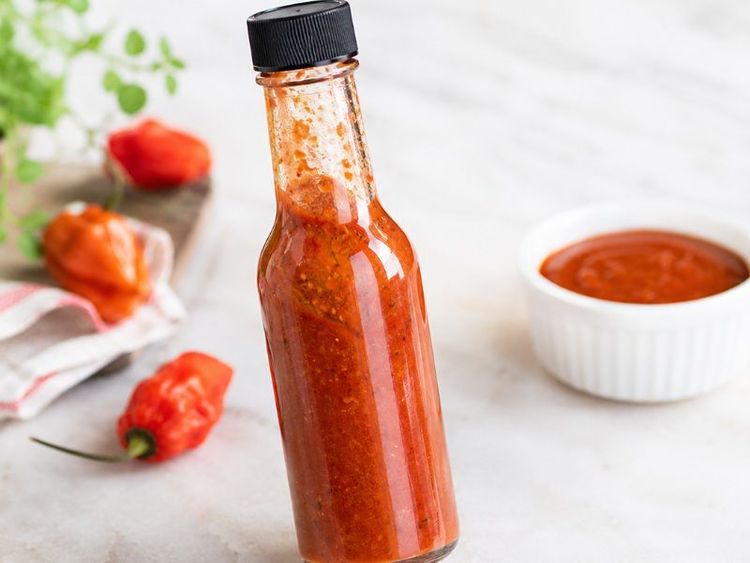
Table Of Contents
- What Does Trinidad Scorpion Hot Sauce Taste Like?
- Why You'll Love This Trinidad Scorpion Hot Sauce Recipe
- How To Handle Trinidad Scorpion Peppers Safely
- Trinidad Scorpion Hot Sauce Ingredients
How To Make Trinidad Scorpion Hot Sauce Step by Step
- What Can You Substitute or Change in Trinidad Scorpion Hot Sauce?
How To Adjust the Trinidad Scorpion Hot Sauce's Heat Level
- What To Eat With Trinidad Scorpion Hot Sauce
- How To Store Trinidad Scorpion Hot Sauce
What Does Trinidad Scorpion Hot Sauce Taste Like?
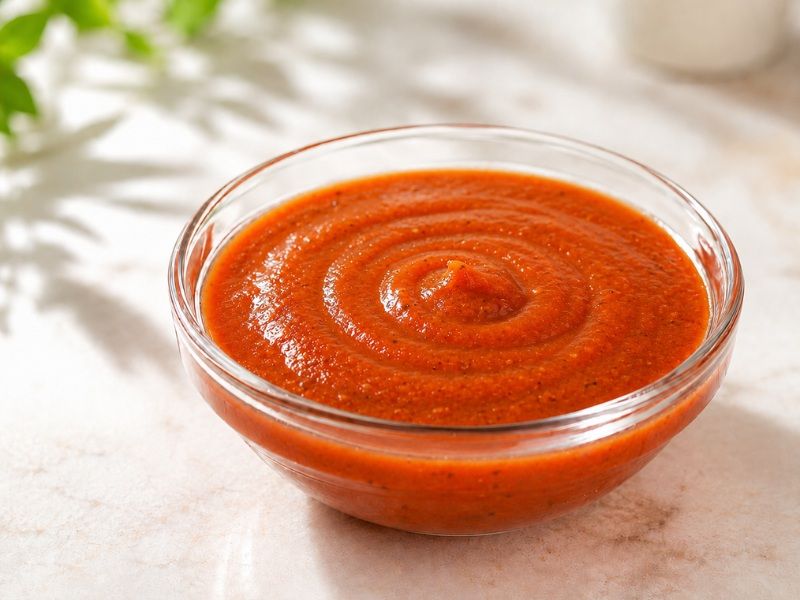
Trinidad Scorpion hot sauce tastes intensely hot, fruity, tangy, smoky, and savory. The Scorpion peppers provide the dominant heat and fruitiness, while fermentation adds acidity and deeper savory notes.
Beet gives the sauce subtle sweetness and a deeper red color. Dried ancho chile adds mild smoke, while ginger, turmeric, garlic, onion, and cardamom build a warmer aromatic background.
Apple cider vinegar brightens the finished sauce after fermentation, while reserved brine adds fermented tang and saltiness. The result remains exceptionally hot, but the sauce has enough acidity, smoke, and aromatic flavor to taste like more than concentrated pepper heat.
Why You'll Love This Trinidad Scorpion Hot Sauce Recipe
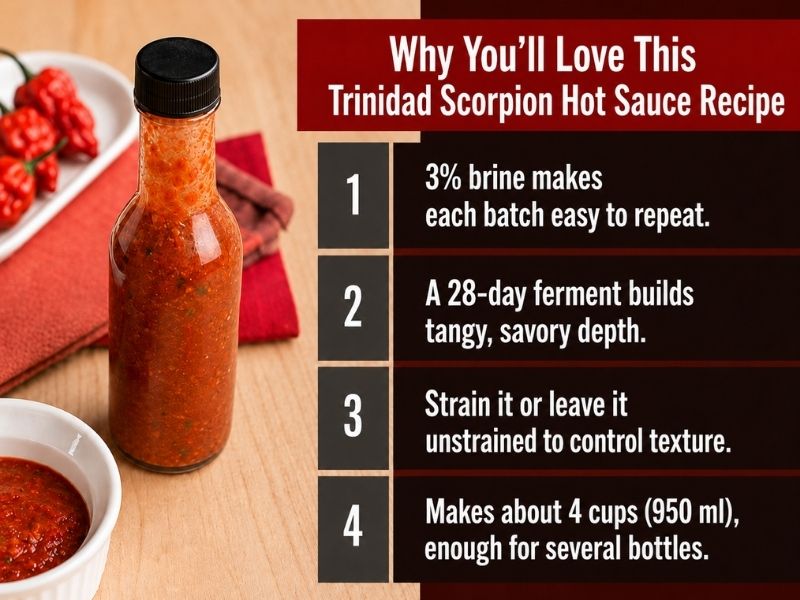
This recipe gives superhot peppers more depth through fermentation while still letting you control the final texture and concentration.
- The 3% brine is easy to reproduce. Salt is calculated directly from the water weight, so each batch starts with the same brine concentration.
- The flavor develops over 28 days. Fermentation adds tang and savory complexity before the vinegar and garlic are added.
- You control the texture at the end. Leave the sauce unstrained for more body or strain it for a smoother bottle-ready finish.
- One batch makes about 4 cups (950 ml). That is enough sauce for several bottles, which is useful because Scorpion sauce is normally served a few drops at a time.
How To Handle Trinidad Scorpion Peppers Safely
Wear nitrile or rubber gloves, protect your eyes, and keep the workspace well ventilated whenever you cut, blend, or heat Trinidad Scorpion peppers.
Capsaicin can strongly irritate skin, eyes, and the respiratory tract. Poison Control recommends gloves, fresh-air ventilation, and avoiding contact with your face and eyes when preparing hot peppers.
Keep children and pets away from the preparation area, and wash knives, cutting boards, blender parts, countertops, and reusable gloves thoroughly after use. Blending and heating the fermented peppers can also release irritating pepper droplets and vapors, so use an exhaust fan or work near open windows.
If pepper juice reaches your eyes, flush them with room-temperature water for 15–20 minutes.
Trinidad Scorpion Hot Sauce Ingredients
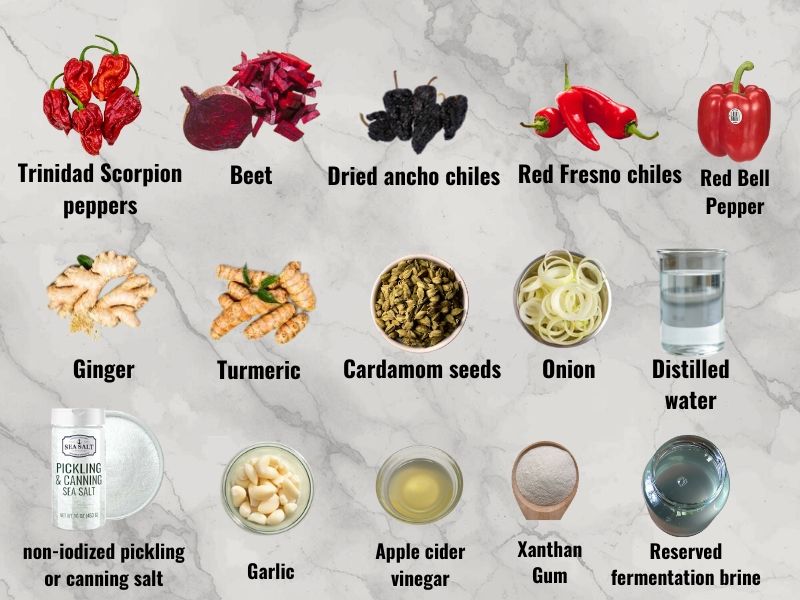
This batch uses Trinidad Scorpion peppers as the main ingredient, supported by fermented vegetables, a 3% brine, and a measured finishing mixture of vinegar and reserved brine.
For the ferment:
- 14 oz (397 g) ripe red Trinidad Scorpion peppers. These provide the dominant heat and fruity pepper flavor. The existing recipe is also built around 397 g of Scorpion peppers.
- 1 medium beet, about 5.3 oz (150 g), peeled and chopped. Adds mild sweetness, body, and deeper red color.
- 2 dried ancho chiles, about 0.7 oz (20 g), stems removed. Add earthy, mild smoky flavor.
- 3 medium red Fresno peppers, about 3.2 oz (90 g). Add fresh red-pepper flavor alongside the Scorpions.
- 1/2 red bell pepper, about 3.5 oz (100 g). Adds body and sweetness.
- 0.7 oz (20 g) fresh ginger, peeled and chopped.
- 0.7 oz (20 g) fresh turmeric, peeled and chopped.
- 1/2 teaspoon (1 g) cardamom seeds.
- 1 medium yellow onion, about 5.3 oz (150 g), sliced into rings. Use several broad rings at the top of the jar to help hold smaller ingredients below the fermentation weight.
- 1.2 L (about 5 cups) filtered or distilled water.
- 36 g non-iodized pickling or canning salt. This gives you a 3% brine by water weight.
University of Minnesota Extension recommends iodine-free salt and soft or distilled water for wet-brine fermentation, with enough brine to keep the produce submerged.
For finishing the sauce:
- 4 medium garlic cloves, about 0.4 oz (12 g).
- 1 cup (240 ml) apple cider vinegar.
- 1 cup (240 ml) reserved fermentation brine.
- 2 g xanthan gum, optional. Use it only after straining if you want a more stable, evenly suspended sauce.
For a thin sauce, xanthan gum is typically used at about 0.1–0.3% by weight. At approximately 950 g of finished sauce, 2 g is close to a 0.2% concentration.
How To Make Trinidad Scorpion Hot Sauce Step by Step
Make Trinidad Scorpion hot sauce in eight steps, with about 1 hour of active preparation and finishing plus 28 days of fermentation.
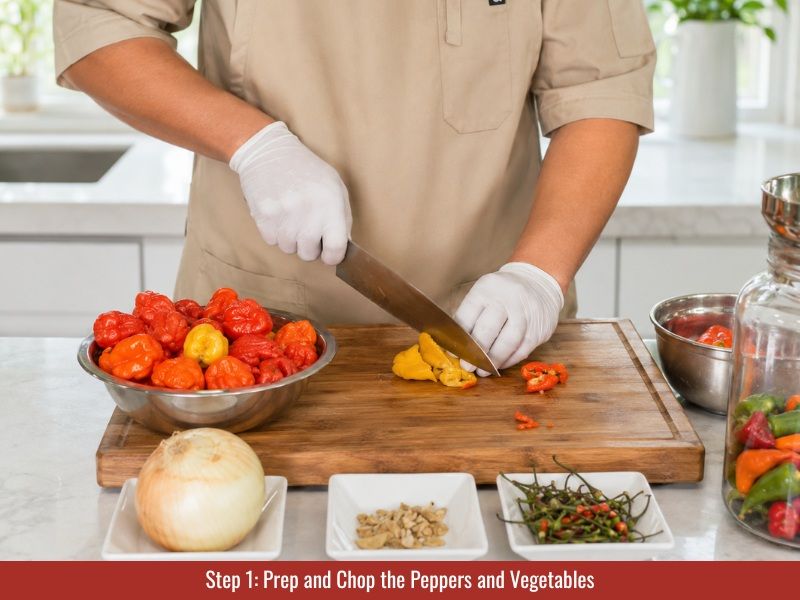
Step 1: Prep the Peppers and Vegetables
Put on nitrile gloves and eye protection before handling the Scorpion peppers.
Remove the pepper stems and cut each Scorpion lengthwise into quarters. Chop the beet, Fresno peppers, bell pepper, ginger, and turmeric into pieces roughly 1 inch (2.5 cm) across.
Remove the stems from the dried ancho chiles and tear each pod into several large pieces.
Slice the onion into rings, keeping several of the widest rings intact for the top of the fermentation jar.
Step 2: Make the 3% Brine
Combine 1.2 L filtered or distilled water with 36 g non-iodized salt and stir until the salt dissolves completely.
This recipe calculates the brine at 3% of the water weight: 1,200 g water × 0.03 = 36 g salt
Prepare the full amount so you have enough to cover the packed vegetables. Depending on how tightly your jar is packed, a small amount may remain.

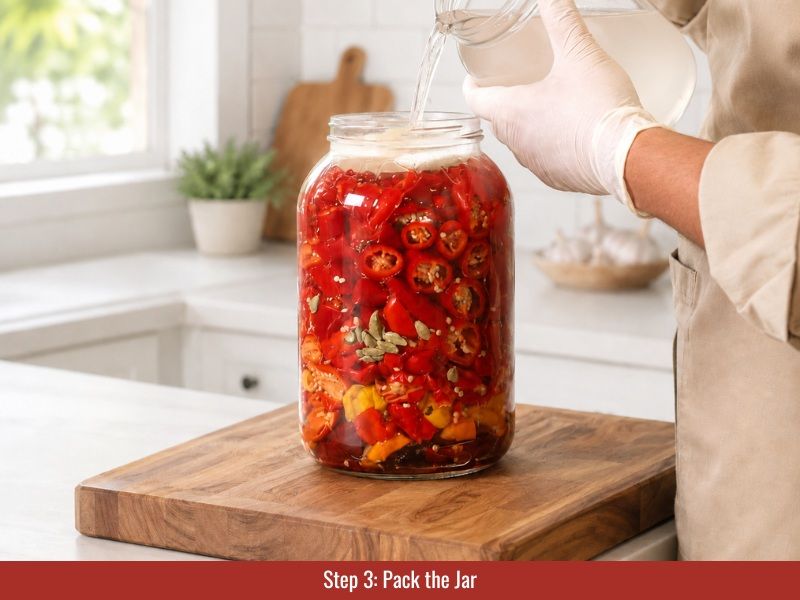
Step 3: Pack the Fermentation Jar
Pack the Scorpion peppers, beet, ancho chile, Fresno peppers, bell pepper, ginger, turmeric, and cardamom into a clean 3 L fermentation jar.
Place the broad onion rings across the top of the packed vegetables, then add a fermentation weight.
Pour in enough 3% brine to cover everything completely. Keep the vegetables below the liquid throughout fermentation.
Fit the jar with an airlock fermentation lid. A low-oxygen environment and full submersion help support proper vegetable fermentation. NCHFP guidance also emphasizes thoroughly cleaned equipment and keeping fermenting vegetables under the brine.
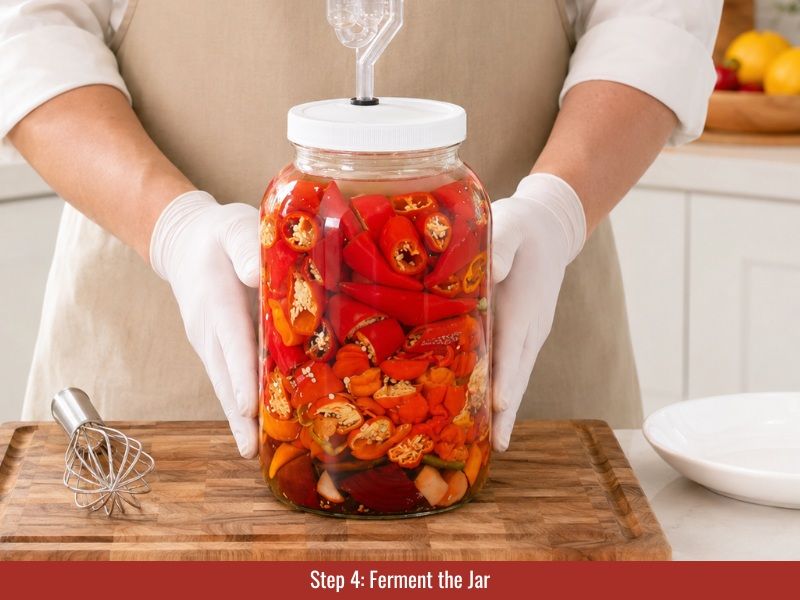
Step 4: Ferment for 28 Days
Keep the jar in a dark place at 68–72°F (20–22°C) for 28 days.
Check it regularly to make sure the ingredients remain submerged. During fermentation, you should see signs such as bubbles, cloudy brine, and gradually softer vegetables.
University of Minnesota Extension identifies 68–72°F (20–22°C) as the ideal range for vegetable fermentation and gives 3–4 weeks as a typical fermentation period.
By the end of the ferment, bubbling should have slowed substantially. If you monitor the batch with a calibrated pH meter, UMN Extension uses pH 4.6 or below together with stopped bubbling as an indicator that vegetable fermentation is complete.
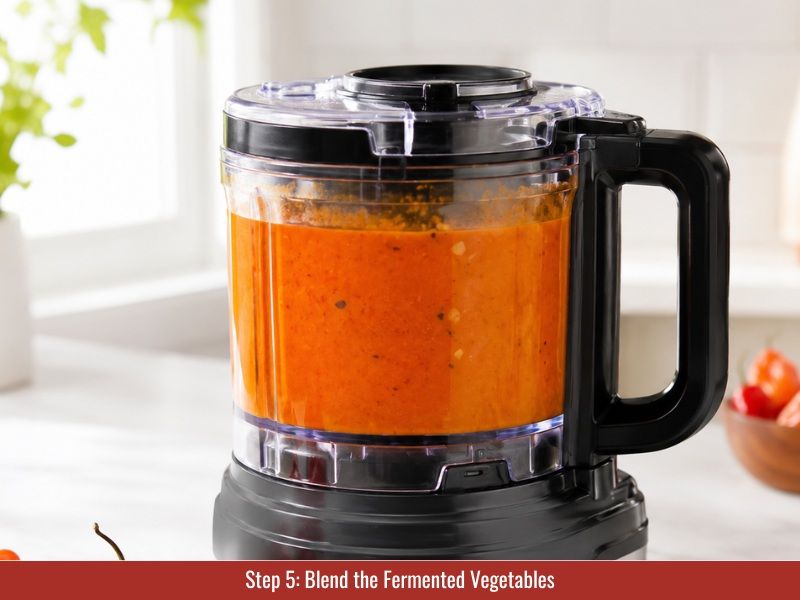
Step 5: Drain and Blend the Fermented Ingredients
Drain the fermented vegetables, reserving the brine.
Transfer the fermented peppers and vegetables to a large blender or pot suitable for an immersion blender. Add:
- 4 garlic cloves
- 1 cup (240 ml) apple cider vinegar
- 1 cup (240 ml) reserved fermentation brine
Blend for 60–90 seconds, or until the mixture is completely smooth.
Work under strong ventilation during this step. A large batch of blended Scorpion peppers can create irritating airborne droplets.
If the sauce tastes overly salty, replace part of the reserved brine with additional apple cider vinegar rather than adding more brine.
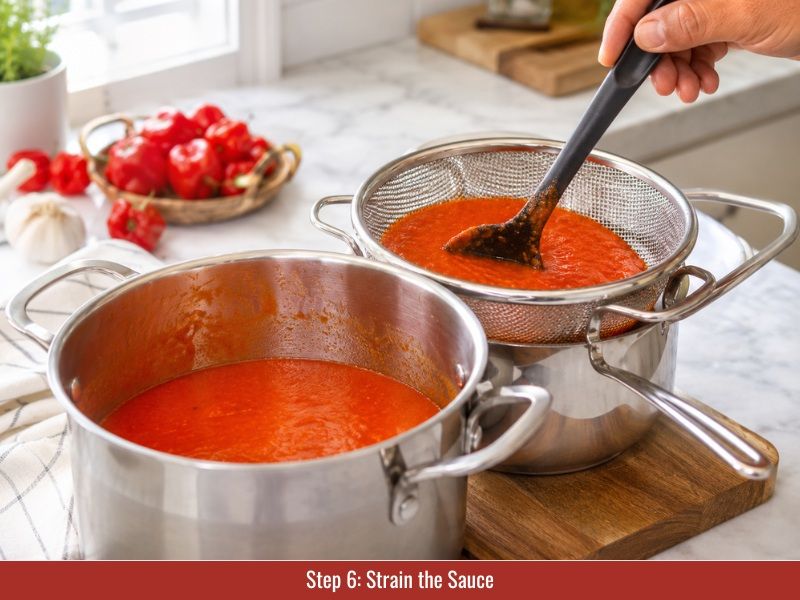
Step 6: Adjust the Texture and Strain
For a smooth bottle-style sauce, press the blended mixture through a fine-mesh sieve. Use the back of a ladle or silicone spatula to press as much liquid and fine pulp through as possible.
For a thicker sauce with more pepper body, skip the straining step and keep the blended solids.
This recipe's finished yield of approximately 4 cups (950 ml) is based on a well-pressed, strained sauce. An unstrained batch will produce more sauce and have a noticeably thicker texture.
The leftover pulp can also be reused. Dehydrate it until completely dry and brittle, grind it, then combine it with salt for a concentrated chile seasoning.
If the strained sauce separates more than you like, return it to the blender and slowly sprinkle in 2 g xanthan gum while the blender is running. Blend for another 30–60 seconds until evenly dispersed.
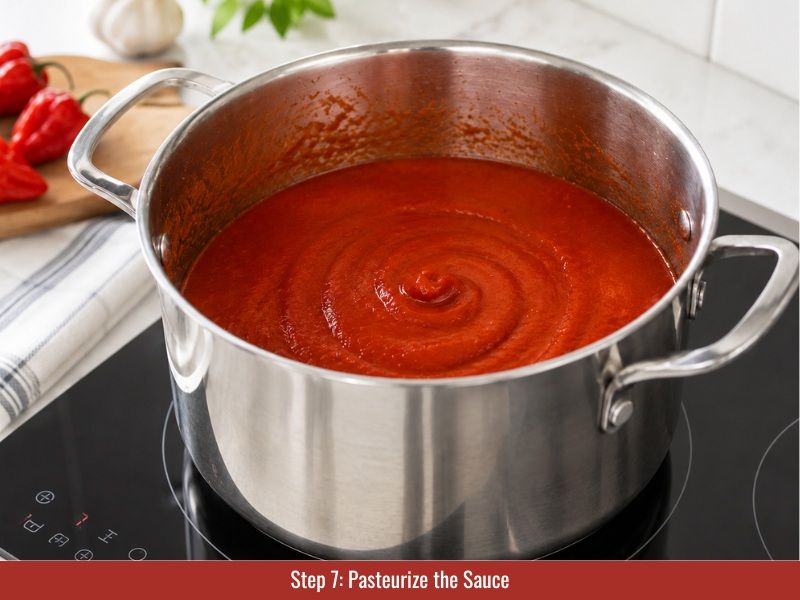
Step 7: Heat the Finished Sauce
Transfer the sauce to a saucepan and heat it gradually to 145°F (63°C).
Hold it at approximately 145°F (63°C) for 15 minutes, stirring occasionally and monitoring the temperature with a food thermometer.
Keep the heat gentle so the sauce does not boil aggressively. This finishing step slows further fermentation and prepares the sauce for refrigerated bottling while preserving more of its fresh pepper character.
Step 8: Bottle and Refrigerate
Transfer the warm sauce to clean glass hot-sauce bottles or airtight jars, leaving a small amount of headspace.
Let the containers cool, then refrigerate them.
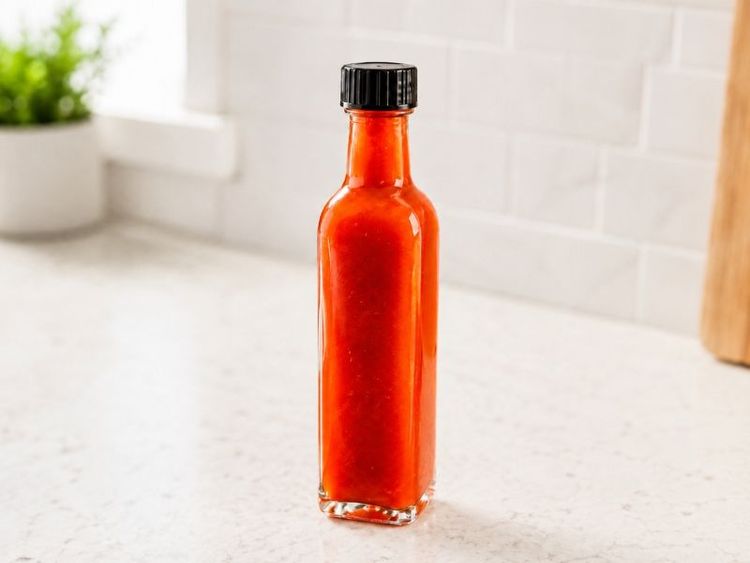
One batch makes approximately 4 cups (950 ml) of strained finished sauce, enough for about six 5-fl-oz (148 ml) bottles.

What Can You Substitute or Change in Trinidad Scorpion Hot Sauce?
Keep substitutions simple so the fermented pepper, smoke, and acidity remain balanced.
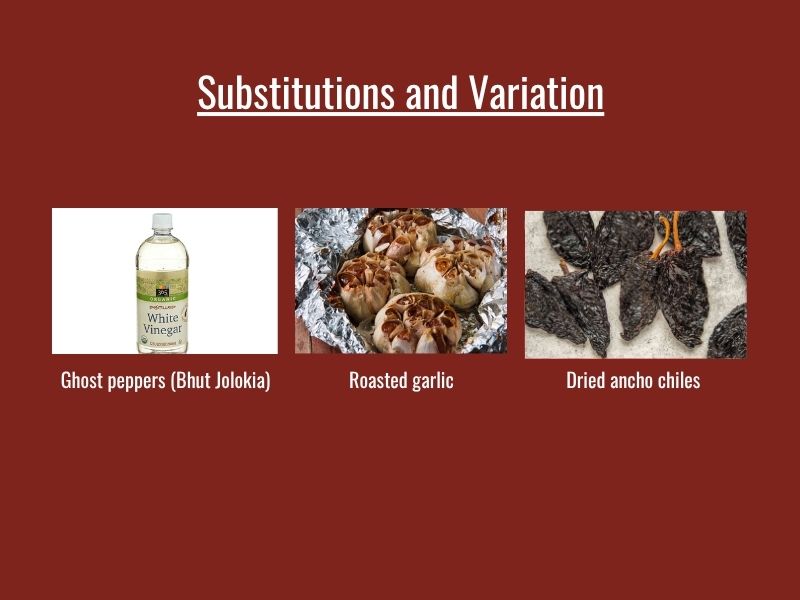
- Use distilled white vinegar instead of apple cider vinegar. Replace it 1:1 for a cleaner, sharper acidity.
- Use roasted garlic at the finishing stage. Roast the same 4 cloves before blending for a sweeter, softer garlic flavor.
- Leave the sauce unstrained. This gives you a thicker sauce with more pepper pulp and eliminates the need for xanthan gum.
- Use less ancho for lighter smoke. One dried ancho gives a subtler smoky background while keeping the Scorpion flavor more prominent.
How To Adjust the Trinidad Scorpion Hot Sauce's Heat Level
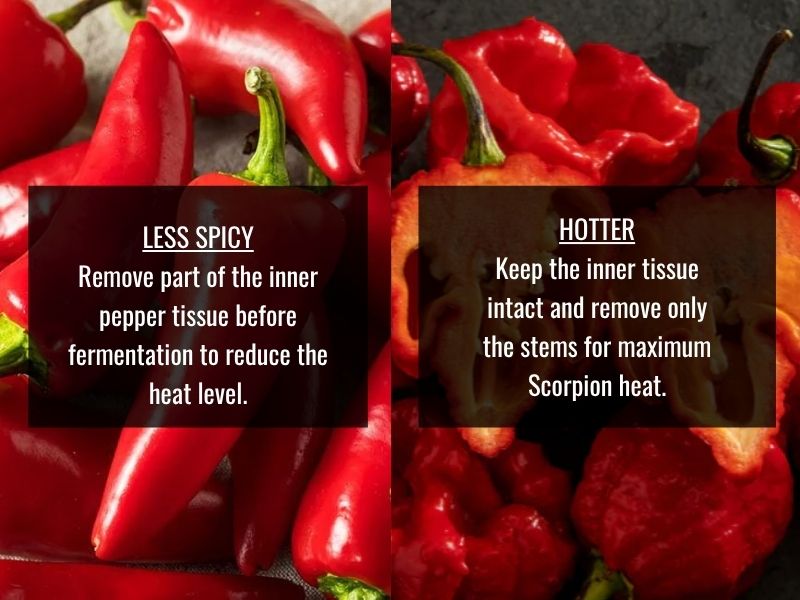
Adjust the heat before fermentation by changing how much of the pale inner placental tissue remains in the Scorpion peppers.
Capsaicinoids are concentrated mainly around the placenta inside the pepper. Seeds can carry capsaicinoids because they contact this tissue.
For a somewhat milder batch, split the peppers and remove part of the pale inner tissue before packing the fermentation jar. For maximum Scorpion heat, remove only the stems and keep the inner tissue intact.
This recipe is formulated around ripe red Trinidad Scorpion peppers. Individual peppers naturally vary in heat, so color alone does not provide a reliable measure of pungency.
What If the Finished Trinidad Scorpion Sauce Is Too Hot?
Dilute only the amount you plan to serve rather than changing the entire batch immediately.
Combine a small portion of sauce with additional apple cider vinegar and reserved fermentation brine 1 tablespoon at a time, stir well, and taste again.
You can also use the sauce a few drops at a time in another salsa, marinade, dipping sauce, or glaze. With Scorpion peppers, portion size is often the easiest way to control the experience without losing the fermented flavor.
What To Eat With Trinidad Scorpion Hot Sauce
Use Trinidad Scorpion hot sauce sparingly with grilled meats, tacos, fried foods, eggs, and rice dishes.
- Add a few drops to jerk-style chicken or grilled pork.
- Spoon a small amount onto tacos or burritos.
- Mix it into a dipping sauce for fried chicken, egg rolls, or fries.
- Add a few drops to scrambled eggs or breakfast burritos.
- Stir it into rice and beans for concentrated fermented heat.
For everyday meals when you want a ready-to-use sauce with a more approachable heat level, CHIN-SU Hot Sauce works well with noodles, fried foods, grilled meats, and other savory dishes.

How To Store Trinidad Scorpion Hot Sauce
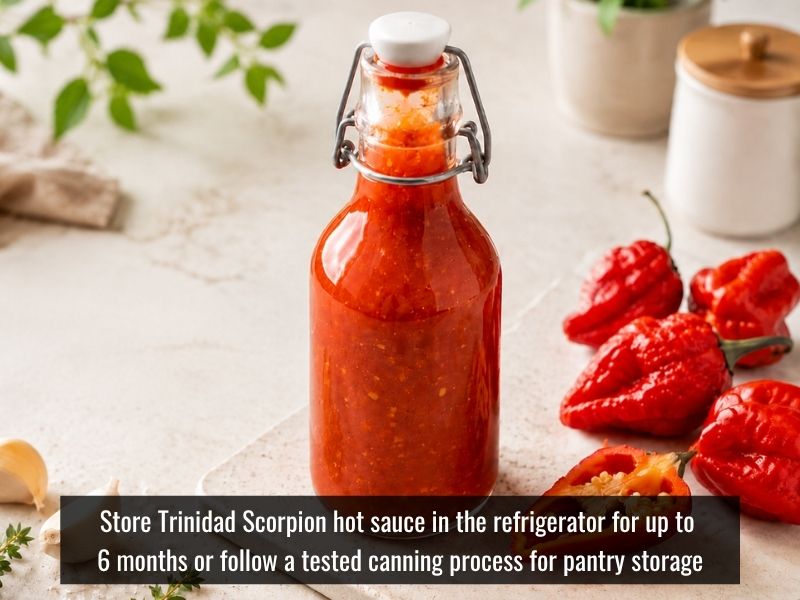
Store the finished Trinidad Scorpion hot sauce in clean, sealed bottles in the refrigerator at 40°F (4°C) or below and use it within 6 months for best quality.
Oregon State Extension's fermented hot sauce guidance recommends bottling the finished sauce, keeping it refrigerated, and using it within 6 months for best quality.
Keep each bottle refrigerated between uses and shake it before serving if slight separation develops. Xanthan gum reduces separation but is optional.
For room-temperature pantry storage, use a research-tested hot sauce or fermented-pepper canning process with specified ingredient ratios, jar sizes, and processing instructions. Measuring acidity remains useful for monitoring fermentation, while validated preservation procedures determine whether a bottled product can be stored safely without refrigeration.
How did your first batch of Trinidad Scorpion hot sauce turn out on the heat scale? Drop your questions or tweaks in the comments; no question is too small. If this recipe worked for you, leave a star rating so other home cooks know what to expect. Share your bottled results on social with #CHINSU, we read every one. Ready to stock your pantry with a fruity, ready-to-use chili sauce? Grab CHIN-SU Chili Sauce at chinsu.com.
Enjoy more hot sauce recipe:
Frequently Asked Questions
Expect roughly 13–20 medium Trinidad Scorpion peppers, but weigh them to reach 14 oz (397 g).
Individual pods vary considerably. One commercial cultivar reference lists Trinidad Scorpion fruits at approximately 20–30 g each, which puts a 397 g batch in that approximate count range.
Weight gives you a more reproducible recipe than pepper count.
New Mexico State University's Chile Pepper Institute lists Trinidad Scorpion at about 1.5 million SHU.
That number describes the pepper itself. The finished sauce contains fermented vegetables, vinegar, and brine, so its heat is spread through a much larger final volume.Look for fresh Trinidad Scorpion peppers from specialty chile growers, farmers' markets, superhot-pepper farms, and online produce sellers during the harvest season.
For this recipe, buy enough to weigh 14 oz (397 g) after selecting firm, ripe peppers.
Apple cider vinegar works especially well because its mild fruitiness complements the natural fruity character of the Scorpion peppers.
Distilled white vinegar also works at the same volume when you want a sharper, cleaner acidic finish.Pepper solids can settle naturally in a homemade blended sauce.
Shake the bottle before serving, or blend 2 g xanthan gum into approximately 4 cups (950 ml) of strained sauce for a more stable texture. Xanthan at around 0.1–0.3% is commonly used for thin sauces.
Use a research-tested pepper-sauce canning recipe when you want shelf-stable jars.
Home-preservation guidance emphasizes using tested ingredient proportions and processing methods because safe shelf stability depends on the complete formulation and process, not a single measurement.
Trinidad Scorpion Hot Sauce
Ingredient
For the Ferment
- 14 oz (397 g) ripe red Trinidad Scorpion peppers.
- 1 medium beet, about 5.3 oz (150 g), peeled and chopped.
- 2 dried ancho chiles, about 0.7 oz (20 g), stems removed.
- 3 medium red Fresno peppers, about 3.2 oz (90 g).
- 1/2 red bell pepper, about 3.5 oz (100 g).
- 0.7 oz (20 g) fresh ginger, peeled and chopped.
- 0.7 oz (20 g) fresh turmeric, peeled and chopped.
- 1/2 teaspoon (1 g) cardamom seeds.
- 1 medium yellow onion, about 5.3 oz (150 g), sliced into rings.
- 5 cups (1.2 L) filtered or distilled water.
- 36 g non-iodized pickling or canning salt.
For Finishing the Sauce
- 4 medium garlic cloves, about 0.4 oz (12 g).
- 1 cup (240 ml) apple cider vinegar.
- 1 cup (240 ml) reserved fermentation brine.
- 2 g xanthan gum (optional).
Instructions
- Step 1: Prep the Peppers and Vegetables. Wear gloves and eye protection before handling Trinidad Scorpion peppers. Remove stems, cut Scorpion peppers into quarters, chop beet, Fresno peppers, bell pepper, ginger, and turmeric into roughly 1 inch (2.5 cm) pieces. Remove stems from ancho chiles and slice onion into rings.
- Step 2: Make the 3% Brine. Combine 5 cups (1.2 L) filtered or distilled water with 36 g non-iodized salt. Stir until the salt dissolves completely. The brine concentration equals 3% of the water weight.
- Step 3: Pack the Fermentation Jar. Place Scorpion peppers, beet, ancho chiles, Fresno peppers, bell pepper, ginger, turmeric, and cardamom into a clean 3 L fermentation jar. Add onion rings on top, place a fermentation weight, then pour in enough brine to fully submerge the vegetables.
- Step 4: Ferment for 28 Days. Keep the jar in a dark location at 68–72°F (20–22°C) for 28 days. Ensure vegetables remain below the brine surface. Check for fermentation signs such as bubbles, cloudy brine, and softened vegetables.
- Step 5: Drain and Blend the Fermented Ingredients. Drain the fermented vegetables while reserving the brine. Add fermented peppers and vegetables to a blender with garlic cloves, 1 cup (240 ml) apple cider vinegar, and 1 cup (240 ml) reserved brine. Blend for 60–90 seconds until smooth.
- Step 6: Adjust the Texture and Strain. Press the blended sauce through a fine-mesh sieve for a smoother bottle-style sauce, or keep the solids for a thicker texture. Add 2 g xanthan gum while blending if a more stable suspension is desired.
- Step 7: Heat the Finished Sauce. Transfer the sauce to a saucepan and heat gradually to 145°F (63°C). Hold at this temperature for 15 minutes, stirring occasionally, to slow further fermentation while maintaining pepper flavor.
- Step 8: Bottle and Refrigerate. Transfer the warm sauce into clean glass bottles or airtight jars. Allow containers to cool, then refrigerate. A strained batch produces approximately 4 cups (950 ml) of finished sauce.
Storage: Store Trinidad Scorpion hot sauce in clean sealed bottles in the refrigerator at 40°F (4°C) or below. Use within 6 months for best quality. Keep refrigerated between uses and shake before serving if slight separation occurs. Use a research-tested preservation process for room-temperature storage.
Fermentation Time: 28 days
Yield: About 4 cups (950 ml), approximately six 5 fl oz (148 ml) bottles
Serving Style: Extremely hot fermented pepper sauce for grilled meats, tacos, fried foods, eggs, rice dishes, and savory meals

CHIN-SU KITCHEN TEAM
CHIN-SU Kitchen Team are the creative experts behind the delicious recipes featuring CHIN-SU sauces. With years of experience and a passion for flavor, our team carefully selects recipes from a variety of trusted chefs and bloggers, bringing together the best culinary insights to present you with the most suitable and exciting dishes. Every recipe is chosen to inspire you to create meals that are not only tasty but also easy to prepare, enhancing your dining experience. Join us as we explore a wide range of sauces and flavors, and elevate every meal with the perfect recipe for your table!
User Reviews
Featured Articles
SUBSCRIBE TO GET
MORE INFO
Want the latest and greatest recipes, updates, and more from us,
straight to your inbox? Subscribe and get our NEWS!