How To Make Fermented Hot Sauce at Home From Scratch
Published: Jun 24, 2026 by CHIN-SU
Updated: Jul 9, 2026 by CHIN-SU
Tested by CHIN-SU Kitchen Team
Fermented hot sauce is an amazing mix of heat and rich flavor that really wakes up your taste buds. Unlike regular hot sauce, this kind relies on natural fermentation to bring out savory notes, giving you a much deeper, more balanced flavor. The process cranks up the heat while letting the peppers' actual flavor shine through, creating a sauce that tastes great on pretty much anything. Since it is getting so popular lately, it makes perfect sense that more people are whipping up their own batches at home.
Making your own fermented hot sauce is way easier than you might guess, and the results are definitely worth the wait. There are tons of recipes out there, CHIN-SU specifically tested and picked this one because it keeps things simple without losing that great taste. In just 13 days, you will have a fresh, homemade sauce ready to upgrade grilled meats, rice, tacos, eggs, or anything else that needs a good kick. Just follow this easy CHIN-SU recipe to make your own. You will quickly get hooked on the flavor that only fermentation can deliver. Keep reading to find out exactly how to make it from scratch!
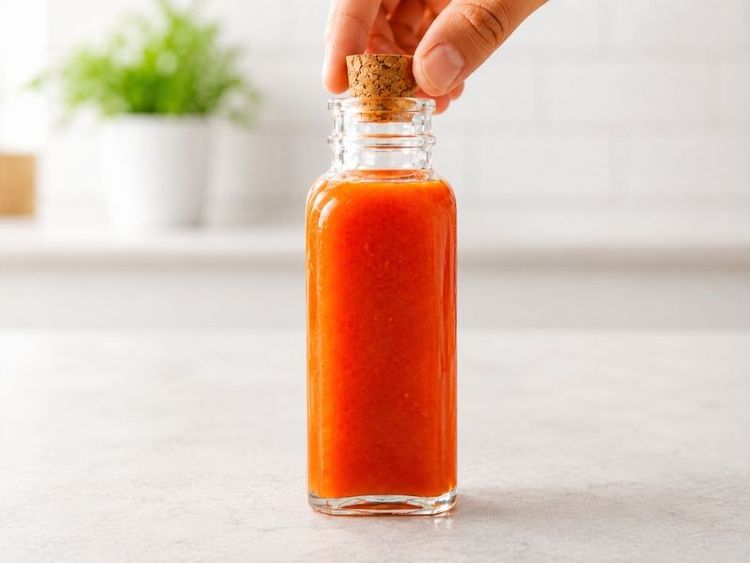
Table Of Contents
Why You'll Love This Fermented Hot Sauce Recipe
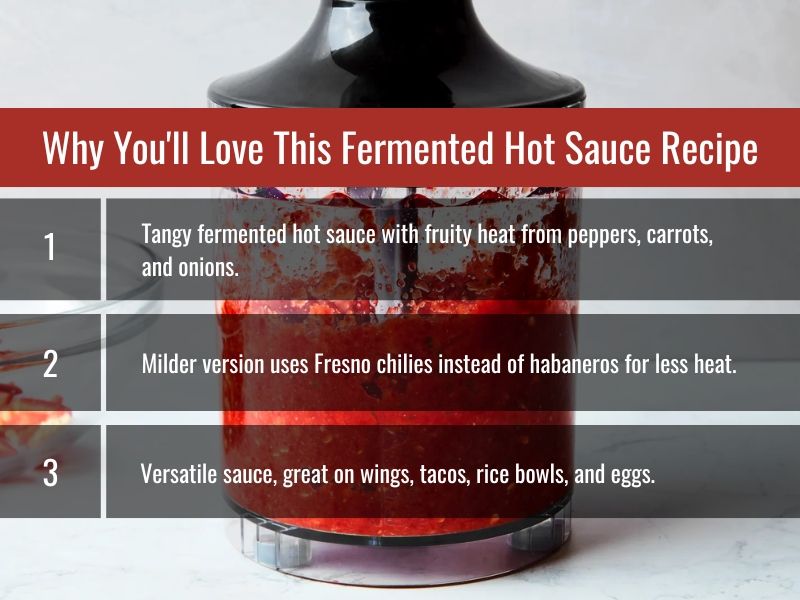
There are 3 main reasons why this fermented hot sauce recipe is totally worth the wait.
- It is tangy, fruity, and packed with flavor. The natural fermentation gives it a smooth tang that mixes perfectly with the fruity heat of habanero peppers. Plus, roasted carrots and onions add a nice, subtle sweetness in the background. Not a fan of crazy heat? Just swap out the habaneros (100,000 to 350,000 SHU) for red Fresno chilies (2,500 to 10,000 SHU) to make a milder, fruitier batch.
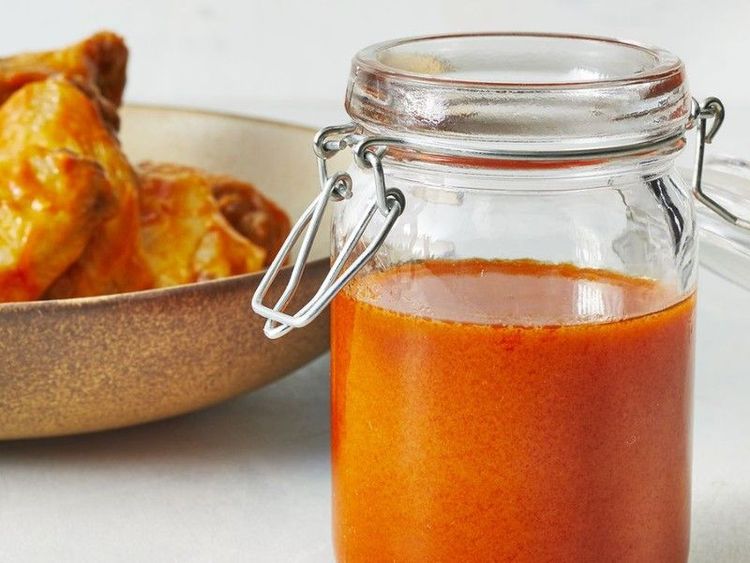
- It tastes great on practically everything. The favorite way to eat it is on buffalo wings, but you should definitely try it on tacos, grilled meats, rice bowls, and scrambled eggs.
- You only need 7 ingredients and 13 days, and most of that time is just waiting around. The actual hands-on work takes less than 2 hours total, and the fermentation process handles the rest. Just try making 1 batch, and you will immediately taste the difference.
Fermented Hot Sauce Ingredients
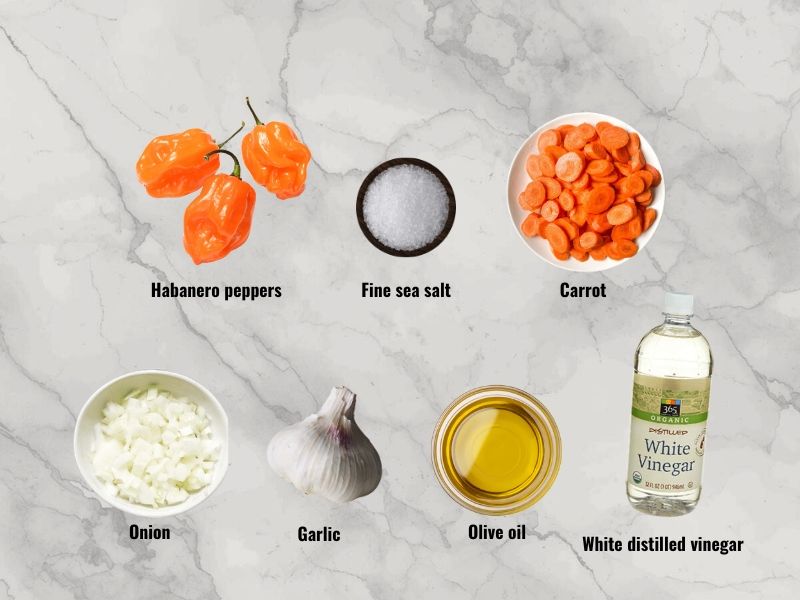
This fermented hot sauce recipe uses exactly 7 main ingredients: peppers, salt, carrots, onions, garlic, olive oil, and white distilled vinegar. Each one plays a really important role when it comes to flavor, the fermentation process, and keeping the sauce fresh on your shelf.
- 1 lb (450 grams) of habanero peppers. These bring the heat and build your main flavor base.
- 1 tbsp (15 grams) of fine sea salt. You can easily use ground sea salt or pink Himalayan salt for this.
- 3 roughly chopped carrots. Carrots add a nice thickness, some natural sweetness, and a smooth texture.
- 2 roughly chopped medium onions. These give the sauce a mild sweetness and build up the overall texture.
- 2 cloves of garlic. Garlic adds a deep savory taste and naturally helps fight off bad bacteria.
- 1 tsp (5 ml) of olive oil. Just a little oil makes the sauce feel better in your mouth and helps everything blend together.
- 1.75 cups (415 ml) of white distilled vinegar. Vinegar perfectly balances the acidity and makes sure your sauce lasts much longer.
All together, these ingredients will give you about 3 pints (1.4 liters) of finished fermented hot sauce. That comes out to roughly 96 regular servings for you to enjoy on your favorite foods!
How To Make Fermented Hot Sauce?
This fermented hot sauce recipe takes exactly 6 steps: prep your peppers and salt, pack the jar, let the mash ferment, roast your extra veggies, blend the sauce, and finally let it rest and store it. The whole process takes about 13 days total. That includes 30 minutes of prep work, 40 minutes of roasting, and at least a 12-day waiting period for fermenting and resting.
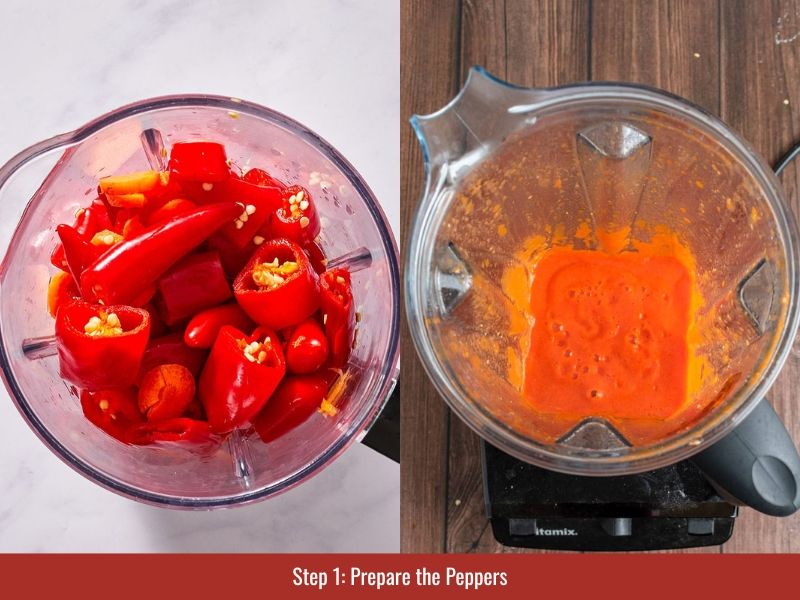
Step 1: Prepare the Peppers
First, cut the stems off 450 grams (1 pound) of habanero peppers and toss them right into your blender. Just blend them up until the peppers turn into a completely smooth mash without any visible chunks left.
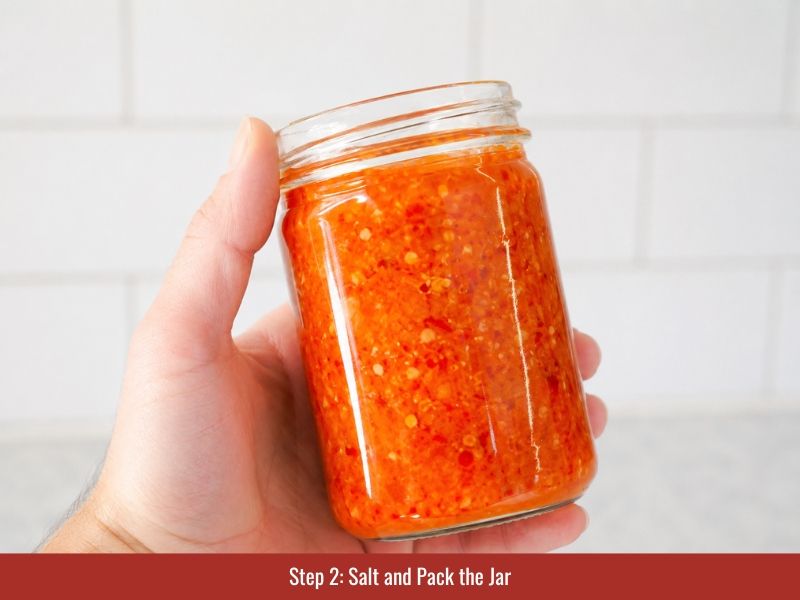
Step 2: Salt and Pack the Jar
Mix the blended pepper mash with fine sea salt at a 30:1 weight ratio. Basically, for every 450 grams (1 pound) of mash, you want to stir in 15 grams (1 tablespoon) of salt.
Mix it all together really well, then pack the salted mash into clean Mason jars. Just make sure to leave some empty space at the top so the gases have plenty of room to expand while it ferments.
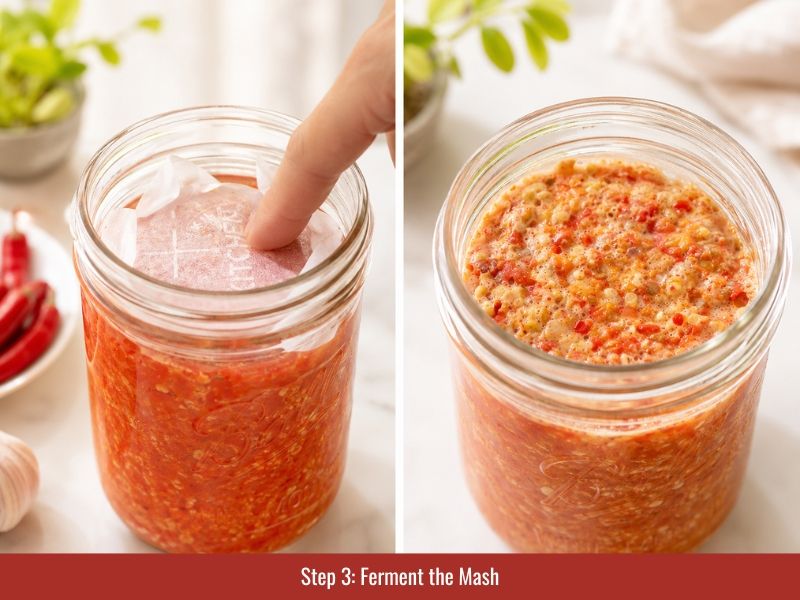
Step 3: Ferment the Mash
Seal up your Mason jars and let them sit out at room temperature for at least 12 days. You will want to check on them every day. If you notice a white, filmy layer called kahm yeast, do not worry.
It is totally harmless, and you can just skim it right off. But if you spot fuzzy mold, you have to throw the whole batch away. Also, if the liquid gets cloudy, that is actually a great sign that the fermentation process is working perfectly.
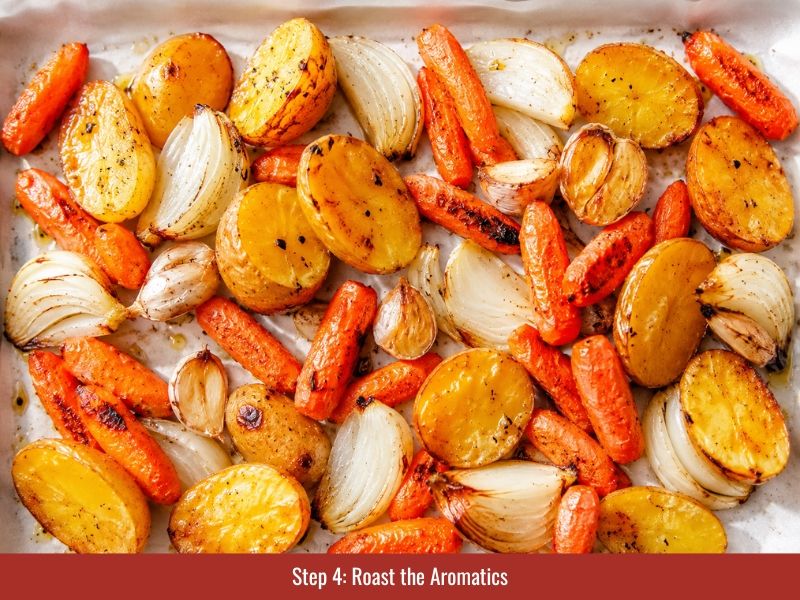
Step 4: Roast the Aromatics
After fermented days, preheat your oven to 400°F (200°C). Put 3 chopped carrots, 2 chopped onions, and 2 garlic cloves into a foil pack on a baking sheet. Drizzle with 1 teaspoon (5 ml) of olive oil and roast for about 40 minutes, until completely tender. Move the veggies to a food processor and blend until perfectly smooth.
Step 5: Blend the Sauce
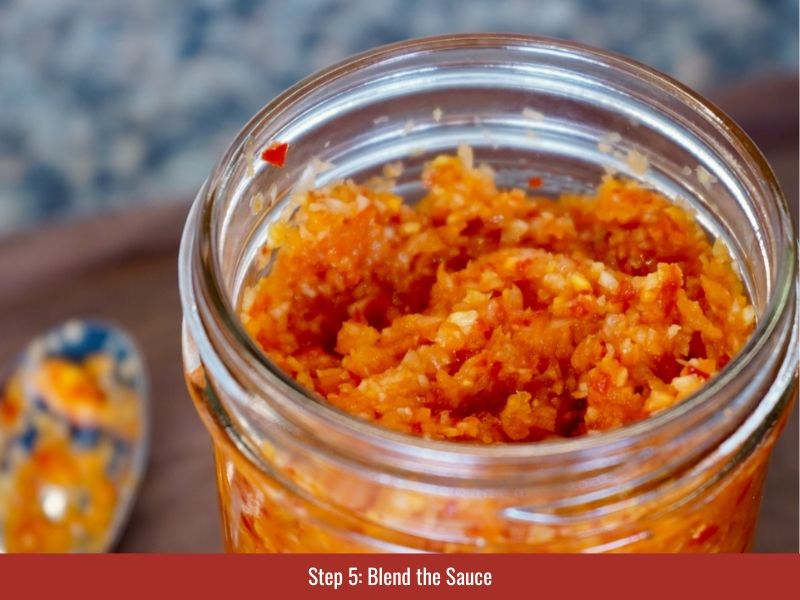
Mix your fermented habanero mash, the roasted veggie puree, and 1.75 cups (415 ml) of white distilled vinegar in a bowl. Stir it well until everything is completely combined. Then, pour the blended sauce into clean Mason jars for the final resting phase.
Step 6: Rest and Store
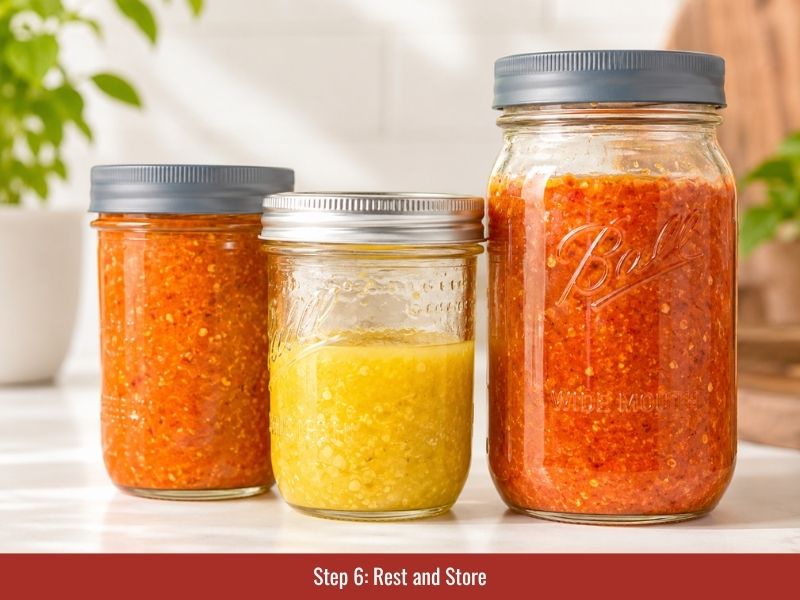
Just let the blended sauce sit in sealed Mason jars for 1 extra week, either at room temperature or right in the fridge. This resting time gives the flavors from your fermented mash, roasted veggies, and vinegar a chance to totally blend together before you finally open it and serve.
Recipe Tips for Fermented Hot Sauce
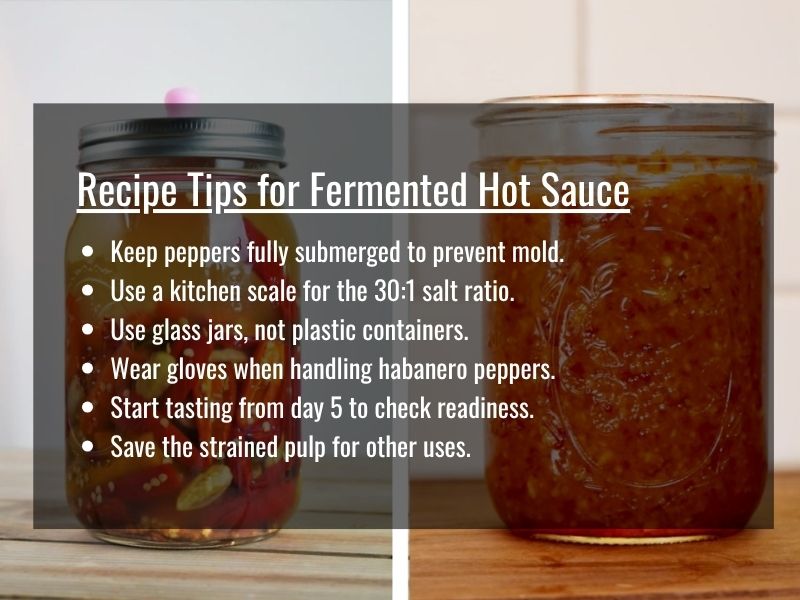
These 6 practical tips for making fermented hot sauce cover safety, getting your salt right, choosing the best jars, handling peppers safely, knowing when it is ready, and using up the leftover pulp.
- Keep your peppers fully submerged in the brine using a small bowl or a plastic bag filled with water as a weight. Any pepper that comes into contact with air will just grow mold rather than the good bacteria you actually want.
- Always use a kitchen scale instead of measuring cups. That 30:1 pepper-to-salt ratio really needs exact weights. Measuring by volume just leaves too much room for error and can easily ruin your batch by adding too much or too little salt.
- Stick to glass Mason jars instead of plastic containers. Plastic actually absorbs the spicy pepper oils during that 5 to 14-day fermentation window, which can totally mess up the flavor of your finished sauce.
- Definitely wear latex or nitrile gloves when handling those habanero peppers. The intense oil from peppers in that 100,000 to 350,000 SHU range builds up on your skin and eyes after 20 to 30 minutes, and it takes quite a while to finally wash away.
- Start tasting your sauce around day 5. It is much better to check whether it is done by flavor rather than just watch the clock. You will know it is ready when it has a nice, pleasant tang without tasting sharp or harsh.
- Do not toss the leftover pulp after straining your sauce. That stuff is packed with spicy pepper oils and seed flavor, making it an awesome base for a Bloody Mary or a great addition to a dry rub.
What Can You Substitute or Change in Fermented Hot Sauce?
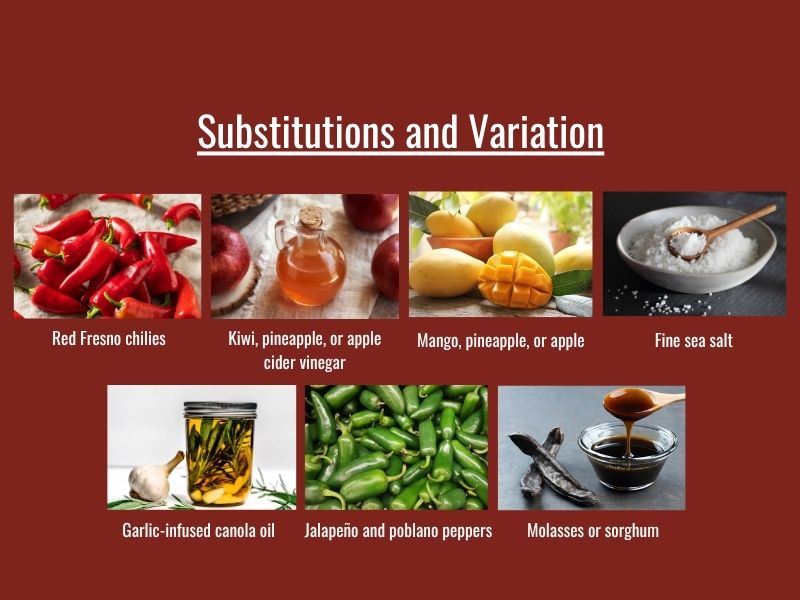
This recipe is super flexible, giving you 7 easy ways to swap out your peppers, vinegar, carrots, oil, salt, and sweeteners. You can easily tweak the heat level, the tanginess, the thickness, or the overall flavor exactly how you like it:
- Swap the habaneros for 540 grams (1.25 lbs) of red Fresno chilies if you want a fruity, medium-heat sauce with a range of 2,500 to 10,000 SHU. For this swap, you will use the brine method: dissolve 51 grams (3.5 tbsp) of fine sea salt into 1,150 ml (1.25 quarts) of filtered water, then let it ferment for 5 to 14 days.
- Trade the white distilled vinegar for kiwi, pineapple, or apple cider vinegar. Kiwi and pineapple bring a bright, tropical vibe, while apple cider vinegar adds a mild, earthy taste that pairs perfectly with your roasted veggies.
- Use mango, pineapple, or apple instead of carrots for a fruitier hot sauce. This really bumps up the natural sweetness while it ferments, especially if you are making a Fresno or habanero batch.
- Swap the olive oil for 120 ml (0.5 cup) of garlic-infused canola oil. Just toast 8 thinly sliced garlic cloves over medium-low heat until golden brown. This adds an awesome toasted-garlic flavor and gives your sauce that smooth, restaurant-quality finish.
- If you are doing the brine method, use 51 grams (3.5 tbsp) of fine sea salt per 1,150 ml (1.25 quarts) of water instead of regular granulated salt. It dissolves much more evenly and gives you a way more consistent brine concentration than coarse salt.
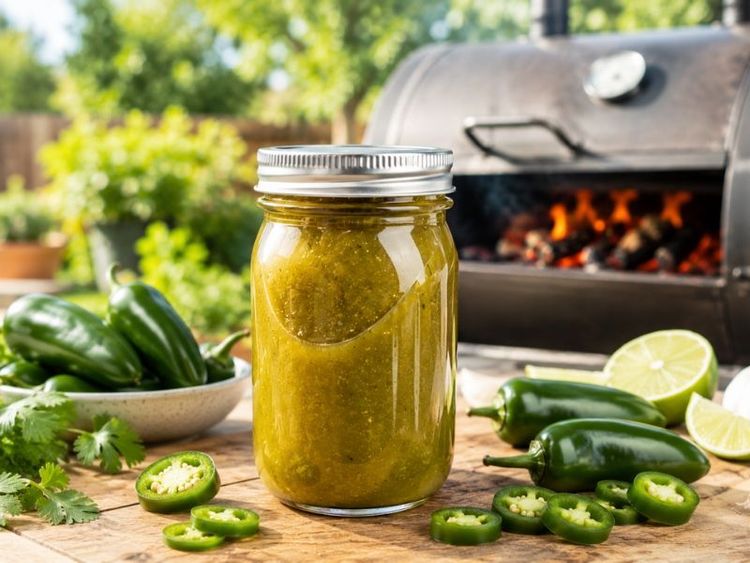
- Try using jalapeño and poblano peppers instead of habaneros for a delicious Mexican-style sauce. Jalapeños bring a bright, grassy flavor at 2,500 to 8,000 SHU, while poblanos add a deep, earthy smokiness at 1,000 to 2,000 SHU. You can even toss in some cumin or oregano for a savory, mild hot sauce.
- Add molasses or sorghum to sweeten, but only during the final blending stage. If you add sweet ingredients while it is fermenting, it will completely mess up the natural lacto-fermentation process.
What To Eat With Fermented Hot Sauce?
This sauce is awesome on proteins, grain bowls, and tacos. The natural tang makes it more versatile than regular vinegar sauces. Try it on 4 main things: chicken, grilled meats, eggs, and rice. The smooth acidity cuts right through heavy foods. If you want great heat without the 13-day wait, just grab CHIN-SU Hot Sauce instead.
You can make buffalo sauce by warming it with butter and honey. Blend it with garlic and oil for a great marinade, or drop the leftover pulp into a Bloody Mary. It is also perfect for Vietnamese favorites like bún bò Huế, bánh tráng nướng, cơm tấm, and hủ tiếu!

How To Store Homemade Fermented Hot Sauce
Keep your sauce in a sealed glass jar in the fridge, where it stays good for up to 6 months. It lasts even longer at pH 4.0 or lower, which inhibits harmful bacteria. Always use glass instead of plastic so it does not absorb the spicy oils. A regular Mason jar works perfectly.
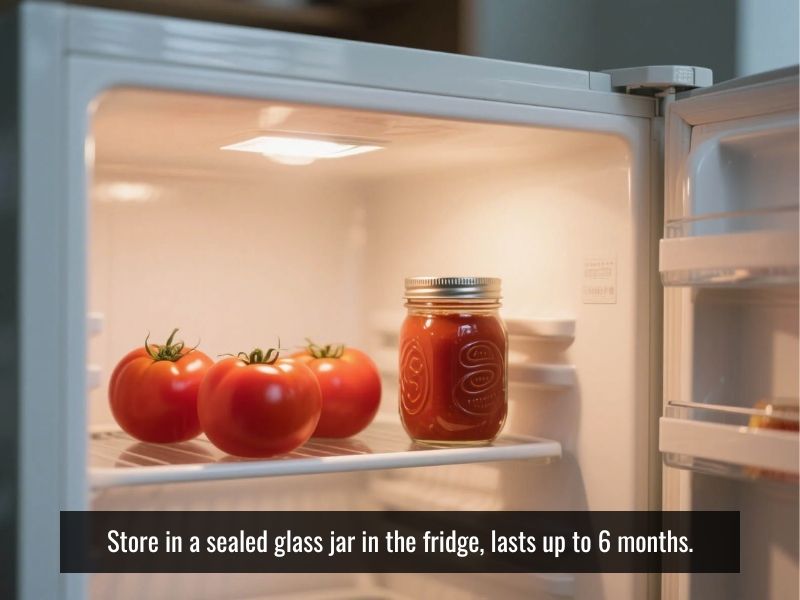
Always refrigerate the sauce after blending. Fermenting happens at room temperature, but the finished sauce needs the fridge to keep its flavor balanced. You can also freeze it in a safe glass jar or a silicone ice cube tray for up to 12 months, though it might thin out slightly when thawed. If it gets too thick in the fridge because the carrots soaked up liquid, just add 1 tablespoon (15 ml) of leftover brine or white vinegar, blend it back up, and taste.
Got questions about your fermented hot sauce batch? Please drop them in the comments; no question is too small. If this recipe worked for you, a few stars and a quick note go a long way. Please share your results on social media and tag us at #CHINSUHotSauce; we read every one. Ready to stock up on the real thing? Grab CHIN-SU's hot sauce at chinsu.com
Frequently Asked Questions
That white film is just kahm yeast, a totally harmless byproduct that forms when your brine comes into contact with air. Just scoop it right off with a clean spoon and keep fermenting like normal. But if you see any fuzzy growth, that is mold, and you have to toss the whole batch out.
Fermented hot sauce uses natural lactic acid from good bacteria to preserve and flavor the sauce, while regular hot sauce just relies on added vinegar and heat processing. Fermenting gives you probiotics, a deeper acidity, and a rich, fruity, savory, and tangy flavor that regular vinegar alone simply can not match.
Yes, you can finely dice the peppers and other ingredients by hand before salting and packing them into your jars. Fermentation works exactly the same whether you blend or hand-chop the peppers. Your finished sauce will just have more texture and visible pieces. Many people actually prefer this because, as sauce expert Jacob Cutino points out, much of the flavor lies in the oils around the seeds.
Your fermented hot sauce will last 3 to 6 months in the fridge if kept in a sealed glass jar. If your batch has a pH at or below 4.0, it will easily reach that full 6-month mark. The natural lactic acid and added vinegar work together perfectly to prevent harmful bacteria and mold from growing.
Yes, any pepper ferments perfectly using the exact same 30:1 salt-to-pepper ratio by weight. Habaneros hit 100,000 to 350,000 SHU for high heat. Red Fresnos give you 2,500 to 10,000 SHU for a nice medium heat. Jalapeños range from 2,500 to 8,000 SHU for a milder heat, while poblanos range from 1,000 to 2,000 SHU for a low-heat, earthy base. Changing your pepper totally changes the heat and flavor, but your fermentation steps and salt ratio always stay the same.
Fermented Hot Sauce Recipe
Ingredient
- 1 lb (450 grams) of habanero peppers.
- 1 tablespoon (15 grams) of fine sea salt.
- 3 roughly chopped carrots.
- 2 roughly chopped medium onions.
- 2 cloves of garlic.
- 1 teaspoon (5 ml) of olive oil.
- 1.75 cups (415 ml) of white distilled vinegar.
Instructions
- Step 1: Prepare the Peppers. Cut the stems off the habanero peppers, then add them to a blender. Blend until the peppers turn into a smooth mash with no visible chunks left.
- Step 2: Salt and Pack the Jar. Mix the pepper mash with fine sea salt using a 30:1 pepper-to-salt ratio. For 450 grams of pepper mash, use 15 grams of salt. Stir well, then pack the salted mash into clean Mason jars, leaving some space at the top for gas expansion.
- Step 3: Ferment the Mash. Seal the jars and let them sit at room temperature for at least 12 days. Check them daily. If you see kahm yeast, skim it off. If you see fuzzy mold, discard the batch. Cloudy liquid is a good sign that fermentation is working.
- Step 4: Roast the Aromatics. Preheat the oven to 400°F (200°C). Place the chopped carrots, onions, and garlic in a foil pack on a baking sheet. Drizzle with olive oil and roast for about 40 minutes, until fully tender. Transfer to a food processor and blend until smooth.
- Step 5: Blend the Sauce. Mix the fermented habanero mash, roasted vegetable puree, and white distilled vinegar in a bowl. Stir until everything is fully combined, then pour the sauce into clean Mason jars.
- Step 6: Rest and Store. Let the blended sauce rest in sealed Mason jars for 1 extra week, either at room temperature or in the fridge, so the flavors can fully come together before serving.
Storage: Keep the finished sauce in a sealed glass jar in the fridge. It lasts up to 6 months, especially if the pH is 4.0 or lower. Always use glass instead of plastic because plastic can absorb spicy pepper oils. You can also freeze the sauce in a freezer-safe glass jar or silicone ice cube tray for up to 12 months, though it may become slightly thinner after thawing. If the sauce gets too thick in the fridge, add 1 tablespoon (15 ml) of leftover brine or white vinegar, blend again, and taste.

CHIN-SU KITCHEN TEAM
CHIN-SU Kitchen Team are the creative experts behind the delicious recipes featuring CHIN-SU sauces. With years of experience and a passion for flavor, our team carefully selects recipes from a variety of trusted chefs and bloggers, bringing together the best culinary insights to present you with the most suitable and exciting dishes. Every recipe is chosen to inspire you to create meals that are not only tasty but also easy to prepare, enhancing your dining experience. Join us as we explore a wide range of sauces and flavors, and elevate every meal with the perfect recipe for your table!
User Reviews
Featured Articles
SUBSCRIBE TO GET
MORE INFO
Want the latest and greatest recipes, updates, and more from us,
straight to your inbox? Subscribe and get our NEWS!