What Is a Carolina Reaper Pepper? Heat, Safety, and Uses Explained
Published: Jul 28, 2026 by CHIN-SU
Updated: Jul 30, 2026 by CHIN-SU
The Carolina Reaper (Capsicum chinense) is a deeply wrinkled American superhot chili that measures 1,400,000 to 2,200,000 Scoville Heat Units (SHU), placing it in the extreme range of the scale. Its pockmarked skin, bulbous body, and sharp, stinger-like tail make it one of the easiest superhot peppers to recognize.
American pepper breeder Ed Currie developed the Carolina Reaper in South Carolina. “Carolina” identifies the state where the cultivar originated, while “Reaper” refers to the sickle-like curl of its tail. The pepper held the Guinness World Record for the hottest chili from 2013 until Pepper X replaced it in 2023 with an average heat level of 2,693,000 SHU.
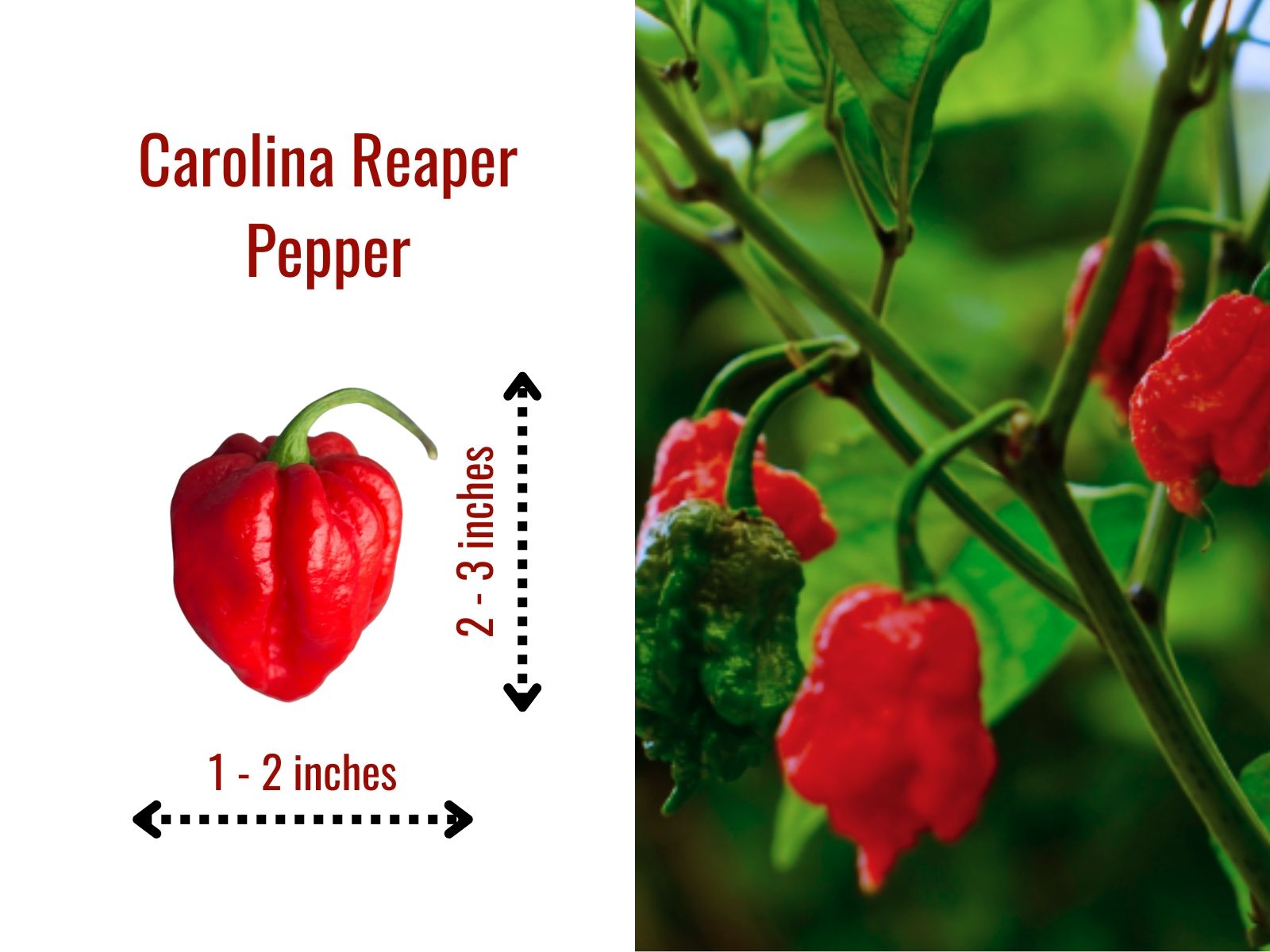
Each pod commonly measures 2 to 3 inches (5 to 7.5 cm) long and ripens from green to deep red. Fully ripe fruit develops the cultivar’s characteristic sweetness and fruity aroma, while genetics and growing conditions determine the exact heat of each pod.
Read on to learn what the Carolina Reaper is, how the Carolina Reaper tastes, how it compares with ghost pepper and Pepper X, how to handle and cook with it safely, what happens after eating one, and how to store or substitute it.
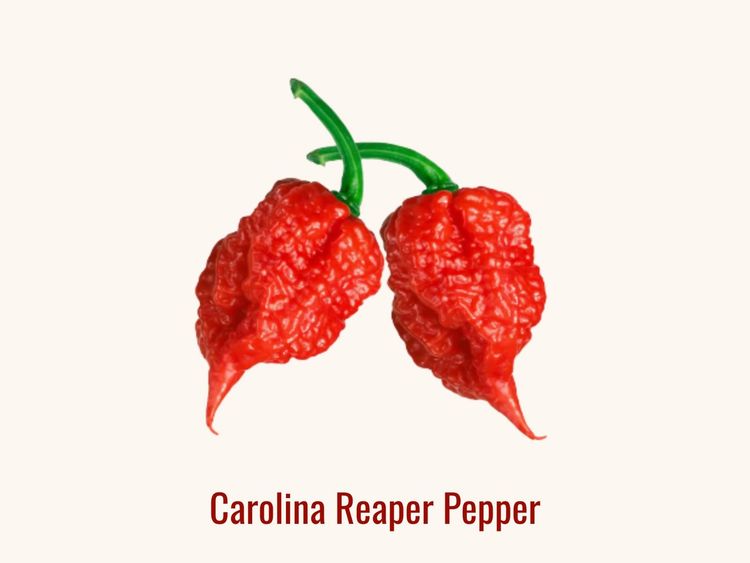
Table Of Contents
What Is a Carolina Reaper Pepper?
- How Hot Are Carolina Reaper Peppers?
How to Use Carolina Reaper in Cooking?
- How To Store Carolina Reaper?
- What Can You Substitute for Carolina Reaper?
What Is a Carolina Reaper Pepper?
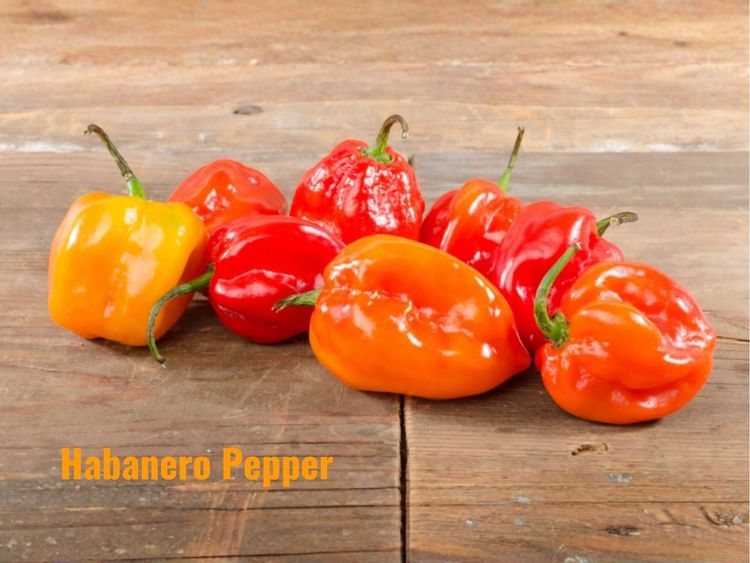
A Carolina Reaper (Capsicum chinense) is a superhot hybrid chili with a bulbous, deeply wrinkled body and a sharp, scorpion-like tail. Each pod commonly measures 2 to 3 inches (5 to 7.5 cm) long and 1 to 2 inches (2.5 to 5 cm) wide. Its rough skin, gnarled shape, and pointed stinger make it easy to distinguish from smoother peppers such as habanero.
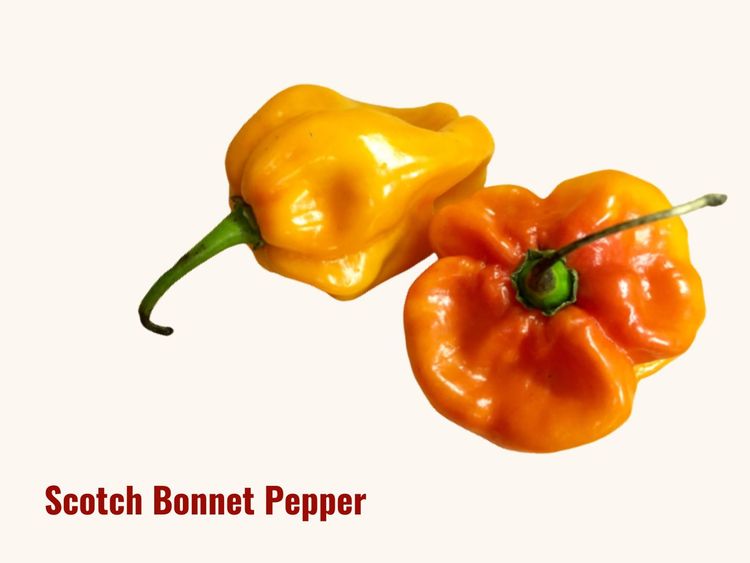
American pepper breeder Ed Currie began developing the cultivar in South Carolina during the early 2000s. Published accounts describe its parentage differently. The common version identifies a Caribbean habanero and a Naga-type pepper, while Currie later described a broader breeding line involving a yellow Scotch bonnet from Saint Vincent and several other Capsicum chinense peppers.
Currie named the cultivar Smokin’ Ed’s Carolina Reaper. “Carolina” refers to South Carolina, while “Reaper” describes the sickle-like curl of the tail. During breeding, he used the code HP22B, commonly interpreted as “Higher Power, pot 22, plant B.”
Botanically, the Carolina Reaper belongs to Capsicum chinense, the same species as habanero pepper and Scotch bonnet pepper. Ghost pepper is closely related but is commonly treated as a C. chinense-dominant hybrid rather than a straightforward member of one species.
Guinness World Records recognized the Carolina Reaper as the world’s hottest chili in 2013. Tests by Winthrop University recorded an average of 1,641,183 Scoville Heat Units (SHU), while individual pods have reached about 2.2 million SHU. Pepper X replaced it as the official record holder in 2023 with an average of 2,693,000 SHU.
Carolina Reapers change color as they mature:
| Color | Ripeness Stage | Typical Flavor Character |
| Green | Unripe | Sharp, vegetal, and less sweet |
| Orange-red | Maturing | Developing sweetness and fruit aroma |
| Deep red | Fully ripe standard form | Sweet, fruity, slightly floral, and extremely hot |
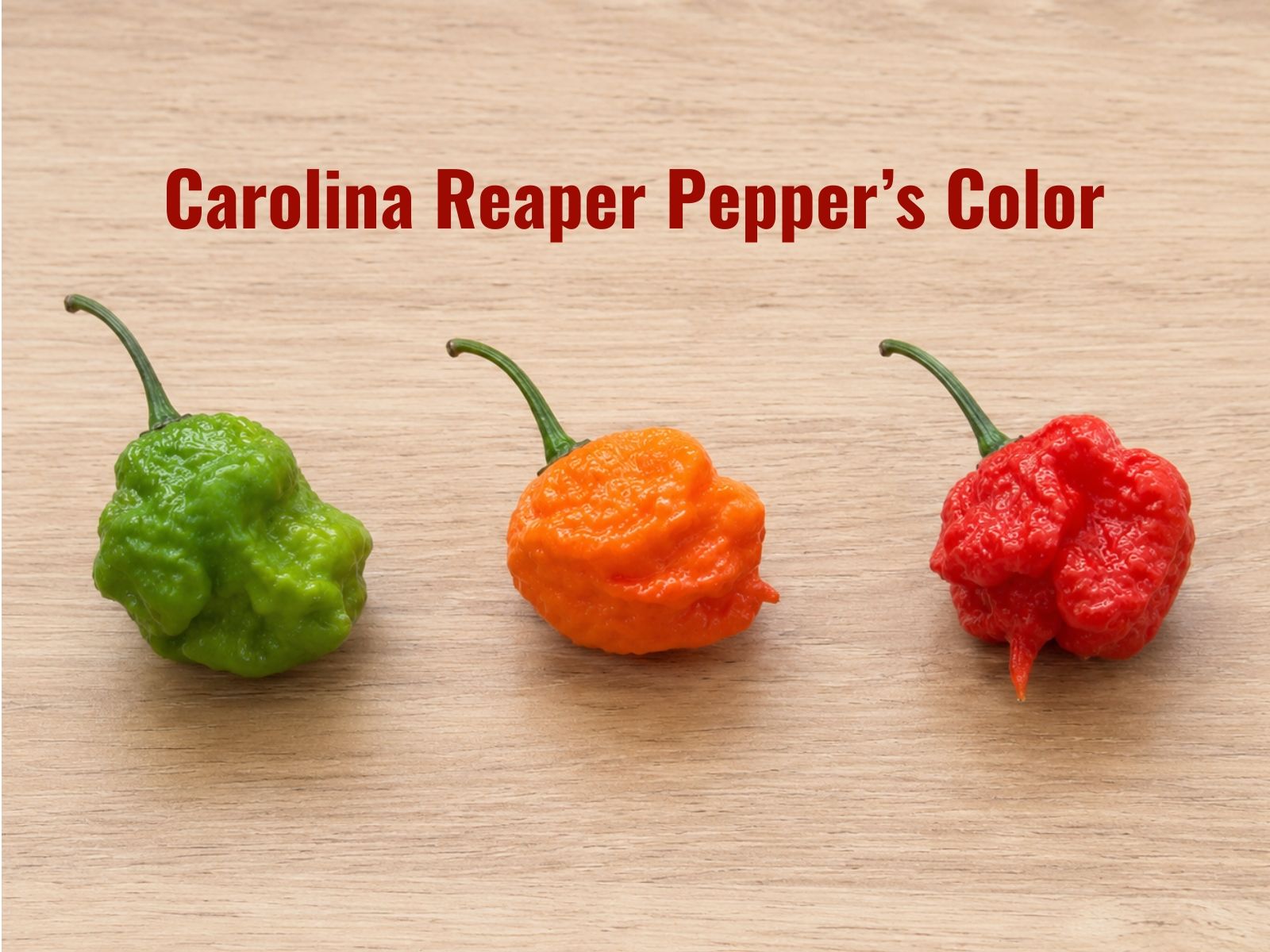
The standard Carolina Reaper matures to deep red. Ripe pods develop the cultivar’s strongest fruit aroma, sometimes compared with tropical fruit, red apple, or peach. Genetics, growing conditions, and individual fruit variation determine the exact capsaicinoid level.
Its deeply folded surface and irregular shape make the pepper difficult to slice or stuff neatly. Cooks therefore use Carolina Reapers in small amounts for hot sauces, chili powders, flakes, marinades, and large batches of cooked food.
Seed growers also market Chocolate, Yellow, Peach, Orange, Mustard, and other Carolina Reaper-type lines. These are separately selected color variants rather than stages in one pod’s ripening process. Their heat, shape, and flavor vary by breeding line, and no single testing standard confirms that one color is consistently hotter or milder than another.
What Do Carolina Reapers Taste Like?
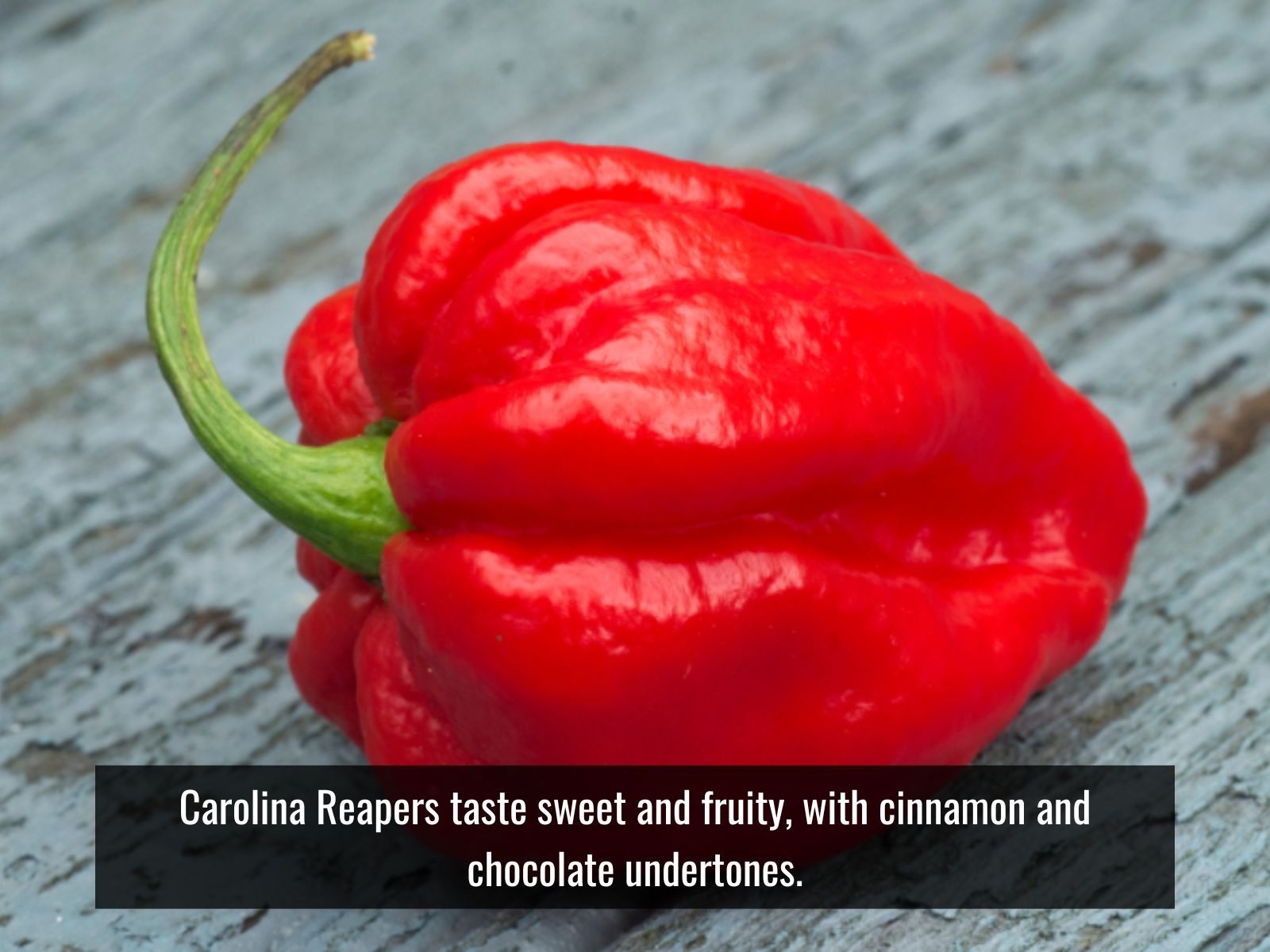
Carolina Reapers taste sweet and fruity, often with cinnamon, dark spice, or chocolate-like undertones. That initial sweetness quickly gives way to extreme heat that continues building and can linger long after the first bite.
Ripeness changes the flavor. Green Carolina Reapers taste sharper, more vegetal, and less sweet, while fully ripe red pods develop the cultivar’s fullest fruit aroma and sweetness. Genetics, growing conditions, and individual fruit variation still determine the exact heat, so red color does not guarantee a specific capsaicin level.
The sweetness may register before the full burn because the palate detects flavor and aroma immediately, while capsaicin progressively activates TRPV1 receptors. Most capsaicinoids concentrate in the pale placental tissue and inner ribs. The seeds pick up pungent oils through contact with these tissues.
Once the heat develops, it may remain intense for 30 minutes or longer, depending on the amount eaten, the surrounding ingredients, and individual sensitivity. This sweet opening and escalating burn make Carolina Reapers more suitable for hot sauces, powders, flakes, and diluted seasonings than for eating whole.
Are Carolina Reapers Different from Ghost Peppers?
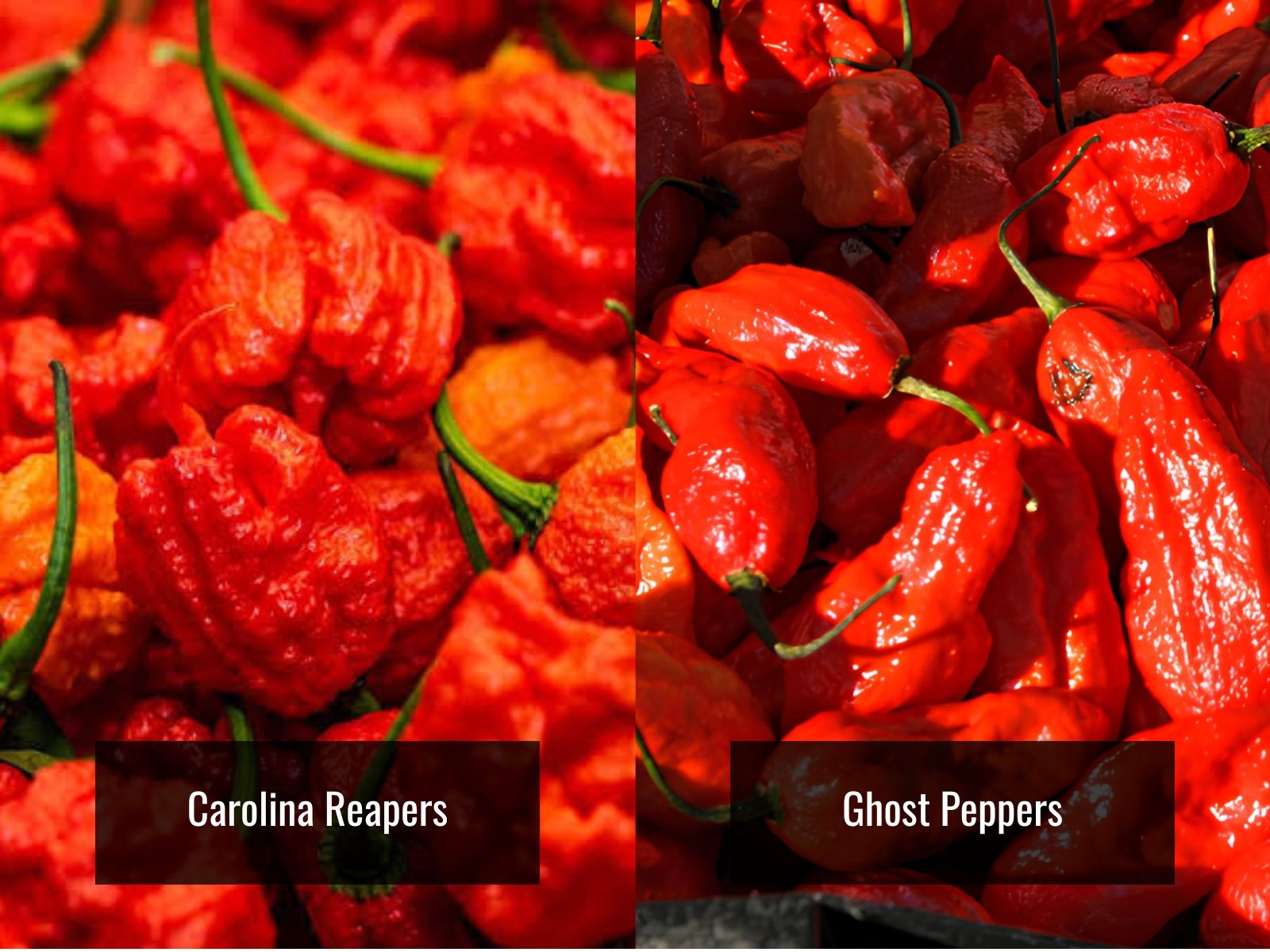
Carolina Reapers are hotter, rounder, and usually sweeter than ghost peppers. Both belong to the broader Capsicum chinense group and rank among superhot chilies, but the Carolina Reaper has a higher average SHU, a bulbous body, and a distinctive stinger tail.
| Attribute | Carolina Reaper | Ghost Pepper or Bhut Jolokia |
| Botanical group | Capsicum chinense cultivar | C. chinense-dominant hybrid |
| Length | 2–3 in (5–7.5 cm) | About 2.5–3.5 in (6–9 cm) |
| Shape | Bulbous, deeply wrinkled, with a stinger tail | Elongated, wrinkled, with a tapered tip |
| Skin | Rough, bumpy, and deeply folded | Thin, wrinkled, and lightly bumpy |
| Heat | Commonly 1,400,000–2,200,000 SHU; certified average of 1,641,183 SHU | Commonly about 855,000–1,041,000 SHU |
| Relative heat | About 1.6 times hotter by cited averages | Milder on average but still superhot |
| Flavor | Sweet and fruity, with dark spice or chocolate-like notes | Fruity, earthy, and lightly smoky |
| Origin | South Carolina, United States | Northeast India, especially Assam |
| Best uses | Hot sauce, powder, flakes, and highly diluted infusions | Hot sauce, curry paste, powder, and flakes |
Individual pods vary, but the Carolina Reaper delivers substantially more heat on average. Its sweetness appears before an escalating burn, while ghost pepper provides a more earthy, smoky character with slightly less extreme pungency.
Carolina Reaper vs Pepper X: Which Is Hotter?
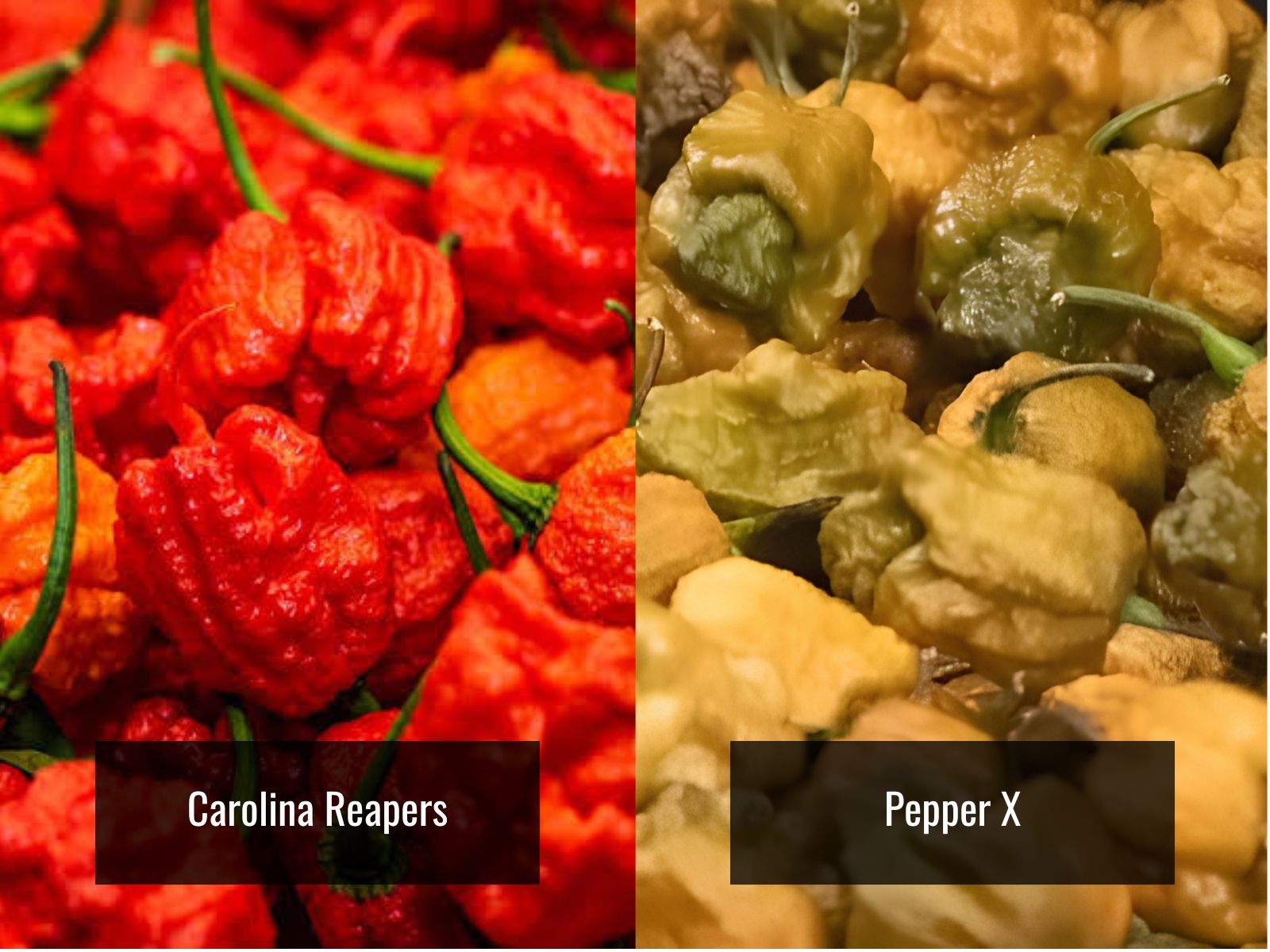
Pepper X is hotter than the Carolina Reaper. Both peppers came from breeder Ed Currie in South Carolina, but Pepper X averages 2,693,000 SHU compared with the Carolina Reaper’s certified average of 1,641,183 SHU. This makes Pepper X about 1.6 times hotter by official average measurements.
| Attribute | Carolina Reaper | Pepper X |
| Breeder | Ed Currie | Ed Currie |
| Origin | South Carolina, United States | South Carolina, United States |
| Official average heat | 1,641,183 SHU | 2,693,000 SHU |
| Relative heat | Previous world-record holder | About 1.6 times hotter by average SHU |
| Shape | Bulbous, deeply wrinkled, with a pointed stinger tail | Heavily ridged and folded, with extensive internal placental tissue |
| Flavor emphasis | Sweet and fruity, with darker spice notes | Bred from flavorful parent peppers, followed by overwhelming heat |
| Record status | World’s hottest pepper from 2013 to 2023 | Current Guinness World Records holder |
Pepper X has more curves and ridges, creating additional internal surface area for the capsaicin-rich placenta. Winthrop University calculated its official average from specimens tested over 4 years.
How Hot Are Carolina Reaper Peppers?
Carolina Reaper peppers measure 1,400,000 to 2,200,000 Scoville Heat Units (SHU), placing them in the extreme tier and near the top of the Scoville scale. Winthrop University testing recorded a Guinness-certified average of 1,641,183 SHU, while individual pods have reached about 2.2 million SHU. Pure capsaicin measures approximately 16,000,000 SHU.
Individual Carolina Reapers vary in heat. Plant genetics, temperature, water availability, soil conditions, fruit position, maturity, and other environmental factors influence capsaicinoid concentration. The deep-red color shows that a standard Reaper has matured, but it does not guarantee that every red pod contains more capsaicin than every partially ripe fruit.
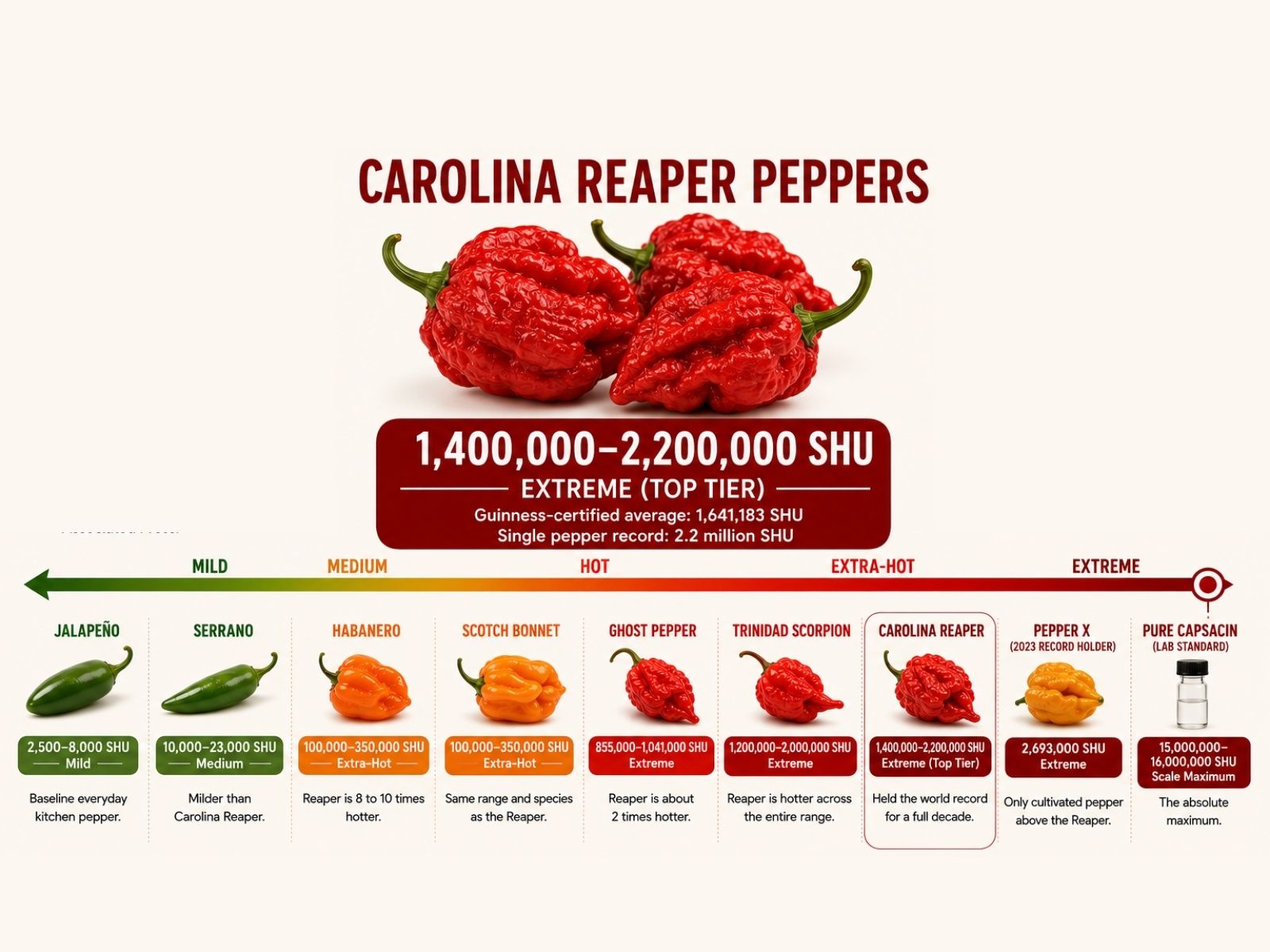
Pepper X now ranks above the Carolina Reaper with an official average of 2,693,000 SHU. The Carolina Reaper averages about 1.6 times hotter than the ghost pepper, which measures around 1,000,000 SHU. Trinidad Moruga Scorpion overlaps part of the Reaper’s range and has produced individual fruits above 2,000,000 SHU, so the two cannot be separated by one fixed heat ratio.
The Carolina Reaper also measures about 4 to 22 times hotter than a habanero at 100,000 to 350,000 SHU. It held the world record for approximately 10 years before Pepper X replaced it in 2023, and it remains one of the hottest recognized chili peppers in the world.
How to Use Carolina Reaper in Cooking?
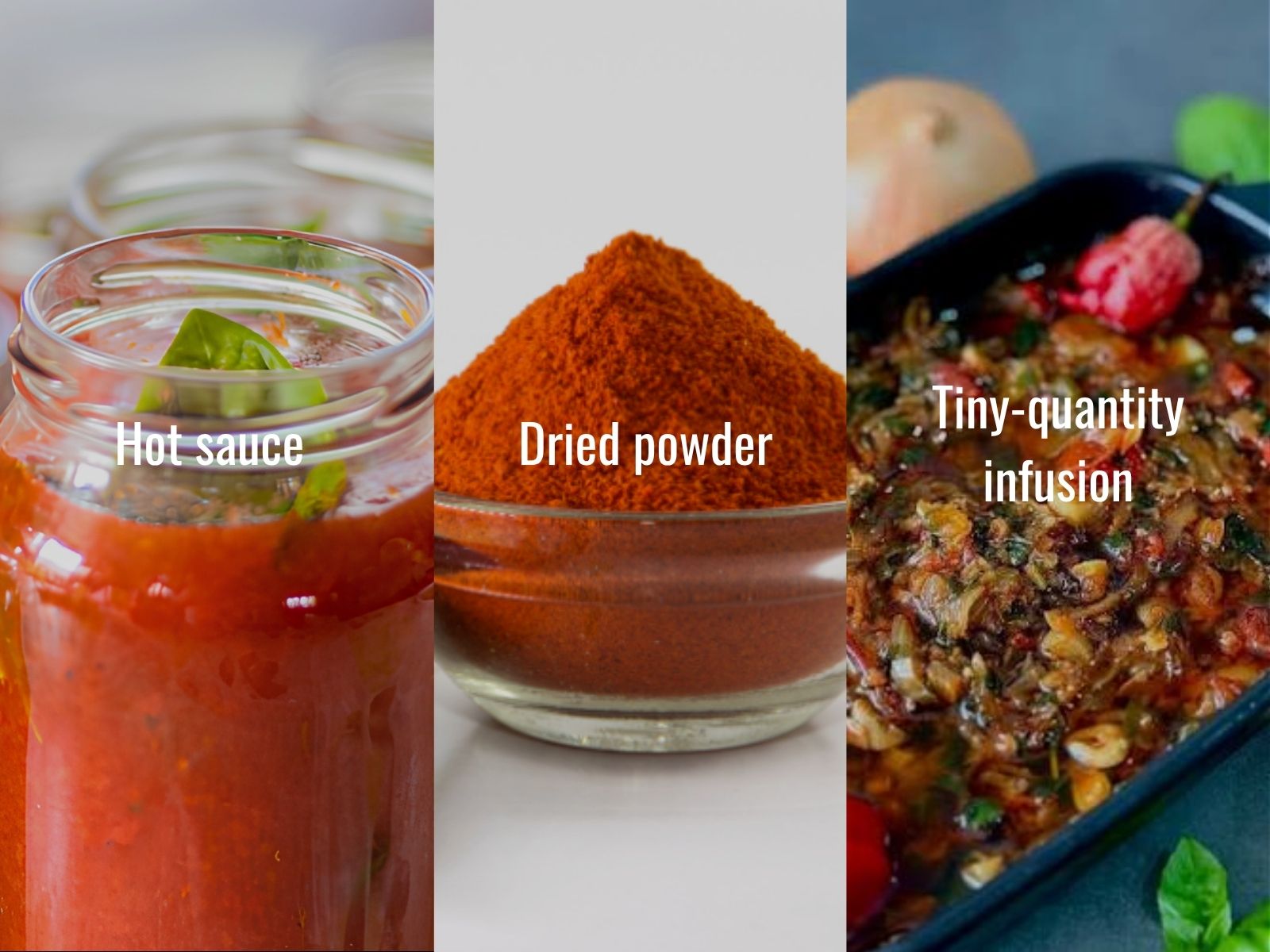
Use Carolina Reapers in hot sauces, powders, flakes, and large-batch recipes where a tiny amount can spread through the entire mixture. Their extreme heat requires careful measuring, even distribution, and proper handling.
Carolina Reapers belong to Capsicum chinense and contain vitamin C, carotenoids, and capsaicinoids. However, cooks use such small portions that their calorie and vitamin contribution remains minor in a typical serving. Carolina Reapers function primarily as an intensely hot seasoning because typical culinary portions contribute only small amounts of calories and micronutrients.
- Carolina Reaper hot sauce: Blend a tiny, measured amount of fresh pepper, puree, mash, or powder into a vinegar-based or fruit-forward sauce. The Reaper’s sweet, fruity flavor pairs well with mango, pineapple, peach, tomato, garlic, and citrus. Increase the amount gradually because one pod can heat a large batch.
- Powder and flakes: Dehydrate the peppers until fully brittle, then grind them with strong ventilation. Add a tiny pinch to chili, stew, dry rubs, marinades, or hot sauce, and mix thoroughly before tasting. Keep the grinder closed until the airborne powder settles because capsaicin particles can irritate the eyes, throat, and lungs.
- Large-batch dishes: Add a very small piece to a large pot of chili, curry, soup, stew, beans, or braised meat. Simmer it whole or contained in a spice bag, then remove it once the dish reaches the required heat. Minced pepper disperses more quickly and creates a stronger, less reversible result.
- Diluted seasonings: Mix Reaper powder or puree into spice blends, barbecue sauces, glazes, or infused condiments. Fat, sugar, fruit, and acidity can balance the flavor, but they do not remove the capsaicin.
Wear nitrile or food-safe gloves when cutting Carolina Reapers. Work in a ventilated area, avoid touching your face or contact lenses, and wash knives, boards, blender jars, and counters with dish soap. Keep fresh pods, powder, and prepared products away from children and pets.
Small sips of milk or water may ease oral burning, with milk providing greater relief for some people. Rinse affected eyes with warm water for at least 15 minutes, and seek medical help for breathing difficulty, chest discomfort, fainting, or persistent severe symptoms.
What Happens If You Eat a Carolina Reaper?
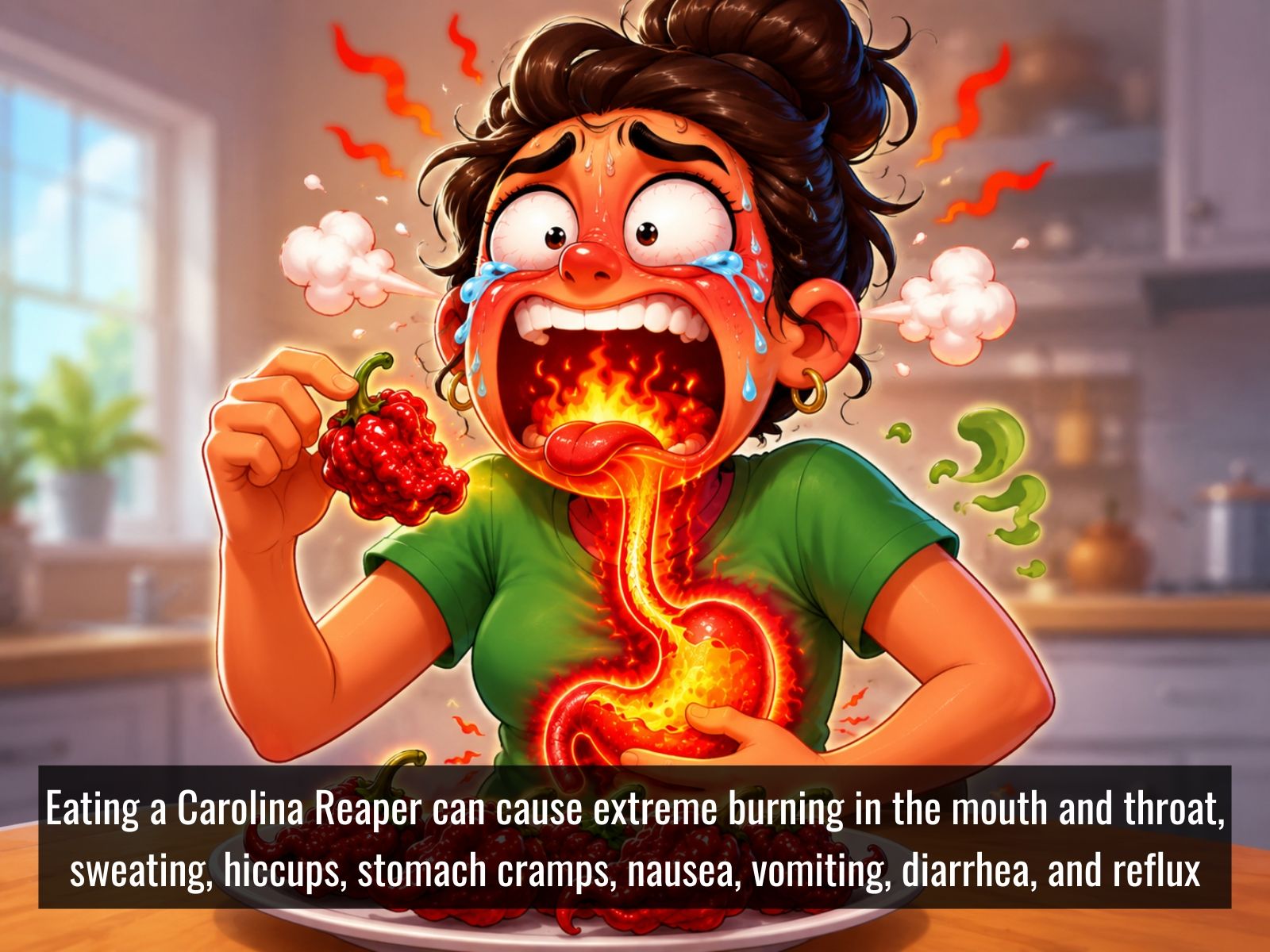
Eating a Carolina Reaper can cause extreme burning in the mouth and throat, sweating, hiccups, stomach cramps, nausea, vomiting, diarrhea, and reflux. The intensity depends on the amount eaten, the pepper’s capsaicinoid concentration, the surrounding food, and individual sensitivity. Symptoms may continue for several hours after a large exposure.
Carolina Reapers are edible raw, but eating a whole pod delivers a highly concentrated dose of capsaicin. Even a small piece can cause severe oral and digestive discomfort, while repeated vomiting can lead to dehydration and other complications. Challenge-style consumption carries greater risk because participants often eat a large amount quickly and without other food to dilute the heat.
Capsaicin activates TRPV1 receptors that detect heat and pain. These receptors occur on sensory nerves in the mouth and throughout the digestive tract, which explains why the burning can extend from the tongue to the chest, stomach, and intestines. No universal safe amount applies because individual peppers and personal tolerance vary widely.
Most reactions involve intense but temporary pain and digestive symptoms. Rare case reports have linked Carolina Reaper ingestion to reversible cerebral vasoconstriction syndrome, which can cause a sudden, severe thunderclap headache. These reports describe unusual events rather than the expected response for most people.
Seek urgent medical care for difficulty breathing, chest pain, fainting, repeated vomiting, a sudden severe headache, or persistent abdominal pain. People with severe reflux, digestive sensitivity, or a previous adverse reaction to capsaicin should avoid eating Carolina Reapers whole. In cooking, use a tiny, measured amount diluted through a large sauce, stew, or seasoning batch instead.
How To Store Carolina Reaper?
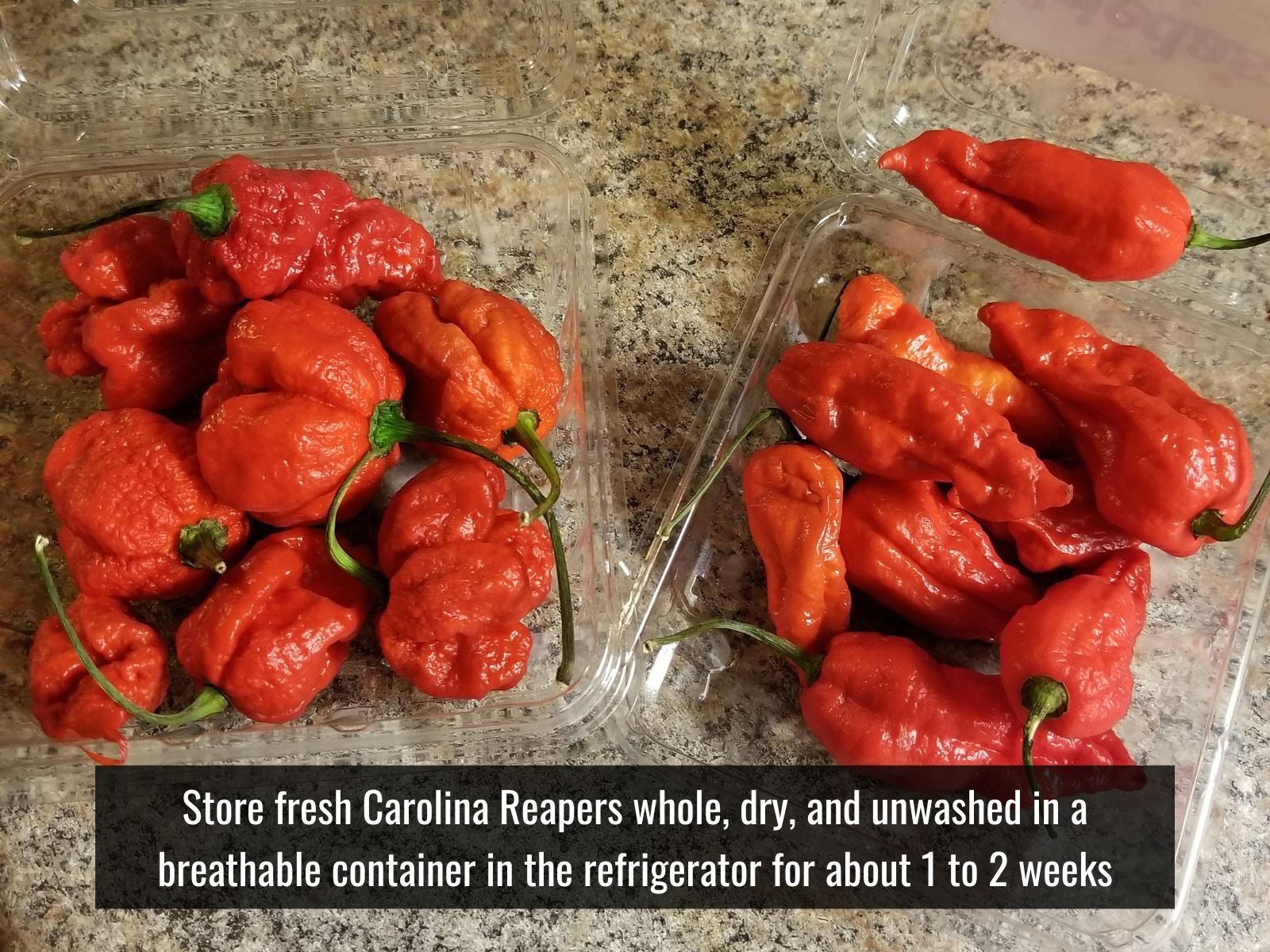
Store fresh Carolina Reapers whole, dry, and unwashed in a breathable container in the refrigerator for about 1 to 2 weeks. Wash them only before use, and discard any pod that develops mold, slime, leaking liquid, or extensive soft spots.
For longer storage, freeze the peppers whole or sliced. Spread them on a lined tray until firm, then transfer them to an airtight freezer bag. Hot peppers do not require blanching. Use frozen Reapers within about 6 months for the best flavor; their texture softens after thawing, so they work best in sauces, soups, stews, and other cooked dishes.
Drying provides another long-term option but requires strong ventilation. Slit or slice the peppers, then dehydrate them at about 135 - 140°F (57 - 60°C), or follow the dehydrator’s vegetable setting, until they become fully brittle. Drying time varies with pod size, airflow, humidity, and thickness.
Wear food-safe gloves and run the dehydrator outdoors or in a well-ventilated area because heated capsaicin can irritate the eyes, throat, and lungs. Let the dried pods cool completely, then store them whole or ground in an airtight container away from heat, light, and moisture. Use them within 6 to 12 months for the strongest flavor and heat.
What Can You Substitute for Carolina Reaper?
The closest substitute for the Carolina Reaper is the ghost pepper (Bhut Jolokia), which delivers roughly half the heat while maintaining a similarly extreme intensity. A few other peppers can fill in depending on the dish and how much heat you want, as shown in this table:
| Substitute | Ratio | Flavor vs. Carolina Reaper | Best Used In |
| Ghost Pepper (Bhut Jolokia) | 1:1 (roughly half the heat) | Earthier, smokier, less sweet | Hot sauce, curry paste, dried flakes |
| Trinidad Scorpion | 1:1 (comparable heat) | Similar intensity, slightly less fruity | Hot sauce, powder, extreme-heat recipes |
| Habanero pepper | 2 to 3x quantity | Much milder, floral-tropical, widely available | Salsas, marinades, any recipe needing approachable heat |
| Cayenne powder | 1/8 to 1/4 tsp per pepper | Hotter than fresh cayenne, no fruity sweetness | Cooked sauces, rubs, chili (dried applications only) |
The rule of thumb is simple: fresh substitutes for fresh dishes, dried or powdered ones for cooked dishes only. No substitute fully replicates the Carolina Reaper's mix of extreme heat and sweet, cinnamon-chocolate flavor, though the ghost pepper and Trinidad Scorpion come closest on intensity.
References
- Wikipedia. Carolina Reaper. https://en.wikipedia.org/wiki/Carolina_Reaper
- PepperScale. Carolina Reaper Guide. https://pepperscale.com/carolina-reaper/
- Guinness World Records. Hottest chili pepper. https://www.guinnessworldrecords.com/world-records/hottest-chili
- Boddhula, S. K., Boddhula, S., Gunasekaran, K., & Bischof, E. (2018). An unusual cause of thunderclap headache after eating the hottest pepper in the world: "The Carolina Reaper." BMJ Case Reports, 2018, bcr-2017-224085. https://doi.org/10.1136/bcr-2017-224085
- Bosland, P. W., & Votava, E. J. (2012). Peppers: Vegetable and Spice Capsicums (2nd ed.). CABI.
- Tewksbury, J. J., & Nabhan, G. P. (2001). Directed deterrence by capsaicin in chillies. Nature, 412(6845), 403–404. https://doi.org/10.1038/35086653
- Irandoost, P., Lotfi Yagin, N., Namazi, N., Keshtkar, A., Farsi, F., Mesri Alamdari, N., & Vafa, M. (2021). The effect of Capsaicinoids or Capsinoids in red pepper on thermogenesis in healthy adults: A systematic review and meta-analysis. Phytotherapy Research: PTR, 35(3), 1358–1377. https://doi.org/10.1002/ptr.6897
Frequently Asked Questions
The Carolina Reaper has a higher verified average heat level at 1,641,183 SHU, compared with approximately 1.2 million SHU for the Trinidad Moruga Scorpion. However, their heat ranges overlap because individual Moruga Scorpion pods have exceeded 2 million SHU. Both rank among the world’s hottest peppers, but the Reaper has stronger official average-heat documentation.
The Carolina Reaper has a verified average of 1,641,183 SHU, while growers commonly list Death Spiral at approximately 1.3–1.5 million SHU. Individual pods may overlap in heat, but Death Spiral lacks a standardized Guinness rating or cultivar-wide average. The Carolina Reaper therefore provides the more reliable heat benchmark.
A Carolina Reaper is unlikely to kill a healthy adult during normal food exposure, but a whole pod can cause severe mouth burning, stomach pain, nausea, vomiting, diarrhea, chest discomfort, or breathing difficulty. Rare medical reports have linked extreme consumption to sudden severe headaches and reversible cerebral vasoconstriction syndrome. Seek urgent care for breathing problems, chest pain, fainting, repeated vomiting, or a thunderclap headache.
Yes, you can eat a Carolina Reaper raw, but even a small piece can cause intense oral and digestive burning. Eating a whole pod creates a much higher capsaicin exposure and carries greater risk than using a diluted amount in food. Wear gloves, prepare it in a ventilated area, and keep your hands away from your eyes and face.
Pepper X is officially hotter than the Carolina Reaper. Guinness World Records lists Pepper X at an average of 2,693,000 SHU, about 1.6 times the Carolina Reaper’s certified average of 1,641,183 SHU. Pepper X replaced the Carolina Reaper as the official world-record holder in 2023.
Yes, a Carolina Reaper can hurt you in the short term, since a whole pepper can cause intense stomach cramping, nausea, and vomiting, and in rare documented cases, it has triggered a thunderclap headache. It will not cause permanent damage in healthy adults, but the pain can last 30 minutes or longer, and people with digestive conditions should avoid it.
Yes, Carolina Reapers are hotter than ghost peppers. Carolina Reapers measure 1,400,000 to 2,200,000 SHU, while ghost peppers measure 855,000 to 1,041,000 SHU, which makes the Reaper roughly twice as hot at the median. Both sit in the extreme tier, but the Reaper delivers more intense, longer-lasting heat.
Fresh Carolina Reapers do best refrigerated, where they stay crisp for 1 to 2 weeks. Store them whole and unwashed in a paper bag or breathable container in the crisper drawer. For longer storage, freeze them for up to 6 months, or dehydrate them and grind the dried pods into powder.
No, the Carolina Reaper is no longer the hottest pepper in the world. It held the Guinness World Record for the hottest chili pepper from 2013 until August 2023, when Pepper X surpassed it with a heat of 2,693,000 SHU. Pepper X was also bred by Ed Currie at PuckerButt Pepper Company, making the Reaper the second-hottest confirmed pepper.

CHIN-SU KITCHEN TEAM
CHIN-SU Kitchen Team are the creative experts behind the delicious recipes featuring CHIN-SU sauces. With years of experience and a passion for flavor, our team carefully selects recipes from a variety of trusted chefs and bloggers, bringing together the best culinary insights to present you with the most suitable and exciting dishes. Every recipe is chosen to inspire you to create meals that are not only tasty but also easy to prepare, enhancing your dining experience. Join us as we explore a wide range of sauces and flavors, and elevate every meal with the perfect recipe for your table!
User Reviews
Featured Articles
What Is an Anaheim Pepper? Flavor and Uses Explained
What Is a Thai Chili Pepper? Heat and Uses Explained
What Is a Jalapeño Pepper? Heat and Uses Explained
Hot Sauce Scoville Scale Explained: What Does It Mean?
SUBSCRIBE TO GET
MORE INFO
Want the latest and greatest recipes, updates, and more from us,
straight to your inbox? Subscribe and get our NEWS!