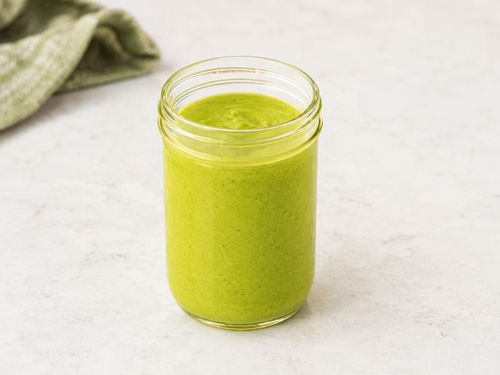
Arrabbiata Sauce Recipe: Spicy Tomato Sauce for Pasta
By CHIN-SU Kitchen Team
Updated Oct 24, 2026
Tested in the CHIN-SU kitchenIf you're looking for hot sauce for pasta, the classic answer is arrabbiata sauce, a spicy Italian tomato sauce cooked from tomatoes, garlic, chili, and olive oil. Its Italian name means "angry," and you decide how angry it gets with the fresh chili and red pepper flakes. You can have it ready in about 25 minutes on a weeknight, using ingredients you probably already keep in the pantry. Because you cook the chili in the olive oil first, its heat and toasty flavor run through the whole sauce instead of sitting on top like a few shakes of bottled sauce.
Here, CHIN-SU shares a from-scratch arrabbiata sauce recipe, the swaps that change its heat and texture, and the best ways to use it. One batch serves 4, and the sauce simmers away while you bring the pasta water to a boil. Pair it with a crisp romaine Caesar salad and some crusty bread for mopping up every last bit of sauce.

10 min
Prep time
15 min
Cook time
25 min
Total time
4 servings, about 430 g pasta with sauce each
Servings
12
Ingredients
6
Steps
What Is Arrabbiata Sauce?
Arrabbiata sauce (sugo all'arrabbiata) is a spicy Italian tomato sauce made with sweet tomatoes, sizzling garlic, red chili, and olive oil. Its name means "angry" in Italian, a nod to the bold, sharp heat from the peppers. Made as written here, it lands at a satisfying medium to medium-hot heat that warms the palate without drowning out the natural sweetness of the tomatoes.
At its core, arrabbiata is all about vibrant flavor contrast. While classic marinara is gentle, mild, and often herb-focused, arrabbiata gets its signature heat from red chili (peperoncino) cooked right into the olive oil alongside fragrant garlic. Sizzling the chili in oil first blooms its heat and toasty aroma, infusing every spoonful of sauce with a lively, rounded spice that clings perfectly to pasta.
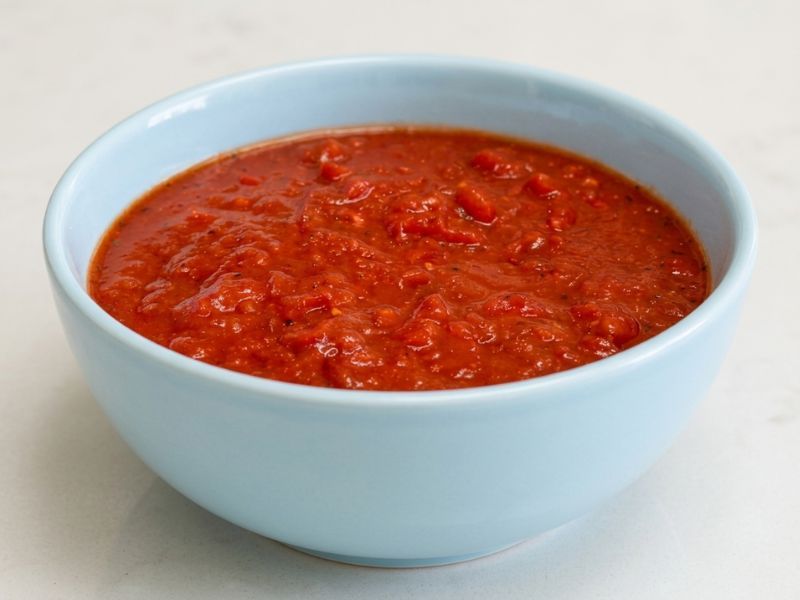
Why You'll Love This Spicy Arrabbiata Sauce?
You'll love this spicy arrabbiata sauce because a handful of pantry ingredients gives it real depth, since the garlic and chili cook in olive oil before the tomatoes go in.
- Toasty heat all the way through. You sizzle the chili in the oil with the garlic, so its flavor really spreads through the whole sauce.
- Pantry ingredients. Olive oil, garlic, red pepper flakes, and canned tomatoes are likely in your kitchen already, and the fresh chili may be the only thing you need to buy.
- Ready in 25 minutes. The sauce simmers to thick perfection in just 15 minutes while you boil the pasta, making it an easy, satisfying weeknight dinner.
Arrabbiata Sauce Ingredients
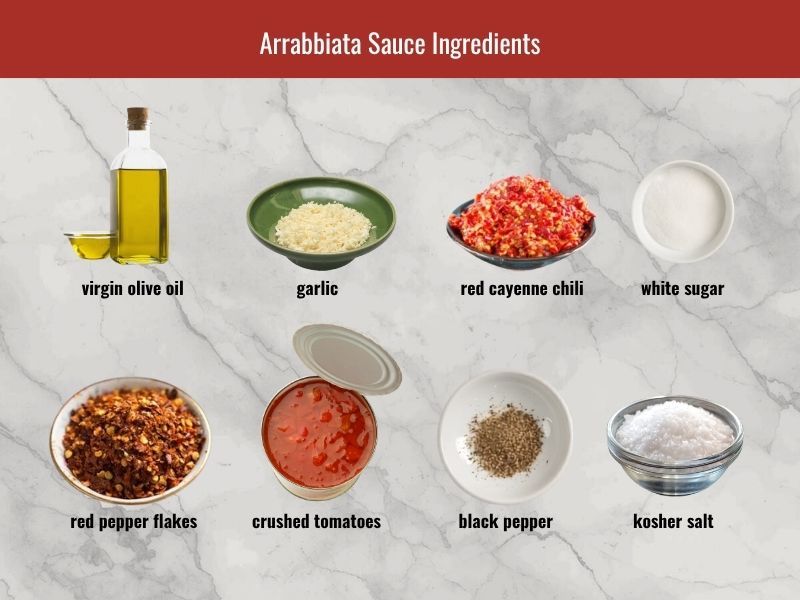
This arrabbiata sauce comes together from eight sauce ingredients, plus the pasta and toppings you serve it with.
For the Arrabbiata Sauce
- 4 tbsp extra virgin olive oil. Extra virgin olive oil carries the garlic and chili flavor through your whole sauce.
- 3 garlic cloves, finely minced. Garlic is the second pillar of arrabbiata, and three cloves give the sauce a clear garlic hit.
- 1 red cayenne chili, finely chopped with the seeds. A fresh cayenne chili usually sits around 30,000 to 50,000 Scoville Heat Units (SHU) and adds a bright heat. Keep the seeds in if you want the full heat.
- ½ tsp red pepper flakes. Red pepper flakes, also sold as crushed red pepper, are typically made from cayenne or a cayenne blend (McCormick Science Institute). The flakes bring the toasty, earthy side of the heat, and jars vary in strength, so taste yours first.
- 28 oz (800 g) canned crushed tomatoes. Crushed tomatoes keep the prep fast and give your sauce a thick base.
- 1¼ tsp kosher salt and ¼ tsp black pepper. Salt and black pepper season your sauce and go in with the tomatoes.
- ½ tsp white sugar, only if needed. Sugar fixes sour canned tomatoes rather than sweetening the sauce, so taste before you add it.
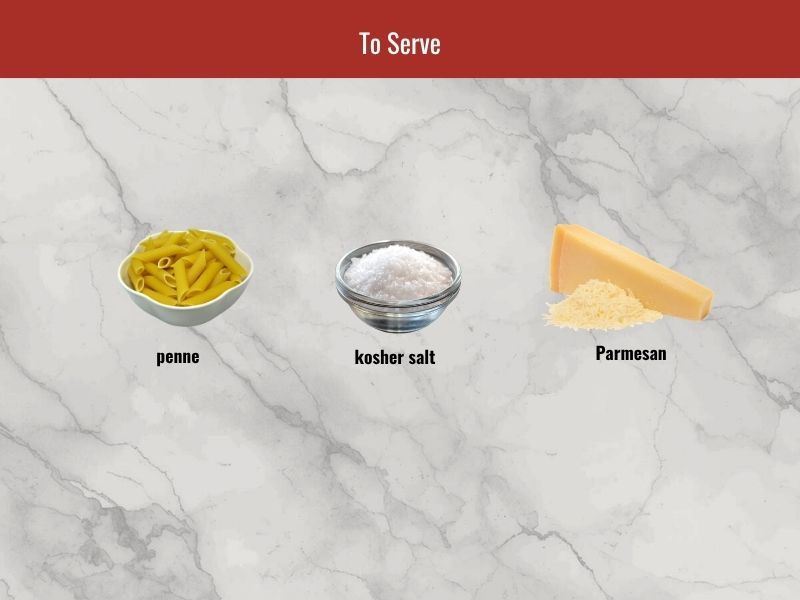
To Serve
- 14 oz (400 g) penne. Penne is the classic shape for this sauce, though ziti or any short or long pasta works too.
- 1 tbsp kosher salt for the pasta water. Salting the cooking water seasons the pasta before you add the sauce.
- Finely grated Parmesan and 2 tsp finely chopped parsley (optional). Parmesan adds salt and richness at the table, and parsley adds a fresh finish.
How to Make Arrabbiata Sauce Step by Step
You'll need about 25 minutes for this arrabbiata sauce, and most of that time is a hands-off 15-minute simmer. You sizzle the garlic and chili in oil, simmer the tomatoes until thick, then finish the sauce with the pasta and a splash of its starchy cooking water.
Step 1: Mince the Garlic and Chili
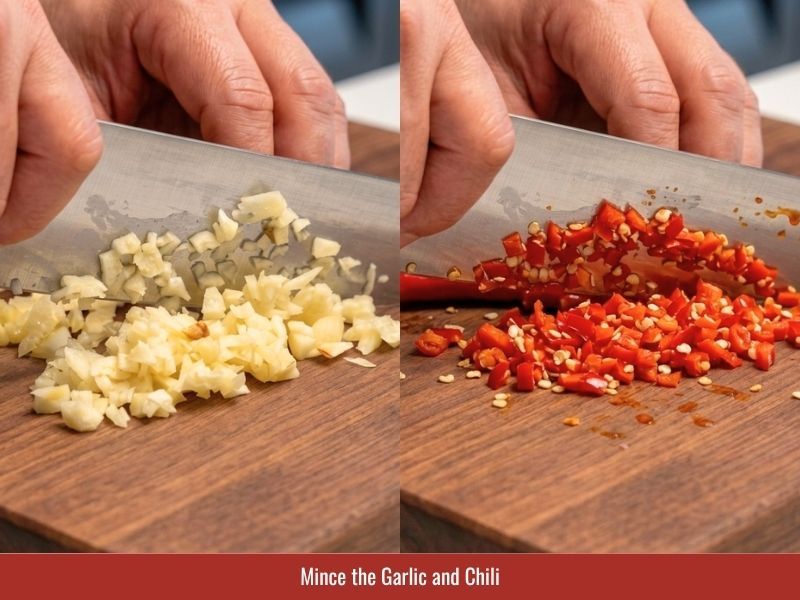
Finely mince 3 garlic cloves and 1 red cayenne chili, leaving the chili seeds in. Keep the two in separate piles, since you add the garlic to the pan a few seconds before the chili. For a gentler sauce, scrape out the seeds and the white membrane before you mince the chili, because that's where most of the heat sits. For the mildest pot, leave the fresh chili out altogether.
Step 2: Sizzle the Garlic and Chili in Oil
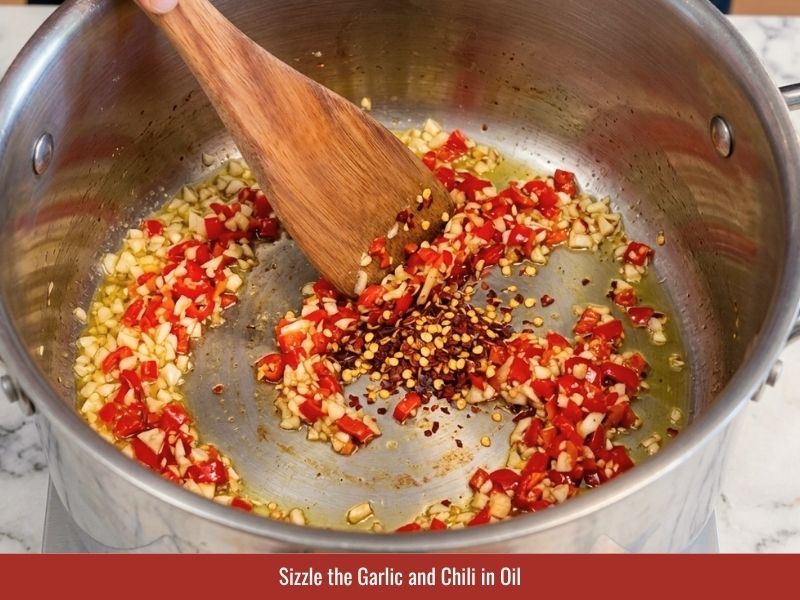
Heat 4 tbsp olive oil over medium heat in a pot big enough to toss the pasta in later. Stir the garlic in the oil for just 10 seconds, then add the fresh chili and red pepper flakes and cook for 1 minute, until the garlic turns light golden. Keep a close eye on your pan here. If the garlic colors too fast, turn the heat down, because burnt garlic turns the whole sauce bitter.
Step 3: Add the Tomatoes and Seasoning
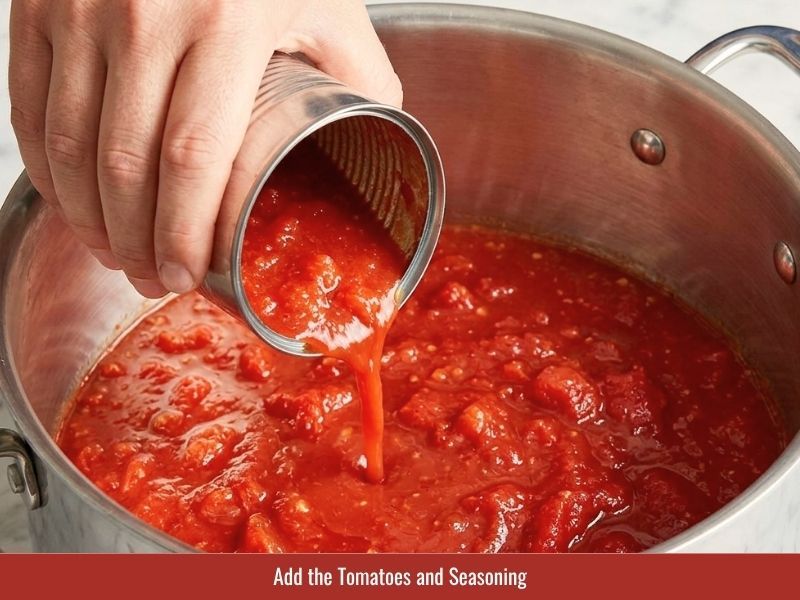
Stir in the 28 oz (800 g) crushed tomatoes, 1¼ tsp salt, and ¼ tsp black pepper. Swirl a little water around the empty cans to catch the last of the tomato, then pour it into your pot. Whole peeled tomatoes need one extra step if you're using them instead: crush them with a fork first and pull out any hard stem ends.
Step 4: Simmer and Taste for Heat
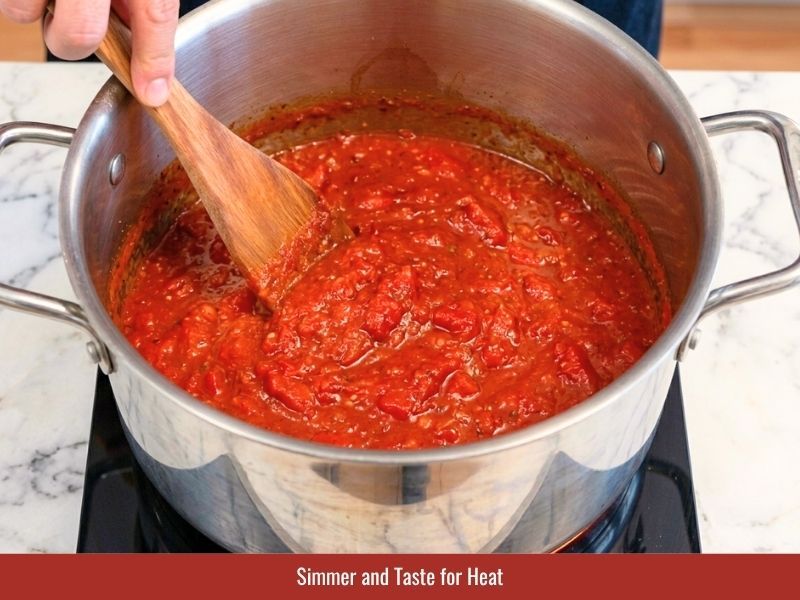
Turn the heat to high until the sauce bubbles, then lower it to medium and simmer for 15 minutes, until your sauce thickens. Don't cut this time short, since your tomatoes need it to break down and blend with the garlic and chili. While the sauce simmers, put a large pot of salted water on to boil so your pasta finishes cooking right as the sauce is done. At the 10-minute mark, taste the sauce: stir in ½ tsp sugar if it tastes sour, or add more red pepper flakes a little at a time if you want more heat.
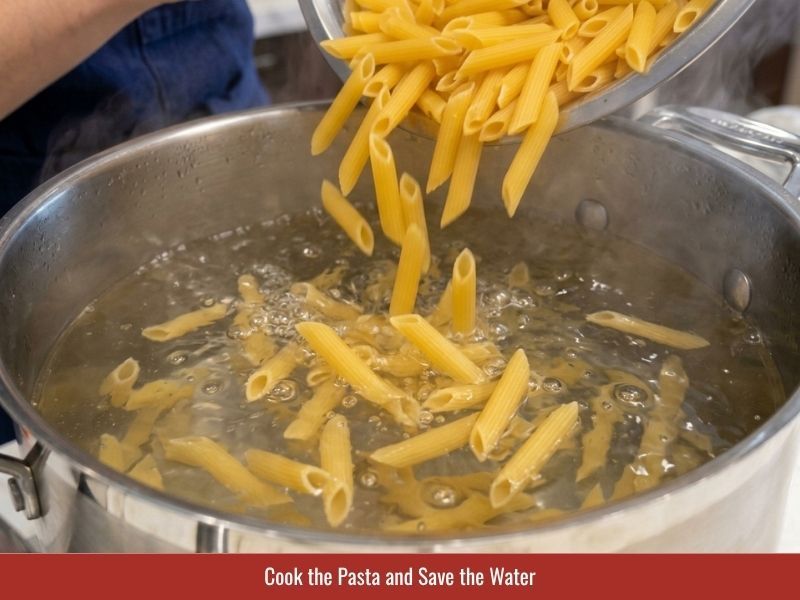
Step 5: Cook the Pasta and Save the Water
Bring a large pot of water to a boil with 1 tbsp salt and cook 14 oz (400 g) penne according to the package directions. Just before draining, give the pot a big stir and scoop out 1 cup of the cooking water, then drain the pasta. That starchy water is what thickens the sauce, so it clings to the pasta instead of pooling at the bottom of the bowl.
Step 6: Toss the Pasta in the Sauce
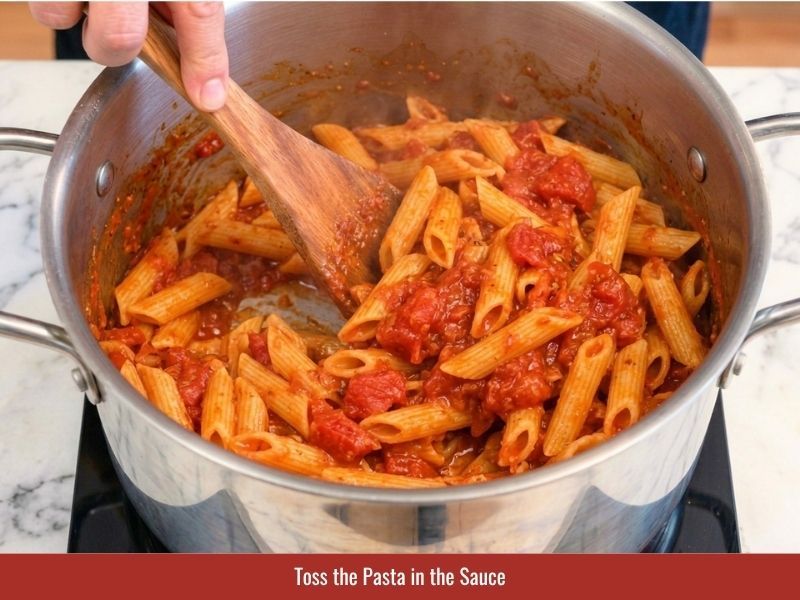
Add the pasta to the sauce with ½ cup of the pasta water and toss it over the heat until the sauce coats every piece and no longer pools at the bottom of the pot. Add a little more pasta water if your sauce looks a bit tight. Let it bubble for a minute or two while you toss, until the sauce turns glossy, then serve it right away, while the sauce is still loose and juicy.
Tips for Sauce That Clings to Pasta
Reduce the tomato base before adding pasta water, then toss everything together over heat. The cooking water loosens a thick sauce, while its starch helps the mixture coat the pasta as you toss.
- Watch the garlic rather than following a fixed timer. Minced garlic cooks quickly, and pan temperature affects how soon it browns.
- Add pasta water gradually. A loose tomato sauce needs less water than a heavily reduced one.
- Finish the pasta in the pan. Tossing it with the sauce coats the surface more evenly than spooning sauce over plain pasta.
- Taste after combining. Salted pasta water and cheese contribute additional seasoning.
- Serve promptly. Pasta continues absorbing liquid as it stands, so the coating becomes thicker over time.
How to Adjust the Heat in Arrabbiata Sauce
Start with less chili and increase it after tasting the simmered sauce. Pepper variety, quantity, and the strength of your chili flakes all affect the result, so this recipe does not have a fixed heat level.
For a Milder Sauce:
Omit the fresh cayenne chili and begin with ¼ teaspoon red pepper flakes. Taste after simmering before adding more.
This approach preserves some chili flavor while giving you more control over the heat.
For a Hotter Sauce:
Use the fresh chili and the full amount of flakes, then add more flakes in small pinches during simmering. Stir well and allow a few minutes before tasting again.
Avoid adding a large quantity at once. It is easier to increase the heat than to correct an overly spicy batch.
If the Sauce Is Already Too Spicy:
Stir in additional unseasoned crushed tomatoes and simmer again until the consistency returns. Increase the pasta quantity if needed to keep the sauce-to-pasta balance.
Cream or cheese changes the flavor and makes a richer variation. Sugar balances sweetness and sourness, so it should not be your main correction for excessive chili heat.
What Can You Substitute or Change in Arrabbiata Sauce?
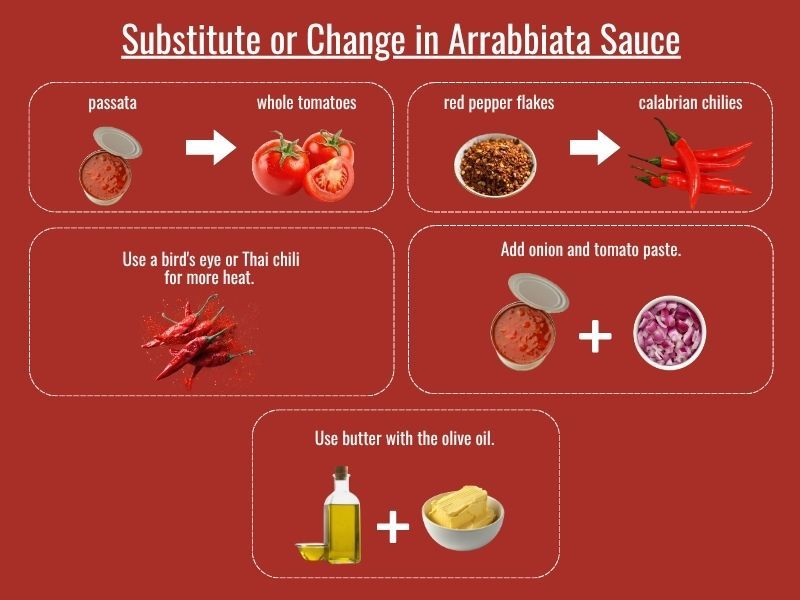
These seven swaps change the texture, heat, or richness of arrabbiata sauce, from smoother tomatoes and two different chilies to onion, butter, basil, and cream. Keep the recipe above as your baseline and make one swap at a time.
- Use passata or whole peeled tomatoes. Passata, which is strained, puréed tomato, can stand in for the crushed tomatoes and gives you a silky, smooth sauce. Whole peeled tomatoes, crushed by hand or with a fork, are the traditional choice and leave more texture in your pot.
- Swap the red pepper flakes for Calabrian chilies. Start with about 1 tablespoon of chopped jarred Calabrian chilies in place of the flakes. Calabrian chilies run about 25,000 to 40,000 SHU (PepperScale) and give a deeper, rounder heat than standard red pepper flakes.
- Use a bird's eye or Thai chili for more heat. A smaller bird's eye or Thai chili can replace the cayenne when you want a hotter sauce. Bird's eye chilies usually sit around 50,000 to 100,000 SHU, compared with cayenne's 30,000 to 50,000 SHU.
- Add onion and tomato paste. Soften 1 medium finely chopped onion in the oil for 3 to 4 minutes before the garlic goes in, then stir in 2 tablespoons of tomato paste for about 30 seconds before the tomatoes. Onion adds sweetness, and tomato paste adds a deeper, rounder tomato flavor.
- Use butter with the olive oil. Use 2 tablespoons of butter and 2 tablespoons of olive oil, so you keep the same 4 tablespoons of fat in total. Butter gives the sauce a rounder flavor and helps the crushed tomatoes come together into a smooth sauce.
- Simmer the sauce with fresh basil. Drop a few basil sprigs into your sauce while it simmers, then lift them out before the pasta goes in. Fresh basil leaves a light sweetness and a fresh, herbal note in the sauce.
- Stir in heavy cream for a creamy version. Add heavy cream a little at a time once the sauce has thickened, then let it cook until it turns slightly thick again. Heavy cream turns the sauce a soft orange-pink, close to the creamy spicy pasta made popular as a vodka-free take on spicy vodka sauce.
How to Use Arrabbiata Sauce
Arrabbiata sauce is made for pasta first, but the same spicy tomato sauce also works as a dip, a pizza sauce, and a sauce for chicken or seafood. Since the chili heat is cooked right into the oil, you get the same even heat wherever you use the sauce.
- Pasta. Toss the sauce with penne and finish with grated Parmesan or Pecorino Romano and parsley or basil.
- Dip. Serve the sauce warm with mozzarella sticks, breadsticks, or crusty bread.
- Pizza. Spread the sauce on as a spicy pizza sauce.
- Chicken and seafood. Spoon the sauce over crispy chicken cutlets, sautéed shrimp, or creamy polenta, or simmer raw shrimp in it for the last few minutes.
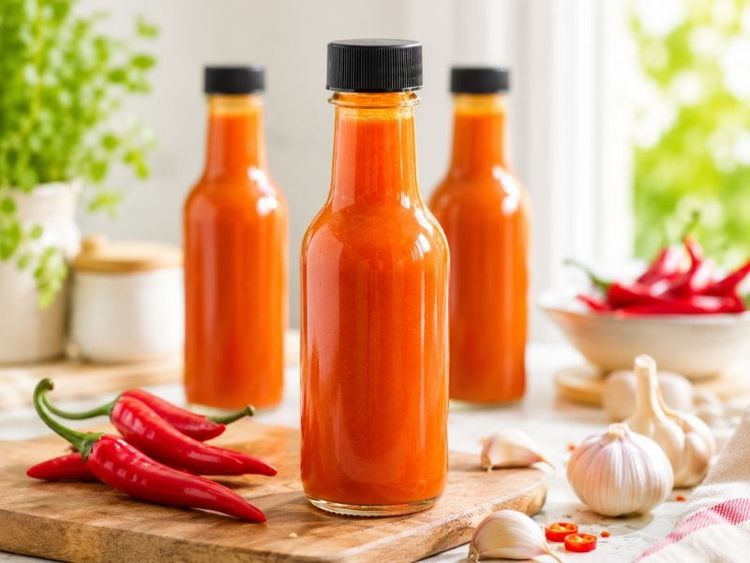
For anyone at the table who wants more heat, you can try a few drops of CHIN-SU Hot Sauce Original. It's made with chili and fermented garlic, so it brings a mild heat and real garlic depth.
How to Store Arrabbiata Sauce
Arrabbiata sauce doubles easily, so making extra is a great weeknight shortcut. Let the sauce cool down for about 30 to 45 minutes after cooking (never leave cooked sauce at room temperature for longer than 2 hours). Store it in an airtight glass jar or container in the fridge for 3 to 4 days, or freeze it in portions for up to 3 to 4 months. In fact, the flavors often meld and deepen overnight, making next-day leftovers taste even richer and more rounded. When you're ready to use it, bring the sauce to a gentle simmer in a skillet, adding a splash of water or pasta water if it has thickened, so it coats your pasta with the same fresh, glossy richness.
How hot do you make your arrabbiata sauce: fresh chili, red pepper flakes, or both? Tell us in the comments, along with any swaps you tried, and if this recipe worked for you, a quick star rating helps other home cooks find it. Share a photo of your pot on social media with #CHINSU, since we love seeing every one. Curious how CHIN-SU Hot Sauce Original tastes stirred into your next pasta sauce? Grab a bottle at chinsu.com and give it a try.
Arrabbiata Sauce for Pasta
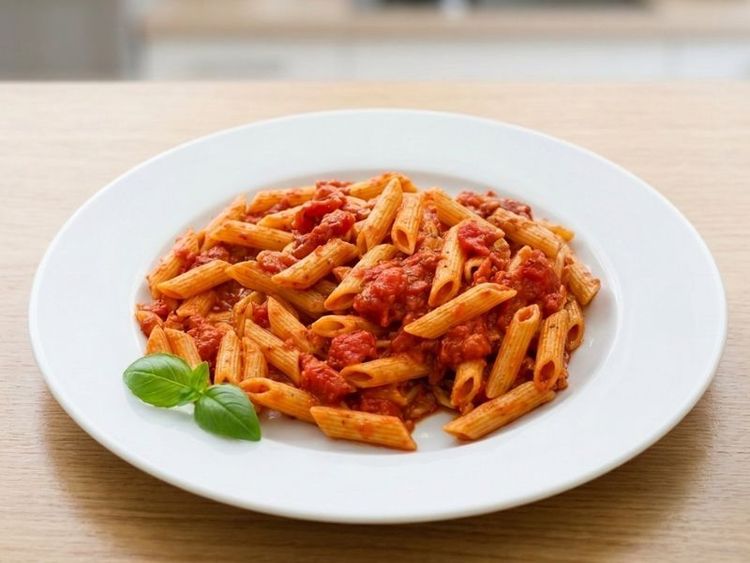
Arrabbiata sauce is a spicy Italian tomato sauce infused with garlic, fresh cayenne chili, red pepper flakes, and olive oil. Tossed with penne, the thick sauce delivers bright tomato flavor, aromatic garlic, and medium to medium-hot heat.
Prep time
10 min
Cook time
15 min
Total time
25 min
Recipe type
Food
Cuisine
Italian
Method
Sautéing and Simmering
Servings
4 servings, about 430 g pasta with sauce each
Calories
559 kcal/serving
Ingredients
Instructions
- 1Step 1: Mince the garlic and chili. Finely mince the garlic and fresh cayenne chili, keeping them separate because the garlic enters the pan first. Remove the chili seeds and white membrane for a milder sauce.
- 2Step 2: Sauté the garlic and chili. Heat the olive oil over medium heat in a pot large enough to hold the pasta. Cook the garlic for 10 seconds, add the fresh chili and red pepper flakes, and cook for 1 minute until the garlic turns light golden without browning.
- 3Step 3: Add the tomatoes and seasoning. Stir in the crushed tomatoes, 1¼ teaspoons kosher salt, and black pepper. Swirl a small amount of water around the empty tomato can and add it to the pot.
- 4Step 4: Simmer the sauce. Bring the sauce to a bubble over high heat, reduce to medium, and simmer for 15 minutes until thickened. Taste after 10 minutes and add the optional sugar only if the tomatoes taste too sour.
- 5Step 5: Cook the pasta. Boil the penne in a large pot of water with 1 tablespoon kosher salt according to the package directions. Reserve 1 cup of pasta water immediately before draining.
- 6Step 6: Toss the pasta with the sauce. Add the drained penne and ½ cup pasta water to the sauce. Toss over the heat for 1–2 minutes until the sauce becomes glossy and coats the pasta, adding more reserved water only if needed.
Notes
- Storage: Refrigerate the sauce separately in an airtight container for 3–4 days or freeze it in portions for up to 3–4 months. Refrigerate leftover finished pasta for up to 3 days.
- Serving Style: Serve immediately with optional grated Parmesan and chopped parsley; crusty bread or a green salad works well alongside the pasta.
- Heat Adjustment: Omit the fresh cayenne and reduce the red pepper flakes to ¼ teaspoon for a milder sauce, or increase the flakes gradually after tasting for more heat.
Nutrition · Per 1 serving (430 g pasta with sauce) Serving
Calories
559 kcal
Carbohydrates
90.3 g
Sugar
11.6 g
Protein
16.5 g
Fat
15.6 g
Sodium
1150 mg
Potassium
900 mg
Vitamin C
13 mg
Nutrition is calculated per pasta serving, excluding optional sugar, Parmesan, and parsley.
Frequently Asked Questions
Yes, you can use hot sauce in pasta sauce, and both simmering it in the pot or adding it at the table work depending on your goal. If you want even heat throughout the entire batch, stir a few dashes into the sauce while it simmers so the chili and garlic melt seamlessly into the tomatoes. If people eating have different spice tolerances, set the bottle on the table so everyone can customize their own plate. Pick a garlic-forward hot sauce with low vinegar so you don't clash with the natural tomato acidity; CHIN-SU Hot Sauce Original is a great choice here, bringing mild heat and fermented garlic depth however you choose to serve it.
To make arrabbiata sauce less spicy once it's cooked, stir in extra crushed tomatoes, a swirl of olive oil, or a pinch of sugar to soften the chili heat. You can also stir in a splash of heavy cream or a pat of butter right at the end to create a richer, mellower sauce. At the table, serving the pasta with plenty of freshly grated Parmesan or Pecorino cheese naturally cools the warmth in every bite.
Penne rigate is the classic pasta for arrabbiata sauce because its ridges and hollow shape catch and hold the spicy tomato sauce. Ziti and rigatoni work just as well for trapping the sauce inside every tube. If you prefer long pasta, thick strands like bucatini hold up wonderfully against the hearty garlic and chili oil.
Yes, you can make arrabbiata sauce with fresh tomatoes by simmering ripe plum, Roma, or cherry tomatoes until they break down into a thick sauce. Dice larger tomatoes or halve cherry tomatoes, cook them gently with your sizzling garlic and chilies, and let their natural juices reduce into a rich sauce. If you prefer a smoother texture, blend the cooked tomatoes before tossing with your pasta.
Yes, you can make arrabbiata sauce ahead of time, and the flavor actually gets richer after resting. As the sauce sits in the refrigerator, the garlic, olive oil, and chili infuse more deeply into the sweet tomato base. When you're ready to serve, gently reheat the sauce in a skillet over medium-low heat before tossing with hot pasta and a splash of reserved cooking water.
Did you make this recipe?
We love seeing it. Tag
@chinsu.usa
on Instagram, or leave a rating below — it helps other cooks find the recipe.
Pin this for later
Save this recipe to your board and keep it ready for your next cooking inspiration.
Save to Pinterest
CHIN-SU KITCHEN TEAM
CHIN-SU Kitchen Team are the creative experts behind the delicious recipes featuring CHIN-SU sauces. With years of experience and a passion for flavor, our team carefully selects recipes from a variety of trusted chefs and bloggers, bringing together the best culinary insights to present you with the most suitable and exciting dishes. Every recipe is chosen to inspire you to create meals that are not only tasty but also easy to prepare, enhancing your dining experience. Join us as we explore a wide range of sauces and flavors, and elevate every meal with the perfect recipe for your table!
User Reviews
Featured Articles
Vietnamese Catfish Recipe | Caramelized Catfish in Clay Pot
How To Make Hot Honey Sauce at Home
How To Make Buffalo Hot Sauce at Home
How To Make Creamy Hot Sauce at Home?
Hot Sauce Recipe: How to Make with Any Chili Pepper
SUBSCRIBE TO GET
MORE INFO
Want the latest and greatest recipes, updates, and more from us,
straight to your inbox? Subscribe and get our NEWS!